ISSN Online: 2164-5655 ISSN Print: 2164-5612
Scanning Electron Microscopy (SEM)
Analysis and Hardness of Diffusion
Bonded Titanium-Titanium and
Titanium-Copper Plates with Static
Force and without Interlayers
Joel Hemanth
Department of Mechanical Engineering, H.M.S. Institute of Technology, Tumkur, India
Abstract
In the present research, commercially pure Ti (grade-2) has been diffusion bonded with Ti and Cu plate under static force without any interlayers. The diffusion bonded samples were tested for micro hardness and micro structural analysis through optical microscopy and SEM. It is found from the present investigation that the bonded zone is affected by the processing variables such as bonding time (1 - 2 h), bonding force (250 N), bonding temperature (973 - 1073 K) and surface roughness. Results of the investigation revealed that temperature range of −973 - 1073 K along with time duration of 1 - 2 hours in vacuum has resulted in a joint having high hardness with minimum pores. Hardness of the bond depends on the grain boundary diffusion at the inter-face and maximum hardness was achieved in the case of Ti-Cu joints. When Ti-Cu plates were used for bonding at 973 K for 2 hours, Cu-Ti solid solution along with a zone of different intermetallics was formed in the bonded zone. However, at higher temperatures, no continuous zone of intermetallics was found in the bonded region but instead Ti-Cu solid solution appeared.
Keywords
Diffusion Bonding, Titanium, Micro Hardness, Surface Roughness, Microstructure
1. Introduction
Diffusion Bonding (DB) technique is based on the atomic diffusion of elements How to cite this paper: Hemanth, J. (2017)
Scanning Electron Microscopy (SEM) Ana- lysis and Hardness of Diffusion Bonded Titanium-Titanium and Titanium-Copper Plates with Static Force and without Inter-layers. Open Journal of Composite Mate-rials, 7, 105-116.
https://doi.org/10.4236/ojcm.2017.72007
Received: February 25, 2017 Accepted: April 27, 2017 Published: April 30, 2017
Copyright © 2017 by author and Scientific Research Publishing Inc. This work is licensed under the Creative Commons Attribution International License (CC BY 4.0).
at the joining interface and the process actually is the transport of mass in the form of atomic movement or diffusion through the lattice of a crystalline solid. Diffusion bonding is the solid state metal joining process comprising of similar and dissimilar metals or non-metals. Diffusion of atom occurs by many me-chanisms such as exchange of places between adjacent atoms, motion of intersti-tial atoms or motion of vacancies (unoccupied site) in a crystalline lattice struc-ture. Macroscopic deformation in a diffusion controlled process is induced by applying definite heat and pressure for a finite interval of time and the preferable mechanism involved here is the low activation energy required for atomic move- ment [1][2]. Diffusion of atoms is a thermodynamic process where temperature and infusibility of the material are considerable parameters. In general, the dif-fusion rate [3], in terms of diffusion coefficient D is given by the well known Fick’s law of diffusion.
The aerospace industry is a larger market for titanium products primarily due to the exceptional specific strength, corrosion resistance and high resistance and elevated temperature properties [4][5]. With increased use of Ti and its alloys, the joining of Ti and its alloys is of great interest. Unfortunately welding of Ti and its alloys is very difficult as they are highly reactive at high temperatures and tend to oxidize with oxygen [6][7][8]. Brazing is an effective method for dissi-milar materials joining, but the brazing joint of Ti is difficult to guarantee access to the entire surface of the joint continuity [9]. Therefore, diffusion bonding be-comes a popular and preferred solid-state joining process for Ti-Ti and Ti-Cu because the coalescence of contacting surfaces occurs with minimum along with high joining quality.
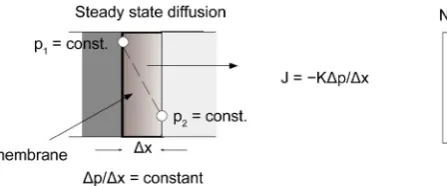
The quantitative treatment of unsteady state diffusion processes is also for-mulated and one can consider it to examine some relevant solutions quantita-tively. Oxidation rate constant follows an Arrhenius relationship and the effec-tive activation energy for oxidation was obtained from the Arrhenius plot. The activation energy for the titanium material is improved by heating the specimen almost near the recrystallization temperature. At higher temperature, creep pro- blems can be eliminated by creating the inert atmosphere through the use of ro-tary and diffusion pumps. Figure 1 shows the diagram indicating steady state and unsteady state diffusion bonding process.
[image:2.595.219.443.624.717.2]The activation energy for atomic diffusion at the surface, interface and grain boundaries is relatively low compared to the bulk diffusion due to a looser bond of the atoms and higher oscillation frequency of the diffusing atom. This enhances
the atomic diffusion, and thus eases the diffusion bonding of two metal pieces assuming that a perfect interface contact exists. The interface contact can be op-timized by a treatment of the surface to be bonded through a number of pro- cesses, such as mechanical machining, polishing, etching, cleaning and coating. Creep mechanism allows a material flow to produce full intimate contact at the joint interface as required for diffusion bonding. Therefore, surface treatment and selection of bonding temperature and loading are basically important factors for the diffusion bonding process. Other factors such as thermal conductivity, thermal expansion, and bonding environment also affect the bonding process, particularly at high bonding temperature.
Many reports on diffusion bonding and transient liquid phase bonding of Ti and its alloys have been published [10].
The optimum bonding strength occurred at 850˚C for 90 min when an Ag- Cu-Zn interlayer was used along with the formation of intermetallics in the bond line [11]. Kundu et al. [12] conducted diffusion bonding of Ti to 304 stain-less steel using Cu interlayers. Dezellus et al. [13] performed transient liquid phase bonding of Ti to Al nitride using a Cusil (28Cu-Ag) interlayer. In this bonding process, Ti formed different intermetallics with Cu. Cu alloy is widely used in aviation, navigation and automobile industries because of its good elas-ticity, high strength and good abrasive resistance. In some locations, the perfor-mance requirements for titanium and Cu alloy components are special. So the bonding of titanium with Cu form a compound structure which reduces the mass of structure. Therefore, study on the technology for bonding of titanium with Cu is of great importance. However, the properties of Ti and Cu have great differences in crystal structure, melting point, heat conductivity, and linear ex-pansion coefficient. Thus, the traditional fusion method is hard to realize the joining process.
In the present research the joining of Ti-Ti and Ti-Cu alloy is realized by dif-fusion bonding to fabricate composite structure without any interlayer has open up a new way to broaden the application of titanium and copper alloys. Hence the focus of the present investigation is aimed at vacuum diffusion bonding of Ti-Ti and Ti-Cu alloy to realize the resulting hardness and microstructural cha-racteristics at the interfacial zone of specimens tested after bonding at different temperatures and exposure times.
2. Experimental Procedure
Figure 2. Diffusion bonding processes diagram.
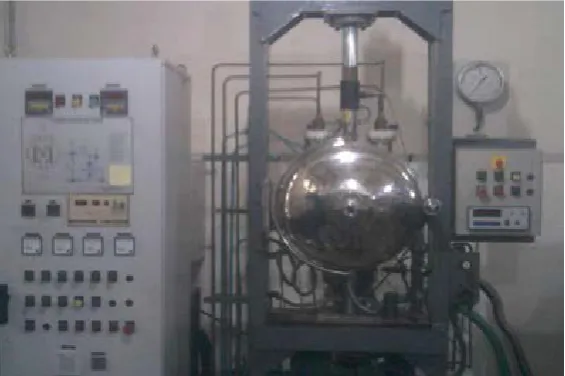
Figure 3. Diffusion bonding experimental set-up.
circulation system with a pump and chillers. The required force on the speci-mens during bonding is applied using hydraulic loading mechanism. Ti-Ti joints were bonded at 1073 K for 1 - 2 h and Ti-Cu were bonded at 973 K for 1 - 2 h both under a static force of 250 N. Plate type of specimens of size 20 × 10 mm and of thickness 3 mm were used for diffusion bonding and subsequent hard-ness and microstructural examination. The mating surfaces of the specimens were ground with SiC (emery) polished using diamond paste and finally cleaned in an ultrasonic bath using acetone reagent acetone for 30 seconds before bond-ing. The surface roughness of the prepared specimens was finally measured us-ing a standard electronic surface roughness profile meter. The samples to be bonded were held in a jig made of Ti (to avoid the thermal expansion mismatch) under static force and placed in a diffusion bonding furnace.
[image:4.595.233.516.275.463.2]and the composition of different phases in the bonded zone were analyzed by EDS method. To determine the mechanical property of the bonded specimens micro hardness tests were performed on the right and left side of the bonded area using a Hitachi make micro hardness tester.
3. Results and Discussion
3.1. Surface Roughness and SEM Fracture Analysis
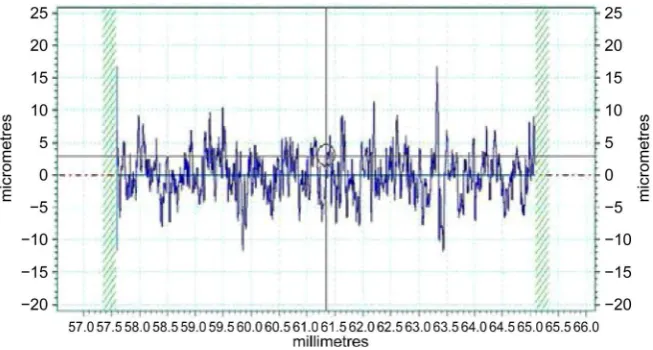
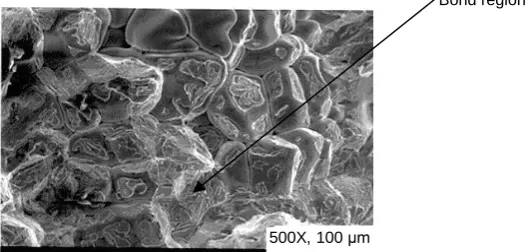
[image:5.595.211.538.344.519.2] [image:5.595.211.536.549.715.2]In addition to bonding temperature, bonding time, bonding force, flatness and roughness of the bonding surfaces were found to influence the hardness of the diffusion bonded joints. Figure 4 and Figure 5 shows the surface roughness profile of ground and polished Ti and Cu plates. The surface roughness value in terms of Ra was measured using the standard procedure. This was done using with different grades of emery papers of which emery papers of grade above 2000 along with polishing (using diamond paste) gave very smooth surface hav-ing no surface irregularities and aspirates. This is very important for atomic dif-fusion and hence the bond hardness. Figure 6 and Figure 7 shows the SEM im-ages of the fractured surfaces (under tension) of Ti-Ti bonded at 1073 K and
Figure 4. Surface roughness profile of Ti plate before bonding.
Figure 6. SEM fractograph of surface (failed under tension) of Ti-Ti bonded (at 1073 K for 2 h).
Figure 7. SEM fractograph of surface (failed under tension) of Ti-Cu
bonded ( at 973 K for 2 h).
Ti-Cu bonded at 973 K for 2 h. It is observed from the fractured surfaces that the mode of fracture of fracture is cleavage having sound metallurgical joint with minimum un-bonded areas.
3.2. Optical Microstructure of Base Metals, SEM Analysis of
Bonded Joints and EDX
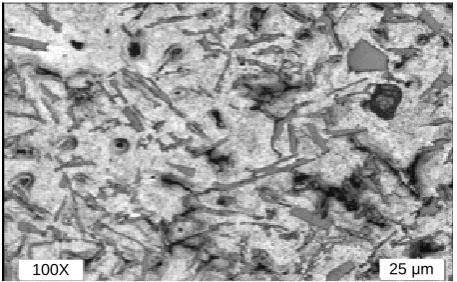
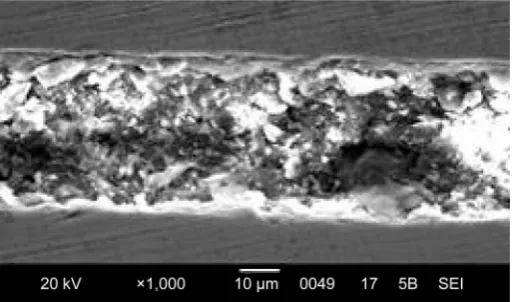
The microstructures of the base material and the interfaces resulting from join-ing were characterized by optical microscopy (OM) at 100 X magnification as well as using the scanning electron microscopy (SEM). Figure 8 and Figure 9 shows the optical microstructure of commercially pure Ti and Cu plates. Figure 10 shows the SEM image of diffusion bonded Ti-Ti plates at 1073 K for 2 hours under a static force of 250 N indicating the concentration profile across the in-terfaces resulting from bonding. In the case of Ti-Ti plates diffused at 1073 K at 1 hour, the bond centerline consisted of Ti-Ti matrix with small particles of Ti-Ti solid solution just outside the central region. The bond region farthest from the center line consisted of only a solid solution of Ti-Ti. As the bond time is increased to 2 hours at 1073 K, the same microstructure appeared in the bond region but with an increase in the bond width. Note that as the temperature in-creases the solid solubility also inin-creases. In the case of Ti-Ti diffusion bonding, the formation of intermetallics in the bonding area was totally absent. When Ti
Bond region
Bond region
[image:6.595.242.507.259.385.2]Figure 8. Microstructure of commercially pure Ti plate (grade-2).
[image:7.595.258.490.419.551.2]Figure 9. Microstructure of commercially pure Cu plate.
Figure 10. SEM photograph of diffusion bonded Ti-Ti plates (at
1073 K, 2 hours at 250 N).
is bonded with Ti, the bond line was not clearly visible until it was etched (8% HF and 4% HNO3) and it was not continuous (see Figure 10) having some re-gions completely bonded while few voids were present elsewhere.
Figure 11 shows the cross section of the diffusion bonded Ti-Cu joint at 973˚C for 2 hours under a static force of 250 N. Although Cu form intermetallics with Ti, microstructure of the bonded zone was different when Ti-Cu was bonded. It is to be remembered here that intermetallics are brittle and they in-crease hardness by reducing the bond strength a little. At a temperature of 973 K for 2 hours, the bonding zone consisted of a region of Ti-Cu solid solution, a
25 μm 100X
Figure 11. SEM photograph of diffusion bonded Ti-Cu plates (at 973 K, 2 hours at 250 N).
region of different intermetallics and a region of eutectic mixture of Ti (Figure 11). Here the composition of Cu was discontinuous in the intermetallics region depending on the composition of the intermetallics. When the bonding time is further increased beyond 2 hours (at 973 K), the continuous region of different intermetallics disappeared from the bond centerline and the centerline consisted of only the eutectic mixture of Ti and Cu. Although the melting temperature of Cu is 680˚C (or 953 K), no evidence was found the existence of residual Cu in the bond region at 973 K or little above. Finally, the bond centerline consisted of Ti-Cu solid solutions, eutectic mixtures and some small areas of intermetallics, possibly Ti3Cu. However at 973 K at 1 hour some pores appeared in the bond re-gion and the pore size decreased a little at higher temperatures.
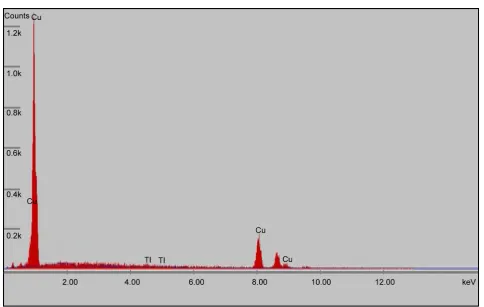
In both the cases (Ti-Ti and Ti-Cu) the concentration profile indicate that there is a diffusion flux of one atom towards the other in opposite direction and is controlled by grain boundary diffusion. Figure 12 and Figure 13 shows EDX analysis photographs of diffusion bonded Ti-Ti and Ti Cu at 1073 K and 973 K for 2 hours.
3.3. Hardness of Diffusion Bonded Joints
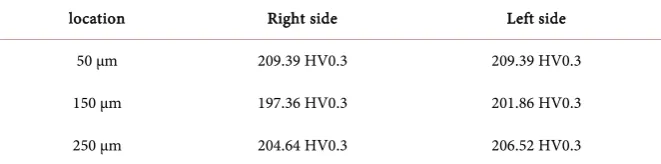
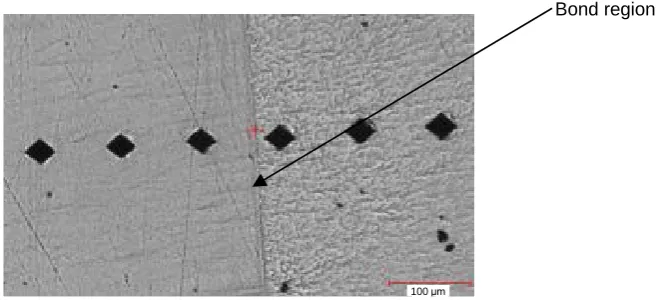
To check the mechanical property of the bonded samples, micro hardness tests were performed. Tables 1-4 show the micro hardness of the bonded samples of Ti-Ti and Ti-Cu bonded plates at different temperatures and time duration. It is observed that the maximum hardness was obtained when Cu was bonded with Ti at 973 K for 2 hours was 367.15 HV. This might be due to the presence of in-termetallics (not continuous) that are brittle has increased the hardness.
Figure 12. EDS photograph of diffusion bonded Ti-Ti and (at 1073 K for 2 hours).
[image:9.595.57.542.407.714.2]Table 1. Micro hardness test results of Ti-Ti bonded samples (at 973 K for 1 hour).
location Right side Left side
50 µm 209.39 HV0.3 209.39 HV0.3
150 µm 197.36 HV0.3 201.86 HV0.3
[image:10.595.208.540.208.291.2]250 µm 204.64 HV0.3 206.52 HV0.3
Table 2. Micro hardness test results of Ti-Ti bonded samples (at 973 K for 2 hours).
location Right side Left side
At 50 µm 244.14 HV0.3 216.33 HV0.3
At 150 µm 198.25 HV0.3 207.47 HV0.3
[image:10.595.207.539.326.409.2]At 250 µm 218.37 HV0.3 209.39 HV0.3
Table 3. Micro hardness test results of Ti-Cu bonded samples (at 1073 K for 1 hour).
location Right side Left side
50 µm 273.31 HV0.3 297.93 HV0.3
150 µm 231.28 HV0.3 309.77 HV0.3
[image:10.595.208.540.434.702.2]250 µm 222.55 HV0.3 229.05 HV0.3
Table 4. Micro hardness test results of Ti-Cu bonded samples (at 1073 K for 2 hours).
location Right side Left side
50 µm 331.75 HV0.3 367.15 HV0.3
150 µm 339.61 HV0.3 367.15 HV0.3
250 µm 315.05 HV0.3 364.91 HV0.3
Figure 14. Micro hardness test indentation marks for Ti-Ti bonded sample (at 1073 K for
2 hours).
Bond region
Figure 15. Micro hardness test indentation marks for Ti-Cu bonded sample (at 973 K for 2 hours).
4. Conclusion
The present research indicated the diffusion bonding of commercially pure Ti and Cu plates under a static force without any interlayers. Bond hardness with minimum pores mainly depends on the bond temperature (1073 - 973 K), the bond time (1 - 2 h) and static force applied (250 N) applied during bonding. Use of vacuum and diffusion pump avoids reaction due to oxidation during bonding. The maximum hardness (367.15 HV) was obtained in the case of Ti-Cu bonded plates and the joint reached 53% of the hardness of the base metal. This is main-ly because of formation of continuous band of hard intermetallics. Hardness was low in the case of Ti-Ti bonded plates only solid solution of Ti-Ti was appeared but no intermetallics was found in the bonded region. In addition to bonding temperature, bonding time, static force, surface preparation was found to be very important for atomic diffusion and hence the bond hardness.
References
[1] He, B.H., Huang, B.Y., Zhou, K.C., Ou, W.P. and Cheng, X.Q. (1997) Influence of Microstructure of Ti-Al Based Alloy on the Mechanical Properties at Elevated Tem- perature. The Chinese Journal of Non-Ferrous Metals, 7, 75-79. (In Chinese) [2] Lin, J.G., Zhang, Y.G. and Chen, C.Q. Effects of Lamellar Boundaries on Creep
Be-havior of Pst Crystals of TiAl Alloys. Transactions of Nonferrous Metals Society of China, 8, 562-566.
[3] Equations from “An Investigation of the Fracture Behavior of Diffusion-Bonded Ti6Al4V/TiC/10p” from 2-8.
[4] Lin, J.G, Yu, G.S. and Huang, Z. (2001) A Novel Approach to the Solid Bonding of a TiAl Alloy. Journal of Materials Science Letters, 20, 1671-1673.
https://doi.org/10.1023/A:1012417201722
[5] da Silva, A.A.M., dos Santos, J.F. and Strohaecker, T.R. (2006) An Investigation of the Fracture Behaviour of Diffusion-Bonded Ti6Al4V/TiC/10p. Composites Science and Technology, 66, 2063-2068. https://doi.org/10.1016/j.compscitech.2005.12.018
[6] Shermon, P.G. (1994) Introduction to Solid State Chemistry. 3rd Edition, Butters- worth Publication, UK.
[7] Kocak, M. (1989) Diffusion Bonding of Investment Castings. Journal ofMaterials
Bond region
Science, 41, 1-5.
[8] Kim, Y.W. (1989) Intermetallic Alloys Based on Gamma Titanium Aluminide. Jour- nal of Metals, 41, 24-30.
[9] Kim, Y.W. and Dimlduk, D.M. (1991) Progress in the Understanding of Gamma Titanium Aluminides. Materials Science and Engg-B, 43, 40-47.
[10] Rathod, P. and Sinha, A. (2009) Mechanical Properties of Diffusion Bonded Ti Al-loys in Liquid State. International Journal of Applied Sciences, 12, 56-63.
[11] Almonds, P. (2014) Diffusion Bonding of Ti Alloy with Ag-Cu-Zn Interlayers.
Journal of Advanced Materials Research, 23, 89-97.
[12] Kundu, S., Jayaram, S. and Santhosh, M. (2015) Characterization of Ti Alloy Diffu-sion Bonds with Cu Interlayer. Materials and Design, 67, 123-131.
[13] Dezellus, N., Ranolda, K. and Kishore, Y. (2015) Fracture Behavior of Ti Diffusion Bonded with Cu-Ag Interlayers. Journal of Fracture Mechanics, 34, 77-85.
Submit or recommend next manuscript to SCIRP and we will provide best service for you:
Accepting pre-submission inquiries through Email, Facebook, LinkedIn, Twitter, etc. A wide selection of journals (inclusive of 9 subjects, more than 200 journals)
Providing 24-hour high-quality service User-friendly online submission system Fair and swift peer-review system
Efficient typesetting and proofreading procedure
Display of the result of downloads and visits, as well as the number of cited articles Maximum dissemination of your research work