UNDERSTANDING THE SCENARIO OF GENERATION, DUMPING AND POSSIBLE RECONDITIONING
OF ELECTRONIC WASTE IN INDIA
1
Sandeep Sharma
1
Department of Chemistry, Rajdhani College, University of Delhi, Delhi
2Department of Chemistry, Kirori Mal College, Un
ARTICLE INFO ABSTRACT
Due to the advancement in technology, electronic waste is the fastest comprising personal computers, laptops, mobile
refrigerators and other electrical and million tons of e
globalization, reduction in production costs augment
exponential high rate of waste
awfully multifarious on account of a swarm of materials whic and rare metals as well as
grave challenges in managing such large volumes of recovery of materials
grave challenges.
Copyright © 2015 Sandeep Sharma and Mamta Chhabra Sharma.
which permits unrestricted use, distribution, and reproduction in any medium, provided the original work is properly cited.
INTRODUCTION
Electronic waste, "e-waste is mainly any broken or unwanted electrical or electronic appliances. As per the CPCB Guidelines, 2008 e-waste is defined as waste generated from used electronic devices and household appliances which are not fit for their originally intended use and are destined for recovery, recycling and disposal. Apart from being categorized as a waste, some components (viz., disposed electronics) are included in the category of secondary resource as they can be directly reused. New and fully functional computers and components are sometimes discarded when they either become obsolete or during upgrades. Globally the unapproved sector mainly working in the dismantling, recycling, resource recovery of e waste is a matter of great concern. Without adherence to the safety guidelines, many components of these discarded equipment pose a threat as are toxic and non biodegradable and the processes undertaken for material recovery are hazardous. Over the years with the fast developing electronic and IT sector, changing lifestyle of people, easy availability of electronic gadgets at low rates has resulted in increased rates of consumption of electronic products and their decreased lifespan thereby producing millions of pounds of electronic waste (Raghupathy et al., 2010). The Basel Action Network (BAN) and Silicon Valley Toxics Coalition (SVTC)
*Corresponding author: Mamta Chhabra Sharma
Department of Chemistry, Kirori Mal College, University of Delhi, Delhi-110007, India.
ISSN: 0975-833X
Article History:
Received 25th October, 2014 Received in revised form 16th November, 2014 Accepted 10th December, 2014 Published online 23rd January,2015
Key words:
E-waste, Recycling, Environmental hazards, Components
and Composition of e-waste.
RESEARCH ARTICLE
UNDERSTANDING THE SCENARIO OF GENERATION, DUMPING AND POSSIBLE RECONDITIONING
OF ELECTRONIC WASTE IN INDIA
Sandeep Sharma and
2,*Mamta Chhabra Sharma
Department of Chemistry, Rajdhani College, University of Delhi,
Delhi-Department of Chemistry, Kirori Mal College, University of Delhi, Delhi
ABSTRACT
Due to the advancement in technology, electronic waste is the fastest
comprising personal computers, laptops, mobile phones, televisions, consumer durables like refrigerators and other electrical and electronic products. The UNEP report suggests that over 50 million tons of e-waste is generated every year worldwide. Pre
globalization, reduction in production costs and shifting lifestyle have been responsible for an augmented consumption of electrical and electronic products and consequently there has been an exponential high rate of waste generation. It is not only the quantity of waste but also its nature that is awfully multifarious on account of a swarm of materials which are present in these products.
and rare metals as well as an assortment of heavy metals and complex chemical grave challenges in managing such large volumes of this multifaceted scrap
recovery of materials by recycling it without any adversative impacts on the environment can pose grave challenges.
Sandeep Sharma and Mamta Chhabra Sharma. This is an open access article distributed under the Creative Commons Att use, distribution, and reproduction in any medium, provided the original work is properly cited.
waste is mainly any broken or unwanted electrical or electronic appliances. As per the CPCB waste is defined as waste generated from used electronic devices and household appliances which are not ally intended use and are destined for recovery, recycling and disposal. Apart from being categorized as a waste, some components (viz., disposed electronics) are included in the category of secondary resource as they can be functional computers and components are sometimes discarded when they either become obsolete or during upgrades. Globally the unapproved sector mainly working in the dismantling, recycling, resource recovery of e waste is a matter of great concern. Without any components of these discarded equipment pose a threat as are toxic and non-biodegradable and the processes undertaken for material
Over the years with the fast developing IT sector, changing lifestyle of people, easy availability of electronic gadgets at low rates has resulted in increased rates of consumption of electronic products and their decreased lifespan thereby producing millions of pounds of 2010). The Basel Action Coalition (SVTC)
Mamta Chhabra Sharma,
Department of Chemistry, Kirori Mal College, University of Delhi,
(2002) in their report entitled Exporting Harm: The High Trashing of Asia exposed that tons of electronic waste is dumped in the developing nations by the developed countries to prevent the ever-increasing heaps
countries. There is very little awareness on
management. This scenario is further complicated lack of proper recycling facilities for e
recycling is done under informal sector, proper implementation of legislation specifically pertaining to electronic waste management is lacking in India like other developing nations, thus, the toxic e-waste trade continues in
manner.
Components of E-waste
Over the time the electronics industry has really transformed the world: electrical and electronic products have
omnipresent of today's life around the globe. Without these goods, modern life would not be possible in developed and developing countries. These products serve in almost all the fields such areas as medicine, mobility, education, health, food supply, communication, security, environmental protection and culture. Components of electronic waste include IT Telecom Equipments; Large Household Appliances; Small Household Appliances; Consumer
Electronic Tools; Toys, Leisur Medical Devices; Monitoring (cf. Fig. 1).
Available online at http://www.journalcra.com
International Journal of Current Research
Vol. 7, Issue, 01, pp.11338-11342, January, 2015
INTERNATIONAL
z
UNDERSTANDING THE SCENARIO OF GENERATION, DUMPING AND POSSIBLE RECONDITIONING
*Mamta Chhabra Sharma
-110015, India
iversity of Delhi, Delhi-110007, India
Due to the advancement in technology, electronic waste is the fastest-growing scrap stream phones, televisions, consumer durables like The UNEP report suggests that over 50 waste is generated every year worldwide. Pre-planned product obsolescence, and shifting lifestyle have been responsible for an and electronic products and consequently there has been an generation. It is not only the quantity of waste but also its nature that is h are present in these products. Precious complex chemical compounds pose multifaceted scrap. Handling such waste and without any adversative impacts on the environment can pose
is an open access article distributed under the Creative Commons Attribution License, use, distribution, and reproduction in any medium, provided the original work is properly cited.
Exporting Harm: The High-Tech exposed that tons of electronic waste is dumped in the developing nations by the developed countries increasing heaps of e-waste in their There is very little awareness on its safe management. This scenario is further complicated lack of proper recycling facilities for e-waste. As over 90% of recycling is done under informal sector, proper implementation of legislation specifically pertaining to electronic waste India like other developing nations, waste trade continues in an unsustainable
Over the time the electronics industry has really transformed electronic products have become omnipresent of today's life around the globe. Without these goods, modern life would not be possible in developed and developing countries. These products serve in almost all the fields such areas as medicine, mobility, education, health, food communication, security, environmental protection and Components of electronic waste include IT and Telecom Equipments; Large Household Appliances; Small Household Appliances; Consumer and Lighting; Electrical and Electronic Tools; Toys, Leisure and Sports Equipment;
Medical Devices; Monitoring and Control Instruments
Composition of E-waste
E-waste is much more lethal than other categories of wastes electronic appliances contain thousands of
of noxious and toxic chemicals and metals like lead, cadmium, chromium, mercury, polyvinyl chlorides (PVC) etc. Longstanding exposure to this stuff damages then
systems, kidney and bones, and the reproductive and endocrine systems, and many of them are carcinogenic and
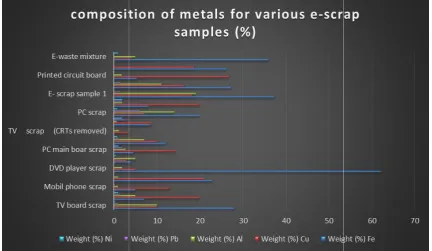
Depending on the type of products, there is a wide variation in the composition of e-wastes generated. Large no. of metals Including Iron (Fe), Copper (Cu), Aluminium
[image:2.595.122.481.57.280.2]Nickle (Ni) and Precious Metals Like Silver etc. are present in these wastes (Cui and Zhang (Fig. 2,3).
[image:2.595.86.519.483.734.2]Fig. 2. Composition of metals for different e Fig. 1.
11339 Sandeep Sharma and Mamta Chhabra Sharma, Understanding the scenario of generation, dumping and possible reconditioning of
waste is much more lethal than other categories of wastes as components made and metals like lead, cadmium, mercury, polyvinyl chlorides (PVC) etc. stuff damages then ervous the reproductive and endocrine and many of them are carcinogenic and neurotoxic. Depending on the type of products, there is a wide variation in wastes generated. Large no. of metals inium (Al), Lead (Pb), Precious Metals Like Silver (Ag), Gold (Au)
and Zhang, 2008)
Indian scenario
There is no clear data available in India about the quantity generated and disposed of each year and the resulting extent of environmental risk. The chosen practice to get rid of obsolete electronic stuffs in India is to get them in exchange from retailers on purchase of new items. 78% of all installed computers in India are estimated from the business sector (www.toxicslink.org 2003, 2004; Reena
generated in few cities across the nation show an alarming picture. Mumbai generates 11,000 tons of E
tons, Bangalore 8000 tons and Chennai 5000 year.
Composition of metals for different e-scrap samples (Jha et al., 2011)
. E-waste generation in India (Source: MAIT 2003)
Sandeep Sharma and Mamta Chhabra Sharma, Understanding the scenario of generation, dumping and possible reconditioning of electronic Waste in India
There is no clear data available in India about the quantity generated and disposed of each year and the resulting extent of environmental risk. The chosen practice to get rid of obsolete electronic stuffs in India is to get them in exchange from on purchase of new items. 78% of all installed computers in India are estimated from the business sector (www.toxicslink.org 2003, 2004; Reena et al., 2011). E-waste generated in few cities across the nation show an alarming 11,000 tons of E-waste, Delhi9000 tons, Bangalore 8000 tons and Chennai 5000-6000 tons each
2011)
Fig. 3. Composition of precious metals for different e
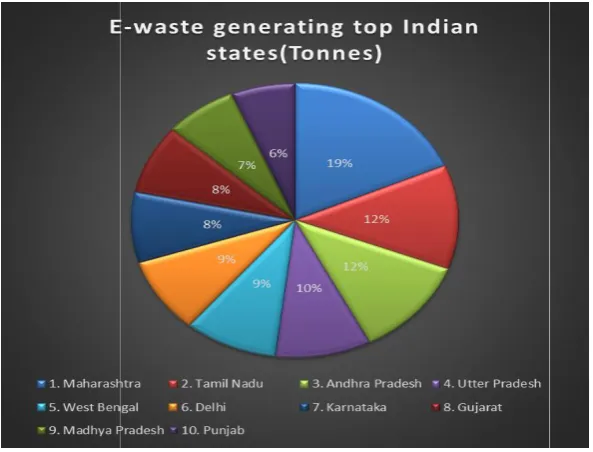
Fig. 5. E-waste Generating Top Ten States (Source:
11340 International Journal of Current Research,
[image:3.595.160.448.341.510.2]Composition of precious metals for different e-scrap samples (Jha et al.,
Fig. 4. E-waste generating top cities
waste Generating Top Ten States (Source: E-Waste Management in India- Consumer Voice, April 2009)
International Journal of Current Research, Vol. 7, Issue, 01, pp.11338-11342, January,2015
et al., 2011)
[image:3.595.155.452.537.763.2]Maharashtra State (including Mumbai city) alone produces 20270 tons of E-waste annually (Jha et al.,
figures have been shown through the pie chart (Fig. 4, 5)
Correlation of E waste with the sales of electronic goods
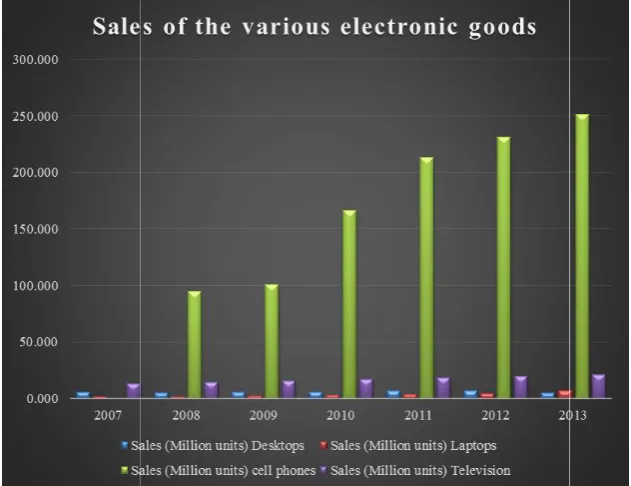
India is at a threshold with incredible growth in the electronics industry but at the same time it also faces the exponential growth of electronic waste. There are many reasons for this scenario which include rapid economic growth, urbanization, industrialization, increased consumerism etc.
[image:4.595.145.461.226.469.2]obsolescence of electronic products and the necess supporting upgrades multiplies the problem (Ahmed 2014) (Fig. 6, 7).
Fig. 6. Sales of various electronic goods over the past five years
11341 Sandeep Sharma and Mamta Chhabra Sharma, Understanding the scenario of generation, dumping and possible reconditioning of
city) alone produces et al., 2011). These figures have been shown through the pie chart (Fig. 4, 5)
orrelation of E waste with the sales of electronic goods
India is at a threshold with incredible growth in the electronics faces the exponential growth of electronic waste. There are many reasons for this scenario which include rapid economic growth, urbanization, industrialization, increased consumerism etc. High obsolescence of electronic products and the necessity for supporting upgrades multiplies the problem (Ahmed et al.,
Recycling and environmental hazards
As is clear from the chemical analysis of different e mainly comprises of toxic and
their handling difficult thus there is requirement of implementation of sound collection and treatment processes. The apt handling of e-waste can both prevent serious ecological damage and also recover valuable materials, especially precious metals. The recovering
chain for e-waste is mainly divided into three main subsequent steps: (i) collection and assortment, (ii) s
preprocessing which includes categorization, dismantling and mechanical treatment) and (iii) end
[image:4.595.118.490.499.766.2]Fig. 6. Sales of various electronic goods over the past five years
Fig. 7. Projected E waste generated annually
Sharma, Understanding the scenario of generation, dumping and possible reconditioning of electronic Waste in India
ecycling and environmental hazards
As is clear from the chemical analysis of different e-scrap it mainly comprises of toxic and hazardous elements which make their handling difficult thus there is requirement of collection and treatment processes.
waste can both prevent serious and also recover valuable materials, especially precious metals. The recovering and reutilizing waste is mainly divided into three main subsequent steps: (i) collection and assortment, (ii) sorting/dismantling and preprocessing which includes categorization, dismantling and mechanical treatment) and (iii) end processing.
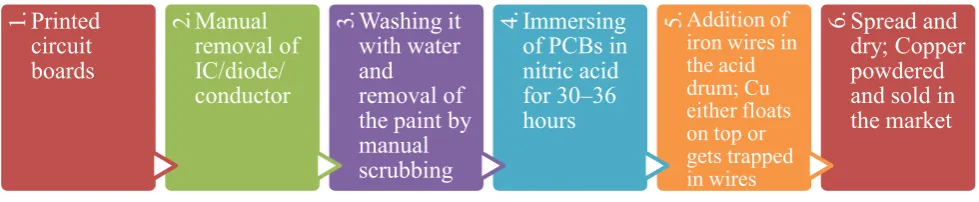
In order to achieve all recycling objectives the three steps should operate and interrelate in a holistic manner. The hazardous fractions of e-waste should be treated in an environmentally comprehensive and rigorous manner and there should be maximum recovery of the valuable material (Schluep et al., 2009). Presently in India, 95% of the recycling of disposed electronic products is being handled by the informal segment. The formal segment is handling a very minor proportion close to 5% of the overall e-waste recycled in India (19,000 MT). Though the informal recyclers are highly net worked and skilled in terms of collection of raw material, they do not observe with the environmental and work-related health and safety norms. However the formal recyclers get regular audit done and are as a result certified by regulatory agencies. A typical process of precious metal recovery has been depicted in Fig. 8 (Ashfaq et al., 2014).
Greenpeace conducted a study in 2005 on electronic recycling yards in Delhi which undoubtedly specified the presence of high levels of hazardous compounds including deadly dioxins and furans in the areas where this simple recycling takes place. The work force in e-waste disposal sector is poorly protected against the menace of it (Saoji, 2012).
Conclusion
E-waste is universally linked with environmental contamination and serious health problems due to its toxic chemical constituents. In India, large volumes of such waste is handled in the informal sector and reprocessed without any environmental safeguards. However, there is a scarcity of real time data and evidence to actually correlate the activities of this sector and its impacts on the mediums of water and soil.
REFERENCES
Ahmed S., Panwar, RM, Sharma, A. Forecasting e-waste amounts in India. International Journal of Engineering Research and General Science, Volume 2, Issue 6, October-November, 2014ISSN 2091-2730
Annual report, MAIT 2003. CII 2006. E-waste management, Green Business Opportunities, Vol.12, Issue 1, Confederation of Indian Industry, Delhi.
Ashfaq A. and Khatoon A. 2014. Environmental Impacts and Assessment of Electronic Waste Management Int.J.Curr.Microbiol.App.Sci., 3(7) 772-779.
Cui, J and Zhang. L. 2008. Metallurgical recovery of metals from electronic waste: A review, Journal of Hazardous Materials, 158, 228-256.
Jha, M. K., Kumar A., Kumar, V. 2011. Prospective Scenario of E-Waste Recycling in India, Recycling of electronic waste II, proceedings of the second symposium, TMS the minerals, metals and materials society 2011.
Puckett, J., Byster, L., Westervelt S. et al. 2002. Exporting Harm: The High-Tech Trashing of Asia, The Basel Action Network (BAN) and Silicon Valley Toxics Coalition (SVTC), 2002, http://www.ban.org/E-waste/technotrash finalcomp.pdf.
Raghupathy, L., Chaturvedi, A., Mehta, V., Killguss, U. 2010. E-Waste Recycling In India Integrating Informal and Formal Sectors. In: Proceedings NASEW, NML Jamshedpur, India, 38.
Reena, G., Sangita, V. K., 2011 Electronic Waste: A Case Study. Research Journal of Chemical Sciences, Vol. 19, 49-56.
Saoji, A. E-Waste Management: An Emerging Environmental and Health Issue In India, National Journal of Medical Research, Volume 2 Issue 1, 2249 4995 2012.
Schluep M., Hagelueken C., Kuehr R., Magalinic F., Maurer C., Meskers C., Mueller E., Wang F. Sustainable Innovation and Technology Transfer Industrial Sector Studies, Recycling from E-waste to resources July 2009 http://www.unep.org/pdf/Recycling_From_e-waste_to_ resources.pdf
Toxics Link report 2003. Scrapping the Hi-tech Myth: Computer Waste in India, Retrieved from www.toxicslink.org, Feb.
Toxics Link 2004. E-Waste in Chennai Time is running out, Retrieved from: www.toxicslink.org
[image:5.595.54.544.66.167.2]*******
Fig. 8. A flow chart depicting a typical process of precious metal (e.g. copper) recovery from printed circuit boards (Ashfaq et al., 2014)