Postural Costs of Performing Cognitive Tasks
in
Non-Coincident Reference Frames
Elaine Vida Fraizer
Thesis submitted for the degree of PhD in Psychology
Department of Psychology
University of Warwick, UK
Table of Contents ... ii
Table of Figures ... vi
Abbreviations ... ix
Acknowledgements ... x
Declaration ... xi
Foreword and Summary ... xii
Chapters 1 Introduction ... 1
1.1 Embodied attention ... 1
1.2 Aim and outline of the thesis ... 4
2 Theoretical and Methodological Context, and Thesis Framework ... 9
2.1 Introduction ... 9
2.2 Posture control ... 9
2.2.1 Balance assessment and measures ... 13
2.2.2 Visual information in posture control ... 17
2.3 Posture-cognition dual-tasking ... 21
2.3.1 Dual-task methodology in posture-cognition studies ... 23
2.3.2 The nature of interference in posture-cognition dual-tasks ... 27
2.4 Frame co-registration cost hypothesis ... 32
2.4.1 Natural reference frame for the cognitive task ... 36
2.4.2 Testing the frame co-registration cost hypothesis ... 38
Table 2-1 Previous research on posture-cognition dual-tasking ... 44
3 Methodology ... 58
3.1 Introduction ... 58
3.2 Visual search experiments ... 58
3.2.1. Apparatus and data collection ... 58
3.2.2 Stimuli ... 62
3.2.3 Experimental design and procedures ... 63
3.2.1 Apparatus and data collection ... 71
3.2.2 Stimuli ... 71
3.3.3 Experimental design and procedures ... 72
3.3.4 Dependent measures and analysis ... 76
4 Effects of Explicit Sway-Minimization on Posture-Cognition Dual-Tasking ... 77
4.1 Introduction ... 77
4.2 Method ... 81
4.2.1 Participants ... 81
4.3 Results ... 81
4.3.1 Instruction-order ... 81
4.3.2 Visual search ... 82
4.3.3 Postural sway ... 85
4.4 Discussion ... 88
5 Postural Costs of Performing Cognitive Tasks in Non-Coincident Reference Frames: The Basic Effect ... 92
5.1 Introduction ... 92
5.2 Experiment 2 ... 93
5.2.1 Method ... 93
5.2.1.1 Participants ... 93
5.2.2 Results ... 94
5.2.2.1 Visual search ... 94
5.2.2.2 Postural sway ... 97
5.2.3 Discussion ... 101
5.3 Experiment 3 ... 105
5.3.1 Method ... 106
5.3.1.1 Participants ... 106
5.3.1.2 Experimental procedures ... 107
5.3.2 Results ... 107
5.3.2.1 Visual search ... 107
5.3.2.2 Postural sway ... 109
5.3.2.3 Effects of sway minimization ... 112
6 Postural Costs of Performing Cognitive Tasks in Non-Coincident
Reference Frames: Split Frames ... 117
6.1 Introduction ... 117
6.2 Experiment 4 ... 120
6.2.1 Method ... 120
6.2.1.1 Participants ... 120
6.2.1.2 Apparatus, experimental design and procedures ... 121
6.2.2 Results ... 121
6.2.2.1 Visual search ... 121
6.2.2.2 Postural sway ... 122
6.2.3 Discussion ... 125
6.3 Experiment 5 ... 126
6.3.1 Method ... 127
6.3.1.1 Participants ... 127
6.3.1.2 Experimental procedures ... 128
6.3.2 Results ... 128
6.3.2.1 Visual search ... 128
6.3.2.2 Postural sway ... 129
6.3.2.3 Effects of sway minimization ... 131
6.3.3 Discussion ... 134
6.4 Experiment 6 ... 136
6.4.1 Method ... 138
6.4.1.1 Participants ... 138
6.4.1.2 Stimuli, and experimental procedures ... 138
6.4.2 Results ... 139
6.4.2.1 Visual search ... 139
6.4.2.2 Postural sway ... 142
6.4.3 Discussion ... 144
7 Postural Costs of Performing Cognitive Tasks in Non-Coincident Reference Frames: Mental Rotation ... 147
7.1 Introduction ... 147
7.2 Method ... 148
7.2.1 Participants ... 148
7.3.2 Postural sway ... 150
7.4 Discussion ... 156
8 General Discussion and Broader Implications ... 159
Table 8-1 Summary of experimental results to the thesis ... 171
References ... 175
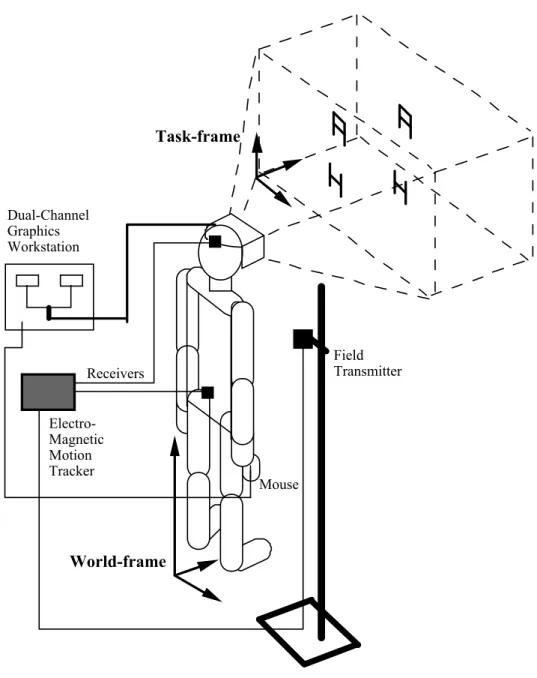
Figure 2-1 Task-spaces for the postural and cognitive tasks: schematic diagram of the laboratory set-up, and the visual search stimuli
from the participant’s perspective ... 39
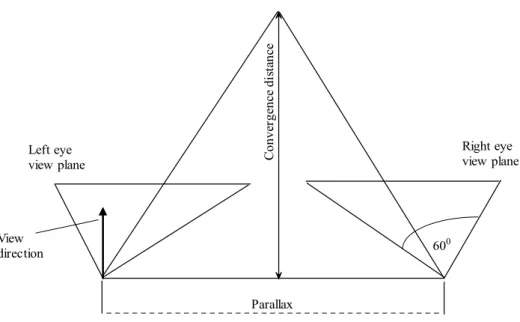
Figure 3-1 The HMD’s field of view ... 59
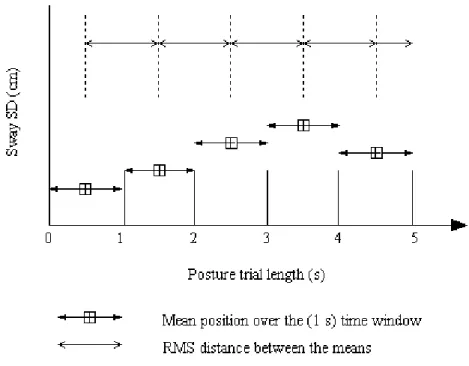
Figure 3-2 Posture dependent measures ... 68
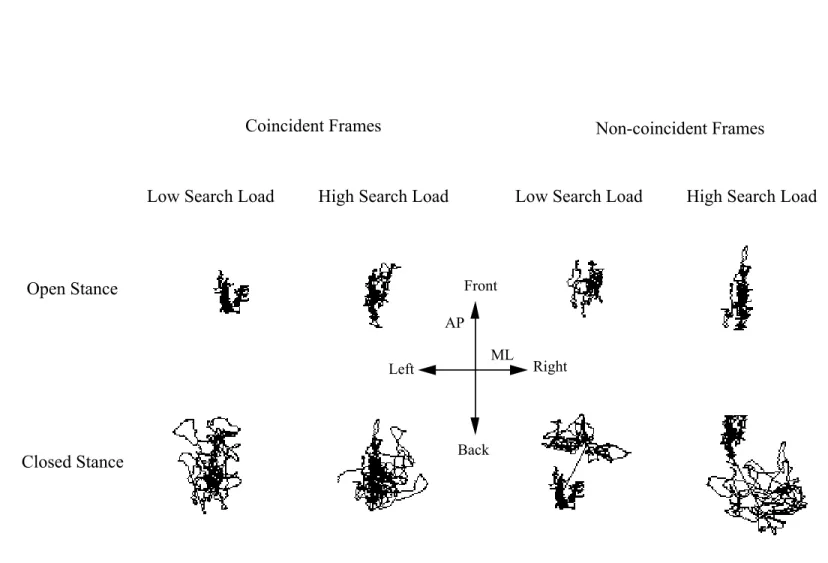
Figure 3-3 Representative participant’s head sway data ... 70
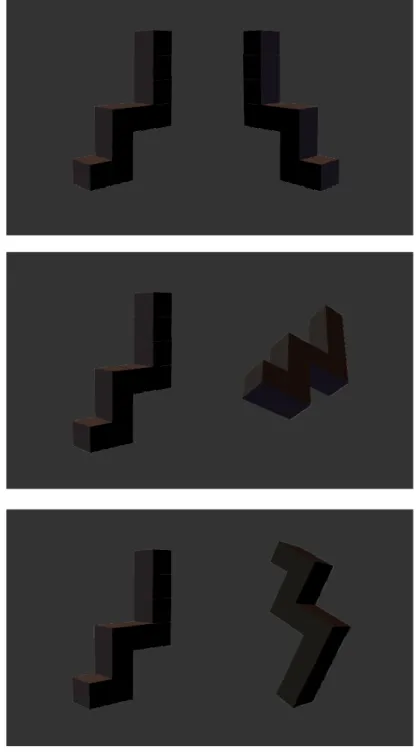
Figure 3-4 Mental rotation stimuli ... 73
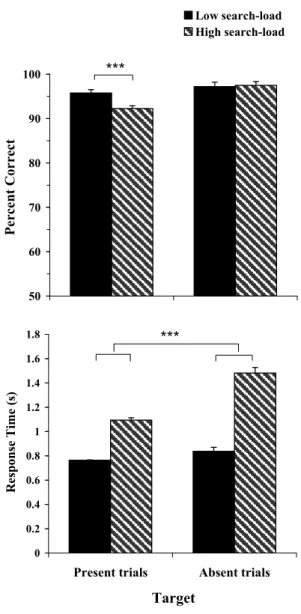
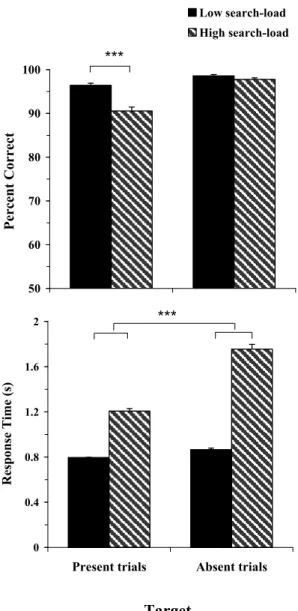
Figure 4-1 Percent accuracy and RT for low and high search-load as a function of target in Experiment 1 ... 84
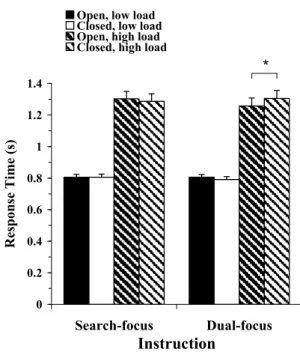
Figure 4-2 RT for postural and search-load conditions as a function of instruction in Experiment 1 ... 85
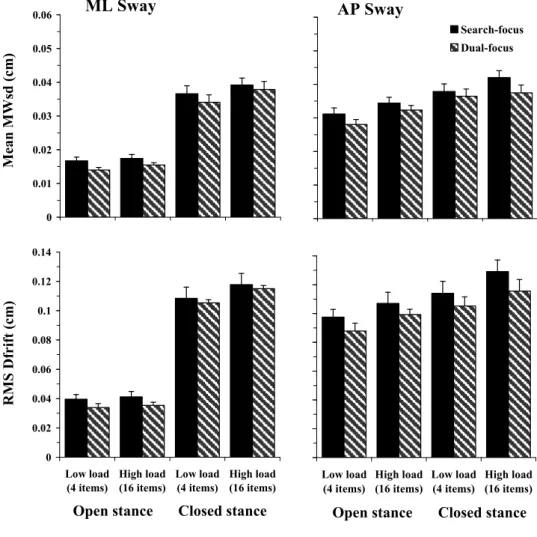
Figure 4-3 ML and AP of the head’s sway for search- and dual-focus instructions under search-load conditions as a function of stance in Experiment 1 ... 87
Figure 5-1 Percent accuracy and RT for low and high search-load as a function of target in Experiment 2 ... 95
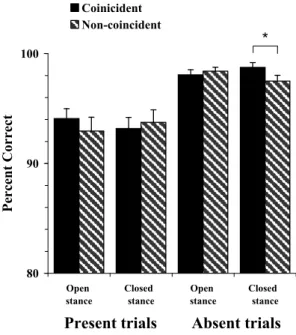
Figure 5-2 Percent accuracy for coincident and non-coincident frames under postural difficulty conditions as a function of target in Experiment 2 ... 96
Figure 5-4 ML and AP of the head’s sway for coincident and non-coincident frames under search-load conditions as a function of stance
in Experiment 2 ... 99
Figure 5-5 STS-AP sway of the head’s sway for low and high search-load
as a function of reference frame in Experiment 2 ... 100
Figure 5-6 ML and AP of the hip’s sway for coincident and non-coincident frames under search-load conditions as a function of stance
in Experiment 2 ... 101
Figure 5-7 STS-ML of the head’s sway for low and high search-load under postural difficulty conditions as a function of reference frame
in Experiment 3 ... 110
Figure 6-1 LTS-AP of the head and hip’s sway for coincident and non-
coincident frames as a function of search-load in Experiment 5 ... 131
Figure 6-2 Percent accuracy for display and search-load conditions on present and absent trials as a function of reference frame in
Experiment 6. ... 140
Figure 6-3 RT for 2-D and 3-D displays as a function of search-load in
Experiment 6. ... 141
Figure 6-4 STS and LTS of the head’s ML sway for low and high
search-load as a function of reference frame in Experiment 6 ... 143
Figure 7-1 ML and AP of the head’s sway for coincident and non-coincident frames under rotation difficulty conditions as a function of stance in Experiment 7 ... 152
Figure 7-2 STS and LTS of the head’s ML sway for rotation size as a
rotation difficulty conditions as a function of reference frame
in Experiment 7 ... 154
2-D 2-Dimensional
3-D 3-Dimensional
AP Anterior-Posterior
COG Centre of Gravity
COM Centre of Mass
COP Centre of Pressure
HMD Head-Mounted Display
LTS Long Time-Scale
ML Medial-Lateral
RT Response Time
This doctoral thesis is the outcome of research work carried out between October
2002 - May 2005 at the Department of Psychology and Institute of Applied
Cognitive Science, University of Warwick. The work was financially supported by
an ESRC competition studentship and a Warwick Postgraduate Research
Fellowship.
I gratefully acknowledge the advice and support of Drs Subhobrata (Joy) Mitra and
Derrick Watson. My special thanks to Joy for the opportunity to work on a project
so closely allied to my psychological and philosophical interests, and to whom as
principal supervisor and source of energy to the thesis I am deeply indebted. My
very good thanks to Derrick for the tremendous support of my undergraduate,
doctorate and teaching studies at Warwick.
I extend my sincerest thanks and appreciation to Professors Adolfo Bronstein
(Imperial College, London) and Philippe Perrin (Université Henri Poincaré-Nancy)
for acting as external examiners to the thesis, and for helpful comments and
suggestions to the work. My thanks and appreciation, also, to Professor Elizabeth
Maylor for the arranging and hosting of the viva voce.
The work presented in this thesis would not have been possible without the true
All data collection and statistical analyses reported in this thesis are the work of the
author. With minor exceptions, programming of the experiments and design of
apparatus and data collection are the work of Dr Subhobrata Mitra, University of
Warwick. Design of experiments, procedures and data analyses are the joint work of
the author and Dr Subhobrata Mitra. All of the studies to this thesis were approved
by Warwick University’s Humanities and Social Sciences Research Ethics
Committee.
Chapters 1 and 2 draw on material presented in Fraizer, E. V., & Mitra, Subhobrata,
Methodological and interpretive issues in posture-cognition dual-tasking in upright
stance, Gait & Posture (in press).
Chapters 3 and 4 draw on material presented in Mitra, Subhobrata., & Fraizer, E. V.
(2004), Effects of explicit sway minimization on postural-suprapostural
dual-tasking, Human Movement Science, 23, 1-20.
Chapters 1-3, 5-6, and 8 draw on material submitted for publication, Fraizer, E. V.,
& Mitra, Subhobrata. Postural costs of performing cognitive tasks in non-coincident
reference frames, Experimental Brain Research (under review).
In all other respects, material presented in this thesis is the work of the author, and
An extensive literature exists attesting to the limited-capacity performance of everyday tasks, such as looking and mental manipulation. Only relatively recently has empirical interest turned towards the capacity limitations of the body coordinations (such as posture control) that provide the physical substrate for cognitive operations (and so mandatorily coexist with cognition). What are the capacity implications for the body’s safety and mobility, for example, in accommodating the need to stabilize the eye-head apparatus for looking, or when mentally manipulating objects in 3-D space? Specifically, what are the postural costs in having to position and orientate the body in its own task space while supporting spatial operations in cognitive task space? What are the performance implications, in turn, for everyday cognitive tasks when posture control is challenged in this way? The purpose of this thesis was to establish a theoretical and methodological basis for examining any postural costs that may arise from the sharing or partitioning of spatial reference frames between these two components (a frame co-registration cost hypothesis).
In 7 experiments, young adults performed either conjunction visual search or mental rotation tasks (cognitive component) while standing upright (postural component). Visual search probed cognitive operations in extrapersonal space and mental rotation probed operations in representational space. Immersive visualization was used to operationalise postural and cognitive task contexts, by arranging for the two tasks (under varying postural and cognitive task-load conditions) to be carried out with respect to two spatial reference frames that were either coincident or non-coincident with each other. Aside from the expected performance trade-offs due to task-load manipulations, non-coincidence of reference frames was found to significantly add to postural costs for cognitive operations in extrapersonal space (visual search) and for representational space (mental rotation).
Postural Costs of Performing Cognitive Tasks
in
Chapter 1
Introduction
1.1 Embodied attention
The ability to control, maintain and rapidly reorganize body posture and spatial
orientation is fundamental to the adaptive success of nearly all animal species,
including humans [28]. The large-scale perceptual and neuromuscular coordinations
that underpin such activities as standing, leaning, orienting and recovering balance
are complex, but our usual experience of performing them effortlessly contrasts
markedly with the effort and capacity limitations traditionally associated with many,
arguably simpler, cognitive tasks, such as looking, listening and thinking. This may
have underpinned the historical view that postural coordinations are perhaps
different sorts of tasks to cognitive ones [150].
Over recent decades, however, research has started to highlight the fallacy of this
historical separation between studies of cognition and coordination. Firstly, research
within developmental psychology has demonstrated the crucial impact of motor
interaction [94] and memory [226]. Second, the research traditions that are now
collectively referred to as embodied cognition [52; 89; 112] have emphasised how
the evolutionary origin of the nervous system as a control system for the body must
affect the architecture and performance of purportedly ‘central’ cognitive functions.
Not only are many cognitive operations in daily life heavily reliant upon ongoing
perceptual evaluation and motor manipulation [19; 20; 50], even our offline
memory, reasoning and problem-solving operations are said to depend upon
sensorimotor simulations of real or imagined events ([68; 89; 91; 92; 112; 277]; see
also [112; 124; 125], for the bodily basis of logic, inference and abstract meaning).
Additional evidence that perceptual-cognitive processes are inextricably tied-up with
coordination skills comes from a growing volume of work on shared attentional
processes in postural and cognitive tasks. Drawing on dual-task methodology from
cognitive psychology, these investigations are showing that even highly practised
coordinations such as standing and locomotion engage the same cognitive resources
as attentive cognitive tasks, and when these are performed concurrently, negative
patterns of processing interference between the tasks can be detected to varying
degrees in young and old, healthy and clinical populations (see [286], for a review).
Thus, performing a cognitive task during mechanically unperturbed standing is
frequently shown to result in increased amount or variability of postural sway [107;
146; 162; 235]―a result commonly interpreted as indicating decreased postural
stability. A complementary finding is that simple adjustments to standing balance
posture control is ‘cognitively penetrable’ [250]. This represents an important
theoretical shift, but it would also appear to be a matter of substantial clinical
interest given that (a) concurrent cognitive activity is shown to affect postural
destabilization and falling in the elderly (see [131], for a review), and (b) learning
difficulties such as dyslexia [181] and the autistic spectrum [174], though defined by
higher level cognitive difficulties, are accompanied by a variety of coordination
difficulties.
The relationship between postural control and higher level cognition is not
straightforward, however. Many dual-task studies have shown decreased sway for a
concurrent cognitive task during unperturbed standing [63; 70; 106; 272], while
others have failed to find postural control effects [116; 250; 294]. Although there are
considerable methodological differences between studies in terms of test
populations, sway variables and dual-tasks, no systematic pattern of results emerges
from the literature that would fully explain differences in postural responses under
dual-task conditions. This underscores the fact that the specific mechanisms
underling interference in posture-cognition dual-tasking are only poorly understood.
The most common indication from the dual-task research is that processing
interference in cognition-coordinations occurs because these tasks compete for
shared spatial processing resources [116; 150], or because dual-tasking challenges
the online sensorimotor mechanisms required for postural control [212; 250].
and as yet poorly understood aspect of sharing spatial and temporal operations
between cognition and posture control—the impact of having to calibrate and
perform these tasks with respect to two non-coincident reference frames. A
fundamental consideration in this regard is that in everyday life every instance of
cognitive activity occurs within the context of one or more large-scale, mandatory
motor coordinations governing balance, locomotion and spatial orientation of the
body. The organization of these coordinations is strictly constrained by the need to
physically act and react with respect to a gravitational-inertial world frame. A
concurrent cognitive task, however, can have parsimonious, performance-critical
description in one of a number of reference frames [46; 87; 132], and which can
have complex (frame) dynamics relative to the postural world frame. In this sense,
how effortlessly a concurrent cognitive task coexists with posture control may
depend not just on each task’s component load and resulting draw on common
information-processing capacities, but also their deployment in terms of how tightly
the cognitive task context or task space can be embedded within the behavioural
context provided by posture control.
1.2 Aim and outline of the thesis: Postural costs of performing cognitive tasks in non-coincident reference frames
The aim of the thesis was to provide a theoretical and methodological platform for
the investigation of postural costs of maintaining stable cognitive task spaces in
motion-tracking) was used to operationalise postural and cognitive task contexts by
arranging for the two tasks to be carried out with respect to two spatial reference
frames that were either coincident or non-coincident with each other. To investigate
any interactions between frame coincidence or non-coincidence and task-load, the
postural component’s task-load was manipulated by requiring participants to stand
in either open (ankles about 10 cm apart and feet at comfortable angle) or closed
stance (feet flush against each other). Closed stance reduces the support base area,
and increases the difficulty of maintaining balance. Cognitive task-load was
manipulated by varying the number of distractors for a conjunction search task, or
else varying the size of the displacement angle for a mental rotation task. To
anticipate the concluding chapter, if the behavioural flexibility and adaptive
advantages of freeing cognitive task spaces from strict alignment with postural or
locomotor control spaces comes at the expense of relentless contention scheduling
between postural and cognitive task spaces (a frame co-registration cost hypothesis),
there may be important implications for our understanding of postural vulnerability
among the elderly as well as for emerging links between cognitive disabilities and
coordination deficits.
The theoretical and methodological framework to the thesis is developed in Chapter
2. The opening literature review discusses methods for the assessment and
measurement of postural control, and introduces a key conceptual issue concerning
interpretations given to postural sway (see below). In a second literature review, the
posture-cognition tasks is summarized and then discussed in terms of the general theoretical
frameworks that attempt to contain the data. The theoretical framework and
experimental outline to the thesis are presented in the third part of the chapter.
Methodology to the thesis experiments is given in Chapter 3.
A key issue to emerge from the posture control literature is that postural sway
cannot be assumed always as autonomously and automatically directed at the control
of balance, but may instead reflect the modulating use of sway in support of the
suprapostural (i.e., coordination-based) task. The theoretical implication, exposed in
the posture-cognition literature review, is that increased sway cannot be reliably
interpreted as signalling increased mechanical destabilization. Rigorous
investigation of the frame co-registration cost hypothesis therefore required a means
of disambiguating the experimental data arising from participants’ use of sway. An
attentional priority paradigm in which young adults were required to minimize their
sway while focussing on a conjunction visual search task was successfully devised
for this purpose (Experiment 1), and this is developed in Chapter 4.
The principal investigative work of the thesis begins in Chapter 5. In two
experiments, dual-task performance in young adults was compared for a conjunction
visual search task presented in spatial reference frames that either coincided, or did
not. Aside from expected performance trade-offs due to task-load manipulations,
non-coincidence of reference frames led to performance decrements in the postural
2) or specifying deliberate sway minimization as well (Experiment 3). These results
provided first evidence that task-linked reference frames add postural costs to
posture-cognition dual-tasking.
In Chapter 6, the co-registration hypothesis is defended against possible objection
that posture-relevant visual information in coincident frames could be used to
advantage postural performance in that condition, as compared to performance in the
non-coincident frames condition. In two experiments (Experiments 4 and 5),
cognitive penetrability of posture control in young adults was observed when visual
search was split between coincident and non-coincident frames and when frame
conditions were rendered identical in visual information relevant to posture control.
In a further experiment (Experiment 6), the applicability of the thesis visual search
paradigm to the more general experimental case of posture-cognition dual-tasking
was demonstrated by showing that visual search in 3-D in immersive environments
has no more measurable impact on postural control than search in 2-D.
In Chapter 7, the frame co-registration cost hypothesis is extended to the sphere of
representational space. Dual-task performance in young adults was compared for a
mental rotation task presented in either coincident or non-coincident spatial
reference frames (Experiment 7). Robust effects of frame non-coincidence on
postural sway were detected, confirming the importance of the frame co-registration
cost hypothesis for concurrent activities involving postural control and internally
In Chapter 8, the thesis findings are discussed with respect to the posture-cognition
Chapter 2
Theoretical and Methodological Context,
and Thesis Framework
2.1 Introduction
The theoretical and methodological context of the thesis is presented in two parts.
Following an introduction to the organization and mechanisms of posture control,
the first part of the chapter discusses conceptual and methodological issues relating
to the assessment and measurement of human balance. The second part of the
chapter presents methodological and interpretive issues in posture-cognition
dual-tasking during upright. The posture-cognition dual-task data is summarized, and the
data discussed in terms of the most commonly applied theoretical frameworks.
Finally, the theoretical framework, experimental outline and main experimental
prediction to the thesis are presented.
2.2 Posture control
The goal of posture control is to preserve posture (the bodies’ geometric linkages)
respect to the world ([147], for a review). The particular orientating posture can
depend on the reference task. During complex motor tasks, for example, most
animals, including humans, tend to control trunk and head movements in order to
stabilize the orientation of the gravitoinertial apparatus (vestibular system) and the
eye-head system in space [10; 202], thereby simplifying the processing of sensory
feedback [101].
Postural orientation is integral to posture equilibrium or balance, the preservation of
the body’s centre of mass (COM) with respect to the ground [147].1 The need to
maintain a high COM over a relatively small base of support means that bipedal
upright stance is inherently unstable. Any angular displacement of the body’s COM
(as normally results from a change in posture) precipitates a gravity-induced torque
at the support surface that disturbs the equilibrium position. Compensating for this
gravitational-inertial effect on the body’s segments requires re-adjustment of the
body’s posture and the application of corrective torques to the support base, such
that the body’s line of gravity (i.e., the line that runs through the body’s COM, in the
direction of gravity) once more projects over the support surface [161; 199].2
1 The terms “postural control” and “balance control” are used interchangeably in the
posture-cognition literature when referring to regulation of the body’s position, and this thesis follows in this convention.
2 The degree to which the body is being kept within equilibrium limits (i.e., the extent to which the
The ability to maintain the body’s COM within equilibrium bounds is often
approximated as a multisegmental inverted pendulum problem, involving weighted
displacement of proximal (e.g., trunk) and distal (e.g., ankle) joints over the support
base [84; 86; 280]. Muscles and ligaments spanning the joints act as stabilizing
elements by providing instantaneous torque due to muscle viscosity, mechanical
stiffness and damping (length-force tensions) [32]. Aside contributions from
spinally-mediated reflexes (e.g., stretch reflexes), resistances to self-generated and
externally-imposed perturbations are thought to involve functionally organized
collectives of joints and muscles that simplify the actor’s choice over the system’s
many degrees of freedom [28; 261].
The precise pattern of muscle activation, joint movement and ground reaction force
depends on sensory and environmental factors; for instance, perturbation magnitude
in different sensory environments and balance goal, as well as biomechanical factors
such as body and surface configuration (see [100; 101], for reviews). Against small
external perturbations on a firm support base, for example, humans often behave as
a single-link inverted pendulum, stabilizing themselves against the disturbance by
applying torque to the ankles, with little hip flexion [170]. The resulting
distal-to-proximal pattern of muscle activation can be compared to the early activation of
trunk and hip muscles occurring for larger disturbances or with a smaller supporting
area, when the body’s COM is near equilibrium limits [187]. In the latter situation,
most humans stabilize themselves by using the inertia of their body segments and
[102; 172]. Stronger disturbances may call for coordinated ankle and hip
displacements of the body’s COM over the support base [102; 172], while a change
in base is observed to invoke a stepping strategy [138; 139].
A well-established view is that these postural and movement patterns occur as
locally constrained but centrally selected motor programs, controlled by high-level
neurocognitive strategies, and implemented by feedback processes that signal
deviations from a unique postural set-point ([18]; see also [99]). Other work in
postural control dynamics has suggested that these apparently local constraints may
in fact occur as spontaneous, higher-level pattern formations. Studies involving
standing and visual tracking [22; 144; 239], as well as steady-state standing in the
context of gravity (so-called ‘quiet standing’) [60], have shown that the human body
spontaneously adopts two co-existing modes of movement during upright standing,
rather than a continuum of mixed strategies [60]. These consist of an in-phase mode,
with the ankle-hip joints moving simultaneously in the same direction, and an
anti-phase mode, with the two joints oscillating simultaneously in opposite directions,
one-mode predominating depending on sensory, environmental and intentional
(emotional-cognitive) conditions [22].
The postural stabilization process is thought to involve forward motor commands
directed at the expected equilibrium disturbance [84; 86; 168; 265], as well as
reactive control based on sensorimotor inputs [187; 199]. Studies suggest that some
represent different control systems―one subsystem for determining the internal
reference point to which the equilibrium is maintained, and a second control directed
at maintaining equilibrium about the target reference point [300]. In one
interpretation, feedforward control operates cognitively long term to stabilize an
unstable, reactive mechanical system by pushing the neuromuscular system back
towards its reference point ([21]; see also [86]). A second view, which similarly
identifies two-part behaviour but with different conclusions, is that persistent
migrations from the equilibrium position over short time intervals are corrected by
an anti-persistent, feedback loop operating at longer time-scale (>1 s) once
departures exceed a threshold magnitude [53]. The presence of open- and
closed-loop controls has been interpreted as the use of exploratory sway as source of
information in the detection of stability boundaries [214] followed by corrective
activity ([221]; see [86; 300], for similar considerations).
2.2.1 Balance assessment and measures
Various techniques have been used to capture and quantify the small, low-amplitude
motions of the body that accompany spontaneous, mechanically unperturbed upright
standing, and the larger amplitude motions that result from mechanically or
perceptually perturbed stance. Most usually, data is recorded using transducer force
platforms taking the vertical ground reaction forces at the point of application (the
centre of pressure, COP) along anterior-posterior and medial-lateral axes. However,
position, studies reporting COP actually provide overestimates of centre of gravity
excursions [21; 118; 279]. An alternative means of quantifying sway is to use
mechanical or electromagnetic devices to directly record COM motions from body
segments such as the head or hip [2; 67; 126; 135; 162; 222] .
The most commonly used sway measures are parameter estimates of the COP or
COM trajectory, derived from signal analysis, and presented in time or frequency
domains ([204], for a review).3 The large (often redundant) number of available
statistical parameters can considerably complicate data interpretation [178; 223],
although several studies have recommended particular summary measures based on
their sensitivity in capturing individual differences [105; 136; 204; 211] or in
describing particular characteristics of sway [223]. For example, in the frequency
domain, spectral analysis has been used to identify postural constraints in terms of
time-dependent postural behaviour [48; 63; 65; 157]. In the time domain,
velocity-related measures (e.g., sway path length) have been reported as discriminating
between decreased balance control and random postural activity better than
displacement-related measures ([196]; see [148]). On the other hand, displacement
3 The electrical signal taken (transduced) from a COP or COM displacement can be analysed in terms
measures (e.g., standard deviation) take on greater significance when comparing
sway performances in different age groups, especially under perturbed stance
conditions [211]. There remains no agreement, however, as to which summary
statistic best describes postural stability. More pertinently, it is not clear from the
posture-cognition dual-task data (reviewed in section 2.3) how the different
measures that have been used may relate to each other in the context of
posture-cognition dual-task performance (there being no discernable pattern between
measures, dual-task types, and dual-task outcomes).
A related concern is that, while the reliability of signal recording increases with
sampling duration [48; 74], the validity of signal analysis is compromised by the
assumption that sway values are stationary over the length of posture trial periods.
As earlier discussed, work in stochastic processes [49; 53; 54; 178] has shown that
posture sway during standing is a bounded random walk, meaning that the mean
position of sway can drift over time. As a result, a posture trial may contain both
shorter and longer time-scale motions, with the system exerting tighter or looser
control over different time-scales, depending on the precise posture-cognition
dual-task and dual-task load conditions. Under a low cognitive-load situation, for example, the
system may be able to exercise strict control over longer time-scale motions,
whereas a diversion of resources into cognitive task performance may slow the rate
of postural corrections, resulting in reduced frequency of sway. Equally possible,
‘ramble’ [299] to a greater degree than under conditions of increased cognitive task
difficulty [106].
Attempts have been made to capture the dynamic organization of postural behaviour
during dual-tasking using non-linear techniques [198; 208; 218; 220; 224]. As
mentioned however, time series such as COP appear not to have much low
dimensional dynamics, being best described as a random walk [49; 53; 54; 178].
This means that postural organizations may be rather general and without a low
level deterministic structure [219]. A simplified means developed to account for
non-linear time-dependent behaviour is to compute shorter and longer time-scale
motions from the moving windowed signal. Computing the COM (or COP) mean
standard deviation over a series of non-overlapping data windows for each posture
trial [157; 222] gives a measure of shorter time-scale activity [162]. The root mean
square distance between the windowed mean standard deviations gives a measure of
longer-time scale activity (see Chapter 3, section 3.2.4, for further details and
discussion of these measures). Together, the two measures allow for a minimally
multi-resolution view of sway patterns, while at same time ensuring a degree of
consistency with the standard measures from posture-cognition dual-task studies
2.2.2 Visual information in postural control
Postural control involves the dynamic regulation and integration of visual, vestibular
and somatosensory (cutaneous and proprioceptive) inputs (see [111; 160; 199], for
reviews). Against external perturbations on firm ground, somatosensory information
tends to play a dominant role in upright postural control [103; 104; 110; 161].
Where somatosensory information is limited by a reduced base of support, however,
vestibular and visual information have increased importance ([59]; see [42; 171]).
With respect to visual information, the low-frequency and low-amplitude oscillatory
displacements of the body (chiefly in the AP direction) characteristic of spontaneous
sway give rise to dynamic changes to optic flow (i.e., changes in the angular
positions of points in the visual environment). Small displacements of the visual
environment (as little as 2.5 cm for a viewing distance of 2 m, [244], below the
threshold for conscious perception) are sufficient to induce postural sway [72].
Physical displacement of the visible surroundings using moving room environments
[128; 186; 243; 244] or simulated displacement using computer-generated
videographic displays [23; 72; 262; 269] are found to induce sway, while stationary
visual environments tend to attenuate postural sway. Sinusoidal movement of the
visible surround produces a matching sinusoidal postural response [72; 128; 229;
263; 264], and the temporal coupling between stimulus and sway found to be
controlled or influenced by such factors as motion parallax [38; 93], and image
With visual motion in the frontal or sideways plane, body sway shows a phase lead
at low visual frequencies and a phase lag at higher frequencies [129]. This suggests
an ability to track (or anticipate) visual field motion, so as to minimize the amount
of relative displacement between the body and the environment [101]. In one
interpretation, posture is then stabilized with respect to a minimum detection
threshold by minimizing retinal slip (i.e., movement of the retina relative to the
optical projection of the object) [128]. These apparently automatic endeavours to
control optic flow through minimizing the body’s motions are generally interpreted
as attempts to secure or increase stance stability [162]. In this so-called autonomous
control view of posture control [162; 245; 246], reducing or controlling the level of
sway is seen as a reflexive goal of the posture system, and any increase in the level
of sway interpreted as a weakening of the level of control.
An alternative framework is provided by the facilitatory control view [245; 246],
which stresses that in most everyday situations (but not often in experiments using
the quiet stance paradigm, as above), posture control functions primarily as an
enabler or facilitator of suprapostural activities [215]. Beyond the basic requirement
of keeping the COM well within the stability boundary, posture control’s facilitatory
functions may or may not warrant further sway minimization. Thus, in situations
where there are no imminent threats to body safety and where there are ongoing
suprapostural tasks, sway may increase or decrease depending on the suprapostural
task requirements. Sway may increase, for example, when a visual suprapostural
occluded objects), and similarly, decrease when the task requires very precise eye
fixations, as perhaps, for a visual search task [245; 246].
Since the postural task employed in this thesis offered no extreme threat to stance
stability, a facilitatory control view has the consequence that participants might have
attempted to strategically control or intentionally modulate sway in support of the
cognitive (suprapostural) task, rather than choose to direct resources more fully to
controlling balance. Under these circumstances, increased sway for any particular
reference frame (or task-load) setting could not be specifically interpreted as a
resource draw into attempted sway control activities, as opposed, say, to a relative
neglect of the level of sway in favour of the cognitive task. To de-confound these
two explanations of sway patterns, the visual search task paradigm for the thesis
incorporated control experiments that required participants to actively minimize
their sway while performing the visual search task (see Chapters 4-6, in detail).
Historically, greater sensitivity to motion perception has been demonstrated for the
peripheral retina, used for coding the speed and direction, over central vision
(approximately 30 degrees of the visual field, [24]), used mainly for discriminating
position signals and stable characteristics of the environment [26]. Peripheral vision
is very sensitive to lamellar optical flow and, given that the ground surface is an
essential frame of reference in everyday life, expectedly found to strongly affect
both stability and balance [129; 243]. In context of the immersive environment
however, it is germane to note that both radial and lamellar flow as small as 15
degrees in diameter at the fovea region are found to induce postural sway [13; 183].
As noted in the literature [162; 290], a perhaps more important issue in using
head-mounted displays (HMDs) concerns the latency involved both in tracking and
generating a new image. Tracking latency and frame rate as small as 15 ms can be
detected by the human viewer [4].4 Where the delay between the user’s actions and
the displayed response is large enough [73], or time on task long enough [176; 166]
or task complexity [188] great enough, cue conflict between competing visual and
vestibular signals may give rise to motion sickness in susceptible individuals. The
paradigm type employed in this thesis, however, involved short exposure duration
and induced only small amplitude body sway, and so is unlikely to have had
significantly disruptive effect on participants’ sensorimotor function.5 Concerning
visual task performance, prolonged HMD use (> 10 min) may cause binocular
function defects ([165; 166] but see [228]), and both frame rate and latency have
been found to significantly affect perceptual stability and performance for a tracking
task [78]. In respect of the cognitive tasks employed in the present work, however,
direct comparison of visual search performances in HMDs and traditional screen
4 Note. For a frame rate kept constant and predictable, as for the apparatus used in this thesis (see
section 3.2.1, for details), latency rate depends only on the sampling and processing time between the actor’s action and the displayed response.
5 Of the about 200 participants to the thesis experiments (including pilot work), four people
interfaces has shown the former search to be more efficient [195], while work on
mental rotation has shown object-matching in immersive environments to be as
effective (but not as efficient) as in real-world environments [227; 276].
2.3 Posture-cognition dual-tasking
Physiological [85; 99; 102] and neurocognitive [206; 207] investigations show that
efforts to regain and maintain posture against external perturbations are demanding
of the same sorts of cognitive processes used to perform mentally effortful tasks.
Supporting evidence that cognition has a role in posture control comes from
behavioural studies examining reciprocal modulating effects of concurrent postural
and cognitive activities. Drawing on dual-task methodology from cognitive
psychology, these investigations are showing with some consistency that cognitive
task performance is detrimentally affected when stance is mechanically or visually
perturbed [14; 15; 36; 40; 210; 212; 213; 234; 250; 294]. This cognitive dual-task
decrement is particularly pronounced in older [36; 40; 210; 234; 250] and
balance-impaired adults [36; 210; 213; 234], as compared to performances in young adults
and controls, reflecting presumably the lesser psychomotor capacity of the elderly
and infirm to contain the effects of a postural challenge. On the postural
performance side, secondary task manipulations during perturbed standing are often
found to promote increased amount or variability of postural sway [15; 36; 146; 157;
197; 198; 210; 212; 213; 234; 235]―a result commonly interpreted as indicating
and patients [36; 210; 212; 234; 235], and indeed a number of studies have reported
reduced sway in healthy young adults for a concurrent cognitive activity performed
under perturbed stance dual-task conditions [14; 36; 64; 65; 217; 218].
Cognitive-task decrements are also found for concurrent tasks performed in
unperturbed stance, although this rarer result tends to occur only when posture
control is excessively challenged by reductions in the support base, such as in
feet-together standing [162] or standing with feet lined up heel-to-toe [116]. On the
postural side, secondary task manipulations have produced a mixed set of results,
variously bringing about increased [107; 137; 142; 146; 159; 162; 210; 235] or
decreased postural sway [237; 63-65; 70; 106; 218, Exp 2; 268; 272], or else leaving
sway unchanged [116; 250; 267; 294]. In line with the data for perturbed stance,
postural dual-task decrements during unperturbed standing tend to be greater or
more common in older adults [62; 107; 151; 210] and patients [96; 142; 143; 210]
than young adults and controls. However, for a range of postural conditions,
decreased sway in older adult and clinical groups during dual-tasking is not
unknown [15; 41; 70; 159; 248; 272], and several studies have reported reduced
sway in older but not younger adults under dual-task conditions that threatened [41]
or especially taxed [159; 248] posture control (but see [107]).
In summary, having to maintain upright stance under conditions that substantially
challenge balance is often found to affect cognitive task performance. Less reliable
While the ability in older and balance-impaired adults to maintain and regain
balance under dual-tasking conditions appears to be hampered by the execution of a
concurrent cognitive task, secondary task manipulations have produced a more
varied set of results in young adults. In particular, the diverse data on
posture-cognition dual-tasking in the perhaps more ecologically valid and common case of
unperturbed stance presents a challenge to discovering and understanding the
precise cognitive task conditions that affect postural control. One complicating
factor in cross-study comparisons of dual-tasking concerns problematic issues
arising from the importing of psychological research into the study of
posture-cognition. This issue is next discussed.
2.3.1 Dual-task methodology in posture-cognition studies
Efforts to impose a theoretical structure on posture-cognition outcomes have mostly
mirrored two broad (but not necessarily mutually exclusive [133; 173]) frameworks
used in cognitive psychology to explain dual-task decrements. Capacity theory, on
the one hand, views dual-task interference as arising from the parallel sharing of a
limited set of general-purpose resources [113] or specialized structures [274; 275].
On this account, when combined task demands exceed (centralized or particular)
resource supply, degraded performance is observed on one task, or both. Bottleneck
accounts, in contrast, emphasize the serial (i.e., sequential) nature of the dual-task
process, in terms of the single-channel filtering or scheduling of information at
such sources of interference occur, the nervous system is said to temporarily
postpone (i.e., time-share) operations on one task in favour of operations on the
prioritized task, resulting in reduced performance on the non-priority task.
When testing for dual-task interference, the most common approach (in general, as
well as in posture-cognition research) is to compare dual-task performance in both
tasks against their baseline performance, and to probe for interference by examining
interactions between dual-task components (see [184], for a discussion on candidate
scores for dual-tasks). As has been noted in the literature [286], dual-task
interactions cannot be used to infer the absolute attentional cost associated with
postural control [1; 83; 90]―a point implicitly or explicitly acknowledged in the
few studies that have attempted general-purpose resource explanations of
interference based on task interactions [64; 213; 294]. Also, dual-task interactions
provide only limited means of discriminating between general-capacity and
specialized capacity or bottleneck accounts of task interference [1]. The
interpretation of such interactions can be more reliable, however, in the context of
methodology that incorporates task difficulty and priority manipulations ([33]; see
[90]), tracking tasks [140; 182], catch trials [123; 146] or the selective application of
tasks that tap similar resource pools [146]. These cautionary caveats aside, a widely
held view is that the controlled interplay of postural and secondary tasks can be used
to understand the nature of competing task demands, if not their precise shared
As mentioned, the transfer of dual-task methodology to the posture-cognition setting
has usually involved so-called single- to dual-task performance comparisons in
which dual-task effects are measured against the ‘isolated’ performance of the
baseline task [14]. Implicit in this approach is the assumption that when subjects are
asked to perform a postural task such as standing upright, but are given no
instructions to perform a specific cognitive task, the only task-load they carry is of
the postural task. This assumption is clearly problematic because experimenters
have no control over what subjects think about in such baseline conditions. Adding
instructions to perform an explicit (i.e., experimenter-specified) cognitive task
alongside a balancing task does not simply add a cognitive task where there was
none. It actually replaces an unspecified cognitive task of unknown load, with a
specified task of known load. Performance differences can be therefore expected
between the two dual-task settings irrespective of the load that each task component
brings to the dual-task situation.
The use of baselines is further problematic because the common requirement to
stand as still as possible during the baseline recording period could encourage
subjects to ‘concentrate’ on the balancing task in a manner that negatively interferes
with the automatic processes underlying postural control [106; 268]. Support for this
view comes from the earliest of posture-cognition studies in which Fearing [82]
showed that the release of attention away from balance control and towards a
secondary task can enhance postural stability. This outcome was accredited to a
task [82]. The theme of facilitating balance by external focus has been examined in a
series of studies that show increased postural stability when subjects adopt an
external focus on the postural task (i.e., focus on the consequences of the postural
task) relative to an internal focus (i.e., focus on the postural task) [157; 291; 292];
see Chapter 4, for further discussion). One suggestion from the work is that the
attentional load associated with the postural task in the baseline condition can differ
markedly to that in the dual-task condition, irrespective of secondary task load. A
second outcome of the work is to illustrate the important role of instruction in the
dual-task emphasis that subjects are asked to bring to the experimental situation.
Despite the existing appreciation in the literature that a change in attentional priority
in one or other dual-task component can bias the allocation of resources [130; 235],
posture-cognition studies have seldom raised the issue of the instruction set’s
effects, or considered which other studies are, in this sense, comparable.
Baseline versus dual-task comparisons carry the additional concern that physically
responding to secondary tasks (for example, verbal answers or button pressing) may
generate mechanical demands that produce changes in sway that do not have to do
with cognitive load [65; 217; 218; 272; 296]. For this reason, it has been argued that
paradigms incorporating baseline conditions should be limited to delayed response
actions that come strictly after posture data collection ends [217; 218]. This would
of course limit any such paradigm to studying or involving working memory
retention periods only. An alternative is to devise baseline trials that require the
carry the task load associated with the explicit cognitive task (see, e.g., [238]).
Concerns stemming from the use of baselines can be altogether avoided, however,
by restricting performance comparisons to manipulations of task difficulty under
explicit dual-task conditions. Ideal in this respect are tasks whose load can be
directly quantified, scaled by experimental manipulations, and confirmed from
subjects’ performance, such as the visual search and mental rotation tasks employed
in this thesis (see also, [162]).
2.3.2 The nature of interference in posture-cognition dual-tasks
As previously mentioned, the most commonly used explanation for
posture-cognition dual-task interference is that these tasks compete in parallel for one or
more pool of resources, or else serially engage common input/output or response
mechanisms. Methodological hurdles notwithstanding, a general-purpose resource
model of the data is severely compromised by the fact that reductions in postural
sway can be obtained without graded degradation in the cognitive task [65; 106;
248; 272]. Instead, the literature has tended to gravitate towards interference
accounts that implicate competition for specialized resource pools (e.g., spatial
resources [116; 150]), or bottlenecks in response processes [212; 234; 251; 252] or
motor mechanisms [65; 296].
Early investigations into interference in cognition-coordinations in the context of
sensorimotor function [141; 287], an important cause of decreased stability in the
aged is a slowing of the online sensorimotor mechanisms required for sensory
integration [240; 241; 247]. For instance, the elderly are less able to modulate their
sway in response to perturbations that involve the transitional loss and return of
vision, as compared to their younger counterparts [250]. In particular, it has been
suggested that sensory conflict situations requiring the effortful integration and
resolution of sensory inputs have their impact on postural control by slowing the
informational update rate in the postural orientation process ([213]; see also, [249;
295]). Although a theoretical basis to time-sharing between cognition and
coordinations has yet to be fully cached out, work on the temporal characteristics of
posture control in dual-task contexts would suggest that the updating process in turn
impacts on cognitive task performance. For example, disruption to a continuous
visuomotor task is shown to be associated with the attentionally-demanding phase of
stance recovery (about 350 ms after the onset of the balance reaction) but not with
the reflexive initiation phase of the balancing activity ([182]; see [154], for a similar,
seated postural activity, and [140], for individual differences in adaptive switching
of attention between balance and a continuous visuomotor tracking task).
Cognitive processes that underpin online sensorimotor adjustments in the balance
control process are thought to involve feedforward representations [84; 86; 168;
265] as well as reactive control of sensorimotor inputs [187; 199]. While it is not
known whether attentional demands fall more on forward commands or on sensory
purpose of posture control has naturally focused attention on the possible
modulating effects of spatial cognitive tasks. A continuing line of enquiry in this
regard asks whether interference in posture control occurs more by spatial memory
tasks drawing on visual or visual-imagery processes, or by verbal (i.e., speech-based
linguistic) tasks that are traditionally assumed to invoke a different processing
stream ([77]; see [17; 134]). In early studies, negative patterns of dual-task
interference were found for spatial memory but not verbal memory tasks [116; 151].
Recent work, however, has demonstrated interference between posture control and
both verbal and spatial tasks ([63; 64; 107; 208; 248] and, marginally, [150]).
The discordant results between reports might be due in part to problems in
controlling for task difficulty across secondary tasks, although improved reliability
can be had from statistical analysis of task performances [107; 77; 267] or
physiological markers of task load [77]. In some cases, experimental procedures
may be an explanatory factor. For example, Brooks’ spatial matrix task
[39]―frequently employed to test for spatial cognitive interference in posture
control [15; 116; 150; 151; 248]―could be performed (in principle) using covert
verbalization of the sequence of directions for the spatial activity. Also, the
verbalized instructions could act as a direct source of interference. A further
complicating factor is that posture-cognition studies claiming similar investigative
goals have differed according to the precise cognitive function being studied.
Whereas some experimental designs have used tasks that centre on spatial
tasks more obviously designed to tap memory functions [116; 150; 151; 208; 248].
While attention and memory are thought to be functionally linked [16; 201], the
precise attentional demands and characteristics of these processes are not fully
understood. This could potentially frustrate attempts to compare posture-cognition
outcomes for the two types of tasks.
A further and more general issue is that experimental designs have differed in terms
of whether the secondary task is more demanding of cognitive or perceptual
resources in its interaction with the balancing task. Memory-based tasks designed to
tap internal visuospatial processes tend to have little or no perceptual load (for
instance, simply requiring the subject to visually fixate a point while mentally
encoding or retrieving verbally presented information, see, e.g., [150; 151]). These
tasks offer few opportunities for perceptual-based, postural-cognitive synergies.
Perceptual-cognitive tasks, in contrast, may involve operations that can be
synergized off the postural control task (e.g., line orientation judgments [35; 235]),
or else provide perceptual information relevant to posture control. This information
could be used to help anchor balance, and so attenuate any negative effect of the
dual-task’s cognitive component on postural stability (see, e.g., [108], for a
visual-verbal task, and [70], for an auditory task). For these reasons, researchers interested
in ‘pure’ cognitive load effects on postural control have looked to minimize the
Such an approach might be limited in reach, however, with respect to its clinical
interest or its relevance to everyday posture-cognition tasks. This is because postural
control often has the dual-purpose of securing the body’s safety and balance while
providing a stable physical substrate for perceptual-cognitive tasks. Beyond the
basic requirement of keeping the centre of mass within the stability boundary,
changes in sway amount or variability may have to do with postural operations that
facilitate the acquisition of perceptual information for the suprapostural task [222;
245; 246]. In one study [245], for example, young adults fixated on either a
cognitively-low (blank) target or on a cognitively-demanding target (requiring
counting the frequency of letters in a block of text) while in upright stance. Target
distance of the fixated items (near vs. far) was also manipulated. Both fixation on
near targets as opposed to more distance targets, and fixation on the cognitively
demanding target as compared to the cognitively-low target, brought about reduced
sway variability. It was suggested that the need in each case to visually fixate the
target placed restrictive constraints on the visual system, and which promoted
reduced sway in support of the visual task [245].
As earlier discussed, an important but often underestimated consequence of the
facilitatory-control view of posture-cognition dual-tasking is that increased sway as
a function of cognitive-load cannot be automatically interpreted as indicating
postural destabilization. Equally, a decrease in sway amplitude (or greater frequency
of sway) in response to added cognitive task load cannot be reliably interpreted as a
[5; 47; 48]). Nor can decreased sway be simply understood as reflecting increased
attentional recruitment due to arousal or emotion [14], or as, say, a release of
postural control from attentional focus [82; 157; 268].
As mentioned , this thesis employs control experiments that de-confound facilitatory
and autonomous control explanations of postural sway. But the facilitatory control
view has further importance in that it underscores the fact that posture has dual role
in securing the body’s safety and stability while providing a postural substrate
well-suited to task-oriented perception-action [215]. In this respect, the ease with which a
given task context can be embedded within the broad behavioural context enabled
by posture control can be just as critical to the level of effort and skill the pairing
requires, and the level of fluency it can be expected to achieve. In this sense, the act
of setting up and maintaining a cognitive task space may have a cost to posture
control, especially if the cognitive and postural task spaces are non-coincident and
the relation between them is dynamically complex. It is to this issue of the
co-registration of task-spaces for postural and cognitive tasks that the chapter now
turns.
2.4 Frame co-registration cost hypothesis
Maintenance of upright stance minimally involves monitoring the motion of the
body’s COM and applying a pattern of forces across body segments to keep the
[147]. Thus, the task-space with respect to which balance is maintained is naturally a
world-frame, since the forces that need to be generated to keep the body upright
result directly from the motion of body segments with respect to an inertial reference
frame that is always anchored to the ground surface, and has one axis parallel to the
direction of gravity (see Figure 2-1, page 39). On the cognitive side, humans are
capable of configuring themselves, physically as well as cognitively, into
special-purpose systems for efficiently performing many different functions. A notable
feature of this versatility is that these tasks are of a bewildering variety of
dimensions, both spatial and abstract, such that the cognitive task-spaces are highly
flexible and apparently assembled on demand (see [254; 255], for illustrations from
dynamic systems and motor learning). Most everyday cognitive tasks have
prominent spatial aspects, but the most natural reference frame with respect to which
a cognitive task is performed (call it the task-frame) may or may not be coincident to
the world-frame.
For example, consider the case of standing upright as the postural task and searching
for a visual pattern, say, a particular a word within a piece of text, as the cognitive
task. Standing upright on a flat surface involves monitoring the motion of the body’s
centre of mass, and applying a pattern of forces across body segments to keep the
body’s line of gravity comfortably within the support base provided by the stance.
The reference frame with respect to which tasks such as reading or visual search are
performed is, on the other hand, a more complex issue. It is useful to note that the
visual features that appear in a particular spatial arrangement with respect to each
other. It may be expected, then, that the most natural or most preferred reference
frame for this task will be the one with respect to which the relative positions of
visual features is specified in the most reliable and stable manner. If the display
surface is ground-fixed (e.g., a wall or billboard), then the coordinates of the visual
features with respect to the task-frame do not change relative to their coordinates
with respect to the world-frame. In this sense, the postural and cognitive-task frames
coincide. If the surface is, say, the side of a moving vehicle, or even a piece of paper
held in the reader’s hands, the dynamic relationship between this task-frame and the
world-frame can become quite complex. In the latter, perhaps more general, case of
postural-cognition dual-tasking, the visual search coordinates are placed in a
task-linked reference frame that can move with respect to the world-frame. In this sense,
reference frames for the two tasks do not always coincide.
There can be two types of solutions to this problem of non-coincident task frames.
One requires ongoing effort, and is therefore expected to generate performance
costs. The other is a matter of choice without ongoing effort, and should not impact
dual-task performance. To take the latter case first, one possibility is that performing
a cognitive task such as reading or visual search in its natural reference frame does
not impede simultaneous control of body posture with respect to the world-frame. If
this is the case, then frame discrepancy is a non-issue. A second possibility is that
discrepancy between the two tasks’ natural frames is an issue, but both tasks can
performance. In either case, there is no expectation of dual-task performance costs
associated specifically with non-coincidence of task frames. The second type of
solution involves performing each task in its most natural reference frame, but
requires some (effortful) means of always keeping the task- and world-frames in
register. Such a co-registration process could mean maintaining the transform that
takes one frame to the other to allow working in a common reference frame, or it
could mean keeping the world- and task-frames separate, but updating the state with
respect to each frame at a rate that falls within the tolerance limits of both tasks (i.e.,
the motion of one frame relative to the other would have to be monitored to avoid
disorientation). Either way, if the solution involves ongoing effort, the process is
referred to here as frame co-registration, and any associated costs to postural or
cognitive task performance as co-registration costs. It is hypothesized that when
performing a cognitive task, such as reading or visual search, alongside a postural
task, such as maintaining upright stance, non-coincidence of the two tasks’ natural
reference frames is not resolved automatically, but by a co-registration process
involving costs to postural performance. The following sections (2.4.1) refine the
notion of a natural reference frame for the visual search and mental rotation tasks
employed to test the frame co-registration cost hypothesis, and (2.4.2) present the
2.4.1 Natural reference frame for the cognitive task
The target of a visual conjunction search [259] is defined by the simultaneous
presence of certain features at a particular location in the visual field. Whether
selection by location is given a special status [259; 284] or not [43; 113], location
information is logically prior to, and has important role in, any object-based visual
search process (see [216], for a consideration). To unambiguously localize an object
it is necessary to select a particular reference frame and specify locations with
respect to that reference frame [122]. A given task situation typically offers a choice
between multiple egocentric (e.g., eye-centred, head-centred, shoulder-centred) and
exocentric (e.g., world-centred, object-centred, display-centred) reference frames
(see, e.g., [27; 45; 46; 61; 80; 114]). Exocentric frames, which are defined in terms
of relations between external objects (or portions or elements of objects), provide
the most stable and reliable means of storing item locations if the relative position of
items is of considerable interest [185]. This is commonly asserted as the case for
object recognition tasks [270], but evidence of oculomotor memory in visual search
[88; 121; 152; 200] suggests that the location of display items with respect to each
other is also important in a task such as conjunction search.
If the choice of reference frames is essentially unlimited, in what sense can the
cognitive component of a postural-cognitive dual-task have a natural or preferred
reference frame that is worth retaining, even when it is non-coincident with the