Statistical Bistratal Dependency Parsing
Richard Johansson
Department of Information Engineering and Computer Science University of Trento
Trento, Italy
Abstract
We present an inexact search algorithm for the problem of predicting a two-layered dependency graph. The algorithm is based on ak-best version of the standard cubic-time search algorithm for projective de-pendency parsing, which is used as the backbone of a beam search procedure. This allows us to handle the complex non-local feature dependencies occurring in bistratal parsing if we model the interde-pendency between the two layers.
We apply the algorithm to the syntactic– semantic dependency parsing task of the CoNLL-2008 Shared Task, and we obtain a competitive result equal to the highest published for a system that jointly learns syntactic and semantic structure.
1 Introduction
Numerous linguistic theories assume a multistratal model of linguistic structure, such as a layer of surface syntax, deep syntax, and shallow seman-tics. Examples include Meaning–Text Theory (Mel’ˇcuk, 1988), Discontinuous Grammar (Buch-Kromann, 2006), Extensible Dependency Gram-mar (Debusmann et al., 2004), and the Functional Generative Description (Sgall et al., 1986) which forms the theoretical foundation of the Prague De-pendency Treebank (Hajiˇc, 1998).
In the statistical NLP community, the most widely used grammatical resource is the Penn Treebank (Marcus et al., 1993). This is a purely syntactic resource, but we can also include this treebank in the category of multistratal resources
since the PropBank (Palmer et al., 2005) and NomBank (Meyers et al., 2004) projects have an-notated shallow semantic structures on top of it. Dependency-converted versions of the Penn Tree-bank, PropBank and NomBank were used in the CoNLL-2008 Shared Task (Surdeanu et al., 2008), in which the task of the participants was to pro-duce a bistratal dependency structure consisting of surface syntax and shallow semantics.
Producing a consistent multistratal structure is a conceptually and computationally complex task, and most previous methods have employed a purely pipeline-based decomposition of the task. This includes the majority of work on shallow se-mantic analysis (Gildea and Jurafsky, 2002, in-ter alia). Nevertheless, since it is obvious that syntax and semantics are highly interdependent, it has repeatedly been suggested that the problems of syntactic and semantic analysis should be carried out simultaneously rather than in a pipeline, and that modeling the interdependency between syn-tax and semantics would improve the quality of all the substructures.
The purpose of the CoNLL-2008 Shared Task was to study the feasibility of a joint analysis of syntax and semantics, and while most partici-pating systems used a pipeline-based approach to the problem, there were a number of contribu-tions that attempted to take the interdependence between syntax and semantics into account. The top-performing system in the task (Johansson and Nugues, 2008) applied a very simple reranking scheme by means of a k-best syntactic output, similar to previous attempts (Gildea and Juraf-sky, 2002; Toutanova et al., 2005) to improve se-mantic role labeling performance by using
tiple parses. The system by Henderson et al. (2008) extended previous stack-based algorithms for dependency parsing by using two separate stacks to build the syntactic and semantic graphs. Llu´ıs and M`arquez (2008) proposed a model that simultaneously predicts syntactic and semantic links, but since its search algorithm could not take the syntactic–semantic interdependencies into ac-count, a pre-parsing step was still needed. In ad-dition, before the CoNLL-2008 shared task there have been a few attempts to jointly learn syntac-tic and semansyntac-tic structure; for instance, Merlo and Musillo (2008) appended semantic role labels to the phrase tags in a constituent treebank and ap-plied a conventional constituent parser to predict constituent structure and semantic roles.
In this paper, we propose a new approximate search method for bistratal dependency analysis. The search method is based on a beam search pro-cedure that extends a k-best version of the stan-dard cubic-time search algorithm for projective dependency parsing. This is similar to the search method for constituent parsing used by Huang (2008), who referred to it as cube pruning, in-spired by an idea from machine translation decod-ing (Chiang, 2007). The cube prundecod-ing approach, which is normally used to solve thearg max lem, was also recently extended to summing prob-lems, which is needed in some learning algorithms (Gimpel and Smith, 2009).
We apply the algorithm on the CoNLL-2008 Shared Task data, and obtain the same evalua-tion score as the best previously published system that simultaneously learns syntactic and semantic structure (Titov et al., 2009).
2 Bistratal Dependency Parsing
In the tradition of dependency representation of sentence structure, starting from Tesni`ere (1959), the linguistic structure of the sentence is repre-sented as a directed graph of relations between words. In most theories, certain constraints are im-posed on this graph; the most common constraint on dependency graphs in syntax, for instance, is that the graph should form a tree (i.e. it should be connected, acyclic, and every node should have at most one incoming edge). This assumption un-derlies almost all dependency parsing, although there are also a few parsers based on slightly more general problem formulations (Sagae and Tsuji, 2008).
In this paper, we assume a different type of con-straint: that the graph can be partitioned into two subgraphs that we will refer to asstrataorlayers, where the first of the layers forms a tree. For the second layer, the only assumption we make is that there is at most one link between any two words. However, we believe that for any interesting lin-guistic structure, the second layer will be highly dependent on the structure of the first layer.
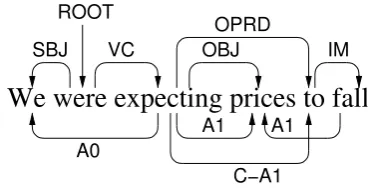
Figure 1 shows an example of a bistratal depen-dency graph such as in the CoNLL-2008 Shared Task on syntactic and semantic dependency pars-ing. The figure shows the representation of the sentenceWe were expecting prices to fall. The pri-mary layer represents surface-syntactic relations, shown above the sentence, and the secondary layer consists of predicate–argument links (here, we have two predicatesexpectingandfall).
SBJ ROOT
We were expecting prices to fall
VC IM
OPRD
OBJ
C−A1 A1 A1
[image:2.595.323.508.316.410.2]A0
Figure 1: Example of a bistratal dependency graph.
We now give a formal model of the statistical parsing problem of prediction of a bistratal depen-dency graph. For a given input sentencex, the task of our algorithm is to predict a structureyˆ consist-ing of a primary layer yˆp and a secondary layer ˆ
ys. In a discriminative modeling framework, we model this prediction problem as the search for the highest-scoring output from the candidate spaceY under a scoring functionF:
hyˆp,yˆsi= arg max hyp,ysi∈Y
F(x, yp, ys)
The learning problem consists of searching in the model space for a scoring function F that mini-mizes the cost of predictions on unseen examples according to a givencost functionρ. In this work, we consider linear scoring functions of the follow-ing form:
F(x, yp, ys) =w·Φ(x, yp, ys)
Based on the structural assumptions made above, we now decompose the feature represen-tation into three parts:
Φ=Φp+Φi+Φs
Here,Φprepresents the primary layer, assumed to be a tree, Φs the secondary layer, and finallyΦi is the representation of the interdependency be-tween the layers. For the feature representations of the primary and secondary layers, we employ
edge factorization, a decomposition widely used in statistical dependency parsing, and assume that all edges can be scored independently:
Φp(x, yp) =
X
f∈yp
φp(x, f)
The representation of the interdependency be-tween the layers assumes that each secondary link is dependent on the primary layer, but independent of other secondary links.
Φi(x, yp, ys) =
X
f∈ys
φi(x, f, yp)
The interdependency between layers is the bottle-neck for the search algorithm that we will present in Section 3. For semantic role analysis, this in-volves all features that rely on a syntactic repre-sentation, most importantly the PATH feature that represents the grammatical relation between pred-icate and argument words. For instance, in Fig-ure 1, we can represent the surface-syntactic re-lation between the tokens fall and prices as the stringIM↑OPRD↑OBJ↓. In this work, all interde-pendency features will be based on paths in the primary layer.
3 A Bistratal Search Algorithm
This section presents an algorithm to approxi-mately solve thearg max problem for prediction of bistratal dependency structures. We present the algorithm in two steps: first, we review a k-best version of the standard search algorithm for pro-jective monostratal dependency parsing, based on the work by Huang and Chiang (2005).1 In the second step, starting from the k-best monostratal search, we devise a search method for the bistratal problem.
1Huang and Chiang (2005) described an even more effi-cient k-best algorithm based on lazy evaluation, which we will not use here since it is not obviously adaptable to the situation where the search is inexact.
3.1 Review ofk-Best Dependency Parsing
The search method commonly used in dependency parsers is a chart-based dynamic programming al-gorithm that finds the highest-scoring projective dependency tree under an edge-factored scoring function. It runs in cubic time with respect to the sentence length. In a slightly more general for-mulation, it was first published by Eisner (1996). Starting from McDonald et al. (2005), it has been widely used in recent statistical dependency pars-ing frameworks.
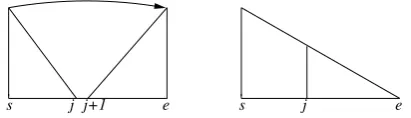
The algorithm works by creating open struc-tures, which consist of a dependency link and the set of links that it spans, and closed structures, consisting of the left or right half of a complete subtree. An open structure is created by a proce-dure LINKthat adds a dependency link to connect a right-pointing and a left-pointing closed struc-ture, and a closed structure by a procedure JOIN that joins an open structure with a closed structure. Figure 2 shows schematic illustrations: a LINK operation connects the right-pointing closed struc-ture betweensandjwith the left-pointing closed structure between j+ 1and e, and a JOIN oper-ation connects an open structure between sand j with a closed structure betweenjande.
e
[image:3.595.314.520.435.494.2]s j j+1 s j e
Figure 2: Illustrations of the LINKand JOIN oper-ations.
The search algorithm can easily be extended to find the k best parses, not only the best one. In
label.
The pseudocode of the search algorithm for
k-best dependency parsing is given in Algo-rithms 1 and 2. For brevity, we omitted the code for ADVANCE-LEFT and ADVANCE-RIGHT, which are similar to ADVANCE-EDGE, as well as ADVANCE-LOWER, which resembles ADVANCE -UPPER. The FSTfunction used in the pseudocode returns the first element of a tuple.
The algorithm uses a priority queue with stan-dard operations ENQUEUE, which enqueues an element, and DEQUEUE, which removes the highest-scoring item from the queue. With a stan-dard binary heap implementation of the priority queue, these two operations execute in logarithmic time. To build the queue, we use a constant-time TOSS operation, which appends an item to the queue without enforcing the priority queue con-straint, and a HEAPIFY operation that constructs a consistent priority queue in linear time.
3.2 Extension to Bistratal Dependency Parsing
Thek-best algorithm forms the core of the inexact bistratal search algorithm. Our method is similar to the forest reranking method by Huang (2008), although there is no forest pruning or reranking in-volved here. Crucially, we divide the features into
local features, which can be computed “offline”, and nonlocal features, which must be computed during search. In our case, the local features are
ΦpandΦs, while the nonlocal features are the in-terdependent featuresΦi.
Algorithm 3 shows pseudocode for the main part of the bistratal search algorithm, and Algo-rithm 4 for its support functions. The algoAlgo-rithm works as follows: for every spanhs, ei, the algo-rithm first uses the LINK procedure from the k -best monostratal search to construct ak-best list of open structures without semantic links. In the next step, secondary links are added in the procedure LINK-SECONDARY. For brevity, we show only the procedures that create open structures; they are very similar to their closed-structure counterparts. The LINK-SECONDARY procedure starts by creating an initial candidate (FIRST-SEC-OPEN) based on the best open structure for the primary layer. FIRST-SEC-OPEN creates the candidate space for secondary links for a single primary open structure. To reduce search complexity, it makes use of a problem-specific function SCOPE
Algorithm 1 k-best search algorithm for depen-dency parsing.
functionk-BEST-SEARCH(k)
n←length of the sentence
initialize the tableOof open structures initialize the tableCof closed structures
form∈[1, . . . , n] fors∈[0, . . . , n−m]
LINK(s, s+m,→, k)
LINK(s, s+m,←, k)
JOIN(s, s+m,→, k) JOIN(s, s+m,←, k)
returnC[0, n,→]
procedureLINK(s, e, dir, k)
E←CREATE-EDGES(s,e, dir, k)
q←empty priority queue
forj∈[s, . . . , e−1]
l←C[s, j,→]
r←C[j+ 1, e,←]
o←CREATE-OPEN(E,l, r,1,1,1)
TOSS(q, o)
HEAPIFY(q)
while|O[s, e, dir]|< kand|q|>0
o←DEQUEUE(q)
ifo /∈O[s, e, dir]
APPEND(O[s, e, dir], o)
ENQUEUE(q,ADVANCE-EDGE(o))
ENQUEUE(q,ADVANCE-LEFT(o))
ENQUEUE(q,ADVANCE-RIGHT(o))
procedureJOIN(s, e, dir, k) q←empty priority queue
ifdir=→
forj∈[s+ 1, . . . , e]
u←O[s, j,→]
l←C[j, e,→]
c←CREATE-CLOSED(u, l,1,1)
TOSS(q, c)
else
forj∈[s, . . . , e−1]
u←O[j, e,←]
l←C[s, j,←]
c←CREATE-CLOSED(u, l,1,1)
TOSS(q, c)
HEAPIFY(q)
while|C[s, e, dir]|< kand|q|>0
c←DEQUEUE(q)
ifc /∈C[s, e, dir]
APPEND(C[s, e, dir], c)
ENQUEUE(q,ADVANCE-UPPER(c))
ENQUEUE(q,ADVANCE-LOWER(c))
that defines which secondary links are possible from a given token, given a primary-layer context.
Algorithm 2 Support operations for the k-best search.
functionCREATE-EDGES(s,e, dir, k)
E← ∅
forl∈ALLOWED-LABELS(s,e, dir)
scoreL←w·φp(s, e, dir, l)
edge← hscoreL, s, e, dir, li
APPEND(E, edge)
returnthe topkedges inE
functionCREATE-OPEN(E,l, r, ie, il, ir)
scoreL←FST(E[ie]) +FST(l[il]) +FST(r[ir]) returnhscoreL+scoreN, E, l, r, ie, il, iri
functionCREATE-CLOSED(u,l, iu, ir)
scoreL←FST(u[iu]) +FST(l[il])
returnhscoreL+scoreN, u, l, iu, ili
functionADVANCE-EDGE(o)
whereo= (score, E, l, r, ie, il, ir)
ifie=LENGTH(E)
return∅ else
returnCREATE-OPEN(E,l, r, ie+ 1, il, ir)
functionADVANCE-UPPER(c)
wherec= (u, l, iu, il)
ifiu=LENGTH(u)
return∅ else
returnCREATE-CLOSED(u,l, iu+ 1, il)
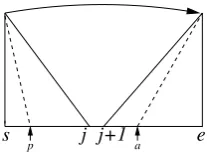
[image:5.595.364.468.61.137.2]structure by adding a link between two substruc-tures, a complete path is created between the to-kens in the substructures. We thus search for pos-sible secondary links only between the two sub-structures that are joined.
Figure 3 illustrates this process. A primary open structure between s and e has been created by adding a link from the right-pointing closed struc-ture between s and j to the left-pointing closed structure between j + 1 and e. We now try to add secondary links between the two substruc-tures. For instance, in the semantic role parsing task described in subsection 3.3, if we know that there is a predicate betweensandj, then we look for arguments betweenj+ 1ande, i.e. we apply the SCOPEfunction to the right substructure.
When computing the scores for secondary links, note that for efficiency only the interdependent part Φi should be computed in CREATE-SEC -EDGES; the part of the score that does not depend on the primary layer can be computed before en-tering the search procedure.
e s j j+1
p a
Figure 3: Illustration of the secondary linking pro-cess: When two substructures are connected, we can compute the path between a predicate in the left substructure and an argument in the right sub-structure.
Algorithm 3Search algorithm for bistratal depen-dency parsing.
functionBISTRATAL-SEARCH(k)
n←length of the sentence
initialize the tableOof open structures initialize the tableCof closed structures usingφs, compute a tablescoressfor all
possible secondary edgeshh, d, li
form∈[1, . . . , n] fors∈[0, . . . , n−m]
LINK(s, s+m,→, k)
LINK-SECONDARY(s,s+m,→, k)
LINK(s, s+m,←, k)
LINK-SECONDARY(s,s+m,←, k)
JOIN(s, s+m,→, k)
JOIN-SECONDARY(s,s+m,→, k)
JOIN(s, s+m,←, k)
JOIN-SECONDARY(s,s+m,←, k)
returnFIRST(C[0, n,→])
procedureLINK-SECONDARY(s,e, dir, k)
q←empty priority queue
o←FIRST-SEC-OPEN(O[s,e, dir],1, k)
ENQUEUE(q, o)
buf←empty list
while|buf|< kand|q|>0
o←DEQUEUE(q)
ifo /∈buf
APPEND(buf, o)
foro′∈ADVANCE-SEC-OPEN(o, k)
ENQUEUE(q,o′)
SORT(buf)toO[s, e, dir]
3.3 Application on the CoNLL-2008 Shared Task Treebank
[image:5.595.307.528.259.569.2]Algorithm 4 Support operations in bistratal search.
functionFIRST-SEC-OPEN(L,iL, k)
ifi=LENGTH(L)
return∅
l←GET-LEFT(L[iL]),r←GET-RIGHT(L[iL]) forh∈[START(l), . . . ,END(l)]
ford∈SCOPE(r, h)]
E[h][d]←CREATE-SEC-EDGES(h, d, L[iL], k)]
IE[h][d]←1
forh∈[START(r), . . . ,END(r)]
ford∈SCOPE(l, h)]
E[h][d]←CREATE-SEC-EDGES(h, d, L[iL], k)]
IE[h][d]←1
returnCREATE-SEC-OPEN(L, iL, E, I)
functionCREATE-SEC-EDGES(h,d, o, k)
E← ∅
forl∈ALLOWED-SEC-LABELS(h,d)
score←w·φi(h, d, l, o) +scoress[h, d, l]
edge← hscore, h, d, li
APPEND(E, edge)
returnthe topkedges inE
functionCREATE-SEC-OPEN(L,iL, E, I)
score←FST(L[iL]) +Ph,dFST(E[h, d, IE[h, d]]) returnhscore, L, iL, E, IEi
functionADVANCE-SEC-OPEN(o,k)
whereo=hscore, L, iL, E, IEi
buf← ∅
ifiL<LENGTH(L)andIE= [1, . . . ,1]
APPEND(buf,FIRST-SEC-OPEN(L, iL+ 1, k))
forh, d
ifIE[h, d]<LENGTH(E[h, d]) I′
E←COPY(IE)
I′
E[h, d]←IE′[h, d] + 1
APPEND(buf,CREATE-SEC-OPEN(L, iL, E, IE′))
returnbuf
To apply the bistratal search algorithm to the problem of syntactic–semantic parsing, a problem-specific implementation of the SCOPE function is needed. In this case, we made two as-sumptions. First, we assumed that the identities of the predicate words are known a priori2. Sec-ondly, we assumed that every argument of a given predicate word is either a direct dependent of the predicate, one of its ancestors, or a direct depen-dent of one of its ancestors. This assumption is a simple adaptation of the pruning algorithm by Xue and Palmer (2004), and it holds for the vast major-ity of arguments in the CoNLL-2008 data; in the training set, we measured that this covers 99.04% of the arguments of verbs and 97.55% of the
argu-2
Since our algorithm needs to know the positions of the predicates, we trained a separate classifier using the LIBLIN
-EARtoolkit (Fan et al., 2008) to identify the predicate words. As features for the classifier, we used the words and part-of-speech tags in a±3 window around the word under consid-eration.
[image:6.595.69.289.76.466.2]ments of nouns.
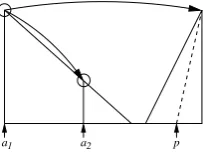
Figure 4 shows an example of how the SCOPE function works in our case. If a predicate is con-tained in the right substructure, we find two po-tential arguments: one at the start of the left sub-structure, and one more by recursively searching the left structure.
p
a1 a2
Figure 4: Illustration of the SCOPE function for predicate–argument links. If the right substructure contains a predicate, we can find potential argu-ments in the left substructure.
While the primary layer is assumed to be pro-jective in Algorithm 3, the syntactic trees in the CoNLL-2008 data have a small number of nonpro-jective links. We used a pseudo-prononpro-jective edge la-bel encoding to handle nonprojectivity (Nivre and Nilsson, 2005).
To implement the model, we constructed fea-ture representationsΦp,Φs, andΦi. The surface-syntactic representation Φp was a standard first-order edge factorization using the same features as McDonald et al. (2005). The features inΦsand
Φiare shown in Table 1 and are standard features in statistical semantic role classification.
Φs Φi
Predicate word Path
Predicate POS Path + arg. POS Argument word Path + pred. POS Argument POS Path + arg. word Pred. + arg. words Path + pred. word Predicate word + label Path + label
[image:6.595.366.468.166.243.2]Predicate POS + label Path + arg. POS + label Argument word + label Path + pred. POS + label Argument POS + label Path + arg. word + label Pred. + arg. words + label Path + pred. word + label
Table 1: Feature representation for secondary links.
[image:6.595.311.523.508.620.2]pri-mary part ρp and a secondary part ρs. We com-puted the primary part as the sum of link errors:
ρp(yp,yˆp) =Pl∈yˆpcp(l, yp), where
cp(l, yp) =
0 ifl∈ypand its label is correct
0.5 ifl∈ypbut its label is incorrect
1 ifl /∈yp
In a similar vein, we computed the secondary part
ρsof the cost function as#fp+ #fn+ 0.5·#fl, where #fp is the number of false positive sec-ondary links, #fn the number of false negative links, and #fl the number of links with correct endpoints but incorrect label.
The training procedure took roughly 24 hours on an 2.3 GHz AMD Athlon processor. The mem-ory consumption was about 1 GB during training.
4 Experiments
We evaluated the performance of our system on the test set from the CoNLL-2008 shared task, which consists of section 23 of the WSJ part of the Penn Treebank, as well as a small part of the Brown corpus. A beam width k of 4 was used in this experiment. Table 2 shows the results of the evaluation. The table shows the three most important scores computed by the official evalua-tion script: labeled syntactic dependency accuracy (LAS), labeled semantic dependency F1-measure (Sem. F1), and the macro-averaged F1-measure, a weighted combination of the syntactic and seman-tic scores (M. F1). Our result is competitive; we obtain the same macro F1 as the newly published result by Titov et al. (2009), which is the high-est published figure for a joint syntactic–semantic parser so far. Importantly, our system clearly out-performs the system by Llu´ıs and M`arquez (2008), which is the most similar system in problem mod-eling, but which uses a different search strategy.
System LAS Sem. F1 M. F1
This paper 86.6 77.1 81.8
Titov et al. (2009) 87.5 76.1 81.8
H. et al (2008) 87.6 73.1 80.5
L. & M. (2008) 85.8 70.3 78.1
Table 2: Results of published joint syntactic– semantic parsers on the CoNLL-2008 test set.
Since the search procedure is inexact, it is im-portant to quantify roughly how much of a detri-mental impact the approximation has on the pars-ing quality. We studied the influence of the beam
width parameter k on the performance of the parser. The results on the development set can be seen in Table 3. As can be seen, a modest increase in performance can be obtained by increasing the beam width, at the cost of increased parsing time.
k LAS Sem. F1 M. F1 Time
1 85.14 77.05 81.10 242
2 85.43 77.17 81.30 369
4 85.49 77.20 81.35 625
8 85.58 77.20 81.40 1178
Table 3: Influence of beam width on parsing accu-racy.
In addition, to have a rough indication of the im-pact of search errors on the quality of the parses, we computed the fraction of sentences where the gold-standard parse had a higher score accord-ing to the model than the parse returned by the search3. Table 4 shows the results of this exper-iment. This suggests that the search errors, al-though they clearly have an impact, are not the ma-jor source of errors, even with small beam widths.
k Fraction
1 0.121
2 0.104
4 0.096
8 0.090
Table 4: Fraction of sentences in the development set where the gold-standard parse has a higher score than the parse returned by the search pro-cedure.
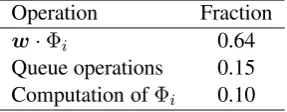
To investigate where future optimization efforts should be spent, we used the built-in hprof pro-filing tool of Java to locate the bottlenecks. Once again, we ran the program on the development set with a beam width of 4, and Table 5 shows the three types of operations where the algorithm spent most of its time. It turns out that 74% of the time was spent on the computation and scoring of interdependency features. To make our algorithm truly useful in practice, we thus need to devise a way to speed up or cache these computations.
[image:7.595.324.505.146.215.2] [image:7.595.76.288.592.662.2]Operation Fraction
w·Φi 0.64
[image:8.595.110.254.63.119.2]Queue operations 0.15 Computation ofΦi 0.10
Table 5: The three most significant bottlenecks and their fraction of the total runtime.
5 Discussion
In this paper, we have presented a new approxi-mate search method to solve the problem of jointly predicting the two layers in a bistratal dependency graph. The algorithm shows competitive perfor-mance on the treebank used in the CoNLL-2008 Shared Task, a bistratal treebank consisting of a surface-syntactic and a shallow semantic layer. In addition to the syntactic–semantic task that we have described in this paper, we believe that our method can be used in other types of multistratal syntactic frameworks, such as a representation of surface and deep syntax as in Meaning–Text The-ory (Mel’ˇcuk, 1988).
The optimization problem that we set out to solve is intractable, but we have shown that rea-sonable performance can be achieved with an in-exact, beam search-based search method. This is not obvious: it has previously been shown that us-ing an inexact search procedure when the learn-ing algorithm assumes that the search is exact may lead to slow convergence or even divergence (Kulesza and Pereira, 2008), but this does not seem to be a problem in our case.
While we used a beam search method as the method of approximation, other methods are cer-tainly possible. An interesting example is the re-cent system by Smith and Eisner (2008), which used loopy belief propagation in a dependency parser using highly complex features, while still maintaining cubic-time search complexity.
An obvious drawback of our approach com-pared to traditional pipeline-based semantic role labeling methods is that the speed of the algo-rithm is highly dependent on the size of the in-terdependency feature representation Φi. Also, extracting these features is fairly complex, and it is of critical importance to implement the feature extraction procedure efficiently since it is one of the bottlenecks of the algorithm. It is plausible that our performance suffers from the absence of other frequently used syntax-based features such as dependent-of-dependent and voice.
It is thus highly dubious that a joint modeling of syntactic and semantic structure is worth the additional implementational effort. So far, no sys-tem using tightly integrated syntactic and semantic processing has been competitive with the best sys-tems, which have been either completely pipeline-based (Che et al., 2008; Ciaramita et al., 2008) or employed only a loose syntactic–semantic cou-pling (Johansson and Nugues, 2008). It has been conjectured that modeling the semantics of the sentence would also help in syntactic disambigua-tion; however, it is likely that this is already im-plicitly taken into account by the lexical features present in virtually all modern parsers.
In addition, a problem that our beam search method has in common with the constituent pars-ing method by Huang (2008) is that highly non-local features must be computed late. In our case, this means that if there is a long distance between a predicate and an argument, the secondary link be-tween them will be unlikely to influence the final search result.
Acknowledgements
The author is grateful for the helpful comments by the reviewers. This work has been funded by the LivingKnowledge project under the seventh EU framework program.
References
Matthias Buch-Kromann. 2006. Discontinuous Gram-mar. A dependency-based model of human parsing and language learning. Ph.D. thesis, Copenhagen Business School.
Wanxiang Che, Zhenghua Li, Yuxuan Hu, Yongqiang Li, Bing Qin, Ting Liu, and Sheng Li. 2008. A cascaded syntactic and semantic dependency pars-ing system. In CoNLL 2008: Proceedings of the Twelfth Conference on Natural Language Learning.
David Chiang. 2007. Hierarchical phrase-based trans-lation.Computational Linguistics, 33(2):201–228.
Massimiliano Ciaramita, Giuseppe Attardi, Felice Dell’Orletta, and Mihai Surdeanu. 2008. DeSRL: A linear-time semantic role labeling system. In Pro-ceedings of the Shared Task Session of CoNLL-2008.
Koby Crammer, Ofer Dekel, Joseph Keshet, Shai Shalev-Schwartz, and Yoram Singer. 2006. Online passive-aggressive algorithms. Journal of Machine Learning Research, 2006(7):551–585.
2004. A relational syntax-semantics interface based on dependency grammar. In Proceedings of the 20th International Conference on Computational Linguistics (COLING 2004).
Jason M. Eisner. 1996. Three new probabilistic mod-els for dependency parsing: An exploration. In Pro-ceedings of the 16th International Conference on Computational Linguistics, pages 340–345.
Rong-En Fan, Kai-Wei Chang, Cho-Jui Hsieh, Xiang-Rui Wang, and Chih-Jen Lin. 2008. LIBLINEAR: A library for large linear classification. Journal of Machine Learning Research, 9:1871–1874.
Daniel Gildea and Daniel Jurafsky. 2002. Automatic labeling of semantic roles. Computational Linguis-tics, 28(3):245–288.
Kevin Gimpel and Noah A. Smith. 2009. Cube summing, approximate inference with non-local fea-tures, and dynamic programming without semirings. InProceedings of the Twelfth Conference of the Eu-ropean Chapter of the Association for Computa-tional Linguistics (EACL).
Jan Hajiˇc. 1998. Building a syntactically annotated corpus: The Prague Dependency Treebank. In Is-sues of Valency and Meaning, pages 106–132.
James Henderson, Paola Merlo, Gabriele Musillo, and Ivan Titov. 2008. A latent variable model of synchronous parsing for syntactic and semantic de-pendencies. In CoNLL 2008: Proceedings of the Twelfth Conference on Natural Language Learning.
Liang Huang and David Chiang. 2005. Betterk-best parsing. In Proceedings of the 9th International Workshop on Parsing Technologies (IWPT 2005).
Liang Huang. 2008. Forest reranking: Discriminative parsing with non-local features. InProceedings of ACL-08: HLT, pages 586–594.
Richard Johansson and Pierre Nugues. 2008. Dependency-based syntactic–semantic analysis with PropBank and NomBank. In Proceedings of the Shared Task Session of CoNLL-2008.
Alex Kulesza and Fernando Pereira. 2008. Structured learning with approximate inference. InAdvances in Neural Information Processing Systems 20.
Xavier Llu´ıs and Llu´ıs M`arquez. 2008. A joint model for parsing syntactic and semantic dependencies. In CoNLL 2008: Proceedings of the Twelfth Confer-ence on Natural Language Learning.
Mitchell P. Marcus, Beatrice Santorini, and Mary Ann Marcinkiewicz. 1993. Building a large annotated corpus of English: the Penn Treebank. Computa-tional Linguistics, 19(2):313–330.
Ryan McDonald, Koby Crammer, and Fernando Pereira. 2005. Online large-margin training of de-pendency parsers. InProceedings of 43rd Annual Meeting of the Association for Computational Lin-guistics (ACL’05), pages 91–98.
Igor A. Mel’ˇcuk. 1988. Dependency Syntax: Theory and Practice. State University Press of New York.
Paola Merlo and Gabriele Musillo. 2008. Semantic parsing for high-precision semantic role labelling. InProceedings of the 12th Conference on Computa-tional Natural Language Learning (CoNLL–2008).
Adam Meyers, Ruth Reeves, Catherine Macleod, Rachel Szekely, Veronika Zielinska, Brian Young, and Ralph Grishman. 2004. The NomBank project: An interim report. InHLT-NAACL 2004 Workshop: Frontiers in Corpus Annotation.
Joakim Nivre and Jens Nilsson. 2005. Pseudo-projective dependency parsing. InProceedings of the 43rd Annual Meeting of the Association for Computational Linguistics (ACL’05).
Martha Palmer, Daniel Gildea, and Paul Kingsbury. 2005. The proposition bank: An annotated cor-pus of semantic roles. Computational Linguistics, 31(1):71–106.
Kenji Sagae and Jun’ichi Tsuji. 2008. Shift–reduce dependency DAG parsing. In Proceedings of the 22nd International Conference on Computational Linguistics (Coling 2008).
Petr Sgall, Eva Hajiˇcov´a, and Jarmila Panevov´a. 1986. The Meaning of the Sentence in Its Semantic and Pragmatic Aspects. Dordrecht:Reidel Publishing Company and Prague:Academia.
David Smith and Jason Eisner. 2008. Dependency parsing by belief propagation. In Proceedings of the Conference on Empirical Methods in Natural Language Processing (EMNLP), Honolulu, United States.
Mihai Surdeanu, Richard Johansson, Adam Meyers, Llu´ıs M`arquez, and Joakim Nivre. 2008. The CoNLL–2008 shared task on joint parsing of syn-tactic and semantic dependencies. InProceedings of CoNLL–2008.
Lucien Tesni`ere. 1959. El´ements de syntaxe struc-´ turale. Klincksieck, Paris.
Ivan Titov, James Henderson, Paola Merlo, and Gabriele Musillo. 2009. Online graph planarisation for synchronous parsing of semantic and syntactic dependencies. InProceedings of the International Joint Conferences on Artificial Intelligence.
Kristina Toutanova, Aria Haghighi, and Christopher D. Manning. 2005. Joint learning improves semantic role labeling. In Proceedings of the 43rd Annual Meeting of the Association for Computational Lin-guistics (ACL’05), pages 589–596.