Headache in Traumatic Brain Injuries
From Blunt Head Trauma
Peter S. Dayan, MD, MSca, James F. Holmes, MD, MPHb, John Hoyle Jr, MDc,d,e,f, Shireen Atabaki, MD, MPHg,h, Michael G. Tunik, MDi,j, Richard Lichenstein, MDk, Michelle Miskin, MSl, Nathan Kuppermann, MD, MPHb,m, for the Pediatric Emergency Care Applied Research Network (PECARN)
abstract
OBJECTIVE:To determine the risk of traumatic brain injuries (TBIs) in children with headachesafter minor blunt head trauma, particularly when the headaches occur without otherfindings suggestive of TBIs (ie, isolated headaches).
METHODS:This was a secondary analysis of a prospective observational study of children 2 to 18 years with minor blunt head trauma (ie, Glasgow Coma Scale scores of 14–15). Clinicians assessed the history and characteristics of headaches at the time of initial evaluation, and documentedfindings onto case report forms. Our outcome measures were (1) clinically important TBI (ciTBI) and (2) TBI visible on computed tomography (CT).
RESULTS:Of 27 495 eligible patients, 12 675 (46.1%) had headaches. Of the 12 567 patients who had complete data, 2462 (19.6%) had isolated headaches. ciTBIs occurred in 0 of 2462 patients (0%; 95% confidence interval [CI]: 0%–0.1%) in the isolated headache group versus 162 of 10 105 patients (1.6%; 95% CI: 1.4%–1.9%) in the nonisolated headache group (risk difference, 1.6%; 95% CI: 1.3%–1.9%). TBIs on CT occurred in 3 of 456 patients (0.7%; 95% CI: 0.1%–1.9%) in the isolated headache group versus 271 of 6089 patients (4.5%; 95% CI: 3.9%–5.0%) in the nonisolated headache group (risk difference, 3.8%; 95% CI: 2.3%–4.5%). We found no significant independent associations between the risk of ciTBI or TBI on CT with either headache severity or location.
CONCLUSIONS:ciTBIs are rare and TBIs on CT are very uncommon in children with minor blunt head trauma when headaches are their only sign or symptom.
WHAT’S KNOWN ON THIS SUBJECT:Although headache is a common symptom after minor blunt head trauma in children, controversy exists whether the presence of headache increases the risk of traumatic brain injury.
WHAT THIS STUDY ADDS:Clinically important traumatic brain injuries are rare, and traumatic brain injuries on computed tomography are very uncommon in children with minor blunt head trauma when headaches are their only sign or symptom.
aDivision of Pediatric Emergency Medicine, Morgan Stanley Children’s Hospital, Columbia University College of Physicians and Surgeons, New York, New York; Departments ofbEmergency Medicine, andmPediatrics, University of California Davis School of Medicine, Sacramento, California;cDivision of Emergency Medicine, Helen DeVos Children’s Hospital, Grand Rapids, Michigan;dDepartment of Emergency Medicine, Michigan State University, East Lansing, Michigan; Departments ofeEmergency Medicine, andfPediatrics, School of Medicine, Western Michigan University, Kalamazoo, Michigan; Departments ofgPediatrics, andhEmergency Medicine, Children’s National Medical Center, School of Medicine, George Washington University, Washington, District of Columbia; Departments ofiPediatrics, andjEmergency Medicine, School of Medicine, New York University, New York, New York; kDepartment of Pediatrics, School of Medicine, University of Maryland, Baltimore, Maryland; andlDepartment of Pediatrics, School of Medicine, University of Utah, Salt Lake City, Utah
Blunt head trauma in children results in.500 000 emergency department (ED) visits annually in the United States.1Most blunt head trauma in
children is minor, defined by Glasgow Coma Scale (GCS) scores of 14 or 15, with a very low risk of clinically important traumatic brain injuries (ciTBIs).2,3Computed tomography
(CT) scans must be used judiciously in children with minor head trauma, balancing the need to identify important injuries with the risks of radiation-induced malignancy.4,5
Children with minor blunt head trauma frequently present to the ED with histories of headaches.2,3
Although headache is common, controversy exists whether its presence or absence helps
discriminate between those who do and do not have traumatic brain injuries (TBIs). In a previous meta-analysis, the presence of headache (when not severe or persistent), regardless of other symptoms or signs of TBI, was not associated with an increased overall risk of
intracranial hemorrhage on CT, although it did modestly increase the risk of neurosurgery.6Severe or
persistent headache also moderately increased the risk of TBI on CT.6
Pooled estimates and previous studies, however, have not provided the risk of TBI when headache is the only sign or symptom.
Headache has variably been included in prediction rules of TBI in children with blunt head trauma.7In the
Pediatric Emergency Care Applied Research Network (PECARN) prediction rule for children 2 to 18 years, those with histories of severe headaches are classified as not being at very low risk of ciTBIs.2The
presence of a severe headache, however, does not necessarily indicate that a patient is at high risk of TBI (TBI on CT or ciTBI), particularly in the absence of other signs or symptoms of TBI (ie, isolated headache). To more fully understand the risk of TBI (ciTBI or TBI on CT) in
common subgroups of patients, we aimed to determine the risk, types, and clinical implications of TBIs in children who have headaches after blunt head trauma, particularly those who have isolated headaches. Additionally, we aimed to determine the relationship between the severity, location, and timing of headache with the risk of TBI. Finally, we sought to determine the risk of TBI when severe headache was the only PECARN prediction rule variable present.
METHODS
We performed a planned secondary analysis of data from a prospective observational cohort study conducted at 25 centers in the PECARN network from June 2004 to September 2006. The study was approved by each site’s institutional review board. Full details of the study have been published previously.2
Population
In the main cohort study, we enrolled children younger than 18 years with GCS scores of 14 to 15 after nontrivial blunt head trauma who presented to the ED within 24 hours of the initial injury. We defined trivial trauma as that resulting from ground level falls or running into stationary objects with no evidence of head trauma other than scalp abrasions or lacerations. We excluded patients with penetrating head trauma, preexisting neurologic disease impeding clinical assessment, patients transferred to the ED with neuroimaging already obtained, and patients with bleeding disorders or ventricular shunts. We did not assess for the presence of headache in patients who were either physically unable to speak or preverbal, including but not restricted to all patients younger than 2 years.
Patient Assessment and Variable Definitions
Clinicians completed standardized history and physical examinations before cranial CT (if obtained) and
documented thefindings onto study case report forms. Headache was defined as any complaint of pain to the head at the time of ED evaluation (ie, a history of headache that had resolved was not considered
a headache for purposes of analysis). For those patients with headaches, clinicians assessed headache severity (categorized as mild/barely
noticeable, moderate, severe/intense, or unclear), timing of onset (before the head injury, within 1 hour of the injury, 1–4 hours after injury,.4 hours after injury, or unknown), and headache location (diffuse, only at site of injury, at occiput only and clearly due to restraining backboard, other, or unclear). Two clinicians independently evaluated
a convenience sample of 4% of patients to assess interobserver agreement of clinicalfindings.8
Definitions of Isolated Headache
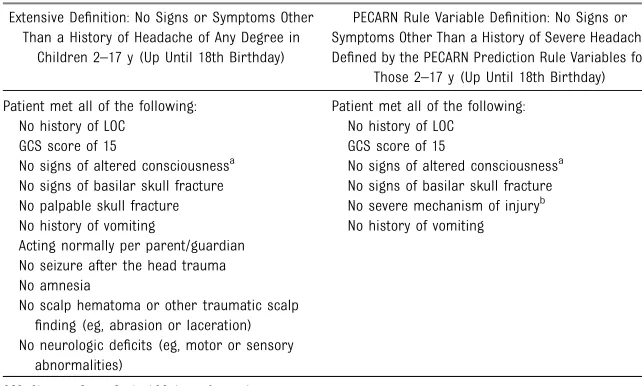
We defined isolated headache in 2 ways based on the absence of other specific clinicalfindings on initial ED history and physical examination (Table 1). Thefirst definition (termed
“extensive”definition of isolated headache) was based on an extensive list of variables potentially associated with TBI, and the second definition was based solely on the variables in the PECARN prediction rule for children 2 to 18 years.2We analyzed
the data based on these 2 definitions of isolated headache as the literature suggests that clinicians often assess children from the vantage point of having either no signs or symptoms other than a singlefinding of concern (extensive definition) or having no signs or symptoms other than headache defined solely by the age-specific PECARN prediction rule variables.9,10 One difference between
because severe mechanism of injury is 1 of the factors in the PECARN prediction rule, patients with headaches and severe mechanisms of injury did not meet the PECARN rule-based definition of isolated headache.
Outcomes
We had 2 outcomes: (1) ciTBI and (2) TBI on CT. We defined ciTBI as death due to TBI, neurosurgical procedure, intubation for at least 24 hours for TBI, or hospitalization for 2 or more nights due to the head trauma in association with TBI on CT. We defined TBI on CT as any acute traumatic intracranialfinding or a skull fracture depressed by at least the width of the table of the skull. Cranial CT scans were obtained at the discretion of the treating providers. We completed follow-up procedures for all patients discharged from the ED to determine outcomes.2
Analysis
We summarized the data by using counts, percentages, and 95% confidence intervals (CIs) for categorical variables and medians and interquartile ranges for continuous variables. We analyzed outcomes in the following groups: (1) all patients with histories of
headaches after the traumatic event who also had other signs or symptoms suggestive of TBI (ie, nonisolated headaches); (2) patients with isolated headaches–extensive definition; and (3) patients with PECARN-isolated severe headaches (ie, severe headaches with no other factors in the PECARN head trauma rule for those 2–18 years). We also assessed the risk of TBI in those with severe headaches plus 1 other PECARN prediction rulefinding to determine the incremental risk of ciTBI of 1 other PECARN variable in addition to severe headache. For all analyses, we excluded patients who had missing documentation of any PECARN prediction rule factor for children 2 to 18 years. For the isolated headache–extensive
definition, we also excluded patients from the analysis if they had.1 other of the extensivefindings missing or marked as unknown. We calculatedk statistics and 95% CIs for the presence of headache and headache severity, and used the Fleiss-Cohen weighted kwith standard quadratic weights for headache severity.
We conducted an exact multivariable logistic regression analysis to assess whether TBI on CT was less likely in those with isolated compared with
nonisolated headaches, adjusted for the severity of mechanism of injury. We also conducted 2 multivariable logistic regression analyses in all patients with headaches (combining the isolated and nonisolated groups) to assess the association between the 2 TBI outcomes and the severity (categorized as mild or moderate/ severe) and location (categorized as diffuse or localized) of headache. A localized headache was defined by a headache only at the site of injury, at the occiput only and clearly due to backboard, and other. We were unable to run multivariable models to assess the effect of timing of the headache due to low risk of the 2 TBI outcomes in the“.1 hour after injury”group. For these 2 analyses, we excluded patients whose headaches started before the head injury. We adjusted for all variables included in the extensive definition of isolated headache and also included the age of the patient (categorized as 2–,5 years, 5–10 years, or.10 years). Seizure after head trauma and neurologic deficits were not included in the regression models due to low prevalence of these predictors. All variables were entered as dichotomous variables in the regression models except age, which was entered as the noted 3-level categorical variable. Additionally, we adjusted for time from injury to time of ED evaluation in hours (categorized as ,1 hour, 1–4 hours, or.4 hours), because time from injury potentially influences the relationship between the severity of the headache and the outcomes.
We used sequential regression models to impute for missing data used in the multivariable logistic regression analyses. We limited imputation to those patients with headaches. We used linear regression models to impute continuous variables and generalized logistic models to impute categorical variables.11
We used SAS/STAT software (version 9.3; SAS Institute, Inc, Cary, NC) for all analyses and imputed missing values TABLE 1 Definitions of Isolated Headache
Extensive Definition: No Signs or Symptoms Other Than a History of Headache of Any Degree in
Children 2–17 y (Up Until 18th Birthday)
PECARN Rule Variable Definition: No Signs or Symptoms Other Than a History of Severe Headache Defined by the PECARN Prediction Rule Variables for
Those 2–17 y (Up Until 18th Birthday)
Patient met all of the following: Patient met all of the following: No history of LOC No history of LOC
GCS score of 15 GCS score of 15
No signs of altered consciousnessa No signs of altered consciousnessa No signs of basilar skull fracture No signs of basilar skull fracture No palpable skull fracture No severe mechanism of injuryb No history of vomiting No history of vomiting Acting normally per parent/guardian
No seizure after the head trauma No amnesia
No scalp hematoma or other traumatic scalp finding (eg, abrasion or laceration) No neurologic deficits (eg, motor or sensory
abnormalities)
GCS, Glasgow Coma Scale; LOC, loss of consciousness.
aSleepiness, agitation, slow to respond to verbal communication, repetitive questioning.
bMotor vehicle crash with patient ejection, death of another passenger, or rollover; pedestrian or bicyclist without helmet
for regression models by using IVEware (University of Michigan, Ann Arbor, MI).12Because this was
a secondary analysis of the parent cohort study, we did not estimate sample size needs for this analysis.
RESULTS
We enrolled 43 904 patients in the parent cohort study (77.0% of the 57 030 eligible patients; Fig 1). Of 27 495 children 2 to 18 years, 12 675 (46.1%) had headaches. The presence of headache (k = 0.60; 95% CI: 0.54–0.65) had good interobserver agreement, and headache severity (k = 0.65; 95% CI: 0.61–0.70) had substantial agreement. Of 12 567 children with headaches and complete data available for analysis, 2462 (19.6%) had isolated
headaches–extensive definition. The characteristics of patients with nonisolated headaches and isolated headaches–extensive definition are detailed in Table 2. Clinicians obtained CTs for 6589 of 12 675 patients (52.0%) with headaches in general and 456 of 2462 (18.5%) of those meeting the extensive definition of isolated headache.
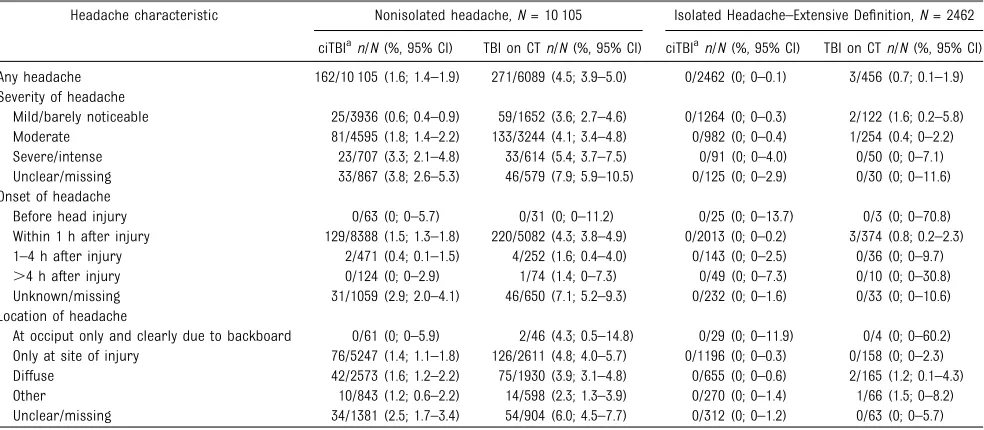
Table 3 demonstrates the risk of ciTBI and TBI on CT separately for patients with isolated
headaches–extensive definition and nonisolated headaches, including the risk of TBI based on the severity, location, and timing of the headaches. No patients with isolated headaches had ciTBIs, irrespective of the severity, location, or timing. For comparative purposes, ciTBIs occurred in 0 of 2462 (0%; 95% CI: 0%–0.1%) patients with isolated headaches–extensive definition versus 162 of 10 105 (1.6%; 95% CI: 1.4%–1.9%) patients with
nonisolated headaches (risk difference, 1.6%; 95% CI:
1.3%–1.9%). In addition, TBIs on CT occurred in 3 of 456 (0.7%; 95% CI: 0.1%–1.9%) children with isolated headaches–extensive definition versus 271 of 6089 (4.5%; 95% CI:
3.9%–5.0%) children with nonisolated headaches (risk difference, 3.8%; 95% CI: 2.3%–4.5%). After adjusting for mechanism of injury severity, the odds of TBI on CT (0.14; 95% CI: 0.03–0.41) remained lower in those with isolated headaches–extensive definition compared with nonisolated headaches.
Of the 2387 (97.0%) patients discharged from the ED, we
completed telephone or mail follow-up on 1859 (77.9%) and chart review, trauma registry and quality
improvement record review, and morgue review for the rest (528 of 2387; 22.1%). Among those with telephone (n= 1798) or mail (n= 61)
follow-up, 207 had returned to a physician before follow-up, with 147 (7.9%) having headaches at the time of follow-up. Of these 207, 35 (16.9%) subsequently had cranial CTs or MRIs, with none having ciTBIs. One patient contacted by mail had a follow-up CT or MRI that was reported to them as abnormal, but further details were unavailable and no interventions were required. This patient had a normal CT on the initial ED visit. We do not have long-term follow-up on the patients with isolated headaches.
We present the specific TBIs in patients who met the extensive definition of isolated headaches in Table 4 and the clinical
FIGURE 1
characteristics of these patients in Table 5. No patient with an isolated headache–extensive definition had a ciTBI, and none had an epidural or subdural hematoma or
a subarachnoid hemorrhage on CT.
To include all patients in the multivariable analyses, we imputed missing values and analyzed multiple
imputed data sets. The imputation rates for the variables included in the regression are listed in Supplemental Table 8. We imputed 10 data sets,fit multivariable logistic regression models to each data set separately, and combined the results by using accepted methods.13To examine the
appropriateness of imputed data
values, we examined the distributions of all variables imputed and
compared them to the distributions of these variables without imputation; the distributions were similar.
For all patients with headaches, the headache severity was not
independently associated with the presence of ciTBI or TBI on CT on regression analyses, although the CIs were somewhat wide (Table 6). We were unable to run multivariable models with moderate and severe headache as separate categories due to the smaller numbers in the severe group compared with the other groups. Similarly, we were unable to include an analysis of headache timing due to the small number of outcomes in the.1 hour after injury group.
Finally, Table 7 presents the risk of TBIs in patients with isolated severe headaches based on the PECARN prediction rule factors only. The addition of other single predictors in the PECARN rule in addition to severe headache did not noticeably or consistently change the risk of ciTBI or TBI on CT, although the CIs for the estimates were relatively wide. One patient with a PECARN-isolated severe headache (but not isolated headache–extensive definition) had TABLE 2 Clinical Characteristics of Children With Headaches
Nonisolated HA,
n= 10 105
Isolated HA–extensive definition,
n= 2462
Median age (interquartile range) 11.9 (7.6–15.1) 12.4 (8.7–15.5) Male patientn(%) 6678 (66.1) 1331 (54.1) Mechanism of injury,n(%)
Sports 1510 (14.9) 365 (14.8)
Fall from standing/walking/running 1340 (13.3) 215 (8.7) Fall from elevation,n(%) 1329 (13.2) 230 (9.3)
,3 feet 437 (32.9) 71 (30.9)
3–5 feet 557 (41.9) 107 (46.5)
6–10 feet 199 (15.0) 41 (17.8)
.10 feet 77 (5.8) 7 (3.0)
Unknown height 59 (4.4) 4 (1.7)
Assault 1266 (12.5) 331 (13.4)
Motor vehicle crash 954 (9.4) 637 (25.9) Object struck head—accidental 616 (6.1) 182 (7.4) Bike collision or fall from bike while riding 609 (6.0) 84 (3.4) Walked or ran into stationary object 463 (4.6) 64 (2.6) Pedestrian struck by moving vehicle 368 (3.6) 55 (2.2) Other wheeled transport crash 289 (2.9) 38 (1.5)
Fall down stairs 268 (2.7) 60 (2.4)
Bike rider struck by automobile 180 (1.8) 35 (1.4)
Other 851 (8.4) 165 (6.7)
Unknown 62 (0.6) 1 (0.04)
HA, headache.
TABLE 3 Risk of TBI in All Patients With Nonisolated Headaches and Isolated Headaches–Extensive Definition
Headache characteristic Nonisolated headache,N= 10 105 Isolated Headache–Extensive Definition,N= 2462
ciTBIan/N(%, 95% CI) TBI on CTn/N(%, 95% CI) ciTBIan/N(%, 95% CI) TBI on CTn/N(%, 95% CI) Any headache 162/10 105 (1.6; 1.4–1.9) 271/6089 (4.5; 3.9–5.0) 0/2462 (0; 0–0.1) 3/456 (0.7; 0.1–1.9) Severity of headache
Mild/barely noticeable 25/3936 (0.6; 0.4–0.9) 59/1652 (3.6; 2.7–4.6) 0/1264 (0; 0–0.3) 2/122 (1.6; 0.2–5.8) Moderate 81/4595 (1.8; 1.4–2.2) 133/3244 (4.1; 3.4–4.8) 0/982 (0; 0–0.4) 1/254 (0.4; 0–2.2) Severe/intense 23/707 (3.3; 2.1–4.8) 33/614 (5.4; 3.7–7.5) 0/91 (0; 0–4.0) 0/50 (0; 0–7.1) Unclear/missing 33/867 (3.8; 2.6–5.3) 46/579 (7.9; 5.9–10.5) 0/125 (0; 0–2.9) 0/30 (0; 0–11.6) Onset of headache
Before head injury 0/63 (0; 0–5.7) 0/31 (0; 0–11.2) 0/25 (0; 0–13.7) 0/3 (0; 0–70.8) Within 1 h after injury 129/8388 (1.5; 1.3–1.8) 220/5082 (4.3; 3.8–4.9) 0/2013 (0; 0–0.2) 3/374 (0.8; 0.2–2.3) 1–4 h after injury 2/471 (0.4; 0.1–1.5) 4/252 (1.6; 0.4–4.0) 0/143 (0; 0–2.5) 0/36 (0; 0–9.7)
.4 h after injury 0/124 (0; 0–2.9) 1/74 (1.4; 0–7.3) 0/49 (0; 0–7.3) 0/10 (0; 0–30.8) Unknown/missing 31/1059 (2.9; 2.0–4.1) 46/650 (7.1; 5.2–9.3) 0/232 (0; 0–1.6) 0/33 (0; 0–10.6) Location of headache
At occiput only and clearly due to backboard 0/61 (0; 0–5.9) 2/46 (4.3; 0.5–14.8) 0/29 (0; 0–11.9) 0/4 (0; 0–60.2) Only at site of injury 76/5247 (1.4; 1.1–1.8) 126/2611 (4.8; 4.0–5.7) 0/1196 (0; 0–0.3) 0/158 (0; 0–2.3) Diffuse 42/2573 (1.6; 1.2–2.2) 75/1930 (3.9; 3.1–4.8) 0/655 (0; 0–0.6) 2/165 (1.2; 0.1–4.3) Other 10/843 (1.2; 0.6–2.2) 14/598 (2.3; 1.3–3.9) 0/270 (0; 0–1.4) 1/66 (1.5; 0–8.2) Unclear/missing 34/1381 (2.5; 1.7–3.4) 54/904 (6.0; 4.5–7.7) 0/312 (0; 0–1.2) 0/63 (0; 0–5.7)
ciTBI, clinically-important traumatic brain injury; CT, computed tomography; TBI, traumatic brain injury.
neurosurgery for skull fracture elevation. This 13-year-old child was running when a pipe struck his head. On examination, he had a temporal/ parietal scalp hematoma in addition to a severe headache. The CT demonstrated a cerebral
hemorrhage/intracerebral hematoma, pneumocephalus, and a depressed skull fracture greater than the skull width.
DISCUSSION
In this analysis of a large cohort of children with minor blunt head trauma, headache was a common complaint, with many patients having no other signs or symptoms
suggestive of TBI. There were no ciTBIs and very few TBIs on CT when the headaches were isolated,
irrespective of its time of onset, severity, or location. This strongly suggests that CTs are not indicated in most children with headaches and no other signs or symptoms of TBI after blunt head trauma, and a period of observation may be warranted before CT decision-making. Clinicians appeared comfortable not obtaining CTs in those with isolated headaches as the minority of these patients had CTs obtained. TBIs were more frequent, however, in children with headaches in the presence of other
signs or symptoms of TBI. In children 2 to 18 years with isolated severe headaches based on the PECARN prediction rule factors, the overall risk of ciTBI was also very low, although 1 patient underwent neurosurgery.
Previous data on the clinical importance of headaches in children with minor blunt head trauma are challenging to summarize due to marked differences in study populations, methodologies across studies, and predictive variable and outcome definitions.6,14–17In
a systematic review,“any headache” had a pooled negative likelihood ratio (LR) of 0.91 (95% CI: 0.78–1.01) and positive LR of 1.26 (95% CI:
0.97–1.61) for intracranial injury on CT.6“Severe or persistent headache”
had a similar pooled negative LR of 0.92 (95% CI: 0.87–0.99) but did have a positive LR of 4.35
(1.07–12.35) for intracranial injury. In that systematic review, the lack of any headache decreased the risk of neurosurgery, with a pooled LR of 0.27 (95% CI: 0.19–0.38).6It should
be recognized, however, that the systematic review provided test characteristics for children with headaches who may or may not have had other clinical findings (eg, vomiting, etc). The current study
builds on previous data by providing estimates of TBI risk when headaches are present in isolation.
Although headache appears to have a limited role as an independent discriminator for TBI, most previous TBI prediction rules for children with minor head trauma include headache, severe headache, or persistent headache as either a factor that decreases the risk of TBI when absent (for rules to identify low-risk patients) or increases the risk when present (if the rule was created to identify high-risk patients).2,3,7,18–23
The inclusion of headache in some prediction rules suggests that it occasionally helps identify patients with TBIs who are not easily captured by more discriminating predictors.
Finally, although the absolute risk of TBI (both ciTBI and TBI on CT) appeared to increase with increasing headache severity, the multivariable logistic regression analysis did not bear out this relationship. This lack of a clear association differs from previous data, which suggest that increased headache severity increases the risk of TBI.6This may be
explained by the fact that no previous study has adjusted for the all the factors included in our analyses, including the time between injury and ED evaluation. Our assessment of headache at 1 point in time resulted in an inability to specifically assess for persistence or increasing headache severity while in the ED.
The study had certain limitations. In addition to only assessing headache at 1 point in time, we had too few outcomes to precisely estimate the association between TBI and the severity and timing of headache. Additionally, clinicians obtained CTs on the minority of children, with bias TABLE 4 TBIs in Children With Isolated Headaches (Extensive Definition)
Type of TBI n/N(%, 95% CI)
ciTBI
Hospitalization$2 nights for head trauma, with TBI on CT 0/2462 (0; 0–0.1)
Neurosurgery 0/2462 (0; 0–0.1)
Intubation for TBI$24 h 0/2462 (0; 0–0.1)
Death due to TBI 0/2462 (0; 0–0.1)
TBI on CTa
Cerebral hemorrhage/intracerebral hematoma 1/456 (0.2; 0–1.2)
Pneumocephalus 2/456 (0.4; 0.1–1.6)
Cerebral contusion 1/456 (0.2; 0–1.2)
aOne patient had 2 types of TBIs on CT.
TABLE 5 Characteristics of Children With TBIs Who Had Isolated Headaches–Extensive Definition
Age, y Mechanism Specifics Headache Severity Location of Headache TBI on CT ciTBI
11 Accidentally struck in left ear with golf club Mild/barely noticeable Diffuse Pneumocephalus None 13 Bike collision Mild/barely noticeable Diffuse Cerebral hemorrhage/intracerebral hematoma None 14 Fell from top of car traveling ~25 mph Moderate Unknown/missing Cerebral contusion, and pneumocephalus None
likely toward those with more severe findings and higher risk of TBI. Because this bias would likely inflate the risk of TBI on CT, the overall risk of TBI on CT given isolated headache is likely lower than we report. Our main outcome, ciTBI, however, is not dependent on obtaining CTs.
Therefore, we were able to more accurately determine associations for our primary, and more important, outcome.
CONCLUSIONS
ciTBIs are rare and TBIs on CT are very uncommon in children with minor blunt head trauma when headaches are their only sign or symptom.
ACKNOWLEDGMENTS
Participating centers and site investigators are listed below in alphabetical order: Atlantic Health System/Morristown Memorial
Hospital: M. Gerardi; Bellevue Hospital Center: M. Tunik, J. Tsung; Calvert Memorial Hospital:
K. Melville; Children’s Hospital Boston: L. Lee; Children’s Hospital of Michigan: P. Mahajan; Children’s Hospital of New York–Presbyterian: P. Dayan; Children’s Hospital of Philadelphia: F. Nadel; Children’s Memorial Hospital: E. Powell; Children’s National Medical Center: S. Atabaki, K. Brown; Cincinnati Children’s Hospital Medical Center: T. Glass; DeVos Children’s Hospital: J. Hoyle; Harlem Hospital Center: A. Cooper; Holy Cross Hospital: E. Jacobs; Howard County Medical Center: D. Monroe; Hurley Medical Center: D. Borgialli; Medical College of Wisconsin/Children’s Hospital of Wisconsin: M. Gorelick, S. Bandyopadhyay; St. Barnabas Health Care System: M. Bachman, N. Schamban; SUNY-Upstate Medical Center: J. Callahan; University of California Davis Medical Center:
N. Kuppermann, J. Holmes; University of Maryland: R. Lichenstein;
University of Michigan: R. Stanley; University of Rochester: M. Badawy, L. Babcock-Cimpello; University of Utah/Primary Children’s Medical Center: J. Schunk; Washington University/St. Louis Children’s Hospital: K. Quayle, D. Jaffe; and Women and Children’s Hospital of Buffalo: K. Lillis.
We acknowledge the efforts of the following individuals participating in PECARN at the time this study was initiated: PECARN Steering
Committee: N. Kuppermann, Chair; E. Alpern, J. Chamberlain, J. M. Dean, M. Gerardi, J. Goepp, M. Gorelick, J. Hoyle, D. Jaffe, C. Johns, N. Levick, P. Mahajan, R. Maio, K. Melville, S. Miller,* D. Monroe, R. Ruddy, R. Stanley, D. Treloar, M. Tunik, A. Walker. Maternal and Child Health Bureau/Emergency Medical Services of Children liaisons: D. Kavanaugh, H. Park. Central Data Management and Coordinating Center: M. Dean, R. Holubkov, S. Knight, A. Donaldson. Data Analysis and Management Subcommittee: J. Chamberlain, Chair; M. Brown, H. Corneli, J. Goepp, R. Holubkov, P. Mahajan, K. Melville, E. Stremski, M. Tunik. Grants and Publications Subcommittee:
M. Gorelick, Chair; E. Alpern, J. M. Dean, G. Foltin, J. Joseph, S. Miller,* F. Moler, R. Stanley, S. Teach. Protocol Concept Review and Development Subcommittee: D. Jaffe, Chair; K. Brown, A. Cooper, J. M. Dean, C. Johns, R. Maio, N. C. Mann, D. Monroe, K. Shaw, D. Teitelbaum, D. Treloar. Quality Assurance Subcommittee: R. Stanley, Chair; D. Alexander, J. Brown, M. Gerardi, M. Gregor, R. Holubkov, K. Lillis, B. Nordberg, R. Ruddy, M. Shults, A. Walker. Safety and Regulatory Affairs Subcommittee: N. Levick, Chair; J. Brennan, J. Brown, J. M. Dean, J. Hoyle, R. Maio, R. Ruddy,
W. Schalick, T. Singh, J. Wright. TABLE 6 Multivariable Regression Analysis Assessing Relationship Between Location and Severity
of Headache, and TBI
ciTBI
Adjusted OR (95% CI),N= 12 587
TBI on CT
Adjusted OR (95% CI),N= 6555
Severity of headache
Mild/barely noticeable Reference Reference Moderate/severe 1.55 (1.00–2.40) 0.97 (0.72–1.32) Location of headache
Diffuse Reference Reference
Localized 1.22 (0.82–1.80) 1.11 (0.82–1.50)
Variables adjusted for in both multivariable analyses along with the reference group: altered mental status (reference = no), acting normally per parent (reference = yes), history of loss of consciousness (reference = no), history of vomiting (reference = no), any scalp hematoma (reference = no), other traumatic scalpfindings (reference = no), palpable skull fracture (reference = no), clinical signs of basilar skull fracture (reference = no), amnesia (reference = no), age (reference =.10 y), time from injury to ED evaluation in hours (reference =.4 h).
ciTBI, clinically-important traumatic brain injury; CT, computed tomography; OR, odds ratio; TBI, traumatic brain injury.
TABLE 7 Risk of TBIs With PECARN-Isolated Severe Headaches (ie, Isolated Severe Headaches Based on the PECARN Prediction Rule Variables), Plus the Addition of 1 Other PECARN Prediction Rule Variable
PECARN Prediction Rule Variables ciTBI,n/N(%, 95% CI) TBI on CT,n/N(%, 95% CI)
Isolated severe HA 3/209 (1.4; 0.3–4.1) 4/128 (3.1; 0.9–7.8) Severe HA plus altered mental statusa 2/74 (2.7; 0.3–9.4) 2/65 (3.1; 0.4–10.7) Severe HA plus history of LOC 0/121 (0; 0–3.0) 1/107 (0.9; 0–5.1) Severe HA plus clinical signs of basilar skull fracture 0/3 (0; 0–70.8) 0/3 (0; 0–70.8) Severe HA and history of vomiting 1/69 (1.4; 0–7.8) 1/60 (1.7; 0–8.9) Severe HA and severe mechanism of injuryb 0/27 (0; 0–12.8) 0/21 (0; 0–16.1)
ciTBI, clinically-important traumatic brain injury; HA, headache; LOC, loss of consciousness; TBI, traumatic brain injury.
aDefined as a GCS score of 14, agitation, sleepiness, slow to respond to verbal communication, or repetitive questioning. bMotor vehicle crash with patient ejection, death of another passenger, or rollover; pedestrian or bicyclist without helmet
struck by a motorized vehicle; falls.5 feet; or head struck by a high-impact object.
We thank Rene Enriquez and Sally Jo Zuspan at the PECARN Data Center (University of Utah) for their dedicated
and diligent work; the research coordinators in PECARN, without whose dedication and hard work this
study would not have been possible; and all the clinicians of the PECARN who enrolled children in this study.
This work was presented in part at the annual meeting of the Pediatric Academic Societies, May 3, 2008, Honolulu, Hawaii and the annual meeting of the Society for Academic Emergency Medicine, May 29, 2008, Washington, DC.
www.pediatrics.org/cgi/doi/10.1542/peds.2014-2695
DOI:10.1542/peds.2014-2695 Accepted for publication Dec 3, 2014
Address correspondence to Peter S. Dayan, MD, MSc, New York Presbyterian Morgan Stanley Children’s Hospital, 3959 Broadway, CHN-1-116, New York, NY 10032. E-mail: [email protected]
PEDIATRICS (ISSN Numbers: Print, 0031-4005; Online, 1098-4275).
Copyright © 2015 by the American Academy of Pediatrics
FINANCIAL DISCLOSURE:The authors have indicated they have nofinancial relationships relevant to this article to disclose.
FUNDING:Supported by a grant from the Health Resources and Services Administration (HRSA)/Maternal and Child Health Bureau (MCHB), Division of Research, Education, and Training, and the Emergency Medical Services of Children (EMSC) program (R40MC02461). The Pediatric Emergency Care Applied Research Network is supported by cooperative agreements U03MC00001, U03MC00003, U03MC00006, U03MC00007, U03MC00008, U03MC22684, and U03MC22685 from the EMSC program of the MCHB/HRSA.
POTENTIAL CONFLICT OF INTEREST:The authors have indicated they have no potential conflicts of interest to disclose.
REFERENCES
1. National Center for Injury Prevention and Control. Traumatic brain injury in the United States. Available at: www.cdc.gov/ traumaticbraininjury/tbi_ed.html. Accessed August 18, 2013
2. Kuppermann N, Holmes JF, Dayan PS, et al; Pediatric Emergency Care Applied Research Network (PECARN).
Identification of children at very low risk of clinically-important brain injuries after head trauma: a prospective cohort study.Lancet. 2009;374(9696):1160–1170
3. Dunning J, Daly JP, Lomas J-P, Lecky F, Batchelor J, Mackway-Jones K; Children’s head injury algorithm for the prediction of important clinical events study group. Derivation of the children’s head injury algorithm for the prediction of important clinical events decision rule for head injury in children.Arch Dis Child. 2006;91(11):885–891
4. Miglioretti DL, Johnson E, Williams A, et al. The use of computed tomography in pediatrics and the associated radiation exposure and estimated cancer risk.JAMA Pediatr. 2013;167(8): 700–707 [Epub ahead of print]doi: 10.1001/jamapediatrics.2013.311
5. Frush DP, Frush KS. The ALARA concept in pediatric imaging: building bridges between radiology and emergency
medicine: consensus conference on imaging safety and quality for children in the emergency setting, Feb. 23-24, 2008, Orlando, FL - Executive Summary. Pediatr Radiol. 2008;38(suppl 4): S629–S632
6. Pandor A, Goodacre S, Harnan S, et al. Diagnostic management strategies for adults and children with minor head injury: a systematic review and an economic evaluation.Health Technol Assess. 2011;15(27):1–202
7. Maguire JL, Boutis K, Uleryk EM, Laupacis A, Parkin PC. Should a head-injured child receive a head CT scan? A systematic review of clinical prediction rules. Pediatrics. 2009;124(1). Available at: www. pediatrics.org/cgi/content/full/124/1/e145
8. Gorelick MH, Atabaki SM, Hoyle J, et al; Pediatric Emergency Care Applied Research Network. Interobserver agreement in assessment of clinical variables in children with blunt head trauma.Acad Emerg Med. 2008;15(9): 812–818
9. Bressan S, Romanato S, Mion T, Zanconato S, Da Dalt L. Implementation of adapted PECARN decision rule for children with minor head injury in the pediatric emergency department.Acad Emerg Med. 2012;19(7):801–807
10. Schonfeld D, Bressan S, Da Dalt L, Henien MN, Winnett JA, Nigrovic LE. Pediatric Emergency Care Applied Research Network head injury clinical prediction rules are reliable in practice.Arch Dis Child. 2014;99(5):427–431 doi:10.1136/ archdischild-2013-305004
11. Newgard CD, Haukoos JS. Advanced statistics: missing data in clinical research—part 2: multiple imputation. Acad Emerg Med. 2007;14(7):669–678
12. Raghunathan TE, Lepkowski JM, Hoewyk JV, Solenberger P. A multivariate technique for multiply imputing missing values using a sequence of regression models.Surv Methodol. 2001;27:85–95
13. Rubin DB.Multiple Imputation for Nonresponse in Surveys. New York, NY: Johns Wiley & Sons, Inc; 1987
14. Dunning J, Batchelor J, Stratford-Smith P, et al. A meta-analysis of variables that predict significant intracranial injury in minor head trauma.Arch Dis Child. 2004; 89(7):653–659
15. Da Dalt L, Marchi AG, Laudizi L, et al. Predictors of intracranial injuries in children after blunt head trauma.Eur J Pediatr. 2006;165(3):142–148
injuries: can clinical factors reliably predict an abnormality on computed tomography?Ann Emerg Med. 1993; 22(10):1535–1540
17. Quayle KS, Jaffe DM, Kuppermann N, et al. Diagnostic testing for acute head injury in children: when are head computed tomography and skull radiographs indicated?Pediatrics. 1997; 99(5). Available at: www.pediatrics.org/ cgi/content/full/99/5/e11
18. Atabaki SM, Stiell IG, Bazarian JJ, et al. A clinical decision rule for cranial computed tomography in minor pediatric head trauma.Arch Pediatr Adolesc Med. 2008;162(5):439–445
19. Haydel MJ, Shembekar AD. Prediction of intracranial injury in children agedfive years and older with loss of
consciousness after minor head injury due to nontrivial mechanisms.Ann Emerg Med. 2003;42(4):507–514
20. Oman JA, Cooper RJ, Holmes JF, et al; NEXUS II Investigators. Performance of a decision rule to predict need for computed tomography among children with blunt head trauma.Pediatrics. 2006;117(2). Available at: www. pediatrics.org/cgi/content/full/117/2/ e238
21. Sun BCH, Hoffman JR, Mower WR. Evaluation of a modified prediction
instrument to identify significant pediatric intracranial injury after blunt head trauma.Ann Emerg Med. 2007; 49(3):325–332, e1
22. Osmond MH, Klassen TP, Wells GA, et al; Pediatric Emergency Research Canada (PERC) Head Injury Study Group. CATCH: a clinical decision rule for the use of computed tomography in children with minor head injury.CMAJ. 2010;182(4): 341–348
23. Palchak MJ, Holmes JF, Vance CW, et al. A decision rule for identifying children at low risk for brain injuries after blunt head trauma.Ann Emerg Med. 2003; 42(4):492–506
VIRTUAL SPINNING:I like to bicycle. However, cycling in Vermont is more than a bit challenging several months of the year. While a few diehards continue to commute on bike regardless of the weather, most others retreat indoors where they ride stationary resistance trainers or participate in spinning classes. Spinning classes involve riding a stationary bike in a group setting and include an instructor, vi-sualization, a variety of movements, and usually loud music. One of my friends is an ardent spinner. She usually spins every other day. I went with her to a spin class once. Just before we got on the bike she gave me good advice.“Remember,”she said,“this is not a ride but a workout.”While the class was interesting, she moved away and we have not trained together since.
As reported inThe Wall Street Journal, new technologies may allow us to become virtual workout partners. A recently founded spinning studio sells bikes with monitors that allow spinners to live-stream studio classes from home. That means that, in addition to the spinners in the studio, several others from around the country could be participating at the same time. Those spinning at home can see friends in the studio and follow electronic leaderboards that display calories consumed, distance ridden, and pedal resistance of all participants. While it might be tempting to slack off if riding at home, the instructor can also see the leaderboard statistics and encourage more active participation. Spinners like the new technology as it allows themflexibility and helps maintain friendships.
I am not sure I am quite ready to invest almost $2,000 in such a specialized spinning bike to take virtual classes with my friend, but the idea is attractive.
DOI: 10.1542/peds.2014-2695 originally published online February 2, 2015;
2015;135;504
Pediatrics
Emergency Care Applied Research Network (PECARN)
Richard Lichenstein, Michelle Miskin, Nathan Kuppermann and for the Pediatric
Peter S. Dayan, James F. Holmes, John Hoyle Jr, Shireen Atabaki, Michael G. Tunik,
Headache in Traumatic Brain Injuries From Blunt Head Trauma
Services
Updated Information &
http://pediatrics.aappublications.org/content/135/3/504 including high resolution figures, can be found at:
References
http://pediatrics.aappublications.org/content/135/3/504#BIBL This article cites 21 articles, 7 of which you can access for free at:
Subspecialty Collections
y_sub
http://www.aappublications.org/cgi/collection/traumatic_brain_injur
Traumatic Brain Injury
ub
http://www.aappublications.org/cgi/collection/head_neck_injuries_s
Head and Neck Injuries
sub
http://www.aappublications.org/cgi/collection/emergency_medicine_
Emergency Medicine
following collection(s):
This article, along with others on similar topics, appears in the
Permissions & Licensing
http://www.aappublications.org/site/misc/Permissions.xhtml in its entirety can be found online at:
Information about reproducing this article in parts (figures, tables) or
Reprints
DOI: 10.1542/peds.2014-2695 originally published online February 2, 2015;
2015;135;504
Pediatrics
Emergency Care Applied Research Network (PECARN)
Richard Lichenstein, Michelle Miskin, Nathan Kuppermann and for the Pediatric
Peter S. Dayan, James F. Holmes, John Hoyle Jr, Shireen Atabaki, Michael G. Tunik,
Headache in Traumatic Brain Injuries From Blunt Head Trauma
http://pediatrics.aappublications.org/content/135/3/504
located on the World Wide Web at:
The online version of this article, along with updated information and services, is
http://pediatrics.aappublications.org/content/suppl/2015/01/28/peds.2014-2695.DCSupplemental Data Supplement at:
by the American Academy of Pediatrics. All rights reserved. Print ISSN: 1073-0397.