OXA-48-Mediated Ceftazidime-Avibactam Resistance Is
Associated with Evolutionary Trade-Offs
Christopher Fröhlich,
aVidar Sørum,
bAne Molden Thomassen,
aPål Jarle Johnsen,
bHanna-Kirsti S. Leiros,
aØrjan Samuelsen
b,caThe Norwegian Structural Biology Centre (NorStruct), Department of Chemistry, UiT—The Arctic University of Norway, Tromsø, Norway bDepartment of Pharmacy, UiT—The Arctic University of Norway, Tromsø, Norway
cNorwegian National Advisory Unit on Detection of Antimicrobial Resistance, Department of Microbiology and Infection Control, University Hospital of North Norway, Tromsø, Norway
ABSTRACT
Infections due to carbapenemase-producing Gram-negative pathogens
are associated with limited treatment options and consequently lead to increased
mortality and morbidity. In response, combinations of existing

-lactams and novel

-lactamase inhibitors, such as ceftazidime-avibactam (CAZ-AVI), have been
devel-oped as alternative treatment options. To understand the development of resistance
and evolutionary trajectories under CAZ-AVI exposure, we studied the effects of
cef-tazidime (CAZ) and CAZ-AVI on the carbapenemase OXA-48 and the epidemic
OXA-48 plasmid in
Escherichia coli
. Exposure of CAZ and CAZ-AVI resulted in single
(P68A) and double (P68A,Y211S) amino acid substitutions in OXA-48, respectively.
The antimicrobial susceptibility data and enzyme kinetics showed that the P68A
sub-stitution was responsible for an increased activity toward CAZ, whereas P68A,Y211S
led to a decrease in the inhibitory activity of AVI. X-ray crystallography and
molecu-lar modeling of the mutants demonstrated increased flexibility within the active site,
which could explain the elevated CAZ hydrolysis and reduced inhibitory activity
of AVI. Interestingly, these substitutions resulted in collateral effects
compromis-ing the activity of OXA-48 toward carbapenems and penicillins. Moreover,
expo-sure to CAZ-AVI selected for mutations within the OXA-48-encoding plasmid that
severely reduced fitness in the absence of antimicrobial selection. These
evolu-tionary trade-offs may contribute to limit the evolution of OXA-48-mediated CAZ
and CAZ-AVI resistance, as well as potentially resensitize isolates toward other
therapeutic alternatives.
IMPORTANCE
The recent introduction of novel

-lactam/

-lactamase inhibitor
combinations like ceftazidime-avibactam has increased our ability to treat
infec-tions caused by multidrug-resistant Gram-negative bacteria, including
carba-penemase-producing
Enterobacterales
. However, the increasing number of cases
of reported resistance to ceftazidime-avibactam is a concern. OXA-48 is a
carbap-enemase that has no significant effect on ceftazidime, but is inhibited by
avibac-tam.
Since
isolates
with
OXA-48
frequently
harbor
extended-spectrum

-lactamases that are inhibited by avibactam, it is likely that
ceftazidime-avibactam will be used to treat infections caused by OXA-48-producing
Entero-bacterales.
Our data show that exposure to ceftazidime-avibactam can lead to
changes in OXA-48, resulting in increased ability to hydrolyze ceftazidime and
withstand the inhibitory effect of avibactam. Thus, resistance toward
ceftazidime-avibactam among OXA-48-producing
Enterobacterales
should be monitored.
In-terestingly, the compromising effect of the amino acid substitutions in OXA-48
on other

-lactams and the effect of ceftazidime-avibactam exposure on the
epi-demic OXA-48 plasmid indicate that the evolution of ceftazidime-avibactam
re-sistance comes with collateral effects.
CitationFröhlich C, Sørum V, Thomassen AM, Johnsen PJ, Leiros H-KS, Samuelsen Ø. 2019. OXA-48-mediated ceftazidime-avibactam resistance is associated with evolutionary trade-offs. mSphere 4:e00024-19.https://doi
.org/10.1128/mSphere.00024-19.
EditorAna Cristina Gales, Escola Paulista de Medicina/Universidade Federal de São Paulo Copyright© 2019 Fröhlich et al. This is an open-access article distributed under the terms of theCreative Commons Attribution 4.0
International license.
Address correspondence to Christopher Fröhlich, [email protected], or Ørjan Samuelsen, [email protected].
Ceftazidime-avibactam triggers the evolution of OXA-48. @chrfrohlich Received10 January 2019 Accepted2 March 2019 Published27 March 2019
Molecular Biology and Physiology
crossm
on September 8, 2020 by guest
http://msphere.asm.org/
KEYWORDS
Escherichia coli
,
Klebsiella pneumoniae
, OXA-48, carbapenem,
carbapenemase, ceftazidime, ceftazidime-avibactam, collateral sensitivity, evolution,
resistance development
T
he increasing rates of carbapenem resistance among Gram-negative pathogens is
considered a critical public health threat and is associated with significant
morbid-ity and mortalmorbid-ity (1, 2). Recent estimates indicate that carbapenem-resistant
Escherichia
coli
and
Klebsiella pneumoniae
caused 0.5 million bloodstream infections and 3.1 million
serious infections worldwide in 2014 (3). A major contributor to carbapenem resistance
is the acquisition of plasmid-mediated

-lactamases (carbapenemases), enabling the
inactivation of carbapenems (4, 5). A wide range of carbapenemases have been
identified among carbapenemase-producing
Enterobacterales
(CPE), including the
ser-ine

-lactamases KPC (Ambler class A) and OXA-48-like (Ambler class D), as well as the
metallo-

-lactamases NDM, VIM, and IMP (Ambler class B) (6, 7). Since CPE are
com-monly multidrug-resistant, treatment options are limited (8).
Combination therapy with preexisting

-lactams and

-lactamase inhibitors has
been a successful strategy to overcome the impact of

-lactamases, such as
extended-spectrum

-lactamases (ESBLs) (9). In line with this approach, the combination of the
third-generation cephalosporin ceftazidime (CAZ) with the novel diazabicyclooctane
non-

-lactam

-lactamase inhibitor avibactam (AVI) (10–12) has recently been
devel-oped and approved for clinical use (13–15). The CAZ-AVI combination has shown
potent activity against CPE isolates since AVI has inhibitory activity toward several
carbapenemases, including KPC and OXA-48 (16). Moreover, AVI also inhibits ESBLs and
class C cephalosporinases, offering a potential treatment option for infections caused
by multidrug-resistant Gram-negative pathogens (16–18). Unfortunately, several
re-ports have now described the emergence of CAZ-AVI resistance in the clinical setting
(19, 20). In a retrospective study at a U.S. medical center, CAZ-AVI resistance emerged
in 8% of the investigated cases (21). A variety of resistance mechanisms causing
CAZ-AVI resistance have been described, including specific amino acid substitutions in

-lactamases such as KPC-2, KPC-3, and CTX-M-14 (22–24) and duplications in OXA-2
(20), as well as deletions of the
⍀
-loop in AmpC (25). Moreover, CAZ-AVI resistance has
been associated with porin mutations (e.g., OmpK36) (23, 26, 27), efflux activity (23),
and increased

-lactamase expression (27). Interestingly, specific amino acid
substitu-tions in KPC and OXA-2 are associated with a collateral effect decreasing the enzymatic
activity toward carbapenems, reversing resistance to these antibiotics (20, 22, 23, 26,
28–31).
In contrast to the majority of carbapenemases, OXA-48-like carbapenemases have
low activity toward carbapenems and show no significant hydrolysis of
extended-spectrum cephalosporins, including CAZ (32, 33). However, some OXA-48-like variants
(e.g., OXA-163, OXA-247, and OXA-405), possess increased hydrolytic activity against
CAZ due to a 4-amino-acid deletion and different single nucleotide polymorphisms
around the

5-

6 loop (34–38). Interestingly, these regions have been described as
important for the carbapenemase activity of OXA-48 (32), and increased
cephalospo-rinase activity came with reduced activity toward carbapenems (34–38). In terms of the
epidemiology, OXA-48-producing isolates are increasingly identified in many parts of
the world and are dominating in certain regions, such as North Africa, the Middle East,
and many European countries (1, 34). A major factor for the dissemination of OXA-48
is the strong association with a self-transferable IncL plasmid (39, 40).
To investigate the evolutionary implication of CAZ and CAZ-AVI treatment on
OXA-48-producing isolates, we have studied the effects on both the
bla
OXA-48gene and
the epidemic plasmid associated with dissemination of OXA-48. Here, we report the
occurrence of single (OXA-48:P68A) and double (OXA-48:P68A,Y211S) amino acid
sub-stitutions within OXA-48 as a response to CAZ and CAZ-AVI exposure, respectively.
OXA-48:P68A demonstrated increased MICs toward CAZ, and OXA-48:P68A,Y211S
showed increased MICs against both CAZ and CAZ-AVI. X-ray crystallography structures
on September 8, 2020 by guest
http://msphere.asm.org/
revealed that OXA-48:P68A leads to increased flexibility within the OXA-48 structure,
likely contributing to elevated CAZ hydrolysis. Molecular modeling of OXA-48:
P68A,Y211S showed an altered H-bond network due to Y211S. The alteration of this
network is likely to affect the enzyme stability and confer higher CAZ resistance. In
addition, Y211 in OXA-48 stabilizes AVI binding by aromatic stacking. In OXA-48:
P68A,Y211S, the loss of this interaction might contribute to the reduced inhibitory
activity of AVI. However, development of resistance toward CAZ and CAZ-AVI led to
evolutionary trade-offs where (i) amino acid substitutions in OXA-48 compromised its
carbapenemase and penicillinase activities and (ii) plasmid adaptation to CAZ and
CAZ-AVI conferred a significant fitness cost as well as loss of stability.
RESULTS
Selection of mutants with decreased susceptibility toward CAZ and CAZ-AVI.
To investigate how the clinical use of CAZ and CAZ-AVI influences the evolution of
OXA-48, as well as the plasmid carrying OXA-48, we initially subjected a clinical
E. coli
strain previously known to carry
bla
OXA-48on a conjugative IncL plasmid (34, 35) to
PacBio sequencing. The genomic data revealed that the clinical strain harbored
bla
OXA-48on a 65,499-bp IncL plasmid (p50579417_3_OXA-48; GenBank accession no.
CP033880
) with no other resistance genes (see Fig. S1 and reference 73). The plasmid
was closely related to the epidemic IncL OXA-48 plasmid (40) and other OXA-48
plasmids (Fig. S1). We subsequently transferred the plasmid by conjugation into
rifampin-resistant
E. coli
TOP10, isolated the plasmid, and transformed it into
E. coli
MG1655 (MP100 [Table 1]). Due to the lack of cephalosporinase activity of OXA-48, the
introduction of p50579417_3_OXA-48 in
E. coli
MG1655 (MP101) did not result in any
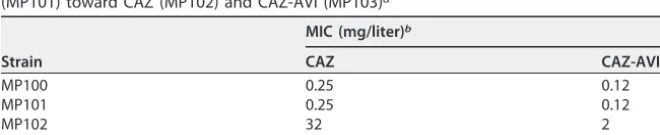
change in the MICs toward CAZ and CAZ-AVI (Table 2). MP101 was subsequently
subjected to a two-step mutant selection regimen, using increasing concentrations of
CAZ and CAZ-AVI up to 64
⫻
the MIC of MP101. Analysis of selected mutants after CAZ
(MP102) and CAZ-AVI (MP103) exposure showed that the MICs toward both CAZ and
CAZ-AVI increased irrespectively of selection regimen (Table 2). With CAZ selection, the
CAZ MIC increased 128-fold and the CAZ-AVI MIC increased 16-fold. Selection with
CAZ-AVI resulted in a 128-fold increase in the MICs for both CAZ and CAZ-AVI (Table 2).
TABLE 1E. colistrains used and constructed in this study
Strain Description Reference or source
50579417 Host strain of p50579417_3_OXA-48 61, 62
MP100 DA4201E. coliK-12 MG1655 Uppsala University
MP101 MP100 transformed with p50579417_3_OXA-48 This study
MP102 MP101 subjected to CAZ and host of p50579417_3_OXA-48-CAZ This study MP103 MP101 subjected to CAZ-AVI and host of p50579417_3_OXA-48-CAZ-AVI This study
TOP10 Recipient strain for pCR-blunt II-TOPO Invitrogen
MP104 E. coliTOP10 transformed with pCR-blunt II-blaOXA-48 This study
MP105 E. coliTOP10 transformed with pCR-blunt II-blaOXA-48-P68A This study
MP106 E. coliTOP10 transformed with pCR-blunt II-blaOXA-48-48-P68A,Y211S This study
MP107 MP100 transformed with p50579417_3_OXA-48-CAZ This study
MP108 MP100 transformed with p50579417_3_OXA-48-CAZ-AVI This study
TABLE 2MIC after mutant selection ofE. coliMG1655 (MP100) expressing OXA-48 (MP101) toward CAZ (MP102) and CAZ-AVI (MP103)a
Strain
MIC (mg/liter)b
CAZ CAZ-AVI
MP100 0.25 0.12
MP101 0.25 0.12
MP102 32 2
MP103 32 16
aMutants were selected by a two-step selection procedure on plates. Tests were performed in duplicates. bCAZ, ceftazidime; CAZ-AVI, ceftazidime-avibactam with avibactam fixed at 4g/ml.
on September 8, 2020 by guest
http://msphere.asm.org/
Amino acid substitutions in OXA-48 cause resistance and collateral effects.
Sequencing of
bla
OXA-48after CAZ selection revealed a single mutation, resulting in the
amino acid substitution P68A (OXA-48:P68A). Under CAZ-AVI selection, a double
mu-tant sharing the same amino acid change (P68A) and an additional substitution, Y211S,
was observed (OXA-48:P68A,Y211S). To determine the effect of both the single (P68A)
and double (P68A,Y211S) amino acid substitutions in OXA-48, we cloned the native
bla
OXA-48gene (MP104) and mutated versions into an expression vector in
E. coli
TOP10.
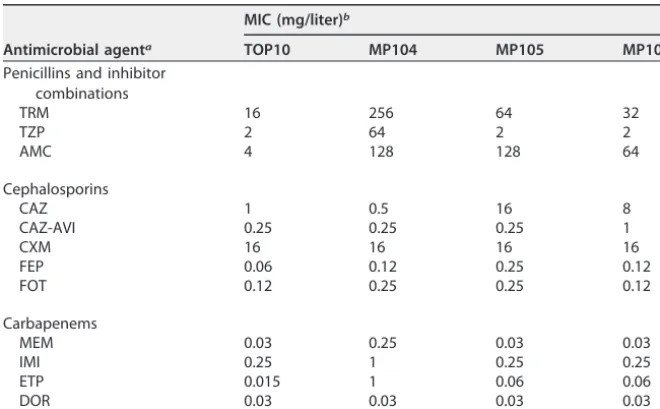
Subsequent MIC determination revealed that the P68A substitution (MP105) increased
the MIC toward CAZ by 32-fold (Table 3). No change in the MIC toward CAZ-AVI was
observed. For the P68A,Y211S (MP106), the MIC toward CAZ was increased by 32-fold
and that toward CAZ-AVI was increased by 4-fold.
Changes in OXA-2 and KPC-2/3, leading to CAZ or CAZ-AVI resistance, respectively,
have been shown to come along with functional constraints (20, 26, 29, 31). Therefore,
we performed MIC testing against a panel of

-lactams. Both the OXA-48:P68A and
P68A,Y211S substitutions caused altered effects toward other

-lactams compared to
the native OXA-48 (Table 3). The effect against carbapenems was equal for both the
single and double amino acid substitution, with a 4- to 16-fold decrease in the MIC
against meropenem, imipenem, and ertapenem (Table 3). No change in MIC toward
doripenem was observed. Moreover, expression of both mutants of OXA-48 resulted in
reduced activity against piperacillin-tazobactam (32-fold MIC decrease) and temocillin
(4- to 8-fold MIC decrease). For other

-lactams, including other cephalosporins such as
cefepime and cefotaxime, the changes were within a 2-fold dilution step
(nonsignifi-cant).
Thermostability
and
enzyme
kinetics
of
OXA-48:P68A
and
OXA-48:
P68A,Y211S.
OXA-48, OXA-48:P68A, and OXA-48:P68A,Y211S were expressed and
purified (
⬎
95% purity). From an initial starting culture of 1 liter, yields of 23.9, 9.9, and
16.7 mg, respectively, were obtained. P68A and P68A,Y211S caused a reduction in the
thermostability of OXA-48, with melting temperatures of 49.5
⫾
0.1°C and 46.7
⫾
0.2°C,
respectively, compared to 53.5
⫾
0.1°C for the native OXA-48. We further determined
the effect of the amino acid changes, with respect to both the hydrolytic activity
TABLE 3MIC ofE. coliTOP10 strains expressing native 48, 48:P68A, and OXA-48:P68A,Y211S
Antimicrobial agenta
MIC (mg/liter)b
TOP10 MP104 MP105 MP106 Penicillins and inhibitor
combinations
TRM 16 256 64 32
TZP 2 64 2 2
AMC 4 128 128 64
Cephalosporins
CAZ 1 0.5 16 8
CAZ-AVI 0.25 0.25 0.25 1
CXM 16 16 16 16
FEP 0.06 0.12 0.25 0.12
FOT 0.12 0.25 0.25 0.12
Carbapenems
MEM 0.03 0.25 0.03 0.03
IMI 0.25 1 0.25 0.25
ETP 0.015 1 0.06 0.06
DOR 0.03 0.03 0.03 0.03
aTRM, temocillin; TZP, piperacillin-tazobactam with tazobactam fixed at 4g/ml; AMC, amoxicillin-clavulanic
acid with clavulanic acid fixed at 2g/ml; CAZ, ceftazidime; CAZ-AVI, ceftazidime-avibactam, with avibactam fixed at 4g/ml; CXM, cefuroxime; FEP, cefepime; FOT, cefotaxime; MEM, meropenem; IMI, imipenem; ETP, ertapenem; DOR, doripenem.
bShown are the MICs ofE. coliTOP10 and corresponding strains expressing native OXA-48, OXA-48:P68A, and
OXA-48:P68A,Y211S (MP104, MP105 and MP106, respectively). For expression, genes were subcloned into the pCR-blunt II TOPO vector. Tests were performed in duplicates.
on September 8, 2020 by guest
http://msphere.asm.org/
against

-lactams as well as the inhibitory effect (50% inhibitory concentration [IC
50])
of AVI and tazobactam. Compared to native OXA-48, P68A and P68A,Y211S caused
⬎
10-fold and
⬎
20-fold increased catalytic efficiency (
k
cat/
K
m) toward CAZ, respectively
(Table 4). In addition, both substitutions conferred reduced hydrolytic activity toward
penicillins (ampicillin and piperacillin) and carbapenems (imipenem and meropenem
[Table 4]). The reduced catalytic efficiency varied from 2- to
⬃
600-fold compared to the
native OXA-48. No change was observed for the cephalosporin cefepime.
For OXA-48:P68A, we observed no change in the inhibitory activity of AVI (Table 5).
However, the double substitution P68A,Y211S resulted in a
⬎
5-fold decrease in
inhib-itory activity of AVI. Moreover, both the P68A and P68A,Y211S substitutions led to an
increased inhibitory activity of tazobactam with
⬎
20-fold and
⬎
3-fold reductions in the
IC
50compared to the native OXA-48 (Table 5).
P68A and P68A,Y211S increase flexibility of the active site.
Two new crystal
structures of OXA-48:P68A were obtained after soaking (see Table S1 in the
supple-mental material). Both structures displayed four molecules in the asymmetric unit
arranged in two dimers (chains A to D). In the first OXA-48:P68A structure (resolved to
2.50 Å), we found CAZ bound to chain A/C (OXA-48:P68A-CAZ), as well as two empty
active sites (chain B/D, OXA-48:P68A)—thus, one CAZ molecule per dimer. The second
OXA-48:P68A structure was in complex with AVI (OXA-48:P68A-AVI) and resolved to
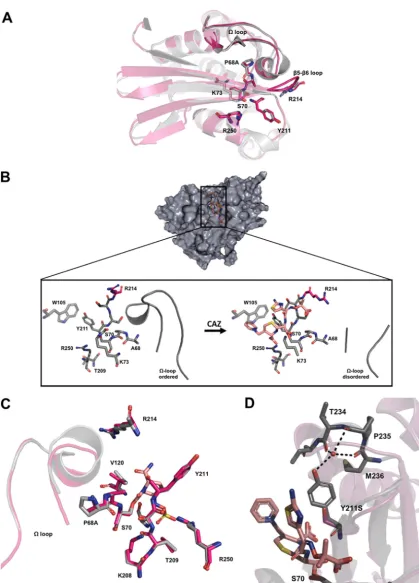
2.22 Å. The effect of the amino acid change P68A was studied by superimposing the
unbound chains B and D (OXA-48:P68A) onto native OXA-48 (PDB no.
4S2P
) (10) which
demonstrated similar conformations (Fig. 1A) and an insignificant root mean square
deviation (RMSD) of 0.3 Å. In chains A and C of OXA-48:P68A-CAZ, CAZ was found
covalently bound to the active-site residue S70 and stabilized by H-bonds involving
residues S70, T209, Y211, S212, T213, R214, and R250 (Fig. 1B). Comparing the CAZ
unbound and bound chains of OXA-48:P68A, several conformational changes were
evident.
CAZ binding forces R214 in the

5-

6 loop to move out of the active site. As a result,
R214 would then clash with parts of the
⍀
-loop (D143 to S165) in the native OXA-48
(Fig. 1B). Indeed, we found residues 149 to 161 (for both chains A and C) in the
⍀
-loop
of OXA-48:P68A to be disordered (Fig. 1B) and thus not visible in the electron density
maps. Therefore, P68A seems to impose increased flexibility within OXA-48, and this
enables both the

5-

6 loop and
⍀
-loop to occupy alternative conformations and
TABLE 4Kinetic values of recombinantly expressed and purified OXA-48, OXA-48:P68A, and OXA-48:P68A,Y211Sa
Substrateb
OXA-48 OXA-48:P68A OXA-48:P68A,Y211S
Km(M) kcat(sⴚ1)
kcat/Km (sⴚ1mMⴚ1) K
m(M) kcat(sⴚ1)
kcat/Km (sⴚ1mMⴚ1) K
m(M) kcat(sⴚ1)
kcat/Km (sⴚ1mMⴚ1) AMP 370⫾70 608⫾53 1,643⫾455 77⫾12 25⫾1 331⫾66 211⫾26 18⫾1 86⫾14 PIP 898⫾155 3.9⫾0.5 4⫾1 290⫾67 0.15⫾0.02 0.5⫾0.2 155⫾38 0.06⫾0.01 0.4⫾0.2 NIT 226⫾34 141⫾12 624⫾148 53⫾8 37⫾2 703⫾149 63⫾9 12⫾1 193⫾40 CAZ 300⫾150 3.0⫾0.8 10⫾8 220⫾50 26⫾3 117⫾41 190⫾40 42⫾5 220⫾72 FEP 1,678⫾686 1.7⫾0.6 1.0⫾0.8 462⫾126 0.5⫾0.1 1.2⫾0.5 1,459⫾635 1.1⫾0.4 0.8⫾0.6 IMI 13⫾2 4.8⫾0.2 365⫾71 4.2⫾0.9 0.80⫾0.04 190⫾50 14⫾3 0.57⫾0.04 41⫾11 MEM 4⫾1 0.71⫾0.02 177⫾50 3⫾1 (8⫾0.8)⫻10⫺4 0.3⫾0.1 2⫾1 (2⫾0.2)⫻10⫺3 1.2⫾0.7
aErrors are displayed as 95% confidence intervals based on a minimum of triplicates.
bAMP, ampicillin; PIP, piperacillin; NIT, nitrocefin; CAZ, ceftazidime; FEP, cefepime; IMI, imipenem; MEM, meropenem.
TABLE 5IC50s of tazobactam and avibactam against OXA-48, OXA-48:P68A, and OXA-48: P68A,Y211S
Antimicrobial agent
IC50(M) fora:
OXA-48 OXA-48:P68A OXA-48:P68A,Y211S
Tazobactam 95⫾9 4⫾1 31⫾5
Avibactam 2.2⫾0.6 1.3⫾0.3 13⫾3
aIC
50s(50% inhibitory concentrations) were determined using nitrocefin as a reporter substrate. Enzymes and
inhibitor were incubated together for 5 min. Errors are displayed as 95% confidence intervals.
on September 8, 2020 by guest
http://msphere.asm.org/
FIG 1 Crystal structure of OXA-48:P68A and molecular modeling of OXA-48:P68A,Y211S. (A) Structure in the absence of CAZ (red) superimposed onto native OXA-48 (gray; PDB no.4S2P) (10). (B) Structure of OXA-48:P68A (gray) in the absence of CAZ (left) and with CAZ covalently bound (right [CAZ is displayed in orange]). CAZ binding causes a displacement of R214 (red) as well as a disorder of the⍀-loop. (C) Superimposition of OXA-48:P68A-AVI (red) with native OXA-48 binding AVI (gray; PDB no.4S2P) (10). In both native OXA-48 and OXA-48:P68A, we found AVI interacting and binding to the same residues. (D) Superimposition of OXA-48:P68A (gray) binding CAZ (orange) with the modeled structure of OXA-48:P68A,Y211S (red). Here Y211 and T234, P235, and M236 form H-bonds with a central coordinated water molecule. Formation of the same H-bonds in the presence of S211 in OXA-48:P68A,Y211S is unlikely.
on September 8, 2020 by guest
http://msphere.asm.org/
consequently favors CAZ binding. Interestingly, the

5-

6-loop region has been shown
to be relevant for the carbapenemase versus ceftazidimase activity of OXA-48 (32, 41).
Furthermore, we found AVI covalently bound to S70 in all OXA-48:P68A-AVI chains.
Superimposition of OXA-48:P68A-AVI with the structure of native OXA-48 in a complex
with AVI (PDB no.
4S2K
) (11) showed no difference in interaction with AVI (Fig. 1C). R214
and the
⍀
-loop were in the same conformation as in the native OXA-48.
Crystallization of OXA-48:P68A,Y211S was unsuccessful; therefore, we used
molec-ular modeling and superimposed the obtained structure onto the structure of
OXA-48:P68A-CAZ. In native OXA-48 (PDB no.
4S2P
) and OXA-48:P68A, the Y211 side chain
is part of a water-mediated H-bond network, including T234, P235, and M236, where
the water molecule is centrally coordinated (Fig. 1D). In contrast, the formation of this
H-bond network seems not feasible with serine at position 211. In principle, this could
lead to a higher flexibility within the structure of OXA-48:P68A,Y211S and could be
related to the
⬃
4°C reduced thermostability, as well as to elevated CAZ hydrolysis,
compared to OXA-48:P68A.
Effect of plasmid adaptations on resistance and host fitness.
In order to
inves-tigate the effect of selection on the plasmid backbone, we isolated and transformed the
plasmids after CAZ CAZ) and CAZ/AVI
(p50579417_3_OXA-48-CAZ-AVI) selection into MP100. MIC determination of the resulting strains MP107 and
MP108 mirrored the fold changes observed in the cloned expression vector system
(Table 6; see Fig. S2 in the supplemental material). This indicates that the P68A and
P68A,Y211S in OXA-48 are the main contributors to the altered susceptibility profiles.
To further investigate the role of the plasmid during resistance development, we
measured the fitness costs of MP101, MP107, and MP108 in head-to-head competition
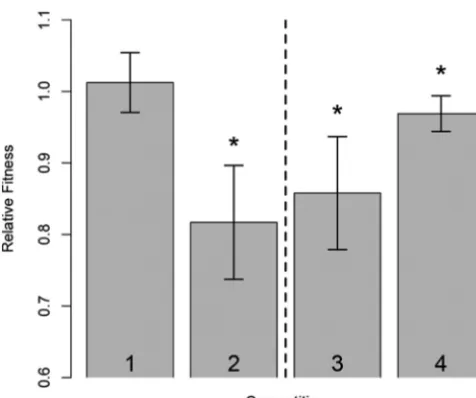
assays. The native OXA-48 plasmid did not significantly reduce fitness (relative fitness
[
w
]
⫽
1.01,
P
⫽
0.509, df
⫽
6) in MP101 relative to the plasmid-free strain MP100.
However, after CAZ-AVI adaptation, MP103 showed severely reduced fitness, by 18%
(
w
⫽
0.82,
P
⫽
0.008, df
⫽
3) relative to the plasmid-free strain MP100 (Fig. 2).
In an attempt to isolate the fitness effects conferred by the plasmids after
adaptation alone, we competed MP107 and MP108 with the native OXA-48
plasmid-TABLE 6MIC after transformation ofE. coliMG1655 with the native and adapted plasmids
Antimicrobial agenta
MIC (mg/liter)b
MP100 MP101 MP107 MP108 Penicillins and inhibitor
combinations
TRM 8 256 128 32
TZP 8 128 128 128
AMC 2 64 4 4
Cephalosporins
CAZ 0.25 0.25 16 32
CAZ-AVI 0.12 0.12 0.25 4
CXM 8 16 16 8
FEP 0.06 0.25 0.5 0.25
FOT 0.12 0.5 1 0.25
Carbapenems
MEM 0.03 0.25 0.06 0.06
IMI 0.12 1 0.25 0.25
ETP 0.015 1 0.25 0.12
DOR 0.015 0.03 0.03 0.03
aTRM, temocillin; TZP, piperacillin-tazobactam with tazobactam fixed at 4g/ml; AMC, amoxicillin-clavulanic
acid with clavulanic acid fixed at 2g/ml; CAZ, ceftazidime; CAZ-AVI, ceftazidime-avibactam with avibactam fixed at 4g/ml; CXM, cefuroxime; FEP, cefepime; FOT, cefotaxime; MEM, meropenem; IMI, imipenem; ETP, ertapenem; DOR, doripenem.
bShown are the MICs after transformation ofE. coliMG1655 (MP100) with the native plasmid (MP101) and
adapted plasmids p50579417-OXA-48-CAZ (MP107) and p50579417-OXA-48-CAZ-AVI (MP108). Tests were performed in duplicates.
on September 8, 2020 by guest
http://msphere.asm.org/
carrying strain MP101. Both adapted plasmids significantly reduced fitness, by 14%
(p50579417_3_OXA-48-CAZ;
P
⫽
0.003, df
⫽
9) and 3%
(p50579417_3_OXA-48-CAZ-AVI;
P
⫽
0.026, df
⫽
6), respectively. Sequencing of the plasmids after selection revealed
mutational differences on the plasmid backbone. Different point mutations in
repA
,
79G
¡
T (p50579417_3_OXA-48-CAZ) and 79G
¡
T (p50579417_3_OXA-48-CAZ-AVI)
(42), as well as a 62-bp deletion in the DNA binding side of a xenobiotic response
element (transcriptional regulator) in the p50579417_3_OXA-48-CAZ plasmid were
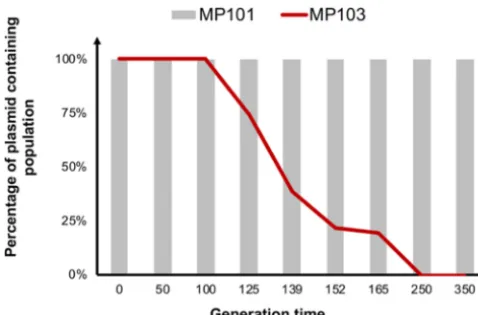
observed. To investigate the effect of CAZ-AVI exposure on OXA-48 plasmid stability,
we serially passaged MP101 harboring the native OXA-48 plasmid and the
CAZ-AVI-exposed strain MP103 for 350 generations under nonselective conditions. Consistent
with the fitness data, the native OXA-48 plasmid was stably maintained throughout the
experiment, whereas loss of p50579417_3_OXA-48-CAZ-AVI was observed after
⬃
100
generations. The plasmid was completely lost from the population after
⬃
250
gener-ations (Fig. 3).
DISCUSSION
Treatment options for infections caused by carbapenemase-producing
Gram-negative bacteria are limited, and the increased spread of these multidrug-resistant
bacteria is considered a public health threat (1, 2). Several novel

-lactamase inhibitors,
including inhibitors of carbapenemases, have recently been introduced to resurrect the
activity of existing

-lactams (43, 44). This includes AVI, a novel diazabicyclooctane

-lactamase inhibitor able to inhibit class A and class D carbapenemases, such as KPC
and OXA-48, respectively. Thus, the introduction of the combination CAZ-AVI offers a
possible treatment option for class A and class D carbapenemase-producing
Entero-bacterales
(16). Unfortunately, several reports are now describing the emergence of
CAZ-AVI-resistant
Enterobacterales
, particularly KPC-producing
K. pneumoniae
(22, 23,
30). In contrast to carbapenemases such as KPC, the OXA-48 carbapenemase has an
insignificant hydrolysis activity toward third-generation cephalosporins, including CAZ.
However, the CAZ-AVI combination is a promising treatment option since
OXA-48-FIG 2 Mixed head-to-head competitions. Strains were mixed in a 1:1 ratio and grown together overnight. Ratios before and after incubation were determined by selective plating. For bar 1, MP100 (E. coliMG1655) competed with MP101 (E. coliMG1655 carrying p50579417_3_OXA-48) demonstrated no initial cost of the native OXA-48 plasmid. For bar 2, competitions of MP100 (E. coliMG1655) with MP103 (MP101 subjected to CAZ-AVI) resulted in a high fitness cost of 18% for the strain subjected to CAZ-AVI. For bars 3 and 4, comparisons of MP101 versus MP107 (E. coli MG1655 transformed with p50579417_3_OXA-48-CAZ) and MP108 (E. coliMG1655 transformed with p50579417_3_OXA-48-CAZ-AVI) demonstrated significant costs of 14% and 3%, respectively. All measurements were done at least in triplicates. Statistically significant results are marked with asterisks. Strain abbreviations are listed in Table 1.
on September 8, 2020 by guest
http://msphere.asm.org/
producing isolates frequently also carry an ESBL (12, 45, 46). Thus, we investigated the
effect of CAZ and CAZ-AVI on the evolution of OXA-48 and an OXA-48 plasmid closely
related to the epidemic IncL plasmid frequently associated with
bla
OXA-48(39, 40).
Our results show that both CAZ and CAZ-AVI exposure resulted in mutations in
bla
OXA-48that increased the ability of OXA-48 to hydrolyze CAZ. After CAZ-AVI
expo-sure, we also identified a reduced inhibitory effect of AVI. Moreover, development of
OXA-48 resistance toward CAZ/CAZ-AVI conferred collateral sensitivity where the
car-bapenem and penicillin activities of the enzyme were reduced. Several studies have
reported OXA-48-like variants (OXA-163, OXA-247, and OXA-405) with increased activity
toward extended-spectrum cephalosporins (36–38). These variants carry amino acid
deletions/substitutions within and around the

5-

6 loop also leading to reduced
carbapenemase activity. OXA-247 carries the identified Y211S substitution in addition
to a 4-amino-acid deletion (36). From these studies, it was unclear, however, whether
this evolutionary trajectory could have been triggered by the exposure to
extended-spectrum cephalosporins. We show that CAZ and CAZ-AVI have the potential to affect
the evolution of OXA-48 and that the substitutions P68A and P68A,Y211S re-evolve the
function of OXA-48 and specialize the enzyme toward ceftazidime hydrolysis. These
results agree with other studies in which the adaptive changes in enzymes caused
collateral effects, compromising or reversing the original function (20, 29, 31, 47, 48).
While Y211 in OXA-48 is located at the

5-

6 loop and is involved in AVI binding by the
formation of an oxyanion hole (11, 32), as well as in aromatic stacking with the side
chain (
⬃
4.3 Å), the role of P68 in the beginning of the
␣
3 helix is poorly understood.
In silico
modeling of OXA variants identified loops flanking the
␣
3 helix to play an
important role for the carbapenemase or CAZ hydrolysis activity in those variants. In
general, increased stability in these loop regions was also correlated with higher affinity
to carbapenems, whereby more flexible loops revealed their catalytic proficiency
toward CAZ (41).
The X-ray structure of OXA-48:P68A with four chains in the asymmetric unit revealed
that CAZ binding requires higher structural flexibility. Generally, CAZ binding resulted
in a displacement of the

5-

6 loop carrying R214, as well as a disordered
⍀
-loop
(Fig. 1B). Docking experiments in OXA-48 have shown that CAZ hydrolysis is
mecha-nistically unfeasible. This is mainly due to the high rigidity and the small active-site
cavity confined by R214, as well as the length of the

5-

6 loop (41, 49). In contrast, a
strongly shortened

5-

6 loop and the absence of R214, as observed in OXA-163,
expand the active-site cavity and allow OXA-163 to hydrolyze CAZ more efficiently (49).
This supports the hypothesis that P68A increases the flexibility and changes the
plasticity of the substrate binding site in OXA-48, allowing the hydrolysis of bulkier
FIG 3 Plasmid stability of MP101 and MP103 in nonselective MH broth over 350 generations (Table 1). The native plasmid (p50579417_3_OXA-48) was stably maintained in MP101 over 350 generations without selection pressure. In the strain subjected to CAZ-AVI, MP103, the adapted plasmid (p50579417_3_OXA-48-CAZ-AVI) was purged out of the population within 350 generations.
on September 8, 2020 by guest
http://msphere.asm.org/
drugs such as CAZ. Decreased rigidity is also supported by a reduction in
thermosta-bility of
⬃
4°C, compared to native OXA-48. Interestingly, OXA-163 (as well as OXA-247
and OXA-405) displayed collateral sensitivity toward carbapenems (36–38, 50) but also
cross-resistance toward some cephalosporins (e.g., cefotaxime). Molecular docking of
OXA-163 suggests that cefotaxime is more embedded within the active site (49).
However, cross-resistance toward other cephalosporins than CAZ was not observed for
the OXA-48:P68A variant. Depending on their R2 side chain, cephalosporins display
different binding behavior in metallo-

-lactamases (51). While OXA-48:P68A allows CAZ
binding by a displacement of the

5-

6 and
⍀
-loops, we hypothesize that for other
cephalosporins, the active site of OXA-48:P68A might still be too narrow and rigid to
achieve significant hydrolysis.
The double mutant carrying P68A,Y211S conferred a high level of resistance toward
CAZ and elevated MIC levels against CAZ-AVI. Furthermore, P68A,Y211S caused a
20-fold increase in CAZ hydrolysis and a 5-fold reduction in the inhibitory activity of AVI,
compared to native OXA-48. Therefore, our data suggest that OXA-48-mediated
devel-opment of resistance toward CAZ-AVI is due to both increased enzymatic hydrolysis
toward CAZ and reduced inhibitory activity of AVI. Molecular modeling of OXA-48:
P68A,Y211S suggested the alteration of a water-mediated H-bond network between
Y211 OH and T234 O and P235 O and M236 O (Fig. 1D). In OXA-48:P68A,Y211S, S211 is
unlikely to be part of the same H-bond network due to its less-space-filling properties.
The loss of H-bonds can increase enzyme flexibility; however, this is usually
accompa-nied by decreased enzyme stability (52). Indeed, we found OXA-48:P68A,Y211S to be
⬃
7°C and
⬃
4°C less thermostable compared to native OXA-48 and OXA-48:P68A. We
therefore believe that P68A,Y211S in OXA-48 further increases the flexibility of the
active site, resulting in increased CAZ hydrolysis. In addition, S211 contributes to the
reduced inhibitory activity of AVI by the loss of aromatic stacking, which stabilizes AVI
in OXA-48 and OXA-48:P68A.
In addition, clinically relevant reversion of piperacillin-tazobactam resistance was
shown for both the single and double OXA-48 mutants. Enzyme kinetics also revealed
a double effect where the OXA-48 variants demonstrate reduced piperacillin hydrolysis
activity and stronger inhibition by tazobactam. Similar effects were shown for
CAZ-AVI-mediated mutations within KPC-2 and KPC-3 (29–31). Resensitization through
exploitation of such evolutionary trade-offs could in principle provide the basis for
alternative treatment strategies that potentiate the activities of earlier-generation

-lactams, and several strategies have recently been proposed (53–56).
Since the dissemination of
bla
OXA-48is partially linked to closely related IncL
plasmids (39, 40), we wanted to investigate the effect of CAZ and CAZ-AVI exposure on
p50579417_3_OXA-48. Interestingly, the adapted plasmids showed a significant fitness
cost compared to the native plasmid (Fig. 2), as well as reduced plasmid stability
(p50579417_3_OXA-48-CAZ-AVI) in the absence of

-lactam selection (Fig. 3).
Sequenc-ing of the CAZ- and CAZ-AVI-exposed plasmids displayed mutations in a regulatory
region (
repA
) known to be involved in plasmid copy number control (42, 57).
Upregu-lation of plasmid copy number has been shown previously to correlate with both
decreased bacterial fitness and increased drug resistance (58). These data suggest that
P68A and P68A,Y211S mutations, alone or in combination with putative copy number
changes, might negatively impact the fitness of the adapted plasmids.
Mutations in
bla
KPC-2/3conferring CAZ-AVI resistance have been observed in the
clinical setting (19, 22, 28, 30, 59). However, to the best of our knowledge,
OXA-48-mediated reduced susceptibility to CAZ-AVI has not yet been reported in clinical
settings (60). This might be due to the evolutionary trade-offs and reduced fitness
reported here, which in principle may limit the occurrence and spread of resistance.
Taken together, our data suggest that CAZ and CAZ-AVI conferred collateral sensitivity
effects where the enzyme compromised its original carbapenemase and penicillinase
activity. In principle, these evolutionary constraints and resensitizations can be
ex-ploited in order to improve future treatment protocols.
on September 8, 2020 by guest
http://msphere.asm.org/
MATERIALS AND METHODS
Media, antibiotics, and strains.Mueller-Hinton (MH) agar and broth were purchased from Thermo Fisher Scientific (East Grinstead, United Kingdom). Luria-Bertani (LB) broth, LB agar, ampicillin, amoxicillin, cefepime, CAZ, imipenem, meropenem, piperacillin, and tazobactam were obtained from Sigma-Aldrich (St. Louis, MO). Nitrocefin was purchased from Merck (Darmstadt, Germany). All strains used and constructed within this study are listed in Table 1. The characteristics of the clinicalE. colistrain 50579417 harboring the OXA-48 plasmid (p50579417_3_OXA-48) have been described previously (61, 62). The plasmid p50579417_3_OXA-48 was conjugated into rifampin-resistantE. coliTOP10 and subsequently isolated using a plasmid mini-purification kit (Qiagen, Germany).E. coliMG1655 (DA4201) was electro-porated with p50579417_3_OXA-48 as published previously (63). Transformants positive forblaOXA-48
were checked by PCR using REDTaq ready mix (Sigma-Aldrich, St. Louis, MO) and preOXA-48 primers (61). PacBio sequencing ofE. coli50579417.Genomic DNA ofE. coli50579417 was prepared from an overnight culture using the GenElute bacterial genomic DNA kit (Sigma-Aldrich, St. Louis, MO) according to the manufacturer’s instructions. The DNA library was prepared using the Pacific Biosciences 20-kb library preparation protocol and size selection with a 9-kb cutoff using BluePippin (Sage Sciences, Beverly, MA). Sequencing was performed using the Pacific Biosciences RSII instrument using P6-C4 chemistry with a 360-min movie time and one single-molecule real-time sequencing (SMRT) cell. The sequences were assembled and polished at The Norwegian Sequencing Centre (https://www.sequencing .uio.no/) using HGAP v3 (Pacific Biosciences, SMRT Analysis Software v.2.3.0). Minimus2 from AMOS was used to circularize contigs, and RS_Resequencing.1 software (Pacific Biosciences, SMRT Analysis Software v.2.3.0) was used for correction of bases after circularization.
Selection of mutants with increased CAZ and CAZ-AVI MIC.Ten milliliters of an MP101 culture was grown in MH broth at 37°C overnight and then centrifuged for 10 min at 4,000⫻g, and the pellet was suspended in 1 ml MH broth. One hundred microliters was plated on MH agar containing increasing concentrations of either CAZ alone or in combination with AVI up to 2 mg/liter. For CAZ-AVI, we utilized the clinical ratio of 4:1, respectively. Colonies growing on the highest concentration were recovered and grown in a fresh overnight culture (MH broth) and subsequently plated on concentrations of CAZ or CAZ-AVI up to 32 mg/liter.
Antibiotic susceptibility testing.For MIC determination, single colonies were suspended in 0.9% saline buffer to a 0.5 McFarland standard and further diluted 1:100 in MH broth. Fifty microliters of the bacterial suspension was loaded onto in-house-designed and premade Sensititre microtiter plates (TREK Diagnostic Systems/Thermo Fisher Scientific, East Grinstead, United Kingdom). The plates were incubated for 20 h at 37°C. Antibiotic susceptibility testing was performed in duplicates.
blaOXA-48sequencing and subcloning.After CAZ and CAZ-AVI exposure, plasmids were isolated using a plasmid mini-purification kit (Qiagen, Germany), and mutations withinblaOXA-48were identified
by Sanger sequencing (BigDye 3.1 technology; Applied Biosystems, CA) using preOXA-48 primers (61). For a functional resistance profile, the native and mutated blaOXA-48 genes were cloned in the
pCR-blunt II-TOPO vector (Invitrogen, CA) and expressed in E. coliTOP10 (Invitrogen, CA). The PCR product was obtained by Phusion High Fidelity PCR mastermix with High Fidelity buffer (New England Biolabs, MA) and preOXA-48 primers (61). Transformants were selected on LB agar plates containing 50 or 100 mg/liter ampicillin. Insertion size was verified by Sanger sequencing using M13 forward (5=-GTA AAACGACGGCCAG-3=) and reverse (5=-CAGGAAACAGCTATGAC-3=) primers.
Recombinant enzyme construction, expression, and purification.In order to construct OXA-48: P68A and OXA-48:P68A,Y211S, site-directed mutagenesis ofblaOXA-48in a pDEST17 vector was performed
using the QuikChange II site-directed mutagenesis kit (Agilent Biosciences, Santa Clara, CA) (64, 65). XL1-Blue competent cells were heat shock transformed with the constructed DNA. Point mutations were verified by Sanger sequencing using T7 primers, as described above. OXA-48 expression and purification were done as described previously (51, 52). For the mutants, expression was performed in Rosetta 2(DE3)/pLysS. In general, cultures were grown to log phase in Terrific broth supplemented with ampicillin (100 mg/liter) at 37°C and 180 rpm. Enzyme expression was induced with 0.1 mM IPTG (isopropyl--D -thiogalactopyranoside) and performed at 15°C and 180 rpm overnight. Harvested cells were sonicated, and recombinant proteins were purified as described previously (64).
Thermostability.Fluorescence-based protein thermostability was determined for OXA-48, OXA-48: P68A, and OXA-48:P68A,Y211S in an MJ minicycler (Bio-Rad) across a temperature gradient of 25 to 60°C (at a heating rate of 1°C per min). Thermostability was determined in 50 mM HEPES (VWR, PA) at pH 7.5 supplemented with 50 mM potassium sulfate (Honeywell, NC) using 0.2 mg/ml protein and 5⫻SYPRO orange (Sigma-Aldrich, St. Louis, MO). The excitation and emission wavelengths of SYPRO orange are 470 and 570 nm, respectively. The melting temperatures were determined as the inflection point of the melting transition found from the first derivative. All experiments were performed in triplicates.
Steady-state enzyme kinetics.TheKmandkcatfor recombinantly expressed OXA-48, OXA-48:P68A,
and OXA-48:P68A,Y211S were determined under steady-state conditions for ampicillin (Δ ⫽
⫺820 M⫺1cm⫺1, 232 nm, 1 nM), piperacillin (Δ ⫽ ⫺820 M⫺1cm⫺1, 235 nm, 1, 10, and 100 nM for
OXA-48, OXA-48:P68A, and OXA-48:P68A,Y211S, respectively), nitrocefin (Δ⫽17,400 M⫺1cm⫺1, 482 nm,
0.75 nM), CAZ (Δ⫽ ⫺9,000 M⫺1cm⫺1, 260 nm, 150 nM), cefepime (Δ⫽ ⫺10,000 M⫺1cm⫺1, 260 nm,
1 nM), imipenem (Δ⫽ ⫺9,000 M⫺1cm⫺1, 300 nm, 150 nM), and meropenem (Δ⫽ ⫺6,500 M⫺1cm⫺1,
300 nm, 150 nM) by measuring the initial enzymatic reaction rate. The half-maximal inhibitory concen-trations (IC50) for AVI and tazobactam were obtained after incubation of recombinant enzymes (0.75 nM)
with inhibitors for 5 min at 25°C. Nitrocefin (20M) was utilized as the reporter substrate, and the initial enzymatic reaction rate was measured at 482 nm. All determinations were performed at least in duplicates at a final assay volume of 100l. For nitrocefin-dependent reactions, 96-well plates (Thermo
on September 8, 2020 by guest
http://msphere.asm.org/
Fisher Scientific, Roskilde, Denmark) were utilized. For all the substances, UV-transparent 96-well plates (Corning, Kennebunk, ME) were used. All test results were obtained at 25°C and in 0.1 M phosphate buffer (pH 7.0) supplemented with 50 mM NaHCO3(Sigma-Aldrich, St. Louis, MO). Calculations were performed
by using GraphPad Prism 7.0 (GraphPad Software, Inc.).
Crystallization, structure determination, and molecular modeling.OXA-48:P68A was crystallized by the sitting-drop method in 22% to 26% polyethylene glycol monomethyl ether 5000 (Sigma-Aldrich, St. Louis, MO) and 0.1 M BIS-Tris-propane buffer (Sigma-Aldrich, St. Louis, MO) at pH 6.5 to 7.5 at 4°C. Crystals were soaked for some seconds in CAZ (saturated) or AVI (saturated) in cryoprotector, which was in mother lipid and 10% ethylene glycol (Sigma-Aldrich, St. Louis, MO, USA), followed by being flash-cooled in liquid nitrogen. Diffraction data were collected on BL14.1 and BL14.2 BESSY II, Berlin, Germany, at 100 K at a wavelength of 0.9184 Å, and the diffraction images were indexed and integrated using XDS (66). AIMLESS was used for scaling (67). During scaling, the final data sets were carefully inspected (Table S1), where we aimed for high completeness: a CC1/2of⬎0.5 in the outer resolution shell
and a mean above 1.0. Both structures were solved by molecular replacement with chain A of PDB no.
5QB4(68) and the program Phenix 1.12 (69). Parts of the models were rebuilt using Coot (70). Figures were prepared using PyMOL version 1.8 (Schrödinger). For OXA-48:P68A,Y211S, molecular modeling was performed using Swiss-Model (71) and OXA-46:P68A as a template (PDB no.6Q5F).
Fitness experiments.Two-milliliter overnight cultures were inoculated by picking single colonies from LB agar plates and incubated for 24 h at 37°C and 700 rpm. Competitors were then mixed and diluted 1:100 in a volumetric 1:1 ratio by passaging 5l of each overnight culture into 990l LB broth in a 96-deep-well plate (VWR, PA). Initial (time 0 [T0]) and endpoint (time 24 h [T24]) CFU values for each
competitor were determined by selective plating on LB agar and LB agar containing 50 mg/liter amoxicillin. Competitions were carried out at 37°C in at least triplicates. Relative fitness (w) was calculated by determining the ratio between each pair of competitors using a Malthusian parameter and the equationw⫽ln(AT24/AT0)/ln(BT24/BT0) (72), where A and B are the competing strains.
Plasmid sequencing. Plasmid DNA after CAZ and CAZ-AVI exposure was isolated as described above, and fragment libraries were constructed by using the Nextera kit (Illumina, Little Chesterford, United Kingdom) followed by 251-bp paired-end sequencing (MiSeq, Illumina). This was done according to the manufacturer’s instructions. Paired-end sequence data were assembled using CLCbio’s Genomics Workbench 8.0 (Qiagen, Aarhus, Denmark). Sequences were aligned against the native OXA-48 plasmid, and mutations were identified using DNASTAR (DNASTAR, Madison, WI).
Plasmid stability.MP101 and MP103 were evolved under nonselective conditions in MH broth for 350 generations. Initially, 990l MH broth was inoculated with 10l of an overnight culture and incubated for 12 h at 37°C and 700 rpm. Every 12 h, 10l of the culture was transferred into 990l MH broth. Plasmid stability was tested after 0, 50, 100, 125, 140, 155, 165, 250, and 350 generations. For each time point, an overnight culture was diluted 10⫺4to 10⫺6in 0.9% saline. One hundred microliters of each
concentration was plated on MH agar and incubated overnight at 37°C. Subsequently, 100 single colonies were picked and streaked on MH agar containing 100 mg/liter ampicillin.
Data availability.Atom coordinates and structure factors for OXA-48:P68A and OXA-48:P68A-AVI have been deposited in the Protein Data Bank (PDB no.6Q5Fand6Q5B, respectively). The plasmid sequence data (p50579417_3_OXA-48) are available in GenBank under accession no.CP033880. All other relevant data are available within this article, the supplemental material, or from the corresponding author upon request.
SUPPLEMENTAL MATERIAL
Supplemental material for this article may be found at
https://doi.org/10.1128/
mSphere.00024-19
.
FIG S1
, PDF file, 1.9 MB.
FIG S2
, PDF file, 0.2 MB.
TABLE S1
, PDF file, 0.03 MB.
ACKNOWLEDGMENTS
We are very grateful to Jürgen Brem, Department of Chemistry, University of Oxford,
United Kingdom, for providing the avibactam used in this study, as well as Linus
Sandegren, Uppsala University, Sweden, for providing
E. coli
MG1655 (DA4201).
Provi-sion of beam time at BL14.1 and BL14.2 at Bessy II, Berlin, Germany, is highly valued. We
thank Maria Chiara di Luca for sequencing
E. coli
50579417, as well as Nicole Podnecky
and Joao Pedro Alves Gama for their support in the analysis of the next-generation
sequencing data. The PacBio sequencing was performed at the Norwegian Sequencing
Centre.
Pål Jarle Johnsen was supported by Northern Norway Regional Health Authority,
UiT—The Arctic University of Norway (project SFP1292-16), and JPI-EC-AMR (project
271176/H10).
C.F., H.-K.S.L., and Ø.S. conceived the study. C.F., V.S., P.J.J., Ø.S., and H.-K.S.L.
designed experiments. C.F. performed mutant selection. C.F. sequenced and cloned
on September 8, 2020 by guest
http://msphere.asm.org/
bla
OXA-48. C.F. and V.S. performed antibiotic susceptibility testing. C.F. and V.S.
per-formed serial transfers. C.F. measured plasmid stability. V.S. perper-formed fitness cost
analysis. A.M.T. inserted point mutations and purified enzymes. C.F. and A.M.T.
per-formed enzyme kinetics. C.F. and H.-K.S.L. crystallized, solved, and refined crystal
structures. C.F., V.S., and Ø.S. wrote the manuscript with input from all authors.
The authors declare no competing financial interest.
REFERENCES
1. van Duin D, Doi Y. 2017. The global epidemiology of carbapenemase-producingEnterobacteriaceae. Virulence 8:460 – 469. https://doi.org/10 .1080/21505594.2016.1222343.
2. Cassini A, Högberg LD, Plachouras D, Quattrocchi A, Hoxha A, Simonsen GS, Colomb-Cotinat M, Kretzschmar ME, Devleesschauwer B, Cecchini M, Ouakrim DA, Oliveira TC, Struelens MJ, Suetens C, Monnet DL, Strauss R, Mertens K, Struyf T, Catry B, Latour K, Ivanov IN, Dobreva EG, Tambic Andraševic A, Soprek S, Budimir A, Paphitou N, Žemlicková H, Schytte Olsen S, Wolff Sönksen U, Märtin P, Ivanova M, Lyytikäinen O, Jalava J, Coignard B, Eckmanns T, Abu Sin M, Haller S, Daikos GL, Gikas A, Tsiodras S, Kontopidou F, Tóth Á, Hajdu Á, Guólaugsson Ó, Kristinsson KG, Murchan S, Burns K, Pezzotti P, Gagliotti C, Dumpis U, et al. 2019. Attributable deaths and disability-adjusted life-years caused by infec-tions with antibiotic-resistant bacteria in the EU and the European Economic Area in 2015: a population-level modelling analysis. Lancet Infect Dis 19:56 – 66.https://doi.org/10.1016/S1473-3099(18)30605-4. 3. Temkin E, Fallach N, Almagor J, Gladstone BP, Tacconelli E, Carmeli Y,
DRIVE-AB Consortium. 2018. Estimating the number of infections caused by antibiotic-resistantEscherichia coliandKlebsiella pneumoniaein 2014: a modelling study. Lancet Glob Health 6:e969 – e979.https://doi.org/10 .1016/S2214-109X(18)30278-X.
4. Walsh TR. 2010. Emerging carbapenemases: a global perspective. Int J Antimicrob Agents 36(Suppl 3):S8 –14. https://doi.org/10.1016/S0924 -8579(10)70004-2.
5. Nordmann P, Dortet L, Poirel L. 2012. Carbapenem resistance in Enterobacteriaceae: here is the storm! Trends Mol Med 18:263–272.
https://doi.org/10.1016/j.molmed.2012.03.003.
6. Jacoby GA, Munoz-Price LS. 2005. The new-lactamases. N Engl J Med 352:380 –391.https://doi.org/10.1056/NEJMra041359.
7. Queenan AM, Bush K. 2007. Carbapenemases: the versatile-lactamases. Clin Microbiol Rev 20:440 – 458.https://doi.org/10.1128/CMR.00001-07. 8. Patel G, Bonomo RA. 2013. “Stormy waters ahead”: global emergence of
carbapenemases. Front Microbiol 4:48. https://doi.org/10.3389/fmicb .2013.00048.
9. Endimiani A, Choudhary Y, Bonomo RA. 2009.In vitroactivity of NXL104 in combination with-lactams againstKlebsiella pneumoniaeisolates producing KPC carbapenemases. Antimicrob Agents Chemother 53: 3599 –3601.https://doi.org/10.1128/AAC.00641-09.
10. Ehmann DE, Jahic H, Ross PL, Gu RF, Hu J, Kern G, Walkup GK, Fisher SL. 2012. Avibactam is a covalent, reversible, non--lactam -lactamase inhibitor. Proc Natl Acad Sci U S A 109:11663–11668.https://doi.org/10 .1073/pnas.1205073109.
11. King DT, King AM, Lal SM, Wright GD, Strynadka NC. 2015. Molecular mechanism of avibactam-mediated-lactamase inhibition. ACS Infect Dis 1:175–184.https://doi.org/10.1021/acsinfecdis.5b00007.
12. Zasowski EJ, Rybak JM, Rybak MJ. 2015. The -lactams strike back: ceftazidime-avibactam. Pharmacotherapy 35:755–770.https://doi.org/10 .1002/phar.1622.
13. Lagace-Wiens P, Walkty A, Karlowsky JA. 2014. Ceftazidime-avibactam: an evidence-based review of its pharmacology and potential use in the treatment of Gram-negative bacterial infections. Core Evid 9:13–25.
https://doi.org/10.2147/CE.S40698.
14. Zhanel GG, Lawson CD, Adam H, Schweizer F, Zelenitsky S, Lagace-Wiens PR, Denisuik A, Rubinstein E, Gin AS, Hoban DJ, Lynch JP, III, Karlowsky JA. 2013. Ceftazidime-avibactam: a novel cephalosporin/-lactamase inhibitor combination. Drugs 73:159 –177. https://doi.org/10.1007/ s40265-013-0013-7.
15. Sharma R, Park TE, Moy S. 2016. Ceftazidime-avibactam: a novel cephalosporin/-lactamase inhibitor combination for the treatment of resistant Gram-negative organisms. Clin Ther 38:431– 444. https://doi .org/10.1016/j.clinthera.2016.01.018.
16. Ehmann DE, Jahic H, Ross PL, Gu RF, Hu J, Durand-Reville TF, Lahiri S,
Thresher J, Livchak S, Gao N, Palmer T, Walkup GK, Fisher SL. 2013. Kinetics of avibactam inhibition against class A, C, and D-lactamases. J Biol Chem 288:27960 –27971.https://doi.org/10.1074/jbc.M113.485979.
17. Aktas¸ Z, Kayacan C, Oncul O. 2012.In vitroactivity of avibactam (NXL104) in combination with -lactams against Gram-negative bacteria, including OXA-48 -lactamase-producing Klebsiella pneumoniae. Int J Antimicrob Agents 39:86 – 89.https://doi.org/10.1016/j.ijantimicag.2011.09.012. 18. Bonnefoy A, Dupuis-Hamelin C, Steier V, Delachaume C, Seys C, Stachyra
T, Fairley M, Guitton M, Lampilas M. 2004.In vitroactivity of AVE1330A, an innovative broad-spectrum non--lactam -lactamase inhibitor. J Antimicrob Chemother 54:410 – 417.https://doi.org/10.1093/jac/dkh358. 19. Gaibani P, Campoli C, Lewis RE, Volpe SL, Scaltriti E, Giannella M, Pongolini S, Berlingeri A, Cristini F, Bartoletti M, Tedeschi S, Ambretti S. 2018.In vivoevolution of resistant subpopulations of KPC-producing Klebsiella pneumoniaeduring ceftazidime/avibactam treatment. J Anti-microb Chemother 73:1525–1529.https://doi.org/10.1093/jac/dky082. 20. Fraile-Ribot PA, Mulet X, Cabot G, Del Barrio-Tofino E, Juan C, Perez JL,
Oliver A. 2017. In vivo emergence of resistance to novel cephalosporin–-lactamase inhibitor combinations through the dupli-cation of amino acid D149 from OXA-2-lactamase (OXA-539) in se-quence type 235Pseudomonas aeruginosa. Antimicrob Agents Che-mother 61:e01117-17.https://doi.org/10.1128/AAC.01117-17.
21. Shields RK, Potoski BA, Haidar G, Hao B, Doi Y, Chen L, Press EG, Kreiswirth BN, Clancy CJ, Nguyen MH. 2016. Clinical outcomes, drug toxicity, and emergence of ceftazidime-avibactam resistance among patients treated for carbapenem-resistantEnterobacteriaceaeinfections. Clin Infect Dis 63:1615–1618.https://doi.org/10.1093/cid/ciw636. 22. Giddins MJ, Macesic N, Annavajhala MK, Stump S, Khan S, McConville TH,
Mehta M, Gomez-Simmonds A, Uhlemann AC. 2018. Successive emer-gence of ceftazidime-avibactam resistance through distinct genomic adaptations inblaKPC-2-harboringKlebsiella pneumoniaesequence type
307 isolates. Antimicrob Agents Chemother 62:e02101-17.https://doi .org/10.1128/AAC.02101-17.
23. Nelson K, Hemarajata P, Sun D, Rubio-Aparicio D, Tsivkovski R, Yang S, Sebra R, Kasarskis A, Nguyen H, Hanson BM, Leopold S, Weinstock G, Lomovskaya O, Humphries RM. 2017. Resistance to ceftazidime-avibactam is due to transposition of KPC in a porin-deficient strain of Klebsiella pneumoniaewith increased efflux activity. Antimicrob Agents Chemother 61:e00989-17.https://doi.org/10.1128/AAC.00989-17. 24. Both A, Buttner H, Huang J, Perbandt M, Belmar Campos C, Christner M,
Maurer FP, Kluge S, Konig C, Aepfelbacher M, Wichmann D, Rohde H. 2017. Emergence of ceftazidime/avibactam non-susceptibility in an MDR Klebsiella pneumoniaeisolate. J Antimicrob Chemother 72:2483–2488.
https://doi.org/10.1093/jac/dkx179.
25. Lahiri SD, Walkup GK, Whiteaker JD, Palmer T, McCormack K, Tanudra MA, Nash TJ, Thresher J, Johnstone MR, Hajec L, Livchak S, McLaughlin RE, Alm RA. 2015. Selection and molecular characterization of ceftazidime/avibactam-resistant mutants in Pseudomonas aeruginosa strains containing derepressed AmpC. J Antimicrob Chemother 70: 1650 –1658.https://doi.org/10.1093/jac/dkv004.
26. Shields RK, Nguyen MH, Press EG, Chen L, Kreiswirth BN, Clancy CJ. 2017. In vitro selection of meropenem resistance among ceftazidime-avibactam-resistant, meropenem-susceptibleKlebsiella pneumoniae iso-lates with variant KPC-3 carbapenemases. Antimicrob Agents Che-mother 61:e00079-17.https://doi.org/10.1128/AAC.00079-17.
27. Humphries RM, Yang S, Hemarajata P, Ward KW, Hindler JA, Miller SA, Gregson A. 2015. First report of ceftazidime-avibactam resistance in a KPC-3-expressingKlebsiella pneumoniaeisolate. Antimicrob Agents Che-mother 59:6605– 6607.https://doi.org/10.1128/AAC.01165-15. 28. Shields RK, Nguyen MH, Press EG, Chen L, Kreiswirth BN, Clancy CJ. 2017.
Emergence of ceftazidime-avibactam resistance and restoration of car-bapenem susceptibility in Klebsiella pneumoniae
on September 8, 2020 by guest
http://msphere.asm.org/
producingK pneumoniae: a case report and review of literature. Open Forum Infect Dis 4:ofx101.https://doi.org/10.1093/ofid/ofx101. 29. Livermore DM, Warner M, Jamrozy D, Mushtaq S, Nichols WW,
Mus-tafa N, Woodford N. 2015.In vitroselection of ceftazidime-avibactam resistance inEnterobacteriaceaewith KPC-3 carbapenemase. Antimi-crob Agents Chemother 59:5324 –5330.https://doi.org/10.1128/AAC .00678-15.
30. Haidar G, Clancy CJ, Shields RK, Hao B, Cheng S, Nguyen MH. 2017. Mutations inblaKPC-3that confer ceftazidime-avibactam resistance
en-code novel KPC-3 variants that function as extended-spectrum
-lactamases. Antimicrob Agents Chemother 61:e02534-16.https://doi .org/10.1128/AAC.02534-16.
31. Compain F, Arthur M. 2017. Impaired inhibition by avibactam and resistance to the ceftazidime-avibactam combination due to the D(179)Y substitution in the KPC-2-lactamase. Antimicrob Agents Chemother 61:e00451-17.https://doi.org/10.1128/AAC.00451-17.
32. Docquier JD, Calderone V, De Luca F, Benvenuti M, Giuliani F, Bellucci L, Tafi A, Nordmann P, Botta M, Rossolini GM, Mangani S. 2009. Crystal structure of the OXA-48 -lactamase reveals mechanistic diversity among class D carbapenemases. Chem Biol 16:540 –547.https://doi.org/ 10.1016/j.chembiol.2009.04.010.
33. Poirel L, Heritier C, Tolun V, Nordmann P. 2004. Emergence of oxacillinase-mediated resistance to imipenem inKlebsiella pneumoniae. Antimicrob Agents Chemother 48:15–22.https://doi.org/10.1128/AAC .48.1.15-22.2004.
34. Mairi A, Pantel A, Sotto A, Lavigne JP, Touati A. 2018. OXA-48-like carbapenemases producingEnterobacteriaceaein different niches. Eur J Clin Microbiol Infect Dis 37:587– 604. https://doi.org/10.1007/s10096 -017-3112-7.
35. Poirel L, Potron A, Nordmann P. 2012. OXA-48-like carbapenemases: the phantom menace. J Antimicrob Chemother 67:1597–1606.https://doi .org/10.1093/jac/dks121.
36. Gomez S, Pasteran F, Faccone D, Bettiol M, Veliz O, De Belder D, Rapoport M, Gatti B, Petroni A, Corso A. 2013. Intrapatient emergence of OXA-247: a novel carbapenemase found in a patient previously infected with OXA-163-producingKlebsiella pneumoniae. Clin Microbiol Infect 19:E233–E235.https://doi.org/10.1111/1469-0691.12142.
37. Poirel L, Castanheira M, Carrer A, Rodriguez CP, Jones RN, Smayevsky J, Nordmann P. 2011. OXA-163, an OXA-48-related class D-lactamase with extended activity toward expanded-spectrum cephalosporins. An-timicrob Agents Chemother 55:2546 –2551.https://doi.org/10.1128/AAC .00022-11.
38. Dortet L, Oueslati S, Jeannot K, Tande D, Naas T, Nordmann P. 2015. Genetic and biochemical characterization of OXA-405, an OXA-48-type extended-spectrum-lactamase without significant carbapenemase ac-tivity. Antimicrob Agents Chemother 59:3823–3828.https://doi.org/10 .1128/AAC.05058-14.
39. Potron A, Kalpoe J, Poirel L, Nordmann P. 2011. European dissemination of a single OXA-48-producingKlebsiella pneumoniaeclone. Clin Micro-biol Infect 17:E24 –E26. https://doi.org/10.1111/j.1469-0691.2011 .03669.x.
40. Poirel L, Bonnin RA, Nordmann P. 2012. Genetic features of the wide-spread plasmid coding for the carbapenemase OXA-48. Antimicrob Agents Chemother 56:559 –562.https://doi.org/10.1128/AAC.05289-11. 41. Pal A, Tripathi A. 2016. Anin silicoapproach to elucidate structure based
functional evolution of oxacillinase. Comput Biol Chem 64:145–153.
https://doi.org/10.1016/j.compbiolchem.2016.06.001.
42. Athanasopoulos V, Praszkier J, Pittard AJ. 1999. Analysis of elements involved in pseudoknot-dependent expression and regulation of the repAgene of an IncL/M plasmid. J Bacteriol 181:1811–1819.
43. Papp-Wallace KM, Bonomo RA. 2016. New-lactamase inhibitors in the clinic. Infect Dis Clin North Am 30:441– 464.https://doi.org/10.1016/j.idc .2016.02.007.
44. King DT, Sobhanifar S, Strynadka NC. 2016. One ring to rule them all: current trends in combating bacterial resistance to the-lactams. Pro-tein Sci 25:787– 803.https://doi.org/10.1002/pro.2889.
45. Karlowsky JA, Biedenbach DJ, Kazmierczak KM, Stone GG, Sahm DF. 2016. Activity of ceftazidime-avibactam against extended-spectrum- and AmpC-lactamase-producing Enterobacteriaceae collected in the IN-FORM Global Surveillance Study from 2012 to 2014. Antimicrob Agents Chemother 60:2849 –2857.https://doi.org/10.1128/AAC.02286-15. 46. Castanheira M, Mendes RE, Sader HS. 2017. Low frequency of
ceftazidime-avibactam resistance amongEnterobacteriaceaeisolates carryingblaKPCcollected in U.S. hospitals from 2012 to 2015.
Antimi-crob Agents Chemother 61:e02369-16.https://doi.org/10.1128/AAC .02369-16.
47. Linkevicius M, Sandegren L, Andersson DI. 2016. Potential of tetracycline resistance proteins to evolve tigecycline resistance. Antimicrob Agents Chemother 60:789 –796.https://doi.org/10.1128/AAC.02465-15. 48. Kaltenbach M, Emond S, Hollfelder F, Tokuriki N. 2016. Functional
trade-offs in promiscuous enzymes cannot be explained by intrinsic muta-tional robustness of the native activity. PLoS Genet 12:e1006305.https:// doi.org/10.1371/journal.pgen.1006305.
49. Stojanoski V, Chow DC, Fryszczyn B, Hu L, Nordmann P, Poirel L, San-karan B, Prasad BV, Palzkill T. 2015. Structural basis for different substrate profiles of two closely related class D-lactamases and their inhibition by halogens. Biochemistry 54:3370 –3380. https://doi.org/10.1021/acs .biochem.5b00298.
50. Lund BA, Thomassen AM, Carlsen TJO, Leiros H-KS. 2017. Structure, activity and thermostability investigations of OXA-163, OXA-181 and OXA-245 using biochemical analysis, crystal structures and differential scanning calorimetry analysis. Acta Crystallogr F Struct Biol Commun 73:579 –587.https://doi.org/10.1107/S2053230X17013838.
51. Borra PS, Leiros HK, Ahmad R, Spencer J, Leiros I, Walsh TR, Sundsfjord A, Samuelsen O. 2011. Structural and computational investigations of VIM-7: insights into the substrate specificity of VIM metallo- -lactamases. J Mol Biol 411:174 –189.https://doi.org/10.1016/j.jmb.2011 .05.035.
52. Leiros HK, Skagseth S, Edvardsen KS, Lorentzen MS, Bjerga GE, Leiros I, Samuelsen Ø. 2014. His224 alters the R2 drug binding site and Phe218 influences the catalytic efficiency of the metallo--lactamase VIM-7. Antimicrob Agents Chemother 58:4826 – 4836.https://doi.org/10.1128/ AAC.02735-13.
53. Imamovic L, Sommer MO. 2013. Use of collateral sensitivity networks to design drug cycling protocols that avoid resistance development. Sci Transl Med 5:204ra132.https://doi.org/10.1126/scitranslmed.3006609. 54. Podnecky NL, Fredheim EGA, Kloos J, Sorum V, Primicerio R, Roberts AP,
Rozen DE, Samuelsen O, Johnsen PJ. 2018. Conserved collateral antibi-otic susceptibility networks in diverse clinical strains ofEscherichia coli. Nat Commun 9:3673.https://doi.org/10.1038/s41467-018-06143-y. 55. Roemhild R, Barbosa C, Beardmore RE, Jansen G, Schulenburg H. 2015.
Temporal variation in antibiotic environments slows down resistance evolution in pathogenicPseudomonas aeruginosa. Evol Appl 8:945–955.
https://doi.org/10.1111/eva.12330.
56. Gonzales PR, Pesesky MW, Bouley R, Ballard A, Biddy BA, Suckow MA, Wolter WR, Schroeder VA, Burnham CA, Mobashery S, Chang M, Dantas G. 2015. Synergistic, collaterally sensitive-lactam combinations sup-press resistance in MRSA. Nat Chem Biol 11:855– 861.https://doi.org/10 .1038/nchembio.1911.
57. del Solar G, Espinosa M. 2000. Plasmid copy number control: an ever-growing story. Mol Microbiol 37:492–500.
58. San Millan A, Escudero JA, Gifford DR, Mazel D, MacLean RC. 2016. Multicopy plasmids potentiate the evolution of antibiotic resistance in bacteria. Nat Ecol Evol 1:10.https://doi.org/10.1038/s41559-016-0010. 59. Shields RK, Chen L, Cheng S, Chavda KD, Press EG, Snyder A, Pandey R,
Doi Y, Kreiswirth BN, Nguyen MH, Clancy CJ. 2017. Emergence of ceftazidime-avibactam resistance due to plasmid-borneblaKPC-3
muta-tions during treatment of carbapenem-resistantKlebsiella pneumoniae infections. Antimicrob Agents Chemother 61:e02097-16.https://doi.org/ 10.1128/AAC.02097-16.
60. Stewart A, Harris P, Henderson A, Paterson D. 2018. Treatment of infec-tions by OXA-48-producingEnterobacteriaceae. Antimicrob Agents Che-mother 62:e01195-18.https://doi.org/10.1128/AAC.01195-18.
61. Samuelsen O, Naseer U, Karah N, Lindemann PC, Kanestrom A, Leegaard TM, Sundsfjord A. 2013. Identification ofEnterobacteriaceaeisolates with OXA-48 and coproduction of OXA-181 and NDM-1 in Norway. J Antimi-crob Chemother 68:1682–1685.https://doi.org/10.1093/jac/dkt058. 62. Samuelsen Ø, Overballe-Petersen S, Bjørnholt JV, Brisse S, Doumith M,
Woodford N, Hopkins KL, Aasnæs B, Haldorsen B, Sundsfjord A, Norwe-gian Study Group on CPE. 2017. Molecular and epidemiological charac-terization of carbapenemase-producingEnterobacteriaceaein Norway, 2007 to 2014. PLoS One 12:e0187832.https://doi.org/10.1371/journal .pone.0187832.
63. Tu Q, Yin J, Fu J, Herrmann J, Li Y, Yin Y, Stewart AF, Muller R, Zhang Y. 2016. Room temperature electrocompetent bacterial cells improve DNA transformation and recombineering efficiency. Sci Rep 6:24648.https:// doi.org/10.1038/srep24648.
64. Lund BA, Christopeit T, Guttormsen Y, Bayer A, Leiros HK. 2016.