University of Pennsylvania
ScholarlyCommons
Publicly Accessible Penn Dissertations
1-1-2013
Midwives' Collaborative Activism in Two U.S.
Cities, 1970-1990
Linda Tina Maldonado
University of Pennsylvania, [email protected]
Follow this and additional works at:http://repository.upenn.edu/edissertations Part of theHistory Commons, and theNursing Commons
This paper is posted at ScholarlyCommons.http://repository.upenn.edu/edissertations/896 For more information, please [email protected].
Recommended Citation
Maldonado, Linda Tina, "Midwives' Collaborative Activism in Two U.S. Cities, 1970-1990" (2013).Publicly Accessible Penn Dissertations. 896.
Midwives' Collaborative Activism in Two U.S. Cities, 1970-1990
Abstract
ABSTRACT
MIDWIVES' COLLABORATIVE ACTIVISM IN TWO U.S. CITIES, 1970-1990
Linda Tina Maldonado
Dr. Barbra Mann Wall, PhD, RN, FAAN
This dissertation uses historical methodologies to explore the means through which activist midwives in two northeastern cities collaborated, negotiated, and sometimes conflicted with numerous stakeholders in their struggle to reduce infant mortality. Infant mortality within the black community has been a persistent phenomenon in the United States, despite a growing dependence on advancing medical technologies and medical models of birth. Studies in the early twentieth century typically marked poverty as the dominant factor in infant mortality affecting black communities. Refusing to accept poverty as a major determinant of infant mortality within marginalized populations of women, nurse-midwives during the 1970s and 1980s harnessed momentum from the growing women's health movement and sought alternative methods toward change and improvement of infant mortality rates.
Utilizing a grassroots type of activism, midwives formed collaborative relationships with social workers, community activists, physicians, public health workers, and the affected communities themselves to assist in the processes of self-empowerment and education. Negotiating with hospital administrators and powerful physician groups, these activists were able to improve substandard medical and institutional treatment of marginalized pregnant women while pushing for alternative deliveries of obstetrical care that included the integration of nurse-midwives.
Through their work with communities of marginalized women, nurse-midwives and their collaborative partners were able to improve the consistency of prenatal care by building strong networks of advocacy and social support. As a result, communities became engaged in their health as well as self-empowered to make positive change in the health of pregnant women and infants. Equitable healthcare and persistent infant mortality in the black community are relevant and contentious concerns today. The history of nurse-midwives and health activists sheds important light onto these enduring societal problems. Furthermore, a historical understanding of successful nurse activist models is essential as the country undertakes healthcare reform that will necessarily involve nurses to improve access to care.
Degree Type
Dissertation
Degree Name
Doctor of Philosophy (PhD)
Graduate Group
First Advisor
Barbra Mann Wall
Keywords
activism, advocacy, collaboration, community, midwives, social justice
Subject Categories
MIDWIVES’ COLLABORATIVE ACTIVISM IN TWO U.S. CITIES, 1970-1990
Linda Tina Maldonado
A DISSERTATION
in
Nursing
Presented to the Faculties of the University of Pennsylvania
in
Partial Fulfillment of the Requirements for the
Degree of Doctor of Philosophy
2013
Supervisor of Dissertation
Signature_____________
Dr. Barbra Mann Wall
Dr. Barbra Mann Wall, PhD, RN, FAAN, Professor of Nursing
Graduate Group Chairperson
Signature_______________
Dr. Barbara J. Riegel, PhD, RN, FAAN, Professor of Nursing
Dissertation Committee
Dr. Julie Fairman, PhD, RN, FAAN, Professor of Nursing
Dedication
ACKNOWLEDGMENTS
I have had the honor of being guided by an amazing dissertation committee and
readers. To my dissertation chair, Barbra Mann Wall: thank you for your patience,
encouragement, and spirit during every step of my progress. I am forever grateful that
you took me under your wings. To Julie Fairman: thank you for seeing the abilities you
helped nurture well before they were ever visible. Dr. Freeman: I thank you for teaching
me how to approach race critically and thoughtfully. Your expertise sharpened my ability
to consider nursing, community, and health through the multiplicities of race, class, and
gender. Thank you to my dissertation readers: Bill McCool and Anne Teitelman. My
work has benefitted greatly from both your insight and unique vantage points.
This project also benefitted from several awards and fellowships. The Walter Lear
Fellowship Award, The Sigma Theta Tau Research Award, and the University of
Pennsylvania School of Nursing Research Award provided various funding for this
project. I am also deeply appreciative for incredible groups of archivists: John Pollack
and his staff from the University of Pennsylvania’s Van Pelt Library Rare Book and
Manuscript Special Collections as well as Steven Novak and Jennifer McGillan from the
Archives and Special Collections at Columbia University Medical Center’s Augustus C.
Long Health Sciences Library. Their invaluable guidance helped me navigate my way
through a host of primary sources.
To my family and friends who believed in me when at times, I doubted myself; I
love you and thank you. You know who you are. My sons, Jacob and Joshua, bravely
ventured on this life-altering journey with me six years ago. It is because of you that I
ABSTRACT
MIDWIVES’ COLLABORATIVE ACTIVISM IN TWO U.S. CITIES, 1970-1990
Linda Tina Maldonado
Dr. Barbra Mann Wall, PhD, RN, FAAN
This dissertation uses historical methodologies to explore the means through which
activist midwives in two northeastern cities collaborated, negotiated, and sometimes conflicted
with numerous stakeholders in their struggle to reduce infant mortality. Infant mortality within
the black community has been a persistent phenomenon in the United States, despite a growing
dependence on advancing medical technologies and medical models of birth. Studies in the early
twentieth century typically marked poverty as the dominant factor in infant mortality affecting
black communities. Refusing to accept poverty as a major determinant of infant mortality within
marginalized populations of women, nurse-midwives during the 1970s and 1980s harnessed
momentum from the growing women’s health movement and sought alternative methods toward
change and improvement of infant mortality rates.
Utilizing a grassroots type of activism, midwives formed collaborative relationships with
social workers, community activists, physicians, public health workers, and the affected
communities themselves to assist in the processes of self-empowerment and education.
Negotiating with hospital administrators and powerful physician groups, these activists were able
to improve substandard medical and institutional treatment of marginalized pregnant women
while pushing for alternative deliveries of obstetrical care that included the integration of
Through their work with communities of marginalized women, nurse-midwives and their
collaborative partners were able to improve the consistency of prenatal care by building strong
networks of advocacy and social support. As a result, communities became engaged in their
health as well as self-empowered to make positive change in the health of pregnant women and
infants. Equitable healthcare and persistent infant mortality in the black community are relevant
and contentious concerns today. The history of nurse-midwives and health activists sheds
important light onto these enduring societal problems. Furthermore, a historical understanding of
successful nurse activist models is essential as the country undertakes healthcare reform that will
necessarily involve nurses to improve access to care.
Table of Contents
ACKNOWLEDGMENT………..iii
ABSTRACT………...iv
LIST OF TABLES………...vii
CHAPTER 1………...1
CHAPTER 2……….19
CHAPTER 3……….60
CHAPTER 4……….98
CHAPTER5………130
EPILOGUE………142
LIST OF TABLES
Chapter One
Introduction
Successful nursing advocacy often involves unlikely parings of polar opposites
working together. Collaborations of extremely different people united toward a cause
can make radical changes in nurse, client, and community. This dissertation examines
the role of nurses in the women’s health movement of the 1970s and 1980s through the
lens of two organizations: the Maternity Care Coalition (MCC) of Philadelphia,
Pennsylvania; and the Maternity Care Association (MCA) in New York City. The MCC
and MCA provided the institutional frameworks within which nurse actors
operationalized their advocacy. This study adds to the multiple meanings of nurse
advocacy by placing nurses as participants and leaders during the era of the women’s
health movement. By considering nurse actors as representatives of their larger
organizations, this study also argues for nursing’s inclusion in social movement activity.
The 1970s and 1980s were particularly important times for women’s activism.
Midwife-led birth centers and women’s health clinics emerged from a national context of
high maternal and infant mortality as well as rising consumer mistrust in medicine. For
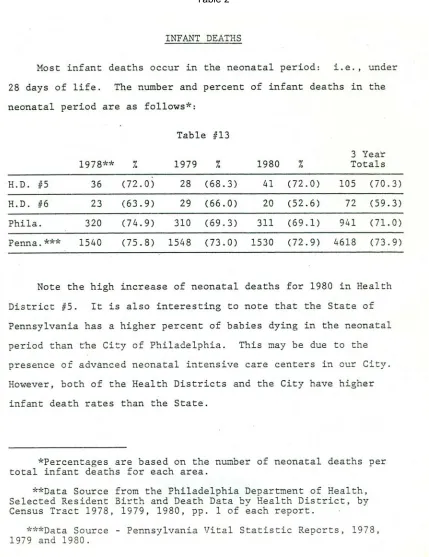
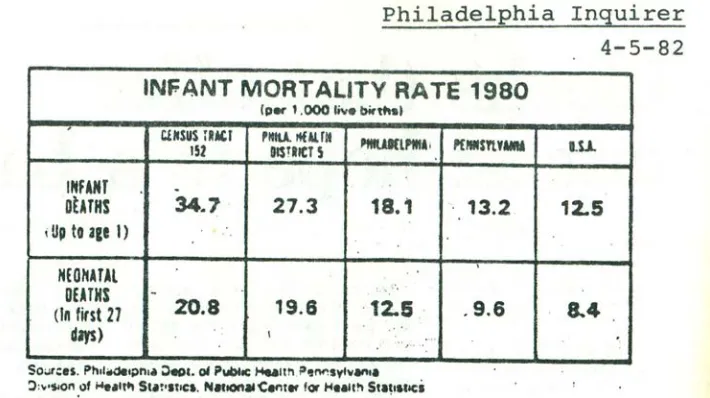
example, in 1980, Philadelphia’s census tract 152 witnessed an infant mortality rate of
34.7 deaths per 1000 compared to a national average of 12.5 deaths per 1000.1
1Mary Bishop, “5 Blocks That Offer Slimmest Hope to a Baby,” Philadelphia Inquirer, April 5, 1982, 1-8.
The MCC and MCA also followed in the footsteps of the grassroots community
center legacy that originated in the 1960s. Bonnie Lefkowitz, in her study of Mississippi,
contends that during this period, activists’ response to Mississippi’s infant mortality rates
served as seeds for the community center movement’s redefinition of community health.
Health was no longer limited to repair of the physical body and as such took on new
meanings of prevention, access, and community based caring. The concept of community
was a cornerstone for the success of these early centers.2 Following this notion of
communitarianism, both the organizations in this study also embedded themselves within
the communities they served.
Feminists were also challenging the medical model of birth by demanding active
knowledge of their bodies and the birthing process. Their stance was in direct opposition
to the traditional male physician dominated hospital environment that placed women in
the role of passive recipient. In the 1970s and 1980s, several books became synonymous
with a national call for birth to be reclaimed by childbearing women as well as removed
from the hospital setting. Suzanne Arms’ Immaculate Deception and Barbara Katz
Rothman’s In Labor: Women and Power in the Birthplace called not only for
childbearing women to embrace their rights to own their birth but also admonished
nurse-midwives for allowing the medicalization of the nurse-midwifery profession. Another
important piece during this period that critically examined birth in the U.S. was Our
Bodies Ourselves, about womenreclaiming their bodies and also about childbearing.3
2 See Bonnie Lefkowitz’s Community Health Centers: A Movement and the People Who Made it Happen.
3
Despite the disdain from feminists and women’s health advocates such as Arms
toward the nursing profession’s predominant image of enduring allegiance to a male
dominated medical profession, there were nurses who openly identified as feminists.
Nurse feminists, such as Peggy Chinn, criticized the nursing profession for being notably
absent from the women’s movement and for not incorporating feminist thinking and
feminist theory into its practice.4 Chinn was one of the main organizers behind the group
Cassandra: Radical Feminist Nurses Network. The group was formed during a 1982
American Nurses Association convention as the result of the founders’ frustration at the
convention’s seeming attention to mundane and non-important issues. Their goals
included building support of nursing research employing a feminist approach while
building a national network for nurse feminists to connect.5
Yet, indeed, many nurses were not supportive of feminism, and not all nurses who
were involved with feminism, social justice, and women’s health activism identified
themselves as nurses to those outside of their activist work. In an oral history interview
with Black Panther activist Ashanti Alston, he recalled one female, Black nurse in
particular who was involved in the health activism of the Panther Party but never
disclosed this information to those outside of the organization.6 Reasons for her silence
could have been due to fear of retribution from her employer as well as lack of support
from her fellow nursing colleagues. This research indicates that nurses were getting
involved in activism, both openly as well as behind the scenes. Their voices and stories
4 Peggy L. Chinn, “Feminism and Nursing: Can Nursing Afford to Remain Aloof From the Women’s
Movement?” Nursing Outlook 33, no. 2 (1985), 74-77.
5 Gretchen LaGodna, Cassandra: Radical Feminist Nurses Newsletter, 1, no. 1(1982), 1-12. excerpted
http://peggychinn.com/cassandra.html (accessed 17 July 2013)
need to be uncovered to understand how nurses during this period engaged in social
movement activities.
This period also gave witness to increasing medical mistrust by women,
especially minority women, towards physicians and hospital systems charged with having
their best interests at heart. In addition, race continued to be a clear factor in childbirth
choice during the 1970s and 1980s. For example, in 1989, 93 percent of those attended by
a certified midwife were white. Wendy Kline notes that black community members often
associated midwifery care with a “second-rate” type of care: an enduring legacy from the
granny midwife era. Wendy Simons points out the irony in that assumption. She found
that the general sense among midwives was that poor women and women of color were
less likely to have their birthing desires and needs met by conventional medicine and that
they had more to gain from midwifery.7 And some community women appreciated local
midwives. Still, nurse-midwife-run clinics and birth centers positioned themselves as safe
and nonjudgmental alternatives to medically modeled hospital systems. By placing their
centers in strategic locations, these midwives were able to reach a diverse group of
women.
This dissertation addresses the following questions:
(1) What social, cultural, economic, and political factors in the community shaped
nurses’ advocacy alliances?
(2) What were the leadership and power structures of the organizations, and how did they
influence advocacy and activism?
7 Wendy Kline, Bodies of Knowledge: Sexuality, Reproduction, and Women’s Health in the Second Wave
(3) How did nurse-midwives shape the women’s health movement going on at the time?
In asking this question, the study focuses on how the midwives associated with each
organization navigated the social and political implications of their own actions.
(4) To what extent did the nature of the relationships within the nurses’ collaborative
networks shape their success and advocacy for maternal and infant care?
Very little is known about nursing’s contributions to the larger women’s health
movement and how nurses navigated the tapestry of post-civil rights movements and
concerns. This dissertation unpacks the work of midwives who can be understood as
representatives of nursing and women’s health through their work with women and
communities. Their work can also be located within a fertile rights advocacy
sociopolitical context: one that existed in tension with various sources of power. A
historical understanding of successful models of nursing advocacy and mobilization will
add to theoretical discussions of what patient advocacy means within the roles of the
nurse and the client/community. In addition, data will explore nurses as powerful actors
within this time and movement, thus giving them voice and identity during this pivotal
period of women’s health history. Nurses have not been identified as playing an
important role in the myriad of post civil-rights voices and concerns. This study will help
locate nurses during this pivotal era of history. In addition, as the role of advanced
practice nurses expands in contemporary times, this study will shed an important guiding
light onto how nurse-midwives navigated the highly sociopolitical context in the not so
The MCC in Philadelphia and the MCA in New York City share a legacy as two
organizations representative of advocacy work for women by midwives through
collaborative relationships with the surrounding community. The two organizations
geographically represent two large northeast urban cities, both of which struggled with
enduring health issues affecting their most vulnerable women and children during the
1970s to 1990. Both of these organizations established nurse-run birthing centers that
offered childbirth as well as other types of services such as pediatric clinics that focused
on maintaining health in their communities. However, both have significantly different
histories. The MCC represents a 1980s grassroots response to enduring infant mortality
and health inequities in the city of Philadelphia. On the other hand, the MCA collaborated
with the city as a response to health concerns that began during turn of the century New
York City.
This research examines how both the MCC and MCA evolved under the
leadership of their respective nurse midwives and other activists within their unique
sociopolitical contexts. Critical to this examination is gaining an understanding of the
collaborative processes that nurse midwives pursued in their individual contexts. An
important part of understanding MCC’s and MCA’s collaborative processes is the
universal idea of people with various compatible personalities working together.
Questions such as how diverse groups, from city policy-makers to midwives to
philanthropists to women themselves worked together to move the organizations forward
as well as how the activists negotiated moments or periods of discord will be addressed.
By using both the MCC and the MCA as case studies, advocacy work by nurses is
how nurses mobilized toward the ideals of this movement with women of various races
and classes. The post-civil rights sociopolitical context of nurses’ work is nested within
the intersection of several important movements and ideologies. These include the
growing number of black women’s organizations formed in order to give collective voice
to their racial and health concerns; a growing Black and Latino nationalist movement as
evidenced by the birth of the Black Panthers and the Young Lords; as well as a looming
and growing sense of medical mistrust by minorities. As a result, nurse midwives and
their collaborative partners utilized ideas and innovations to mobilize and advocate for
low-income women within a political landscape wrought with a multiplicity of power
struggles and tensions.
Definitions of Terms
Several concepts in this study relate to the work of the midwives and their
communities. A nurse-midwife is a professionally educated practitioner who was first
trained as a registered nurse and then received further nationally accredited education in
midwifery. Advocacy is defined as the public support for or recommendation of a
particular cause or policy.8 Activism is defined as the policy or action of using vigorous
campaigning to bring about political or social change.9 Social justice refers to the concept
of a society in which justice is achieved in every aspect of society.10 Each of these
important concepts gains further distinction and depth as they are applied to place and
8 Simon Blackburn, Oxford Dictionary of Philosophy (Oxford: Oxford University Press, 2005). 9 Blackburn, Oxford Dictionary of Philosophy.
time.11 Therefore, it is important to consider that not all midwives work for social justice
or within low-income communities. In addition, advocacy, activism, and social justice are
socially constructed concepts that generally converge within a space known as a social
movement. Social movements are defined as spaces in which beliefs are formed and
solidified, not simply reflections of preexisting beliefs, preferences, or grievances.12
Social Movement Literature
Individual beliefs do not logically and causally precede social movement
participation. Many activists who join a social movement are at best ambivalent in their
beliefs. In addition, their beliefs change in the process of becoming mobilized. Ziad
Munson proposes a stream metaphor as a useful device to describe the subsets of social
movements as fluid and unfixed energies. The composition of these subsets is subject to
change as individuals, organizations, and surrounding environments change and intersect.
The streams metaphor serves as an apt descriptor of the women’s health activism for
actors in this dissertation. It also allows for the important consideration of the
complicated intersection of the multiplicity of voices and movements surrounding this
highly charged sociopolitical context.13
When conceptualizing advocacy and activism by women for women, gender,
class, and race come to the forefront. In the literature, there exists a wide range of groups
with different levels of social class as well as groups that are more homogenous. Nancy
Naples’ research speaks to a more homogenous group of community activism in which
11 Ibid.
12 Ziad W. Munson, The Making of Pro-Life Activists: How Social Movement Mobilization Works
(Chicago: The University of Chicago Press, 2003).
13 Ibid.
the women come from very similar class backgrounds. Naples’ work effectively situates
community activism by low-income women for low-income women, and demonstrates
the diversity of women’s struggles involving violence, homophobia, housing, civil rights,
economic security, educational equity, and environmental justice. Naples’ work revealed
that women from the same communities were able to transcend their issues in a more
empowering manner than had they received help from outside their own communities. In
other words, the networks of support these women built proved to be more beneficial in
the long run to their local communities than any other type of intervention.14
There are also examples of a seemingly more hierarchical yet nonetheless
effective type of advocacy and activism in the literature. Members of this type of
collaborative consist of various social classes, yet they draw from each other’s
experiences in order to view both the problems and the solutions through shared multiple
lenses. As opposed to a hierarchical style of leadership and decision-making, this style of
collaboration places a collective value on all members’ contributions and perspectives,
regardless of race and class.15
Andrew Barlow speaks to this type of collaboration and the power of cross class
community activism. In his work, Barlow shares the voices of participants in the
collaborations between community based activists, academia, and lawyers. The
collaborative groups identify five guiding principles to their work consisting of (1) a
shared commitment to democracy, (2) a shared understanding that everyone, not just
14 Nancy Naples, ed., Community Activism and Feminist Politics (New York: Routledge, 1998). In addition
to Naples’ work, Annelise Orleck’s Storming Caesar’s Palace: How Black Mothers Fought Their Own War on Poverty highlights the life of Ruby Duncan, a hotel maid, who organized and built community based services for her community for over twenty years outside of Las Vegas’ lavish Strip.
experts, is capable of developing ideas, (3) a shared understanding that people’s ideas are
shaped by their location in society, (4) a shared understanding of the dimension of power
in intellectual work and its mobilization by those who are marginalized. This is vital to
the advancement of ideas that flow from their experience. (5) Finally, the last principal is
a shared belief that professionals can and do play important roles in facilitating the
emergence of ideas from marginalized communities, and the mobilization of community
based power is vital to make these ideas historically significant.16
As I discuss in the following chapters, nurse-midwives’ work occurred within a
sociopolitical context that housed highly significant themes occurring within the 1960s,
1970s, and 1980s. These themes, propelled by a powerful civil rights’ momentum,
include the growing women’s health movement, an increase in health activism by Black,
Latino, and other nationalist movements, and a powerful push towards the
reconceptualization of health as a civil right. As Munson’s social movement streams
metaphor suggests, these voices not only collided but also created a complex intersection
of lenses through which health would be considered.
Contributions of This Study
Each of the studies cited above give attention to grassroots activism for women’s
health at various levels. They show that activism from women, civil rights leaders, and
community health workers fought for changes in women’s health. This dissertation adds
to the literature bypositioning how advocacy for women during the women’s health
movement might be conceptualized if nurses and nursing history was used as the
16 Andrew Barlow, ed., Collaborations for Social Justice: Professional, Publics, and Policy Change
analytical lens. Despite feminism’s historical distaste for the profession of nursing and
the popular notion of its relentless subordination to physicians, the fact remains that there
are a number of nurse activists and nurse feminists waiting to have their stories told.17 By
locating and including nursing, specifically nurse midwives, into the complicated
historical landscape of activism and advocacy, this research will reorganize and broaden
our view of women’s health and the organizations created to support it.18
In the literature, nursing advocacy is generally defined as a relatively streamlined
process that holds significant importance in the nursing profession.19 Janie B. Butts and
Karen L. Rich explain that the nurse acting from a point of patient advocacy must try to
“identify unmet patient needs and then follow up to address the needs appropriately.”20
They go on to further explain that when nurses enter the nursing profession, they are in
essence agreeing to a social contract with the public as outlined in Nursing’s Social
17 Ellen Baer wrote a highly effective critique of the feminist stance on nursing in a New York Times
Op-Ed entitled, “The Feminist Disdain for Nursing.” Baer argues that despite the “terrible paradox of feminism, which glorifies women who emulate masculine behavior while virtually ignoring women who choose traditional female roles and careers,” nurses can be feminists while at the same time perform their caring roles. Baer asserts that professional nursing requires “brains, education, judgment, fortitude, inventiveness, split-second decision making, interpersonal competence and day after day determination.” She ends with a call to feminists and nurses stating, “feminism will have succeeded not only when women have equal access to all fields but when traditional female professions like nursing gain the high value and solid social respect they deserve.” See Ellen Baer, “The Feminist Disdain for Nursing” The New York Times, 23February 1991, 25.
18 Nurse historians Julie Fairman and Patricia D’Antonio asked this question in terms of medical history as
conceptualized with nurses and nursing history as the analytical lens. See Julie Fairman and Patricia D’Antonio, “Reimagining Nursing’s Place in the History of Clinical Practice,” Journal of the History of Medicine and Allied Sciences 63, no. 4 (2008).
19 Several nursing scholars argue that there is ambiguity in the interpretation of this concept. See N.
Gaylord and P. Grace, “Nursing Advocacy: An Ethic of Practice,” Nursing Ethics 2 no. 1 (1995), Sylvia M. Kubsch et al. “ A Holistic Model of Advocacy: Factors That Influence its Use,” Complementary Therapies in Nursing & Midwifery 10, (2004) and Hannah MacDonald, “ Relational Ethics and Advocacy in Nursing: Literature Review,” Journal of Advanced Nursing 57 no. 2 (2007).
20 Janie B. Butts and Karen L. Rich, Nursing Ethics Across the Curriculum and Into Practice (Sudbury:
Policy Statement.21 Nurses are also bound to the Code of Ethics for Nurses.22For
example, a statement contained in the Social Policy Statement places the concept of
advocacy in a position of centrality:
Patients give nurses permission to enter their lives and share their most intimate life experiences. Registered nurses remain in nursing to promote, advocate for, and strive to protect the health, safety, and rights of those patients, families, communities, and populations. Registered nurses value their role as advocates in dealing with barriers encountered in obtaining health care. Similarly, society values nursing care that resolves problems, or manages health-promoting behaviors.23
When the lens is shifted to include the various contexts representative of nurses’
work, the essence of nursing advocacy also shifts. For example, Sandra Henry Kosik, a
public health nurse writes of her daily professional life in the 1970s as an intense struggle
to advocate for her patients.24 Kosik explains that working in Detroit’s low-income
communities requires a version of advocacy that goes much further than textbook
definitions. This advocacy involves a “deeper commitment” than hospital nursing or
working within middle to upper class communities. In her words, “seeing that the patient
knows what to expect; what is his right to have; and then displaying the courage to see
that our system does not prevent his getting it.”Yet, Kosik also relates that the profession
of nursing has been hesitant to step outside of its boundaries and take on a deeper type of
21 American Nurses Association’s Nursing’s Social Policy Statement, accessed on September 1 2011,
www.csun.edu/~meh20426/303/13ANASocialPolicy2003.pdf
22 American Nurses Association’s Code of Ethics, accessed on September 1 2011,
http://www.nursingworld.org/MainMenuCategories/EthicsStandards/CodeofEthicsforNurses/Code-of-Ethics.aspx
23 American Nurses Association’s Nursing’s Social Policy Statement, accessed on September 1 2011,
www.csun.edu/~meh20426/303/13ANASocialPolicy2003.pdf.
24 Sandra Henry Kosik, “Patient Advocacy or Fighting the System,” American Journal of Nursing 72, no. 4
advocacy. Kosik is sharing her rights perspective from her work related context. 25 My
research helps to place nurses who take advocacy into a “deeper commitment” into our
histories of nursing, feminism, and women’s health.26
Despite Kosik’s story, much of the widely acclaimed literature covering the
women’s health movement either completely leaves nurses out of the narrative or
downplays their roles. Sandra Morgen’s, Into Our Own Hands: The Women’s Health
Movement gives a fascinating account of how the 1970s witnessed major transformations
in the realm of women’s health at the hands of feminist coalitions.27 However, the term,
“nurse” does not appear in her text, not even in the index. In addition, Carol Weisman’s
work, Women’s Health Care: Activist Traditions and Institutional Change tangentially
mentions nurses. In her section titled, “Women and Health Care Delivery: Providers and
Organizations,” she writes that the contributions of advanced practice nurses (particularly
nurse practitioners and certified nurse-midwives) to primary care “has not been a major
one.”28 In addition, a nurse researcher whose area of focus is nursing advocacy argued
that nurses tend “not to get involved with consumer groups or align themselves with their
aims.”29 This dissertation addresses these inconsistencies.
25 Kosik, “Patient Advocacy,” 697.
26 Several articles in the nursing literature speak to nursing’s lack of participation in advocacy beyond
advocating for individuals. These authors call for participation in advocacy at the community, societal, and policy level. See Shannon M. Spenceley, Linda Reutter, and Marion Allen, “The Road Less Traveled: Nursing Advocacy at the Policy Level,” Policy, Politics, & Nursing Practice 7, no. 3 (2006). Muriel C. Rice and Mona Newsome Wicks, “The Importance of Nursing Advocacy for the Health Promotion of Female Welfare Recipients,” Nursing Outlook 55 (2007).
27 Sandra Morgen, Into Our Own Hands: The Women’s Health Movement in the United States (New
Brunswick: Rutgers, 2002)
28 Carol S. Weisman, Women’s Health Care: Activist Traditions and Institutional Change (Baltimore: The
Johns Hopkins University Press, 1998), 144.
29 Maggie Mallik, “Advocacy in Nursing: A Review of the Literature.” Journal of Advanced Nursing 25
Despite the relative absence of nursing advocacy in written histories of the
women’s health movement, there are accounts that do bring these stories to the forefront.
Susan Gelfand Malka, a nurse and historian, mentions the activities of nurses, especially
in the 1970s as nurses moved forward with funding in community health.30 Many nurses,
she notes, opened community health clinics associated with universities to underserved
populations. Julie Fairman’s work speaks to nurse practitioners who entered the market
of health care and soon found themselves negotiating their roles with physicians.31 In
addition, Meryn Stuart challenges historians of nursing to consider the early to late
twentieth century nurse advocate as “fervent activist and radical.”32 The historical
research I am proposing will add to these accounts. By telling the story through the
voices of the midwives, the study will add to nurses’ interpretations of their advocacy
work.33 This in turn, will add richness and depth to understandings of nurse-led advocacy
and activism.
This research examines the multiple negotiations assumed by midwives and
others in caring for, advocating for, and working with diverse women, thus adding to
broader scholarship that locates women’s advocacy in an arena that crosses race, gender,
and class boundaries. It specifically locates nurse midwives at the center of this
intersectional work. By focusing on the key role of nurse midwives, it also will show the
30 Susan Gelfand Malka, Daring To Care: American Nursing and Second Wave Feminism (Urbana:
University of Illinois Press, 2007).
31 Julie Fairman, Making Room In The Clinic: Nurse Practitioners and the Evolution of Modern Health
Care (New Brunswick: Rutgers University Press, 2008).
32 Meryn Stuart, “ Reframing Activism: Nursing and Social Action in the United States,” Nursing History
Review, 18 (2010): 81.
33 Sociologist, Amy Blackstone studied women volunteers from the Susan G. Komen Breast Cancer
importance of grassroots social movements, or change from below in nursing history.
Finally, an historical understanding of successful models of nursing advocacy for women
and children is vital as the U.S. still struggles with high rates of infant mortality in its
minority populations.
Methods and Archival Sources
This project uses established historical methods to identify appropriate sources
and evaluate and interpret data from these sources within the broader framework of
historiographical literature. It uses a social history framework, with case studies and oral
histories, to describe and evaluate the players involved in women’s health activism in
Philadelphia and New York City in the 1970s to 1990s.
Primary sources include documents, notes, personal letters, and other archival
sources in the collections listed below. Other sources utilized for this project are primary
sources from advocacy organizations and numerous secondary sources in the fields of
civil rights activism, social justice, women’s health, social change and scholarship
dedicated to the muted voices of women working behind the scenes in the civil rights
movement in addition to works that address the power of ordinary people in social
movements.
Secondary sources include a large body of scholarship on the civil rights
movement, the feminist movement, the women’s health movement, and scholarship
considering health care as a civil right. Nursing scholarship on advocacy is utilized in
order to gain an idea of how the profession of nursing has located itself in this concept.
1. Van Pelt Rare Book and Manuscript Library, University of Pennsylvania- The
Maternity Care Coalition (MCC) records contain the institutional records of the
Philadelphia based community health organization and span the years of 1965 to 2009.
Seven Philadelphia area organizations, composed of healthcare professionals and welfare
and women’s rights groups, joined together to start MCC.
2. Augustus C. Long Health Sciences Library, Columbia University- The Maternity
Center Association (MCA), known since 2005 as Childbirth Connection, has played a
key role in improving maternal health and prenatal care in the United States. Its records
reflect many of the major trends in 20th century American public health, nursing,
childbirth, and philanthropy.
3. Temple Urban Archives, Temple University- CHOICE- In 1970, the Philadelphia
Clergy Consultation Service (CCS) began training women from the Pennsylvania
Abortion Rights Association (PARA) to provide pregnancy options counseling. In 1971,
these women founded CHOICE (an acronym that originally stood for Concern for Health
Options, Information, Care and Education, and later stood on its own). In 1973 CHOICE
was granted non-profit status. The organization has received funding from a number of
sources, including MSP (Maternity Services Program, Philadelphia Department of Public
Health; formerly known as MIC, Maternal and Infant Care Program), the Family
Planning Council of Southeastern Pennsylvania, Women’s Way, and AACO (AIDS
Limitations
This research relies heavily on oral history interviews, which have some
limitations. They are about memories; while the events are true to the person recalling the
history in their particular time, these events may be recalled in such a way that reflect
how the interviewee wants the events to be remembered. Problems also include memory
loss since the oral history was obtained some years later.However, it is just as important
to focus on what the participants choose to remember and why they make those choices.
In order to account for reliability and validity, I have utilized both primary and secondary
Chapter Two
A Review of the Women’s Health Movement
This chapter situates the grassroots activism of the type by MCC and MCA in the
1970s and 1980s within the larger significant movement for changes in health care for
women in other parts of the country. The women’s health movement came into its own
under the wings of the feminist movement and the pivotal era of 1960s’ protests. The
1960s, with its iconic images and wide ranging representations of protest and
dissatisfaction towards almost every public and private facet of American society, played
a critical role in understanding the power, complexities, and tensions of the women’s
health movement. In particular, the decade set a foundational stage for the highly visible,
powerful, and enduring intersections of race, class, and gender.
As women called for equality, democracy, and the right to claim ownership of
their bodies, their health and its management became an important focal point. Despite its
outward appearance of purpose, that of benefitting women, the women’s health
movement was fractured along its way both in purpose and composition. In spite of
successfully building on the momentum of the civil rights movement, white feminists had
to confront a series of strong backlashes from minority and working class women who
clearly voiced their perceived lack of representation within the larger movement. Women
of various color and class expressed very different kinds of concerns than their white,
middle to upper class sisters. Thus, this chapter will also describe other women’s voices
representatives of women came forward with their stories of societal discrimination and
displacement. Described as a “messy multiplicity,” this period witnessed Black feminists,
middle class white women, and radical youth intersecting with each other as well as a
newly developing political Right.34
Before the women’s health movement took center stage, feminists were primarily
concerned with achieving a sense of equality with the opposite sex across political,
social, and labor issues. Black feminists, on the other hand, focused on articulating their
race, gender, and class identities as interconnected. Emerging from the civil rights
movement cycle of protest, but also at the same time as the predominantly white
women’s movement, Black feminists attempted to simultaneously define a collective
identity and establish organizations that encompassed their rights as both Blacks and
women.35 This emergence of Black feminism with its myriad of collective voices served
as an important seed for Black women and other women on color in the larger women’s
health movement.
The 1960s’ turbulence also witnessed a new generation of Americans expressing
their dismay that the wealthiest, most powerful nation in the world could not adequately
provide for its own citizens and sought other solutions. Michael Harrington’s The Other
America reminded a generation reared in relative prosperity of the hidden poverty that
still crippled the lives of many Americans. Young Black southern civil rights workers
34 Nancy A. Hewitt argues that the use of the wave metaphor tends to portray concrete start and end points
giving the false idea that the feminist movement had distinct periods. Hewitt challenges her readers to conceptualize this time as radio waves with their different frequencies. As movements grow louder then fade out, they parallel the diverse frequencies of radio waves. Hewitt contends this period was anything but categorical, but rather a “messy multiplicity” of intersectionality. Nancy A. Hewitt, ed., No Permanent Waves: Recasting Histories of U.S. Feminism (New Brunswick: Rutgers, 2010) 7.
35 Kimberly Springer, Living for the Revolution: Black Feminist Organizations, 1968-1980 (Durham: Duke
founded the Student Nonviolent Coordinating Committee, whose goal was to create a
“beloved community” while working to end segregation through nonviolence. Two years
later, New Left activists on college campuses launched Students for a Democratic Society
(SDS), committing themselves to persuading their country to live up to its democratic
ideals. In 1968, radical feminists staged a series of dramatic protests culminating with the
crowning of a sheep at the annual Miss America pageant to protest the sexual
objectification of women.36 During this period, few issues were left unexplored, and no
political structure went unchallenged. By the end of the period, a postwar confidence was
replaced with cynicism and doubt. This negative societal shift was also directed at the
medical profession.
Medical care became one of the nation’s largest industries in post-World War II
America.37 Yet, by the year 1970, medicine along with other social institutions, suffered a
“stunning loss of confidence.”38 Accounts of patient experimentation and unethical
treatment challenged the belief that doctors held the patient’s best interests in mind.
Patient rights became a movement unto itself as particular consumer groups including the
aged, African Americans, gays and lesbians, as well as women argued for their own bill
of rights.39
In the 1970s, as women became more vocal, they shifted their sights to include
health as a measure of inequity and injustice. The definition of women’s health, the
question of who should control it, and how to own it became central to the essence of this
36 Ruth Rosen, The World Split Open: How the Modern Women’s Movement Changed America (New
York: Penguin Group, 2001), 160.
37 Paul Starr, The Social Transformation of American Medicine (New York: Basic Books, 1982), .334. 38 Ibid, 379.
39 The Patient Bill of Rights was introduced by the National Welfare Rights Organization in 1970, and
movement. Harnessing their collective strength in parallel fashion to U.S. civil rights
activists, feminists presented an organized challenge to powerful groups such as the
medical profession and hospital administrators.40
Women began teaching each other about their bodies and challenging their
doctors’ decisions in terms of their healthcare, especially in the realm of reproduction.
Pregnancy and childbirth were considered important feminist life events that did not
require unnecessary medical interventions. Rejecting the role of passive patient, women
learned to be assertive, ask tough questions, do their own research, insist on certain tests,
refuse others, and demand that doctors take their ailments seriously.41 Thus, women’s
health grassroots activism became not just a movement but also a discourse.42
In a parallel fashion to their interpretation of the overall women’s movement,
women of color challenged normative definitions of the term reproductive rights largely
through their ambivalence over abortion rights. As Angela Davis contends, white
activists frequently overlooked ideological underpinnings of the reproductive rights
movement.43 Before Roe v. Wade, most minority women who sought abortion services
40 The Boston Women’s Health Book Collective’s (BWHBC) work has become foundational to any story
of the women’s health movement. In 1973, they published Our Bodies Ourselves, which started as a small discussion group on women, and their bodies. The BWHBC began as a middle-class group of white women talking about their individual concerns and complaints over their own experiences with physicians, much of which was hierarchical and patriarchal in nature.
41 Sandra Morgen, Into Our Own Hands: The Women’s Health Movement (New Brunswick: Rutgers
University Press, 2002).
42 For more discussion on the importance of the discourse of women’s health, see Nancy Tomes, “Patients
or Health-Care Consumers? Why the History of Contested Terms Matters,” in History & Health Policy in the United States, eds. Rosemary Stevens, Charles E. Rosenberg, and Lawton Burns (New Brunswick: Rutgers University Press, 2006).
43 Angela Y. Davis, Women, Race, and Class (New York: Vintage Books, 1983), 202. In addition to Davis,
were forced to do so with back-room abortionists. In fact, several years before the
legalization of abortion, New York City witnessed 80 percent of its deaths from botched
abortions as belonging to Black and Puerto Rican women. Davis argues that these women
were not so much pro-abortion as they were pro-reproductive rights. In addition, many of
the minority women who sought abortions were forced to do so because of poor health
and living conditions as opposed to their desire to be free of their pregnancy.44 Through
an appreciation of the socially constructed nature of reproductive rights, activists were
challenged to gain an important understanding of their various sisters in the cause. This
understanding was not always operationalized.
Until the exposure of reproductive rights violations, it was hard for feminists to
approach mutual understandings and effective collaborations towards a fully
representative reproductive rights platform. Elena R. Gutierrez speaks to this exposure in
her challenge to the stereotype of women of Mexican origin as hyper-breeders. By
adopting a social constructivist approach to the analysis, Gutierrez turns the cameras
around to focus on the institutions that claim ownership of the “problem” of the fertility
of Mexican women: demographers, medical professionals, population policy makers, and
Chicana feminists.45
Together these activists challenged how medicine and society viewed the health
of women representative of multiple races and classes. By the 1970s, as Dan Berger
argues, social movements experienced both repression as well as periods of
oppression. Both Davis and Roberts argue that the regulation of Black women’s reproductive decisions is rooted in a system of slavery that valued fertility because it benefitted the slave owner financially.
44 Davis, Women, Race, and Class.
45 Elena R. Gutierrez, Fertile Matters: The Politics of Mexican-Origin Women’s Reproduction (Austin:
experimentation and expansion. The pioneering work of women’s groups in the 1960s
eventually created a constituency for and shaped the agenda of the National Women’s
Health Network, formed in 1975 as a national organization dedicated to advancing the
health of women of all classes and races through authoritative watchdog organizations,
evaluating treatments, research trials, and government policies.46 At the same time, these
same women’s health activists also pushed the controversial borderlands of women’s
health into public visibility. Issues such as rape, women prisoners, women and mental
health, as well as the legalization of prostitution were ideologically challenged in urban
cities such as Philadelphia for desired reform.47 As Berger asserts, the radicals in the
1970s were committed to trying new things in which resolution was sought through
circumventing criminal justice systems and police.48
Health Care as a Civil Right
Reproductive Rights
The notion of health care as a basic civil right is a common thematic component
of the philosophical foundation surrounding the MCC and MCA work of nurses,
communities of marginalized women, and their collaborative organizations. This
included reproductive rights. Histories of forced sterilizations, a part of the legacy of the
eugenics movement and its enduring influence on mid-twentieth century birth control
policies and actions, and back-room abortions riddled the U.S. landscape in the middle to
late twentieth century. As Rebecca Kluchin argues, the mid to late 1970s witnessed white
46 Rosen, The World Split Open.
47 Women’s Health Concerns Committee, MS 588. Box 23, Folder 328 Women’s Health Collection,
Annenberg Rare Book & Manuscript Library, University of Pennsylvania, Pennsylvania (hereafter cited as ARBML).
48 Dan Berger, The Hidden 1970s: Histories of Radicalism (New Brunswick: Rutgers University Press,
women struggling to gain access to sterilization while overturning age/parity spousal
consent and other restrictive policies. This led many from this particular group to define
reproductive freedom as access to reproductive health services. On the other hand, during
this same timeframe, women of low resources, especially women of color, found
themselves the targets of coercive sterilization procedures.49
When new organizations in this later period formed to initiate policies geared to
end sterilization abuse, fractures within several of the pro-reproductive choice feminist
organizations occurred. Kluchin details these events starting with the Health and Hospital
Corporation (HHC) Advisory Committee on Sterilization. The HHC proposed a series of
guidelines designed to eliminate sterilization abuse in New York City hospitals. Advisory
Committee members faced fierce contestation from physicians, Planned Parenthood, and
the Association for Voluntary Sterilization (AVS). Kluchin contends the most surprising
opposition came from white liberal feminist organizations like the National Organization
for Women and the National Abortion Rights Action League. These groups opposed
forced sterilization, but disagreed to the strategies ending abuse proposed by HHC.
Specifically, they objected to the mandatory wait period HHC proposed between consent
and surgery, designed to prevent coercion during a woman’s labor and delivery.50 The
HHC Advisory Committee members acknowledged the wait period as possibly
interfering with a woman’s desire to obtain sterilization “on demand.” But, they argued, a
woman’s right to be free from coercive sterilization should ethically weigh more than a
woman’s right to have unrestricted access to sterilization services. Kluchin maintains the
49 Rebecca M. Kluchin, Fit to be Tied: Sterilization and Reproductive Rights in America, 1950-1980 (New
Brunswick: Rutgers University Press, 2009).
foundational conflict lay within the premise that in order to protect one group of women,
another group had to endure some restrictions on their access. Kluchin argues that liberal
feminists, family planners, and New York doctors cast themselves as guardians of poor
women’s reproductive rights but did so by advancing a middle-class white definition of
reproductive freedom that was premised upon preserving on-demand access to
reproductive procedures.51
Negotiations of Health Care Rights
The nurse-midwives featured in this study, especially those who worked in the
MCC, were also a part of the medical community’s desire to provide health care to
marginalized communities of women and their families. There is a legacy of medical
communities’ response to health care inequity as witnessed by the Medical Committee
for Human Rights (MCHR). Indeed, one of the significant relationships between women
activists in the Philadelphia’s MCC and physicians occurred between them and Dr.
Walter Lear, a founding member of the MCHR. The MCHR began in 1964 as an ad hoc
support group for volunteers and veteran activists.52 It became an organization of health
professionals with chapters in major cities across the country. The MCHR provided
medical care for civil rights workers in the South, desegregated area hospitals, and
picketed conventions of the American Medical Association (AMA) to protest the AMA’s
refusal to require its southern affiliates to admit Black physicians. In the late 1960s and
early 1970s, MCHR moved on to support many of the causes of the New Left such as
opposition to the war in Vietnam. Its local chapters developed task forces to deal with
51 Kluchin, Fit to be Tied.
52 John Dittmer, The Good Doctors: The Medical Committee for Human Rights and the Struggle for Social
problems ranging from prison reform to occupational health and safety.53 The
organization’s founders were primarily established Jewish physicians, the children of
Eastern European immigrants. Born and raised in New York City, they were active in
groups associated with what would later be called the Old Left. Several of them had been
or still were members of the Communist Party.54
The MCHR’s first three chairpersons were Black, but the Medical Committee was
essentially a white organization. Dittmer contends that the successful efforts of these
privileged, older white professionals such as Lear to reach out to dedicated, angry young
Black militants adds a new dimension to understanding the struggle for civil rights in the
South. By 1965, major currents in the civil rights movement were radically changing.
Black Power was gaining momentum, as was a strong anti-war sentiment from some of
the MCHR physicians. It was the desire for an anti-war resolution and stance that some of
the MCHR physicians wanted for the organization. This issue would serve as one of the
most enduring fractures within the organization.55
Race became another stress fracture for MCHR as the civil rights movement
festered racial tensions between northern white women working with southern Black
activists. When one of the major civil rights organizers wrote a paper detailing the
stressors of these new working relationships between gender and race, several of the
MCHR nurses felt their time in the organization was dwindling. Still, Dittmer argues that
MCHR paved much of the way in creating the climate that made the health center
53 Ibid.
54 Dittmer’s work closely examines several nurses involved with MCHR during this period. During the
highly contentious period occurring shortly before the decline of the organization, it was the nurses who maintained services to the civil rights workers and communities and kept several centers open after a majority of the MCHR physicians had left.
movement possible. Without its Freedom Summer presence in Mississippi and other
clinics that served as models in the South, Dittmer contends it is questionable whether the
community health center concept would have emerged when it did.56
A Community Approach
Bonnie Lefkowitz closely examines the history of five community health centers
whose leadership and histories witnessed enduring positive outcomes in the communities
they served. Lefkowitz contends that community health centers owe their origins to
national leadership’s new discoveries on poverty and powerlessness. Organizations such
as Mobilization for Youth on New York’s Lower East Side were implementing
something called “opportunity theory” and were beginning to involve residents in the
area. President John F. Kennedy became quickly convinced that one of the fundamental
keys to overcoming poverty and crime was to provide community based opportunities for
youth. This became the impetus for a national community action program that was
drafted by legislation and was known as the Economic Opportunity Act.57
Lefkowitz follows several representative community health centers in Mississippi,
Massachusetts, South Carolina, New York, and Texas. Through various sociopolitical
contexts, Lefkowitz chronicles their roots in civil rights and social justice as well as the
conditions and cultures in the diverse communities, the problems faced, and their
adaptations to changing times. Each center interacted with health care institutions, and
other safety net programs, levels of insurance coverage, and state/local support. Each
center found its way from near total dependence on federal grants and providers to a fully
56 Ibid.
57 See Bonnie Lefkowitz, Community Health Centers: A Movement and the People Who Made it Happen
credited staff and sophistication, Lefkowitz argues, that rivaled most large health care
organizations with multiple revenue sources.58
The seeds for the redefinition of health were planted in Mississippi. In 1960, the
state had the nation’s highest infant mortality rates at 54.4 deaths per 1000 births. This
rate was twice the rate for whites and 25 percent higher than the national Black infant
mortality rate. A 1969 article in the Wall Street Journal, entitled “The Ailing Poor:
Medical Team Combats Negroes’ Dismal Health in Mississippi Delta” chronicled the
work of the Medical Committee for Human Rights (MCHR) and others who descended
into Mississippi during Freedom Summer. Health, these activists discovered, was not
limited to the repair of the physical body. Health took on new meanings of prevention,
access, and community based caring. Nurses and others in the MCC and MCA also
embraced this broader consideration of health and community.
Transforming Knowledge: The Boston Women’s Health Book Collective
The first and most comprehensive book to provide knowledge about women’s
health and their sexuality was the Boston Women’s Health Book Collective’s (BWHBC)
Our Bodies Ourselves. In the first edition, the Collective asked, “What are our bodies?
“First, they are us. We do not inhabit them, we are them.”59 In the 1970s, this claim was
controversial as feminists debated over the theoretical position of the female body.
“Difference” feminists, such as the authors of Our Bodies, Ourselves, placed the female
body at the center of their identity. By contrast, “equality” feminists sought to displace
the biological barrier by deemphasizing the body. Wendy Kline reminds the reader that
58 Ibid.
59 Wendy Kline, Bodies of Knowledge: Sexuality, Reproduction, and Women’s Health in the Second Wave