Countering Vaccine Hesitancy
Kathryn M. Edwards, MD, Jesse M. Hackell, MD, THE COMMITTEE ON INFECTIOUSDISEASES, THE COMMITTEE ON PRACTICE AND AMBULATORY MEDICINE
This document is copyrighted and is property of the American Academy of Pediatrics and its Board of Directors. All authors have fi led confl ict of interest statements with the American Academy of Pediatrics. Any confl icts have been resolved through a process approved by the Board of Directors. The American Academy of Pediatrics has neither solicited nor accepted any commercial involvement in the development of the content of this publication. Clinical reports from the American Academy of Pediatrics benefi t from expertise and resources of liaisons and internal (AAP) and external reviewers. However, clinical reports from the American Academy of Pediatrics may not refl ect the views of the liaisons or the organizations or government agencies that they represent.
The guidance in this report does not indicate an exclusive course of treatment or serve as a standard of medical care. Variations, taking into account individual circumstances, may be appropriate. All clinical reports from the American Academy of Pediatrics automatically expire 5 years after publication unless reaffi rmed, revised, or retired at or before that time.
DOI: 10.1542/peds.2016-2146
PEDIATRICS (ISSN Numbers: Print, 0031-4005; Online, 1098-4275).
Copyright © 2016 by the American Academy of Pediatrics
FINANCIAL DISCLOSURE: Dr Hackell has indicated that a family member has stock or equity in Pfi zer and GlaxoSmithKline.
FUNDING: No external funding.
POTENTIAL CONFLICT OF INTEREST: The authors have indicated they have no potential confl icts of interest to disclose.
abstract
Immunizations have led to a signifi cant decrease in rates of vaccine-preventable diseases and have made a signifi cant impact on the health of children. However, some parents express concerns about vaccine safety and the necessity of vaccines. The concerns of parents range from hesitancy about some immunizations to refusal of all vaccines. This clinical report provides information about addressing parental concerns about vaccination.
CLINICAL REPORT
Guidance for the Clinician in Rendering Pediatric CareINTRODUCTION
Immunizations have had an enormous impact on the health of children, and the prevention of disease by vaccination is one of the single greatest public health achievements of the last century. However, over the past decade acceptance of vaccines has been challenged by individuals and groups who question their benefit. 1 Increasing numbers of people
are requesting alternative vaccination schedules 2, 3 or postponing or
declining vaccination. 4 In a national telephone survey of 1500 parents of
children 6 to 23 months of age conducted in 2010 with a response rate of 46%, approximately 3% of respondents had refused all vaccines and 19.4% had refused or delayed at least 1 of the recommended childhood vaccines.5 A study conducted in a metropolitan area of Oregon reported
that rates of alternative immunization schedule usage have increased nearly fourfold in recent years, 3 and in some parts of the country the use
of “personal belief exemptions” from vaccinations has grown to rates in excess of 5% of the school-aged population. 6
The Periodic Survey of Fellows (PS#66) conducted by the American Academy of Pediatrics (AAP) in 2006 revealed that 75% of pediatricians surveyed had encountered parents who refused a vaccine, 7 and a
follow-up survey in 2013 (PS#84) revealed that this figure had increased to 87% of pediatricians. 8 According to the survey, pediatricians stated
that the proportion of parents who refused 1 or more vaccines increased from 9.1% to 16.7% during the 7-year interval between surveys. 7, 8
Physicians stated that the most common reasons parents refused vaccines were that they believed that vaccines are unnecessary (which showed an increase over the 7-year span) and that they had concerns
To cite: Edwards KM, Hackell JM, AAP THE COMMITTEE ON INFECTIOUS DISEASES, THE COMMITTEE ON PRACTICE AND AMBULATORY MEDICINE. Countering Vaccine Hesitancy.
about autism (which declined between survey years). In both 2006 and 2013, pediatricians reported that they were able to convince approximately 30% of parents to vaccinate their children when they initially refused. Another observational study found that when physicians continued to engage parents, up to 47% of parents ultimately accepted vaccines after initially refusing them.9 Although the
majority of parents accept vaccines, the increasing frequency of refusal and the requests for alternative vaccine schedules indicate that there are still significant barriers to overcome. 10
TERMINOLOGY
The term vaccine hesitancy has emerged to depolarize the “pro” versus “anti” vaccination alignment and to express the spectrum
of parental attitudes toward vaccines. 1 Vaccine hesitancy has
been characterized recently by a committee at the World Health Organization as “a behavior, influenced by a number of factors including issues of confidence (do not trust a vaccine or a provider), complacency (do not perceive a need for a vaccine or do not value the vaccine), and convenience (access).” 11
Vaccine-hesitant individuals are a heterogeneous group who hold varying degrees of indecision about specific vaccines or about vaccinations in general. Vaccine-hesitant individuals may accept all vaccines but remain concerned about them, they may refuse or delay some vaccines but accept others, or they may refuse all vaccines. The latter group refusing all vaccines is estimated at approximately 3% of parents, although the prevalence may vary geographically. 4, 12, 13
The concept that parental vaccine hesitancy is a spectrum has been confirmed in several studies 4, 14, 15 and
was well described in a recent review by Leask et al 12 (Table 1). Some
parents who totally refuse vaccines may be fixed and unswayable in their beliefs and may not respond to the pediatrician attempting to change their views. The AAP recommends that pediatricians continue to engage with vaccine-hesitant parents, provide other health care services to their children, and attempt to modify their opposition to vaccines. 16–18
Fortunately, most vaccine-hesitant parents are responsive to vaccine information, consider vaccinating their children, and are not opposed to all vaccines. Responding to vaccine-hesitant parents is the focus of this clinical report.
VACCINES ARE TESTED THOROUGHLY
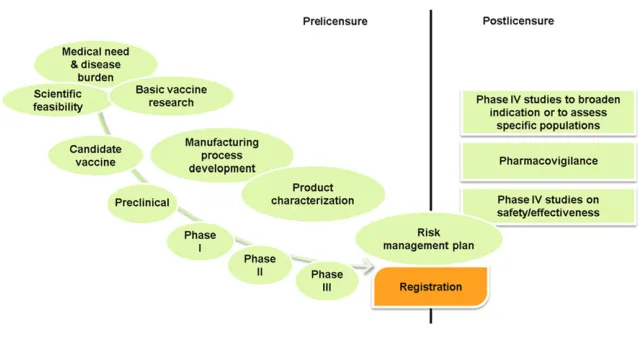
Vaccine development is a long and arduous process, often lasting many years and involving a combination of public and private partnerships. The current system for developing, testing, and regulating vaccines requires that the vaccines demonstrate both safety and efficacy before licensure and that long-term safety is monitored (http:// www. historyofvaccines . org/ content/ articles/ vaccine- development- testing- and- regulation; Fig 1). The first step in vaccine discovery involves the identification of a need for a vaccine and an understanding of the mechanism of protective immunity against that disease.
TABLE 1 Categorization of Parental Attitudes Toward Vaccines 12, 14
Immunization advocate Parents agree that vaccines are necessary and safe. Parents have a strong relationship with their health care provider. Go along to get along Parents do not question vaccines, would like to vaccinate their children, but may lack a detailed knowledge of vaccines. Cautious acceptor Parents may have minor concerns about vaccines but ultimately vaccinate their children.
Fence-sitter Parents have signifi cant concerns about vaccines and tend to be knowledgeable about vaccines. Parents may vaccinate their child or may refuse or delay vaccines. Parents may have signifi cant concerns about vaccines and may have a neutral relationship with their health care provider.
Refuser Parents refuse all vaccines for their child. Their reasons for refusal may include distrust in the medical system, safety concerns, and religious beliefs.
FIGURE 1
Vaccine pipeline: prelicensure and postlicensure vaccine development activities. From Hardt K, Schmidt-Ott R, Glismann S, Adegbola RA, Meurice F. Sustaining vaccine confi dence in the 21st century.
If the vaccine appears promising in preclinical studies, the vaccine sponsor submits an application for an Investigational New Drug to the US Food and Drug Administration (FDA). Law requires that the sponsor describe the manufacturing and testing processes, summarize the laboratory reports, and describe the proposed studies to evaluate the vaccine. As with therapeutic drugs, vaccine evaluation includes phase I through phase III testing. Phase I trials are intended to assess the safety of the candidate vaccine and to determine the type and extent of immune response that the vaccine provokes.
Phase II testing involves several hundred volunteers, some of whom belong to groups at risk for acquiring the disease. These trials generally are randomized and controlled and usually include a placebo group or a standard licensed vaccine when a new vaccine for that disease is being tested.
Phase III vaccine trials are designed to determine whether the vaccine will prevent the disease in question and to assess the vaccine’s safety when administered to a large number of subjects. These studies often involve thousands or tens of thousands of participants, depending on the incidence of disease and the rates of adverse events to be detected. If these studies show the vaccine to be effective and safe, it is then licensed.
VACCINE SAFETY IS ACTIVELY MONITORED AFTER LICENSURE
Once vaccines are licensed, a number of processes are in place to ensure that the safety of vaccines is monitored. In 1990, the Centers for Disease Control and Prevention (CDC) and FDA established the Vaccine Adverse Events Reporting System (VAERS), a voluntary passive reporting system that serves as a signal detection system for adverse
events associated with vaccines (http:// vaers. hhs. gov/ index). Anyone who suspects an association between a vaccination and an adverse event can report the event to VAERS. The CDC and the FDA then investigate the event. 19 VAERS
has successfully identified several adverse events related to vaccination in the past, such as intussusception after administration of the RotaShield (Wyeth Laboratories Inc, Marietta, PA) rotavirus vaccine, which was identified in 1999, leading to the ultimate withdrawal of that vaccine from the market. 20
In 1990, the CDC also established the Vaccine Safety Datalink (VSD) to monitor vaccine safety. The VSD is composed of a number of large health provider groups with linked databases with comprehensive information about vaccines administered and health care encounters. 21 Because the VSD
involves millions of individuals, it can be used to detect rare events and was used to study the possible, but subsequently disproven, association between Guillain–Barré syndrome and meningococcal vaccination. 22
Another parallel system to the VSD is the Post-Licensure Rapid Immunization Safety Monitoring system. 23 This system uses health
insurance claims data from 107 million individuals to actively monitor vaccine safety. In addition, the CDC has also established the Clinical Immunization Safety Assessment Project, a group of academic health care centers, to address specific questions about vaccine safety from individual health care providers (http:// www. cdc. gov/ vaccinesafety/ activities/ cisa. html). 24
In summary, vaccines are
comprehensively evaluated before their licensure. They are developed and tested in large numbers of subjects, regulated by the FDA, and carefully monitored after licensure through a comprehensive safety surveillance system funded by the
CDC and the FDA. In rare instances in which safety concerns are identified, regulatory or other actions to safeguard public health are taken.
HISTORICAL VACCINE OPPOSITION
Before discussing the recent increase in vaccine hesitancy, it is valuable to recall that opposition to vaccination is not a new occurrence. In the early 1800s in Europe, Jenner promoted vaccination against smallpox by using material obtained from cowpox lesions. 25 However, over
the next several decades, increasing rates of opposition to smallpox vaccination were seen in the United Kingdom, requiring vaccination to be mandated by law. 25 Similar obstacles
to universal smallpox vaccination were also encountered in the United States. In the 1850s, a number of parents and physicians challenged mandatory smallpox vaccination, and in 1905 in the case Jacobson v Massachusetts, the US Supreme Court supported the rights of states to pass laws mandating smallpox vaccine. 6 However, although vaccine
hesitancy is not a new phenomenon, it may have a greater effect on public health today. With the ease of global travel, vaccine-preventable diseases are spread more quickly and may unexpectedly appear in areas where health care professionals are unfamiliar with their clinical presentation.
CURRENT VACCINE EXEMPTIONS
Herd immunity is a fundamental concept that contributes to the success of many vaccination programs. Control of many vaccine-preventable diseases is contingent on a significant proportion of the population in a community being immune. 26 Depending on
immunization rates have been maintained in the United States through mandatory vaccination requirements for entry into and advancement through licensed child care centers and schools. However, recent years have seen a marked increase in the availability and use of “philosophical” or “personal belief” exemptions from vaccination. Over the period from 2005 through 2011, Omer et al 28 reported that the
unadjusted rates for nonmedical exemptions in states that allowed for philosophical exemptions were 2.5 times higher than in states that allowed only religious exemptions. In Arkansas, rates of overall exemptions increased an average of 23% per year once philosophical exemptions were allowed. 29 Studies
have demonstrated that parents who refuse vaccines are more likely to be white and more highly educated than those who do not.4, 6, 30, 31 In
addition, the prevalence of vaccine-hesitant parents seems to vary geographically. 6, 32 It is unclear
whether requiring a mandatory physician visit or educational module for parents who apply for vaccine exemption in states with philosophical exemptions is effective in reducing refusals. 32
Children who are philosophically exempted from vaccination not only are at greater risk of developing vaccine-preventable disease but also put vaccinated children and medically exempt children who live in the same area at risk. 33–35
Vaccine-preventable diseases occurring in vaccinated children may result from waning immunity after immunization or may be attributable to an ineffective immune response to vaccine initially. In January 2015, a measles outbreak occurred in California, where an estimated 3.1% of kindergartners had a nonmedical exemption from receiving the measles–mumps–rubella (MMR) vaccine. 36 The majority of cases
occurred in children who either had
not received measles vaccine (45%) or had unknown vaccination status (38%).37 Of the cases in unvaccinated
children, 43% of parents cited philosophical or religious objects to vaccine. An additional 40% of unvaccinated children could not receive the vaccine because they were too young. This outbreak, which spread to multiple states, has sparked intense debate about vaccine exemptions and the government’s role in limiting nonmedical exemptions. Whether the 2015 outbreak and legislation resulting from this outbreak will have a long-lasting effect on public policy and parental choices is not clear at this time. For these reasons, we believe the better approach is to work to eliminate all nonmedical exemptions for childhood vaccines, a position that is shared by the American Medical Association and the Infectious Diseases Society of America and is currently the basis of a policy statement being developed by the AAP. There has also been greater recognition among pediatricians that delayed or incomplete vaccination schedules are probably responsible, at least in part, for the spread of measles in that outbreak. 38–40 As
a result, more pediatricians are becoming concerned about the risk unimmunized children pose to other children in their practices, both immunized children and those too young or otherwise unable to be immunized. Some are electing to dismiss families who refuse vaccines from their practices. 7 The ethical
considerations of patient dismissal are complex and are discussed in a subsequent section of this statement as well as in a comprehensive review by Diekema.41
FACTORS INVOLVED IN VACCINE ACCEPTANCE
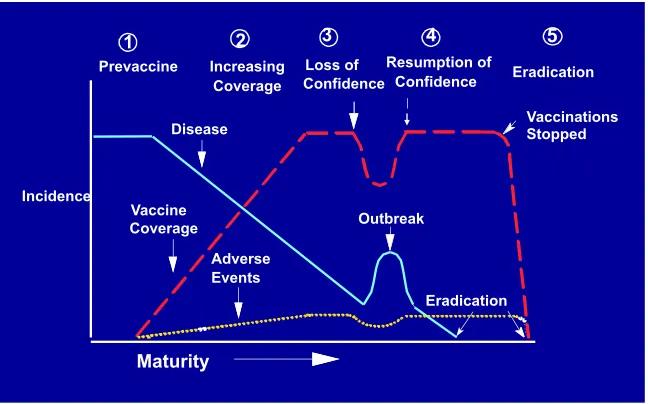
The evolution of vaccine confidence over the course of vaccine
introduction is summarized in a figure that first appeared in a
1994 article by Chen et al 19 ( Fig 2),
which succinctly outlines many of the pivotal factors that must be considered when discussing vaccine hesitancy. As shown in Fig 2, disease incidence is highest before the development and implementation of a vaccine program. At this time, the public generally is eager to accept a new vaccine, particularly if the morbidity and mortality associated with the disease are considerable. Then, after the vaccine is developed and proven efficacious, individuals are eager to be vaccinated, and coverage increases, with subsequent declines in disease incidence (“increasing coverage” phase). However, as vaccine uptake peaks, the disease incidence declines, and the total number of adverse events after vaccination increases. Whether the adverse events were causally related or only temporally associated with vaccine administration can be difficult to determine, but these adverse events may lead to loss of confidence in the vaccine as the public perceives the risk of vaccination to outweigh the risk of disease (“loss of confidence” phase). This, in turn, may increase vaccine refusal and ultimately lead to disease resurgence. Then, after disease resurgence or an outbreak, as the public again appreciates the increasing burden of disease, vaccine acceptance is restored and vaccination rates increase (“resumption of confidence” phase). Unfortunately, a recent study during an outbreak of pertussis in the state of Washington suggested that, despite an increase in pertussis cases, parents did not have a “resumption in vaccine confidence” and did not increase pertussis vaccine uptake. 42
or polio, and less relevant to, for example, vaccines against human papillomavirus (HPV), for which the benefits of immunization in preventing cancer may take years or decades to become apparent. Figure 2 clearly highlights the delicate balance between perceived risk and benefit for each vaccine and how this balance is linked integrally to vaccine acceptance.
PARENTS’ VARIED CONCERNS ABOUT VACCINES SHOULD BE ADDRESSED
A number of studies have attempted to define the reasons why parents are vaccine hesitant, and these factors are summarized in Table 2. 1, 4, 5, 15, 43–45
In 1 study, 44% of parents reported concern over pain associated with receiving multiple injections during a single visit, 34% expressed unease about receiving too many vaccines at a single visit, 26% worried about the development of autism or other potential learning difficulties after receiving vaccines, 13.5% expressed concern that vaccines could lead to chronic illnesses, and 13.2% stated that vaccines were not tested enough for safety before their use. 45 Concerns
about vaccine safety and questions about the necessity of vaccines are often cited as reasons for vaccine refusal.43, 46–48 One survey found that
parents who decide to not vaccinate their children have a greater distrust of health care professionals and the government and are more likely to use complementary and alternative medicine, compared with parents who vaccinate their children. 47
Freed et al43 also conducted an
online survey of several thousand parents to identify vaccine concerns. Most of the surveyed parents agreed that vaccines protected their children from diseases; however, more than half expressed concerns regarding serious adverse effects of vaccines. Overall, 11.5% of parents in that study had refused at least 1 recommended vaccine, and the fear
that vaccines could cause autism was often cited as a reason for refusal. 43
Parental concerns must be addressed, and concerns will vary among parents. For example, vaccine safety and triggering early sexual activity are often cited as parental concerns about the HPV vaccine. 49 Reassuring
parents that the vaccine is safe and
that there is no evidence that HPV vaccine increases sexual activity may dispel their concerns. 50 Some
parents are concerned primarily about the pain associated with immunizations. Strategies to reduce pain include administering vaccines quickly without aspirating, holding the child upright, administering the most painful vaccine last, and
FIGURE 2
Evolution of a vaccine program. Reproduced with permission. Chen RT, Orenstein WA. Epidemiologic methods in immunization programs. Epidemiol Rev. 1996;18(2):102. Copyright © 1996 by the Oxford University Press.
TABLE 2 Parental Concerns About Vaccines Vaccine safety
Too many vaccines Development of autism
Vaccine additives (thimerosal, aluminum) Overload the immune system
Serious adverse reactions
Potential for long-term adverse events Inadequate research performed before licensure May cause pain to the child
May make the child sick Necessity of vaccines
Disease is more “natural” than vaccine
Parents do not believe diseases being prevented are serious Vaccine-preventable diseases have disappeared
Not all vaccines are needed Vaccines do not work Freedom of choice
Parents have the right to choose whether to immunize their child Parents know what’s best for their child
providing tactile stimulation. 51
Breastfeeding, feeding sweet-tasting solutions, and topical anesthetics are other tools that can be used before vaccine administration to decrease pain. Distraction strategies, including pinwheels, deep breathing exercises, and toys, can be used in older children to decrease anxiety and pain. Although rigorously controlled studies of these techniques have not been performed, studies of other painful procedures lend support to their use in vaccination. 51, 52
Providers should address specific parental questions about the production and composition of the vaccines by directly providing the information requested. For example, for concerns about the presence of mercury (thimerosal) in vaccines, parents can be reassured that currently, none of the single-dose vaccine preparations given to infants contain any mercury. The opposition to the presence of aluminum as an adjuvant in some vaccines can be addressed by providing evidence for both the necessity of the aluminum for a vigorous immune response and the lack of evidence for its toxicity. The religious argument that vaccines contain cells derived from aborted human fetuses can be answered in statements from major religious denominations either acknowledging that the vaccines do not contain such cells or that the earlier use of fetal
cell lines in vaccine production does not prohibit the use of these vaccines many years after the fetal cells were obtained. 53
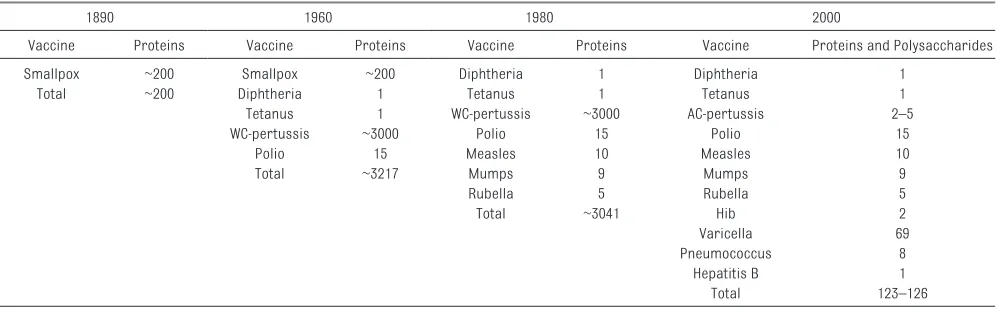
A specific response to the parental concern of “too many vaccines” and the potential for “overwhelming the immune system” was provided by Offit et al. 54 As shown in Table 3, the
number of immunogenic proteins and polysaccharides contained in currently licensed vaccines is significantly smaller than the number of antigens contained in earlier vaccines and in naturally circulating organisms that infected children before universal vaccination. Sharing a copy of Table 3 could provide the necessary reassurance to parents who have concerns regarding “too many vaccines.”
COUNTERING VACCINE HESITANCY CAN BE CHALLENGING
Even the use of targeted discussion strategies may not be adequate to counter vaccine hesitancy. A recent study reported by Nyhan et al 55
recruited a nationally representative sample of parents through random digit dialing and address-based sampling and randomly assigned them to 1 of 5 groups: providing textual information explaining the lack of evidence that MMR vaccine causes autism, supplying textual information about the dangers of
the diseases prevented by MMR vaccine, showing visual images of children who have diseases prevented by MMR vaccine,
providing a dramatic audio narrative about an infant who almost died of measles, and no intervention. None of the interventions increased parental intent to vaccinate a future child. Thus, the authors concluded that current public health communications about vaccines may not be effective, and for some vaccine-hesitant parents, they may actually increase misperceptions and reduce vaccination intention. However, a limitation of this study was that it was Web based and did not examine the effect of direct one-to-one personal communication between the pediatrician and the parent.
Providing vaccine information is time consuming. Kempe et al 56 found
that 53% of physicians spend 10 to 19 minutes discussing vaccines with concerned parents, and 8% of physicians spend 20 minutes or more with these parents. They also reported that pediatricians experienced decreased job satisfaction because of time spent with parents with significant vaccine concerns. Physicians have several options to deal with this problem, ranging from scheduling longer well-care visits, with some loss of overall efficiency; simply not having TABLE 3 Number of Immunogenic Proteins and Polysaccharides Contained in Vaccines Over the Past 100 Years
1890 1960 1980 2000
Vaccine Proteins Vaccine Proteins Vaccine Proteins Vaccine Proteins and Polysaccharides
Smallpox ~200 Smallpox ~200 Diphtheria 1 Diphtheria 1
Total ~200 Diphtheria 1 Tetanus 1 Tetanus 1
Tetanus 1 WC-pertussis ~3000 AC-pertussis 2–5
WC-pertussis ~3000 Polio 15 Polio 15
Polio 15 Measles 10 Measles 10
Total ~3217 Mumps 9 Mumps 9
Rubella 5 Rubella 5
Total ~3041 Hib 2
Varicella 69
Pneumococcus 8
Hepatitis B 1
Total 123–126
Adapted from Offi t et al. 52
the discussion and acceding to a parent’s request to defer, delay, or skip a vaccination; or dismissing such families from their practice. Permitting alternative vaccine schedules reduces vaccine timeliness and complicates an already complex vaccine schedule. 57 A study by
Robison et al 3 demonstrated that
children whose parents chose to limit vaccinations had more total visits for immunizations and by both 9 and 19 months of age were substantially less likely to be caught up on their immunization series. The additional time and costs associated with longer and more frequent well-child and immunization visits for parents with vaccine concerns are substantial, and by decreasing the efficiency of primary care providers, they may have a significant effect on access to health care services for all children.
PEDIATRICIANS PLAY AN IMPORTANT ROLE
With all the challenges acknowledged, the single most important factor in getting parents to accept vaccines remains the one-on-one contact with an informed, caring, and concerned pediatrician. 58 In a study reported
in Pediatrics, parents of more than 7000 children 19 to 35 months of age were surveyed to determine whether they believed vaccines were safe and what influence their primary care providers had on their decisions to vaccinate. 45 Nearly 80% of parents
stated that their decision to vaccinate was positively influenced by their primary care provider. The study concluded, “Health care providers have a positive influence on parents to vaccinate their children, including parents who believe that vaccinations are unsafe. Physicians, nurses, and other health care professionals should increase their efforts to build honest and respectful relationships with parents, especially when parents express concerns about vaccine safety or have misconceptions about the benefits and risks of vaccinations.” In
another study, Smith et al 59 clearly
demonstrated that parents whose children were vaccinated listed their pediatrician as a strong influence on their decision to vaccinate. A well-informed pediatrician who effectively addresses parental concerns and strongly supports the benefits of vaccination has enormous influence on parental vaccine acceptance.
ATTENTIVENESS TO PARENTS’ CONCERNS IS IMPORTANT WHILE CORRECTING MISCONCEPTIONS
After acknowledging the varied concerns of vaccine-hesitant parents, the pediatrician needs to communicate with the parents about the development and safety testing of vaccines, the reasons for immunizing, and the risks of not doing so. An important aspect of communication with vaccine-hesitant parents is to clearly articulate the message that vaccines are safe and effective, and serious disease can occur if your child and family are not immunized. The safety of the currently recommended vaccines administered according to their established schedules was strongly affirmed by the Institute of Medicine in 2013. 60 A recent report
commissioned by the Agency for Healthcare Research and Quality, on behalf of the National Vaccine Program Office, and an accompanying editorial also affirmed the safety of vaccines recommended for routine immunization of children. 61, 62 It
is important to present this safety information in a nonconfrontational dialogue with the parents while listening to and acknowledging their concerns. Misconceptions should be corrected, because both parents and pediatricians are in agreement in wanting the best for the children’s health and well-being. 63
THE CURRENT VACCINE SCHEDULE IS THE ONLY RECOMMENDED SCHEDULE
It is extremely important that the pediatrician remain up to date on
the current recommended vaccine schedule and support it as the only evidence-based schedule that has been tested and approved by multiple authoritative experts for safety and efficacy. 60 No alternative
vaccine schedules have been evaluated and found to provide better safety or efficacy than the recommended schedule, supported by the Advisory Committee on Immunization Practices of the CDC and the Committee on Infectious Diseases of the AAP (the committee that produces the Red Book). Pediatricians who routinely recommend limiting the numbers of vaccines administered at a single visit such that vaccines are administered late are providing care that deviates from the standard evidence-based schedule recommended by these bodies. Situational deviation from these recommendations may be considered a last resort if, after reasonable attempts to convince hesitant parents, it is the only way to achieve the ultimate goal of immunizing a child. All who provide vaccines must be capable of articulating the safety and efficacy of the standard schedule and refrain from suggesting that delaying or deferring vaccines may be safer or more effective, because there is no evidence to support this viewpoint.
Pediatricians should not overestimate parental vaccine hesitancy or mistake a simple lack of knowledge for hesitancy or opposition. 64 Opel et al 9 reported that
an online review of the VIS before the routine immunization visit, or through referral to authoritative Web sites, such as that of the CDC (http:// www. cdc. gov/ vaccines/ vpd- vac/ default. htm). One study reported that the majority of mothers preferred receiving vaccine information before the initial immunization visit. 65
The provision of a VIS is required at each immunization encounter for each vaccine, and counseling about vaccine-preventable diseases and vaccine adverse effects is required to correctly bill for vaccine administration. If parents refuse vaccination, a vaccine refusal waiver, used by many pediatricians in the event of deviations from the recommended vaccine schedule, can be obtained from the AAP Web site (https:// www. aap. org/ en- us/ advocacy- and- policy/ aap- health- initiatives/ immunization/ Pages/ refusal- to- vaccinate. aspx), and parents may be asked to sign it.
PRESUMPTIVE DELIVERY STRATEGY
Another effective communication approach is the presumptive delivery strategy. Opel et al 9
demonstrated that the majority of parents accepted the provider’s vaccine recommendations when they were presented as required immunizations to maintain optimal disease prevention. This approach may not work well with some parents, however, and pediatricians may use it selectively based on their experience. In addition, pediatricians who began practicing medicine before the introduction of many of today’s routinely recommended vaccines have first-hand knowledge of these preventable diseases and often use that experience to effectively communicate the need for vaccines and the rationale for their administration according to established recommendations. One study conducted among 542 primary care providers in the United States
demonstrated that recent graduates were less likely to believe that vaccines were safe and efficacious than their older colleagues 66;
whether this is attributable to lack of first-hand experience with vaccine-preventable diseases or lack of comprehensive vaccine education is unclear. Educational efforts during residency training programs should provide trainees with a comprehensive understanding of the effect of vaccines on disease burden and the knowledge to evaluate the safety of vaccines as well as effective communication strategies. Only 48.5% of 303 US pediatric residents surveyed reported training in communication strategies for vaccine-hesitant patients during residency, and nearly 80% requested more education about the adverse effects of vaccines. 67 One study
found that a brief single educational intervention may not be sufficient to provide physicians with the skills to counteract vaccine hesitancy and suggested that more research is needed to determine the most effective educational interventions. 68
PERSONALIZING THE MESSAGE THAT VACCINES ARE SAFE AND EFFECTIVE CAN BE POWERFUL
The presentation of basic medical information may not be sufficient to reassure parents about the safety and necessity of vaccines. Developing a trusting relationship with parents is key to influencing parental decision-making around vaccines. 69
Parents often are more likely to be persuaded by stories and anecdotes about the successes of vaccines. Personal examples of children who were sick with vaccine-preventable illnesses can be much more effective than simply reading the numbers of children infected with a disease each year in the VIS. The Web site www. immunize. org/ reports is an excellent source of such cases. A recent study by Kempe et al 56 demonstrated that
physicians reported the greatest
success convincing skeptical parents using messages that relied on their personal choices and experiences. Physicians relating that they have immunized all of their children, their grandchildren, or themselves provide a compelling message that they are confident in the safety of the vaccines.
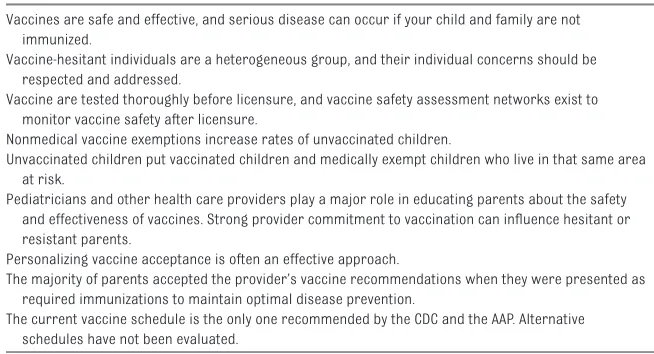
Other techniques, such as the use of parent-centered motivational interviewing, have been suggested as an effective way to personalize communication. Having parents verbalize their questions and concerns, followed by a focused response to their concerns, may be an effective communication strategy. However, the effect of motivational interviewing and other communication techniques requires careful assessment. It is encouraging that both AAP Periodic Surveys of Fellows from 2006 and 2013 indicated that one-third of parents who initially refused ≥1 vaccines ultimately changed their minds and gave permission for vaccination. Although these conversations may be difficult and frustrating, they clearly represent time well spent. A summary of points that may be useful in these conversations is found in Table 4.
DISMISSAL OF PATIENTS WHO REFUSE VACCINATION
Some families still will not be persuaded to vaccinate. 56 After
multiple attempts to convince families to vaccinate have failed, some pediatricians have chosen to dismiss families as a last resort. 7, 8, 70
Arguments have been made that these families should not be dismissed on the basis of public health principles, because nonvaccinating families might cluster in certain practices, making them the focal point for outbreaks.71 Ethical
arguments against dismissal have also been made. 41, 72, 73 In addition,
pediatricians who continue to care for these families, including potentially exposing other patients to vaccine-preventable diseases from those who are unimmunized. Finally, many pediatricians may feel obligated to continue to care for children in families who refuse immunizations.
There are no published data regarding the eventual outcome of strict “vaccinate or be dismissed” policies on the eventual acceptance of vaccines, and additional studies are needed. However, there is anecdotal evidence that when pediatricians give parents the choice between immunizing their child or being dismissed, some parents accept vaccination, even when other efforts at persuasion have failed.
It should be noted that the same legal and ethical constraints exist to dismissal for any permissible reason, including failure to vaccinate. Dismissal must be conducted in a manner consistent with applicable state laws prohibiting abandonment of patients. Although these laws vary from state to state, official notification of the parents or legal guardian is required, along with the provision of information for finding a new physician. Furthermore, the dismissing physician is obligated to continue current treatment and provide emergency care for a reasonable period of time, usually 30 days. 74, 75
Certain practice settings may also limit the ability to dismiss a patient. Employees of hospitals and large health care organizations are often unable to dismiss patients by official organizational policy. In areas of the country where there may be limited access to pediatric care, the pediatrician should carefully evaluate the availability of other qualified providers for the family. If there are no other qualified physicians in the area, the pediatrician is faced with the problem of leaving a family without adequate health care. In
these situations, the pediatrician should continue to provide care to the patient and family.
The decision to dismiss a family who continues to refuse immunization is not one that should be made lightly, nor should it be made without considering and respecting the reasons for the parents’ point of view. 44 Nevertheless, the individual
pediatrician may consider dismissal of families who refuse vaccination as an acceptable option. In all practice settings, consistency, transparency, and openness regarding the practice’s policy on vaccines is important.
CONCLUSIONS
Vaccine discussions continue to occupy the media and Internet, and every parent of a child for whom vaccination is recommended is exposed to these messages on a regular basis. Data have shown that participation in social media reinforces one’s beliefs about vaccination, no matter what those beliefs are. 76 The pediatrician is often
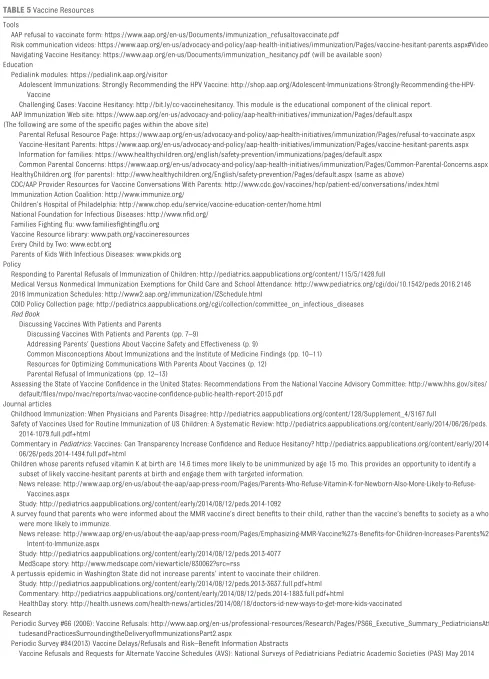
the only medically trained person available to discuss vaccine matters with parents, and it is incumbent on him or her to provide scientifically based and balanced information when these questions are asked. Table 5 provides a summary of some
of the available resources to aid the pediatrician.
The pediatrician should also appreciate that vaccine-hesitant parents are a heterogeneous group and that specific parental vaccine concerns should be individually identified and addressed. Although many techniques for working with vaccine-hesitant parents have been suggested, scant data are available to determine the efficacy of these methods. 77 Additional research
on communication techniques is needed. The clear message parents should hear is that vaccines are safe and effective, and serious disease can occur if your child and family are not immunized. Pediatricians should keep in mind that many, if not most, vaccine-hesitant parents are not opposed to vaccinating their children; rather, they are seeking guidance about the issues involved, beginning with the complexity of the schedule and the number of vaccines proposed. Parents may be unsure of the need for vaccines, because most have never experienced the diseases vaccines are designed to prevent, and they have concerns about possible adverse effects of these vaccines.
Pediatricians facing concerned parents on a regular basis should be prepared to discuss the science behind the current vaccine schedule and the extensive testing of each TABLE 4 Communication Highlights
Vaccines are safe and effective, and serious disease can occur if your child and family are not immunized.
Vaccine-hesitant individuals are a heterogeneous group, and their individual concerns should be respected and addressed.
Vaccine are tested thoroughly before licensure, and vaccine safety assessment networks exist to monitor vaccine safety after licensure.
Nonmedical vaccine exemptions increase rates of unvaccinated children.
Unvaccinated children put vaccinated children and medically exempt children who live in that same area at risk.
Pediatricians and other health care providers play a major role in educating parents about the safety and effectiveness of vaccines. Strong provider commitment to vaccination can infl uence hesitant or resistant parents.
Personalizing vaccine acceptance is often an effective approach.
The majority of parents accepted the provider’s vaccine recommendations when they were presented as required immunizations to maintain optimal disease prevention.
TABLE 5 Vaccine Resources Tools
AAP refusal to vaccinate form: https:// www. aap. org/ en- us/ Documents/ immunization_ refusaltovaccinat e. pdf
Risk communication videos: https:// www. aap. org/ en- us/ advocacy- and- policy/ aap- health- initiatives/ immunization/ Pages/ vaccine- hesitant- parents. aspx#Video Navigating Vaccine Hesitancy: https:// www. aap. org/ en- us/ Documents/ immunization_ hesitancy. pdf (will be available soon)
Education
Pedialink modules: https:// pedialink. aap. org/ visitor
Adolescent Immunizations: Strongly Recommending the HPV Vaccine: http:// shop. aap. org/ Adolescent- Immunizations- Strongly- Recommending- the- HPV- Vaccine
Challenging Cases: Vaccine Hesitancy: http://bit.ly/cc-vaccinehesitancy. This module is the educational component of the clinical report. AAP Immunization Web site: https:// www. aap. org/ en- us/ advocacy- and- policy/ aap- health- initiatives/ immunization/ Pages/ default. aspx (The following are some of the specifi c pages within the above site)
Parental Refusal Resource Page: https:// www. aap. org/ en- us/ advocacy- and- policy/ aap- health- initiatives/ immunization/ Pages/ refusal- to- vaccinate. aspx Vaccine-Hesitant Parents: https:// www. aap. org/ en- us/ advocacy- and- policy/ aap- health- initiatives/ immunization/ Pages/ vaccine- hesitant- parents. aspx Information for families: https:// www. healthychildren. org/ english/ safety- prevention/ immunizations/ pages/ default. aspx
Common Parental Concerns: https:// www. aap. org/ en- us/ advocacy- and- policy/ aap- health- initiatives/ immunization/ Pages/ Common- Parental- Concerns. aspx HealthyChildren.org (for parents): http:// www. healthychildren. org/ English/ safety- prevention/ Pages/ default. aspx (same as above)
CDC/AAP Provider Resources for Vaccine Conversations With Parents: http:// www. cdc. gov/ vaccines/ hcp/ patient- ed/ conversations/ index. html Immunization Action Coalition: http:// www. immunize. org/
Children’s Hospital of Philadelphia: http:// www. chop. edu/ service/ vaccine- education- center/ home. html National Foundation for Infectious Diseases: http:// www. nfi d. org/
Families Fighting fl u: www. familiesfi ghtingfl u. org Vaccine Resource library: www. path. org/ vaccineresources Every Child by Two: www. ecbt. org
Parents of Kids With Infectious Diseases: www. pkids. org Policy
Responding to Parental Refusals of Immunization of Children: http:// pediatrics. aappublications. org/ content/ 115/ 5/ 1428. full
Medical Versus Nonmedical Immunization Exemptions for Child Care and School Attendance: http:// www. pediatrics. org/ cgi/ doi/ 10. 1542/ peds. 2016. 2146 2016 Immunization Schedules: http:// www2. aap. org/ immunization/ IZSchedule. html
COID Policy Collection page: http:// pediatrics. aappublications. org/ cgi/ collection/ committee_ on_ infectious_ diseases
Red Book
Discussing Vaccines With Patients and Parents
Discussing Vaccines With Patients and Parents (pp. 7–9)
Addressing Parents’ Questions About Vaccine Safety and Effectiveness (p. 9)
Common Misconceptions About Immunizations and the Institute of Medicine Findings (pp. 10–11) Resources for Optimizing Communications With Parents About Vaccines (p. 12)
Parental Refusal of Immunizations (pp. 12–13)
Assessing the State of Vaccine Confi dence in the United States: Recommendations From the National Vaccine Advisory Committee: http:// www. hhs. gov/ sites/ default/ fi les/ nvpo/ nvac/ reports/ nvac- vaccine- confi dence- public- health- report- 2015. pdf
Journal articles
Childhood Immunization: When Physicians and Parents Disagree: http:// pediatrics. aappublications. org/ content/ 128/ Supplement_ 4/ S167. full
Safety of Vaccines Used for Routine Immunization of US Children: A Systematic Review: http:// pediatrics. aappublications. org/ content/ early/ 2014/ 06/ 26/ peds. 2014- 1079. full. pdf+html
Commentary in Pediatrics: Vaccines: Can Transparency Increase Confi dence and Reduce Hesitancy? http:// pediatrics. aappublications. org/ content/ early/ 2014/ 06/ 26/ peds. 2014- 1494. full. pdf+html
Children whose parents refused vitamin K at birth are 14.6 times more likely to be unimmunized by age 15 mo. This provides an opportunity to identify a subset of likely vaccine-hesitant parents at birth and engage them with targeted information.
News release: http:// www. aap. org/ en- us/ about- the- aap/ aap- press- room/ Pages/ Parents- Who- Refuse- Vitamin- K- for- Newborn- Also- More- Likely- to- Refuse- Vaccines. aspx
Study: http:// pediatrics. aappublications. org/ content/ early/ 2014/ 08/ 12/ peds. 2014- 1092
A survey found that parents who were informed about the MMR vaccine’s direct benefi ts to their child, rather than the vaccine’s benefi ts to society as a whole, were more likely to immunize.
News release: http:// www. aap. org/ en- us/ about- the- aap/ aap- press- room/ Pages/ Emphasizing- MMR- Vaccine%27 s- Benefi ts- for- Children- Increases- Parents%27 - Intent- to- Immunize. aspx
Study: http:// pediatrics. aappublications. org/ content/ early/ 2014/ 08/ 12/ peds. 2013- 4077 MedScape story: http:// www. medscape. com/ viewarticle/ 830062? src= rss
A pertussis epidemic in Washington State did not increase parents’ intent to vaccinate their children. Study: http:// pediatrics. aappublications. org/ content/ early/ 2014/ 08/ 12/ peds. 2013- 3637. full. pdf+html Commentary: http:// pediatrics. aappublications. org/ content/ early/ 2014/ 08/ 12/ peds. 2014- 1883. full. pdf+html
HealthDay story: http:// health. usnews. com/ health- news/ articles/ 2014/ 08/ 18/ doctors- id- new- ways- to- get- more- kids- vaccinated Research
Periodic Survey #66 (2006): Vaccine Refusals: http:// www. aap. org/ en- us/ professional- resources/ Research/ Pages/ PS66_ Executive_ Summary_ PediatriciansAtti tudesandPractices SurroundingtheDel iveryofImmunizati onsPart2. aspx
Periodic Survey #84(2013) Vaccine Delays/Refusals and Risk–Benefi t Information Abstracts
vaccine before and after licensure, remind the parents of the severity of the diseases being prevented, address the questions that are causing parental concerns and, most importantly, emphasize that infants and children are the ones at greatest risk of disease. The on-time administration of vaccines is the most effective way to prevent what have in the past been severe and often fatal childhood illnesses. Delaying any vaccine past the recommended administration date greatly increases the period of time that a child remains susceptible to disease and also exposes even vaccinated children to additional risk. 35, 78
Countering vaccine hesitancy can best be accomplished in the course of clinical practice through open communication and discussion between the pediatrician and the parents. Because most parents agree to vaccinate their children, this dialogue, which can be started as early as the prenatal interview visit 79 if possible, should be an
ongoing process. Continued research is needed on the best methods to communicate the safety and effectiveness of vaccines. Providing vaccine-related information before the first immunization visit may permit parents to clearly formulate their concerns so that they can be fully addressed by the pediatrician. Most parents need and want education about the best way to provide care for their children, including vaccinations. Dealing with vaccine hesitancy is a wonderful opportunity to continue to provide this information and education to families.
LEAD AUTHORS
Kathryn M. Edwards, MD, FAAP Jesse M. Hackell, MD, FAAP
COMMITTEE ON INFECTIOUS DISEASES, 2015–2016
Carrie L. Byington, MD, FAAP, Chairperson Yvonne A. Maldonado, MD, FAAP, Vice Chairperson Elizabeth D. Barnett MD, FAAP
H. Dele Davies, MD, MS, MHCM, FAAP Kathryn M. Edwards, MD, FAAP Ruth Lynfi eld, MD, FAAP Flor M. Munoz, MD, FAAP Dawn Nolt, MD, MPH
Ann-Christine Nyquist, MD, MSPH, FAAP Mobeen H. Rathore, MD, FAAP Mark H. Sawyer, MD, FAAP William J. Steinbach, MD, FAAP Tina Q. Tan, MD, FAAP
Theoklis E. Zaoutis, MD, MSCE, FAAP
FORMER COMMITTEE MEMBERS
Dennis L. Murray, MD, FAAP Gordon E. Schutze, MD, FAAP Rodney E. Willoughby Jr, MD, FAAP
EX OFFICIO
Henry H. Bernstein, DO, MHCM, FAAP – Red Book Online Associate Editor
Michael T. Brady, MD, FAAP, Red Book Associate Editor
Mary Anne Jackson, MD, FAAP, Red Book Associate Editor
David W. Kimberlin, MD, FAAP – Red Book Editor Sarah S. Long, MD, FAAP – Red Book Associate Editor
H. Cody Meissner, MD, FAAP – Visual Red Book
Associate Editor
CONTRIBUTOR
Annabelle de St Maurice, MD, FAAP – Vanderbilt University
LIAISONS
Douglas Campos-Outcalt, MD, MPA – American Academy of Family Physicians
Amanda C. Cohn, MD, FAAP – Centers for Disease Control and Prevention
Jamie Deseda-Tous, MD – Sociedad Latinoamericana de Infectologia Pediatrica (SLIPE)
Karen M. Farizo, MD – US Food and Drug Administration
Marc Fischer, MD, FAAP – Centers for Disease Control and Prevention
Bruce G. Gellin, MD, MPH – National Vaccine Program Offi ce
Richard L. Gorman, MD, FAAP – National Institutes of Health
Natasha Halasa, MD, MPH, FAAP – Pediatric Infectious Diseases Society
Joan L. Robinson, MD – Canadian Paediatric Society
Geoffrey R. Simon, MD, FAAP – Committee on Practice Ambulatory Medicine
Jeffrey R. Starke, MD, FAAP – American Thoracic Society
STAFF
Jennifer M. Frantz, MPH
COMMITTEE ON PRACTICE AND AMBULATORY CARE, 2015–2016
Geoffrey R. Simon, MD, FAAP – Chair Cynthia N. Baker, MD, FAAP Graham A. Barden III, MD, FAAP Oscar “Skip” W. Brown III, MD, FAAP Jesse M. Hackell, MD, FAAP Amy P. Hardin, MD, FAAP Kelley E. Meade, MD, FAAP Scot B. Moore, MD, FAAP Julia E. Richerson, MD, FAAP
STAFF
Elizabeth Sobczyk, MPH, MSW The AAP acknowledges the signifi cant contributions of Annabelle de St Maurice MD, FAAP – Vanderbilt University.
ABBREVIATIONS
AAP: American Academy of Pediatrics
CDC: Centers for Disease Control and Prevention
FDA: US Food and Drug Adminis-tration
HPV: human papillomavirus MMR: measles–mumps–rubella VAERS: Vaccine Adverse Events
Reporting System VIS: Vaccine Information
Statement
VSD: Vaccine Safety Datalink
REFERENCES
1. Larson HJ, Jarrett C, Eckersberger E, Smith DM, Paterson P. Understanding vaccine hesitancy around vaccines and vaccination from a global perspective: a systematic review of published literature, 2007–2012. Vaccine. 2014;32(19):2150–2159
Images
Red Book Online Visual Library: http:// aapredbook. aappublications. org/ site/ visual
2. Dempsey AF, Schaffer S, Singer D, Butchart A, Davis M, Freed GL. Alternative vaccination schedule preferences among parents of young children. Pediatrics. 2011;128(5):848–856
3. Robison SG, Groom H, Young C. Frequency of alternative immunization schedule use in a metropolitan area.
Pediatrics. 2012;130(1):32–38 4. Gust DA, Darling N, Kennedy A,
Schwartz B. Parents with doubts about vaccines: which vaccines and reasons why. Pediatrics. 2008;122(4):718–725
5. McCauley MM, Kennedy A, Basket M, Sheedy K. Exploring the choice to refuse or delay vaccines: a national survey of parents of 6- through 23-month-olds. Acad Pediatr. 2012;12(5):375–383
6. Omer SB, Salmon DA, Orenstein WA, deHart MP, Halsey N. Vaccine refusal, mandatory immunization, and the risks of vaccine-preventable diseases. N Engl J Med. 2009;360(19):1981–1988 7. American Academy of Pediatrics;
Committee on Community Health Services. Periodic Survey #66: Pediatricians’ Attitudes and Practices Surrounding the Delivery of Immunizations. 2006. Available at: https:// www. aap. org/ en- us/ professional- resources/ Research/ Pages/ PS66_ Executive_ Summary_ PediatriciansAtti tudesandPractices SurroundingtheDel iveryofImmunizati onsPart2. aspx? nfstatus= 401& nftoken= 00000000- 0000- 0000- 0000- 000000000000& nfstatusdescripti on= ERROR: +No+local+token. Accessed July 25, 2016
8. Hough-Telford C, Kimberlin DW, Aban I, et al. Vaccine delays, refusals, and patient dismissals: a survey of pediatricians. Pediatrics. 2016;138(3):e20162127
9. Opel DJ, Heritage J, Taylor JA, et al. The architecture of provider–parent vaccine discussions at health supervision visits. Pediatrics. 2013;132(6):1037–1046 10. Kempe A, O’Leary ST, Kennedy
A, et al. Physician response to parental requests to spread out the recommended vaccine schedule.
Pediatrics. 2015;135(4):666–677
11. World Health Organization. Immunization, Vaccines and Biologicals. SAGE Working Group Dealing With Vaccine Hesitancy. 2012. Available at: www. who. int/ immunization/ sage/ sage_ wg_ vaccine_ hesitancy_ apr12/ en/ . Accessed October 6, 2014
12. Leask J, Kinnersley P, Jackson C, Cheater F, Bedford H, Rowles G. Communicating with parents about vaccination: a framework for health professionals. BMC Pediatr. 2012;12:154
13. Kahan DM. Vaccine Risk Perceptions and Ad Hoc Risk Communication: An Empirical Assessment. CCP Risk Perception Studies Report No. 17 Yale Law & Economics Research Paper No. 491. Available at: http:// papers. ssrn. com/ sol3/ papers. cfm? abstract_ id= 2386034. Accessed July 25, 2016 14. Gust D, Brown C, Sheedy K, Hibbs B,
Weaver D, Nowak G. Immunization attitudes and beliefs among parents: beyond a dichotomous perspective.
Am J Health Behav. 2005;29(1): 81–92
15. Smith PJ, Humiston SG, Marcuse EK, et al. Parental delay or refusal of vaccine doses, childhood vaccination coverage at 24 months of age, and the Health Belief Model. Public Health Rep. 2011;126(suppl 2):135–146
16. Diekema DS; American Academy of Pediatrics Committee on Bioethics. Responding to parental refusals of immunization of children. Pediatrics. 2005;115(5):1428–1431
17. Reaffi rmation: responding to parents who refuse immunization for their children. Pediatrics. 2013;131(5). Available at: www. pediatrics. org/ cgi/ content/ full/ 131/ 5/ e1696
18. Diekema DS. Improving childhood vaccination rates. N Engl J Med. 2012;366(5):391–393
19. Chen RT, Rastogi SC, Mullen JR, et al. The Vaccine Adverse Event Reporting System (VAERS). Vaccine. 1994;12(6):542–550
20. Iskander JK, Miller ER, Chen RT. The role of the Vaccine Adverse Event Reporting system (VAERS) in monitoring vaccine safety. Pediatr Ann. 2004;33(9):599–606
21. McNeil MM, Gee J, Weintraub ES, et al. The Vaccine Safety Datalink: successes and challenges monitoring vaccine safety. Vaccine. 2014;32(42):5390–5398 22. Centers for Disease Control and
Prevention (CDC). Update: Guillain– Barré syndrome among recipients of Menactra meningococcal conjugate vaccine--United States, October 2005– February 2006. MMWR Morb Mortal Wkly Rep. 2006;55(13):364–366 23. Baker MA, Nguyen M, Cole DV, Lee GM, Lieu TA. Post-licensure Rapid Immunization Safety Monitoring program (PRISM) data characterization. Vaccine. 2013;31(suppl 10):K98–K112 24. Williams SE, Klein NP, Halsey N, et al.
Overview of the clinical consult case review of adverse events following immunization: Clinical Immunization Safety Assessment (CISA) network 2004–2009. Vaccine. 2011;29(40):6920–6927
25. Wolfe RM, Sharp LK.
Anti-vaccinationists past and present. BMJ. 2002;325(7361):430–432
26. May T, Silverman RD. “Clustering of exemptions” as a collective action threat to herd immunity. Vaccine. 2003;21(11–12):1048–1051 27. Fine PEM, Mulholland K. Community
immunity. In: Plotkin SA, Orenstein WA, Offi t PA, eds. Vaccine, 6th ed. Philadelphia, PA: Saunders; 2013:1395–1412
28. Omer SB, Richards JL, Ward M, Bednarczyk RA. Vaccination policies and rates of exemption from immunization, 2005–2011. N Engl J Med. 2012;367(12):1170–1171 29. Safi H, Wheeler JG, Reeve GR, et al.
Vaccine policy and Arkansas childhood immunization exemptions: a multi-year review. Am J Prev Med. 2012;42(6):602–605
30. Smith PJ, Chu SY, Barker LE. Children who have received no vaccines: who are they and where do they live?
Pediatrics. 2004;114(1):187–195 31. Wei F, Mullooly JP, Goodman M, et al.
Identifi cation and characteristics of vaccine refusers. BMC Pediatr. 2009;9:18
exemptions from school immunization requirements: a systematic review. Am J Public Health. 2014;104(11):e62–e84 33. Feikin DR, Lezotte DC, Hamman RF,
Salmon DA, Chen RT, Hoffman RE. Individual and community risks of measles and pertussis associated with personal exemptions to immunization.
JAMA. 2000;284(24):3145–3150 34. Carrel M, Bitterman P. Personal belief
exemptions to vaccination in California: a spatial analysis. Pediatrics.
2015;136(1):80–88
35. Phadke VKBR, Bednarczyk RA, Salmon DA, Omer SB. Association between vaccine refusal and vaccine-preventable diseases in the United States: a review of measles and pertussis. JAMA. 2016;315(11):1149–1158
36. Seither R, Masalovich S, Knighton CL, Mellerson J, Singleton JA, Greby SM; Centers for Disease Control and Prevention (CDC). Vaccination coverage among children in kindergarten: United States, 2013–14 school year. MMWR Morb Mortal Wkly Rep. 2014;63(41):913–920
37. Clemmons NS, Gastanaduy PA, Fiebelkorn AP, Redd SB, Wallace GS; Centers for Disease Control and Prevention (CDC). Measles: United States, January 4–April 2, 2015. MMWR Morb Mortal Wkly Rep. 2015;64(14):373–376
38. Wightman A, Opel DJ, Marcuse EK, Taylor JA. Washington State pediatricians’ attitudes toward alternative childhood immunization schedules. Pediatrics. 2011;128(6):1094–1099
39. Yang YT, Silverman RD. Legislative prescriptions for controlling
nonmedical vaccine exemptions. JAMA. 2015;313(3):247–248
40. Gostin LO. Law, ethics, and public health in the vaccination debates: politics of the measles outbreak. JAMA. 2015;313(11):1099–1100
41. Diekema DS. Provider dismissal of vaccine-hesitant families: misguided policy that fails to benefi t children. Hum Vaccin Immunother. 2013;9(12):2661–2662
42. Wolf ER, Rowhani-Rahbar A, Opel DJ. The impact of epidemics of
vaccine-preventable disease on vaccine uptake: lessons from the 2011–2012 US pertussis epidemic. Expert Rev Vaccines. 2015;14(7):923–933 43. Freed GL, Clark SJ, Butchart AT, Singer
DC, Davis MM. Parental vaccine safety concerns in 2009. Pediatrics. 2010;125(4):654–659
44. Dube E, Vivion M, Sauvageau C, Gagneur A, Gagnon R, Guay M. “Nature does things well, why should we interfere?”: vaccine hesitancy among mothers. Qual Health Res. 2015;26(3):411–425
45. Kennedy A, Basket M, Sheedy K. Vaccine attitudes, concerns, and information sources reported by parents of young children: results from the 2009 HealthStyles survey. Pediatrics. 2011;127(suppl 1):S92–S99
46. Kennedy AM, Brown CJ, Gust DA. Vaccine beliefs of parents who oppose compulsory vaccination. Public Health Rep. 2005;120(3):252–258
47. Salmon DA, Moulton LH, Omer SB, DeHart MP, Stokley S, Halsey NA. Factors associated with refusal of childhood vaccines among parents of school-aged children: a case–control study. Arch Pediatr Adolesc Med. 2005;159(5):470–476
48. Wenger OK, McManus MD, Bower JR, Langkamp DL. Underimmunization in Ohio’s Amish: parental fears are a greater obstacle than access to care.
Pediatrics. 2011;128(1):79–85 49. Darden PM, Thompson DM, Roberts
JR, et al. Reasons for not vaccinating adolescents: National Immunization Survey of Teens, 2008–2010. Pediatrics. 2013;131(4):645–651
50. Bednarczyk RA, Davis R, Ault K, Orenstein W, Omer SB. Sexual activity–related outcomes after human papillomavirus vaccination of 11- to 12-year-olds.
Pediatrics. 2012;130(5):798–805 51. Taddio A, Appleton M, Bortolussi R,
et al Reducing the pain of childhood vaccination: an evidence-based clinical practice guideline (summary). CMAJ. 2010;182(18):1989–1995
52. Reis EC, Roth EK, Syphan JL, Tarbell SE, Holubkov R. Effective pain reduction for multiple immunization injections in young infants. Arch Pediatr Adolesc Med. 2003;157(11):1115–1120
53. Grabenstein JD. What the world’s religions teach, applied to vaccines and immune globulins. Vaccine. 2013;31(16):2011–2023
54. Offi t PA, Quarles J, Gerber MA, et al. Addressing parents’ concerns: do multiple vaccines overwhelm or weaken the infant’s immune system?
Pediatrics. 2002;109(1):124–129 55. Nyhan B, Reifl er J, Richey S, Freed
GL. Effective messages in vaccine promotion: a randomized trial.
Pediatrics. 2014;133(4). Available at: www. pediatrics. org/ cgi/ content/ full/ 133/ 4/ e835
56. Kempe A, Daley MF, McCauley MM, et al. Prevalence of parental concerns about childhood vaccines: the experience of primary care physicians. Am J Prev Med. 2011;40(5):548–555
57. Offi t PA, Moser CA. The problem with Dr Bob’s alternative vaccine schedule.
Pediatrics. 2009;123(1). Available at: www. pediatrics. org/ cgi/ content/ full/ 123/ 1/ e164
58. Taylor JA, Darden PM, Slora E,
Hasemeier CM, Asmussen L, Wasserman R. The infl uence of provider behavior, parental characteristics, and a public policy initiative on the immunization status of children followed by private pediatricians: a study from Pediatric Research in Offi ce Settings. Pediatrics. 1997;99(2):209–215
59. Smith PJ, Kennedy AM, Wooten K, Gust DA, Pickering LK. Association between health care providers’ infl uence on parents who have concerns about vaccine safety and vaccination coverage. Pediatrics. 2006;118(5). Available at: www. pediatrics. org/ cgi/ content/ full/ 118/ 5/ e1287
60. The Childhood Immunization Schedule and Safety. Stakeholder Concerns, Scientifi c Evidence and Future Studies. Washington, DC: Institute of Medicine of the National Academies; 2013 61. Maglione MA, Das L, Raaen L, et al.
Safety of vaccines used for routine immunization of U.S. children: a systematic review. Pediatrics. 2014;134(2):325–337
63. Healy CM, Pickering LK. How to communicate with vaccine-hesitant parents. Pediatrics. 2011;127(suppl 1):S127–S133
64. Healy CM, Montesinos DP, Middleman AB. Parent and provider perspectives on immunization: are providers overestimating parental concerns?
Vaccine. 2014;32(5):579–584 65. Vannice KS, Salmon DA, Shui I, et al.
Attitudes and beliefs of parents concerned about vaccines: impact of timing of immunization information.
Pediatrics. 2011;127(suppl 1):S120–S126
66. Mergler MJ, Omer SB, Pan WK, et al. Are recent medical graduates more skeptical of vaccines? Vaccines (Basel). 2013;1(2):154–166 67. Williams SE, Swan R. Formal
training in vaccine safety to address parental concerns not routinely conducted in US pediatric residency programs. Vaccine. 2014;32(26):3175–3178
68. Henrikson NB, Opel DJ, Grothaus L, et al. Physician communication training and parental vaccine
hesitancy: a randomized trial.
Pediatrics. 2015;136(1): 70–79
69. Benin AL, Wisler-Scher DJ, Colson E, Shapiro ED, Holmboe ES. Qualitative analysis of mothers’ decision-making about vaccines for infants: the importance of trust. Pediatrics. 2006;117(5):1532–1541
70. Block SL. The pediatrician’s dilemma: refusing the refusers of infant vaccines. J Law Med Ethics. 2015;43(3):648–653
71. Halperin B, Melnychuk R, Downie J, Macdonald N. When is it permissible to dismiss a family who refuses vaccines? Legal, ethical and public health perspectives.
Paediatr Child Health. 2007;12(10): 843–845
72. Chervenak FA, McCullough LB, Brent RL. Professional responsibility and early childhood vaccination. J Pediatr. 2016;169(2):305–309
73. Diekema DS. Physician dismissal of families who refuse vaccination: an ethical assessment. J Law Med Ethics. 2015;43(3):654–660
74. Lippman H, Davenport J. Patient dismissal: the right way to do it. J Fam Pract. 2011;60(3):135–140
75. American Academy of Pediatrics.
Medicolegal Issues in Pediatrics. 7th ed. Elk Grove Village, IL: American Academy of Pediatrics; 2012:58–59 76. Salathé M, Khandelwal S. Assessing
vaccination sentiments with online social media: implications for infectious disease dynamics and control. PLOS Comput Biol. 2011;7(10):e1002199 77. Sadaf A, Richards JL, Glanz J, Salmon
DA, Omer SB. A systematic review of interventions for reducing parental vaccine refusal and vaccine hesitancy.
Vaccine. 2013;31(40):4293–4304 78. Luman ET, Barker LE, Shaw KM,
McCauley MM, Buehler JW, Pickering LK. Timeliness of childhood vaccinations in the United States: days undervaccinated and number of vaccines delayed. JAMA. 2005;293(10):1204–1211
DOI: 10.1542/peds.2016-2146 originally published online August 29, 2016;
2016;138;
Pediatrics
MEDICINE
DISEASES, THE COMMITTEE ON PRACTICE AND AMBULATORY
Kathryn M. Edwards, Jesse M. Hackell and THE COMMITTEE ON INFECTIOUS
Countering Vaccine Hesitancy
Services
Updated Information &
http://pediatrics.aappublications.org/content/138/3/e20162146
including high resolution figures, can be found at:
References
http://pediatrics.aappublications.org/content/138/3/e20162146#BIBL
This article cites 71 articles, 28 of which you can access for free at:
Subspecialty Collections
_sub
http://www.aappublications.org/cgi/collection/vaccine:immunization Vaccine/Immunization
b
http://www.aappublications.org/cgi/collection/infectious_diseases_su Infectious Disease
e_-_ambulatory_medicine
http://www.aappublications.org/cgi/collection/committee_on_practic Committee on Practice & Ambulatory Medicine
ous_diseases
http://www.aappublications.org/cgi/collection/committee_on_infecti Committee on Infectious Diseases
following collection(s):
This article, along with others on similar topics, appears in the
Permissions & Licensing
http://www.aappublications.org/site/misc/Permissions.xhtml
in its entirety can be found online at:
Information about reproducing this article in parts (figures, tables) or
Reprints
http://www.aappublications.org/site/misc/reprints.xhtml
DOI: 10.1542/peds.2016-2146 originally published online August 29, 2016;
2016;138;
Pediatrics
MEDICINE
DISEASES, THE COMMITTEE ON PRACTICE AND AMBULATORY
Kathryn M. Edwards, Jesse M. Hackell and THE COMMITTEE ON INFECTIOUS
Countering Vaccine Hesitancy
http://pediatrics.aappublications.org/content/138/3/e20162146
located on the World Wide Web at:
The online version of this article, along with updated information and services, is
by the American Academy of Pediatrics. All rights reserved. Print ISSN: 1073-0397.