Practitioners and Community Pharmacists
by
Julia Sara Schneider
Thesis submitted for the degree o f Doctor o f Philosophy in
the Faculty o f Medicine, University o f London.
The School of Phannacy University o f London 29 - 39 Bmnswick Square
London WCIN lA X
ProQuest Number: 10104345
All rights reserved
INFORMATION TO ALL USERS
The quality of this reproduction is dependent upon the quality of the copy submitted.
In the unlikely event that the author did not send a complete manuscript and there are missing pages, these will be noted. Also, if material had to be removed,
a note will indicate the deletion.
uest.
ProQuest 10104345
Published by ProQuest LLC(2016). Copyright of the Dissertation is held by the Author.
All rights reserved.
This work is protected against unauthorized copying under Title 17, United States Code. Microform Edition © ProQuest LLC.
ProQuest LLC
789 East Eisenhower Parkway P.O. Box 1346
Interprofessional collaboration between community pharmacists and general practitioners is essential for good quality patient care and the efficient use of
resources. There will also be resulting benefits for the practitioners involved, in terms o f greater professional role satisfaction. Community pharmacist participation in extended professional roles is dependent on acceptance by general practitioners and could be the key to a better working relationship. The aim of this study was to investigate ways of developing the interprofessional relationship by determining the extent and nature of current collaboration, the potential for the developing the working relationship and establishing and evaluating collaborative projects.
In order to determine the extent and nature of current collaboration and the potential for developing the working relationship, two investigations were carried out. Firstly, semi-structured interviews were conducted with a random sample of 20 community pharmacists and 20 general practitioners. Secondly, pharmaceutical advisers in post throughout England and Wales were contacted for information about formal current and planned collaborative activities.
Two collaborative projects were established and evaluated as a means to explore the professional interface. One project was a locally organised pilot domiciliary
pharmaceutical service. The second project involved three pairs of community pharmacists and general practitioners planning and managing their own collaborative initiatives.
Acknowledgements
I would like to thank the funding bodies of this research: the Royal Pharmaceutical Society of Great Britain, through the Sir Hugh Linstead Fellowship (1992) and the Galen Award (1993) and the North Thames (East) Regional Health Authority.
I am very grateful to my supervisor, Professor Nick Barber, for all his support and advice throughout my three years at the School of Pharmacy.
I would like to thank all the community pharmacists, general practitioners and pharmaceutical advisers who took part in my research, as well as all the members of the Barnet domiciliary study steering group and the pharmaceutical advisers, Steven Squires and Emma Russell, at Redbridge and Waltham Forest FHS A.
I would also like to thank Ros Batty for her help and support whilst I was printing my thesis.
I would like to thank my friends for their support, with a special mention to Justine for keeping me sane during the two years that we shared an office.
My final word of thanks goes to my family for all their support, especially my parents and parents-in-law, with a special word of thanks to my Mum who proof read my thesis. Finally, to my husband Tony, a huge thank you for all your love, support and encouragement. I could not have done it without you.
Page number
Abstract ... i
Acknowledgements ... ii
Contents ... 1
List of Appendices ... 7
List of Tables ... 8
List of Figures ... 10
List of Abbreviations ... 11
CHAPTER ONE - INTRODUCTION ... 13
1.1 Community Pharmacists and General Practitioners -An Historical Perspective ... 13
1.2 Why is Interprofessional Collaboration Necessary ? ... 19
1.3 The Hospital Model of Collaboration ... 21
1.4 How can the Working Relationship between General Practitioners and Community Pharmacists be developed ?... 26
1.4.1 Extended roles for the community pharmacist 26 1.4.2 Attitudes towards the extended ro le s... 27
1.4.3 Areas with the potential for collaboration and methods for implementing collaboration ... 28
1.5 Aim and Objectives of the Present Study ... 36
CHAPTER TWO - INTERPROFESSIONAL COLLABORATION: INTERVIEWS W ITH COMMUNITY PHARMACISTS AND GENERAL PRACTITIONERS ... 39
2.2 Method ... 42
2.2.1 Sample selection ... 42
2.2.2 Piloting ... 44
2.2.3 Development of the interview schedules ... 45
2.2.4 Interview procedure ... 47
2.2.5 Qualitative data analysis ... 47
2.2.6 Definitions ... 48
2.3 Results ... 49
2.3.1 Characteristics of the interviewed community pharmacists and their pharmacies ... 50
2.3.2 Characteristics of the interviewed general practitioners and their general practices ... 53
2.3.3 Section 1 - Local general practices/local community pharmacies ... 57
2.3.4 Section 2 - Relationship with local general practitioners/community pharmacists ... 61
2.3.4.1 The nature of the interprofessional relationship ... 61
2.3.4.2 Social contact ... 65
Section 3 - Professional communications ... 66
2.3.5.1 Who usually initiates professional contacts ? ... 66
2.3.5.2 Methods of contacts ... 66
2.3.5.3 Frequency of professional contacts... 67
2.3.5.4 The nature of interprofessional contacts .... 69
2.3.6 Section 4 - Working together... 79
2.3.6.1 Past and current involvement in interprofessional collaboration ... 79
2.3.6.2 Future collaboration ... 85
2.3.6.3 Areas with the potential for collaboration ... 91
2.3.6.4 Advantages/benefits of working together ... 92
2.3.6.5 Disadvantages/barriers to working together ... 96
2.4 Representativeness of the Samples ... 96
2.5 Discussion... ... 99
CHAPTER THREE - FORMAL INTERPROFESSIONAL COLLABORATION IN ENGLAND AND WALES ... 109
3.1 Introduction ... 109
3.2 Method ... 110
3.3 Results ... I l l 3.3.1 Local initiatives ... 114
3.3.2 Regional initiatives ... 122
3.3.3 Individual initiatives ... 123
3.3.4 Further interprofessional collaboration ... 124
3.4 Discussion ... 126
CHAPTER FOUR - A DOMICILIARY PHARMACEUTICAL SERVICE ... 135
4.2 Method ... 138
4.2.1 Approval and funding... 139
4.2.2 General practitioner and community pharmacist participants ... 139
4.2.3 Patient selection and allocation ... 140
4.2.4 Development of the interview schedules ... 141
4.2.4.1 Literature survey ... 141
4.2.4.2 Piloting ... 144
4.2.5 Final visit schedules ... 144
4.2.6 Training event 147 4.2.7 Completed interview schedules ... 148
4.2.8 Domiciliary study evaluation 149 4.2.9 Data analysis ... 151
4.3 Results ... 152
4.3.1 Pilot study participants ... 152
4.3.2 Results from the initial domiciliary visits ... 153
4.3.3 Results from the follow-up domiciliary v isits 162 4.3.4 Feedback from the visiting pharmacists ... 165
4.3.5 Visiting pharmacist evaluation ... 166
4.3.6 Dispensing pharmacist evaluation ... 169
4.3.7 General practitioner evaluation ... 171
4.4 Discussion ... 175
5.2 Method . 189
5.3 Results and Discussion ... 190
5.3.1 Prescribing related areas ... 191
5.3.2 Medication related areas ... 192
5.3.3 Patient related areas ... 194
5.3.4 Cost related areas ... 194
5.4 Collaborative Initiative 1: OTC Advice and R eferral 195 5.4.1 Introduction ... 195
5.4.2 Observational study in the pharmacy ... 198
5.4.2.1 Method ... 198
5.4.2.2 Results ... 198
5.4.2.3 Discussion ... 200
5.4.3 Client interviews in the pharmacy ... 201
5.4.3.1 Method ... 201
5.4.3.2 Results ... 202
5.4.3.3 Discussion ... 205
5.4.4 Patient interviews conducted by the general practitioner ... 207
5.4.4.1 Method ... 207
5.4.4.2 Results and Discussion ... 208
5.4.5 Patient‘Illness and Medication’ questionnaire ... 210
5.4.5.1 Method ... 210
5.4.5.3 Discussion ... 214
Collaborative Initiative 2: A Private Prescription Scheme .... 215
5.5.1 Introduction ... 215
5.5.2 Method 218 5.5.2.1 Establishing and monitoring the private prescription scheme... 218
5.5.2.2 A theoretical economic model ... 220
55.2.3 Feedback ... 223
5.5.3 Results 223 5.5.3.1 Following the economic model ... 224
5.5.3.2 Feedback meeting ... 228
5.5.4 Discussion ... 231
Collaborative Initiative 3 : Asthma Patients and the Asthma Clinic ... 234
5.6.1 Introduction ... 234
5.6.2 Method 235 5.6.2.1 Patient self-complete questionnaire... 237
5.6.22 Data collection and feedback ... 237
5.6.3 Results 238 5.6.3.1 Asthma medication ... 238
5.6.32 Inhaled medication ... 239
5.6.33 Patient monitoring ... 240
5.63.4 Clinic attendance ... 241
5.6.35 Feedback meeting ... 241
CHAPTER SIX - DISCUSSION ... 250
6.1 Recommendations ... 264
6.2 The Way Forward ... 268
Appendices ... 269
2.1 Letter to the randomly selected general practitioners 269 2.2 Letter to the randomly selected community pharmacists 270 2.3 Community pharmacist semi - structured interview schedule ... 271
2.4 General practitioner semi - structured interview schedule ... 277
2.5 Detailed description of the development of the community pharmacist and general practitioner interview schedules ... 283
3.1 Letter sent to the FHS A and Health Commission pharmaceutical advisers ... 289
4.1 Patient proforma letter, completed by the referring general practitioner ... 290
4.2 Initial visit interview schedule ... 291
4.3 Follow - up visit interview schedule 302 4.4 ‘No follow - up visit’ schedule ... 306
4.5 Dispensing pharmacist interview schedule ... 307
4.6 General practitioner interview schedule ... 311
5.1 Letter sent to the proposed general practitioner
participants ... 324
5.2 Client interview schedule ... 325
5.3 Data collection form used by the general practitioner ... 326
5.4 ‘Illness and Medication’ questionnaire ... 327
5.5 Client introductory letter ... 333
5.6 Asthma patient interview schedule ... 334
5.7 Inhaler technique assessment form ... 338
5.8 Asthma clinic leaflet ... 339
5.9 Patient self-complete questionnaire 340 References ... 341
List of Tables 2.1 Characteristics of the interviewed community pharmacists and their pharmacies ... 51
2.2 Characteristics of the interviewed general practitioners and their practices ... 55
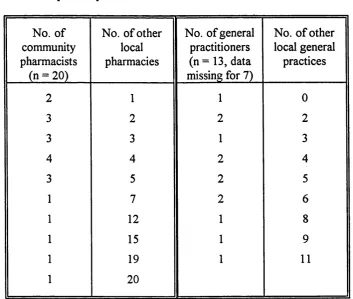
2.3 The number of local pharmacies and local general practices reported by the community pharmacists and general practitioners respectively ... 60
as reported by the interviewed pharmacists and general
practitioners ... 71
2.7 The nature of the contacts initiated by general practitioners as reported by the interviewed pharmacists and general
practitioners ... 72
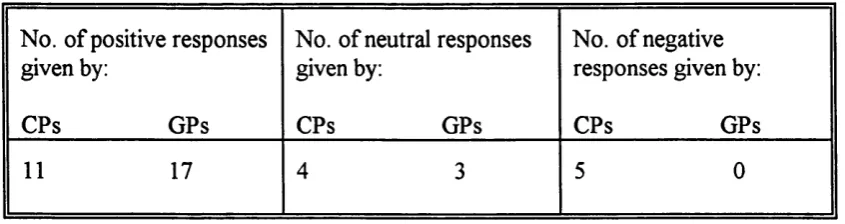
2.8 The community pharmacists (CPs) and general practitioners (GPs) responses to three questions about initiating
contacts, responses received and being contacted ... 73
2.9 Areas with the potential for collaboration ... 92
3.1 Classification of the collaborative initiatives reported,
together with the percentage of FHS As/Health Commissions
(HCs) reporting each 113
3.2 Areas already covered and those planned for joint meetings,
seminars and workshops ... 116
3.3 Collaborative pilot projects reported by the pharmaceutical
advisers at 47 FHS As/Health Commissions ... 118
3.4 Areas already covered and those planned for community
pharmacist training initiatives 121
4.1 The number of general practitioners involved in patient
referral and the number of patients referred/practice ... 153
4.2 BNF classification of the hoarded prescribed medicines 156
4.3 Classification of general practitioner (GP) intervention
requests with examples and frequencies ... 159
4.4 Classification of community pharmacist (CP) intervention
4.5 Benefits of a domiciliary service as perceived by the
visiting pharmacists ... 166
5.1 Classification of the OTC medicinal and related products purchased following consultation with the community
pharmacist ... 200
5.2 Classification of the participating clients
according to age band ... 203
5.3 Therapeutic classification of the symptoms presented
to a community pharmacist on 50 specific occasions 205
5.4 Initial list of low cost prescription only medicines together
with their private prescription charges ... 211
5.5 Items added to the initial list of low cost prescription
only medicines 220
5.6 The number of items dispensed, the sum of the NIC of the items and the sum of the private prescription
charges in each month of the facilitated initiative ... 224
5.7 Areas to be included in the asthma patient
interview ... 236
5.8 The type and number of inhalation devices
being used by the patients ... 239
List of figures
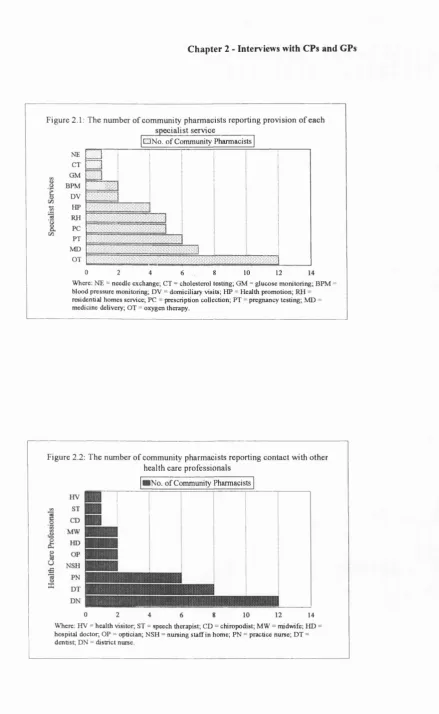
2.1 The number of community pharmacists reporting
provision of each specialist service ... 54
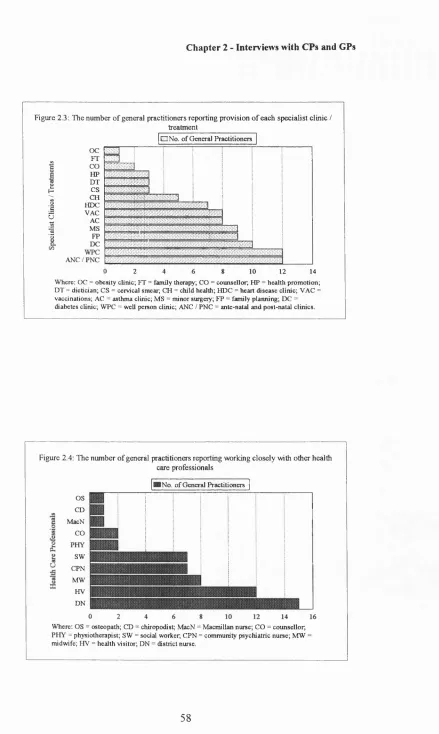
2.2 The number of community pharmacists reporting
2.4
5.1
5.2
provision of each specialist clinic/treatment ... 58
The number of general practitioners reporting
working closely with other health care
professionals ...
Flow chart mapping out the events following
accounts of 50 client/pharmacist consultations ...
The split between a pharmacist's increase in income and a patient's cost savings in the dispensing of private prescription items with an increasing net ingredient
cost (NIC) ... 227 58
204
List of Abbreviations
BMA British Medical Association
BNF British National Formulary
CP Community Pharmacist
CPPE Centre for Pharmacy Postgraduate Education
DHA District Health Authority
EC European Community
FHSA Family Health Services Authority
GP General Practitioner
HC Health Commission
EMC Local Medical Committee
LPC Local Pharmaceutical Committee
MAAG Medical Audit Advisory Group
MDI Metered Dose Inhaler
NHS National Health Service
NIC Net Ingredient Cost
NSAID Non-Steroidal Anti-Inflammatory Drug
PACT Prescribing Analysis and Costs
PMR Patient Medication Record
PPA Prescription Pricing Authority
RHA Regional Health Authority
CHAPTER ONE - INTRODUCTION
1.1 Community Pharmacists and General Practitioners - An Historical Perspective
The origins of pharmacy in England can be traced back to the 12th century, when
Pepperers and Spicers sold goods, including drugs and spices, brought from the East
and the Mediterranean. The Pepperers acted as the wholesalers, the Spicers as
retailers (Kremers and Urdang, 1976). On the whole they sold luxury goods and,
therefore, their best customers were the king’s household and the larger baronial
establishments (Trease, 1964). The term apothecary appeared in England in the 13th
century and was used interchangeably with ‘spicer’ for those who had started to
specialise in dispensing and compounding medicines (Kremers and Urdang, 1976).
The Pepperers changed their name to the Grocers’ Company and received a Charter
in 1428 (Wootton 1910). The Grocers’ Company had authority over the apothecaries
and physicians had powers of inspection of the apothecaries’ premises and drugs.
Physicians utilised the apothecaries to make up the preparations that they ordered and
used their shops as consulting rooms. The physician regarded the apothecary as an
agent to increase his patient numbers and whilst the physician received his fee, the
apothecary was expected to charge for the ingredients plus a small fee for
compounding the drugs (Trease, 1964). In 1617 the apothecaries obtained a Charter
from James I giving them an independent existence as a City Guild, under the title of
the Society of Apothecaries (Wootton, 1910). The Charter stipulated that
apothecaries had to be apprenticed for a minimum of seven years and at the end of the
Chapter 1 - Introduction
'...concerning the preparing, dispensing, handling, co-mixing and compounding o f medicines ’ (Trease, 1964).
The Grocers’ Company protested over the Charter, but the King did not relent;
grocers were but merchants, he said, but the apothecary was a mystery (Wootton,
1910).
At the time of the formation of the Society of Apothecaries there were no general
medical practitioners, only physicians who were learned, scarce and expensive,
surgeons who were unlettered craftsmen and quacks of all sorts (Copeman, 1967).
Throughout history the priest-physician had been the embodiment of medical learning
and was employed by the rich and powerful. The lower classes depended entirely on
the extensive monastic system, which spread over the country. In 1518, Henry VIII
incorporated the physicians as a College and they were given the privilege of licensing
practitioners. The surgeons worked only to the physician’s direction until 1540,
when they too became incorporated, allowing them some degree of independence in
the treatment of external injuries (Copeman, 1967). The exclusion of unqualified
persons and the dissolution of the monasteries under Henry VIII virtually robbed the
general public of any form of medical advice. This was the situation when the
apothecaries obtained their Charter.
The College of Physicians expressed their approval of the new Society, thinking that
it would now be easier to control the apothecaries than when they were members of
apothecaries soon came to be regarded as the general medical attendants of the sick
poor and also o f the middle class, who, resenting the double fee for physician and
apothecary, had started to turn to the apothecary alone in cases of minor illness
(Cripps, 1950). The situation served to heighten the tension between the physicians
and the apothecaries and led to charges and counter-charges against prescribing
apothecaries and dispensing physicians (Trease, 1964). In 1703 the College of
Physicians took legal action against the apothecary William Rose for supplying
medicines which had not been prescribed by any physician. The physicians were at
first successful, but on appeal the House of Lords found in favour of Rose on the
grounds that it was in the public interest to allow apothecaries to advise patients as
well as supply them with medicines. As a result of the Rose case, apothecaries had a
choice of career pathway, medicine or pharmacy. Many must have chosen medicine
because thereafter it became easier for chemists and druggists to move into the
pharmaceutical field (Trease, 1964).
In the mid 17th century, two decades after the founding of the Society of
Apothecaries, not only were the apothecaries in conflict with the physicians, but the
chemists and druggists were infringing on the apothecaries’ role by dispensing
physicians’ prescriptions and counter prescribing (Kremers and Urdang, 1951). The
English druggist was originally a wholesaler, acting as a middle man, passing drugs
from importer to apothecary. No sooner had the apothecary become adjusted to his
Chapter 1 - Introduction
of chemists and druggists. As they grew in number their range of activities
spread. The apothecaries finally got Parliament to pass an Apothecaries Act in 1815,
giving the Society certain powers over professional standards and medical education
throughout England and Wales and forbade:
unqualified persons from judging disease by external symptoms \
the qualified persons being the physicians, surgeons and apothecaries (Kremers and
Urdang, 1976). The chemists and druggists drafted a clause in the Act, defining their
business as consisting of the:
‘...buying, preparing, compounding, dispensing and vending drugs and medicinal compounds by wholesale and retail' (Wootton, 1910).
They thus acquired a legal status to practice pharmacy without being subjected to any
requirements regarding education or apprenticeship. The above definition effectively
drew the boundary between the medical and pharmaceutical professions. Most
apothecaries moved further towards the practice of medicine and the term apothecary
became synonymous with that of general medical practitioner.
In 1841 a proposed Bill was designed to drastically reform the practice of medicine.
A group of chemists and druggists met in London to discuss the implications of the
bill and focus on the need to protect the right of the chemist and druggist to prescribe
and give medical advice. The Bill was defeated in the House of Commons and the
Pharmaceutical Society was formed for the purpose of:
‘...uniting the chemists and druggists into one ostensible, recognised and independent body - fo r protecting their general interests - andfor the
as shall secure to the profession and the public the safest and most efficient administration o f medicine ’ (Holloway, 1991).
The Society of Apothecaries made no attempt to conceal their resentment of the
newly formed Pharmaceutical Society. In their view it was not only unnecessary, but
in many respects highly objectionable. The Society was incorporated by Royal
Charter in 1843.
The present division between the practice of medicine and that of pharmacy was
socially and politically constructed by three acts of Parliament, the 1858 Medical Act
and the Pharmacy Acts of 1852 and 1868. The Pharmacy Acts respectively protected
the title o f ‘pharmaceutical chemist’ and required all future chemists and druggists to
pass examinations and be registered. The three grades of physician, surgeon and
apothecary were drawn together into one fold and a legal fence was set up between
them and the chemist and druggist (Holloway, 1991). The general practitioner was,
however, still reluctant to give up the sale of drugs, accounting for up to three
quarters of his income and equally the chemists and druggists were attached to their
role of counter prescribing.
In 1911, Lloyd George stated:
*The first thing which I think should be done is to separate the drugs from the doctors ’,
a matter achieved by means of the National Insurance Act (Hunt and Jones, 1994).
Chapter 1 - Introduction
dispensing was the sole right of the pharmacist and secondly because of the volume of
business it brought to pharmacies. Only in rural areas was an exception made to
doctor dispensing, an issue that has continued to be an area of contention between
the professions and is reported on frequently (Anon, 1994a; Anon, 1995a; Anon,
1995b; Anon, 1995c). Doctors continued to dispense medication for private patients,
but throughout the early 1900s the National Insurance Scheme was extended,
covering approximately half of the British population by 1946. The creation of the
National Health Service (NHS) in 1948 effectively separated prescribing and
dispensing. The public could get the medicines they needed regardless of cost and
dispensing became the core role of the community pharmacist.
The latter decades of the 20th century have seen a call for collaboration between the
community pharmacist and the general medical practitioner, at individual, local and
national levels (Anderson, 1965; Humphreys et al., 1989; Anon, 1993a). A brief look
at history has illustrated that interprofessional rivalries and conflicts were the norm
throughout the development of the distinct professions of community pharmacy and
general practice medicine and the long-standing disharmony has undoubtedly left its
mark on the modem day interprofessional relationship. In order to develop the
working relationship it will, therefore, be necessary to encourage collaboration in
1.2 Why is Interprofessional Collaboration Necessary ?
The first step, before investigating ways and means to develop the interprofessional
working relationship, must be to ask the above question, why is interprofessional
collaboration necessary ? The main reason for interprofessional collaboration can be
summed up by the following:
Working together is a positive step because the needs o f clients cut across professional boundaries and fragmentation by professional disciplines
inevitably leads to fragmentation in the service ' (Raman, 1992).
In other words, community pharmacists and general practitioners need to collaborate
in order to ensure the provision of good quality patient care. Interprofessional
collaboration between community pharmacists and general practitioners can also
contribute to the development of an economically viable primary health care system.
Greater collaboration between community pharmacists and general practitioners was
first proposed in the report to the Nuffield Foundation on pharmacy (1986) for these
two reasons:
We have no doubt that the development o f closer relations between GPs and community pharmacists would be in the interests o f patients and could lead to a more efficient use o f resources within the NHS\
A further reason for the development of the working relationship between community
pharmacists and general practitioners is the benefits that each profession can reap as a
result of collaborating. Horder (1991) said in his report on a multidisciplinary
conference about interprofessional co-operation:
Chapter 1 - Introduction
Community pharmacists should find that a closer working relationship with general
practitioners increases their professional role satisfaction, through the utilisation of
their knowledge and skills. A further benefit may be enhanced professional status,
as collaboration with general practitioners draws the community pharmacist into the
primary health care team. General practitioners should also find that their
professional role satisfaction increases, as collaboration provides a new perspective
on areas of general practice and will possibly allow general practitioners to
concentrate on their fulfilling clinical role.
Collaboration between community pharmacists and general practitioners will
undoubtedly result in benefits, yet little progress appears to have been made in this
area. The reasons for the lack of progress are not entirely clear, although the
potential conflict between the community pharmacist’s commercial and professional
roles, highlighted in the report to the Nuffield Foundation (1986) and further
commented on by Taylor (1986), may represent a barrier to greater interprofessional
collaboration. A lack of mutual respect and support between community pharmacists
and general practitioners will undoubtedly present a barrier to co-operation (Vree,
1991) and in such cases offers of assistance may be viewed sceptically. Furthermore,
the defensive nature of a professional group when they feel challenged in the course
of their essential work (Horder, 1992) serves to widen the gap between the
The slow development of the interprofessional relationship in the community has not
been mirrored in the hospital setting, where the working relationship between
pharmacists and doctors has developed significantly. The successful interprofessional
collaboration in the secondary health care system could possibly be used as a model
on which to base the development of the pharmacist/doctor working relationship in
the community.
1.3 The Hospital Model of Collaboration
In the hospital setting, the relationship between pharmacists and doctors has
developed far beyond that of the community pharmacist and general practitioner,
primarily due to the development of ward pharmacy and subsequently the larger
umbrella of clinical pharmacy.
The major period of change in the hospital setting was the late 1960s when ward
pharmacy developed in response to reports of errors in the process leading to the
administration of drugs to patients in hospitals (Vere, 1965). It became apparent that
drugs required more precise systems for prescribing and administration and that
nursing and medical staff required a greater expert support from pharmacists on the
wards (Vere, 1965). Deployment of pharmacists to the wards to provide a drug
supply service was also thought necessary and was associated with a reduction in the
incidence of discrepancies between prescribed and administered drug therapy (Sykes
Chapter 1 - Introduction
• Monitor prescriptions for completeness and accuracy and ensure, as far as
possible, that the prescribing and administration processes are being carried
out accurately.
• Make themselves available for consultation with nursing and medical staff.
• Ensure that the system for supply of stock and non-stock drugs is working
accurately (Hough et. al., 1986).
It became apparent that pharmacists needed a greater clinical orientation in order to
monitor prescriptions effectively. The concept of clinical pharmacy, therefore,
developed from that of ward pharmacy, not as another pharmacy speciality, but
central to all pharmacy activities (Hough et. al., 1986) and encompassing a host of
roles. Clinical pharmacy is about:
‘...the optimal use o f drugs, ensuring that those reaching the patient are safe, effective, offer value fo r money and quality o f life ' (Barber, 1990).
The provision of clinical pharmacy services was endorsed by the Department of
Health in 1988 as a means of increasing the cost effective use of medicines and
enhancing patient care.
In order to expand into clinical areas, pharmacists need the acceptance of their role by
doctors (Weiss, 1994). A study in the United States by Grussing et al. (1984)
illustrated a general approval of the role of the clinical pharmacist by doctors. A
study by Ritchey and Raney (1981) in the USA showed that an increase in exposure
pharmacists performing clinical tasks. Other USA studies have shown that doctors
accept a number of clinical roles for pharmacists including patient counselling (Moss
et al., 1980) and acting as drug information consultants (Nelson et al., 1978). In their
investigation into the value of pharmacists attached to consultant ward rounds in the
United Kingdom, Gibson and Freeborn (1985) illustrated that a clinical pharmacist’s
involvement was essential. Ninety one per cent of queries would have been missed
or not asked had the pharmacist not been on the ward round. Investigations of
hospital pharmacists participation in medical audit in the UK (Harris et al., 1993;
Cotter et al., 1993) showed that doctors, in general, were positive about a
contribution from pharmacists. Pharmacists have been involved in the presentation of
drug use and expenditure data at medical audit meetings; the provision of prescribing
advice during case presentations; creating and monitoring prescribing policies and
directly auditing prescribing.
Monitoring prescriptions for completeness and accuracy remains at the core of the
clinical pharmacy service because it is the major activity which influences the selection
and use of drugs (Eccles, 1992) and it represents a constant audit of prescribing
(Barber et al., 1994). Studies in the UK and the USA (Burkle et al., 1982; Haxby et
al, 1988; Hawkey et al, 1990) show that doctors readily accept the interventions that
pharmacists make as a result of their prescription monitoring activity. The majority of
the suggestions relate to the fundamentals of prescribing such as the choice of drug,
Chapter 1 - Introduction
review by Klopfer and Einarson (1990) of 23 American and Canadian papers
presented an average acceptance rate of pharmacists’ suggestions by prescribers of
84.4%, with a range in acceptance rates of 58% to 98%. Computer data bases have
been developed to facilitate the recording of prescription monitoring interventions and
to measure the impact of the service on patient care (Cousins and Hartoum, 1991;
Kennedy and Wind, 1992). The high level of acceptance of pharmacists’
interventions by prescribers shows that the advice is valid and appropriate (Eadon,
1992).
A study carried out by Cotter et al. (1994a) investigated the extent to which a wide
variety of clinical pharmacy services were provided in NHS hospitals in the UK. Fifty
per cent or more of the pharmacies responding to the postal questionnaire provided
the following clinical services: monitoring drug therapy; participating in medical ward
rounds; participating on drug and therapeutics committees; providing information
used in creating prescribing policies; providing information used in making formulary
decisions; enforcing formulary policy; providing drug information; providing financial
information on drug use; providing advice to clinical directorates; providing education
for pharmacy staff; providing education for nursing staff; providing support for
clinical trials; counselling patients about their medication; contributing to medical
audit and conducting practice research.
patient and have involved greater collaboration with health care professionals. The
acceptance by doctors of pharmacists participation in a wide range of clinical areas,
previously dominated by the medical profession, illustrates the extent to which their
knowledge and expertise are valued. In particular, pharmacists participation on ward
rounds, involvement in hospital policy making groups, participation in specialist
multidisciplinary care teams and their role in monitoring drug therapy means that
pharmacists are involved in clinical services where they can have some input and
influence in drug use decisions. Involvement in this area means that pharmacists can
make a real contribution to the quality of prescribing and, therefore, to the quality of
patient care. The development of clinical pharmacy has contributed to the
professionalisation of hospital pharmacy (Cotter et al., 1994 b) and the acquisition of
new roles has increased the prestige of hospital pharmacists work, their power within
the hospital structure and their professional status.
The hospital model of interprofessional collaboration can undoubtedly provide some
guidance as to how the working relationship between community pharmacists and
general practitioners can be developed. A key theme in the development of the
working relationship in the hospital setting has been the acceptance of extended roles
for the pharmacist by the hospital doctor, resulting in pharmacists involvement in
practice areas where they can contribute to good quality patient care and the effective
Chapter 1 - Introduction
The development of the interprofessional relationship in the community, areas with
the potential for collaboration and methods by which collaboration can be achieved,
will now be examined.
1.4 How can the Working Relationship between Community Pharmacists and General Practitioners be developed ?
1.4.1 Extended roles for the community pharmacist
In the hospital setting, it was the development of the roles of the hospital pharmacist
as a result of changing service needs, which led to the improvement of the
interprofessional relationship with doctors. Changes in the primary health care
setting, including a reduction in the traditional role of the community pharmacist in
the compounding and dispensing of medication, an increase in the complexity of
drugs and a greater consideration of the patient in the provision of health care, have
paved the way for a variety of extended roles for the community pharmacist, fully
utilising his or her professional expertise. The community pharmacist can now have a
greater role to play in the quality of patient care and in the delivery of cost effective
health care by means of extended role activities, as long as those activities are
accepted by the general practitioner. Collaboration is, therefore, the key to the extent
of the community pharmacist’s involvement in extended roles; extended roles can also
serve to increase the level of interprofessional collaboration.
Extended roles for the community pharmacist were first proposed in the report to the
training and research, had been examined. The recommendations made in the report
to the Nuffield foundation were, on the whole, supported by the Government in its
White Paper on primary health care. Promoting Better Health (1987). Further
extended roles for the community pharmacist were proposed following an
investigation into the future role of community pharmaceutical services, undertaken
by a joint working party of the Department of Health and the Royal Pharmaceutical
Society. The working party published its report. Pharmaceutical Care: The Future for
Community Pharmacy, in 1992. Recommendations made in the report to the
Nuffield Foundation and in the Pharmaceutical Care Report concerned a number of
areas of community pharmacy practice. Those recommendations that specifically
related to the roles of the community pharmacist required collaboration with general
practitioners in order to ensure their effective implementation.
1.4.2 Attitudes towards the extended roles
A number of studies have been conducted investigating the attitudes of general
practitioners towards extended roles for community pharmacists. Ortiz et. al. (1989)
in their Australian study asked pharmacists and physicians to give a priority rating to
18 different professional roles for the community pharmacist. The pharmacists and
general practitioners assigned different priorities to 12 of the 18 roles, pharmacists
giving higher priorities to most of the roles. There was greater acceptance by the
general practitioners towards pharmacists giving non-prescription related advice than
Chapter 1 - Introduction
found that general practitioners favoured an extension of the pharmacist’s role in the
management of minor ailments and the provision of health education, but were
concerned about their role in screening patients and in prescribing. A UK study by
Woodward (1992) found agreement between community pharmacists and general
practitioners about potential extended roles for the pharmacist, including advice to
patients on minor symptoms and advice to doctors about effective and economic
prescribing. Nathan and Sutters (1993a), in their UK study of the pharmacist’s
extended roles and attitudes towards collaboration in clinical areas, uncovered
disagreement between community pharmacists and general practitioners over
pharmacist involvement in some clinical areas of patient management, especially
those concerned with making prescribing decisions. Some extended roles are widely
accepted by general practitioners; others, particularly those that appear to encroach
into the traditional domain of the general practitioner, are not as well accepted. In
order to participate in extended roles, community pharmacists will have to focus on
areas of their expertise and prove the value that they can add to patient care by
collaborating with general practitioners.
1.4.3 Areas with the potential for collaboration and methods for implementing collaboration
In order to develop the working relationship between community pharmacists and
general practitioners, areas with the potential for interprofessional collaboration and
methods by which to implement collaboration need to be investigated. The main
quality patient care. At the community pharmacist and general practitioner interface,
good quality patient care encompasses: good prescribing; prescription monitoring,
intervention and medication advice; responding to symptoms and the treatment of
minor ailments; extended patient services and preventative health care measures.
Good prescribing
The aims of good prescribing have recently been redefined by Barber (1995) as
maximising effectiveness, minimising risk, minimising costs and respecting patient
choice. Interprofessional collaboration to improve prescribing would, therefore,
have an influence on patient care and on the effective use of resources. The
community pharmacist’s current role in achieving the four aims of good prescribing is
not firmly established. Kendall and Strickland-Hodge (1990) reported that the
community pharmacist’s contribution to prescribing is likely to increase as prescribing
is required to become more rational and cost effective. The Nuffield Report (1986)
recommended that systematic arrangements should be introduced to enable
community pharmacists to co-operate with general practitioners to increase the
effectiveness and reduce the costs of prescribing. The Pharmaceutical Care Report
(1992) similarly recognised a role for community pharmacists in the selection of the
medicine and dosage, within agreed protocols, following medical diagnosis or
assessment. In a study of prescription monitoring in the UK by Neville et al. (1989),
the authors concluded that community pharmacists may have a key role in influencing
Chapter 1 - Introduction
(1993) involving oral presentations to general practitioners covering the efficacy,
safety, patient acceptability, drug interactions and costs of four drug classes
demonstrated that role. The feedback received from the participating general
practitioners led the authors to conclude that the presentations were valued, new
information had been gained and the general practitioners were intending to change
their prescribing practices. The authors further concluded that the provision of
independent information on prescribing was an important extended role for the
community pharmacist. Nathan and Sutters (1993b) suggested that community
pharmacists could collaborate in the analysis of PACT (prescribing analysis and cost)
data, in the development of formularies and in rational prescribing, although
community pharmacists would have to prove their value and gain the confidence of
general practitioners in other areas first, such as the provision of drug information.
Prescription monitoring, intervention and medication advice
The community pharmacist’s role in prescription monitoring and intervening when
necessary is central to the legal, professional and ethical responsibilities that the
pharmacist has to the patient (Rupp et. al., 1992). Studies of prescription monitoring
and interventions in the UK and the USA have shown that community pharmacists,
using their professional expertise, provide a valuable prescription monitoring role
(Greene, 1995a), are capable of making appropriate clinical decisions (Greene,
1995b) and can significantly enhance the safety and quality of pharmaceutical care
in the UK by Shulman et al. (1981) illustrated that general practitioners appreciate the
valuable role that pharmacists carry out in checking erroneous or incomplete
prescriptions. Barrett and Vere (1979) in their UK study suggested that there could
be further collaboration in this area, doctors and pharmacists deciding on:
'What should he monitored; by whom and how \
An extension of the dispensing role is the provision of advice to patients about their
prescribed medicines. Barrett and Vere (1979) suggested that further collaboration
could take place in this area, to prevent patients receiving differing and possibly
conflicting advice. A Drug and Therapeutics Bulletin (Anon, 1981) entitled ‘What
should we tell patients about their medicines ?’ emphasised the point that the quality
and consistency of medication information can be improved by co-operation between
general practitioners and community pharmacists. Furthermore, a draft joint
statement by the Royal Australian College of General Practitioners and the
Pharmaceutical Society of Australia (Anon, 1994b) regarding the improvement of
interprofessional communication, suggested that prescriptions should indicate the
purpose for which a drug is prescribed as part of the directions to assist the
pharmacist in counselling about the medication.
Responding to symptoms and the treatm ent of minor ailments
The community pharmacist’s role in responding to symptoms and the treatment of
Chapter 1 - Introduction
re-classification of a number of prescription only medicines to pharmacy only status.
A UK study by Morley et al. (1983) illustrated that general practitioners
acknowledged the invaluable contribution that pharmacists make in treating minor
ailments. However, concern has been expressed about the quality of advice given by
some pharmacists for even simple conditions (Consumers’ Association, 1991).
Spencer and Edwards (1992) proposed that one way of helping to resolve these
problems would be greater co-operation between community pharmacists and general
practitioners at local level, in drawing up protocols for responding to symptoms and
in the use of pharmacy referral forms. The use of referral forms by pharmacists, when
referring patients to their general practitioner, were advocated in the Pharmaceutical
Care Report (1992). A UK study by Blenkinsopp et al. (1991) showed that the use of
referral forms had a valuable role in patient care and contributed towards the
development of interprofessional collaboration.
Extended patient services
A range of patient services have been proposed as part of the extended role for
community pharmacists, requiring general practitioner collaboration in order to be
carried out effectively. Potential patient services include domiciliary visits and the
provision of services to nursing homes and other residential establishments, both
proposed in the report to the Nuffield Foundation (1986) and the Pharmaceutical
Care Report (1992). A role for the pharmacist in therapeutic drug monitoring within
Preventative health care measures
Greater involvement of community pharmacists in health education and health
promotion have both been proposed as extended roles:
'There is a role fo r community pharmacists in health education in co
operation with other health care professionals ' (Report to the Nuffield
Foundation, 1986).
'Community pharmacists should be encouraged to participate more widely in
health promotion activities and campaigns ’ (Pharmaceutical Care Report,
1992).
A role in health education could include giving patients advice about a healthy
lifestyle including diet and exercise and about the use of preventative medicine. A
role in health promotion could include giving patients unsolicited advice and
advising at opportunistic consultations.
The Pharmaceutical Care Report further recommended that:
'Community pharmacists should contribute to health promotion by offering diagnostic and screening services \
A study by Hampton et al. (1990) investigated blood pressure monitoring in an inner
city pharmacy in the UK as an attempt to collaborate with general practitioners, but
found that the general practitioners were unenthusiastic about the scheme. Drury
(1991) proposed that local agreements between pharmacists and general practitioners
with regard to screening should be drawn up so that a clear and unequivocal message
Chapter 1 - Introduction
realised, pharmacists’ contribution to diagnostic screening is likely to remain small.
Examples of methods of interprofessional collaboration
Joint education at both the undergraduate and postgraduate levels has been proposed
as a method of fostering a closer working relationship between general practitioners
and community pharmacists. Barrett and Vere (1979) stated that:
'There is a need fo r interactions between students o f the two professions to ensure that they can communicate and understand each other's problems after qualification ’.
Stewart et. al. (1991a) reported on a study funded by the Department of Health to
develop a joint continuing education programme at the local level. Programmes were
centred around response to symptoms, generic prescribing and disease
prevention. An independent observer found that both professions had a poor
understanding o f the other’s training and competencies and both professions felt that
joint events helped.
Campbell (1989) described a series of joint meetings between local community
pharmacists and general practitioners in a market town in Oxfordshire, held to
increase interprofessional co-operation. Evening meetings were held every three
months, with a main topic addressed by a guest speaker followed by a discussion of
other topical issues. Topics covered included over the counter availability of
re-classified prescription only medicines, original pack dispensing, generic substitution
greater mutual understanding and respect as a result of regular face to face contact
and helped to ease frustrations caused by each other’s short comings.
Joint drug liaison meetings at the individual level were reported (Anon, 1992) as a
success, after a community pharmacist in Yorkshire was approached by a group
practice to help with rationalising their prescribing. Meetings were held every six to
eight weeks and were used to discuss drugs drawn from one therapeutic category of
the British National Formulary (BNF). The intended outcome of the meetings was to
make the general practitioners act as a single group and make their prescribing
decisions more objective. The general practitioners reported a greater awareness of
the roles of the community pharmacist and ways in which s/he could help them.
They also felt that their new awareness would mean that they could make the
pharmacist’s roles easier.
The feasibility and potential value of community pharmacist and general practitioner
liaison groups at the local level was studied at the invitation of the Royal
Pharmaceutical Society and the Royal College of General Practitioners (Blenkinsopp
et al., 1993a). Three interprofessional liaison groups were established with the help
of a pharmacist facilitator, who encouraged the groups to determine their own
priorities. One group focused on clinical issues, the second on links between the
professions and the third on matters of common practice. The need for further
Chapter 1 - Introduction
apply that knowledge to the provision of structured advice. The authors concluded
that the presence of an independent facilitator enabled the pharmacists to build up
confidence and assertiveness and led to the development of good working
relationships.
The working relationship between general practitioners and community pharmacists
has the potential to develop through a host of extended roles for the community
pharmacist and by the employment of a number of different collaborative methods.
1.5 Aim and Objectives of the Present Study
Community pharmacists and general practitioners have traditionally liaised for the
common benefit of the patient with regard to the correctness and safety o f dispensed
medicines, but not always in a manner which develops interprofessional relations
(Jepson and Strickland-Hodge, 1995). Despite the fact that community pharmacists
and general practitioners see the same half a million patients every day in relation to
the same problems (Drury, 1991), the majority of interprofessional communications
take place over the telephone and relate to individual prescription queries (Smith,
1990); commonality does not appear to have had any significant influence on the
development of the professional relationship. Bruce (1980), in two studies of
teamwork for preventative care, examined communications and interrelationships
between groups o f professionals. In summary he found;
'Co-operation between professionals has not been found to result
client It appeared to develop step by step as the frequency o f contacts increased, as the relevance o f such contacts became clearer, as better understanding o f roles emerged, accompanied by the disappearance o f stereotypes, as social proximity increased, as mutual trust began to grow and problems o f confidentiality to shrink \
Clearly there is much work to be done to develop the interprofessional relationship
between community pharmacists and general practitioners.
The aim of this study was to investigate ways of developing the working relationship
between community pharmacists and general practitioners. In order to achieve this
aim the following study objectives were set:
• To build up a picture of current informal interprofessional collaboration and
determine the potential for the development of the working relationship
(Chapter 2).
• To determine the extent and nature of current formally organised
interprofessional collaboration (Chapter 3).
• To establish and evaluate collaborative projects (Chapters 4 and 5).
The first objective was fulfilled by conducting semi-structured interviews with a
random sample of community pharmacists and general practitioners, to explore their
interprofessional relationships and their attitudes towards collaboration. In order to
fulfil the second objective a survey of the pharmaceutical advisers in post throughout
England and Wales was conducted to gather data about formally organised
interprofessional collaboration in each health authority. The third objective was
Chapter 1 - Introduction
community pharmacist. One project was a locally organised pilot domiciliary
pharmaceutical care project. The second project involved three community
pharmacist and general practitioner pairs carrying out their own projects based on
mutually agreed agendas. Chapter 6 discusses the research findings and proposes a
number of recommendations for the future development of the working relationship
CHAPTER 2 - INTERPROFESSIONAL COLLABORATION: INTERVIEW S W ITH COMMUNITY PHARMACISTS AND
GENERAL PRACTITIONERS
2.1 Introduction
The traditional view of the professional relationship between community pharmacists
and general practitioners is one of telephone contacts, on the whole pharmacist
initiated, to resolve prescription queries. General practitioner initiated contacts
usually centre around requests for supply and information and are less frequent than
those initiated by pharmacists. General practitioners are tied up with their
appointments at the practice and home visits; community pharmacists are tied down
to their pharmacy premises in order to be available to dispense prescriptions and
provide advice to patients. Both are busy professionals who are often unable to find
the time to meet or even to have a prolonged telephone conversation in order to
resolve professional matters other than those requiring immediate attention.
Although this is a simplistic view and does not refiect the working relationship of all
general practitioners and community pharmacists, it represents the majority of
interprofessional relationships and has been supported by research findings. A postal
survey of community pharmacists in the UK carried out by Smith (1990) found that
78% of contacts with general practitioners were community pharmacist initiated for
the purpose of prescription clarification. The remaining 22% of contacts were
initiated by general practitioners, but less than half were requests for information.
Chapter 2 - Interviews with CPs and GPs
physicians carried out by Williamson and Kabat (1971) in the USA found that only
6% of the responding physicians reported using pharmacists as a source of general
drug information, with over 70% preferring to use reference texts and medical
journals. In a structured survey of community pharmacists and general practitioners
carried out by Paes (1983) in Holland, 50% of community pharmacists reported
having no contact or irregular contact with general practitioners and over 60% of
general practitioners reported having no contact or irregular contact with community
pharmacists. In a UK study by Kennedy et al. (1993) community pharmacists and
general practitioners were asked to complete a week long diary of interprofessional
contacts. The results showed that the majority of the interprofessional contacts were
initiated by pharmacists and related to processing prescriptions. The other major
areas of contact concerned supply, for example prescription delivery and requests for
equipment, and information requests, for example prices and NHS availability.
Limited professional communications between general practitioners and community
pharmacists, in terms of time spent on communication and topics discussed, will
restrict the development of the interprofessional relationship; extended
communications will help to develop it. A survey carried out by Harding and Taylor
(1988) in UK health centres with integral pharmacies found that nearly 50% of the
responding pharmacists were consulted by general practitioners 10 times or more per
week. Seven per cent of the responding pharmacists considered themselves ‘hardly
ever consulted’ by general practitioners compared with 24% of a matched control
professions acquired an appreciation of the other’s function, resulting in a mutually
beneficial working relationship, ultimately benefitting the patient as a result of
improved collaboration.
A recent UK study by Jepson and Strickland-Hodge (1995) has illustrated that
interprofessional contacts between community pharmacists and general practitioners
are beginning to diversify. Face to face contacts were reported implying a more
interactive level of contact and although 70% of the practice visits made by
pharmacists were for the routine collection of prescriptions, there would be
opportunities for professional face to face communications. The general practitioners
surveyed reported that interprofessional contacts occurred for a variety of
professional activities including discussions of patients’ drug therapy, residential
home prescribing and discussions centred around general service matters and new
pharmacy services. The broad nature of the interprofessional contacts shows that a
range of patient, drug and service related topics are now being discussed between
general practitioners and community pharmacists during communications that do not
focus solely on individual prescription queries.
In order to develop the working relationship between general practitioners and
community pharmacists, the following areas needed to be explored further: the extent
and nature of the current working relationship; the level of interest amongst
community pharmacists and general practitioners for developing the relationship and
Chapter 2 - Interviews with CPs and GPs
conducting interviews with a random sample of community pharmacists and general
practitioners was, therefore, to build up a picture of the current working relationship
between local community pharmacists and general practitioners and to determine the
potential for developing the relationship.
2.2 Method
Semi-structured interviews were carried out with random samples of community
pharmacists and general practitioners in four of the six Family Health Services
Authorities (FHS As) in the North Thames (East) Regional Health Authority (RHA),
to investigate the professional relationship between community pharmacists and
general practitioners. Face to face interviews were conducted in order to gather
detailed information from the participants. Semi-structured interviews allowed
flexibility to probe issues and explore opinions.
2.2.1 Sample selection
A list of the general practitioners and a list of the community pharmacies in contract
with each of the four FHS As were obtained. (In the case of general practitioners,
service contracts are between the individual general practitioner and the FHSA. In
the case of community pharmacists, service contracts may be between a named
individual or a company and the FHSA, for specific premises). The general
practitioners and the pharmacies on each contractor list were numbered consecutively
and then random numbers tables were used to select five general practitioners and five
for the general practitioners was 1094; for the community pharmacies it was 485.
Random sampling was used to ensure that each general practitioner and each
community pharmacist had an equal chance of being selected as far as possible,
assuming one pharmacist per pharmacy.
A letter was sent to each of the 20 general practitioners and each of the 20
community pharmacies, the latter addressed to the principal pharmacist (Appendices
2.1 and 2.2). The letters explained: who was conducting the research; the aim of the
research; the aim of the interview; how the general practitioner/community
pharmacist had been selected; how the information gathered in the interview would be
used; the confidential nature of the interview and how long the interview would take.
Each pharmacist was contacted by telephone no later than two weeks after the letter
had been sent, in order to determine whether the pharmacist was willing to participate
in the interview and if so, to arrange the interview date. The letter to the general
practitioners was accompanied by a reply paid postcard asking the general
practitioner if s/he was willing to participate in the interview and if so, for the name
and telephone number of someone in the practice who could be contacted in order to
arrange the interview date. The person named on the returned postcards was
generally contacted on the day the postcard was received, in order to arrange the
interview. General practitioners who did not return the postcard a month after the
letter and postcard had been sent were followed up with a telephone call to determine
whether they were willing to participate in the interview and if so, to arrange the
Chapter 2 - Interviews with CPs and GPs
pharmacists and the general practitioners due to an expected difference in accessibility
between the two professions.
Community pharmacists who were unable or refused to participate in the interview
during the telephone conversation were replaced by another community pharmacist
randomly selected from the same FHSA contractor list. General practitioners who
were unable or refused to participate, either on the returned postcard or during the
follow-up telephone call, were replaced by another general practitioner randomly
selected from the same FHSA contractor list. The replacement procedure ensured a
sample size of 20 community pharmacists and 20 general practitioners, five of each
practitioner from each of the four FHSAs.
Information was gathered from the non-participating pharmacists during the
telephone call, to determine whether there were any major differences between the
participating and non-participating community pharmacists. Information was
gathered about the non-participating general practitioners from two sources, the
FHSA contractor lists and, in some cases, the practice managers during a follow-up
telephone call.
2.2.2 Piloting
Piloting was carried out in one of the two FHSAs in the North Thames (East) Region
not included in the main study. Community pharmacies and general practitioners
random numbers tables. Pilot interviews were conducted with both professional
groups until no further difficulties were highlighted with the interview schedules. The
interview schedules were tested for respondent acceptability and validity by
determining how easily the respondents could answer the questions, by ensuring that
the respondents understood the questions asked and by checking the respondent’s
answers for relevance.
The community pharmacist interview schedule was piloted during eleven interviews.
The general practitioner interview schedule was piloted during six interviews. The
similarity o f the two interview schedules meant that some difficulties highlighted
during piloting of the community pharmacist interview schedule were relevant to the
general practitioner interview schedule and, therefore, fewer general practitioner pilot
interviews were needed.
As a result of the pilot study, alterations were made to the interview schedules to
remove ambiguity, bias, repetition and irrelevant questions. Prompts were included
to rephrase complicated questions, probes were added to enable the elaboration of
answers and questions were rephrased so that they focused on actual experiences,
rather than hypothetical situations.
2.2.3 Development of the interview schedules
Two semi-structured interview schedules, one for the community pharmacists and one
Chapter 2 - Interviews with CPs and GPs
(Appendices 2.3 and 2.4). The interview schedules were developed in two stages.
Initially the main questions to be included were gathered from the literature, focusing
on those medical and sociological papers reporting on interprofessional contacts
between community pharmacists and general practitioners. The second stage
involved the piloting and revision of the schedules as described above. The two
schedules were very similar in that they incorporated the same questions; they differed
in their phrasing.
The final interview schedules each consisted of a short introduction re-iterating
confidentiality in any reporting of the interview data, the aim of the interview, who
was going to be interviewed, how the community pharmacist/general practitioner had
been selected for the interview and the basic content of the interview schedule. The
introduction was followed by five interview sections asking the pharmacists and
general practitioners about:
• Local general practices and local community pharmacies respectively, in terms
of prescription volume, proximity and those in contact with most frequently.
• The relationship with local general practitioners and community pharmacists
respectively, including any social contact.
• Professional communications including any face to face contact.
• Working together including participation in interprofessional meetings and
projects, areas with the potential for collaboration and advantages and
disadvantages of working together.