Original Research Article
The prevalence of anemia in pregnant women in the 10 priority villages
for stunting control in Sumedang district, West Java:
a community-based survey
Sudung Nainggolan*, Forman E. Siagian
INTRODUCTION
The direct cause of maternal mortality in Indonesia is due to hemorrhage, infection and eclampsia, while indirect causes are anemia. Anemia in pregnant women possessed potential harm to mother and child.1 The maternal mortality ratio in Indonesia is 305/100,000 live births.2 In addition, according to Indonesia “basic health research-riskesdas” there were 48.9% pregnant women suffer from
anemia and 40% of women of childbearing age suffered as well.3 Infectious and parasitic diseases are prominent health problems, especially in developing countries such as Indonesia. Helminthes infections are disease that is typical found in the tropics, sub-tropics and usually increases during the rainy season. Indonesia is one of the countries that meet these criteria, so we could say that helminthes distribution in Indonesia is partly contributed by our country geographical states. Soil transmitted ABSTRACT
Background: Anemia in pregnant women possessed potential harm to mother and child. There were 48.9% of pregnant women suffering from anemia and 40% of women of childbearing age also suffer from anemia. Incidence of anemia among pregnant women is prominent health problems especially in developing countries such as Indonesia. The aim of the present study is to determine the prevalence of anemia among pregnant women in relation to infection of Soil-Transmitted Helminthes (STH) and Serum Iron deficiency in 10 priority villages for stunting control set by the government in Sumedang district, West Java.
Methods: This is a community-based survey. Hemoglobin concentration was obtained from finger prick blood test. Containers for stool specimens and anal swabs were given to each woman at the time of hemoglobin fingerpick blood test showed positive results for anemia. Data were analyzed using SPSS software.
Results: Out of 209 pregnant women examined we found 39 pregnant women (18.7%) suffering from anemia. Followed by serum iron analysis we found 23.3% of the total number of pregnant women with iron deficiency. On microscopic examination of fecal specimens and anal swabs we found no worm eggs or larvae in the specimens examined.
Conclusions: Hemoglobin examination found that there were 18.7% pregnant women with anemia and 23.3% suffering iron deficiency. Microscopic examination of fecal samples and anal swabs in pregnant women with anemia showed neither STH eggs nor larvae.
Keywords: Pregnant women, Anemia status, Soil-transmitted helminthes, Serum iron, Stunting, Rural areas Sumedang
Department of Public Health, Faculty of Medicine, Christian University of Indonesia, Jakarta, Indonesia
Received: 14 June 2019
Revised: 03 August 2019
Accepted: 06 August 2019
*Correspondence:
Dr. Sudung Nainggolan, E-mail: [email protected]
Copyright: © the author(s), publisher and licensee Medip Academy. This is an open-access article distributed under the terms of the Creative Commons Attribution Non-Commercial License, which permits unrestricted non-commercial use, distribution, and reproduction in any medium, provided the original work is properly cited.
helminthes in Indonesia have high prevalence, especially in rural areas where the environmental conditions are very supportive for the development of helminthes and their life cycle within the soil.4,5 Chronic STH infection would lead to anemia due to iron chelation and insidious bleeding.6 In Indonesia, Asia Development Bank (ADB) stated that on 2012 as many as 22 million Indonesian children suffered from anemia which in turn caused decrease in IQ.7 STH infection and anemia were closely related. In this research, therefore, we ought to study on distribution of both anemia and soil transmitted helminthes infection among pregnant women.8
Aim
The aim of the present study was to assess the prevalence of anemia of pregnant women in relation to infection of soil-transmitted helminthes (STH) and serum iron deficiency in 10 priority villages for stunting control set by the government in Sumedang district, West Java.
METHODS
Study type
A community-based, cross-sectional study.
Study population
Pregnant women.
Study area
In 10 priority villages of stunting of Sumedang district, namely the villages of Mekarsari, Mekarbakti, Margamukti, Cilembu, Cijeruk, Cimarga, Ungkal, Sukahayu, Kebon Kalapa, and Malaka. The inclusion criteria were pregnant women within these villages; any trimester of pregnancy; samples were collected on specific dates for every villages. Recruitment also included canvassing (door-to-door approached) in neighborhoods in the more rural catchment areas because it was known that some of the pregnant women worked on day time.
Study duration
This study was undertaken in the period of November 2018 and January 2019.
Sample size
All pregnant women in the population (n=209) are included in the study.
Exclusion criteria
Notreadily to sign informed consent form; unwilling to provide sample (hemoglobin, fecal specimen, anal swab);
women who underwent abortion and labor also excluded from the study.
Data collection
Aside the physical and laboratories examination, the questionnaires is used to obtained demographic data. Hemoglobin concentration was obtained from fingerprick blood test using Easy-Touch® assessment. Anemia was diagnosed when the Hb result were <11.0 mg/dl at first and third trimester, <10.5 mg/dl at second trimester as categorized by the WHO, Api et al and Astriana.9-12 As many as 48 trained young doctors were deployed to check anemia status. Pregnant women who have low Hb then proceed with an iron serum examination. For the measurement of STH infection, containers for stool specimens and anal swabs were given to each woman at the time of hemoglobin fingerpick blood test showed positive results for anemia.13 Women were asked to return the next day with the fecal sample. The fecal samples were examined on the same day they were returned by researchers under supervision of well-trained laboratory analyst. Fecal samples used 2% of eosin as reagent; anal swab samples used toluene as reagent.13 Both samples were examined under light microscope under 10x and 40x magnification. Quality control measures (e.g., daily supervision, re-reading of negative slides and external evaluator) were strictly enforced. Diagnosis of STH infection was confirmed when either helminthes’ larva or eggs were found.14-16
Ethical approval
Ethical clearance for the study was obtained from Committee of Ethics, Christian University of Indonesia, Faculty of Medicine. Permission was also obtained from the District Health Office of Sumedang-West Java and informed consents.
Statistical analysis
Data processing includes editing, coding, data tabulation of the prevalence measured in percentage using SPSS software.
RESULTS
As it showed in Table 1 below, based on the demographic data obtained of 209 pregnant women we found that in 10 villages of priority control of stunting in Sumedang district most pregnant women are in the age range of 16-25 years (50.7%) and 26-35 (40.2%). The age range of marriage in pregnant women is most commonly found at the age of 17-20 years.
Table 1: Demographic data of pregnant women in the 10 priority villages for stunting prevention in Sumedang district.
Variable Frequency %
Age (in years)
<15 1 0.5
16-25 106 50.7
26-35 84 40.2
36-45 18 8.6
Marital age (in years)
<13 2 1.0
13-16 46 22.0
17-20 111 53.1
21-24 30 14.4
25-28 11 5.3
29-32 5 2.4
33-35 3 1.4
>35 1 5.0
Level of education
Elementary 54 25.8
Junior high school 93 44.5
High school 54 25.8
University 8 3.8
Occupation
Housewife 202 96.7
Enterpreneur 3 1.4
Employee 4 1.9
No. of family member
2 person 67 32.1
3-5 person 127 60.8
>5 person 15 7.2
Family income (in Rs.)
<1,000,000 40 19.1
1,000,000-2,000,000 122 58.4
2,000,000-3,000,000 35 16.7
>3,000,000 12 5.7
Table 2: Pregnancy status and specific physical examination.
Frequency %
Pregnancy age
Trimester 1 43 20.6
Trimester 2 99 47.4
Trimester 3 67 32.1
Gravid
1 76 36.4
2 90 43.1
3 27 12.9
4 12 5.7
5 1 0.5
>5 3 1.4
Parity
0 85 40.7
1 89 42.6
2 22 10.5
3 12 5.7
4 0 0.0
Table 3: Anemia status and microscopic fecal and anal swab on STH infection and serum iron examination.
Frequency %
Anemia status
Anemia (+) 39 18.7
Anemia (-) 170 81.3
Microscopic fecal examination and anal swab on STH Infection
Negative 39 18.7
Not examined 0 81.3
Severity assesment of anemia ( WHO, 2011)
Mild 39 -
Moderate 0 -
Severe 0 -
Anemia status and deficiency of Fe
Low serum iron 7 23.3
Normal serum Iron 23 76.7
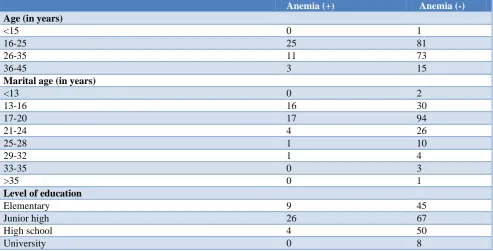
Table 4: Cross-tabulation data of anemia status according to variables.
Anemia (+) Anemia (-)
Age (in years)
<15 0 1
16-25 25 81
26-35 11 73
36-45 3 15
Marital age (in years)
<13 0 2
13-16 16 30
17-20 17 94
21-24 4 26
25-28 1 10
29-32 1 4
33-35 0 3
>35 0 1
Level of education
Elementary 9 45
Junior high 26 67
High school 4 50
University 0 8
Frequency %
Abortion
0 188 90.0
1 15 7.2
2 5 2.4
3 1 0.5
4 0 0
≥5 0 1
Conjunctival anemia
Yes 7 18
No 22 152
Pale lips mucosal
Yes 10 4
No 29 166
Koilonychias
Yes 7 1
No 32 169
Anemia (+) Anemia (-)
Occupation
Housewife 38 164
Entrepreneur 0 3
Employee 1 3
Family income
Rs. <1,000,000 4 36
Rs. 1,000,001-2,000,000 27 95
Rs. 2,000,001-3,000,000 4 31
Rs. >3,000,000 4 8
Pregnancy age
Trimester 1 7 37
Trimester 2 16 82
Trimester 3 16 51
Gravid
1 17 59
2 14 76
3 4 23
4 2 10
5 1 0
>5 1 2
Parity
0 18 67
1 15 74
2 2 20
3 4 8
The highest number of family members is found in the range of 3-5 people (60.8%). The average family income is found in the range of Rs. 1,000,000 to Rs. 2,000,000 (58.4%).
Clinically, as shown in the tables 2 and 3 we found that the most gestational age of mothers based on the trimester of pregnancy in the second trimester (15-28 weeks) which was 47.4%. Based on GPA status, most were found in gravida 2 (43.1%), parity 1 (42.6%), no abortion was 90.0%. On specific physical examination of anemia we found anemic conjunctiva (16.7%), pale lip mucosa (6.7%), koilonychia nails (3.8%). On hemoglobin examination with a quick test found 18.7% of pregnant women had anemia. From serum iron (SI) tested we found the majority had normal SI levels with a total of 76.5%), and only 23.3% had low SI levels. The results of microscopic examination of faeces and anal swabs on STH infection in pregnant women showed negative results in all pregnant women with anemia.
From the cross-tabulation in Table 4 we found 25 mothers with an age range of 16-25 years suffering from anemia, 16 and 17 mothers were found suffered anemia in the marriage age group 13-16 years and 17-20 years respectively. As many as 27 pregnant women in the family income group of Rs. 1,000,000 - Rs. 2,000,000 suffered from anemia, and anemia rates are higher in mothers with primigravida status (G1P0A0).
DISCUSSION
The results of the study on the pregnancy status of pregnant women in 10 stunting locus villages in Sumedang district found that the most gestational age of mothers based on the trimester of pregnancy was found in the second trimester (15-28 weeks), which was 47.4%. Based on GPA status, most were found in gravida 2 (43.1%), parity 1 (42.6%), abortion 0 (90.0%). On specific physical examination of anemia in pregnant women in 10 stunting locus villages in Sumedang district found anemic conjunctiva (16.7%), pale lip mucosa (6.7%), koilonychias nails (3.8%). On hemoglobin examination with a quick test found 18.7% of pregnant women had anemia. The results of microscopic examination of faeces and anal swabs on STH infection in pregnant women showed negative results in all pregnant women with anemia.
According to the results of the 2018 Basic Health Research (Riskesdas), the prevalence of anemia in pregnant women in Indonesia is 48.9%.3 In pregnant women, the need for red blood cells is higher so that it triggers an increase in erythropoietin production.17 As a result, plasma volume increases and red blood cells (erythrocytes) increase.12,18,19 However, an increase in plasma volume occurs in a greater proportion compared to an increase in erythrocytes resulting in a decrease in hemoglobin (Hb) concentration due to hemodilution.20 According to WHO data, globally the prevalence of anemia in pregnant women throughout the world is 41.8%. The prevalence of anemia in pregnant women is estimated in Asia by 48.2%, Africa 57.1%, America 24.1%, and Europe 25.1%.21 In this study found that the incidence of anemia was higher at the age of marriage 13-16 years and 17-20 years, namely 13-16 people and 17 people each. It is known that several factors that can cause anemia of pregnancy include gravid, age, parity, education level, economic status, and compliance with consumption of Fe tablets.22 General factors are risk factors for anemia in pregnant women. A mother's age is related to female reproductive organs. A healthy and safe reproductive age is 20-35 years old. Pregnancy at age of <20 years is biologically not yet having optimal emotions and tends to be unstable so it is easy to experience shock which results in a lack of attention to meeting nutritional requirements during pregnancy. While at the age of >35 years is related with setbacks and decreased endurance and various diseases that often affect this age. So that in some health research states that the age of the mother can influence the emergence of anemia, namely the lower the age of the pregnant woman, the lower the hemoglobin level.23,24
Through the results of cross-tabulation, 16 and 17 mothers were found suffered anemia in the marriage age group 13-16 years and 17-20 years respectively. Most pregnant women in the two age groups suffer from anemia, where marriages for women under 21 are classified as early marriages. This shows that there is a correlation between early marriage in women with anemia.21,25
Married at young age is risked because lack of readiness from aspects of health, mental, economic, socio-economic, and reproductive. Adolescent pregnancy has negative impacts for the health of adolescents and their babies because of youth pregnancy can risk premature birth, low birth weight (LBW), labor bleeding, which can increase maternal and infant mortality.23,24,26
Nutritional anemia is more common in pregnancy because at this time the need for food substances for physiological improvement during pregnancy. The cause of anemia during pregnancy in youth is caused by the lack of knowledge of nutrition during pregnancy in young people.21,27 The level of education has an exponential relationship to nutritional and health status. The higher education, the higher awareness for pregnant
women to get the better nutritional so anemia in pregnancy will not happened.8 The results of cross tabulation showed that 26 pregnant women had junior high school education in 10 stunting locus villages in Sumedang district. The prevalence of anemic pregnant women with low education is greater with highly educated mothers.2 8
Information from cross-tabulation shows that as many as 27 pregnant women in the family income group of Rs.1,000,000 - Rs.2,000,000 suffer from anemia. Factors that influence the nutrition of pregnant women, especially with anemia, are economic status, because one's economy influences the selection of foods to be consumed daily.29 A person with a high economy then becomes pregnant so chances are that a large amount of needed nutrition is fulfilled plus the examination makes the mother's nutrition more monitored. Lack of family income causes location and for daily food purchases, thereby reducing the number and quality of maternal food per day which results in a decrease in nutritional status that is common in women is anemia, because physiologically menstruate every month. Food sources to prevent anemia generally come from protein sources that are more expensive and difficult to reach for those on low incomes. This deficiency increases the risk of anemia in adolescents and pregnant women and aggravates pain in the mother and in newborns. Anemia contributes to the high maternal mortality rate and increases with the increase in pregnancy rate. In this study conducted by Mariza it was found that from 19 respondents the level of socio-economic was low, there were 14 people who had anemia (73.7%) while those who did not have anemia were 5 people (26.3%).28 Of the 11 respondents, the socioeconomic level was high, those who had anemia were 2 people (18.2%), while those who were not anemic were 9 people (81.8%). In the study conducted by Oktaviani (2018), in the family income variable showed no difference between the level of family income <UMR (Upah Minimum Regional, Regional Minimum Wage) and >UMR with the incidence of anemia.3 0
CONCLUSION
As one of the rural areas for Sumedang district that was ranked 4th in the prevalence of stunting in West Java province, and it is included in one of the 100 regencies the government's priority for stunting actually found the study rather surprising where the prevalence of anemia which is one of the causes of stunting below the national average. However, various theories suggest that anemia in pregnant women increases the risk of bleeding, preeclampsia and infection. Pregnant women who suffer from anemia also run the risk of giving birth to babies with low birth weight; babies will be iron deficient, even death in infants. This study can be concluded that one way to prevent stunting in Sumedang district is to fulfill nutrition and health services for pregnant women. This effort is very necessary, considering that stunting will affect the level of intelligence of children and health status as adults due to malnutrition in the first 1000 days of life is permanent and so difficult to repair. Other sensitive nutritional efforts should also receive serious attention for the regional government so that the target of Sumedang district stunting rate below 20% can be achieved by 2023.
ACKNOWLEDGEMENTS
The authors wish to acknowledge the government of Sumedang district, Health Laboratory of Sumedang district, Staffs of Health Center of Sumedang, midwives and staffs of village offices for facilitating this research.
Funding: No funding sources Conflict of interest: None declared
Ethical approval: The study was approved by the Institutional Ethics Committee
REFERENCES
1. Anonim. Suplementasi zat besi. c2011. Available at http://repository.usu.ac.id/bitstream/
123456789/34941/4/Chapter20II.pdf Accessed 1 November 2018.
2. UNFPA Indonesia. Maternal Health, 2018. Available at https://Indonesia.unfpa.org/topics/ maternal-health-6. Accessed 23 November 2018. 3. Kementerian Kesehatan RI. Hasil Utama Riskesdas,
2018. Badan Penelitian dan Pengembangan Kesehatan, 2018.
4. Nasution R. Hubungan Tingkat Pendidikan dan Status Ekonomi dengan Kejadian Anemia pada Ibu Hamil di Wilayah Kerja UPTDK Puskesmas Desa Baru. 2011.
5. Haburchak D. Ascariasis. Medscape. 2016. Available at https://emedicine.medscape.com /article/212510-overview. Accessed 3 November 2018
6. Parija SC, Chidambaram M, Mandal J. Epidemiology and clinical features of soil-transmitted helminthes. Available at
https://www.ncbi.nlm.nih.gov/pmc/articles/PMC5 652059/. Accessed 2 November 2018.
7. Puwandari A, Lumy F, Polak F. Faktor-Faktor yang Berhubungan dengan Kejadian Anemia. Jurnal Bidan Indonesia. 2016;12(4):101-2.
8. Dimejesi IB, Umeora OU, Egwuatu VE. Prevalence and pattern of soil-transmitted helminthiasis among pregnant women in a tertiary health facility, Southeast Nigeria. African J Med Health Sci. 2014;13(1):56.
9. Astriana W. Kejadian Anemia pada Ibu Hamil di Tinjau dari Paritas dan Usia. J Aisya Ilmu Kesehatan. 2017;2(2):123-30.
10. WHO. Haemoglobin Concentrations for the Diagnosis of Anemia and Assessment of Severity. Vitamin and Mineral Nutrition Information System. Geneva, World Health Organization, 2011 (WHO/NMH/NHD/MNM/11/1). Available at http://www.who.int/vmnis
/indicators/haemoglobin.pdf. Accessed 3 November 2018
11. Api O, Breyman C, Cetiner M, Demir C, Ecder T. Diagnosis and treatment of iron deficiency anemia during pregnancy and the postpartum period: iron deficiency anemia working group consensus report. Turk J Obstet Gynecol. 2015;12(3):173-81.
12. Samuels P. Hematologic complications of pregnancy. In: Gabbe SG, Niebyl JR, Simpson JL, et al, eds. Obstetrics Normal and Problem Pregnancies. 5th ed. Tennessee: Mosby Elsevier; 2007: 1050-1052.
13. Michelle J George KK, Mark DA. Enterobius vermicularis and Colitis in children. J Pediatr Gastroenterol. 2012;43(5):610-2.
14. Supali T, Margono SS, Nematoda Usus. In: Sudanto I, Ismid IS, Sjarifuddin PK, Sungkar S, eds. Buku Ajar Parasitologi Kedokteran Edisi Keempat. Jakarta: Fakultas Kedokteran Universitas Kristen Indonesia; 2013: 6-21.
15. Gupta A, Rathore AM, Manaktala U. Ascariasis presenting as acute abdomen during pregnancy and puerperium. South East Asian J Trop Med Public Health. 2013:44(2):150-3.
16. Reynolds SJ, Bollinger RC, Quinn TC. Parasitic diseases during pregnancy. the global library of women's medicine. Int Fed Gynecol Obstetr. 2008. Available at http://www.glowm.com/section_ view/heading/parasitic-diseases-during-pregnancy /item/188. Accessed 3 November 2018
17. Sutkin G, Isada NB, Stewart M, Powell S. Hematologic complications. In: Evans A.T, Seigafuse S, Shaw R, eds. Manual of Obstetrics. 7th ed. Texas: Lippincott Williams and Wilkins, 2007: 328: 330-331.
19. Weiner CP, Oh C. Coagulation and hematological disorders of pregnancy. In: Reece EA, Hobbins JC, Gant NF, eds. Clinical Obstetrics, the Fetus and Mother. 3rd ed. Massachusetts: Blackwell Publishing; 2007: 849-851.
20. Muthalib A. Kelainan Hematologik. Dalam: Wiknjosastro H, Saifuddin AB, Rachimhadhi T, eds. Ilmu Kebidanan. Edisi ke-empat. Jakarta: Yayasan Bina Pustaka Sarwono Prawirohardjo, 2011: 775-80.
21. Pitkin J, Peattie AB, Magowan BA. Anemia in pregnancy. In: Obstetrics and Gynaecology, an illustrated colour text. 1st ed. London: Churchill Livingstone; 2003: 32-33.
22. Tristiyanti WF. Faktor-faktor yang Mempengaruhi Anemia pada Ibu Hamil Status di Kecamatan Ciampea, Kabupaten Bogor, Jawa Barat. 2006. 23. Sinurat TS. Anemia dalam Kehamilan. c2012.
Available at http://repository.usu.ac.Id/bitstream/ 123456789/21579/5/Chapter%20I.pdf. Accessed 2 November 2018.
24. Szymanski LM, Mumuney AA. Hematologic disorders of pregnancy. In: Fortner KB, Szymanski LM, Fox HE, eds. The Johns Hopkins: Manual of Gynecology and Obstetrics. 3rd ed. Maryland: Lippincott Williams and Wilkins; 2007: 216. 25. UNICEF dan Bappenas. Laporan Perkawinan Usia
Anak. Available at https://www.unicef.org/ Indonesia/id/Laporan_Perkawinan Usia Anak.pdf. Accessed 22 November 2018.
26. Koes I. Kesehatan Reproduksi. Bandung: Alfabeta; 2015.
27. PermataSari, D. 2013. Hubungan Status Gizi dengan Kejadian Anemia pada Ibu Hamil Trimester III DI BPS HJ, Sri Sulasmiati SST. Available at http/ejurnal/HospitalMajapahit.ac.id./index.php/ Hsm/article/view/. Accessed 1 November 2018.
28. Mariza, Ana. Hubungan Pendidikan dan Sosial Ekonomi dengan Kejadian Anemia pada Ibu Hamil di BPS T Yohan Way Halim Bandar Lampung Yo 2015. J Kesehatan Holistik. 2016;10(1):5-8.
29. Tanto C, Liwang F, Hanifati S. 2014. Kapita Selekta Kedokteran I and II. Jakarta: Media Aesculapius; 2014.
30. Oktaviani O. Faktor Asupan Zat Besi dan Sosio Ekonomi dengan Kejadian Anemia pada Ibu Hamil. J Skala Kesehatan Politeknik Kesehatan Banjarmasin. 2018;9(1).
31. Singh R, Singh A, Gupta S, Singh H. Correlates of anemia in pregnant women. Indian J Community Health. 2015;27(3):351-5.
32. Fairley DH. Diseases in pregnancy. In: Lecture Notes Obstetrics and Gynaecology. 2nd ed. Oxford: Blackwell Publishing; 2004: 140-142.
33. Ruramayi R, Sohinee B, Michael F, Murphy R, Stanworth S. Maternal and neonatal outcomes of antenatal anemia in a Scottish population: a retrospective cohort study. AOGS. 2016;18(4):122-4.
34. Puwandari A, Lumy F, Polak F. Faktor-Faktor yang Berhubungan dengan Kejadian Anemia. Junal Bidan Indonesia Jul. 2016.;12(4):101-2.
35. Wijanti RE, Rahmaningtyas I, Widari D. Hubungan Pola Makan Ibu Hamil Trimester III dengan Kejadian Anemia. Dalam: Tunas-tunas Riset Kesehatan; 2012; 2.