Original Research Article
The effect of omega 3 polyunsaturated fatty acids in serum CK-MB and
troponin I as markers of myocardial injury after PCI
Leili Avesta
1, Shahram Habibzadeh
2, Bita Shahbazzadegan
3*, Hosein Doostkami
1,
Hamoon Shahalinia
4, Ali Shahbazi
5INTRODUCTION
Ischemic disease causes death and disability in developed countries more than any other disease and imposes high economical costs. In Iran, myocardial infarction is the first cause of death in people over 35 years. By considering prevalence of cardiovascular diseases all around the world, using new methods in biomedical researches have been considered.1 The most common
coronary artery disease is myocardial infarction which happens due to coronary artery obstruction and myocardial ischemia. Myocardial infarction is one of the main reasons of death in cardiovascular patients. In every 20 seconds in United States one person suffers from myocardial infarction and in every one minute a person dies due to MI.2 PCI is one of the vital treatments for cardiovascular patients and this method has been spreading impressively for treating coronary ischemic
ABSTRACT
Background: The mortality rate of patients with this disease is approximately 30%. Re-opening of blocked coronary artery is important because of decreasing mortality and improves quality of life in patients with acute myocardial infarction. Now there are various methods for opening coronary artery, including the use of thrombolytic drugs and PCI. Due to the fact that PCI is a critical treatment for cardiovascular patients yet it has dangerous complications during and after it too. Some of these complications include vascular dissection, and thrombosis and ischemic sudden blockage. By reducing the side effects of this treatment, it can be safe and reliable construction. To determine the effect of Omega 3 in the prevention of myocardial injury induced by coronary interventional procedures by reducing levels of CK-MB and Troponin I is our objective.
Methods: Among those who were randomly going for elective PCI, we selected 100 patients and divided into 2 groups of 50 persons. In Group A, 12 hours before PCI, approximately 3 grams of omega-3, with routine medications before PCI include Aspirin and Plavix were given. In Group B, 12 hours before PCI placebo in combination with routine medication before were given and PCI was performed, then the CK-MB and Troponin I in the 2 groups was measured and compared to each other and against the values before performing PCI were measured.
Results: The results that were obtained, show that levels of CK-MB and Troponin I raise after PCI in Group A lower than Group B.
Conclusions: Results confirmed the effect of omega 3 in the prevention of myocardial damage caused by PCI, so we can use omega 3 for reducing PCI complications.
Keywords: CK-MB, Troponin I, PCI, Omega 3
1
Department of Internal Medicine, 2Department of Infection Disease, 3Social Determinants of Health (SDH) Research Center, 4General Practitioner, School of Medicine, Ardabil University of Medical Sciences, Ardabil, Iran
5School of Medicine, Ardabil University of Medical Sciences, Ardabil, Iran
Received: 28 November 2017
Accepted: 09 December 2017
*Correspondence:
Dr. Bita Shahbazzadegan,
E-mail: [email protected]
Copyright: © the author(s), publisher and licensee Medip Academy. This is an open-access article distributed under the terms of the Creative Commons Attribution Non-Commercial License, which permits unrestricted non-commercial use, distribution, and reproduction in any medium, provided the original work is properly cited.
disease in all over the world for the last three decades. Each year one million people are being treated by PCI in United States which is higher than CABG.3
PCI decreases mortality and myocardial infarction in comparison to medical treatment of coronary ischemic patients and also curing disease symptoms and ameliorating coronary ischemia by using PCI, has better results than medical treatment.4 However, numerous side effects (early or latent) such as hemorrhage, dissection sudden obstruction, thrombosis and ischemia can be caused by this method always. So after doing PCI, primary myocardial biomarkers such as CK-MB, troponin I and inflammatory factors like CRP rise and this can be a marker of escalation in cardiovascular incidents after PCI.5 Escalation of CK-MB levels about 5 times more than normal level after using PCI method, can be a prediction of one year mortality escalation and also peri procedural MI. In patients who do not show symptoms only CK-MB levels rises after using PCI, relatively undesirable consequences may happen. I & T Troponin escalation after PCI is more common than increase in CK-MB levels, but prognostic importance of heart troponin escalation is yet unknown.6 Just one study has been done about this case which is also done in Shahid Beheshti hospital. Similar studies with this case haven’t been done abroad.3
By considering this that PCI is a vital treatment for cardiovascular patients, at the same time it has numerous dangerous side effects during procedure and post operation side effects can be vascular dissection sudden obstruction, thrombosis and ischemia. By reducing these side effects this vital treatment can be safe and secure. Existing study aims to determine the effect of omega 3 polyunsaturated fatty acids (POFA) in CK-MB and troponin I serum levels as a myocardial damage factor after using PCI.
METHODS
This study is a single-blind randomized clinical trial which had been done from date 2016/6/21 to 2016/9/10 in heart catheterization center of Ardabil’s Imam Khomeini hospital. The study population was PCL elective candidates. Inclusion criteria included patients who had angioplasty indications during their angiography.
Patients from any age range who were under PCI treatment with daily 80 mg aspirin at least from five days ago and patients with their own satisfaction. Exclusion criteria from study included: patients who needed urgent angioplasty, patients with kidney failure, patients treated with anticoagulant drugs, patients suffering from disorders, patients suffering from myocarditis or myopericarditis, patients suffering from different myopathies, patients treated with chemotherapy, patients suffering from infections. From within the patients, who had been candidates for elective PCI, 100 individuals
were chosen randomly and they were divided to 2 groups of 50 individuals. Also randomizing was based on randomized numbers. Group A was treated with 3 grams of omega 3, 12 hours before PCI with routine drugs and they were also treated with 325 mg aspirin 600 mg clopidogrel at least 3 hours before intervention. As for group B, they were given placebo 12 hours before PCI with routine drugs.
Data were collected after studying the experiments. Sampling from all of the patients was done in two rounds. First round, before omega 3 and placebo prescription and second round, 24 hours after PCI analysis of research on plasma levels of CK-MB and troponin I biomarkers, were done before and after PCI in groups A and B. The comparison of level changes of these biomarkers before and after PCI, were done individually in each group and the comparison of biomarkers before and after changes were done between both groups. Existing study has ethical code from ethics committee with certification code of IR.ARUMS.REC.1394.23. Also the IRCT (Iranian Registry of Clinical Trials) code of this study is IRCT2016072329035N1. During this study no personal information was leaked, no additional charges were imposed and informed individual consent was received and written from patients.
RESULTS
After specifying 100 patients in need of elective PCI with coronary angiography method and with considering inclusion and exclusion criteria, PCI was done on 100 patients who were divided to two placebo and completely randomized omega 3 groups of 50 persons in patients of each group. There were approximate similarities by risk factors, age and gender and also there were no significant difference about these criteria between the patients of both groups. Most of the patients were men and they had about 45 years old. Most of the patients were suffering from hypertension and they have been using anti-hypertensive drugs. Also aspirin was in prescriptions of most of the patients. Involved coronary vessels in the most of the patients in both groups were LAD and obtained statistics indicated almost similar conditions between both A and B groups. By considering the comparison of results of the CK-MB and troponin I, before and after PCI in both groups, there was a significant link between CK-MB and troponin I 24 hours after PCI and omega 3 while CK-MB P-Value and troponin I were higher than 0.05 in control group which received placebo and also they were markers of lack of relation between placebo and these biomarkers after PCI.
52% and in group B (placebo group) was 58% and distribution of female in groups above respectively were
48% and 42% which showed no significant difference between both groups.
Table 1: Frequency of patients by gender.
P value Total
F (%) Placebo (B)
F (%) Omega 3(A)
F (%) Gender
0.05 55 (55%)
29 (58%) 26 (52%)
Male
45 (45%) 21 (42%)
24 (48%)
Female
100 (100%) 50 (100%)
50 (100%)
Total
Table 2: Frequency of patients by age.
P value Total
Placebo (B) Omega 3 (A)
Age
0.57 MIN
Mean MAX
MIN Mean
MAX MIN
Mean MAX
30 49.91 69
30 51.56 68
39 48.28 69
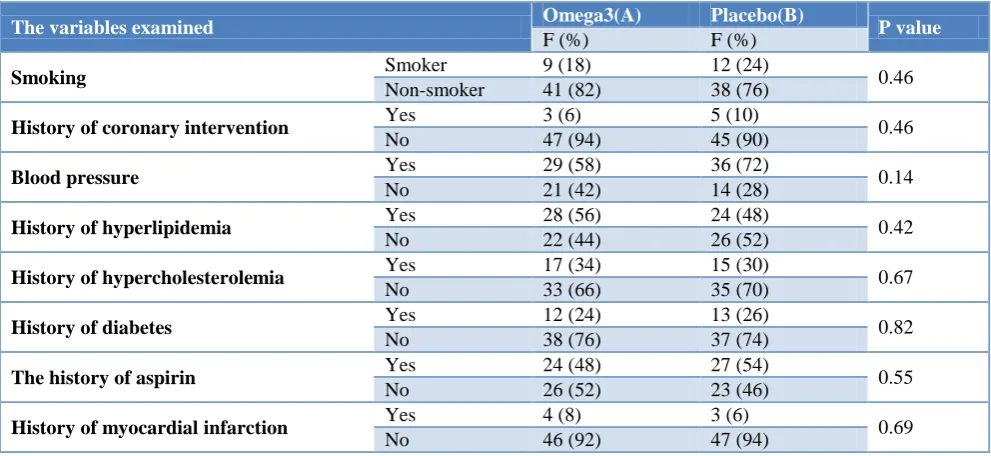
Table 3: Frequency of patients by variables examined.
P value Placebo(B)
Omega3(A) The variables examined
F (%) F (%)
0.46 12 (24)
9 (18) Smoker
Smoking
38 (76) 41 (82)
Non-smoker
0.46 5 (10)
3 (6) Yes
History of coronary intervention
45 (90) 47 (94)
No
0.14 36 (72)
29 (58) Yes
Blood pressure
14 (28) 21 (42)
No
0.42 24 (48)
28 (56) Yes
History of hyperlipidemia
26 (52) 22 (44)
No
0.67 15 (30)
17 (34) Yes
History of hypercholesterolemia
35 (70) 33 (66)
No
0.82 13 (26)
12 (24) Yes
History of diabetes
37 (74) 38 (76)
No
0.55 27 (54)
24 (48) Yes
The history of aspirin
23 (46) 26 (52)
No
0.69 3 (6)
4 (8) Yes
History of myocardial infarction
47 (94) 46 (92)
No
In Table 2 patients’ distribution frequency has been shown according to age in both groups. In general maximum and minimum of ages respectively were 69 years and 30 years old. In group a middle age was 48.28 and in group B was 51.56 which meant age similarity in both groups by study credibility.
In Table 3 patients’ distribution frequency is according to studied variables. Smoking is one of the bold risk factors of cardiovascular disease. In general, 21% of patients were smokers and 79% were nonsmokers. In group a 18% and in group B 24% were smokers which didn’t show any significant difference between both groups.
Almost 8% of studied individuals had a history of previous PCI. This amount in omega 3 group was 6% and in control group was 10%. In general 94% didn’t have PCI history. Most of individuals under PCI treatment had hypertension and they were under treatment with anti-hypertensive drugs. Also in this study, patients with
As it was mentioned before, the most engaged vessel was LAD with 32% and the least engaged vessel was OM with 6%. The number of patients with both vessels engaged was 23%. Engaged vessels with their frequency, respectively are LAD>RCA>VESSEL>LCX>Diagonal> OM. Frequency of engaged vessels in both groups were similar and increases research’s credibility (Table 4).
According to the table above, p value for engaged vessel in general is 0.45 which indicates no significant link between the engaged vessel and the results of the experiment.
Table 4: Frequency of patients by involved vessel.
Pvalue Total
F (%) Placebo(B)
F (%) Omega3(A)
F (%) Involved vessel
0.45 32 (32)
17 (34) 15 (30)
LAD
23 (23) 12 (24)
11 (22)
RCA
9 (9) 5 (10)
4 (8)
LCX
7 (7) 3 (6)
4 (8)
Diagonal
6 (6) 3 (6)
3 (6)
OM
23 (23) 10 (20)
13 (26)
Two vessel
100 (100) 50 (100)
50 (100)
Total
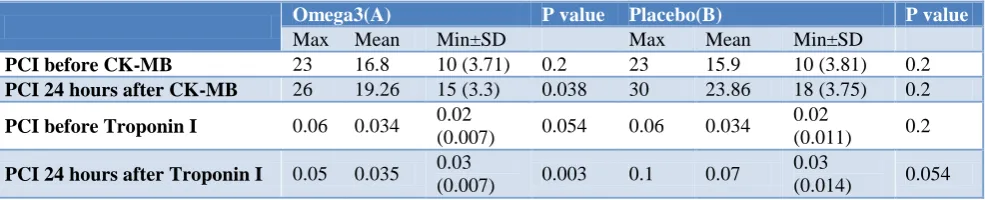
Table 5: Minimum and maximum of CK-MB and troponin I 24 hours before and after PCI in control and omega 3 group with ng/ml.
P value Placebo(B)
P value Omega3(A)
Min±SD Mean
Max Min±SD
Mean Max
0.2 10 (3.81) 15.9
23 0.2
10 (3.71) 16.8
23
PCI before CK-MB
0.2 18 (3.75)
23.86 30
0.038 15 (3.3)
19.26 26
PCI 24 hours after CK-MB
0.2 0.02
(0.011) 0.034
0.06 0.054
0.02 (0.007) 0.034
0.06
PCI before Troponin I
0.054 0.03
(0.014) 0.07
0.1 0.003 0.03
(0.007) 0.035
0.05
PCI 24 hours after Troponin I
Table 5 shows the minimum and maximum of CK-MB and troponin I 24 hours before and after PCI. By considering the table below we find that the measured amounts between both omega 3 and control group before PCI were similar, and CK-MB and troponin I In omega 3 group were increased less in comparison to control group. This means the effect of omega 3 in reducing increased the effect of myocardial enzymes and as a result in reducing cardiovascular side effect.
By considering similar amounts in variables above between both omega 3 and control group and also no significant difference between the amounts of both groups, this point can be made that the credibility of the study was high and results about CK-MB and Troponin I is accurate.
Below 0.05 p values means significant link between omega 3 and results. By considering the table below p-value (CK-MB) before PCI in both control and omega 3 groups was 0.2. 24 hours after PCI, CK-MB p-value is 0.038 in omega 3 group which is below 0.05 and shows the effectiveness of omega 3 on improvement of CK-MB amount after PCI. This topic is true about troponin I too. P-value amounts of troponin in omega 3 and placebo group before PCI respectively was 0.054 and 0.2 which is
higher than 0.05. However, the post- PCI amount in omega 3 group was 0.003 which is below 0.05 and indicates the significant effectiveness of omega 3 on troponin after PCI. P-value (troponin and CK-MB) amounts 24 hours after PCI in control group respectively were 0.2 and 0.054 which is higher than 0.05 and indicate no significant link between placebo and myocardial bio markers after coronary intervention. In conclusion, omega 3 is more effective in reducing troponin I and CK-MB enzymes than placebo and also it is effective in reducing cardiovascular side effects after PCI.
DISCUSSION
Troponin1) to more than 3 times normal is the marker of myocardial infarction and about 1 to 3 times more than normal is myocardial necrosis. Although there are some primary studies done but it was believed that these myocardial biomarkers rise was just a simple leak and it didn’t have long term effects. But recent studies persist on short-term, average and long term effects of myocardial enzymes on the escalation of post PCI mortality. So AHA/ACC guide line suggests routine measurements of CK-MB and troponin during 8-12 hours after PCI in all the patients without considering symptoms for assessment of prognosis. The clinical significance and prognosis of biomarkers escalation has been shown in several studies. However exudation of post PCI myocardial enzymes is debatable. Several studies have shown that slight increase on CK-MB has effect on the rise of patients mortality treated by PCI.
In a study which was done on 2265 patients treated with PCI. It was found that atheromatous plaques can significantly anticipate the post PCI, CK-MB escalation. There was linear link between post PCI CCK-MB escalation and mortality.7 Several studies have been done about prognostic importance of troponin around PCI. However the prognostic value of post PCI troponin escalation without CK-MB escalation is notable. Older studies do not show any link between post PCI troponin escalation and mortality in long term. Recent studies have shown that troponin I escalation without CK-MB in patients treated with PCI elective was very common and it didn’t have any link with hospital mortality escalation. However, the escalation in troponin I levels can be individually related to mortality risk in long term to 5 times more than normal upper limit.8
Generally the escalation of myocardial biomarkers is the indicative of systemic and unstable atherosclerosis which is a predisposing factor of patient to ischemic incidence in future. By considering post PCI myonecrosis risk some studies have been done for reaching useful pharmacological interventions, in order to reduce this side effect. Due to high possibility of post PCI recurrent ischemic incidents by inefficient platelet inhibition, several studies have been done around anti platelet treatment as a therapeutic option. Nowadays anti platelet treatment with using both aspirin and clopidogrel by adding heparin is the most common anti thrombotic strategy in PCI reducing ischemic complications in intervention.
It has been proved that adding high doses of statin (80 mg atherostatin) in patient suffering from non ST elevated ACS before PCI, is accompanied with reduction of heart related complications in long term In comparison with patients who were not receiving statin before PCI. Several studies have proved anti platelet and anti-inflammatory effects omega 3. High daily doses of EPA (more than 3 gr) with DHA can improve cardiovascular risk factors by reducing triacylglycerol, blood pressure, platelet aggregation and inflammation. Some of the
researches have studied omega 3 anti-platelet effects. Previous studies have shown that prescription of higher doses DHA can reduce platelet aggregation by collagen production. A study showed that lower doses of DHA (400-800 mg per day) significantly reduce platelet function. Several studies have shown the benefits of omega 3 in preventing stenosis after angioplasty.
Also studies have done about beneficial effects of omega 3 on CRP in variety of patients like hemodialysis patient which CRP reduction. Our results showed that 3 gr omega 3, single dose, 12 hours before PCI can reduce increased levels of troponin I and CK-MB 24 hours after PCI. This effect can be explained by different anti platelet mechanisms and omega 3 anti-inflammatory effects. Because both antiplatelet and anti-inflammatory effects have an important role in atherosclerosis pathogenesis Therefor by considering direct link increased plasma levels of CK-MB and troponin I with high risk of cardiovascular incident after omega 3 PCI can have protective effect from post PCI cardiovascular incidents.9
In previous studies about omega 3 effects on myocardial biomarkers, even though troponin I reduction was expected, but there were no difference in troponin I levels between control group and the group which received omega 3. But in this study post PCI omega 3 effects on reducing increased biomarkers (CK-MB and Troponin I) in comparison to a group which received placebo. Confirms omega 3 is positive effects on reducing post PCI complications.8 In this study sample size was larger than previous study and there was no diagnostic limit in troponin I measurement kits. Also in previous studies patients with high cardiac enzymes before PCI were out of the study. Also in this study the patients with high cardiac enzymes before PCI were not used in clinical trial, these patients have higher risks for post PCI cardiovascular complications and they are likely to benefit more from clinical trial in comparison to other patients.6 Limited financial resources and having not enough facilities for evaluating other cardiovascular injury enzymes and limited statistical society are limitations of this study.
CONCLUSION
Results confirm the use of omega 3 in preventing myocardial injuries; therefore it seems that cardiovascular complications of PCI can be decreased.
ACKNOWLEDGEMENTS
Thus, the authors are thanked of all staff and patients in Imam Khomeini hospital that cooperated in this study.
Funding: No funding sources Conflict of interest: None declared
REFERENCES
1. Safdari R, Ghazi Saeedi M, Gharooni M, Nasiri M, Arji G. Comparing performance of decision tree and neural network in predicting myocardial infarction. JPSR. 2014;3(2):26-35.
2. Karimy T, Saffari M, Sanaeinasab H, Khalagi K, Hassan-Abadi M. The impact of educational intervention based on the theory of planned behavior on lifestyle change of patients with myocardial infarction. Iran J Health Educ Health Promot. 2016;3(4):370- 80.
3. Loyd-Jones D, Adams RJ, Brown TM, Carnethon M, Dai S, De Simone G. Executive summary: heart disease and stroke statistics-2010 update: a report from the American Heart Association. Circulation. 2010;121(7):948-54.
4. Boden WE, O'Rourke RA, Teo KK, Hartigan PM, Maron DJ, Kostuk WJ, Et al. Optimal medical therapy with or without PCI for stable coronary disease. N Engl J Med. 2007;356(15):1503-16. 5. Teo KK, Sedlis SP, Boden WE, O'Rourke RA,
Maron DJ, Hartigan PM, et al. Optimal medical therapy with or without percutaneous coronary intervention in older patients with stable coronary disease: a pre-specified subset analysis of the COURAGE (Clinical Outcomes Utilizing Revascularization and Aggressive druG Evaluation) trial. J Am Coll Cardiol. 2009;54(14):1303-8.
6. Prasad A, Gersh BJ, Bertrand ME, Lincoff AM, Moses JW, Ohman EM, Et al. Prognostic significance of periprocedural versus spontaneously occurring myocardial infarction after percutaneous coronary intervention in patients with acute coronary syndromes: an analysis from the ACUITY (Acute Catheterization and Urgent Intervention Triage Strategy) trial. J Am Coll Cardiol. 2009;54(5):477-86.
7. Bhatt DL, Topol EJ. Does creatinine kinase-MB elevation after percutaneous coronary intervention predict outcomes in 2005? Periprocedural cardiac enzyme elevation predicts adverse outcomes. Circulation. 2005;112(6):906-15; discussion 923. 8. Smith WS, Johnston SC, Easton JD.
Cerebrovascular diseases. In: Kasper DL, Braunwald E, Fauci AS, Hauser S, Longo D, Jameson JL, editors. Harrison's principles of internal medicine. 16th ed. New York: McGraw-Hill; 2005. 9. Valent F, Wayne A, Robert OR, Hurst S. The
heart.10th ed. NewYork, McGraw– Hill. 2001: 201-230.