International Journal of Pharmaceutical Research & Allied Sciences, 2016, 5(2):86-92
Research Article
ISSN : 2277-3657
CODEN(USA) : IJPRPM
Investigating the Effects of Oral Magnesium Citrate Supplement on Lung
Function, Magnesium Level and Interlukine-17 in Patients with Asthma
Seyed Ahmad Hosseini
1*, Narges Fathi
2, Heshmatollah Tavakkol
3and Ali Yadollahpour
41*Assistant Professor, Nutrition and Metabolic Diseases Research Center, Ahvaz Jundishapur University of Medical
Sciences, Ahvaz, Iran
2
MSc of Nutrition Science, Ahvaz Jundishapur University of Medical Sciences, Arvand International Unit of Abadan, Arvand, Iran
3Assistant Professor, Department of Internal Medicine, Ahvaz Jundishapur University of Medical Sciences, Ahvaz,
Iran
4Assistant Professor, Medical Physics Department, School of Medicine, Ahvaz Jundishapur University of Medical
Sciences, Ahvaz, Iran
*Email: [email protected]
______________________________________________________________________________
ABSTRACT
Asthma is a chronic inflammatory disorder of the airway characterized by airway hyper responsiveness, recurrent episodes of wheezing, breathlessness, chest tightness, and coughing. Low dietary magnesium (Mg) intake influences the occurrence and management of asthma. The conventional medications for the asthma treatment usually decrease the body’s magnesium value and stores. Some studies have indicated the existence of the Mg deficiency in acute asthma. Accordingly, it has been suggested that MgSO4 improves the lung function and causes bronchodilation as
an emergency treatment for asthma attack.
______________________________________________________________________________
INTRODUCTION
Asthma is a chronic inflammatory disorder of the airway in which associated with airway hyper responsiveness that leads to recurrent episodes of wheezing, breathlessness, chest tightness, and coughing (1). Low dietary magnesium (Mg) intake can have an influence on the occurrence and management of asthma (2-6). The medications used in the treatment of asthma decrease the body’s magnesium value and storage (7). Mg is an essential element of human body, but the mechanisms of its beneficial actions for pulmonary function are not completely known.
However, some studies indicated the existence of the Mg deficiency in acute asthma. Accordingly, it has been suggested that MgSO4 improves the lung function and causes bronchodilation as an emergency treatment for asthma
attack (11, 14, 15). While, the influence of oral magnesium supplementation in asthma control, is of no known (16). To the best of our knowledge, only few studies reported a significant improvement in lung function of patients with asthma following the use of Mg (17). Besides, no study exists about the effect of using oral magnesium supplementation on levels of IL-17 in patients with asthma. Hill et al. showed that short-term change in dietary Mg improves the clinical symptoms, but not the pulmonary function test in adult patients with asthma (9). Fogarty et al. showed that Mg had no effect in adults with asthma (2).
This study was designed to determine the effect of two months exposure to oral Mg supplementation on asthma symptoms, lung functions, and quality of life in patients experiencing mild and moderate persistent asthma.
MATERIALS AND METHODS
Study design and population: This randomized, double-blind, placebo controlled, clinical trial was performed on 112 patients with mild and moderate persistent asthma from a hospital affiliated by Ahwaz Jundishapur university of Medical Sciences. The study was approved by Ethics Committee of Ahvaz Jundishapur University of Medical Sciences and all the participants signed the informed consent before enrolling in the study.
Inclusion criteria: Patients at 19 to 55 years of age who met the diagnostic criteria for mild to moderate asthma according to the current Global Initiative for Asthma (GINA) guidelines, with mild or moderate asthma, and nonsmoker, used only beta-agonists or inhaled corticosteroids (ICS) as asthma medications, were included. The diagnosis was based on clinical history and spirometric pulmonary testing. Mild asthma was defined as: forced expiratory volume in 1 second (FEV1) >80 %, variability FEV1<20-30% and for moderate asthmatic FEV1=60-80%, variability FEV1>30% (14). None of the subjects showed any evidence of hospitalization for asthma in the last 6 months.
Exclusion criteria: Patients with an evidence of abnormal kidney function, other lung disease, uncontrolled hypertension, cardiovascular disease, immunodeficiency or infection with human immunodeficiency virus (HIV), taking any treatment likely to affect magnesium absorption or excretion, including diuretics or calcium containing medications or have any change in own diet, with current use of theophylline or leukotriene antagonists, smoking, psychiatric disorders, and pregnancy or breastfeeding, were excluded.
Intervention: Venous blood samples were collected for serum magnesium and IL-17 estimation at the beginning and end of study. Participants were randomly assigned to consume 340 mg (14.0 mmol) of Mg as Mg citrate per day or placebo for two months. The amount of Mg used in this study was the standard RDA of 340 mg. Outcomes were changes in subjective measures of asthma control, pulmonary function tests, bronchial inflammation, and Mg status. At baseline visit 1and again (within two months after visit 1) at month 2, all subjects were given pulmonary function tests (PFT) and IV Mg load test (0.1 mmol Mg/kg) and IL-17 in serum. On enrollment into the study at month 0, subjects were randomly divided to consume 340 mg of Mg citrate (each capsule with 170 mg Mg to be taken twice daily with food), or a placebo (appearing capsules containing cellulose mixture) for two months. The randomization was performed using the random digit methods. A pharmacist prepared capsules containing placebo (glycine). The magnesium or glycine capsule presented a similar appearance. The difference between the two groups was only the presence or absence of Mg. Subjects were also asked to complete the Asthma Control Questionnaire (ACQ) (18) and Asthma Quality of Life Questionnaires (AQLQ) (19). Patients were asked to hold their breath for three seconds after each inhalation, and then to exhale slowly for three seconds. FEV1 was measured one min after each inhalation. Serum dosage of Mg was collected in all subjects, in the baseline and end of study period. Normal magnesium values in our laboratory were 1.8-2.6 mg/dl in males and 1.9-2.5 mg/dl in females. Heparinized blood samples were used for analysis of serum Mg. After overnight fasting, venous blood sample was obtained from subjects. After transferring the aspirated blood to a metal–free test tube containing sodium heparin, plasma was separated within 30 minutes (20). Because asthma is a chronic inflammatory disease and Mg deficiency is associated with impaired lung function and increased systemic inflammation (13, 21). We tested any changes in the levels of serum IL-17 in all the participants.
at first second (FEV1) and FEV1/FVC ratio. The parameters were recorded as the best of the three blows. Patients did not have any respiratory infections during the previous 15 days. The pulmonary function values of FVC, FEV1 were described and analyzed as percent predicted values for the study subjects. The predicted values were based on the GINA. Subjective measurements of asthma control were assessed with the validated Quality of Life Questionnaire (AQLQ) and Asthma Control Questionnaire (ACQ) of Juniper et al. (18, 19) The AQLQ is consist of four subjective domains related to functional outcomes (symptoms, emotions, exposure to environmental stimuli, and activity limitation) associated with asthma control. The ACQ score is included of six subjective domains (morning symptoms, nocturnal waking, activity limitations, and shortness of breath, wheezing, and beta-agonist use) and FEV1% predicted. Information was collected by a questionnaire including the age, sex, family history of asthma, weight, height and history of hospitalization because of attack asthma in recent one year.
Statistical analysis: Main outcomes were changes in measures of pulmonary function, ACQ and AQLQ scores, measures of inflammation, and Mg status. Statistical analysis was concluded by using SPSS software on data. Each outcome was compared within treatment groups by paired t test for parametric data and the Wilcoxon signed rank test for non-parametric data. Between groups comparisons were done using analysis of variance (ANOVA) or the Mann-Whitney’s test. All analyses were two-tailed, and p values ≤ 0.05 were considered as significant.
RESULTS
Of the 112 subjects recruited to take part in the study, six withdrew after one week in the treatment period (placebo arm) because of concerns that study tablets were affecting their fitness, and five subjects did not participate in serum Mg test (supplement arm), and one subject in our protocol traveled to another city, therefore our complete data available on 100 subjects (53 males and 47 females). The intervention and placebo groups were matched considering demographic characteristic (Table 1).
Table 1. Demographic characteristics of the asthmatic patients participated in this study
Characteristics Mg (Magnesium) placebo P
Sex (Number (%))
Male 25(50%) 28(56%) 0.548
Female 25(50%) 22(44%)
Age (year, Mean ± SD) 36.38 ± 9.72 34.56 ± 8.28 0.316
Weight (kg) 71.10 ± 12.41 73.34 ± 11.76 0.445
Height (cm) 166.6 ± 8.95 167.3 ± 9.03 0.737
BMI (kg/m2) 25.6 ± 3.82 26.19 ± 3.69 0.430
Table 2. Pulmonary function tests data of the Mg and placebo groups during the study period
Variable (%) Mg (n = 50) Placebo (n = 50)
Mean ± SD Mean ± SD
pre post P pre post P
FVC 72.28 ± 15.15 79.50 ± 17.75 0<0.001 73.76 ± 14.01 75.08 ± 14.31 0.055 FEV1 67.35 ± 18.16 77.77 ± 13.99 0<0.001 69.24 ± 16.37 71.36 ± 16.60 0.009 FEV1/FVC 75.29 ± 10.10 83.71 ± 8.67 0<0.001 75.88± 9.73 75.91 ± 14.33 0.984
Table 3. Magnesium contents at the baseline and two months in the study groups
Mg Status Baseline Two months P
Mg 2.30 ± 0.41 2.47 ± 0.61 0.039
S-Mg (mmol/l)
Placebo 24.7 ± 0.56 2.61 ± 0.69 0.041
P 0.114 0.273
Difference between the groups 0.785
After two months of oral Mg supplementation, significant changes in FVC (P=0.002), FEV1 (P=0.000), FEV1/FVC ratio (P=0.000) were observed (Table 2). So after two months of oral Mg supplementation, the FVC, FEV1 have increased and the FEV1/FVC ratio value has decreased significantly.
males and 1.9-2.5 mg/dl in females.) after two months intervention, the mean serum Mg concentration was 2.47 ± 0.56 mg/dl and 2.61 ± 0.69 mg/dl in the Mg and placebo groups, respectively (P= 0.785).
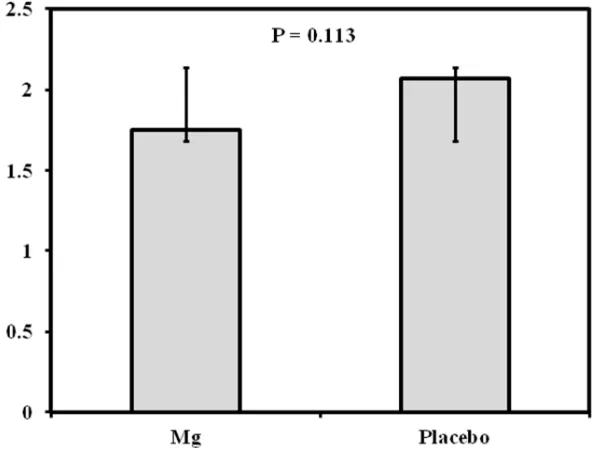
Figure 1. Comparison of IL-17 levels between the Mg receiving and placebo groups
Among all the subjects, the baseline overall score for AQLQ ranged from 2.5 to 5.6 on a one to seven points scale. The mean was 3.49 indicating that asthma caused some limitation of quality of life “only a little of the time,” which is consistent with a diagnosis of mild to moderate asthma. After two months of Mg supplementation, there were no significant different change in mean score of AQLQ (p=0.81).
No significant between-group differences were noted. Between all the participants, at the baseline score for asthma control ranged from 0.6 to 3.8 on a 0 to six-point scale. The mean score of 3.8 suggested that asthma was not well controlled in our study subjects. After Two months of Mg supplementation, there was significant improvement (measured as a decrease) in the overall ACQ mean score by 1.4042 ± 0.7027 in the Mg group (P = 0.00). In the placebo group, the change in ACQ mean score of 0.2194 ± 0.4256 was not significant (P = 0.00). Significant improvements were seen only in the Mg group after two months.
At month 2, there were no significant differences between placebo (mean; 95% CI) (2.07 ± 1.03) and Mg groups (1.75± 0.98) in term of the IL-17 Concentrations (Figure 1).
DISCUSSION
The purpose of the present study was to evaluate that daily oral Mg supplementation (340 mg) for two months would improve pulmonary function tests, subjective measures of asthma control and quality of life, bronchial inflammation, and measures of Mg status in adults with mild to moderate asthma. Our findings show that subjects in the Mg treatment group presented a significant improvement in subjective measures of asthma control and involved in significant changes in FEV1, FVC and FEV1/FVC. There were no significant changes in measures of inflammation and Mg status in either group.
A high Mg intake was associated with improvement in symptom scores, although not in objective measures of airway reactivity. The authors suggested that a longer period was necessary to evaluate the beneficial role of oral Mg in patients with asthma (9). Fogarty et al. performed a study on 100 patients with asthma who received oral Mg supplementation (450 mg/d) during 16 weeks. Finally they get no evidence of any beneficial effect of Mg supplementation, and suggested that likely their finding was due to their patients that were well controlled on conventional asthma medications (2). Kazak (2010) et al. conducted a study on 55 patients who used only beta-agonists or inhaled corticosteroids (ICS) as asthma medications.
Subjects consume 340 mg of Mg or a placebo for 6.5 months. Peak expiratory flow rate (PEFR) showed a 5.8% predicted improvement over time in those consuming the Mg. There was significant improvement in AQLQ mean score units and ACQ score only in the Mg group after 6.5 months of Mg supplementation. They claimed that the 300 mg dose range of Mg supplementation is insufficient for the treatment of patient with asthma(17). Since we have an inaccurate indication of the amount of Mg we need based on the RDA, we do not know how much magnesium is needed and how long of time is required to replenish magnesium stores.
Our study showed that two months Mg supplementation increased FVC, FEV1, whereas decreased FEV1/FVC ratio values significantly in intervention group compared to the placebo. In contrast to our result Hill et al. and Amaral and colleagues didn’t report any significant improvement in FEV1, FVC and FEV1/FVC ratio (9, 22).
The mean AQLQ score of 3.26 for all participants at enrollment declared that asthma caused some basic limitation of their quality of life. Both groups were exposed to asthma exacerbation triggers (such as dust, smoke, weather, and air pollution) during the study. After intervention, we could not find any significant improvement in quality of life scores. The mean ACQ overall score of 3.59 in participants at month 0 indicated a weak asthma control. But After two months of Mg supplementation, we observed a significant difference between Mg and placebo subjects in asthma control. The improvement in symptoms was consistent with a study by Hill et al. (9).
To evaluate the effect of Mg supplementation on airway inflammation, we used IL-17, a noninvasive marker of airway inflammations. Our study was the first performed in asthmatic patients, aiming to investigate the effect of oral magnesium on IL-17 as inflammation marker.
There were no significant differences between the placebo and the Mg groups in IL-17 concentrations. Thus oral Mg supplementation may not affect the IL-17 concentrations.
Mild Mg deficiency is difficult to detect since serum Mg concentration is maintained within a narrow range by the small intestine and kidney and may be replenished by Mg stores in bone and muscle. In our study mean S-Mg values were within normal limits for both groups, this results are like as other articles (8, 23) Just seven of 100 participants (3 in the Mg-supplemented group, 4 in the placebo group) had serum Mg below <1.6 mmol/L at months 0. Hypomagnesemia has been associated with severe asthma, while individuals with mild or moderate asthma have normal Mg concentrations (13). A study of Mg supplementation in children with asthma showed no significant change in S-Mg after they consumed 300 mg Mg/d for two months (22).
Another randomized, placebo-controlled, double-blind parallel group study of 300 men and women who received 450 mg/day Mg chelate for four months showed no significant change in S-Mg, although 24-hour urinary Mg excretion increased (2). In contrast to our results, a randomized placebo-controlled cross-over of 17 people with asthma who were asked to consume a low Mg diet (100–200 mg/day) found that S-Mg and 24- hour urinary Mg excretion were higher at the end of the 400 mg/day Mg treatment than placebo (9).
This study has important implications for the prevention and treatment of asthma. It presents improvement in both objective and subjective measures of lung function.
CONCLUSION
asthma. Limitations are that, we did not evaluate urinary Mg in 24 hours and just emphasize on serum Mg and the trial was two months duration. The advantage of Mg supplementation may also have been limited by this fact that duration of study could be important for our results. Furthermore other factors that may affect pulmonary function test or proper use of inhaler were not assessed in our study.
REFERENCES
[1]Bateman E, Hurd S, Barnes P, Bousquet J, Drazen J, FitzGerald M, et al. Global strategy for asthma management and prevention: GINA executive summary. European Respiratory Journal. 2008;31(1):143-78.
[2]Fogarty A, Lewis S, Scrivener S, Antoniak M, Pacey S, Pringle M, et al. Oral magnesium and vitamin C supplements in asthma: a parallel group randomized placebo‐controlled trial. Clinical & Experimental Allergy. 2003;33(10):1355-9.
[3]Soutar A, Seaton A, Brown K. Bronchial reactivity and dietary antioxidants. Thorax. 1997;52(2):166-70. [4]Fawcett W, Haxby E, Male D. Magnesium: physiology and pharmacology. British journal of anaesthesia. 1999;83(2):302-20.
[5]Fogarty A, Britton J. The role of diet in the aetiology of asthma. Clinical and Experimental Allergy. 2000;30(5):615-27.
[6]Ziment I, Tashkin DP. Alternative medicine for allergy and asthma. Journal of allergy and clinical immunology. 2000;106(4):603-14.
[7]Alamoudi OS. Electrolyte disturbances in patients with chronic, stable asthma: effect of therapy. CHEST
Journal. 2001;120(2):431-6.
[8]Zervas E, Papatheodorou G, Psathakis K, Panagou P, Georgatou N, Loukides S. Reduced intracellular Mg concentrations in patients with acute asthma. CHEST Journal. 2003;123(1):113-8.
[9]Hill J, Micklewright A, Lewis S, Britton J. Investigation of the effect of short-term change in dietary magnesium intake in asthma. European Respiratory Journal. 1997;10(10):2225-9.
[10]Saris N-EL, Mervaala E, Karppanen H, Khawaja JA, Lewenstam A. Magnesium: an update on physiological,
clinical and analytical aspects. Clinica chimica acta. 2000;294(1):1-26.
[11]Gourgoulianis K, Chatziparasidis G, Chatziefthimiou A, Molyvdas P-A. Magnesium as a relaxing factor of airway smooth muscles. Journal of aerosol medicine. 2001;14(3):301-7.
[12]Schenk P, Vonbank K, Schnack B, Haber P, Lehr S, Smetana R. Intravenous magnesium sulfate for bronchial
hyperreactivity: a randomized, controlled, double-blind study. Clinical pharmacology and therapeutics. 2001;69(5):365-71.
[13]Alamoudi O. Hypomagnesaemia in chronic, stable asthmatics: prevalence, correlation with severity and hospitalization. European Respiratory Journal. 2000;16(3):427-31.
[14]Noppen M, Vanmaele L, Impens N, Schandevyl W. Bronchodilating effect of intravenous magnesium sulfate in
acute severe bronchial asthma. CHEST Journal. 1990;97(2):373-6.
[15]Kokturk N, Turktas H, Kara P, Mullaoglu S, Yilmaz F, Karamercan A. A randomized clinical trial of magnesium sulphate as a vehicle for nebulized salbutamol in the treatment of moderate to severe asthma attacks.
Pulmonary pharmacology & therapeutics. 2005;18(6):416-21.
[16]Tam M, Gomez S, Gonzalez-Gross M, Marcos A. Possible roles of magnesium on the immune system.
European journal of clinical nutrition. 2003;57(10):1193-7.
[17]Kazaks AG, Uriu-Adams JY, Albertson TE, Shenoy SF, Stern JS. Effect of oral magnesium supplementation on
measures of airway resistance and subjective assessment of asthma control and quality of life in men and women with mild to moderate asthma: a randomized placebo controlled trial. Journal of Asthma. 2010;47(1):83-92.
[18]Juniper EF, O'BYRNE PM, Ferrie PJ, King DR, Roberts JN. Measuring asthma control: clinic questionnaire or
daily diary? American journal of respiratory and critical care medicine. 2000;162(4):1330-4.
[19]Juniper E, Guyatt G, Cox F, Ferrie P, King D. Development and validation of the mini asthma quality of life questionnaire. European Respiratory Journal. 1999;14(1):32-8.
[20]Agin K, Darjani HRJ. Blood serum magnesium values in chronic stable asthmatic patients: a case-control study.
Tanaffos. 2005;4(13):27-32.
[21]King DE, Mainous III AG, Geesey ME, Woolson RF. Dietary magnesium and C-reactive protein levels.
Journal of the American College of Nutrition. 2005;24(3):166-71.