Open Access
Study protocol
Protocol for
Fit Bodies, Fine Minds
: a randomized controlled trial on
the affect of exercise and cognitive training on cognitive functioning
in older adults
Siobhan T O'Dwyer*
1, Nicola W Burton
1, Nancy A Pachana
2and
Wendy J Brown
1Address: 1School of Human Movement Studies, University of Queensland, Australia and 2School of Psychology, University of Queensland,
Australia
Email: Siobhan T O'Dwyer* - [email protected]; Nicola W Burton - [email protected]; Nancy A Pachana - [email protected]; Wendy J Brown - [email protected]
* Corresponding author
Abstract
Background: Declines in cognitive functioning are a normal part of aging that can affect daily functioning and quality of life. This study will examine the impact of an exercise training program, and a combined exercise and cognitive training program, on the cognitive and physical functioning of older adults.
Methods/Design: Fit Bodies, Fine Minds is a randomized, controlled trial. Community-dwelling adults, aged between 65 and 75 years, are randomly allocated to one of three groups for 16 weeks. The exercise-only group do three 60-minute exercise sessions per week. The exercise and cognitive training group do two 60-minute exercise sessions and one 60-minute cognitive training session per week. A no-training control group is contacted every 4 weeks. Measures of cognitive functioning, physical fitness and psychological well-being are taken at baseline (0 weeks), post-test (16 weeks) and 6-month follop (40 weeks). Qualitative responses to the program are taken at post-test.
Discussion: With an increasingly aged population, interventions to improve the functioning and quality of life of older adults are particularly important. Exercise training, either alone or in combination with cognitive training, may be an effective means of optimizing cognitive functioning in older adults. This study will add to the growing evidence base on the effectiveness of these interventions.
Trial Registration: Australian Clinical Trials Register: ACTRN012607000151437
Background
Cognitive decline is a normal feature of aging. Memory difficulties, slowing mental speed, and decreased mental flexibility become evident in old age, even in older adults
without dementia [1-5]. Normal, age-associated cognitive decline is related to declines in everyday functional abili-ties, and to increases in both formal and informal service use among older adults [6-8]. Interventions which Published: 4 October 2007
BMC Geriatrics 2007, 7:23 doi:10.1186/1471-2318-7-23
Received: 8 May 2007 Accepted: 4 October 2007
This article is available from: http://www.biomedcentral.com/1471-2318/7/23
© 2007 O'Dwyer et al; licensee BioMed Central Ltd.
improve cognitive functioning are therefore important for the well-being and quality of life of older adults.
Exercise
Exercise has been suggested as an innovative approach to improving cognitive functioning in older adults. The ben-efits of exercise for general health and well-being in older adults are already well known [9].
Cross-sectional evidence suggests that older adults who are physically active display better cognitive functioning than their sedentary peers, in areas such as memory, reac-tion time, and visuospatial skills [10-13]. Prospective and longitudinal findings suggest that physical inactivity is predictive of subsequent cognitive decline and that changes in physical activity patterns over time are associ-ated with changes in cognitive functioning [14-18].
Experimental studies of exercise training programs for older adults have generally shown improvements in cog-nitive functioning, particularly on measures of informa-tion processing speed and executive funcinforma-tioning (e.g. [19-21]). While some experimental studies have been less conclusive (e.g. [22-24]), this discrepancy is most likely attributable to methodological differences. These include differences in duration, intensity, and frequency of exer-cise training, along with differences in control groups, exclusion criteria, and cognitive outcome measures. A meta-analysis by Colcombe and Kramer [25] found that, overall, exercise interventions do have the potential to improve cognitive functioning in older adults, particularly mental speed and executive functioning. The meta-analy-sis also highlighted that the most beneficial programs are those which have exercise sessions of greater than 30 min-utes duration, include aerobic and strength training com-ponents, and target adults aged between 65 and 70 years [25]. As this is a relatively new area of research, additional evidence is required to further support the claim that exer-cise training can improve cognition.
Linking exercise and cognitive functioning
Several mechanisms have been suggested to explain the relationship between exercise and cognitive functioning. The main hypothesis is that exercise directly affects the structure and function of the brain. Increases in aerobic capacity (as a result of increases in exercise) are thought to increase cerebral blood flow, improve the transport and utilization of oxygen and glucose in the brain, promote neurogenesis (the creation of new nerve cells), and regu-late neurotransmitter synthesis [14,15,17,18,26-28]. Some studies have found an association between improvements in aerobic capacity and improvements in cognitive function [19,21]. Other studies, however, have found no relationship [22-24,29]. More evidence is
required to validate the idea of increased aerobic capacity as a prerequisite for improved cognitive functioning.
Psychological factors may play a role in mediating the relationship between exercise and cognition [30]. Exercise is known to improve psychological well-being [31], and psychological well-being has been associated with cogni-tive functioning [32,33]. A few studies of exercise training and cognitive training have included psychological meas-ures (e.g. [22,34-38]), but results have been mixed. More research is required to elucidate the mediating role of psy-chological factors in the exercise-cognition relationship [30].
Combination training
Some researchers have suggested that the benefits of exer-cise may be further enhanced by combining exerexer-cise train-ing with cognitive traintrain-ing [36].
Cognitive training has been the traditional approach to improving cognitive functioning in older adults. It con-sists of learning and practicing skills and techniques to manage cognitively demanding situations (e.g. using mnemonics to aid recall). While these programs have been successful in improving the specific cognitive func-tion targeted by the training (i.e. memory programs improve memory performance) [39-41], they do not have the potential to provide the physical and cognitive bene-fits offered by exercise training. A combination of exercise training and cognitive training, however, may provide the best of both worlds.
Fabre and colleagues [36] conducted an experimental study of combination training with four groups: aerobic training, cognitive training, aerobic and cognitive training, and control. They found that all three training groups improved significantly, with the combination training group (aerobic and cognitive training) improving signifi-cantly more than the other groups. These findings are lim-ited, however, by the fact that the combination training group appear to have received a greater total number of training sessions per week than the other groups. Given that engaged lifestyles have been linked to cognitive per-formance in older adults [42-45], it is possible that the results of the combination training group could be a con-sequence of increased social interaction, rather than an added benefit of cognitive training. The potential of com-bined exercise and cognitive training could be better investigated by matching the overall training exposure of participants in a dual group to that of participants in an exercise training group.
Feasibility
training programs. While adherence and compliance data can provide some insight into the feasibility of a training program, qualitative feedback from participants provides information about satisfaction and acceptability. Collec-tion of this type of informaCollec-tion also provides an opportu-nity to identify specific strengths and weaknesses of a program, and to assess the real-life benefits of the training which cannot be measured with clinical tests or surveys [46,47].
Aim
The aims of the present study are to:
(1) examine the impact of an exercise training program for older adults on cognitive and physical functioning,
(2) compare the impact of exercise training and a com-bined program of cognitive and exercise training for older adults (which has an equal number of total training ses-sions per week) on cognitive and physical functioning,
(3) examine associations between changes in aerobic capacity (as a result of exercise) and changes in cognitive functioning;
(4) examine associations between changes in psychologi-cal wellbeing (as a result of exercise) and changes in cog-nitive functioning; and
(5) identify older adults' perceptions of exercise training and combined exercise and cognitive training.
An exercise training program and a cognitive training pro-gram have been developed by the first author (SO), and will be evaluated in a randomized controlled trial. The content of these programs is based on previously success-ful training programs, and current theories regarding the relationships between exercise training, cognitive train-ing, and cognitive functioning.
Methods/Design
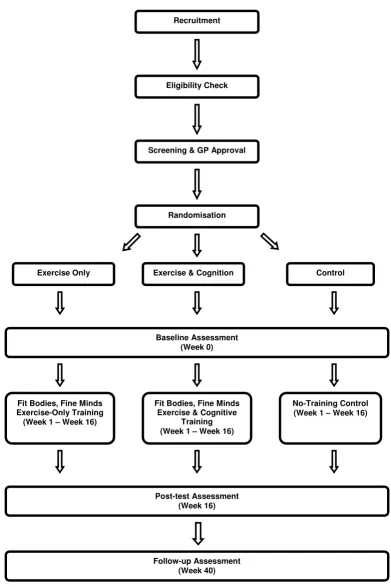
Study designFit Bodies, Fine Minds is a 16-week, randomized controlled trial of exercise training and combined exercise and cogni-tive training for older adults. Participants are allocated to one of three groups: exercise-only training; exercise and cognitive training; no-training control. Assessments are conducted at baseline, post-test (16-weeks) and 6-month follow-up (40 weeks). The design is presented in Figure 1. The protocol was approved by the University of Queens-land Medical Research Ethics Committee (Approval Number: HMS06/2303)
Setting
The program is conducted at Riverside Fitness, a privately-owned gym in Brisbane, Australia.
Study population
The program is designed for community-dwelling older adults without cognitive impairment. Participants are recruited through healthy aging seminars at local churches, public radio broadcasts, and the 50+ Registry (a registry of research volunteers aged over 50 years, coordi-nated by the Australasian Centre on Ageing at the Univer-sity of Queensland). All interested people are provided with a Participant Information Sheet detailing the nature of the program.
Individuals are initially considered eligible if they are
(1) aged between 65 and 75 years,
(2) doing less than 60 minutes of moderate-intensity exer-cise per week,
(3) living within 10 km of Riverside Fitness and the Univer-sity of Queensland; and
(4) available to participate in the program during business hours.
Screening
Individuals who meet the initial eligibility criteria take part in a telephone interview to screen for cognitive and health problems. People who score below 21 on the Tele-phone Interview of Cognitive Status (TICS) [48] are excluded from participating in the program. Individuals who report more than one serious health complaint (e.g. recent heart attack, uncontrolled diabetes, or uncon-trolled hypertension) are required to obtain written per-mission from their general practitioner (GP) to take part in the program. Those unable to obtain GP permission are excluded from participating in the program. Individuals who report diagnoses of Alzheimer's Disease, dementia, or recent head injuries are also excluded from the pro-gram.
Informed consent
Participants provide signed informed consent prior to baseline testing.
Sample size
The design of the Fit Bodies, Fine Minds study
Figure 1
The design of the Fit Bodies, Fine Minds study.
Recruitment
Eligibility Check
Screening & GP Approval
Randomisation
Control Exercise & Cognition
Exercise Only
Baseline Assessment (Week 0)
Fit Bodies, Fine Minds Exercise-Only Training (Week 1 – Week 16)
Fit Bodies, Fine Minds Exercise & Cognitive
Training (Week 1 – Week 16)
No-Training Control (Week 1 – Week 16)
Post-test Assessment (Week 16)
detection of a between-group difference, at post-test, of 2 items (SD = 2.2) on Digit Span. Twenty-nine participants in each group would enable detection of a between-group difference, at post-test, of 118.8 milliseconds (SD = 160) on Choice Reaction Time. These sample size calculations assume a two-tailed alpha level of 0.05 and a power of 80%. The effect sizes and standard deviations are based on results from previous studies of physical activity for cogni-tive functioning in older adults (e.g. [11,49]). To account for attrition over time, the required sample size (29) is increased by 10% to 33 participants per group.
Randomization
Participants are randomly allocated using block randomi-zation [50]. Each block contains one exercise-only group allocation, one combined exercise and cognitive training group allocation, and one control group allocation. The order of the groups within each block is randomly gener-ated by selecting papers from a box. The box contains three papers marked Exercise Only, Exercise & Cognition, and Control, respectively. This process is repeated to gener-ate a list of 25 blocks. Each time a participant meets the eligibility criteria and screening requirements, they are allocated to the next available place on the list.
Blinding
For logistical reasons, participants, researchers, and instructors are not blind to the allocation of participants.
Intervention
Exercise-only training
Participants in this group receive three gym-based sessions per week for 16 weeks. Each session lasts for 60 minutes and includes progressive aerobic and strength training. Each session includes a maximum of 10 participants and is supervised by at least one qualified fitness instructor.
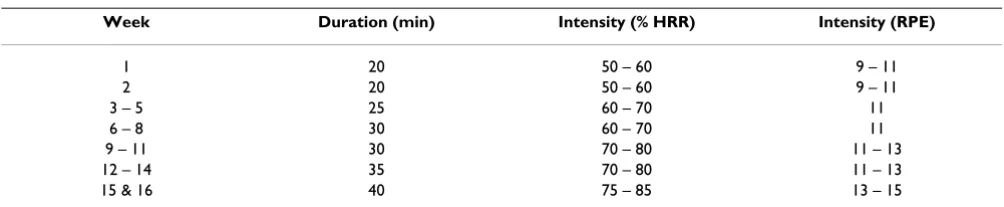
The progression of the aerobic training is adapted from the ACSM Guidelines for Exercise Testing and Prescription [51]. Intensity is prescribed using percentage of Heart Rate Reserve (HRR). Participants on medications which atten-uate heart rate (e.g. beta-blockers) are prescribed exercise intensity using Rate of Perceived Exertion (RPE; [52]). The relative progressions of intensity and duration can be seen
in Table 1. Intensity is monitored with Polar A3 heat rate monitors. Participants complete the aerobic training on treadmills, stationary bicycles, cross-trainers, and station-ary rowing machines.
Strength is assessed, and intensity prescribed, for each par-ticipant in the first gym session. Progress is monitored and prescribed by the fitness instructor. The strength training includes exercises to target major muscle groups in the upper body, lower body, and core. The upper and lower body exercises use free weights and machines. The core exercises use a swiss-ball.
Participants stretch major muscle groups at the end of each session.
Exercise and cognitive training
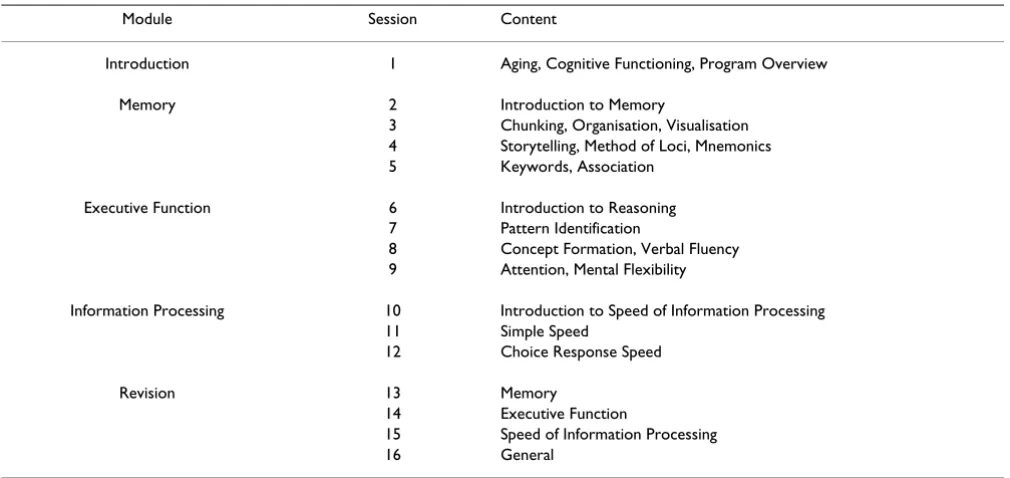
Participants in this group receive two gym-based exercise sessions and one cognitive training session per week for 16 weeks. Each session lasts for 60 minutes. The exercise training (including the progression of duration and inten-sity) is identical to that received in the Exercise-Only Group. The cognitive training program includes three modules, covering memory, executive functioning, and mental speed. Each session follows the same format:
(1) theoretical overview
(2) outline of 'everyday' applications
(3) practice activities
Introductory and revision sessions are conducted at the beginning and end of the program. Table 2 outlines the content of each session. A graduate psychology student leads these sessions in a quiet room away from the main gym area.
Control group
Participants in this group receive no formal intervention. They are contacted by telephone at Week 4 and 12 to check continued completion of the weekly diary. At Week 8 each participant is posted a cinema voucher and a letter to thank them for their ongoing involvement.
Table 1: Duration and intensity progression of aerobic training
Week Duration (min) Intensity (% HRR) Intensity (RPE)
1 20 50 – 60 9 – 11
2 20 50 – 60 9 – 11
3 – 5 25 60 – 70 11
6 – 8 30 60 – 70 11
9 – 11 30 70 – 80 11 – 13
12 – 14 35 70 – 80 11 – 13
Adherence and compliance
Attendance at each cognitive training session is recorded by the instructor. At each exercise training session, partic-ipants are provided with individual diaries in which to record the date and the intensity and duration of each activity undertaken in that session. All participants (including control participants) are provided with a weekly diary in which to record physical, social and cog-nitive activities undertaken outside the program.
Assessment protocol
Assessment stages
In addition to screening, assessments are conducted at baseline (0 weeks), 16-weeks (post-test), and 40 weeks (6-month follow-up).
Modes of assessment
Screening is conducted by telephone. Cognitive and phys-ical assessments are conducted face-to-face at the Univer-sity of Queensland. Cognitive assessments are conducted by SO. Each cognitive assessment session lasts for 90 min-utes. Physical assessments are conducted by an exercise physiologist and last for 30 minutes. Physical assessments are conducted immediately after the cognitive assess-ments. Self-administered questionnaires are used to assess psychological wellbeing. These are provided after the cog-nitive assessment, with participants instructed to com-plete them at home and mail them back within seven days using a provided reply-paid envelope. Participant percep-tions of the two training programs are collected using a feedback form included with the other self-report
instru-ments. Only training participants complete this feedback form.
Measurements
The primary outcome measures are indicators of cognitive functioning, aerobic capacity and strength. Secondary outcome measures are anthropometric measurements, resting heart-rate, blood pressure, indicators of psycholog-ical well-being and participant perceptions. All measures are assessed at baseline, post-test, and 6-month follow-up, except for the qualitative feedback which is assessed only at post-test.
Screening Demographics
Includes gender, age, education, occupation, nationality, marital status, and language.
Health information
Includes height, weight, current level of physical activity, hearing, vision, chronic diseases, illnesses, and injuries.
Telephone Interview of Cognitive Status (TICS-m)
This is a brief telephone-administered dementia screening measure, modified slightly from the original to be more suitable for telephone use [48,53]. Participants complete a series of short cognitive tasks, such as counting back-wards, remembering a list of 10 words, and answering general knowledge questions. Performance on the origi-nal TICS has been shown to be highly correlated with per-formance on the Mini-Mental State Examination [48,54].
Table 2: Cognitive training program outline
Module Session Content
Introduction 1 Aging, Cognitive Functioning, Program Overview
Memory 2 Introduction to Memory
3 Chunking, Organisation, Visualisation 4 Storytelling, Method of Loci, Mnemonics 5 Keywords, Association
Executive Function 6 Introduction to Reasoning 7 Pattern Identification
8 Concept Formation, Verbal Fluency 9 Attention, Mental Flexibility
Information Processing 10 Introduction to Speed of Information Processing 11 Simple Speed
12 Choice Response Speed
Revision 13 Memory
14 Executive Function
The TICS-m is sensitive and specific [53]. A score of less than 30 (out of a possible 50) on the TICS-m is the cut-off for cognitive impairment [53].
Primary outcome measures: Cognitive functioning
Three domains of cognitive functioning are assessed: memory, executive functioning, and speed.
California Verbal Learning Test (CVLT-II)
This assesses the ability to use semantic categories to aid recall (memory) [56]. Participants are presented with words from four semantic categories (e.g. fruit, tools, clothing, herbs), listed in random order. Participants must then recall these words in a number of conditions, includ-ing immediate free recall (in which participants are asked to recall as many words as they can, in any order), delayed free recall (approximately 20 minutes after the original presentation), and cued recall (in which participants are asked to recall as many words as they can which fit in each of the categories) [57]. CLVT has satisfactory test-retest reliability [57]. Norms are also available for the CVLT, which has been shown to be somewhat sensitive to the effects of aging and neuropsychological impairment [57]. Scores include the number of words correctly recalled, the number of intrusions, and the number of repetitions. To limit test-retest effects, the original form is used at base-line and 6-month follow-up, with the alternate form used at the post-test assessment (16 weeks).
Logical Memory
This task is from the Wechsler Memory Scale (WMS-III) [58]. It is a measure of semantic memory. Participants are presented with two brief stories and must recall informa-tion from these stories immediately and after a delay of between 10 and 20 minutes. Logical Memory has good test-retest reliability, is not susceptible to practice effects, and norms are available [57]. Logical Memory has been shown to be sensitive to the effects of aging and neuropsy-chological impairment [57]. Scores include the number of themes recalled and the amount of specific content infor-mation recalled [57].
Digit Span
This is a task from the Wechsler Memory Scale (WMS-III) [58]. It is a measure of working memory. Participants are presented with a number sequence and must immediately recall the numbers. The task progresses in difficulty as number sequences increase in length (minimum = 2 dig-its, maximum = 9 digits). Digit Span has two components. In the first part participants must recall the number sequences in the order presented (Digits Forward). In the second part participants must recall the number sequences in the reverse order to which they were pre-sented (Digits Backward). Digit Span has good test-retest reliability, is not susceptible to practice effects and norms
are available. Scores include the number of correctly recalled digits forward, the number of correctly recalled digits backward, and the total number of correctly recalled digits.
California Older Adult Stroop Test (COAST)
Stroop Tests are a common measure of executive function-ing. COAST has been specially developed for use with ger-iatric populations [59]. It has three components. For the first task participants must identify the names of colours. For the second task participants must read colour name words. In the final task participants must identify the col-our in which each colcol-our name word is printed (e.g. the word RED is printed in green ink, so the correct partici-pant response is "Green"). Stroop Tests generally have shown good test-retest reliability and only modest prac-tice effects [57]. Stroop Tests have also been shown to be sensitive to the effects of aging and neuropsychological impairment, and some norms are available [57]. Scores include completion time, number of errors and number of self-corrected errors.
Sorting Test
This task is from the Delis-Kaplan Executive Function Scale (DKEF-S) [60]. Participants are presented with a set of six cards. The cards have words printed on them, and vary in colour and size. There are up to eight ways (rules), according to which the cards may be sorted into groups of three. In the Free Sorting condition, participants must sort the cards in as many different ways as possible and iden-tify the rule by which they have sorted. The Sorting Test has been shown to be sensitive to the effects of aging and neuropsychological impairment [57]. The Sorting Test has good test-retest reliability and norms are available [60]. Scores include the number of correct sorts and the number of correct rule descriptions.
Matrix Reasoning
This is a task from the Wechsler Adult Intelligence Scale (WAIS) [61]. It is a measure of executive functioning. Par-ticipants are presented with a visual pattern that has one part missing. Participants must select, from multiple choice options, the picture which completes the pattern. The patterns progress in difficulty. Matrix Reasoning has good test-retest reliability and norms are available [61]. The score is the number of patterns correctly solved.
Symbol Digit Modalities Test (SDMT)
neu-ropsychological impairment. Norms are available [57]. The score is the number of correct substitutions.
Timed Instrumental Activities of Daily Living (TIADL)
This is a measure of applied information processing speed [63]. Participants complete five common tasks of daily liv-ing, according to set instructions. These tasks cover com-munication, money, food preparation, shopping, and medications, and incorporate actual everyday objects [63]. The score is based on the time taken to complete each task, with an adjustment for any errors.
Simple reaction time
Simple Reaction Time tasks are frequently used to meas-ure psychomotor speed [64]. Computer-based, these tests require participants to press a button when a stimulus (e.g. a light or object) appears on the screen. Marked slow-ing of reaction time is evident with age and neurological impairment. Consistent with current practice [64], a Sim-ple Reaction Time Task was developed specifically for this project. The Simple Reaction Time Task is run on a Toshiba Tecra A2 Laptop. For this task, 4 taps (faucets) are presented horizontally (and equidistant) across the screen. Participants are required to press the Space Bar when water starts to drip from one of the taps. A warning tone and message ("Get Ready") appear at the top of the screen before each trial. To avoid anticipatory responses, the interval between the warning and stimulus onset is variable. Participants complete 50 trials, with response time recorded in milliseconds from stimulus onset. Responses less than 100 millseconds are considered invalid. Scores are mean reaction time and standard devi-ation of reaction time.
Choice reaction time
Choice Reaction Time Tasks assess speed and concentra-tion [64]. In these tests participants are presented with one stimulus and multiple response options. Responses are usually more delayed than in Simple Reaction Time Tasks, because participants must make a decision before responding [64]. The Choice Reaction Time Task was also developed specifically for this project. The Choice Reac-tion Time Task is run on a Toshiba Tecra A2 Laptop. For this task, 4 taps (faucets) are presented horizontally (and
equidistant) across the screen. The keys D, F, J and K cor-respond to each tap in order from left to right. Participants are instructed that when water starts to drip from one of the taps, they are to press the corresponding key. A warn-ing tone and a message ("Get Ready") at the top of the screen precede each trial. To avoid anticipatory responses, the interval between the warning and stimulus onset is variable. Participants complete 50 trials, with response time recorded in milliseconds from stimulus onset. Any errors are also recorded. Responses less than 100 millsec-onds are considered invalid. Scores are mean reaction time, standard deviation of reaction time, and number of errors.
Primary outcome measures: aerobic capacity and strength Six-Minute Walk Test (SMWT)
This is adapted from the Senior Fitness Test [65]. It is a functional measure of aerobic endurance. A rectangular course, measuring 3 m × 15 m, is marked out for partici-pants to walk around. Two chairs are placed inside the course for participants who need to rest during the test. The score is the number of metres walked in six minutes. The number of rests taken or adaptations used (e.g. walk-ing sticks etc) is noted with the score.
Modified Astrand-Ryhming Cycle Ergometer Test
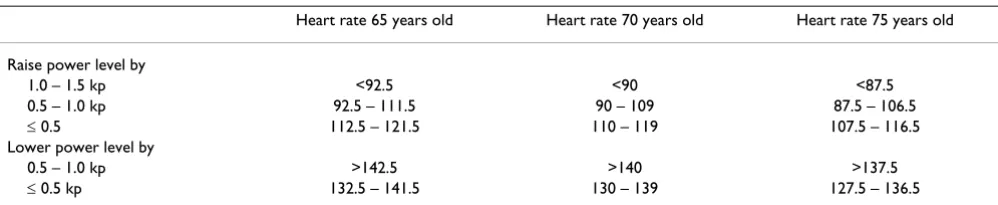
This is a multi-stage, sub-maximal exercise test, modified from the Astrand-Ryhming protocol [51]. It is conducted on a cycle-ergometer and is a measure of aerobic fitness. This test is similar to the Astrand-Ryhming protocol, except that work-rate is adjusted after the second minute, according to heart-rate and age (see Table 3). The initial power level is set at 0.5 kp for sedentary older women, and 1.0 kp for sedentary older men. This modified protocol is regularly used with clinical populations in research con-ducted at the School of Human Movement Studies, Uni-versity of Queensland. The Astrand-Ryhming nomogram (including the age correction factor) is used to estimate maximal oxygen uptake (VO2max) [51].
30-Second Chair Stand
This is taken directly from the Senior Fitness Test [65]. It is a functional measure of lower body strength. Partici-pants are seated in a chair, with feet flat on the floor. The
Table 3: Power alterations according to age and heart rate after 2nd minute (beats per minute)
Heart rate 65 years old Heart rate 70 years old Heart rate 75 years old
Raise power level by
1.0 – 1.5 kp <92.5 <90 <87.5
0.5 – 1.0 kp 92.5 – 111.5 90 – 109 87.5 – 106.5
≤ 0.5 112.5 – 121.5 110 – 119 107.5 – 116.5 Lower power level by
0.5 – 1.0 kp >142.5 >140 >137.5
score is the number of full stands completed in 30 sec-onds, with arms folded across the chest. Any use of adap-tations (e.g. pushing off the legs, using the arms of the chair) is noted with the score.
Arm Curl
This is taken directly from the Senior Fitness Test [65]. It is a functional measure of upper body strength. Partici-pants are seated in a chair and given a small dumbbell (2 kg for women, 4 kg for men). The score is the number of bicep curls completed in 30 seconds. Any adaptations (e.g. use of a lighter weight) are noted with the score.
Secondary outcome measures: Anthropometrics and physiology Anthropometrics
Measures of height (cm), weight (kg), hip girth (cm) and waist girth (cm) are taken using standard protocols [51].
Resting heart rate
Resting heart rate is measured by palpation of the radial artery while participants are seated. The number of beats recorded in 10 seconds is multiplied by 6, to give beats per minute.
Blood pressure
Diastolic and systolic blood pressure (mm Hg) are meas-ured using standard protocols [51].
Secondary outcome measures: Psychological well-being Memory Complaint Questionnaire (MAC-Q)
This is a six-item scale of self-reported memory decline [66]. Participants rate current memory ability against past performance for given situation (e.g. remembering the name of a person just introduced to you), on a 5-point scale from much better now to much worse now. The scale reliability is .57, with test-retest reliability of .67 [66]. Scores are summed, with double weighting for the final item (a comparison of general memory abilities). A higher score indicates greater self-reported decline.
SF-36: Mental Health
The Mental Health component score from the Medical Outcomes Study Short Form (SF-36; [67] reflects emo-tional wellbeing as measured on four subscales: vitality (items on energy and fatigue), social functioning (items on the impact of physical and emotional health on social activities), role-emotional (items on the impact of emo-tional problems on everyday activities), and mental health (items on happiness, nervousness and depression). The SF-36 is a widely used measure of wellbeing and Aus-tralian norms are available. A scoring algorithm is pro-vided in the manual [68].
Goldberg Anxiety and Depression Scale (GADS)
This is an 18-item measure of symptoms of anxiety and depression, derived from psychiatric interview protocols [69]. Participants answer Yes or No to questions about their feelings in the past month, such as have you been irri-table? and have you felt hopeless? The scale has been vali-dated against clinical diagnoses of anxiety and depression, and found to have good specificity and sensitivity [69]. Higher scores reflect increased symptoms of anxiety and depression.
Health-Related Hardiness Scale (HRHS)
This scale assesses health-related hardiness, a "personality construct that moderates the stress-illness relationship" [70]. The construct is comprised of three dimensions: con-trol, commitment, and challenge. The control dimension is associated with a sense of control over one's health and confidence in one's skills for managing health. The Con-trol subscale of the HRHS is used in this study. Partici-pants respond to items such as I can avoid illness if I take care of my self, on a 6-point scale from strongly disagree to strongly agree. The Control sub-scale reliability is .91, with test-retest reliability of .76 [70]. Higher scores reflect an increased sense of control over health.
Secondary outcome measures: Participant perceptions of the program
Qualitative responses about the training programs are gathered from participants to assess the suitability of the programs for older adults.
Program feedback form
This includes specific questions inviting participants to appraise the Fit Bodies, Fine Minds program. Written responses are invited on issues such as positive and nega-tive outcomes of participation in the program, barriers to and facilitators of participation, enjoyment of activities and setting, and suitability of duration and frequency of sessions.
The form also includes two questions with 5-point Likert-scale response options. The first question is How enjoyable was Fit Bodies, Fine Minds? The response options are extremely enjoyable, very enjoyable, quite enjoyable, somewhat enjoyable, and not at all enjoyable. The second question is How did you feel about attending Fit Bodies, Fine Minds? The response options are I looked forward to it ALL of the time, I looked forward to it MOST of the time, I looked forward to it SOME of the time, I could take it or leave it, and I DID NOT look forward to it at all.
Analyses
capacity and cognitive functioning. Mean scores and vari-ability scores will be used in these analyses. Varivari-ability scores may provide a more sensitive indicator than mean scores, of changes in cognitive functioning in older adults [71]. Where appropriate age, education and gender will be included as covariates. The Reliable Change Index will be used to determine the percentage of participants who demonstrate a significant change in performance, relative to their individual baseline [72,73]. This approach may provide a more accurate picture of changes experienced by participants than simple group differences [72,73]. Regression techniques will be used to identify the influ-ence of changes in aerobic capacity on cognitive function-ing. Regressions techniques will also be used to identify the influence of changes in psychological wellbeing on cognitive functioning.
The qualitative data will be analysed to identify themes related to participant perceptions of the program.
Discussion
"Nothing could be of greater importance to the impera-tives imposed by global aging" than research into the ben-efits of exercise for cognition, according to Bortz [74]. This randomized controlled trial is designed to examine the effects of exercise training and combined exercise and cog-nitive training on the cogcog-nitive and physical functioning of community-dwelling older adults. It is hypothesized that
(1) both training groups will show significant improve-ments on measures of cognitive and physical functioning, relative to the control group,
(2) the combined training group (exercise and cognitive training) will show greater cognitive improvements than the exercise-only training group,
(3) improvements in cognitive functioning will be associ-ated with improvements in aerobic capacity,
(4) improvements in cognitive functioning will be associ-ated with improvements in psychological well-being; and
(5) participants will report positive experiences and out-comes from the two training programs.
If the training programs detailed in this protocol provide cognitive and physical benefits and are acceptable to older adults, they may represent a viable approach to improving cognitive functioning and quality of life in older adults. It is hoped that the findings from this study will add to a rapidly growing body of evidence which suggests that these types of interventions may be important for older
adults, especially in a society that is facing the economic and social ramifications of an aging population.
Abbreviations
GP: general practitioner; TICS: Telephone Interview of Cognitive Status; HRR: Heart rate reserve; ACSM: Ameri-can College of Sports Medicine; RPE: Rate of Perceived Exertion; CLVT: California Verbal Learning Test; COAST: California Older Adults Stroop Test; D-KEFS: Delis-Kap-lan Executive Function Scale; WMS: Wechsler Memory Scale; WAIS: Wechsler Adult Intelligence Scale; SDMT: Symbol Digit Modalities Test; TIADL: Timed Instrumental Activities of Daily Living; cm: centimeters; kg: kilograms; mm Hg: millimeters of mercury; bpm: beats per minute; SMWT: Six Minute Walk Test; kp: kiloponds; MAC-Q: Memory Complaint Questionnaire; SF-36: Medical Out-comes Study Short Form; GADS: Geriatric Anxiety and Depression Scale; HRHS: Health-related Hardiness Scale
Competing interests
The author(s) declare that they have no competing inter-ests.
Authors' contributions
SO developed the idea for the study. SO, WB, NP and NB were involved in further developing the protocol. SO was responsible for drafting the manuscript and will imple-ment the protocol and collect the data. All authors con-tributed to the final manuscript. All authors have read and approved the final manuscript.
Acknowledgements
Kelly Harriden (School of Psychology, Psychiatry and Psychological Medi-cine: Monash University) assisted with the development of the cognitive training. Associate Professor Ken McFarland (School of Psychology, Univer-sity of Queensland) developed the Reaction Time tasks.
References
1. Schaie KW: The course of adult intellectual development. American Psychologist 1994, 49:304-313.
2. Hultsch DF, Hertzog C, Small BJ, McDonald-Miszczak L, Dixon RA:
Short-term longitudinal change in cognitive performance in later life. Psychology and Aging 1992, 7:571-584.
3. Cullum S, Huppert FA, McGee M, Dening T, Ahmed A, Paykel ES, Brayne C: Decline across different domains of cognitive func-tion in normal ageing: Results of a longitudinal populafunc-tion- population-based study using CAMCOG. International Journal of Geriatric Psy-chiatry 2000, 15:853-862.
4. Singer T, Verghaeghen P, Ghisletta P, Lindenberger U, Baltes PB: The fate of cognition in very old age: Six-year longitudinal find-ings in the Berlin Aging Study (BASE). Psychology and Aging
2003, 18:318-331.
5. Rabbitt PMA, McInnes L, Diggle P, Holland F, Bent N, Abson V, Pend-leton N, Horan M: The University of Manchester Longitudinal Study of cognition in normal healthy old age, 1983 through 2003. Aging, Neuropsychology and Cognition 2004, 11:245-279. 6. Cahn-Weiner DA, Boyle PA, Malloy PF: Tests of executive
func-tion predict instrumental activities of daily living in commu-nity-dwelling older individuals. Applied Neuropsychology 2002,
9:187-191.
8. Jonsson L, Lindgren P, Wimo A, Jonsson B, Winblad B: Costs of Mini Mental State Examination-related cognitive impairment. Pharmacoeconomics 1999, 16:409-416.
9. Pedersen BK, Saltin B: Evidence for prescribing exercise as ther-apy in chronic disease. Scandinavian Journal of Medicine & Science in Sports 2006, 16:3-63.
10. Colcombe SJ, Kramer AF, McAuley E, Erickson KI, Scalf P: Neuro-cognitive aging and cardiovascular fitness: Recent findings and future directions. Journal of Molecular Neuroscience 2004,
24:9-14.
11. Dustman RE, Emmerson R, Shearer D: Physical activity, age, and cognitive-neuropsychological function. Journal of Aging and Phys-ical Activity 1994, 2:143-181.
12. Clarkson-Smith L, Hartley AA: Relationships between physical exercise and cognitive abilities in older adults. Psychology and Aging 1989, 4:183-189.
13. Roth DL, Goode KT, Clay OJ, Ball KK: Association of physical activity and visual attention in older adults. Journal of Aging and Health 2003, 15:534-547.
14. Yaffe K, Barnes D, Nevitt M, Lui LY, Covinsky K: A prospective study of physical activity and cognitive decline in elderly women: Women who walk. Archives of Internal Medicine 2001,
161:1703-1708.
15. Weuve J, Kang JH, Manson JE, Breteler MMB, Ware JH, Grodstein F:
Physical activity, including walking, and cognitive function in older women. JAMA 2004, 292:1454-1461.
16. Pignatti F, Rozzini R, Trabucchi M: Physical activity and cognitive decline in elderly persons. Archives of Internal Medicine 2002,
162:361-362.
17. Barnes D, Yaffe K, Satariano WA, Tager IB: A longitudinal study of cardiorespiratory fitness and cognitive function in healthy older adults. JAGS 2003, 51:459-465.
18. van Gelder BM, Tijhuis MAR, Kalmijn S, Giampaoli S, Nissinen A, Kromhout D: Physical activity in relation to cognitive decline in elderly men: The FINE Study. Neurology 2004, 63:2316-2321. 19. Dustman RE, Ruhling RO, Russell EM, Shearer DE, Bonekat HW, Shi-geoka JW, Wood JS, Bradford DC: Aerobic exercise training and improved neuropsychological function of older individuals. Neurobiology of Aging 1984, 5:35-42.
20. Moul JL, Goldman B, Warren B: Physical activity and cognitive performance in the older population. Journal of Aging and Physical Activity 1995, 3:135-145.
21. Kramer AF, Hahn S, Cohen NJ, Banich MT, McAuley E, Harrison CR, Chason J, Vakil E, Bardell L, Boileau RA, Colcombe A: Ageing, fit-ness and neurocognitive function. Nature 1999, 400:418-419. 22. Blumenthal JA, Emery CF, Madden DJ, Schniebolk S, Walsh-Riddle M,
George LK, McKee DC, Higginbotham MB, Cobb FR, Coleman RE:
Long-term effects of exercise on psychological functioning in older men and women. Journal of Gerontology 1991, 46:352-361. 23. Blumenthal JA, Madden DJ: Effects of aerobic exercise training,
age, and physical fitness on memory-search performance. Psychology and Aging 1988, 3:280-285.
24. Hill RD, Storandt M, Malley M: The impact of long-term exercise training on psychological function in older adults. Journals of Gerontology: Psychological Sciences 1993, 48:P12-P17.
25. Colcombe S, Kramer AF: Fitness effects on the cognitive func-tion of older adults: A meta-analytic study. Psychological Science
2003, 14:125-130.
26. Colcombe SJ, Erickson KI, Raz N, Webb AG, Cohen NJ, McAuley E, Kramer AF: Aerobic fitness reduces brain tissue loss in aging humans. Journal of Gerontology: Medical Sciences 2003, 58A:176-180. 27. Rogers RL, Meyer JS, Mortel KF: After reaching retirement age physical activity sustains cerebral perfusion and cognition. JAGS 1990, 38:123-128.
28. Poon LW, Chodzko-Zajko W, Tomporowski PD: Active Living, Cognitive Functioning, and Aging. In Aging, Exercise and Cognition SeriesVolume 1. Edited by: Poon LW, Spirduso WW and Chodzko-Zajko W. Champaign, IL, Human Kinetics; 2006.
29. Madden DJ, Blumenthal JA, Allen PA, Emery CF: Improving aerobic capacity in healthy older adults does not necessarily lead to improved cognitive performance. Psychology and Aging 1989,
4:307-320.
30. Spirduso WW: Issues of aging, physical activity, cognition, and putative mechanisms for a relationship: A discussion. In Active Living, Cognitive Functioning, and AgingVolume 1. Edited by: Poon LW,
Chodzko-Zajko W and Tomporowski PD. Champaign, IL, Human Kinetics; 2006:187-195.
31. Dunn AL, Trivedi MH, Kampert JB, Clark CG, Chambliss HO: Exer-cise treatment for depression: Efficacy and dose response. Am J Prev Med 2005, 28:1-8.
32. Yaffe K, Blackwell T, Gore R, Sands L, Reus V, Browner WS: Depres-sive symptoms and cognitive decline in nondemented eld-erly women: A prospective study. Archives of General Psychiatry
1999, 56:425.
33. Lee C, Russell A: Effects of physical activity on emotional well-being among older Australian women: Cross-sectional and longitudinal analyses. Journal of Psychosomatic Research 2003,
54:155-160.
34. Mohs RC, Ashman TA, Jantzen K, Albert M, Brandt J, Gordon B, Ras-musson X, Grossman M, Jacobs D, Stern Y: A study of the efficacy of a comprehensive memory enhancement program in healthy elderly persons. Psychiatry Research 1998, 77:183-195. 35. Derwinger A, Neely AS, Backman L: Design your own memory
strategies! Self-generated strategy training versus mne-monic training in old age: An 8-month follow-up. Neuropsycho-logical Rehabilitation 2005, 15:37-54.
36. Fabre C, Chamari K, Mucci P, Masse-Biron J, Prefaut C: Improve-ment of cognitive function by Improve-mental and/or individualized aerobic training in healthy elderly subjects. International Journal of Sports Medicine 2002, 23:415-421.
37. Emery CF, Gatz M: Psychological and cognitive effects of an exercise program for community-residing older adults. Ger-ontologist 1990, 30:184-188.
38. Williams P, Lord SR: Effects of group exercise on cognitive func-tioning and mood in older women. Australian and New Zealand Journal of Public Health 1997, 21:45-52.
39. Ball K, Berch DB, Helmers KF, Jobe JB, Leveck MD, Marsiske M, Mor-ris JN, Rebok GW, Smith DM, Tennstedt SL, Unverzagt FW, Willis SL:
Effects of cognitive training interventions with older adults: A randomized controlled trial. JAMA 2002, 288:2271-2281. 40. Kramer AF, Willis SL: Enhancing the cognitive vitality of older
adults. Current Directions in Psychological Science 2002, 11:173-177. 41. Thompson G, Foth D: Cognitive-training programs for older
adults: What are they and can they enhance mental fitness? Educational Gerontology 2005, 31:603-626.
42. Hultsch DF, Hammer M, Small BJ: Age differences in cognitive performance in later life: Relationships to self-reported health and activity life style. Journal of Gerontology: Psychological Sciences 1993, 48:1-11.
43. Hultsch DF, Hertzog C, Small BJ, Dixon RA: Use it or lose it: Engaged lifestyle as a buffer of cognitive decline in aging? Psy-chology and Aging 1999, 14:245-263.
44. Newson RS, Kemps EB: General lifestyle activities as a predic-tor of current cognition and cognitive change in older adults: A cross-sectional and longitudinal examination. The Journals of Gerontology 2005, 60B:113-120.
45. Schooler C, Mulatu MS: The reciprocal effects of leisure time activities and intellectual functioning in older people: A lon-gitudinal analysis. Psychology and Aging 2001, 16:466-482. 46. King AC, Rejeski WJ, Buchner DM: Physical activity
interven-tions targeting older adults: A critical review and recom-mendations. American Journal of Preventive Medicine 1998,
15:316-332.
47. Resnick B, Spellbring AM: Understanding what motivates older adults to exercise. Journal of Gerontological Nursing 2000, 26:34-42. 48. de Jager CA, Budge MM, Clarke R: Utility of TICS-M for the assessment of cognitive function in older adults. International Journal of Geriatric Psychiatry 2003, 18:318-324.
49. Hassmen P, Ceci R, Backman L: Exercise for older women:A training method and its influences on physical and cognitive performance. European Journal of Applied Physiology 1992,
64:460-466.
50. Beller EM, Gebski V, Keech AC: Randomisation in clinical trials. Medical Journal of Australia 2002, 177:565 -5567.
51. ACSM: ACMS's guidelines for exercise testing and prescrip-tion. 7th edition. Baltimore, Lippincott, Williams & Wilkins; 2005. 52. Borg G: Borg's Perceived Exertion and Pain Scales.
Cham-paign, IL, Human Kinetics; 1998.
cogni-Publish with BioMed Central and every scientist can read your work free of charge "BioMed Central will be the most significant development for disseminating the results of biomedical researc h in our lifetime."
Sir Paul Nurse, Cancer Research UK
Your research papers will be:
available free of charge to the entire biomedical community
peer reviewed and published immediately upon acceptance
cited in PubMed and archived on PubMed Central
yours — you keep the copyright
Submit your manuscript here:
http://www.biomedcentral.com/info/publishing_adv.asp
BioMedcentral
tive status. Neuropsychiatry, Neuropsychology, and Behavioral Neurol-ogy 1993, 6:103-110.
54. Moylan T, Das K, Gibb A, Hill A, Kane A, Lee C, Toye D, Wolsten-croft K, Fail M, Stott DJ: Assessment of cognitive function in older hospital inpatients: Is the Telephone Interview for Cognitive Status (TICS-M) a useful alternative to the Mini Mental State Examination? International Journal of Geriatric Psychi-atry 2004, 19:1008-1009.
55. Barber M, Stott DJ: Validity of the Telephone Interview for Cognitive Status (TICS) in post-stroke subjects. International Journal of Geriatric Psychiatry 2004, 19:75-79.
56. Delis DC, Kramer JH, Kaplan E, Ober BA: California Verbal Learning Test - Second Edition (CVLT-II). San Antonio, Texas, Psychological Corporation; 2000.
57. Lezak MD, Howieson DB, Loring DW: Neuropsychological Assessment. 4th Edition edition. Oxford, Oxford University Press; 2004.
58. Wechsler D: Wechsler Memory Scale. Third edition manual.
San Antonio, The Psychological Corporation; 1997.
59. Pachana N, Thompson LW, Marcopulous BA, Yoash-Gantz R: Cali-fornia Older Adult Stroop Test (COAST): Development of a stroop test adapted for geriatric populations. Clinical Gerontol-ogist 2004, 27:3-22.
60. Delis DC, Kaplan E, Kramer JH: Delis-Kaplan Executive Function System. San Antonio, Psychological Corporation; 2001.
61. Wechsler D: Wechsler Adult Intelligence Scale-III. San Anto-nio, The Psychological Corporation; 1997.
62. Smith A: Symbol Digit Modalities Test (SDMT). Manual (revised). Los Angeles, Western Psychological Services; 1982. 63. Owsley C, Sloane M, McGwin GJ, Ball K: Timed instrumental
activities of daily living tasks: Relationship to cognitive func-tion and everyday performance assessments in older adults. Gerontology 2002, 48:254-265.
64. Spreen O, Strauss E: A compendium of neuropsychological tests: Administration, norms, and commentary. 2nd edition. New York, Oxford University Press; 1998.
65. Rikli RE, Jones CJ: Senior fitness test. Champaign, IL, Human Kinet-ics; 1997.
66. Crook TH, Feher EP, Larrabee GJ: Assessment of memory com-plaint in age-associated memory impairment: The MAC-Q. International Psychogeriatrics 1992, 4:165-176.
67. McHorney CA, Ware JE, Raczek AE: The MOS 36-item short-form health survey (SF-36): II. Psychometric and clinical tests of validity in measuring physical and mental health con-structs. Medical Care 1993, 31:247-263.
68. Ware JE, Snow K, Kosinski M, Gandek B: SF-36 Health Survey: Manual and interpretation guide. Lincoln, RI, Quality Metric Incorporated; 2000.
69. Goldberg D, Bridges K, Duncan-Jones P, Grayson D: Detecting anx-iety and depression in general medical settings. British Medical Journal 1988, 297:897-899.
70. Pollock SE, Duffy ME: The Health-Related Hardiness Scale: Development and psychometric analysis. Nursing Research
1990, 39:218-222.
71. MacDonald SWS, Hultsch DF, Dixon RA: Performance variability is related to change in cognition: Evidence from the Victoria Longitudinal Study. Psychology and Aging 2003, 18:510-523. 72. Jacobson NS, Follette WC, Revenstorf D: Psychotherapy
out-come research: Methods for reporting variability and evalu-ating clinical significance. Behavior Therapy 1984, 15:336-352. 73. Jacobson NS, Truax P: Clinical significance: A statistical
approach to defining meaningful change in psychotherapy research. Journal of Consulting and Clinical Psychology 1991, 59:12-19. 74. Bortz WM: Foreword. In Active Living, Cognitive Functioning, and Aging Volume 1. Edited by: Poon LW, Chodzko-Zajko W and Tomporowski PD. Champaign, IL, Human Kinetics; 2006:vii-viii.
Pre-publication history
The pre-publication history for this paper can be accessed here: