Calhoun: The NPS Institutional Archive
Theses and Dissertations Thesis and Dissertation Collection
2016-12
Improving resource allocation decisions to
reduce the risk of terrorist attacks on
passenger rail systems
King, Lawrence W.
Monterey, California: Naval Postgraduate School http://hdl.handle.net/10945/51558
NAVAL
POSTGRADUATE
SCHOOL
MONTEREY, CALIFORNIA
THESIS
Approved for public release. Distribution is unlimited. IMPROVING RESOURCE ALLOCATION DECISIONS TO REDUCE THE RISK OF TERRORIST ATTACKS ON
PASSENGER RAIL SYSTEMS
by
Lawrence W. King December 2016
Thesis Co-Advisors: Thomas Mackin
REPORT DOCUMENTATION PAGE Form Approved OMB No. 0704-0188
Public reporting burden for this collection of information is estimated to average 1 hour per response, including the time for reviewing instruction, searching existing data sources, gathering and maintaining the data needed, and completing and reviewing the collection of information. Send comments regarding this burden estimate or any other aspect of this collection of information, including suggestions for reducing this burden, to Washington headquarters Services, Directorate for Information Operations and Reports, 1215 Jefferson Davis Highway, Suite 1204, Arlington, VA 22202-4302, and to the Office of Management and Budget, Paperwork Reduction Project (0704-0188) Washington, DC 20503.
1. AGENCY USE ONLY (Leave blank)
2. REPORT DATE December 2016
3. REPORT TYPE AND DATES COVERED
Master’s thesis
4. TITLE AND SUBTITLE
IMPROVING RESOURCE ALLOCATION DECISIONS TO REDUCE THE RISK OF TERRORIST ATTACKS ON PASSENGER RAIL SYSTEMS
5. FUNDING NUMBERS
6. AUTHOR(S) Lawrence W. King
7. PERFORMING ORGANIZATION NAME(S) AND ADDRESS(ES)
Naval Postgraduate School Monterey, CA 93943-5000
8. PERFORMING
ORGANIZATION REPORT NUMBER
9. SPONSORING /MONITORING AGENCY NAME(S) AND ADDRESS(ES)
N/A
10. SPONSORING / MONITORING AGENCY REPORT NUMBER
11. SUPPLEMENTARY NOTES The views expressed in this thesis are those of the author and do not reflect the official policy or position of the Department of Defense or the U.S. Government. IRB number ____N/A____.
12a. DISTRIBUTION / AVAILABILITY STATEMENT Approved for public release. Distribution is unlimited.
12b. DISTRIBUTION CODE
13. ABSTRACT (maximum 200 words)
Passenger rail systems continue to be a prime target for terrorists. Since 1995, there have been hundreds of attacks targeting assets worldwide that have resulted in almost 1,000 deaths and more than 1,500 injuries. As evidenced by the March 2016 attack in Brussels, Belgium, the openness and accessibility of passenger rail facilities are attractive to adversaries. This thesis reviews the current approach to risk assessment used by system operators to counter threats and proposes a new model to improve resource allocation decisions, which is intended to reduce the risk of terrorist attacks on passenger rail. The use of the game theory attacker-defender methodology in deciding where to allocate security improvements will increase the security of systems in defending against attacks. Changing tactics require security professionals to continually enhance the security posture of rail systems to deter terrorists. Limited resources make the job of securing a passenger rail system more of a challenge today than ever before.
14. SUBJECT TERMS
passenger rail security, decision making, risk assessment, rail systems, metro, mass transit, subway, risk management, game theory, passenger rail bombing, attacker-defender methodology 15. NUMBER OF PAGES 103 16. PRICE CODE 17. SECURITY CLASSIFICATION OF REPORT Unclassified 18. SECURITY CLASSIFICATION OF THIS PAGE Unclassified 19. SECURITY CLASSIFICATION OF ABSTRACT Unclassified 20. LIMITATION OF ABSTRACT UU
NSN 7540-01-280-5500 Standard Form 298 (Rev. 2-89)
Approved for public release. Distribution is unlimited.
IMPROVING RESOURCE ALLOCATION DECISIONS TO REDUCE THE RISK OF TERRORIST ATTACKS ON PASSENGER RAIL SYSTEMS
Lawrence W. King
Supervisory Transportation Security Inspector, Department of Homeland Security, Transportation Security Administration, New York, NY
B.S., St. John’s University, 1984 M.S., St. John’s University, 1989
Submitted in partial fulfillment of the requirements for the degree of
MASTER OF ARTS IN SECURITY STUDIES (HOMELAND SECURITY AND DEFENSE)
from the
NAVAL POSTGRADUATE SCHOOL December 2016
Approved by: Thomas Mackin Thesis Co-Advisor
Rudy Darken Thesis Co-Advisor
Erik Dahl
Associate Chair of Instruction
ABSTRACT
Passenger rail systems continue to be a prime target for terrorists. Since 1995, there have been hundreds of attacks targeting assets worldwide that have resulted in almost 1,000 deaths and more than 1,500 injuries. As evidenced by the March 2016 attack in Brussels, Belgium, the openness and accessibility of passenger rail facilities are attractive to adversaries. This thesis reviews the current approach to risk assessment used by system operators to counter threats and proposes a new model to improve resource allocation decisions, which is intended to reduce the risk of terrorist attacks on passenger rail. The use of the game theory attacker-defender methodology in deciding where to allocate security improvements will increase the security of systems in defending against attacks. Changing tactics require security professionals to continually enhance the security posture of rail systems to deter terrorists. Limited resources make the job of securing a passenger rail system more of a challenge today than ever before.
TABLE OF CONTENTS
I. INTRODUCTION...1 A. PROBLEM STATEMENT ...2 B. RESEARCH QUESTION ...4 C. BACKGROUND ...5 D. SIGNIFICANT ATTACKS...6 E. RESEARCH DESIGN/HYPOTHESIS ...10II. LITERATURE REVIEW ...11
A. ENVIRONMENT/LANDSCAPE ...11 B. SYSTEM MODELING ...16 C. OWNERSHIP ...23 D. GOVERNANCE/REGULATIONS ...24 E. POLICIES ...27 F. EXAMPLES ...30
1. Terrorist Risk Assessment and Management Tool ...30
2. Criticality, Accessibility, Recuperability, Vulnerability, Effect and Recognizability Matrix ...31
3. Maritime Security Risk Analysis Model ...32
4. Enterprise Risk Management ...32
III. METHODOLOGY ...35
A. RISK ASSESSMENT ...35
B. GAME THEORY ...38
C. FAULT TREE ANALYSIS ...43
D. MEASURE OF PERFORMANCE ...48
IV. ANALYSIS ...55
A. MULTIPLE MODES—SINGLE STATION ...59
B. SINGLE MODE—MULTIPLE STATIONS ...60
C. CONSIDERATIONS ...64
V. CONCLUSION ...67
APPENDIX. FIGURES ...71
LIST OF REFERENCES ...75
LIST OF FIGURES
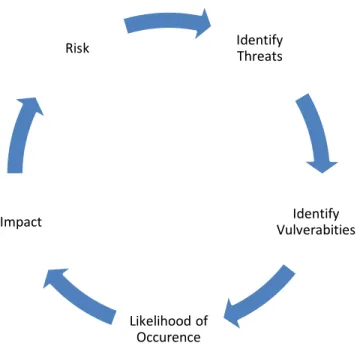
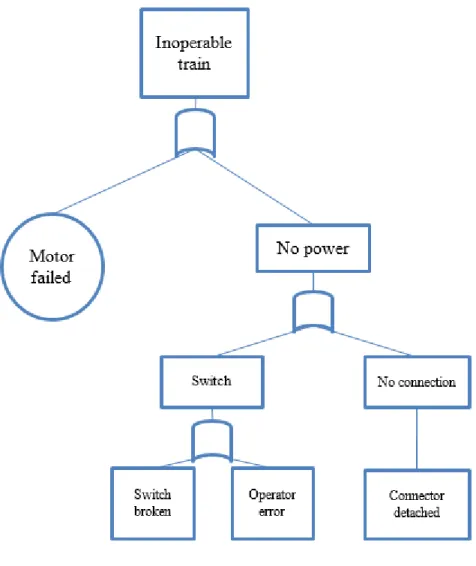
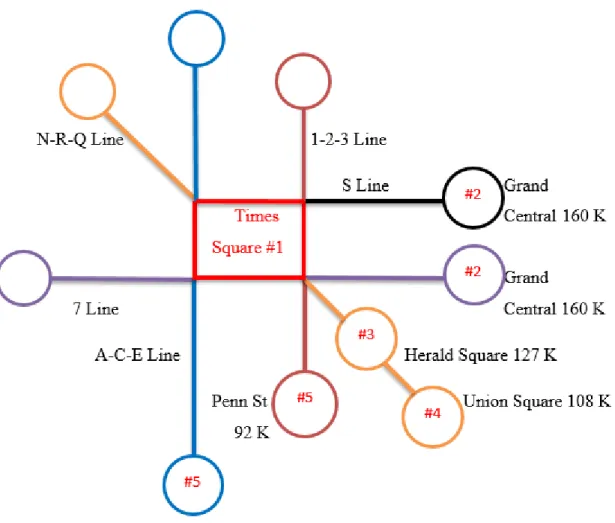
Figure 1. Risk Assessment Process ...71 Figure 2. Fault Tree Analysis Example ...72 Figure 3. Network Model: NYCT Highest Ridership Stations ...73
LIST OF TABLES
Table 1. Common Methods for Passenger Rail Attacks ...14
Table 2. Common Rail System Areas ...16
Table 3. Plots Targeting New York City Passenger Rail ...55
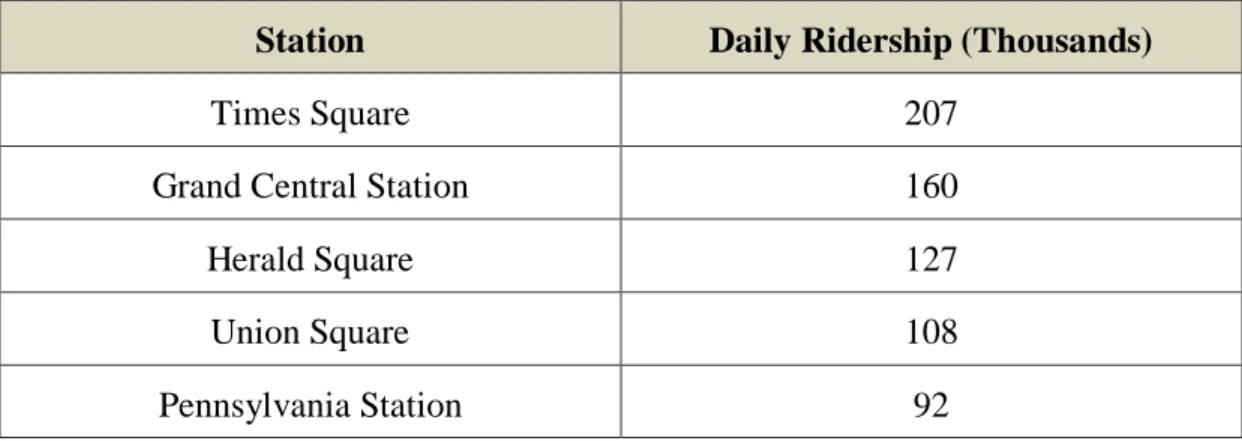
Table 4. Top Five NYC Transit Stations for Ridership ...57
LIST OF ACRONYMS AND ABBREVIATIONS
AD attacker-defender
APTA American Public Transportation Association
CARVER criticality, accessibility, recuperability, vulnerability, effect and recognizability
CPTED crime prevention through environmental design
DHS Department of Homeland Security
DOT Department of Transportation
ERM enterprise risk management
FEMA Federal Emergency Management Agency
FRA Federal Railroad Administration
FT fault tree analysis
FTA Federal Transit Administration
IED improvised explosive device
IT information technology
MOP measure of performance
MSRAM maritime security risk analysis model
NYCT New York City Transit
PRA probabilistic risk assessment
ROI return on investment
SME subject matter expert
SOP standard operating procedure
TRAM terrorist risk assessment and management
TSA Transportation Security Administration
TSGP Transit Security Grant Program
EXECUTIVE SUMMARY
The United States transportation network is a vast enterprise consisting of highway, air, maritime, and rail sectors. The rail sector divides into freight and passenger systems. Each one has operational characteristics, structural features, and security vulnerabilities that differentiate it from the others. Passenger rail is experiencing a revival. In 2013, there were more than 4.8 billion rail trips in the United States.1 Approximately 11.3 million passengers in 35 metropolitan areas utilize rail transportation daily, which is the highest level of ridership since 1957.2
Recent worldwide attacks show that terrorists are intent on inflicting damage to passenger rail assets. This mode of transportation has characteristics, such as large numbers of riders, easy access, multiple points of entry and exit, and scheduled stops along fixed routes, that make it an attractive target for terrorism.3 The Mineta Transportation Institute cataloged surface transportation attacks from 1970 to 2007 and found that passenger rail systems are the most common target of terrorists.4
The security posture of rail systems varies from system to system. A “one size fits all” approach to security is unlikely to deter terrorism so operators must choose strategies from the various categories such as technologies or visibility patrols and development of multifaceted plans that avoid interfering with functional efficiency.5 A layered strategy, which is characterized by concentric sets of security features, exhibits the greatest potential to deter attacks. As security systems mature, new strategies develop in response to evolving threats. In some cases, these strategies overlap existing programs. Since older systems and technologies may not be effective against assailants who adapt to defeat
1 American Public Transportation Association, “Quarterly and Annual Totals by Mode, 1990–present,”
accessed July 23, 2014, www.apta.co m/resources/statistics/Pages/ridershipreport.aspx.
2 Nicholas Armstrong et al., Securing America’s Passenger Rails: Analyzing Current Challenges, and Future Solutions (Syracuse: Maxwell School of Citizenship and Public Affairs, 2008), 18.
3 U.S. Department of Homeland Security, Train Station Attack Methods (Washington, DC:
Transportation Security Administration, Office of Intelligence, 2010), 3.
4 Brain M. Jenkins and Bruce R. Butterworth, Analysis of Terrorist Attacks against Public Transportation (San Jose: Mineta Transportation Institute, 2007), 4.
procedures, modifications may be required to blend the new protocols into a security program. Sound decision making for security resource allocations is critically important. Rail systems operators should recognize that incorporating new procedures, protocols, and technology alone, without taking a systematic approach to implementation, could provide terrorists with the opportunity to take advantage of a gap and possibly defeat the entire security system.
How can passenger rail systems improve resource allocation decisions intended to reduce the risk of terrorist attacks? Rail systems use a variety of risk assessment processes. Large networks have the resources to develop complex processes, but operators of smaller networks are not as fortunate. They are subject to constraints, such as budgetary support, that restrict their ability to employ the same risk assessment programs that larger operators utilize.
Passenger rail security improvements, like other forms of infrastructure protection, require system operators to assess threats from an attack by an intelligent adversary. Response to a threat results in the development of defenses to deter attacks, or in the case of a successful attack, to enhance resiliency to mitigate the damage. Infrastructure protection against intentional acts is not like protecting against acts of nature. Intelligent adversaries will change their tactics to defeat security and exploit any vulnerabilities. Risk assessment models support game theory by providing probabilities for various attacker-defender actions.6
This thesis recommends game theory principles in attacker-defender methodology to guide resource allocation decisions for passenger rail systems. Game theory is superior to other risk management approaches, which fail to consider the tendency of terrorists to react to defender strategies. Examining the threat environment and factors associated with defense against malicious actors will result in a better understanding of the assessment options available to defend against threats. Additionally, it will encourage those responsible for passenger rail security to balance the effectiveness of counter measures and resource implementation, including operational issues and costs.
The better option for risk assessment of deliberate threats is to model the system and then apply a worst-case analysis. Game theory models the actions of “players” and offers a more useful modeling framework. These players include a society wanting to prevent attacks against its infrastructure, adversaries who recognize protective measures and seek to attack in the most harmful way, and a system that can bounce back and operate to the best of its diminished ability.7 The goal of game theory is to maximize the resiliency of infrastructure, which minimizes the disruption caused by worst-case attacks. It is not possible to deter all terrorist attacks so success is measured by the ability to keep the system operating. A system will act to mitigate the results of any attack and operate to the best of its reduced ability. The goal is to maximize resilience and minimize disruption against worst-case attacks.8
Game theory principles in the attacker-defender (AD) methodology result in effective recommendations for allocating resources because the foundation of AD is based on improved risk analyses of the actions of intelligent adversaries. It involves decision making by which participants make choices that impact on the actions of an opponent.9 This yields well-grounded results that inform the decision maker as to the worst possible outcome, not the most probable.
For this thesis, the researcher performed and analysis on assets of the New York City Transit (NYCT) subway system to demonstrate the utility of using the attacker-defender methodology to improve resource allocation decisions for passenger rail systems. One option involved an attack focused on one station that utilized multiple attack modes. A second option targeted more than one station using the same attack mode. The measurement of the impact, or how successful the attack is in affecting the measure of performance, was reduction in ridership. The results supported the use of the AD methodology to improve decision making for resource allocations.
7 David L. Alderson and Gerald Brown, “Solving Defender-attacker-defender Models for
Infrastructure Defense” (paper presented at the 12th Informs Computing Society Conference, Monterey, CA, January 2011).
8 Ibid., 29.
9 Theodore L. Turocy, “Game Theory,” in Encyclopedia of Information Systems (New York:
Game theory, specifically the AD methodology, has the potential to be of use in protecting against threats from terrorists. Intentional threats are evolving rapidly as terrorists respond to defenses. When faced with an intelligent adversary who learns from the past, history offers no security, and the threat data can be too general to eliminate uncertainty. Terrorists are at liberty to change what they attack, when they attack, and how they attack at any point in time. Game theory makes for a reliable, reusable tool that system personnel nationwide can use in risk assessments for passenger rail systems. Though the features of a system may change, the general approach remains the same.
The attacker-defender methodology engages in worst-case scenarios and develops system models to determine what the worst case could be. Though this approach does not provide an ironclad prediction, it does frame the solution to what is possible through an attack by an intelligent adversary, and it shows great promise for resource allocation decisions.10 It is apparent that rail systems have to concentrate on worst-case scenarios in assessing and reducing vulnerabilities because of the lack of confidence in reliability analyses based on unpredictable adversarial threats.
Protecting infrastructure from an attack is extremely difficult. Recommendations for protection must be grounded in an understanding of system performance and clearly describe the expected costs and benefits of a particular policy intervention. Processes and protocols have to be multi-layered, nimble, and flexible to protect against threats that try to defeat security improvements.
10 National Research Council, Review of the DHS Approach to Risk Analysis (Washington DC:
ACKNOWLEDGMENTS
I am in debt to the leadership of the Transportation Security Administration for nominating me to attend this program. I am certain that this experience will broaden my critical thinking skills and benefit the agency in its mission to provide secure transportation throughout the United States.
My family deserves much credit for my successful completion of this program. The time that I devoted to studying was time spent away from them. My wife, Marylou, was extremely supportive throughout the journey. My son, Larry, who by way of his own academic achievements gave me the motivation to persevere during the 18 months I spent pursuing this degree.
I sincerely thank my advisors, Dr. Thomas Mackin and Dr. Rudy Darken, engineers by trade, who coached and guided me, a security professional, throughout this program to the finish line. It was a job well done, gentlemen.
I must acknowledge my classmates, who were there to lean on and learn from as we progressed from one semester to the next. I am sure that the hard work they have expended will pay tremendous benefits down the road. I have the utmost respect for these individuals and fond memories to look back on.
Finally, to the instructors and staff at the Center for Homeland Defense and Security, you are the reason why this program has an outstanding reputation. Thank you for your dedication to excellence.
I.
INTRODUCTION
The United States transportation network is a vast enterprise consisting of highway, air, maritime, and rail sectors. Each moves people and materials in a unique way. The rail sector divides into freight and passenger systems. There are many different types of passenger rail operations, including mass transit systems, commuter railroads, people movers, and tourist railroads. Each one has operational characteristics, structural features, and security vulnerabilities that differentiate it from the others. Vast rail networks were built as demand for affordable, reliable transportation increased across the country. The convenience of passenger rail transportation has become so commonplace that society now takes it for granted. A key characteristic that makes this mode noteworthy in the transportation sector is the ability to concentrate the flow of people.
For most of the past, passenger rail security has concentrated on traditional security methods that can be summarized in three words: guards, guns, and gates.1 However, security strategies currently in use are grouped into one of the following domains:
• Process based such as increased visibility patrols
• Technology based including closed circuit television and
• Chemical, biological, radiological, and nuclear detection
• Facility improvements like blast resistant trash receptacles
No method alone is sufficient to ward off attacks so operators choose strategies from the categories mentioned above and develop a multi-faceted plan that does not hamper functional efficiency.2
A “one size fits all” security plan is unlikely to work. Rail systems vary, and the threats they face cannot be prevented by generalized law enforcement strategies alone. Any methods employed have to be integrated into operations and designed to deter
1 National Research Council, Deterrence, Protection, and Preparation: The New Transportation Security Imperative (Washington DC: National Academies of Science, 2002), 1.
2 Nicholas Armstrong et al., Securing America’s Passenger Rails: Analyzing Current Challenges, and Future Solutions (Syracuse: Maxwell School of Citizenship and Public Affairs, 2008), 18.
terrorism. Alternately, they may enhance the ability to recover from an attack. A layered strategy, with sets of security assets providing defensive support behind each other, can effectively deter terrorist activities. Protective measures fortify the outer perimeter and progress inward focusing on the exterior, interior, and restricted access areas. Layered systems are difficult to compromise by way of a single facet, such as a gate or a guard. Additionally, each layer provides backup for the others. While a single feature may be defeated, multiple layers support impermeability.3 Moreover, increasing the number of layers is beneficial to the defender. The defense in depth methodology is an example of a layered system. It utilizes multi-layered protections to create a system that relies on successive features instead of one security barrier.4 Conventional strategies concentrate resources on the frontline. Defense in depth is effective against an attacker who can concentrate forces on a small number of locations in a large rail system. As adversaries attempt to penetrate, they encounter resistance designed to prevent, deter, and defeat an attack. Defense in depth can include different technologies to protect various targets.
A. PROBLEM STATEMENT
How can passenger rail systems improve resource allocation decisions intended to reduce the risk of terrorist attacks? Much is at stake, including the protection of riders, employees, and equipment.
Transportation is integral to America. We rely on some form of transportation in most of our daily activities. One mode of transportation, passenger rail, has particular significance to the economic vitality of the United States. Millions of people in major metropolitan areas utilize this mode of transportation. The roots of passenger rail transportation date back to the establishment of the Baltimore and Ohio Rail Road in 1827.5 Some cities like New York, Boston, and Chicago owe their development to a rail system serving the municipality around the clock.
3 National Research Council, Deterrence, Protection, and Preparation, 2.
4 Matthew Rosenquist, Defense in Depth Strategy Optimizes Security (Santa Clara, CA: Intel
Corporation, 2008), http://www.itworldcanada.com/archive/WhitePaperLibrary/PdfDownloads/Defense_ In_Depth_Strategy_Optimizes_Security.pdf, 4.
5 Library of Congress, “America’s Story from America’s Library,” accessed July 14, 2016,
Even though it is a popular form of transportation, there are serious security concerns for patrons of the rail system. Passenger rail has characteristics, such as large numbers of riders, easy access, multiple points of entry and exit, and scheduled stops along fixed routes, that make it an attractive target for terrorism.6 The number of attacks against passenger rail systems confirms this supposition. A review conducted by the Mineta Transportation Institute in 2010 cataloged the characteristics of surface transportation attacks from 1970 to 2007 and found that passenger rail systems are the most common target.7 The safety of people who patronize mass transit, the protection of critical infrastructure, and retention of the public’s confidence in passenger rail is reliant on the security decision-making process. Many strategies have been employed and significant resources expended to secure passenger rail assets.
As security systems mature, new strategies develop in response to evolving threats. In some cases, these strategies overlap existing programs. Since older systems and technologies may not be effective against assailants who adapt to defeat procedures, modifications may be required to blend the new protocols into the program. Rail systems operators should recognize that incorporating new procedures, protocols, and technology alone, without taking a systematic approach to implementation, could provide terrorists with the opportunity to take advantage of a gap and possibly defeat the entire security system.8
This thesis recommends use of the game theory principles in the attacker-defender (AD) methodology to guide decision-making specific to the passenger rail industry. The goal is to encourage security personnel to weigh and balance the effectiveness of measures and their implementation, operation, and costs. Central to this process is the notion of risk management. In Risk Management Fundamentals: Homeland Security Risk Management Doctrine, published by the Department of Homeland Security (DHS), it states, “risk management is establishing the capacity to identify, understand, and address
6 U.S. Department of Homeland Security, Train Station Attack Methods (Washington, DC:
Transportation Security Administration, Office of Intelligence, 2010), 3.
7 Brain M. Jenkins and Bruce R. Butterworth, Analysis of Terrorist Attacks against Public Transportation (San Jose: Mineta Transportation Institute, 2007), 4.
complex challenges and opportunities and that risk management is the foundation for making and implementing improved homeland security decisions.”9 A report by the National Research Council further supports this contention by stating, “risk management distinguishes between and among alternative actions, assesses capabilities, and prioritizes activities and associated resources by understanding risk and its impact on their decisions.”10 Game theory methodology is relevant to rail system executives and security staff who determine implementation priorities, as well as planners who must explain the rationale for courses of action. The findings could also be helpful to government oversight agencies, such as state Departments of Transportation (DOT) and the Federal Emergency Management Agency (FEMA).
A review of previous attacks can identify the gaps that were exploited for the plots to succeed. These findings can lead to an understanding of the security apparatus that was in place on these systems at the time of the attacks. For instance, were the deficiencies related to lack of institutional knowledge or internal security policy? The information compiled from identification of these gaps defines the threat that the proposed model can be tested against. The strides that system operators have made to date in securing passenger rail transportation are commendable. This research provides a tool for rail system operators to guide security resource decision-making activities in the future.
B. RESEARCH QUESTION
How can passenger rail systems improve resource allocation decisions intended to reduce the risk of terrorist attacks? This thesis recommends that passenger rail systems adopt the game theory methodology to meet the challenges of providing enhanced security when the threat of terrorism is on the rise.11 As Jeremey Plant and Richard Young wrote in Securing and Protecting America’s Railroad System, “The challenge is
9 U.S. Department of Homeland Security, Risk Management Fundamentals: Homeland Security Risk
Management Doctrine (Washington DC: U.S. Department of Homeland Security, 2011), 8.
10 National Research Council, Review of the DHS Approach to Risk Analysis (Washington DC:
National Academies Press, 2010), 12.
11 Jeremy F. Plant and Richard R. Young, Securing and Protecting America’s Railroad System: US
how to enhance railroad service to population centers overwhelmed by a labyrinth of over-used roadways while lowering threats the railroads may face because they are attractive targets for terrorists.”12
C. BACKGROUND
Like any other company, a passenger rail system works diligently to minimize risk in all facets of its operation. Security and safety are important considerations in this endeavor. The analysis of various factors results in decisions on how to effectively implement security improvements. It is not accomplished in a haphazard fashion but rather through a series of steps that have been tested and affirmed as procedurally sound.
Risk management is a comprehensive systematic evaluation of risk and careful, planned application of countermeasures to improve organizational security.13 The goal is to enable local decision makers to manage risk and to identify measures that provide a high return on investment (ROI) in responding to the challenges that confront passenger rail operations. In Emergency Preparedness for Transit Terrorism, Annabelle Boyd and John Sullivan define a risk assessment as a
comprehensive study of a rail agency to identify components most vulnerable to damage and to assess the impact such activity on a system. The results of a risk assessment aid officials in making critical decisions concerning the allocation of available resources such as where to harden assets, change procedures, or assign personnel to reduce the risk.14
The principles of security and safety are often intermingled. Transportation safety deals with the prevention of accidents, such as slips, trips, and falls. On the other hand, security deals with the prevention or mitigation of harmful actions to people or property. Consequently, a security risk assessment is different from a safety assessment. A safety assessment evaluates the provisions in place to determine if the risk of an injury is as low
12 Ibid., 58.
13 U.S. Department of Homeland Security, Vulnerability Assessment Methodologies Report
(Washington DC: Office for Domestic Preparedness, 2003), 9.
14 Annabelle Boyd and John P. Sullivan, Emergency Preparedness for Transit Terrorism (Washington
as reasonably achievable.15 Although they are two different regimens, in some cases enhancements to safety provide ancillary benefits to security, just as improvements to security supplement safety. There is a similar relationship between terrorism and crime. Mitigation strategies to deter terrorism have a direct impact on crime, and crime suppression activities deter terrorism.
Simply stated, risk is the possibility of damage happening to an organization.16 The three steps to performing a risk analysis are identifying the risk, determining the impact of threats, and balancing the impact of threats with safeguards.17 The threat to rail transport is concerning despite the fact that no significant act of terrorism against the rail system has occurred in the United States, although domestic law enforcement authorities have thwarted planned attacks, such as those directed against the New York City subway system. Modern high-density passenger rail transportation has one overarching intention: to achieve the rapid movement of high volumes of passengers through an open architecture. Metropolitan transportation systems, by their very nature, pass through and under some of the most densely populated metropolitan landscapes in the world. Consequently, a relatively low level of sophistication is required to stage an attack against one of these systems. The possibility of a large number of casualties and significant disruptions makes the time and planning needed to stage an attack worth the effort. Attacks on underground networks cause alarm and distress among the commuter population, network paralysis, lengthy disruptions, and economic loss.
D. SIGNIFICANT ATTACKS
There are a number of specific attacks that reinforce the consensus that passenger rail systems are and will continue to be prime targets of terrorisms in the future. The summary that follows is in chronological order of occurrence. Due to the deadly results of these incidents, they stand as reminders of the importance associated with this
15 International Atomic Energy Agency, Safety Assessments for Facilities and Activities (Vienna:
International Atomic Energy Commission, 2009), 35.
16Ibid., 13.
17 Milagros N. Kennett, Eric Letvin, Michael Chipley, and Terrance Ryan, Risk Assessment: A
How-To Guide to Mitigate Potential Terrorist Attacks against Buildings (Washington, DC: Federal Emergency Management Agency, 2005), 90.
problem. An analysis of the circumstances surrounding these events, such as the existing conditions, the tactics and techniques employed, and the gaps exploited, has relevance in improving security resource decisions that reduce risk exposure to terrorist attacks.18 In conducting risk assessments, Jeremey Plant advises, “it is important to take into account relevant data from international examples of acts of terror that have been directed at rail systems.”19
The first significant attack occurred in March 1995 when the Aum Shinrikyo religious cult assaulted the Teito Rapid Transit Authority system. This event is most notable chemical attack ever to occur in mass transit. Cult members released sarin gas, a nerve agent, during the morning rush hour on five trains that were operating on three different lines. They carried the devices into the system in plastic bags. The bags were dropped inside the trains and pierced to allow the liquid to escape. At total of 16 stations were contaminated in less than 10 minutes. As a result, hundreds of passengers fell ill, 12 killed, and more than 5,500 injured. Additionally, 130 first responders succumbed during rescue efforts, not knowing that it was a chemical attack. Conformity is the convention in Japan’s social system. Consequently, the authorities were surprised that such an incident occurred.20 What saved more people from being injured or killed was the inferior quality of the chemical agent and the dispersal mechanism used by the terrorists.21
Islamic terrorists conducted two successful attacks in July and October of 1995, killing a total of eight and wounding more than 200. Improvised explosive devices (IEDs) were placed inside stations and detonated during rush hour. At the time, rail security in Paris was ad hoc. There was little coordination or communication between security
18 John Markey, Terrorism Risk for Public Transportation Systems, NATO Science and Peace for
Security Series, Vol. 54 (Amsterdam: IOS Press, 2009): 117.
19 Plant and Young, Securing and Protecting America’s Railroad System, 54.
20 Anastasia Loukaitou-Sideris and Brian Taylor, “Rail Transit Security in an International Context,
Lessons from Four Cities,” Urban Affairs Review 41 no. 6 (2006): 7.
21 Lisa Staes, Amber Reep, and Rajesh Chaudhary, Identification of Cost-Effective Methods to Improve Security at Transit Operating/Maintenance Facilities and Passenger Stations (Washington DC: U.S. Department of Transportation, Federal Transit Administration, 2006), 43.
services to better protect riders and assets.22 Moreover, the industry had no systemic approach to security in addressing vulnerabilities.
In March 2004, a group of terrorists placed 13 IEDs on four separate passenger trains. Ten of the devices detonated within 30 minutes of each other during the morning rush hour resulting in 191 killed and 1741 wounded. Some of the IEDs exploded as trains were arriving in stations, which increased the number of casualties. Others detonated near doorways, where passengers congregate, which also caused additional casualties.23 Not only were rail cars severely damaged, but tracks and a station suffered significant damage as well. The rail system had no passenger security awareness program in place. In addition, the devices were hidden in baggage that was left unattended on the trains. If the system had a security awareness campaign alerting passengers to notify train crew of suspicious items, the attack could have been disrupted.
Suicide bombers carried out a successful coordinated attack against the London mass transit system in July 2005. Three suicide bombings occurred on trains and a fourth exploded on municipal bus during rush hour. The attack against the bus resulted from one of the individuals missing his train. Being flexible, he chose a bus as an alternate target. The overall result was 52 killed and approximately 700 injured. All four bombers were killed during this attack.24 MI-5, the country’s national intelligence agency, failed to follow-up on potential leads identifying the perpetrators to known terrorists. Also, local law enforcement authorities did not follow-up on information regarding suspicious activity linked to one of the perpetrators.25
In July 2006, terrorists placed IEDs in the first car on each of seven different commuter railway trains in Mumbai, India. The explosions, which occurred within 15 minutes of each other, caused 190 deaths and wounded 625.26 The devices were
22 Ibid., 5.
23 Jenkins and Butterworth, Analysis of Terrorist Attacks, 1.
24 Stephen M. Lord, Passenger Rail Security, Consistent Incident Reporting and Analysis Needed to Achieve Program Objectives (Washington DC: General Accountability Office, 2012), 48.
25 Markey, Terrorism Risk, 10. 26 Lord, Passenger Rail Security, 48.
constructed in pressure cooker containment vessels.27 Given the frequency of attacks in India, there was a striking lack of security, such as emergency response, crisis management planning, and coordination. This left gaps in the system, which were exploited by terrorists.28
Suicide bombers struck the Moscow Metro System during rush hour, in March 2010, by planting IED’s on board trains, which resulted in 40 dead and 58 injured. The initial explosion occurred on a train arrived at the Lubyanka station. The second blast occurred at passengers boarded at the Park Kultury station. Chechen separatists were credited with the attacks.29 The Moscow bombers used suicide belts containing screws and pieces of iron rods to make shrapnel. The precise timing indicates the terrorists themselves detonated their own devices.
In March 2016, a suicide bomb detonated on a train at the Maelbeek Station in the Brussels Transit System. The explosion occurred as the train departed the station and killed 16 passengers. The attack site was near a section of the city that housed European Union institutions, including European Union headquarters and the Council of the European Union. Details associated with this attack indicate that the terrorists were most likely familiar with the targets, conducted preoperational surveillance, and did some level of planning prior to the attack.30 The IEDs were constructed with triacetone triperoxide. This compound is made from chemicals that are readily available commercially through supply stores and on-line companies.
All of the events, described above, exposed security gaps on a particular system. A key similarity in these incidents was that the attackers were radicalized individuals.31 Differences include the composition of the IEDs. In some cases, it was mining
27 Markey, Terrorism Risk, 10. 28 Lord, Passenger Rail Security, 28.
29 Cathleen A. Berrick and Jayetta Hecker, Passenger Rail Security: Enhanced Federal Leadership Needed to Prioritize and Guide Security Efforts (Washington, DC: Diane Publishing, 2006), 14.
30 U.S. Department of Homeland Security, Tactics, Techniques, and Procedures Used in the 22 March
2016 Brussels Attacks (Washington DC: Office of Intelligence and Analysis, 2016), 3.
31 Michael Jones, “Understanding the Terrorist Threat to Underground Rail Networks—Part 1,” Jane’s
explosives, in others triacetone triperoxide or in the March 2010 bombing, military grade nitrosamine. Another contrast was that some attacks were performed by suicide bombers, while others planted devices allowing the perpetrators to escape.
E. RESEARCH DESIGN/HYPOTHESIS
Rail systems use a variety of risk assessment methods. Large operators have the resources to develop complex processes, but smaller operators do not have the same resources. They are subject to constraints, such as budgetary support, which restricts their ability to employ the same risk assessment programs that larger operators utilize.
The research underlying this thesis incorporates the guiding principles of the risk assessment methodology. Examining the threat environment and factors associated with defense against malicious actors will result in a better understanding of the assessment options available to defend against threats. The proposed model will useful to rail system executives and security staff personnel. Furthermore, it will encourage those responsible for passenger rail security to balance the effectiveness of counter measures and resource implementation, including operational issues and costs.
II.
LITERATURE REVIEW
This literature review provides an overview of areas that impact strategies used to safeguard passenger rail assets from terrorism. Although two of the most significant rail terrorism events, the Madrid and London bombings, took place in 2004 and 2005, respectively, the United States rail industry had earlier expressed concerns about security in the aftermath of the World Trade Center attacks in 2001.32 Given recent international attacks, the efforts to strengthen passenger rail security are important today as they were 15 years ago, immediately after 9–11.
Coming from academia and scholarly research, literature on rail security is organized into the following subjects: environment/landscape, system modeling, ownership, governance/regulations, policies, and examples. Other literature falls into one of following source types: reports from governmental organizations, such as the Government Accountability Office and the Congressional Research Service; rail industry trade groups, such as the Association of American Railroads and the American Public Transportation Association; and non-profit groups, such as the RAND Corporation and the Mineta Transportation Institute.
A. ENVIRONMENT/LANDSCAPE
The passenger rail component of the transportation sector is vital to the U.S. economy.33 In addition, the public benefits from efficient, rapid transit for a host of needs that includes commuting to work, attending school, or traveling for leisure activities. Loss of the passenger rail network would further overburden the highway infrastructure in our country’s biggest cities as well as constrict business and government activities. More than 300,000 workers are employed in this industry to ensure reliable service, adding further economic benefits.34
32 Daniel Morgan and H. Abramson, Improving Surface Transportation Security Through Research
and Development (Washington DC: National Academy Press, 2000), 19.
33 Jeremy M. Wilson, Brian A. Jackson, and Mel Eisman, Securing America’s Passenger Rail Systems
(Santa Monica, CA: RAND Corporation, 2007), 16.
Passenger rail has played a significant role in the development of the American landscape. According to Eric Monkkonen in America Becomes Urban: The Development of U.S. Cities and Towns 1780–1980,
Transportation technologies such as trains shaped how cities are today. The influence of government, through subsidies for emerging technologies such as trains, had a profound effect on the relationship between transportation and urban geography. Local action created the environment that fostered the new technologies and their subsequent adoptions. Railroad rights-of-way were developed before any technology could be invested in and perfected. These changes occurred at the local level, bringing the role of government rather than that of technology, to the forefront.35
The passenger rail sector is experiencing a revival. In 2013, there were more than 4.8 billion rail trips in the United States.36 More than 11.3 million passengers in 35 metropolitan areas utilize rail transportation daily, which is the highest level of ridership since 1957.37 The New York City area by itself accounts for 40 percent of the trips for the entire country.38 Annual subway ridership on the New York City subway system has increased by more than 60 percent from 1.028 billion riders in 1990 to 1.7 billion in 2015.39
There are approximately 100 passenger rail systems in the United States. They fall into four categories: heavy rail, service exclusive tracks with the capacity to handle a heavy volume of traffic; light rail, single rail vehicles or short trains in segregated rights-of-way with grade crossings or in shared-use roadways; commuter rail, regional service into metropolitan areas from adjacent suburbs; and intercity rail, state and
35 Eric H. Monkkonen, America Becomes Urban: The Development of U.S. Cities and Towns 1780–
1980 (Berkeley: University of California Press, 1988), 158.
36 American Public Transportation Association, “Quarterly and Annual Totals by Mode, 1990–
present,” www.apta.co m/resources/statistics/Pages/ridershipreport.aspx, accessed July 23, 2014.
37 Wilson, Jackson, and Eisman, Securing America’s Passenger Rail Systems, iii.
38 R. William Johnstone, Protecting Transportation: Implementing Security Policies and Programs
(Waltham, MA: Butterworth-Heineman, 2015), 78.
39 Metropolitan Transportation Authority, “New York City Transit Information,” accessed May 28,
regional service.40 Greater numbers of Americans are settling in urban areas, which puts additional stress on passenger rail transportation. According to a 2015 report by the U.S. Census, 62.7 percent of the population resides in or around cities.41 As the population continues to move toward urban areas, cities develop into a patchwork of urban nodes. Centric areas with pockets of urbanization become connected by mass transit, such as light rail systems. Examples of recent new system starts in growing urban areas include New Jersey Transit’s expansion along the Hudson River in Newark and Hoboken, Atlanta’s Beltline, and the Redline in Baltimore.42
Recent worldwide attacks show that terrorists are intent on inflicting damage to passenger rail assets. According to reports from the Transportation Security Administration’s Office of Intelligence, the following characteristics make passenger rail systems an attractive target for terrorists
• The passenger rail infrastructure is open. There are multiple points of access and egress. There are no substantial barriers that restrict large numbers of people from moving about quickly and easily.
• Interconnectivity between carriers has created hubs resulting in the ability to enter into a network at multiple locations.
• Operations personnel cannot completely monitor who enters or leaves a system.
• Locations in metropolitan areas include tourist destinations with dense crowds, which provide opportunities for mass casualties, economic damage, and disruption.
• Large numbers of riders make screening, similar to the level that travelers experience in aviation, impossible in passenger rail.43
40 American Public Transportation Association, 2013 Public Transportation Fact Book, 64th ed.
(Washington, DC: American Public Transportation Association, 2013),
www.apta.com/resources/statistics/Documents/FactBook/2013-APTA- Fact-Book.pdf.
41 Darryl T. Cohen, Population Trends in Incorporated Places 2000–2013 (Washington DC: U.S.
Census Bureau, 2015), 1.
42 Yonah Freemark, “Passenger Rail Projects under Way,” The Transport Politic, accessed September
18, 2016, http://www.thetransportpolitic.com/under-consideration/planned-light-rail-systems/.
43 U.S. Department of Homeland Security, Strategic Sector Assessment: Potential Terrorism Threat to U.S. Mass Transit Systems (Washington DC: Office of Intelligence and Analysis, 2006), 8.
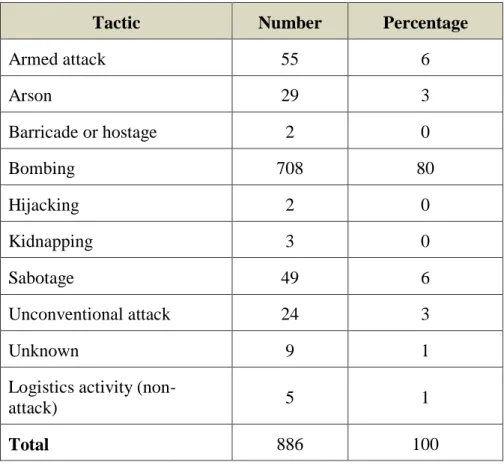
The following breakdown provides insight into the tactics that have been used in attacks between 1920 and 2007 (see Table 1).44
Table 1. Common Methods for Passenger Rail Attacks45
Tactic Number Percentage
Armed attack 55 6 Arson 29 3 Barricade or hostage 2 0 Bombing 708 80 Hijacking 2 0 Kidnapping 3 0 Sabotage 49 6 Unconventional attack 24 3 Unknown 9 1
Logistics activity
(non-attack) 5 1
Total 886 100
In Securing America’s Rail Systems, Wilson, Jackson, and Eisman stress that when developing security defenses, system security personnel must consider the types of attacks that at are preferred by terrorists. These include bombings, armed attacks, sabotage, and unconventional attacks. Some of the more common attacks are described below.
The frequent use of explosive devices in the past makes it likely that bombings will be the preferred method in future attacks. Timed IEDs allow terrorists to conduct
44 Wilson, Jackson, and Eisman, Securing America’s Passenger Rail Systems, 32.
attacks without losing personnel. Suicide operations provide another strategy for groups to increase effectiveness because an assailant can react to conditions and maximize the effect of the attack as it unfolds. Terrorists have the option to focus on single devices that target one segment of a rail system, or increase the severity by planting multiple devices.
Armed attacks have recently increased. Firearms can be employed in singular attacks or in complex assaults featuring multiple shooters. Attackers use sabotage to disrupt operations and cause fatalities. The advantage is that weapons are not required. Insider threats are relevant to this attack mode.
Although terrorist use of unconventional weapons has been rare in the past, the 1995 sarin gas attack in the Tokyo, demonstrated that chemical, biological, and radiological devices can be successfully deployed.46 The incident showed how crowds of travelers in confined spaces enhanced the device’s effectiveness and increased the potential impact of these types of weapons. Even if the potential of these types of attack occurring is low the consequences are so high that systems must dedicate resources to protecting and recovering from the use these weapons.47
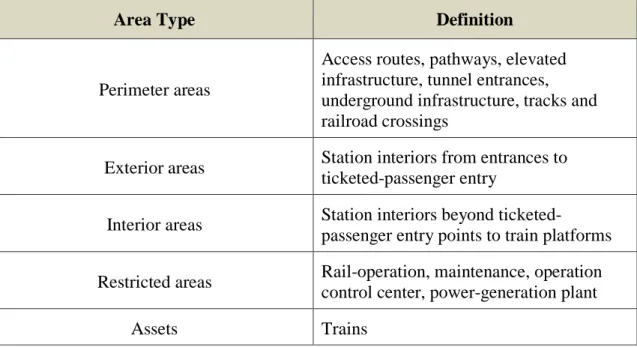
Wilson, Jackson, and Eisman also identify areas of the system that provide the environment necessary to maximize the attacker’s expenditure of resources (see Table 2).48
46 Brian Jackson, John Baker and Peter Chalk, Aptitude for Destruction, Organizational Learning by
Terrorist Groups and Its Implications for Combating Terrorism, Vol. 1 (Santa Monica, RAND Corporation, 2007), 3.
47 Wilson, Jackson, and Eisman, Securing America’s Passenger Rail Systems, 15. 48 Ibid., 42.
Table 2. Common Rail System Areas49
Area Type Definition
Perimeter areas
Access routes, pathways, elevated infrastructure, tunnel entrances, underground infrastructure, tracks and railroad crossings
Exterior areas Station interiors from entrances to ticketed-passenger entry
Interior areas Station interiors beyond
ticketed-passenger entry points to train platforms Restricted areas Rail-operation, maintenance, operation
control center, power-generation plant
Assets Trains
Transportation systems are susceptible to damage in ways that are overlooked in day-to-day activities. In addition, terrorists are actively seeking to capitalize on vulnerabilities that lie beyond the conventional perceptions of order. Because of this, the passenger rail industry has to develop a broader-based understanding of the threats so that transit systems can protect the public from terrorism.
B. SYSTEM MODELING
Passenger railroads are large, complex networks with many segments working in unison to efficiently and safely transport people. A diverse group of operators controls these networks. On the surface, companies may appear to operate in the same fashion. There are similarities, particularly in regulated activities, such as operational policies and procedures because of decades of experience that have influenced the industry to adopt practices, which today have become the standard way of conducting business. However, there are differences in other disciplines, such as security policies, which have resulted in
a variety of approaches from one system to another. Companies have latitude on how to perform these activities.
The physics, protocols, standard operating procedures (SOP), and practices, which support the framework in which rail transportation operates, are integral to the rail system domain. Protocols or SOPs are the system of rules that govern the operation of passenger railroads, and variations are based on the type of system that a company runs. Commuter rail protocols differ from those of heavy rail/subways and light rail. In addition, protocols can be voluntary or mandatory in nature. Moreover, government oversight on the federal and state levels have major influence on rail operations. William Waugh noted in “Securing Mass Transit: A Challenge for Homeland Security,” that trade organizations, such the American Public Transportation Association (APTA), use best practices and peer advisory groups to bring all operators into alignment with recognized safety and security practices.50 Recommendations from industry partners are adopted through voluntary compliance. Most government activities fall in the realm of regulations, which are tied to mandatory compliance.
The purpose of passenger rail is to transport people efficiently and safely. Efficiency involves moving large numbers of people in a timely fashion according to a schedule. Safety means transporting passengers to their destination without mishap. Safety and security are interrelated as both strive to ensure that passengers are not injured. Although the safety and security culture are different, the intended outcome is the same.
The typical passenger rail operates is in a metropolitan area and the development of a railroad relates to the growth of the locality that it serves.51 An example of this phenomenon is the city of Boston, which developed into a thriving metropolis because of its extensive rail system. Passenger railroads have certain characteristics that developed over time, and each feature has a function and adds value to overall efficiency. For
50 William Waugh, “Securing Mass Transit: A Challenge for Homeland Security,” Review of Policy
Research 21, no. 3 (2004): 311.
51 John Armstrong, The Railroad: What It is, What It Does (Omaha, NE: Simmons-Boardman Books
example, there are elevated and below-ground stations and hub stations that provide riders with transfer points. In addition, there are support facilities such as power distribution, command and control, and storage and repair yards. Various lines serve specific geographical areas, which may reach beyond the municipal boundaries of a city to suburban regions. Additionally, there is connecting service to other transportation systems, such as bus lines, airports, ferries, and other passenger rail systems, such as inter-city rail. Internal features include perimeter and station surveillance systems, a uniformed security presence, and an automated car locator system, which monitors train flow.
Trains must overcome resistance to move. Rolling resistance corresponds to wheels on the rail. This friction is energy that is not recoverable when expended. Grade resistance results from the energy that a train uses to lift vertically. That energy is recaptured when the train travels down the grade to a lower level.52
The forces of physics in play are quite impressive as a system operates. A locomotive and four passenger cars weigh approximately 100 tons. Engineering plays a large part in overcoming friction. The force of the wheel flanges, which are directed down upon the rail components on a 260-foot section of track includes 11 tons of steel, 3 tons of rail fasteners, 16 tons of track ties, and 130 tons of rock ballast, determine the design of the system.53 Increases and decreases in direction can occur on the vertical axis or on the horizontal plane. The curvature counters centrifugal force, which tends to push trains away from the inside of a turn. The concept of super-elevation was adopted to build up of the outer rail to mitigate the influence of centrifugal force, eliminating the possibility of a train derailing and toppling off the outside rail as it attempts to succumb to the forces in play.
Two factors that give a train the ability to move are traction and horsepower. Traction is the force needed to turn a train’s wheels and move it forward.54 A train
52 Joseph Flaus, Risk Analysis: Socio-Technical and Industrial Systems (Hoboken, NJ: John Wiley and
Sons, 2013), 29.
53 Ibid., 19. 54 Ibid., 55.
generates this pull by gripping the rail with its driving wheels. The train’s weight must be several times the tractive force that needs to be developed to move it, and a high level of adhesion results in more efficient operation. Horsepower is the measure of the rate of doing work. The weight of a train at a particular speed traversing a given gradient determines the power required to move a train. There are many variables on the operation side of the system that must be considered when passenger rail cars operate.
Furthermore, there are distinct components in a passenger rail system. The industry operates under a structure that separates the responsibility for activities into departments such as operations, which ensures the serviceability of cars; facilities, which maintains stations; power distribution, which supports connectivity, maintenance of way for track integrity; and signaling, which monitors communications.55
The contributions of some components are highly visible to the public, such as the physical condition of stations and the operation of trains. The accomplishments of others, such as signals, are largely hidden and not fully appreciated by the ridership. They function in unison to accomplish the end result of passenger transport. All segments, whether stations, trains or tracks, are at risk from one type of attack or another. The difference is that each component has features that make it susceptible to a particular attack method. An understanding of the characteristics of a rail system reveals some of these vulnerabilities.
A primary component of the railroad infrastructure is track. It consists of rails, fasteners, crossties, and ballast. There are more than 7,000 miles of track in the U.S. passenger rail system.56 Some systems operate on exclusive tracks, where passenger trains are the only traffic operating on a particular section of rail. On others, a freight rail company may own the tracks and share use with a passenger system. Track may seem substantial in terms of composition, but in comparison to the loads it must bear, it is only a fraction of the weight that it must support. Tracks are laid out in a specific configuration on purpose. All characteristics, including tangents, curves, switches, and
55 Armstrong, The Railroad, 251.
grading are in place for a reason related to either topography or cost. The main focus in rail security today—trains and stations—may have the effect of directing attention away from track security.57 Intentional damage to tracks will shut down or degrade the operation of a railroad, such as incidents in India and Pakistan in recent years when tracks were targeted by IEDs.58 Policymakers need to consider track security in any strategy for protecting a system against attacks.
The signaling and communication systems of a railroad are synonymous with the nervous system of a human being. The railroad is a “single degree of freedom” transportation mode.59 Trains can only go back and forth along the tracks. Restricted to only one degree of freedom, attaining high capacity and safety depends on a control system that keeps trains in proper relation to each other. The purpose of signaling is to increase the efficiency and capacity of a line to handle traffic. The compromise of a signaling system, whether due to failure of equipment, such as a broken rail, a faulty wire connection, or an act of terrorism, could result in a shutdown. Communication systems use centralized digital computation for operational and business aspects, such as tracking the location of trains in the network. Since railroads operate over long distances, management information services have become vital, as they have in most other industries. Remote monitoring and control via supervisory control and data acquisition, while highly efficient, exposes railroads to the potential network attacks. This information technology (IT) infrastructure is responsible for controlling the movement and monitoring of transportation equipment.60
Rail cars or trains are one of the most tangible facets patrons see of a passenger rail line. System capacity is dependent on the configuration of cars, and the number of doors on a train governs the rate at which passengers can get on and off. A system that
57 Ben Lerner, “Losing Track on Rail Security,” Homeland Security Today, April 25, 2016,
http://www.hstoday.us/columns/guest-commentaries/blog/losing-track-on-rail-security/fff77b506f8b611b018f4234254a5180.html.
58 U.S. Department of Homeland Security, Tactics, Techniques, and Procedures, 8. 59 Armstrong, The Railroad, 125.
60 American Public Transportation Association, Cyber Considerations for Public Transit APTA
operates eight 75-foot cars at rush hour capacity with 90-second headway could hypothetically exceed the capacity of a 20-lane expressway full of single occupant vehicles.61
Heavy rail cars and commuter cars have different manufacturing specifications, and the speed at which these trains operate is the determining factor for survivability or crash worthiness in accidents. In addition, many of the advances in train design revolve around crime prevention strategies. Graffiti resistant surfaces, increased visibility through the incorporation of glass, and intercom systems have resulted in a safer environment for riders. These advances have the ancillary benefit of deterring terrorism as well. The interior of cars has been designed to eliminate shrapnel-producing interior fixtures and voids or areas where IEDs can be hidden.
A measure of efficiency in rail cars is ridership capacity. Accommodating more passengers in a rail car translates into more revenue for the operator. Unfortunately, congested cars provide an opportunity for terrorism, particularly those using explosive devices. Confined spaces magnify blast effects, and train cars are efficient containment vessels. Of all the components of a rail system, trains are one of the most at risk. Furthermore, the majority of terrorist attacks have targeted trains and underground networks.62
Stations are another major part of a rail system. Their architectural features, such as multiple entrances and exits, maximize movement. Often there are multimodal connections with other transit systems and buses to encourage patronage. Each facility, whether it is an aboveground or an underground station, has unique security challenges. Underground stations pose concerns in regard to the integrity and ability to sustain damage and resist collapse. Since stations consistently draw crowds, commercial development is incorporated into facilities. These characteristics make screening of
61 Armstrong, The Railroad, 243.
62 Tony Pattison, “The Daegu Subway Tragedy: Was it Avoidable?” Jane’s Terrorism and Security
passengers in the traditional sense almost impossible to accomplish.63 In Hard Won Lessons: Transit Security, Charles Sham emphasizes that “Incorporation of certain elements, such as reinforced construction materials, can reduce the damage from an explosion. Likewise, injuries from a terrorist attack can be mitigated when physical considerations are included in the design of features such as entrances and exits.”64
Railroad personnel strive to ensure that all of the components of the system function properly. The majority of a rail system’s employees, up to 85 percent, are in the operations division.65 These people run the railroad. There are administrative positions such as dispatchers, and management, as opposed to field positions, such as engineers, conductors, and station agents. Railroad operators are encouraging all employees to serve as additional eyes and ears, in an effort to increase domain awareness. The goal is to detect suspicious activities before an attack occurs. In a 2005 report issued by DHS entitled, How Security Personnel, Transit Employees, and Passengers Disrupted Attacks against Mass Transportation Worldwide, the following observations were noted
Forty Four percent of attempted IED attacks, 32 incidents worldwide, between 2004 and 2010, failed as a result of observations by employees or security personnel. Reporting suspicious persons or packages is a core responsibility of employees because workers have superior domain awareness of the rail system. The majority of employees know the trains, tunnels, and passengers better than anyone else. Information gathering should also involve the millions of passengers who commute each day. By utilizing the public as a ‘detection’ system, an agency can exponentially increase the chance of detecting suspicious persons and packages.66
Depending on the configuration, there may or may not be power facilities on a system. Electricity is the source of power on the majority of the country’s networks, and distribution occurs through either third rail or overhead catenary wires. Rail power
63 U.S. Department of Homeland Security, Characteristics and Common Vulnerabilities: Railroad
Passenger Stations (Washington DC: Protective Security Division, 2005), 14.
64 Charles Sahm, Hard Won Lessons: Transit Security (New York: Manhattan Institute for Policy
Research, 2006), 17.
65 Armstrong, The Railroad, 269.
66 U.S. Department of Homeland Security, How Security Personnel, Transit Employees, and
Passengers Disrupted IED Attacks against Mass Transportation Worldwide, 2004-2010 (Washington DC: Office of Intelligence, 2011), 3.