The social construction of Muslim minority groups in Canada
A thesis submitted to
The College of Graduate and Postdoctoral Studies In Partial Fulfillment of the Requirements
For the Degree of Doctor of Philosophy In the Department of Sociology
University of Saskatchewan Saskatoon
By
Syed Asad Ali Shah
i
PERMISSION TO USE
In presenting this thesis in partial fulfillment of the requirement for a postgraduate degree from the University of Saskatchewan, I agree that the libraries of this University may make it freely available for inspection. I further agree that permission for copying of this thesis in any manner, in whole or part, for scholarly purposes, may be granted by the professor or professors who supervised my thesis work or, in their absence, by the Head of the Department or the Dean of the College in which my thesis was done. It is understood that any copying, publication or use of this thesis or parts thereof for financial gain shall not be allowed without my written permission. It is also understood that due recognition shall be given to me and the University of Saskatchewan in any scholarly use which may be made of any material in my thesis.
Request for permission to copy or use of whole or part of this thesis may be addressed to:
Department of Sociology University of Saskatchewan 1019 - 9 Campus Drive
Saskatoon, SK Canada S7N 5A5 OR
College of Graduate and Postdoctoral Studies University of Saskatchewan
Room 116 Thorvaldson Building, 110 Science Place
ii
ABSTRACT
This dissertation explores Canadian mainstream print media's discourse on Muslim minority groups in Canada in the pre- and post-9/11 timeframe. By using critical discourse analysis (CDA) of three Canadian English newspapers as well as focus group discussions, and individual interviews, this study explores the issues of racialization, Islamophobia, and the role of Canadian mainstream print media in the construction of stereotypical images of the Muslim minority groups in Canada. The data reveal the frequent usage of stereotypical racialized terms in three Canadian newspapers (two national and one local) directed toward Muslims in the post-9/11 period cultivated moral panics in Canadian society. Although Muslim were negatively portrayed in these newspapers before 9/11, the situation escalated in the post-9/11 era. Participants in the focus group discussion and individual interviews also stated that the post-9/11 moral panics augmented and perpetuated the negative feelings towards Muslims. An increased trend in racial and religious discrimination against Muslims was observed throughout Canada after the 9/11 incident in New York. The negative portrayal of Muslims stemmed from a lack of understanding of Muslim minority groups, their culture and/or international distortion of Muslims by media personnel, who did not differentiate between the small number of Muslims who engaged in or support terrorist acts, and the majority of Muslims who do not. By neglecting to recognize this conflation of the different perspectives of Muslims on these matters, the selected newspapers contributed to the escalation of moral panics in Canadian society, which resulted in increased negative attitudes towards Muslims.
iii
ACKNOWLEDGEMENTS
I am deeply indebted to my supervisor Dr. Patience Elabor-Idemudia, whose constant support and encouragement helped me to finish my Ph.D. within a reasonable time period. I would not be able to complete my study without her mentorship and guidance. I would also like to thank my advisory committee members, Dr. Li Zong, Dr. Joe Garcea, and Dr. John Hansen. They remained available throughout my study and supported me by giving their invaluable feedback and advice.
I also wish to thank my senior colleagues Dr. Tayyab Shah and Jason Jean for their helpful comments and suggestions during my doctoral research.
I express my sincere gratitude to the Department of Sociology and College of Graduate and Postdoctoral Studies for their financial support during my entire period of study.
Finally, I would like to thank my beloved wife Sadia for her moral support during my research work. She always stood by me in my hard times, especially when I was away from home for my studies and she took care of our family in my absence.
iv
DEDICATION
The dedication of this thesis is to my father “Syed Ali Asghar Shah” who promised to attend my doctoral degree convocation, but unfortunately, he passed away on June 15th, 2015 before the completion of my PhD degree studies. His inspiration, love, and support continue to guide me towards the beauty and positivity of life.
v
TABLE OF CONTENTS
PERMISSION TO USE ... i ABSTRACT ... ii ACKNOWLEDGEMENTS ... iii DEDICATION ... iv TABLE OF CONTENTS ... vLIST OF TABLES ... viii
LIST OF FIGURES ... ix
CHAPTER 1: INTRODUCTION ... 1
1.1 Social construction of Muslims in Canadian media in pre- and post-9/11 eras ... 2
1.2 Focus and purpose of dissertation... 6
1.2.1 Objectives of study... 7
1.2.2 Research questions ... 7
1.3 Significance of study ... 8
1.4 Thesis structure ... 8
CHAPTER 2: LITERATURE REVIEW AND THEORETICAL FRAMEWORK ... 9
2.1 Media: Constituents and Objectives ... 9
2.1.1 Media as a powerful tool of communication ... 10
2.1.2 Media representation of Muslims in Canada ... 13
2.2 Hijab and Burqa debates in Canada ... 17
2.3 Bouchard-Taylor commission report ... 19
2.4 Race relations and Muslims in Canada ... 20
2.5 Race relations and Inequalities ... 27
2.5.1 Power and inequality ... 32
2.5.2 Contemporary “just” society ... 34
2.6 Theoretical framework ... 36
2.6.1 Folk Devils and Moral Panics ... 36
2.6.2 Muslims as Folk Devils, and Moral Panics in Canadian Society ... 38
2.6.3 Three Phases of “Folk Devils and Moral Panics” Theory ... 39
vi
CHAPTER 3: METHODOLOGY ... 43
3.1 Qualitative vs Quantitative methods ... 44
3.2 Data collection ... 47
3.2.1 Newspaper data ... 47
3.2.2 Focus group discussion and interviews data ... 48
3.3 Coding Process of newspaper data ... 49
3.4 Data Analysis ... 50
3.4.1 Critical Discourse Analysis of Newspapers ... 51
3.4.2 Focus Group Discussion and Individual Interviews ... 51
3.5 Summary ... 53
CHAPTER 4: RESEARCH FINDINGS ... 54
4.1 Newspapers results ... 54
4.1.2 The Globe and Mail ... 57
4.1.3 National Post ... 58
4.1.4 The Star Phoenix ... 59
4.2 Focus group and interviews ... 60
4.2.1 Focus group discussions... 61
4.2.2 Individual interviews... 62
4.3 Summary ... 62
CHAPTER 5: ANALYSIS ... 64
5.1 Introduction ... 64
5.2 Newspaper discourse on Muslims in the pre- and post-9/11 era ... 65
5.3 Muslim women in the post-9/11 era ... 73
5.4 Islamophobia in Canada ... 76
5.5 Racism and religious discrimination against Muslims ... 78
5.6 Summary ... 85
CHAPTER 6: CONCLUSION ... 87
6.1 Research Summary ... 88
6.2 Limitations ... 90
6.3 Research contribution and recommendations ... 91
vii
Questionnaire for focus group participants: ... 94 Questionnaire for individual interviews:... 96 REFERENCES ... 98
viii
LIST OF TABLES
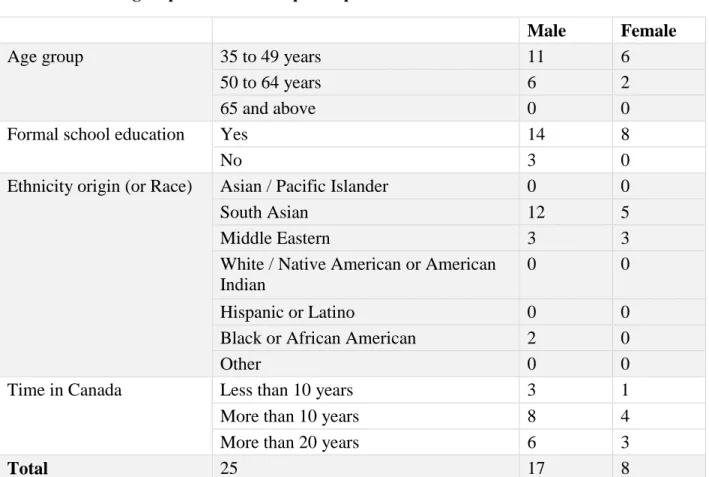
Table 3.1: Focus group and interview participants’ details ... 49 Table 4.2: Summary of trends (times increase after 9/11) in each newspaper ... 57
ix
LIST OF FIGURES
Figure 2.1: Muslim population growth in Canada ... 21
Figure 2.2: The model of social construction of Muslim minority groups in Canada ... 39
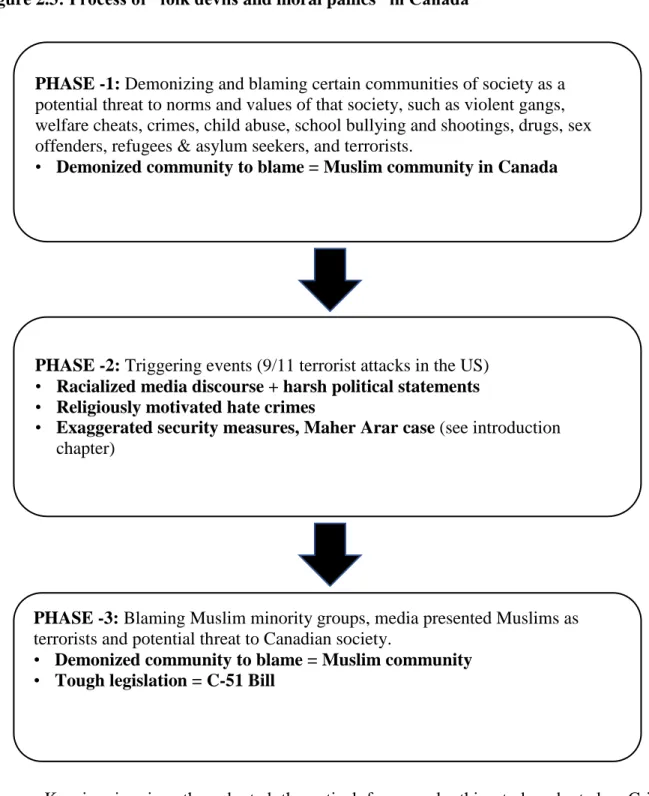
Figure 2.3: Process of “folk devils and moral panics” in Canada ... 41
Figure 4.4: Total count in each newspaper from Sep. 11th, 2000 to Sep. 10th, 2002 ... 55
Figure 4.5: Combine summary of trends in three newspapers (times increase after 9/11) ... 56
Figure 4.6: The Globe and Mail trends (times increase after 9/11) ... 58
Figure 4.7: National Post trends (times increase after 9/11) ... 59
Figure 4.8: The Star Phoenix trends (times increase after 9/11)... 60
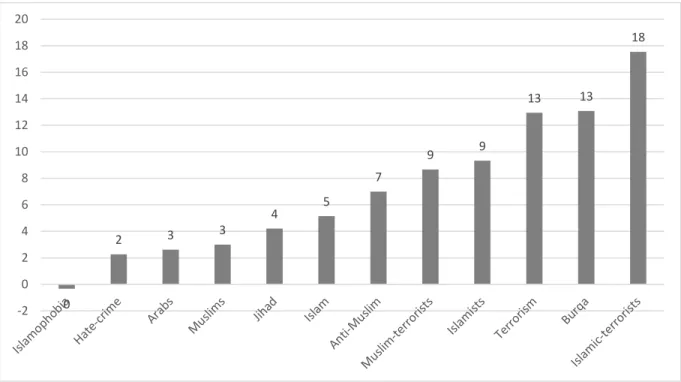
Figure 5.9: Trequency trends (times increase after 9/11) ... 66
Figure 5.10: Trends (times increase after 9/11) in burqa discussion ... 74
1
CHAPTER 1:
INTRODUCTION
I was born in Rawalpindi, Pakistan, and I grew up in the era of the Iranian revolution and Afghanistan war in my region. Between 1980s and 1990s, I witnessed several unpleasant incidents in Pakistan in my childhood including political instability, military dictatorship, Islamic radicalization, and bomb blasts in major cities. The Afghanistan war left many dreadful marks on Pakistan including political instability and religious conflicts that seriously affected the perception of Pakistanis and Muslims1 in the outer world.
After stepping into professional life, I traveled across Europe for my business work and experienced many incidents at international airports where I was treated unfairly because of being a Muslim Pakistani. During my visits to Western countries, I observed that the media in those countries were representing Muslims in very negative ways. The situation became worse after the terrorist attacks in the US on September 11, 2001. Western media were blaming the Muslim world for the terrorist attacks. I was in the United Kingdom during the incident of London bombings in July 2007, and I felt that the British people were treating me in unfriendly ways because of my religious and ethnic similarities with the people who were involved in those terrorist attacks in London. During a train ride in London, I was the only person who was asked to present my identity documents. Once, I was denied entrance into a local cinema in London because I did not have my ID with me. On another occasion, I was interviewed by security officials for more than three hours at Manchester airport without any valid reason. I had siblings and many other relatives living in the UK, and they told me that they were facing discrimination in their daily lives almost everywhere including schools, malls, public gatherings, hospitals, and even in government institutions. Most of them believed that the media played a major role in creating such stereotypical images of Muslims by portraying them negatively during the daily news coverage of terrorist incidents that happened anywhere in the world. Upon my return to school to pursue my doctoral studies, I decided to focus my research on this topic in order to determine the role of media in
1 Muslims or Muslim minority groups are homogeneous groups of people who follow the religion of Islam that
2
creating negative image of Muslims and the implications of such media coverage on Muslims immigrants living in Western countries. My dissertation, titled the social construction of Muslim minority groups in Canada, aims to examine mainstream Canadian print media coverage of Muslims before and after the 9/112. The purpose is to ascertain the implications of negative representation of Muslims for their quality of life in Canada.
1.1 Social construction of Muslims in Canadian media in pre- and post-9/11 eras
In contemporary societies, some segments of the population (i.e. the majority) rule other segments of the population (the minorities) and decide how culture should grow, which social structure should be cultivated, and what is right or wrong for the society. Canada has a long history of uneven relations between European colonizers and Indigenous people that has adversely impacted the contemporary Canadian society. The colonial experience has driven Canadian society towards an era of unequal power and uneven race relations. The media, being an influential tool in the society, has emerged as the principal constructor of racial and ethnocultural identities. The dominant elite class has used the media to create and maintain its hegemonic power. In the case of Muslim minority groups in Canada (particularly those of Arabic or non-European ethnic origins), the media has played a significant role in their social construction as potential threat to Canadian society. The September 11, 2001, terrorist attacks in the United States (US) can be acknowledged as a landmark in modern history of race relations in the Western world, especially in North America. Media reporting during the period of attack portrayed peaceful Canadian Muslims as terrorists based on their racial, religious, and cultural similarities to the terrorists involved in 9/11 terrorist attacks in the US. The nature of the relationship between the mainstream population and Muslim minority groups in Canada shifted from differences related to race and ethnicity to the differences related to religion and culture since 9/11.
The 9/11 terrorist attacks in the US has had serious implications for Muslim minority groups in Canada (Hanniman, 2008; Smith, 2013). Muslims, who were considered as peace-loving, respectful, helpful, active participants in the community, and law-abiding citizens before 9/11, became viewed as prospective terrorists after 9/11 because of their religious, racial and ethnic
3
affiliation (Hanniman, 2008; Smith, 2013). The attacks created tensions and divisions between Muslim minorities and the majority groups in North America (Smith, 2013).
Post-9/11 literature has clearly shown a rising trend in anti-Muslim sentiments in North America. Saunders (2012) believes that Muslim minorities now pose an exponential threat to the Canadian society. Muslims may not be able to integrate into Canadian democratic and liberal society because they do not share or in some cases, are opposed to the core values of Canadian society (Saunders, 2012; Taras, 2013). Saunders (2012) expressed his concerns that Muslims are forming parallel societies and following their own culture and values while living in Canada. Although the friction between Christianity and Islam can be traced to centuries back, a new trend in religious divide in the Western world has clearly been observed after 9/11 (Eid & Karim, 2011; Smith, 2013). Smith (2013) sees the 9/11 event as a catalyst that inflamed the renewed friction between majority Christian population and Muslims living in North America. The anti-Muslim attitude in the West is much older than the post-9/11 developments of Islamophobia3 in North America (Taras, 2013). Therefore, whenever a criminal activity is carried out by some groups from the Islamic world, the old anti-Muslim sentiment flares up and is projected in shaping of racial and faith-based hate in the Western world (Ameli & Merali, 2014).
The Canadian Muslim minority groups perceived an increase in racism and stereotypical attitudes towards Muslims soon after the 9/11incident (Hanniman, 2008; Smith, 2013; Zine, 2002). Therefore, the incidents of racism and religion-motivated hate crimes were observed across Canada and include verbal mistreatment, physical intimidation, and destruction of properties (Zine, 2002). Increased trends in Islamophobia created ideological and systemic forms of oppression, prejudice and discrimination against Muslims (Said, 1985; Zine, 2002). Canadian Muslims were asked to produce their fingerprints and photographs while crossing the US border; thus, their Canadian citizenship were compromised by their religious identity (Guney, 2010; Zine, 2002).
The following are real-life examples of racialization4 of Muslims after 9/11.
3 The distrust of Muslims as a threat resulting in fear of Muslims who are perceived as having a political agenda
driven by their faith.
4
In 2002, Canadian Muslim “Maher Arar” was deported by the US security officials to his country of birth “Syria” instead of his country of citizenship “Canada” (Siddiqui, 2008; Zine, 2002). The US government suspected Mr. Arar had a link with terrorist organization “Al-Qaeda” and was denied contact with a lawyer (Leung, 2004; Zine, 2002). According to CBS News, the Canadian government was blamed for giving false information to US officials about Mr. Arar’s connections to the terrorist organization. After being taken into custody, Mr. Arar was badly tortured by the Syrian security agencies for one year. However, somehow, he was released to Canada after one year and was declared innocent by the Syrian government. Later, the Canadian Prime Minister officially gave an apology to Mr. Arar and compensated him with CAN$10.5 million for mistreatment by the Canadian government.
“In 2003, the Citizenship and Immigration Canada publicly labeled 23 Muslims of Pakistani and Indian origin as terrorists without any valid pieces of evidence” (Ameli & Merali, 2014; Siddiqui, 2008).
“In 2006, Toronto Police arrested 18 Muslims on charges of terrorism; the case lacked evidence and the Police had to drop the charges against half of the accused even before the beginning of the trial” (Siddiqui, 2008).
“On 12 December 2011, the Canadian government banned the niqab5 in citizenship ceremonies. Now women who wear full-face veils are required to remove them while they take their citizenship oath to Canada” (Thomas, 2015, p. 187).
“In 2015, a Quebec judge refused to hear the case of a Muslim woman wearing the hijab6” (Rukavina, 2015).
5 Full face veil
5
“On January 29th, 2017, six Muslims were shot to death and several wounded in a Mosque shooting in Quebec City by a White non-Muslim Canadian” (Perreaux, Séguin, & Stevenson, 2017).
Unlike other diasporas, the identities of Muslims living in North America are constructed based on wars in the Middle Eastern region and other parts of the Muslim world, and by media negative portrayals in Canada and the United States (Guney, 2010; Smith, 2013). Western movies and cartoons have also contributed immensely to the stereotyping and negative portrayal of Arabs and Muslims as they presenting them as villains, mobs, and jokers (Said, 1979; Smith, 2013). Such media representations have played significant roles in shaping the negative image or the racialization of Muslims in Western societies (Guney, 2010; Smith, 2013). Moreover, several factors including race, class, culture and gender intersect in the construction of racial and ethnic groups in a social hierarchy format. These factors are also used to justify the dominance of certain power groups in societies (Li, 1995; Said, 1985); the media is considered the most powerful instrument among such factors (Collins, 2013; Smith, 2013).
During and after the 9/11 terrorist attacks in the US, the mass media repeatedly highlighted images of Middle Eastern people termed billionaires, bombers, and belly dancers
(Smith, 2013). Canadian media also followed a similar pattern as the US media by portraying negative images of Muslim men and women. The textual common stereotype language used for Muslim women was their being forced to wear a veil, and were therefore oppressed, uneducated or unable to think for themselves and that their husbands must beat them, without being allowed to go out of their homes (Ameli & Merali, 2014). Muslim men were presented as wife-beaters, looking like terrorists, and Arabs who hated America (Ameli & Merali, 2014). This pre-conceived negative image of Muslim minority groups was re-enforced in Canadian society after the 9/11 terrorists attack (Hanniman, 2008; Razack, 2008; Yousif, 2005).
Smith’s (2013) study of public perception of Muslims in the US soon after the 9/11 terrorist attacks revealed that terrorism did not threaten most Americans. Instead, they were sympathetic towards innocent American Muslims for being defamed by the actions of some extremists and terrorists. It was when the racialized messages about Muslims were repeated several
6
times during the 9/11 media coverage that they gradually became acceptable by the general public as normal or common sense (Smith, 2013). The repeated usage of racialized terms like "Islamists, Muslim terrorists, Islamic extremists, and Islamic radicals" created an unfavorable perception of Islam among most North Americans (Eid & Karim, 2011). The media played a significant role in constructing new identities for Muslims (Guney, 2010) in Canada in the post-9/11 era (Zelizer & Allan, 2011; Zine, 2002). Zine (2002) cites the example of Maher Arar’s case to highlight how an innocent victim was denied his rights by law enforcement procedures, and the media created a hype in this case by presenting him as a terrorist because of his race, ethnicity and religious affiliation.
1.2 Focus and purpose of dissertation
With the advent of terrorist activities in the world, certain ethnic and racial minority groups in the West become targets of silent resentment and were unfairly and needlessly stigmatized as “sympathizers,” by virtue of their ethnic and racial similarities to the terrorists. In Western societies, people who have directly suffered from terrorist attacks are not the only victims, but other minority groups who are also often singled out as targets of public anger and resentment and consequently become indirect victims of terrorist acts. The Muslim minority groups living in Western countries are the prime examples of unintended “victims” since the 9/11 terrorist attacks in the US.
This dissertation examines the Canadian mainstream’s print media discourse on Muslim minority groups in Canada in pre- and post-9/11 eras. Specifically, the study focuses on the racialization and stereotyping of Muslim men and women, the racist media discourse, and the role of Canadian mainstream print media in the construction of new identities for the Muslim minority groups in Canada. This study shows that Muslim minority groups have been negatively portrayed in Canadian newspapers since 9/11 terrorist attacks in the US. The negative portrayal of Muslims stems from a lack of understanding of Muslim minority groups, their culture and/or international distortion of Muslims by media personnel, who do not differentiate between the small number of Muslims who engage in or support terrorist acts, and the majority of Muslims who do not. By neglecting to recognize this conflation of the different perspectives of Muslims on these matters, the selected newspapers contributed to the escalation of moral panics (see theoretical framework
7
section for detailed discussion) in Canadian society, which resulted in increasing negative attitudes towards Muslims.
1.2.1 Objectives of study
This study has two major objectives:
1- To explore the role played by the print media in the social construction of Muslims in Canada.
2- To examine, understand and highlight media’s racial and religious undertones directed at Muslims that perpetuate moral panics in Canadian society.
The first objective focuses on newspapers’ discourse on Muslims and Islam. It examines the role of three Canadian English newspapers in constructing stereotypical racialized identities of Muslims and negative portrayal of religion Islam. The second objective highlights the outcomes of biased print media discourse in the form of racism and prejudice against Canadian Muslims.
1.2.2 Research questions
This research study is an attempt to address the following question, which contains two key concepts coined by Stanley Cohen (2002) that are explained in more detail below, namely folk devils and moral panics:
Have Canadian print media discourses on Muslims in pre- and post-9/11 served to create their new identity as folk devils responsible for the moral panics in the society?
In addressing this main research question, the study also explores the following sub-questions: How were Canadian Muslims represented in the mainstream Canadian
newspapers - The Globe and Mail, National Post, and The Star Phoenix, before 9/11?
How have Canadian Muslims been presented in above mentioned three newspapers since 9/11?
8
What characteristics are embodied in the social construction of the Muslim
folk devils created in response to negative discourse used by the Canadian press?
1.3 Significance of study
Recent studies on critical discourse analysis of media representation of Muslim minority groups focused on the post-9/11 period (see Belkhodja & Richard, 2006; Eid & Karim, 2011; Selod, 2014; Smith, 2013; Smolash, 2011; Zelizer & Allan, 2011). Those studies did not provide a comparative analysis of the print media coverage of Muslim minority groups in the pre- and post-9/11 periods and validated by taking the perspective of lived experiences of Muslims. This study is aimed at filling this gap by conducting a discourse analysis of three Canadians newspaper and comparing the pre- and post-9/11 discourses on Muslims. Moreover, in order to generate additional knowledge, this study has collected data from members of the Muslim minority groups by conducting focus group discussions and individual interviews.
1.4 Thesis structure
This thesis is divided into six chapters. Chapter 1 outlines the overall introduction of this research study that includes the background, the objectives, and the research questions. Chapter 2 sheds light on the literature related to the role of media in social construction of Canadian Muslims, the historical concept of race and ethnic relations, and some of the serious implications of media misrepresentation of Muslim minority groups in Canada in the pre- and post-9/11 eras. Moreover, this chapter also presents the theoretical framework for this research study, and explains how it applies to the current situation of Canadian society. Chapter 3 describes the methodology adopted for this study, including the data collection and methods of data analysis. Chapter 4 presents the key results of this study. Chapter 5 discusses the findings that emerged from the three Canadian English newspapers, and also examines the outcomes of the focus group discussions and individual interviews. And the last chapter 6 concludes the major findings of this study, proposes some recommendations to improve the race and religious relations within Canadian society, and also offers some suggestions for further studies in this area.
9
CHAPTER 2:
LITERATURE REVIEW AND THEORETICAL FRAMEWORK
The body of literature in this study covers print media construction of Muslim minority groups in Canada in pre- and post-9/11 eras. The Canadian media discourse has played an influential role in constructing negative social identities of Muslim minority groups in Canada. This literature review attempts to highlight literary debates about the mainstream Canadian print media discourse on Muslims before and after 9/11, and its implications on race relations in Canadian society
This chapter has two sections, first section explores the literature related to race, racism, racialization, role of media, and stereotyping of Muslim minority groups in Canadian context. This literature review has helped to lay down the foundation of theoretical framework for this study. The second section points out the best suited theoretical explanation that helps to understand the media construction of Muslims in the pre- and post-9/11 periods. Furthermore, it also helps to uncover and understand the media undertones towards race and religion, and how it impacts the lives of immigrants and religious minorities in Canada.
2.1 Media: Constituents and Objectives
Human beings have always been curious to know about everyday life of rich and famous people around the world (Schudson, 2011). They have been particularly interested in sex, guts, and blood- related sensational news. Media is a broader term and is widely used to refer to the print and electronic media that include newspapers, periodicals, TV, and radio; however, with the advancement of technology, now social media is also being considered as the major player in media industry. Media is considered as the major source of information that plays a significant role in creating awareness among masses, and reshaping public opinion (Henry & Tator, 2006; Nasir, 2013; Zelizer & Allan, 2011). According to Nasir (2013, p. 407), “the basic objectives of media are (i) to inform, (ii) to educate, (iii) to entertain and (iv) to mold the opinion of the people”. In contemporary societies, media has become an effective and influential communication tool that should be un-biased and positive. Sometimes media houses convey messages without any bias to
10
maintain their neutrality, but occasionally media groups also get involved in controversial areas, such as, favoring or opposing some political issue.
Schudson (2011) considers media as a tool that continuously engages in a process of social interaction through strong communication and discourse. Dijk (1989) explains the structure of social power by exploring the medium of communication and discourse. He points out that the powerful segment of society controls all forms of communication and discourses that include laws, policies, books, images, and mass media (Dijk, 1989, 1995). The powerless people in society, such as children, prisoners, defendants, minorities, and women, have "nothing to say," or have to remain silent when some more powerful people are speaking (Dijk, 1989; Henry & Tator, 2002). The social power lies in the hands of those who control all forms of communication and discourses in the society (Dijk, 1989). Mills (1999) considers media as a power-defining tool in the society and equates it with his notion of “power elite.” Talking about the power relations among the different groups in society, Mills divides social power into three categories; first, "coercion" that forces people to do something they do not want to do; second, "authority" that is justified by the obedient person who accepts it willingly without coercion; and third is "manipulation" that makes people feel that they are acting out of their free will and do not realize they are being controlled (Calhoun, 2012; Mills, 1999). Mills (1999) mentions that the “power elite” are controlling the public without making them realize that they are being manipulated. Mills’ “power elite” and Bourdieu’s “symbolic elite” are the media owners, journalists, writers, and directors, who control the discourse and all means of communication in the society (Bourdieu, 1977; Mills, 1999).
Media appears to be a key player in molding public opinion on some specific issues for different reasons such as, financial gains, nationalism, or under political and social pressures. However, it is a very difficult task to question media’s position in terms of acting as an agent that pursues a specific agenda, or performing the role of a neutral messenger, or operating as mirror of society.
2.1.1 Media as a powerful tool of communication
Because of a wide range of audience, media, that includes both print and electronic, has immense power to construct social realities and influence public opinion (Henry & Tator, 2006; Nasir, 2013). Although the media is expected to remain neutral and provide a free and equal
11
representation of all groups and classes, in reality, the media cannot remain impartial (Guney, 2010; Henry & Tator, 2006). In practice, the media has been used by power groups to pursue their political and commercial agendas in many cases. At the same time, media groups willingly take sides on certain issues to fulfill their goals (Schudson, 2011). The election coverage by media groups clearly show that which candidate or party they support. Similarly, some examples are when media houses support or oppose specific social movements or governmental policies that help different power groups to mold public opinion towards those issues.
The word “neutral” refers to an ideal situation where the media is expected to provide balance coverage of all political rivals and report every issue without (or less) bias. However, media organizations not only aim to make profits, but also work hard to maintain their credibility in the market (Schudson, 2011). Media provides imperative information, which leads people to make important decisions in their daily lives. Some examples include people who make and change their travel plans according to weather forecast, others buy and sell their assets after watching financial news, and many more people receive information about epidemics, warnings of floods, and information about events and shopping sales.
While media is a major source of information, it educates people, and creates awareness among masses about their rights and obligations, it is also a double-edged sword that can do good, as well as evil at the same time. Sometimes, the media advocates prejudice, racism, and radicalization. Henry and Tator (2006) argue that while advocating the democratic values in society, media reinforce and reproduce racism by racializing crime, religion, stereotyping of immigrants, and perpetuating Eurocentric prejudice against the people of color. Media reconstructs and redefines the realities about particular groups in society which are mostly biased (Guney, 2010; Henry & Tator, 2006). Canadian media is blamed for its leading role in constructing negative images of minority groups that are used to justify racism and discrimination in society (Ameli & Merali, 2014; Zine, 2012). Therefore, public views and perceptions of particular groups in society are greatly influenced and shaped by media portrayals of certain issues in negative ways (Ameli & Merali, 2014; Karim, 2008).
“Any deviation from fair representation can be accounted for by media bias. “Bias” in this context means that the reporter, editor, or news institution owner
12
knows what the real even looks like but will color it to advance a political, economic, or ideological aim” (Schudson, 2011).
Schudson (2011) believes that news media holds intentional political bias while reporting important issues. Furthermore, media owners and editors make policies about what and when to publish. These media owners and editors tend to fabricate the news to oblige the political and commercial forces who fund them. Sometimes, they prevent important news from reaching the people because of national security issues, and at other times, they reveal confidential issues because of public interest. As a whole, in contemporary societies, the media has emerged as the most influential communication tool that can easily and quickly build or change public opinion (Henry & Tator, 2006; Nasir, 2013).
Historically, electronic and print media, which included television, radio, and newspapers, were considered a one-way system of communication, because there was no efficient mechanism for the larger population to respond or answer back to the media. However, recent advancements in social media, that includes Facebook, Twitter, Instagram, YouTube, google+, and blogs, it is possible to correspond with the media owners, celebrities, and political figures (Pătruţ & Pătruţ, 2014). Most media corporations have twitter and Facebook accounts, where people can discuss political and social issues and leave their comments about any news or report, and the good thing is that everything is in the public domain. The electronic versions of newspapers have facilities to leave feedback and start discussions in response to important news and editorials. Such technological progress in the media industry has made the world a global village, where everything is connected. People can watch TV, listen radio, and read newspapers on computers and cellphones. People are also able to give their opinions on political and social issues through websites and social media networks.
Because of the two-way communication system, media now act as mirror of the society. Political forces hardly hide something from their public in presence of such vibrant media. While playing the role of watchdog, the media exposes the hidden truth behind the scenes on important political and social issues. Moreover, it presents public responses on critical issues and organizes debates and discussions to offer solutions to those challenges.
13
2.1.2 Media representation of Muslims in Canada
After the 9/11 terrorist attacks in the US, the Canadian media began to present peaceful Muslims living in Canada as potential threat to the society because of their racial, cultural, and religious affiliations with those who were involved in 9/11 attacks (Zine, 2012). A growing trend in Islamophobia7 and religiously motivated hate crimes were observed in Canadian media after the 9/11 (Satzewich, 2011). Furthermore, the repetition of racial discourse about Muslims and Islam in media, such as "Islamists," "Muslim terrorists," "Islamic extremists," and "Islamic radicals," resulted in an unfavorable perception among most North Americans towards Muslims (Eid & Karim, 2011). The frequent usage of stereotypical racialized terms in Canadian newspapers directed toward Muslims in post-9/11 period cultivated moral panics in Canadian society. Such media discourse justified the perceptions of people with right-wing political thoughts, who viewed multicultural policies as going against the Canadian national identity (Belkhodja & Richard, 2006). Garcea, Kirova, and Wong (2008) acknowledge the post-9/11 period as the era of “anti- and/or post-multiculturalism discourse” (p. 1).
One of the major aspects of the media is that the general public entirely depends upon it for current news and information about the outside world (Cohen, 2002; Nasir, 2013). In this case, the media holds enormous power in the construction of any image about minority groups (Collins, 2013; Nasir, 2013; Smith, 2013). Ethnic minorities seek their space in mainstream Canadian media so that they become visible and feel an important part of a multicultural society (Mahtani, 2008). The majority population gets information about minority groups only through media, but these minority groups are mostly invisible in the mainstream media (Collins, 2013; Mahtani, 2001, 2008). The Muslim communities are among those minority groups that are invisible from the mainstream media. The Bouchard-Taylor commission report (2008), revealed that immigrants and ethno-religious minorities are under-represented in Canadian mainstream media.
Media professionals and journalists publish, telecast, and broadcast information about certain social groups based upon their personal opinion and information, which is mostly biased (McCombs, 2013) and racialized (Mahtani, 2008). Moreover, media is responsible for presenting, evaluating, and interpreting Canadian society in its own way. Due to concerns over confidentiality,
14
it is very difficult to interview the media people to discuss and understand the reasons why minorities are misrepresented in Canadian media (Mahtani, 2001). However, it is very important to resolve the issues of misrepresentation, stereotyping and negative portrayal of minorities, and it needs to be made ensured that minorities receive free, fair, and equal media coverage in Canada (Mahtani, 2001). A research conducted by Yasmin Jiwani (see Jiwani, 2012) after 9/11, she observed two mainstream Canadian newspapers, The Globe and Mail and National Post, and found that during the media reporting of 9/11 tragedy, both newspapers negatively portrayed Muslims and Islam (Zine, 2012). The information about the Muslims and Islam presented to the larger population was produced by the reporters who did not have enough knowledge about Muslims or Islam. Such sensationalized reporting and information reproduced Orientalist constructions and was entirely misleading to the general public (Zine, 2012).
Most of contemporary scholars believe that Western understanding of Islam has developed a negative perception about Muslims in the Western world. One of the most discussed word Jihad is often misunderstood and confused among majority of non-Muslim world. Husain (2003) explains the three forms of Jihad as; jihad-i-akbar, umaic jihad, and jihad-i-asghar. Jihad-i-akbar is supreme form of jihad that advocates perpetual internal struggle of Muslims against greed, racism, hedonism, jealousy, revenge, hypocrisy, lying, cheating, and calumny. Whereas,
umaic jihad signifies the verbal or written struggle for freedom, justice and truth within the Islamic world. Jihad-i-asghar, martial or violent jihad, refers to defending Muslim world against the aggressive non-Muslims, whether they are outsider aggressors or the insider non-believers. Hussain thinks that the first two types, jihad-i-akbar and umaic jihad, are unknown to the non-Islamic world, as they only know about the jihad-i-asghar which is considered as the smallest and last option of the struggle (Husain, 2003).
Kabbani & Hendricks (2017) also believe that the true meaning of jihad is often misunderstood by the non-Muslims. Islamic scholars have rejected the frequent use of word jihad
by some political groups to justify their violent acts. They further explain Jihad in detail as follows: “The Arabic word "jihad" is often translated as "holy war," but in a purely
15
“The Arabic word for war is: "al-harb".”
“In a religious sense, as described by the Quran and teachings of the Prophet Muhammad (s), "jihad" has many meanings. It can refer to internal as well as external efforts to be a good Muslims or believer, as well as working to inform people about the faith of Islam.”
“If military jihad is required to protect the faith against others, it can be performed using anything from legal, diplomatic and economic to political means. If there is no peaceful alternative, Islam also allows the use of force, but there are strict rules of engagement. Innocents - such as women, children, or invalids - must never be harmed, and any peaceful overtures from the enemy must be accepted.”
“Military action is therefore only one means of jihad, and is very rare. To highlight this point, the Prophet Mohammed told his followers returning from a military campaign: "This day we have returned from the minor jihad to the major jihad," which he said meant returning from armed battle to the peaceful battle for self-control and betterment.”
“In case military action appears necessary, not everyone can declare jihad. The religious military campaign has to be declared by a proper authority, advised by scholars, who say the religion and people are under threat and violence is imperative to defend them. The concept of "just war" is very important.”
“The concept of jihad has been hijacked by many political and religious groups over the ages in a bid to justify various forms of violence. In most cases, Islamic splinter groups invoked jihad to fight against the established Islamic order. Scholars say this misuse of jihad contradicts Islam.”
16
“Examples of sanctioned military jihad include the Muslims' defensive battles against the Crusaders in medieval times, and before that some responses by Muslims against Byzantine and Persian attacks during the period of the early Islamic conquests.” (Kabbani & Hendricks, 2017)
Because of loosely used word by terrorist organizations and individuals involved in terrorist activities, the Jihad has been considered as a religious war by Muslims against non-Muslims. Whereas, such interpretation of Jihad is entirely against the Islamic school of thought (Husain, 2003; Kabbani & Hendricks, 2017).
Satzewich (2011) notes that Arabs have been demonized and presented as “irrational, backward, bloodthirsty, amoral, and ignorant” in Canadian press before 9/11 (p 93). However, after 9/11 the word Arabs was substituted by Muslims and the word terrorists was added to the list. A study conducted by Belkhodja and Richard (2006) about media representation of Muslims and immigrants during and after 9/11 terrorists attacks in the US, involved an analysis of the discourse in mainstream French-language Canadian newspapers. The study showed that French newspapers mostly focused on the actual events and did not discuss much about the social impact it had event on Canadian society. Furthermore, French newspapers missed the opportunity of bringing the communities together, but instead, the newspapers misrepresented Muslims and the Arab world by creating and promoting misunderstandings between the Muslims and other communities in Canada (Belkhodja & Richard, 2006).
To sum up, after the 9/11 terrorist attacks, Canadian media presented the Muslim community as sympathizers of the terrorists because of their cultural, racial, and religious affiliation. Canadian newspapers published special supplements and articles and used racist discourse to highlight the perception of threat posed by the Canadian Muslim immigrants. Although negative portrayal of Muslims already existed in North American discourses (see Said, 1985), the post-9/11 media coverage reinforced the racial discourse about Islam and Muslims. This study will further investigate the role of Canadian print media discourse in the construction of negative images of Muslims and the escalation of moral panics in Canadian society.
17 2.2 Hijab and Burqa debates in Canada
Hijab, niqab, veil, and burqa became the core discussion topic in Canadian press since after the 9/11 attack. There are different standpoints of Muslim women regarding the hijab, niqab, veil, and burqa, where one group considers them as essential pillars of religion Islam, and the other group believes that these are important parts of their culture (Khosrojerdi, 2015; McLaren, 2001). Because of conceptual similarities, Western press and politicians often confuse these words on another (Hill, 2012). Hijab is a kind of headscarf, whereas, niqab is a type of veil that covers the head and face, leaving only the eyes exposed (Zine, 2008). Burqa is a full outfit that covers the whole body from head to toe including the face (Hill, 2012). The burqa debates heightened in 2011 when Canadian immigration put a ban on wearing niqab or veil during the oath ceremonies for citizenship (Mackrael & Perdreaux, 2011). This decision opened a new focus of discussion on Canadian multicultural policy and democratic values where every citizen has cultural and religious freedom.
Mohanty, Russo, and Torres (1991) have criticized Western literature for ignoring the complexity of feminism in the Third World. They believe that Western understanding of feminism cannot be equated with that of the Third World. The women of the Third World are a product of continuous struggle against racism, sexism, colonialism and imperialism. However, Western scholarship’s generic understanding of Third World women is that they are subjects of oppression and symbol of patriarchy needing to be rescued. Al-Saji (2010) argues that Western scholarship’s focus on veiled women is not to highlight the issues faced by Muslim women, but to depict their oppression and subordinations Muslim women. In Canada, the dominant understanding of hijab is as an indication of Islamic patriarchy, subordination of Muslim women, restriction in their mobility, and as symbolic of oppression (Khosrojerdi, 2015; Ruby, 2006).
“Western representations of veiled Muslim women are not simply about Muslim women themselves. Rather than representing Muslim women, these images fulfill a different function: they provide the foil or negative mirror in which western constructions of identity and gender can be positively reflected.” (Al-Saji, 2010, p. 877)
18
Al-Saji (2010) indicates that under the guise of women’s rights, the negative representation of veiled women constitutes a damaging understanding of Muslims and the religion of Islam in the West. The colonial and Eurocentric literature has already presented Muslim women as voiceless and victims of male dominance who need to be liberated. Such stereotypical racialized representation, therefore, has been used to justify the ban on veil, burqa, niqab, or hijab in several Western countries, followed by niqab ban in Canadian citizenship ceremonies in 2011.
“The close connection between assertions of cultural difference and racism has meant that in white societies the smallest reference to cultural differences between the European majority and Third World peoples (Muslims in particular) triggers an instant chain of associations (the veil, female genital mutilation, arranged marriages, etc.). This chain ends with the declared superiority of European culture, imagined as a homogeneous exposit of values, including a unique commitment to democracy and human rights, and to the human rights of women in particular.” (Razack, 2005, p. 14)
Razack (2005) criticizes the Western discourse for promoting European superiority by comparing cultural values to Muslim world with racialized discourse. She argues that the internet searching of the words like “Muslims and gender equality”, conveys a pre-defined message to demonize Muslim culture. A study, conducted by Khosrojerdi (2015), indicates that majority of female research participants believe that hijabi or veiled women are largely disregarded because of their appearance. Veiled women encounter discrimination and racism in every walk of life because of their appearance. Zine (2008) indicates that Muslim girls face multiple layers of discrimination in Canadian educational institutions, and the worst cases are directed at those who wear the hijab. She reveals that people usually make their judgements about hijabi women without even making any verbal contact with them. Khosrojerdi (2015) and Ruby (2006) note that Muslim females consider hijab as an empowering and distinctive identity that sends out a powerful message to others that she is a Muslim woman who has control of her body. Moreover, it also affirms that she acknowledges and supports the principles and philosophies of Islam.
19 2.3 Bouchard-Taylor commission report
Keeping in view the above discussion, Quebec government took lead in setting up a two-member “Bouchard-Taylor commission” in February 2007, for “reasonable accommodation” of religious and ethno-cultural practices in the province. The co-chairs of commission, Gérard Bouchard and Charles Taylor, released their final report in 2008 (Bouchard & Taylor, 2008). They identified major challenges faced by religious and racial minorities in Quebec, and made invaluable recommendations for addressing the challenges. The following are the key findings and recommendations of the Bouchard-Taylor commission report:
1. “First, we are calling for new definitions of policies or programs pertaining to Interculturalism, such as a statute, a declaration or a policy statement, and secularism, e.g. the proposed white paper.” 2. “The theme of integration seems pivotal in more than one respect. It
centers first of all, on the recognition of immigrants’ skills and diplomas, then their francization, followed by a broader effort to regionalize immigration and, finally, better coordination between government departments.”
3. “From the standpoint of intercultural practices, especially mutual understanding, our recommendations highlight a) the need for broader training among government employees in all public institutions, starting with the schools, because of the role that they play in socialization and b) the need to more extensively encourage community or intercommunity action projects and practices.”
4. “In keeping with the harmonization policy formulated in our report, our recommendations are intended to foster the accountability of interveners in the citizen sphere (public institutions and private agencies) by ensuring that they have received adequate training. In particular, we are asking the government to ensure that the practical knowledge acquired in institutions be recorded, promoted and disseminated in all of the milieus concerned.”
20
5. “Another priority concerns the fight against inequality and
discrimination. Our attention centers primarily on a) the under- representation of ethnic minorities in jobs in public administration; b)the urgent need to combat forms of multiple discrimination, Islamophobia, anti-Semitism and racism to which racialized groups, especially Blacks, are subject; c) support to be offered to immigrant women; d)the need to increase the resources of the Commission des droits de la personne et des droits de la jeunesse; and e)the strengthening of economic and social rights in the Québec Charte.” (Bouchard & Taylor, 2008)
The above findings and recommendations made by Bouchard-Taylor commission, show that Canadian multicultural and immigration policies need to be refined. The commission also expressed concerns about religious and racial discrimination faced by minorities, and was worried about under-representation of minority groups in public administration jobs. Moreover, the Commission asserted that government should invest and promote intercultural activities to create a harmonious and integrated society.
2.4 Race relations and Muslims in Canada
According to National Household Survey (NHS, 2011), Muslim constitutes 3.2 % of the total Canadian population and they constitute the second major religious group after Catholics in Canada. Nimer (2002) traces back the history of early Muslims in North America to the times of slavery, when Muslims were brought from Africa as slaves. During that time, Muslims were not allowed to openly practice their religion, and were forced to keep their faith hidden. However, by the end of the nineteenth century, Muslims started arriving in North America from different areas of the world as immigrants (Nimer, 2002). By the mid-1960s, the number of immigrants increased significantly and many African-Americans converted to Islam, which enlarged the overall Muslim population in North America (Nimer, 2002). Yousif (1993) noted that information about a group of 13 Muslims was first gathered in the census of Canada in 1871. This number slowly increased within the following decades until 1960. The Muslim population increased significantly during 1960s due to friendly immigration policies of Canadian government (Nagra, 2011; Nimer, 2002).
21
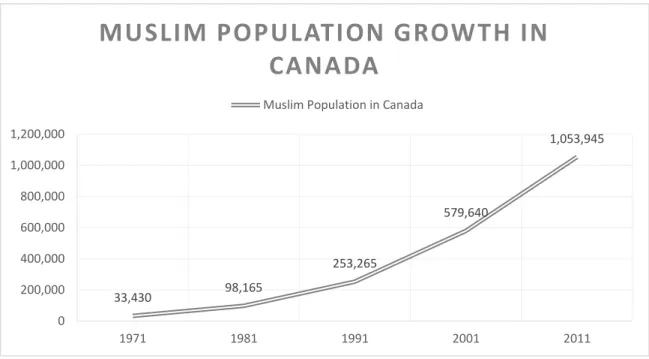
Furthermore, at this time, Muslims built mosques, community centers, schools, and started showing their presence in the public domain (Nimer, 2002). The Muslim population continued to grow significantly until date; the following graph (see Figure 2.1) shows the Muslim population growth from 1971 to 2011.
Figure 2.1: Muslim population growth in Canada
Source: (Census, 1991, 2001; Dayrit & Milo, 2015; NHS, 2011)
Canadian race relations have had several fluctuations in the past. Historically, Canadian society was guided by racist policies and practices against its minorities up until 1970s. Thereafter, Canada adopted its first multicultural strategy, and racism moved from an overt or open to a covert or hidden practice (Henry & Tator, 2006; Ponting, 1997). Many scholars have observed the unfair policies against minorities in Canada especially those focusing on Aboriginals and non-White population (Li, 1988, 1995; Ponting, 1997). Canadian minorities had several grievances against the government’s racist and discriminatory policies. Although racism in Canada is often considered a contemporary phenomenon in view of arrival of a large number of people of color as immigrants, in retrospect, it is not. Some of the prominent historical examples of most discriminatory and controversial governmental policies are The Indian Act, Residential Schools
for Indigenous people, and Chinese Head Tax (Henry & Tator, 2006).
33,430 98,165 253,265 579,640 1,053,945 0 200,000 400,000 600,000 800,000 1,000,000 1,200,000 1971 1981 1991 2001 2011
MUSLIM POPULATION GROWTH IN
CANADA
22
The dominant academic debates on race and race relations in North America have been focused on the relations between blacks and whites during and after the colonial period (Gandhi, 1998; Selod, 2014; Selod & Embrick, 2013). Fassin (2011) explains racialization by giving the examples of Fanon's personal experiences. Fanon was a psychiatrist by profession, but to his patients, he was a “black” man first, and then a doctor. While describing the situation of African colonization, Fanon (see Fanon, 2008) compares White supremacy as similar to anti-Semitism in Europe (Grohs, 1968). “Like Sartre, who describes creation of the non-Jew, the Christian, he thinks with its inferiority complexes is the product of the man and his superiority” (Grohs, 1968, p. 545). In case of Jews, Christians were afraid that because of great potential to acquire money and material things, Jews could take over the whole country by controlling the economy (Grohs, 1968). Whites were afraid of Blacks because of their sexual power and speedy population growth (Grohs, 1968).
Because of the seemingly ‘diversity friendly’ immigration policies of the Canadian government, a huge number of people from all over the world have come to Canada in the last few decades. According to Census Canada, visible minority population has increased since 2001 from 13.4% to 19.1% in 2011. The large number of diverse immigrant population has made Canada a multicultural society. Canada is one of the first countries that has introduced and adopted an official Multicultural policy in 1971, which later was turned into an actual law in 1988 (Fleras & Elliott, 2007). Multiculturalism refers to an understanding of how to live together in spite of our differences (Fleras, 2010). The main objectives of multiculturalism policy were to address the problems of inequalities, social exclusion, and racism faced by immigrants in their host societies (Fleras, 2010; Fleras & Elliott, 2007; Satzewich & Liodakis, 2010). This multicultural policy’s emphasis is to create a society based on equality that has more respect and acceptance of people of other ethnicities, races and religions (Fleras & Elliott, 2007; Henry & Tator, 2006). Moreover, this policy provided a legal framework to Canadian immigrants to “preserve, enhance, and share their cultural heritage, religion, and their native identities” without fear of prosecution (Henry & Tator, 2006). In the recent Canadian Federal elections held on October 2015, a large majority of Canadian population endorsed the policy of multiculturalism in Canada.
However, in recent debates, there are growing controversies around core Canadian cultural values. Canadian immigrants, from different racial and ethnic backgrounds, are practicing
23
their culture, speaking their native language at home, practicing traditions and religion, which are seen as damaging to the core Canadian cultural values in the long run (Saunders, 2012). Approximately, more than 200 languages are spoken in Canada including the two official ones. More than six million people speak their native language, other than French or English at homes. Before implementing the official multicultural policy, it was necessary to adopt the two Canadian official languages either English or French for all immigrants, in order to show that they were part of this country. Saunders (2012) thinks that issues such as dress code and religion are posing serious threats to Canadian core culture, cohesion and national identity. The Canadian government has taken this issue on board and recently made significant changes to the immigration policy by increasing the English and French language standards for immigration applicants.
Ravelli & Webber (2012) have divided modern race relations between the majority and minority groups into the following categories: Indigenous people, such as the North American and Australian Aboriginal people; the linguistic groups, such as French & English speaking groups in Canada, the groups arranged by sexual orientation such as heterosexual & homosexual groups; and the ethnic communities such as the Ukrainians and Chinese living in Canada (Ravelli & Webber, 2012). Canadian history of perceptions and behavioral patterns is blamed for its racist heritage to both earlier and present generations of Indigenous peoples and also for the visible minority immigrants (Henry & Tator, 2006). The social structure of White dominance is deeply embedded in the Canadian society which has maintained and upheld inequality and oppression against the socially and economically disadvantaged within Canadian society (Henry & Tator, 2006; Satzewich, 1998). However, supporters of liberal democracy have always challenged and denied the existence of racism as a commanding force in Canada (Henry & Tator, 2006). In a liberal democratic country like Canada, it is difficult to accept that social inequalities such as racism and economic disadvantage exist (Henry & Tator, 2006; Li, 1995). Yet, a society, which respects individual rights, justice, equality, social harmony, cannot provide equal rights to its citizens without recognizing social inequalities like racism and economic discrimination (Henry & Tator, 2006; Li, 1995; Satzewich, 1998). But, in a country with liberal democratic attributes, physical differences, and skin color should not be the determining factors for any individual’s status within the community (Henry & Tator, 2006; Li, 1995; Satzewich, 1998).
24
The literature has identified several barriers to immigrant integration into the Canadian fabric and they include employment identifiable linguistic and racial features (Li, 1995; Satzewich, 1998, 2011). These barriers can be observed in the mainstream Canadian labor market where visible minority immigrants face discrimination in employment sometimes because of their language skills and sometimes because of their physical racial appearance (Li, 1987; Satzewich, 1998). A study by Henry and Ginzberg (1985), conducted in Toronto, revealed that White job applicants received three times more job offers than the visible minority job applicants. Furthermore, the visible minority job seekers were screened out due to their English-speaking accent while interviewing for the job vacancy. Another study discovered that the top position holders and managers of big businesses and organizations thought that the equally qualified visible minority people had less ability compared to the White Canadians in their work performance (Li, 2001).
Satzewich (1998) observed that over the past few decades, racism in Canada has changed its form from overt to covert because of friendly immigration and the multicultural policies introduced and adopted by the Canadian government. Overt racism is an open, intentional, and harmful attitude towards individuals of racial minority groups. “It is intended to be overt for the purposes of continued racism and spread of expressed ideas within the general public” (Satzewich, 1998). Whereas, covert racism is an ideology that refers to racial discrimination in a hidden or subtle way. Therefore, cultural and ideological racism may be considered as forms of covert racism. The major shift from overt to covert racism was first observed after the introduction of the official multicultural policy by the Canadian government in 1971. The eras before and during the height of the Civil Rights movements, racism was said to be overt. but today, although racism is still alive in Canadian society, it is hidden or covert (Satzewich, 1998). A UK based Runnymede Trust (Report, 1997) revealed hidden antagonism against European Muslims in the form of unfair treatment against Muslim minority groups, stigmatization of characteristics of Islam comprising Islamophobia, and social and political exclusion of Muslim minority groups in Europe (Taras, 2013). Anti-Asian racism and hatred have been transformed into an anti-Muslim tendency, which can be identified as the "racialization of religion" (Said, 1985).
Edward Said’s Orientalism (1979) provides an important literary tool for analyzing racial, gender, and religious identification during colonial and postcolonial eras (Banton, 2009; Blaut,
25
1993; Hamdon, 2010). Structured set of beliefs and discursive practices were used to produce, interpret, and evaluate knowledge about the people living in the Middle East, South Asia, Africa, and other non-European territories during and after the colonization period (Kohn, 2014; Said, 1979). The identities of non-Europeans were constructed on the basis of Western scholarship and Western media’s representation of non-European in the world (Guney, 2010; Hamdon, 2010; Said, 1979; Smith, 2013). Edward Said’s work shows that racialization of Muslims is not a new phenomenon, it has a long history of stereotypical discourse applied to Muslims living in the Western world.
Orientalism has contributed a lot in terms of explaining the stereotyping and negative portrayal of Middle Eastern Muslims in the Western scholarship (Hamdon, 2010; Said, 1979; Smith, 2013). Muslim women have been portrayed as victims of domestic violence and oppression, while, Muslim men are depicted as villains, mobs, and jokers in Western literary and artistic work (Hamdon, 2010; Said, 1979, 1993; Smith, 2013). Misrepresentation and misunderstanding of the Muslim world have created a cultural divide between Muslim immigrants and people in host societies (Hamdon, 2010). Muslim culture is viewed as contradictory to Western culture, and this static and backward Muslim culture needs to be aligned with that of the host countries through deculturization of Muslim immigrants (Hamdon, 2010; Razack, 2005; Saunders, 2012). The negative portrayal of the Muslim culture and practices in the West has provided justification for the social discrimination, injustice, racism, and exploitation of Muslims in the Western societies (Hamdon, 2010).
Stereotyping and racialization can be explained by labeling theory. Labeling theory focuses on negative naming and stigmatization as major causes of deviant behavior of individuals in society (Goode, 2001). One of the most interesting dimension of the labeling theory is that it falsely perceives individuals as deviants (Goode, 2001). Goode (2001) thinks that the most important aspect of labeling theory is the accusation and stigmatization of the individuals or communities and, if society perceives those individuals or community as a threat to the society, whether it is a fact or a fabrication, they will be considered as deviants. Therefore, some individuals or communities are blamed for something they did not do just because of their cultural, racial, or religious similarities with the wrongdoers.