DEVELOPMENT AND IMPLEMENTATION OF A PEER MENTORING PROGRAM FOR UNDERGRADUATE STUDENT NURSES
A Dissertation
Submitted to the Graduate Faculty of the
North Dakota State University of Agriculture and Applied Science
By
Brittany Hattie Frank
In Partial Fulfillment of the Requirements for the Degree of
DOCTOR OF NURSING PRACTICE
Major Department: Nursing
March 2018
North Dakota State University
Graduate School
Title
Development and Implementation of a Peer Mentoring Program for Undergraduate Student Nurses
By
Brittany Hattie Frank
The Supervisory Committee certifies that this disquisition complies with North Dakota State University’s regulations and meets the accepted standards for the degree of
DOCTOR OF NURSING PRACTICE
SUPERVISORY COMMITTEE: Dr. Heidi Saarinen Chair Dr. Tina Lundeen Dr. Lisa Montplaisir Trish Strom Approved: 4/6/18 Dr. Carla Gross
iii
ABSTRACT
Stress is evident among undergraduate nursing students (Raymond & Sheppard, 2018). Throughout their education, nursing students experience high academic demands and are exposed to numerous stressors. High stress can lead to anxiety, depression, and poor physical health (National Institute of Mental Health, n. d.). Positive coping mechanisms need to be in place in order for undergraduate nursing students to prevent the negative effects of stress.
Mentoring has been shown to decrease stress levels and enhance self-esteem by providing social support (Demir et al., 2014). Mentoring consists of a relationship between a mentee (a novice nurse or student) and a mentor (a more experienced nurse or student). Mentors provide knowledge, guidance, and enhance the mentee’s learning (Brown, 2012). Mentees participate by communicating areas of need or concern. Numerous benefits occur from mentoring related to both the mentor and mentee.
Based on the need for stress relief among the undergraduate nursing population, a mentoring program was developed and implemented in an urban School of Nursing. The
program was targeted to students in the pre-licensure BSN program, including senior and junior students as mentors and sophomore students as mentees. The duration of the program was eight weeks during fall semester, in which students were encouraged to meet face to face, via phone, or skype weekly for approximately 30 minutes. The program was geared toward the needs of the students, however, topics of discussion regarding stress relief, study skills/time management, leadership, and social support were offered as a guide. Students were self-directed through the program.
The program was evaluated through a mid and post program survey that assessed quantitative feedback using a Likert scale and qualitative feedback for coping skills for stress
iv
relief, self-esteem, and program logistics. Data was collected at mid program and program
completion. Surveys were sent via email using an anonymous link through Qualtrics. Overall, the mentoring program had a positive impact. Mentors developed leadership skills, confidence, and personal satisfaction. Mentees gained study habits, confidence, and social support. Both mentors and mentees described positive coping mechanisms for stress. The majority of participants recommended to continue the program at this organization.
v
ACKNOWLEDGMENTS
Many individuals have supported me throughout this journey and need to be recognized. The first person I would like to acknowledge is my committee chairperson, Dr. Heidi Saarinen. Heidi is an extraordinary mentor. She genuinely cares about her students and provides endless support and encouragement. I am blessed to have had the opportunity to work with her. In
addition, I would like to thank the members of my dissertation committee: Dr. Tina Lundeen, Dr. Lisa Montplaisir, and Trish Strom. The guidance and ideas they have provided regarding my practice improvement project have been instrumental. I also would like to thank the nursing faculty and staff from this particular School of Nursing. Their desire to improve the health and well-being of their students is inspiring.
Finally, I would like to thank the students who participated in this mentoring program. They have dedicated valuable time and commitment to this project. I am grateful for the passion they have shown to make a difference in the lives of one another. Best wishes to each of them on their future endeavors.
vi
DEDICATION
First and foremost, I dedicate this dissertation to God. God has provided me with strength, endurance, and faith to face my biggest challenges and achieve my greatest dreams. I also want to dedicate this project to my parents, Mark and Cindy. They have provided me with endless love
and support, even throughout the difficult times. I will always be grateful for their encouragement and belief that I could achieve any goal. To my siblings Courtney and Anthony, they have been my biggest fans. My grandparents for instilling in me the value of hard work and the importance of education. I also dedicate this dissertation to my classmates. I am blessed to have such inspiring colleagues and true friendships. In particular, I am thankful for my amazing
classmate Carrie. She has always provided me with reassurance and comic relief. I am forever grateful to my wonderful family and friends who have supported me throughout this journey. Finally, I dedicate this to all nursing students. Support one another and focus on your own health
vii TABLE OF CONTENTS ABSTRACT ... iii ACKNOWLEDGMENTS ...v DEDICATION ... vi LIST OF TABLES ...x
LIST OF FIGURES ... xii
CHAPTER 1. INTRODUCTION ...1
Significance of Proposed Project ... 2
Purpose ... 3
CHAPTER 2. LITERATURE REVIEW ...5
Stress ... 6
Coping Mechanisms ... 8
Examples of Peer Mentoring Programs ... 9
Roles of the Mentor/Mentee ... 11
Benefits of Mentoring ... 11
Success of Mentoring Programs ... 13
Leadership ... 13
Theoretical Framework ... 14
Iowa Model of Evidence-Based Practice ... 18
CHAPTER 3. PROJECT DESIGN ... 22
Congruence of the Project to the Organization’s Goals ... 22
Project Objectives ... 23
Project Implementation ... 25
Project Timeline ... 29
viii
Program Incentives ... 31
Institutional Review Board Approval ... 32
Sustainability ... 33
CHAPTER 4. EVALUATION ... 34
CHAPTER 5. RESULTS AND DISCUSSION ... 39
Objective One Results ... 39
Program Attendance ... 39
Survey Data Collection ... 40
Objective Two Results ... 42
Objective Three Results ... 46
Mentor Training ... 54
Program Improvements ... 55
Overall Goals of the Project ... 56
Senior and Junior Mentor Themes ... 61
Sophomore Mentee Themes ... 64
Relation to Watson’s Theory ... 68
CHAPTER 6. DISCUSSION AND RECOMMENDATIONS ... 70
Interpretation of Results ... 70
Limitations ... 73
Recommendations ... 75
Implications for Practice ... 78
Implications for Future Research ... 79
Application to other DNP Roles ... 80
REFERENCES ... 81
ix
APPENDIX B. MENTEE CONSENT FORM ... 91
APPENDIX C. COMMON INTEREST FORM ... 95
APPENDIX D. MENTOR KICK-OFF POWERPOINT ... 96
APPENDIX E. ENCOUNTER DISCUSSION FORM ... 98
APPENDIX F. MENTOR PROGRAM CALENDAR ... 102
APPENDIX G. MENTOR ENCOUNTER LOG ... 106
APPENDIX H. MENTOR TRAINING POWERPOINT ... 107
APPENDIX I. EXTRA CREDIT RUBRIC ... 111
APPENDIX J. IRB APPROVAL LETTER ... 112
APPENDIX K. SOPHOMORE SURVEY ... 113
APPENDIX L. JUNIOR SURVEY ... 115
APPENDIX M. SENIOR SURVEY ... 118
APPENDIX N. PERMISSION TO USE WATSON’S THEORY OF CARING ... 120
APPENDIX O. PERMISSION TO USE IOWA MODEL ... 121
APPENDIX P. IRB AMENDMENT ... 122
APPENDIX Q. SECOND IRB AMENDMENT ... 125
APPENDIX R. EXECUTIVE SUMMARY... 128
Background ... 128
Project Summary ... 128
Findings and Conclusions... 128
x
LIST OF TABLES
Table Page
1. Demographics of the Nursing Students in the School of Nursing Targeted for the
Mentor Program ... 23
2. Percentage of Students from Each Cohort Who Participated in the Mentor Program ... 26
3. Mentor Group Distribution ... 28
4. Project Timeline ... 30
5. List of Evaluation Questions and Responses for Objective One ... 36
6. List of Evaluation Questions and Responses for Objective Two ... 37
7. List of Evaluation Questions and Responses for Objective Three ... 38
8. Number of Participants from Each Program Event ... 40
9. Participant Demographics and Completion Rate of Mid and Post Program Surveys ... 41
10. Results of the Sophomore Mid and Post Program Survey Data for Stress and Self-esteem ... 43
11. Results of the Junior Mid and Post Program Survey Data for Stress and Self-esteem ... 44
12. Results of the Senior Mid and Post Program Survey Data for Stress and Self-esteem ... 45
13. Results of the Sophomore Mid and Post Program Survey Regarding the Mentee Experience . ... 47
14. Results of the Junior Mid and Post Program Survey Regarding the Mentee Experience... 49
15. Results of the Junior Mid and Post Program Survey Regarding the Mentor Experience... 51
16. Results of the Senior Mid and Post Program Survey Regarding the Mentor Experience... 53
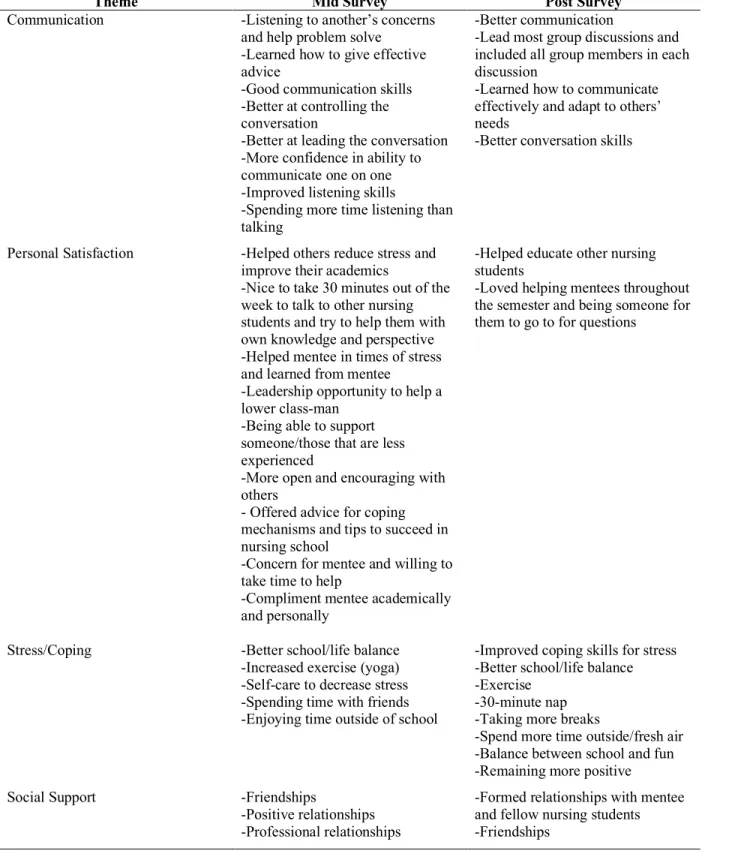
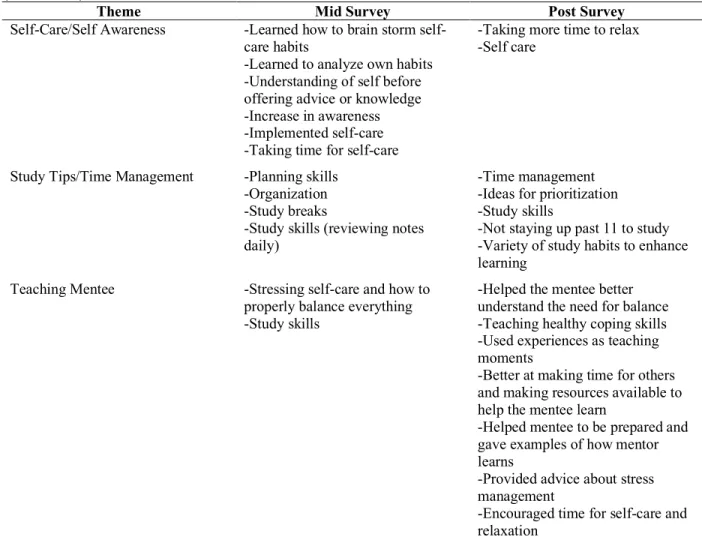
17. Themes from the Qualitative Feedback from the Senior Mid and Post Program Surveys ... 57
xi
18. Themes from the Qualitative Feedback from the Junior Mid and Post Program
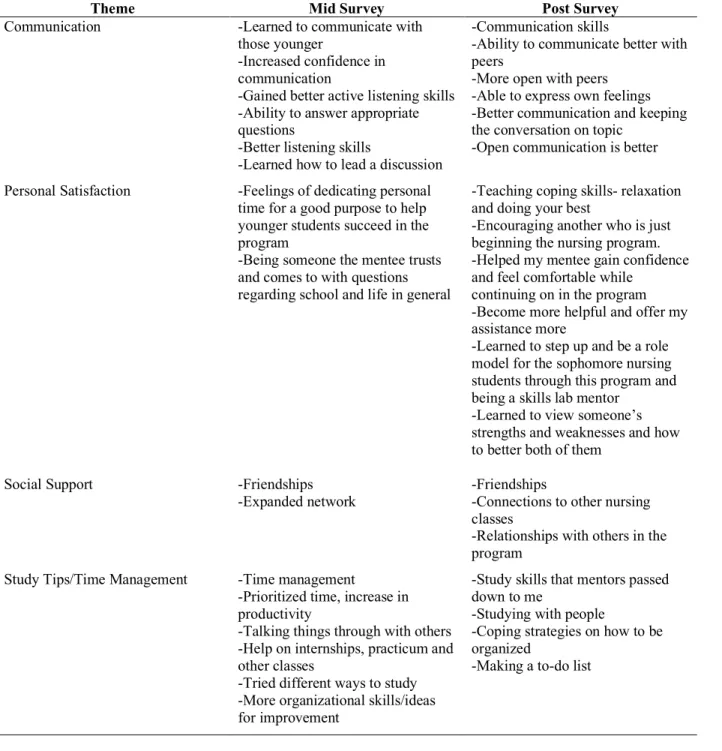
Surveys ... 60 19. Themes from the Qualitative Feedback from the Sophomore Mid and Post
xii
LIST OF FIGURES
Figure Page
1. The Iowa Model Revised: Evidence-Based Practice to Promote Excellence in
1
CHAPTER 1. INTRODUCTION
The field of nursing is both challenging and rewarding. Nurses are the largest population in healthcare and the most trusted profession (Gallup, 2016). Nurses have the ability to keenly react to the physical and emotional demands of their job without faltering. Because of the responsibilities of the nursing profession, undergraduate nursing programs are rigorous and demanding. Students are expected to learn valuable skills and gain sufficient medical knowledge in a short amount of time while upholding professional and clinical competence. Nursing
students have a variety of educational demands including class time, homework, tests, skills lab, and clinical assignments. The demands of school along with other life factors can lead to high stress. Often, high stress can have negative effects on health and wellbeing. Mentoring is one way to decrease stress in the undergraduate nursing population (Demir, Demir, Bulut, & Hisar, 2014; Raymond & Sheppard, 2018).
Mentoring has been a positive aspect of the nursing profession since the Florence
Nightingale era (Robert Wood Johnson Foundation, 2013). Many universities have implemented mentoring programs in their undergraduate nursing programs. Acute and long-term health care facilities have implemented programs to support novice nurses in their career growth and
promote retention. The Robert Wood Johnson Foundation (2013) also has numerous programs in place that provide nursing mentorship.
A typical mentoring relationship consists of a mentee (a novice nurse or student) and a mentor (an experienced nurse or student). One goal of a mentoring program is to help the novice gain support, self-confidence, and grow personally and professionally (Demir et al., 2014). Participating in a mentoring relationship decreases stress by working through concerns or challenges while learning from a mentor’s experience. Having a mentor also improves academic
2
performance, offers mental health support, and develops self-awareness (Lombardo, Wong, Sanzone, Filion, & Tsimicalis, 2017). An aspect of the mentor/mentee relationship is the
mentee’s reflection of his or her own experiences and the experiences of another (the mentor’s). Numerous benefits emerge for both the mentors and mentees participating in mentoring
programs. Mentors develop leadership skills and a sense of appreciation for helping their fellow colleagues or peers. Mentees develop self-confidence and become better equipped for academic success (Demir et al., 2014).
Significance of Proposed Project
High levels of stress are evident among undergraduate nursing students (Domingues Hirsch, Devos Barlem, de Almeida, Tomaschewski-Barlem, Figueira, & Lunardi, 2015;
Raymond & Sheppard, 2018). Inability to cope with stress can lead to poor health and decreased academic success. Positive coping mechanisms are important for stress relief among nursing students. Mentoring programs are apparent in clinical and academic nursing organizations throughout the world. Studies have shown that mentoring has a positive impact on the wellbeing of undergraduate nursing students (Raymond & Sheppard, 2018). Before implementation of this pilot program, there was not a program in place for undergraduate nursing students at this particular School of Nursing. Implementation of a peer mentoring program was a way to decrease levels of stress, increase self-esteem, and promote social support.
The problem of undergraduate nursing student stress is significant to nursing practice. Students who learn positive coping mechanisms for stress are successful academically and throughout their careers. Not only can stress affect health, high amounts of stress can lead to dissatisfaction and abandonment of one’s career (Crary, 2013; Domingues Hirsch et al., 2015). With the potential nursing shortage in many areas of this country, losing nurses is concerning.
3
According to the U.S. Bureau of Labor Statistics (n. d.), the demand for registered nursing
positions is projected to increase 15 percent from 2016-2026. A potential nursing shortage can be seen as beneficial for nurses entering the workforce but may also cause added stress if
organizations are under staffed.
In practice, nurses often experience high levels of physical and emotional burden related to the responsibility of patient care. Not only are they challenged to uphold professionalism and patient safety, employers also demand productivity. Nurses are often faced with inadequate staffing, heavy patient assignments with high patient acuity, inexperienced staff or fellow colleagues, and lack of support for professional development (Rosenau, Lisella, Clancy, & Nowell, 2014). Health care is constantly evolving, forcing nurses to be flexible and learn new skills, which can also lead to increased stress. Therefore, positive coping mechanisms should be learned and practiced beginning in academia and continued throughout their career. Health care providers may also see an impact due to nursing student stress. Stress can lead to anxiety, depression, and poor physical health; which will be further discussed later (National Institute of Mental Health, n. d.).
Purpose
The purpose of the practice improvement project was to implement an evidence-based mentoring program for undergraduate nursing students at a School of Nursing in an urban community. The goal of the program was to combat stress, increase self-esteem, and enhance peer relationships amongst undergraduate nursing students. The coordination and actual implementation of this project was supported by the Associate Dean of Nursing and a group of representative nursing faculty. The ultimate purpose of the dissertation was to decrease mental
4
health concerns and other negative effects from stress among the undergraduate nursing student population later in life.
5
CHAPTER 2. LITERATURE REVIEW
A comprehensive literature review was conducted to analyze undergraduate nursing student stress and interventions for health promotion. Components of the review included causes of stress, coping mechanisms, self-esteem, leadership in nursing, and mentoring programs. The literature review was conducted to determine current concerns regarding undergraduate nursing student mental health, causes of anxiety and stress in the nursing student population, and interventions for stress. A search of mentoring programs within the undergraduate nursing program population and their efficacy was also conducted.
Literature was obtained from a variety of sources and databases. The North Dakota State University library staff and website were helpful resources for this search. Databases included CINAHL, PubMed (MEDLINE), Cochrane, U.S. National Library of Medicine, Google Scholar, and EBSCO host. Key words used in the search included: undergraduate, baccalaureate,
nursing, student, stress, coping, self-esteem, intervention, leadership, peer, and mentor program. The inclusion criteria used in the search included:
1. Literature published between 2010-2017 2. Full text articles
3. Peer-reviewed journal articles 4. Articles written in English
5. Information relating to undergraduate nursing students The following criteria was excluded in the search:
1. Graduate nursing students
2. Mentor programs for nursing faculty
6
Hundreds of articles pertaining to undergraduate nursing student stress and mentoring programs emerged from the search. Each article that fit the above criteria was reviewed and placed into themes. The literature review was then separated into the following topics: stress, coping mechanisms, examples of peer mentoring programs, roles of the mentor/mentee, benefits of mentoring, success of mentoring programs, and leadership.
Stress
Individuals who were exposed to high stress were at risk for deteriorating health. Physical signs of stress included abdominal pain, anorexia, weight gain, difficulty sleeping, light
headedness, syncope, headaches, muscle pain, muscle tension, and other physical symptoms (American Institute of Stress, n. d.). Emotional distress or personality changes also occurred with stress. Emotional manifestations of stress included irritability, sadness, and anger (National Institute of Mental Health, n. d.). According to the American Psychological Association (n. d.), consequences of prolonged or high stress resulted in health conditions such as heart disease, diabetes, respiratory disease (COPD and asthma exacerbations), gastrointestinal distress (heartburn, ulcers, diarrhea, or constipation), as well as reproductive disorders. Chronic stress elevated an individual’s risk for infectious and autoimmune diseases (National Institute of Mental Health, n. d.).
Undergraduate nursing programs are very competitive with heavy academic course loads and stressful clinical rotations. The extraordinary stress experienced by nursing students
negatively influenced learning and academic success (Labrague, 2013). Students in the medical sciences (particularly nursing students) experienced significantly more stress than the students in other disciplines. According to Bryer et al. (2013), “Compared with students in courses of study other than nursing, nursing students usually spend more time in class, in the laboratory, and in
7
the clinical setting, and they have more emotional demands made on them,” (p. 411). Similarly, Labrague (2013) found that the clinical education component of nursing school contributed to higher degrees of stress among nursing students compared to students in other programs. Because of the high academic demands on nursing students, stress was imminent.
Stress affected academic performance (Domingues Hirsch et al., 2015; Sharma and Kaur, 2011). Highly stressed students struggled with concentration and learning. Potential stressors of nursing students included heavy workload, assignments, and exams, ability to perform
professionally, pressure from peers, expectations of parents and educators, and personal relationships (Labrague, 2013; V.N. & M.S., 2016). Pertaining to clinical rotations, nursing students had various stressors including performing procedures and communicating
professionally (Fernandes Pereira, Caldini, Di Ciero Miranda, & Caetano, 2014). According to Del Prato, Bankert, Grust, & Joseph (2011), nursing students were compounded by placement in unfamiliar clinical environments. The start of each clinical experience was often stressful as students needed to establish new relationships and familiarize themselves with the facility or environment.
An individual’s esteem was negatively impacted by stress. Students with high self-esteem were better able to problem solve and cope with stress in positive ways (Yildirim, Karaca, Cangur, Acikgoz, & Akkus, 2016). Valizadeh, Zamanzadeh, Badri Gargari, Ghahramanian, Jabbarzadeh Tabrizi, & Keogh (2016) conducted a literature review of self-esteem levels of nursing students. Twenty-five articles were reviewed consisting of nursing students from all levels of academia. Most of the articles assessed self-esteem using the Rosenberg Self-esteem Scale. The majority of the results indicated nursing students had moderate to low self-esteem.
8
Coping Mechanisms
According to a study conducted by Domingues Hirsch et al. (2015), the majority of nursing students dealt with stress by escaping. Undergraduate students who experienced more difficulties throughout their nursing program had negative coping mechanisms such as denial, escape, and avoidance behaviors. Domingues Hirsch et al. (2015) stated, “This strategy consists of students denying the existence of a problem, ignoring and hiding their feelings, and distancing themselves from others,” (p. 227). The study also found that students who felt ignorant or
uninformed demonstrated negative coping strategies.
Reeve, Shumaker, Yearwood, Crowell, & Riley (2012) conducted a study on stress and support in undergraduate nursing students. They found that students reported feelings of worry, anger, and anxiety when exposed to stress. Coping strategies included spending time with family and friends, avoiding stress, feeling sad, crying, and withdrawing from others. Alcohol use was also identified with traditional students reporting six or more drinks a week. Reeve et al. (2012) stated, “Development of adaptive coping mechanisms by nursing students will result in students who are less likely to use maladaptive strategies such as drinking, separating self from others, ignoring stress, anxiety, and depression,” (p. 419).
Providing social support was an effective way to decrease stress in nursing students (Yildirim et al., 2016). Approachable, supportive nursing faculty and healthy peer relationships reduced stress and promoted success of nursing students. Seeking social support was a strategy for coping. According to a study conducted by Yildirim et al. (2016), social support and high self-esteem were positive coping mechanisms for stress among nursing students. Offering programs like peer mentoring increased social support.
9
Nurses often place the needs of others before their own, which can lead to stress, exhaustion, and burnout (Crary, 2013). Therefore, health promotion among the nursing population is important. Bryer et al. (2013) state, “Emphasis of primary prevention and health promotion places nurses in key positions as role models, health promoters, and providers of health care,” (p. 410). In order to be effective role models, nurses need to demonstrate the same healthy behaviors. Nursing students need to understand the importance of their own health practices and develop healthy life skills during their education and prior to practicing in the field (Bryer et al., 2013). By solidifying healthy lifestyles and coping skills, students will be better prepared to handle stressful situations.
The American Nurses Association [ANA] dedicated 2017 as the “Year of the Healthy Nurse.” The campaign created awareness in nurses regarding their health and wellbeing. The American Nurses Association (2017) defined a healthy nurse as “…someone who actively focuses on creating and maintaining a balance and synergy of physical, intellectual, emotional, social, spiritual, personal and professional wellbeing.” Each month throughout the year, the American Nurses Association provided information about health. The topics included combating stress, healthy sleep, mental health wellness, work-life balance, and happiness (ANA, 2017). The campaign health topics were similar to the goals set for this mentoring program.
Examples of Peer Mentoring Programs
Very few research articles regarding undergraduate student mentoring programs were found over the last five years (Gershenfeld, 2014). Most of the research studies about mentoring were dated in the early 2000s. A variety of peer mentoring programs were identified. In one example, a peer mentoring program was based on tutoring. Robinson and Niemer (2010) designed a program that combined mentoring and tutoring within a nursing program.
Mentor-10
tutors were nursing students selected by earning A or B grades in pertaining courses and via faculty recommendation. The mentor-tutors were trained by faculty and each led a group of five students (mentees). Mentees were chosen based on grade point average, course failure, or faculty recommendation. Mentor/mentee groups met for two hours a week throughout the semester and focused on topics related to a preselected nursing course. Mentees were more successful in the courses in which tutoring was provided. Robinson and Niemer (2010) also noted that students who served as mentor-tutors in this program developed interest in a nursing education career.
Students often reported feeling more comfortable discussing issues regarding their academic programs with peers. Robinson and Niemer (2010) state, “Students who have already demonstrated academic success may be better able to connect with fellow students,” (p. 289). According to Miller (2002), as cited by Demir et al., (2014), “Peer mentoring is defined as being in a mentoring relationship where the mentor and mentee are similar in terms of age and/or status,” (p. 255). Mentors typically consisted of upper classmen who were paired with students in their first year of the nursing program. Many studies paired senior nursing students with
sophomores.
A program conducted by Demir et al. (2014) based a peer mentoring program on Maslow’s hierarchy of basic needs. Mentors met with their mentees weekly throughout the 14-week semester. Discussion during each meeting focused on Maslow’s basic needs and guidance as to how to meet those needs. For example, physiological needs were discussed focusing on the importance of nutrition. Self-actualization, one of Maslow’s basic needs, focused on problem solving and coping with stress. Cognitive needs were dedicated to the formation of study habits and motivation for learning. Regarding this practice improvement project, similar themes from the study of Demir et al. 2014 were emphasized. The mentoring program focused on student
11
needs including study habits (cognitive needs), safety, social activities and friendship, self-esteem, and coping with stress.
Roles of the Mentor/Mentee
Both the mentor and mentee had significant roles within the mentoring relationship. In successful relationships, both individuals understood their role and worked toward a common goal. According to Brown (2012), the role of a mentor was to “lead, follow, and get out of the way of the learner,” (p. 6). Mentors demonstrated knowledge and offered encouragement while allowing the mentee to grow individually. Brown (2012) stated, “The mentor is seen as a trusted counselor with experience who is willing to invest time, knows how to make a connection with the mentee, and is willing to make the necessary efforts to enhance the mentee’s learning and growth,” (p. 6). Mentors needed to be approachable and helped guide the mentee in their own decision making and outcomes. The mentee also had a distinct role. Mentees actively
participated in the relationship by keeping close contact with their mentors and openly communicating areas of concern. The mentor and mentee were equally committed to the relationship for success. Each individual had respect for the other and valued the relationship.
Benefits of Mentoring
Numerous benefits for the mentees emerged from peer mentor programs. Some of the benefits identified included improved study habits, self-confidence, and knowledge of the profession (Jacobs, Atack, Ng, Haghiri-Vijeh, & Dell’Elce, 2015).Mentees also reported that their mentors helped them find academic resources such as career centers and tutoring (Jacobs et al., 2015). As mentioned previously, mentees reported the ease of talking to a peer rather than an instructor on pertinent issues. Minority students benefited from peer mentoring. Retention of
12
minority nursing students in academic programs was improved because of mentoring (Crooks, 2013).
A study conducted by Demir et al. (2014) found that an undergraduate peer mentoring program enhanced the self-confidence and coping mechanisms for stress in first-year nursing students (mentees). The first-year students were mentored by fourth year nursing students (mentors). Stress was a key factor in the study as mentees identified areas of stress including academic achievement, problems with family and friends, and financial concerns (Demir et al., 2014). Mentees felt supported by their mentors and gained incite on problem solving. Decreased stress resulted from better coping mechanisms. The relationships formed by the mentors and mentees lead to enhanced self-confidence among the mentee.
Numerous benefits for mentors were also identified. Mentors reported better
organization, time management, communication, and leadership skills (Jacobs et al., 2015). Mentors were found to have increased confidence in educator roles (Harmer, Huffman, & Johnson, 2011; Jacobs et al., 2015). According to a study by Won and Choi (2017), mentors developed four principle areas of self-growth including “building leadership, coping with conflicts, taking pride, and guiding mentees” (p. 11). Mentors experienced self-growth by enhancing their own knowledge which in return increased confidence. A sense of satisfaction was identified by many mentors. Mentors took pride in their role and recognized the positive effect achieved by helping others (Won and Choi, 2017). Mentors gained the professional benefit of adding their leadership experience to their curriculum vitae. Some researchers reported that mentors wished to explore areas of nursing beyond clinical such as education and nursing leadership. Mentors also developed an understanding of the nurse educator role (Harmer et al., 2011).
13
Success of Mentoring Programs
Effective communication among the mentors and mentees was found to be a large part of successful mentoring programs. According to a study by Eller, Lev, & Feurer (2013),
communication improved with supportive but honest feedback and mentors who were
approachable, encouraging, and non-judgmental. Both parties needed to keep in contact and be committed to the relationship without becoming overbearing (Jacobs et al., 2015). Another key to mentor relationship success was to set achievable goals (Eller et al., 2013). Teamwork was needed among the mentor and mentee to accomplish goals. Setting goals provided a common vision and purpose for the relationship. The success of the programs also included teamwork among faculty, mentors, and mentees (Robinson & Niemer, 2010). Another key link to success found by Eller et al. (2013) was a caring personal relationship among the mentor and mentee. Both the mentor and mentee had respect for the other and showed interest in the relationship.
Mentor programs were found to improve student retention rates (Jacobs et al., 2015). Mentors helped students succeed in academia by offering reassurance, support, and guidance. Mentor programs also allowed students to become more accessible to other students rather than arrange time with nursing faculty. Evidence also indicated that students who were peer mentored were more successful academically (Jacobs et al., 2015).
Leadership
Leadership is significant to the nursing profession. Nursing practice is dependent upon effective leaders to enrich the profession. Current nurse leaders will soon be replaced by the upcoming generation of nurses (Dyess, Sherman, Pratt, & Chiang-Hanisko, 2016). Nurses must continue to take active leadership roles in order to serve the needs of the population and form solutions to challenges within the healthcare system (Hodgson & Scanlan, 2013). Mentoring
14
programs allowed student nurses the opportunity to learn and develop leadership skills. Many undergraduate nursing programs incorporated mentoring programs for this reason. Rosenau et al. (2015) state, “…preparing students for complex job responsibilities and leadership in society is a major role of universities. These values are strengthened by peer leadership roles because they actively support student involvement through the undergraduate experience and encourage student academic success,” (p. 14). Universities take pride in their students and strive to prepare the best leaders for their professions.
Theoretical Framework
Nursing theory is important for enhancing the nursing profession itself. The theoretical framework used in this dissertation project is Jean Watson’s Theory of Human Caring. Jean Watson’s Theory of Human Caring is a middle range theory that reflects caring as the main aspect of nursing (Smith & Parker, 2015). Middle range theories help to present concepts with more structure and are better suited to guide nursing practice rather than grand theories which are abstract. Watson’s theory encompasses caring as a transformation of self, others, and the nursing profession (Watson Caring Science Institute, 2010). The major conceptual elements of the theory include the ten carative factors, transpersonal caring moment, caring consciousness/intentionality and energetic presence, and caring-healing modalities (Smith & Parker, 2015).
The carative factors were developed to identify the characteristics of caring in nursing (Watson, 2007). Watson (2007) lists the ten carative factors as follows (p.131-132):
1. Humanistic—Altruistic values 2. Instilling/enabling faith & hope
3. Cultivation of sensitivity to one’s self and others
15
5. Promotion and acceptance of expression of positive and negative feelings 6. Systematic use of scientific (creative) problem-solving caring process 7. Promotion of transpersonal teaching-learning
8. Provision for a supportive, protective, and/or corrective mental, social, spiritual environment
9. Assistance with gratification of human needs
10. Allowance for existential-phenomenological spiritual dimensions
Caring is an important factor regarding intra-professional relationships. The profession of nursing is a unified group of nurses who work together as a team. Regarding the mentor
program, the carative factors guide the relationship among the mentor (senior or junior nursing student) and mentee (sophomore nursing student). Each carative factor has a significant impact on the mentor/mentee relationship. Watson (2007) identifies humanistic values as “kindness, empathy, concern, and love for self and others,” (p. 132). Altruistic values are described as “from commitments to and satisfaction from receiving through giving,” (p. 132). Both humanistic and altruistic values are important for enhancing interpersonal relationships and self-esteem. Mentors demonstrate humanistic and altruistic values by giving their time, compassion, and support to their fellow mentees. In return, mentees develop self-confidence, trust, and understanding. Both grow as professional nurses.
The carative factor of “instilling or enabling faith and hope” is also very relevant to the mentoring program. Mentors model successful behaviors in the mentee. “Cultivation of
sensitivity” is crucial to forming a trusting relationship among the mentor and mentee. Both participants need to be sensitive of each other and respectful of each other’s beliefs (Watson Caring Science Institute, 2010). Confidentiality is stressed among the mentoring groups to
16
promote a safe environment. “Development of a helping-trusting human caring relationship” is a main goal of the mentor program. Not only is this important in the mentor program, but
development of caring relationships among patients, families, colleagues, and other medical professionals is crucial to the nursing profession.
Throughout the mentor/mentee relationship, each member needs to be supportive and accept the thoughts and feelings of the other. Therefore, the carative factor of “Promotion and acceptance of the expression of positive and negative feelings” directly correlates with the mentor relationship (Watson Caring Science Institute, 2010). Once a trusting relationship is formed, problems or concerns are discussed among the pair or group. Discussing the problems and finding ways to solve the problems using caring decision-making is important, therefore, following the carative factor of “Systematic use of scientific (creative) problem-solving caring process” (Watson Caring Science Institute, 2010).
The mentor/mentee relationship also consists of teachable moments regarding prior experience. The carative factor of “Promoting transpersonal teaching-learning” aligns perfectly with the mentor relationship (Watson Caring Science Institute, 2010). The mentor and mentee need to practice active listening and find a deeper understanding of each other by learning from each other. The mentor needs to provide tools or information to meet the mentee’s needs. “Provisions for a supportive, protective environment” is key for the mentor program (Watson Caring Science Institute, 2010). Both the mentor and mentee should feel safe in the relationship and share their experiences. In addition to that, a supportive environment allows the participants to share positive and negative feelings. Expression of feelings is important to determine solutions to problems and promote wellbeing. Not only should the environment be emotionally supportive,
17
the physical environment should allow for caring to naturally occur. (Watson Caring Science Institute, 2010).
“Assistance with gratification of human needs” is also an important carative factor for the mentor program. The mentor role is to assist the mentee with basic emotional and physical needs (Watson Caring Science, 2010). For this to occur, respect, privacy, and trust are needed. Finally, “Allowance for existential-phenomenological forces” is the last carative factor listed. This factor emphasizes the unknown or possible miracles that may occur within the relationship. Both the mentor and mentee respect each individual’s inner feelings and identify what is valued as important (Watson Caring Science, 2010).
Watson’s Theory of Human Caring serves as a strong foundation for this dissertation project because it focuses on caring and positive transpersonal relationships, both of which are needed for a successful mentor program and nursing career. The carative factors and themes of Watson’s theory were carried through the mentor training in order to be threaded through mentor/mentee relationships throughout the program. The transpersonal caring relationship within the theory is a connection and moral commitment among the nurse and patient (or in this project, mentor and mentee). The transpersonal caring relationship concept emphasizes respect or love for the person while maintaining balance or harmony (Watson Caring Science Institute, 2010). Watson Caring Science Institute (2010) states the transpersonal caring relationship is the “Intention of ‘doing’ for another and ‘being’ with another who is in need,” (p. 1). Not only does this allow the nurse to grow professionally, it provides the nurse with a sense of personal
18
Iowa Model of Evidence-Based Practice
The Iowa Model of Evidence-Based Practice (2015) is the theoretical model used to guide this project (Figure 1). The Iowa Model was selected because it provides organized, step by step instructions for implementing evidence-based practice, particularly related to nursing. The first step of the Iowa model involves identifying problems or opportunities within an organization or population (Iowa Model Collaborative, 2017). The problem related to this practice improvement project is high levels of stress among the undergraduate nursing
population. The opportunity is implementation of a peer mentoring program to decrease stress and increase self-esteem in undergraduate student nurses.
The formation of this topic was derived from the literature and comments from current members of the organization. Undergraduate nursing students voiced concerns of high levels of stress to the primary and secondary investigator at the school of nursing. Nursing faculty also noted high levels of stress among students. The American Nurses Association (2017) had also dedicated the year of 2017 as the “Year of the Healthy Nurse”. The campaign reflected the needs of health promotion among nurses and nursing students across the country. Combating stress and mental health wellness were two focused areas of the campaign. According to the literature, mentoring was noted to have a positive effect on stress and the self-esteem of students.
Another step in the Iowa model is to identify if the above topic is a priority for the organization of which the program is to be implemented (Iowa Model Collaborative, 2017). The primary and secondary investigator met with key faculty members from the School of Nursing to determine if a mentoring program for undergraduate students would be feasible and beneficial to the student population. The formation of a team (as described below) was needed to determine if the problem and intervention were a priority, of which later was decided as so.
19
The next step of the Iowa Model is to arrange a team of stakeholders that would aid in development and implementation of the project (Iowa Model Collaborative, 2017; White & Spruce 2015). The team for this practice improvement project included key representatives from the school of nursing including faculty and leaders of organizations within the nursing
department, such as the Student Nurses’ Association. The team of six representatives met to discuss possible student needs and logistics of the program at this particular school of nursing. After the team meeting, the representatives felt a mentoring program would work well within the institution, particularly if aligned with an existing Leadership course (of which will be discussed later). Before program implementation, the primary and secondary investigator also met with the dissertation project committee and received feedback regarding the program. This meeting included one graduate faculty member and one undergraduate faculty member from the School of Nursing and a faculty member from the Biology department.
After team formation, the next step in the Iowa Model is to gather evidence related to the problem and solution (Iowa Model Collaborative, 2017). A literature review was conducted regarding stress, self-esteem, leadership, mentoring, and undergraduate student nurses (as discussed previously) then appraised and synthesized. Once the literature is obtained, the next step is to determine if the evidence regarding the problem topic was sufficient (Iowa Model Collaborative, 2017).
A pilot change of practice (in this example, a mentoring program) is then designed and implemented based on the suggestions from the group and evaluated for improvement or outcomes. An evaluation of outcomes was created and program resources developed. Data was collected to determine if the mentoring program was beneficial and should be continued in the future. The next step is to determine if the change should be adopted into practice (Iowa Model
20
Collaborative, 2017). Results from the program data and collaboration among the practice improvement committee determined that the mentoring program should be continued at this School of Nursing. Results from the practice improvement project were disseminated at a poster presentation for nursing faculty and students at the school campus. Results were also
disseminated via an executive summary which was given to nursing faculty by the secondary investigator.
21
Figure 1. The Iowa Model Revised: Evidence-Based Practice to Promote Excellence in Health Care. Used/reprinted with permission from the University of Iowa Hospitals and Clinics, copyright 2015. For permission to use or reproduce, please contact the University of Iowa Hospitals and Clinics at 319-384-9098.
22
CHAPTER 3. PROJECT DESIGN
The project was based on the literature review that emphasized the need for stress relief and coping skills in the undergraduate student nurse population. The program itself was designed based on evidence from the literature regarding successful undergraduate nursing mentoring programs.
Congruence of the Project to the Organization’s Goals
The nursing program at this institution is well known throughout the Midwest region. The School of Nursing’s mission statement reads as follows: “To advance nursing knowledge and develop dynamic nurse leaders who improve the health of all people, including undeserved, rural, and diverse populations” (North Dakota State University, n. d.). The School of Nursing also defines outcomes of undergraduate students including communication, critical thinking, professional values, clinical competency and leadership (NDSU, n. d.). As a school who prides itself in building nurse leaders and improving the health of all, a mentoring program was an excellent fit for benefiting the undergraduate student population. An undergraduate mentoring program at this college aligned well with the mission statement and goals of the School of Nursing. The college supports the well-being of its students. Many mentor programs already existed among university nursing programs throughout the United States. A peer mentor program at this university provided students with added support to enhance academic success. Although mentor programs do not replace the wisdom and support of nursing faculty, they do provide added encouragement from peers.
The school has three undergraduate nursing programs: the pre-licensure BSN program, the LPN to BSN on-line program, and the RN to BSN program. The primary and secondary investigator spoke with the nursing faculty involved with the leadership courses, the pre-nursing
23
advisor, the pre-licensure-BSN program director, the LPN-BSN program director, and the RN-BSN program director in order to identify the School’s needs for a mentoring program. The mentor program was targeted to the pre-licensure BSN program as this had the largest
population, was the most well-established, and the greatest potential for impact since the students do not have prior experiences as nurses. A total of 17 faculty members teach in the pre-licensure program. The following table includes the demographics of the nursing cohorts targeted for the mentoring program.
Table 1
Demographics of the Nursing Students in the School of Nursing Targeted for the Mentor Program
Cohort Graduation
Year Number of Students Gender Nationality Sophomore (first semester) May 2020 47 4 male 44 female Caucasian- 46 Hispanic- 1 Black- 1 Junior (second semester) December 2018 43 6 male 37 female Caucasian- 38 Asian-1 American Indian- 1 Black- 1 Hispanic- 1 Not specified- 1 Senior (first semester) May 2018 46 7 male 39 female Caucasian- 43 American Indian- 1 Black- 2 Project Objectives
As found in the literature review, mentoring has been shown to impact both the mentor and mentee. Therefore, individual objectives and goals were described for both roles. The overall goal of this dissertation project was to determine whether implementation of a peer mentor program would decrease stress levels and enhance self-esteem in the undergraduate nursing
24
student population. Ultimately, undergraduate nursing students would overcome barriers to stress, increase coping skills for stress, develop leadership skills, and experience enhanced well-being. The overall objectives of the mentor program included:
1. To tailor and implement an evidence-based peer mentoring program to aid students in developing coping skills to decrease stress and increase self-esteem for the 2017 fall semester.
2. To teach undergraduate nursing students positive coping skills to combat stress.
3. To evaluate the opinions of the mentors and mentees regarding the mentoring program. As mentioned above, goals were individualized to the mentors and mentees. The goals for the mentors in this program included:
1. To enhance leadership skills
2. To learn positive coping skills for stress
3. To enhance social support through intra-professional relationships The goals for the mentees in this program included:
1. To learn positive coping skills for stress
2. To improve self-esteem related to the nursing profession
3. To enhance social support through intra-professional relationships
Objectives specific to the mentor training included effective communication, leadership skills, and stress-relief techniques. The mentoring program was designed to provide students with the opportunity to discuss concerns, fears, and stressors regarding the nursing program in a safe and trusting environment.
25
Project Implementation
The purpose of this project was to evaluate the effectiveness of a peer mentor program in reducing stress and increasing self-esteem for undergraduate nursing students. The target
population of this program was sophomore, junior, and senior nursing students currently in the pre-licensure BSN nursing program. The ages of the participants ranged from 19-25. First semester sophomore students served as mentees and second semester junior and first semester senior students as mentors. Due to the overwhelming number of mentor participants, junior participants were also given the option to be mentored by senior participants. Second semester sophomores would have been included under normal circumstances but were not able due to being enrolled in the Health Assessment course taught by the primary investigator and secondary investigator. Including this cohort of students would have helped balance mentor to mentee ratios.
Participants were recruited voluntarily. The primary investigator and secondary investigator met with senior and junior students face-to-face to present, promote, and answer questions regarding the mentor program during the N460 Management, Leadership, and Career Development course, per permission from the instructor and program stake holder. The
secondary investigator also introduced the program to sophomore participants face to face for ten minutes before their N250 Health Promotion course. Mentor and mentee consent forms can be found in Appendix A and Appendix B. The percentage of students who participated in the mentor program compared to the total number of students from each cohort can be found in Table 2.
26 Table 2
Percentage of Students from Each Cohort Who Participated in the Mentor Program Student Cohort Total Number of
Students Number of Participants at Kick-Off Event Percentage of Participants to Total Number of Students Sophomore 47 13 28% Junior 43 14 33% Senior 46 21 46%
Mentors had a grade point average of 3.0 or greater (a requirement of the nursing program at this institution) and attended the mentor training session and the kick-off event. Because the School of Nursing required a grade point average of 3.0 or greater, low grade point average was not a factor in this project. A written consent form for participation was signed prior to the start of the mentor training session. A mentor training session was held for the junior and senior nursing students prior to the formation of the mentor/mentee relationship. A further discussion of the mentor training is described below.
The goal of the program was to match a mentor with a mentee at a 1:1 or 2:1 ratio. Due to the overwhelming number of mentor participants compared to mentees, participants were placed into groups which included two seniors, one junior, and one sophomore (a 3:1 mentor to mentee ratio). Participants were notified of this change at the kick-off event and offered to withdraw from the program at that time. All participants (mentors and mentees) were asked to fill out a form of common interests to assist with the matching process. Background information, nursing practice areas of interest, learning type, and hobbies were assessed using this form. Students were matched based on similar interests. The common interest form was encouraged but not mandatory. For students who wished to complete the form, they had the option to answer all the
27
questions or choose not to answer a particular question. The common interest form can be found in Appendix C.
The forms were given to the participants during the kick-off event (See Appendix D for Mentor Kick-Off Presentation). After the forms were completed, students interacted and communicated among the group. Participant groups were formed based on a speed dating process. All participants were encouraged to form a group of two seniors, one junior, and one sophomore student. The remaining students formed groups of three or four. Once groups were formed, participants were given five minutes to discuss their common interests. After the five minutes, participants were encouraged to find a different group of members and complete the same process. Four cycles (or 20 minutes total) of interaction were completed. After the final five-minute interaction, participants formed their final groups for the program. Thirteen mentor groups were formed. Ten of the mentor groups had two seniors, one junior, and one sophomore. Two groups consisted of one senior, one junior, and one sophomore. The final group had one senior, two juniors, and one sophomore. Each mentor group is listed in Table 3.
28 Table 3
Mentor Group Distribution
Group Number Number of Seniors Number of Juniors Number of Sophomores 1 2 1 1 2 1 1 1 3 1 1 1 4 2 1 1 5 2 1 1 6 1 2 1 7 2 1 1 8 2 1 1 9 2 1 1 10 2 1 1 11 2 1 1 12 2 1 1 13 2 1 1
Mentees signed a consent form prior to attending the kick-off event, of which was
mandatory for program participation. A consent form was distributed to the mentees during their health promotion class after discussion with the graduate student. Each mentee participant returned a signed form prior to the beginning of the kick-off event. Mentors and mentees met as a group during the program kick-off event. The goals of the program were discussed during the kick-off event along with an emphasis on confidentiality among groups and recommended meeting times. The kick-off event served as a social event where mentor/mentee groups were introduced and students communicated and interacted among the other participants.
Following the kick-off event, the program lasted eight weeks. Groups were encouraged to meet weekly as a general guide of 30 minutes via face to face or media of choice (phone, face
29
time, etc.) throughout the eight weeks. The recommendation of 30 minutes was a suggestion from the nursing faculty from the School of Nursing and the literature review, though students could meet for more or less time based on individual mentor/mentee needs. Participants were encouraged to document their meeting time truthfully, particularly if the time limit did not seem feasible. An encounter discussion guide was provided for the mentors to assist with
conversations (Appendix E).
Mentors were asked to log the number of times they met, the length of each meeting, and brief topics of discussion during each encounter. Mentor/mentee groups who met four or more times throughout the eight weeks were included in the study. A final wrap-up event occurred following the 8-week program. The mentor wrap-up was a “thank-you” event where participants were offered pizza and refreshments and placed into a drawing for the gift cards. The event was not mandatory, but instead a celebration of program completion. Participants were also
encouraged to hand-in their Mentor Encounter Logs as an aspect of the extra credit. A post-program survey was distributed to the participants via email following the wrap-up event. The mentor training and kick-off event occurred on campus from 6-8 pm. The wrap-up event occurred on campus at 6 pm and lasted approximately 30 minutes.
Project Timeline
The practice improvement project timeline is outlined below in Table 4. The mentor program was implemented in September following project committee and IRB approval. Data was collected and analyzed at the middle of the program and after the program was completed. The dissertation was defended and submitted to the School of Nursing in March.
30 Table 4
Project Timeline
Event Date
Proposal meeting with committee and IRB approval
August 2017 Recruitment of mentees and mentors September 2017 Mentor training day
Mentor program kick off
September 11, 2017 September 18, 2017
Weekly mentor/mentee meetings September 18, 2017-November 13, 2017 Mentor program wrap up
Data collection/evaluation Complete dissertation project
November 13, 2017
December 2017- January 2018 Defend dissertation
Submit dissertation to the School of Nursing
March 2018
Mentor Training
Mentor training consisted of a 2-hour program introducing the junior and senior nursing students (mentors) to their role. The training was conducted by the secondary investigator. Again, written consent was obtained prior to the start of the mentoring training. The program began with an open-ended question assessing the opinions of the students regarding the topic of mentoring. The group of students were asked, “What does mentoring mean to you” and “What are characteristics of an effective mentor?” The group discussed the questions and shared experiences. The role of the mentor was also discussed. A folder with the following documents was provided for each mentor: topic discussion points (Appendix E), mentor program calendar (Appendix F), and encounter log (Appendix G). The mentors were also provided with the email addresses of the primary and secondary investigator. Mentors were encouraged to communicate
31
with the primary and or secondary investigator with questions or concerns throughout the program.
The remainder of the training consisted of enhancing communication and leadership skills, positive mechanisms for coping with stress, tips for effective studying, Jean Watson’s Theory of Human Caring, and topics for relationship discussion. Student resources such as the Career Center, Counseling Center, and the American Nurses Association website were also reviewed. The training included the steps to take if there were concerns about the mentor/mentee relationship. The roles of the mentor and mentee were discussed as well as when to seek help for any student if boundaries were being over stepped. Information for the presentation was found from the literature review. The PowerPoint presentation for the mentor training can be found in Appendix H.
The content of the training was developed from resources within the literature and during discussion with program stakeholders. The secondary investigator met with the director of the undergraduate BSN program (one of the program stakeholders) to discuss resources the students already had access to that could be reinforced during the training. Effective study habits and time management tips, along with coping mechanisms for stress relief, were obtained from these resources and used in the PowerPoint presentation.
Program Incentives
Students who participated as mentors were offered extra credit in their leadership course for participating. To prevent bias, the students were given the option to participate in the
mentoring program or another project of similar time commitment and rigor for extra credit. A rubric was designed to determine the amount of extra credit each participant would receive based on their participation in the program (See Appendix I). The rubric was based on attendance of
32
mentor training, the number of times the group met during the program, the amount of time allocated for each meeting, and if the participants completed at least one of the mid or post program surveys. The mentors were assigned a numeric code by the primary investigator to decide the amount of extra credit awarded following the program.
Both mentor and mentee participants were eligible for a random drawing to win a $25 gift card to Target. Each time the participant met with his or her mentor group, his or her name was entered in the drawing (up to eight times). At the wrap-up event, winners were drawn, and the gift cards distributed. A total of eight gift cards were distributed. Two gift cards were
distributed from an individualized drawing of each cohort (seniors, juniors, and sophomores) and the final two gift cards were distributed from a drawing of all remaining participants. Pizza, soda, and water were provided at each large group event including the Mentor Training, Kick-Off, and Wrap-Up event.
Institutional Review Board Approval
This project was certified as Exempt on August 25, 2017 by North Dakota State
University Institutional Review Board (Appendix J). The mentor program involved minimal risk to the participants throughout the project. Participant consent was obtained prior to program start. Mid and post program surveys were anonymous and kept confidential. Participant identity was known only to other participants within the program. The mentor identification numbers were only known to the primary investigator for extra credit purposes. Participants were encouraged to contact the primary investigator, secondary investigator, and leadership course instructor for questions or concerns throughout the program.
33
Sustainability
Sustainability was an important factor of this program. The School of Nursing accepted a new undergraduate nursing student cohort every fall and spring semester of each year. To
encourage sustainability, key members of the university became stakeholders. The Associate Dean of Nursing approved the program and nursing faculty encouraged students to participate. Embedding the program within a course such as N460 Management, Leadership, and Career Development for junior and senior nursing students was beneficial for recruitment of mentors. A recommendation was for the Student Nurses’ Association to be involved in recruiting students who wished to participate as mentors or mentees and for providing members to assist with each event. For future sustainability, a faculty member or graduate student could represent the program, provide the mentor training session and group events, and be in charge if issues arise. The literature review, PowerPoint presentations, and handouts developed during this project will be turned over to the School of Nursing in order to continue to offer the mentor program if desired in the future.
34
CHAPTER 4. EVALUATION
Qualitative data and quantitative data were used to evaluate the mentor program. The evaluation tool consisted of a survey that was provided mid program and following completion of the program that addressed the objectives listed in chapter three. Three post surveys were developed, individualized to each sophomore (Appendix K), junior (Appendix L), and senior (Appendix M) cohort. The same survey was distributed twice to ensure feedback was elicited prior to participants dropping out of the program or if time at the end of the semester was a limiting factor for survey completion.
The survey questions were based on the objectives and formatted from the literature and feedback from the project committee. Limited demographic information was also collected. The surveys were distributed by email using an anonymous link. The information from all students who provided their mentor identification number for extra credit purposes was kept confidential by the primary investigator. The secondary investigator used descriptive analysis to convey the qualitative feedback elicited by the participants. The qualitative data was analyzed and compiled into themes identified by recurring words described by participants from each cohort.
Qualtrics was used to collect and quantify the data resulting from the mid and post program surveys. All participants were given one week to complete their individualized mid program survey half-way through the mentor program. The data was collected from October 16th,
2017 through October 22nd, 2017. At the end of the program, participants were given another
week to complete the same survey. The data from the final survey was collected from November 15th, 2017 through November 22nd, 2017. Participant responses were quantified and placed into
35
collected using a Likert scale based on the following options: Strongly Disagree, Disagree, Neither Agree or Disagree, Agree, and Strongly Agree.
The juniors were a unique group. Because the junior cohort was offered to be mentored by the senior participants and/or become mentors to the sophomore participants, they were evaluated as such. Parts of the senior and sophomore survey were combined to create the junior evaluation tool (Appendix L). The questions used to evaluate each objective can be found in Table 5 (objective one), Table 6 (objective two), and Table 7 (objective three).
36 Table 5
List of Evaluation Questions and Responses for Objective One
Question/Statement Response
Objective 1: To tailor and implement an evidence-based peer mentoring program to aid students in developing coping skills to decrease stress and increase self-esteem.
Sophomore Participant (Mentee)
Did you meet individually or as a group? Open-ended
Did your mentor relationship(s) continue for the entire duration of the study?
If no, why did you choose to end the relationship(s) early?
a) yes b) no
Open-ended
Junior Participant (Mentor/Mentee)
Did you have a mentor and a mentee?
If no, what was your role?
a) yes b) no a) mentor b) mentee Did your mentor relationship(s) last throughout the
study?
If no, why did you choose to end the relationship(s) early?
a) yes b) no Open-ended
Did you meet as a group or individually with your mentor and mentee? Please explain.
Open-ended
Program Rubric/Mentor Encounter Log (date, time, and discussion topics of meetings)
Open-ended
Senior Participant (Mentor)
How many mentees did you mentor? Open-ended
Did you meet as a group or individually with your
mentee(s)? Open-ended
Did you meet face to face with your mentees? Open-ended
Program Rubric/Mentor Encounter Log (date, time,
37 Table 6
List of Evaluation Questions and Responses for Objective Two
Question/Statement Response
Objective 2: To teach undergraduate nursing students positive coping skills to combat stress. Sophomore Participant (Mentee)
Describe how you have applied at least one new coping mechanism for stress as a result of the mentor program. If you feel you haven’t applied anything new, please discuss why and what could have been changed in the program to help you.
Open-ended
Give at least one example of how you implemented new study strategies or felt supported as a student as a result of the mentor program.
Open-ended
I have a better school/work/life balance
I have applied at least one new positive coping skill to handle stress this semester.
I am better equipped to control irritations that occur throughout the semester.
I take time for at least one hour of self-care a week. I have applied at least one new effective study habit. My confidence in classes has increased.
I feel more support as a student.
a) strongly disagree b) disagree
c) neither agree or disagree d) agree
f) strongly agree
Junior Participant (Mentor/Mentee) and Senior Participant (Mentor)
Of the new strategies you have learned or taught (for coping, leadership, study skills, etc.), describe one you have implemented as a result of going through this program thus far, if any.
Open-ended
I have helped my mentee(s) implement at least one effective study habit.
I have helped my mentee(s) set aside at least one hour of self-care a week.
I have helped my mentee(s) implement at least one effective coping mechanism for stress.
My mentee(s) report(s) increased confidence as a student.
I am better equipped to control irritations that occur throughout the semester.
I have a better school/work/life balance. My leadership skills have improved. My self-esteem has improved.
a) strongly disagree b) disagree
c) neither agree or disagree d) agree