
Western University Western University
Scholarship@Western
Scholarship@Western
The Organizational Improvement Plan at
Western University Education Faculty
6-21-2019
Closing the educational gap: Implementing a LPN introduction/
Closing the educational gap: Implementing a LPN introduction/
scope optimization framework
scope optimization framework
navdeep nagraFollow this and additional works at: https://ir.lib.uwo.ca/oip
Part of the Educational Leadership Commons, and the Higher Education Commons
Recommended Citation Recommended Citation
nagra, n. (2019). Closing the educational gap: Implementing a LPN introduction/scope optimization framework. The Organizational Improvement Plan at Western University, 114. Retrieved from
https://ir.lib.uwo.ca/oip/114
This OIP is brought to you for free and open access by the Education Faculty at Scholarship@Western. It has been accepted for inclusion in The Organizational Improvement Plan at Western University by an authorized
Closing the educational gap in a Canadian health authority: Implementing a Licensed Practical Nurse introduction/scope optimization framework
by
Navdeep Nagra
AN ORGANIZATIONAL IMPROVEMENT PLAN
SUBMITTED TO THE SCHOOL OF GRADUATE AND POSTDOCTORAL STUDIES
IN PARTIAL FULFILLMENT OF THE REQUIREMENTS FOR THE
DEGREE OF DOCTOR OF EDUCATION
LONDON, ONTARIO
September 2019
ii Abstract
As a problem of practice, there is a lack of educational preparedness among Licensed Practical Nurses (LPNs) for entry-to-practice positions with specialty patient populations. A large health authority that serves specialty patient populations, referred to hereafter as Organization M, is hiring LPNs in place of Registered Nurses due to nursing shortages. The literature reveals that the level of education possessed by nurses affects the quality of patient care and safety (Needleman, 2017). This Organizational Improvement Plan (OIP) focuses on determining how to address LPNs’ lack of educational
preparedness for entry-to-practice positions with specialty patient populations. A critical organizational analysis identifies that there are many drawbacks to hiring LPNs and not providing them with the additional education/skills training they require to work
competently with specialty patient populations. The analysis identifies multiple factors that leaders must consider prior to hiring LPNs or optimizing their scope of practice. The OIP determines that the only feasible solution is for Organization M to identify and provide LPN with the additional education/skills training they require. An LPN Introduction/Scope Optimization (LISO) framework is created to provide guidance to leaders about the factors necessary to judiciously hire LPNs or optimize their scope of practice. The aim of the LISO framework is to ensure LPNs in Organization M receive the additional education/skills training they require to provide safe and competent care. Through the implementation of the LISO framework, LPNs will be able to work to their optimal scope of practice when working with specialty patient populations.
Keywords: licensed practical nurse, additional education, skills training, scope optimization, specialty patient population
iii
Executive Summary
As a problem of practice, there is a lack of educational preparedness among Licensed Practical Nurses (LPNs) for entry-to-practice positions with specialty patient populations. This Organization Improvement Plan (OIP) focuses on a large health authority, referred to hereafter as Organization M, which serves specialty patient populations. Organization M is hiring LPNs who are not workplace ready as they have minimal education and training with specialty patient populations. Thus, this OIP focuses on determining how to address LPNs’ lack of educational preparedness for entry-to-practice positions with specialty patient populations.
Chapter 1 begins by exploring the vision, mission, history, and organizational structure of Organization M and how they relate to this problem of practice. Furthermore, authentic transformational leadership is the identified approach to lead the change to address this problem, as it engages key stakeholders to work collaboratively.
Additionally, there is an analysis of the various factors that compel the need to address this problem of practice. Because it perceives nursing as a process rather than a series of tasks, a feminist lens is chosen to view this problem. This lens synchronizes with the conceptual framework, the Donabedian model, and views nursing education as being connected to the quality of care and patient outcomes. Accordingly, a literature review validates that the level of education that nurses have affects the quality of patient care and safety (Needleman, 2017). Chapter 1 ends with an examination of change readiness that reveals that Organization M is willing to address this problem of practice.
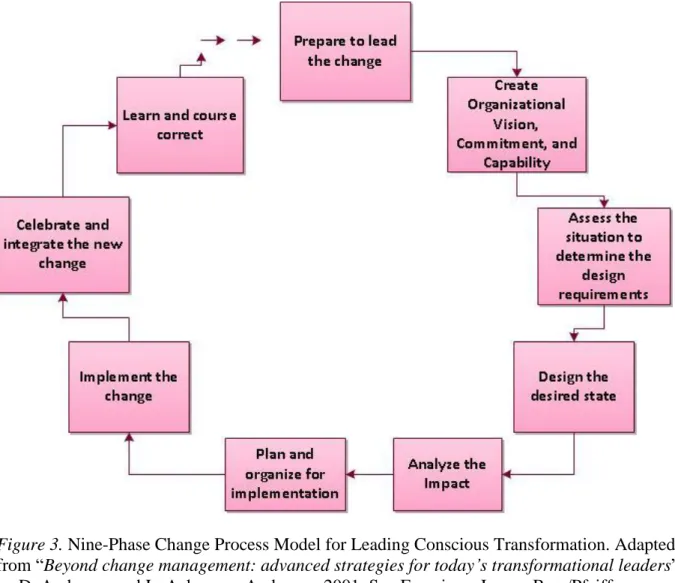
Chapter 2 begins by outlining how strategies from authentic transformational leadership will engage, motivate, and empower key stakeholders to propel the change forward. The Nine-Phase Change Process Model for Leading Conscious Transformation
iv
is the chosen framework for leading the change process as it aligns with the approach of authentic transformational leadership. An analysis using the open systems theory
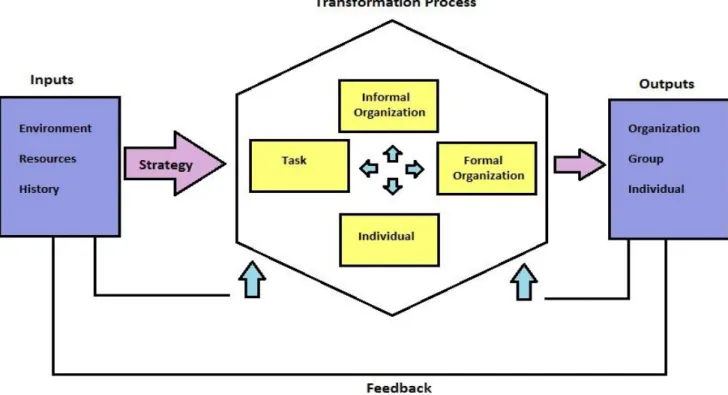
highlights that there are several disadvantages to hiring LPNs and not providing them with the additional education they need. Subsequently, a further analysis using the Congruence Model uncovers factors that help identify the additional education/ skills training LPNs require. Accordingly, two solutions for change are appraised, and the only feasible option is for Organization M to identify and provide LPNs with the education they need. Lastly, ethical considerations establish that Organization M has a moral responsibility to ensure its nurses possess the knowledge and skills required to provide safe and competent care.
Chapter 3 examines how to implement the change. An LPN Introduction/Scope Optimization (LISO) framework is created from the factors uncovered in Chapter 2 to implement the change. Having the LISO framework endorsed and adopted so that it can be applied across Organization M is the priority. Thus, there is consideration of the potential reactions and barriers for change, and identification of probable solutions to keep the change moving forward. Furthermore, timelines are outlined with the Nine-Phase Change Process Model, which coordinates with steps in the LISO framework to implement the change. Additionally, Bennett’s Hierarchy Evaluation model is used to
create an evaluation plan of the change process and result. Chapter 3 concludes by outlining a plan for effective communication during the change process.
The ultimate goal of this OIP is that the implementation of the LISO framework will result in LPNs acquiring the knowledge and skills they need to provide safe quality care for specialty patient populations.
v
Acknowledgments
Mom and Dad, I am dedicating this OIP to you. Mom, you gave up your MBA to immigrate to Canada to provide a better life for us (before we even existed), after fighting so hard to be the only woman in your program. Dad, you also sacrificed your education to provide for your family. Regardless, you both have emphasized the importance of
education and have always supported me to complete my educational pursuits. I am grateful to you for the opportunities you provided me to get to this point here in my life, thank you! I hope one day I will be able to do the same for my children.
Sanj, I am so grateful to you for proofreading every assignment for me, regardless of how tiring or tedious it was. I couldn’t have done this without you! Alan and Aisha, thank you for spending your time proofreading my assignments and always being there for me. Manju, thanks for always believing in me and supporting me, even when I had doubts. To the rest of my family and friends, thank you for your love and support!
Fiona, I truly appreciate you supporting me, listening to me, and providing me with valuable advice while I was writing my OIP. To all of my professors, classmates, and examiners – I am grateful for your knowledge, wisdom, support, and encouragement.
Reza, through all of our endeavors in these past three years, thank you for understanding my need to prioritize my schooling, and instilling faith in me when I doubted myself.
This journey was not easy and really pushed me to do my absolute best. I am grateful for having this experience and I’m glad I have finally done it! The biggest learning experience I am taking away from this is to bet on myself.
“Only those who will risk going too far can possibly find out how far one can go.” — T.S. Eliot
vi
Table of Contents
Abstract ...ii
Executive Summary ... iii
Acknowledgments ... v
List of Figures ... viii
Definition of Terms ... ix
Chapter 1: Exploring the Educational Gaps and its Effects in Organization M – Introduction and Problem ... 11
Organization Context ... 12
Vision, Mission, and Goals ... 13
Historical and Cultural Context ... 14
Organizational Structure ... 14
Department Context ... 16
Leadership Position and Lens Statement ... 17
Leadership Problem of Practice ... 18
Framing the Problem of Practice ... 20
Historical Overview of Problem of Practice ... 20
Organizational Theory ... 22
Conceptual Framework ... 24
Critical Appraisal of Nursing Education and Patient Outcomes ... 25
PESTE Analysis ... 27
Internal Factors ... 30
External Factors ... 31
Questions Emerging from the Problem of Practice ... 32
Challenges ... 32
Leadership-Focused Vision for Change ... 35
Gap Between Current and Desired State ... 35
Priorities for Change to Construct Future State ... 36
Organizational Change Readiness ... 37
Assessing Organizational Readiness ... 37
Competing Forces ... 38
Chapter 1 Conclusion ... 39
Chapter 2: Leading, Analyzing, and Planning to Close the Educational Gap ... 40
Leadership Approaches for Change ... 40
Transformational Leadership ... 40
Authentic Leadership ... 42
Authentic Transformational Leadership ... 43
Leadership Framework ... 44
vii
Critical Organizational Analysis ... 48
Open Systems Theory ... 49
Congruence Model ... 50
Potential Solutions ... 56
Practical Nursing Curriculum Change ... 57
Organization M Providing the Additional Education/Skills Training... 62
Ethical Considerations and Challenges ... 67
Chapter 2 Conclusion ... 70
Chapter 3: Implementing, Evaluating, and Communicating the LISO Framework ... 67
Plan for Implementing the LISO Framework ... 71
Goals ... 71
Priorities ... 71
Benefits of the Change Plan ... 73
Stakeholder Reactions and Solutions ... 75
Personnel to Engage/Empower ... 80
Supports and Resources ... 81
Potential Implementation Issues ... 82
Build Momentum ... 83
Limitations and Potential Solutions ... 84
The Change Process Framework and Plan for Monitoring and Evaluation ... 85
The Nine-Phase Change Process Model and Timeline for Implementation ... 85
Tools to Monitor and Evaluate Change ... 87
Pre-implementation evaluation ... 87
Post-implementation evaluation/monitoring. ... 89
Change Process Communication Plan ... 92
Pre-change Approval ... 92
Constructing the Need for Change ... 93
Midstream Change and Milestone Updates ... 94
Confirming/Celebrating the Success ... 96
Chapter 3: Conclusion ... 97
Future Considerations and Next Steps ... 98
References ... 100
viii List of Figures
Figure 1. Modified Organization Structure. ... 15 Figure 2. The Donabedian Model for Quality of Health Care.. ... 24 Figure 3. Nine-Phase Change Process Model for Leading Conscious Transformation…. 45 Figure 4. Congruence Model.. ... 51 Figure 5. Proposed Organization Structure.. ... 75 Figure 6. Bennett’s Hierarchy Evaluation Model ... 89
ix
Definition of Terms
Autonomous Practice: Thisis a nurse having the ability to carry out certain restricted nursing activities without the supervision of, or an order from, an authorized health professional.
College of Nursing Regulation: This is the regulatory body for LPNs. Its main purpose is to protect the public through setting standards of practice, assessing practical nursing education programs in Province C, and regulating LPN practice.
Entry to Practice Position: This is a position where an individual has met the educational, competency, and experience-related qualifications required to practice nursing.
Expanded Scope: This is when the College of Nursing Regulation allows nurses to carry out activities that they were not previously able to perform.
Health Authority: Agovernance structure set up by the provincial government that is responsible for the administration and delivery of health services in a geographical area.
Hospital: An institution providing nursing care and treatment for ill or injured individuals.
Inpatient Centre: A setting where patients reside for necessary treatment for a disease or a severe episode of illness for a short period of time and where patients are discharged as soon as they are healthy and stable.
LPN: This is a Licensed Practical Nurse in Province C who has 16–18 months of post-secondary education in nursing and who can only provide care to patients who have stable or predictable conditions.
Nursing Activities: The procedures, activities, and actions nurses carry out to achieve an outcome and for which they are accountable.
Nursing Skills Mix: This is when an employer has nurses of different education levels working together, e.g., baccalaureate-prepared nurses such as RNs working with nurses who do not have a baccalaureate degree such as LPNs.
Optimize Scope of Practice: To expand the ability of nurses to carry out additional procedures and actions that are permitted by their regulatory college. This is also referred to as scope optimization.
Optimal Scope of Practice: This is when nurses are permitted by their employer to carry out all of the procedures and actions they are trained for and competent to perform.
x
Outpatient Setting: A setting that does not require an overnight stay, such as a clinic or associated facility that patients visit for diagnosis or treatment.
Patient Outcomes: Changes in the health of a patient that result from health care
interventions (i.e., patient fully recovering, patient partially recovering, patient becoming more ill, or patient dying).
Patient Populations: Areas where patients have a similar age range, similar disease, or a similar technique that they will be undergoing for treatment.
Practice Leader: An individual in a leadership position who manages the practice of nurses in his/her setting.
Programs: Hospitals, inpatient centres, and outpatient settings in Organization M that deliver care to specialty patient populations and include the Cancer Agency, Children’s Hospital, Mental Health & Addiction Services, and Women’s Hospital & Health Centre.
RN: A Registered Nurse in Province C who has a baccalaureate in nursing and can provide care to any patient.
Services: These are services that Organization M operates and manages and are provided either directly through Organization M’s programs or are funded to be provided through Regional Health Authorities.
Scope of Practice: The procedures and actions nurses are authorized to perform by their regulatory college (captured in the scope of practice document) if employer policy permits it, and if the nurse has the competence.
Scope Optimization: This is expanding the ability of nurses to carry out additional procedures and actions that are permitted by their regulatory college. This is also referred to as optimize scope of practice.
Specialty Patient Populations: Areas where patients have more complex needs due to their age range (i.e., pediatrics), type of disease (i.e., cancer or mental health and
11
Chapter 1: Exploring the Educational Gaps and its Effects in Organization M Introduction and Problem
In attempts to provide quality health care, most provinces in Canada require that
Registered Nurses (RNs) must now have a baccalaureate degree. However, due to a demand for nurses over the years there has been an increase in nurses, known as Licensed Practical Nurses (LPNs), who complete only 16–18 months of education and are employed across various health settings in Canada (College of Nursing Regulation, 2018). The College of Nursing Regulation (see Definition of Terms) enables LPNs to work in a variety of clinical areas and conduct various nursing activities that they will not have learned in school, with the condition that they receive additional education prior to carrying out these nursing activities or working in these settings (College of Nursing Regulation, 2001). Thus, the responsibility to provide LPNs with this additional education is being placed on the employer.
Due to the shortage of RNs, employers for specialty patient populations are beginning to hire greater numbers of LPNs. Specialty patient populations are areas where patients have complex diseases such as cancer, mental health or addiction problems, or are in complex areas such as the operating room, maternity, and pediatric settings. However, health authorities such as Organization M are finding that upon hiring LPNs, they are not workplace ready with regard to specialty patient populations. Specifically, the College of Nursing Regulation outlines in the LPN scope of practice document (see Definition of Terms) that LPNs require additional education to perform certain nursing activities that are necessary for specialty patient populations. As a problem of practice, there is a lack of educational preparedness among Licensed Practical Nurses for entry-to-practice positions with specialty patient populations.
12
This first chapter reviews Organization M’s context including its vision, history, culture, and organizational structure.Moreover, my leadership philosophy is reviewed along with the approach I will use to address this problem. Consequently, the factors shaping the problem of practice are examined. Specifically, a feminist lens is used to analyze the problem. Accordingly, the Donabedian model is the conceptual framework utilized to frame this problem. Additionally, questions emerging from this problem are considered along with the leadership-focused vision for change. Lastly, organizational change readiness is assessed, and communicating the need for change is examined.
Organization Context
Organization M is a large health authority in Canada that provides health care through its specialized services and programs across Province C (Organization M, 2018). The services that Organization M operates and manages include Emergency Health Services, Provincial Renal Services, Provincial Transplant Services, Cardiac Services, Perinatal Services, Disease Control Services, Information and Technology Management Services, and Hospital Pharmacy Services. Organization M provides these services either directly through its programs or funds them to be provided through Regional Health Authorities.
The programs in Organization M are offered through hospitals, inpatient centres, and outpatient settings. These programs provide care and services to specialty patient populations that are unique and require specialized care. The programs that Organization M operates and manages include the Cancer Care Program, Children’s Hospital, Mental Health & Addictions Programs, and Women’s Hospital & Health Centre. This problem of practice focuses on LPNs who lack the knowledge and skills required to work in Organization M’s programs.
13
Organization M’s mandate is determined by the Ministry of Health, which outlines its strategic direction. Organization M’s mandate is to ensure planning, accessibility, coordination, efficiency, effectiveness, and quality of health care through its services. Organization M is primarily responsible for the corporate governance of its specialized health care services and programs, detailed above, through the development and management of expectations through funding allocations and performance agreements.
Organization M differs from other health authorities in Province C. Regional Health Authorities have a regional jurisdiction, whereas Organization M provides its services and programs throughout the province and mostly in collaboration with the Regional Health Authorities. Additionally, Organization M’s programs and services develop and set the provincial policies and standards for all Regional Health Authorities in Province C.
Vision, Mission, and Goals
Sowell (2007) describes vision as an organization’s sense of how it works and what it builds on. The vision of Organization M is to constantly provide excellence in health across this province. Hence, it is important that all health care providers in Organization M have the training and education required to work with specialty patient populations in order to provide the best care possible. Talbot (2003) states that an organization’s mission is the statement of values it strives to live up to and bases its standards on. Organization M’s mission is to produce province-wide health results together through caring, learning and leading. It has five core values: to respect people, be compassionate, dare to innovate, cultivate partnerships, and serve with purpose (Organization M, 2018). The vision and mission of Organization M align with its historical and cultural context.
14 Historical and Cultural Context
Organization M was created in 2001 and is a health service provider publicly funded by the Ministry of Health to provide quality health care for specialty patient populations across Province C. Organization M focuses on providing evidence-based care and, as a result, it is currently the largest health research organization in this province. It has a culture of being a teaching and learning organization, as its programs and services provide training to many health care providers such as registered nursing students, medical students and residents, and pharmacy students. Specifically, Organization M provides training and education (partnering with post-secondary programs) to more than 4,000 students in health care professions annually in its specialized patient populations through clinical practicum placements and preceptorship. Historically, Organization M’s programs have not provided LPN students with clinical or preceptorship placements as they did not hire LPNs. Organization M’s programs have only employed RNs and Registered Psychiatric Nurses (RPNs) in nursing roles, in alignment with its mandate and vision of providing high quality services, as educationally RNs and RPNs have been the most highly qualified nurses, with baccalaureate degrees. Thus, in order to maintain the culture and history of Organization M, it is important to address the problem of practice to meet the need for more nurses and thus the hiring of competent LPNs.
Organizational Structure
Organization M is a distributed organization, which is publicly funded and takes direction from the Ministry of Health. Buller (2015) describes a distributed organization as one where power is shared among a group of individuals while retaining a loose hierarchical structure. Unlike decentralized organizations, not everyone in a distributed organization possesses equal power and the upper ranks have the right to veto decisions made by lower ranks; however,
15
decision-making is intended to be a shared process through empowerment and delegation
(Buller, 2015). The upper ranks of Organization M include the board of directors, CEO, the Vice Presidents of the various programs/services, and the Chief Financial, Legal, and Communication Officers. Each of Organization M’s programs has its own set of Vice Presidents and these are not accountable to any of the other programs in Organization M (see Figure 1).
Figure 1. Modified Organization Structure. Adapted from “Organization M Org Chart [PDF]” by Organization M, 2017. Retrieved from: Website.
Hence, the Department of Professional Practice (bottom of middle column) has no formal authority over the directors of professional practice, as they report up within their own program. Consequently, being a distributed organization results in each program viewing itself as its own entity which leads to a lack of engagement with the Department of Professional Practice. Thus,
16
this requires the Department of Professional Practice to utilize leadership strategies that engage the directors of professional practice to work collaboratively.
Department Context
My role at Organization M is as a Professional Practice Leader for the Department of Professional Practice. The Chief Nursing & Liaison Officer is responsible for the Department of Professional Practice at Organization M (see Figure 1). The Chief Nursing & Liaison Officer works with the Ministry of Health of Province C to ensure that the practice of nurses at Organization M is aligned with the Ministry’s vision and requirements. The scope of the
Department of Professional Practice at Organization M includes leadership, education, research, and practice. Specifically, practice entails integrating new roles for nurses or their expanded scope into practice. Expanded scope is when the College of Nursing Regulation approves nurses to carry out activities that they were hitherto not approved to carry out (see Definition of Terms). In these instances, the Executive Director of Professional Practice approves these activities for Organization M and provides direction to the professional practice leaders to work with the directors of professional practice to create policy, education, and supporting practice documents for nurses (my role/responsibility). The aim of the Department of Professional Practice is to provide nurses with the supports they need in order to be able to competently carry out these new activities. Hence, the Department of Professional Practice also focuses on promoting best
practice initiatives through the creation of policy and clinical education, and collaborates with other regional health authorities to promote consistency of practice across the province. As mentioned above, due to being a distributed organization, the Department of Professional Practice has no formal authority to instruct the directors of professional practice to carry out changes or new initiatives. Thus, increasing collaboration and engagement with the directors of
17
professional practice is vital in my role. Consequently, I have adopted a leadership style that promotes engagement and collaboration.
Leadership Position and Lens Statement
My professional background entails a variety of different roles including working as a frontline nurse in Organization M, as clinical associate for a university, and as a Nursing Supervisor in Organization M. Through my roles, I have strived to empower others to achieve mutual goals.
My career began as a frontline nurse in Organization M. This role helped me understand the functions of a nurse, along with the power dynamics present in nursing. It provided me with the opportunity to reflect on leadership qualities that I appreciated such as honesty, respect, transparency, and following through with what was said. This also enabled me to identify authentic transformational leadership as my leadership style. Transformational leaders engage with their colleagues and followers to create “performance beyond ordinary expectations as they transmit a sense of mission, stimulate learning experiences, and arouse new ways of thinking” (Hater & Bass, 1988, p.695). Thus, to achieve this, authentic transformational leaders use effective communication skills and build quality relationships with team members.
I moved into my first leadership role as a Clinical Associate. Through this position, I learned that the willingness and ability to perform tasks will vary for each individual and that there is no single communication style that will work with everyone (Northouse, 2016). I came to understand that effective communication builds relational skills as the individual feels
understood, valued, and heard. Hence, effective communication is an important skill I attempt to employ.
18
After working as a Clinical Associate, I returned to work in Organization M as a Nursing Supervisor. Through this role, I learned the value of creating quality relationships with the staff. Day, Davis, and Fitchett (2007) report that leaders make effective decisions when they are aware of the strengths of their team and utilize these strengths for decision-making. As a result, I strive to have the best possible relationship with individuals I work with in order to be able to help them reach their full potential.
Through my role as a Professional Practice Leader, I have gained a further appreciation for authentic transformational leadership. As a Professional Practice Leader, I must use strategies to engage the directors of professional practice to create change. The approach of authentic transformational leadership promotes this engagement while keeping the values of Organization M at the forefront.
Zhu, Avolio, Riggio, and Sosik (2011) outline that authentic transformational leadership empowers team members to increase their awareness of what is right and raises higher moral maturity in those members. This is accomplished by leading by example and utilizing moral values on a higher level in my own practice (Zhu et al., 2011). The use of authentic
transformational leadership allows me to utilize a collaborative approach to communicate, plan, and organize for change across the organization. Accordingly, Chapter 2 further elaborates on the qualities of an authentic transformational leader and the strategies I will use to move this change forward. The next section will review the problem of practice and why there is a need for change.
Leadership Problem of Practice
As a problem of practice, there is a lack of educational preparedness among Licensed Practical Nurses for entry-to-practice positions with specialty patient populations. The Practical
19
Nursing curriculum in Province C reveals that LPNs have minimal education about specialty patient populations (e.g., cancer care or mental health & addictions) and are not acquiring all of the education and skills required to care for these populations. To fill nursing shortages,
Organization M has been hiring LPNs who can only work with patients who are considered to be in a stable or predictable condition. Due to the complexity of the patient populations in
Organization M, some LPNs are often assigned simple activities, which include tasks that can be completed by non-nursing staff. As a result, these LPNs are reporting they are not satisfied with their role because they are not working to their optimal scope of practice (see Definition of Terms). The College of Nursing Regulation states that LPNs have a variety of skills and tasks they can perform once their employer provides additional education. Organization M, however, has not previously had to provide additional education as RNs are educated and trained through their nursing education programs to carry out these activities. Consequently, Organization M does not provide any formal theoretical or skills courses for LPNs to acquire the additional education needed to better understand their specialty patient populations, and work to their optimal scope of practice.
There are many factors and phenomena that contribute to this problem. There is an increasing shortage of RNs due to various factors including the baby boomer population aging and RNs retiring (Wilcox, 2016). As a result, this has led to the role of LPNs evolving and for their scope to grow in carrying out nursing activities that their role did not originally include. The scope and role of LPNs is continuing to change. In 2015 the College of Nursing Regulation reported that LPNs are no longer required to work under the supervision of RNs, and are able to engage in autonomous practice once their employers have created appropriate policies (College of Nursing Regulation, n.d.). Moreover, the Practical Nursing curriculum that the practical
20
nursing education programs utilize in Province C does not encompass the need for LPNs to have a deep theoretical understanding of specialty patient populations. Nor does the Practical Nursing curriculum encompass all of the nursing activities that LPNs are approved to carry out as
practical nursing education is meant to be short, which leaves the responsibility for educating LPNs about these nursing activities to the employer. As a result, there are LPNs working in Organization M who require additional education. Hence, this Organizational Improvement Plan (OIP) focuses on how to address LPNs’ lack of educational preparedness for entry-to-practice positions with specialty patient populations. Therefore, it is necessary to review the factors that frame this problem.
Framing the Problem of Practice Historical Overview of Problem of Practice
The history of nursing education has evolved over time in Canada. In 1874, the first hospital school for Canadian nurses was created (Baker, Guest, Jorgenson, & Crosby, 2012). Over the following years, doctors began recognizing the impact of nurse competency on patient outcomes (Gibbon, 1947 as cited in Baker et al., 2012) and, as a result, began advocating for university education for nurses. In 1919, the University of British Columbia created a ten-year baccalaureate degree program in nursing, which was the first not only in Canada but the British Empire (Davidson Dick & Cragg, 2003). However, this model of the nursing baccalaureate degree only required nurses to take their first- and last-year courses in university while they spent the intervening years in a hospital school (Baker et al., 2012).
The Canadian Nurses Association (CNA) and the Canadian Medical Association (CMA) collaborated in 1927 to conduct research on nursing schools (Baker et al., 2012). The report included recommendations that:
21
1. University training schools for nurses’ award degrees in the place of diplomas; 2. Nursing schools be integrated to the general education system imbued with the same
philosophies as other schools; and
3. Entry-to-practice standards for nursing be increased (Baker et al., 2012; Fleming, 1932).
Due to the implementation of the recommendations from this report, many universities across Canada now offer baccalaureate degrees for RNs (Baker et al., 2012) and all provinces except Quebec require a baccalaureate degree as entry-for-practice for RNs (Canadian Nurses Association, 2015). The Canadian Nurses Association (2015) reports that the variables that led to RNs requiring a baccalaureate degree included:
1. The growing complexity in health care and nursing;
2. The increasing body of health and nursing-related knowledge;
3. The accountability of safe, ethical, effective, and competent nursing care to the public; and
4. The need to have a foundation in sound critical thinking, clinical judgement, clinical reasoning, and a robust ethical comportment in nursing.
Baker et al. (2012) highlight nursing education as a key component in the quality of health care in Canada and, as a result, the Canadian Association of Schools of Nursing has been focusing on improving the quality of nursing education.
Due to the shortages of RNs, there is an increase in LPNs who practice nursing in
Province C after 16–18 months education, and in other provinces across Canada after one to two years of education (College of Nursing Regulation, n.d.). Prior to 1945, LPNs were known as auxiliary workers in Canada, who were trained on-the-job in hospitals and nursing homes to
22
meet nursing service needs (College of Nursing Regulation, n.d.). Through this role, their function was to assist nurses. In 1965, the Province C Practical Nurses Act established the Council of Licensed Practical Nurses as the licensing body for LPNs and they were then
recognized as a self-regulating profession (College of Nursing Regulation, n.d.). The LPN’s role and function has evolved to that of a nurse in Province C and across Canada. These care
providers are now known as health care professionals who mostly work in frontline nursing roles for a variety of clients at all stages of life, including in health promotion, long-term care, acute care, and palliative care (College of Nursing Regulation, n.d.). Similar to the situation in Canada, Aiken et al. (2017) report that there has been an increase of concern regarding the quality of care in English hospitals since they began phasing in Associate Nurses (similar to LPNs), who have 18 months of education and training. To add to this concern, there are particular organizational perspectives that normalize interchanging RNs and LPNs without concern for the quality of care.
Organizational Theory
Max Webber indicates that bureaucracy is a process of rationality as it creates a clear division of duties and activities (Gerth & Mill, 1946). As a result, the goal of bureaucracy is to ensure precision, reliability, and efficiency through a structure of hierarchy that is governed by rules (Gerth & Mill, 1946). A study by the BCNU and UPN (2009) stated that nursing work is hierarchical in nature and some respondents reported that there is a pecking order (as cited in Croft & Cash, 2012). Webber suggests that bureaucracy focuses on depersonalization and an oppressive routine in order to be rational (Gerth & Mill, 1946). Moreover, bureaucratic structures compel leaders to be disciplined, methodical, and prudent in order to create conformity with fixed patterns of actions for their followers (Merton, 2004).
23
Through a bureaucratic lens, nursing can be viewed as a set of tasks or activities that need to be performed, and any individual can carry out these activities as long as they are regulated by their professional body to do so. As a result, operations managers are hiring LPNs instead of RNs as their professional body enables them to perform similar nursing activities. However, LPNs do not have the same theoretical education to understand patient needs for specialty patient
populations. Although LPNs may be able to perform the same tasks, their clinical judgment and critical thinking differs from RNs due to the lack of theoretical education. Parkin (2009) reports that bureaucracy is prevalent in health organizations and perpetuates procedures and routines. Therefore, a bureaucratic lens adds to this problem of practice as it views nursing tasks separately rather than viewing them as part of the nursing process and thus interconnected.
The feminist organizational perspective questions ingrained values and beliefs that make organizational policies, priorities, practices, structures, styles, and incentives (Manning, 2013). The feminist theory of the web of inclusion utilizes feminine skills such as empathy and
collaboration to highlight that everything is connected (Manning, 2013). Through a feminist lens, nursing is viewed as a process rather than a series of tasks. This lens acknowledges that the level of education a nurse has is connected to the quality and depth of the nurse understanding patient needs and carrying out nursing tasks. The feminine traits of leadership are similar to those in authentic transformational leadership (Rutherford, 2001), and align with my leadership style and Organization M’s values. Viewing this problem of practice through a feminist lens accentuates the need to ensure that nurses have the education and training needed to provide quality care to patients in Organization M. This lens also synchronizes with the conceptual framework framing this problem.
24 Conceptual Framework
A quality improvement conceptual framework is used to shape this problem of practice in alignment with Organization M’s vision to provide the best health care all of the time.
Donabedian (1966) implied that solely relying on outcomes as the measures for the quality of care in the medical profession has many limitations. Donabedian (1966) rather implies that the processes of care, settings of where care takes place, and the qualifications that support the provision of care, should be examined along with outcomes. This led to the development of the Donabedian Model, which examines and evaluates the quality of health care through structures, processes, and outcomes (see Figure 2).
Figure 2. The Donabedian Model for Quality of Health Care. Adapted from “Long-term care quality: historical overview and current initiatives”[PDF] by J. Capitman, W. Leutz, C. Bishop, and R. Casler, 2005. Washington, DC: National Quality Forum.
Structures. As can be seen in Figure 2, structures denote the ability of the nurse to respond to patient needs. This encompasses many variables including the environment in which the nurse works, the resources available for the nurse to do his/her job, the nursing activities that the nurse is approved to carry out in that setting, and the level of education the nurse has to understand his/her patients’ needs and to carry out the nursing activities required. This OIP will focus on the level of education of nurses as the variable for the nurse’s ability to respond to patient needs.
25
Processes. This part of the model includes the nursing activities carried out with regard to patient needs. The types of nursing activities that a nurse can carry out will depend on the structures in place, such as the education and training the nurse has received to perform these activities. Moreover, the amount of education and training will affect the level of competency in performing the nursing activity. Consequently, this will also affect the quality of the nursing activity performed, which will affect the outcome for the patient.
Outcomes.These are the consequences of nursing activities, which lead to changes in the patient’s functional, physical, and/or psycho-social status. Patients’ health outcomes are
impacted by these activities. For instance, a nursing activity that is performed incorrectly may lead to negative consequences for the patient.
This framework embeds the feminist organizational lens and views nursing as a process where everything is connected. This problem of practice is shaped by the educational level of nurses as it affects their ability to provide quality care, which impacts patient outcomes. There is extensive literature that examines the level of nursing education’s impact on patient outcomes, which is important to review.
Critical Appraisal of Nursing Education and Patient Outcomes
The literature demonstrates that the education nurses have affects the quality of patient care and safety. As per Cho et al. (2015), research at hospitals in Western countries such as the United States, Canada, Belgium and other European countries demonstrates that the level of nurse education is associated with patient deaths. Moreover, many studies reveal a higher proportion of nurses to be linked with lower patient mortality (Cho et al., 2015). Aiken et al. (2014) carried out a retrospective observational study in nine European countries and found that for every ten percent increase in baccalaureate nurses there was a seven percent decrease in
26
patient deaths. Similarly, a study conducted by Cho et al. (2015) in South Korea, examining nurse staffing mix with patient outcomes, found similar results with the level of nurse education as a factor related to patient deaths. Additionally, the Canadian Nurses Association (2015) reports that since 2002 many studies have linked the increase of baccalaureate-prepared RNs in hospitals with decreased patient mortality, decreased rates of pulmonary embolism, lower rates of postoperative deep vein thrombosis, decreased rates of decubitus ulcer, and decreased length of stay in the hospital.
More recently, Aiken et al. (2017) conducted a study and found that having a nursing skills mix leads to risking adverse patient outcomes and causing preventable deaths. Hence, Aiken et al. (2017) caution policy makers to consider patient outcomes prior to changing the nursing skills mix and introducing nurses with lower levels of education and training.
Furthermore, Needleman (2017) highlights that studies of nursing skills mix demonstrate that patient care and patient safety are put at risk when nurses do not have the education and training needed to perform their job, and it is crucial for health care administrators and policy makers to act on this to ensure reliable, safe, and effective delivery of care.
The findings in the literature are consistent with the conceptual framework where the level of nurses’ education affects the quality of care provided, which affects patients’ outcomes. As indicated in most studies, it is evident that hiring nurses with more education (RNs in
Canada) leads to better patient outcomes. Traditionally, Organization M has only hired RNs or baccalaureate-prepared RPNs and, therefore, has not considered providing additional education to nurses upon entry-to-practice positions. However, due to the increase in the shortages of RNs, the aging nursing population, and an increase in the patient population, employers such as Organization M are compelled to hire LPNs who have minimal education about specialty patient
27
populations. For LPNs to provide quality nursing care they must be provided with additional education, which enables them to understand these patient populations and the skills to work with them competently. Hence, it is important to determinehow to address LPNs’ lack of educational preparedness for entry-to-practice positions with specialty patient populations.
PESTE Analysis
Jie (2005) explains that PESTE is an environmental analysis that examines the impacts of each of its components on an organization. The following section examines the components of PESTE on this problem of practice.
Political. The Ministry of Health primarily funds Organization M and is the most influential stakeholder, as leaders in Organization M report to the Ministry of Health. A recent “Priority Recommendation” report written by Author X (2018), an employee of the Ministry of
Health in Province C, highlights that LPNs are not working to their optimal scope of practice and that there are inconsistencies among the use of LPNs across health authorities in the province. Accordingly, Author X (2018) reports there will be collaboration with stakeholders to work on optimizing the scope of practice (see Definition of Terms) of LPNs and improving their utilization in various settings. Moreover, this author indicates that the Nurses Union also
supports the optimization of LPNs’ roles in practice settings and has a process in place to address inconsistencies across health authorities. As a result, there are groups of nursing leaders in Province C, including myself from Organization M, who are beginning to examine the scope of practice of LPNs in all of Province C’s health authorities. Thus, identifying the additional skills needed by LPNs to work with specialty patient populations will align with the Ministry of Health’s recommendations.
28
Economic. The increasing trend to hire LPNs across Organization M is also driven by the cost of LPNs, as their wages are less than RNs. Likewise, many nurses choose to complete their practical nurse education and training as it is much shorter in duration than the training and education to become a RN; therefore, they pay less for their tuition and start earning wages sooner. Hence, the increase in nursing shortages and increase in health care operational costs has led to an increase in hiring LPNs for all patient population areas. However, Needleman et al. (2006) suggest that although having more highly educated nurses initially increase the costs of an organization, as they must pay higher wages, there are significant cost savings in the long term, as patients have a reduced length of stay and fewer adverse outcomes when under care.
Furthermore, Needleman (2017) reports that hospitals with a higher proportion of RNs save costs as the additional education and training that RNs receive allows them to detect and prevent complications in patients. Hence, as the literature indicates, increasing the education of nurses will increase patient outcomes positively. Consequently, identifying the additional education and skills LPNs need in order to work in areas across Organization M, and identifying how they can receive this, will improve the quality of patient care, which will reduce costs.
Social. Wilcox (2016) reveals that as the baby boomer nurses (born from 1946 to 1964) are retiring, there is an increase in millennial nurses and generation Z nurses (born after 1981). Moreover, Wilcox (2016) suggests that by the year 2020, over 46 percent of nurses will be millennials. Lavoie-Tremblay et al. (2008) report that the top reason for millennials leaving their position was a lack of challenge and an appeal to learn new skills (as cited in Wilcox, 2016). Boston College (2014) reports that millennials find meaning in their job and ranked this as the most important factor in job success (as cited in Wilcox, 2014). As a result, millennials are willing to leave an employer to find more meaningful work (Wilcox, 2014). Additionally,
Smith-29
Trudeau (2016) suggests that nurses begin to feel committed to an organization when they feel empowered and have a sense of belonging. Author X (2018) reports that LPNs in Province C have expressed they want to support patients better (i.e., find meaning in their work). St. Denis (2016) reports that if millennial nurses are unable to do the things that they came into nursing to do (which includes affecting patient care and making a difference), they will move on to another organization that will enable them to do this. Therefore, as seen from these studies, in order to retain the LPNs in Organization M, it is important to identify and provide LPNs with the additional education needed for them to work to their full scope and provide quality care.
Technological. Through technology, patients are becoming more active partners in their health care assessment and treatment as they are able to search for information on the internet (Servellen, 2009). Schwartz et al.’s (2006) study found that over 90 percent of patients who used the internet attempted to verify information given to them by their health care team (as cited in Servellen, 2009). The information found by patients through the internet is not always reliable or current, and patients may not be aware they are being misinformed (Servellen, 2009). Thus, it is imperative that all nurses are knowledgeable about the diseases and treatments for specialty patient populations and are able to provide accurate information when answering questions or providing patient education. A lack of knowledge may lead to nurses misinforming the patient (or the family), which will reflect poorly on the quality of nurses hired in the organization and may lead to patients mistrusting the organization.
Environmental. Studies indicate that health settings that have more nurses with a richer skills mix (i.e., baccalaureate-prepared nurses) are more likely to have low job-related burnout rates, and will have nurses who are more satisfied with their jobs (Aiken et al., 2014). Moreover, a richer skills mix of nurses is linked to a reduced turnover of nurses, which contributes to a
30
better environment of providing quality patient care and saving costs for the organization (Aiken et al., 2014). Additionally, the authors report that their study found health settings that have a higher number of nurses with a baccalaureate degree had higher patient satisfaction ratings, and nurses were more likely to rate the quality of care provided in their environment as higher along with the patient safety culture. Hence, increasing the education and skills training of LPNs will improve the quality of the environment for both patients and nurses.
Internal Factors
An environmental scan completed recently across Organization M demonstrated some internal factors that were shaping this problem of practice. The scan identified:
1. The specialty patient populations areas that employ LPNs;
2. Activities that LPNs are currently not able to do (as they require additional education); and
3. Nursing activities the practice leaders would like LPNs to be doing in the future, once they have received additional education.
The scan indicated that LPNs are currently working in the following specialty areas: oncology (cancer care), mental health and addictions, some pediatric settings, and in operating rooms. The scan also demonstrated that LPNs in these settings are not carrying out nursing activities that are part of their scope of practice as they have not received the additional education required to carry out these activities. Moreover, the LPNs expressed to their nursing leaders that they would like to be doing more nursing activities that are part of their scope of practice. Similarly, practice leaders also expressed that they would like LPNs to be doing additional nursing activities and working to their optimal scope of practice. However, the practice leaders were unsure of how to provide the LPNs with the additional education needed, and were also hesitant due to the time
31
and resources required to provide this additional education. Aligning with the principles of authentic transformational leadership, it is important to empower the LPNs by providing them with the additional education/skills training they need so that they can carry out more nursing activities.
External Factors
There are also several external factors shaping this problem of practice. On a macro level, other provinces across Canada provide specific guidance in the entry-to-practice competencies document for LPNs to have knowledge and skills for specialty patient population areas.
Additionally, some provinces provide courses through post-secondary institutions where LPNs can gain additional education and skills to work with specialty patient populations. Province C currently does not have any courses that LPNs can take to work with specialty patient
populations in Organization M. Moreover, the Practical Nursing curriculum for Province C was reviewed and updated in 2017, and the changes made to the curriculum do not include additional education for specialty patient populations. As a result, other health authorities across Province C have began creating courses to provide LPNs with additional education to support to them to work to their optimal scope of practice. This has led to inconsistent training for LPNs as different health authorities are providing different education. It additionally highlights that Organization M is currently not doing anything to support LPNs to gain additional education.Being an authentic transformational leader, it is important to provide LPNs with the additional education/skills training they need so that they can work to their highest potential.
The next section will explore questions that have emerged from further examining this problem of practice.
32
Questions Emerging from the Problem of Practice
As the literature demonstrates, the level of education a nurse has affects the quality of care provided and patient outcomes; as a result, several questions arise. Should Organization M be hiring LPNs as they are not workplace ready? What are the ethical implications? Whose responsibility is it to provide LPNs with the additional education/skills training? How will this OIP be perceived in Organization M? It is important to further examine these questions.
Challenges
Hiring LPNs. Considering the factors shaping this problem of practice, discussed above, it is important to contemplate whether LPNs should be working with specialty patient
populations such as those in Organization M. As literature demonstrates, having a richer nursing skills mix leads to better patient outcomes, and hiring LPNs who require additional education lowers the skills mix. Due to the increase in nursing shortages, one may argue that it is better to have a nurse who is less qualified than having no nurse.
Ethical Implications. It is also important to reflect on the ethical implications of hiring nurses with a lower skills mix and not providing them with the additional education they need. As discussed earlier, the Canadian Nurses Association (2015) highlights that there is
accountability for safe, ethical, and competent nursing practice to the public, which includes accountability from the nursing association, nursing regulatory body, employer, and the individual nurse. Organization M must consider the ethical implications of being aware that LPNs require additional education, are not receiving it, and yet are providing patient care. Moreover, Organization M strives to constantly provide quality care and by not addressing this problem of practice it is impeding its ability to do that.
33
Responsibility. It is important to consider whose responsibility it is to provide LPNs with additional education. Practical nursing programs are deemed to be vocational educational
training (VET) programs that are offered through post-secondary institutions in Province C. In the 1960s, the Canadian government began creating higher educational institutions, which focused on vocational training in attempt to meet the growing demands of local businesses and industry (Hogan & Trotter, 2013). Hooge (2015) indicates that VET programs are different to other educational programs as they are intended to have strong connections to the labour market and with employers. Gelsli et al. (2016) indicate that the goal of VET is to meet the needs of the workforce and labour market by supporting students to develop the necessary skills,
competencies, and knowledge for the intended occupational area. VET programs must ultimately foster innovation and enable newly graduated students to be successful in their workplace
(Hooge, 2015). Tornabeni and Miller (2008) report that, traditionally, practice and academia in nursing have not worked together to address workforce issues, which has resulted in a lack of productivity and innovation for the nursing profession. This continues to appear to be the case, as LPNs are not workplace ready for Organization M.
Practical nursing programsare not proving LPNs with the additional education that they need, as the Practical Nursing curriculum set out by the College of Nursing Regulation does not direct them to. As a result, the practical nursing programs are not meeting their purpose of ensuring that newly graduated LPNs are able to be successful in Organization M. Additionally, the College of Nursing Regulation has a duty to protect the public by ensuring that LPNs are competent in providing nursing care. Stating vague messages such as “nurses can engage in nursing activities after additional education” without clarifying how that education should be delivered and how to determine competency leads employers to question whether the nurses
34
have the knowledge and skills required. The lack of clear direction in how this additional education should be delivered leaves ambiguity around who is responsible for providing LPNs with this additional education. Moreover, it also creates ambiguity to what is considered to be a sufficient amount of education for nurses to be competent. Hence, this creates a lack of assurance that the LPN is truly competent to perform these nursing tasks, which creates an opportunity to jeopardize patient care. Ultimately, Organization M is responsible for ensuring that its nurses are competent and have the education required to deliver safe and quality patient care.
Perception of OIP. It is vital to consider how this OIP will be received if implementation is anticipated. As mentioned earlier, many operations managers want to hire and optimize the scope of practice for LPNs for multiple reasons, including the increase in shortages of RNs and the cost savings due to the lower wages of LPNs. For this reason, this OIP will be of particular interest to operations managers. However, there may be some hesitancy about implementing this OIP due to costs, as operations managers are trying to save money by hiring LPNs and may not want to spend extra money providing additional education. Moreover, this OIP will be of
particular interest to practice leaders across Organization M, as it is their responsibility to ensure that nurses have the education and supports in place to provide safe quality care. If the
implementation of this OIP is ineffective, then other solutions in Organization M will have to be sought out as it is Organization M’s responsibility to provide quality patient care. Overlooking this problem of practice will allow the problem to grow and may even create additional problems for the organization. In order for Organization M to be at its desired state, it must address this problem of practice. Hence, it is important to explore the leadership-focused vision for change.
35
Leadership-Focused Vision for Change Gap Between Current and Desired State
Armenakis, Harris, and Field (1999) indicate that in order for an organization to be ready to change there must be a clear gap identified between the current state and the future desired state. In its current state, many of Organization M’s programs now employ LPNs to some degree. The operations leaders in Organization M are hiring LPNs in positions that were traditionally held by RNs and encompassed a variety of nursing activities. However, due to the lack of education that LPNs receive about specialty patient populations, and their ability to only work with patients who have stable or predictable states of health, this puts further restrictions on the nursing activities that they can do, and restricts the patients for whom they can provide care. This results in some patients not achieving the best possible health care, which is contrary to the vision of Organization M. Additionally, as the literature demonstrates, the lack of education that nurses have impacts the quality of care that patients receive and their health outcomes. In order for Organization M to constantly be at its desired state of providing quality care and solutions for excellent health, it must ensure that its nurses are competent – that they encompass the skills and knowledge to work with speciality patient populations.
Additionally, Organization M must support its staff to gain the education and skills needed to provide the best quality of care. Through my role as a Professional Practice Leader for Organization M, I aim to bring Organization M to its desired state – where LPNs will be
provided with additional education so they can work to their optimal scope of practice and have the knowledge and skills to provide quality patient care. As a leader in Organization M, I have an ethical responsibility to ensure that nurses have the education and skills they need to provide safe
36
care, and by using strategies of authentic transformational leadership I will engage and motivate others to address this problem of practice.
Priorities for Change to Construct Future State
The priorities for change include raising awareness of the need to provide LPNs with additional education. Armenakis et al. (1999) imply that for an organization to be ready for change, its people must believe that the proposed change is appropriate. This will be achieved by engaging and collaborating with the directors of professional practice and their operations
colleagues.
There is a strong interest from operations leaders to hire and retain LPNs; however, they are not aware of the implications that this problem of practice has on Organization M, as
operations’ role is to manage costs and ensure efficiency. As a result, operations leaders view this problem of practice through a bureaucratic lens and do not see the priority for providing LPNs with additional education, as they do not see it being connected to the quality of care being provided. It is critical that they are able to see this through the feminist lens – that nursing
education is connected to the quality of care provided and patient outcomes. Moreover, the directors of professional practice are responsible for ensuring that nurses are practising safely, competently, following best practice, and are thus able to understand that the education a nurse receives affects the quality of patient care he/she provides. Therefore, it is important that the directors of professional practice are aware of the implications of not providing LPNs with additional education and must help communicate this to their operations colleagues.
Collaborating with and informing the key stakeholders of Organization M will enable them to support the change and recognize how the change will benefit them (Armenakis et al., 1999). Examining what additional education LPNs need and how they canreceive this will
37
balance both the needs of operations and professional practice leaders. It will give LPNs an opportunity to expand their scope in Organization M while professional practice will be assured that nurses are fully competent, and patients are receiving the best possible care.
Organizational Change Readiness Assessing Organizational Readiness
In order for Organization M to efficiently address this problem of practice, it must be open and ready for change. Cawsey, Deszca, and Ingols (2016) suggest that organizational change readiness can be determined through four key points:
1. The previous experience the organization has had with change; 2. How adaptable and flexible the organization culture is;
3. The level of involvement by leadership in preparing the change; and 4. The confidence that organization members have in their leaders.
Previous experience and adaptability. Organization M has recently gone through change in expanding the scope of practice for RNs, and both practice leaders and nurses have had a positive experience with this change. The positive change experience has also created a positive organizational mood (Cawsey et al., 2016). However, Organization M is currently preparing for change in moving to the electronic health record system and has invested a lot of time and money to move this forward. As a result, addressing this problem may not be viewed as a priority until the electronic health record system has been implemented.
Senior leadership involvement. Senior managers are interested in addressing this problem, and there is executive support for the change, which is contributing to openness for the change (Cawsey et al., 2016). The Chief Nursing & Liaison Officer and Executive Director for Professional Practice recognize the operational appeal of hiring LPNs. However, they are also
38
mindful of the necessity that nurses working with specialtypatient populations require adequate training and education, and that it is important not to hire nurses who jeopardize patient
outcomes or do not provide the best possible care. They view this problem from the feminist organizational lens where providing LPNs with the education they need will improve the quality of care provided and patient outcomes. Therefore, they display readiness in finding solutions to how LPNs can gain the additional knowledge and skills needed to work to their full scope with stable or predictable patients in Organization M.
Confidence in leadership. The Chief Nursing & Liaison Officer and Executive Director for Professional Practice are trusted leaders who work collaboratively with leaders of all
different levels in Organization M and contribute to credibility for change (Cawsey et al., 2016). Additionally, as discussed above, this problem affects leaders and staff nurses, and it will be of particular interest to these groups to move forward by addressing this problem. Overall, Organization M demonstrates readiness for change to address this problem as there are many forces driving this change.
Competing Forces
There are competing internal and external forces that are shaping the readiness for change. As mentioned above, operations leaders have a greater interest in hiring LPNs and professional practice leaders need to ensure that nurses are providing safe, quality care. Moreover, LPNs are expressing that they would like to carry out more nursing activities. The Ministry of Health has identified that the scope of practice for LPNs must be optimized to ensure they are working to their full potential to address nursing shortages and delays in health care. Additionally, other health authorities in Province C have begun exploring options to provide
39
LPNs with additional education. Hence, both internal and external forces are shaping Organization M for change to consider how to provide LPNs with additional education.
Chapter 1 Conclusion
Organization M is a large health authority that provides care to specialty patient populations and strives to provide the best possible health care all the time. Due to nursing shortages and cost benefits, operations leaders in Organization M have been hiring LPNs, who do not have the education to work with specialty patient populations. As the literature indicates, hiring nurses with a lower skills mix leads to an increase in adverse patient outcomes and death. In order for Organization M to be meeting its vision of providing the best possible care all the time, it is vital to consider how to address LPNs’ lack of educational preparedness for entry-to-practice positions with specialty patient populations. The role of professional entry-to-practice in Organization M is to ensure that nurses have the skills and education they need to provide safe and quality care. The executive leaders of professional practice support addressing this problem of practice. The next chapter will explore a framework for leading the change process, possible solutions for change, and leadership approaches for change.
![Figure 1. Modified Organization Structure. Adapted from “Organization M Org Chart [PDF]” by Organization M, 2017](https://thumb-us.123doks.com/thumbv2/123dok_us/563036.2566952/16.918.142.754.353.827/figure-modified-organization-structure-adapted-organization-chart-organization.webp)
![Figure 2. The Donabedian Model for Quality of Health Care. Adapted from “Long-term care quality: historical overview and current initiatives” [PDF] by J](https://thumb-us.123doks.com/thumbv2/123dok_us/563036.2566952/25.918.105.781.486.738/figure-donabedian-quality-health-adapted-historical-overview-initiatives.webp)
![Figure 5. Proposed Organization Structure. Adapted from “Organization M Org Chart” [PDF] by Organization M, 2017](https://thumb-us.123doks.com/thumbv2/123dok_us/563036.2566952/76.918.116.778.209.621/figure-proposed-organization-structure-adapted-organization-chart-organization.webp)