TOR VERGATA SIMULATION/EMULATION FACILITIES
F. Belli, M. Luglio, C. Roseti, G. Savone, F. Zampognaro
!"!
#$%&'$%()"""""""""""""""""""""""""""""""""""""""""""""""""""""""""""""""""""""""""""""""""""""""""""""""""""""""""""""""""""""""""""""")*!
*"!
+&,-.&()/&,0%12-1$3)"""""""""""""""""""""""""""""""""""""""""""""""""""""""""""""""""""""""""""""""""""""""""""""""""""""""""""""")*!
"#$#
!
%&'()*+&,-!.)*+/,0'!###########################################################################################################################################################!"
!
"#"#
!
1'()*+&,-!.)*+/,0'!############################################################################################################################################################!2
!
4"
!
+%156,)73()/&8$3,-%5-1$3,)"""""""""""""""""""""""""""""""""""""""""""""""""""""""""""""""""""""""""""""""""""""""""""""""""""")9
!
2#$#
!
34.!,560!789:;4%!)&-<=!###################################################################################################################################################!>
!
2#"#
!
?,@&)&+A!*-B!?()+&!=6C'6-+!DE!####################################################################################################################################!F
!
2#2#
!
40,==:G*A60!H0IJ&+6I+(06!/,0!=6I(0&+A!#######################################################################################################################!F
!
2#K#
!
D6+60,C6-6,(=!-6+L,0<!*-*)A=&=!################################################################################################################################!M
!
2#>#
!
%*+6))&+6!.1.:06)*+6B!=6I(0&+A!########################################################################################################################################!M
!
:"!
;<=>?+=)"""""""""""""""""""""""""""""""""""""""""""""""""""""""""""""""""""""""""""""""""""""""""""""""""""""""""""""""""""""""""""""""")@!
K#$#
!
34.!,560!789:;4%!)&-<=!###################################################################################################################################################!N
!
K#"#
!
?,@&)&+A!*-B!?()+&!=6C'6-+!DE!#################################################################################################################################!$O
!
!"#"$"
!
%&'()&(*+,-.+)-,&+&(./*'+-'0-1&,2&+/-34(1/1-"""""""""""""""""""""""""""""""""""""""""""""""""""""""""""""""""""""""""""""""""""""""""""""""""-$5
!
!"#"#"
!
6.+)7*)/89:&;.<-=(')4>/-?.(*./*'+-"""""""""""""""""""""""""""""""""""""""""""""""""""""""""""""""""""""""""""""""""""""""""""""""""""""""""""""""""""""-$5
!
!"#"@"
!
A*2&9'4/-&B=*(./*'+-""""""""""""""""""""""""""""""""""""""""""""""""""""""""""""""""""""""""""""""""""""""""""""""""""""""""""""""""""""""""""""""""""""""""""""""""""""""-$$
!
K#2#
!
40,==:G*A60!H0IJ&+6I+(06!/,0!=6I(0&+A!####################################################################################################################!$"
!
K#K#
!
1'60=*+!+0&*)=!####################################################################################################################################################################!$2
!
K#>#
!
%*+6))&+6!.1.:06)*+6B!=6I(0&+A!#####################################################################################################################################!$K
!
1. FOREWORD
Satellite systems well cope with a large set of service requirements as concerns broadband and untethered connectivity. This is the case of telemedicine, information dissemination, emergency support, and disaster response. Moreover, satellite systems can be integrated to terrestrial wireless systems (e.g. WiFi, WiMax, etc.) to enhance and spread network access to a large set of users and for a large set of services.
In this context, IP-based transfers must face some challenges due to some intrinsic characteristics (large latency, losses in case of harsh propagation environment) and to some peculiar capability (high link asymmetry). Furthermore, DVB-RCS standard defines DAMA schemes to allow an efficient access to satellite resources in the return link but introducing further contributions and variability to the overall delay. Performance of transport protocols, TCP and UDP, is particularly affected in a DVB-RCS communication scenario and requires specific enhancements. Some solutions are based on architectural changes, which basically introduce intermediate agents (i.e. PEP) with the aim of converting/adapting standard protocols. In this framework, some security issues arise especially when satellite segment is interconnected with other terrestrial networks. Therefore, performance analysis must be always associated to possible impacts on security aspects.
The analysis and the design of satellite systems either stand-alone or integrated to other terrestrial systems is the subject of the work presented hereafter. Specifically, five study cases have been addressed.
1. TCP performance over DVB-RCS links – When TCP operates over a DAMA-based satellite link, two nested control loops govern transfer process: TCP flow control loop and the DAMA bandwidth allocation control loop. The exploitation of each loop requires time duration of the same order, which is proportional to the propagation Round-Trip Time (RTT) and, depending on circumstances, may cooperate to give good performance or may interact in a way that degrades performance.
2. TCP performance during a Satellite-WiFi handover – When a vertical handover is performed through the MIP protocol, there is a time period, known as “Handover Latency”, in which all the packets/acknowledgements get lost. This leads to a TCP timeout expiration with a consequent performance degradation. In addition, handover between links with different delay and bandwidth-delay product can cause a number of further problems such as the generation of segment bursts and deliver of out-of-order packets.
3. UDP-based error-tolerant applications over satellite – UDP is largely used by various delay sensitive as well as streaming applications. Many of these applications can tolerate bit errors in the data payload better than the loss of a full packet. A cross-layer IPsec-based security architecture, based on UDP-Lite can allow forwarding corrupted packets to applications.
4. Analysis and design of complex heterogeneous networks – For several scenarios and applications to meet service requirements a network composed of different segments (which adopt different standards and technologies) must be set up.
5. Satellite Network Protection against PEP-related vulnerabilities – The presence of Proxy Enhancing Proxies (PEPs) at the edges of satellite links leads to the twofold effect of improving TCP performance but also increasing a PEP-related vulnerability due to violation of the end-to-end semantic of TCP.
The analysis of the systems and related protocols as well as tests on the proposed enhancements have been carried out through two different test platforms: a satellite network simulator based on the Network Simulator Ns-2 and a Linux-based emulator platform. Both the platforms support DVB-RCS DAMA algorithms and are alternatively used depending on the objective of the study case.
2. TESTBED DESCRIPTION
2.1. Simulation Platform
A DVB-RCS simulation platform has been built on the satellite network extensions of the Network Simulator Ns-21.
The reproduced scenario models a star-based architecture where multiple Satellite Terminals (STs) are connected to a satellite gateway (GW), including the Network Control Centre (NCC) functionalities, through a geostationary “bent-pipe” satellite node. The configuration scripts also allow for intra-segment mobility simulations, where a mobile node detaches from a satellite node and attaches to a wireless node, simulating a simplified Mobile IP architecture.
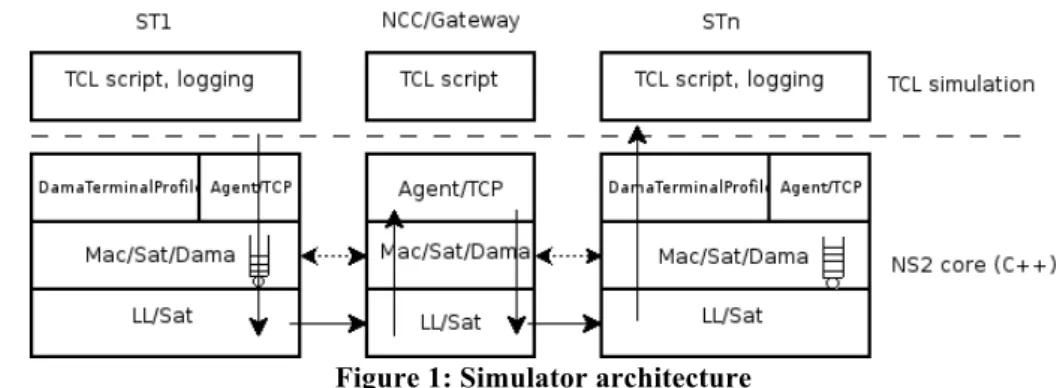
In addition, a new module for DVB-RCS MAC layer has been implemented in the satellite stack. All the DAMA schemes envisaged by the standard are supported (i.e., CRA, RBDC, VBDC) as well as their possible combinations (i.e., mixed CRA-VBDC). The structure of the implemented DAMA model is represented in Figure 1, mentioning names of the new agents/classes introduced. In Figure 1 it is also detailed a possible path for data IP packets (plain arrows) and messages exchanged at MAC layer (dashed arrows). MAC signaling is not crossing the satellite link, but it is part of the same MAC NS2 instance. Nevertheless satellite delays are accounted internally to simulate the real
signaling latency.
Figure 1: Simulator architecture
Encapsulation of packets in MPEG is not performed, together with a simplified TDMA framing, not compromising results obtained.
A vast gamut of statistics (graphs or data files) can be obtained as simulation output through TCL scripts. In particular, such outputs can be divided into three categories:
1) Lower layer statistics – these concern allocation dynamics at the MAC layer
a. “System Response Time” measurements – time elapsing between a capacity request and the corresponding
allotment;
b. Traces of the allocated slots per superframe in the different DAMA disciplines;
c. Calculation of the “saturation time”- time at which the maximum allowed transmission rate is achieved
(significant for TCP long transfers).
2) End-to-end statistics
a. Round Trip Time (RTT);
b. Throughput
3) TCP statistics – monitoring of the evolution of TCP internal variables:
a. Congestion Window (cwnd) and Slow Start threshold (ssthresh) trends;
b. Packet sequence Numbers;
c. Trace of the retransmissions.
2.2. Emulation Platform
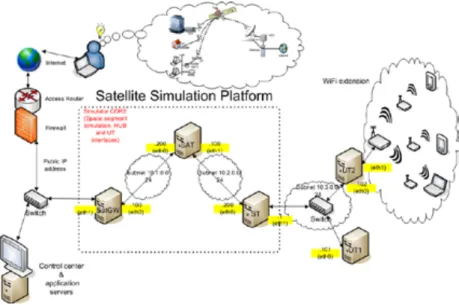
Satellite emulator has been conceived and developed to reproduce in real-time the services and quality of service of a DVB-RCS satellite network, while some network impairments (e.g., end-to-end delay) are reproduced in software. The Emulator core is composed of 5 units. Every unit-PC emulates a single component of a typical VSAT satellite environment, with DVB-RCS or DVB IP and terrestrial return channel. In particular, PCs represent:
• Gateway/Hub (SatGW);
• Satellite (SAT);
• Satellite Terminal (ST);
• Two User Terminals (UT1 and UT2)
Figure 2 shows the PC’s logical interconnections and the provided interfaces. Specifically, emulator provides the interface for a wireless extension in order to integrate satellite segment with other real or emulated wireless systems. With reference to Figure 2, UT2 is interfaced to a WiFi access point, behind which a WiFi network is configured. Furthermore, emulator platform can be accessed via a Web graphical interface. In this way, a remote users dislocated along Internet can configure a target satellite scenario, run tests, and collect statistics.
Figure 2: Conceptual Emulator Architecture
The hardware equipments involved in the emulator are shown in Figure 3.
Figure 3: Real Emulator Layout
Software modules have been developed over Linux OS in order to take advantage from the Open Source strategy. The kernel used is version 2.6.20, which offers a large set of functions for classifying and scheduling network traffic, IPsec support and a large set of transport protocols including UDP-Lite and new variants of TCP (i.e., TCP Hybla, TCP Westwood+, TCP Veno, TCP Low-Priority).
Finally, DAMA functionalities rely on the same algorithms implemented on the NS-2 simulator and work intercepting traffic from ST (or multiple virtual STs), managing a queue at application layer (ip_queue), delivering requests on a dedicated channel via an UDP socket and finally processing packets according to DAMA allocation decisions on IP packet basis with a strategy close to TDMA adopted in real DVB-RCS systems. The emulator proved good performance even without emulation of lower layer mechanisms (e.g. TS encapsulation).
Performance analysis on the Emulation platform can be done using classic network analyzer tools (e.g. Wireshark/Ethereal).
Emulator platform is used and/or extended in the frame of two main research project:
1. Emersat2- project funded by the Italian Space Agency (ASI), which has the objective of developing,
integrating and validating a pre-operative model for communication services for emergency management. In this frame, above emulator has been extended to provide a demonstrator of the target services.
2. INTERSECTION3 is a collaborative project co-funded by the EC in the frame of the Seventh Framework
2
http://www.asi.it/it/attivita/telecomunicazioni/emersat
3http://www.intersection-project.eu
Programme under the Area 5 subprogramme: “Security, Privacy and Trust in the Future Internet”. Some modules of the emulator platform have been integrated with a real satellite link and interfaced with some terrestrial networks in order to build up a heterogeneous communication scenario. Main goal is to propose a Intrusion Detection System dealing with PEP-related vulnerabilities.
3. TRIALS AND DEMONSTRATIONS
3.1. TCP over DVB-RCS links
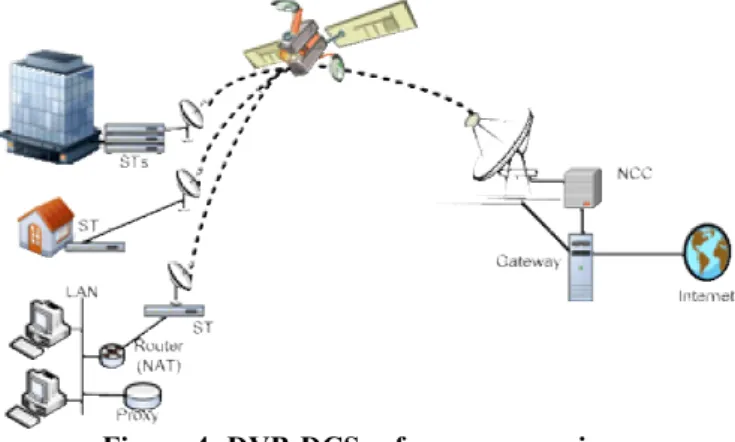
The reference model for a DVB-RCS network is shown in the Figure 1. The network topology is a star network with the GW station as hub.
Figure 4: DVB-DCS reference scenario
The GW transmits a forward carrier towards all STs. The STs, in turn, share a channel towards the GW according to a Demand Assignment Multiple Access (DAMA) protocol. The GW typically provides access to the Internet and/or to a corporate network. STs cannot communicate directly with each other, but some systems allow double hop connection via the GW. DVB-RCS bandwidth management is asymmetric. In the forward link a TDM scheme is used. This is managed by the GW, and the way the available bandwidth is shared between concurrent flows is an implementation issue. Typically, the GW maintains several FIFO queues with different priority. In the return link, bandwidth is shared between ST’s according to a DAMA scheme. This study considers 3 types of bandwidth allocation:
• CRA (Constant Rate Allocation) is a fixed allocation, available permanently to an ST irrespective of whether it
is used.
• VBDC (Volume Based Dynamic Capacity) is dynamically allocated on request of the ST. The request is for a
given volume of data. Each request is a one-off request for a given volume, and requests are cumulative. The time between issuing the request and getting the allocated bandwidth is typically in the order of 1.5 seconds, but may vary from one system to another depending on the details of the frame structure and the precise allocation algorithm. The standard supports also an Absolute VBDC (AVBDC) scheme in which requests are absolute rather than cumulative, typically used to cope with potential loss of requests. In our analysis we will refer only to VBDC.
• RBDC (Rate Based Dynamic Capacity) is dynamically allocated on request of the ST. The request is for a given
data rate and is typically valid for some seconds, being updated by subsequent requests as required. The extra delay of the request/allocation cycle is only felt on the initial request for RBDC, and on requests that modify the requested rate. The impact of dynamic allocation on RTT is therefore less severe than for VBDC.
Some systems support a fourth type of bandwidth allocation: FCA (Free Capacity Assignment). Any bandwidth not used for fulfilling requests is split between STs in some way. This feature is not included in our study. It requires knowledge of, or assumptions about the total traffic in the channel, and its effect is therefore unpredictable from the viewpoint of a single or a few STs. We felt that including it would bring little benefit, and would make interpretation of results more difficult, having one more parameter to cope with.
From a performance point of view, the 3 types of allocation can be described as follows:
• CRA has a constant RTT of around 500 ms for a geostationary satellite channel. Bandwidth is reserved whether
or not it is used. Any unused bandwidth is wasted.
• VBDC has a much longer RTT, typically around 1.5 seconds, due to the request/allocation cycle. Normally,
capacity will only be requested for data that is already in the buffer, so the bandwidth utilization is 100%.
• RBDC has an RTT similar to CRA, except some extra delay on first request and on adjustment of requested
rate. The bandwidth provided will rarely match precisely the bandwidth needed, so some bandwidth will be wasted most of the time, but less than for CRA.
Most implementations offer combinations of two, or all three of the allocation schemes.
difficult to get information of the details of implementations. So we had to make some assumptions.
• VBDC is rather straightforward, and there are not many choices available.
• RBDC, on the other hand, is much more open to different algorithms. We chose a relatively simple model based
on a sliding average of recent traffic demand.
It is our understanding that VBDC is intended for best effort traffic like TCP, while RBDC is intended for stream traffic that has more or less constant bandwidth requirements over extended time periods. We will discuss in the conclusion whether these expectations are met.
3.2. Mobility and Multi segment HO
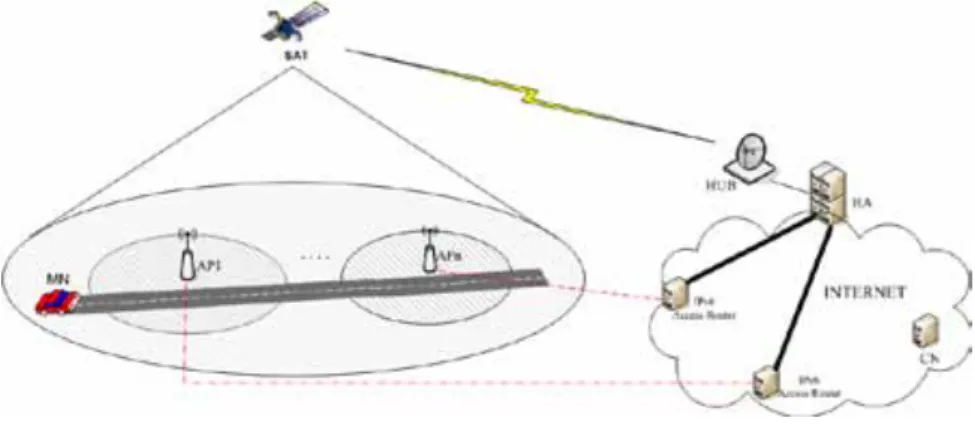
The reference scenario, shown in the Figure 5, a Mobile Node (MN) moves across a hybrid network composed of:
• one satellite segment (SAT), which through the wide coverage of a GEO satellite reaches the MN in all its
service area;
• n independent wireless LANs (WiFi) scattered (even partially overlapped) into the above defined satellite
coverage area and identified by access points (APs).
Figure 5: Mobile environment
As term of reference the SAT technology adopts DVB-RCS mobile standard, WiFi adopts 802.11b standard, MIPv6 (Mobile IPv6) standard is considered and TCP is adopted as transport layer protocol.
Mainly, MIP envisages the definition of a location management agent, called Home Agent (HA), which keeps the association between a home permanent IP address assigned to the Mobile Node (MN) in the home network and several care-of-address (CoA) assigned when visiting other networks. In this way, connection between MN and the Correspondent Node (CN) is kept alive irrespective of the access network serving the MN.
During the TCP connection life, one or more handovers could be performed as a consequence of user mobility. Since WiFi networks usually provide higher bandwidth and are characterized by lower propagation delay with respect to satellite networks, switching from SAT to a WiFi access point is preferable when possible (overlapping of both WiFi and satellite coverage).
3.3. Cross-Layer Architecture for security
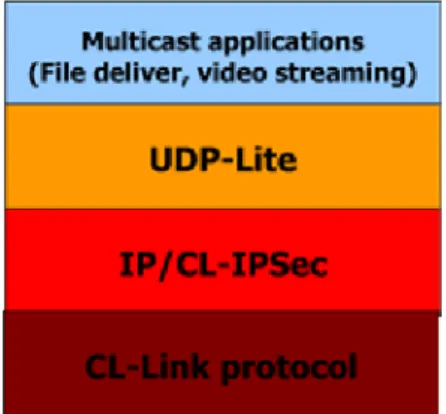
The reference protocol stack is shown in the Figure 6.
Application layer – At the application layer, error-tolerant protocols are considered. Modern multimedia codecs are designed to be error resilient. This is the case of MPEG video coding, which is based on three different frame types: I-, P- and B-frames. I-frames carry information about an entire video frame, while P- and B-frames only include the differences to other frames. Usually it is better to deliver damaged P- and B- frames than discarding them. MPEG-4 also includes new features allowing both error resilience and improved compression. In addition, Reliable Multicast Transport (RMT) protocols use various error/erasure correction codes to protect against channel impairments. In this frame, FLUTE protocol defines a specific file delivery application of Asynchronous Layered Coding (ALC), adding capability to deal with bit errors.
Transport layer – UDP-Lite is used instead of UDP. The main difference between UDP and UDP-Lite is the partition of each packet into two parts: sensitive and insensitive. Errors in the sensitive part result in a packet drop, while packets with errors in the insensitive part are forwarded to the application.
Network layer – Either IPv4 or IPv6 can be alternatively selected. IP checksum is computed only on the IP header field to verify that the IP header was not damaged. In IPv4, such a checksum is mandatory, while IPv6 relies on both the link CRC and transport checksum to assure IP header integrity.
In addition, CL-IPsec is used to provide security services at the network layer. Herein, AH protocol in the transport mode is implemented. As a benchmark standard IPsec AH protocol is considered.
Link layer – Link layer must calculate the CRC according to the payload type. That is, in case of UDP-Lite a partial checksum must concern only the link layer header and UDP-Lite sensate part. Header protection techniques can help to
avoid bit errors in the sensitive part (possibly used in combination with link header compression)[5].
This work focuses on the definition of the CL-IPsec AH protocol by proposing also the design of the CL signaling needed to get UDP-Lite checksum value in both sender and receiver sides.
Figure 6: CL protocol stack and related services
3.4. Heterogeneous network analysis
The emulation platform has been integrated in a more extended platform based on the use of the Satellite ToolKit (STK). Specifically, a federation of simulation/emulation tools has been integrated to provide a flexible architecture well suited to support analysis of heterogeneous terrestrial-satellite scenarios. STK acts as coordinator of the whole platform, performing the following actions:
• Configurations of the application scenario;
• Scheduling of the simulated events (terminal motion, transfer start, parameter changes); • Triggering of distributed tasks on the various federated tools
• Collections and visualization of results.
STK interacts with the satellite emulation platform to activate services of a telecommunication-advanced system: mechanisms at the network layer, transport layer, satellite resource management and implicit or explicit interaction among protocol layers. In this way, satellite emulator allows to investigate on most relevant issues of actual broadband satellite systems while interfacing with the largely deployed terrestrial systems.
In addition, STK exploits three further tools focused on the control and management of the communications:
1. Call Admission Control (CAC) tool - this tool enhances the platform with CAC procedures needed to guarantee target quality of service at the flow level in terms of guaranteed bandwidth and delays and at the call level in terms of blocking probability and call breaking down probability.
2. Dynamic resource assignment tool – this tool manages a dynamic assignment of resources available over the satellite link, based on both the control theory and methodologies of Operational Research. Algorithms to compute bandwidth requests can be properly integrated to scheduling algorithms that Earth Station runs at the IP level.
3. Multidimensional link budget tool: this tool performs multi-dimensional link budgets for transponder in Ku/K/Ka bands, both bend-pipe and regenerative, which can be applied for different coverage areas and various propagation models. Such a tool is able to interface with external databases to retrieve data concerning large set of areas. In particular, it envisages an interface with a database concerning propagation models of satellite signal through the atmosphere.
3.5. Satellite PEP-related security
From a security perspective, the utilization of a satellite segment in an integrated architecture leads to vulnerabilities that can be classified as follows:
• “Satellite-specific” vulnerabilities, which completely rely on satellite characteristics and technologies (usually involving lower protocol layers);
• “Non satellite-specific” vulnerabilities, which are common to all the IP-based networks (i.e. IP data corruption, interception, etc.);
• “Satellite intersection-based” vulnerabilities, which rely on satellite technology needed to support interconnection with terrestrial networks.
The latter class involves technology solutions aimed to guarantee good performance over the satellite link. In fact, the use of traditional TCP/IP stack and related paradigms implies poor performance since the basic features of the protocol design don’t match with the actual environment. A common baseline to mitigate the problem envisages the use of
Performance Enhancing Proxies (PEPs) at the edge of satellite links with the main scope to “accelerate” TCP over satellite. PEP is mainly based on a splitting architecture, which divides end-to-end connections into multiple sub-connections, each one adopting a transport protocol suited to the link characteristics (i.e. delay, bandwidth, BER). Over the satellite link, ad-hoc transport protocols usually replace standard TCP.
Although performance improvement is significant, PEP-based architecture is intrinsically vulnerable due to the violation of the TCP end-to-end semantic. A PEP intentional or unintentional failure (i.e. dropping of locally acknowledged packet before reaching actual destination) leads to an irreversible break of the end-to-end reliability. Implications on security are straightforward since TCP is used to provide transport services also to comply with severe requirements in terms of reliability.
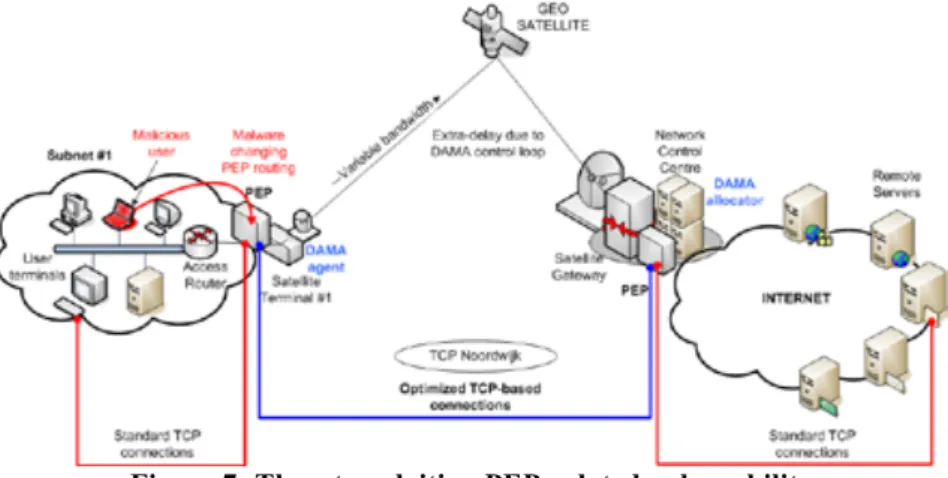
Figure 7 shows a possible attack scenario.
Figure 7: Threat exploiting PEP-related vulnerability
Specifically, a malicious user in the same network of a target legitimate TCP source can access PEP in front of satellite gateway with the aim of installing a malware application that performs the task to drop either a part or all TCP packets flying towards Internet through the satellite link. Different harmful effects can be caused depending on both malware implementation and considered application protocol:
• loss of several packets within a connection, which causes continuous retransmissions, for instance after a
retransmission timeout expiration, increasing transfer time;
• packet dropping, which does not allow the application to successfully conclude its operations and
end-system is aware of the negative transfer outcome;
• packet dropping, which is transparent to applications that trusts on a successfully transfer.
To face with the above described attack, an Intrusion Detection System (IDS) has been developed. It integrates different functions and components (monitoring, detection, reaction, remediation, visualization and topology discovery), which cooperate to increase network protection and security in a real-time and automated fashion. The goal is to gather data from probes and network elements, to analyze it, to detect intrusions, and to select the most suitable remediation action against the detected attack. In addition, off-line functions aim at using data coming from the network or provided by the real-time part of the framework in order to help the human operator in analyzing the network state and make the network more secure.
4. RESULTS
4.1. TCP over DVB-RCS links
DAMA exploitation introduces a significant delay in addition to the already high propagation delay of the satellite link, and is affects significantly the behavior of TCP data transfer. This effect is present on both data traffic directions, but it is less evident on the forward link data transfer, because in this case the return link (where the DAMA mechanism is implemented) handles small packets corresponding to TCP acknowledges (ACKs) and has small rate variations. A common slot size in the DVB-RCS return channel is a multiple of an ATM cell, so that each ACK just requires at maximum a single slot. Data packets for TCP transmission are usually bigger and require a greater amount of slots, implying greater allocation variations since the DAMA algorithms work under competition and resource constraints. In this paper only data transfer on the return link is dealt with.
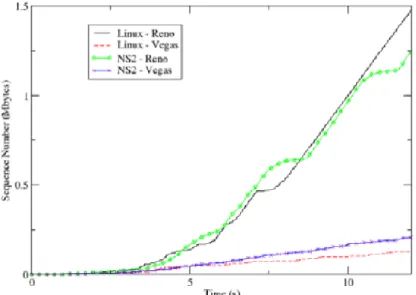
The first test concerns the measure of a single TCP connection sequence number evolution in both emulated and simulated approach for TCP Reno and TCP Vegas over DAMA RBDC (Rate Based Dynamic Access) access scheme. Figure 8 shows that with the two approaches the same results are carried out and that performance are significantly different for the two TCP flavors. In fact, TCP Vegas clearly suffers from bad estimation of available bandwidth due to
the high variability of perceived RTT in a DAMA system.
Figure 9 shows RTT variations as a function of time for a TCP Reno connection over DAMA with VBDC (Volume Based Dynamic Access) both in the emulated and in the simulated environment. Although the match is not perfect, the overall behavior is similar, with a common average RTT of about 1.5 s.
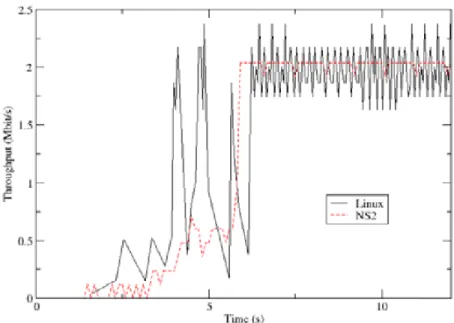
Figure 10 shows the throughput for TCP Reno connection evaluated both through simulation and emulation. The results from the two approaches are close in average and represent quite well the real system behavior. Oscillations peaks on the Linux line are above the system capacity because of buffering at MAC layer not included in the TCP dump performed at the source, but the average throughput is compliant with the system capacity set at the beginning.
With the aim to optimize TCP performance in such environments, the examined tests are important also to identify the criticalities of the DVB-RCS system. In particular, for classic TCP congestion control algorithms the initial growth
of the transmission window is inefficient in the startup phase, even with high ssthresh as it is actually in Linux PC (and
consequently set in NS2 too). Furthermore, Vegas estimation of optimal transmission rate at steady state is fooled by the DVB-RCS asymmetric and RTT-variant links. The problem of defining a more efficient transport protocol must cope with all these issues, but still maintaining the typical fairness of concurrent TCP flows.
Figure 8: Sequence Number of a TCP transfer
Figure 10:Throughput evaluation - RBDC
4.2. Mobility and Multi segment HO
To ensure continuous access to the Internet for mobile and nomadic users, it is necessary to consider an integration among different kinds of telecommunications networks. In particular, switching between satellite and terrestrial networks, such as Wi-Fi, can represent an optimum solution because high capacity and low delays can be achieved under the WiFi “Hot Spot” coverage and long range mobility and service continuity can be ensured thanks to satellite links where WiFi access is not available. In this scenario a Handover (HO) must be performed when a Mobile Node (MN) switches from a point of access to another one of the same system, or between points of access belonging to different systems (even adopting different standards), keeping communication alive. If HO is performed in a network adopting the internet protocol stack and offering multimedia broadband IP services, also exploitation of upper layers functionality (network, transport and application) is affected and proper actions must be undertaken at each layer to keep the relative protocol performance unaltered.
Mobile IP (MIP) protocol provides mobility support at network layer, allowing mobile nodes to change point of access to an IP network transparently. MIP presents a problem called “HO Latency”, or out of service time, and it is not able to mask the impairments of such latency to higher layers. In fact, a MIP handover results in an interruption of the communication at layer 3 with consequent packet losses. The duration of such interruption is usually composed of the time to connect MN (Mobile Node) to the new link (HO performed at layer 2) and the time needed to update routing (HO performed layer 3).
At transport layer, some problems occur after a HO event, because TCP protocol is not designed to handle mobility. In particular, when HO is performed between links with different delay and bandwidth-delay product (BDP), HO causes reordering and generation of segment bursts, Bandwidth-Delay product sudden variation and Expiration of TCP's time-out.
4.2.1. Reordering and generation of segment bursts
The packet reordering can occur after a HO, if consecutive packets are routed through different paths in case the delay of the new path is lower than the old one. This occurs only in the case of soft-HO, where the MN exchanges data with both satellite and WiFi link, before physically switching of the mobile device. Burst generation can be due either to TCP cumulative ACK scheme, where the acknowledgment for the first packet received after the switch will anticipate the acknowledgments still in transit over the old link, or due to the loss of several ACKs over the old link.
4.2.2. Bandwidth-Delay product variation
The bandwidth-delay product (BDP) is a very important parameter in a window based protocol such as TCP because it determines the amount of data that can be in transit in the network. After a HO occurrence some problem can be experienced:
1) a large number of packets can drop when moving from satellite to WiFi, because BDPsat > BDPWiFi and then the
most of the packets injected over the new network leads to buffers overflow increasing the experienced latency;
2) moving from WiFi to satellite, since TCP enters in Congestion Avoidance phase (linear cwnd increase on a RTT
basis) when cwnd is far away from the BDPsat, the increase of the cwnd up to the optimum value requires long time, resulting in a temporary significant underutilization of the satellite resources.
4.2.3. Time-out expiration
When a HO from WiFi network to satellite occurs, due to high delay of the new link, RTO expiration can be experienced because the last packets received through the old link can be acknowledged after that RTO, evaluated on the basis of the old link delay, expires.
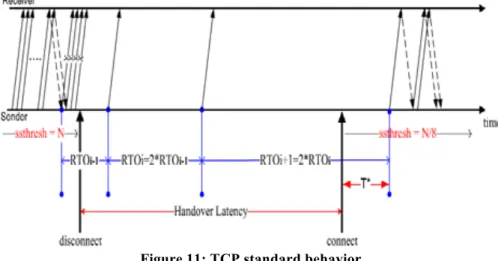
Due to standard TCP dynamics, shown in Figure 10, after a link disconnection, a certain number of sent packets/ACKs will be lost and RTO is initialized with reference to the first unacknowledged packet.
Figure 11: TCP standard behavior
Depending on the “handover latency”, one or more RTO expiration and consequent retransmissions can occur. When MN is reconnected to the new link, TCP sender might be not yet able to re-start the transmission since RTO is not yet expired. In this way, an additional contribution T* is generally added to the “handover latency” causing a further performance degradation in terms of throughput. This added time is a function of HO latency and varies from 0 to
RTOK. At the end, transmission restarts with cwnd set to 1 and ssthresh halved as many times as the number of RTO
expirations.
To overcome inefficiency introduced by TCP standard, it is possible to introduce a Cross-Layer interaction between link, network and transport layers. The scope is to make TCP aware of the incoming HO in advance. In this way, TCP has enough time to do appropriated actions aiming to both avoid losses during HO and efficiently restart the transfer over the new link. To evaluate performance of such a method, NS 2 simulation platform has been improved with ad hoc modules that reproduce such cross layer interactions.
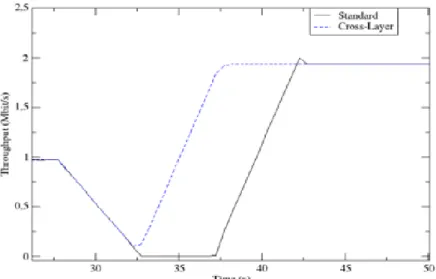
Figure 12 and Figure 13 show the instantaneous throughput achieved over time during the data transfer by standard and cross-layer enabled stack from MN to CN (Correspondent Node) between WiFi to SAT link and vice versa respectively, assuming a SAT channel of 1 Mbit/s with RTT fixed to 500 ms and a Wi-Fi “Hot Spot” area with a bandwidth of 2 Mbit/s and a RTT delay of 20 ms.
In these simulations, the disconnection event occur at 10 s where the MN moves from WiFi to SAT link and at 30 s where MN moves from SAT to WiFi link, considering for both a HO latency THO = 5s.
Both figures show a significant improvement of performance, after the disconnect event due to the cross-layer action. Performance degradation of TCP standard is due to the HO latency and T*.
Figure 12: Instantaneous throughput from WiFi to SAT link
Figure 13: Instantaneous throughput from SAT to WiFi link
4.3. Cross-Layer Architecture for security
Today UDP is the preferred transport protocol to deliver multimedia as well as multicast packets over the Internet. However, due to its severe error check mechanism, even single bit error may lead to packet loss. A transport protocol called UDP-Lite was designed to replace UDP in architectures where applications can tolerate errors up to a certain amount in their payloads. UDP-Lite allows division of a datagram into a sensitive and an insensitive part. An application can use the Checksum Coverage field (replacing the length field in the UDP header) to indicate the number of bytes from the beginning of the UDP-Lite header that must be considered sensitive to bit errors. Receivers calculate the checksum only over the sensitive part and datagrams with bit errors only in the insensitive part are forwarded to the application. UDP-Lite and the IPsec protocol suite are intrinsically incompatible because IPsec authenticates (and optionally encrypts) the entire IP payload assuming that the entire IP payload is sensitive to unauthorized bit changes (due to either bit errors or malicious attacks). This conflicts with UDP-Lite which can tolerate bit errors in its payload.
To adapt IPsec for UDP-Lite based applications a module to enable a cross Layer IPsec (CL-IPsec) as modification to the linux kernel has been designed. The behavior of CL-IPsec is dependent on the cross layer signaling between network layer and higher layers. Specifically, IPsec needs to receive both explicit signaling from application, indicating the use of UDP-Lite, and implicit signaling from transport layer to get the coverage length value and then perform the security operations accordingly. Considering the AH protocol in transport mode, on the basis of the above mentioned signaling scheme, a CL-IPsec scheme of implementation is shown in Figure 14, where the insensitive part only involves the RMT payload. It allows partial authentication involving only AH, UDP-Lite and other sensitive bytes.
Figure 14: Partial authentication using CL-IPsec in transport mode
Figure 15 shows test results achieved over the linux satellite emulation platform in terms of packet loss rate perceived with an application of video streaming (Videolan) versus the BER of the satellite link. CL-IPsec to accept allows a higher number of packets, although corrupted in the insensitive part; IPsec instead drops all the corrupted packets.
Figure 15: Video Packet Loss rate with IPsec and CL-IPsec
Figure 16 shows two frames relative to video streaming tests with BER=10-5, MPEG-2 video codec and both
UDP-Lite/CL-IPsec and UDP-Lite/IPsec protocol stacks were alternatively configured. The improvement in terms of video quality when CL-IPsec is utilized with respect to the IPsec is due to an increased number of bytes passed to the application codec (MPEG-2).
Figure 16: Frame of video streaming test with MPEG-2 and BER=10-5
4.4. Emersat trials
Emersat project foresees trials related a network architecture able to simultaneously manage different sub-networks, composed of a large number of satellite terminals, either fixed or mobile/nomadic, operated by different Institutional Bodies and jointly involved in the emergency management.
A particular emphasis will be devoted to mobile/nomadic satellite terminals. Application scenario envisages a sudden deployment of such terminals in the emergency area with the aim to restore the connectivity within a given time threshold defined by the operative requirements and provide the required telecommunication services with the respect of a pre-defined prioritization of the services.
Satellite segment reproduced by the emulator platform will manage communication services by respecting the following requirements:
• Implementation of a flexible network topology able to establish satellite links among different terminals
control center.
• Provision of broadband for applications requiring an high data rate (i.e. up to 2 Mbit/s).
• Performance compliant to a pre-determined prioritization of various services/applications in terms of latency, round-trip delay, QoS management.
• Implementation of an IP interface on satellite terminals to make easier and faster the integration with terrestrial
systems.
• Guarantee security requirements in terms of restricted satellite channel access, authentication and protection of
data contents.
4.5. Satellite PEP-related security
In the frame of the INTERSECTION project an intrusion system based on the above architecture dealing with attacks exploiting PEP vulnerability was designed.
Satellite IDS exploits two types of probes: the SYN detector and the TCP traffic analyzer. The “SYN detector” is
installed in the satellite gateway and is in charge to monitor all the TCP traffic in order to create an IPFIX record for every SYN/FIN exchange through the satellite link. Each record includes the parameters identifying the specific connection and it is enhanced with the time information. “TCP traffic analyzer” probes run on the access router of all the networks interfaced to the satellite network. Such probes aim to collect statistics about TCP traffic coming from and going to the satellite network. Specifically, a TCP traffic analyzer grabs the number of transferred bytes over any active TCP connection.
All the probe records are collected by a data broker, which represents the first functional element of the IDS. Data
broker is in charge to forward the received records to the Detection Engine, which implements the following detection
logic:
Step 1 - Compare the number of SYN and FIN records coming from the SYN detector probe; if #SYN ! #FIN, regular operations are assumed; otherwise (i.e. #SYN - #FIN > threshold = 90) detection process moves to step 2;
Step 2 - Delete <SYN ; FIN> pairs related to a same connection; residual SYN records will provide information on networks involved in possible attack.
Step 3 - For each connection under investigation, compare the amount of bytes crossing corresponding source-destination networks; results are computed in the form of “byte differences”.
The achieved results are then forwarded to the decision maker that determines if what has been detected as an
anomaly can be interpreted as an attack from an external entity and thus forward the relative commands.
The Reaction and Remediation (ReaRem) subsystem involves a Reaction Engine, a repository of scripts used for the
attack remediation, and a Remediation Point, which represents the network element where such scripts will be run.
Specifically, when an attack is detected (decision maker issues a trigger), the Reaction Engine downloads the proper script from its repository to stop PEP misbehavior. This script, executed in the Remediation Points/PEPs, performs a procedure aimed to temporary disable PEP involved in the attack in order to recover correct settings: delete of the malware and reset PEP routing tables.
Deployment of the overall IDS system over the considered scenario is shown in Figure 17.
Figure 17: IDS for PEP-related vulnerability
Target vulnerability has been reproduced in a communication scenario where a satellite geostationary link, operated by Telespazio (TSP) is used to interconnect a remote terrestrial LAN, belonging to Polska Telefonia Cyfrowa (PTC),
with an Internet Service Provider (ISP) represented by Telefonica (TID).
Test bed core relies on hardware in the loop configuration where a real satellite link (Intelsat IS906 @ 64° E) operating at Ku band with a channel of 300 kHz is accessed by two satellite modems. At the edges of such a satellite link, both a Satellite Gateway/Network Control Centre (satGW/NCC) and Return Channel Satellite Terminal (RCST) functionalities are emulated through Linux-based machines. PEP agents are installed in both satGW/NCC and RCST machines.
The application implemented for test purposes is based on a traffic generator, running on a TID machine. Basically TCP connections with a machine installed in PTC are generated over different ports on the basis of the following input parameters: average rate of the overall data flow, the amount of bytes to transfer over any connection. In the tests presented below, the average rate is set to 200 kbit/s and the amount of byte in a single connection is taken equal to 100 kbytes.
Results are summarized in Figure 18 and Figure 19. Over the first 210 s of simulation, ordinary operations are detected on the network: the number of active connections oscillates around the expected average (50) and throughput measured at both sides of the satellite link is similar. Selected IDS configuration envisages an active connection threshold of 90 s and a threshold for the throughput asymmetry equal to 75 kbit/s. In general, these values have to be tuned on the basis of a training period where characteristics of the ordinary traffic profile are observed.
At 210 s, malware starts running. Malicious packet dropping does not allow correct connection terminations. As a consequence the number of active connections grows more and more (see Figure 18). At about 250 s, the number of the active connections overcomes the threshold value. Then, IDS performs the second step of the detection process comparing measured throughput at the edges of the PEP-PEP satellite link. From Figure 19, it is evident the high experienced asymmetry. During the attack, TCP senders (Figure 19-a) continue to transmit without suspecting any packet dropping. On the other side, TCP receivers receives only a minimum part of packets (attack is designed to allows transmission of sporadic packets in order to keep connections on) and experienced throughput in much lower than that measured at the sender side.
The joint compliance of the above conditions with characteristics assumed for the attack profile leads to the issue of an alert message that, in turn, triggers the remediation procedure. Then, after a short time needed to disable PEPs instances involved in the attack, a reliable connectivity is restored and connections starting afterwards are successfully performed. With a particular reference to the Figure 19-b, it is possible to observe a decrease of the overall throughput due to the stop of TCP acceleration provided by PEPs.
Figure 18: Track of the “SYN detector” records
(a) Throughput at the client side (b) Throughput at the server side