MEASURING FACULTY-STUDENT INTERACTION IN ONLINE COURSES USING ASYNCHRONOUS DISCUSSION BOARDS: A CAMPUS-WIDE ANALYSIS
by Crystal Gasell
A dissertation
submitted in partial fulfillment of the requirements for the degree of Doctor of Education in Educational Technology
Boise State University
© 2020 Crystal Gasell ALL RIGHTS RESERVED
BOISE STATE UNIVERSITY GRADUATE COLLEGE
DEFENSE COMMITTEE AND FINAL READING APPROVALS
of the dissertation submitted by
Crystal Gasell
Dissertation Title: Measuring Faculty-Student Interaction in Online Courses Using Asynchronous Discussion Boards: A Campus-Wide Analysis Date of Final Oral Examination: 09 March 2020
The following individuals read and discussed the dissertation submitted by student Crystal Gasell, and they evaluated their presentation and response to questions during the final oral examination. They found that the student passed the final oral examination.
Patrick Lowenthal, Ph. D. Chair, Supervisory Committee Lida Uribe-Flórez, Ph. D. Member, Supervisory Committee Yu-hui Ching, Ph. D. Member, Supervisory Committee The final reading approval of the dissertation was granted by Patrick Lowenthal, Ph. D., Chair of the Supervisory Committee. The dissertation was approved by the Graduate College.
iv
ACKNOWLEDGEMENTS
I would like to express my deepest appreciation to my committee chair, Dr. Patrick Lowenthal for his guidance and feedback through each stage of this process. I am so fortunate to have his friendship and support. He pushed me to do my best and never let me slide. In addition, I would like to thank my committee members, Dr. Lida Uribe-Florez and Dr. Yu-Hui Ching who provided invaluable guidance and support throughout my dissertation. This dissertation is better because of them. Finally, I would like to acknowledge all those in the EDTECH program for their support throughout the years. Particularly, Dr. Lisa Dawley and Dr. Kerry Rice who were key in my development during my master’s program. In addition, Dr. Ross Perkins who was always kind and available when I needed guidance or support.
Additionally, I would like to extend my greatest gratitude to Dr. David Thomas. As my boss, friend, and mentor he inspired me to pursue this degree, encouraged me along the way, and was willing to listen while I talked it out over drinks. I’d also like to acknowledge and thank Nicky Rucker for helping me extract the data and answered my endless Tableau questions. During the last few critical months, I had the great pleasure of working with Dr. Dean Spaulding who helped me stay on track with my writing and read numerous drafts. Finally, I’d like to acknowledge my colleagues at the University of Colorado Denver who supported the use of the data for this research.
This acknowledgement would not be complete without mentioning my husband, Mike, who provided continual support throughout the process and always had a trip
v
planned to celebrate a milestone or as a getaway from it all. I probably would have finished sooner, but it would not have been as much fun if it wasn’t for him. I would like to acknowledge my friends and family who have been there for me throughout the (too) many years: Sandy and Ed Abrams, Nate and Casey Allen, Joe and Allie Caracillo, Stefanie Watson, and Alice Brunette. Finally, I have to acknowledge Sansa, my furry best friend, who served as a much-needed distraction and kept me company during my
vi ABSTRACT
Online learning is growing. As such, institutions want to grow programs, while ensuring quality. Part of ensuring quality in online courses is ensuring that there is regular and substantive interaction (RSI) between students and instructors. Discussion boards are often used in online courses as a way to promote social exchange, interaction, and the discussion of course concepts. Therefore, discussion board activity can provide a glimpse into the RSI that occur between students and instructors. Until recently, data from learning management systems was difficult to access and analyze. However, advances in technology and an increased interest in learning analytics provides researchers and institutions with billions of data points about student and instructor activity within a learning management system (LMS). This study used LMS data to explore the frequency of interaction between instructors and students in discussion boards in online courses at one institution. 415 courses were selected for the study, spanning two semesters. Results from the study found that the average number of posts by an instructor was 32.9. The average instructor interaction was 1.49 instructor posts per student. 23% of courses had no instructor posts. Student posts averaged 470 per course and the average posts per student was 19.9. Based on the discussion board activity, the most discussion interaction occurred during the first two weeks of the semester. Results suggested that there is no relationship between student satisfaction and the number of total posts in a course.
vii
TABLE OF CONTENTS
ACKNOWLEDGEMENTS ... iv
ABSTRACT ... vi
LIST OF TABLES ... xi
LIST OF FIGURES ... xiii
CHAPTER ONE: INTRODUCTION ...1
Statement of the Problem ...1
Purpose of Study ...4
Theoretical Framework ...4
Overview of Research Methods ...6
Research Questions ...7
Sample...7
Data Collection and Analysis...8
Chapter Summary ...8
CHAPTER TWO: LITERATURE REVIEW ...10
Online Learning ...11
Quality Concerns ...12
Learner Issues ...13
Content Issues ...14
viii
Online Teaching Standards ...19
Seven Principles of Good Practice ...19
Quality Learning and Teaching (QLT) Framework...22
OLC Course Design Review Scorecard ...23
Quality Matters Course Design Rubric ...24
Similarities and Differences in Online Teaching Standards ...26
Interaction in Online Learning ...29
Transactional Distance Theory ...30
Three Types of Interaction ...33
Interaction Equivalency Theorem ...37
Using Discussion Boards to Facilitate Interaction ...37
Discussion Board Mechanics ...38
Discussion Board Best Practices ...39
Impact of Using Discussion Boards for Interaction ...42
Chapter Summary ...44
CHAPTER THREE: METHOD ...46
Research Questions ...46
Research Design...47
Sample of the Study ...48
Data Collection ...50
Data Sources ...50
Data Analysis ...57
ix
Statistical Analysis ...57
Reliability ...58
Chapter Summary ...59
CHAPTER 4: RESULTS ...60
Demographics of the Courses ...60
Tenure-Track vs Non Tenure-Track Instructors ...61
Course Levels...62
Instructors and TAs ...63
Students ...63
Number of Discussion Boards ...65
Total Posts ...67
Research Question 1: Instructor Interaction ...68
Research Question 2: Student Interaction ...73
Research Question 3: Weekly Interaction ...76
Research Question 4: Correlation Testing ...80
Chapter Summary ...85
CHAPTER FIVE: DISCUSSION ...87
Summary of Findings ...87
Research Question 1 ...88
Research Question 2 ...91
Research Question 3 ...93
Research Question 4 ...94
x
Limitations of the Study...99
Future Research ...100
Conclusion ...101
REFERENCES ...103
xi
LIST OF TABLES
Table 2.1 Learner Issues in Online Courses as Described by Kebritchi et al. (2017)
... 14
Table 2.2 Content Issues in Online Courses as Described by Kebritchi et al. (2017) ... 16
Table 2.3 Instructor Issues in Online Courses as Described by Kebritchi et al. (2017) ... 18
Table 2.4 Comparison of Popular Frameworks for Online Teaching Standards ... 27
Table 3.1 Alignment of Research Questions to Data Analysis ... 48
Table 3.2 Courses in the Study by School or College ... 52
Table 3.3 Course Demographic Variables ... 54
Table 3.4 Discussion Board Data Variables ... 55
Table 3.5 End-of-Course Evaluation Data Variables... 56
Table 4.1 Courses in the Study by School or College ... 61
Table 4.2 Distribution of Courses by Level and School/College ... 63
Table 4.3 Descriptive Statistics of Student Enrollments ... 64
Table 4.4 Courses with the Highest Number of Discussion Boards ... 67
Table 4.5 Descriptive Statistics of Instructor Posts ... 69
Table 4.6 Descriptive Statistics of Instructor Interaction Rate ... 71
Table 4.7 Descriptive Statistics of Student Posts ... 73
Table 4.8 Descriptive Statistics of Average Posts per Student ... 75
xii
Table 4.10 Average Interactions for Instructors and Students by Week ... 79 Table 4.11 Descriptive Statistics for Key Variables ... 82 Table 4.12 Results from the Spearman’s Rho Correlation ... 85
xiii
LIST OF FIGURES
Figure 2.1 A Screenshot of a Discussion Board in Canvas ... 38
Figure 4.1 Distribution of Non Tenure-track (OTH) vs Tenure-track (TTT) Instructors ... 62
Figure 4.2 Frequency of Number of Students per Course ... 64
Figure 4.3 Distribution of the Total Number of Discussion Boards per Course ... 66
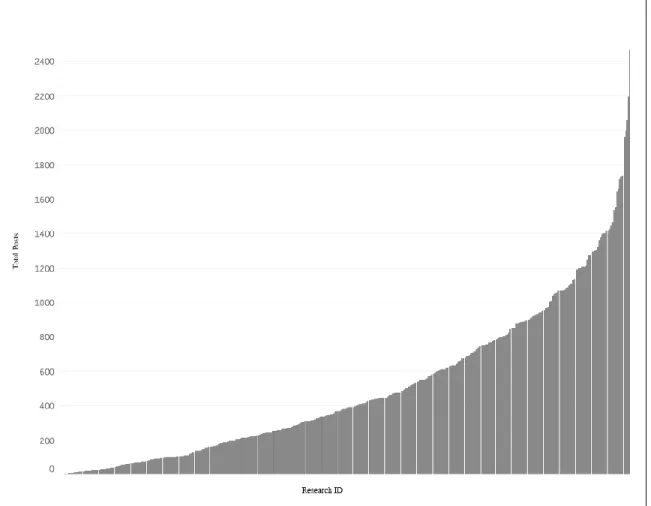
Figure 4.4 Total Posts Per Course ... 68
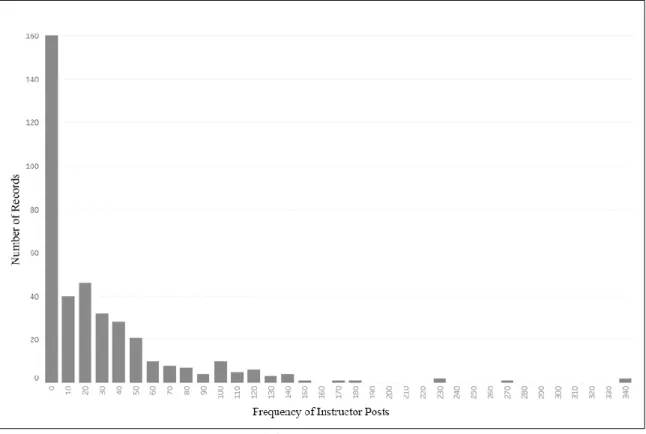
Figure 4.5 Number of Courses by Instructor Post Frequency ... 70
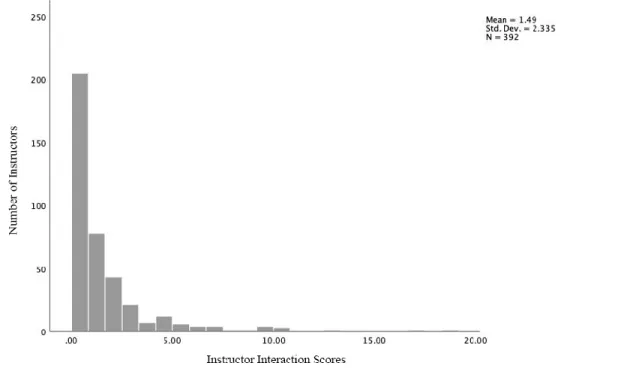
Figure 4.6 Distribution of Instructor Interaction Rate Scores ... 72
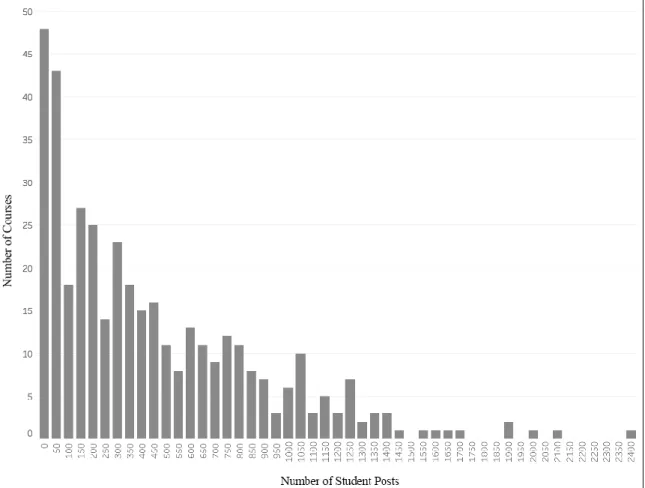
Figure 4.7 Number of Courses by Student Post Frequency ... 74
Figure 4.8 Average Number of Posts per Student by Course ... 76
Figure 4.9 Total Discussion Posts Based on Enrollment Type ... 80
Figure 4.10 Normal Probability Plots for Variables, Total Posts and Student Satisfaction Score... 83
CHAPTER ONE: INTRODUCTION
The number of students taking online courses in higher education and the number of online courses being offered continues to grow (Seaman, Allen, & Seaman, 2018). In fact, the number of online students in both undergraduate and graduate levels of higher education have increased steadily from 2012 to 2016 (Seaman et al., 2018). Traditional and non-traditional students are choosing online courses, among other reasons, to fit within their busy schedules (Ortagus, 2017). Recently, Seaman et al. (2018) reported that 52.8% of online students also took at least one course on campus, which suggests that an increasing number of online students live close enough to attend face-to-face classes on campus. Additionally, and perhaps related to the number of local students taking online courses, more institutions report that online education is critical to their long-term
institutional strategy (Allen & Seaman, 2016). In other words, institutions now see online courses and online programs as not only a way to reach more geographic areas, but also a way to meet the demands of residential students, to address space shortages of
classrooms, and as a way to address budget issues (Allen & Seaman, 2016). For these reasons, institutions are increasingly investing in online courses and online programs.
Statement of the Problem
Despite the popularity and increased investments from universities, online courses have been criticized for being inferior in quality to face-to-face courses (Allen & Seaman, 2016; Singh & Hurley, 2017). For example, in 2015, 25% of academic leaders reported they believed online learning outcomes were “somewhat inferior” or “inferior” to
face-to-face instruction (Allen & Seaman, 2016). Public opinion of online education appears to be similarly mixed. For instance, in 2013, a Gallup poll revealed that 34% of Americans rated online courses as “excellent” or “good.” However, 68% rated traditional courses taught at a four-year college or university as “excellent” or “good” (Saad, Busteed, & Ogisi, 2013). This suggests the majority of people still feel that traditional face-to-face education is better than online education. However, it is important to point out that instructors who have experience teaching online, generally believe that it is equivalent to face-to-face instruction (Jaschik & Lederman, 2018). This suggests that as more
instructors are exposed to teaching online, perceptions may improve. Nevertheless, the perception that online education is inadequate or of low quality has institutions seeking ways to validate online education and improve the quality of online courses.
Research suggests that one critical variable that influences students’ perception about online courses is the interactions that take place between a student and an instructor (Battalio, 2007; Richardson & Swan, 2003; Stein, Wanstreet, Calvin, Overtoom, & Wheaton, 2005). Interactions between a student and an instructor has been linked to learner satisfaction and student achievement (Lee, Srinivasan, Trail, Lewis, & Lopez, 2011; Sher, 2009). This information has led to the development of a number of standards, or best practices, which are used to guide online teaching (Chickering & Ehrmann, 1996; Pina & Bohn, 2014). Each of these standards or best practices include learner-instructor interaction as a key component. In fact, federal policy requires institutions who
participate in the student financial assistance programs, authorized by Title IV of the Higher Education Act (HEA), to demonstrate that online courses and programs “support regular and substantive interaction between the students and the instructor, synchronously
or asynchronously” (Legal Information Institute, n.d., 7Aii). The U.S. Department of Education’s position, currently, is that courses without regular and substantive interaction between students and instructors are considered correspondence courses and therefore not eligible for financial assistance (U.S. Department of Education, 2014). However, despite this position, there is currently not a standard definition of regular and substantive interaction (RSI) (Protopsaltis & Baum, 2019).
In 2017, Western Governors University (WGU) responded to allegations that they were not eligible to participate in Title IV programs primarily due to not meeting the “regular and substantive interaction” requirement as described in the HEA (Office of the Inspector General, 2017). In the response to the audit, WGU defended their model of regular and substantive interaction, stating that the review
limited what it counted as regular and substantive interaction to what the OIG personnel found in the WGU course outlines; however, WGU is explicit in its educational model that significant interactions between faculty and students regularly take place that are not spelled out in the course syllabus. (Office of the Inspector General, 2017, p. 68)
This, and other similar cases, raised a number of concerns from the online education community about the lack of clarity regarding the meaning of regular and substantive interaction (Protopsaltis & Baum, 2019). Specifically, researchers have attempted to establish best practices or standards which outline the need for student-instructor interaction but are not explicit in how the student-student-instructor interaction occurs. Since there are numerous ways that student-instructor interaction can occur (e.g. email,
synchronous chat, discussion, etc.) institutions must understand how interaction occurs in online courses at their institution or face similar scrutiny.
Purpose of Study
Given the aforementioned problem, the purpose of this study was to explore the frequency of interaction between instructors and students in discussion boards in online courses at the University of Colorado Denver. The results will help instructors and administrators at the CU Denver better understand how instructors and students are interacting in online courses. This research can be used to inform instructional designers and instructors and guide instructional strategies for online courses at CU Denver as well as other institutions. Additionally, this exploratory research can serve as an example of how data from Canvas (a leading LMS) can be used to inform practice that supports quality teaching and learning.
Theoretical Framework
This study was framed by Moore’s (1989) theory of interaction in distance learning. While Moore was originally focused on distance learning in general, his theory of interaction is relevant and applicable to online learning. Moore (1989) identified three types of interaction: learner-content interaction, learner-instructor interaction, and learner-learner interaction. Learner-content interaction refers to the interaction of the learner with the subject matter. Moore (1989) described student-content interaction as “… the process of intellectually interacting with the content that results in changes in the learner’s understanding, the learner’s perspective, or the cognitive structures of the learner’s mind” (p. 2). Learner-instructor interaction references the dialogue between the instructor and student, but also includes how the instructor motivates the learners,
presents or demonstrates information, provides feedback, and supports and encourages the learners (Moore, 1989). The separation of instructor and student in online courses creates gaps in communication between the student and instructor, but also creates
psychological challenges for the student (Moore, 1997) In order to address the challenges of separation, Moore (1997) suggested an increase of dialogue between student and instructor could create a decreased sense of transactional distance. Finally, the third type of interaction is learner-learner interaction. According to Moore (1989), learner-learner interaction is important in the learning process and challenges traditional ideas of teaching and learning. Together, the three types of interaction provide a framework that can enable educators to be more thoughtful and purposeful about how they teach online (Falloon, 2011).
Although all three types of interaction are equally important to the online learning experience, when considering student perception of learning, learner-instructor interaction has been found to be the most important type of interaction for predicting satisfaction (Hong, 2002; Jung, Choi, Lim, & Leem, 2002; Kuo, Walker, Bellard, Schroder, & Kuo, 2014; Swan, 2004). Hong (2002) concluded that “interaction with the instructor was the most significant contributor to satisfaction and learning in web-based courses” (p. 278). Based on these results, Hong (2002) concluded that active participation by the instructor could increase student participation and would increase learning.
Similarly, Dennen, Darabi, and Smith (2007) found that “posting to discussion board” was ranked by students as the second most important action by an instructor, below checking email (p. 74). Therefore, Dennen et al. (2007) recommended that instructors
prioritize interactions and focus on maintaining frequency of contact, having a regular presence in class discussion spaces, and making expectations clear to learners.
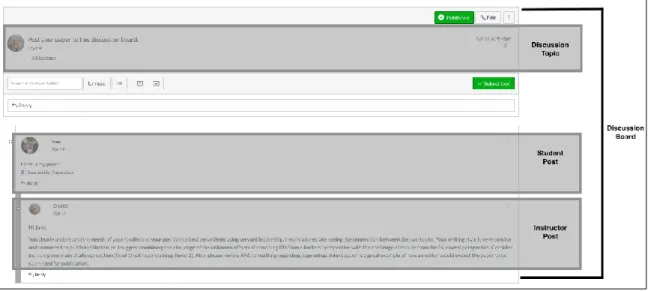
Moore’s theory offers a lens which can be used to identify ways in which students and instructors interact. Interactions can occur synchronously or asynchronously, and instructors can facilitate these interactions with a variety of technologies, such as web conferencing, chat, discussion boards, and email (Sher, 2009). Discussion boards are widely used in online teaching, allowing interaction to occur without being limited by time or space (Hew, Cheung, & Ng, 2010). In discussion boards, participants are able to see discussion posts of others, organized by author, topic, and date/time and respond to them on their own time (Brown & Green, 2009). Several studies have found that when instructors participate in discussion boards students are more motivated (Xie, DeBacker, & Ferguson, 2006), students are more satisfied (Sher, 2009), and instructor participation is highly valued by students (Nandi, Hamilton, & Harland, 2012). This increase in dialogue between student and instructor can not only reduce transactional distance but serve as a way to meet regular and substantive interaction requirements for online courses.
Overview of Research Methods
This study was conducted at the University of Colorado Denver. Like many institutions, CU Denver has been challenged with how to increase online enrollments while continuing to provide quality online courses among increased competition from other institutions. Since learner-instructor interaction has been found to be an important factor for improving student satisfaction, this study explored the frequency of interaction between instructors and students in discussion boards in online courses at the University
of Colorado Denver. The following paragraphs provide a brief overview of the methods used to conduct this study.
Research Questions
This exploratory study specifically aimed to provide a campus wide analysis of the student-instructor interactions in online discussion boards in fully online courses. More specifically, this study sought to answer the following questions:
1. How do instructors interact in asynchronous discussions in online courses? 2. How do students interact in asynchronous discussions in online courses?
3. How do students and instructors interact each week in asynchronous discussions in online courses?
4. Is there a relationship between asynchronous discussion interaction measures and student satisfaction?
Sample
This study examined discussion board interactions in online courses, taught during two semesters, fall and spring, at CU Denver. In an effort to maintain the privacy of the instructors and students, the academic year was not disclosed. All courses at CU Denver are populated into the LMS; thus, courses that were not online or that were not active in the LMS were excluded from the sample. The courses selected for the study met the following criteria: had only one instructor, did not have teacher assistants (TAs) assigned to the course, had more than five students, and had end-of-course evaluation scores published in the public database. Courses that did not meet the criteria were removed from the sample. 415 courses met the criteria of the sample.
Data Collection and Analysis
This study utilized archival data from two sources, Canvas Data and end-of-course evaluation data. Data from the LMS, Canvas, was exported from the Amazon cloud and imported into Exasol, a high performance, in-memory database. End-of-course evaluation data was downloaded into a spreadsheet from a publicly accessible database. A query was run in Exasol to create a comprehensive list of online courses offered during the period of the study. In addition to course data, unidentified discussion data from each course was extracted. This data was combined to create the data set for this study.
Courses that did not meet the requirements of the study, or courses with missing data were removed from the sample. In addition, all identifying information was removed from the data.
Preliminary data analysis was performed using Tableau. Tableau makes it easy to explore the variables in the dataset through frequencies, descriptive statistics, and cross-tabulations. Each analysis is a visualization designed to improve the interpretation of the data. Once the initial analysis was complete, the dataset was exported to an Excel file and imported into IBM SPSS Statistics for the statistical analysis. To determine if there was a relationship between discussion board interaction measures and student satisfaction, a Spearman correlation was selected as the non-parametric technique to determine if a correlation existed between the two variables. A Spearman correlation was selected due to the not normal distribution of the variables (Pallent, 2013).
Chapter Summary
The number of students taking online courses continues to grow and institutions are investing in their online courses and programs. However, online courses are often
criticized for being inferior to face-to-face courses. One way to increase student
satisfaction is through learner-instructor interaction. Therefore, the purpose of this study was to explore the frequency of interaction between instructors and students in discussion boards in online courses at the University of Colorado Denver. Based on Moore’s (1989) theory of interaction in distance learning, this exploratory study conducted a campus wide analysis of the learner-instructor interactions in online discussion boards. This study used Canvas Data and end of course student evaluations at CU Denver. Descriptive statistics were used to answer the first three research questions. The fourth question was answered by a Spearman correlation test.
CHAPTER TWO: LITERATURE REVIEW
As institutions continue to increase the number of online courses they offer to meet growing demand, many have struggled with how to ensure student satisfaction and quality online learning experiences. One solution is to examine the interactions between instructors and students in these online courses since researchers have established the importance of interaction in online learning (Anderson, 2003; Bates, 1990; Moore, 1989; Muirhead & Juwah, 2004). While there are different types of interaction noted in the literature, learner-instructor interaction has been found to be the most important type of interaction for predicting student satisfaction (Hong, 2002; Jung et al., 2002; Kuo et al., 2014; Swan, 2004). Discussion boards are a tool within the learning management system which are widely used to facilitate learner-instructor and learner-learner interaction (Nandi et al., 2012; Zhou, 2015). This exploratory study explored how instructors and students interacted in online courses and the relationship between these interactions and student satisfaction.
The literature reviewed in this chapter provides further insight into how
discussion boards are used to facilitate interactions in online courses. Additionally, this chapter discusses the need for further research to identify quantifiable measures for online course quality in order to assist institutions in developing standards for interaction between students and instructors in online courses.
Online Learning
With an extended history of nearly two centuries, distance education has evolved with changing technological and pedagogical advances (Kinshuk, Chen, Cheng, & Chew, 2016). Distance education was first established as correspondence courses in the 1800s (AECT, 2017). Correspondence courses are courses delivered outside the regular
classroom (AECT, 2017). Correspondence courses, for the first time, enabled students to learn at a distance. Distance education grew in popularity with the introduction of radio and television in the 1950s (AECT, 2017). However, even with addition of radio and television to transmit content, the interaction between instructors and students in correspondence courses took considerable time, as the courses usually relied on postal services to exchange learner-instructor communications (Aydemir, Ozkeskin, & Akkurt, 2015). The introduction of personal computers and computer-mediated communication technologies (e.g, email) sped up this communication between student and instructor throughout the 1980s and 1990s and in many ways transformed early correspondence distance education (Aydemir et al., 2015).
Most recently, increased access to the Internet, the ability to communicate using a variety of tools, and evolving technology has created a variety of different opportunities for teaching and learning at a distance (Adams Becker, Cummins, Davis, Freeman, Glesinger Hall, & Ananthanarayanan, 2017). As technology has evolved, though, practitioners and researchers have found it difficult to agree on common terminology in the field of distance education (Lowenthal, Wilson, & Parrish, 2009). Online education is the most commonly used term to describe technology-mediated distance education—that is, teaching and learning that usually takes place in some type of learning management
system (Lowenthal et al., 2009). Nowadays, learning management systems offer both synchronous and asynchronous methods of communication; however, asynchronous methods are still the dominant form of communicating in online learning (Hrastinski, 2008; Parry, 2009). The asynchronous format allows learners to participate on their own time, increasing the flexibility and fulfilling the initial purpose of distance education, the ability to learn anytime, anywhere. Particularly in higher education, most online courses rely predominately, if not solely, on asynchronous communication (Fadde & Vu, 2014).
In this type of online education, which is sometimes referred to as asynchronous online learning, the course is led by an instructor, has a set schedule, and is conducted in a learning management system (Lowenthal et al., 2009). This delivery method is popular in higher education because learners have the convenience of engaging with course materials and activities in a controlled environment, which takes into account issues of privacy while providing a common structure between courses (Fadde & Vu, 2014). However, Fadde and Vu (2014) note that asynchronous online instruction lacks social and personal engagement and can feel impersonal and lack meaningful and substantial interaction. Feelings of an impersonal experience and limited interactions contributes to the ongoing criticism of online learning, which is still believed by many to be poor quality and inferior to face-to-face teaching (Shelton, 2011; Singh & Hurley, 2017).
Quality Concerns
As online learning continues to grow, it still struggles to build credibility with its critics. An increased demand for institutional accountability and continued skepticism of a new way of teaching and learning are two challenges that online learning continues to face (Shelton, 2011). Some critics believe that online learning is not as rigorous as
face-to-face education (Singh & Hurley, 2017), while others point to issues of quality, that range from students to the curriculum, and from instructional design and instructor characteristics to technology (Meyer, 2002). Kebritchi, Lipschuetz, and Santiague (2017) recently identified the issues and challenges raised in the research about the quality of online learning and categorized them into the following three areas: learner issues, content issues, and instructor issues.
Learner Issues
Kebritchi et al. (2017) identified these four issues under the category of learner issues: expectations, readiness, identity, and participation (see Table 2.1). Expectations refers to what the student expects from the course or instructor. For instance, students might expect online learning to be easier than traditional face-to-face courses. Or students might expect 24/7 access to their instructor with immediate grading and feedback. In some cases, these expectations can appear rude or demanding in asynchronous forms of communication, such as email (Kebritchi et al., 2017). Readiness refers to a student’s ability to be successful in an online course. Readiness includes being self-motivated and self-directed, as well as the skills and abilities needed to be successful learning online (Kebritchi et al., 2017). Most students have little experience learning online in a formal setting and therefore it is often an adjustment for most students. On top of this, some research suggests that lack of motivation alone is the primary reason why students drop online courses (Morris, Finnegan, & Wu, 2005). Identity in the context of learner issues refers to students feeling a sense of belonging and a part of an online community in the online courses they take (Kebritchi et al., 2017). Without a strong sense of identity, learners often report feeling isolated and disconnected (Gillett-Swan, 2017). Last but not
least, participation refers to how a student interacts with peers and the instructor in their online courses but can also refer to the time they spend reading or completing other activities (Kebritchi et al., 2017). In order to increase interaction, participation is
sometimes a graded requirement in online courses. Grading may be based on the number of discussion board posts or some other measure identified by the instructor. The
importance of participation, student discussions, and the creation of meaningful learning environments has been written about extensively in the literature (Morris et al., 2005).
Table 2.1 Learner Issues in Online Courses as Described by Kebritchi et al.
(2017)
Issue Description
Expectations Some learners may have inappropriate expectations, such as response times for feedback and assignment deadlines. Readiness Learners may not be prepared for online learning.
Learners must be self-motivated and self-directed as well as have the technical skills and communication to
participate in an online course. Additionally, learners must be able to direct their own learning to some degree. Identify Learners may feel isolated and disconnected, which may
affect learning.
Participation Learners must participate and engage in the online course. There is not a clear guideline to the type or amount, but is identified as a major issue.
Content Issues
Kebritchi et al. (2017) also identified the following four issues in terms of content issues with online learning: the role of the instructors in content development, integration
of multimedia in content, role of instructional strategies in content development, and considerations for content development (see Table 2.2). The role of the instructor in content development has two distinctly different issues. Increasingly, online instructors teach online courses that have been developed by someone else with predefined content, which in turn reduces the online instructors’ ability to shape the course by their own experiences and the experiences of the students in the class (Kebritchi et al., 2017). However, in cases where the instructor is responsible for planning and creating content, many instructors lack the skills, support or proper training to develop online courses (Kebritchi et al., 2017). The integration of multimedia can also be an issue in online courses. This refers to the use of best practices to incorporate multimedia into online courses (Kebritchi et al., 2017). The use of multiple types of learning tools and specifically media has been identified as an important aspect of improving student engagement (Hathaway, 2014). In fact, the Universal Design for Learning framework highlights the importance of providing content in multiple modalities (Tobin & Behling, 2018). However, despite the importance of this, most online instructors lack the
experience or expertise to meaningfully integrate multimedia into the courses that they teach. Kebritchi et al. (2017) also found that there are quality issues with the content and instructional strategies used in online learning. A number of best practices have been developed that includes strategies for designing and delivering online learning. For example, the Quality Matters (QM) Course Design Rubric is a set of eight standards with 42 specific standards used to evaluate the design of an online course (Quality Matters, n.d.-a). Alternatively, the California State University system (CSU) created the Quality Learning and Teaching framework which contains 53 items spanning both design and
delivery (California State University, n.d.-a). The last quality issue Kebritchi et al. found related to content was focused on content development (Kebritchi et al., 2017). The literature suggests that online learning suffers from poor course organization as well as the lack of meaningful content and assignments that align to learning outcomes and course objectives (Kebritchi et al, 2017).
Table 2.2 Content Issues in Online Courses as Described by Kebritchi et al.
(2017)
Issue Description
Development and instructors In some cases, content is predefined, causing a lack of empowerment. In other cases, instructors are responsible for preparing and planning content which is challenging. Additionally, instructors may not wish to change their teaching strategies when transitioning to teaching online or may not have the training and support or incentives to design and deliver an online course.
Content and multimedia Multimedia needs to be thoughtfully and strategically incorporated in the design of an online course. Content and instructional
strategies
Best practices for designing and delivering an online course should be utilized. Instructors must receive training and support when incorporating best practices into an online course.
Content and consideration Courses should be laid out clearly and presented in a meaningful way. All assignments, outcomes, and objectives should be aligned. Both formative and summative assessment is important in online learning.
Instructor Issues
Kebritchi et al. (2017) also identified the following four issues instructors face when teaching online: changing role of the faculty, transition from face-to-face to online,
time, and teaching styles (see Table 2.3). The changing role of the faculty refers to the multiple skills needed by online instructors. For instance, Berge (1998) identified four different roles of online instructors: pedagogical, social, managerial, and technical. A pedagogical role includes the delivery of content and teaching. A social role includes relationship building, while a managerial role would include management and organizational skills. A technical role would include providing technical support to students and being able to use technology. Many instructors have prior experience serving in some of these roles but others such as the technical are new for many instructors. Related to the changing roles, the literature suggests that many instructors find it challenging to transition from face-to-face to online teaching because teaching online requires a difference set of skills than they had previously used teaching face-to-face (Kebritchi et al., 2017). Time is another issue face-to-faced by online instructors.
Developing online courses and teaching online takes time. In fact, many online instructors report that it takes more time than teaching face-to-face. Some online
instructors find themselves neglecting their online teaching roles or not spending enough time on them simply because designing the course in the first place took much more time than they originally anticipated (Jacobs, 2013). The last issue reported in the literature with online learning focuses on teaching styles. An instructor’s teaching style is influenced by their beliefs about teaching and learning as well as how they deliver content, interact with and mentor students (Quitadamo & Brown, 2001). Teaching styles includes the use of best practices to support student learning and improve online
Table 2.3 Instructor Issues in Online Courses as Described by Kebritchi et al. (2017)
Issue Description
Changing role of the faculty Online instructors hold a variety of roles and can be challenged by designing, delivering, and following up. Transition from face-to-face
to online
Online instructors are challenged by effectively transferring their face-to-face classroom to an online environment. Instructors often struggle with the delivery of content and engagement of their students without visual cues and face-to-face contact. Instructors may have difficulty adjusting content to a more student-centered model. Some instructors are not interested in teaching online or are not comfortable with the technology. Time Teaching online is very demanding and often requires a
greater commitment of time.
Teaching styles Online instructors must adopt effective teaching styles and improve their effectiveness.
Due to increased accountability and competition among online programs, institutions recognize the need to continue to improve the quality of online education (Shelton, 2011). However, as Kebritchi et al. (2017) pointed out, there are a range of factors which influence course quality including the student, instructional design, course content, and instructor characteristics. Although the number of factors which affects the quality of online learning seems daunting, institutions are looking for ways to evaluate online learning quality and continue to improve their online courses and programs. One way institutions are supporting quality online learning is through the implementation of online teaching standards or guidelines for teaching. Online teaching standards can be
used in the creation of online courses or as a method to evaluate the quality of online learning (Lowenthal & Davidson-Shivers, 2019). Furthermore, instructor support in the form of training, compensation, and policy, and student support in the form of student services are other ways institutions are working to improve online learning (Shelton, 2011).
Online Teaching Standards
Even though a lack of “quality” is often cited when confronted with the challenges of online education, Meyer (2002) was quick to point out that quality is a complex and difficult concept with no one single definition. However, with the increased growth and interest in online learning, coupled with the continued criticism that online learning is not as good as face-to-face learning, practitioners and researchers have developed standards or quality assurance frameworks to facilitate both the development but also evaluation of online learning. These standards and frameworks are often shared as rubrics or checklists and are often developed for a specific purpose (e.g., quality course design) or context (e.g., higher education) (Lowenthal & Davidson-Shivers,
2019). In the following paragraphs, some popular online learning standards are discussed. Seven Principles of Good Practice
One of the oldest and widely accepted guidelines for both online and face-to-face teaching is Chickering and Gamson’s Seven Principles of Good Practice (Chickering & Gamson, 1999; Hathaway, 2014; Johnson, 2014; Lai & Savage, 2013; Tobin,
Mandernach, & Taylor, 2015) Chickering and Gamson (1987) did not intend to make recommendations about “what” should be taught, but rather “how” undergraduate
education should be done (p. 2). Working with a group of researchers, they identified seven guiding principles of good practice:
1. Encourage contact between students and faculty 2. Develop reciprocity and cooperation among students 3. Encourage active learning
4. Gives prompt feedback 5. Emphasizes time on task
6. Communicates high expectations
7. Respects diverse talents and ways of learning (Chickering & Gamson, 1987). While these guidelines were created to help instructors teaching undergraduate face-to-face courses, online educators quickly began applying them to online learning (Bangert, 2004). For example, Graham, Cagiltay, Craner, Lim, and Duffy (2000) used the seven principles to evaluate four online courses at a large midwestern university. Graham et al. (2000) were hoping to provide recommendations regarding the strengths and areas for improvement in the online courses offered by the university. They analyzed the courses and conducted instructor interviews. The evaluation tool that they used to analyze the courses provided a description of each of the seven principles of good practice,
outlined the strengths identified by the researchers, and offered areas for improvement and recommendations (Graham et al., 2000). Since the seven principles of good practice focus on teaching, the researchers also used some Human Computer Interface design principles to evaluate and identify areas for improvement and recommendations based on the design of the course as well (Graham et al., 2000). As a result of this research,
instructors which correlated to the seven principles, such as setting clear standards for responding to messages. For example, an instructor might put in writing, “I will make every effort to respond to email within two days of receiving it” (Graham et al., 2001, p. 2). Another behavior Graham et al. (2001) observed was instructors providing both information feedback and acknowledgement feedback. Information feedback provided information, such as an answer to a question or a grade on an assignment.
Acknowledgement feedback was confirmation that an event, like an email, had occurred. Graham et al. (2001) found that acknowledgement feedback was used less frequently but suggested that instructors should use acknowledgement feedback because it translates to implicit actions in a face-to-face classroom such as eye contact to acknowledge an instructor heard a student.
Later, Bangert (2004) clarified the relationship between constructivist-based teaching practices and the seven principles as they relate to online design and delivery. While Graham et al. (2001) focused more on evaluating the design of online courses, Bangert’s work is one of the first examples of using the seven principles to evaluate online teaching. Bangert (2004) used the seven principles of good practice to design a 35-item questionnaire to assess the effectiveness of an online statistics course. The survey was designed to provide online instructors better feedback about the effectiveness of their teaching practices. Results from the study suggested that the seven principles of good practice could be used as an effective way to improve student satisfaction; the results from the survey also demonstrated that students in this sample valued the online learning experience. While a number of the more recent standards and quality assurance
principles, a number of the current online teaching standards were influenced in some way by Chickering and Gamson’s work (Baldwin & Trespalacios, 2017).
Quality Learning and Teaching (QLT) Framework
The California State University system (CSU) created the Quality Learning and Teaching (QLT; formerly QOLT) framework. The QLT framework was informed by the seven principles as well as other popular models for assessing teaching (California State University, n.d.-a). The instrument contains 53 items across the following nine sections, with an optional tenth section containing four items. The ten sections are:
1. Course overview and introduction 2. Assessment of student learning 3. Instructional materials and resources 4. Students interaction and community
5. Facilitation and instruction (course delivery) 6. Technology for teaching and learning
7. Learner support and resources 8. Accessibility and universal design 9. Course summary and wrap-up
10. Optional: Mobile platform readiness (California State University, n.d.-a). In order to determine the impact of this framework, CSU is currently researching teaching performance and student success in online courses taught at CSU (California State University, n.d.-b). According to their website, the project aims to determine if “instructors who complete QA professional development and obtain course certification are better able to design and deliver online courses, more effectively engaging students
and resulting in higher grades, improved course completion rates, higher student
satisfaction, and ultimately a reduction in equity gaps” (California State University, n.d.-b). According to the website, the research will conclude in June 2020. However, some preliminary results show that DFW rates, i.e., the number of students earning a D, F, or W, was less in courses taught by instructors who completed the rigorous QA professional development and had obtained a course certification (California State University, n.d.-b). OLC Course Design Review Scorecard
The Online Learning Consortium (OLC) is a leader in online learning and partners with institutions and higher education leaders to advance the quality of online learning (Online Learning Consortium, n.d.-a). The OLC developed the Five Pillars of Quality Online Education framework based on the following five building blocks: learning effectiveness, faculty satisfaction, student satisfaction, scale, and access (Online Learning Consortium, n.d.-b). The OLC provides institutions with criteria and
benchmarking tools to assist in providing institution wide online learning excellence which cover administration, blended learning, quality course teaching and instructional practices, digital courseware, and online student support (Online Learning Consortium, n.d.-a). This comprehensive approach is for institutions interested in implementing best practices and improving the quality of online education across many areas of the institution.
For individual course evaluation, the OLC has partnered with the SUNY system to create the OSCQR Course Design Review scorecard (Online Learning Consortium, n.d.-a). This scorecard focuses on the instructional design and accessibility of online courses in the following six key areas:
1. Course overview and information 2. Course technology and tools 3. Design and layout
4. Content and activities 5. Interaction
6. Assessment and feedback (Online Learning Consortium, n.d.-c).
The scorecard, like most current standards and quality assurance frameworks, can be used to identify and target areas for improvement. For example, Baker College used the OLC Quality Scorecard to benchmark and determine gaps in their current online courses (Online Learning Consortium, n.d.-d). Then, after prioritizing areas of improvement, made changes to their online courses. After reevaluating their courses using the rubric, they received OLC’s Exemplary Endorsement which spoke to the improvement of their online courses (Online Learning Consortium, n.d.-d). In another case study, Middle Tennessee State University used the OLC Quality Scorecard for the Administration of Online Programs to evaluate and benchmark their online courses (Online Learning Consortium, n.d.-d). After seeing the results, the university is
committed to hiring a dedicated manager of program quality and continuing to improve their online courses and programs (Online Learning Consortium, n.d.-d).
Quality Matters Course Design Rubric
Currently in its sixth edition, the Quality Matters (QM) Course Design Rubric is a set of eight standards with 42 specific standards used to evaluate the design of an online course (Quality Matters, n.d.-a). According to the QM website, the rubric should be used
in the creation of online courses and can also be used for assessment or to identify areas for improvement. The eight standards of the rubric are:
1. Course overview and introduction 2. Learning objectives (competencies) 3. Assessment and measurement 4. Instructional materials
5. Learning activities and learner interaction 6. Course technology
7. Learner support
8. Accessibility and usability (Quality Matters, n.d.-a).
In the United States, QM is a widely used rubric to help create and evaluate the design of online courses (Lowenthal & Davidson-Shivers, 2019). Developed out of a grant from the U.S. Department of Education in 2003, the program has grown into a global organization focused on using research-supported and practice-based quality standards with over 60,000 members (Quality Matters, n.d.-b). Over 500 articles
reference QM in their work and over thirty articles and presentations are identified on the Quality Matter website as addressing the impact of QM on online teaching (Quality Matters, n.d.-c). For example, in 2016, Kwon, DiSilvestro, and Treff conducted a small study comparing student evaluation to peer instructor evaluations of the same course using Quality Matter standards. Kwon et al. (2016) identified Quality Matters as the basis for the study because Quality Matters had a significant body of research surrounding its standards. Results from this study revealed a few areas of improvement for the courses in the study including accessibility, technical support, course orientation, and explanation of
instructional materials (Kwon et al., 2016). In a study to evaluate if a sample of MOOCs (Massively Open Online Course) could meet the same quality standards as traditional online courses, researchers Lowenthal and Hodges (2015) used the Quality Matters rubric to evaluate six MOOCs from three companies, Coursea, edX, and Udacity. Following a standard QM review process, three trained reviewers reviewed six MOOCs and
discovered that although no MOOC met the standards, with revision, at least two of the six courses could have been determined “quality” based on the QM standards (Lowenthal & Hodges, 2015).
Similarities and Differences in Online Teaching Standards
One can look at the four standards described above and see some similarities as well as differences that exist (see Table 2.4). For example, the Quality Matters course design rubric primarily focuses on the course organization and instructional design of the course, while the Seven Principles of Good Practice emphasizes the standards to evaluate teaching. And although a course must be well-designed and taught well, the majority of these rubrics tend to focus more on the design of the course, than teaching (Lowenthal & Davidson-Shivers, 2019).
Table 2.4 Comparison of Popular Frameworks for Online Teaching Standards Seven Principles of
Good Practice
Quality Learning and Teaching (QLT)
OLC Course Design Review Scorecard
Quality Matters Course Design Rubric Encourage contact
between students and faculty Develop reciprocity and cooperation among students Encourage active learning Gives prompt feedback Emphasizes time on task Communicates high expectations Respects diverse talents and ways of learning
Course overview and introduction Assessment of student learning Instructional materials and resources Students interaction and community Facilitation and instruction (course delivery) Technology for teaching and learning Learner support and resources
Accessibility and universal design Course summary and wrap-up
Optional: Mobile platform readiness
Course overview and information
Course technology and tools
Design and layout Content and activities Interaction
Assessment and feedback
Course overview and introduction Learning objectives (competencies) Assessment and measurement Instructional materials Learning activities and learner interaction Course technology Learner support Accessibility and usability
One commonality across all four rubrics is the importance of interaction. In fact, Baldwin, Ching, and Hsu (2018) recently compared the quality assurance rubrics
discussed so far, as well as some others, and identified similarities across online quality assurance rubrics; they noted that learner-learner interaction was identified in all the rubrics they reviewed. In the case of the Seven Principles of Good Practice, interaction is explicit in the first principle, which states to “encourage contact between students and
faculty” and the second principle which states to “develop reciprocity and cooperation among students.” While each principle stands on its own, interaction is an important theme throughout all of the Seven Principles of Good Practice (Chickering & Gamson, 1987). In the QLT framework, interaction between students’ and instructor's participation are referenced in section 4 and section 5 of the rubric. In section four, the rubric states to “addresses the opportunities students have to interact with the content, their peers, and their instructor” (California State University, n.d.-a); section five includes ways the instructor might communicate with students, including by focusing discussions and providing feedback (California State University, n.d.-a). The OLC Course Design Review Scorecard lists interaction as its fifth key area. The rubric lists seven sub areas of
interaction including: expectations around timely and regular feedback from the instructor, clearly stated expectations for interaction, opportunities to get to know the instructor, resources and activities that are intended to build a sense of class community, open communication and trust, opportunities for learner to learner interaction, and finally an opportunity for learners to share resources and inject knowledge in their course
interactions. Finally, in the Quality Matters standards, interaction is identified in the fifth standard, learning activities and learner interaction. In this standard, interaction is
observed through ensuring learning activities provide opportunities for interaction and that the instructor’s plan for interacting with learners during the course is clearly stated (Quality Matters, n.d.-d).
In all of these popular rubrics for evaluating online learning quality in higher education, as well as various others (see Baldwin et al., 2018), interaction is identified as an important component. However, each rubric provides a slightly different description
of what interaction means and how it is measured or observed, thus further complicating a foundational aspect of quality online learning.
Interaction in Online Learning
Although interaction has been found to be critical for learning and is an element in all of the mainstream quality assurance frameworks for evaluating online learning, interaction has been difficult to define (Anderson, 2003; Bates, 1990; Bowers & Kumar, 2015; Moore, 1997). In an effort to more clearly define “interaction,” Moore (1989) introduced three types of interaction as a way to build a common vocabulary around education at a distance, regardless of the media used—that is, learner-content interaction, instructor interaction, and learner interaction. In particular,
learner-instructor interaction has been found to be the most important type of interaction for predicting student satisfaction (Hong, 2002; Jung et al., 2002; Kuo et al., 2014; Swan, 2004). In fact, Moore (1989) highlighted the importance of learner-instructor interaction when he stated that, “...frequency and intensity of the teacher's influence on learners when there is teacher interaction is much greater than when there is only learner-content interaction” (p. 2).
One of the challenges of interaction in online learning is the feeling of disconnect both instructors and students sometimes report feeling (Gray & DiLoreto, 2016).
Classroom instructors are experienced at scanning the classroom for body language, facial expressions, and other cues which may signal students’ understanding (Li, Moorman, & Dyjur, 2010); this behavior becomes second nature as does other
techniques, such as pausing for understanding, asking clarifying questions, and engaging students in active learning (Gray & DiLoreto, 2016). Online instructors teaching
primarily asynchronous courses, on the other hand, are not able to rely on body language as clues to a student’s comprehension (Huang & Hsiao, 2012). Not being able to rely on this type of feedback can leave an online instructor feeling unsure if their teaching is effective. For example, Huang and Hsiao (2012) found that although instructors enjoyed online teaching because it offered flexibility and a diverse student population, instructors struggled with asynchronous communication because they believed it created a
disconnect between the students and the instructor. However, instructors who used synchronous web conferencing believed the medium helped them reduce communication barriers and addressed feelings of “distance” between instructors and students (Huang & Hsiao, 2012).
At the same time, and sometimes due to an instructor’s inability to read students’ body language, students regularly report feeling disconnected and alienated and therefore dissatisfied with online learning (Bowers & Kumar, 2015). Bowers and Kumar (2015) explained how the absence of face-to-face contact with peers and the instructor can create a psychological distance which leads to feeling disconnected or isolated. This feeling, felt by both instructors and students, aligns with transactional distance theory; the idea that the increased physical distance that is a part of online education requires a shift in the elements of structure, dialogue, and autonomy in order to compensate for the physical distance (Moore, 1997).
Transactional Distance Theory
Moore’s transactional distance theory is an important theory in describing the interactions of instructors and students who are separated by time and space (Gorsky & Caspi, 2005). According to Moore (1997), transactional distance is the interplay between
the environment, individuals, and behaviors in a situation. In an online learning environment, the instructor and students and their behaviors associated with the experience of teaching and learning at a distance, makes up the transactional distance. Moore (2012) claimed that the ability for variable transactional distance allows for the flexibility of online learning. The variations of dialogue, structure, and autonomy within an online course defines the extent of transactional distance (Moore, 2012). This idea is a basic framework for understanding how to design and deliver an online course and is defined by three variables: dialogue, structure, and learner autonomy.
Moore (1997) explained that dialogue refers to the interpersonal interaction that occurs in a course between the instructor and student. Dialogue and interaction are often used interchangeably. However, Moore (1997) defined dialogue “to describe an
interaction or series of interactions having positive qualities that other interactions might not have” (p. 23). Moore (1997) explained that dialogue is a respectful and purposeful conversation between two parties, where each contributes and listens to the other. In earlier work, Moore (1989) referred to this interaction as learner-instructor interaction and learner-learner interaction. The frequency and quality of these interactions vary depending on other course variables, but may include counsel, support, or encouragement (Moore, 1989, 2012). Different types of communication mediums (e.g., text, audio, synchronous video, asynchronous video) will also have an effect on the quality of dialogue between instructor and learner (Moore, 1997, 2012).
As defined by Moore (1997), structure refers to the elements of course design in an attempt to determine the rigidity or flexibility of the educational objectives, teaching strategies, and evaluation methods. The structure is often related to the design of the
course. For example, the course may require all students to follow a schedule for reviewing course materials and offer specific timing on discussion activity (Moore, 2012). Moore (2012) provided the example of a recorded video program as a highly structured, since there are no opportunities for students to explore the video based on personal needs. A course with less structure may have multiple paths for students to explore. The tasks and assignments in the course may be more flexible, allowing students more autonomy in their learning (Moore, 2012).
Learner autonomy refers to the learners’ ability to control their own learning. According to Moore (1997), full autonomy means that the learner has control over what they learn, the methods in which they learn, has the motivation to learn, and can evaluate their own learning. Even in a fully autonomous learning environment, dialogue and structure may exist. Specifically, in online learning, learners need to at least have self-management and self-motivation (Moore, 2012). The concept of learner autonomy is important in describing transactional distance because as transactional distance increases, the more learners must act autonomous (Moore, 2012).
Interaction is a defining feature of Moore’s theory. Interaction occurs in terms of dialogue- communication between student and instructor or between student and student. The structure of an online course is described as the experience of the learner at a
distance. Autonomy can be tied to the interactions that occur between the learner and the content. The give and take of these interactions influence student engagement, the learning experience, and student satisfaction. (Anderson, 2003; Bower & Kumar, 2015; Garrison, Anderson, & Archer, 2000). Moore (2012) describes the relationship between the variables and their effects on interaction, by explaining as dialogue decreases,
transactional distance increases, as the opposite is true, as dialogue increases
transactional distance decreases. For example, a self-paced course, one that allows a student to work through content at their own pace, likely is highly structured, but has little or no dialogue with an instructor. Whereas a virtual conference, where students and the instructor meet synchronously via a web conferencing platform, likely has less structure and allows for more dialogue to occur between the students and the instructor (Moore, 2012). However, synchronous exchange is not the only way to lower
transactional distance, as described by the differences in learner autonomy in an online class.
Three Types of Interaction
Interaction has been identified as a major theory in distance education research (Moore, 1989; Wagner 1994). As previously mentioned, Moore (1989) identified three types of interaction: learner-content interaction, learner-instructor interaction, and learner-learner interaction. Learner-content interaction refers to the interaction of the learner with the subject matter. Learner-instructor interaction references the dialogue between the instructor and student, but also includes how the instructor motivates the learners, presents or demonstrates information, provides feedback, and supports and encourages the learners (Moore, 1989). Finally, the third type of interaction is learner-learner interaction which describes interaction among individual students or among students working in a group.
Learner-content interaction
Learner-content interaction refers to the time a learner spends with course content or subject of study, such as reading textbooks or articles, reviewing PowerPoints and web pages, or watching videos (Zimmerman, 2012). As Moore (1989) described, interaction with content is in some sense the internal didactic conversations learners have with themselves. Even though interaction with content is the basis of learning, little research has been done on how learner-content interaction applies to course success (Xiao, 2017; Zimmerman, 2012). In a small study, results from correlating weekly quiz grades and time spent completing the quiz suggested that learners who spent more time interacting with content, spent less time on open book quizzes and scored higher (Zimmerman, 2012). The thought was that learners who knew the content from previous interactions with the content, took less time on the quizzes and scored higher (Zimmerman, 2012). Few other studies have focused on the impact of learner-content interaction in distance education (Xiao, 2017). Xiao (2017) laments that learner-content interaction has been taken for granted, when in fact so much is unknown about how learners process learning materials, from printed to video and audio to interactive course materials.
Learner-instructor interaction
Learner-instructor interaction is interaction between the learner and the subject matter expert or instructor (Moore, 1989). Learner-instructor interaction has been found to be the most important type of interaction for predicting learner satisfaction in distance learning (Hong, 2002; Jung et al., 2002; Kuo et al., 2014; Swan, 2004). So much so, that Moore (1989) argued that learner-instructor interaction was essential and highly desirable by learners. Researchers consistently highlight the importance of learner-instructor
interaction throughout the literature (Flottemesch, 2000; Wanstreet, 2006). For example, in a small study, Sher (2009) discovered learner-instructor interaction to be critical in enhancing student satisfaction in an online course. Not only did students appreciate the interaction with the instructor in direct learning, but also in communication around the instruction. In a more recent study, Nandi et al. (2012), discovered that periodic feedback from instructors in discussions was highly valued by students. From this work, Nandi et al. (2012) was able to identify examples of how instructors interacted with students in discussions and noted the various interaction types, from providing guidelines and declaring expectations to promoting deeper learning and providing direct answers or feedback. However, it was unclear if the type of interaction had any positive or negative effect on the value students placed on the interaction.
Kang and Im (2013) researched the types of interactions between learners and instructors. Results from Kang and Im (2013) found that instructional interactions, such as guidance and facilitation of learning, instructional communication, and instructional support, along with the presence of the instructor were more likely to predict learner satisfaction, than social interaction and social intimacy. In fact, social interaction and social intimacy could decrease a learners’ perceived satisfaction (Kang & Im, 2013). However, the negative effects of social intimacy are inconsistent with previous research (Kang & Im, 2013). With contradictory research, it may be assumed that all interactions, regardless of the type, can assist in increasing learner satisfaction in online learning.
Learner-learner interaction
Learner-learner interaction is the third type of interaction identified by Moore (1989). In early distance learning, such as correspondence courses, interaction between
learners did not often exist. However, as technology advanced, synchronous and asynchronous ways of two-way communication became common (Abrami, Bernard, Bures, Borokhovski, & Tamin, 2011). Advances in technology allowed students to work in small groups more easily (Moore, 1989). For example, learners may use synchronously technology, such as video chat or asynchronously communication such as email or
discussion boards to collaborate or share knowledge.
However, the importance of learner-learner interaction is still up for debate (Battalio, 2007). Some studies suggest that learner-learner interaction is key to a quality learning experience and can increase student satisfaction and student success. For
example, Sher (2009) had students measure their perceived learning and satisfaction as it related to learner interactions and instructor interactions. Both learner-learner and learner-learner-instructor interactions were significant contributors to satisfaction and perceived learning. In addition, in an open-ended response, students specifically enjoyed working with their peers and found it helpful (Sher, 2009). However, not all researchers agree. For example, in a 2017 study, Kurucay and Inan investigated the effects of learner-learner interactions on perceived learning, achievement, and satisfaction. While they did not find a relationship between learner-learner interaction and student satisfaction, they did find that learner-learner interaction had a significant impact on student achievement. In another study, however, Kuo et al. (2014) reported that although learner-instructor and content interactions were important in predicting student satisfaction, learner-learner interaction was not. The lack of agreement on the importance of learner-learner-learner-learner interaction could stem from the challenges of communication, collaboration, and feelings of connectedness when learners are separated by time and space.