
B
OURNEMOUTH
U
NIVERSITY
A
D
ECISION
F
RAMEWORK TO
M
ITIGATE
V
ENDOR LOCK
-
IN
R
ISKS IN
C
LOUD
(S
AA
S)
M
IGRATION
J
USTICE
N
SIRIMOVU
O
PARA
-M
ARTINS
BSc. MSc. FHEA (AMBCS)
Doctor of Philosophy
2017
A Decision Framework to Mitigate
Vendor Lock-in Risks in Cloud (SaaS
category) Migration
PhD Thesis
Justice Nsirimovu Opara-Martins
BSc. MSc. FHEA (AMBCS)A thesis submitted in partial fulfilment of the requirements for the degree of
Doctor of Philosophy
May, 2017
Bournemouth University
Faculty of Science and Technology
Computing and Informatics Research Centre
1st Supervisor: Dr. Reza Sahandi Ph.D
i
Copyright
This copy of the thesis has been supplied on condition that anyone who consults it is understood to recognise that its copyright rests with its author and due acknowledgement must always be made of the use of any material contained in, or derived from, this thesis.
ii
Abstract
Cloud computing offers an innovative business model to enterprise IT services consumption and delivery. However, vendor lock-in is recognised as being a major barrier to the adoption of cloud computing, due to lack of standardisation. So far, current solutions and efforts tackling the vendor lock-in problem have been confined to/or are predominantly technology-oriented. Limited studies exist to analyse and highlight the complexity of vendor lock-in problem existing in the cloud environment. Consequently, customers are unaware of proprietary standards which inhibit interoperability and portability of applications when taking services from vendors. The complexity of the service offerings makes it imperative for businesses to use a clear and well understood decision process to procure, migrate and/or discontinue cloud services. To date, the expertise and technological solutions to simplify such transition and facilitate good decision making to avoid lock-in risks in the cloud are limited. Besides, little research investigations have been carried out to provide a cloud migration decision framework to assist enterprises to avoid lock-in risks when implementing cloud-based Software-as-a-Service (SaaS) solutions within existing environments. Such decision framework is important to reduce complexity and variations in implementation patterns on the cloud provider side, while at the same time minimizing potential switching cost for enterprises by resolving integration issues with existing IT infrastructures. Thus, the purpose of this thesis is to propose a decision framework to mitigate vendor lock-in risks in cloud (SaaS) migration. The framework follows a systematic literature review and analysis to present research findings containing factual and objective information, and business requirements for vendor-neutral interoperable cloud services, and/or when making architectural decisions for secure cloud migration and integration.
The underlying research procedure for this thesis investigation consists of a survey based on qualitative and quantitative approaches conducted to identify the main risk factors that give rise to cloud computing lock-in situations. Epistemologically, the research design consists of two distinct phases. In phase 1, qualitative data were collected using open-ended interviews with IT practitioners to explore the business-related issues of vendor lock-in affecting cloud adoption. Whereas the goal of phase 2 was to identify and evaluate the risks and opportunities of lock-in which affect stakeholders’ decision-making about migrating to cloud-based solutions. In synthesis, the survey analysis and the framework proposed by this research (through its step-by-step approach), provides guidance on how enterprises can avoid being locked to individual cloud service providers. This reduces the risk of dependency on a cloud provider for service provision, especially if data portability, as the most fundamental aspect, is not enabled. Moreover, it also ensures appropriate pre-planning and due diligence so that the correct cloud service provider(s) with the most acceptable risks to vendor lock-in is chosen, and that the impact on the business is properly understood (upfront), managed (iteratively), and controlled (periodically). Each decision step within the framework prepares the way for the subsequent step, which supports a company to gather the correct information to make a right decision before proceeding to the next step. The reason for such an approach is to support an organisation with its planning and adaptation of the services to suit the business requirements and objectives. Furthermore, several strategies are proposed on how to avoid and mitigate lock-in risks when migrating to cloud computing. The strategies relate to contract, selection of vendors that support standardised formats and protocols regarding data structures and APIs, negotiating cloud service agreements (SLA) accordingly as well as developing awareness of commonalities and dependencies among cloud-based solutions. The implementation of proposed strategies and supporting framework has a great potential to reduce the risks of vendor lock-in.
iii Quotable from a notable:
"Indeed, one of my major complaints about the computer field is that whereas Newton could say, "If I have seen a little farther than others, it is because I have stood on the shoulders of giants," I am forced to say, "Today we stand on each other's feet." Perhaps the central problem we face in all of computer science is how we are to get to the situation where we build on top of the work of others rather than redoing so much of it in a trivially different way. Science is supposed to be cumulative, not almost endless duplication of the same kind of things".
iv
Acknowledgements
First and foremost, I would like to thank God Almighty, whose many blessings have made me who I am today. In all honesty, it feels wonderful writing this page having just finished a decade at Universities in England, Great Britain (GB) in the United Kingdom. First it was at Southampton Solent University, then at the prestigious Bournemouth University (BU) for an MSc in Wireless and Mobile Networks, and now completing this PhD here at BU. I feel privilege to have accessed such a great academic community. The following document summarizes more than three years’ worth of effort, frustration and achievement. However, I would like to express my great gratitude to everyone who has contributed during the process leading to my thesis. Here I would like to mention a few of them.
I am forever grateful to my supervisors; Dr. Reza Sahandi and Dr. Feng Tian for their
encouragement, supervision, understanding, support, and above all their constructive and greatly appreciated invaluable feedbacks and critique throughout the research and thesis development process. I cannot express the extent to which their support and understanding allowed me to have successfully progressed to this point of the research journey. I wish to also thank Creg Handaz Nigeria Ltd. (co-sponsor) and Bournemouth University (BU) Studentship for match funding my PhD.
Throughout my time in the Faculty of Science and Technology, Computing and Informatics Research Centre, I have had the good fortune to work alongside many great minded, enthusiastic and fascinating academics and individuals. Special thanks to all the PGRs over the past three years with whom I have shared ideas, food, drinks and have also helped my time here at BU an enjoyable experience. Andrew Yearp, Adel Alkhalil, Alex Breen, Bruce Wen, Elizabeth Craig, Karim Abuowda and favourite colleague Navid Aslani, have provided the much-needed laughter, debate, politics and distraction – throughout the course of my studies. I would also like to thank Naomi Bailey for her impeccable administrative skills and support.
To my ex fiancée, Stephanie Onwordi, who stood tirelessly by me and supported every move towards my academic degree(s) and career pursuit, and have also been subjected to more rants about Cloud Computing and Information Technology jargon over the years than ought to be tolerable. Thank you so much baby, you are greatly appreciated. However, I’m not certain as to why the break-up prior to this PhD completion. Nonetheless, thank you very much for the time well spent.
I would also like to specially thank my family who have supported and encouraged me throughout my personal life and academic trajectory despite my shortcomings as an imperfect being. It should be known that without the continued emotional, spiritual and financial support provided by family, I may not have embarked on this journey. Therefore, special thanks go to my family (especially Mum), my awesome brothers (Reggie and Chizi) and my irreplaceable lovely-sister (Chisa) for their moral support, patience, prayers and love.
Finally, I wish to dedicate this PhD award to my beloved father (HRH Chief Christian
Owhonda Opara-Martins) who passed away, on the 13th of January 2013, less than a week from
enrolling as a PhD scholar. This PhD thesis is dedicated to you, Dad! for believing and instilling in
me the drive for continuous success, love for knowledge, humility and above all the eternal fear of
God. To Dad, I love you now, forever, and always. To my late big-brother (Leslie Ogechi
“Chimenem” Opara-Martins), I did this for us, love and miss you now, always and forever big-bro.
v
Contents
Abstract ii Acknowledgment iv Declaration ix List of Figures xList of Tables xiii
Publications xv Pages Chapter one 1. Introduction 2 1.1 Background 5 1.2 Research Questions 6
1.3 Aim and Objectives 7
1.4 Contributions 8 1.5 Organisation of Thesis 9 1.6 Chapter Summary 10 Chapter two 2. Literature Review 11 2.1 Introduction 11
2.2 Evolution of Computing Systems 11
2.3 Cloud Computing Fundamentals 14
2.4 Cloud Computing Characteristics and Reference Architecture (CCRA) 16
2.4.1 Cloud Service Models 18
2.4.2 Cloud Service Types 21
2.4.3 The Sub-services of Cloud Computing 22
2.4.4 Cloud Computing User Roles 24
2.4.5 Taxonomy of Cloud Computing 29
2.4.6 Using Cloud Services and Engaging with Cloud Customers 32
2.5 Cloud Application Software(SaaS)Architectures 33
2.6 Enterprise Architecture Principles for Cloud Service(s) Consumption 38
2.6.1 Approaches for Enabling Cloud Portability and Interoperability 41
2.6.2 Implications of Integration and Interoperability for Enterprise Applications 44 2.6.3 Essential Features of Cloud Services Interoperability and Portability 46 2.6.4 Differences between Interoperability, Portability, Integration and Compatibility 51
2.7 Heterogeneous Cloud Computing Environments 54
2.7.1 Heterogeneity Dimensions in the Cloud 56
2.7.2 Taxonomy of Heterogeneiety Roots in Cloud Computing Services 57
2.7.3 Approaches for Tackling Heterogeneity in Cloud Computing Environments 65
vi
2.9 SaaS Migration Strategies 69
2.9.1 Architectural Solutions for Migrating into SaaS environment 71
2.9.2 Cloud computing migration types 73
2.9.3 Cloud migration patterns 75
2.9.4 Lifecycle for managing enterprise cloud migration 76
2.9.5 Decision support for enterprise cloud migration 77
2.9.6 Drivers for cloud migration 78
2.9.7 Barriers to enterprise cloud migration 79
2.10 Chapter Summary 80
Chapter three
3. Vendor Lock-in 81
3.1 Overview 81
3.1.1 Vendor Lock-in explained 82
3.1.2 Cloud Lock-in Problems 83
3.1.3 Societal Impact of Cloud Lock-in 86
3.2 Vendor Lock-in and Enterprise Cloud Migration 90
3.2.1 Lock-in Risks and Challenges in the Cloud 91
3.2.2 Taxonomy of Cloud Lock-in Perspectives 93
3.2.3 Taxonomy of Cloud Computing Vendor Lock-in Risks 95
3.3 Service Models and Vendor Lock-in Risks 103
3.3.1 Cloud SaaS Lock-in Challenges 104
3.3.2 SaaS lock-in Dimensions and Approaches for Adoption 106
3.3.3 Challenges with Switching between SaaS Vendors/Solutions 108
3.3.4 Standards-based Cloud Services 117
3.3.5 Benefits of Standardisation in the Delivery of Cloud-based Services 118
3.4 Emerging Standards in Cloud Computing 119
3.5 Cloud Computing Security Analysis 122
3.6 Cloud Service Contract Agreement 123
3.7 Survey of Existing frameworks and Tools for Cloud Migration 125 3.7.1 Making Informed Decision when Selecting Cloud-based SaaS Products 126
3.7.2 Decision Frameworks for SaaS migration 127
3.7.3 Systematic Reviews on Cloud Migration Approaches 128
3.7.4 Concluding Remark 129
3.8 Chapter Summary 130
Chapter four
4. Methodology 132
vii
4.2 Research Philosophy 132
4.3 Phase 1 – Pilot Interviews 135
4.4 Phase 2 – Questionnaires 135
4.4.1 Questionnaire Data Collection 135
4.4.2 Survey Implementation 136
4.5 Empirical Findings 138
4.6 Analysis and Discussions 159
4.6.1 Business Strategies for Avoiding Vendor Lock-in 159
4.6.2 Awareness of Commonalities among Providers 159
4.6.3 Well Informed Decision Making 160
4.6.4 Contract Evaluation 161
4.6.5 Standards and Cloud-based Solutions 162
4.6.6 Observations 169
4.7 Chapter Summary 170
Chapter five
5. Proposed Cloud Migration Decision Framework 171
5.1 Introduction 171
5.2 Framework Design Process 171
5.3 Phases of the proposed decision framework 172
5.3.1 Phase 1: Service Selection and Evaluation Process 175
5.3.2 Phase 2: Contract and Service Provision Process 177
5.3.3 Phase 3: Service Validation and Management Process 178
5.4 Sequence of the Proposed Cloud Migration Decision Framework 181
5.4.1 Step 1 – Initial Migration Planning 181
5.4.2 Step 2 – Vendor Evaluation and Selection 183
5.4.3 Step 3 – Contract and SLA Negotiation 185
5.4.4 Step 4 – Design and Execute the Migration Plan 187 5.4.5 Step 5 – Service Testing and Validation 189 5.4.6 Step 6 – Service Operation and Optimization 190 5.4.7 Optional step – Service Termination and Rollback 191
5.5 Relationship between Decision Steps within the Framework 191
5.6 Evaluating the Proposed Six-Step Decision Framework 193
5.6.1 Evaluation objectives 193
5.6.2 Procedure 194
5.6.3 Participant Group 196
5.7 Discussion of Significant Statistical Findings 201
5.8 Logical Order of Steps 202
5.9 Importance of Each Step within the Decision Framework 205
5.10 Importance of Each Task in Steps 1 – 6 208
viii
5.12 Overall Effectiveness of the Framework 231
5.13 Chapter Summary 234
Chapter six
6. Conclusion and Future Work 236
6.1 Contributions Revisiting 238
6.2 Future Research Directions 239
References 242
List of Abbreviations 265
Appendices
Appendix 1 – Systematic Review Protocol 271
Appendix 2 – Research Methodology Framework 304
Appendix 3 – Pilot Interview Consent Form 306
Appendix 4 – IT-Practitioner Questionnaire Survey 310
Appendix 5 – Influences and Relations with Decision Steps 330
Appendix 6 – The Framework Evaluation Questionnaire 332
ix
Declaration
Author’s Declaration
I, Justice Nsirimovu Opara-Martins, hereby certify that this thesis, which is approximately 80,000 words in length, has been written by me, that it is the record of work carried out by me and that it has not been submitted in any previous application for a higher degree, nor been accepted in candidature for any other award.
I was admitted as a researcher in Cloud Computing and as a candidate for the degree of Doctor of Philosophy in January 2013 to the Faculty of Science and Technology, in Bournemouth University between 2013 and 2017.
I declare that while registered as a candidate for the research degree, I have not been a registered candidate or enrolled student for another award of the university, other academic or professional institution.
Signature of Candidate: Justice Nsirimovu Opara-Martins BSc. MSc. FHEA (AMBCS)
(Sign here) ………
Date: May 2017
Type of Award: Doctor of Philosophy
School / Department: Faculty of Science and Technology
x
List of Figures
2.1. Cloud computing represented as stack of service offerings 12
2.2. Illustration of cloud taxonomy 15
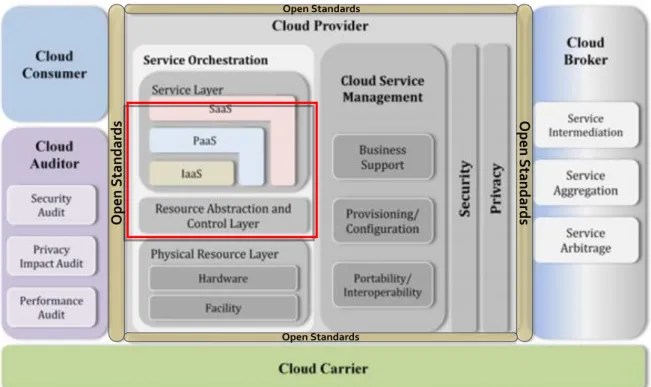
2.3. Cloud computing reference architecture (CCRA) 17
2.4. Correlation between cloud service models and their dependencies 19
2.5. Three main categories of cloud computing 19
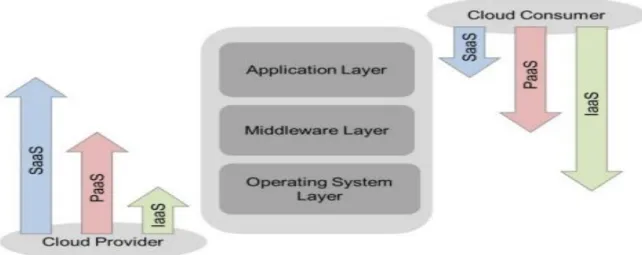
2.6. Scope of control between cloud provider and consumers 22
2.7. Cloud computing roles, sub-roles and associated activities 26
2.8. Example of IT services available to cloud consumers 27
2.9. Major activities of a cloud provider 28
2.10. Cloud computing Taxonomy 31
2.11. Progressive exposure of enterprise integration architectures 44
2.12. Cloud service interface category 46
2.13. IaaS interface capabilities for interoperability and portability 47
2.14. PaaS interface capabilities for interoperability and portability 48
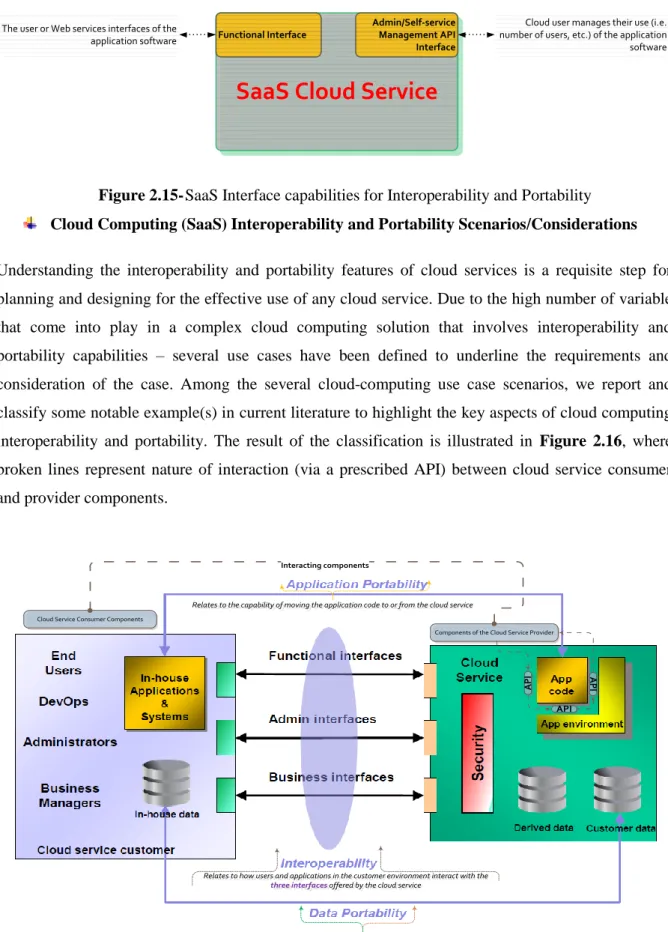
2.15. SaaS interface capabilities for interoperability and portability 49
2.16. Essential features of cloud service interoperability and portability 49
2.17. Interoperability testing 52
2.18. Portability testing 52
2.19. Integration testing 53
2.20. Compatibility testing 54
2.21. Heterogeneity dimensions in cloud computing 56
2.22. Taxonomy of heterogeneity roots in the cloud environment 60
2.23. Different types of cloud computing migration approach 70
2.24. Five step methodology to cloud migration 75
2.25. Six-step phase driven approach to cloud migration 75
2.26. Life cycles for managing enterprise cloud migration 76
2.27. Supporting cloud computing migration process 78
3.1. Relationship between associated elements of vendor lock-in 93
xi
3.3. Vendor lock-in taxonomy – business perspective 98
3.4. Vendor lock-in taxonomy – technical perspective 99
3.5. Vendor lock-in taxonomy – legal perspective 100
3.6. High-level categorisation of cloud lock-in risks 102
3.7. OVF scope in software life cycle 121
4.1. Two phase exploratory research design 133
4.2. Sample profile of participants 137
4.3. Cloud adoption maturity in UK 138
4.4. Service deployed models 139
4.5. Benefits of cloud computing to UK enterprises 140
4.6. Barriers to Cloud implementation in the UK 142
4.7. Location of data centres raises jurisdictional issues 142
4.8. Cloud storage security risks affects UK firms 143
4.9. Enterprises prefer corporate data stored within the UK and EEA 144
4.10. Cloud-based CRM and ERP adoption rates soar 145
4.11. The potential of vendor lock-in increases in the cloud 147
4.12. UK business perception of vendor lock-in 148
4.13. Practical challenges of vendor lock-in identified 149
4.14. Current practice for mitigating cloud lock-in risks 150
4.15. Enterprise plans to move core systems to the cloud increases 151
4.16. Integration is the key to enterprise cloud adoption and migration 152
4.17. Enterprises are unaware of interoperable cloud standards 155
4.18. Negotiated cloud contract terms 156
4.19. Exit strategy is critical in enterprise cloud service contracts 157
4.20. Contract terms that generated the most negotiations 158
5.1. Overview of the proposed cloud migration decision framework 174
5.2. A lifecycle approach for managing vendor lock-in risks 175
5.3. Key activities and outputs for Phase 1 176
5.4. Contract and service provider Phase 2 178
5.5. Service validation and management Phase 3 179
xii
5.7. Decision tree illustrating the process workflow for Step 1.5 183
5.8. Decision tree for devising a cloud adoption strategy (Step 2.4) 185
5.9. Decision tree for reviewing and signing a cloud SaaS contract (Step 3.5) 186
5.10. Decision tree for conducting a SaaS to SaaS migration (Step 4.4) 188
5.11. Decision tree for validating a SaaS migration activity (Step 5.5) 189
5.12. Decision tree for SaaS service operation and optimization (Step 6.5) 190
5.13. Group of survey participant 197
5.14. Socio-demographic profile of IT practitioners 198
5.15. Assessing decision-making capacity 199
5.16. Respondents experience with cloud computing and IT 200
5.17. Sequence of steps in the framework 203
5.18. Logical order of steps 204
5.19. Appropriateness of decision steps 205
5.20. Importance of decision steps 1 – 6 206
5.21. Importance of tasks in step 1 209
5.22. Appropriateness of tasks in step 1 211
5.23. Importance of tasks within step 2 214
5.24. Appropriateness of tasks within step 2 215
5.25. Task evaluation in step 3 – importance 217
5.26. Task evaluation in step 3 – appropriateness 218
5.27. Task evaluation in step 4 – importance 220
5.28. Task evaluation in step 4 – appropriateness 222
5.29. Task evaluation in step 5 – importance 224
5.30. Task evaluation in step 5 – appropriateness 225
5.31. Task evaluation in step 6 – importance 227
5.32. Task evaluation in step 6 – appropriateness 228
5.33. Sample decision tree for step 2.2 229
5.34. Decision tree evaluation in step 2.2 230
5.35. Decision tree evaluation in step 2.4 230
5.36. Overall effectiveness of the proposed framework 231
xiii
List of Tables
Table 2.1 Cloud consumer and cloud provider activities 25
Table 2.2 Different cloud service interface of interest 33
Table 2.3 Comparison between cloud SaaS migration strategies 69
Table 3.1 Categorisation of cloud lock-in challenges impeding SaaS migration 110
Table 4.1 Socio-demographic profile of participant organisation 137
xv
Publications
The research study detailed in this thesis has yielded several internationally recognized peer-reviewed journals, book chapters, and conference publications in the areas of cloud computing, virtualization, information and communication technologies (ICT), and distributed computing systems. These include:
Journal Papers
1. Opara-Martins, J., Sahandi, R. and Tian, F., 2017, August. “A Holistic Decision
Framework to Avoid Vendor Lock-in for Cloud SaaS Migration.” In Computer and
Information Science, 10(3), p.29. http://doi.org/10.5539/cis.v10n3p29
2. Opara-Martins, J., Sahandi, R. and Tian, F., 2017, March. “Six-Step Decision Framework
to Avoid Vendor Lock-in Risks in Cloud Migration.” In: Journal of Cloud Computing: Advances, Systems and Applications. SpringerOpen doi: (pending)
3. Opara-Martins J., Sahandi, R. and Tian, F., 2017, June. “Cloud SaaS Migration: Decision
Framework to Avoid Vendor Lock-in Risks.” In: Journal of Computer Information
Systems doi: (pending)
4. Opara-Martins, J., Sahandi, R. and Tian, F., 2017, June. “A Systematic Review Protocol
for Cloud Migration approaches to Avoid Vendor Lock-in.” In: Computer and
Information Science Journal. doi:
5. Opara-Martins, J., Sahandi, R. and Tian, F., 2016, April. “Critical analysis of vendor
lock-in and its impact on cloud computing migration: a business perspective.” In: Journal
of Cloud Computing: Advances, Systems and Applications (2016) 5:4. SpringerOpen. doi: 10.1186/s13677-016-0054-z
6. Sahandi, R., Alkhalil, A. and Opara-Martins, J., 2013, March. “Cloud computing from
SMEs perspective: a survey based investigation.” In: Journal of Information Technology
Management, 24(1), pp.1-12. ISSN #1042-1319
Conference Proceedings
7. Opara-Martins, J., Sahandi, R. and Tian, F., 2015, November. "A Business Analysis of
Cloud Computing: Data Security and Contract Lock-In Issues." In: 10th International
Conference on P2P, Parallel, Grid, Cloud and Internet Computing (3PGCIC), Krakow,
xvi
8. Opara-Martins, J., Sahandi, R. and Tian, F., 2014, November. “Critical review of vendor
lock-in and its impact on adoption of cloud computing.” In: Information Society
(i-Society), 2014 International Conference, (i-Society 2014), London, UK, pp. 92-97. IEEE. doi: 10.1109/i-Society.2014.7009018
Book Chapters
9. Opara-Martins, J., Sahandi, R. and Tian, F., 2015, October. "Implications of Integration
and Interoperability for Enterprise Cloud-based Applications." In: 6th International
Conference on Cloud Computing (CloudComp), Daejeon, South Korea, 2015, pp.
213-223. SpringerVerlag in the Lecture Notes of ICST (LNICST). doi:
10.1007/978-3-319-38904-2_22
10. Sahandi, R., Alkhalil, A. and Opara-Martins, J., 2013, October. “SMEs’ Perception of
Cloud Computing: Potential and Security.” In Collaborative networks in the internet of
services: 13th IFIP WG 5.5 working conference on virtual enterprises, PRO-VE 2012,
Bournemouth, UK, October 2012: proceedings, pp.186-195. Springer Berlin Heidelberg. doi: 10.1007/978-3-642-32775-9_19
2
Chapter one
1.
Introduction
Cloud computing as a new information technology (IT) paradigm, offers unprecedented scalability to an organisation’s business processes and business operations (Sitaram and Manjunath, 2012). The cloud technology allows organizations to expand or reduce their computing facilities very quickly. This concept is attracting public and private companies, as well as small to medium-sized enterprises (SMEs), who consider cloud computing model an opportunistic business strategy to remain competitive and to meet business needs (Armbrust et al. 2010; Buyya et al. 2009; Andrikopoulos et al. 2013). Larger enterprises are exploiting the benefits of this platform by taking business continuity into account, while SMEs to the contrary are enhancing their ability to meet computing resource demands, while eschewing consequential investment in over provisioned infrastructure, maintenance, training etc. (Jamshidi et al. 2013). The supply of information technology (IT) in the cloud has been enabled both by the evolution of sophisticated data centres (e.g. software defined network or SDDC) and widespread access to improved network bandwidth (BCS, 2012). In essence, these technical advances mean that traditional IT services such as data storage, servers, networks etc. are hosted on physical machines across a wide range of locations. But from the business (i.e. consumer and end-user) perspective, they simply are virtualised resources residing in the ‘cloud’. In other words, the term ‘cloud’ is simply a new way in which business is done and IT is provided. Broadly speaking, cloud computing is a natural evolution of business model in IT services consumption and delivery. While it is important to disambiguate the term for practical reasons, the rest of this paper embodies and assumes such definition. A unique business advantage of this model of IT service provision is the ubiquitous access it provides to customers to improve their ability to access applications and data from remote locations (location independence) and multiple devices (device independence). Delivered in this manner, the functionality can either be at the infrastructure level, platform or at the application level.
The concept of cloud computing is to offer an opportunistic business strategy to enterprises (small or large), to remain competitive and meet business needs (Andrikopoulos et al., 2013; Armbrust et al., 2009; Buyya et al., 2009). Whilst this concept seems like an attractive proposition for both public and private companies, several challenges remain inadequately addressed. A recent survey conducted by Sahandi et al. (2013) reported security and vendor lock-in as major barriers to cloud adoption across the United Kingdom (UK) market. The European Network and Information Security Agency (ENISA) and European Commission (EC) have recognized the vendor lock-in problem as a one of the greatest obstacles to enterprise cloud adoption (Loutas et al, 2011). Per (Toivonen, 2013), market demand and the ability to attract more customers are creating more pressure on cloud
3
providers to support interoperability – a direct benefit of avoiding vendor lock-in. Vendor lock-in problem in cloud computing is characterized by expensive and time-consuming migration of application and data to alternative providers (Wang, 2013). Cloud software vendors lock-in customers in several ways: (1) by designing a system incompatible with software developed by other vendors; (2) by using proprietary standards or closed architectures that lack interoperability with other applications; (3) by licensing the software under exclusive conditions (Miranda, 2012). Vendor lock-in deters organizations adoptlock-ing cloud technology. It is a challenglock-ing issue that requires substantial efforts to overcome the existing barriers it erects for enterprises migrating to cloud-based solutions (Toivonen, 2013).
The reviews of existing literature (de Oliveira et al. 2017; Garcia et al. 2016; Di Martino et al. 2015; Stravoskoufos et al. 2014; Toosi et al. 2013; Di Martino et al. 2014; Satzger et al. 2013; Binz et al. 2014; Binz et al. 2012; Petcu et al. 2013; Adagna et al. 2012; Kratzke, 2014), have shown that previous studies have focused more on interoperability and portability issues of cloud computing when lock-in is discussed. Amongst many problems being discussed are: the lack of standard interfaces and open APIs (Open Group, 2016), the lack of open standards for VM format (Ferry et al. 2014) and service deployment interfaces (Silva et al. 2013; Opara-Martins et al. 2014), as well as lack of open formats for data interchange (Fowley et al. 2017; Opara-Martins et al. 2016). These issues result in difficulties in integration between services obtained from different cloud providers as well as between cloud resources and internal legacy systems (Edmonds et al. 2012). Consequently, this renders the interoperability and portability of data and application services difficult. The emergent difficulty is a direct result of the current differences between individual cloud vendors’ offerings based on non-compatible underlying technologies and proprietary standards. Cloud providers often propose their own solutions and proprietary interfaces for access to resources and services. This heterogeneity of cloud provider solutions (i.e. hardware and software) and service interfaces is a crucial problem since most of the current resources bind the customer to stick with one cloud technology due to high cost in porting the applications and data to a different provider’s interface. The heterogeneity in cloud computing is simply the existence of differentiated hardware, architectures, infrastructure, and technology used by cloud providers. Many cloud vendors provide services based on custom-built policies, infrastructure, platforms, and APIs that make the overall cloud landscape heterogeneous. Such variations cause interoperability, portability, and integration very challenging. Following the principle that compatible interfaces are important in a cloud environment, two implementations of the same cloud service may store and process data very differently. This may well also involve storing derived and implementation specific data differently (Opara-Martins et al. 2016; Kalloniatis et al. 2014). Without proper definitions for import and export formats, a set of data from one service implementation will probably be meaningless when imported into another cloud service. For example, a cloud service may be accessed and used by a wide variety of clients, including mobile,
4
desktops and even tablet PCs. However, the information created and consumed by those services can still be limited to a single vendor if a proprietary data format is used. Further, this can create a degree of instability and data incompatibility issue as interfaces to the functionality may be proprietary, and thus any solution that is built to leverage the functionality provided cannot be easily migrated to a competitive cloud service offering (Nelson-Smith, 2011). So, while customers might be able to access and use the services from a variety of clients, the ability to move seamlessly from one vendor to another may be difficult because of other dependencies such as different data formats. Clearly, this problem has an impact on interoperability and data portability between clouds.
At the core of all these problems, we can identify concerns about consumers’ demand to migrate data to and from different clouds (data portability), and interoperability between clouds. Research has already addressed movability and migration on a functional level (Fowley et al. 2017; Wettinger et al. 2014a; Kalloniatis et al. 2014; Rafique et al. 2014). However, migration is currently far from being trivial. The two main reasons are the lack of world-wide adopted standards or interfaces to leverage the dynamic landscape of cloud related offers (Wettinger et al. 2014b), and absence of standards for defining parameters for cloud applications and their management. Without an appropriate standardized format, ensuring interoperability, portability, compliance, trust, and security is difficult (Hummer et al. 2013). Standards continue to rapidly evolve in step with technology. Hence, standards may be at different stages of maturity and levels of acceptance. But, unless the standards are well-accepted and widely used, such standards remain a questionable solution [8]. In other words, a partially adopted standard would represent a poor solution. Essentially, this explicit lack of standards to support portability and interoperability among cloud providers stifles the market competition and locks customers to a single cloud provider (Toosi et al. 2013). To expatiate further, potential difficulties (by primarily technological means) in achieving interoperability and portability lead to lock-in – resulting in customer dependency on the services of a single cloud computing provider (Opara-Martins et al. 2014). From a legal stance, the dependency can be aggravated by the abusive conduct of a cloud computing provider within the meaning of Article 102 TFEU (Treaty on the Functioning of the European Union) (Vanberg et al. 2017; Opara-Martins et al. 2016), where other providers are excluded from competing from the customers of the initial cloud provider. In such situations, limitations to interoperability and portability could be an abuse by a dominant provider using this practice as a technical means to stifle (i.e. monopolize) competition. Such practices distort competition and harm consumers by depriving them of better prices, greater choices and innovation. Hence, the competition law has the role of ensuring competition is maintained and enforced in the market by regulating anti-competitive conduct by cloud providers. To this end, it can be concluded that cloud interoperability (and data portability) constraints are potential results of anti-competitive environment created by offering services with proprietary standards.
5
1.1
Background
As organisations interact with service providers in the current cloud marketplace they encounter significant lock-in challenges to deploying, migrating, and interconnecting cloud services in a manner considered satisfactory. To date, the expertise and technological solutions to simplify such transition and facilitate good decision making are limited. Consequently, most customers are unaware of proprietary standards which inhibit interoperability and portability of applications when taking services from vendors. Interoperability and portability are essential qualities that affect the cloud under different perspectives (Di Martino, 2015; Petcu, 2011; Opara-Martins et al. 2014; Open Group, 2016), due to the risk of vendor lock-in. In effect, while many studies cite vendor lock-in as a major barrier to cloud computing adoption (Petcu and Vasilakos, 2014; Buyya et al. 2009; Liu and Ye, 2008; Bradshaw et al. 2012; Badger et al. 2011; Ahronovitz, 2010), yet due to its complexity, a lack of clarity still pervades (Opara-Martins et al. 2016). Without a clear insight into how such complex decision is made to avoid lock-in, it is difficult to identify gaps where further research is beneficial for business adopters. Current solutions and efforts tackling the vendor lock-in problem are predominantly technology-oriented. Such approach is compromised by ignoring organisations’ awareness and perception of the lock-in problem. For example, how is cloud lock-in experienced or understood from the business stance? Limited in-depth studies exist to investigate the complexity of cloud lock-in problem within enterprise organisations. Likewise, the customers, who are willing to choose the cloud services without being strictly bound to a specific solution, are mostly neglected. Moreover, limited research work has been carried out to provide a cloud migration framework to assist enterprises avoid vendor lock-in risks when implementing cloud-based Software-as-a-Service (SaaS) solutions within exiting environments. Such framework is important to reduce complexity and variations in implementation patterns on the cloud provider side, while at the same time minimizing potential switching cost for enterprises by resolving integration issues with existing IT infrastructures.
Advances in cloud computing research have in recent years resulted in a growing interest for migration towards the cloud. But due to concerns about the risks of vendor lock-in, as noted by (Leymann et al. 2011), organisations would particularly welcome standards that address application migration (e.g. Open Virtualization Format (OVF)) and data migration (e.g. Amazon S3 API) because such standards mitigate lock-in concerns. Various standardisation solutions from different industry bodies have been developed for increasing interoperability and portability within diverse cloud computing services (Shan et al. 2012; Toivonen, 2013). However, initiatives by multiple standard bodies, researchers, and consortiums could indirectly lead to the possibility of multiple standards emerging with possible lack of consensus, thereby deteriorating the lock-in problem even further. The main problem is attributed to the fact that currently each provider develops its own specific technology solutions, remote APIs, and some even create new programming languages (Wang, 2013).
6
Because of this, cloud users become dependent (i.e. locked-in) on a certain vendor’s services and are unable to switch to different vendor–due to technical incompatibilities–without undertaking substantial switching costs (Stravoskoufos, 2014). To further complicate issues, for instance switching between alternative vendors, of essentially the same product, without paying substantial switching cost is not possible as argued by (Zhu and Zhou, 2011). In other words, the substantial cost associated with switching between incompatible cloud software systems and vendors can force a customer to use the same products and services. Thus, consumer choices of cloud-based services and solutions may exhibit path dependency: decisions by earlier adopters can be expected to have some effect on the decisions of later adopters.
1.2
Research Question(s)
The underpinning research question explored within this thesis can be stated as follows:
How can enterprises achieve the portability and interoperability of SaaS (applications and data) services across cloud provider’s technology platforms and storage systems while expanding functionality for migration via hybrid cloud techniques to mitigate the lock-in problem?
Despite these legitimate concerns and technical complexity of vendor lock-in, this PhD study aims to answer the following two questions of interest to business adopters of cloud services and solutions:
1) How to avoid being locked-in to a single cloud service provider?
2) How easy is it to deploy existing cloud SaaS artefacts (e.g. data, metadata, and application
components) on another service provider’s technology platform without modification to the artefacts – which would reduce the financial benefit of the migration?
The former applies more to companies who have migrated or are looking to adopt more cloud solutions, whereas the latter is closely related to companies considering moving core systems into the cloud environment. Giving answers to these questions is deceptively easy and straightforward, but the reality is different. Presently, for many companies, there is a large amount of sensitive data and IT assets in-house which can deter them to migrate to the cloud due to risks of vendor lock-in, security and privacy issues. For these reasons, it becomes not only critical to consider security and privacy concerns but also related issues such as integration, portability, and interoperability between the software on premise and in the cloud (Lewis, 2015), should be taking aboard. Therefore, organisations must be aware of appropriate standards and protocols used by cloud providers to support data/application movability. Moreover, the ease of moving data across (i.e. portability) cloud providers’ platform mandates data to be in a compatible format (Petcu, 2011), and includes the need to securely delete the old storage (Hogan et al. 2011). In other words, the ability to move
7
data/application about is of crucial importance, as much as the effort involved in moving – inability to achieve this portends large as a management issue for cloud computing. To further complicate matters, maintaining compliance with governmental regulations and industry requirements adds another layer of considerations to the management of data. Whether organisations can easily shift their data/application about seamlessly, remains one of the biggest issues facing cloud adoption across diverse industries. Addressing these questions will support enterprises and decision makers with their strategies for migration, and when considering designing and develop interoperable applications to avoid lock-in and integrate seamlessly into other cloud and on-premise systems.
1.3
Aim and Objectives
The main aim of this research is to propose a decision framework to avoid vendor lock-in risks in cloud migration.
Research Objectives:
O.1. Explore views of professional practitioners on issues associated with cloud vendor
lock-in.
O.2. Identify, analyse and explore the technical, legal, and business issues associated with
cloud vendor lock-in.
O.3. Identify policy and industry recommendations that could potentially steer the
development of a vendor-neutral cloud marketplace.
- Identify standards that support interoperability between different cloud providers
network.
- Identify standards that facilitate the portability of data from one vendor to another.
- Examine limitations in existing cloud service contracts and Service Level Agreement
(SLA) that fail to tackle the risks of vendor lock-in, and review their implications for businesses adopting cloud computing
O.4. Review typical cloud providers’ standard contract terms of services and SLAs as an
attempt to identify the contractual issues which need to be addressed in order to enable the cloud-to-cloud migration or on-premise-to-cloud-based SaaS application modernisation.
O.5. Propose a novel holistic decision framework to avoid vendor lock-in risks in cloud
(SaaS category) migration.
8
1.4
Contributions
This PhD research work makes several contributions to academic knowledge and practice. The principal contribution was to meet the main aim of this research study by developing a cloud migration decision framework to avoid vendor lock-in risks, and in supporting enterprise cloud adoption decision making process. An important secondary contribution, however, is that the overall research work added substantially to the growing body of knowledge on cloud computing adoption and migration by examining the factors that influence cloud adoption and/or deter cloud migration decisions within organisations that are transforming their businesses using cloud computing technologies.
In summary, this thesis and the PhD research work it is based on make the following contributions
(abbreviated as C) to knowledge:
C1.A critical review of vendor lock-in and its impact on adoption and migration to cloud
computing.
C2.Clarification of the vendor lock-in phenomenon within the cloud computing environment, and
a subsequent analysis of the main risk factors that contribute to cloud lock-in situations.
C3.A systematic review study of issues associated with migration to the cloud and vendor lock-in
problem. This also incorporates a critical appraisal of existing decision frameworks, models and processes which support cloud computing adoption and migration in enterprises.
C4.The formulation of a cloud computing vendor lock-in taxonomy which have been organised
into hierarchical categories of perspectives. Note; the proposed taxonomy partitions the associated lock-in challenges to address into three viewpoints; business, technical, and legal. Each of the viewpoints can be used as problem analysis technique as well as solution space of the relevant issues of the lock-in problem domain.
C5.The manifestation and implications of how integration and interoperability concerns affect
enterprise cloud-based application migration and adoption.
C6.A critical business analysis of cloud computing from a data security and contract lock-in
perspectives.
C7.A novel decision framework, with supporting strategies to avoid vendor lock-in risks in cloud
9
1.5
Organisation of Thesis
This thesis has been divided into seven (7) chapters. The content of the chapters is summarised as follows:
Chapter one: discusses the background and the motivation of the research; based on the discussion of the background literature, the primary research aim, research questions and objectives are developed.
The research contributions (abbreviated as C) and an outline of the research is given. Overall, this
chapter aims to justify and clarify the research problem that is being investigated in this PhD thesis.
Chapter two: provides a comprehensive background and critical appraisal of cloud computing literature, focusing on evolution of computing systems, cloud computing characteristics and reference architecture (CCRA), cloud computing application architectures, heterogeneity roots in the cloud environment and cloud computing migration approaches. The discussion of issues related to interoperability, portability, and standards are presented and the chapter also deliberates on the implications of integration and interoperability for enterprise applications, as well as approaches enabling portability and interoperability to support cloud computing adoption. This chapter concludes by highlighting the main business benefits and challenges faced by organisations adopting and migrating to cloud-based services. Note, this chapter may seem comprehensive in context, however its aim is meant to explain and justify the research objectives raised in chapter one.
Chapter three: provides the theoretical underpinning for this research by discussing the vendor lock-in problem faced by enterprises lock-in the context of cloud computlock-ing environments. Based on the complexity of cloud lock-in risks hindering adoption and migration decisions in the enterprise, this chapter identify and categorises the main risk factors that intensify and/or trigger cloud SaaS lock-in situations. The identification of the main SaaS lock-in risks resulted from a systematic literature review (SLR) conducted to identify challenges associated with switching/changing between cloud SaaS vendors. Based on the critical analysis of this factors, taxonomy of vendor lock-in perspectives have been defined and discussed comprehensively in this chapter which are the foundations of the cloud migration decision framework and the supporting strategies.
Chapter four: presents the detailed research methodology used in this study to fulfil the overarching research aim and questions posed in chapter one. The implementation of the research design (based on qualitative and quantitative approaches) and the subsequent analysis of the empirical data are discussed in this chapter. Implications or observations drawn from the key findings are also discussed herein.
Chapter five: presents the development of the proposed six-step decision framework to avoid vendor lock-in risks in cloud computing migration. This chapter comprehensively discusses the 6-step decision framework that enables an enterprise to assess its current IT landscape for potential SaaS
10
replacement, and provides effective prescriptive (i.e. tactical and operational) strategies to mitigate vendor lock-in risks in cloud (SaaS) migration. The decision framework follows research findings and addresses the core requirements for choosing vendor-neutral interoperable and portable cloud services without the fear of vendor lock-in, and architectural decisions for secure SaaS migration. Therefore, the results of this research can help IT managers have a safe and effective migration to cloud computing SaaS environment.
This chapter also elaborates on the proposed 6-step decision framework. The decision framework through its step-by-step approach provides guidance on how to avoid being locked into individual cloud service providers. This reduces the risk of dependency on a cloud provider for service provision, especially if data portability, as the most fundamental aspect, is not enabled. Each decision step within the framework prepares the way for the subsequent step, which supports a company to gather the right information to make a right decision before proceeding to the next step. The reason for such an approach is to support an organisation with its planning and adaptation of the services to suit the business requirements and objectives. Furthermore, this chapter also discusses the process of validation and evaluation of the proposed decision framework based on the analysis of the views of cloud and industry practitioners, IT managers and academia.
Chapter six: encapsulates the outcomes of this research and draws conclusion for this thesis by summarising the novel contributions made. This chapter concludes by highlighting the implications of this research and further identifies and describes areas for future work.
1.6
Chapter Summary
Cloud computing adoption and migration is a topical issue, and there is significant interest from academia and industry in using cloud-based services and solutions. Since, as academics, we are uniquely positioned to offer unbiased advice and expertise to enterprises that are interested in consuming or using new technologies such as cloud computing. Therefore, the work presented herein is rooted in academic research and fills a gap in the current cloud computing literature, also provides a vendor-neutral expertise and proposal framework for companies that are interested in deploying or migrating cloud-based SaaS environments. This research study is concerned with supporting the decision-making process to avoid vendor lock-in risks for cloud-to-cloud migration and/or migrating/replacing on-premise IT systems with cloud-based (SaaS) alternatives. This chapter provided an introduction to the concept of cloud computing vendor lock-in phenomenon, the business needs (or requirements) for organisations to avoid the lock-in problem, overarching research aim and objectives, thesis structure and finally, the novel contributions made thus far by this research work.
11
Chapter Two
2.
Literature Review
2.1
Introduction
This chapter discusses the background and theory to the topics which are covered in this thesis report. The background of cloud computing, including the evolution of computing systems and the theory of lock-in is provided in this chapter. A concise analysis of issues associated with vendor lock-in, integration and interoperability implications, and its impact on enterprise migration is presented. As the scope of this research is within the field of enterprise cloud migration, the theoretical concepts behind this shift are discussed. To justify the novelty of this research, a review of existing approaches and standards to tackle lock-in challenges in cloud environment, and methodologies for enabling interoperability and portability is conducted. Key legal issues and security concerns are provided herein.
2.2
Evolution of Computing Systems
To fully comprehend how cloud computing has evolved it is important to understand the evolution of computing from a historical perspective, focusing primarily on those advances that led to the development of cloud computing, such as the transition from mainframe to desktops, laptops, mobile devices and on to the cloud (Rittinghouse & Ransome, 2010). The idea of providing a centralised computing service dates to the 1960s, when computing services where provided over a network using a mainframe time-sharing technology. During this period, the mainframe time-sharing mechanism effectively utilised computing resources, and provided acceptable performance to users; however, mainframes were difficult to scale and provision up-front because of high hardware costs.
In 1961, the Internet pioneer John McCarthy predicted that “someday computation may be organised as a public utility” and thus far, there has been a paradigm shift in the geography of computation. Later in the sixties, the idea of an intergalactic computer network was introduced by JCR Licklider who was liable for the development of Advanced Research Projects Agency Network (ARPANET) in 1969. According to (Mohammed, 2009), Lickliders vision for ARPANET was to create a computer network with the capability to interconnect everyone on the globe with access to numerous programs and data at any site, virtually from any location. This discussion is further substantiated by Margaret Lewis in a report published by (Hoover & Martin, 2008), adding that “the vision of ARPANET sounds a lot like what is being referred to as cloud computing today, – often in the IT industry when people talk about plug into IT cloud, they normally have something simple in mind; i.e. browser access to an application hosted on the web”. Cloud computing is certainly that but there is also much to it. Cloud computing is a natural development to meet needs that have been evident for more than forty years (Sarna, 2011). Virtualization is the key technology that enables
12
cloud computing. In effect, remote hosting has developed from simply renting infrastructure to providing and maintaining standardized virtual servers that can be scaled up and down as demand fluctuates. Thus, the computing world is rapidly transforming towards developing software for millions to consume as a service, rather than rely on their individual computers (Carlson, 2011). Cloud computing indeed evolved out of Grid computing and relies on Grid computing as its backbone and infrastructure support. The evolution has been a result of a shift in focus from an infrastructure (that delivers storage and compute resources such is the case in Grids) to one that is economy based aiming to deliver more abstract resources and services (such is the case in clouds) (Foster et al. 2008).
Generally, it is difficult to tell whether a service is genuinely a cloud computing service offering or unambiguously a pre-existing offering that has the cloud label imposed on it by vendors, for example hosted service, on-demand computing, grid computing, utility computing, Software-as-a-Service (SaaS), Application Software-as-a-Service Provider (ASP) etc. Software-as-a-Service providers are expanding their available offerings to include the entire traditional IT stack, from hardware and platforms to
application components, software services, and whole applications, as shown in Figure 2.1. Many
vendors offer managed infrastructure and platforms as a service, but until there is a universally accepted standard between IT service providers of many types and consumers, vendors will continue to fight for competitive advantage. Independent software vendors (ISVs) and well as enterprise architects and developers are building robust, multitenant software-as-a-service applications to run efficiently on these platforms, and usage is anticipated to explode dependent on the emergence of widely used standards.
Figure 2.1-Cloud Computing Represented as a Stack of Service Offering (Adapted and
Modified from [Johnston, 2008])
Cloud Clients
Presentation Layer Example: browsers, mobile devices
Cloud Services
Components as a Service Example: SOA via Web Service Standards
Cloud Applications
Software as a Service Example: browsers, mobile devices
Cloud Platform
Platform as a Service
Example: web server, app server, database engines
Cloud Infrastructure
Infrastructure as a Service
13
Cloud Computing and Distributed Systems
According to (Mascato et al., 2011), cloud computing is a model for distributed systems. A distributed system consists of a collection of autonomous computers, connected through a network and distribution middleware, which enables computers to coordinate their activities and to share the resources of the system, so that users perceive the system as a single, integrated computing facility (Emmerisch, 1997). While the concept of cloud computing addresses the next evolutionary step of distributed computing, its goal is to make use of distributed resources in order to achieve higher throughput to tackle large scale computation problems (Choi and Lumb, 2009). However, cloud computing differentiates itself from other distributed computing paradigms through its apparent infinite elasticity. Elasticity in this context is understood as the ability to on-demand scale-up and down the number of cloud resources allocated for an application (Petcu et al. 2012). For example, the adoption of clouds in enterprise is hindered by the fact that legacy codes need to be re-written in order to take advantage of elasticity. Besides distributed computing systems, cloud computing also draws from other pre-existing technologies such as virtualization, service oriented architecture (SOA), grid computing, or utility computing (Hwang, 2008; Milojicic, 2008; Weiss, 2007). The variety of technologies and architectures used in cloud computing makes the overall picture confusing due to the blurred boundaries among them (Hwang, 2008). Moreover, the increase in the number of service providers and IT vendors, nowadays, entering the cloud market, further hardens the analysis of the distinguishing features of this technology (Milojicic, 2008). To further complicate this situation, vendors provide different cloud services at different levels usually providing their own proprietary interfaces to users and Application Programming Interfaces (APIs) to developers, to leverage the dynamic landscape of cloud-related offers. This results in several problems for end-users that perform different operations for requesting cloud services provided by different vendors, using different interfaces, languages and APIs. Further, it also makes the global agreement of on an acceptable solution harder to achieve (Petcu et al. 2012).
Cloud computing has the potential to address the programmability of resources in general, either infrastructure or software resources. Current cloud computing infrastructure typically assumes a homogeneous collection of commodity hardware, with details about hardware variation intentionally hidden from users (Crago et al. 2011). Providers such as Amazon and Rackspace, as an example, provide users with access to a homogeneous set of commodity hardware through virtualization technology with little or no control of locality (except often by geographic region). Cloud technologies bring applications and infrastructure services mobility and (physical/hardware) platform independency to the existing distributed computing and networking applications. The provisioned cloud based infrastructure services may involve multi-provider and multi-domain resources, including integration with the legacy services and infrastructures. The cloud service provider often utilizes
14
virtualization technologies to separate application services from infrastructure in order to offer more efficient services to cloud service consumer, and optimize resource utilization. However, a complex aspect for service management is the semantic heterogeneity among different cloud service provider’s policies, since they may have inconsistent approaches for implementing security mechanisms. This inconsistency can breed application and data fragmentation issues in the cloud, thus making it challenge to port data and application to varied cloud service providers. Moreover, as a result of this heterogeneity, deploying applications to a cloud and managing them needs to be done using vendor specific methods and tools. This level of lock-in or dependency (on service provider tools) is seen as a major hurdle in adopting cloud technologies to the enterprise. The main aspect of the lock-in problem affecting enterprise decisions spans across the lack of world-wide adopted standards, low level of
portability and interoperability of applications and data services based in the cloud (refer to Section
2.9). Though the heterogeneity of cloud approaches among cloud service providers can encourage
innovation and some level of adoption, it creates confusions in the marketplace for cloud service consumers with the risk of them creating cloud silos that are non-interoperable (i.e. cannot federate). To minimize the impact and occurrence of this risk, we stimulate our discussion by describing
heterogeneity roots in the cloud ecosystem (cf Section 2.7).
Given that distributed systems and their delivery are at the core of cloud computing, all cloud computing related activities (or parties) can be categorised into three main groups: activities that use cloud services (i.e. cloud service customer), activities that provide cloud services (i.e. cloud service provider) and activities that support cloud services (i.e. cloud service partner). Parties in cloud computing system are its stakeholders. A party can play more than one role at any given time and can engage in a specific subset of activities of that role. These different activities could be likened to represent and/or describe some of the common roles and sub-roles associated with cloud computing. A cloud activity in this context is defined as a specified pursuit or set of tasks. Detailed descriptions of
the cloud computing roles and sub-roles, and their relationship are presented in Section 2.4.3.
2.3
Cloud Computing Fundamentals
Cloud computing has become one of the most frequently cited and infrequently understood technology term pitched to IT buyers and analysts, enterprises, SMEs and the public at large as noted by (Juniper Media, 2009). While there may be confusion about the right definition of cloud computing, it should be underlined for the gullible readers that cloud computing is not a technology revolution, but rather a process and business revolution on how we use these technologies that enable cloud computing as it exists today. Typical example of these technologies may include: SaaS, Representational State Transfer (REST), Synchronous JavaScript and XML (SJAX), Service-Oriented Architectures (SOA), on-demand computing, Virtualization etc. At its nascent state, cloud computing lacks a consensus definition. There have been different proposing views by policy makers on its
15
definition. A report by Spinola (2009), confirmed that there were at least 22 different cloud computing definitions in use. But the state-of-the-art working definition of the cloud is designated to the National Institute of Standards and Technology (NIST) and it has been absorbed into this thesis.
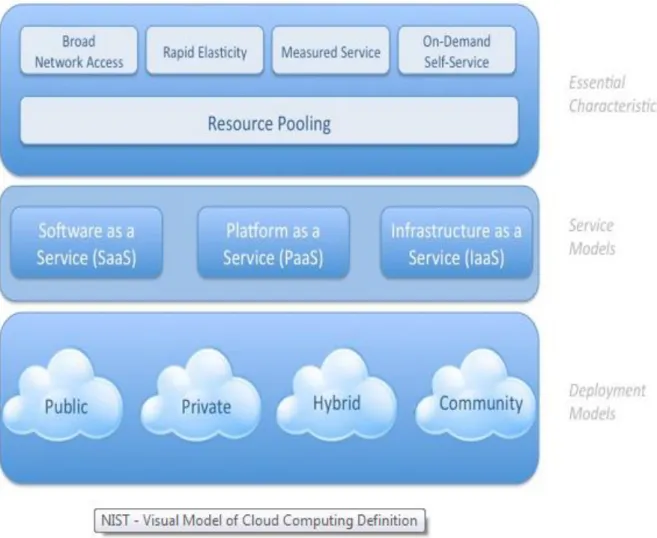
According to NIST, cloud computing is a model for enabling ubiquitous, convenient, on-demand network access to a shared pool of configurable computing resources (e.g., networks, servers, storage, applications, and services) that can be rapidly provisioned and released with minimal management effort or service provider interaction (Mell and Grance, 2011). This cloud model is composed of five essential characteristics, three service models, and four deployment models (i.e. cloud types) that are represented as layers in the cloud technology stack (see Figure 3): ranging from the cloud infrastructure (Infrastructure as a Service or IaaS); cloud application platform (Platform as a Service or PaaS); and cloud application (Software as a Service or SaaS) (Marks and Lozano, 2010).
Figure 2.2 shows such a structure. Moreover, classifying cloud computing services along with
different layers is common practice in the industry.
Figure 2.2-Illustration of Cloud Taxonomy [Adapted and Modified from (Mell &
16
2.4
Cloud Computing Characteristics and Reference Architecture (CCRA)
In Figure 2, the NIST definition of cloud computing identifies five essential characteristics which are briefly discussed below:
1. Rapid Elasticity: is one of the essential characteristics common in cloud computing. Elasticity in cloud computing context is defined as the ability for consumers to scale resources both up and down as needed.
2. Measured Service: is crucial for billing, access control, resource optimization, capacity planning and other tasks. In a measured service, aspect of the cloud service is controlled and monitored by the cloud provider. Typically, metering is done on a pay-per-use or charge-per-use basis
3. On-demand Self Service: aspect of cloud computing means that a consumer can use services as needed without any human interaction with the cloud provider.
4. Broad Network Access: means that the cloud provider’s capabilities are available over the network and can be accessed through standard mechanisms (e.g. http, xml, and/or internet protocols) by both thick and thin clients (e.g. mobile phones, tablets, laptops, and workstations). Note, this does not necessarily mean Internet access – regardless of the type of network, access to the cloud is typically not limited to a client. The term broad network access can apply equally to public, private, or hybrid clouds
5. <

![Figure 2.8- Example of Business IT services available to a cloud consumer [Adapted from (Pritzker and Gallagher, 2013)]](https://thumb-us.123doks.com/thumbv2/123dok_us/424722.2548777/45.892.192.728.129.718/example-business-services-available-consumer-adapted-pritzker-gallagher.webp)


![Figure 2.24- The Five Step Methodology to Cloud Migration (Adapted and Modified from [Benerjee, 2012])](https://thumb-us.123doks.com/thumbv2/123dok_us/424722.2548777/93.892.119.778.372.1073/figure-step-methodology-cloud-migration-adapted-modified-benerjee.webp)
