Creativity and Attention:
A Multi-Method Investigation
_____________________________
Lindsey Carruthers
Edinburgh Napier University
A thesis submitted in partial fulfilment of the requirements of
Edinburgh Napier University, for the award of
Doctor of Philosophy
2
Dedication
To Peter and Judy Carruthers, my wonderful parents. Your kind words, encouraging texts, supportive phone calls, reassuring hugs, endless handouts, and free meals, it has all meant the world to me. Thank you for your patience with me, and thank you for pretending to believe me when I said I wasn’t procrastinating. You’ve been with me on every step of this journey and I have appreciated everything you have done for me.
Katrina, my adoring sister. You are my inspiration and my hero. My studies have helped me understand you a little better, and I hope this makes me a better, more patient person. Thank you for your relentless (?!) texts and phone calls, and for always being happy for me.
To my grandparents, Hazel and Harold Reid, and Peter Carruthers, thank you for your encouragement, understanding, and support over the years. I love spending time with you all, and I always enjoy our conversations and the comfort you provide. You have all believed in me from the beginning, I very much appreciate it.
Mum, Dad, and Katrina, Nana and Grandad, and Grandad, I love you all very much. I dedicate my work to you, even if you never read it all.
Acknowledgements
I am very grateful to the Edinburgh Napier University Research Group, who awarded me a fees only studentship for the first year of my postgraduate studies. I would like to sincerely thank my supervisors, Dr Alex Willis and Dr Rory MacLean. Since my undergraduate days they have both inspired and encouraged me. I have valued their advice, ideas, patience, and feedback throughout this entire process. I would also like to thank Dr Phyllis Laybourn, Maria Shaw, Dr Hayley Ness, Dr Alex McIntyre, Dr Chris O’Donnell, and Dr Dave Keatley for their advice, encouragement, and support. My thanks also go to Dr Robbie Cooper, for his ideas and help in the design of this project, and for making the complicated things simpler.
My thanks are to Richard Jones and family, founders of Addressing the Balance, for all of their help with recruitment, and for taking an active interest in my research. My appreciation also goes to every participant who took part in this project.
I’d like to express my gratitude to my friends, including Hannah Lithgow, Lucy McVey, Lee Curley, and Nicolle McFarlane, for their profound words and kind reassurance throughout my postgraduate years.
I would also like to thank Sam Tulloch, my better half, for his unconditional love, support, and understanding in the final stages of my project.
3
Abstract
Creativity is a valuable attribute that involves the generation of original ideas; attention is a vital function that facilitates information selection. Past research has related these cognitive constructs, having found that highly creative people tend to be more distractible than those less creative, which allows them to produce more novel associations.
This thesis aimed to test the relationship between these two processes using multiple tests of creativity (e.g., achievement, divergent thinking, and collage-making) and attention (e.g., focused, sustained, selective, and divided attention), which represented the complexity of each construct, and improved upon the methods previously reported. Additionally, the performance of participants with Attention Deficit Hyperactivity Disorder (ADHD) was compared to those without. Four studies were carried out. Within the first two, creativity scores were compared and related to attention scores, within and between control and ADHD groups. No consistent relationships were found. The ADHD group had higher creativity scores on average, but the differences were not significant.
Study three incorporated eye-tracking techniques to explore the effect of visual stimulation on creativity and attention performance between-groups. It was found that the ADHD group looked at the attention task targets significantly less, yet their performance was not significantly worse. No between-group differences in creativity were found. The visually stimulating environment did not affect performance.
Study four investigated the effect of an incubation period on creativity. Results showed that incubation increased the proportion of original ideas, but performance did not vary according to incubation task demand. However, self-report responses indicated that participants did not sufficiently engage in the incubation period, as they continued to think consciously of solutions.
The link between creativity and attention is not supported, and the idea that ADHD is beneficial to creativity is not fully upheld. Further research should examine creativity and attention in work or university settings, to consider the existence of a ‘real life’ relationship.
4
Contents
Dedication ... 2 Acknowledgements ... 2 Abstract ... 3 Contents ... 4 List of Figures ... 9 List of Tables... 10 Abbreviations ... 11Chapter 1 - Introduction & Creativity Literature Review ... 12
1.1 Introduction ... 13
1.2 Creativity: A Literature Review ... 14
1.2.1 What is Creativity? ... 14
1.2.2 Divergent Thinking ... 16
1.2.3 Creativity and Intelligence ... 19
1.2.4 Creativity and Personality ... 23
1.2.5 Creativity and Association ... 26
1.2.6 The Creative Process ... 29
1.3 Conclusions ... 33
Chapter 2 – Attention Literature Review ... 35
2.1 What is Attention? ... 36
2.1.1 Focused Attention ... 38
2.1.2 Sustained Attention ... 39
2.1.3 Selective Attention ... 41
2.1.4 Divided Attention ... 42
2.2 How does Attention Work? ... 44
2.2.1 Early Selection Theories ... 44
2.2.2 Late Selection Theories ... 47
2.2.3 Visual Attention Systems ... 49
2.3 Attention and Executive Function ... 52
2.4 Attention Deficit Hyperactivity Disorder ... 54
2.4.1 Prevalence of ADHD ... 55
2.4.2 Possible Causes of ADHD ... 57
2.4.3 Treatment of ADHD ... 57
5
2.6 Psychological Theories of ADHD ... 62
2.6.1 Dynamic Developmental Theory ... 63
2.6.2 Cognitive Energetic Model ... 64
2.6.3 Unified Theory ... 65
2.6.4 Delay-Aversion Theory ... 67
2.6.5 Dual-Pathway Model ... 68
2.6 Conclusions ... 69
Chapter 3 – Creativity and Attention Literature Review ... 71
3.1 Creativity and Broad Attention ... 72
3.1.1 Anecdotal Evidence of a Relationship between Creativity and Attention ... 73
3.1.2 Empirical Evidence of a Relationship between Creativity and Broad Attention... 74
3.1.3 Empirical Evidence for a Relationship between Creativity and Attention from the use of Environmental Cues ... 76
3.1.4 Creativity and Attention as a Flexible Process ... 78
3.2 Creativity and ADHD ... 80
3.2.1 ADHD as a Benefit for Creativity ... 80
3.2.2 Similarities between Creative Individuals and those with ADHD ... 82
3.3 Conclusions ... 83
3.4 Thesis Overview ... 84
Chapter 4 – General Methods ... 85
4.1 Ethics... 86
4.2 Participants ... 86
4.3 Materials ... 87
4.3.1 Self-Report Measures of Creativity and Attention ... 87
4.3.2 Measures of Creative Performance ... 91
4.3.3 Measures of Attention Performance... 94
4.4 Procedure ... 102
Chapter 5 - The Relationship between Creativity and Attention ... 104
5.1 Introduction and Research Aims ... 105
5.2 Methods ... 105
5.2.1 Design ... 105
5.2.2 Participants ... 105
6 5.2.4 Procedure ... 106 5.3 Results ... 108 5.3.1 Creativity Measures ... 108 5.3.2 Attention Measures ... 110 5.4 Discussion ... 114 5.4.1 Limitations ... 115 5.5 Conclusions ... 115
Chapter 6 - Differences in Creativity and Attention between those with and without ADHD ... 117
6.1 Introduction and Research Aims ... 118
6.2 Methods ... 118 6.2.1 Design ... 118 6.2.2 Participants ... 119 6.2.3 Materials ... 119 6.2.4 Procedure ... 119 6.3 Results ... 119
6.3.1 ADHD Group: Creativity Measures ... 119
6.3.2 ADHD Group: Attention Measures ... 121
6.3.3 Between-Group Differences ... 125
6.4 Discussion ... 125
6.4.1 The Relationship between Creativity and Attention in the ADHD Group ... 125
6.4.2 Self-Report Measures: Between-Group Differences and Relationships ... 126
6.4.3 Creativity Measures: Between-Group Differences ... 128
6.4.4 Attention Measures: Between-Group Differences ... 131
6.4.5 General Discussion ... 135
6.4.6 Limitations and Directions for Future Research ... 137
6.5 Conclusions ... 140
Chapter 7 - The effect of extraneous visual stimuli on the performance of creativity and attention tasks: An eye tracking study. ... 141
7.1 Introduction ... 142
7.2 Literature Review ... 142
7.2.1 Overflow Theory ... 142
7
7.2.3 Moderate Brain Arousal Model ... 147
7.2.4 Creativity and Stimulation from the Environment ... 148
7.2.5 Eye Tracking ... 150 7.2.6 Current Study ... 152 7.3 Methods ... 153 7.3.1 Design ... 153 7.3.2 Participants ... 154 7.3.3 Materials ... 154 7.3.4 Procedure ... 156 7.4 Results ... 158
7.4.1 Between-Group Differences in Creativity and Attention Tasks ... 158
7.4.2 Eye Movement Results ... 160
7.4.3 The Effect of the Visually Stimulating Environment ... 163
7.5 Discussion ... 168
7.5.1 Differences in Eye Movement Behaviour ... 168
7.5.2 The Effect of the Environment ... 170
7.5.3 General Discussion ... 171
7.5.4 Limitations and Directions for Future Research ... 172
7.6 Conclusions ... 175
Chapter 8 - Attentional Control and the Effectiveness of Incubation on Creative Problem Solving ... 176
8.1 Introduction ... 177
8.2 Literature Review ... 178
8.2.1 What is Incubation? ... 178
8.2.2 Theories of Incubation ... 179
8.2.3 Incubation and Attention ... 183
8.3.3 Measuring the Effect of Incubation ... 185
8.3.4 Current Study ... 186
5.3 Pilot Study: Identifying the Cognitive Demand of Potential Incubation Tasks ... 189 8.4 Methods ... 190 8.4.1 Design ... 190 8.4.2 Participants ... 190 8.4.3 Materials ... 191 8.4.4 Procedure ... 194
8
8.5 Results ... 195
8.6 Discussion ... 197
8.7 The Role of Attentional Control in Incubation ... 198
8.8 Methods ... 198 8.8.1 Design ... 198 8.8.2 Participants ... 199 8.8.3 Materials ... 199 8.8.4 Procedure ... 202 8.9 Results ... 205
8.9.1 The Incubation Effect: Results ... 206
8.9.2 Mind-Wandering During Incubation and the Effect on Creativity: Results ... 207
8.9.3 Incubation and Attention: Analysis of Covariance ... 210
8.10 Discussion ... 213
8.10.1 The Incubation Effect ... 213
8.10.2 Mind-Wandering During Incubation and the Effect on Creativity ... 215
8.10.3 Incubation and Attention ... 216
8.10.4 General Discussion ... 217
8.10.5 Limitations and Directions for Future Research ... 220
8.11 Conclusions ... 223
Chapter 9 – General Discussion ... 224
9.1 Overview ... 225
9.1 Is there a Relationship between Creativity and Attention? ... 226
9.2 Are those with ADHD More Creative and Less Attentive than those without? ... 226
9.3 Can Creativity be Improved? ... 228
9.4 Limitations and Directions for Future Research ... 229
9.5 Conclusions ... 232
References... 234
9
List of Figures
Figure 1: Cueing paradigm. Illustration adapted from Posner (1980). ... 50
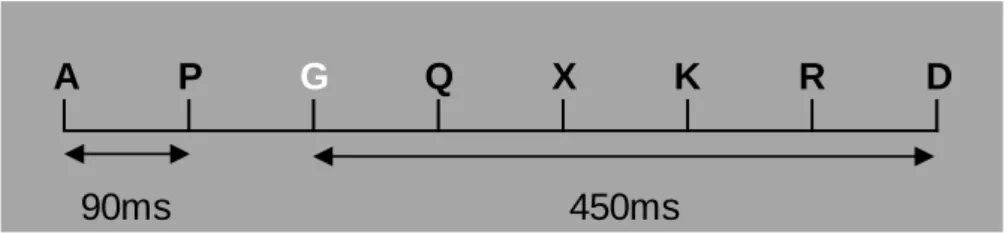
Figure 2: Illustration of rapid serial visual presentation task sequence. ... 95
Figure 3: Illustration of CPT sequence. ... 97
Figure 4: Illustration of the dual-task tracking maze.. ... 100
Figure 5: Excerpt from Della Sala, Foley, Beschin, Allerhand, and Logie (2010, p.412). ... 101
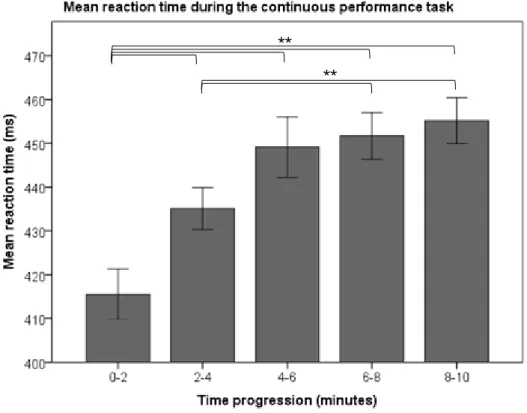
Figure 6: Mean RTs during the continuous performance task. ... 110
Figure 7: Mean reaction times during the continuous performance task. ... 122
Figure 8: Mean RTs during the CPT for both groups. ... 133
Figure 9: Photograph of the SMI eye tracking glasses on a participant, plugged in to the laptop. ... 155
Figure 10: An example of the BeGaze analysis software. ... 157
Figure 11: Control and ADHD group scores on self-report measures of attention. .... 158
Figure 12: Control and ADHD group scores on verbal and figural divergent thinking measures. . ... 159
Figure 13: Between-group differences in the total number of fixations over the length of each measure used... 161
Figure 14: Between-group differences in the percentage of on-target fixations over the length of each measure used.. ... 162
Figure 15: Control group differences in verbal and figural divergent thinking scores in plain vs. stimulating environments. ... 164
Figure 16: ADHD group differences in verbal and figural divergent thinking scores in plain vs. stimulating environments. ... 165
Figure 17: Control group differences in sustained and selective attention scores in plain vs. stimulating environments. ... 166
Figure 18: ADHD group differences in sustained and selective attention scores in plain vs. stimulating environments. ... 167
Figure 19: Illustration of the spacebar task and the zero-back task. ... 192
Figure 20: Illustration of the one-back task... 193
Figure 21: Post-Task Questionnaire... 193
Figure 22: Final Questionnaire ... 194
Figure 23: Significant differences in perceived task difficulty. ... 196
Figure 24: Post-Incubation Questionnaire ... 202
Figure 25: Pairwise comparisons of within incubation mind-wandering. ... 208
Figure 26: Pairwise comparisons of within incubation UUT-TC consideration scores. ... 209
10
List of Tables
Table 1: Mean verbal divergent thinking scores with standard deviations, as measured
by two Unusual Uses tasks. ... 109
Table 2: Mean figural divergent thinking scores with standard deviations, as measured by the Circles task. ... 109
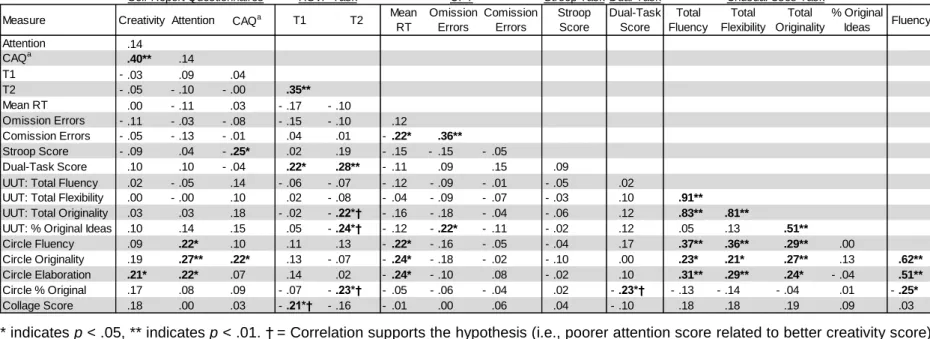
Table 3: Pearson correlations between the creativity and attention measures ... 113
Table 4: Mean verbal divergent thinking scores with standard deviations, as measured by two Unusual Uses tasks. ... 120
Table 5: Mean scores with standard deviations for the Circles task for the ADHD group. ... 120
Table 6: Pearson correlations between the creativity and attention measures within the ADHD group... 124
Table 7: Independent-sample t-tests showing between-group differences across attention and creativity measures ... 125
Table 8: Differences in the percentage of on-target fixations across tasks, within groups. ... 163
Table 9: Between-study differences in performance across the tasks. ... 168
Table 10: Mean, standard deviations, minimum, and maximum scores for each task as measured by the post-task questionnaires. ... 195
Table 11: Cognitive demand rankings by number of participants. ... 196
Table 12: Illustration of experimental procedure. ... 203
Table 13: Mean scores with standard deviations for the creative problem solving task. ... 206
Table 14: Table of means for mind-wandering rates during incubation. ... 207
Table 15: Table of means for UUT-TC consideration rates during incubation. ... 209
11
Abbreviations
AB: Attentional Blink AOI: Area of Interest
ASRS-v1.1: Adult ADHD Self Report Scale, version 1.1 CAQ: Creative Achievement Questionnaire
CAT: Consensual Assessment Technique CEM: Cognitive Energetic Model
CPT: Continuous Performance Task CT: Convergent Thinking
DDFS: Daydreaming Frequency Scale DLPFC: Dorsolateral Prefrontal Cortex DT: Divergent Thinking
DTAP: Dysregulation of Thought and Action Pathway EEG: Electroencephalography
EDF: Executive Dysfunction EF: Executive Function ISI: Inter-Stimulus Interval
MBAM: Moderate Brain Arousal Model MSP: Motivational Style Pathway MWQ: Mind-Wandering Questionnaire OST: Optimal Stimulation Theory PCA: Principal Component Analysis PIQ: Post-Incubation Questionnaire RAT: Remote Associates Task REM: Rapid Eye Movement
RSVP: Rapid Serial Visual Presentation SI: Structure of Intelligence
SMI: SensoMotoric Instruments T: Target
TMS: Transcranial magnetic Stimulation TTCT: Torrance Tests of Creative Thinking
UUT-CB: Unusual uses Task – Cardboard Box Version UUT-TC: Unusual Uses Task – Tin Can Version
12
Chapter 1 - Introduction & Creativity
13
1.1 Introduction
“A well-published university Professor and inventor was stopped from walking down a corridor by a student asking for help with a maths problem. After explaining and solving the problem, the Professor asked the student to help
him, by reminding him in which direction he had been travelling. When the student answered, his reply was ‘thank you very much, that means I haven’t
had lunch yet’” (Douglas, 1995, p15).
The idea that there is a link between creativity and attention originated with a stereotype of the ‘absent-minded genius’ (Necka, 1999: p85) and anecdotal reports from notable creators (Kasof, 1997). The stereotype refers to inventors, creators, and scientists whose attention would jump from one issue to another, meaning that they would struggle to concentrate on one task at a time, but would manage to create items or theories that could dramatically change and improve their field. For instance, the anecdote above illustrates that although a genius in his field, the Professor was unable to remember where he was going, or even if he had eaten or not, after being briefly distracted. Similarly, it has been commented that Albert Einstein, despite being a scientific genius, would forget to wear socks, again showing that no matter his scientific contribution, he could not pay attention to one task (e.g., dressing) for long enough to complete it (Radcliff, 2008).
Further anecdotal evidence for a relationship between creativity and attention includes statements from people such as Charles Darwin and Edgar A. Poe who both indicated that they were highly distractible, and both have said that they felt they noticed more, things that could simply evade the attention of others (Darwin, 1958; Silverman 1991; both as cited in Kasof, 1997). The famous inventor Thomas Edison was highly distractible and impulsive to the extent that he was expelled from school (Hartmann, 2003). Additionally, many creative scientists have themselves declared that before the moment of insight, their attention is broad and dispersed, but becomes more focused after a possible solution has been identified (Kasof, 1997; Necka, 1999).
Anecdotally, there appears to be a relationship between creativity and attention, and this will be the focus of this thesis. On the basis of the literature that will be reviewed, the research presented in this thesis used multiple measures of
14 creativity and attention in order to determine exactly what a relationship between creativity and attention may look like, if it at all exists. Does a scattered mind lead to better creativity? Or is the ability to focus attention more important?
1.2 Creativity: A Literature Review
1.2.1 What is Creativity?
A common statement in discussions of creativity is: ‘I’m not creative; I can’t draw very well’. One’s ability to draw, however, holds no bearing on their creative potential. The results of a simple internet search questioning ‘what is creativity?’ will lead the user to learn that it is synonymous with inventiveness or innovation, and is the ability to ‘see things in new ways’, or to ‘think outside the box’. Many online popular-culture articles generically list the ‘things that creative people do differently’. These commonly include linking existing concepts to create new ones, resisting perceived boundaries, and observing the world more than others. Although these clichés and suggestions of what creativity is may not be clear or precise, a further exploration of the psychological definitions of creativity shows that they are represented in theory and evidence.
In a psychological context, creativity is defined as the generation of original, appropriate, useful, and valuable ideas, products, or solutions (Hennessey & Amabile, 2010; Schmajuk, Aziz, & Bates, 2009; Sternberg & Lubart, 1999). Combining seemingly unrelated ideas to form new solutions (Ansburg & Hill, 2003; Mednick, 1962), the production of multiple responses to a problem (divergent thinking; Guilford, 1967; Runco, 2004; Torrance, 1966) and the invention of unexpected, novel concepts (Memmert, 2011) are all descriptors of creative behaviour.
One thing in common with almost all definitions and articles regarding creativity, is that it is deemed a valuable and desirable attribute within the fields of business, sports, the arts, and science. In fact, the arts and science would not exist at all if it were not for creativity (Feist, 1998). Creativity represents a relatively small research field in psychology, despite its worth and attraction.
The study of creativity within psychology grew from almost nothing in the 1950s, after J. P. Guilford used his Presidential speech at the American Psychological
15 Association (APA) to highlight that the subject area had been neglected, leaving a research gap to be filled. In a subsequent review, Guilford (1987) stated that this lack of investigation was “appalling” (p.34) and that he himself approached the area with caution, as it was ordinarily “feared” (p.33) by psychologists. One reason for the absence of creativity research cited the difficulty of inducing creativity in a laboratory setting, and in measuring a concept that tends to occur by accident (in moments of insight, for example). Guilford (1987) argued that if researchers reviewed their understanding that creativity was limited to discoveries of “unquestioned excellence” (p.34), and instead considered that there are discernible differences between the creative potential of individuals on a smaller scale, then there would be more examinable acts to study. Since 1950, and with this in mind, it was determined that typical tests of intelligence (as were used in the measurement of creativity up to that point) did not provide the opportunity for individuals to portray their creativity, as they required convergent thinking (CT), the production of one correct answer. This led to a departure from the traditional intelligence tests in measuring creativity, and to the development of tests designed specifically to measure creativity and creative potential.
The antithesis of CT is divergent thinking (DT), which involves the production of numerous answers for one given question or problem, an example being ‘list unusual uses for a tin can’ (Torrance, Ball, & Safter, 1992). DT tests were recognised as facilitating the measurement of creativity, as the participant has an opportunity to provide multiple original, appropriate, useful, and valuable ideas or answers, thus conforming to the definition of creativity itself. Specifically, fluency, flexibility, originality, and occasionally elaboration (mainly used in tasks requiring drawn responses) scores can all be recorded from one DT task. Fluency is the number of ideas the participant produced, flexibility is the number of different types of response, originality is a measure of how unique or novel the idea is, and elaboration refers to the amount of detail the participant provided. These terms, and the measurement of creativity using DT tasks as well as other methods, are explained in more detail in the following section.
The invention of tasks measuring DT (a creative act in itself) aided the rise in creativity research as requested by Guilford in his speech, and most of the research publications measuring creativity empirically have used a form of a DT task.
16 The study of creativity should be of interest so that it can be spotted, harnessed, and encouraged (Guilford, 1950), and as it could develop our understanding of how different cognitive processes may work interdependently. It is a common misconception that creativity is limited to gifted individuals or geniuses, and that few people can be legitimately creative (Guilford, 1987; Ward, Smith, & Finke, 1999). Conversely, Ward and colleagues (1999), from the cognitive psychology point of view, argue that the capability to be creative is embedded within human cognition, allowing it to be examined in the general population.
Researchers from various perspectives have studied creativity, leading to a broad range of theories including those based on cognition, intelligence, and personality. All three of these are heavily represented in the field so are therefore discussed in this chapter. The study of creativity in psychology has also taken various forms in terms of focus: for example, researchers have looked at the type of person that behaves creatively, the internal and external processes involved, the products of creativity, and the effects of the individual’s environment (e.g., resources, support, pressures) on creative potential.
A cognitive approach was adopted in this thesis. The study of creativity from a cognitive point of view is concerned with determining which processes underlie creativity. Experimental methods are often used, and there has been more research carried out in the cognitive approach than any of the others (Runco, 2007). In general, researchers aim to draw links between creativity and other cognitive functions such as attention, perception, and information processing, as well as with factors such as association making and problem solving.
Broadly, this thesis examines the relationship between two cognitive processes: creativity and attention. The source of the conception that there could be a relationship between these two ostensibly disparate processes is based on literature alleging that a link exists between high levels of creativity and distractedness. This postulation is detailed in chapter three.
1.2.2 Divergent Thinking
Creativity has been measured in many different ways: through divergent thinking (DT) tasks, convergent thinking tasks (e.g., Mednick, 1962), the creation of a
17 product (e.g., collages; Amabile, 1982; Baer, 1996; poems: Kasof, 1997; and stories; Wolfradt & Pretz, 2001), and also with larger batteries of multiple types of test (e.g., Guilford, 1967; Torrance, from 1974).
Tests of DT are the most commonly used method of measuring the creative process and are considered to be predictors of creative potential (Kuhn & Holling, 2009; Runco, 2004; Torrance, Ball & Safter, 1992). In some articles, DT has become synonymous with creativity, which does not reflect the complex nature of creativity, but does give merit to the importance of DT tasks in the measurement of creativity. This stems from their development in the 1950s with the majority of creativity research focusing solely on these until the 1980s (Kaufman, Plucker, & Baer, 2008). For these reasons, this section will describe divergent thinking and its measurement, with the aims of providing context for some of the future arguments presented in this thesis, and to illustrate the presence of these ideas in the wider literature.
DT is considered to be a significant element of the creative process, and is valuable for assessing the potential for creative thought (Runco, 2007). Although everyone is capable of DT (Baer, 2014), it is thought that by measuring the responses for aspects of creativity, this can separate those inclined to be creative from those not (Hocevar & Bachelor, 1989).
There are two main types of DT task: verbal DT, which is the production of written responses, and figural DT, which requires drawn responses. Verbal DT tasks tend to request that the participant produces multiple ideas for unusual uses for an everyday item, or ways to improve an item, or alternative endings to a story, for example. Figural DT tasks will usually present the participant with a series of identical shapes or line sets, which they have to incorporate in to multiple different pictures. These resulting idea lists or drawings are scored for fluency, flexibility, originality, and in the case of figural DT tasks, elaboration.
DT is the main feature in the three most widely used test batteries for creativity: the divergent production tests by Guilford (1967), similar tests by Wallach and Kogan (1965), and the Torrance Tests of Creative Thinking (TTCT) battery, by Torrance (1974). These particular sets of tests have been widely used and tend to be held in high regard. However, there have been criticisms about the heavy reliance upon DT tests in creativity research.
18 Firstly, it has often been posited that fluency confounds the scores of flexibility and originality: that is, a high fluency score is required for flexibility and originality scores to be high (see Kim, 2006). Indeed, there are strong correlations between the three scores, and fluency scores can predict flexibility and originality scores (Runco, 2008). However, this may just point to the relationship between quantity and quality, and show that with numerous ideas, it is more likely that there will be creative and original ideas (Simonton, 1990, Torrance & Safter, 1999). When the aim is to consider creative potential, then it is flexibility and originality that are the important indices, as they measure aspects specific to the definition of creativity. It has been determined that even when fluency scores are controlled, the variance in flexibility and originality scores are reliable (Runco, 2008).
A further criticism is that the tests are vulnerable to administration and scoring biases (Plucker & Renzulli, 1999). This is because the tasks can be administered by anyone who has bought the materials, and although this is mostly carried out by competent individuals in research or education, this leaves room for uneven confounding variables and test environment differences across studies (Plucker & Renzulli, 1999). Although it can be argued that this is the case for all manually scored measures in psychology and beyond, the scoring of originality may be particularly subjective when responses lie outwith the comprehensive guides provided by the authors of the tasks.
Cattell (1971, as cited in Sternberg & O’Hara, 1999) went further to complain that the part of divergent thinking in the study of creativity is overvalued, and that originality scores merely come from the scorer viewing a response as odd in comparison to the others. Cattell’s (1971) alternative was that real life creativity is a more suitable measure, which may be fair, but he then states that this is reliant on an individual’s intelligence, which, as later argued, is not necessarily the case.
Facing the criticism are high levels of statistical support. The TTCT battery in particular has had empirical support from a range of studies, and the vast amount of research on this bank of tests generally indicate high levels of reliability and validity (Kaufman et al., 2008). Test-retest reliability scores have varied from .50 to .93 (Torrance 1966; 1974), which is a large range but in favour of the tests. It was stressed that this range was due to the complexity of creative performance
19 (Kim, 2006). Inter-scorer reliability of over .90 has also been found between the official TTCT analysts where tests from 88,355 participants were scored (Torrance, 1990). A longitudinal study found evidence of predictive validity, when the TTCT was completed seven years after it was initially carried out by the participants, with scores on the three divergent thinking scales (fluency, flexibility, and originality) being moderately, positively related to real life creative achievement (r = .39 to .48, p < .01; Torrance, 1972; Kim 2006). Plucker (1999) reanalysed the data provided from Torrance’s longitudinal studies and concluded that the TTCT was the most proficient predictor of adult creative achievement (r
= .60), especially compared to that of varying intelligence measures (r = .19). Further, it was found that divergent thinking scores better predicted creative achievement than IQ scores, academic attainment, or scores by peers (Kim, 2006). The TTCT has fewer limitations than other creativity tests, and has more supporting evidence than any other creativity measure. Tests of divergent thinking are therefore still widely used measures of creativity today (Plucker & Renzulli, 1999).
Although DT tasks are now used as a measure of creative potential in their own right, independent from the measurement of intelligence, the production of DT tasks started with research in to the relationship between creativity and intelligence.
1.2.3 Creativity and Intelligence
The relationship between creativity and intelligence was a divisive debate in the 1950-60s (Runco, 2007). In order to justify research into creativity, it was necessary to find a distinction between the two concepts, otherwise creativity would be merely considered as an aspect of intelligence (Runco, 2007). However, many researchers found that intelligence was indeed related to creativity (for a review, see Hasan & Butcher, 1966; Sternberg & O’Hara, 1999). The arguments for and against the relationship will be presented, followed by an explanation of the threshold theory for creativity and intelligence.
Guilford (1950) had a huge influence on the field of creativity research when he suggested that creativity as a construct was under-examined, which encouraged others to pay more attention to the relatively overlooked topic (Barron &
20 Harrington, 1981; Sternberg & Lubart, 1999). He created a Structure of Intellect (SI) model (1967), which contained three dimensions of intelligence: 1. Operations (cognition, memory, divergent production, convergent production, and evaluation), 2. Content (figural, symbolic, semantic, and behavioural), and 3. Products (units, classes, relations, systems, transformations, and implications). In particular reference to creativity, is the cognitive process of divergent production or divergent thinking (Kuhn & Holling, 2009; Sternberg & O’Hara, 1999). Guilford (1967) developed a comprehensive battery of tasks aimed at measuring DT, and found that performance on these tests was positively correlated to intelligence (r = .37, Guilford & Hoepfner, 1966, as cited in Sternberg & O’Hara, 1999). It was therefore concluded that creativity was a subset of intelligence (Guilford & Christensen, 1973; Sternberg & O’Hara, 1999).
In agreement with Guilford and his various colleagues, Cattell (1971) also viewed fluency and originality as subsets of intellectual abilities. However, subsequent investigations found very few or low correlations between creative measures and Cattell’s intelligence types (Rossman & Horn, 1972). Similarly, Gardner (1983) suggested that creativity was a subset of multiple intelligences, and that individuals could have different forms of creative intelligence. For example, a musician is intelligent in a way that is different to the way of an interior designer, and although some will have strengths over many fields, there will inevitably be fields that are weaker. Yet, within his research, Gardner (1993) found that when seven renowned high achievers had their largest breakthroughs, they were surrounded by a high standard of support, and that they sacrificed their social and personal time in order to achieve at the highest level. This implies that creativity goes beyond a requirement for intelligence, but also depends on personality traits, encouragement, motivation, resources, and commitment. Others have argued that creativity and intelligence are the same thing, and that creativity is merely an extraction of intelligence (Haensly & Reynolds, 1989). This is the ‘nothing special’ view (Perkins, 1981, as cited in Sternberg & O’Hara, 1999, p.263), where it is thought that the same cognitive processes are used for creativity as for normal, non-creative problem solving tasks.
The strongest arguments however, are that creativity and intelligence are distinct from each other, and can therefore be measured separately, yet no one has
21 stated that they are entirely unrelated (Sternberg & O’Hara, 1999). One study used two groups of school pupils, one high in creativity (based on the scores of five measures, including word association, DT, drawing, problem solving, and storytelling) and lower on IQ, and one lower on creativity and high on IQ. Both groups were found to perform better in standard school tests than the rest of the school population (Getzels & Jackson, 1962). Despite this commonality in achievement, the groups behaved differently from each other in terms of personality, ambitions, priorities, and task strategy. For example, in a drawing task, those in the high IQ group drew detailed, annotated drawings, where as those in the high creativity group were more likely to disregard perceived task boundaries, and were less concerned with communicating effectively (Getzels & Jackson, 1962).
Wallach and Kogan (1965) developed their own set of creativity tests that were not unlike those used by Getzels and Jackson (1962), and adopted a game-like approach to their creativity and intelligence testing, in response to previous studies, who they criticised for using inflexible and stringent methods. It was argued that by using a casual game-like procedure during testing, that creativity would be measured distinctly from intelligence, as the awareness and stress related to a time limit would be diminished. In the end, Wallach and Kogan (1965) again found that there were qualitative differences between those who were high or low on creativity and intelligence. Summarising, differences existed in personality traits (particularly extraversion and conscientiousness), concentration and focus levels, self-confidence, academic achievement, and peer engagement. Torrance’s (1975) findings further supported this work. Through empirical research and reviews, Torrance concluded that there was, at best, only a moderate relationship between creativity and intelligence. Furthermore, he trialled his testing sessions with various time allowances and instruction types, finding that the participant stress levels cited by Wallach and Kogan (1965) were unfounded, and a time-consuming game-like approach was unnecessary. That intelligence is a central factor for creativity, as illustrated, is a disputed point. The consensus tends to be that intelligence is a ‘threshold characteristic’ that is necessary but not sufficient for creativity (Hughson & Hughson, 2004; Plucker & Renzulli, 1999; Runco, 2007).
22 Threshold theory is perhaps a compromise in the creativity and intelligence relationship debate. It concludes that there is a relationship between intelligence and creativity, but only in terms of the standard of intelligence necessary to enable creative thinking. There is a lower threshold, or minimum level of intelligence required in order for it to be possible for an individual to be creative (Kim, 2005; Runco, 2007; Sternberg & O’Hara, 1999). Creative potential is not, and cannot be, present in those with low intelligence scores, but creativity is not necessarily present in those with higher intelligence scores, although these individuals have the capacity to be creative (Kim, 2005; Runco, 2007; Sternberg & O’Hara, 1999). There must be more than above threshold intelligence to lead to creative behaviour, beyond that, factors such as personality, resources, attention, and motivation could limit or enhance creativity, to name but a few. Creativity and intelligence are therefore related according to threshold theory, but only in that one is required for the other to exist.
According to the existing literature, until recently only one attempt had been made to propose a minimum general IQ score for creative behaviour (IQ of 120; Barron, 1963, as cited in Sternberg & O’Hara, 1999; see also Batey & Furnham, 2006; Kim, 2005; Runco & Albert, 1986) and the results of studies retesting this claim have been varied and inconclusive (see Healey & Rucklidge, 2006; Kim, 2005; Plucker & Renzulli, 1999; Preckel, Holling, & Wiese, 2006; Runco & Albert, 1986). This value was based on a number of studies using inconsistent measures of IQ. Recently however, it has been posited that the threshold of 120 was repeatedly tested without convincing justification, and without empirical evidence to support it (Jauk, Benedek, Dunst, & Neubauer, 2013). After a comprehensive investigation using 297 participants, it was concluded that IQ (based on a German measure of general intelligence) thresholds exist for scores on creative potential tasks (i.e., DT tests) but not for measures of creative achievement. There was a threshold of 85 IQ points for the production of ideas (fluency only), the threshold for producing two original ideas was 100 IQ points, but that rose to 120 when many original ideas were requested (Jauk et al., 2013). This supports the theory that a certain level of intelligence is required for creative potential, but, as with the previous findings presented, it was determined that personality factors, specifically openness to experience, affect creative potential after the threshold IQ has been reached.
23 With fairly contentious debates about the relationship between creativity and intelligence, it is argued here that the threshold theory provides a plausible description and explanation of the extent of the relationship, without overstating it. This literature has been discussed in order to provide context for the importance of creativity, and the study of creativity. A frequent feature of these arguments has been the influence of personality on creative behaviour.
1.2.4 Creativity and Personality
As with intelligence, there are varying perceptions and theories about the links between creativity and personality. Many studies, especially the earlier ones, measured both creativity and personality in inconsistent ways, using various measures and definitions, making it difficult to find patterns in the findings (Batey & Furnham, 2006).
Barron and Harrington (1981) conducted a review of several personality studies over many creative domains and drew out what they describe as a “fairly stable set of core characteristics” (p.15) of highly creative people:
“high valuation of aesthetic qualities in experience, broad interests, attraction to complexity, high energy, independence of judgment, autonomy, intuition,
self-confidence, ability to resolve antinomies or to accommodate apparently opposite or conflicting traits in one’s self-concept, and, finally, a firm sense of
self as ‘creative’”. (Barron & Harrington, 1981, p.15).
Feist (1998) published the first meta-analysis on the topic and resolved that it was likely that creative individuals have a set of personality traits and characteristics that are distinct from those who are not, and that these traits are related to creative achievement. From an array of personality traits, some of the largest effects found that creative people are more impulsive, and less conscientious. These aspects in particular have been identified in individuals with attention disorders (Nigg et al., 2002), which points to a link between poor levels of attention and/or focus, and creativity. Other aspects such as openness (Furnham, Zhang & Chamorro-Premuzic, 2005-2006), extraversion (Sen & Hagtvet, 1993), and intrinsic motivation (Amabile, 1985) have all been positively related to creative behaviour.
24 Looking specifically at the results of studies comparing artists and/or scientists against norm groups, the meta-analysis indicated that a distinct representation of a creative personality exists, irrespective of the measures used to measure both creativity and personality (Feist, 1998). The largest differences lay between scores on the traits of openness, conscientiousness, self-acceptance, hostility, and impulsivity, although this trait profile was not mutual to both artists and scientists. Precisely, it was found that artists were more emotionally unstable and were more able to discard group customs than scientists were. Differences in scales of responsibility, socialisation, good impression, and conformity separated artists (lower scorers) and non-artists, whereas highly creative scientists were less conscientious and more open-minded than their non-creative counterparts. A study of art students found that the students who scored higher in creativity spent more time in preparation before working (Getzels & Csikszentmikalyi, 1976, as cited in Runco, 2007). A follow up study 18 years later found that this group of students, compared to their less creative peers, had more successful art careers, scored higher on personality traits such as introspection, imaginativeness, and sensitivity, and lower on traits such as conformity, conscientiousness, and cheerfulness (Csikszentmikalyi, 1990, in Runco, 2007). It is unclear what the preparation difference means, that is, were these students creative because they prepared, or did they prepare because they were creative?
Eysenck and Eysenck (1985) theorised that personality was structured around three traits: neuroticism, extraversion, and psychoticism, and suggested that creative behaviour was related to variations in psychoticism. Psychoticism specifically is comprised of attributes such as aggressiveness, impersonal behaviour, coldness, egocentricity, impulsiveness, stubbornness, and creativeness (Batey & Furnham, 2006). In order to explain this relationship, Eysenck (1993) proposed that there are differences between individuals in their understanding of relevance. Those with a broad or wide definition of relevance are referred to as ‘over-inclusive thinkers’, and are more likely to produce unusual responses or make original associations in tasks measuring creativity, in turn making them more creative than those with a narrow definition of relevance. Further to this, those with an over-inclusive thought tendency have high scores on the trait of psychoticism, but are unlikely to actually be psychotic (Eysenck, 1993). It was argued that psychoticism has been the most widely found trait linked
25 to creativity (Eysenck, 1995), and that this was due to unusual ideation, mental illness, illusive thinking, and emotional instability being qualities of both creative and psychotic thinkers (Batey & Furnham, 2006).
In support of this position, evidence of the relationship between creative thinking and creative achievement with psychoticism has been found from many studies, particularly between the personalities of creative people and those with schizophrenia or bipolar disorder (see Batey & Furnham, 2006; Zabelina, Condon, & Beeman, 2014). Studies have also highlighted the relationship between psychoticism in its extreme form and those who are regarded as highly creative, for example, in artist Vincent van Gogh (Wolf, 2001) and writer Ernest Hemingway (Post, 1994). Further, in a comparison of creative writers and matched controls, the writers were more likely to have bipolar tendencies (Andreasen, 1987). There is a large amount of evidence for a relationship between creativity and psychoticism, however this should not be over generalised, as not all creative individuals will have mental health issues (Gilhooly, 2002). Accordingly, Waddell (1998) conducted a review of the creativity and mental illness literature, with the results indicating that findings fluctuated too much in order to reach a reliable and consistent conclusion.
Art and music therapy are common in mental health centres or hospitals, and given the relationship described above, this may be seen as a way of channelling challenging behaviours in those with various disorders. Interestingly, despite the range of evidence linking creativity and mental illness, online articles and guides regularly proclaim creativity to have a positive effect on mental health. Recently, it has been determined that both negative and positive correlations can be found between creativity and mental illness/disorder, and that this depends on the sample and methods used by the researcher (Simonton, 2014).
The relationship between creativity and personality, as is standard with concepts of this nature, remains to be unclear. However, there is a strong argument that creative individuals have a different personality type compared to non-creative people, with aspects such as impulsiveness, lack of conformity, and emotional instability appearing time and again in the literature. It is perhaps easy to understand why these traits co-exist with creativity, as by their nature, they would be of benefit to the production of novel and original ideas, or products that break
26 from the norm. Furthermore, these traits and the ability to break from the norm may help an individual to make creative associations between ideas or concepts.
1.2.5 Creativity and Association
It has been posited that successful creative thinking may be the result of forming new and useful associations between previously disparate concepts (e.g. Gilhooly, 2002; Mednick, 1962; Schmajuk et al.,2009). The thought that creativity consists of an associative process is an “old and sturdy” (Barron & Harrington, 1981, p.12) theory in psychology, with the most well-known contribution being from Mednick (1962). The associative theory of the creative process is thought to explain creative thought across fields, and was produced following biographical reports by scientists and artists, who claimed to have combined seemingly unrelated concepts in the creation of their work (Mednick, 1962). This theory can coexist with the work on divergent thinking, as it aims to differentiate between the production of creative concepts, as opposed to non-creative concepts.
An association is a link between two ideas, elements, or stimuli, which can be strong or weak, although Mednick (1962) argued that the weaker or more remote the association is, the more creative it is. In order to be creative, the associations must also be original and useful.
Using an unusual uses for a cardboard box DT task as an example, to combine the box with the idea of storage is to make a strong, useful association, but the idea is not original. To combine the box with the solution of making it into a boat is a weaker association, and is therefore more original, but less practical and useful. To combine the box with the idea of visual equipment, to make it in to a viewing screen for an eclipse for example, is useful, and has a weak association, so is therefore original too.
Within the associative theory, word association tasks are frequently used. So to use one as an example, strong associations with the word ‘table’, would be ‘chair’ and ‘cloth’, whereas less common (remote) associations could include ‘food’ and ‘fable’ (Abraham & Windmann, 2007; Friedman, Fishbach, Forster, & Werth,
2003; Mednick, 1962). To produce remote associations is thought to indicate that the individual was able to process and produce solutions beyond the obvious,
27 these are therefore creative (Abraham & Windmann, 2007; Friedman et al.,
2003).
Mednick (1962) argued that there are three methods of reaching a creative solution by association: serendipity, similarity, and mediation. Serendipity is the accidental or unplanned combination of stimuli by the individual and has been used to describe discoveries such as x-ray and penicillin. Similarity is when combinations are made because each element is similar in nature. An example of this would be the use of rhyme in the creation of poetry, or rhythm and riffs in the creation of music. Mediation describes the combination of items that have elements in common. Mednick explains that this is particularly important in fields where symbols and formulas are used (e.g., maths, chemistry, physics), or where symptoms or manifestations might be common (e.g., psychology, or medicine). Creative output is consequently due to the ability to make such combinations and associations, whereas a preference to follow existing ideas would limit creativity. There are some prerequisite criteria that determine whether or not an individual will efficiently arrive at a creative solution. Firstly, a knowledge of the separate concepts must be present, as these cannot be combined or associated with one another if the individual does not know about their existence in the first place (Mednick, 1962). Knowledge of these parts, as well as cognitive access to them, may imply an overlap with intelligence (Sternberg & O’Hara, 1999).
Secondly, Mednick (1962) describes associative hierarchies, which are an illustration of how quickly associations will be made, how they are organised, and how remote they could be. Using the example provided above, an individual with a steep associative hierarchy would combine the words ‘table’ and ‘chair’ together, as they are closely related semantically and are therefore easily accessed. Those with a flatter associative hierarchy would be more likely to combine the word ‘table’ with ‘food’ as they are less obviously associated (see Gilhooly, 2002 for a summary). This coincides with Eysenck’s (1993) theory of over-inclusive thinking. It was concluded that creative individuals are regarded as having flatter hierarchies, allowing them to make weaker, and thus more creative, associations (Gilhooly, 2002; Mednick, 1962). This is measured by the Remote Associates Test (RAT: Mednick & Mednick, 1967), where participants are presented with three apparently unrelated words, and they have to find a fourth
28 word that independently links to each one (e.g., wheel, electric, and high, are all related to the answer, which is chair: Bowden & Jung-Beeman, 2003; Mednick, 1962; Sternberg & O’Hara, 1999, p. 263). This is a departure from DT and a focus towards CT.
The associative theory of creativity and the RAT were influential in their time, but have received little adaptation since their creation. In particular, the methods for making associations (i.e., serendipity, similarity, and mediation) have little discussion surrounding them, and investigations of the steep and flat associative slopes have been unsuccessful in their aim to return supporting data (e.g., Yahav, 1965, as cited in Mendelsohn, 1976). Gilhooly (2002) suggests that overall, the associative theory seems too simple.
The studies run by Mednick and his associates claiming to have found constructive and predictive validity for the RAT did not control for intelligence, and featured participants who were arguably both highly intelligent and creative; architects, scientists, and engineers (see Mendelsohn, 1976 for a review). Whereas it has been demonstrated that tests of DT have predictive validity with other measures of creativity (e.g. Runco, 2004), the RAT has rarely been even moderately related to DT (Lee, Huggins, & Therriault, 2014). This implies that the RAT involves processes outwith those in creative thinking. Furthermore, beyond the study of creativity, the RAT has been used in studies investigating bipolar and manic-depressive disorders (Fodor, 1999), the effect of feedback on performance (McFarlin & Blascovich, 1984), search strategies (Smith, Huber, & Vul, 2013), social intelligence (Keating, 1978), and even erotomania in celebrity worship (McCutcheon, Ashe, Houran, & Maltby, 2003). This highlights that the RAT is a flexible measure, which thereby demonstrates its lack of construct validity. It can be argued that the RAT may not be manageable for participants with limited vocabulary or knowledge of the verbal cues used, thus the reliance on CT and intelligence, rather than creative thinking, may be too high. In support of this, it was found that the RAT has higher correlational values with IQ, specifically aspects of verbal IQ, working memory, cognitive speed and accuracy, and school achievement, than it does with any DT score (Lee et al., 2014; Taft & Rossiter, 1966). With DT being indicative of creative thought (Guilford, 1956; Mendelsohn, 1976), accordingly, the RAT has been criticised as measuring CT and analytical
29 processes rather than creativity. It is generally accepted now that the RAT measures CT, but it is still unclear if it examines CT within creativity, or separate analytical cognition (Lee et al., 2014).
Mendelsohn (1976) responded to the poor RAT support by suggesting that when verbal intelligence is controlled, it is differences between individuals in their attentional processes that relate the RAT to creativity. It was found that those with high RAT scores were more likely than low scorers to notice and use cues from their environment during problem solving tasks. It was also reported that the ability to hold and use several streams of information in mind at once (i.e., holding several RAT problems in mind whilst considering various solutions, and whilst utilising environmental cues) is indicative of a large cognitive capacity. This was referred to as having broad attention, in that one can spread their focus broadly over numerous stimuli, facilitating their chances of producing original associations (Kasof, 1997; Mendelsohn, 1976). However, attention may not be the only cognitive process in use as this theory suggests, as working memory is likely to be heavily involved too. Nevertheless, Mendelsohn pointed out that attention and intelligence have been found to be independent processes, yet both are related to RAT performance. This could indicate that differences in attentional ‘traits’ or patterns could be related to differences in creativity.
Overall, the associative theory has to be recognised as having an impact on the field of creativity research, as it has been so frequently reported over the years, even though the evidence for both the theory and the assessment tool has been contentious. The argument that the RAT is not an optimal measure for creativity is convincing, so it has therefore not been used in the present thesis.
Although methods by which creative ideas can come together were offered by the associative theory, little was clarified about the cognitive process involved in creativity. The arguments for a creative process are therefore presented in the next section.
1.2.6 The Creative Process
In order to illustrate how creativity might occur in our cognition, and how creativity may be related to attention, there are several models that have been produced
30 to map or at least explain the cognitive process of creativity. These aid in the understanding of the different stages in the act of thinking up a creative solution. Most of these theories concern creative problem solving specifically, which involves using or producing novel and original methods or solutions to a problem, by combining seemingly unrelated stimuli in a useful way (Isen, Daubman, & Nowicki, 1987).
Wallas (1926) provided one of the first cognitive models concerning the creative problem solving process and the importance of different attentional stages, and it has been used as a base for theories ever since (Kristensen, 2004). This model is highly regarded, and is still accepted, usually without challenge, in the literature today. It was developed from anecdotal and introspective information from creators and problem solvers such as Poincaré and Helmholtz, who both had similarities in their descriptions of the process by which they came to their solutions (Gilhooly, 2002).
Wallas’s model has four stages: preparation, incubation, illumination, and revision. The preparation stage involves the solver exploring, focusing on, and becoming familiar with the problem. This requires focused attention and concentration as the individual learns the construct of the problem, the constraints and limitations, and systematically and actively attempts to work towards the solution, usually without success. This early stage is thought to be crucial in order to successfully solve the problem at a later stage (Gilhooly, 2002; Wallas, 1926). Incubation is a period of time post-preparation, during which focused attention is not required, as the problem is not consciously attended to (Wallas, 1926). Experimental studies have investigated the effect of incubation during a creative problem solving task, with findings determining that in certain conditions, incubation can increase the quantity and quality of solutions (Baird et al., 2012; Gilhooly, Georgiou, & Devery, 2013; Snyder, Mitchell, Ellwood, Yates, & Pallier, 2004). There are four main theories that have aimed to clarify why a period of incubation would be useful and how it works to improve problem solving success. The first two are the relief of fatigue (Wallas, 1926), and the relief of mindset/beneficial forgetting (Gilhooly et al., 2013; Posner, 1973 in Snyder et al., 2004) theories, both of which regard incubation as a time for the mind to rest and recover capacity, with the latter specifying that this allows the individual to forget
31 the misleading assumptions or barriers that are inhibiting the production of a solution. The third, the intermittent conscious work theory, proposes that short periods of conscious work on the problem occur during incubation, which eventually leads to the formation of a solution (Seifert, Meyer, Davidson, Patalano, & Yaniv, 1995). Lastly, the non-conscious work theory (Dijksterhuis & Meurs, 2006; Gilhooly et al., 2013) suggests that incubation is successful as it allows for the problem to be considered non-consciously whilst the conscious mind is distracted with an alternative, unrelated task. Wallas (1926) himself stated that resting the mind would be most beneficial during incubation, although work on easy, everyday tasks that require little cognitive effort could also be constructive. (More details on incubation and these theories are provided in chapter eight).
The third stage is illumination. At this stage, a possible idea, solution, or a hint to the solution comes to light in the solver’s mind. If a feeling of pending illumination is sensed, the individual should eliminate distractions and focus in order for the idea to come, according to Wallas (1926).
Last is the verification stage. During this phase, the solver concentrates on consciously considering the ideas and potential solutions that were produced at the illumination phase. They are processed for their appropriateness, usefulness, and effectiveness, before being accepted or rejected. Problem solvers can revert to earlier stages if ideas are deemed unsuitable in this revision stage, and more than one stage can be experienced at once if there is more than one problem in hand (Lubart, 2000-2001; Wallas, 1926). The model assumes that aspects of creative thinking occur subconsciously (Lubart, 2000-2001), for example the coming together of remote ideas and solutions is a process out-with conscious thought. This four-stage model is still influential in the field, and can be applied to creative behaviour as measured by many different tasks, including DT and association tasks.
Attention appears to be an important variable within this four stage analysis of the creative process. The preparation stage requires focus and concentration, whereas the incubation stage requires broad and dispersed focus of attention in order it to be successful. The illumination stage appears to require a switch from broad to narrow attention, as an idea comes to mind and must be focused on.
32 Finally, the verification stage appears to be rather like the preparation stage, in that the individual must pay attention to the ideas they have produced, and concentrate on deciding on their usefulness. It therefore seems reasonable to assume that there may be a link between creativity and attention.
Empirical evidence for Wallas’s four-stage model has been provided by Patrick (1935, 1937, as cited in Gilhooly, 2002). Patrick recorded the words, strategies, and techniques used by both artists and non-artists during a sketching task. After splitting the task completion time in to four equal periods, it was consistently found that preparation occurred in the first quarter, illumination instances took place in the third, and most verification took place in the final quarter thus matching the proposed stage model. The evidence for incubation in this study was questioned, as work continued on the task continuously, without an incubation period. However, as mentioned above, further empirical evidence has been found separately from this study in support of the existence and benefit of the incubation period.
Wallas’s model places a heavy influence on subconscious progressions. However, it is not accepted across the board that creativity is mostly a subconscious process. It may be more likely that the moment of insight, or idea realisation, is led to by subconscious associations, but the processes leading to and beyond that point require consciousness and awareness. One particular cognitive model that holds this point of view is the geneplore model of the creative process by Finke, Ward, and Smith (1992). This model features two phases both requiring conscious processing by the individual: these are the generative phase and exploratory phase (generate + explore = geneplore; Finke et al., 1992). The generative phase is when an individual brainstorms possible solutions to a particular problem and develops mental representations of these options. Existing cognitive structures are used at this point, with unique combinations of these structures producing more creative solutions (Finke, 1996). The exploratory phase sees these solutions and ideas being focused on and analysed for appropriateness and usefulness, with the best option(s) being chosen for further development (Finke et al.,1992).
The geneplore model of the creative process is simpler than the four stage model by Wallas (1926), although it is clear that influences from this were taken, as the
33 exploratory phase features similar processes as the revision stage previously mentioned. The two-phase model recognises that creative problem solving requires conscious work, focused attention, and information manipulation by the individual, although the bringing together of seemingly unrelated cognitive structures (existing ideas) leading to insight can be a subconscious process (Finke, 1996). Again, features of attention have been utilised in this theory. Some forms of research have not found empirical evidence to support these stage-specific models of the creative process. Studies analysing the process of artists creating a picture that represented a story over a period of weeks, regularly recorded work progress and the thought processes of the individuals (by way of the diaries they were asked to keep), and found no evidence for two or four distinct stages (Eindhoven & Vinacke, 1952; see similar work by Ghiselin 1952/1985). Instead, it was proposed that creativity is a dynamic, integrated process that involves the fluctuation between aspects featured in Wallas’ model (1926) and/or generation and exploration.
With the uncertainty of exactly which cognitive processes are at work during creativity, it is therefore necessary to isolate distinct processes in order to determine the extent of their effect on creativity (for example the roles of attention, working/long term memory, decision making, etc.). Attention seems to be an important feature that is required to be flexible between the stages of the creative process, regardless of preferred model. It is for this reason that the present study focuses on the cognitive process of attention and its relationship with creativity.
1.3 Conclusions
From being regarded as a neglected, underdeveloped field in the 1950, creativity research has expanded, with dispute and uncertainties encircling almost every theory and perspective. The historical debates within the creativity research have stemmed from the relationship with intelligence and personality, with broad results that are difficult to refine. This chapter concludes that creativity can be measured experimentally, and separately from the constructs of intelligence and personality.
34 Creativity in the field of psychology is not concerned with how artistic an individual is, as the opinion may be in the general domain, but rather how well one can produce original, appropriate, useful, and valuable ideas, products or solutions (Hennessey & Amabile, 2010). The theories of divergent thinking and association can coincide, and richly describe the production of creative ideas, and what separates them from non-creative ideas. The creative process models help in the understanding of how these ideas may be generated in cognition.
Many of the theories discussed in this chapter made reference to, or could be allied with, the cognitive function of attention. It seems that a commonality throughout most of the research is that our focus and concentration must, at some point be, dispersed or broad, to allow creative solutions to be produced, for original associations to be made, or at least to allow the unoriginal and unhelpful mindsets to be forgotten. Further exploration of a potential relationship between creativity and attention led to the discovery of a wealth of research linking the two concepts. A literature review of attention is presented next, followed by further details on the correlation between creativity and attention.
35