RESEARCH ARTICLE
E
XPLORING
H
UMAN
I
MAGES IN
W
EBSITE
D
ESIGN
:
A
M
ULTI
-M
ETHOD
A
PPROACH
1
By: Dianne Cyr
Faculty of Business Simon Fraser University 250-13450 102 Avenue Surrey, BC V3T 5X3 CANADA
[email protected] Milena Head
DeGroote School of Business McMaster University
Hamilton, Ontario CANADA
[email protected] Hector Larios
School of Interactive Arts and Technology Simon Fraser University
Surrey, BC CANADA [email protected] Bing Pan
School of Business and Economics College of Charleston
Charleston, SC 29424 U.S.A.
1Detmar W. Straub was the accepting senior editor for this paper. Rajiv Kohli served as the associate editor.
The appendices for this paper are located at http://www.misq.org/ archivist/appendices/CyrHeadAppendices.pdf.
Abstract
Effective visual design of e-commerce websites enhances website aesthetics and emotional appeal for the user. To gain insight into how Internet users perceive human images as one element of website design, a controlled experiment was con-ducted using a questionnaire, interviews, and eye-tracking methodology. Three conditions of human images were created including human images with facial features, human images without facial features, and a control condition with no human images. It was expected that human images with facial features would induce a user to perceive the website as more appealing, having warmth or social presence, and as more trustworthy. In turn, higher levels of image appeal and perceived social presence were predicted to result in trust. All expected relationships in the model were supported except no direct relationship was found between the human image conditions and trust. Additional analyses revealed subtle dif-ferences in the perception of human images across cultures (Canada, Germany, and Japan). While the general impact of human images seems universal across country groups, based on interview data four concepts emerged—aesthetics, symbolism, affective property, and functional property—with participants from each culture focusing on different concepts as applied to website design. Implications for research and practice are discussed.
Keywords: Human images, image appeal, trust, social pres-ence, website design, culture, multi-methodology, eye tracking
Introduction
E-commerce is a pervasive phenomenon in modern society. Researchers have endeavored to uncover underlying
ante-cedents to success in e-commerce, often focusing on website design elements related to their impact on user trust or satis-faction. This line of work has expanded to examine Web and wireless usability with a more specific focus on usability-based design characteristics (Venkatesh and Ramesh 2006). In large part these works emphasize a behavioral or cognitive focus, with less attention to hedonic elements of the consump-tion experience that focus on affective consumer behavior as elicited from emotive and multisensory elements.
In recent years there have been calls for a break with a conventional cognition-driven paradigm of studying user reactions to technology (Zhang and Li 2004) to focus on affect and emotion in the examination of information tech-nology (Kim et al. 2007; Sun and Zhang 2006). As further elaborated by Hassenzahl (2006, p. 266),
In HCI, it is widely accepted that usability is the appropriate definition of quality. However, the focus of usability on work-related issues (e.g., effectiveness, efficiency) and cognitive information processing has been criticized. Its quite narrow definition of quality neglects additional hedonic (non-instrumental) human needs and related phenomena, such as emotion, affect and experience. Alternately, some research has focused on hedonic elements of a website as they contribute to the user’s experience (Childers et al. 2001; Cyr et al. 2006; Hassanein and Head 2007; Hassenzahl 2002; van der Heijden 2003, 2004). Visual design of the website has the potential to contribute to emo-tional appeal for users (Garrett 2003), and may be expressed through images or colors (Rosen and Purinton 2004). In marketing studies, a relationship was uncovered between aesthetic beauty of a website and trust on the website (Karvonen 2000). Research has also begun to explore the impact of social cues and “warmth” of websites that impart a feeling of social presence related to the user’s experience of the website (Gefen and Staub 2003; Hassanein and Head 2007; Yoo and Alavi 2001). These studies are aimed to create new theoretical perspectives that move beyond the technology acceptance model (TAM) into the realm of emotive reactions. Specific to the current investigation, human images on web-sites are examined for how they might induce hedonic reactions of image appeal and perceived social presence for the user. In this study, human images refers to the represen-tation of humans in website images. In particular, the levels of human images identified in this paper are human images including facial features (high-human condition), human images but with no facial features (medium-human condition), or a control condition with no human images (no-human
condition). Inclusion of images of people on the website can result in higher levels of perceived social presence which in turn leads to a higher degree of online trust (Cyr et al. 2007; Hassanein and Head 2007). However, to the best of our knowledge there is no previous research in which different conditions of human images on websites are examined related to image appeal or online trust. A new construct for image appeal is created and validated to examine this phenomenon. Image appeal refers to the extent to which images on the web-site are perceived as appropriate and aligned to user expec-tations, satisfying, or interesting. Image appeal pertains to all images on the website, which include product specific images as well as any images of humans that may or may not be inter-acting with the products. Image appeal goes beyond aesthe-tics or the attractiveness of images as it also encapsulates hedonic emotions that are elicited by viewing the images. Further, in this investigation we include three country groups to determine if user reactions to human images are consistent across cultures. It is expected user reactions to human images will be mostly universal although no research to date docu-ments this phenomenon. Alternately, differing preferences have been observed for the use of visuals across cultures (Singh et al. 2003; Sun 2001). In this research it is, therefore, of interest to explore if subtle differences occur in user perceptions of human images in different country groups. Understanding the meaning of design characteristics as they impact the user is known to be elusive and complex from a methodological standpoint (Hevner et al. 2004). In this research, a multi-method approach is employed where human images are examined as an example of a design element. While much previous research on website design has used questionnaires as the most popular mode of data collection (Palvia et al. 2004), in the current investigation the use of human images on websites is examined using questionnaires in conjunction with interview data, as well as fine-grained examinations of user actions using an eye-tracker in an experimental laboratory setting. Through triangulation we seek to gain a more comprehensive and richer understanding of imagery as used in website design.
In summary, the research has the following goals:
1. From a theoretical perspective, a model is created and tested which connects human images (three levels) with image appeal, social presence, and trust. Further, image appeal and perceived social presence are tested as they relate to website trust. While there has been considerable focus on TAM and more instrumental consequences of website design in e-commerce, much less attention has been devoted to hedonic reactions by website users. In
addition, little research has examined website character-istics across diverse users from different countries and cultures.
2. From a methodological perspective, the research uses three separate methods to analyze and interpret how different conditions of human images are perceived. The outcomes of three methodologies using eye tracking, interviews, and a questionnaire are compared for con-sistency related to understanding the research model in this study.
3. Extant literature provides scales for perceived social presence and trust as used in this investigation. A goal of this study is to create and validate a new scale for image appeal which can be utilized by researchers in future work.
In the following sections we present a theoretical framework for our research based on a theory of visual rhetoric. Adapted from marketing, visual rhetoric has relevance in an online communication medium where symbols such as text or images convey meaning to the viewer. Visual rhetoric relates to social presence as well as to emotional outcomes and trust for the user. Our model is then presented followed by pre-vious research that supports our proposed hypotheses. The remainder of this paper describes the research methodology and results, and concludes with the contributions and limita-tions of the investigation.
Theoretical Framework and
Research Model
“Rhetoric is an interpretive theory that frames a message as an interested party’s attempt to influence an audience” (Scott 1994, p. 252). Within this framework, complex visual com-munication is imparted to the viewer through elements such as images or text that afford meaning to the viewer. “Under a theory of visual rhetoric, we would expect the visual viewpoint, focus, graphics, and layout to be related in a specific way to the message itself,” (Scott 1994, p. 255). For example, in an advertisement for an item such as a computer, the image of the computer provides tangible attributes about the product and its key features to the viewer for assessment. The representation is straightforward. In other instances, an image (which may be human-centric) or perhaps text is elaborated for the viewer that adds a fresh or unexpected perspective. This may include rich text or imagery that expands the viewer’s experience of the computer item as
noted above. In this latter instance, communication is figura-tive and evocafigura-tive rather than literal. Both cognifigura-tive and affective responses to visual content are possible as part of an information processing strategy, and may be both conscious as well as unconscious (Scott 1994). While rhetorical theory has mostly been applied in marketing to print advertising, it also has relevance to representations on consumer websites (Salinas 2002).
We contend that a theory of visual rhetoric is related to social presence theory as originally proposed by Short et al. (1976). Social presence theory posits that certain forms of media are chosen for specific types of interaction and how well media “fit” with task information requirements. Media differ in social presence or “the extent to which a medium allows users to experience others as being psychologically present” (Gefen and Straub 2003, p. 11). Social presence is embedded in communication theory (Short et al. 1976) and is characterized by some researchers as the capability of the medium to transmit information richness (Straub and Karahanna 1998). Social presence implies a psychological connection with the user, who perceives the website as warm, personal, sociable, thus creating a feeling of human contact (Yoo and Alavi 2001). Examples of website features that encourage social presence include socially rich text content, personalized greetings (Gefen and Straub 2003), human-centric pictures (Hassanein and Head 2007), human audio (Lombard and Ditton 1997), or human video (Kumar and Benbasat 2006). In these contexts, the way in which a psychological con-nection is made with the user has implications for the sense of the message itself. For example, if a website is aimed to be more evocative than figurative as outlined in the theory of visual rhetoric, then the level of human imagery (or other forms of human “presence”) will be more complex in order to create a sense of warmth or human contact for the user. To further elaborate the linkage between the theories of visual rhetoric and social presence, we suggest that the theory of visual rhetoric offers context for user experience. As outlined in the example above, what the user perceives is centered primarily on a visual image having specific attributes. While the representation of the computer may elicit a cognitive response, an evocative reaction on the part of the user is not usually expected. However, if elements are added to the website, such as human images of people using the computer or rich text such as “this computer will allow you to escape to new and unexplored vistas,” then there is more likely to be an impact on the user that provokes an emotive response including a perception of social presence. As such, social presence elements are the vehicle for how emotions are elicited in the user.
Relevant to the current research, there is a cultural component to the theory of visual rhetoric. Some researchers suggest that natural visual processes are learned, and based on cross-cultural studies the drawings we make influence the way in which we view or interpret visuals (Gombrich 1960). Yet the exploration of visuals and imagery across cultures is rare and as Salinas (2002) comments, “[We] seldom consider the use value, or cultural consequence, that the images we produce have” (p. 168). In a visual context, “advertising images are —in every case—complex cultural artifacts...and pictures can suggest a wide range of affective responses” (Scott 1994, p. 269) having emotional consequences such as trust. Sup-porting this claim in an online environment, a study examined Canadian and Chinese responses to socially rich human images. The images resulted in perceived trust for Canadian but not for Chinese users. This was especially so when the images were not appropriately localized for the culture (Hassanein et al. 2009).
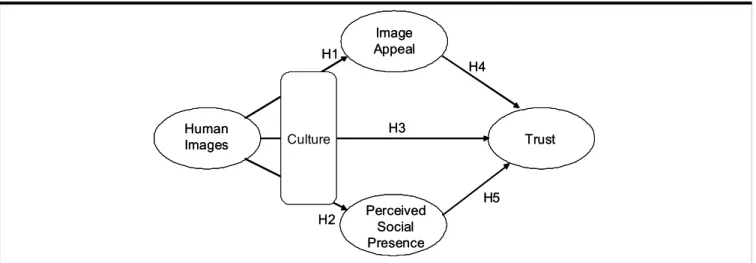
Within our given theoretical framework, a model is developed in Figure 1 to test the impact of different levels of human images on image appeal, social presence, and trust. In addi-tion to testing the model relaaddi-tionships for combined cultural groups, between-group cultural differences are explored. Trust was chosen as the endogenous variable in the proposed model to be consistent with other work on perceived social presence (Gefen and Straub 2003). Further, trust is important as it can positively result in purchase intentions (Gefen and Straub 2003), in e-loyal customer behavior (Cyr 2008; Flavián et al. 2006), and ultimately in greater revenues from online sales. Hence in our model, we focus on an examination of the direct and indirect relationships between human images and trust. Causal relationships that did not meet this criterion were not included in the research model (such as the possible causal link between image appeal and perceived social presence) but were explored as part of a post hoc analysis. Conceivably, there are additional existing and validated con-structs one could envision as relevant to the current investi-gation and model. However it is important to note the methodology employed was complex and time consuming. By integrating three techniques (questionnaires, interviews, and eye-tracking) for each participant, analysis is rich but the demand on each participant is significant. As such, a research model was developed to encapsulate most salient and per-tinent constructs that directly relate to the objectives of the investigation (i.e., understanding the influence of human images in website design) while minimizing excess burden for study participants.
To determine most salient and relevant constructs, a thorough review of the literature was conducted to avoid unnecessary duplication of previous findings. For example, enjoyment has been shown to be positively impacted by higher levels of perceived social presence (Hassanein and Head 2007). While it would be reasonable to expect that users viewing websites with human images including facial features would have a more enjoyable experience than users viewing websites with-out human images, previous literature indicates this sense of enjoyment is a consequence of increased perceptions of social presence—which, related to Figure 1, would be a conse-quence of human images displayed on the website. In an effort to streamline the proposed research model, constructs thought to be the consequence of a mediating relationship were not included (as evidenced from extant literature). In this case, the relationship between human images and enjoy-ment was expected to be mediated by perceived social presence.
Hypothesis Development
In the following sections, a review of the literature elaborates on human images related to image appeal, perceived social presence, and trust.
Human Images and Image Appeal
Over the years, images in advertising have been used to convey product and brand information, as well as to elicit emotional responses in consumers. From 1954 to 1999, the use of images in advertising doubled (Phillips and McQuarrie 2002) yet research regarding the effectiveness of visual elements in advertising has been limited (Larsen et al. 2004; Peracchio and Meyers-Levy 2005; Phillips and McQuarrie 2005). In line with the current investigation, research is par-ticularly sparse on the effectiveness of images in online advertising.
Offline, it is known that images induce consumer receptivity to messages with emotional dimensions (Branthwaite 2002). In line with our theory of visual rhetoric, in a study of various ad stimuli, the visual picture of a spray bottle of window cleaner composed of purple berries aligned with the verbal statement “bring home a fresh fruit orchard” and generated “positive inferences” at the time of exposure (Phillips and McQuarrie 2005). In other research, happy or angry faces were flashed on a screen while people examined Chinese ideographs. The type of face presented affected “liking ratings” of the ideographs. Even small alterations in an image
Figure 1. Research Model
can have an impact on product evaluations. By simply changing the camera angle used to photograph an advertised product, viewers attitudes toward the product were influenced (Meyers-Levy and Peracchio 1992). Emotional states that result from responses to advertising content have potential to influence consumers’ attitudes toward ads, brands, and merchants (Babin et al. 1998; Brown et al. 1998; Holbrook and Batra 1987; Kamp and MacInnis 1995; Swinyard 1993). Online, the visual design of an e-commerce website is impor-tant because it improves website aesthetics and emotional appeal (Garrett 2003; Liu et al. 2001; Park et al. 2005), which may in turn lead to more positive attitudes toward an online store (Fiore et al. 2005). Advertisements with emotional characteristics are mediated by affective rather than cognitive processes (Yoo and MacInnis 2005). In research on banner ads, different formats using either text or images were manipulated with viewers rating the image versions as consistently more positive and effective across multiple conditions (Yoon 2002).
The use of photographs in websites has been debated among usability experts, some of whom feel that photographs unnecessarily clutter up the website, slow it down, and disrupt its functionality (Riegelsberger 2002). Alternately, images have been found to attract viewer attention (Riegelsberger 2002) and to increase credibility of online articles (Fogg et al. 2002). In online environments, images of people can speci-fically be used to induce emotional responses (Riegelsberger et al. 2003), which may result in favorable attitudes toward the site. The effect of ads depicting images of people has yet to be studied extensively, but early research on this topic suggests that images of humans do influence people’s be-haviors in online environments. For instance, adding images
of players engaged in an online text chatting game increased cooperation (Zheng et al. 2002). This type of visual element is thought to increase the website’s aesthetic playfulness and thus influence user reactions (Liu et al. 2001).
In a study focused on personalization and interaction in online research questionnaires, the experimental manipulation included a version of a questionnaire that displayed an image (shoulders and head shot) of a male researcher, a similar image shot of a female researcher, compared to a control version with a logo of the organization but with no human image (Tourangeau et al. 2001). Although the experimental conditions did not have any significant effects for the depen-dent variables tested (gender attitudes, social desirability, and trust), the experimental format is similar to the current study in that a human image is contrasted to a control condition. Further, advertising has long relied on imagery using “friendly faces” to build a positive attitude toward products (Giddens 1990; Riegelsberger et al. 2003). Paying attention to picture effectiveness to elicit emotional or social responses in online users can be central to electronic commerce success (Dormann 2000).
Building on the theory of visual rhetoric, it expected that the no-human condition is a literal representation of the product, while the high-human condition is expected to be more evocative. As Riegelsberger (2002) noted, images of people induce emotional responses. Further, considering the context for online communication as outlined by Straub and Kara-hanna (1998), different levels of communication represent different levels of media richness, and imply a social and emotional connection with the user. Images with people would represent higher levels of media richness just as in using friendly faces in advertising builds more favorable
con-Image Appeal Trust Perceived Social Presence Human Images Culture H1 H4 H3 H2 H5 Image Appeal Trust Perceived Social Presence Human Images Culture H1 H4 H3 H2 H5
sumer attitudes and appeal for products than representations without faces. Hence, building on the preceding, it is ex-pected that in a Web environment the appearance of human images including facial features (high-human condition) will be more appealing than human images without facial features (medium-human condition) or a control condition with no human image (no-numan condition). This leads to the first hypothesis.
Hypothesis 1: Image appeal will be highest in the high-human condition, when compared to the medium-human and no-human conditions.
Human Images and Perceived Social Presence
In general, online environments lack social presence com-pared to face-to-face interactions (Hassanien and Head 2007; Miranda and Saunders 2003). It has been suggested that pictures and text on a website are able to convey personal presence in the same manner as do personal photographs or letters (Gefen and Straub 2003). Pictures have a stronger effect in creating a sense of social presence than text (Short et al. 1976). In research on Internet auctions, two conditions of social influence were presented to participants: interpersonal information in the form of text or “virtual presence” that included pictures of other bidder’s faces. Results indicated the effect of interpersonal information on bidding behavior was not as pronounced as the effect of virtual presence. The authors explain their results as related to “the enthusiasm with facial cues and perception of other’s presence” (Rafeli and Noy 2005, p. 172).The incorporation of human or human-like faces into mediated environments provides online participants with a stronger sense of community (Donath 2001). Previous work has manipulated Internet shopping conditions to investigate online social presence for an apparel website (Hassanein and Head 2007). In the low social presence condition only, functional text and a basic product picture appeared; in the medium condition, a basic product picture appeared with emotive/descriptive text; and in the high social presence con-dition, pictures depicted human figures interacting with the product as well as emotive text. The authors concluded that, on shopping websites, higher levels of social presence created in part through human figures positively impacted perceived usefulness, trust, and enjoyment. Further, as the degree of perceived social presence increases, there should be an increased impact on emotions and behavior (Argo et al. 2005). As an element of communication theory (Short et al. 1976), media that convey social presence allow the user to experi-ence others as present (Gefen and Straub 2003). In alignment
with Hassanein and Head (2007) in which human-centric pictures resulted in higher levels of social presence, in the present study respondents are presented with a website con-dition that includes human images with facial features and a condition with no human images. In addition, an intermediate condition is added with human images but with no facial features. Based on previous research as outlined in this section, it would be expected that websites with human faces will be seen as having a higher level of human contact (Yoo and Alavi 2001) and social presence (Hassanein and Head 2007) than those without human faces. This leads to the following hypothesis:
Hypothesis 2: Perceived social presence will be highest in the high-human condition, when com-pared to the medium-human and no-human con-ditions.
Human Images and Online Trust
Researchers have endeavored to uncover the complexities of trust in online environments (Bhattacherjee 2002; Chen and Dhillon 2003; Cheung and Lee 2006; Evard and Galletta 2006; Gefen 2000; Gefen et al. 2003; Jarvenpaa et al. 2000; Komiak and Benbasat 2004; Koufaris and Hampton-Sosa 2004; Rattanawicha and Esichaikul 2005; Schlosser et al. 2006; Wang and Benbasat 2005; Yoon 2002).2 A commonly
accepted definition of online trust that includes cognitive and emotional elements states that trust encompasses “an attitude of confident expectation in an online situation or risk that one’s vulnerabilities will not be exploited” (Corritore et al. 2003, p. 740). Online trust relates to consumer confidence in a website and willingness to rely on the vendor in conditions where the consumer may be vulnerable to the seller (Jarvenpaa et al. 1999).
A multidimensional construct for trust is most appropriate in research when online trust is the primary focus. Trust may result from a consumer’s belief that an online vendor demon-strates ability, benevolence, or integrity (McKnight et al. 2002). Alternately, in studies such as this, where trust is one element included to better understand a more comprehensive user reaction to a website, representing trust as a single construct is appropriate (Gefen et al. 2003; Koufaris and Hampton-Sosa 2004). Combining trusting beliefs into a
2A thorough review of trust in offline and online settings is not feasible within the scope of the present paper. However, the reader may wish to refer to Rousseau et al. (1998) for a comprehensive and cross-disciplinary critique of offline trust. Online trust is comprehensively examined by Gefen et al. (2003), who provide a summary of previous conceptualizations of trust, as well as an integrated model of trust in online shopping. In addition, Corritore et al. (2003) offer a useful overview of online trust.
single variable is a parsimonious approach to studying trust when the research goal does not focus on a detailed under-standing of trust signals (Schlosser et al. 2006). In this study, therefore, trust is conceptualized as a single variable and refers to general confidence in the website.
Image design may include elements of balance, emotional appeal, aesthetics, and uniformity of the overall graphical look of a website. This encompasses web elements such as use of photographs, colors, shapes, or font type (Garrett 2003). The aesthetics of website design are considered related to the “overall enjoyable user experience” (Tarasewich 2003, p. 12). Some research suggests a relationship between trust and beauty of a website (Karvonen 2000). Images have the power to enhance consumer trust in a vendor. While not using facial images, jewelry retailer Tiffany invested sub-stantially in digital imaging technology to ensure all images of jewelry on its web site are presented to instill trust in potential buyers (Srinivasan et al. 2002).
Online trust can be established through virtual re-embedding of content and social cues (Riegelsberger et al. 2003, 2005). In a study using pages from the online shop of a well-known British supermarket chain, identical pages were created with the exception that one page contained a photograph of a human face the same size as the alternative treatment text box. Viewers were found to be more attracted to the photograph than to the text box when initially visiting the web pages, leading to the conclusion that “the face is a very important source of socio-emotional cues.…Advertisers have found that photographs of faces attract attention and create an immediate affective response that is less open to critical reflection than text we read” (Riegelsberger 2002, p. 1).
Simon (2001, p. 26) proposes “that information rich, con-sumer oriented web sites should help reduce ambiguity, increase trust/reduce risk, and encourage users to purchase with lower levels of consumer dissonance.” Within the con-text of an online banking website, inclusion of employee photographs resulted in attributions of trustworthiness (Stein-brück et al. 2002). Finally, the presence of an author photo-graph resulted in greater perceived trustworthiness of an article written by that author in an online magazine (Fogg et al. 2001).
Although work in which human images resulting in trust is very limited, previous research does suggest that in an online environment there is a relationship between the presence of human images and trust (Steinbrück et al. 2002). Related to this finding, we feel that there is great complexity in infor-mation processing, and as such human images are “interpreted” as either appealing or having social presence prior to resulting in evaluations of trust. Hence we suspect
that the relationship between human images and trust is indirect, mediated by both image appeal and perceived social presence. Further, the direct relationship between image appeal and trust is also explored for completeness as per the focus of the investigation.
In addition, we wish to examine if users experience greater trust in the high-human condition than in the other experi-mental conditions. Based on the work of Riegelsberger et al. (2003, 2005), we know that photographs of human faces and embedding of social cues results in online trust, more so than text alone. This premise is again linked to our theoretical framework of visual rhetoric and richness of media com-munication, and we would expect that facial images in the high-human condition will be perceived as more trustworthy as did Riegelsberger et al., resulting in the following hypotheses:
Hypothesis 3: Trust will be highest in the high-human condition, when compared to the medium-human and no-medium-human conditions.
Hypothesis 4: Higher image appeal will result in higher levels of trust.
Information richness and social presence are closely related concepts, where information rich and consumer-oriented websites can help reduce ambiguity and encourage users to purchase with lower levels of consumer dissonance (Simon 2001). By reducing ambiguity and risk, higher user per-ceptions of social presence can result in more positive attitudes toward using a website, including evaluation of the website as trustworthy (Kumar and Benbasat 2006). Gefen and Straub (2003) proposed that social presence is an enabler of trust-building cues, and that greater levels of social presence result in greater development of trust. This was empirically validated for websites selling apparel (Hassanein and Head 2007) and for e-services (Cyr et al. 2007; Gefen and Straub 2003). We are further interested to see if the relation-ship of social presence to trust holds with our mixed cultural sample.
Hypothesis 5: Higher perceived social presence will result in higher levels of trust.
Research Methodology
Participants
Ninety participants from three countries (30 each from Canada, Germany, and Japan) took part in the experiment.
Table 1. Country Cultural Comparisons (based on Hofstede 1980)
Country Dimension Canada Germany Japan
Power Distance Low (39) Low (35) Med (54)
Uncertainty Avoidance Low (48) Med (65) Very high (92)
Masculine Med (52) Med (66) Very High (95)
Individualism High (80) Med (67) Low (46)
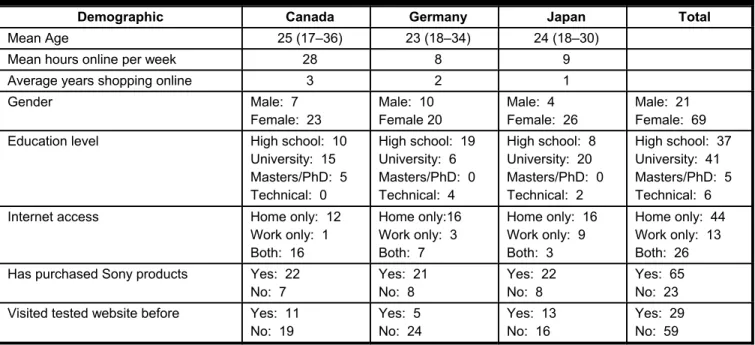
Table 2. Participant Demographics
Demographic Canada Germany Japan Total
Mean Age 25 (17–36) 23 (18–34) 24 (18–30)
Mean hours online per week 28 8 9
Average years shopping online 3 2 1
Gender Male: 7 Female: 23 Male: 10 Female 20 Male: 4 Female: 26 Male: 21 Female: 69
Education level High school: 10
University: 15 Masters/PhD: 5 Technical: 0 High school: 19 University: 6 Masters/PhD: 0 Technical: 4 High school: 8 University: 20 Masters/PhD: 0 Technical: 2 High school: 37 University: 41 Masters/PhD: 5 Technical: 6
Internet access Home only: 12
Work only: 1 Both: 16 Home only:16 Work only: 3 Both: 7 Home only: 16 Work only: 9 Both: 3 Home only: 44 Work only: 13 Both: 26 Has purchased Sony products Yes: 22
No: 7 Yes: 21 No: 8 Yes: 22 No: 8 Yes: 65 No: 23 Visited tested website before Yes: 11
No: 19 Yes: 5 No: 24 Yes: 13 No: 16 Yes: 29 No: 59
These countries were chosen to represent diverse cultural characteristics as determined by Hofstede (1980).3 Refer to
Table 1.
German and Japanese participants were recruited from international language schools located in a metropolitan area in Canada. All international participants had lived in Canada for less than 1 year and were over the age of 17. Canadian participants were recruited from a university in the same city. Recruitment and participant testing took place over a three month period. Table 2 summarizes the demographic profile of the study participants.
Experimental Task and Design
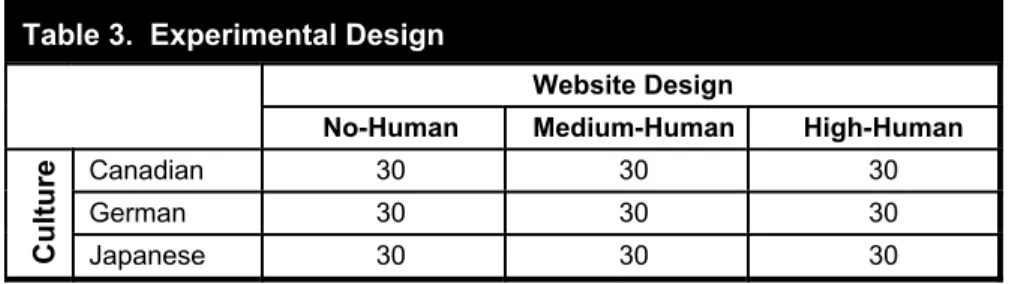
The experiment was conducted in a controlled setting where participants browsed an e-commerce website in a university usability laboratory. This study was designed as a repeated group two-factorial experiment, with three levels for each factor. The first factor was culture, where 30 participants were carefully selected to represent each of the three culture levels as represented by nationality (Canadian, German, and Japanese). The second factor was website design, where three
3For many years Hofstede’s work has been used in research concerning cultural comparisons. More recently, researchers have examined Internet behavior using Hofstede’s dimensions related to consumer trust (Jarvenpaa et al. 1999) and perception and satisfaction levels of web sites related to gender and culture (Simon 2001). Power distance addresses the extent to which a society accepts unequal distributions of power in organizations and institutions. In low power distance cultures such as Canada or Germany, there is a tendency to maintain a philosophy of equal rights for all without acquiescence to those in power. In Japan, deference is given to those in authority. Uncertainty avoidance characterizes how societies accommodate high levels of uncertainty and ambiguity in the environment. Members of very high uncertainty avoidance societies such as Japan seek to reduce personal risk and to augment security. In feminine societies, there is an emphasis on quality of life and relationships. Cultures that focus on material success and assertiveness are considered more masculine in orientation. Individualism and collectivism were elaborated earlier. For a further elaboration of Hofstede’s cultural dimensions refer to Hofstede (1980), Dawar et al. (1996), or Simon (2001).
Table 3. Experimental Design
Website Design
No-Human Medium-Human High-Human
Culture
Canadian 30 30 30
German 30 30 30
Japanese 30 30 30
versions of an e-commerce website featuring electronics were created to represent each of the three levels of human images (no-human, medium-human, and high-human). Each of the 90 participants (30 per country) viewed each of the three website conditions. Thus the overall sample size for the study is 270 (30 participants by 3 countries by 3 human image web-site treatments). The order in which the webweb-site conditions were viewed was randomly assigned to eliminate possible order effects. Table 3 summarizes the experimental design. The SonyStyle website was the basis for the experimentally manipulated website used in this study. The SonyStyle website was chosen after an extensive search of international e-commerce websites conducted by usability experts, as it demonstrated localization of Web content across the three cultural groups (Canadian, German, and Japanese). Locali-zation addresses language considerations and helps to ensure a website is consistent with expectations of a cultural group. Using localized websites, as in our experimentation, better allows participants to respond to the controlled manipulations rather than be distracted by culturally inappropriate material. Three versions of the SonyStyle website were downloaded to a local PC for experimental manipulation. The SonyStyle name was removed from the websites to avoid branding effects. Links on the Web pages were also disabled. Then, each of the three localized websites (Canadian, German, and Japanese) was designed to represent low, medium, and high levels of human images. It should be noted that the type of image manipulation was identical in format across the country websites. The nine experimental website versions (three per country) are shown in Appendix A.
Human image representation was determined by the absence or presence of human figures in the areas of interest. In a control condition (called No-Human), no human images appear. In the medium level condition (called
Medium-Human), the regions of interest displayed human figures with
no facial characteristics. In the high level condition (called
High-Human), human figures were shown including their
facial features. A pilot study was conducted with five partici-pants to ensure the three website conditions were manipulated sufficiently and appropriately. Participants in the pilot study
were asked to comment on differences between the condi-tions. They independently and unanimously agreed there were distinct differences in the human conditions and the degree that human images varied from the no-human to the medium-human to the high-human conditions. Similarly, during interviews in the full study, participants were asked to comment on differences between the conditions. The vast majority noted the varying presence of human elements in the images.
Participants individually arrived at the usability lab and were given a brief written introduction to the research and provided with a consent form to sign. For the German and Japanese groups, all documents were translated and back-translated to verify accuracy. A translator was available during the experi-ment, as needed. Following the introduction, each participant was fitted with the eye-tracking equipment.
After participants viewed each website condition (randomly ordered), a paper-based questionnaire was administered. At the conclusion of the session, participants were interviewed, completed a demographics form, were debriefed (without the researcher revealing key objectives of the research to prevent transmission), and the researcher answered any questions. An average experimental session lasted one hour. Participants received a $20 honorarium as compensation for their time.
A Multiple Method Approach
In this study, three research and analysis methodologies are employed (quantitative questionnaire analysis, qualitative interview analysis, and eye-tracking analysis) to investigate our hypotheses. For further details about the methods used, refer to Appendix B.
Eye Tracking
Eye tracking analysis can proceed in either a top-down or bottom-up fashion. Top-down analysis is based on theoretical
hypotheses, whereas a bottom-up approach is based entirely on observation of the data without predefined theories (Goldberg et al. 2002). Our hypotheses are derived from extant literature. As such, the eye-tracking analysis of this research follows a top-down approach.
The eye-tracker system used was Applied Science Labora-tories Model 504 with head tracking integration. Eye move-ments were processed using a small camera mounted on a pan/tilt optics mechanism which was positioned under the stimulus monitor. Participants wore a headband with a small mounted sensor, allowing the pan/tilt mechanism to track head movements without loss of eye image. This permitted participants to move their heads in a relatively natural manner.
Participants were screened to ensure normal or corrected vision, and those wearing hard contact lenses or eye glasses were not considered for the experiment. Suitable participants were calibrated with the eye tracking equipment by looking at an image of nine numbered dots on the screen. The researcher called out a number, and participants were instructed to look at each dot as called. Any calibration errors were immediately corrected. Participant calibration with the eye tracker took between 5 and 10 minutes. Following calibration, participants were presented with the experimental websites with instructions to examine each site as they would normally do, with the intention to gather information for product and company assessment. Each participant’s gaze was monitored during the eye-tracking procedure to ensure accurate calibration throughout the testing phases.
Each website used in this study was divided into areas of interest representing segmentations of the screen area. Two broad categories were used to group areas of interest: (1) areas of manipulation, where images were controlled to represent the three conditions, and (2) other areas that remained static across the three conditions. Participants were allowed to view the web pages for as long as they desired, but in alignment with Josephson and Holmes (2002) and Pan et al. (2004) only the first 15 seconds of viewing were analyzed. In this study, the minimum duration time for a fixation is .05 seconds—following Lankford (1999) and Rayner (1998)— and is expected to represent interest in the viewed portion of the website. Gazetracker software was used to process ocular data for analysis. Gazetracker captures various physiological metrics (such as pupil dilation) as well as look zone metrics (such as fixation times and counts).4
Questionnaire and Instrument Validation
A questionnaire was administered after each participant completed the assigned task for each website condition. All items in the questionnaire were constructed as agree–disagree statements on a five-point Likert scale. The questionnaire appears in Appendix C. Analysis of questionnaire data was conducted using SPSS 14.0 software and PLS-Graph for structural equation modeling.Content validity considers how representative and compre-hensive the items are in creating the experimental constructs. Validity is assessed by examining the process by which the construct items were generated (Straub 1989). Constructs should draw representative questions (items) from a universal pool (Cronbach 1971; Kerlinger 1964). In this research, questionnaire items were adapted from previously validated work on social presence (Gefen 2003) and trust (Gefen 2000; Yoon 2002). Therefore, content validity for these two constructs was established through past research (Straub 1989). However, the image appeal scale was validated through expert judges (as per Straub). Two usability experts were independently asked to list attributes they found relevant to determine the appeal of images on an e-commerce website. Terms such as satisfying, appropriate, interesting, and
exciting emerged. Expert lists were compared for common-ality, resulting in nine salient attributes which were then used as the basis for the new image appeal construct. The usability experts agreed that the resulting nine items were reasonable and appropriate for measuring website image appeal. The entire instrument was pretested with a small sample of five participants who were asked to provide detailed comments on any wording or concept confusion. Based on this feedback, some minor wording adjustments were made before con-ducting the full study.
Construct validity assesses the extent to which a construct measures the variable of interest and whether “the measures chosen ‘fit’ together in such a way as to capture the essence of the construct” (Straub et al. 2004, p. 388). In other words, there should be high correlations between items of the same construct (convergent validity), and low correlations between items of different constructs (discriminant validity) (Straub 1989). Construct validity, specifically convergent and dis-criminant validity, can be assessed using factor analytic
tech-4While the physiological metrics could provide interesting insights, their meaning and appropriateness is highly debated (Lin et al. 2006). It has been proposed the pupil dilates as the participant gazes at a point that stimulates
cognition (Kahneman 1973). However, it is difficult to discern the nature of the cognitive activity and it can be challenging to separate the dilation reflex from the light reflex (Loewenfeld 1993). For the current investigation, look zone metrics are more appropriate to provide insights into the website design elements that draw and hold attention. For a fuller review of the capabilities of Gazetracker, refer to Lankford (2000).
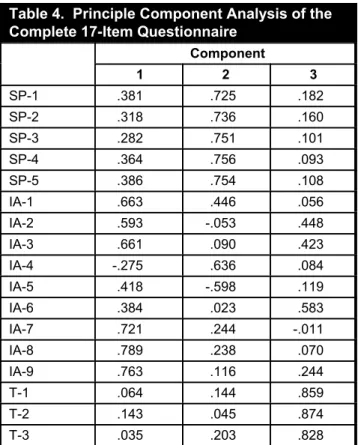
Table 4. Principle Component Analysis of the Complete 17-Item Questionnaire
Component 1 2 3 SP-1 .381 .725 .182 SP-2 .318 .736 .160 SP-3 .282 .751 .101 SP-4 .364 .756 .093 SP-5 .386 .754 .108 IA-1 .663 .446 .056 IA-2 .593 -.053 .448 IA-3 .661 .090 .423 IA-4 -.275 .636 .084 IA-5 .418 -.598 .119 IA-6 .384 .023 .583 IA-7 .721 .244 -.011 IA-8 .789 .238 .070 IA-9 .763 .116 .244 T-1 .064 .144 .859 T-2 .143 .045 .874 T-3 .035 .203 .828
Table 5. Principle Component Analysis of the Revised 13-Item Questionnaire
Component 1 2 3 SP-1 .837 .228 .172 SP-2 .791 .194 .157 SP-3 .811 .168 .087 SP-4 .875 .171 .087 SP-5 .863 .216 .100 IA-2 .055 .631 .363 IA-3 .161 .718 .346 IA-7 .271 .746 -.044 IA-8 .296 .813 .014 IA-9 .194 .805 .149 T-1 .154 .111 .884 T-2 .095 .190 .875 T-3 .167 .125 .844 α-value .916 .845 .887 Split-half .871 .846 .737
niques such as principal components analysis (PCA) (Straub et al. 2004). The loadings and cross loadings matrix from the PCA based on the complete 17-item questionnaire is shown in Table 4.
Items that do not load together may be dropped from the instrument (Churchill 1979). IA-4, IA-5, and IA-6 had low loadings on the Image Appeal construct (less than .50) and high cross-loadings on the other constructs. These items were removed and a PCA was run again. It is recommended no item cross-loadings should be above .40 (Hair et al. 1995). IA-1 cross loaded on the Perceived Social Presence construct with .495, and thus was also dropped from the instrument. The final loadings and cross loadings matrix is shown in Table 5. All item loadings are greater than .50 with no cross-loading above .40. Therefore, the instrument demonstrates construct validity.
While construct validity is a measurement between constructs, reliability is a measurement within a construct (Straub et al. 2004). Two generally recognized techniques were used to assess reliability (Boudreau et al. 2001): internal consistency and split halves. Internal consistency of the three factors was examined using Chronbach’s α-value. As shown in Table 5,
α-values ranged from 0.845 for Image Appeal to 0.916 for
Perceived Social Presence, which is well past the thresholds recommended by Rivard and Huff (1988) and Nunnally (1978). Similarly, the Guttman Split-Half Coefficient ranged from .737 for Trust to .871 for Perceived Social Presence, which is also well within acceptable ranges (Straub et al. 2004).
Therefore, our instrument encompassed satisfactory content validity (established through literature reviews and expert judges); satisfactory construct validity (as evidenced from high correlations between items of the same construct and low correlations between items of different constructs); and satis-factory construct reliability (as evidenced from acceptable internal consistency and split half measures).
Interviews
Six interview questions followed the questionnaire and these appear in Appendix D. Each interview was approximately 10 to 15 minutes in duration. Participant responses were recorded using an audio digital recorder. Responses were content analyzed and coded using Atlas.ti. This software pro-vides an effective means to analyze qualitative data such as interview transcripts. A typical analysis process consists of
Table 6. Image Appeal, Perceived Social Presence and Trust for the Three Human Conditions Image Appeal Perceived Social Presence Trust
Condition N Mean Std Dev. Mean Std Dev. Mean Std Dev.
No-Human 90 3.249 .881 2.371 1.019 3.465 .816
Medium-Human 90 3.340 .916 2.793 1.004 3.423 .868
High-Human 90 3.602 .766 3.078 1.005 3.515 .813
the following steps: (1) data preparation (i.e., interview trans-cription and formatting); (2) in vivo coding (use of parti-cipants’ words as code labels) and open coding (use of arbitrary labels for code labels); (3) category and concept building in which semantic relationships between codes are identified to build higher conceptual abstractions; and finally (4) theory building based on interpretation of the results. While it is customary to have multiple raters code the same data when only one (qualitative) methodology is used, in an instance where multiple data sources are used to confirm the same phenomenon inter-rater reliability is not critical. When triangulation of data is used (as in the current research), then use of these multiple methodologies lends weight to the findings (Armstrong et al. 1997).
Analysis
Table 6 provides descriptive statistics for the image appeal, perceived social presence and trust constructs across the three website conditions.
To analyze the quantitative questionnaire results, a structural equation modeling (SEM) approach is employed. SEM simultaneously tests structural and measurement models (Bagozzi and Yi 1989), and provides a more complete analysis for interrelationships in a model (Fornell 1982). The variance-based partial least square (PLS) method was chosen over covariance-based methods such as LISREL. PLS is relatively robust to deviations from a multivariate distribution, and supports both exploratory and confirmatory research (Gefen et al. 2000). Chin (1998) and Gefen et al. (2000) advise that the minimum sample size for a PLS analysis should be the larger of (1) 10 times the number of items for the most complex construct or (2) 10 times the largest number of independent variables impacting a dependent variable. In the proposed model, the most complex construct has five items (both perceived social presence and image appeal) and the largest number of independent variables estimated for a
dependent variable is three (for trust). The total sample size for this study is 270, which is more than adequate for PLS estimation procedures.
The PLS model is shown in Figure 2. As recommended by Chin, bootstrapping (with 500 subsamples) was performed to test the statistical significance of each path coefficient using
t-tests. In this analysis, human images is coded using two 0/1 dummy variables to categorically capture the three human images manipulations. The results show that all causal paths, with the exception of human images to trust (p > .1), are statistically significant (p < .001 for image appeal to trust; p < .05 for all other paths). Based on the PLS analysis of questionnaire data, H1, H2, H4, and H5 are supported while H3 is not.
Note that the R² values of Image Appeal and Perceived Social Presence are relatively small (i.e., 0.03 and 0.05 respectively). This, however, does not represent a threat to the model’s validity. Cohen (1988, pp. 532-535) suggests that in many circumstances the amount of actual association between constructs is, in fact, greater that the proportion of variance accounted for by measuring R². In general, low R² values are common in behavioral science research (often cited examples include Davis 1993; Davis et al. 1989; Moon and Kim 2001). In addition, both image appeal and perceived social presence are influenced by a single construct (i.e., human images) in the proposed model. Such construct associations tend to pro-vide low R² values compared to multi-relationship models (Nunnally 1978).
As outlined when the research model was introduced, the focus of this examination is on the direct and indirect rela-tionships between human images and trust. However a post hoc analysis was conducted to explore the impact of adding other relationships in our research model that do not meet this criterion. Specifically, the model was rerun with an additional causal link from image appeal to perceived social presence. It is interesting to note that this additional path was significant (b = 0.454; t = 9.637) but resulted in a slight decrease in the R² value for Trust (from 0.193 to 0.178).
Figure 2. PLS Structural Model
Table 7. A Summary of the Result of the Multivariate Analysis of Variance
Dependent Variable
Sum of
Squares df Mean Square F Sig.
Image Appeal 6.022 2 3.011 4.107 .018
Perceived Social Presence 22.757 2 11.378 11.167 .000
Note: Human Image level is the independent variable.
Table 8. MANOVA Contrast Results
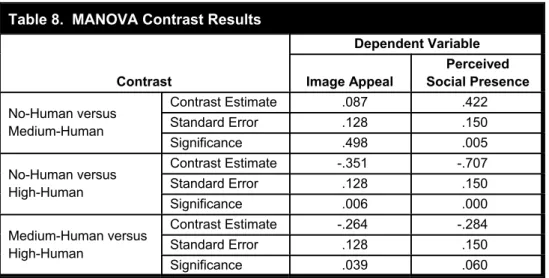
Contrast Dependent Variable Image Appeal Perceived Social Presence No-Human versus Medium-Human Contrast Estimate .087 .422 Standard Error .128 .150 Significance .498 .005 No-Human versus High-Human Contrast Estimate -.351 -.707 Standard Error .128 .150 Significance .006 .000 Medium-Human versus High-Human Contrast Estimate -.264 -.284 Standard Error .128 .150 Significance .039 .060
A MANOVA analysis, shown in Table 7, was also conducted to examine differences between group means for the two dependent variables of human images that are shown to be significant in the above PLS analysis (i.e., image appeal and perceived social presence). Groups were defined by the three manipulated levels of human images (no-human, medium-human, and high-human). MANOVA test statistics included Pillari’s Trace, Wilks’ Lambda, Hotelling’s Trace, and Roy’s Largest Root. The p-values of these statistics are found to be significant (p < 0.001) across all three groups of respondents.
As shown in Table 7, the F-statistic is significant for both dependent variables. This indicates at least one of the human images levels is different from the others. Contrast results, shown in Table 8, indicate these differences.
Both image appeal and perceived social presence are highest for the high-human condition when all cultural groups were pooled. In the high-human condition. greater image appeal is demonstrated than in both the medium-human (p < .05) and no-human (p < .05) conditions. There is no significant appeal
Image Appeal R2= 0.03 Perceived Social Presence R2= 0.05 Trust R2= 0.193 Human Images 0.175 (t= 2.323*) 0.353 (t= 5.482***) 0.127 (t= 2.156*) 0.156 (t= 2.266*) *p-value < 0.05 ***p-value < 0.001 Image Appeal R2= 0.03 Perceived Social Presence R2= 0.05 Trust R2= 0.193 Human Images 0.175 (t= 2.323*) 0.353 (t= 5.482***) 0.127 (t= 2.156*) 0.156 (t= 2.266*) *p-value < 0.05 ***p-value < 0.001
Figure 3. Image Appeal and Perceived Social Presence Across Human Image Conditions
difference between the no-human and medium-human (p = .498) conditions. For perceived social presence, significant differences are found between the no-human group and both the medium-human (p < .01) and the high-human (p < .001) groups. At the .01 level, a significant social presence dif-ference is found between the medium-human and the high-human groups (p = .060). Figure 3 graphically represents the linear or monotonic relationships between the three human image conditions and both image appeal and perceived social presence.
Some interesting findings are revealed when analyzing the eye-tracking data for the three website conditions across cul-tures. For each version of the experimental website, three images were manipulated to reflect the various human images conditions. The time spent viewing the manipulated images, as a percent of the total time spent viewing the webpage, is graphically displayed in Figure 4. Figure 5 shows the number of fixations on the manipulated images as a percent of the total number of fixations on the webpage.
Based on the incremental perceptions of image appeal and perceived social presence across the no-human, medium-human, and high-human conditions, it would be reasonable to expect that the number of fixations and the time spent viewing these images would similarly increase across the human element conditions. While there are significant increases in viewing time and fixations between the no-human condition and the medium-human condition (see Table 9), participants spend less time and have fewer fixations on the high-human images when compared to the medium-human images. In fact, there are no significant differences between the no-human and high-no-human conditions in terms of image time and fixations.
This anomaly can be explained through the analysis of inter-view data. Participants across all countries have negative
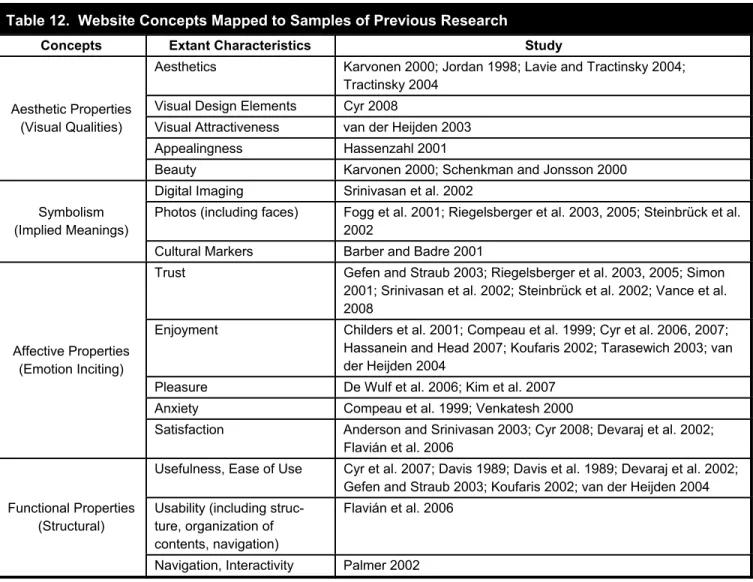
opinions of the medium-human website condition. The majority of participants find the partial human images (with-out faces) to be “weird” and “unnatural” and in many cases, “distracting.” This unusual representation may account for the increased draw of visual attention and subsequently participant confusion. Further evaluation of interview data involved coding using two methods: (1) in vivo (using the participant’s exact words as the basis for a code), and (2) open coding (using arbitrary labels to code the data). Categories were then developed to identify relationships between codes, followed by the creation of more theoretical entities called concepts. Four main concepts emerged from our data: • Aesthetics: Visual design elements refer to visual
qualities that lend a sense of attractiveness or pleasant appearance to the website. This concept is encapsulated by codes like pretty, colorful, and bright.
• Symbolism: The implied meaning of design elements
such as images, animations, graphics, and words. For instance, an image showing a man and a little girl may be interpreted as a representation of a father and daughter, even though this family relationship is not made explicit. The participant has therefore extracted a semantic or symbolic property from the image.
• Affective property: Refers to design elements with
emotion inciting qualities. The codes friendly, serious, and fun are examples of affective properties.
• Functional property: Elements of website structure
including information design, navigation, and layout. Examples of codes include organized, structured, and distracting.
In Table 10, positive and negative concepts expressed during the interviews are summarized across website conditions and cultures. 2 2.5 3 3.5 4 4.5
No-Human Medium-Human High-Human
Human Image Conditions
Image Appeal Perceived Social Presence
A ver ag e S c o re (o n a 7 -p t. sca le ) 2 2.5 3 3.5 4 4.5
No-Human Medium-Human High-Human
Human Image Conditions
Image Appeal Perceived Social Presence 2 2.5 3 3.5 4 4.5
No-Human Medium-Human High-Human
Human Image Conditions
Image Appeal Perceived Social Presence
A ver ag e S c o re (o n a 7 -p t. sca le )
Figure 4. Average Time Spent Viewing Manipulated Images
Figure 5. Average Number of Fixations on Manipulated Images
Table 9. Paired Comparisons Across Conditions
Paired Comparison
Proportion of time examining manipulated images Proportion of fixations on manipulated images t Sig. t Sig. No-Human versus Medium-Human -3.942 .000*** -3.400 .001** No-Human versus High-Human -1.578 .118 -1.505 .136 Medium-Human versus High-Human 3.888 .001** 2.754 .007** **p-value < 0.01 *** p-value < 0.001
Table 10. Summary of Interview Analysis Across Cultures
Categories Canada Germany Japan
High-Human images
Positive: Aesthetic, Affective Positive: Functional, Affective, Symbolic
Positive: Affective, Symbolic Negative: Aesthetic, Functional Negative: Functional Negative: None
Medium-Human images Positive: Symbolic Positive: Functional Positive: Affective, Symbolic Negative: Aesthetic, Functional Negative: Affective Negative: Aesthetic
No-Human images Positive: Functional Positive: Functional Positive: None Negative: Aesthetic, Affective Negative: Affective Negative: Affective
7.98 14.95 9.91 0 2 4 6 8 10 12 14 16
No-Human Medium-Human High-Human
Website Condition P e rc e n t of To ta l V ie w in g Ti m e 7.98 14.95 9.91 0 2 4 6 8 10 12 14 16
No-Human Medium-Human High-Human
Website Condition P e rc e n t of To ta l V ie w in g Ti m e 10.6 16.51 12.37 0 2 4 6 8 10 12 14 16 18
No-Human Medium-Human High-Human
Website Condition P e rcen t o f T o tal F ixa ti o n s 10.6 16.51 12.37 0 2 4 6 8 10 12 14 16 18
No-Human Medium-Human High-Human
Website Condition P e rcen t o f T o tal F ixa ti o n s
In general, participants from all countries react positively to the human images with facial features. These images are able to incite positive emotions (affective properties). Comments include “Pictures of people add a human level and we can relate to them” (Canada); “It’s important to show images with people, their smiles, their emotions” (Germany); “The sites with the images of people looked warm and trustworthy” (Japan). Between countries, Canadians tend to focus on aesthetic aspects of the images and website, while Germans and Japanese did not mention them. Germans comment on symbolism (i.e., community activities) of the images as well as functional properties of the website. In the latter case, one German remarked, “I don’t like pictures of people on the site. If I want to buy a computer, I don’t need anything with human pictures on it. I just want to know the facts.” Japanese participants mention they also like the community related symbolism of these images. However, a small number of Canadian and German participants state that the images served no purpose and were distracting.
In contrast, reactions to the no-human image condition are largely negative. Participants across the three countries criticize the blank images, and think the website is unfriendly. This sentiment is captured in the following quote by a Canadian: “When the site just had the actual product and absolutely no human images, it did make it look stark.” Alternately, a few Canadians and Germans perceive websites with no human pictures as functional. That is, the site is not cluttered with distracting pictures. Related to this, one German commented, “I don’t prefer pictures with children taking pictures...I like pictures that only show products.” Japanese offer no optimistic comments about the no-human image condition.
Based on some cross-cultural differences that were uncovered based on interview coding, a post hoc analysis was conducted using questionnaire and eye-tracking data to further explore between-country comparisons. Results of these analyses appear in Appendix E.5
Summary of Results
Using questionnaire data, the proposed model was tested for relationships between the different levels of human images to image appeal and perceived social presence. It was expected human images with facial features would induce a user’s emotive reaction in which the website would appear more
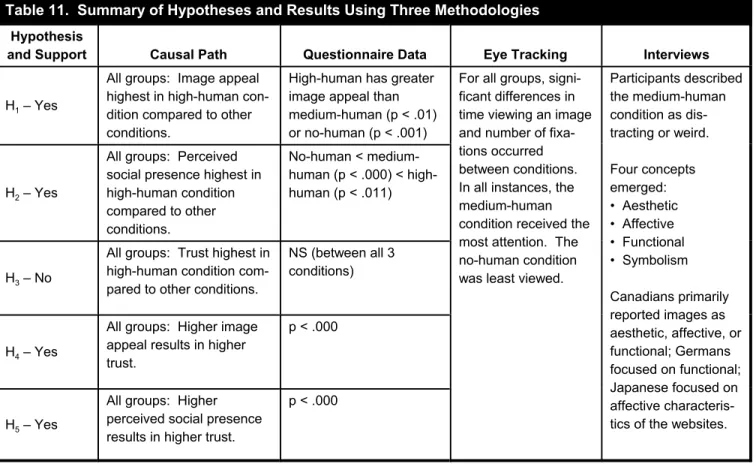
appealing, have warmth or social presence, and be more trust-worthy. In turn, image appeal and perceived social presence were predicted to result in online trust. All expected relation-ships in the model are supported (Hypotheses 1, 2, 4, and 5), with the exception of Hypothesis 3. No direct relationship exists between the human image conditions and trust. For the main condition of interest involving human images (high-human, medium-human, and the control no-human treatments) using statistical comparisons, the high-human condition is perceived as most favorable and resulted in image appeal and social presence for the user. This is further sup-ported by interview data that adds a deeper understanding of exactly how users react to the human image conditions. Across country groups, users employ adjectives to describe the high-human treatment as “warm” or having greater emotional appeal. Alternately, comments about the control no-human condition lack enthusiasm. Using the eye-tracker, additional information is obtained for the amount of time users spend viewing the manipulated images, as well as for number of fixations. While it might be expected more time is spent viewing the high-human condition, in fact this is not the case. For all groups, the unexpected finding emerges that users spend more time viewing, and have more fixations, for the medium-human condition, which they found odd or distracting. This too is confirmed by interview data. In sum, a combination of statistical analysis, use of an eye-tracker, and interviews provides insights not possible with only one source of data. Refer to Table 11 for a summary of the hypotheses as tested, as well as a summary of key results using the three methodologies for this research.
The use of questionnaires, eye-tracking, and interviews for data collection offers a fuller appreciation of the phenomena under investigation. In particular, user impressions of human images in website design were probed using both voluntary and involuntary measures. Overall, there is mutual support between the methodologies. Qualitative comments in par-ticular add to our knowledge as to what eye movements and fixations signify.
A new scale for image appeal was created and validated with potential for application in future research. The scale as it appears in Appendix C can be used to address the appeal of human images as well as images more generally as they appear on a website.
Theoretical and Methodological Contributions
With the escalation of e-commerce, website design with user appeal is an increasingly important topic of investigation for researchers. In previous IS research, investigators haveexam-5Pair-wise comparisons uncovered some differences in image appeal and perceived social presence across cultures. Eye-tracking data further revealed cross-cultural diversity concerning viewing time and relative number of fixations across the various treatment conditions.
Table 11. Summary of Hypotheses and Results Using Three Methodologies Hypothesis
and Support Causal Path Questionnaire Data Eye Tracking Interviews
H1 – Yes
All groups: Image appeal highest in high-human con-dition compared to other conditions.
High-human has greater image appeal than medium-human (p < .01) or no-human (p < .001)
For all groups, signi-ficant differences in time viewing an image and number of fixa-tions occurred between conditions. In all instances, the medium-human condition received the most attention. The no-human condition was least viewed.
Participants described the medium-human condition as dis-tracting or weird. Four concepts emerged: • Aesthetic • Affective • Functional • Symbolism Canadians primarily reported images as aesthetic, affective, or functional; Germans focused on functional; Japanese focused on affective characteris-tics of the websites. H2 – Yes
All groups: Perceived social presence highest in high-human condition compared to other conditions. No-human < medium-human (p < .000) < high-human (p < .011) H3 – No
All groups: Trust highest in high-human condition com-pared to other conditions.
NS (between all 3 conditions)
H4 – Yes
All groups: Higher image appeal results in higher trust.
p < .000
H5 – Yes
All groups: Higher perceived social presence results in higher trust.
p < .000
ined functional as well as affective characteristics of website design (Agarwal and Venkatesh 2002; Devaraj et al. 2002; Flavián et al. 2006; Palmer 2002; Venkatesh and Ramesh 2006). In each study, “usability” characteristics have been differently defined and considered. In addition, other work has specifically focused on aesthetics of website design (Rosen and Purinton 2004; van der Heijden 2003). The pre-sent study adds to the existing work on website design with a spotlight on human images. While images, including images of people, have been examined in marketing (Branthwaite 2002; Myers-Levy and Peracchio 1992; Phillips and McQuar-rie 2002) the effectiveness of such elements has not been well determined (Larsen et al. 2004). This research, therefore, contributes to discussion in the IS field and elsewhere as to how one specific element of website design—human images—impacts the user resulting in positive reactions. Specifically, this investigation also contributes to how the theory of visual rhetoric applies to user perceptions of imagery in website design. In line with Salinas (2002, p. 168), images are the “strategic composition of visual repre-sentations” which impart meaning to the viewer. Concerning image appeal for all groups, results indicate that websites with images that include facial characteristics are more positively
received by users than images with no facial features or no human images. The presence of facial elements seemed important to users, and no statistically different reactions using questionnaire data were recorded between the medium and low image conditions. Work by other researchers, in which human faces resulted in positive assessments by users, is supported (Giddens 1990; Riegelsberger et al. 2003). The presence of human images provides rich information to the user and augments perceptions of social presence of the website. Questionnaire results are in alignment with predic-tions regarding the relapredic-tionship of human images to perceived social presence for all groups. The high-human condition resulted in the highest levels of social presence followed by the intermediate condition and then the no-human image condition. The current investigation directly supports recent work on social presence (Cyr et al. 2007; Gefen and Straub 2003; Hassanein and Head 2007) in that human images elicited positive responses in users. As with image appeal, eye fixation and interview data confirmed that users found the intermediate condition odd and spent the most time examining it. Users specifically noted human images contributed to warmth of the website, and without them the site had a “stark” appearance.