PRIVATE LABORATORY
FOR PLANT CYTOGENETICS
ALLIUM METAPHASE GENOTOXIC TEST FOR TESTING DRINKING
WATER, ENVIRONMENTAL SAMPLES, AND
CHEMICALS
Customer:
MIK, MEDNARODNO TRGOVSKO IN PROIZVODNJO PODJETJE, d.o.o. Celjska c. 55, SI - 3212 Vojnik,
Slovenia
Energy windows with energy-discs using information cells (IC) according to the MOP - Poznik
technology (hereafter energy windows) for improving the air quality of space
A: Office, MIK; Arclin; Celjska c. 55, SI - 3212 Vojnik B: Office, Ljubljanska c. 74, SI - 1230 Domzale
Researched samples:
Tap water; Muretinci 14, 2272 Gorišnica (sampled 1st November, 2010)
Ditto – treatment using the energy window
Cytogenetic research was performed between 13th and 19th November, 2010
DOMŽALE
20th NOVEMBER, 2010
THE TEST REPORT CONTAINING THE REASEARCH RESULTS IS SUPPORTED BY:
1. Protocol on ALLIUM methods
2. Results on the general toxicity and genotoxicity level of the tap water sample, as treated with the
aid of an ENERGY WINDOW
3. The treated tap water’s quality improved at both locations. In the office within the business premises of the Arclin business park (p = 0.0325 <0.05), and the office in Domžale (p = 0.0106 <0.05)
4. This report consists of 8 pages, 2 tables with attachment of 8 figures
Researches into plant applicative cytogenetics
ALLIUM PETER Firbas SpA
BSc in Biology
Ljubljanska c. 74
How healthy is a space?
This is definitely an opinion-forming issue. Its message is an integral part of biological science, thus opening up a world which enables us to determine the quality of any living space by using current biological observation. This concerns the different lengths of a tested plant’s roots (Allium cepa L.), and any injuries to the chromosomes within their cells in relation to their environment.
"Think Before You ..."
Physico-chemical analysis alone does not provide any reliable answer to the question of how healthy the water is. Complementary research, however, in association with biological and chemical
researches is needed in order to obtain a fully comprehensive picture, because it is difficult to identify a wide variety of effects (radiation) within the environment. The ALLIUM biological method reveals an integrated impact on the growth and development of living cells or organisms, and detects the presence of harmful substances within the limits and capabilities of analytical methods. From various kinds of ionizing and non-ionizing radiation which, for example, may occur within an environment, we cannot fully justify their impact on a living organism only by using the usual physico-chemical analysis. So! Think before you "move in".
General toxicity
The different feedback from the tested plant’s root growth (Allium cepa L) is a general quality indicator of an environmental sample. Their straight growth is an indicator of how adequate is the space they are growing in. The longer the roots, the better the quality of their environmental space,
and the shorter the roots, the worse the quality of their environmental space.
Genotoxicity level
Looking at the cellular level of the tested plant’s root-tip growth, especially when monitoring the cells and determining the ratio between the pristine and damaged chromosomes, gives us a very detailed picture of the environmental space’s quality, respectively answering the question as to how healthy the space is.
Risk assessment
It is insufficient just to find out how threatened we are due to different kinds of radiation within the environment, namely, it is very important to also discover how serious it is (how does it create adverse effects in biological systems). The evidence is indisputable that there are no safe doses, and that MPDs (maximum permissible doses) are, by agreement, subordinate to the practical applications. There are biological tests in response to these challenges, showing the synergistic and cumulative effects of harmful radiation, mechanisms of transmission, and the transformation of harmful radiation within biological systems.
Co-dependence of ionization within an environment
Pollution caused by ionizing radiation, as proven by biological tests, is the first genotoxicity biomarker. There is substantial evidence that some radiation causes chromosomal damage, known as
genotoxicity radiation, and displays carcinogenic properties.
TEST PROTOCOL
ALLIUM METAPHASE GENOTOXICITY TEST
FOR THE TESTING OF ENVIRONMENTAL SAMPLES, CHEMICALS, AND DRINKING WATER
Peter Firbas
Peter Firbas, BSc. in Biology, Private Researcher
Laboratory of Plant Cytogenetics, E-mail: peter.firbas @ siol.net
1. Introduction
The ALLIUM metaphase test is a test for determining overall cellular toxicity (cytotoxicity) and the
level of genotoxicity in water, land, and air ecosystems, where potential genotoxicity agents have already been discovered. The test is short and shows the different effects (complex mix) of pollution, and any interaction between the tested plant (Allium cepa L.) and potential genotoxics, after which the results are statistically evaluated. The Fisher's Exact Test is used for statistical calculations of the research results. In the 2x2 frequency tables, the p-value determines the statistical characteristics or
non-characteristics of two categorical patterns.
The ALLIUM biological test or onion test reveals any holistic impact on the growth and development of
living cells or organisms, and detects the presence of harmful substances in those concentrations which are significantly lower than the limited capabilities of the analytical methods. For example, only about 10 percent out of approximately 700 identifiable toxic and genotoxic substances, which may occur in drinking water, can be controlled by the usual physico-chemical analysis (Source: EU
Chemical Bureau, Natural Resources Defence Council: Think Before You Drink).
The first genotoxicity biomarker is the pollution of genotoxic substances proved by biological tests. There is substantial evidence that those chemicals causing chromosome damage, known as genotoxic agents, can induce carcinogenic effects, as well as HDC features – hormone distruptors’ chemicals
(hormone disruptor chemisation or chemicals from hormone disruptions).
By using biological (genotoxic) tests, we can ascertain those responses of the tested onion plant
(Allium cepa L), which result in eventual damage to its genetic material (chromosomes) regardless of the tolerance limits that can be caused by various contamination samples within an environment. In regard to the universality of the living organisms’ genetic codes, the research results are transferable
(applicable) to human beings.
The aim of this research is undoubtedly, not only to figure out whether there is pollution or not, but to estimate from the provided research results as to what is the risk assessment regarding the genotoxic levels of the investigated environmental samples, such as groundwater as a source of drinking water, and other surface waters. We are all confronted with the responsibility of how to solve the problem of
environmental quality, and the drinking water within it.
2. Material and methods
The test is performed in compliance with: Technical Methods Section 1993, 1994; INVITTOX - Protocol No. 8, 1989, Fiskesjö, 1985, Al-Sabti 1989, Nielsen & Rank 1994 Rank 2003, Firbas 2004, 2006,
Kumar P. and Panneerselvam N. (2007); Ragunathan I. and Panneerselvam N. (2007).
having an automatic PM 10 SP photo system, with 400x and 1000x magnification.
2.1. ALLIUM metaphase test parameters
ALLIUM metaphase test parameters provide: general toxicity, the level of
genotoxicity, metaphase index, and a parallel control test.
GENERAL TOXICITY signifies the root lengths of the young onion testing plants (Allium cepa L.); it is inversely proportional to the lengths of the testing plants’ roots. The longer the roots, the lower the
general toxicity, and the shorter the roots, the greater the general toxicity (Figure 1, 2).
GENOTOXICITY LEVEL signifies the damage to the chromosomes within the cells of the young onion testing plants’ root-tips (Allium cepa L.), showing the percentage relationship between all metaphase cells and those metaphase cells with chromosome damage (Al-Sabti 1985, 1989; Firbas 2004, 2006). Inspection of up to 200 metaphase cells, at a high level of genotoxicity up to a maximum of 100 cells (Figures 3, 4).
METAPHASE INDEX: number of metaphase cells per 1000 examined cells. Index of values between 20 and 100 ‰ (per thousand points).
ALLIUM metaphase test (Firbas 2004, 2006):
1. First day: taking samples in the field, for use during the ALLIUM test research
2. Second day: Placement of the testing plants on specific patterns
3. Third day: after 24 hours, changing of water samples
4. The fourth and fifth days: testing plants remain in the aqueous medium for another 48 hours.
5. Sixth day: research of general toxicity and the genotoxicity level
6. Seventh day: statistical calculation (Fisher's Exact Test).
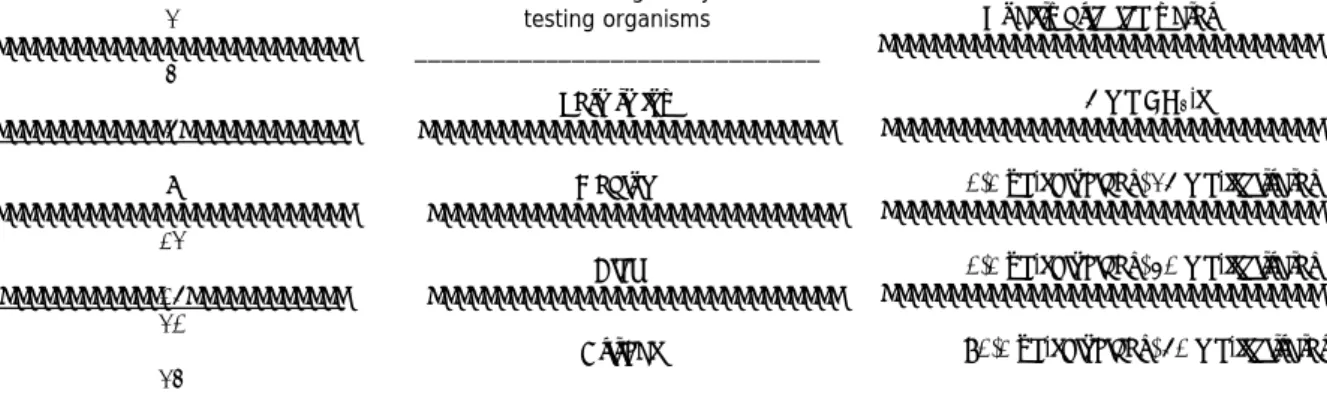
Table 1. Comparing the genotoxicity level results of different drinking water qualities (Firbas P.)
The genotoxicity level (expressed in percentage points – is the relationship between all metaphase cells and cells with chromosome defects, n =
200) 2 ___________________________ 3 _____________5_____________ 9 ___________________________ 12 ____________15____________ 20 23 Threat level (risk assessment) Natural mutagenicity of testing organisms _______________________________ Zero to low _______________________________ Medium _______________________________ High _______________________________ Critical
Samples of drinking water and some chemicals
Quality drinking water
_________________________________ 5 mg NO3/l _________________________________ 0,1 µg/l biocides, 25 mg/ll nitrates _________________________________ 0,1 µg/l biocides, 40 mg/ll nitrates _________________________________ (>0,1 µg/l biocides, 50 mg/ll nitrates
Five bulbs of Allium cepa L. (size 16-18 mm, weight 3-4 g, aged max. 6 months) are used for each sample, and both controls. The testing plants of young onions are stored at a temperature of
10-14ºC, and humidity of 50%.
In the water samples, as well as during both controls, the young onion bulbs of the testing plants are grown over a period of 72 hours at a temperature of 20-21ºC. Exposure of the testing plants to an aqueous solution of colchicine, blocks the cell’s division during the metaphase stage, where
chromosomes are most visible (metaphase cells). The ALLIUM test provides results for general toxicity and the genotoxicity level. After coating in carmine acetic acid (3-4 min., 60ºC), microscopic
preparations are made - crushings (maceration). Any chromosomal damages within the chromosome sets can now be observed. After treatment with liquid CO2 (-70ºC), the crushings are placed into Euparal.
2.2. Karyotypization of young onion (Allium cepa L.) chromosomes
Before analyzing chromosome damages, the general characteristics of chromosome morphology should be mentioned, as they allow us to clarify the mechanisms of different chromosome damage origins. The common onion (Allium cepa L.) has 16 chromosomes (Figure 3). A chromosome is formed by two parallel strands or chromatids of equal length, each representing the longitudinal half of the chromosome. The chromosome has a primary constriction (centromere), dividing the chromosome into long and short arms. Chromosome arms may be of the same length. The ratio between the lengths of the arms gives the form of chromosomes and is the basis for chromosomal karyotypization
(Levan et al. 1964, Firbas 2004).
2.2.1. CATEGORIES OF STRUCTURAL CHROMOSOME DAMAGE
Structural chromosome damages are any changes in the structures of the chromosomes (Figure 4).
Chromosome damages are of chromatid and chromosomal types. Most chemical mutagens cause damage to the chromatid type, and are the most frequent cause of injuries. Injuries in the centromere (in the primary constriction of a chromosome) are also injuries to the chromatid type, and locally bound to the centromeric region of the chromosome. However, the most common injuries to
chromosomes occur within the centromeric region and the centromeres themselves (LC), respectively.
In this area the chromosome is also most vulnerable to injury (Figure 4).
CHROMATID INJURIES
Single break chromatide (SBC) - Double break chromatide (DBC)
- Multiple break chromatide (MBC)
CENTROMERIC INJURIES
Break centromere (BC)
Gap break chromatide (GBC)
CHROMOSOME DAMAGE
Ring Chromosome (RC) - Dicentric Chromosome (DC)
Injuries within a chromosome set affect one or two chromosomes within that set, possibly 3 to 7 or 8, and in rare cases up to 12. However, all chromosomes within a chromosome set could be damaged. The higher the level of genotoxicity, the more damaged chromosomes in the set. There can also be
3. Research results and discussion
Sampling of drinking water: 01. 11. 2010
Testing plants were exposed at two locations: in the MIK - Celje office (from 14th until 17th November
2010) and, after a 24 hour delay, in the office in Domžale (from 15th until 18th November, 2010). The
cytogenetic research was performed from 13th until 19th November, 2010).
The following patterns were researched using the Allium test:
I. Drinking water; Muretinci 14, 2272 Gorišnica
II. Ditto - water treated by using the energy window (in the office in Domžale)
III. Drinking water; Muretinci 14, 2272 Gorišnica
IV. Ditto – water treated using the energy window (office at MIK Celje)
V. Negative control (reverse osmosis water filtration – R.O.)
VI. Positive control (1 mg/L or 1 ppm of methyl methanesulfonate - MMS 4016 SIGMA)
Samples I. and II. - Domžale location; samples III. and IV. - MIK location, Arclin business park (Vojnik).
3. 1. General toxicity and the genotoxicity level
(Fisher's Exact Test).
The results of general toxicity and the genotoxicity level are presented in Table 2 and photos 5, 6, 7,
and 8.
General toxicity (root lengths of testing plants) between drinking water (Sample I) and treated drinking water (Sample II) is characterized as statistically significant.
General toxicity (growth length of testing plants) between drinking water (Sample III) and treated
drinking water (Sample IV) is not characterized as being statistically significant.
The treated testing plants (Sample II) have longer roots than the non-treated (Sample I), p <0.05.
Table 2. Cytological effects of the examined samples - Genotoxicity level research and the average length of tested Allium cepa L plant roots - General toxicity research
Sample Metaphase Number of Number of cells Genotoxicity Average
Index metaphase with chromosome level length of cells damages (percentage point) roots (mm)
I 85 200 37 18.50٭ 36 II 93 200 2110.50٭٭ 37 III 87 200 39 19.50٭ 34 IV 91 200 20 10.0٭٭ 40 V 92 200 5 2.5 42 VI 27 100 21 21.0 19
Treated drinking water (Sample II) is significantly different statistically from the sample of non-treated drinking water (Sample I), with the characteristic level of p = 0.0325 <0.05, and the treated drinking water (Sample IV) from the sample of non-treated drinking water (Sample III) with the characteristic level of p = 0, 0106 <0.05.
The treated water samples (Samples II, IV) have reduced levels of genotoxicity in relation to the
non-treated drinking water (Sample I, III).
The treated drinking water (Samples II, IV), is significantly uncharacteristic statistically between them both; p = 1
Non-treated drinking water (Samples I, III), is significantly uncharacteristic statistically between them
both; p = 0.8986.
4. Conclusion
The results show that the level of genotoxicity in the drinking water, after treatment using energy windows with built-in energy discs containing information cells (IC) is reduced and the quality improved by using MOP - Poznik technology. This means that the quality of the drinking water changes from a high-quality risk assessment (18.50 / 19.50 percentage points) to a medium risk
assessment (10.50 / 10.0 percentage points) (Compare Tables 1 and 2).
The difference in the root growth and development of young onion testing plants (Allium cepa L.) as a cytogenetic study into root-tip cells meristemic testing plants, shows that an energy window with a built-in energy disc containing an information cell (IC), improves the quality of space and,
consequently, affects our well-being and health.
5. The aims of the research and its statistical characteristic
The aim of this research was undoubtedly to establish whether or not there is pollution and, in particular, what the risk is for living organisms, including human beings. The cause or source of the pollution can be determined using the above ALLIUM test. Only when we know the origin can
measures be taken, and thus contribute to maintaining a healthy environment, as much as possible.
The inclusion of genotoxicity researches into environmental protection is of great importance, since it allows understanding of the impacts and consequences of genotoxic substances on living organisms. It is time for us to act responsibly, thus ensuring a healthy environment which also includes high quality drinking water.
Statistically-established significant differences among the investigated samples are confirmed by the statistical calculation of paired data analysis using the two-way Fisher’s exact test, which gives the p value property between pairs of data. These pairs (investigated samples) are either different
(statistically significant) or the same (statistically insignificant), and tell us what the risk is.
Which risks are insignificant enough? The most common values are 0.05, followed by 0.01, and 0.001.
With regard to these limits we can also speak about 5%, 1%, and 0.1% levels of significant results. Whichever of these levels we choose depends a great deal on the nature of the data and the problem
addressed by
the basic assumption. Statistical significance should not be the only determining factor when
6. Sources and Literature
LEVAN A. (1964) Hereditas, 52. FISKESJÖ G. (1985). Hereditas, 102.
ROYAL SWEDISH ACADEMY OF SCIENCE (1973). Ambio 3. AL-SABTI K. (1985). Environ. Contam. Toxicol. 34 GRANT W. F. (1982). Mutation Research, 99. AGRESTI A. (1992). Statitical Science, 7,131-153 INVITTOX – PROTOKOL No. 8, IP – 8 ©. (FISKESJÖ G.,1989) FIRBAS P. (1997). 5th Yugoslav Ecological Congres.
AL-SABTI K. (1989). Cytobios, 58. AL-SABTI K. (1992). Cytobios, 70. Beograd–YU.
AL-SABTI K. (1992). Mutation Research, 280. FIRBAS P. (1998). 5. Slovenski Festival Znanosti (Slovenian Science Festival),
NIELSEN M. H., RANK J. (1994). Hereditas 121 Ljubljana–Slovenia
FISKESJÖ G. (1993,). TECHNICAL METHODS FIRBAS P. (1999). DELO – Znanost (Newspaper 'DELO' – Science), 8th Dec., 1999.
SECTION. Environmental Toxicology and Water Quality - FIRBAS P. (2003). DELO – Znanost (Newspaper 'DELO' – Science), 7th Apr., 2003.
© 1993, John Wiley & Sons, Inc. RANK J. (2003). Ecology 1, 38-42. FISKESJÖ G. (1994,). TECHNICAL METHODS FIRBAS P. (2004). Publisher »ARA založba«, Ljubljana
SECTION. Environmental Toxicology and Water Quality - www.vedež.dzs.si
© 1994. John Wiley & Sons, Inc. FIRBAS P. (2007). DELO – Znanost (Newspaper 'DELO' – Science), 4th Jan., 2007
FIRBAS P. & AL- SABTI K. (1995). Archives of Biological Sciences, 47 (1- KUMAR P. AND PANNEERSELVAM N. (2007). Facta
2). Universitatis Series: Medicine and Biology, Vol. 14, No. 2
FIRBAS P. (1995). II. International Symposium on Exant RAGUNATHAN I. AND PANNEERSELVAM N. (2007).
and Fosil Charophytes, Madisom–USA. Journal of Zhejiang University Science B. 8(7).
20th November, 2010