University of Massachusetts Amherst University of Massachusetts Amherst
ScholarWorks@UMass Amherst
ScholarWorks@UMass Amherst
Doctoral Dissertations Dissertations and Theses
July 2018
Adopting Active Learning Classroom (ALC) Technology and
Adopting Active Learning Classroom (ALC) Technology and
Overcoming Barriers: A Faculty Development Intervention Model
Overcoming Barriers: A Faculty Development Intervention Model
for Technology-Enhanced Learning Spaces
for Technology-Enhanced Learning Spaces
Bradford D. WheelerUniversity of Massachusetts Amherst
Follow this and additional works at: https://scholarworks.umass.edu/dissertations_2
Part of the Higher Education and Teaching Commons, Other Education Commons, Other Teacher Education and Professional Development Commons, and the Scholarship of Teaching and Learning Commons
Recommended Citation Recommended Citation
Wheeler, Bradford D., "Adopting Active Learning Classroom (ALC) Technology and Overcoming Barriers: A Faculty Development Intervention Model for Technology-Enhanced Learning Spaces" (2018). Doctoral Dissertations. 1305.
https://scholarworks.umass.edu/dissertations_2/1305
This Open Access Dissertation is brought to you for free and open access by the Dissertations and Theses at ScholarWorks@UMass Amherst. It has been accepted for inclusion in Doctoral Dissertations by an authorized administrator of ScholarWorks@UMass Amherst. For more information, please contact
Adopting Active Learning Classroom (ALC) Technology and Overcoming Barriers: A Faculty Development Intervention Model for Technology-Enhanced Learning Spaces
A Dissertation Presented by
BRADFORD D. WHEELER Submitted to the Graduate School of the
University of Massachusetts Amherst in partial fulfillment of the requirements for the degree of
DOCTOR OF PHILOSOPHY May 2018
College of Education
© Copyright by Bradford D. Wheeler 2018 All Rights Reserved
Adopting Active Learning Classroom (ALC) Technology and Overcoming Barriers: A Faculty Development Intervention Model for Technology-Enhanced Learning Spaces
A Dissertation Presented By
BRADFORD D. WHEELER
Approved as to style and content by:
____________________________________ Torrey Trust, Chair
____________________________________ Kate Hudson, Member
____________________________________ Gabriela Weaver, Member
______________________________ Jennifer Randall, Associate Dean College of Education
DEDICATION
To all educators, always know that your efforts transform lives in so many powerful ways, beyond what you can ever know. Thank you for your dedication to growing minds, challenging questions, and constant feedback – it makes a big difference!
v
ACKNOWLEDGEMENTS
This has been a long journey along a winding path. Along the way, I have had the pleasure of meeting and sharing the journey with some very inspirational people.
To my committee, I thank you for the continued feedback and professional mentorship. The insights and support you provided along the way helped this study blossom. Torrey Trust, thank you for your dedication to chairing this study and for your scholarly mentorship. You are an inspiration and have provided such fantastic support. It is difficult to summon words to express the gratitude and respect that I have for you. Dr. Kate Hudson, thank you for your steadfast guidance in higher education. For more than a decade, beginning with the Learning Commons renovation in 2005, I have been inspired by your work with education technology. And Dr. Gabriela Weaver, thank you so much for the broad exposure to faculty development and for your strong commitment to reliable methods that improved my research so much.
While the dissertation is the culmination of scholarly research, my journey along this path most clearly begins in 2001 when I matriculated as a transfer student to UMass Amherst. From those early days, I want to thank Dennis Hanno, the late Jamie (Jill) Suters, and my great uncle Jeremiah Mervin Allen. Little did I know how much these three individuals would positively shape and frame my perspectives on higher education. I also want to recognize the constant familial support I received from those early years onward from my “International Programs Office family” including Carol Lebold, April Stroud, Carol Rogers, Kalpen Trivedi, Stacy Lutsch, Regine John, Jean Karpinski, Sherry
vi
Bohonowicz, Kate Smith, Laurel Foster-Moore, Naoko Ishida, and Nancy Condon. Let’s just say you’ve helped me grow so much as a professional.
I want to especially thank Dave Hart who introduced me to Kem Saichaie. Kem catalyzed my motivation and passion for conducting this research on faculty development and education technology. Dave and Kem, you always shine when I’m at a crossroads; be it during major life transitions or professional milestones; you’ve always helped me to envision what I can barely express.
Thank you so much to all my colleagues at the Institute for Teaching Excellence & Faculty Development, formerly the Center for Teaching and Faculty Development. A special thank you to Mary Deane Sorcinelli; it has been an honor to work and learn from you. Your research and writings have left a deep and transformative footprint on this study and my approach to faculty development. Additionally, I want to thank Matt Misiaszek and Dan Walker for all of your logistical assistance over the years.
Along my research journey, I joined Boston University’s Center for Teaching and Learning. This vibrant young team brought new perspectives about faculty development into focus and helped me to realize the value of praxis-scholarship in this field. Matthew Trevett-Smith, your leadership at the Center has been nothing short of inspirational, your advocacy and support have helped me truly grow as a young professional. Colleagues, Jean Otsuki, Kate Hamilton, and Nicholas Wilson, you’ve formed an “alignment
triangle” around me that is bigger than the world-famous Citgo sign outside our office in Kenmore Square. Thank you all for being not only my colleagues, but my work-family. You know, nobody else eats lunch at 11:30AM and runs home for dinner at 5:30PM like we do!
vii
Externally, I cannot thank my sideline colleagues and friends enough. You each picked up my spirits when I was at my lowest. I am eternally grateful Michele DiPietro, Antonia Levy, Thomas Stieve, Alexia Ferracuti, Olena Zhadko, Traci Stromie, Josie Baudier, Michele Parker, Kimberly Whiter, Brian Litzenberger.
Lastly, I would like to acknowledge the unwavering support of several dear friends and family members who never stopped believing in me and moving me along. First, thanks to my graduate school pals, Adena Calden and Kyla Walters who
collectively formed the #wegotthis team. Also, a special thank you to close friends, Stephanie Taylor, Julie Skogsbergh, Vanessa Martinez-Renuncio, Kate Freedman, Sam Anderson, Alex Martines, Ramon Solorzano, Christina Jones, and Amy Tanguay. To my family, Jim Wheeler, Janet Wheeler, and Greg Wheeler, thank you for all of the love and support you’ve provided. Last but not least, Paul St. John Frisoli thank you for being my strongest believer through thick and very thin. I’d also like to thank Missy and Frito, the crazy kitties who watched me write (and sat on my keyboard) for so much of this
viii ABSTRACT
ADOPTING ACTIVE LEARNING CLASSROOM (ALC) TECHNOLOGY AND OVERCOMING BARRIERS: A FACULTY DEVELOPMENT INTERVENTION
MODEL FOR TECHNOLOGY-ENHANCED LEARNING SPACES
MAY 2018
BRADFORD D. WHEELER
B.S., UNIVERSITY OF MASSACHUSETTS, AMHERST M.Ed., UNIVERSITY OF MASSACHUSETTS, AMHERST
M.S., UNIVERSITY OF MASSACHUSETTS, AMHERST Ph.D., UNIVERSITY OF MASSACHUSETTS, AMHERST
Directed by Assistant Professor Torrey Trust
The goal of this study was to understand how instructors use technology, and what challenges they face, but also to increase the participants’ understanding of Active Learning Classroom (ALCs) technologies as it applies to their teaching by applying action research methodologies. This study also seeks to lay a foundation for additional research on ALCs, education technology, and the needs of instructors in terms of faculty development in technology.
This study investigates a group of 13 faculty members in multiple disciplines teaching in ALCs. Thus far, research on the impact of technology-enriched learning environments like Active Learning Classrooms has typically centered around student learning (Beichner et al., 2007; Frazee, Hughes, & Frazee, 2014; Morrone, Ouimet,
ix
Siering, & Arthur, 2014). Less attention has been paid to the faculty development needed for instructors to properly take advantage of these environments
The research study addresses three questions: First, how and, for what purposes, do faculty use technology in the ALC? Second, what technology adoption factors and barriers were experienced by instructors in an Active Learning Classroom? Third, using Kolb’s experiential learning theory (1984, 2014), how does a semester-long faculty development intervention program impact instructors’ adoption of Active Learning Classroom technologies?
Results indicated that the most frequently used technologies were those that were familiar from traditional (technology-equipped) lecture spaces that faculty had used.
Faculty were most comfortable with content delivery tools such as instructor laptops connected to the LCD TVs, the instructor podium, and whiteboards. Additionally,
technology adoption factors and barriers to adoption were identified, including time, ease of use, equipment availability, institutional classroom support, peer support, and
instructor comfort levels with technology and troubleshooting. Through action research, the newest Active Learning Classroom instructors received the most hands-on training on the classroom hardware during consultations, and the exposure to classroom technologies and troubleshooting tips via an experiential learning framework allowed them to better understand the podium interface, document camera and wall-buttons while having an opportunity to reflect on their teaching.
x
TABLE OF CONTENTS
Page
ACKNOWLEDGEMENTS ...v
ABSTRACT ... viii
LIST OF TABLES ... xiv
LIST OF FIGURES ...xv
CHAPTER 1. INTRODUCTION ...1
Background to the Problem ... 1
Statement of the Problem ... 3
Statement of Purpose... 4 Research Site ... 5 Theoretical Framework ... 5 Research Questions ... 6 Methods ... 6 Results ... 8 Limitations ... 9 Delimitations ... 9 Conclusion ... 10 2. LITERATURE REVIEW ...11 Introduction ... 11
Active Learning Research ... 12
Faculty Development ... 23
Education Technology in Classrooms ... 31
Technology Adoption and Barriers to Technology Adoption... 33
xi
Conclusion ... 44
3. THEORETICAL FRAMEWORK ...45
Experiential Learning Theory (ELT) ... 46
Experiential Learning in Active Learning Classrooms ... 50
Conclusion ... 51
4. METHODOLOGY Introduction ... 52
Research Questions ... 52
Research Site ... 53
Active Learning Classroom Technology Tools ... 55
Study Design ... 60
Action Research Methodology ... 60
Recruitment ... 62 Participant Profile... 63 Instrument Overview ... 64 Data Collection ... 65 Instrument Description ... 66 Data Analysis ... 74 Member Checking ... 82
Methodological and Data Limitations ... 82
Positionality of the Researcher... 83
5. RESULTS ...91
Introduction ... 91
Section I: Technology Use ... 91
Section II – Barriers and Adoption ... 138
Section III: Faculty Development Training & Technology Adoption ... 167
xii
R1: How and for what purposes did faculty use technology in the ALC? ... 188
R2: What technology adoption factors and barriers were experienced by instructors in an ALC? ... 194
R3: How does a semester-long faculty development intervention program impact instructors’ adoption of ALC technologies? ... 202
Study Limitations and Directions for Future Research ... 209
7. CONCLUSION ... 213
APPENDICES A. INSTITUTIONAL REVIEW BOARD (IRB) APPROVAL ...220
B. ACTIVE LEARNING CLASSROOM TECHNOLOGY LIST ...221
C. RECRUITMENT WEBSITE...222
D. CONSENT FORM FOR PARTICIPATION IN A RESEARCH STUDY ...223
E. INSTRUMENT PRE-TEST SURVEY ...227
F. INSTRUMENT, ACTIVE LEARNING CLASSROOM OBSERVATION TOOL ...233
G. INSTRUMENT, ACTION RESEARCH - CONSULTATION I OF II ...237
H. INSTRUMENT, ACTION RESEARCH - CONSULTATION II OF II ...239
I. QUANTITATIVE SURVEY INSTRUMENT, POST-TEST ...241
J. INSTRUMENT APPROVAL, LEARNING SPACES RESEARCH INSTRUMENTS ...246
K. INSTRUMENT APPROVAL, ISTE CLASSROOM OBSERVATION TOOL ...248
xiii
M. TECHNOLOGY EQUIPMENT FAILURES ...252
N. ACTIVE LEARNING CLASSROOM LAYOUTS ...256
xiv LIST OF TABLES
Table Page
1. ALC Faculty Development Fellowships ... 22
2. Active Learning Classroom Technology Equipment ... 56
3. List of Participants ... 63
4. Table of Instruments ... 65
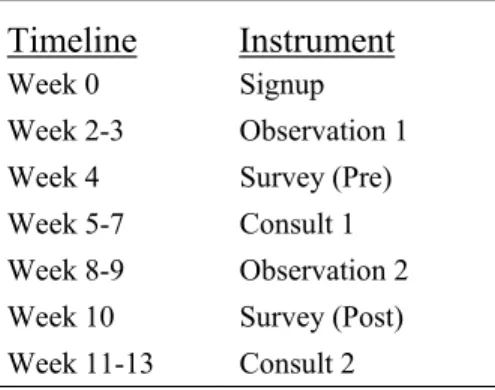
5. Data Collection Timeline ... 65
6. Summary Characteristics of Previous Classroom Observation Protocols ... 68
7. List of the Survey Instrument Question Banks (1 of 2) ... 71
8. List of the Survey Instrument Question Banks (2 of 2) ... 72
9. Thematic Analysis Guide ... 75
10. Instructor Operating System Preferences ... 93
xv LIST OF FIGURES
Figure 1. Experiential Learning Model ... 50
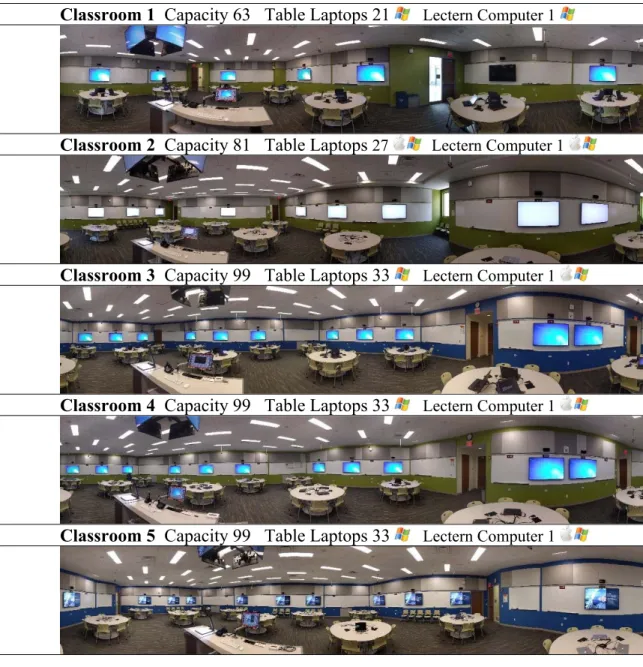
Figure 2. Active Learning Classroom ... 54
Figure 3. Active Learning Classroom ... 56
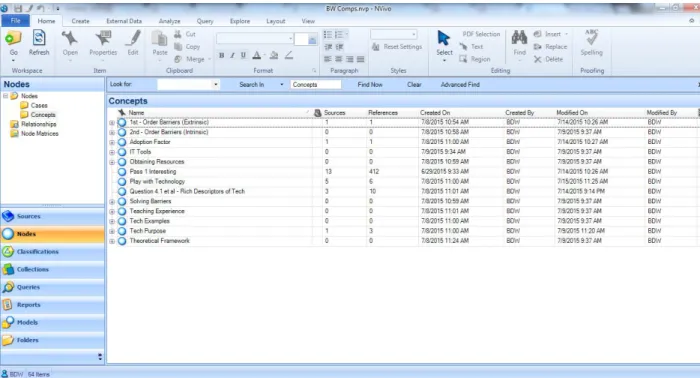
Figure 4. Thematic Codes in NVivo Used for Qualitative Analysis ... 77
Figure 5. Final Codes for Qualitative Data Analysis ... 79
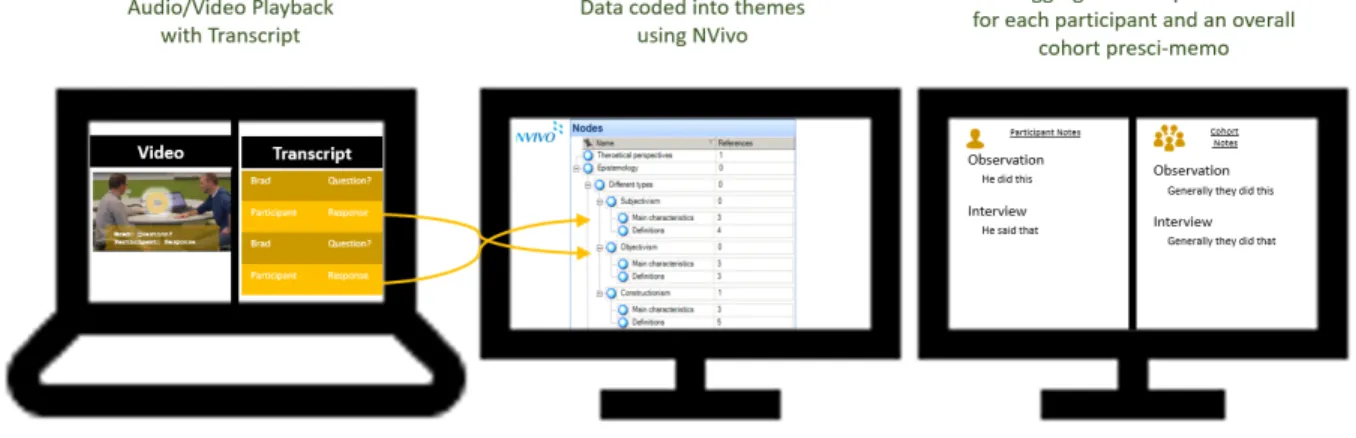
Figure 6. Qualitative Data Analysis Factory process (QDAF) model. ... 79
Figure 7. Technology Importance for Instructors ... 95
Figure 8. Instructor-View of an Active Learning Classroom ... 106
Figure 9. Learning the Podium and Crestron Interfaces ... 170
Figure 10. Multiple Displays ... 176
Figure 11. Wall Buttons ... 178
1 CHAPTER 1
INTRODUCTION
“The importance of faculty development in technology (FDT) in the twenty-first century is not disputed. The need for FDT programs that provide faculty with training is an on-going process which requires continual implementation of current best practices” Collins (2014, p. iii).
This dissertation includes six chapters. The first chapter is an introduction to this action research study on instructors’ ALC classroom technology use. The second chapter reviews the literature on technology-enhanced classrooms referred to as Active Learning Classrooms (ALCs) and the associated challenges instructors experience with technology in these spaces. Chapter three describes the theoretical framework, which is based on experiential learning and is studied through action research methodology. The fourth chapter details the methods, data collection process, analysis, and limitations of the study.
Chapter five provides results for the three research questions. Chapter six discusses the results. Further details about the study are available in the appendices at the end of this research study.
Background to the Problem
Education technology can have a profound effect on student learning. When used effectively, technology in the classroom can help students engage with course material, the instructor, and each other (Dahlstrom, Walker, Dziuban, & Morgan, 2013; Johnson, S., Estrada, & Freeman, 2015; Venkatesh, Croteau, & Rabah, 2014). Students can
2
mobile phones, and web-based services (Baepler, Walker, Brooks, Saichaie, & I., 2016; Bishop & Keehn, 2015; Dahlstrom et al., 2013). Technology can be used to facilitate student collaboration on meaningful and authentic learning tasks, making students’ education more applicable to real-world challenges beyond the classroom (Collins & Halverson, 2009). Technology also supports online peer-review and collaboration opportunities outside the classroom (Felder & Brent, 2016), as well as allowing students to receive more immediate feedback in class using audience response systems (Caldwell, 2007; Good, 2013).
Given the well-documented benefits of education technology, higher education institutions invest significant capital in infrastructure to facilitate technology-enhanced learning. Likewise, faculty are encouraged to take advantage of these dynamic new learning environments both online and in traditional classrooms. The 2015 EDUCAUSE ECAR study, which included 17,451 respondents from 151 institutions, found that “many faculty think they could be more effective instructors if they were better skilled at
integrating certain kinds of technologies into their courses” (Dahlstrom, 2015, p. 18).
Students may also perceive a link between effective instruction and an instructor’s ability to integrate technology. In a study of how students perceived Active Learning Classroom environments, Baepler et al. found that “technological prowess is a significant factor linked to student acceptance of the [ALCs], because survey data have indicated that many students perceive that their instructors are unskilled in implementing technology in ALCs” Baepler et al., 2016, p. 190).
3
Thus far, research on the impact of technology-enriched learning environments like Active Learning Classrooms has typically centered around student learning (Beichner et al., 2007; Frazee, Hughes, & Frazee, 2014; Morrone, Ouimet, Siering, & Arthur, 2014). Less attention has been paid to the faculty development needed for instructors to properly take advantage of these environments and their technology. In 2015, I developed a pilot study to investigate the barriers to technology adoption and adoption factors experienced by instructors transitioning to ALCs. I found that aside from EDUCAUSE’s recent study of faculty technology use, Van Horn et al.’s (2014) study on faculty’s adoption of Active Learning Classrooms, and a study conducted at Worcester Polytechnic Institute on faculty technology use in ALCs, the literature is relatively lacking in this domain. This gap in the literature may be caused in part by a lack of faculty development available to help instructors transition their pedagogy into
technology-rich classrooms, as “University faculty members have been among the last educators to experience the educational thrust toward technology integration” (Nicolle, 2005, p. 36).
Statement of the Problem
While supporting technology-rich pedagogy is a vital skill set that needs to be developed in faculty, facilitating the transition into new learning environments with new classroom technology is a major challenge for universities today (Baepler et al., 2016).
For example, technology requires dedication and practice to implement in the classroom, and faculty frequently report lack of time as a barrier to the adoption and effective use of classroom technology (Butler & Sellbom, 2002; Kagima & Hausafus, 2001; Lin, Huang,
4
& Chen, 2014; Mrabet, 2009; Nicolle, 2005). Also, instructors require both training in how to use classroom technology at a technical level, and support in applying it effectively at a pedagogical level. These resources are not always available to faculty; and, when resources are available, they tend to focus more on mastering technical skills than developing effective strategies for using technology to enhance learning. In the absence of robust faculty development opportunities, instructors frequently gravitate towards using technology tools they know and instructional strategies with which they are already familiar -- which leads to underutilized technology in technology-rich learning spaces. Finally, educational research lacks the data necessary to properly understand and implement best education technology practices for faculty teaching in ALCs.
Statement of Purpose
Given the importance of education technology for today’s students, and the financial investment universities have made in recent years to construct technology-rich classrooms, researchers and educators should explore the best ways to assist instructors in using technology in their teaching.
This research study adds insights into the practitioner field of faculty development in technology by way of the action research methodology. Action research methodology seeks to accomplish two things. According to Dick (1993), it seeks to “bring about change in some community or organization or program [and] increase understanding on the part of the researcher or the client, or both and often some wider community” (p. 4).
5
In the case of this research study, action research methods were applied to address the technology challenges instructors experience in one of the most technology-rich learning environments in higher education today: Active Learning Classrooms (ALCs).
The goal of this study was to understand how instructors use technology, and what challenges they face, but also to increase the participants’ understanding of ALC classroom technologies as it applies to their teaching. This study also seeks to lay a foundation for additional research on ALCs, education technology, and the needs of instructors in terms of faculty development in technology.
Research Site
For this study, I examined the Active Learning Classrooms (ALCs) at a large research university in the Northeast. The university recently constructed five ALC classrooms and encouraged instructors from any program or discipline to teach in these new learning environments. I selected these ALCs for this study because they were newly equipped with the latest educational technology, and their availability to different
disciplines meant the classroom technology could be used to meet a variety of discipline-specific instructional strategies.
Theoretical Framework
I used the Experiential Learning Theory (Kolb, 1994, 2014) as a framework for exploring ALC classroom technology usage, adoption, and barriers to adoption.
Experiential Learning provides four discrete phases: concrete experience, reflective observation, abstract conceptualization, and active experimentation. Applying this
6
framework allowed me to engage participants in a hands-on approach to help them address particular, discipline-specific technology challenges in their classrooms. The two-way process of engaging both the participant and the researcher allowed for a more transformative research process that benefited the research study and the participants’ ALC technology skill sets as well.
Research Questions
In this study I address two primary research questions about faculty use of technology in Active Learning Classrooms:
R1: How, and for what purposes, do faculty use technology in the ALC? R2: What technology adoption factors and barriers were experienced by instructors in an ALC?
While I designed this study to explore how instructors use technology in Active Learning Classrooms, it was also designed to empower instructors to use technology in meaningful ways to enhance student learning. Therefore, using Kolb’s Experiential Learning Theory (1984, 2014), I also examined a third research question:
R3: How does a semester-long faculty development intervention program impact instructors’ adoption of ALC technologies?
Methods
In order to examine the above research questions, I followed 13 participants through an action research data collection strategy. First, I observed participants teaching in their ALC. Second, the participants completed an online survey based on prior
semi-7
structured one-on-one consultation regarding their ALC technology use. In the post-phase, an additional observation, survey, and semi-structured consultation concluded the data collection activities. The data collection occurred over six discrete periods in a single semester, with each phase informing the next.
Phase 1: Observation. In the first phase of the data collection process, I observed 13 instructors in their ALC classroom within the first two-weeks of their class. Positioned behind the instructor podium, I utilized an observation protocol that focused on
instructors’ use of the twenty-five ALC technology equipment pieces.
Phase 2: Survey. For the second phase of the data collection process, I designed an online survey which asked instructors to describe their technology use, the importance of the 25 pieces of ALC classroom hardware, and the challenges they experienced with the classroom technology. I deployed the survey in week four of the semester. I selected an online survey method in order to easily gather data consistently from multiple
participants. All 13 instructors in the study completed the survey.
Phase 3: Consultation. In the third phase of the data collection process, I conducted faculty development consultations regarding instructors’ use of ALC
technology. I consulted with all 13 participants regarding their own classroom technology adoption factors and barriers, while also providing technology consultation support. By conducting in-depth consultations with action research, I was able to explore technology usage and address challenges with the hardware.
8
Phases 4, 5, 6.The next three phases repeated the measures taken in phases 1, 2, 3, but occurred during the second half of the semester in order to re-address the
challenges and barriers instructors experienced.
Data Analysis. I conducted thematic analysis (Braun & Clarke, 2006) for the entire data set using NVivo. The dataset included 13 participants with two observations, surveys, and consultation interviews each. Additionally, I analyzed quantitative data using SPSS and Microsoft Excel to report descriptive statistics. Using a combination of open codes and prescribed codes from literature on technology adoption and barriers (Ertmer, 1999), combined with experiential learning theory, I explored the data for latent patterns using my own new data analysis technique using multiple LCD displays,
audio/video, transcript data, and NVivo software. This process helped to uncover themes and subthemes in qualitative data (Ryan & Bernard, 2003).
Results
Overall, the most frequently used technologies were those that were familiar to faculty and those that they had previously used. Faculty were most comfortable with their own instructor laptops connected to the LCD TVs, the instructor podium, and
whiteboards. Secondly, technology adoption factors and barriers to adoption were found and importantly linked on a continuum in this study, these included time, ease of use, equipment availability, institutional classroom support, peer support, and instructor comfort levels with technology and troubleshooting. The most novice instructors received the most hands-on training on the classroom hardware during consultations, and this
9
exposure to classroom technologies and troubleshooting tips allowed them to better understand the classroom technology while having an opportunity to reflect on their teaching.
Limitations
In this study, I explored the experiences of 13 participants teaching in ALC classrooms. While all participants completed each of the six instruments, the small sample size makes the results difficult to extrapolate to all college and university contexts. Also, the recruitment process yielded few instructors who were new to the learning environment. Instead, the majority of participants were veteran ALC instructors who largely showed a well-developed technology savviness regarding the classroom equipment. They may not be representative of an average instructor beginning to teach in an ALC learning environment.
Delimitations
I delimited this study to higher educational instructors teaching in ALC classrooms at a research university. I specifically focused on instructors’ use of educational technology through a variety of research methods. I do not include
information from students in this study, nor do I address student learning outcomes based on instructor's use of education technology in the classroom, as this was beyond the scope of the research questions. Since the aim was to examine instructors’ use of technology hardware in the ALC learning environment, I did not include online platforms such as the Learning Management System and other web-based tools as part of the study.
10
Conclusion
Conducting research on faculty’s use of new learning spaces is a vital and important topic for the fields of education technology and faculty development. The following chapters address the three research questions pertaining to ALC’s technology adoption use. Beginning with the next chapter, I provide a synthesis of literature on ALCs technology adoption, barriers to adoption, and associated faculty development initiatives. In chapters three and four, I address the action research methodology and instrumentation of the semester-long study in the context of experiential learning. I cover the results in chapter 5, while chapter six provides a discussion of the results as they connect to the existing literature. I conclude the research study with chapter seven, which provides a broad conclusion of the research.
11 CHAPTER 2
LITERATURE REVIEW
In the previous chapter, I highlighted the need for a hands-on approach to studying faculty development in Active Learning Classrooms (ALCs). In this chapter, I will discuss key findings from the literature related to ALCs, technology adoption, barriers to adoption, the role of faculty development in addressing such barriers, and models that are available for technology integration in the classroom.
Introduction
As part of a comprehensive literature review on the topics of Active Learning Classrooms, education technology adoption factors and barriers, and faculty
development, I selected articles for review based on an extensive search across several research databases, including Education Journals, ERIC, and Libraries Worldwide. I then narrowed these results to articles published within 15 years, the majority of which were peer-reviewed. Several seminal pieces outside this domain were included due to their relevance to the topic. I imported all documents into NVivo for analysis and coding. Several themes emerged from the review, including a deep incorporation of education technology in ALCs, the positive impact of ALCs upon student learning, and the need for pedagogical training of faculty to foster these benefits. Further, this review revealed a lack of differentiation between technology adoption factors and barriers, indicating that the two are likely interrelated.
12
Active Learning Research
The concept of the active learning classroom arose from the broader literature on active learning. Active learning provides students with opportunities to engage in non-traditional, non-lecture-based activities that, independently and collaboratively, engage them with the course material (Forsgren et al., 2014; Freeman et al., 2014b; Prince, 2004). Active learning is commonly referenced in higher education research and practice as an umbrella term to cover a variety of pedagogical strategies that instructors employ in order to engage the learner more deeply than what can be achieved using traditional lecturing (Forsgren, Christensen, & Hedemalm, 2014; Freeman et al., 2014b; Prince, 2004). These strategies range in scope, and have variously been termed “active,”
“cooperative,” “collaborative,” “case-based,” and “problem-based” learning, among other terms used for non-lecture-based teaching strategies (Forsgren et al., 2014; Prince, 2004).
Although the relevance of these strategies to different disciplines varies, active learning techniques have been demonstrated as effective (Prince, 2004). For example, a meta-analysis of 225 studies in STEM classes conducted in 2014 reported that students in the active learning sections of a class improved their exam scores by an average of 6%, while those in traditional class sections were more likely to fail the exams (Freeman et al., 2014b). Active learning in a nursing course found positive results using case-based methods for teaching. By examining authentic case studies in nursing, student learning improved by making theoretical knowledge in the nursing discipline more realistic through active student engagement with theory. Students gathered knowledge and argued for their own interpretation of the cases (Forsgren et al., 2014). Regardless of the specific
13
active learning strategy, students are more likely to perform well on tests and engage in more authentic applications of learning with active learning than can be afforded during traditional lectures.
Active Learning Classrooms Research
The Active Learning Classroom (ALC) provides the main setting for realizing active learning pedagogy. The ALC offers a space to encourage a transition in pedagogy that favors a student-centered approach to teaching, and research indicates that ALCs positively impact student learning just as active learning pedagogies do (P. M. Baepler, Walker, Brooks, Saichaie, & I., 2016; Beichner, Saul, & Allain, 2000; Ferris, Jennie, Weston, Cynthia B., Finkelstein, 2009). In particular, ALC research illustrates that the ability of classroom design (a classroom’s layout and learning space configuration) to support the socialization and problem-solving aptitude of students constitutes a key factor for fostering the kind of student-centered learning essential to active learning
performance and success.
Classroom Design and Socialization
Much research has been dedicated to identifying the impact of the learning environment on student learning over the past decade. Classroom design itself remains a focal point of research since layout and orientation have been correlated with student attitudes and success (Muthyala & Wei, 2013; Park & Choi, 2014).
ALCs differ greatly from their traditional counterparts in their high level of technology integration and a radically different usage of classroom space that necessitate
14
new classroom management techniques on the part of instructors. Traditional classrooms are typically designed with fixed rows of chairs or auditorium-style seating. The
instructor is usually located at the front of the room, and may or may not have sufficient space to easily move about the classroom in order to employ student-centered approaches (Beichner et al., 2000). Traditional classrooms are often equipped with limited
technology hardware, such as a single projector and a small technology cabinet. In
contrast, the technology in ALCs has been infused into the learning space design (Baepler et al., 2014; Beichner et al., 2000; Gebre, 2012; Gebre et al., 2014; Narum, 2013;
University of Massachusetts Amherst, 2012a; Walker et al., 2011).
In a 2013 study, researchers compared two types of ALC learning spaces: one
configured with rectangular student tables clustered in spokes radiating from the center of the classroom, and another with nodes where pods of students huddled in clusters using rolling desk-chair furniture (Muthyala & Wei, 2013). Students were more familiar with the node layout, which maximized mobility for students in the classroom. However, it proved difficult to share work with other students given the desk-chair combination, while the spoke layout allowed students to foster group discussion and gave them more space to spread out and problem solve, although it was difficult for all students to pivot easily to see whiteboards or student lecture notes. Student performance on exams and audience response systems showed no statistical difference between the two
configurations, suggesting the ALC space and pedagogical alignment were not critical to student success (Muthyala & Wei, 2013). Similarly, researchers comparing ALC designs with traditional classrooms discovered that ALCs overcome the “golden” and “shadow” zones inherent in traditional classroom design. These physical areas in a traditional
15
classroom are known to better support student learning, or “golden” while others that are less ideal, or “shadow” zones. Students in ALC’s did not report the same frustrations associated with golden or shadow zones. They subsequently conclude that “higher education institutions should pay more attention to the educational impact that classroom design has on students, and make investment in healthy learning spaces a priority” (Park & Choi, 2014, p. 769).
The role of student socialization has emerged as an important theme in considerations of optimal classroom design. As quoted in Weidman (2006), socialization was classically defined by Brim (1966) as “the process by which persons acquire the knowledge, skills, and dispositions that make more or less effective members of their society.” Student socialization refers to the impact of student peers on theirs socialization. Employing a mixed-method approach, Beichner found that the configuration of the classroom with round tables and whiteboard spaces was vital to supporting student socialization and positive learning impacts (Beichner et al., 2000). MIT researchers similarly found that socialization was critical to the construction of knowledge, in this case based on a study with a control and experimental group in an ALC environment (Dori & Belcher, 2005). Similarly, in a study that combined faculty and student surveys with focus groups, research conducted on ALCs by Baepler and Walker (2014) and Brooks (Brooks, 2011) showed that students in ALC environments form stronger connections with fellow students and faculty alike.
In addition to the ability of classroom configuration to foster a social connection, the attitudes of faculty and students toward teaching and engagement also have been found to be important success factors. Gebre (2014) conducted research in an ALC classroom
16
using quantitative analysis and showed that “the extent of students’ cognitive and applied engagement and social engagement is related significantly to professors’ conceptions of effective teaching” (p. 84). ALCs also had a measurable effect on how students perceived their learning experiences and their engagement levels (Byers, Imms, & Hartnell-Young, 2014). Gebre uncovered four specific dimensions to student engagement in ALCs: “cognitive and applied engagement, social engagement, reflective engagement and goal clarity” (p. 84).
Several studies have measured improved student performance resulting from ALCs. In a study that used a control and experimental group, Brooks (2011) found that students taught in an ALC outperformed those in a traditional classroom. Similarly, in a multi-year study Beichner et al. (2007) divided over 16,000 students into control and experimental research groups, and found that those taught in the experimental group, which used an ALC classroom, outperformed their peers taught in traditional lecture hall spaces (Beichner et al., 2007, 2000).
Technology in ALCs
From their beginning ALCs have been associated with the integration of the latest technology as a prime characteristic. Higher education institutions continue to invest resources into both hardware and software technology (Dahlstrom & Brooks, 2014; Kyei-Blankson, Keengwe, & Kyei-Blankson, 2009; Saadé, Nebebe, & Tan, 2007). As part of this trend, universities are increasingly building, or renovating, technology-rich classroom spaces with attention to student-centered or active learning environments (Beichner, Saul,
17
& Allain, 2000; D. C. Brooks, 2011; Harvey & Kenyon, 2013; Montiero, 2012; Walker, Brooks, & Baepler, 2011).
Technology-laden classrooms and learning spaces are known by a variety of terms in higher education. While McGill University and the University of Minnesota refer to the classrooms simply as Active Learning Classrooms, many classrooms employ the term Student Centered Active Learning Environment with Upside-Down Pedagogies (SCALE-UP) classrooms, which trace back to designs pioneered at North Carolina State
University and the University of Minnesota (Beichner et al., 2007; Walker et al., 2011). MIT has Technology Enhanced Active Learning (TEAL) classrooms, while Worcester Polytechnic Institute and the University of Delaware call these spaces Problem-Based Learning classrooms. The University of Iowa refers to the classrooms as Transform, Interact, Learn, Engage (TILE). A full list of ALCs can be found online at:
https://goo.gl/8iaRd0.
Most ALCs incorporate a plethora of technology hardware tools that are accessible to both the instructor and students, often for the purpose of facilitating group or team-work styled instruction (Baepler, Brooks, & Walker, 2014; Beichner et al., 2000; D. C. Brooks, 2011; Gebre, Saroyan, & Bracewell, 2014; Narum, 2013; Staros, 2013). The classrooms typically include round tables for student seating and an instructor station located in the center of the room, rather than at the front (Alwash, Grills, Hinrichs, & Wasserman, 2014; Drake & Battaglia, 2014; Foote, 2014; Gebre, 2012). This configuration is said to better democratize the classroom space and foster collaborative learning. Along these lines, ALCs often include movable chairs and whiteboards for students. Team tables are
18
also often connected to LCD displays where students can project their computer screens to share work with the rest of the class (Baepler, Walker, Brooks, Saichaie, & I., 2016).
In traditional classrooms faculty often utilize technology for lower-order
pedagogical learning activities that lend themselves to traditional teaching models, such as memorization. By contrast, each ALC is designed as a constructivist learning
technology environment. Constructivist learning technology environments were first defined by Jonassen (1994) and summarized by Harasim (2011). These environments are designed to create multiple representations of content for learners, mimic the complexity of the real world, provide opportunities for knowledge construction through authentic tasks and critical reflection, and facilitate collaborative learning (Harasim, 2011; Jonassen, 1994). As constructivist learning environments, ALCs are designed to foster higher-order pedagogical activities that allow students to learn by creating and applying knowledge to new contexts (Keengwe, Kidd, & Kyei-Blankson, 2009; Lawless & Pellegrino, 2007; Reid, 2014; Selwyn, 2010).
Although many studies have investigated technology as it pertains to active learning, they often focus only on tools associated with pedagogical techniques (blending, flipping) while leaving other ALC classroom hardware unexplored(Keengwe, Georgina, &
Wachira, 2010; Oliver-Hoyo, Allen, Hunt, Hutson, & Pitts, 2004).
Faculty Transition to ALCs
Regardless of the classroom environment and technology, the pedagogical shift instructors experience in ALCs presents them with many challenges. The new learning
19
environment requires instructors to drastically shift their teaching styles while leveraging new technologies that enable active learning.
Although some studies have investigated faculty training with respect to course design for ALC instruction, many have not investigated the on-the-ground technology adoption experiencein order to understand the barriers faculty encounter (Alwash et al., 2014; Frazee, Hughes, & Frazee, 2014; Morrone, Ouimet, Siering, & Arthur, 2014). As faculty transition to teaching in ALC classrooms, they must make decisions about how they will situate their instruction within ALCs equipped with a variety of technology tools. This was confirmed in a pilot study I conducted in ALCs (Wheeler, 2015). A series of complicated decisions must occur with regard to the space, pedagogy, and learning technology (D. C. Brooks, 2011; Ertmer & Ottenbreit-Leftwich, 2010; Reid, 2014; Walker et al., 2011, Wheeler, 2015).
Technology integration proves challenging even in traditional classroom spaces (Johns, Estrada, and Freeman, 2015), let alone in the ALCs, such that “the problem of integrating technology into teaching and learning processes has become a perennial one” (Okojie, Olinzock, and Okoie-Boulder, 2006, p. 30). It is clear that faculty in both traditional and ALC classrooms require support and consultation in order to effectively employ learning technologies (Dahlstrom & Brooks, 2014). However, studies have largely ignored the factors that influence faculty members’ adoption of technology, as well as barriers to such adoption, in ALCs in particular (Walker et al., 2011, Wheeler, 2015).
Michael (2007) examined barriers to active learning in traditional lecture style classrooms and found that “teachers perceive many different barriers to building an active
20
learning environment in their classrooms” (p. 46). These included: concerns about abandoning prior teaching strategies, lack of time, covering content, student resistance to active learning pedagogies, and low teaching evaluations. Similarly, a recent study of faculty teaching in ALCs across the United States uncovered six challenges, including: creating an overall awareness of the learning environment compared to traditional classrooms; fomenting a willingness amongst faculty to engage with the classrooms; developing a support program to meet the needs of faculty; ensuring that technology does not interfere negatively with teaching; and providing support to address technology malfunctions and barriers (Montiero, 2012).
In order to better understand the perceived barriers and technology adoption factors encountered by faculty, I conducted a pilot study focused on instructors who were making their first transition to an ALC environment, (Wheeler, 2015). Employing a quantitative survey instrument and a qualitative semi-structured interview protocol, I found that, in addition to the pedagogical changes, faculty also experienced technology adoption barriers as they began teaching in the space. Faculty reported adopting only a subset of the available equipment in the classroom. The study highlighted three first-order (i.e., teacher-extrinsic) barriers to adoption in TBL classrooms, including lack of time, lack of equipment, and lack of support. The study found two second-order (teacher-intrinsic) barriers, including faculty’s attitudes towards technology and their philosophy of teaching. However, the research did not find many other commonly-cited barriers, including lack of teacher confidence and negative attitudes toward adopting technology. These ALC classroom spaces were designed for all disciplines to be technology-rich (Hutton, Davis, & Will, 2013). The lack of equipment was an unexpected finding. It
21
highlighted the need for more research on cross-disciplinary, mixed-methodological strategies in active learning spaces as called for in the literature (Brooks & Solheim, 2014; Whiteside, 2014).
ALC Pedagogical Training
In general, pedagogical training is a major focus for research universities’ teaching and learning centers (Gillespie & Robertson, 2010). A growing number of institutions offer year-long faculty development programs to support instructors in transitioning to ALCs. Montiero, (2012) conducted research on pedagogical training for ALCs and found, “five of six schools interviewed had a faculty development program for active learning, or offered a variety of programs ranging from in-class observation of active learning and basic information sessions, to more complex programs requiring application and acceptance” (p. 44).
In order to understand the pedagogical support models for ALCs, I spoke with faculty development coordinators at three institutions launching new ALC training programs. I consulted with them regarding how these training programs, under the rubric of Faculty Learning Communities (FLC), developed, and the needs that they addressed for faculty, including the transition to a technology-rich environment. The coordinators at these institutions described fellowship programs for faculty training, as summarized in the table below.
22 Table 1
ALC Faculty Development Fellowships
University Fellowship Duration/Faculty Stipend Univ. Indiana Bloomington MOSAIC 1 yr./10 faculty $1500 Univ. Rhode Island Grand Teaching 1 yr $1000 Univ. Massachusetts, Boston TEAL Fellow 1 yr./12 faculty
Note: This is a partial list of universities offering pedagogical support in ALCs. Monteiro (2012) found that each university reported different faculty
development challenges related to teaching in technology-rich learning space. These included the faculty’s awareness of ALC differences, the goal of making technology invisible so that it did not interfere with teaching and learning, the development of programs that met the needs and experiences of all faculty, malfunction issues in technology; the knowledge to address faculty concerns and barriers, and an overall willingness of faculty to experiment with new technology. The results of this study indicate that, however technology-rich ALCs are compared to traditional classrooms, faculty often utilized only a small portfolio of technology tools in combination with bring-your-own-device. Findings from this research suggest that one-on-one support with someone knowledgeable about active learning teaching methods for faculty in ALCs holds the highest impact for instructors.
Research conducted by Florman (2014) at the University of Iowa underscored the importance of university-wide support from the Provost in order to foster the adoption of ALC learning spaces in addition to the pedagogical support needed to pivot between a
23
traditional classroom and a student-centered teaching and learning. Faculty “buy-in” was deemed critical from their research; faculty buy-in included a multi-pronged approach that incorporated faculty-led workshops on active learning to national leaders presenting at institutes. The key conclusion is that building new learning spaces alone has not ensured that instructors will change their pedagogical practices to take advantage of the design (Carr & Fraser, 2014). To be effective, new resources must be coupled with varied support for faculty that helps them to integrate technology in their pedagogy.
Faculty Development
Faculty development is a dynamic field that connects a variety of resources to support the professional development of higher education instructors. Francis (1975) defined the field as an institutional process that changes the skills, attitudes, and behaviors of faculty members while improving their competence. Effective programs elicit changes in the way faculty feel about their roles at an educational institution and increase their ability to perform their jobs. For example, instructional development, a subset of faculty development, provides specific and intensive training regarding classroom skills. The tacit assumption underlying all faculty development programs is that “when faculty learn more about teaching, they teach better, which in turn improves student learning” (Rutz, Condon, Iverson, Manduca, & Willett, 2012, p. 41).
In order to contextualize the challenges of providing pedagogical support to faculty in an effort to better ensure positive outcomes in their transition to ALCs, a brief overview of the history of faculty development is provided next, followed by a discussion directly related to supporting faculty development in technology in particular.
24
Brief History of Faculty Development
Much research has linked professional and faculty development with student learning and achievement (Bayar, 2014; Kennedy, 2016; Neuman & Cunningham, 2009; Y Steinert et al., 2012). Faculty development encompasses many programs that support an instructor with teaching, research, and service. The major focus of this historical overview centers around the professional development of instructors with regards to the first of these, teaching and learning. While faculty members have been said to be “the greatest resource in a college program” (Mohr, 2016, p. 17), they typically are not required to receive training in teaching and learning at educational institutions, despite the status of teaching as a core skill in fulfilling their mission. Higher education professionals have often received development, growth, and feedback on their subject matter expertise without necessarily encountering support for the praxis of teaching (Gibson, 1992; Gillespie & Robertson, 2010; Sorcinelli, Austin, Eddy, & Beach, 2006).
Faculty development is a broad field that primarily assists those in teaching roles by focusing on the improvement of teaching itself. It was initially defined approximately sixty years ago as classroom-based activities that modify attitudes and skills of faculty members to help students learn. Ouelette (2010) states that, “faculty development, as we understand it today, began to emerge in U.S. higher education in the social and economic turbulence of the late 1950s and 1960s” (p. 4). The need for faculty support arose from a response to the increased presence of graduate teaching assistants and changing student demographics (Little, 2014). Faculty development frequently occurs within centers for teaching, which today provide professional development, recognition, and reward (Palmer, Holt, & Challis, 2013).
25
Sorcinelli et al., (2006), defined five distinct developmental phases of faculty development as a discipline, each progressively expanding the scope of faculty
development beyond faculty’s subject matter expertise: Beginning in the 1960’s, the first was the Age of the Scholar, which sought to improve scholarship practices in a faculty’s own discipline. This was followed by the Age of the Teacher, whose focus was on teaching as well as research, and coincided with the growth of student enrollments across American colleges and universities. Third was the Age of the Developer, which
witnessed the rise of many dedicated centers for teaching and faculty development programming initiatives. The fourth was the Age of the Learner,which helped facilitate student-centered teaching practices and included a number of additional collaborative faculty development initiatives, such as writing and career advancement programs. Finally, during the Age of the Networker, which began in approximately 2006, faculty developers arrive at the field much more from a variety of practitioner backgrounds as compared with previous Ages in their transition into faculty development roles. At the same time, departments and support staff across many institutions began to provide a variety of educational activities for instructors on their campuses (Ouellett, 2010; Sorcinelli et al., 2006). The Age of the Networker broadened the field of faculty development to include activities such as personal development, instructional
development, and organizational development (Ouellett, 2010; Sorcinelli et al., 2006). Recently Beach, Sorcinelli, Austin, & Rivard (2016) revisited their Ages model from a decade earlier and concluded that the field had entered a new era: the Age of Evidence. Faculty developers were increasingly collaborating on a variety of institutional priorities, especially those regarding the expansion and growth of new technologies for
26
research and teaching (Beach et al., 2016). Since 2006, the term “educational development” evolved to become nearly synonymous with the term “faculty
development” in order to incorporate and more accurately represent the field (Little, 2014). Little says, “This diversity of role, context, expertise, and purpose is both a potential tension and a potential strength for the practice and scholarship of educational development” (p. 3). Diversity in the backgrounds of faculty developers provides
opportunities for collaboration and instructional support that can provide instructors of all disciplines with assistance related to many facets of teaching (pedagogical methodology, integration of classroom technology, etc.).
Today, many faculty development centers exist to support the professional development of faculty and help them to facilitate teaching and learning in their classrooms (Austin & Sorcinelli, 2013; Mohr, 2016). These centers help faculty to navigate their multiple roles of teaching, research, and service (Austin & Sorcinelli, 2013; Cook & Kaplan, 2011; Mohr, 2016). The relatively recent growth of the faculty development field and its practitioners’ interdisciplinary backgrounds means that the majority of faculty developers are new to the field, often with fewer than 10 years of experience in faculty development (Beach et al., 2016; Little, 2014; Sorcinelli et al., 2006). Over the past sixty years, the field of faculty development has transitioned to a collaborative, faculty and practitioner support role that incorporates a variety of personal and professional expertise in the support of college and university faculty.
But the mission of faculty development to empowering instructors by supporting their growth and professional development as educators has encountered significant obstacles given its perceived expense. When it comes to training advanced subject-matter
27
experts, who often possess terminal degrees in their field, an emphasis on the
improvement of teaching skills in addition to research is often challenging. The situation for the instructor in research institutions is particularly difficult. For such institutions, “it may be difficult to justify spending resources on additional opportunities for faculty highly qualified to manage learning within their disciplines to learn about teaching” (Condon, Iverson, Manduca, Rutz, & Willett, 2016, p. 1). At the same time, faculty development’s twin foci on both empowering instructors and encouraging research has helped faculty development establish itself as a collaborative and integral part of the pedagogical development of instructors at research institutions. Today, research universities that emphasize scholarship must also balance faculty research with greater support for the teaching practice of their faculty. Nearly 65-75% of research institutions have a center for teaching and learning (Gillespie & Robertson, 2010, p. 277). Thus, even though administrators may balk at the cost of dedicated faculty development centers, the field of faculty development has proliferated in recent years and made a home for itself in the American university. The variety of faculty development programs underscores how the importance of improving university teaching is now institutionalized.
Faculty Development Activities and Gauging Effective Faculty Development
Professional development of faculty frequently focuses on the improvement of teaching skills, enhancing student learning, instructional development, curriculum experience, and organizational development that supports the mission of the institution (Gillespie & Robertson, 2010). Faculty development programs employ a variety of techniques to achieve their goals, such as individual consultations; faculty learning
28
communities (FLCs); classroom observations; mid-semester evaluations; grant supported teaching development initiatives; scholarship of teaching and learning (SoTL) research studies; workshops; and multi-day institutes (Brinko, 1990; Cox, 2004; Gillespie & Robertson, 2010; Ouellett, 2010; Sorcinelli et al., 2006). Of the faculty development techniques, the provision of direct and timely feedback on instructors’ teaching praxis has emerged as one of the most vital, if under-utilized, aspects of faculty development.
Both faculty development and professional development are broadly defined, and there is a lack of cohesive definition of critical features for its effectiveness (Kennedy, 2016). Effective professional and faculty development typically involves a multitude of factors (Bayar, 2014; Kennedy, 2016; Neuman & Cunningham, 2009; Y Steinert, Naismith, & Mann, 2012). Attempts to define these features have yielded some level of consensus, including meeting the needs of both instructors and schools, involving
instructors in the design of activities; andfacilitating active participation in activities and long-term engagement (Bayar, 2014). In a meta-analysis (Y Steinert et al., 2012),
researchers investigated 111 faculty development studies for key features. These included high satisfaction, increased faculty confidence through participation, and increased awareness of effective educational practices(Y Steinert et al., 2012). Other features of effective faculty development programs that have been found include experiential learning, feedback, reflection, and institutional support (Y Steinert et al., 2012).
In order to support pedagogical development, faculty developers frequently employ consultations and observations of teaching to provide feedback about teaching practices (Blackmore & Blackwell, 2006; Brinko & Menges, 1997; Gillespie &
29
between an instructor and a faculty developer that provide an opportunity to discuss faculty-related matters, including teaching and learning. Observations are often
administered by a faculty developer in a classroom setting, and the teaching observation data is then reflected back to the instructor. By providing instructors with options, resources, and support, consultations not only improve the practice of teaching, but encourage faculty to take responsibility for their own development as teachers (Brinko & Menges, 1997). Teaching observation protocols are frequently employed by faculty developers in order to help gather data about teaching strategies and to reflect back insights about a faculty member’s instructional techniques (Brinko, 1993; Brinko & Menges, 1997; Ebert-May et al., 2011a; Gillespie & Robertson, 2010; Sorcinelli et al., 2006). According to Brinko (1993), feedback for faculty has been found to be most effective when the information is gathered from a number of sources, including faculty themselves, and when feedback is focused, descriptive, immediate, and addresses instructional behavior. Despite the availability of numerous resources on classroom observations, the actual application of classroom observations in faculty development is uncommon (Condon et al., 2016). However, the fact that faculty have been found to over-report self-change in other instruments indicates that classroom observations are a
valuable tool that should be use more often (Ebert-May et al., 2011b).
In terms of instructor feedback, faculty report a preference for one-to-one training with an educational consultant, as well as the opportunity to share ideas learned with fellow colleagues (Tyrrell, 2015). Furthermore, effective faculty development programming revolves around those initiatives that meet the needs of the instructors (Austin & Sorcinelli, 2013; Gillespie & Robertson, 2010; Sorcinelli et al., 2006; Tyrrell,
30
2015). According to Dee and Daly (2009) who studied faculty development at seven institutions, faculty members’ own needs were the most important aspect of
programming. This includes pedagogical reflexivity as well as fostering the opportunity for pedagogical transformation through faculty agency (Dee & Daly, 2009).
Faculty Development in Technology
Increasingly, faculty use of technology in teaching is a major focus for the field of faculty development (Beach et al., 2016; Brinko & Menges, 1997; Gillespie & Robertson, 2010; Sorcinelli, 2002; Sorcinelli et al., 2006). Faculty development in technology is an emergingfield bridging the gaps of information technology, faculty development, and other campus support functions (Collins, 2014; King, 2002; D. L. Rogers, 2000;
Whitelaw, Sears, & Campbell, 2004). Faculty development initiatives complement other campus services, such as libraries, online learning departments, and information
technology/instructional design departments that support instructors (J. S. Collins, 2014; Meyer & Murrell, 2014; Moore, Fowler, & Watson, 2007). As a result, research on faculty development and technology integration is emerging (Dahlstrom & Brooks, 2014; Elliott, Rhoades, Jackson, & Mandernach, 2015; Johnson et al., 2015; Mcquiggan, 2012).
Given the institutional adoption of education technology tools, along with increased expectations for technology-rich learning experiences, faculty development in these areas is vitally important. As Austin and Sorcinelli (2013) have written, “The rapid explosion of new technologies requires faculty members to integrate technology into their traditional courses and, at many institutions, learn to teach in blended and online
31
especially in ALCs where instructors must adapt to student-centered teaching approaches in addition to technologically-enriched classroom spaces.
The challenge of teaching in a radically different learning environment, combined with the increased presence of technology in that classroom, require an investigation of the unique barriers and technology adoption practices in these spaces.
Education Technology in Classrooms
There is an emerging consensus that constructivist classroom design augmented with an ample supply of easy-to-use technology, along with proper pedagogical training, can ultimately to help improve student learning (P. M. Baepler et al., 2016; Beichner et al., 2007; Carr & Fraser, 2014; Gebre et al., 2014; Van Horne et al., 2014). Education technology is broadly defined in higher education, and can refer to a wide variety of technology, ranging from classroom hardware to online technology (Johnson et al., 2016).
Education technology allows instructors to quickly present information, and it enables students and instructors alike to share various pieces of information and media from the web. Education technology has transformed communication by allowing students to collaborate and communicate in ways that improve their educational
outcomes (Johnson et al., 2016; Laster, 2012). Education technology can be used to allow students to flexibly engage with content from a variety of locations and engage in more self-paced learning activities, particularly in blended and flipped courses (Linder, 2016). Technology in the classroom also presents a variety of undesirable issues in the
32
classroom, ranging from distracted students to non-education web-browsing and socializing (Alfahad, 2012).
The impact of education technology on student learning, particularly in the classroom setting has been studied and debated for several decades (Bielaczyc, 2009; Clark, 1994; Kozma, 1994; Schmid et al., 2009). The important scholarly debate of Richard Clark and Robert Kozma took center stage in the 1990s. Clark (1994) argued that instructors’ teaching methods had a greater impact on student learning than technology or media, which represent delivery devices. Thereby, Clark essentially rendered
technology’s role as minimal or non-existent. His research focused on the authenticity of problems and tasks that correlated with improved student learning. Conversely, Kozma (1994) argued that proper use of “technology, symbol systems, and processing
capabilities” (p11) could have a positive impact on the cognitive skills of students and saw many unrealized opportunities for technology to help learners conceptualize, collaborate, and learn more.
On a more granular level, a recent meta-analysis (Schmid et al., 2009), found three important characteristics associated broadly with classroom-based technology. First, technology use appears to have limits with regard to impacting learning achievement. Second, technology use that supports cognition produced better results than technologies used to present or deliver content. Finally, conditions of low and moderate technology saturation led to larger effects than more saturated classrooms.
As the above research illustrates, an ongoing debate exists about the value of education technology and teaching. On one hand, many proponents advocate for
33
for pedagogical development for higher education instructors. But the two are not mutually exclusive, and the literature provides ample research regarding both the overall value and impact of education technology for student achievement, as well as the
associated support needed to help instructors and students maximize its potential.
Technology Adoption and Barriers to Technology Adoption
At the same time that the effects of education technology are investigated more deeply, there are also many adoption factors and barriers that still need to be studied in order to improve the integration of education technology in the classroom, especially in the context of student-centered teaching approaches and Active Learning Classrooms.
Technology Adoption Factors
Adoption research typically investigates a tool’s usefulness, the advantage it provides, and an individual’s commitment to applying that tool for teaching (Reid, 2014; Straub, 2009; Xu & Meyer, 2007). Technologyadoption factors are well studied both in K-12 and pre-service teacher settings (Leech, 2010; Macentee & Wells, 2005), as well as in traditional higher education classroom settings (Keengwe et al., 2010; Kuker, 2009; Lin et al., 2014; Mrabet, 2009). Adoption factors for learning technologies are highly nuanced, contextual, and may be viewed as “a learning process for individuals and organizations” (Wilson et al., 2002, p. 295).
In contrast to the literature regarding technology barriers, there is no consensus on the categorization of adoption factors in the technology literature (Gagnon et al., 2012). Adoption factors are examined in the literature through a variety of other theoretical frameworks, including Rogers’ (2003) diffusion of innovation, and Lave and Wenger’s