Characterization and control of
wet-mix sprayed concrete with
accelerators
PhD dissertation written by:
Isaac Galobardes Reyes
directed by:
Sergio Henrique Pialarissi Cavalaro
Ángel Julián Rueda Alba
Barcelona, October 2013
Universitat Politècnica de Catalunya
Departament d´Enginyeria de la Construcció
PhD
Acta de qualificació de tesi doctoral
Curs acadèmic:Nom i cognoms Programa de doctorat
Unitat estructural responsable del programa
Resolució del Tribunal
Reunit el Tribunal designat a l'efecte, el doctorand / la doctoranda exposa el tema de la seva tesi doctoral titulada __________________________________________________________________________________________ _________________________________________________________________________________________. Acabada la lectura i després de donar resposta a les qüestions formulades pels membres titulars del tribunal, aquest atorga la qualificació:
NO APTE APROVAT NOTABLE EXCEL·LENT
(Nom, cognoms i signatura)
President/a
(Nom, cognoms i signatura)
Secretari/ària
(Nom, cognoms i signatura)
Vocal
(Nom, cognoms i signatura)
Vocal
(Nom, cognoms i signatura)
Vocal
______________________, _______ d'/de __________________ de _______________
El resultat de l’escrutini dels vots emesos pels membres titulars del tribunal, efectuat per l’Escola de Doctorat, a instància de la Comissió de Doctorat de la UPC, atorga la MENCIÓ CUM LAUDE:
SÍ NO
(Nom, cognoms i signatura)
Presidenta de la Comissió de Doctorat
(Nom, cognoms i signatura)
Secretària de la Comissió de Doctorat
Als meus pares, Joan i Clara, i al meu germà Joel, no seria el que sóc si no haguès estat per vosaltres. Us estimo.
“Si estàs trist somriu, plorar és molt fàcil” Marc Gonzalez Galobardes
ACKNOWLEDGMENTS
Firstly, I would like to thank Lluis Agulló, who gave me the opportunity to be a member of a brilliant research group. He believed in my potential and supported me from the grad to the doctorate. His willing of teaching, and the friendly way to do it, made me learn so easy. I am absolutely sure I would not have achieved this without him. Rest in peace, Lluis.
Because he is one of the best persons I have professionally and personally met, I would like to sincerely thank Sergio H. Pialarissi, who accepted to supervise my work after the fateful event of Lluis’ loss. Working with him entailed widening my knowledge and restructuring the way I had worked, and therefore, improving my professional qualities. Sergio, thank you for giving me tools to develop myself as engineer, and above all, thank you for being my friend.
I thank the Professors of the Departament d’Enginyeria de la Construcció of the Universitat Politècnica de Catalunya and the visiting Professors, such as Antonio Figueiredo, for accepting me as another member of the department, being kind always I needed help. Especially, I would like to thank Antonio Aguado, who followed all work done and supervised part of it. I really appreciated all little conversations we had.
I am really grateful to the company Industrias Químicas del Ebro S.A., which invested in this sprayed concrete project giving me the opportunity to perform the research, and therefore to accomplish my doctorate. Especially I thank the R&D Department personified by Dr. Angel Rueda and Dr. Jorge Pérez. They proposed new motiving challenges which helped me to enrich my knowledge in the field of sprayed concrete. In this sense, they help me so much that Ángel became my codirector. I really appreciated it.
I thank the Universitat Politècnica de Catalunya and the Col·legi d’Enginyers de Camins, Canals i Ports for their economic support.
I thank Montse Santos, Mercè, Carme and Carmeta who have always been very attentive, gracious and kind when I needed anything. Also I thank the technicians of the laboratory, especially to Camilo, Robert and Jordi Cabrerizo for all fun and hard moments lived during the experimental programs, which were not a few. To Tomàs Garcia I would like to express my sincer affection since, apart from learning about laboratory things, I could share experiences and knowledge working together as a team.
Every day they were with me sharing life stuff, as Lluis used to say: ‘Cosas de lo divino y de lo humano’. They were my office mates: Juliana, Pau, Francesc, Fran, Martha Alejandra, Ahmed, André, Cristian and Oriol. And apart from them, all friends I met during my doctorate: Ana, Julia, Ricardo, Luis, Renan, Albert, Nacho, Sandra,
Yohei, Edison, Rolando, Luca, Liao, Izelman, Jussara, Nayara, Amin and Mireia. They will be part of my life forever, thank you.
I would like to thank Professor Simon Austin and Dr. Chris Goodier for their unbelievable kindness, for giving me the opportunity to work for 7 months at Loughborough University and for sharing their knowledge in so many subjects related to sprayed concrete. Furthermore, for giving me the opportunity to meet and work with wonderful people who currently are my friends. Dave, James, Fabiana, Ana, Pla, Ali, Thanh, Sun… among lots of others. You are so great people. Thank you to make my stay in Loughborough one of the best experiences in my life.
Next, I would like to change the language of the writing in order to express my acknowledgement to other close people. I would like to thank them in Catalan, my native language.
Als meus amics del cole, als operos i als camineros, a tots els companys de pis que he tingut des de que vaig arribar a Barcelona, en especial a l’Alex i a l’Adri. A tots ells, la majoria dels quals, coneixent-me, encara no es poden creure que estigui acabant un doctorat. A tots gràcies. Entre ells m’agradaria mencionar a la Judit Segarra, qui em va presentar anys enrere al Lluis Agulló mentre jo cursava l’últim any d’Obres Públiques. Li donaré les gràcies sempre per aquest fet.
Vull agrair a tota la meva família: avis, abuelo, tetes, tiets i cosins per ser com són i per fer que els moments durs que ha implicat la realització de la tesis s’esvaïssin sempre que compartia moments amb ells. Però amb més força vull agrair a les dos persones que trobo més a faltar: la abuela i el Marc. Sé que des del cel no han parat de vetllar per mi i de donar-me forces des del dia que van marxar. Us estimo a tots.
Vull agrair a la vida, que m’ha permès conèixer a la Kata. Encara que al final d’aquesta etapa, gràcies per donar-me el teu recolzament en tot moment i per fer-me sentir l’home més afortunat del món. Gràcies per mimar-me, estimar-me i estar al meu costat. Gràcies per mal criar-me i per sentir la mateixa màgia que sento jo. T’estimo petita.
Finalment, vull expressar tota l’estima que tinc a les tres persones més importants de la meva vida. Papa i mama mai no hagués pogut fer tot el que he fet i ser tot el que he sigut sense vosaltres. El fet d’escriure una tesis doctoral fa que s’acompleixi un dels objectius que em vaig marcar fa uns anys. Un de tants objectius que s’han complert a la meva vida gràcies a vosaltres. Sentiu-vos orgullosos, però no de mi, sinó de vosaltres. Estic molt agraït de tenir els millors pares del món. Us estimo. I Joel, no tinc paraules per dir el que t’estimo. Gràcies per estar sempre al meu costat en lo bo i en lo dolent, i gràcies per ser tant comprensiu en certs moments. Gràcies per ser el meu millor amic. Ets el que més estimo.
ABSTRACT
The development of the wet-mix system and the use of the sprayed concrete as a part of the new Austrian tunnelling method (NATM) marked an increase in the use and in the structural responsibility of the material, with special importance in underground construction. Nowadays, sprayed concrete is used in many applications with clear structural responsibility and an ever-growing pressure for the use of environmentally materials is observed. To cope with these trends, new cements and accelerators are developed.
The use of new materials creates a special type of sprayed concrete. Moreover, the requirement of thinner layers lead to an increase in the level of stress applied and, consequently, in the structural requirements. Also the lack of standardization in the international instructions and the poor quality control of the material are current drawbacks of the use of sprayed concrete. Therefore, it is obvious that more studies are still needed to achieve an optimized design with the new materials.
The general objective of this dissertation is to provide a characterization of wet-mix sprayed concrete with new accelerators and to propose methods for the control of the material. The objective is divided in five different subjects. The first subject considered is the characterization at different levels of mixes with different types of cement and accelerators in laboratory conditions. The results obtained show the differences in behavior of several alkali-free accelerators depending on the type of cement in terms of short and long term properties. The second subject focuses on the adaptation of the UNE-EN 196:2005 for the quality control of mortar mixes with accelerators. An adapted test procedure and new limits for the statistical verification of the results were proposed in order to simplify the comparison between mixes.
The third subject covers the correlation between cement paste/mortar and sprayed concrete properties. A large database is used to identify the parameters measured that present the best correlation with each other. The curves and the confident areas obtained allow the simplified estimation of the properties of sprayed concrete based on the results obtained in a small scale with cement pastes and mortars.
The fourth subject concerns the indirect estimation of the modulus of elasticity of sprayed concrete using as a reference the compressive strength of the material. The suitability of the equations from different codes and instructions were evaluated showing a poor fit with the experimental results. Therefore, an empirical and a semi-analytical equation were proposed to estimate the modulus of elasticity of the sprayed concrete considering its singular characteristics.
Finally, the last subject focuses on the development of an alternative control procedure at sprayed concrete level. For that, finite elements models are used to derive correlations between the compressive strength development and the evolution of temperature of the sprayed concrete layer with different thickness and types of ground. Considering this, the maturity method is adapted to allow a continuous on site indirect estimation of the mechanical properties of the material.
RESUMEN
El desarrollo del sistema de proyección de la vía húmeda y el uso del hormigón proyectado en el nuevo método austríaco de construcción de túneles (NATM) ha marcado un incremento del uso y de la contribución estructural del material, con especial interés en la construcción subterránea. Hoy en día, el hormigón proyectado se utiliza en muchas aplicaciones con clara responsabilidad estructural, observándose una presión creciente que implica el uso de materiales sostenibles. Basándose en estas nuevas tendencias, se están desarrollando nuevos cementos y acelerantes.
El uso de nuevos materiales crea un tipo especial de hormigón proyectado. Además, el requerimiento de capas más finas involucra elevar los niveles de tensión aplicadas y, en consecuencia, en las exigencias estructurales. Además, la falta de estandarización en las instrucciones internacionales y el pobre control de calidad del material son inconvenientes para el uso del hormigón proyectado. De esta manera, es obvio que se necesitan más estudios para conseguir una optimización del diseño y dosificación del hormigón proyectado con estos nuevos materiales.
El objetivo general de esta tesis es caracterizar el hormigón proyectado por vía húmeda con nuevos acelerantes y proponer métodos para el control del material. El objetivo se divide en 5 temas. El primero es la caracterización a distintos niveles de dosificaciones con diferentes tipos de cemento y acelerante en condiciones de laboratorio. Los resultados obtenidos presentan las diferencias en el comportamiento de distintas mezclas con acelerantes libres de álcali dependiendo del tipo de cemento a cortas y largas edades. El segundo tema se centra en la adaptación de la norma UNE-EN 196:2005 para el control de calidad de morteros mezclados con acelerante. En este sentido, se dan los nuevos procesos de fabricación y nuevos límites estadísticos de verificación con el fin de simplificar la comparación entre mezclas estudiadas.
El tercer tema trata la correlación entre las propiedades de los hormigones proyectados y las pastas de cemento y morteros. Una amplia base de datos se utiliza para identificar parámetros estudiados para medir su correlación entre el resto. Así se obtienen curvas y áreas de confianza que permiten simplificar la estimación de las propiedades del hormigón proyectado en base a los resultados obtenidos a niveles de pastas de cemento y morteros.
El cuarto tema concierne la estimación indirecta del módulo de deformación del hormigón proyectado utilizando como referencia la resistencia a compresión. La estimación utilizando las ecuaciones que se encuentran en distintos códigos e instrucciones presenta mala correlación con los resultados experimentales. De este modo se presentan ecuaciones adaptadas teniendo en cuenta aspectos singulares del hormigón proyectado para ser usadas.
Finalmente, se trata el desarrollo de un control de calidad alternativo a nivel de hormigón proyectado. Para eso, un modelo de elementos finitos se utiliza para correlacionar las curvas de evolución de temperatura y las resistencias de capas de hormigón proyectado con distintos espesores y tipos de suelo. Considerando esto, el método de maduración es adaptado para estimar de manera continua en el tiempo las propiedades mecánicas del material.
INDEX
CHAPTER 1. INTRODUCTION ... 1 1.1. PROLOGUE ... 1 1.2. GENERAL OBJECTIVE... 3 1.3. SPECIFIC OBJECTIVES ... 4 1.4. METHODOLOGY ... 5CHAPTER 2. ESTATE OF THE ART ... 9
2.1. INTRODUCTION ... 9
2.2. BRIEF HISTORY... 10
2.3. WET MIX PROCESS ... 11
2.4. MIX COMPOSITION... 12
2.4.1. Cement, aggregates and water ... 13
2.4.2. Accelerators and superplasticizers ... 14
2.5. STANDARDIZATION AND CHARACTERIZATION ... 16
2.6. DISCUSSION... 18
CHAPTER 3. EXPERIMENTAL ANALYSIS OF CEMENT PASTES AND MORTARS ... 21
3.1. INTRODUCTION ... 21
3.2. METHODOLOGY ... 22
3.2.1. Materials ... 22
3.2.2. Mixes ... 24
3.2.3. Production and conservation processes ... 26
3.2.4. Test methods ... 27
3.3. RESULTS AND DISCUSSIONS... 30
3.3.1. Cement pastes ... 30
3.3.2. Mortars ... 34
3.4. CONCLUDING REMARKS ... 44
CHAPTER 4. ADAPTATION OF THE STRENGTH EVALUATION TEST FOR MORTAR WITH ACCELERATOR ... 47
4.1. INTRODUCTION ... 47
4.2. STANDARD MORTAR ... 47
4.2.1. Composition, fabrication and conservation of mortar ... 48
4.2.2. Tests ... 48
4.2.3. Statistical verification ... 49
4.3. EXPERIMETAL PROGRAM ... 50
4.3.1. Results and analysis ... 51
4.4. STATISTICAL VERIFICATION FOR MIXES WITH ACELERATOR ... 54
CHAPTER 5. EXPERIMENTAL ANALYSIS OF SPRAYED CONCRETE ... 59 5.1. INTRODUCTION ... 59 5.2. METHODOLOGY ... 59 5.2.1. Materials ... 60 5.2.2. Concrete mix... 61 5.2.3. Spraying logistics... 62 5.2.4. Test methods ... 67
5.3. RESULTS AND DISCUSSIONS... 71
5.3.1. Early ages results and discussions ... 71
5.3.2. Long ages results and discussions ... 78
5.4. CONCLUDING REMARKS ... 83
5.4.1. Spraying process ... 83
5.4.2. Analysis of results ... 84
CHAPTER 6. RELATION BETWEEN CEMENT PASTES/MORTAR AND SPRAYED CONCRETE RESULTS ... 87
6.1. INTRODUCTION ... 87
6.2. METHODOLOGY ... 88
6.3. RESULTS AND ANALYSIS ... 88
6.3.1. Temperature and energy parameters ... 89
6.3.2. Mechanical and physical properties parameters ... 93
6.4. CONCLUDING REMARKS ... 95
CHAPTER 7. ESTIMATION OF THE MODULUS OF ELASTICITY FOR SPRAYED CONCRETE.. ... 97
7.1. INTRODUCTION ... 97
7.2. DEFINITIONS ... 98
7.3. EXPERIMETAL PROGRAM ... 99
7.3.1. Method ... 99
7.3.2. Results and analysis ... 99
7.4. EQUATIONS FROM THE LITERATURE ... 102
7.4.1. Model Code 2010... 102
7.4.2. Eurocode 2... 103
7.4.3. EHE-08 ... 103
7.5. EVALUATION OF EXISTING FORMULATION ... 104
7.6. PROPOSALS ... 105
7.6.1. Empirical approach ... 106
7.6.2. Semi-analytical approach ... 108
7.7. PROPOSALS VALIDATION WITH IN SITU RESULTS ... 112
7.7.2. Analysis of the results ... 114
7.8. CONLUDING REMARKS ... 114
CHAPTER 8. MATURITY METHOD APPLIED TO SPRAYED CONCRETE ... 117
8.1. INTRODUCTION ... 117
8.2. EXPERIMENTAL PROGRAM ... 118
8.2.1. Methodology ... 118
8.2.2. Results and analysis ... 118
8.3. RELATIONSHIP EVOLUTION OF TEMPERATURE/COMPRESSIVE STRENGTH ... 120
8.4. DESIGN CONSIDERATIONS ... 122
8.4.1. Methodology ... 123
8.5. MATURITY METHOD FOR SPRAYED CONCRETE ... 129
8.6. CONCLUDING REMARKS ... 131
CHAPTER 9. CONCLUSIONS AND FUTURE PRESPECTIVES ... 133
9.1. GENERAL CONCLUSIONS ... 133
9.2. SPECIFIC CONCLUSIONS ... 134
9.3. FUTURE PRESPECTIVES ... 136
REFERENCES ... 139
APPENDIX A- INFORMATION ABOUT TYPE OF CEMENTS ... 147
APPENDIX B- EXPERIMENTAL ANALYSIS OF CEMENT PASTES AND MORTARS ... 149
APPENDIX C- EXPERIMENTAL ANALYSIS OF SPRAYED CONCRETE... 169
APPENDIX D- MATURITY CURVES ... 183
INDEX OF TABLES
Table 1.1- Main issues to be addressed ... 2
Table 2.1- ASTM standards for shotcrete ... 17
Table 2.2- EN standards for Sprayed Concrete ... 18
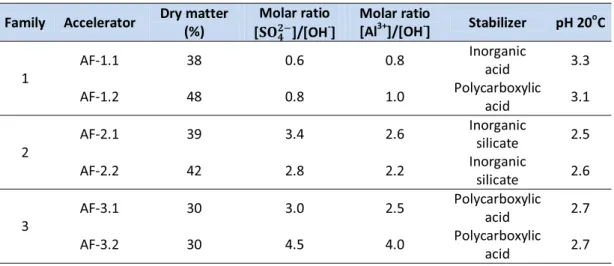
Table 3.1- Main features of the alkali free accelerators ... 23
Table 3.2- Doses established in the study (%bcw) ... 24
Table 3.3- Cement Paste and mortar mixes ... 24
Table 3.4- Cement paste and mortar mixes nomenclature ... 25
Table 3.5- Tests performed for cement pastes and mortars ... 27
Table 3.6- Results of initial / final setting time (min) ... 30
Table 3.7- Characteristic points of the evolution of temperature ... 34
Table 3.8- Evolution of temperature characteristic points ... 36
Table 3.9- Compressive strength (MPa) obtained in the penetration needle test ... 38
Table 3.10- Density and porosity results... 40
Table 3.11- Flexural strength results ... 42
Table 3.12- Compressive strength results ... 43
Table 4.1- Flexural and compressive strength obtained for mixes with AF-1.1 and cement I ... 52
Table 4.2- Flexural and compressive strength obtained for mixes with AF-1.1 and cement II ... 53
Table 4.3- New admissible deviations considering variables studied ... 57
Table 5.1- Characteristics of the accelerators ... 61
Table 5.2- Doses considered (%bcw) ... 61
Table 5.3- Reference mix of sprayed concrete ... 61
Table 5.4- Sprayed concrete mixes ... 62
Table 5.5- Mixes and spraying days ... 63
Table 5.6- Tests performed for sprayed concrete ... 67
Table 5.7- Evolution of temperature characteristic points ... 73
Table 5.8- Compressive strength (MPa) obtained by the penetration needle test ... 75
Table 5.9- Compressive strength (MPa) obtained by the stud driving method... 77
Table 5.10- Density and porosity of samples with AF-1.2 and AF-2.2 and cement I... 79
Table 5.12- Modulus of elasticity obtained in the Laboratory (GPa) ... 82
Table 6.1- Parameters, equations and error for the temperature and energy parameters ... 90
Table 6.2- Ranges of applicability of correlations for the temperature and energy parameters ... 91
Table 6.3- Parameters, equations and error for the mechanical and physical parameters ... 94
Table 6.4- Ranges of applicability of correlations for the mechanical and physical parameters ... 94
Table 7.1- Compressive strength (MPa) and modulus of elasticity (GPa) ... 100
Table 7.2- Porosity ... 101
Table 7.3- Effect of type of aggregate on modulus of elasticity ... 102
Table 7.4- Coefficient s to be used in Equation 7.3 for different types of cement ... 103
Table 7.5- Values of modulus of elasticity (GPa) ... 103
Table 7.6- Coefficient α to be used in Equation 7.8 in function of the type of aggregate . ... 104
Table 7.7- Average relative errors considering empirical formulation... 107
Table 7.8- Relative errors considering semi-analytical proposal ... 112
Table 7.9- Mixes of sprayed concrete used in the tunnels of Bergara, Bracons and Torrasa ... 113
Table 7.10- Results from the in situ experimental programs... 113
Table 7.11- Relative errors obtained for the in situ experimental programs (%) ... 114
Table 8.1- Parameters obtained by LAB Fit ... 121
Table 8.2- Material features ... 125
Table 8.3- Results of compressive strength and maturity index in time ... 126
Table 8.4- Thermal properties of the grounds ... 128
Table 8.5- Development of maturity index in time ... 128
INDEX OF FIGURES
Figure 1.1- Subjects that must be analysed ... 3
Figure 1.2- Characterization at different levels (cement paste, mortar and sprayed concrete) of mixes with different types of cement and accelerators ... 5
Figure 1.3- Control procedure at cement paste and mortar level ... 6
Figure 1.4- Correlation between cement paste/mortar and sprayed concrete properties ... 6
Figure 1.5- Correlation compressive strength/modulus of elasticity of sprayed concrete ... 6
Figure 1.6- Control procedure at sprayed concrete level ... 7
Figure 2.1- Carl Akeley’s spraying machine a) and taxidermy works at Milwaukee b) .. 10
Figure 2.2- Protection of structures a) tunnel in Puymorens b) and construction of barges c) ... 11
Figure 2.3- Sprayed concrete houses by Vetsch a) and spraying robots b) ... 11
Figure 2.4- Dry mix process a) and wet mix process b) ... 11
Figure 2.5- Evolution of the use of additions in cement ... 14
Figure 2.6- Calorimetric curve for a Portland cement paste and phases of hydration .. 16
Figure 3.1- Mixing process for the cement pastes a) and mortars b) ... 26
Figure 3.2- Manual Vicat device a) and chronometer b) used to determine the setting time ... 28
Figure 3.3- Data logger and thermocouples a) and a polyethylene mould b) ... 28
Figure 3.4- Penetration needle device a) and mould used for casting the samples b) .. 29
Figure 3.5- Test devices used to measure flexural strength a) and compressive strength b) ... 29
Figure 3.6- Comparison between the optimal dose interval times and experimental results ... 31
Figure 3.7- Evolution of temperature considering type of cement and dose of accelerator ... 32
Figure 3.8- Evolution of temperature considering type of cement and dose of accelerator ... 35
Figure 3.9- Compressive strength results considering type of cement and dose of accelerator ... 39
Figure 3.10- Density and porosity results considering type of cement and dose of accelerator ... 41
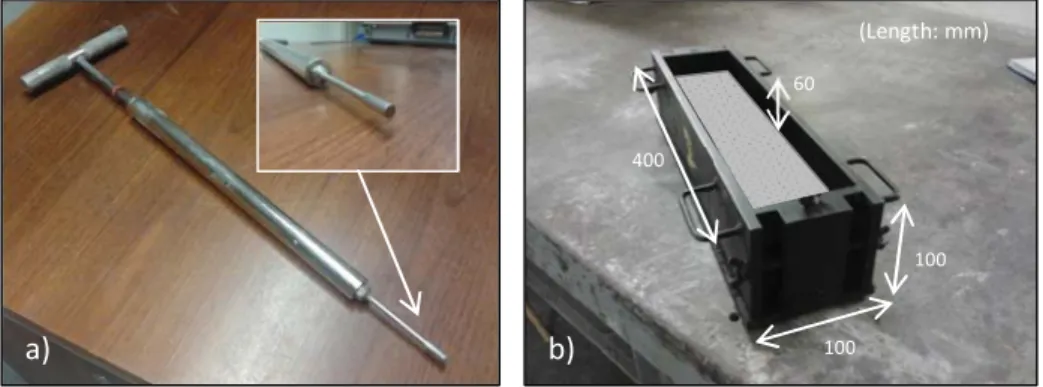
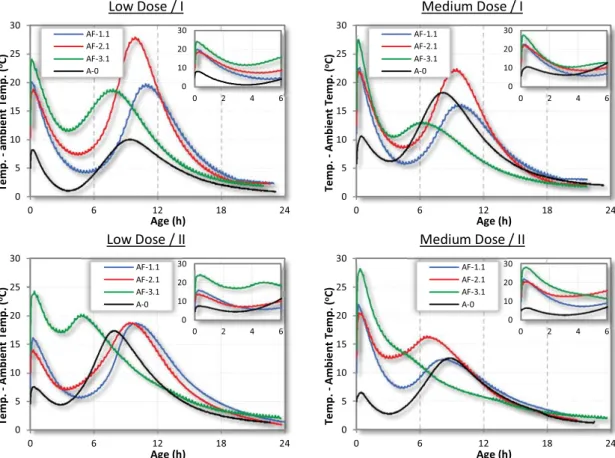
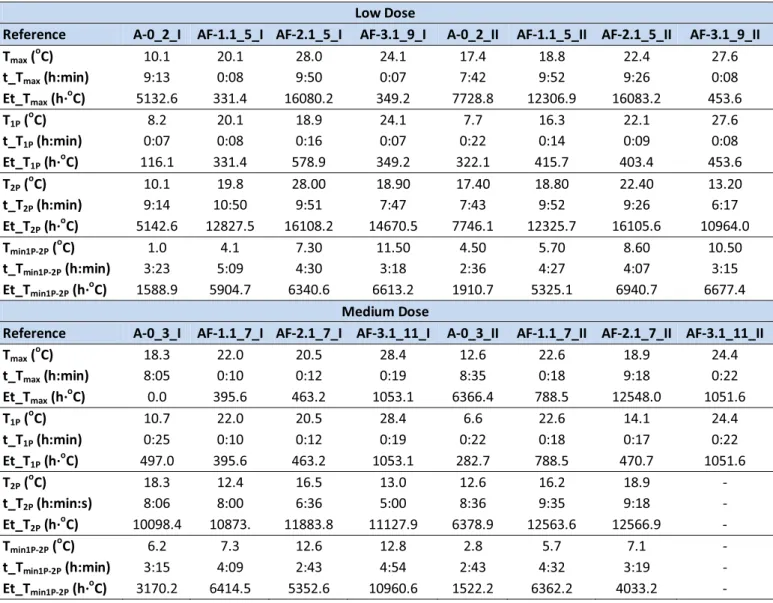
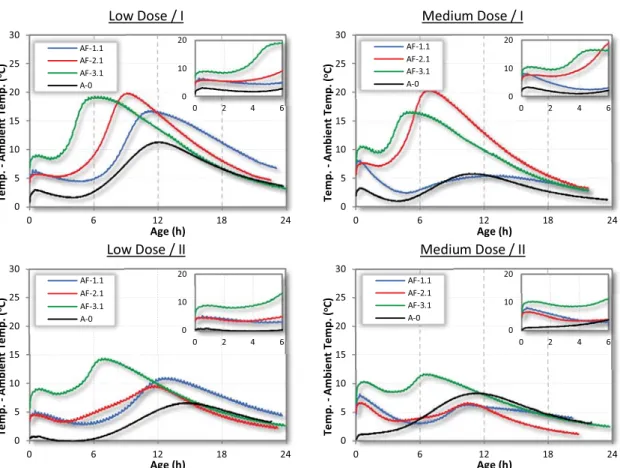
Figure 3.11- Development of compressive strength in time ... 44 Figure 4.1- Testing machine of flexural strength a) and compressive strength b) (length: mm) ... 49 Figure 4.2- Scheme of the statistical verification defined in the standard ... 50 Figure 4.3- Box plot of the deviations over the average... 54 Figure 4.4- Histogram of the values of deviations from the average a) and gamma distribution b) ... 55 Figure 4.5- Results of the P-P and Q-Q plots and their deviation from Gamma ... 56 Figure 5.1-Place of spraying processes a) and structure assembled b) ... 63 Figure 5.2- View of the small test panels a) and the large ones with its supports b) .... 64 Figure 5.3- View of the spraying machine a) and overview of the spraying process b) . 65 Figure 5.4- Unmould sprayed concrete piece a) and wet sackings b) ... 65 Figure 5.5- Extracting machine a) and radial disc cutting machine b) ... 66 Figure 5.6- Facing zone a) and polishing machine b) ... 66 Figure 5.7- Data logger a) and a thermocouple attached on a test panel b) ... 67 Figure 5.8- Device used for the penetration needle test a) and detail of testing procedure b) ... 68 Figure 5.9- Device used for the stud driving method a) and green cartridges b) ... 68 Figure 5.10- Hydraulic press ... 70 Figure 5.11- View of the LVDTs assembled on the sample ... 70 Figure 5.12- Evolution of temperature considering type of cement and dose of accelerator ... 72 Figure 5.13- Compressive strength results considering type of cement and dose of accelerator ... 76 Figure 5.14- Compressive strength results considering type of cement and dose of accelerator ... 78 Figure 5.15- Density and porosity of samples with AF-1.2 and AF-2.2 and cement I .... 79 Figure 5.16- Compressive strength results at long ages considering type of cement and dose of accelerator ... 81 Figure 5.17- Modulus of elasticity measured (continuous lines) and estimated with EHE-08 equations (discontinuous lines) considering type of cement and dose of accelerator ... 82 Figure 6.1- Confidence area for the temperature and energy parameters ... 92 Figure 6.2- Confidence area for the mechanical and physical parameters ... 95
Figure 7.1- Stress–strain curve ... 98 Figure 7.2- Relationship between the compressive strength and the modulus of elasticity regarding age of samples and type of cement ... 101 Figure 7.3- Comparison between results from laboratory and estimation from Instructions at 1 day a); 7 days b); 28 days c) and evaluation of the fit considering all data d) ... 105 Figure 7.4- Comparison of results for the empirical proposal at an age of 1 day a); 7 days b); 28 days c) and evaluation of the fit considering all data d) ... 107 Figure 7.5- Comparison of results for the semi-analytical proposal at an age of 1 day a); 7 days b); 28 days c) and evaluation of the fit considering all data d) ... 111 Figure 8.1- Results of evolution of temperature a), penetration needle test b) and stud driving method c) ... 119 Figure 8.2- Relation between the evolution of temperature a) and the maturity index b) ... 120 Figure 8.3- Relationship between the maturity index and the compressive strength . 122 Figure 8.4- Heat transfer modes in a tunnel a) and for a sprayed mould b) ... 123 Figure 8.5- Arrangement of the thermocouples in the mould ... 123 Figure 8.6- Experimental results of temperature and time ... 124 Figure 8.7- Geometry of the model a) and mesh generated by ANSYS b)... 125 Figure 8.8- Adjustment model-experimental data a) and results from the model b). No continuous lines are results from the model ... 126 Figure 8.9- Maturity curves considering thickness ... 127 Figure 8.10- Geometry of the model of the lining of a tunnel ... 127 Figure 8.11- Influence of the thickness a) and the ground support b) on the maturity indices ... 129
CHAPTER 1.
INTRODUCTION
1.1. PROLOGUE
At the beginning of the 20th century, sprayed concrete technology was born. Originally, it was used to imitate the rock and in no-engineer applications such as taxidermy. In all of them, the concrete had a rather esthetical function with a very low structural responsibility. The development of the wet-mix system and the use of the sprayed concrete as a part of the new Austrian tunnelling method (NATM) marked an increase in the use and in the structural responsibility of the material, with special importance in underground construction.
In these constructions, the quality and the thickness of the sprayed layer was closely related with the stability and the support provided by the ground. In most cases, to achieve a stable layer it was necessary to add accelerators to the material. These admixtures interacted with the mix, accelerating the chemical reactions and reducing the setting time of the concrete.
The definitions of the thickness or the mix composition were based on trial and error and previous experiences. However, problems still existed regarding the technical decisions during the excavations since the scientific and theoretical bases for the structural design and the quality control were not sufficiently established. To overcome such deficiency, several studies regarding the properties of sprayed concrete were conducted. As a result, different recommendations and guidelines were proposed.
Nowadays, sprayed concrete is used in many applications with clear structural responsibility. In order to minimize the cost and the construction time, a tendency towards the reduction of sprayed layer is observed. Furthermore, an ever-growing pressure for the use of environmentally friendly materials that lead to less contamination and a safer workplace is
observed. To cope with these trends, cements and accelerators that provide a better performance were developed.
The use of new materials creates a special type of sprayed concrete. Moreover, the requirement of thinner layers lead to an increase in the level of stress applied and, consequently, in the structural requirements. It is obvious that more studies are still needed to achieve an optimized design with the new materials. Table 1.1 shows some of the issues that must be addressed in order to promote the efficient use of sprayed concrete.
Table 1.1- Main issues to be addressed
Subject Questions
Characterization at different levels (cement paste, mortar and sprayed concrete) of mixes
with different types of cement and accelerators
• Could the mixes of sprayed concrete be improved regarding mechanical properties and sustainability?
• What type of cements and accelerators are the ones currently used to spray concrete?
• What are their advantages? And drawbacks?
• How is the most performed way to characterize cement pastes? And mortars? And sprayed concretes?
• How could sprayings of concrete be performed in laboratory conditions?
• What type of research could be done with the results? Control procedure at mortar
level
• Are there any drawbacks in the current quality control procedures of cement and mortar mixes?
• Could the conventional cement paste and mortar standards be used for these materials with accelerators? Could they be adapted?
Correlation between cement paste/mortar and sprayed
concrete properties
• Is there any relationship between experimental results of cement paste/mortar and sprayed concrete mixes?
• Could the quality control of the sprayed concrete be done using these relationships?
Correlation compressive strength/modulus of elasticity
of sprayed concrete
• Is there any exclusively standard that relates these fundamental mechanical properties of sprayed concrete?
• Could the conventional concrete standards be used for sprayed concrete? Could they be adapted?
Control procedure at sprayed concrete level
• Are there any drawbacks in the current quality control procedures of sprayed concretes?
• Could the conventional concrete methodologies be used for sprayed concrete? Could they be adapted?
In particular, it is necessary to go deeper in the characterization of the properties of mixes with the new cements and accelerators as mentioned before. This characterization should be done at three different levels: cement pastes, mortars and sprayed concretes. It is also important to provide better methods for the quality control of these materials in the laboratory and in the worksite due to the lack of standardization in the international instructions. Focusing on the main mechanical properties of concrete: compressive strength and modulus of elasticity; which are the basis of the structural analysis, the characterization is a fundamental tool for engineers who wish working with this special concrete. Finally, regarding the quality control of the material and the current test used for this aim, new
methods should be proposed to improve the formers. This may lead to facilitate the understanding of the sprayed concrete behaviour and therefore its use may grow in the construction world
In this context, the Universitat Politècnica de Catalunya (UPC) and the chemical company Industrias Químicas del Ebro S.A. (IQE) signed a project in order to do research in the field of sprayed concrete and answer the former questions. The project aimed to study different aspects of the interaction between concrete and accelerators, and to study the mechanical properties of sprayed concrete. The research was focused on two main experimental programs, one for cement pastes and mortars and one for sprayed concrete. The results obtained were the basis of the research presented in this dissertation. The subjects studied during this project are represented in Figure 1.1.
Figure 1.1- Subjects that must be analysed
1.2. GENERAL OBJECTIVE
This PhD thesis aims to provide the answer for some of the problems indicated in the prevision section. Taking that into account, the general objective of this dissertation is to provide a characterization of wet-mix sprayed concrete with new accelerators and to propose methods for the control of the material. The objective was treated considering five different subjects or research lines. The first research line is the characterization at different levels (cement pastes, mortars and sprayed concrete) of mixes with different types of cements and accelerators. The second issue is the control procedure at mortar level. The third subject is the correlation between cement paste/mortar and sprayed concrete properties. The fourth issue is the correlation compressive strength/modulus of elasticity of sprayed concrete. And finally, the fifth subject is the control procedure at sprayed concrete level.
Characterization of mixes with different
type of cement and accelerators
Sprayed Concrete
Cement paste/mortar and sprayed concrete
properties Quality control Wet-mix sprayed concrete Compressive strength / modulus of elasticity of sprayed concrete Cement pastes and mortar Wet-mix sprayed concrete Cement pastes and mortar Study of correlations
1.3. SPECIFIC OBJECTIVES
In order to accomplish the aforementioned general objective, several specific objectives were proposed. The main ones are presented in Table 1.2.
Table 1.2- Specific objectives
Subject Specific objectives
Characterization at different levels (cement paste, mortar and sprayed concrete) of mixes
with different types of cement and accelerators
• Propose a methodology to produce and conserve cement paste and mortar samples with different types of cements and accelerators;
• Propose a methodology to spray concrete under laboratory conditions;
• Propose a set of test methods to characterize the mechanical properties of aforesaid materials;
• Produce and test cement paste and mortar samples produced with different types of cement and accelerator;
• Spray and test different mixes of concrete produced with alkali free accelerators and different types of cement and
• Study the behaviour of mixes with different cement types and accelerators.
Control procedure at mortar level
• Compile and study the standards and recommendations to estimate the mechanical properties of conventional mortar mixes and compare them with the experimental data and
• Adapt current standards for conventional mortar to be used for mortar with accelerators.
Correlation between cement paste/mortar and sprayed
concrete properties
• Study the correlation between experimental results obtained on cement pastes and mortars and the results obtained for sprayed concrete mixes and
• Derive expressions to estimate sprayed concrete properties considering the intrinsic scatter of the material.
Correlation compressive strength/modulus of elasticity
of sprayed concrete
• Compile and study the standards and recommendations to estimate the mechanical properties of sprayed concrete and compare them with the experimental data and
• Adapt current standards for conventional concrete to be used for sprayed concrete.
Control procedure at sprayed concrete level
• Compile and study the information related to the maturity method applied to conventional concrete and
• Adapt the maturity method to sprayed concrete to propose a new quality control of the mechanical properties of the material at early ages.
1.4. METHODOLOGY
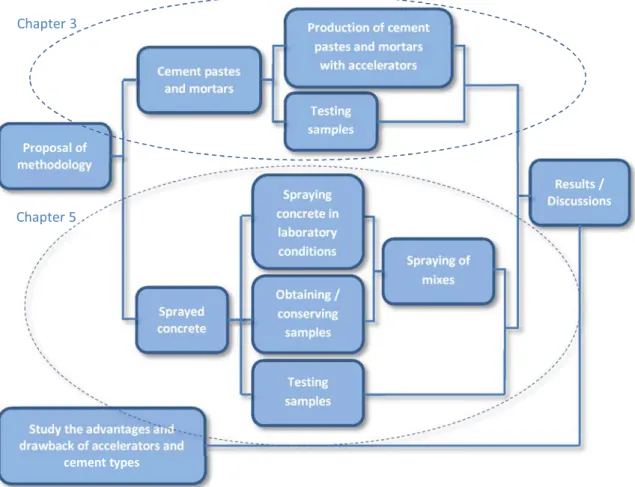
The study starts with a brief description of the estate of the art in Chapter 2. This chapter was the base of all works conducted. The first subject considered was the characterization at different levels (cement paste, mortar and sprayed concrete) of mixes with different types of cement and accelerators. The characterization of the cement paste and mortar mixes is gathered in Chapter 3, whereas the characterization of the sprayed concrete mixes in Chapter 5 as presented in Figure 1.2. The methodologies of production of the mixes were proposed considering different types of cements and accelerators. Furthermore these methodologies regarded the test to be performed at early and long ages so as to provide a broad view of the behaviour of the material.
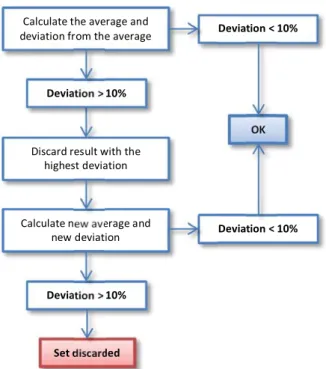
Figure 1.2- Characterization at different levels (cement paste, mortar and sprayed concrete) of mixes with different types of cement and accelerators
As presented in Figure 1.3, the second subject is the Control procedure at mortar level. This subject is presented in Chapter 4. It includes a proposal of quality control procedure for mortar mixes with accelerators. An adaptation of the test used to evaluate the flexural and compressive strength of conventional mortars is presented. This is performed considering the singular aspects of production of the mortar mixes with accelerators. Finally, a statistical analysis of the results presented in Chapter 3 leads to adapt the conventional mortar test in order to properly determine the mechanical strength of mortar mixes with accelerator.
Study the advantages and drawback of accelerators and
cement types Sprayed concrete Cement pastes and mortars Results / Discussions Proposal of methodology Testing samples Production of cement pastes and mortars
with accelerators Testing samples Obtaining / conserving samples Spraying of mixes Spraying concrete in laboratory conditions Chapter 3 Chapter 5
Figure 1.3- Control procedure at cement paste and mortar level
The third subject, correlation between cement paste/mortar and sprayed concrete properties, is presented in Chapter 6. As shown in Figure 1.4, an analysis of the correlation between experimental results obtained testing the cement paste and mortar mixes (Chapter 3) and the sprayed concrete ones (Chapter 5) is performed. This is the basis to obtain expressions to estimate sprayed concrete properties depending on the results assess testing cement paste and mortar mixes. Furthermore, in order to consider the intrinsic scatter of the sprayed concrete, which entails high variability on the experimental results, confident areas are presented.
Figure 1.4- Correlation between cement paste/mortar and sprayed concrete properties
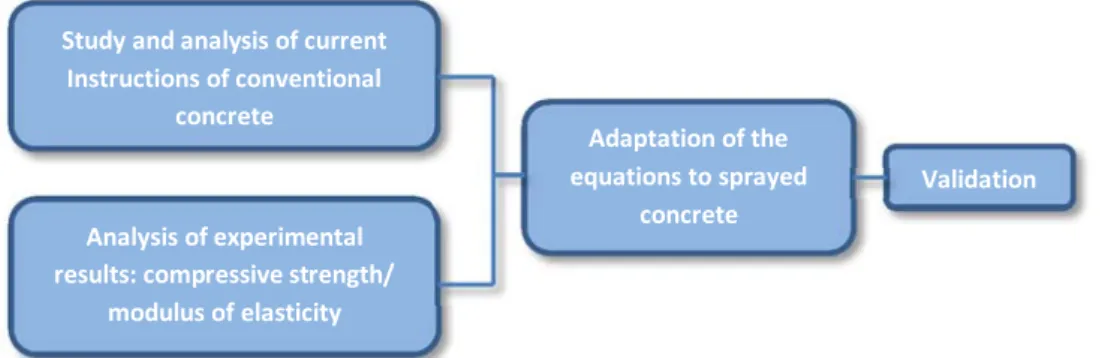
The fourth subject is presented in Chapter 7 (Figure 1.5). It concerns an analysis of the experimental results of compressive strength and modulus of elasticity presented in Chapter 5. The current equations used for conventional concrete gathered in international instructions are described and their applicability to sprayed concrete is verified. The adaptation of these equations for sprayed concrete is preformed taking into account the singular aspects of the latter.
Figure 1.5- Correlation compressive strength/modulus of elasticity of sprayed concrete Adaptation of the
standards for mortar mixes with accelerator Study and analysis of current
standards of conventional mortar
Analysis of experimental results: compressive/flexural
strength (mortar mixes)
Validation
Analysis of the sprayed concrete experimental results Analysis of correlation Obtaining expressions to estimate sprayed concrete properties Analysis of the cement
paste /mortar experimental results
Define confident areas for the
results
Adaptation of the equations to sprayed
concrete Study and analysis of current
Instructions of conventional concrete
Analysis of experimental results: compressive strength/
modulus of elasticity
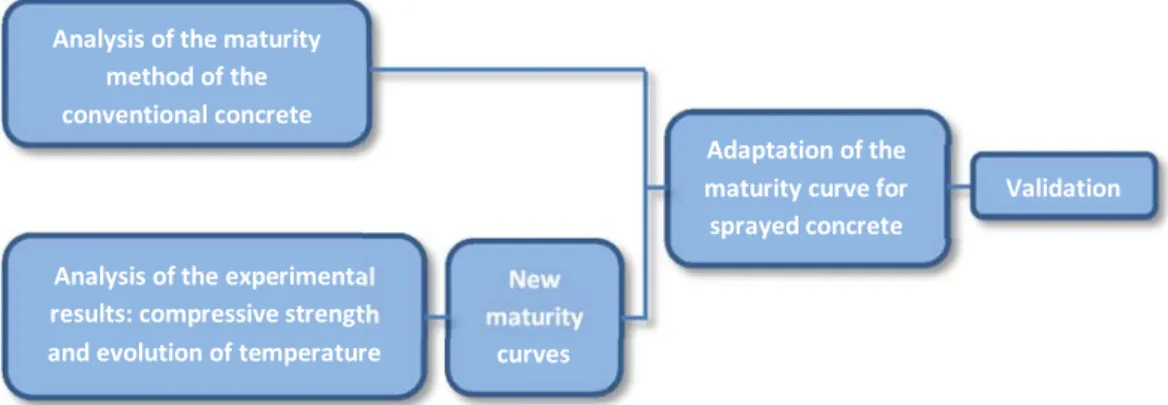
Finally, the subject control procedure at sprayed concrete level is presented in Chapter 8. As summarized in Figure 1.6, a quality control procedure for sprayed concrete at early ages is proposed. In this sense, the maturity method, which is the relationship between the evolution of temperature and the development of compressive strength, is analysed and adapted for sprayed concrete. In order to do that a thermal model is presented. This model allows adapting the maturity curves, needed in the maturity method, considering different problem geometries and boundary conditions. All this provides an useful tool so that the compressive strength of the sprayed concrete may be estimated from the evolution of temperature.
Figure 1.6- Control procedure at sprayed concrete level Analysis of the maturity
method of the conventional concrete
New maturity
curves Analysis of the experimental
results: compressive strength and evolution of temperature
Adaptation of the maturity curve for sprayed concrete
CHAPTER 2.
ESTATE OF THE ART
2.1. INTRODUCTION
Sprayed concrete, or shotcrete, is a mixture of cement, aggregate and water projected pneumatically from a nozzle into place to produce a dense homogeneous mass. Properly applied, it is a structurally sound and durable construction material which exhibits excellent bonding characteristics to existing concrete, rock, steel and many other materials (1). It can have high strength, low absorption, good resistance to weathering and resistance to some forms of chemical attack (1; 2). Many of the physical properties of sprayed concrete are comparable or superior to those of conventional concrete having the same composition (2; 3).
The force of the impact of this pneumatically propelled material on the surface causes compaction of the shotcrete paste matrix into the fine surface irregularities and results in good adhesion to the surface (1; 4). Within limits, the material is capable of supporting itself in vertical or overhead applications. In this sense, the bonding of sprayed concrete to other materials is often an important design consideration (5).
Sprayed concrete is used instead of conventional concrete, in most instances, for reasons of cost or convenience. Furthermore, it is advantageous in situations when formwork is cost prohibitive or impractical, access to the work area is difficult, thin layers or variable thicknesses are required, or normal casting techniques cannot be employed. Additional savings are possible because sprayed concrete requires only a small, portable plant for manufacture and placement. Spraying operations can often be accomplished in areas of limited access to make repairs to structures.
In this context, sprayed concrete presents a great number of applications. These are characterized by structures with large surfaces and small thickness. The most important and
known application is the underground construction: tunnelling and mining. Sprayed concrete was mainly developed for these applications and is considered one of the key tools of the New Austrian Tunnelling Method (NATM) (6). Even though examples of other applications of sprayed concrete are the construction of canalisations, the slope stabilization and the metallic structures protection against fire and corrosion (1; 6). Each use has its particular characteristics regarding aspects such as strength or durability.
This chapter presents a general view of the sprayed concrete, which is the base of all studies presented in this dissertation. In this sense, after explaining a brief history of the use of the sprayed concrete, the estate of the art focuses on the wet-mix sprayed concrete, which is currently the one used in most applications (7).The basic materials that compose the sprayed concrete are presented together with the current tendencies in terms of dosage. Furthermore, the problems and tendencies of the standardization and characterization of this special concrete are presented at the end of the chapter. Finally, some discussions are given.
2.2. BRIEF HISTORY
The sprayed concrete appeared at the beginning of 20th century as a way to imitate rock shapes. In 1907 the naturalist, taxidermist and inventor Carl Akeley (1864-1926) invented the first machine to spray concrete (Figure 2.1.a) (4). He used it for his works of taxidermy at the Public Museum of Milwaukee as shown in .b. Around 1910 the first patent for the process is granted: ‘Apparatus for mixing and applying plastic or adhesive materials’ (8). This apparatus was called ‘Cement Gun’ or Gunite, early synonymous of sprayed concrete. So patented, the sprayed concrete was presented in the ‘Cement Show’ of New York in 1910 and consequently it was introduced in the construction market.
Figure 2.1- Carl Akeley’s spraying machine a) and taxidermy works at Milwaukee b)
Between 1910 and 1945 the technique was widely used entailing the existence of more than 5000 machines for spraying concrete in 120 different countries (8). In this period the material was studied in depth and it was applied in different fields such as the protection of structures (Figure 2.2.a), the stabilisation of slopes or in tunnelling. These applications are corroborated by great examples as the protection of the metallic structures of the Central Station of Houston, the stabilisation of the slopes of the Panama Channel or the construction of the tunnel in Puymorens (Figure 2.2.b). Furthermore, the material was used to build other structural things as barges to cross the Potomac River (Figure 2.2.c) (8).
Figure 2.2- Protection of structures a) tunnel in Puymorens b) and construction of barges c) After the World War II a crisis period started and lasted until the end of 60’s (8). Then, a new spraying process was invented during the 60’s: the dry mix process. This method was used by architects such as Jean-Louis Chanéac (1931-1993) or Peter Vetsch (1943), who relaunched the material (Figure 2.3.a). After this period the new technological advances and the development of the chemistry applied on concrete entailed the apparition of a new method at early 80’s: the wet mix process (1; 4). Currently, this is the process most used and jointly the new technology applied to sprayed concrete, such as the spraying robots (Figure 2.3.b); this material is raising its importance in the construction sector.
Figure 2.3- Sprayed concrete houses by Vetsch a) and spraying robots b)
2.3. WET MIX PROCESS
Concrete may be sprayed through two processes: dry mix and wet mix. Figure 2.4 presents the operating schemes of each one. In the dry mix process the materials without the addition of water are pumped. The water needed to hydrate the cement is added at the nozzle together with compressed air just before spraying (1; 2; 4). This system presents several drawbacks. Examples are the generation of dust, the high rebound of material during the spraying (around 30%) and the high variability on the properties of the laid material due to the fact that the nozzleman is the one who controls the amount of water added to the mix (1).
Figure 2.4- Dry mix process a) and wet mix process b)
a) b) c)
b) a)
The development of the technology of the sprayed concrete led to the wet mix process. In this case a conventional concrete is directly discharged into the reception hopper, therefore the material is previously mixed with water before the spraying process. Then it is propelled through the hoses to the nozzle by means of pumps. It is in the nozzle that the compressed air is added to provide the necessary velocity so as to spray the concrete. Depending on the requirements of the application, admixtures such as accelerators are also added in the nozzle.
In the wet mix process, the execution conditions are more controlled as the amount of water is established during the mix of the conventional concrete, entailing more homogenous final product. Moreover, other drawbacks presented by using the dry process are reduced. For example, the generation of dust is considerably smaller and the rebound of material decreases to less than 10% (1; 4).
Despite the advantages of the wet-mix process, in certain applications the dry mix is still used. This is especially true for elements with low structural responsibility that requires a smaller set-up. On the contrary, the wet mix process is usually applied for elements such as tunnels contributing with a certain structural function (9; 10; 11). Therefore, the present state of the art focuses on the wet mix process.
2.4. MIX COMPOSITION
Sprayed concrete is a special concrete that has singular aspects due to the production process used. Two of the main aspects are the porosity and the rebound (1; 4). The first one is higher in the case of sprayed concrete due to the addition of the compressed air during the execution. Part of this air is incorporated in the mix when the concrete is laid. This additional porosity affects the mechanical properties of the final product, being essential to consider it during the characterization of the sprayed concrete. Besides that, when the mix is sprayed at high velocity against a surface, part of it do not become attached and rebound. The rebound is generally related with a loss of material and has important economical repercussion. Furthermore, it affects the final mix composition of the cast layer, decreasing the amount of coarse aggregate and, consequently, the mechanical properties of concrete (12).
To minimize both problems and to assure pumpability, the mix composition of the mix composition is designed according with certain guidelines (12; 13). Even though the same basic constituent materials are used (cement, aggregates and water) to achieve an improved mix design additions and admixtures are included. In this sense, the accelerators and the superplasticizers are essential. Accelerators are basic to reduce the rebound of material and to assure the bonding between the sprayed concrete and the support. They act in the reactions produced by the tricalcium of aluminium (C3A) from the cement at very early ages. Then,
adding these admixtures in the mixes, the consistency of sprayed concrete changes from liquid to plastic while being still on the air and the concrete quickly sets on the surface (1; 14). On the other hand, the superplasticizers are used to improve the workability and therefore the pumpability of the mix and moreover they avoid the hardening of the concrete during its transport (15). Apart of these components, sprayed concrete mixes may incorporate fibres and additions such as fly ash or microsilica, which improve its mechanical properties (15; 16).
In the next sections, the main considerations of the mix composition and the tendencies observed in studies from the literature are presented.
2.4.1. Cement, aggregates and water
Several studies present procedures and recommendations that may be followed to make an adequate mix design for sprayed concrete (17; 18). The European Federation of Producers and Applicators of Specialist Products for Structures (EFNARC) presented in 2001 recommendations related to the materials of sprayed concrete (7). General recommendations are given for cements, aggregates and water. Cements should satisfy the requirements of the European standard UNE-EN 197-1:2011 (19) regarding their composition. The minimum content of cement should not be less than 300 kg/m3. Finally, the cement should follow the requirements from the standard UNE-EN 206-1:2008 (20) considering aspects of specification, performance, production and conformity.
The considerations for the aggregates are related with the workability of the mix (12). In this sense, the grading of the aggregates must be finer than a conventional mix. Since the concrete travels though the hoses circuit, the finer aggregates help the bigger ones get through the nozzle, reducing the incidence of strokes and blockages. Furthermore, this finer grading contributes to the formation of a support bed for the bigger aggregates therefore decreasing the rebound.
The water used to produce sprayed concrete should comply with the requirements of the standard UNE-EN 1008:2007 (21), as any mixing water used to produce conventional concrete. The maximum water/cement ratio recommended by EFNARC is 0.55. In practice, values around 0.45 are used.
Apart from these general recommendations, current tendencies referred to the use of these components are gaining importance. These tendencies are basically focused on environmental issues and are related to the type of cement used. In the Conference about Climate Change celebrated in Kyoto in 1997, the developed countries agreed on reducing the emissions of greenhouse gases such as methane, nitrous oxide and carbon dioxide (CO2). As a
consequence, the European Union passed the Kyoto Protocol in 2002 forcing the countries members to make a reduction of these detrimental emissions.
Considering the high liability of the construction industry regarding the emissions, many countries are favouring the use of materials that are more environmentally friendly, remarkably better cements. In this sense, two different approaches are considered (22; 23). The first of them focus on the improvement of the processes of the production of clinker, which may be achieved by using new technologies, renewable energies and new raw materials with fewer emissions. On the other hand, the second approach focus on the partial substitution (of about 5-15% by weight) of the clinker utilized in the production of cement by additions (24). This measure started at the end of 90’s and is now completely extended. To give an example of that, Figure 2.5 shows the different types of cements produced by Holcim (Switzerland) in 1995, 2000 and 2009 (22). This figure shows that, in 1995, 56% of the production consisted of ordinary Portland Cement (OPC). In 2009, the OCP correspond only to 20% of the total cement production.
Figure 2.5- Evolution of the use of additions in cement
Focus on the replacement of clinker by additions some research present results of the properties of mortar and concrete mixes. These studied show how the additions act in the hydration process, improving concrete properties. For instance, fly ash or pozzolan add more silica (Si) (15; 25). This extra amount of Si contributes to the formation of more C-H-S chains, which are the responsible of the compressive strength at long ages. Hence, benefits apart from environmental ones are achieved.
In several applications, the cement with high clinker content (CEM I) has been substituted by cements with less clinker and the addition of wastes or by-products (CEM II). Countries from northern Europe have already extended this change to structures constructed with sprayed concrete. In Spain, the general rule still is to apply CEM I for sprayed concrete structures. However, signs of change start to appear. Since the introduction of the new Instruction EHE-08 annexes an index for the structure of the sustainability to obtain results during the project redaction and the construction stage has been introduced (24). One of the aims of this annex is the reduction of the CO2 during the production of cement. Examples of
trials and of applications of CEM II are also present.
In the case of sprayed concrete, the requirements of the compressive strength at early ages entail the necessity of a quick setting (26; 27; 28). Limestone is a good alternative since a concrete produced with cement with limestone harden quicker and demand less water than an equivalent one with OPC (27). Consequently, strength improvements might also be obtained.
2.4.2. Accelerators and superplasticizers
In general, accelerators and superplasticizers should follow the requirements of the standard UNE-EN 934-5:2009 (29). Apart from that, there are also current environmental tendencies referred to the use of the accelerators. In order to understand these considerations some aspects must be treated. Therefore, types of accelerators and interaction cement-accelerator are explained below regarding the current tendencies of their use.
2.4.2.1. Types of accelerator
The first accelerators systematically used for sprayed concrete were based on alkali products, which are aggressive substances for the human beings and for the environment (30).
This family of accelerators was composed by modified silicates and aluminates of sodium or potassium (15). The modified silicates were characterized by a quick effect (lower than 10 s); even though, they provide smaller initial strength and long final setting times (higher than 30 min). The products formed are really amorphous due to the high content of alkalis, entailing a big loss of strength at long age (15).
The aluminates of sodium and potassium made the ones based on modified silicates obsolete. Nowadays, the former are the most common accelerators used for sprayed concrete (1; 30). They interact during the hydration process increasing the transformation of the C3A of
the cement to monsulphate of aluminium and providing an extra gain of initial strength (15). The formation of a non-crystalline chemical net is observed, which lead to a decreases in the mechanical properties at long ages. Furthermore, the high alkali content of these accelerators increases the risk of alkali-aggregate reaction (15; 31). Finally, the main drawback of using accelerators based on aluminates is not a technic aspect but an environmental one due to ecological and safety reasons. The aluminates are chemical components with pH around 13 and therefore strongly alkaline. They may have a negative impact on the environment, contributing for the salinization, hydric stress in the ground and disequilibrium of the pH of sensitive waters (30).
In order to reduce these drawbacks, chemists worked on obtaining alkali-free accelerators that are safer for the technicians, with less negative environmental impact and improved efficacy regarding the compressive strength at long ages (1; 10; 32). Despite these advantages, higher doses of alkali free accelerator are needed to accomplish short term properties equivalent to the ones obtained with alkaline accelerators (30; 33).
The alkali-free accelerators are highly sensitive to the types and the composition of cements (34; 35; 36). For instance studies developed in Stuttgart University show the effect of the alkali free accelerators was at very early age more pronounced on mixes containing CEM I in comparison with CEM II, while the alkaline accelerator had a larger influence on mortar containing CEM II (37). Therefore, new research is focused on developing formulations compatible for all types of cements so as to facilitate its application. In this sense, the study of the interaction cement-accelerator is considered of great relevance.
2.4.2.2. Interaction cement-accelerator
Under normal conditions, the cement reacts spontaneously with water in order to produce harden substances, increasing the strength of the mix (31). This process starts with the hydration of the dry phase of the C3A that produces the loss of plasticity in few minutes. In
order to maintain the workability for longer periods, calcic sulphate is added during the production of the cement as a set regulator (25; 31). This sulphate reacts with the free C3A and
water to generate ettringite. Once the setting regulator is consumed, the ettringite becomes unstable and is converted into monosulphate of aluminium and calcic hydroxide. Later, the calsium silicates (C2S and C3S) participate forming the C-S-H chains, which is the responsible of
the gain of the mix strength (25; 31).
The chemical phenomena described may be grouped in four sequential phases that generalize the hydration and the hardening of cement in contact with water (38). In Phase I,
the dissolution of the ions a superficial hydration of the cement grains takes place and the ettringite is superficially formed around the dry C3A. The sulphated water migrates from the
C3A due to the waterproof provided by the ettringite layer. Then, during Phase II, an
acceleration of the ettringite formation occurs, characterizing the beginning of setting. In phase III, the hydration of the silicates accelerates and the increase of the mechanical properties is observed. In phase IV, the depletion of the sulphates occurs and the hydration of the silicates continues at a slower rate.
Studies demonstrated the relationship between these chemical processes and the heat flow of the mix (38; 39). Figure 2.6 presents a typical calorimetric curve measured during the hydration of OPC paste in which the four phases described previously may be identified. The accelerator addition changes the hydration kinetics of the plain cement system. The stage II and III are the affected by the incorporation of the accelerator since both are reduced from hours to minutes. The accelerators contribute on the hydration of the aluminates fastening the consequent hydration of the silicates (38).
Figure 2.6- Calorimetric curve for a Portland cement paste and phases of hydration
2.5. STANDARDIZATION AND CHARACTERIZATION
The standardisation is defined as the process of developing technical documents to establish criteria, methods, processes and practices involving a formal consensus of technical experts. In this sense, to use a material in a construction with structural behaviour, the material shall be standardized. Its mechanical properties and the procedures to estimate them shall be gathered in technical documents such as recommendations, standards or instructions.
No mention of sprayed concrete properties is found in three of the most important Instructions: Model Code 2010 (40), Eurocode 2 (41) and EHE-08 (24). Several standards and recommendations regarding different aspects related to the spraying process and the mechanical properties at early ages are found in the literature. Most of the existing standards, recommendations and guideless were proposed by the American Concrete Institute (ACI) and the European Federation of Producers and Applicators of Specialist Products for Structures (EFNARC).
The recommendations from the ACI on sprayed concrete are mainly focused on the Specification for Shotcrete (13) and the Guide for the Evaluation of Shotcrete (42). The first technical document concerns the programs for certification of personal performing as
III
nozzlemen. The Specification for Shotcrete gathers the definitions, standards and organization related to shotcrete. Furthermore, there is a part which advises about the properties of the materials used and the execution premises that should be followed to obtain good sprayed concrete layers. Finally, the Guide for the Evaluation of Shotcrete presents the way to estimate the strength and the bond between concrete and steel using non-destructive tests. Also, it includes the test to estimate the density and the permeability of the shotcrete. ACI bases its technical documents on the American standards ASTM of shotcrete. These are presented in Table 2.1.
Table 2.1- ASTM standards for shotcrete
Standard Title
ASTM C1480/C1480M– 07(2012)
Standard Test Method for Obtaining and Testing Drilled Cores of Shotcrete
ASTM C1436-08 Standard Specification for Packaged, Pre Blended, Dry, Combined Materials for Use in Wet or Dry Shotcrete Application
ASTM C1117-89(1994) Standard Test Method for Time of Setting of Shotcrete Mixtures by Penetration Resistance (Withdrawn 2003)
ASTM C1385/C1385M-10 Standard Practice for Sampling Materials for Shotcrete ASTM C1141/C1141M-08 Standard Specification for Admixtures for Shotcrete
ASTM C1140/C1140M-11 Standard Practice for Preparing and Testing Specimens from Shotcrete Test Panels
The main recommendations developed by the EFNARC on the subject, which has the same purpose as in case of ACI, are the European Specifications for Sprayed Concrete (7) and the Execution of Spraying (12). The European Specifications for Sprayed Concrete presents the requirements of the constituent materials of the sprayed concrete and its composition considering the durability. It presents the mix composition and the aspects of the execution of spraying. Finally, it gathers the requirements of the final product presenting the test methods and the quality control procedures. Apart from that, the Execution of spraying presents the Preparatory works that shall be done before the spraying such as clean the rock support, the equipment regarding the spraying process and the dosing of accelerators that shall be used. Furthermore, it gathers the requirements for the Spraying operations such as spraying techniques (nozzleman required), disposal of rebound, finishing, timing or curing. In this sense, EFNARC bases its technical documents on the European standards EN included in Table 2.2.
The mechanical properties of sprayed concrete should be characterized at two different stages regarding its age: early ages and long ages. The mechanical properties at early ages are particularly important in sprayed concrete as the addition of the accelerators in the mix entails a quick change of the behaviour of the material. Currently, the characterization at early ages of the sprayed concrete is performed in most European countries according with the ‘Guidelines for Sprayed Concrete’ of the Austrian Society for Construction Technology (43). In this sense, the guidelines gather the test which should be performed in order to characterize the sprayed concrete compressive strength at early ages: the penetration needle test and the stud driving method. The guidelines describe how to perform these indirect tests, which must be done at different ages to evaluate the compressive strength development.
Table 2.2- EN standards for Sprayed Concrete
Standard Title
EN 934-5:2007
Admixtures for concrete, mortar and grout - Part 5:
Admixtures for sprayed concrete - Definitions, requirements, conformity, marking and labelling
EN 14487-1:2005 Sprayed concrete - Part 1: Definitions, specifications and conformity
EN 14488-1:2005 Testing sprayed concrete - Sampling fresh and hardened concrete
EN 14487-6:2006 Testing sprayed concrete - Part 6: Thickness of concrete on a substrate
EN 14889-1:2006 Fibres for concrete - Part 1: Steel fibres - Definitions, specifications and conformity
EN 14889-2:2006 Fibres for concrete - Part 2: Polymer fibres - Definitions, specifications and conformity
EN 14488-2:2006 Testing sprayed concrete - Part 2: Compressive strength of young sprayed concrete
EN 14488-3:2006
Testing sprayed concrete - Part 3: Flexural strengths (first peak, ultimate and residual) of fibre reinforced beam specimens
EN 14488-7:2006 Testing sprayed concrete - Part 7: Fibre content of fibre reinforced concrete
EN 14487-2:2006 Sprayed concrete - Part 2: Execution EN 14488-
4:2005+A1:2008
Testing sprayed concrete - Part 4: Bond strength of cores by direct tension
However, the systematic use of both tests highlights a relevant problem (44; 45). Whereas the penetration needle test is performed until the sprayed concrete achieves around 1 MPa, the stud driving method cannot be used until it assesses a minimum of 2 MPa of strength (43; 46). In terms of time, this gap between 1 and 2 MPa correspond to approximately 4 h during which no data is obtained. In order to solve this problem, different studies present other ways to characterize the mechanical properties of the sprayed concrete at early ages. In this sense, studies conducted at the Universidade de Sao Paulo (USP) applied the modified proctor test to assess the compressive strength between 1 and 2 MPa (16). Studies performed in Australia present correlation between the compressive strength and ultrasonic pulse velocity measurements (47). The results obtained suggest that the short term compressive strength in time may be estimated with small devices embedded in the sprayed concrete layer.
A viable alternative are the maturity methods which allow the estimations of the compressive strength based on the evolution of temperature measured during the hydration process. Even though these methods have been successfully applied for conventional concrete (48), they have not been extensively studied in the case of sprayed concrete.
2.6. DISCUSSION
A big number of applications with sprayed concrete were found showing the importance of this special concrete in the construction field. Even though in most of them the material is used with low structural responsibility, a growing trend towards its application as the main resisting material exists. However, to make the optimized and efficient design of structures with sprayed concrete possible, several advances are still needed.
The current structural requirements, recent technological developments and the current environmental tendencies lead to produce sprayed concrete with new types of cements and accelerators. In order to optimize the sprayed concrete design with these new materials a characterization of their mechanical properties at early and long ages is needed.
On the other hand, there is a lack of studies and laboratory result of mechanical properties of sprayed concrete complicating the standardization of the material. The use of conventional concrete equations to assess properties of sprayed concrete over or underestimate the results Therefore there is a necessity of correlating mechanical properties that may be included in standards to account of the consideration of the structural responsibility of the material. Apart from that, new methods for the quality control that may be easily applied in practice allowing a continuous estimation of the mechanical properties are also needed.