Walden Dissertations and Doctoral Studies Walden Dissertations and Doctoral Studies Collection
2016
Impact of Professional Development in Response
to Intervention on Secondary Teachers' Efficacy
Crystal Joy SpenceWalden University
Follow this and additional works at:https://scholarworks.waldenu.edu/dissertations
Part of theElementary and Middle and Secondary Education Administration Commons,Junior High, Intermediate, Middle School Education and Teaching Commons,Other Education
Commons,Reading and Language Commons, and theSecondary Education and Teaching Commons
This Dissertation is brought to you for free and open access by the Walden Dissertations and Doctoral Studies Collection at ScholarWorks. It has been accepted for inclusion in Walden Dissertations and Doctoral Studies by an authorized administrator of ScholarWorks. For more information, please [email protected].
Walden University
COLLEGE OF EDUCATION
This is to certify that the doctoral study by
Crystal J. Spence
has been found to be complete and satisfactory in all respects, and that any and all revisions required by
the review committee have been made.
Review Committee
Dr. Thomas Pfundstein, Committee Chairperson, Education Faculty Dr. James Miller, Committee Member, Education Faculty Dr. Ann Jablonski, University Reviewer, Education Faculty
Chief Academic Officer Eric Riedel, Ph.D.
Walden University 2016
Abstract
Impact of Professional Development in Response to Intervention on Secondary Teachers’ Efficacy
by
Crystal J. Spence
EdS Nova Southeastern University, 2005 MS Nova Southeastern University, 2003
Dissertation Submitted in Partial Fulfillment of the Requirements for the Degree of
Doctor of Education
Walden University March 2016
Abstract
In 2012, a southeastern state mandated that all school districts employ the response to intervention (RtI) tiered approach model to meet the needs of struggling students. RtI was implemented at the study site; however, secondary teachers were not confident in their abilities to implement RtI. Researchers have found that a teacher’s sense of efficacy can impact student academic outcomes. Professional development on implementing RtI was provided for teachers in the study school. The purpose of this study was to examine the effect of explicit RtI professional development on the perceived self-efficacy of
secondary teachers and their ability to impact student achievement. The study was framed within the constructs of social cognitive theory (SCT) and the associated concept of teacher efficacy. Pre and postintervention data were collected from 51 core subject area teachers using the Teacher Efficacy Scale Survey (short form). An analysis of the data was conducted using paired sample t tests to measure mean differences in efficacy scores. Results of the data analysis demonstrated significant gains in overall efficacy sum scores, personal teaching efficacy scores, and general teaching efficacy scores among the sample of teachers in this study. The results suggested a positive shift in teacher efficacy
following the professional development. Recommendations included additional research with larger samples of teachers and the inclusion of a control group. Implications for positive social change include providing research findings to the local administration on the change in teacher efficacy following the RtI professional development.
Recommendations are also provided for continued research on RtI, teacher efficacy, and student achievement.
Impact of Professional Development in Response to Intervention on Secondary Teachers’ Efficacy
by
Crystal J. Spence
EdS Nova Southeastern University, 2005 MS Nova Southeastern University, 2003
Dissertation Submitted in Partial Fulfillment of the Requirements for the Degree of
Doctor of Education
Walden University March 2016
Dedication
I would like to dedicate this doctoral study to my mother Theresa Williams Gay. Her continuous encouragement, faith in my ability, love, and support sustained me. Thank you mom for teaching me to never give up and for reminding me I must finish what I start, even during times of difficulty.
My mother passed away on June 19, 2015 at 4:15 pm. Although my degree had not been conferred, I find solace in her knowing that I was on the final stretch towards completion.
Mom, you are terribly missed; actually I still cry every day. I believe in the Holy Bible from Genesis to Revelation and thus life after death. I will see you on the other side – Heaven.
Acknowledgements
I would like to express sincere gratitude and appreciation to my chair Dr. Thomas Pfundstein and committee member Dr. James Miller for seeing me through this process. Thank you to Jennifer for proofreading every section of my dissertation and for providing timely feedback.
I am so blessed and thankful to have such an inspirational family base. Thanks to Sam, my husband for your support and continuous words of encouragement; for
reminding me that I was built to succeed. To my wonderful children: Sam, III; Sean; Shannon; and Shermarke for your unconditional love, unwavering patience, and for believing in me when I (silently) didn’t believe in myself. Special thanks to my siblings: Saundra; Tracey; Susie; Kevin; and special sister Tashimba.
Additionally, I wish to thank my pastor Apostle Cassie Sorrells-Brown for your never ending prayers and for calling those things that be not as though they were in my life. Thank you to Dr. Iris J. Troy for supporting me through the death of my mother and my surgery; you were there for me when you should’ve been home.
Finally, thanks to my Lord and Savior Jesus Christ for giving me the strength and fortitude to successfully complete this milestone in my life.
i
Table of Contents
List of Tables ... iii
List of Figures ... iiv
Section 1: Introduction to the Study ... 1
Background of the Problem ... 2
Problem Statement ... 4
Purpose of the Study ... 6
Theoretical Framework ... 6
Assumptions and Limitations ... 8
Research Question and Hypothesis ... 10
Definition of Terms... 11
Nature of Study ... 12
Significance of Study ... 13
Summary ... 14
Section 2: Literature Review ... 15
Impact of Educational Failure ... 16
Educational Accountability ... 17
Response to Intervention... 18
Theoretical Basis of Effective Teaching ... 25
Professional Development ... 41
Summary ... 44
Section 3: Methodology ... 46
ii
Research Method and Design ... 47
Treatment: Professional Development ... 49
Population and Sampling ... 50
Informed Consent and Confidentiality... 52
Instrumentation ... 53
Data Collection ... 54
Validity and Reliability ... 55
Data Analysis ... 56
Conclusion ... 57
Section 4: Data Analysis ... 58
Results ... 60
Summary ... 68
Section 5: Discussion, Conclusions, and Recommendations ... 70
Summary of Key Findings ... 71
Interpretation of the Findings... 72
Limitations ... 74
Recommendations for Further Study ... 74
Implications... 75
Conclusions ... 77
References ... 79
iii List of Tables
Table 1. Cronbach’s Alpha Reliability Measures ... 60 Table 2. Skewness and Kurtosis of Differences ... 64 Table 3. Descriptive Statistics by Survey Item ... 65 Table 4. Results of Paired Sample t tests on Individual Survey Items (Pretest –
Posttest) ...66 Table 5. Descriptive Statistics of Efficacy Construct Scores ... 67 Table 6. Results of Paired Sample t tests of Efficacy Construct Scores ... 68
iv List of Figures
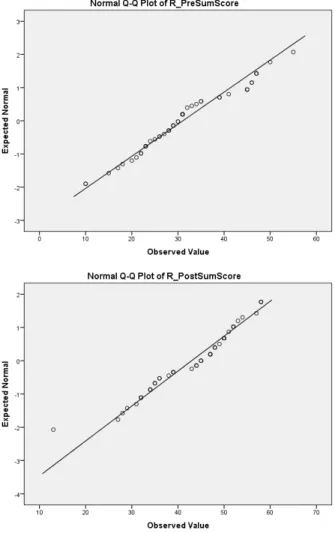
Figure 1. Normal Q-Q plots of the calculated pre and posttest overall teaching
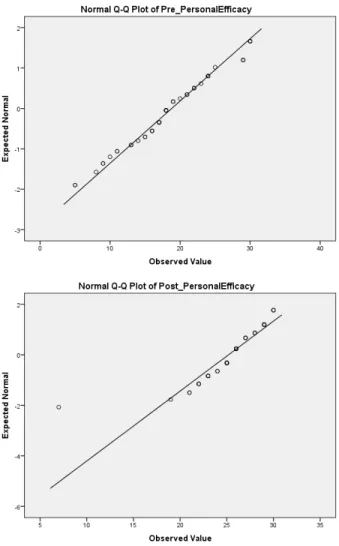
efficacy scores ...61 Figure 2. Normal Q-Q plots of the calculated pre and posttest personal teaching
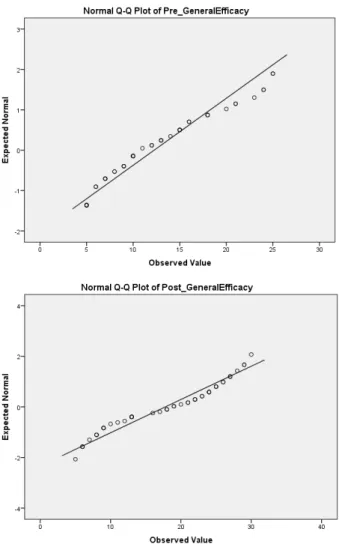
efficacy scores ...62 Figure 3. Normal Q-Q plots of the calculated pre and posttest general teaching
Section 1: Introduction to the Study
Legislators, policymakers, and researchers have encouraged methods to ensure teachers deliver high quality instruction, including requiring that teachers complete specific training, possess a minimum level of content knowledge, and use curriculum materials and professional development resources available from schools and districts (Hill, 2015). Given national accountability requirements under the No Child Left Behind Act (NCLB, 2001), schools must implement research and standards-based interventions to ensure that all children, regardless of background, are reading proficiently by 2014. According to Leyva (2009), the implementation of NCLB has improved the quality of education because classroom sizes are smaller and teachers are required to use
scientifically research-based practices for instruction. Response to intervention (RtI) is a tiered approach to providing the appropriate level of intervention to the individual students. RtI is commonly used and accepted at the elementary level; however, at the secondary level, it remains less understood and less accepted by teaching staff (Reschly & Wood-Garnett, 2009). As a result, secondary educators may lack necessary training and self-efficacy to appropriately and confidently implement the RtI model. Properly implementing the program with support from staff can reduce or even eliminate some academic and behavioral issues, ultimately improving overall outcomes (Reschly & Wood-Garnett).
Research is needed to provide greater understanding of the implementation of RtI at the secondary level. There is also a need for professional development for secondary teachers with regard to the RtI model to increase teachers’ confidence in their ability to implement the intervention, as well as to affect change. Within a theoretical framework
of social cognitive theory (Bandura, 1977) and the concept of self-efficacy, a quantitative one group pretest and posttest study design was used to examine the level of RtI self-efficacy among teaching staff at a single middle school. The school from which the sample will be drawn, which in the most recent year failed to meet adequate yearly progress (AYP) as required by NCLB, is implementing RtI in response to state and local mandates and in an effort to resolve inadequate progress and demonstrate greater student success.
Background of the Problem
According to Anderson (2009), a belief exists that only advantaged students benefit from educational exposure. In addition, Anderson contended that there has been little to no expectation that minority students, economically challenged students, and students with disabilities will learn. The NCLB Act (2001), in conjunction with the Individuals with Disabilities Education Improvement Act (IDEIA) of 2004, has reformed the manner in which students are educated (U.S. Department of Education, 2004). All students are expected to achieve excellence academically and socially, regardless of family background.
Accountability in education encompasses regulation compliance, adherence to professional norms, and driven results (U.S. Department of Education, 2004).
Accountability has become prominent in the field of education as schools, districts, and educators are held responsible for student assessment results (U.S. Department of Education, 2004). With heightened accountability, educators are now publicly charged with the daunting task of ensuring that all students read proficiently. This has forced many states to identify research-based strategies that will improve student outcomes
through effective instruction. The most current model of choice is RtI (Fountas & Pinnell, 2009).
RtI is designed to focus on all students using a model of prevention in lieu of a model of failure (Fountas & Pinnell, 2009). According to the National Center for Learning Disabilities (2006), RtI is:
A multi-step approach to providing services and interventions to students who struggle with learning at increasing levels of intensity. The progress students make at each stage of intervention is closely monitored. Results of this monitoring are used to make decisions about the need for further researched-based instruction and/or intervention in general education, in special education, or both. (p. 1)
Providing interventions is not a new concept in public schools in the United States, including the southeastern state in which this study took place. However, the main focus of RtI has been on the primary grades in elementary schools. In 2006, the state devised and published a plan to assist districts across all grade levels in meeting AYP utilizing the RtI model. The state contended that policy, professional development, and appropriate resources must be implemented appropriately in order to achieve student academic success. While research has contended that an effective principal is central to recruiting and supporting teachers, teacher effectiveness matters; prior research has demonstrated that teacher effectiveness contributes more to improving student academic outcomes than any other school characteristic (Darling-Hammond & Rothman, 2011).
In order for instruction to be effective, lessons must be designed to address the needs of each individual student (Conole & Fill, 2005). With this in mind, professional
educators are encouraged to expand their pedagogy yearly through college courses and/or district professional development (Carney & Stiefel, 2008). Pham (2012) stated,
“Equipping students with practical skills and competences requires teachers to take the role as scholar practitioners who should develop an interdisciplinary understanding to keep up with increased demands in the globalization process” (p. 18). For decades, elementary teachers have provided interventions utilizing differentiated instruction (DI) via small group instruction (FDOE, 2004). However, this concept is fairly new to secondary education teachers. The dilemma is not their willingness to follow the school’s model, but rather their knowledge base, concept for RtI, and their familiarity with the process (FDOE, 2004).
Problem Statement
The teachers who work within the school selected for this study were faced with a complex educational challenge. Although the school for this study received an A+ rating for the past three school years, it failed to meet the adequate yearly progress criteria. It was believed that the students were not reading enough (U.S. Department of Education, 2001). The southeastern public school’s district was aware of this failure and
implemented a concerted effort to pursue systematic change aimed at resolving the students’ lack of success across the district as mandated by the state (Castillo & Hines, 2009).
Administrative Rule 6A-6.0331 (Florida Administrative Code and Administrative Register, 2014), approved June 17, 2008, stipulated that it is the specific district’s
“responsibility to develop and implement coordinated general education intervention procedures for students who need support to succeed in the general education
environment.” The mandate for the 2012-2013 school year stipulated that all schools within the southeastern public school district employ the RtI model regardless of the school’s previous letter grade (FDOE, 2008). The charge was to meet the needs of struggling and at-risk students using the multi-tiered RtI model. RtI implementation without fidelity is detrimental to improved student outcomes (Reschly & Wood-Garnett, 2009). In order to properly apply the model, enhanced understanding of the
implementation of the model at the secondary level is necessary.
Greater understanding of RtI applications could alleviate resistance in secondary classrooms, allowing RtI implementation to continue to emerge at this level, despite barriers. If teachers are provided 25 hours of collaboration and training per year, schools can anticipate student achievement (Gallimore, Ermeling, Saunders, & Goldenberg, 2009). Effective processes and methodologies resulting from enhanced understanding of the process at the secondary level from the perspective of those who must employ the methods in the classroom must be present in order to produce proficient teachers who possess the necessary skills to handle complex academic and behavioral concerns (Nunn, Jantz, & Butikofer, 2009).
Teacher self-efficacy refers to the belief held by teachers that their actions result in favorable outcomes on student learning and behavior (Tschannen-Moran, Woolfolk Hoy, & Hoy, 1998). Incorporating seamless procedures and professional development that lend support to interventions and teachers can yield effective educators who are skillful and equipped to handle challenging academic and behavioral situations (Nunn & Jantz, 2009). As RtI implementation increases in secondary schools, research is needed
to gain a better understanding of the implementation process and the effect it has on educators (Erdem & Demirel, 2007).
Purpose of the Study
The RtI model was scheduled for full implementation in the school district in the fall of 2011 (Castillo & Hines, 2009). Based on previous school grades, it appears that students in the study school have entered school with the basic knowledge, continuously resulting in high performance. Unlike low performing schools under state sanctions, there has never been a mandate to provide specific remediation or interventions at this particular school. Because of this history of high performance, the teachers lack the necessary knowledge and/or training for effective RtI implementation and therefore, remain uncomfortable implementing the RtI model. The purpose of this study was to examine the perceptions of core subject area teachers about their efficacy to assess and disaggregate data, provide appropriate interventions, monitor students’ progress in an on-going fashion, and ultimately improve student achievement, as the teachers’ sense of efficacy has an impact on proper implementation, success of the program, and overall learning outcomes (Nunn & Jantz, 2009).
Theoretical Framework
The study was framed within the constructs of social cognitive theory (SCT) and the associated concepts of self-efficacy, perceived self-efficacy, and teacher efficacy (Ashton & Webb, 1986; Bandura, 1977, 1986, 1997; Gibson & Dembo, 1984). According to Bandura (1997), perceived self-efficacy is defined as ‘‘beliefs in one’s capabilities to organize and execute the courses of action required to produce given
attainments’’ (p. 3). Building on this notion of self-efficacy beliefs, Tschannen-Moran and Woolfolk Hoy (2001) stated:
Self-efficacy is a future-oriented belief about the level of competence a person expects he or she will display in a given situation. Self-efficacy beliefs influence thought patterns and emotions that enable actions in which people expend
substantial effort in pursuit of goals, persist in the face of adversity, rebound from temporary setbacks, and exercise some control over events that affect their lives (Bandura, 1986, 1993, 1997, as cited by Tschannen-Moran & Woolfolk Hoy, 2001, p. 787)
Bandura’s SCT provides a means to describe and understand both teaching and learning. According to SCT, an individual’s beliefs, including the individual’s perception of his or her own capabilities, are continually shaped by one’s experiences (Bandura, 1977, 1986, 1997). Barnyak and McNelly (2009) agreed that SCT describes how people create perceptions of their own abilities and shape their goals in life. High levels of efficacy in specific areas determine the degree of success in those areas (Barnyak & McNelly, 2009). Perceptions of personal capabilities determine behavior and effort in achieving a task (Bandura, 1977, 1986, 1997). Within the field of education, Bandura (1997) contended that teachers’ personal self-efficacy is reflected in their attitudes and teaching efficacy.
The SCT element of self-efficacy is useful in exploring the beliefs of teachers and how these beliefs influence both teacher and student performance (Ashton & Webb, 1986). Personal efficacy beliefs and self-expectations of the teacher have been linked both to instructional practices and ultimately to student outcomes (Ashton & Webb,
1986). The perception of a successful teaching method or plan for a teacher serves to promote increased efficacy, promoting continued success. Negative emotions or negative influences of social persuasion or feedback can serve to decrease efficacy among teachers (Scheafer, 2010). Teachers’ belief in their ability to perform and impact positive change within the classroom for positive student outcomes is referred to as teacher efficacy (Bandura, 1997; Gibson & Dembo, 1984). Allinder (1994) supported these ideas and concluded that a significant positive correlation exists between efficacy and the variables of instructional experimentation, organization, and planning.
To evaluate and compare levels of efficacy in relation to teacher training, the quantitative data collection framework was deemed appropriate for this research because it enables a comparison of the levels of efficacy prior to and after implementation of the teacher training in order to shed light on the impact of the professional development in RtI on the individual participants (Creswell, 2007). The study assessed levels of teacher self-efficacy related to RtI and as such, demonstrated the levels of teacher confidence in performing using the RtI model. The pre-experimental, single group pretest posttest design was employed. The implementation RtI for the first time at the school in which participants were drawn provided an opportunity to explore the teachers’ sense of efficacy with regard to a new implementation of RtI and the impact of the professional development on teacher efficacy.
Assumptions and Limitations
The study was limited to a single public school in a southeastern state. The study also was limited to exploring the self-efficacy beliefs of teachers within this single school in terms of their personal efficacy as well as their perceptions of the impact of the
specific professional development opportunity provided related to RtI implementation. The study utilized quantitative data, which were obtained through the use of the Teacher Efficacy Scale, Short Form (TES-S) (Hoy & Woolfolk, 1993). The quantitative survey data were obtained from all core subject-area teachers on a voluntary basis both prior to and after completion of the specified professional development opportunity.
District curriculum personnel conduct professional development and model instructional lessons for school employees on a regular basis and therefore, it was assumed that they provide effective professional development and have the ability to establish excellent rapport with teachers. It must be assumed that the respondents answered the surveys truthfully. It was also assumed that the participants would attend the RtI related professional development session, and would be able to implement
appropriate instructional strategies based on the needs of the student. The RtI model was implemented in all core subject areas as mandated by the state. The second limitation involved was the absence of a comparative group (control versus treatment) to determine whether the outcomes reflected in the study are a direct result of RtI professional
development on teacher efficacy.
The weakness of the one group pretest posttest design is that it serves to compare the data and results from a single research group. As such, the research is not necessarily generalizable to the larger population of secondary school teachers implementing the RtI model. However, implications can be made from gaining an understanding of the self-efficacy beliefs of teachers at this study school attempting to successfully implement the RtI model to enhance student success.
Research Question and Hypothesis
Research has shown that it is not easy for students to flourish or for teachers to be effective if they are not provided with the essentials on effectively implementing the RtI process (Fuchs & Fuchs, 2006). To achieve this objective, teachers and administrators must be equipped with the research-based interventions and training, administered with adequate intensity, support, and leadership, to ensure success (Fuchs & Fuchs, 2006). As such, the researcher focused on the following research question: What effect, if any, does explicit training in the form of professional development on the RtI model have on the perceived self-efficacy of secondary core subject area teachers?
The question in this study was designed to address the impact, positive or negative, that training on the mandated intervention model would have on the
participant’s perception of their ability (self-efficacy) to impact student achievement. Hypothesis
RQ: What effect, if any, does explicit training in the form of professional development on the RtI model have on the perceived self-efficacy of secondary core subject area teachers?
H0: There is no significant difference in perceived self-efficacy from the Teacher
Efficacy Scale (Short Form) pretest to posttest among secondary core subject area
teachers who received training in the form of professional development on the RtI model. Ha: There is a significant difference in perceived self-efficacy from the Teacher
Efficacy Scale (Short Form) pretest to posttest among secondary core subject area teachers who received training in the form of professional development on the RtI model.
Definition of Terms
Accountability. Accountability refers to the practice of holding educational systems responsible for the quality of students’ knowledge, skills, behaviors, and attitudes. It is a means to ensure that children are getting a good education and that tax dollars are not being wasted (U.S. Department of Education, 2004).
Adequate yearly progress (AYP). AYP is a measurement defined by the U.S. federal No Child Left Behind Act that allows the U.S. Department of Education to determine how every public school and school district in the country is performing academically, according to results on standardized tests. Schools must meet the
following criteria in terms of having (a) tested 95% of the students in reading and math; (b) improved performance by 1% (0% is > 90); (c) 58% at or above grade level in reading; (d) 62% at or above grade level in math; and (e) increase graduation rate by 1% (the current rate is > 85) (U.S. Department of Education, 2001).
At-risk. At-risk refers tostudents who are demonstrating reading scores below average and are therefore at-risk are reading below grade level, or are receiving special education services (FDOE, 2008).
Collective teacher efficacy. A construct depicting teachers’ shared beliefs about the capability of their school’s faculty for successfully educating its students, which in turn shapes “the normative environment of schools” (Goddard, Hoy, & Hoy, 2000, p. 502).
Core subject. Core subject refers tonon-elective courses (i.e. language arts, mathematics, reading, science, and social studies).
Multi-tiered strategy. Within the Multi-tiered strategy, each tier reflects the intensity of the intervention changes based on the students’ need (Fuchs & Fuchs, 2006).
Response to intervention. “Response to Intervention is defined as the change in behavior or performance as a function of an intervention” (Gresham, as cited by FLDOE, 2008, p. 1). The RtI model is comprised of a multi-tiered approach to the provision of both quality instruction and intervention. The RtI model is matched to student needs, and is data-driven, using assessments to inform instructional decisions and practice to
improve student learning (FDOE, 2008). The essential components of RtI include “multiple tiers of evidence-based instruction service delivery, a problem-solving method designed to inform the development of interventions, [and] an integrated data
collection/assessment system to inform decisions at each tier of service delivery” (FDOE, 2008, p. 1).
Secondary schools. Secondary schoolsprovide instruction for students in grades 6 – 12. Secondary schools are also known as middle, junior, or senior high school.
Self-efficacy. A person’s perception of his/her ability to learn and perform tasks in particular situations (Jean-Baptiste, 2010; Schunk, 2011).
Teacher efficacy. According to Bandura (1997), self-efficacy within the realm of teachers’ beliefs in their ability to perform and impact positive change in the students is termed teacher efficacy. Teachers with high self-efficacy expect themselves to promote student learning regardless of perceived obstacles (Heslin & Klehe, 2006).
Nature of Study
Using a quantitative research design incorporating a pre- and postquestionnaire with implementation of professional development, this researcher examined the impact of
professional development on teacher efficacy as it relates to the RtI model. Although incorporating the intervention model mandated by FDOE (2008) at the affected school district was not optional or voluntary; participating in this research study was. In addition, participants received extensive in-depth instruction on the RtI multi-tiered problem-solving model. A variety of example instructional strategies that can be incorporated into the intervention lesson/plan also were provided during professional development. An analysis of participating teachers’ perceptions and level of
implementation comfort were assessed during the post questionnaire. Significance of Study
According to Tilly (2002), the RtI model seeks to systematize and integrate research-based best practice elements like educational problem-solving, scientifically-based interventions, school-related universal screening, and data-scientifically-based decision making. However, to achieve success, the model must be implemented with fidelity, following the three-tiered approach. The Department of Education in the southeastern part of the US (2008) charged each school district with the task of devising an intervention plan to achieve compliance with Federal requirements stipulated in NCLB and IDEA to address at-risk students. The RtI model was to be executed in all southeastern schools starting in the fall of 2010.
This study is significant because although there is research on the RtI model, little research speaks to the effects on secondary schools and their teachers. Research on expanding teacher-learner outcomes for students and teachers shows how teacher efficacy is developed in education (Nunn & Jantz, 2009). Bandura (1997) noted that when a teacher possesses a high level of efficacy in the classroom, there appears to be an increase
in student performance. In addition, he asserted that this increase may be associated with improvement in teaching skills and concurrent elevation of the teacher’s self-efficacy (Bandura, 1997). Research on efficacy has continuously concluded that high teacher efficacy leads to empowerment of positive teacher-student learning interactions, and thus yields positive outcomes for all involved (Bandura, 1997).
Finally, this study is significant because it provided a foundation in line with the model’s requirements for secondary teachers while simultaneously enabling the
participants to become more comfortable and efficient in their ability to provide interventions to at-risk students. Implementation with fidelity may generate favorable results for the student, the teacher, the administrator, the school, the district, and ultimately the state, which will result in compliance with the federal government, in terms of NCLB and IDEA. Not only will these improvements lead to compliance with federal regulation, they will support positive social change by improving education for at-risk students.
Summary
As education becomes competitive and accountability more prevalent, the
national trend to meet the needs of all struggling and at-risk learners is at the fore-front of federal law compliance. RtI is no longer an issue solely for the elementary education level; the model is now also mandated in secondary schools. This study was specifically designed to measure teacher efficacy as it relates to the RtI model on the secondary level.
Section 2 includes an overview of the relevant literature that shaped this quantitative, one group pretest posttest study. Section 3 presents the study’s research design. Section 4 consists of the findings, and Section 5 summarizes the findings.
Section 2: Literature Review
Various sources related to RtI and teacher efficacy are reviewed in this section. The educational research discussed maintains a focus on RtI and its essential
components: educational accountability, the impact of educational failure, and implications for educational practice. This section also includes a discussion of the foundational studies on self-efficacy and teacher efficacy. The section presents a review of the scholarship on content teachers' perceptions and attitudes toward teaching at-risk students, and a review of studies examining teacher efficacy and professional
development.
School administrators and teachers are under mounting pressure to effectively implement the mandatory RtI initiative. This review explored the literature with regard to RtI and the impact and implications for educators with particular interest in the secondary school setting, for schools in the southeast and schools around the country.
This researcher’s search strategy began with the role of educational legislation, the associated impact of accountability and of educational failure, and the specific role of RtI in addressing shortcomings responsible for the lack of adequate yearly progress. The search strategy then moved toward specific research, addressing the need for and use of RtI at the secondary level, as well as how secondary teachers’ unfamiliarity with intervention models and levels of teacher efficacy impact intervention implementation and success. Finally, the search included how professional development may serve to offset these issues. The information included in this literature review was compiled using published professional journals and books in the field of education. To locate specific information to shape this research a variety of research databases were utilized,
including: ERIC, the Walden Research Library, and the southeast Department of
Education. The following keywords were used to search: efficacy, teacher efficacy, social cognitive theory, educational accountability, educational failure, professional
development, and response to intervention in secondary schools. Impact of Educational Failure
In order for students to compete globally, they must meet the same standards and meet academic expectations (Duffy, Giordano, Farrell, Paneque, & Crump, 2008; Klein & Rice, 2014). Public schools in the U.S. are charged with providing effective strategies for addressing the needs of these students, keeping them in school, and improving their academic outcomes. The biggest challenge facing schools is the cost of educating these at-risk students; however, the costs to society of not providing for the educational needs of these students are much greater (U.S. Department of Education, 2010). These costs are incurred by the increasing rate of drop out, which coincides with higher
unemployment, increased crime, greater welfare dependency, and decreased earnings (U.S. Department of Education, 2010).
For youth who are not in school or the labor force, research has shown a correlation with increased risk for delinquency and crime, and eventual incarceration (Barnert et al., 2015; Snyder & Sickmund, 1995). It was noted by Snyder and Sickmund (1995) that it costs three times less to educate a student from K-12 than to incarcerate an adult inmate for life. Western, Schiraldi, and Ziedenberg (2003), in a study for the Justice Policy Institute, also reported a significant relationship between low educational attainment and risk for incarceration, particularly within African American communities. Evidence suggests, therefore, that despite the costs associated with educating and
providing for the educational and behavioral needs of at-risk students in the schools, society and public policy must support alternative education and intervention strategies. Alternative education and intervention serve as effective approaches to addressing the needs of these students, as the risks and adverse outcomes for society associated with student failure in school are much greater and longer lasting.
Educational Accountability
Legislation developed in response to the NCLB Act, has placed a demand on improving viable educational options and outcomes for students. NCLB requires an improvement in student achievement (Goodman, 2014; Pascopella, 2002; Tyler, 2003; The White House, (n.d.). Guilott & Parker (2010) stated IDEA has fundamentally changed the way educators view their role in educating all students and the approaches used in the classroom. The delivery of highly effective and successful interventions can help students overcome their most debilitating obstacles (Berliner, 2014; Ciullo et al., 2015; Gerstein et al., 2009). Michael Fullan (1993) stipulated that it is impossible to have a learning society without learning students, and you cannot have learning students without learning teachers. It is vital for all educators to be extremely competent in their academic area to meet the learning needs of the varied student population assigned to their classrooms (Smith, Robb, West, & Tyler, 2010). This, however, has become one of the most challenging tasks for school districts, policy makers, and society in general.
In addition to adhering to NCLB, schools must secure and retain a highly
qualified teaching staff, which indicates teachers must possess a bachelor’s degree, state licensure/certification, and demonstrate subject area knowledge through passing scores on teaching examinations (Darling-Hammond, Wilhot & Pittenger, 2014; Keller, 2003;
Richard, 2003; Special Education Report, 2003). Even if a school is able to meet the requirements and secure a highly qualified teaching staff, teacher attrition remains an issue with an estimated 9% of new teachers leaving within the first year and roughly 30% of teachers leaving the profession in the first five years (Darling-Hammond, 1999, 2000, 2014). Attracting and retaining highly qualified teachers remains problematic for schools.
Response to Intervention
Southeastern schools are encountering accountability concerns common to school districts across the nation. Schools are held accountable for their students’ performance to encourage school improvement (Ahn & Vigdor, 2014; U.S. Department of Education, 2004). The stakes are high for all involved parties because of accountability, global competition, and continuous monitoring. Much of the research on intervention has reviewed only basic skill assessment with few studies measuring summarization, response, or analysis of text (Samuels & Farstrup, 2011). Samuels and Farstrup (2011) also contended that reading difficulties are caused by the lack of appropriate high quality reading instruction. As students move from elementary schools to secondary schools, they face greater demands to read and comprehend text independently. Students who fail to acquire basic skills during their early years often continue to exhibit deficiencies as they progress to the secondary level (Berliner, 2015; Catts, Neilsen, Bridges, Liu & Bontempo, 2015; Miller, Imbrie, & Cox, 2014; Daly et al., 2015; Ehren, 2009). Research has suggested that ideal teaching strategies include activities that are equitable for various types of learners, as students differ personally as well as educationally (Daly et al, 2015;
Lyon, 1997). To continuously fail to treat them as individuals almost guarantees that many, if not all, will not reach their full potential.
According to Popham (2010), there are four levels of the learning progression. The first level begins with a teacher’s instructional adjustments. Genuine equity in schools calls for using various means to assist all students in attaining some degree of success. RtI is the current initiative geared to address this endeavor. Methods incorporated by RtI became a focus of attention with inclusion in the IDEIA of 2004; however, RtI is not a special education process, but rather a general education process geared toward assisting all students in achieving grade level proficiency (Berliner 2014; Burns, 2008; Ciullo et al., 2015; Daly et al., 2015; Noltemeyer, Boone & Sansosti, 2014). As such, RtI has been shown to be a particularly effective strategy for assisting students at risk for failure in the general education environment before special education referral and placement (Canter et al., 2008; Catts et al., 2015; Darling-Hammond et al., 2014; Noltemeyer et al., 2014). Given a national focus on student achievement and school accountability, schools are adopting RtI into the general education curriculum (Muoneke & Skankland, 2009; Noltemeyer et al., 2014).
The primary principle of the RtI process is to better student results (Catts et al, 2015; Gresham, 2005; Noltemeyer et al., 2014). It is a process that individualizes
instruction for all students. According to Gresham (2005), RtI is a change in behavior or performance as a function of an intervention. In other words, it is a process that
highlights how well students respond to adjustments in instruction. According to Reschly and Wood-Garnett (2009), RtI protocol involves: (a) detecting educational gaps
identifying required intensity; and (d) employing various tiers. Reschly and Wood-Garnett (2009) also contended that this model involves decisions based on available data. Although there are several models based on the RtI approach and I will only examine the one used in my local educational system, Reschly and Wood-Garnett (2009) asserted that the underlying principles remain the same.
RtI is an implementation process for evidence-based instructional strategies designed to enhance student progress in the general education environment prior to necessitating special education services (Canter et al., 2008). By definition:
The RTI process is a multi-step approach to providing services and interventions to students who struggle with learning at increasing levels of intensity. The progress students make at each stage of intervention is closely monitored. Results of this monitoring are used to make decisions about the need for further research-based instruction and/or intervention in general education, in special education, or both (National Center for Learning Disabilities, 2006, p. 1).
Thus, RtI uses constant monitoring through assessment data to provide for evidence-based decision making for adjusting the level and intensity of interventions. According to Gresham (2005), “This logic is not unlike a physician changing the dosage level or type of drug based on the patient's unacceptable response to that drug” (p. 331).
School-based interventions are typically described according to three levels of intervention, which include: universal, selected, and targeted or intensive interventions (Sugai, Homer, & Gresham, 2002). Aligning with this concept, the RtI approach strives to identify and match the intensity of the intervention to the severity of the problem, using a tiered approach to deliver the necessary intensity of intervention. Within the
three-tiered model, students are recommended for more intensive intervention based on their response or lack of response to intervention. A key element in the RtI model is the need for valid and reliable, quality intervention designs (Barnett, Daly, Jones, & Lentz, 2004; Noltemeyer et al., 2014).
The first tier incorporates universal instructional strategies for all students within the regular education setting inclusive of quality general curriculum, school-wide
assessments and screening in order to identify at-risk students, research-based instruction, and support for at-risk students within the regular classroom (Canter et al., 2008). The second tier of the RtI approach offers instructional modifications and continued
assessment to students not responding to strategies incorporated under the first tier (Canter et al., 2008). More specific interventions, or targeted interventions, are
delivered, often in small-groups, and progress is monitored closely (Canter et al., 2008). An estimated 15% of the student population will require tier two intervention (Burns, 2008).
Finally, the third tier involves design of intervention that will address the needs of students who continue to fail to respond adequately to intervention at the second tier level (Canter et al., 2008; Gresham, 2005). An estimated 5% of the student population will require the third tier level of intervention (Burns, 2008). Tier three interventions are more intensive and individualized instructional strategies. Students may be referred for special education evaluation from the third tier.
Because RtI is a general education initiative, it is able to support any student at any time by nature of its flexibility and non-dependence on special education personnel, funding, or eligibility requirements (Canter et al., 2008; Noltemeyer et al., 2014).
Although RtI requires collaboration of school personnel, it is able to take advantage of the various skills, talents, and ingenuity of the entire school faculty (Canter et al., 2008). As a result, RtI has shown to be effective in terms of decreased referrals to special education services and higher rates of student proficiency on state examinations (Burns, 2008; Burns, Appleton, & Stehouwer, 2005; Catts et al., 2015; Daly et al., 2015;
Noltemeyer et. al, 2014; Windram, Scierka, & Silberglitt, 2007). RtI at the Secondary Level
RtI has been expanding to the secondary level to address students in middle, junior, or high schools with limited basic skills that put them at risk for dropping out or failure to graduate (Berliner, 2014; Canter et al., 2008; Catts et al., 2015; Ehren, 2009; Muoneke & Shankland, 2009; Noltemeyer et al., 2014). These students did not meet the criteria for being classified as having a learning disorder that would require special education inclusion at the elementary level, but demonstrate deficiencies at the secondary level, which creates a risk for school failure. Some students simply did not demonstrate their academic or behavioral issues until high school (Berliner, 2014; Catts et al., 2015; Miller et al., 2014; Duffy, 2007; Ehren, 2009). Given the evidence for the effectiveness of RtI at the elementary level, educational leaders have sought to expand its use to the secondary level (Muoneke & Shankland, 2009). Joseph Harris, project director at the National High School Center (NHSC) noted,
Over the last five years or more, there’s been an increased focus on more rigor, increased graduation rates…higher-level courses. At the same time, there’s been this steady progression of students coming up through elementary and middle school who are significantly below grade level or who have specific issues with
literacy and numeracy, and there’s been no venue to address that (as cited by Muoneke & Shankland, p. 10).
RtI implementation has demonstrated effects of improved transition from remedial to mainstream settings, increased state assessment scores, declined dropout rates, declined number of referrals to special education, and increased high school graduation rates (Barton, 2008; Berliner, 2014; Burns, 2008; Duffy, 2007; Noltemeyer et al., 2014).
However, implementation at the secondary level is not a matter of simple replication of programs at the elementary levels. RtI at the secondary level presents certain challenges to implementation due to the lack of time for intervention response; staff are limited by the few remaining years the students are in high school, as well as by the scheduling and course structure, which is focused on specialized subject matter learning (Duffy, 2007; Muoneke & Shankland, 2009; Noltemeyer et al., 2014). Although intervention materials and specific strategies may be readily available for literacy
intervention, these tools may be lacking in other content areas, such as mathematics, writing, or other areas (Muoneke & Shankland, 2009). The structure of the day for secondary school students may pose an additional challenge to incorporating tier two and three level interventions, as students continually move from one class to another
(Muoneke & Shankland, 2009). Despite these challenges, some researchers have offered ideas, such as Burns (2008), who suggested a block scheduling technique to enable intervention during study hall periods.
Barton (2008) suggested that intervention at the secondary school level should remain focused on retention and postsecondary success. Duffy (2007) asserted that RtI shows promise at the secondary level, specifically for programs directly affecting issues
such as transitions and dropout prevention. Special concerns within the tier two and three levels in high school could include (a) academic support such as remedial courses, small-group instruction, additional instruction or tutoring, and study skill instruction; (b) support for graduation through credit recovery programs or state assessment preparation; and (c) behavioral support programs (Muoneke & Shankland, 2009). According to Muoneke and Shankland (2009), “RtI at the high school level can serve as a framework for drop-out prevention and content recovery to ensure that students pass core courses and exams and ultimately graduate” (p. 10).
Educators at the secondary level may not be enthusiastic about implementation of RtI, demonstrating pessimism with regard to ability to help the student at the secondary level (Ehren, 2009). Despite the fact that literacy proficiency is critical for content mastery in secondary education, secondary education teachers may not be well versed in content literacy, as it may not have been incorporated in the secondary teacher’s teacher preparation (Ehren, 2009). In addition, secondary educators may not accept literacy as part of their role as a secondary education teacher, believing that literacy instruction is part of elementary education (Ehren, 2009).
Although these perceptions may exist among secondary educators, RtI can also increase success of teachers in helping students through attention to quality universal instruction (Ehren, 2009). According to Ehren (2009),
Teachers are under enormous pressure to have students meet state standards in specific content areas. In an RTI context, focus on scientifically based instruction means that teachers will be encouraged to examine their teaching practices and to differentiate instruction to enhance student learning. (p. 4)
Ehren further asserted that the RtI method can enable support and remediation for students experiencing limited academic success due to literacy problems without
overburdening content teachers. In addition, according to Ehren, “Administrators need to promote a shared responsibility for academic achievement with literacy roots as a school-wide mission and foster a systemic approach to addressing student needs” (p. 4).
In contrast to a system of dependency on individual teachers or programs, RtI promotes collaboration, involving a coordinated and cooperative effort among faculty to provide the needed support for the student as well as increased teacher perceptions of their own efficacy (Berliner, 2014; Duffy, 2007; Ehren, 2009). Duffy (2007) asserted that the success of RtI at the high school level depends on changes in the roles of teachers and the school and classroom culture and ultimately, the extent to which staff are open to those changes. The faculty must be able to collect and interpret the student assessment data, and develop and implement interventions; as such, Duffy stressed the importance of professional development for all school faculty and staff. According to Duffy, “The practices that schools and districts adopt will require ongoing capacity-building and collaboration (Fuchs & Deshler, 2007). However, the approach can result in a more coherent educational experience for all students” (p. 7).
Theoretical Basis of Effective Teaching
Numerous theories such as Bandura’s (1977) social cognitive theory can be used to describe and understand teaching and learning in the classroom. Bandura’s social cognitive theory (SCT) and the associated concepts of self-efficacy and teacher efficacy served as a theoretical framework for the study and the RtI approach (Bandura, 1977-1997; Schwarzer, 2014). The successful implementation of the RtI approach, particularly
at the secondary level, is dependent on the collaboration of teachers and staff and the capabilities of those teachers, both real and perceived. Pas, Bradshaw, Hershfeldt, and Leaf (2010) stated that teacher efficacy impacts teachers’ behavior, affect setting goals, and their ability to persevere in tasks.
Social Cognitive Theory (SCT)
Bandura's social cognitive theory (SCT views human behavior within the perspective of personal interactions, behaviors, and the environment (Bandura, 1977, 1986, 1997; Schwarzer, 2014). The interaction of multiple factors then determines an individual’s future behavior. Within the constructs of SCT, prior consequences and experiences serve as predictors for future behavior as well as the regulation of behavior. As such, beliefs are continually shaped by way of one’s experience within the
environment, including one’s perception of one’s own capabilities, which are similarly shaped through experience (Bandura, 1977, 1986, 1997; Schwarzer, 2014). According to SCT, one’s views of personal abilities and strengths determine behavior based on what one attempts to achieve in addition to the effort put into achieving it (Bandura, 1977, 1986, 1997; Schwarzer, 2014). As a major component of Bandura’s social cognitive theory, self-efficacy is defined as a “domain-specific, expectancy-belief construct in which an individual judges whether he/she has the abilities to organize and execute the courses of action that are necessary to attain a specific task” (Roll-Pettersson, 2008, p. 174). As SCT relates to teaching, Bandura (1997) asserted that teachers’ personal self-efficacy is reflected in their attitudes toward teaching as well as their self-efficacy in teaching.
Self-efficacy
Self-efficacy is a person’s perception of his/her ability to learn and perform tasks in particular situations (Jean-Baptiste, 2010; Schunk, 2011). Self-efficacy and self-esteem, although quite different, are often used interchangeably (Akande, 2009; Bandura, 1997; Schwarzer, 2014). According to Myers, Willse, and Villalba (2011) self-esteem is correlated to the opinion from others, social networks, and activities. However there is debate on whether self-esteem is stable or changes over time. Zhang, Wang, Li, Yu, and Yan-Ling (2011) contended that the degree to which self-esteem can be influenced is situational and depends on how important the situation is to the individual. Ng, Nicholas and Alan (2010) suggested that “teachers beliefs are the ideas that influence how they intellectualize teaching” (p. 278) and this self-conception is principal to efficacy in teaching. This study focused on the concept of self-efficacy within the context of teaching and learning.
Bandura (1977) introduced the concept of self-efficacy within SCT, relating a self-reflective concept and its relation to individual behavior. According to Bandura, self-efficacy is defined as “people’s judgment of their capabilities to organize and execute courses of action required to attain designated types of performance” (Bandura, 1986, p. 391). In addition, Bandura (1986) expanded this definition, describing self-efficacy as a self-reflective concept that relates “not with the skills one has but with judgments of what one can do with whatever skills one possesses” (p. 391). Accordingly, individuals who display high self-efficacy tend to believe in their personal ability to perform a task. An individual with high self-efficacy has a tendency to chase goals with enthusiasm (Lewis, 2011). Ghonosooly and Ghanizadeh (2013) contended that there is a
correlation between high self-efficacy beliefs and job success. In turn, these highly efficacious individuals will tend to work hard to succeed and will tend to persevere in comparison to low level efficacy individuals, who do not demonstrate confidence in terms of their personal belief in their ability to perform the task (Bandura, 1977, 1986).
The self-reflective nature of self-efficacy affects the thoughts, beliefs, and
emotions of the individual and as such, influences behavior (Bandura, 1977, 1986, 1997, 2010). The concept of self-efficacy is rooted in the belief of the individual of their personal ability to achieve a particular result or perform a particular task. Self-efficacy is not dependent on the degree of success experienced in the past with regard to the task (Bandura, 1977, 1986); however, experience affects an individual’s level of self-efficacy for that task, as self-efficacy is task specific (Ashton & Webb, 1986; Bandura, 1977, 1986; Ross, 1992; Schwarzer, 2014). There are four sources of self-efficacy
expectations: mastery experiences, physiological and emotional states, vicarious experiences, and social persuasion (Bandura, 1977, 1986, 1997; Schwarzer, 2014; Tschannen-Moran, Woolfolk-Hoy, & Hoy, 1998).
Self-efficacy, as a concept, has been used to explore how beliefs of teachers can influence both teacher and student performance (Ashton & Webb, 1986; Schwarzer, 2014). Ashton and Webb (1986) suggested that personal efficacy beliefs, or
expectations, of the teacher are linked both to instructional practices and ultimately to student outcomes. Teacher’s self-efficacy is fundamental for an effective school and program (Britto & Butler, 2010). For teachers, the perception of a successful
performance (i.e., successful teaching methods or plan) promotes increased levels of efficacy expectations, which in turn promotes continued success (Scheafer, 2010).
However, the reverse is also the case, where negative emotions of anxiety and excitement, or influences of social persuasion or less than positive peer-feedback can affect efficacy beliefs, decreasing efficacy expectations. It is important to note the distinction between skills and beliefs about what one can do as a teacher to affect change in a classroom setting. Bandura (1997) described, “Perceived self-efficacy is not a measure of the skills one has but a belief about what one can do under different sets of conditions with whatever skills one possesses” (p.37).
Teacher Efficacy
Teacher efficacy is a widely discussed topic in literature (Hemric, Shellman & Eury 2010; Lee, Hong-biao, Zhong-hua & Yu-le 2011). According to Bandura (1997), self-efficacy within the realm of teachers’ beliefs in their ability to perform and impact positive change in the students is termed teacher efficacy. It is a key component for teachers to plan effective instructional strategies, increase performance, and enhance teacher effectiveness and productivity (Dibapile, 2012). High teacher efficacy has been correlated with positive teacher practices and policies used in the classroom as well as advanced classroom teaching practices (Cho & Shim, 2013). Teachers who perceive their level of self-efficacy to be high, feel that they have the ability and competence to help students (Kelm & McIntosh, 2012). There is a positive correlation between teachers with high self-efficacy and school efficiency (Flores, 2010; Knox & Anafara, 2013; Yin, Lee, Jin, & Zang, 2012).
Teacher efficacy has been described according to two constructs: general teaching efficacy and personal teaching efficacy, which together develop the teachers overall belief in their ability to teach effectively (Gibson & Dembo, 1984, 1985; Schwarzer,
2014; Tschannen-Moran et al., 1998). General teaching efficacy maintains a focus on teachers’ personal beliefs about the larger, general relationship of teaching and learning and corresponding outcome expectancy; whereas, personal teaching efficacy represents a general concept of the teacher’s own personal effectiveness as a teacher (Bandura, 1997; Schwarzer, 2014; Tschannen-Moran et al., 1998). According to Rajesh and Suganthi (2013), teacher self-efficacy is directly interrelated to their ability to successfully handle challenges or difficulties. According to Muijs & Reynolds (2015) teacher effectiveness impacts students’ achievement, and is a primary ingredient in student progress over time. Additionally, they contended, that students taught by ineffective teachers for consecutive years do considerably poorer in both gains and achievement when compared to their peers assigned to effective teachers for consecutive years.
Bandura (1994) discussed teacher efficacy in the context of the organization and the impact of the collective and interactive social system of the organization on both the teachers’ perceived self-efficacy and student outcome:
Teachers operate collectively within an interactive social system rather than as isolates. The belief systems of staffs create school cultures that can have
vitalizing or demoralizing effects on how well schools function as a social system. Schools in which the staff collectively judge themselves as powerless to get students to achieve academic success convey a group sense of academic futility that can pervade the entire life of the school. Schools in which staff members collectively judge themselves capable of promoting academic success imbue their schools with a positive atmosphere for development that promotes academic
attainments regardless of whether they serve predominantly advantaged or disadvantaged students. (Bandura, 1994, p. 78)
However, prior research has questioned the validity of the personal and general teaching efficacy distinctions, particularly critical of the general teaching efficacy concept and measure (Tschannen-Moran et al., 1998).
Competence or teaching efficacy and confidence or personal efficacy beliefs both equally enhance teacher motivation (Ahmad, 2011). Collective teacher efficacy is directly related to school effectiveness (Cooper, 2010). Research on personal teacher efficacy has demonstrated that teaching efficacy, or teachers' perception of their teaching competence, indeed has an impact on student achievement (Ashton & Webb, 1986; Dembo & Gibson, 1985; Ross, 1998; Ross & Bruce, 2007; Schwarzer, 2014; Soodak, Podell, & Lehman, 1998; Tschannen-Moran & Hoy, 2001; Tschannen-Moran & Hoy, 2007; Tschannen-Moran, Woolfolk-Hoy, & Hoy, 1998). Also teacher efficacy and its impact on both teacher and student tends to be cyclical in nature; according to
Tschannen-Moran et al. (1998):
Greater efficacy leads to greater effort and persistence, which leads to better performance which in turn leads to greater efficacy. The reverse is also true... Thus, a teacher performance that was accomplished with a level of effort and persistence influenced by the performers’ sense of efficacy, when completed, becomes the past and a source of future efficacy beliefs. Over time this process stabilizes into a relatively enduring set of efficacy beliefs. (p. 234)
A teacher’s sense of efficacy is created through the interaction of a variety of factors. Ashton (1984) provided eight dimensions, which form a teacher’s sense of
teacher efficacy. These dimensions include (a) a sense of personal accomplishment in which the work is seen as meaningful and important, (b) positive expectations for student behavior and achievement, (c) acceptance of accountability for student progress and success, taking personal responsibility for student learning, (d) strategies in terms of learning/teaching plans, goal setting, for achieving objectives, (e) an overall positive affect in that the teacher enjoys and feels good about self, others, and students, (f) a sense of control over the student outcomes, believing that he or she he can influence student learning, (g) a sense of common teacher/student goals, and (h) involves students in a democratic decision-making process to develop mutual goals and strategies (Ashton, 1984).
According to Harris and Sass (2011), elementary and middle school teacher efficiency increases with knowledge (informal on-the-job training). Teachers with a high score on these eight dimensions have high teacher efficacy and have a tendency to see all students as teachable, inclusive of students with disabilities or special needs (Ashton, 1984). Teachers exhibiting high self-efficacy scores tend to have some common characteristics, according to Ashton and Webb (1986), such as organizational skills, curriculum planning, and enthusiasm for the students and classroom. In addition, these teachers tend to demonstrate greater levels of confidence in the classroom enabling them to be more open to trying new methods of teaching or new ideas to enhance student learning (Allinder, 1994). In contrast, teachers demonstrating a low level of efficacy tend to correlate learning difficulties in their students with low ability (Frase, 2006).
Additionally, low teacher efficacy is a crucial factor for teacher and student, which can ultimately lead to school failure (Gokce, 2010; Seniwoliba, 2013). According to Bandura
(1997), “The task of creating learning environments conducive to development of
cognitive competencies rests heavily on the talents and self-efficacy of teachers” (p. 240). Research has explored the relationship between teacher efficacy and instruction (Allinder, 1994; Schwarzer, 2014). Allinder (1994) examined the relationship between teacher efficacy and level of instructional experimentation of the teacher, as well as characteristics of organization and planning. Allinder concluded that a significant positive correlation exists between efficacy and the variables of instructional experimentation, organization, and planning.
The literature related to teacher efficacy has suggested that a teacher’s confidence in their ability to educate effectively is strongly linked to their outcome expectations, their perceived ability to influence student learning, and their own personal efficacy. Tschannen-Moran et al. (1998) described an integrated concept of teacher efficacy as “the teacher's belief in his or her capability to organize and execute courses of actions required to successfully accomplish a specific teaching task in a particular context” (p. 233). Ashton and Webb (1986) found that high and low efficacy teachers react
differently with students in how they teach. It is believed that high efficacy teachers will hold their students more accountable for their performance and insist they attempt challenges and problems, viewing it their responsibility to have their students learn. When student do not achieve the desired outcomes, they participate in self-reflection about their role in the failure to inform future practice.
High efficacy teachers tend to exhibit positive attitudes and higher confidence levels; they feel good about teaching and about themselves because they are confident of their positive influence on students’ learning (Brown, Welsch, Hill, & Cipko, 2008). The
study by Brown et al. (2008) explored the effects of embedding special education instruction into pre-service general education courses, thereby providing mastery experiences to new teachers. Brown et al. reported that embedded instruction increased teacher candidates’ knowledge and assessment adaptations, improving confidence levels with regard to meeting the needs of students with disabilities. In contrast to teachers demonstrating high levels of self-efficacy, the teacher with a low sense of efficacy tends to feel frustrated and discouraged and may expect students to fail (Ashton, 1984; Brown et al., 2008; Schwarzer, 2014). Maume, Rubin, and Brody (2013) contended that teachers’ lack of self-efficacy can adversely impact educational institutions. These teachers with low self-efficacy often have negative perceptions of their own ability, placing the responsibility to learn on the student. Given the non-success of students, a low efficacy teacher may tend to seek reasons for the lack of success, such as
background, motivation, and attitudes (Ashton, 1984). Ashton (1984) found low efficacy teachers to be less goal oriented, have fewer teaching strategies, and tend to have a lack of success expectation in terms of both the student success as well as personal teaching success (Ashton, 1984). In a similar way, findings given by Deemer (2004) confirmed the results of Ashton, noting that low efficacy teachers may have trouble working with students with disabilities due to lack of self-belief in their own abilities, whereas the high efficacy teachers tend to find ways to teach all children.
When a teacher demonstrates high expectations and efficacy for their students, the students will expect more from themselves (Troia & Maddox, 2004). Through an
analysis of middle school level writing instruction from the perspectives of special and general education teachers via focus groups and rating scales, Troia and Maddox (2004)
found that both special and general educators had positive views of their teaching efficacy, and that both groups were strongly influenced by their teaching context. Troia and Maddox went on to identify factors perceived to negatively impact teacher efforts to develop and implement interventions based on writing instruction. These identifying factors included, (a) the need to teach excessive content, (b) oversized classes (i.e., too many students), (c) student diversity with variation in terms of student ability level, (d) lack of student motivation, (e) barriers to successful inclusion and meeting the
educational needs of students with disabilities in the general education classroom, and (f) poorly developed or poorly aligned curricula (Troia & Maddox, 2004). The study
demonstrated the relevance of teacher efficacy to student outcomes and concluded that barriers to successful inclusion of student with disabilities negatively impact teacher efforts to deliver effective writing instruction.
Research suggests the impact of teacher efficacy on teacher attitude toward students, particularly students who are at-risk for failure or those with learning
disabilities. Teacher attitudes and perceptions directly affect teacher behavior toward students (Pajares, 1992). Research also suggests that many teachers demonstrate low efficacy for intervention, differentiated instruction, and meeting the needs of diverse learners (Bradshaw & Mundia, 2006). Although data demonstrate a predominance of low teacher efficacy among general education teachers related to teaching students with learning disabilities, teachers with relatively high teacher efficacy exhibit more positive attitudes with regard to teaching these students (Bahar, 2004; Brownell & Pajares, 1999; Dembo & Gibson, 1985; Schwarzer, 2014; Wood, 2007). In addition, teachers who have had opportunity to participate in professional development, training, or other experience