University of Vermont
ScholarWorks @ UVM
Graduate College Dissertations and Theses Dissertations and Theses
11-18-2010
The Effect of Class Size on Student Achievement in
a Rural State
Michael Kornfeld University of Vermont
Follow this and additional works at:http://scholarworks.uvm.edu/graddis
This Dissertation is brought to you for free and open access by the Dissertations and Theses at ScholarWorks @ UVM. It has been accepted for Recommended Citation
Kornfeld, Michael, "The Effect of Class Size on Student Achievement in a Rural State" (2010).Graduate College Dissertations and Theses.Paper 128.
THE EFFECTS OF CLASS SIZE ON
STUDENT ACADEMIC ACHIEVEMENT IN A RURAL STATE
A Dissertation Presented by
Michael Kornfeld to
The Faculty of the Graduate College of
The University of Vermont
In Partial Fulfillment of the Requirements for the Degree of Doctor of Education
Specializing in Educational Leadership and Policy Studies
Accepted by the Faculty of the Graduate College, The University of Vermont, in partial fulfillment of the requirements for the degree of Doctor of Education specializing in Educational Leadership and Policy Studies.
Dissertation Examination Committee:
Advisor
Sean M. Hurley, Ph.D.
~'W
11
Uo,~~,
Chairperson Patricia A. Stokowski, Ph.D.Associate Dean,
Patricia A. Stokowski, Ph.D. Graduate College
ABSTRACT
The thesis addresses the relationship of class size to student performance in a rural state. It presents findings from a longitudinal study of a cohort of students who were tested with state assessments at grade 4 in 2000, again at grade 8 in 2004 and, finally at grade 10 in 2006. Graduation rates for five large-class sized schools and five small-class sized school populations were established in 2008. All scores (n=1137) were matched across time enabling students from similar socioeconomic backgrounds from schools that were considered small (average class size, n=11) to schools that were large (average, n= 20). The paper’s focus is on the extent that students from schools that maintained large and small classes differed in selected opportunities to learn and
educational outcomes. The approach to the study utilized both large scale state databases for student backgrounds and outcomes and interviews with school personnel in order to identify school policy and practices that might be linked to performance differences.
The primary goal of this research study was to determine if small classes resulted in improved student achievement compared to those students in larger classes. Although Vermont does not have the large class sizes of the quasi-experimental studies and policy initiatives cited in the literature, it does have a wide range of average class sizes. The targeted high school math and English classes of this study ranged from an average of 11 students in the average small class to 20 in the average large class. If class size were a critical influence on students’ academic achievement, one would expect to see significant differences between students who were educated in classes nearly twice as large as other classes. This study concludes that there was no such difference. In terms of academic achievement, with the exception of 10th grade math scores, students in larger classes performed the same or better than students in smaller classes. Students in larger classes had slightly higher graduation rates, and a larger proportion planned to attend two or four year colleges.
DEDICATION
This dissertation is dedicated to my grandparents, Edith Raab, Adolph Raab, Ann Kornfeld and Jack Kornfeld. They each embodied integrity, hard work, and the value and joy of learning. They remain sources of inspiration and gratitude.
I would also like to dedicate this to my children, Hannah and Jacob. May you embody the qualities of your great grandparents and help make the world a better place.
ACKNOWLEDGEMENTS
I would like to express my sincere gratitude to my advisor, Herman "Bud" Meyers. His supervision and guidance throughout the conception, data collection,
analysis, and writing phases were always insightful, thorough and extremely helpful. My heartfelt thanks to my committee members, Sean Hurley and Ken Fishell for their helpful contributions and time on this project.
I would also like to thank my family for their encouragement throughout this journey. To my parents, Judith and Marvin Kornfeld, for raising me to appreciate and value education and commitment. To my mother in-law, Margaret McCann, the consummate life-long learner who always expressed interest and enthusiasm in my research. To my sister in-law, Joanne Thomas and my brother, Steven Kornfeld for their gusto and humor. And of course, to my wonderful wife, Jeannie, for her love and
TABLE OF CONTENTS
DEDICATION ... ii
ACKNOWLEDGEMENTS ... iii
LIST OF TABLES ... vi
CHAPTER 1: INTRODUCTION ...1
Background of the Study ...1
Relevance ...2
Purpose of the Study ...3
Research Questions ...8
Significance of the Study ...9
Definition of Terms...11
Limitations of the Study...13
Limitation of Qualitative Data ...16
Organization of the Study ...17
CHAPTER 2: LITERATURE REVIEW ...18
Historical Approaches to Class Size ...18
Small Classes for Students in Early Grades ...19
Small Classes for Impoverished and/or Minority Students ...20
STAR ...20
SAGE ...22
California CSR ...23
The Impact of Student and Teacher Behavior ...24
Defining a Small Class...27
The Role of Economic Theory ...28
Other Benefits of Small Classes ...30
Summary of the Literature ...31
CHAPTER 3: METHODOLOGY ...34
Mixed Methods ...34
Research Questions ...35
The Target Population...39
Selection of Students...40
Data Sources and Data Collection ...41
Quantitative Procedures ...42
CHAPTER 4: RESULTS ...44 Quantitative Results ...44 RQ 1a ...45 RQ 1b ...46 RQ 2a ...47 RQ 2b ...49 RQ 2c ...50 Qualitative Results ...53 Teacher Experience ...57
The Teacher-Student Relationship ...60
Teacher Skill, Practice and Knowledge ...60
Other Factors ...61
School Organization...61
Promoting Strong Teacher-Student Relationships ...62
Advisory Programs ...62
Other Practices ...62
Teacher Collaboration ...64
Other Educational Outcomes ...66
Other “High School on the Move” Goals ...67
Course Offerings ...68
Summary of the Findings ...69
CHAPTER 5: DISCUSSION ...70
Research Questions and Related Topics ...70
Summary of Findings in this Study ...71
Conclusions ...72
Popular Support for Small Classes; the World is a Different Place ...72
Limitations of the Research ...74
Implications...74
Potential Effects ...74
Consequences of Maintaining the Status Quo ...75
The Elephant in the Room: Funding ...75
Recommendations for Further Research ...77
Attracting and Retaining Quality Teachers...77
Special Education: Inclusion/Mainstreaming ...77
Teacher Quality and Teacher-Student Relationships ...78
School Size...78
Limitations of Small Schools ...79
REFERENCES ...80
LIST OF TABLES
Table 1: Orange Windsor Supervisory Union Enrollment, 1996-2002 ...3
Table 2: Free and Reduced Lunch Rate, 2006 ...6
Table 3: Post-Secondary Plans ...45
Table 4: Cohort Graduation Rate, 2008 ...47
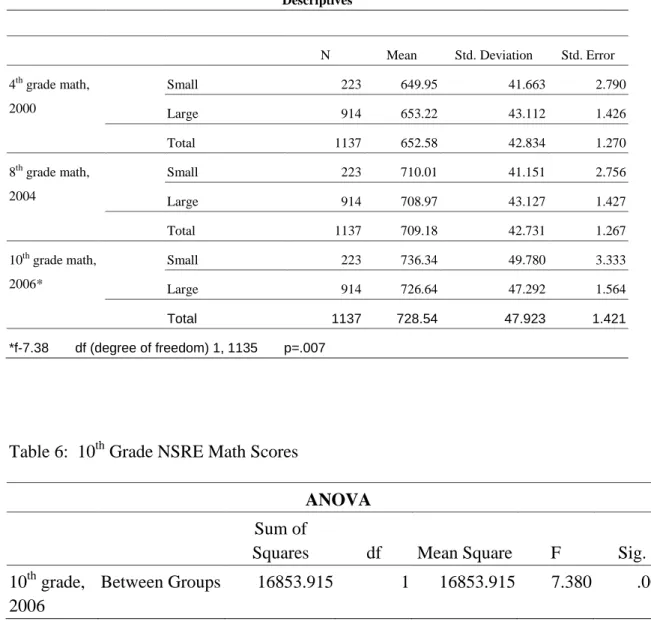
Table 5: Descriptives, 10th Grade Math NSREs ...48
Table 6: 10th Grade NSRE Math Scores ...48
Table 7: Descriptives, English/Language Arts...49
Table 8: Opportunities to Learn ...52
Table 9: Average Teacher-Student Ratio ...55
Table 10: Teacher Experience ...58
CHAPTER 1: INTRODUCTION Background of the Study
By the end of 2008, the total Vermont school population decreased by 1,542 students or 1.64 percent from the previous year, making it the 13th consecutive year of declining student enrollment in Vermont (Kumka, 2009). Since 1997, Vermont has had a 13 percent decline in student enrollment (Kumka). This is in stark contrast to the national trend. According to the National Center of Education Statistics (2009), the United States’ public school enrollment in pre-kindergarten through 8th grade rose from 29.9 million in the fall of 1990 to 34.2 million in 2003, and is expected to be 34.9 million for fall of 2008. Public secondary school enrollment in the upper grades rose from 11.3 million in 1990, to 15.1 million in 2006, with a projected enrollment of 14.9 million for 2008.
Current Vermont Commissioner of Education Vilaseca asserted that Vermont’s pattern of declining enrollment has resulted in political and economic concerns about the viability of small classes and small schools (Hirschfeld, 2009). Data from the Vermont Department of Education show that decreasing enrollment in many Vermont schools has led to even smaller class sizes and thus higher per-pupil spending since many Vermont public school students are educated in small classes housed in small schools (FY 2008 per pupil spending by school type, 2009). During the 2007-2008 school year, Vermont’s 94,116 students were taught by 8,728 classroom teachers (full-time equivalents) resulting in a student-teacher ratio of 11.2 pupils per teacher (Vermont teacher/staff full-time equivalent and salary report 2007-2008 School Year). Are Vermonters willing to continue to pay for small classes? Are students educated in small classes more likely to
graduate, enroll in post secondary education, and perform better on tests measuring academic achievement than students in large classes?
Relevance
From 2003-2008, I served as principal of the Tunbridge Central School, a kindergarten-8th grade school in Tunbridge, Vermont and part of the Orange Windsor Supervisory Union. Each year, similar to the state of Vermont, Tunbridge’s enrollment decreased resulting in an austere budget and new ways to configure classes. As Table 1 indicates, the other four schools in the Orange Windsor Supervisory Union, Chelsea (k-12), Sharon (k-6), South Royalton (k-12) and Strafford (k-8) had seen similar, and sometimes more pronounced decreases in enrollment over the past 12 years.
Some researchers have asserted that small classes have benefited younger students (Biddle & Berliner, 2002; Mosteller, 1995), and impoverished and minority students (Biddle & Berliner; Nye, Hedges, & Konstantopoulos, 2004). In 2007, the Tunbridge Central School had three classes of 10 or fewer students. I wondered as I worked each year to draft a frugal budget and contemplated reassigning and reducing staff: If we could have such small classes, were there substantial educational benefits? If we could afford to have classes of 10 or fewer pupils, would there be benefits not realized in classes of 18 or 22?
Table 1: Orange Windsor Supervisory Union enrollment, 1996-2008 1996 2000 2002 2004 2006 2008 % change 1996-2008 Chelsea 324 301 257 236 204 174 -46% Newton 170 152 144 109 110 109 -36% Sharon 143 138 125 130 125 85 -41% South Royalton 576 502 504 505 443 426 -26% Tunbridge 146 151 139 132 126 105 -28% Source: Vermont Department of Education, School Data and Reports: Vermont Public School Enrollment 5 year comparison charts, 2009.
Purpose of the Study
One test of truth is consistency in findings among the scientists who conduct and analyze the studies. A second test is how well the findings hold up to peer review and scientific critique (Achilles, 2003). As the literature reveals, studies and claims have supported the belief that class size significantly impacts student achievement, and other research asserted that the impact of class size on student achievement was minimal or nonexistent. These disagreements are what have made it so problematic to determine the truth about the class size effect. As Lazear wrote (2001), to claim that class size makes no difference is unfounded. Otherwise, why is a kindergarten cohort of 120 pupils divided into four, six or eight classrooms rather than one classroom of 120 if class size does not matter? (Lazear, p. 778). Further, class size varies with the age of the student; there is much more likely to be a college lecture class containing 120 students than a
kindergarten class of the same number. Class size must have some relevance to student
achievement (Lazear). Reichardt (2000) posited that even after years of research, there were more
questions and disagreements than answers and agreements about the effects of class size on student achievement. One cause was the inherent difficulties of conducting research in schools. Hoxby (2000) declared, “The vast majority of variation in class size is the result of choices made by parents, school providers, or courts, and legislatures. Thus most of the observed variation in class size is correlated with other determinants and is likely to produce biased results” (pp. 1240-1241).
Ehrenberg, Brewer, Gamoran, and Willms (2001) suggested that although school administrators, teachers, and parents have long thought the number of children in a classroom affects the learning that occurs, it has proven difficult to pin down the precise effects of class size on student achievement. They cited factors such as the classroom and school environment, students’ background and motivation, and community influences as key variables that affected the amount of student learning that cannot readily be separated from class size.
Since smaller classes require more teachers and more classrooms, they cost more money to maintain (Brewer, Krop, Gill, & Reichardt, 1999; Hanushek, 1999). There were differing opinions among those researchers concerning the amount of difference in student outcomes that must be observed before the benefit was considered worth the cost. Further, regardless of its effectiveness, since class size was often easier to manipulate
than other school inputs, reducing class size has been a popular policy (Angrist & Lavy, 1999; Ehrenberg et al., 2001).
Several noted researchers called for longitudinal analyses that follow students into later schooling (Graue, Oen, Hatch, Rao, & Fadali, 2005; Achilles, 2002; Biddle & Berliner, 2002; and Molnar, Smith, Zajorik, Palmer, Halbach, & Ehrle, 1999). Pedder (2006) maintained that we needed further research to better understand strategies and knowledge that teachers can adapt to promote quality learning for all students in different
classes and different class size configurations. Although researchers have long studied class size effects, the literature lacked a
longitudinal study that examined the effects of class size over a number of years (Mosteller, 1999). This study of the effects of class size on student academic
achievement in Vermont would accomplish this. Unlike the quasi experimental studies such as Project STAR (Biddle & Berliner, 2002; Finn, 2002; Hanushek cited in
Bohrnstedt & Stecher, 2002; Nye et al., 2004), California Class Size Reduction
(Bohrnstedt & Stecher), and SAGE (Graue et al., 2005; Molnar, Smith, Zajorik, Palmer, Halbach, & Ehrle, 1999;), the subjects in this Vermont study did not know they were part of a research study.
The purpose of this research was to contribute to the available body of knowledge available to educators, policymakers, and researchers about the effects of class size on student achievement and other outcomes. This research incorporated a longitudinal study of the effects of class size on selected student outcomes related to academic achievement. The research studied a cohort that began as 3,107 4th graders in the year 2000. Additional
data such as graduation rates and post-graduation plans were collected for the senior class of 2008, from those same schools.
Table 2 indicates that the schools from which the students were selected shared a common socio-economic indicator. Approximately 30 percent of students from each of the selected schools qualified for free or reduced lunch, the most common measure of
socio-economic status used in Vermont schools and close to the state average.
Table 2: Free and Reduced Lunch Rates in Grade 10 Small High Schools Eligible
for free and reduced
lunch
Ineligible for free and
reduced lunch
Total number of students
Number of students 49 20 69
% of 10th grade small school students 71.0% 29.0% 100.0%
% of students eligible for free and reduced lunch within total of 10th grade students
8.0% 8.1% 8.0%
% of all 10th grade students 5.7% 2.3% 8.0%
Large High Schools
Number of students 564 226 790
% of students within all of grade 10 eligible for free and reduced lunch
71.4% 28.6% 100.0%
% of students eligible for free and reduced lunch within total of 10th grade students
92.0% 91.9% 92.0%
% of all 10th grade students 65.7% 26.3% 92.0%
Total
This study intended to determine whether students in small classes are more likely to graduate, enroll in post secondary education, and perform better on tests measuring academic achievement than students in larger classes. As the literature review revealed, many scholars and researchers have offered recommendations to educators and
policymakers regarding class size. However, the literature on the impact of class size on student outcomes was inconclusive at best and often contradictory. This longitudinal research is needed to ascertain the true effects of class size on student outcomes in Vermont. Vermont lawmakers, taxpayers and educators would greatly benefit from relevant data about the effects of class size as they consider ways to address the state’s declining student enrollment.
According to former Vermont Education Commissioner Richard Cate, the cost of an education boiled down to just two things: the teacher-student ratio and health care (Seiffert,2007). “If we could change the student-teacher ratio by just three kids it would have a significant effect on cost…. For the 2004-2005 school year, Vermont’s student-teacher ratio of 11.3 was the lowest in the nation...” (Seiffert, 2007).
As both Commissioner Cate and Commissioner Villaseca have stated (Hirschfeld, 2009), Vermont has a preponderance of very small classes. This research study will also demonstrate that typical class sizes are often smaller than those required by Vermont’s School Quality Standards: “(b) At the elementary level, classes in grades K-3, when taken together, shall average fewer than 20 students per teacher. In grades 4-8, when taken together, classes shall average fewer than 25 students per teacher” (Vermont
Research Questions
The following research questions are the basis for this study:
1. How are the outcomes for Vermont students who are educated in small classes different from those educated in larger classes in respect to:
a. immediate post graduation plans of students? b. graduation rate?
2. Are there statistically significant differences between large and small class sizes with respect to:
a. student achievement as measured by New Standards Reference Exam math test scores?
b. student achievement as measured by New Standards Reference Exam English/language arts test scores?
c. opportunities that students have to learn reading and mathematics as measured by a series of questions (Opportunities to Learn) concerning student experiences and the size of classes they actually experienced during high school? (The Opportunity to
Learn questions used for this study were selected from the more than 20 questions asked since they had good reliability, real distributions and they discriminated. These questions have proven to be reliable in that they are good measures of student perception and serve as another data set to compare students in large classes with students in small classes.)
3. What is the typical class size for freshman and sophomore English and math classes in large and small schools?
4. What factors do principals think most affect student achievement? 5. Since class size appears to be shrinking due to declining enrollment and not policy decisions, were schools implementing practices to boost student achievement and if so, what were they doing?
6. Since class size and school size are linked in Vermont (small schools tend to have smaller classes and larger schools tend to have larger classes), what other
differences exist between large secondary schools and small secondary schools that may impact student achievement?
Significance of the Study
Assuming that demographic trends continue, Vermont’s class sizes will continue to decline. Stakeholders will continue to try to find affordable ways to provide high quality, affordable education to Vermont students. According to a 2007 report by the New England Policy Center:
Tax burdens for education are growing, in part because the costs of educating Vermont students are growing. Reporting to the General Assembly, the 2004 Joint Legislative Education Cost Containment Committee noted that despite declining student enrollment, education spending in Vermont grew faster than inflation between 1996 and 2002. In September 2006, the Vermont Joint Fiscal Office projected that education spending would grow by 5.6 percent in nominal
terms for FY2007 and FY2008, despite further projected declines in enrollment. (Saas, 2007)
Pressure may mount to close Vermont’s small schools with small classes. This research will provide useful data and recommendations to educators, legislators, the Department of Education, and Vermont citizens as they make decisions about the future of Vermont’s public schools. If the findings conclude that student outcomes are
significantly more positive in smaller classes than larger ones, this may provide support to maintain the status quo of small classes in many Vermont schools.
Conversely, if there is no important difference in student outcomes between students in small and large classes, or students are found to achieve more in larger classes, this would suggest that it is both educationally and fiscally responsible to have larger classes. Larger classes would likely mean fewer teachers (under the current, common model of one teacher in a classroom) and fewer classrooms, thereby reducing labor and space costs. Taxpayers could realize substantial cost savings if classes were larger. Some funds that were formerly allocated for lower teacher salaries might be reallocated to increase salary levels, thereby potentially retaining and attracting high quality teachers. According to Mitchell and Mitchell (2000), the huge investments spent in creating small class sizes are out of proportion to the reliability of the evidence
supporting achievement production. Students may also benefit from classes with more classmates as there can be additional course offerings and programs, more diverse opinions expressed in individual classes, and more classes that are designed for students’ ability levels (Borland, Howsen, & Trawick, 2005; Pong & Pappas, 2001).
Definition of Terms
The definitions used in the historical class size debate vary according to the researcher. The following definitions are ones that will be used in this research.
Class size: Class size is typically defined as the number of students for whom a
teacher is primarily responsible during a school year. The teacher may teach in a self-contained classroom or provide instruction in one subject (Lewitt & Baker, 1997, p. 2). Achilles (2003) gives the following example of class size: “Average class-size is the sum of all students regularly in each teacher's class divided by the actual number of regular teachers in those specific classes. If the four second grade rooms have 14, 16, 18, 18 (n=64) the average grade two-class size is 16” (p. 4).
Regardless of the definition one uses, class size has been difficult to measure due to the dynamic nature of classrooms (adults and students move in and out of classrooms), a variety of classroom models (pull outs, resource rooms, aides, specialists), and a lack of precise measurements of what occurs in schools and classrooms (pupil-teacher ratios, pupil-professional ratios, class size based on the number of students assigned to a given teacher) (Reichardt, 2000). The lack of a common agreement as to what constitutes a small class or even an ideal class has made it difficult to compare research studies.
Operational definition of class size: For the purpose of this study class size was
defined as the number of students for whom a teacher is primarily responsible during a school year. A small class was defined as a class having 11 of fewer students. A large class contained 20 or more pupils. Principals and guidance counselors reported the class sizes for freshman and sophomore English and math classes for the years 2007-2008.
The total number of students in the small schools’ English and math classes was added together and divided by the number of classes to determine the average class size for small schools, 11. The total number of students in the large schools’ English and math classes was added together and divided by the number of classes to determine the average class size for large schools, 20.
Pupil-teacher ratio (also known as teacher-student ratio):Achilles (2003)
defined pupil-teacher ratio as the number of student in a school or district compared to the number of teaching professionals. All educators may be part of the computation, including counselors and administrators.
According to Hanushek (1999), the only data that are consistently available over time reflect pupil-teacher ratios. Determining class size requires one to decide which classes to count. For instance, are physical education and driver’s education included? “Class size is generally best defined in the traditional elementary school grades, where a single teacher is responsible for a self-contained classroom, and the definition gets progressively more problematical as the instructional program becomes more complex” (Hanushek, p. 140). Although there is a slight discrepancy among the actual numbers, pupil-teacher ratio is significantly lower than average class size. The difference
nationally between class size and pupil-teacher ratio is about 10 pupils (Achilles, 2003). Bracey (1999) wrote that the average pupil/teacher ratio is around 17:1, and the average class size is 23 for elementary schools and 25 for high schools. By Bracey’s accounts, the difference between class size and pupil-teacher ratio is between six and eight students.
Class size reduction: Class size reduction is the processes to achieve class sizes
smaller than the ones currently in place (Achilles, 2003).
NSRE: The New Standard Reference Exam (NSRE) refers to student academic
assessments that were given to 4th, 8th and 10th grade Vermont students in
English/language arts and mathematics. The exams were aligned with Vermont’s Framework of Standards and Learning Opportunities and measured and reported on the percentages of students who met or exceeded a performance level (standard). (Vermont Department of Education, 2009). In English/language areas the exam measured student achievement in four areas: Reading: Basic Understanding; Reading: Analysis and Interpretation; Writing Effectiveness; and Writing Conventions. The mathematics reference exam measured and reported on the percentages of students who met or exceeded a performance level (standard) and raw scores in three areas: Concepts, Skills, and Problem Solving.
Limitations of the Study
Large and small in Vermont are relative terms. What is considered to be a large
Vermont class would be considered small in many schools cited in the literature and in more populous regions of the United States. Using enrollment data collected by the Vermont DOE, Vermont high schools were ranked by the size of their student body. The largest and smallest districts were examined. Among these groups of large and small districts, five of the largest and five of the smallest districts with similar free and reduced price lunch data were compared to minimize the effects of socio-economic influences on student achievement (See Table 2, p. 6). In order to ascertain whether large Vermont
high schools had larger class sizes than did small high schools, in the spring of 2008, pilot interviews were conducted with principals from the 10 target schools. Calculation of average class sizes indicated this was the case; small schools’ average math and English classes was 11, large schools averaged a class size of 20.
As with any test, NSRE data can vary according to student effort, the testing environment, and individual student circumstances on the day of testing. The testing procedures and the test itself were standardized with respect to the measurement of student achievement in both small and large schools.
Socioeconomic data were measured by free or reduced lunch count. These data were reported voluntarily by parents and students. Again, there was no reason to believe that there would be variation in reporting due to class or school size. This is due to the fact that the measure of free and reduced lunch was taken at grade 4 for all students and remained constant throughout the study of longitudinal effects.
Individually matched student data were available for the NSRE administered to students in grades 4, 8 and 10 in English language arts and math. Other data such as graduation rates, post-secondary school plans, and free and reduced lunch rates were only available for school level data, not individuals.
An important limitation of the study was the inability to have exact class size data for the students in each of the grades. Vermont does not collect this data. However, the state of Vermont collects teacher-student ratios, and while not the same as class size, the ratios between small and large classes in small and large schools showed substantial differences, similar in size to the class sizes reported in the principal interviews. Based
on the state data, interviews, and my professional experience as a Vermont educator, there was a high degree of confidence that class size in the smaller schools was substantially smaller than class size in the larger schools.
Vermont high schools received students from many elementary schools. It was not feasible to match each individual student with his specific class and its corresponding annual enrollment since the DOE did not disaggregate this data. Nevertheless, the NSRE test scores used included only students that were able to be tracked for the 2000, 2004, and 2006 data points. By matching these to large or small school districts, there was a high degree of confidence that it could be determined which of the students were in large or small classes.
When grouped by large and small schools, there was no difference in the
proportion of missing outcome data. In order to test the hypothesis that student mobility may be linked to differences in performance across time, a subset of students was selected that represented only those students who were enrolled in the same school districts. This sub-population resulted in considerable attrition from the small schools’ original matched pairs by grade 10. For example, the student population which began in small schools at grade 4 was reduced from 223 in the year 2000, to 69 (69%) by grade 10 in the year 2006. By grade 10, the population in large schools was reduced from 914 to 790 (14%). This is a difference in attrition of 55 percent. Attrition from the small schools would not be unusual in Vermont because the difference in percentage is subject to greater fluctuation in smaller group sizes. In addition, some of the students in small schools may have been subject to Vermont’s school choice options. The most common
of which is that tuition be paid by towns of residence if they do not have schools at certain grade levels (Vermont DOE, Laws & Regulations, 2008). Vermont’s Act 150 also required each high school to join with at least one other school to form a choice region (Vermont DOE, Laws & Regulations). When this sub-population of students who left the small school environment was analyzed according to the previous set of null hypotheses, no significant difference in either math or English/language arts was observed.
In this study large and small schools were defined by high schools only. If high schools accounted for four years of student experience, could it be known that the class size vector for kindergarten through 8th grade was the same? An assumption was made that class size was similar in grades 4 and 8 as it was in high school. This was based on teacher-student ratio figures collected by the DOE. Although not the same as class size figures, these clearly showed that class size in the feeder elementary schools for the selected large high schools was larger than class size in the small high schools (see Table 10, p. 55). Each targeted small high school was a kindergarten-12th grade institution and teacher-student ratio data was not available for these schools since data were not
disaggregated by grade level. The teacher-student ratio also appeared to be a valid measure since it demonstrated a pattern of declining enrollment across all cohorts and schools.
Limitation of Qualitative Data
Interviews were conducted with the principals in 2008 and 2009. Patton (2002) noted that interview data can have limitations that include distorted responses due to
personal bias, anger, anxiety, politics, and the emotional state of the interviewee at the time of the interview. The data can also be subject to erroneous recall, reactivity of the interviewee, and self-serving responses (Patton 2002, p. 306).
The information gathered from interviews was limited to principals and guidance counselors. Perspectives of students, teachers and other school personnel could add greater depth to the understanding of this complex phenomenon.
Organization of the Study
This research study is described in the following four chapters. The literature review in Chapter 2 examines numerous conflicting studies concerning the effects of class size on student achievement. The chapter considers historical approaches to the
class size debate, investigates seminal research studies, and summarizes the findings of the work of many researchers and authors. Chapter 3 describes the procedures and methods employed in the study. The results of the study are detailed in Chapter 4.
Chapter 5 contains conclusions and implications of this research as well as its limitations.
In order for schools to remain anonymous, pseudonyms were given to represent the schools. School names beginning with a lower case letter are schools with small classes, school names beginning with a capital letter are schools with large classes. The small schools are carter, clinton, coolidge, washington, and reagan; large schools are Buchanan, Monroe, Nixon, Madison, and Bush. For consistency and conciseness,
principals and students are referred to as masculine even though the subjects were of both genders.
CHAPTER 2: LITERATURE REVIEW
The purpose of this literature review is to investigate selected research, primarily in the U.S., on class size and student achievement. This review will highlight findings in the literature that address the following questions:
1. How has class size been approached historically?
2. Are small classes beneficial for students in early grades?
3. Are small classes beneficial for impoverished and/or minority students? 4. To what extent does teacher and student behavior impact class size
effects?
5. What is a small class?
6. What role does economic theory play in the class size debate? Historical Approaches to Class Size
The search for substantial achievement effects of reducing class size is one of the oldest and most frustrating for educational researchers.
Slavin, 1989
The origins of the debate over what constitutes optimum class size can be traced to Ancient Greece. The famous teacher Socrates never specified an optimum number, but he kept his classes exclusive and manageable by limiting them to rich young men. His Spartan contemporary, Herodotus, thought the right number was about 30, and that view survived until the last century (Tomlinson, 1998).
After World War II, the percentage of students enrolled in school skyrocketed. One of the most direct and effective methods used to manage the supply and minimize
the cost of teachers and classrooms was to manipulate class size. Larger classes needed fewer teachers and classrooms, hence the per-student cost was less (Tomlinson, 1998). The response of educators and school reformers to this practice was the same then as now. They believed that larger classes would increase the teachers’ work burden and reduce the efficacy of instruction (Tomlinson).
However, did class size matter? Biddle and Berliner (2002) concluded that while more studies had been done regarding class size than any other educational topic, there was profound disagreement on the findings. Tomlinson (1998) wondered if there were things that teachers and students did differently in a small class that made the number of pupils so important, and if teaching became more difficult and learning less likely as class size rose.
Small Classes for Students in the Early Grades
Many researchers and studies explored the effects of small class on students in the primary grades. Mosteller (1995) proposed factors that made it likely that younger students benefited from smaller class size. When children first came to school, they were confronted with many changes and much confusion, entering this new setting from a variety of homes and circumstances. Many needed training in paying attention, carrying out tasks, and interacting with others in a working situation. In other words, when children start school, they have to learn to cooperate with others and generally become oriented to being students.
Biddle and Berliner (2002) offered tentative theories to explain why small classes had impressive effects in the early grades. This was when youngsters were first learning
the rules of school and forming ideas about whether they can cope with education. Since there was more one-to-one interaction in smaller classes, teachers learned more about individual students. This translates into helping students develop more useful habits and ideas about themselves. Additionally, teachers in small classes had higher morale and thus created a more supportive learning environment.
The three major experiments/initiatives, STAR, SAGE and California’s CSR all involved students in early grades. The results of these studies are discussed in the next section.
Small Classes for Impoverished and/or Minority Students
There were two commonly cited class size experiments in the literature, STAR and SAGE, and one class size reduction initiative that took place in California. All three studies focused their attention on the early grades and examined the effects of class size on poor and minority students.
STAR
The most frequently cited class size study in the literature is the STAR
(Student/Teacher Achievement Ratio) experiment. The Tennessee STAR (experiment began as a pilot in 1984, was mandated in 1985, and was completed in 1990). Pupils entering kindergarten in participating schools were randomly assigned to a small class (13-17), a full size class (22-25), or a full size class with a full time teacher aide. Teachers were also assigned at random to the classrooms. Pupils were to be kept in the same condition for up to four years, with a new teacher assigned at random each year (Finn, 2002). Participating schools had to have at least three kindergarten classes (57
kindergarten students) and accommodate one control and one treatment. The study was carried out in three kinds of groups: classes one-third smaller than regular-sized classes; regular-sized classes without a teacher’s aide; and regular-sized classes with a teacher’s aide. By comparing average pupil performance in the different kinds of classes,
researchers were able to assess the relative benefits of small class size and the presence of a teacher’s aide. The experiment involved many schools and classes from urban,
suburban, and rural areas so that the progress of children from different backgrounds could be evaluated.
Findings from the STAR experiment have been disputed by researchers. Some authors claimed that this study clearly demonstrated a positive relationship between small class size and improved student achievement. According to Nye et al. (2004), the STAR experiment provided rather strong evidence that class-size reduction led to immediate increases in academic achievement in both reading and mathematics, with some evidence of larger effects for minority students. This study also demonstrated that students who experienced more years of small classes in kindergarten through grade 3 had higher levels of achievement six years later than students who had fewer years of small classes (Nye et al.).
Nye and colleagues (2004) acknowledge that the reason why small classes led to higher achievement and differentially higher achievement for minority students was not clear. They hypothesized that small classes may permit teachers to more effectively individualize instruction. Small classes may also tend to have fewer disruptions making all-class instruction more effective.
Biddle and Berliner (2002) write that based on the results of the Stanford
Achievement Test battery, “Long-term exposure to small classes (in the early grades) had substantially higher levels of achievement; and the extra gains…were greater the longer students were exposed to those classes” (p. 12). They also noted that, “Although all types of students experienced extra gains from long-term exposure to small classes (in early grades), those gains were greater for students who are traditionally disadvantaged in education” (p. 13).
Other authors claimed that the STAR study did not prove that small class size had dramatic effects on the academic achievement of minority and poor students. Hanushek (2002) argued that the effects in the Tennessee STAR project occurred primarily in kindergarten and 1st grade and that there was no evidence that additional years of class size reduction contributed incrementally to the effect of small classes in the early years. He acknowledged that the effects were greater for minority and disadvantaged students but maintained that the effects appear small relative to costs of programs and alternative policy approaches (Hanushek cited in Bohrnstedt & Stecher, 2002).
SAGE
A second large, experimental study, SAGE (Student Achievement Guarantee in Education), targeted low-income students and was envisioned as a way to narrow the achievement gap for children living in poverty. SAGE was a five-year project that began in 1996 in Wisconsin. It did not employ random assignment and involved a range of interventions that included a family/school component, curriculum reform, and
class. Thirty volunteer schools in which at least 30 percent of the students lived below the poverty line participated in the initial study.
Results showed that students in SAGE classrooms outperformed the comparison group in reading, language arts and math through 3rd grade, with the most pronounced effects found for African-American students.
Some researchers urged caution in using this project to draw conclusions about the effects of class size on student achievement. SAGE did not involve a clean
experimental design but rather, a massive intervention study in which class size reduction was used along with other intervention strategies (Graue et al., 2005; Molnar et al., 1999).
California CSR (Class Size Reduction)
A third major class size reduction project took place in California in the late 1990s. This was not an experiment or designed as a research study. All schools were offered small classrooms, and the fact that 1.8 million students were affected made it the subject of much discussion in the literature.
Bohrnstedt and Stecher (2002) found a positive association in 1998 between 3rd grade class size and SAT-9 scores after controlling for differences in student and school characteristics. However, the size of this CSR effect was small, particularly when compared to the size of achievement differences related to socio-economic status or race/ethnicity.
The Impact of Student and Teacher Behavior
Some contributors proposed that what students and teachers do in large and small classes made the most significant impact on student outcomes. Misbehaving students, student attention span, peer pressure, student engagement and teacher attention to students and content were all influenced by class size according to several authors.
Lazear (2001) offered a disruption model to explain the importance of class size. He claimed that optimal class size was larger for better-behaved students and this helped explain why it was difficult to find class size effects in the data. He proposed that age and attention span factored into the class size-student outcomes equation.
Lazear (2001) makes the assumption that one child’s disruption destroyed the ability of all students to learn at that moment. When a student was misbehaving, the teacher must attend to him and thus the learning of the student and his classmates was affected. In addition to disobedient students, a student who asked a question to which all other students knew the answer disrupted the learning process. In order to demonstrate his theory, Lazear offered a model that uses p as the probability that a student does not interfere with classroom learning. “It is expected that p would be relatively high because even having p=.98 in a class of 25 students results in disruption 40 percent of the time (1-9825=.40)” (Lazear, p. 780). The better the behavior of student, Lazear argued, the fewer the number of teachers, n, needed. The relationship of n to p demonstrated why there were more students in a college lecture than in a kindergarten class. “If p were .97, learning would occur 40 percent of the time in a class of 30 but only 2.5 percent of the time in a class of 120” (Lazear, p. 783).
Resnick (2003) suggested that smaller classes benefited student achievement claiming that teachers in small classes paid greater attention to each pupil. Students in these classes experienced continuing pressure to participate in learning activities and became better, more involved students; attention to learning went up and disruptive and off-task behavior went down. Pedder (2006) believed that class size might impact classroom processes and pupils’ learning. He stated that smaller class size allowed teachers to cover more curriculum and students to be more cognitively engaged. These two features led to improved student achievement. Pedder asserted:
In larger classes, more time is needed for non-academic activities related to administrative and organizational procedures and to the management and control of discipline… Reductions in the quantity of learning
opportunities constrain teachers from achieving the necessary pace, depth and breadth of curriculum coverage as class size increases. (p. 224)
Some researchers and scholars wrote that it was not class size itself that
determined student outcomes, but rather smaller classes may provide opportunities for other educational interventions. Glass, Cahen, Smith, and Filby (1982) posited that it
was not simply the number of students in a class that impacts learning. “Class size has no magical effect on student achievement. Instead, it influences what goes on in the
classroom, what the teacher does, his or her manner with the students, and what the students themselves do or are allowed to do” (p. 67).
Glass et al. (1982) also cited studies that discussed the notion of time-on-task and student attention and postulated that in smaller classes, teachers were more likely to have
more interactions with individual students resulting in more time-on-task and better attention. This may lead to increased student achievement.
Discussion of the small achievement effects of reduction in class size usually point to one critical factor: teachers’ behaviors did not vary very much regardless of the size of classes (Slavin, 1998). More accurately, teachers did change their behavior in small classes, but the changes were relatively subtle and unlikely to make important differences in student achievement.
Like Slavin (1998), Hannushek (1999) wrote that changes in teacher behavior were necessary, not simply doing more of the same thing. “Just providing more resources -whether in the form of reduced class sizes or in other forms- is unlikely to lead to higher student achievement as long as future actions of schools are consistent with their past choices and behavior” (cited in Normore & Ilon, 2006, p. 435). Johnson (2000) examined the 1998 NAEP database of reading to measure the influence of class size on academic achievement. This analysis looked at academic achievement by analyzing six factors: class size, race and ethnicity, parents’ educational attainment, number of reading materials in the home, free or reduced-price lunch participation, and gender. He concluded that:
On average, being in a small class does not increase the likelihood that a student will attain a higher score on the NAEP reading test, and children in the smallest classes (those with 20 or fewer students per teacher) do not score higher than students in the largest classes (those with 31 or more students per teacher). (pp. 6-7)
He stated that class size as a variable pales in comparison with the effects of many factors not included in the NAEP data, such as teacher quality and teaching methods. As a result of the literature review, teacher behavior (termed teacher-student relationships and teacher quality later in this study) were explored qualitatively in this study.
Defining a Small Class
The literature lacked a consensus definition of a small class. What constituted a “small class” depended upon who was establishing the parameters. For example, Project STAR, the largest experimental study of the effects of class size on achievement, defined a small class that has between 13 and 17 students and a large class ranged from 22-26. Under California’s Class Size Reduction program, most California school districts kept their reduced size classes as close to 20 students as possible. (Bohrnstedt & Stecher, 2002). In Blatchford’s United Kingdom study, 23 pupils constituted a small class (2003). In Indiana’s Prime Time study, the average class size for the smaller class was set at 18, but actual “small class” sizes ranged from 18-31. Classes of 24 were considered small if there was a teacher aide to assist the teacher (Hattie, 2005).
Resnick (2003) stressed that class sizes must be reduced substantially to achieve the benefits. “There is no experimental research suggesting that any benefits are realized by subtracting only a few children from a larger class - for example, transitioning from 28 to 25 students. Even a class of 20 students may be too large” (p. 2). Although not an experimental study, the work of Glass et al. (1982) added a great deal to the debate. Their often-cited meta-analysis suggested that small class size had a very positive effect on student achievement. However, many have criticized their methodology. Glass et al.
looked for class size studies using document retrieval and abstracting resources, previous reviews of the class size literature, and the bibliographies of studies found. They found 77 empirical research studies of the relationship between class size and learning spanning 70 years, performed in more than a dozen countries. From the 77 studies, Glass and colleagues recorded 725 comparisons of smaller and larger classes (studies from 1900-1979) almost evenly divided between junior high and below and secondary school. They concluded that the relationship of class size to student achievement is quite strong (Glass et al.).
Examining Glass and his colleagues’ work, Hattie (2005) concluded that reducing class size from 40 or more to 20 students led to almost no increase in achievement. Not until class sizes being dropped to 15 students or lower were there larger effects on achievement. Hattie criticized the studies that Glass et al. utilized in the meta-analysis writing, “...the studies were of short duration, included many one-on-one tutoring studies,
and were in some cases non-school related (e.g., tennis coaching)” (p. 3).
In light of the varying definitions and methodologies for defining school and class size, a procedure had to be established for this Vermont study on the effects of class size on student achievement. Identifying large and small schools, then calculating the class size in those schools, was the most logical way to define class size.
The Role of Economic Theory
There were other researchers who believed that class size did not play an important role in student achievement. Hoxby (2000) offered an economic theory to explain the reason why class size did not significantly influence student achievement.
Hoxby maintained that class size was a primary example of the education production
fallacy; one could not assume there was a relationship between educational inputs like class size and outputs such as achievement. She argued that “…while class size
reduction always affords opportunities for increased investment in each child's learning, it is not obvious that every school takes up such opportunities” (Hoxby, p. 240).
Bonseronning (2003) maintained that class size research made little use of
economic theory. He asserted that since education production involved teachers, students
and a number of other actors, the efforts of these actors and their complicated interactions were the determinants of student achievement. “For this reason, it seems unlikely that class size changes will have uniform effects on student achievement always and everywhere” (Bonseronning, p. 964).
Other researchers wrote that students may benefit from an increased class size. Pong and Pallas (2001) reported some studies found that students do better in large classes. They hypothesized that this could be because more experienced teachers are given larger classes or low achievers are placed in smaller classes. Borland et al. (2005) stated that in a larger class there was an implied increase in associated skills from which an associated student may benefit and peer effects on student achievement were expected to be positive. Furthermore, if students competed with one another, there would be an additional positive effect with increased class size.
Conversely, Normore and Ilon (2006) offered an economic argument that
professed small classes could save money. “…in the long run, potential benefits may offset the costs. Smaller classes in primary grades start students on a path that reduces
the need for special education, grade retentions, or disciplinary measures and increases the likelihood of high school graduation” (p. 434). Nevertheless, their research did not convince Normore and Ilon that class size reduction (CSR) was worth the cost.
One important conclusion drawn from the literature was that there were many factors other than class size affecting student achievement. While class size influenced what occurred in the classroom, the research on class size and student achievement made note of many other variables, limits, and factors that affected student achievement. Other interventions and strategies may mitigate the influence of class size and may have greater impact than class size. One of these variables is the physical environment of a school and classroom (Lewit & Baker, 1997). A second factor is the range of class sizes and the resources spent by schools on students (Lewit and Baker). A third influence is the age, education, and experience of teachers (Ehrenberg, 2001).
Other Benefits of Small Classes
The research also yielded evidence supporting factors other than student achievement that cause some policymakers, educators, and parents to advocate for smaller classes. These include factors relating to student behavior, engagement, and teacher morale. For example, Achilles (2003) contended that the purposes of schooling were to help students achieve in four general areas to which he referred as the ABCDs: Academics, Behavior and discipline in and outside school; Citizenship and participation in and outside school; and Development into competent, productive adults (p. 1). Hattie (2005) emphasized the importance of investigating underlying motivations for teachers and parents and the need to examine teaching practices. He found that disruptive
students are a reason why some promote small classes. Improving classroom
management skills, providing alternative settings or additional support for disruptive students, or changing the curriculum might have more of an effect on student
achievement than universally reducing class size.
Miller-Whitehead (2003) suggested that small classes helped improve teacher morale and reduced discipline problems. She stated that small classes reduced the need for remediation through early identification and prevention of problems. Further, Miller-Whitehead (2003) claimed long-term benefits of small classes such as improved
graduation rates, lowered dropout rates, decreased teen pregnancy rates, a higher proportion of graduates with advanced or honors diplomas and students who took the ACT and SAT college entrance exams or who planned to attend college.
Normore and Ilon (2006) noted that smaller class sizes had a positive impact in several areas: more time to cover curriculum, higher levels of student-student and student-teacher engagement, and safer schools with fewer discipline problems.
Summary of the Literature
There have been numerous conflicting studies concerning the effects of class size on student achievement and a lack of consensus on the definition of large and small classes. This chapter reviewed articles that support the notion that class size greatly
influences academic achievement and those that do not espouse this view. It attempted to answer a number of questions. How has class size been approached historically? While the approaches to class size have varied throughout history, the literature shows that class size today in U.S. public schools is at an historic low. Are small classes beneficial for
students in early grades? Many studies support this notion although the effect sizes are modest. Are small classes beneficial for minority students? A number of studies support this while acknowledging that small classes do not eliminate the achievement gap
between minority and non-minority students. Are there things that teachers and students do in class that makes the number of pupils important? Although there is a great deal of research supporting the idea that teacher behavior influences student achievement, the literature shows that teacher behavior ordinarily does not change on account of the
number of students. The number and type of student may be very important as disruption models have shown. What constitutes a small class? The literature offers many
definitions of a small class, but the most common range appears to be a class with fewer than eighteen pupils. What role does economics play in the class size debate? The answer to this seems to depend on one’s philosophy of education and one’s opinion of the importance of class size. Some have argued that small classes can save money by
reducing the need for future expensive intervention; others believe that resources would be better spent on inputs other than reducing class size, and some claim that class size reductions can fulfill a variety of objectives, not all of which are related to achievement.
As the literature review has demonstrated, there are many different answers to these questions depending on the researcher and author. Further research is needed to provide clear answers to the effects of class size on student achievement in the context of present day Vermont public schools.
The literature also raises important policy considerations. Policy initiatives and large sums of money have been dedicated to reducing class size in a large number of
states. Some rural states find themselves with small classes due to declining student population. If smaller classes benefit students’ academic achievement in some areas (e.g., reading and math), then resources can be devoted to promoting small classes for this subject but not necessarily in all areas. On the other hand, if small classes do not have a significant effect on academic achievement, policy makers can create class and school structures that reflect this. In summary, while some researchers supported the notion that small class sizes benefit student achievement, others did not and many raised questions about the substantially higher costs. This dissertation links to the existing research and extends it to contemporary Vermont to address the expressed need for longitudinal research on the effects of class size on student achievement.
CHAPTER 3: METHODOLOGY
This section presents the methodology to be used in a longitudinal study of the effects of class size on student achievement. The research studied a cohort that began as 3,107 4th graders in the year 2000, and decreased to 1,137 10th graders in 2006. The study included the entire 2008, 12th grade classes of the 10 selected schools to analyze graduation rates and post-secondary plans. The study combined descriptive statistics with informant interviews. Notably, qualitative methods were used to delve into apparent relationships derived from quantitative statistics in order to understand what the numbers measured or missed and to gain an understanding into other possible causes for
differences in student outcomes.
Mixed Methods
This research study utilized a mixed methods approach. Mixed methods research is the class of research where the researcher mixes or combines quantitative and
qualitative research techniques, methods, approaches, concepts or language into a single study. When researchers bring together both quantitative and qualitative research, the strengths of both approaches are combined, leading to a better understanding of research problems than either approach alone (Cresswell, 2008; Patton, 2002).
Quantitative research has many benefits. It allows one to test and validate
theories about how phenomena occur, test hypotheses that are constructed before the data are collected, and generalize research findings when the data are based on random
samples of sufficient size. Quantitative research enables one to obtain data that allow quantitative predictions to be made, construct a situation that eliminates the confounding
influence of many variables, and credibly assess cause-and-effect relationships. Further, quantitative research methods provide precise, quantitative, numerical data; the research results are relatively independent of the researcher; and they are useful for studying large numbers of people (Johnson & Onwuegbuzie, 2004).
In a mixed methods approach, qualitative research compliments quantitative research. It is advantageous for studying a limited number of cases in depth, describing complex phenomena, and providing understanding and description of people’s personal experiences of phenomena. One can also use examples to vividly demonstrate a
phenomenon to readers (Johnson & Onwuegbuzie, 2004). Research Questions
The following research questions are the basis for this study:
1. How are the outcomes for Vermont students who are educated in small classes different from those educated in larger classes in respect to:
a. immediate post graduation plans of students? b. graduation rate?
2. Are there statistically significant differences between large and small class sizes with respect to:
a. student achievement as measured by New Standards Reference Exam math test scores?
b. student achievement as measured by New Standards Reference Exam English/language arts test scores?
c. opportunities that students have to learn reading and mathematics as measured by a series of questions (Opportunities to Learn) concerning student experiences and the size of classes they actually experienced during high school?
The first research question generates the following three null hypotheses to be tested statistically:
1. There is no significant difference between groups of Vermont students who are educated in small and large classes with respect to student achievement as measured by NSRE mathematics test scores at grades 4, 8 and 10.
2. There is no significant difference between groups of Vermont students who are educated in small and large classes with respect to student achievement as measured by NSRE English/language arts test scores at grades 4, 8 and 10.
3. There is no significant difference between Vermont students who are educated in small and large classes with respect to selected opportunities students have that may be related to learning reading and mathematics as measured by a series of questions concerning student experiences and the size of classes they actually experienced during school.
a. Students in this school have opportunities for additional help beyond the initial classroom instruction.
b. Students know that this school’s test results are discussed in the community.
c. I know that if I want to talk with a counselor I can easily do this in this school.
d. When something is broken in this school it is quickly repaired. e. Students who learn faster than other students are provided with
new learning opportunities. f. This school is clean and pleasant.
g. Students believe that academics are very important in this school. h. I have good, updated books and materials in this school.
i. I am able to use a computer when I need one in this school. The pilot interviews conducted in 2008 (Appendix B) led to extended interviews in 2009 to explore the influence of class size on student academic achievement as well as other considerations raised by principals and guidance counselors. The interviews acted as a guide to ensure that multiple causes were explored. In-depth conversations were held with the principals of each of the 10 schools, and in four of the schools the guidance counselors provided information relating to class size and post-graduation plans. All except one of the principals of the large schools had been in their current positions for at least four years. The exception was in his first year in this school but had previously worked as a principal and superintendent. In the small schools the principals had been in their present positions for seven, three, and two years, and two were in their first year as principal anywhere. All of the principals had been educators for many years.
The intent of the qualitative data was several fold. It was critical to verify that students in larger schools attended larger math and English classes than did students in
smaller schools. Second, it was important to learn what the principals thought were the most important factors impacting student achievement.
The third topic of interest involved the practices and programs schools in
Vermont were implementing to help improve student achievement. In 2008, the Vermont State Board of Education published, “Vermont Secondary Schools for the 21st Century: Ensuring Each Student Can Succeed in College, Career, and Citizenship.” In this paper the State Board “attempted to update” many of the 12 principles of High Schools on the Move released in 2002. The State Board listed examples of observed practices
undertaken by some schools that were working to transform the 12 principles into improved school practices. These included: 9th-grade academies, professional learning communities, student advisories, team teaching, use of houses and small learning communities, more rigorous curriculum expectations, and many other initiatives. The Board asserted, “We have found no school that had yet accomplished systematic transformation” (Vermont State Board of Education, 2008, p. 1). This state initiative designed to prepare students to be successful in college, careers, and citizenship complemented my study.
Also of interested was the organization of small schools and whether or not they delivered education differently than large schools since students in small schools are more likely to be educated in small classes. Finally, it was necessary to explore issues that were raised in the literature from the perspectives of current education practitioners. The results of the interviews are discussed and analyzed in the following pages.
The qualitative data gathering followed an interview schedule as indicated in Appendix A. Questions in the interviews were designed to elicit responses in the following areas:
1. What is the typical class size for freshman and sophomore English and math classes in large and small schools?
2. What factors do principals think most affect student achievement? 3. Since class size appears to be shrinking due to declining enrollment and not policy decisions, were schools implementing practices to boost student achievement and if so, what were they doing?
4. Since class size and school size are linked in Vermont (small schools tend to have smaller classes and larger schools tend to have larger classes), what other
differences exist between large secondary schools and small secondary schools that may impact student achievement?
The Target Population
The population identified for this research is a cohort of the 12th grade students in the class of 2008 in five of Vermont’s smallest and five of the largest high schools. These students were studied through state assessment records collected at grade 4 (2000), grade 8 (2004), and grade 10 (2006). This cohort began as 260 4th graders in the smallest five schools and 1100 4th graders in the largest five schools in the year 2000, and became 223 and 914 10th graders respectively in 2006. The decline in the amount of 10th graders from the number of 4th grades can be attributed to several factors. The most likely reason for the decrease in number was attrition; a number of students may have moved over the