Alma Mater Studiorum – Università di Bologna
DOTTORATO DI RICERCA IN
Scienze e Tecnologie Agrarie, Ambientali e Alimentari
Ciclo XXVI
Settore Concorsuale di afferenza: 07/B2
Settore Scientifico disciplinare: AGR/03
EFFECT OF TRAINING SYSTEMS AND PRUNING METHODS
ON FRUIT QUALITY IN APPLE
Presentata da: NicolaDallabetta
Coordinatore Dottorato
Relatore
Prof. Giovanni Dinelli
Prof. Guglielmo Costa
Correlatore
Dr. Fabrizio Costa
2
Abstract
The introduction of dwarfed rootstocks in apple crop has led to a new concept of intensive planting systems with the aim of producing early high yield and with returns of the initial high investment. Although yield is an important aspect to the grower, the consumer has become demanding regards fruit quality and is generally attracted by appearance. To fulfil the consumer’s expectations the grower may need to choose a proper training system along with an ideal pruning technique, which ensure a good light distribution in different parts of the canopy and a marketable fruit quality in terms of size and skin colour. Although these aspects are important, these fruits might not reach the proper ripening stage within the canopy because they are often heterogeneous. To describe the variability present in a tree, a software (PlantToon®), was used to recreate the tree architecture in 3D in the two training systems. The ripening stage of each of the fruits was determined using a non-destructive device (DA-Meter), thus allowing to estimate the fruit ripening variability. This study deals with some of the main parameters that can influence fruit quality and ripening stage within the canopy and orchard management techniques that can ameliorate a ripening fruit homogeneity. Significant differences in fruit quality were found within the canopies due to their position, flowering time and bud wood age. Bi-axis appeared to be suitable for high density planting, even though the fruit quality traits resulted often similar to those obtained with a Slender Spindle, suggesting similar fruit light availability within the canopies. Crop load confirmed to be an important factor that influenced fruit quality as much as the interesting innovative pruning method “Click”, in intensive planting systems.
Key words: Malus domestica Borkh., Slender Spindle, Bi-axis, PlantToon®, fruit variability, crop load, light distribution.
3
Acknowledgements
I would like to express my sincere gratitude to my supervisor Prof. Guglielmo Costa for advising and guiding me during these years of study.
My sincere thanks to Dr. Costa Fabrizio and Dr. Massimo Noferini for their advice and help.
This would not have been possible if not for the collaboration of my co-workers especially Jonathan and Andrea and my superiors of the Fondazione Edmund Mach.
A special thanks to Luca Devigili, Marco Fontanari and Roberto Zanzotti for their precious help during the study.
Last but not least to my daughters Rachel and Rebecca and my wife Elizabeth who were key supporters during this testing period.
4
Table of Contents
1. Introduction – A general overview ... 6
1.1. Training systems and pruning methods affecting fruit quality... 7
1.2. Fruit quality parameters... 8
1.3. Tree architecture design ... 10
2. Aims of the thesis ... 11
2.1. Layout of the thesis ... 11
3. The influence of training system on apple fruit quality ... 12
3.1. Abstract ... 12
3.2. Introduction ... 12
3.3. Materials and methods... 13
3.4. Results and Discussion ... 15
3.5. Conclusions ... 17
3.6. Literature Cited... 18
3.7. Figures ... 19
4. 3D digitizing tool to determine fruit quality distribution within the canopy ... 22
4.1. Abstract ... 22
4.2. Introduction ... 22
4.3. Materials & methods ... 23
4.4. Results and Discussion ... 26
4.5. Conclusions ... 28
4.6. Literature cited ... 28
4.7. Figures ... 33
4.8. Tables ... 37
5. Fruit quality variability within the canopy tree ... 38
5.1. Abstract ... 38
5.2. Introduction ... 38
5.3. Materials and methods... 39
5.4. Results and Discussion ... 41
5.5. Conclusions ... 43
5.6. Literature cited ... 43
5.7. Figures ... 47
6. The effect of pruning on fruit quality ... 50
6.1. Abstract ... 50
6.2. Introduction ... 50
5
6.4. Results and Discussion ... 54
6.5. Conclusions ... 56
6.6. Literature cited ... 56
6.7. Figures ... 59
6.8. Tables ... 63
7. Effects of light availability and training systems on apple fruit quality ... 64
7.1. Abstract ... 64
7.2. Introduction ... 64
7.3. Materials and methods... 66
7.4. Results and Discussion ... 70
7.5. Conclusions ... 71 7.6. Literature cited ... 72 7.7. Figures ... 77 7.8. Tables ... 80 8. General Conclusions ... 81 9. Literature Cited ... 83
6
1.
Introduction – A general overview
Apple orchards have undergone radical changes in the last decades, towards obtaining a high production over a short period of time. The introduction of dwarf rootstocks, new varieties and the need to produce as soon as possible modify the design of new orchards (Crassweller and Smith, 2007). Large free standing trees have been substituted by dwarfed trees with a requirement of a frame to support intensive planting systems. The increase in tree density leads to a return of the high initial investment as soon as possible.
The positive relation between yield and tree densities have been studied by many authors (Ferree, 1980; Wertheim et al., 1986; Palmer, 1988). For example 3000 trees/ha have been suggested as an optimal planting density for an intensive orchards to result in greater profitability (Robinson, 2011). High planting density orchards enhance labour efficiency and reduce the average orchard lifespan to ca fifteen years (Wagenmakers, 1991). Moreover, differences in managerial capacity such as training and pruning techniques can cause large variations in crop yield (Wagenmakers, 1991). It is important to achieve a balance between vegetative growth and cropping in high density planted orchards in the 3rd and 4th years for a stable production of quality fruits (Choi et. al., 2009). Fruit thinning is mandatory for maintaining an annual profitability in apple orchards (Robinson, 2011). These intensive planting systems over the years increase in their foliage and therefore it is not only the high yield that may be important but also the quality of the fruit. Robinson et al. (1991) found that even small conic shape trees may have poor illumination in the denseness of the branches and foliage within the small canopy. It is known the light is very important not only for the improvement of fruit quality but also because might influence the tree vigour and the productivity for the next years (Rom, 1991). Light distribution depends on various inter-related factors. For instance the intrinsic architectural pattern of the cultivar itself is one of the factor affecting it (Sansavini and Corelli-Grappadelli, 1992). A second factor is the planting systems (Jackson, 1980) which includes both orchard design (planting distances, row orientation) and training of the canopy by pruning and bending procedures (tree shape and height). (Willaume et al., 2004).
Based on what has been discussed above, this thesis intends to analyze some main factors which could influence fruit quality in the apple orchard. The investigation of fruit variability within the canopy helps not only to understand better how fruit quality is distributed, but also to select the cultural management techniques that are able to ameliorate the quality of the fruit. The topological position is a determinant effect on fruit quality (Farhoomand et al., 1977; Barritt et al., 1987) and the measurement of the light levels in the different parts of the canopy could help to understand how the light is intercepted by the fruit located in different position of the tree. In-depth study on
7
innovative training systems and or alternative pruning methods will also aid in enhancing apple fruit quality in the orchard, which are discussed below in details .
1.1. Training systems and pruning methods affecting fruit quality
Fruit quality is influenced by many factors which are all inter-connected. Training systems are one of those which influence both yield and fruit quality (Robinson et al., 1991; Palmer, 1997) and are related to environment, tree densities (Robinson et al., 1991; Hampson et al., 2002; Licznar-Maanczuk, 2006) and pruning methods (Tustin, 2000; Özkan et al., 2009). The latter, moreover influences the shoot position, shoot type (Wunsche et al., 1996; Willaume et al., 2004; Stephan et al., 2008) and bud development (Ventura et al., 2005). Training system is defined as a method of manipulating the tree structure and canopy geometry to improve light interception and distribution, aiming to optimize fruit quality and yield (Costes et al., 1999: Caruso et al., 2003). Many kinds of training systems were adopted over the years with the intention of increasing production and maintaining a good fruit quality.
Among all the tree shapes, Spindle is still one of the most used and adaptable training systems adopted in high density plantings. Slender Spindle was developed by Wertheim in 1968 and designed for the greater biological and management efficiency by allowing all management operations to be done from the ground. The width of the canopy is less than 2 meters, which allows a better canopy exposure. These training systems due to their conical shape and reduced space distance between rows and trees might result in a lower fruit quality especially in the inner and lower parts of the tree due to the effect of shading (Corelli and Sansavini, 1989).
Other systems such as the “Thin vertical” shaped canopies were introduced with an aim to increase light exposure from both sides, while “inclined V” systems were introduced to increase light interception in the field (Robinson and Lakso, 1989). Ferree (1980) reported that the “Palmette hedgerow” had a better light penetration into the canopy than the Slender Spindle or the “Pyramid hedgerow” trees. Even the “Trellis “ introduced in the United States resulted to produce good fruit quality with a restriction to maintain the width under a limited measure to avoid a decrease in fruit quality. In fact, Ferree et al. (1989) found Palmetta hedgerow to have similar light transmission to that of the Slender Spindle only if the grower maintains a narrow width. As a result the Palmette tends to increase the growth of its top branches and increases shade in the bottom part. This leads to weaker branches in the lower part of the tree and in turn poor fruit quality.
Another recent addition to these training systems is the Bi-axis. It is similar to Palmette, but is formed by two leaders, which develop along the row. These have short lateral branches and unlike
8
the Spindle they measure almost the same from the bottom to the top. Thus this type of training system allows to control the vigour of the plant due to the presence of the two axes, also enhancing fruit light exposure (Dorigoni et al., 2011).
Given that high yield and fruit quality come from good light distribution and high light interception in the canopy, high tree densities planting combined with thin canopy depths such as Slender Spindle, and Vertical trellis are known to provide good results (Robinson et al., 1989). Good management operations such as pruning allow high yield and good quality thus maintaining tree vigour and growth control.
Pruning has been studied for centuries and still is one of the most important factor together with training in the apple orchards to improve yield and fruit quality (Özkan and Kücüker, 2009). One of the main objectives of pruning is to select fruiting branches to provide good light distribution thus improving fruit quality. In addition, chemical and manual thinning help to regulate the final yield.
Many pruning methods were introduced in the last three decades along with the M9 dwarf rootstock in intensive planting systems (Robinson, 2011). Pruning is tailored according to space distance, training systems, rootstocks and cultivars. Large planting distances require a long cut pruning as proposed by Lespinasse (1977). He developed the concept of renewal pruning trough the “Vertical Axis” system. This allows to take advantage of the natural growth habit of the tree and to minimize the shading problem of permanent upper tier branches.
Robinson in 1987, introduced the operation of removing vigorous branches in the top of the tree rather than shortening back and keeping them as permanent scaffold branches. This resulted to be helpful for the tall spindle system to maintain a conic shape, which could otherwise be difficult as the trees age. The large branches should be removed completely with a bevelled cut so that a small stub of the lower portion of the branch remains. From this stub a flat weak replacement branch often grows. This operation allows the canopy with young fruitful branches shorter than the bottom branches giving the tree a conic shape. This strategy has been employed in many high density systems such as vertical axis (Lespinasse, 1980), Slender spindle, Tall spindle (Robinson et al,, 2006), Super Spindle (Weber, 2000) and Y-trellis (Robinson et al., 1993) to maintain good light distribution over the life of the tree.
1.2. Fruit quality parameters
The fruit quality is measured by several parameters starting from fruit size to fruit over-colour among others (Schotzko, 1985), especially the over-colour is important since the consumer is
9
attracted by the fruit appearance. New redder and earlier colouring varieties and clones are introduced nowadays to fill up the consumers needs (Barritt, 1999). The traditional bicolour cultivars such as Gala and Fuji are now classified as “red skin colour varieties”. The market is demanding year by year a higher percentage of skin over-colour, which ranges between 60% - 70 % and for some cultivar even 80% - 90%.
What is important to the growers and to the market is the profit that is obtained in the end. Chemical and hand thinning are applied in the field to reduce the crop load to obtain a large size apple for market demands and consumers (William, 1985). It is known that a heavy crop tends to obtain smaller fruit sizes with poor fruit quality in terms of soluble solid contents (SSC), acidity, flesh firmness and over colour (Greene et al., 1989; Johnson, 1992 and 1994; Gottfried, 2000).
Fruit size and particularly fruit over colour are visual parameters but often are not represented the real fruit ripening stage at harvest time (Morgan et al., 1984; Tustin et al., 1988). Fruit maturity stage at pick time is a very important factor that determines storage-life and final fruit quality. In fact, fruits picked before of after the ideal date of maturity, are more susceptible to postharvest disorders (Kader, 1999). To ensure the highest fruit quality at the end of long term controlled atmosphere (CA) storage, apples must be harvested when mature but not when fully ripe (DeLong et al., 1999).
The maturity index used is the starch pattern, soluble solid contents and firmness and the choice of the initial harvesting date is often based on a compromise between these indices, to ensure the best eating quality to the consumer and provide the needed flexibility in marketing (Kader, 1999). The Streif Index was introduced as a quality parameter with an intention of estimating the optimum harvest time. It comprises three parameters: firmness, soluble solid contents and starch index (Streif, 1996). Other indices such “Perlim” and “Thiault” were introduced for apple quality evaluation with an attempt to pay the growers on the base of the internal quality traits.
All these parameters are obtained through destructive methods and need the removal of a small amount of fruit, which sometimes may not represent the whole fruit stage maturity within the canopy trees. Several attempts have been made to develop portable instruments with sensors that detect volatile production by fruits as a way to detect maturity and quality. Near-infrared detectors (vis-NIR) have great potential for non-destructive estimation of sugar content (Kader, 1999) and the DA-Meter device (IAD – Index of Absorbance Difference- Costa et al., 2009), has been lately employed to monitor the fruit ripening stage in order to establish accurately the harvest time.
Fruit texture, a complex but comprehensive description of fruit quality is defined by “crispness”, “juiciness”, “hardness”, “firmness” and “mealiness” the key drivers of consumer preferences (Harker et al., 2003).To date a novel equipment is available and suitable for a complete dissection
10
of the texture components, and its potentiality has been recently presented also for apple by Costa et al. (2011; 2012). The introduction of these recent innovative methods could help not only to predict (Nyasordzy et al., 2013) the right moment for harvest time avoiding the fruit destruction but also they could be helpful to established in the future the right payment reward to pay off the grower when apples are graded.
1.3. Tree architecture design
Fruit positions within canopy tree have been studied by many researchers by using geometric parameters, spatial coordinates and databases. Literature abounds with sufficient information on trees in relation to canopy shape using 3D architecture (Sinoquet and Rivet, 1997; Godin et al., 1999; Sonohat et al., 2006). 3D representation of fruit species in relation to fruit quality were proposed by Smith et al. (1992 and 1994) and Costes et al. (1999). These models were used in many training systems in relation to light interception in several species (Génard and Baret, 1994; Buwalda et al., 1994; Potel et al., 2005; Sinoquet et al., 2007; Stephan et al., 2008; and Monney et al., 2012) and in relation to microclimate in the tree (Saudreau et al., 2009).
In this study PlantToon® software has been adopted to design the tree architecture of two training systems to study the positions of the fruits located within the canopy. The design not only helped locate fruit position but also was valid in understanding the fruit quality. In addition the statistical packages “R” and “Statistica” were employed to graphically represent the tree and its fruits.
11
2.
Aims of the thesis
Fruit quality as a result of two different training systems and two pruning techniques are the main objectives of this study. As mentioned above fruit quality is of utmost importance to both the buyer and the producer. Therefore, this study dealt with the best fruit quality in its diversity of scientific vocabulary, expressed both as traditional parameters such as fruit size and over colour or by innovative parameters such as texture and IAD (Index of Absorbance Difference) using novel software to design tree in 3D the tree architecture and the fruit position. Each of the following objectives has been meticulously studied within hypothesis-based experiments carried out over three years.
1. The influence of training system on apple fruit quality
2. 3D digitizing tool to determine fruit quality distribution within the canopy 3. Fruit quality variability within the canopy tree
4. The effect of pruning on fruit quality
5. Effects of light availability and training systems on apple fruit quality
2.1. Layout of the thesis
The thesis presents chapters 1 and 2 as introductory information and literature review to the five articles presented in chapters 3 to 7. Among the five manuscripts, one has already been published while the remaining are in the process. The manuscripts have maintained the general order of a scientific publication: Title, Introduction, Materials and Methods, Results and Discussion and Conclusions, Literature Cited, Figures and Tables.
12
3.
The influence of training system on apple fruit quality
N. Dallabetta1, F. Costa1, J. Pasqualini1, R. Wehrens1, M. Noferini2, G. Costa21
Fondazione Edmund Mach, Via E. Mach 1, 38010 San Michele all'Adige, (TN), Italy
2
Department of Agricultural Science, Alma Mater Studiorum, University of Bologna. 46, Fanin Blvd. 40127, Bologna Italy
Keywords: Slender Spindle, Bi-axis, fruit distribution, PlantToon®, texture
3.1. Abstract
A comparison between the two training systems Slender Spindle and Bi-axis was performed on two main cultivars, such as Galaxy Evolution and Pink Lady® (Rosy Glow). Tree architecture description and fruit position in the canopy were monitored during the fruit maturation and ripening using a software developed to design tree architecture and fruit position on the tree, named “PlantToon®”. Fruit were monitored during the growing season using a non-destructive device, the DA-Meter. Finally, fruit were harvested, graded and analyzed for major quality traits. In addition, fruit texture was also assessed employing a novel texture analyzer equipped with an acoustic envelop detector device. Fruit quality was dependent upon cultivar, training system and position in the canopy. “Bi-axis Galaxy Evolution fruit” showed higher size in the lower level as compared to Spindle ones. Fruit size in Pink Lady® (Rosy Glow) was significantly higher in Spindle as compared to Bi-axis while fruit colour was not affected. “Bi-axis Galaxy Evolution fruit” showed differences as related to layer level as compared to Slender spindle, while no differences were observed in Pink Lady® (Rosy Glow) . In general, fruit harvested from “Bi-axis” resulted more homogeneous with regards to “Spindle” training system.
3.2. Introduction
The choice of training system is part of the whole orchard project and management, influencing planting distances, light interception and finally the success of the orchard in terms of obtained fruit quantity and quality (Robinson et al., 1991; Palmer, 1999). It is therefore essential to evaluate the training system not simply on the basis of the total yield but also on the fruit quality traits which instead remain actually confined to the definition of empirical parameters such as average fruit weight and standard quality traits (soluble solids content, acidity, flesh firmness and starch). In a modern fruit system management these descriptors should be now integrated with other parameters enabling a better description of the real differences induced by the training system. For instance, new modeling systems allowing an accurate description of the tree architecture are now available providing useful information and ultimately guidance on the most appropriate management cultural techniques to be adopted (pruning and fruit thinning in particular).
Other non-invasive instruments, in particular vis-NIR and the DA-Meter, have been recently employed to monitor the fruit ripening stage in order to establish accurately the harvest time as well as to highlight the ripening differences that might exist between apples located in different part of
13
the canopy. The combination of these two innovative systems can be considered a “decision support system” tool for a pre- and post-harvest management. It is known, in fact, that the definition of the ripening stage reached by the fruit at harvest is extremely important since it influences the storage length as well as the fruit quality at consumption. The best moment for harvest relays instead on the definition of some quality parameters which, although practical and rapid to assess, require the destruction of the fruit examined, and do not always express precisely the average fruit quality especially when heterogeneous. These determinations should be integrated with other nondestructive strategy nowadays available (vis-NIR, IAD – Index of Absorbance Difference, etc.), able to assess the ripening homogeneity (Costa et al., 2009).
For a more comprehensive and exhaustive description of fruit quality, a better investigation of fruit texture should be also performed. Texture represents one of the principal factors defining fruit quality, together with appearance, flavour and nutritional properties and apple fruit textural characteristics are defined as “crispness”, “juiciness”, “hardness”, “firmness” and “mealiness” resulting the key drivers of consumer preferences (Harker et al., 2003).Crispness, in particular, has been largely recognised as the key attribute affecting consumer acceptability (Hampson et al., 2000). To date a novel equipment is available suitable for a complete dissection of the texture components, and its potentiality has been recently presented also for apple by Costa et al. (2011; 2012).
The present study was carried out to perform a comparison between Spindle, the most common training system for apple, and the Bi-axis, recently suggested as a valid alternative (Dorigoni et al., 2011). This comparison was carried out implementing novel modeling strategies and non-destructive devices for the fruit ripening determination as well as other quality parameters important for consumer’s satisfaction such as fruit texture.
3.3. Materials and methods
Trials were carried out in Trentino-Alto Adige, Northern Italy in the experimental farm of the Edmund Mach Foundation (San Michele all’Adige, Trento, Italy) with two apple cultivars, Galaxy Evolution and Pink Lady® (Rosy Glow). Both cultivar were trained as Slender Spindle and Bi-axis.
Training System
The Slender Spindle has a conical shape, formed by one trunk and both lateral temporary shoots and scaffold branches bearing fruit, although in some years fruit quality and appearance can be heterogeneous (Palmer, 1999). In fact, fruit located in the middle and lower canopy position
14
might intercept a lower amount of light as compared to upper levels as well as the fruit situated externally in the canopy might reach higher over-colour than those situated internally (Unuk et al., 2012). The Bi-axis (patented under the trademark Bi-baum®; Musacchi, 2008b), instead, consists of two trunks with a U shape developed along the rows allowing a preferable light penetration and, at the same time, enabling an easier shoot growing control.
The Galaxy Evolution orchard was established in 2005 at a planting distance of 3.45 x 1.00 m for Spindle (2900 trees/Ha) and 3.45 x 1.20 m for Bi-axis (2400 trees/Ha). The Pink Lady® (Rosy Glow) orchard was established in 2008 at a planting distance of 3.50 x 0.80 m (3570 trees/Ha) for both training systems. Standard cultural management techniques were used for both varieties. Chemical and hand thinning were performed in order to obtain 7 fruit/cm2 trunk cross sectional area (TCSA) for Galaxy Evolution and 8 fruit/cm2 TCSA for Pink Lady® (Rosy Glow). Eight plants for each cultivar (four for each training system) were selected in the central part of the block for the data collection.
Data Collection
Plant description and digital visualization was achieved with the use of the PlantToon® modelling software, an empirical architectural model based on the reconstruction of the three-dimensional (3D) tree structure based directly on the raw data collected in the orchard. PlantToon® was developed by Magnanini et al. (2010) using a single canvas for the 3D structure of the plant. On a single tree, the spatial position of each fruit as well as the entire canopy structure, was measured using a custom-made “woody stick-compass system” for two trees per each cultivar. Three parallel areas of equal size (upper, middle and lower layers) were identified within the canopies, related to their height from the ground. Length, direction (°N) and horizontal projection were measured on each segment of the trunk, as well as on branches and limbs, from the ground to the top of the canopy, following the insertion sequence and the direction changes of each element, as previously described by Sinoquet and Rivet (1997). The collected Cartesian coordinates were written down in the PlantToon® database and also the punctual position of each fruit was catalogued.
During the summer and at harvest, fruit monitored for maturation and ripening, expressed as IAD (index of absorbance differences), was assessed by the DA-Meter device, a portable vis/NIRs. The IAD is calculated as absorbance difference between two wavelengths (670 and 720 mm) and correlates with ethylene emission.
The fruit of the trees used for the PlantToon® plant architecture reconstruction were harvested, and assessed for weight (g), size (mm), over colour (%), fruit shape (index), length (mm) and internal
15
fruit quality measured. Additional 15 fruit were collected from the neighbouring trees from each layer and analysed at harvest and after 2 months of storage.
In addition all the fruit harvested were also analysed for texture by using TA-XTplus Texture Analyzer equipped with an Acoustic Envelop Detector (AED) device (Stable MicroSystem Ltd., Godalming, UK). The combined acoustic-mechanical profiles data were processed by the software Exponent v.4 (Stable MicroSystem) provided with the TA-XTplus instrument. With the same software a macro instruction was also compiled to automate the parameter extraction from the force/sound curves. This equipment was used to profile both the mechanical and the acoustic profile after two months of storage. Out from the texture profiles, a set of texture parameters were digitally extracted and used as novel fruit quality descriptors (see Costa et al., 2011 for more details).
Statistical analyses were carried out using R package version 2.15 and 2.1.0. Duncan test was used for the calculation of the homogeneity within the variance. Multivariate statistical Principal Component Analysis (PCA) was computed with STATISTICA software v7.
3.4. Results and Discussion
Fruit Distribution
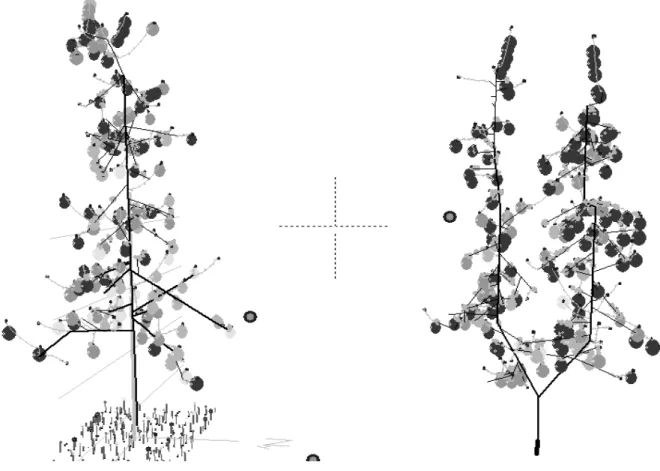
A 3D visualization of the plant architecture was provided by the PlantToon® software, allowing the digital identification of bearing shoot and the fruit position in the two training systems respectively (Fig. 1). The design faithfully describes the two systems showing the conic shape of the spindle and the two axis conformation of the Bi-axis. The uniformity of the bearing shoot all along the trees in both systems and the fruit position on the different part of the tree can be easily recognized. Galaxy Evolution fruit were uniformly distributed in the three identified layers of the tree (upper, middle, lower), while Pink Lady® (Rosy Glow) presented a lower number of fruit in the Spindle upper layer (data not shown). This might depend on the fact that the Galaxy Evolution cultivar (cv) tends to develop shoots and bear fruit in the upper part of the tree. On the contrary, Pink Lady® (Rosy Glow) is characterized by a higher number of stronger branches in the lower and middle layers.
Fruit Size
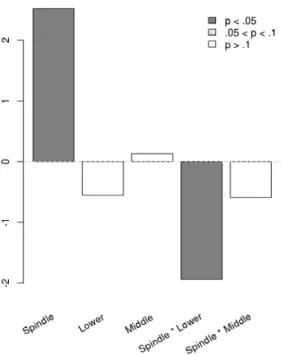
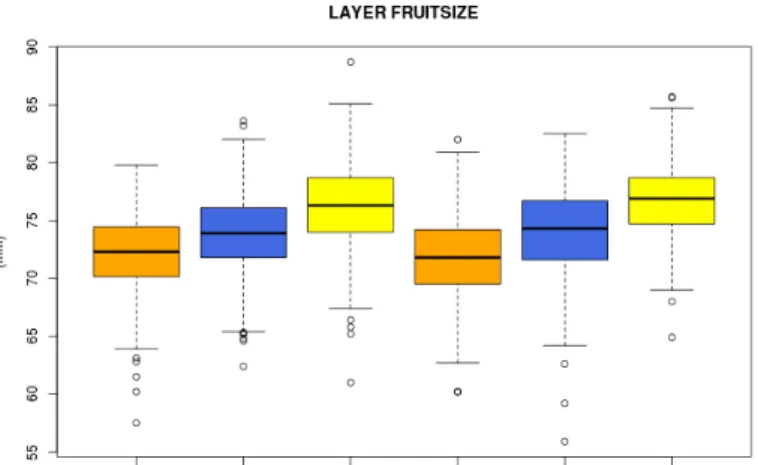
The analysis of the Galaxy Evolution fruit size, taking the “Bi-axis upper layer fruit size” as a reference value (75.7), reported that the two training systems do not influence the average fruit size, while fruit from lower and middle layers in Bi-axis were statistically smaller than the upper layer one. In spindle, only the “lower layer fruit” reached a smaller size (Fig. 2a).
16
In Pink Lady® (Rosy Glow) , instead, the training system played a role and, in fact, “Spindle fruit” reached a fruit size statistically higher than “Bi-axis ones” (reference value 78.3), in the upper and middle layers. As far as the layer is concerned, only the “Spindle lower layer fruit” were statistically smaller (Fig. 2b).
Fruit Ripening
Fruit ripening was determined for each fruit distributed over the different tree layers for both cv and training systems. The ripening stage, expressed as IAD, is visualized in the 3D image by a different colour scale (white, grey and black), anchoring the ripening situation on the tree architecture and the three different layers (lower, middle and upper layers) (Fig. 1). At harvest the fruit ripening was differently affected by the training systems for the two varieties (Fig. 3a and b). In Galaxy Evolution fruit, in fact, the Bi-axis induced a more advanced ripening stage as compared to spindle and a more uniform distribution (Fig. 3a). “Pink Lady® (Rosy Glow) apples” showed an opposite trend, with the “Spindle fruit” a slightly more ripen, although the distribution was less uniform than “Bi-axis training system fruit” (Fig. 3b).
Fruit Over Colour
For skin colour, important differences were observed as affected by cultivar, training system and layers. In general, Galaxy Evolution fruit reached a more intense colour as compared to Pink Lady® (Rosy Glow) , and the fruit in the upper layer of both cultivars, in particular in Galaxy Evolution, were visually more intense than the “middle and the lower layers fruit”. More in details, examining the fruit colour with the statistical method described before, with the “Bi-axis upper layer fruit colour” took as reference value (84.7), it can be observed that the “Bi-axis Galaxy Evolution fruit” reached values always statistically higher than “Spindle fruit” (Fig. 4a), while no difference were detected in Pink Lady® (Rosy Glow) . In Pink Lady® (Rosy Glow), the fruit colour was less evident only in the lower layer (data not shown). At harvest “Galaxy Evolution Bi-axis fruit” had 85% of apples with more than 50% of over colour, while “Spindle fruit” reached only 57% with the same percentage (Fig. 4b).
Fruit Soluble Solid Content and Texture Analyses
For both cultivars “lower layer fruit” reached the lowest soluble solid contents (SSC), and “Pink Lady® (Rosy Glow) “middle layer fruit” also showed statistical lower values than upper layer fruit (data not shown). Fruit collected from the three layers of the two cultivars and the two training systems were also employed for a comprehensive texture analysis operated by a texture
17
analyzer. The data set was initially analyzed in Galaxy Evolution by the means of multivariate statistical approach, such as Principal Component Analysis (PCA). As reported in figure 5a, the PCA, computed by implementing the first two components (explaining together the 90% of the entire texture variability), clearly distinguished the projection over the hyperspace of the mechanical parameters with regards to the acoustic ones, validating the use of this technology to exploit new fruit quality traits, such as crispness response upon compression. The distribution of the texture behavior among the six layers over the PCA 2D plot distinguished the two training systems, highlighting that fruit from the Bi-axis were higher than those collected from the Spindle in terms of texture performance (Fig. 5b). Texture was also profiled on Pink Lady® (Rosy Glow), following the same experimental scheme, however for this cv the difference were not so clear as those observed for Galaxy Evolution (data not showed).
3.5. Conclusions
The objective of the present study was a comparison of fruit quality parameters between the Spindle and Bi-axis. The results obtained with the present research, although preliminary, underlined that other data than yield, average fruit weight and standard quality traits, must be examined to properly evaluate the effectiveness of a given training system, its adaptability to the environment and the influence on fruit quality. Thus, precision horticulture methods (such as modelling system and innovative devices able to describe plant architecture and fruit ripening homogeneity) should be added to the traditional ones as a modern evaluation tool to choose the most appropriate cultural methods to be used. In this study, the use of both PlantToon® model, DA-Meter and the TAXT for the two training system comparison, showed to be valuable and appropriate tools to fulfill the research expectations. In fact, the PlantToon® was easily used to represent the tree architecture, the fruit distribution and quality attributes variability as affected by the two training systems studied. The IAD provided an objective and accurate evaluation of the fruit ripening induced by the training system, being also able to be friendly used in field conditions. The combined use of PlanToon® and IAD can guide the tuning up of the main cultural management techniques (thinning, summer and winter pruning, etc.) as well as to eliminate outlier fruit to improve ripening homogeneity for a better management of the post-harvest. On the basis of the results and information achieved with the combined use of these two systems, the Bi-axis training system reached more interesting results than Spindle especially on Galaxy Evolution. In fact, with this cultivar, the fruit characteristic in term of size, skin colour and texture were superior with the Bi-axis training system to those obtained with the Spindle. The superior fruit quality of Galaxy Evolution was also confirmed by the texture analysis, which provided important indication about
18
the real prospect to measure crispness trait, the most appreciated fruit quality feature by consumers (Hampson et al., 2000; Harker et al., 2003) in particular for apple.
The use of precision horticulture methods (modeling system and innovative non-destructive devices) as well as the determination of other additional parameters characterizing fruit quality must be introduced for a proper evaluation of the training system representing an important “DSS tool” able to affect fruit quantity and quality parameters. In addition, these tools also allow the possibility to perform simulation to exploit the cultural techniques to be successfully verify in practical conditions.
Acknowledgements
This research was supported by Progetto AGER, grant n° 2010-2119.
3.6. Literature Cited
Costa, F., Cappellin, L., Fontanari, M., Longhi, S., Guerra, W., Magnago, P., Gasperi, F. and Biasioli F. 2012. Texture dynamics during postharvest cold storage ripening in apple (Malus x domestica Borkh.). Postharvest Biol. Technol. 69: 54-63.
Costa, F., Cappellin, L., Longhi, S., Guerra, W., Magnago, P., Porro, D, Soukoulis, C, Salvi, S, Velasco, R, Biasioli, F. and Gasperi, F. 2011. Assessment of apple (Malus x domestica Borkh.) fruit texture by a combined acoustic-mechanical profiling strategy. Postharvest Biol. Technol. 61: 21-28.
Costa, G., Noferini, M., Fiori, G. and Torrigiani, P. 2009. Use of Vis/NIR Spectroscopy to Assess Fruit Ripening Stage and Improve Management in Post-Harvest Chain, GSB Journals, Fresh Produce 3 (Special Issue 1): 35-41
Dorigoni, A., Lezzer, P., Dallabetta, N., Serra, S. and Musacchi, S. 2011. Bi-axis: an alternative to slender spindle for apple orchards. Acta Horticulturae, Issue: 903: 581-588.
Hampson, C.R., Quamme, H.A., Hall, J.W., MacDonald, R.A., King, M.C., Cliff, M.A. 2000. Sensory evaluation as a selection tool in apple breeding. Euphytica. 111: 79-90.
Harker, F.R., Gunson, F.A. and Jaeger, S.R. 2003. The case of fruit quality and interpretative review of consumer attitudes, and preferences for apples. Postharvest Biol. Technol. 28: 333-347.
Magnanini, E., Bonora, E. and Vitali, G. 2010. PlantToon - drawing and pruning fruit trees. Proceedings of the 6th International Workshop on Functional-Structural Plant Models. Davis, CA, September 12-17, 2010. Pp. 255.
19
Musacchi, S. 2008b. Training systems and soil management for Southern European pear orchards. Acta Horticulturae 772: 447-457.
Palmer, J.W. 1999. Light, canopies, fruit and dollars. Compact Fruit Tree Vol. 32, 4: 119-122. Robinson, T.L., Lakso, A.L. and Carpenter, S.G.. 1991. Canopy Development, Yield, and
Fruit Quality of ‘Empire’ and ‘Delicious’ Apple Trees Grown in Four Orchard Production Systems for Ten Years. J. American. Soc. Hort. Sci. 116 (2):179-187.
Sinoquet, H. and Rivet, P. 1997. Measurement and visualization of the architecture of an adult tree based on a three-dimensional digitising device. Trees 11: 265-270.
Unuk, T., Tijskens, L.M.M., Germsek, B., Zadravec, P., Vogrin, A., Hribar, J., Simcic, M. and Tojnko, S. 2012. Effect of location in the canopy on the colour development of three apple cultivars during growth. Journal of the science of food and agriculture Vol. 92, 12: 2458.
3.7. Figures
Fig. 1 a and b. PlantToon® 3D imaging of the plant architecture for the two training system: Slender Spindle (a) and Bi-axis (b).
20
Fig. 2 a and b. Fruit size as affected by training system and tree layers. All the data are compared with the “Bi-axis upper layer fruit size” assumed as reference value 75.7 in Galaxy Evolution (a – left) and 78.3 (b – right) in Pink Lady® (Rosy Glow).
0% 5% 10% 15% 20% 25% 30% <0.6 0.6-0.7 0.7-0.8 0.8-0.9 0.9-1 1-1.1 1.1-1.2 1.2-1.3 1.3-1.4 1.4-1.5 1.5-1.6 IDA spindle bibaum 0% 5% 10% 15% 20% 25% 30% <0.6 0.6-0.7 0.7-0.8 0.8-0.9 0.9-1 1-1.1 1.1-1.2 1.2-1.3 1.3-1.4 1.4-1.5 1.5-1.6 IDA spindle bibaum
Fig. 3 a and b. Fruit ripening as affected by training system in Galaxy Evolution (a – left)) and in Pink Lady® (Rosy Glow) (b – right).
21 Overcolour - Gala 85 57 59 32 0 10 20 30 40 50 60 70 80 90 100
bibaum spindle bibaum spindle
> 50% > 80%
%
> 50% bibaum > 50% spindle > 80% bibaum > 80% spindle
P=0,027 A
B
ns
Fig. 4 a and b. Fruit overcolour as affected by training systems and tree layers. All the data are compared with the “Bi-axis upper layer fruit” assumed as reference value (84.7)(a – left). Percentage of fruits at harvest over 50 % and 80% of skin colour coverage (b – right).
Fig. 5 a and b. In panel a (left) the projection of the texture parameters over the PCA 2D plot is shown. In panel b (right) the distribution of the texture behavior for the three layers per each training system is visualized.
Projection of the variables on the factor-plane ( 1 x 2)
Active Forza Iniziale Forza Max orza Finale Picchi Forza Lavoro za lineare forza Modulo Young or medio Forza (Pi-Pf) (Pi/Pf) N° Picchi Acustici Acustica Media istanza Lineare Acustica Press. Acustica Max
-1,0 -0,5 0,0 0,5 1,0 Factor 1 : 67,80% -1,0 -0,5 0,0 0,5 1,0 Fac tor 2 : 22, 33% Forza Iniziale Forza Max Forza Finale N° Picchi Forza Lavoro Distanza lineare forza
Modulo Young Valor medio Forza
(Pi-Pf) (Pi/Pf) N° Picchi Acustici
Press. Acustica Media Distanza Lineare Acustica
Press. Acustica Max
Projection of the cases on the factor-plane ( 1 x 2) Cases with sum of cosine square >= 0,00
Active A_bibaum B_bibaum C_bibaum A_spindle B_spindle C_spindle -8 -6 -4 -2 0 2 4 6 8 Factor 1: 67,80% -4 -3 -2 -1 0 1 2 3 4 5 Fac tor 2: 22, 33% A_bibaum B_bibaum C_bibaum A_spindle B_spindle C_spindle
22
4.
3D digitizing tool to determine fruit quality distribution within the canopy
N. Dallabetta1, F. Costa1, M. Giordan1, A. Guerra1, J. Pasqualini1, R. Wehrens1, M. Noferini2 G. Costa21
Fondazione Edmund Mach, Via E. Mach 1, 38010 San Michele all'Adige, (TN), Italy
2
Department of Agricultural Science, Alma Mater Studiorum, University of Bologna. 46, Fanin Blvd. 40127, Bologna Italy
Keywords: SlenderSpindle, Bi-axis, tree architecture, apple position, crop load.
4.1. Abstract
The “Slender Spindle”, one of the most used training system for apple, was compared with the “Bi-axis”, an innovative training system, to determine their effect on fruit quality and fruit distribution within the canopy on Gala cultivar. Two levels of crop loads were also introduced to observe their effects through chemical and manual thinning. Fruit position in the canopy was monitored during summer using different softwares to draw in 3D the tree architecture. Also, fruits were monitored during the growing season for their growth and maturation. At the end of the season fruits were harvested, graded and analyzed for their quality traits. Fruit texture was also assessed employing a novel texture analyzer equipped with an acoustic envelope device. Fruit position resulted to have a strong influence on fruit quality. The fruits in the layers were significantly different. In the upper part of the tree fruits showed a higher percentage of over colour and bigger fruit size compared to the middle and the lower part of the canopy. No significant differences were found between the two training systems. Crop load influenced fruit quality in both training systems in the same way on fruit size and over colour. Lower crop load treatment had higher percentage of over colour and bigger fruit size compared to the higher crop load. No differences in fruit ripeness were found between the two training systems and crop loads. Fruits in the lower part of the trees were less mature in both training systems. No differences in texture were found between the two training systems, the crop loads and the layers.
4.2. Introduction
Modern intensive orchards trained with Slender Spindle (SS) system grafted on the dwarfed M9 rootstock guaranty greater and early production (Barritt, 1989 and 1998). Also, plants provided by the nursery are already feathered trees and therefore are able to bear fruits in the first years (Van Oosten, 1978; Ferree and Rhodus, 1987).
The Slender Spindle with its conical and narrow shape is adaptable for intensive plantation (Wertheim, 1968) and trees fill up the available space very fast reaching earlier high yield efficiency and fruit quality (Robinson et al., 1991; Palmer, 1999). However, in this case, the branches may growth very quickly in the canopy leading to poor fruit colour and quality (Corelli and Sansavini, 1989). Sansavini et al. (1981) found a poor level of light in the lower part of the Spindle as compared to other systems like “Palmette” which has a flat shape tree. As a matter of fact fruits located in the middle and lower position have higher shade compared to upper levels and resulted in lower fruit quality (Robinson et al., 1991). Several studies have been carried out to show that
23
shading influences fruit quality (Jackson and Palmer in the UK, Ferree, Rom, Barritt and Robinson in the USA and Tustin and Warrington in New Zealand). Even fruits positioned externally are different compared to the fruits in the inner position and this results in fruits with different over colour, particularly for red-coloured variety such Gala (Unuk et al., 2012), parameter used by the cooperative to pay off the growers.
Bi-axis trees could represent a good alternative to the Slender Spindle using the same tree density. This system is patented under the trade mark Bibaum® and trees are obtained by a double chip budding technique in the nursery (Musacchi, 2008a, b). The two stems in Bi-axis give a U shape to the tree and developed along the rows allowing a good light penetration, improving skin over colour, and at the same time providing a good vigour control simplifying many cultural practices particularly winter pruning, limb bending in summer and harvesting (Dorigoni et al., 2006, 2010 and 2011).
Training systems and light interception in reference to fruit quality in apples within a canopy structure using a 3D model have been reported by Potel et al. (2005), Sinoquet et al. (2007), Stephan et al. (2008) and Monney et al. (2012). Other models, simulating spatio-temporal distribution of temperature in apples introduced interesting results (Saudreau et al., 2009). Similar studies have also been conducted in other fruits such as kiwis only to provide more in-depth understanding of how fruit quality is linked to plant architecture (Smith et al., 1992).
Taking into account the information and the precision that a three dimensional digitising description can provide especially in apples (Sinoquet and Rivet, 1997; Godin et al., 1999; Costes et al., 1999), this paper intends to develop this information that may be provided through the structural architecture and the position of the fruits related to fruit quality. For the purpose, two training systems the Slender Spindle and the Bi-axis were compared. Another element of difference in the study is the crop load, which has also been reported earlier in reference to fruit quality (Racskó, 2006), to fruit size (Assaf et al., 1982; Erf and Proctor, 1987; Forshey and Elfving, 1989) without the concept of the 3D architecture.
4.3. Materials & methods
The trial was carried out in Trentino province, Northern Italy in the experimental farm of the Edmund Mach Foundation (San Michele all’Adige, Trento, Italy) on cultivar Galaxy Evolution (Gala group), trained as Slender Spindle and Bi-axis.
24 Plant Material and Training Systems
The two types of trees were acquired from the same nursery and grafted on M9 rootstock using the chip budding technique for SS trees while Bi-axis plants were obtained by cutting back the leader in the nursery growing later the two axes. Trees were planted in 2005 at the space distance of 3.45 x 1.00 m for SS (2900 trees/Ha) and 3.45 x 1.20 m for Bi-axis (2400 trees/Ha). Six plants for each training system, were chosen with similar vigour and located in the same block of the orchard. Only trees from the centre of the block were used for the study in an effort to minimize the effect of sunlight that surrounds the orchard. The row orientation was about 9° NE.
Crop Load
The trees were managed according to commercial practices as integrated crop and pest management and thinned chemically and manually to have two different level crop load: three plants at 7 fruits/cm2 and the other three plants at 8.5 fruits/cm2 of trunk cross sectional area (TCSA) for each training system. The lower figure of fruit load (7) was set so as to include the generally accepted 7-8 fruits/cm2 of TCSA considered as an optimized fruit load to balance the number of fruits per tree and individual fruit size (Roper, 1995). The upper figure (8.5) was chosen just to have a higher level of crop load in order to see the yield training system potentiality and the effect on fruit quality by the crop load.
Fruit Position and Measurements
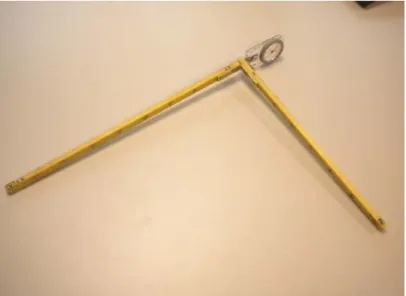
The fruits were individually labelled after fruit set and mapped for subsequent identification. The spatial position of all fruits was measured using a custom-made “woody stick-compass system” (Fig. 1). The length, the direction (°N) and the horizontal projection were measured on each fruit from the ground to the top of the canopy. The collected Cartesian coordinates and the punctual position of each fruit were catalogued. Three parallel layers of equal size (upper, middle and lower) were identified within the canopies, related to their height from the ground. Data were used to draw a three-dimensional diagram using the statistical packages “R” and “Statistica” with an objective to digitally identify fruit distribution in the canopy (Fig. 2). The design precisely describes the two systems showing the conic shape of the SS and the two-axis conformation of the Bi-axis trees. During summer and at harvest, fruits were monitored for their growth with a manual callipers and maturation using the DA-Meter device, which by means of its absorbency (A670-A720) properties allows to measure the chlorophyll’s content in the fruit which is index of fruit’s ripening stage.
25 Fruit Quality Data Collection
Fruits were harvested on the same date, according to a given starch index, from three different heights within the tree previously demarcated into three different heights: upper, middle and lower positions. All Fruits were graded using Greefa equipment with a software that measures weight (g), size (mm), over colour (%), relative ground colour and shape (index) and length (mm) of each fruit.
Fruit Analyses
Fifteen fruits for each layer for each tree were sampled for the analyses. Ten of them were analyzed at harvest time using the Pimprenelle detecting soluble solid contents (Brix°), acidity (g/l malic acid), starch index and firmness. The rest (5 for each layer and tree) of the apples were stored in air conditioning cool storage two months and held at room temperature (approximately 20°C) for 24 hours before being graded and assessed for analyses. Each of these fruits were tested for texture using TA-XTplus Texture Analyzer equipped with an Acoustic Envelop Detector (AED) device (Stable MicroSystem Ltd., Godalming, UK) which helps detect both mechanic and acoustic profiles of the compress apple. Texture was measured on 4 discs of each apple of the similar shape and size.
Plant Measurements
Biometrical data such trunk cross sectional area (TCSA) 20 cm above graft union, height, width and breadth of the trees were recorded after harvest. At the end of the season, a sample of hundred leaves for each training system were collected and dried and weighted in order to calculate the mean of leaf area and weight for each leaf. Later, all the leaves for each tree were collected separately wrapping the plants with a hail net. Thus, leaves were dried in a oven and weighted in order to calculate, using the samples data estimated, the leaf area, the “Leaf Area Index” (LAI) and the dry matter for each tree of both training systems.
Statistical Analyses
We considered how training systems (Slender Spindle and Bi-axis) and layers (upper, middle and lower) affect fruit quality variables (Overcolour, Fruit size, IAD). Apples from the same tree were considered correlated and therefore to estimate the quantity of interest we used a Generalized Linear Mixed Model with the variable “Tree” as random effect. Inference was carried out using Penalized Quasi-Likelihood (Schall, 1991; Breslow and Clayton, 1993; Wolfinger and O'Connell, 1993). To control the number of false positive we used the false discovery rate methodology (Benjamini and Hochberg, 1995); a test was deemed significant if the corresponding
26
adjusted p-value was lower than 0.05. Finally to assess differences in biometrical data, vegetative data and efficiency data we used two-sample Wilcoxon tests and we correct the pvalues with Holm method.
The statistical analyses were carried out using R, version 3.0.2. The package MASS was used to fit the Generalized Linear Mixed Models.
4.4. Results and Discussion
Yield Efficiency
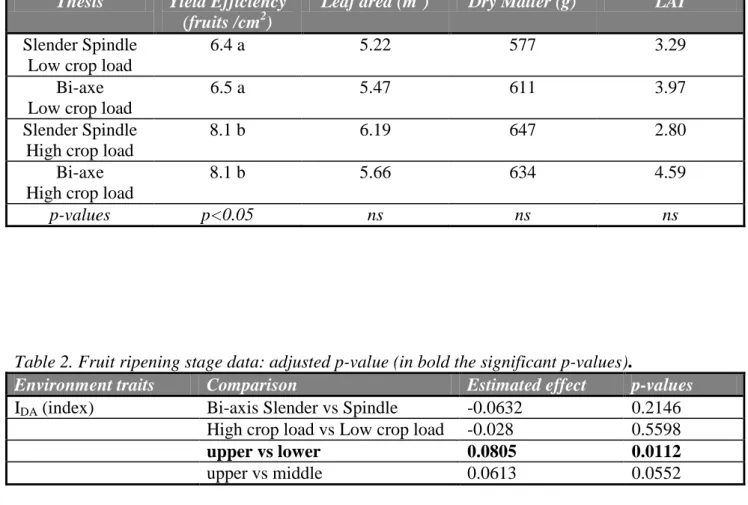
Significant differences in crop load were obtained as previously hypothesised (Tab. 1). The different crop loads were imposed tuning up the hand thinning intensity in order to find out the effect of crop load on fruit quality. Initial crop load which was set at 7 and 8.5 fruit/cm2 after fruit set, changed to an yield efficiency of 6.5 and 8.1 fruit/cm2 during summer, thus maintaining the difference between the two levels of crop load.
Leaf Area Index
The leaf area index was similar between treatments (Tab. 1). This is an important result, which influences fruit quality. It is known that yield is related to surface area (Winter, 1981) and the total number of leaves supplying carbohydrates to the fruits or the fruit / leaf ratio influence the carbohydrates content of the fruits as found by Corelli-Grappadelli et al. (1994) and Poll et al. (1996). The reduction in the number of fruits per tree, such as in the lower crop load level, could increase the leaf area per fruit resulting in an increase in the availability of assimilates in the remaining fruitlets corresponds to Palmer et al. (1991).
Fruit Position and Distribution
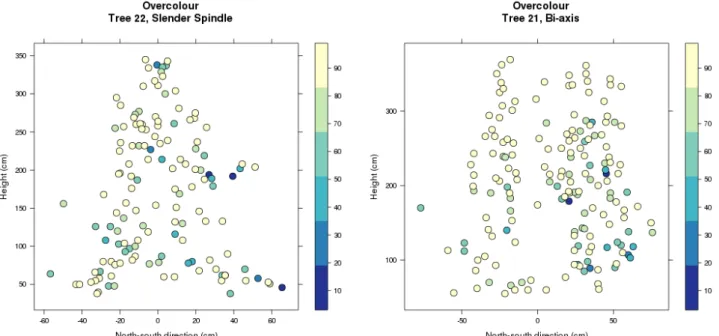
The fruits were differently distributed in the two training systems in the different parts of the tree layers (Fig. 3). Bi-axis had a more regular fruit number distributed along the canopy while SS trees showed a highest number of apple located in the lower level of the canopy. This might depend on the fact that the SS trees are characterized by a higher number of stronger branches in the lower layers (Wertheim, 1968).
Fruit Size
The growth of fruit size was affected similarly in both training systems during summer and until harvest showing a less growth by the fruits in the higher crop load treatments (Fig. 4). A reduction in fruit number has been associated with an increased fruit growth (Racskó, 2006). At
27
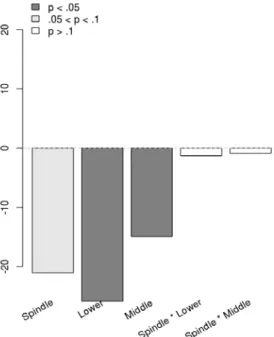
harvest Bi-axis produced similar fruit size compared to the SS trees. The crop load affected fruit size: in fact the lower crop load obtained bigger fruits compared to the higher crop load for both training systems (Fig. 5a). This confirmed the hypothesis of Roper (1995) who considered 8 fruit/cm2 the maximum limit to obtain a ideal crop load in order to obtained a good fruit quality. Another close call comes from De Salvador et al. (2006) who confirmed the higher the crop load the smaller the fruit size. Also, another factor that might have influenced in spite of the same vegetative data in the two crop loads could be the ratio between the number of fruits and LAI (Wu et al., 2005). In fact, Palmer et al. (1991) showed that the mean fruit weight at harvest was linearly dependent on leaf area per fruit. Tree layer affected fruit size in both training systems (Fig. 5b). The upper layer obtained bigger fruit size followed by the middle and then the lower layer. This could be assumed to have a light effect, sustained by several (Morgan et al., 1984; Tustin et al., 1988). Figures 6a and 6b highlight the fruit size distribution in the canopy in the two training systems.
Fruit Over Colour
Bi-axis trees performed similarly to SS trees as regards to percentage of fruit skin colour. Instead, crop load affected significantly skin colour in both training systems (Fig. 7a). The higher crop load resulted significantly less in the percentage of skin colour. This suggests that more the number of fruits within a canopy, the more the amount of shading is present. Morgan et al. (1984) suggested that fruit over colour was positively correlated with the level of exposure to sunlight. Linking shading to the layers the results obtained in this study showed that the upper layer with the highest percentage of fruit skin colour followed by the middle and then the lower part of the canopy for both training systems (Fig. 7b), supported by other studies (Jackson et al., 1971; Robinson et al., 1983). It underlines the fact that shade and the penetration of global radiation within the canopy are key factors for fruit coloration. Warrington et al. (1996) showed that the light environment at the fruiting sites is more important for fruit colour and quality and not the canopy system itself. The same result was also obtained under netting by Dussi et al. (2005) who found less skin colour in the bottom part of the tree due to shading. The upper part has better light exposure resulting in better over colour as found by Unuk et al. (2012). Figures 8a and 8b highlight the over colour distribution in the canopy in the two training systems.
Fruit Analyses
The training systems and the crop load didn’t affect fruit ripening stage at harvest. Only the fruit position affected fruit ripeness. Fruits on the bottom part of the tree resulted with a lower ripening stage compared to the other layers (Tab. 2). This is may be due to the effect of shading
28
which is higher in the lower part of the canopy and delays fruit ripening stage (Robinson et al., 1983). Analogous results were found by Dussi et al. (2005) under netting, who confirmed that the height of the canopy significantly affected fruit ripening. Texture didn’t show any statistical significant differences between the two training system and crop load treatments and fruit positions.
4.5. Conclusions
The 3D construction of the plant architecture and the fruit positions within the canopy provided data to confirm fruit quality in the two training systems. Two important parameters fruit size and skin over colour were selected among many others to examine fruit quality. Also because, nowadays, as far as economics are concerned, the growers and the market use fruit size together with skin colour to evaluate fruit.
Fruit position confirmed to affect more fruit quality than the training systems per se. In fact, no differences were found between the two training systems. Both tree shapes have compact and narrow trees, which may guarantee similar light distribution within the canopies. Instead the layers showed differences with the obvious of the upper position to have better quality fruits in terms of size and colour and higher fruit ripening stage.
Other studies showed that Bi-axis had better performance in fruit quality compared to Spindle trees mainly in vigorous cultivars such as Fuji. This study instead showed no differences between the two training systems, probably due to the less vigorous cultivar such as Gala maintaining a compact shape in SS as in Bi-axis.
Another important factor that did have an effect is the crop load, confirming its influence on fruit quality. A mere increase of 30-40 apples per tree influenced the size and the colour of both training systems. This factor of crop load was included to test if the innovative Bi-axis could have had a major potential yield without altering fruit quality. As a matter of fact both the systems resulted to be similar.
Other than thinning, operations such as the introduction of alternative pruning methods could enhance fruit quality in lower part of the tree. This will ensure an increased light distribution through the canopy thus improving fruit light exposure, which can guarantee a better fruit skin over colour.
4.6. Literature cited
Assaf, R., Levin, I. and Bravdo, B. 1982. Apple fruit growth as a measure of irrigation control. Hort Science 17: 59-61.
29
Barritt, B.H., Rom, C.R., Guelich, K.R., Drake, S.R. and Dilley, M.A. 1987. Canopy position and light effects on spur, leaf and fruit characteristics of “Delicious” apple. HortScience Vol. 22 (3): 402-405.
Barritt, B.H. 1989. Influence of orchard system on canopy development, light interception and production of third year ‘Granny Smith’ apple trees. Acta Horticulturae 243: 121-130.
Barritt, B.H., Rom, C.R., Konishi, B. and Dilley M.A. 1991. Light level influences spur quality and canopy development and light interception influence fruit production in apple. HortScience 26 (8): 993-999.
Barritt, B.H. 1998. Orchard management systems for Fuji apples in Washington State. Compact Fruit Tree Vol. 31, No. 1: 1-4.
Benjamini, Y. and Hochberg, Y. 1995. Controlling the false discovery rate: a practical and powerful approach to multiple testing. Journal of the Royal Statistical Society Series B 57: 289-300.
Breslow, N. E. and Clayton, D. G. 1993. Approximate inference in generalized linear mixed models. Journal of the American Statistical Association 88: 9-25.
Corelli, L. and Sansavini, S. 1989. Light management and photosynthesis related to planting density and canopy management in apple. Acta Horticulturae 243: 159-174.
Corelli Grappadelli, L., Lakso, A.N. and Flore, J.A. 1994. Early season patterns of Carbohydrate partitioning in exposed and shaded apple branches. J. Amer. Soc. Hort. Sci. 119 (3): 596-603.
Costes, E., Sinoquet, H., Godin, C. and Kelner, J.J. 1999. 3D digitizing based on tree topology: Application to study the variability of apple quality within the canopy. Proceeding of the fifth international symposium on computer modelling in fruit research and orchard management. Acta Horticulturae Issue: 499: 271-280.
De Salvador, R., Fisichella, M. and Fontanari, M. 2006. Correlations between fruit size and fruit quality in apple trees with high and standard crop load levels. Journal of fruit and Ornamental Plant Research Vol. 14 (Suppl.2): 113-122.
Dorigoni, A., Dallabetta, N. and Piffer, I. 2006. Biasse: meno spese per l'impianto e più luce per le mele. L'informatore agrario 40-20/26: 42-45.
Dorigoni, A., Micheli, F, Lezzer, P., Dallabetta, N. and Pasqualini, J. 2010. Il sistema di allevamento a due o più assi. Frutticoltura 11: 2-7.
Dorigoni, A., Lezzer, P., Dallabetta, N., Serra, S. and Musacchi, S. 2011. Bi-axis: an alternative to slender spindle for apple orchards. Acta Horticulturae Issue: 903: 581-588.
30
Dussi, M.C., Giardina, G. Sosa, D., González,Junyent, R., Zecca, A. and Reeb, P. 2005. Shade nets effect on canopy light distribution and quality of fruit and spur leaf on apple cv. Gala.
Spanish Journal of Agricultural Research 3 (2): 253-260.
Erf, J.A. and Proctor, J.T.A. 1987. Changes in apple leaf water status and vegetative growth as influenced by crop load. J. Amer. Soc. Hort. Sci. 112: 617-620.
Forshey, C.G. and Elfving, D.C. 1989. The relationship between vegetative growth and fruiting in apple trees. Horticultural Reviews 11: 229-287.
Ferree, D.C. and Rhodus, W.T. 1987. Early performance and economic value of feathered apple trees on semi standard rootstocks. Journal of the American Society Horticultural Science, Alexandria v.112: 906-909.
Ferree, D.C. 1989. Influence of orchard management systems on spur quality, light and fruit within the canopy of “Golden delicious” apple trees. J. Amer. Soc. Hort. Sci. 114: 869-875.
Ferree, D.C., Schupp, J.R., Blizzard, S.H., Baugher, T.A and Warrington, I.J. 1989. Influence of five orchard management systems on canopy composition, light penetration and net photosynthesis of ‘Golden Delicious’ apple. Acta Horticulturae 243:131-140.
Godin, C., Costes, E. and Sinoquet, H. 1999. A Method for describing plant architecture which integrates topology and geometry. Annual Botany 84: 343-357.
Jackson, J.E., Sharples, R.O. and Palmer, J.W. 1971. The influence of shade and within-tree position on apple fruit size, colour and storage quality. J. Hort. Sci. 46: 277-287.
Jackson, J.E. and Palmer, J.W. 1977. Effect of shade on the growth and cropping of apple trees. I, Experimental details and effects on vegetative growth. J. Hort. Sci. 52: 245-252.
Monney, P., Sinoquet, H., Sonohat, G., Potel, A.M. and Lauri, P.E. 2012. Pommiers digitalises pour mesurer l’influence du microclimatic lumineux sur la qualité des fruits. Reveu suisse Viticulture, Arboriculture, Horticulture I, Vol. 44 (2): 122-129.
Morgan, D.C., Stanley, C.J., Volz, R. and Warrington, I.J. 1984. Summer pruning of “Gala” apple: the relationships between pruning time, radiation and penetration and fruit quality. Journal of the American Society for Horticultural Science 109: 637-642.
Musacchi, S. 2008a. Bibaum: a new training system for pear orchards. Acta Horticulturae Issue: 800, Vol. 2: 763-768.
Musacchi, S. 2008b. Training systems and soil management for Southern European pear orchards. Acta Horticulturae 772: 447-457.
Palmer, J.W. and Jackson, J.E. 1977. Seasonal light interception and canopy development in hedgerow and bed system apple orchards. J. Applied Ecol. 14: 539-549.
31
Palmer, J.W., Cai, Y.L. and Edjamo, Y. 1991. Effect of part-tree flower thinning on fruiting, vegetative growth and leaf photosynthesis in “Cox’s Orange Pippin” apple. Journal of Horticultural Science 66: 319-325.
Palmer, J.W. 1999. Light, canopies, fruit and dollars. Compact Fruit Tree Vol. 32, 4: 119-122. Poll, L., Rindom, A., Toldam-Andersen, T.B. and Hansen, P. 1996. Availability of assimilates and
formation of aroma compounds in apples as affected by the fruit/leaf ratio. Physiol. Plantarum 97: 223-227.
Potel, A.M., Mooney, P., Sinoquet, H., Sonohat, G. and Lauri, P.E. 2005. Three-dimensional tree-digitalization for system analysis of apple orchards. Revue Suisse de viticulture, arboriculture, horticulture Vol. 37 (6): 351-359.
Racskó, J. 2006. Crop Load, Fruit Thinning and their Effects on Fruit Quality of Apple (Malus domestica Borkh.). Journal of Agricultural Sciences, Debrecen, 2006/24: 29-35.
Robinson, T.L., Seeley, E.J. and Barritt, B.H. 1983. Effect of light environment and spur age on ‘Delicious’ apple fruit size and quality. J. Amer. Soc. Hort. Sci. 108: 855-861.
Robinson, T.L., Lakso, A.N. and Ren, Z. 1991. Modifying apple tree canopies for improved production efficiency. Hortscience Vol. 26 (8): 1005-1012.
Rom, C.R. and Ferree, D.C. 1986. The influence of fruiting and shading of spurs and shoots on spur performance. J. Amer. Soc. Hort. Sci. 111: 352-356.
Roper, T. 1995. Estimating appropriate crop loads. Annual report of the secretary of the State Horticultural Society of Michigan for the year 1995, 176: 4.
Sansavini, S., Bassi, D. and Giunchi. L. 1981. Tree efficiency and fruit quality in high-density apple orchards. Acta Horticulturae 114: 114-136.
Saudreau, M., Marquier, A., Adam, B., Monney, P. and Sinoquet, H., 2009. Experimental study of fruit temperature dynamics within apple tree crowns. Agricultural and Forest Meteorology Vol. 149, Issue 2: 362-372.
Schall, R. 1991. Estimation in generalized linear models with random effects. Biometrika 78: 719-727.
Sinoquet, H., Stephan, J., Sonohat, G. Lauri, P.E. and Monney, O. 2007. Simple equations to estimate light interception by isolated trees from canopy structure features: assessment with three-dimensional digitized apple trees. New Physiologist 175: 94-106.
Sinoquet, H. and Rivet, P. 1997. Measurement and visualization of the architecture of an adult tree based on a three-dimensional digitising device. Trees 11: 265-270.
32
Smith, G.S., Curtis, J.P. and Edwards, C.M. 1992. A method for analysing plant architecture as it relates to fruit quality using three-dimensional computer graphics. Annual of Botany 70: 265-269.
Stephan, J., Sinoquet, H., Donès, N., Haddad, N., Talhouk, S. and Lauri, P.E. 2008. Light interception and partitioning between shoots in apple cultivars influenced by training. Tree Physiology 28: 331–342.
Tustin, D.S. Hirst, P.M. and Warrington, I.J. 1988. Influence of orientation and position of fruiting laterals on canopy light penetration, yield and fruit quality of “Granny Smith” apple. J. Amer. Soc. Hort. Sci. 113 (5): 693-699.
Unuk T., Tijskens, L.M.M., Germšek, B., Zadravec, P., Vogrin, A., Hribar, J., Marjan Simčič, M. and Tojnko, S. 2012. Effect of location in the canopy on the colour development of three apple cultivars during growth. J. Sci. Food Agri. 92: 2450–2458.
Van Oosten, H.J. 1978. Effect of initial tree quality on yield. Acta Horticulturae, The Hague, Vol. 65: 123-127.
Warrington, I.J., Stanley, C.J. Tustin, D.S., Hirst, P.M. and Cashmore, W.M. 1996. Light transmission yield distribution, and fruit quality in six tree canopy forms of “Granny Smith” apple. Journal of Tree Fruit Production Vol. 1 (1): 27-54.
Wertheim, S.J. 1968. The training of the slender spindle. Pub. Proefstation Fruiteelt, Wilhelmindadorp, Netherlands no. 7.
Winter, F. 1981. Lucas Anleitung zum Obstbau. Ulmer Verlag 30th edition: 176-181.
Wolfinger, R. and O'Connell, M. 1993. Generalized linear mixed models: a pseudo-likelihood approach. Journal of Statistical Computation and Simulation 48: 233-243.
Wu, B.H., Ben Mimoun, M. Genard, M., Lescourret, F., Besset, J. and Bussi, C. 2005. Peach fruit growth in relation to leaf-to-fruit ratio, early fruit size and fruit position. Journal of Horticultural Science & Biotechnology 80: 340-345.
33
4.7. Figures
Fig. 1. The woody stick-compass system used to measure the fruit positions. Data were used to draw a 3 dimensional diagram using the two different software (R and Statistica) with an objective to monitor the fruit position and its development on the tree.
Fig. 2. 3D visualization example of the plant architecture provided by the Statistica software which allowed the digital identification of the fruit position in the two training systems in lower crop yield treatment.