Methods of Information in Medicine © Schattauer GmbH (2001)
1. Introduction
Nursing documentation accompanies the nursing process and is an important part of clinical documentation. The six phases of the nursing process provide a systematic methodology for the nursing practice [1]:
1. Assessment of relevant patient infor-mation;
2. Identification of patient’s problems and resources;
3. Identification of nursing care aims; 4. Planning of nursing intervention
(nursing tasks);
5. Execution of these tasks; 6. Evaluation of nursing care.
In Germany, this nursing process was included in nursing education in 1985. A high quality of nursing documentation is seen as necessary to support patient-centered nursing care, cooperation in the health professional team, quality management, evaluation of nursing care, and the fulfillment of legal
requirements [2, 3]. In Germany, mainly paper-based documentation systems are used to support nursing process documentation. However, problems are frequently reported regarding the long time required for documentation [4-6], the low quality of the documentation [3, 7] and the limited user acceptance [4, 7]. To overcome these problems, computer-based nursing documentation systems are now being developed for use in nursing practice [8-10]. In Germany, however, the use of compu-ters to support the nursing process is still very rare [6, 8]. Examples given for this lack of success include: insufficient integration in nursing workflow, limited quality of the software, low acceptance of computers in nursing practice and in the nursing process, and insufficient nursing terminology systems [8, 9, 11, 12].
Due to the limited use in nursing practice, it is still unclear whether computer-based nursing documentation
systems can enhance the quality of patient-centered care. Therefore, a rigorous and complete evaluation of their effects, costs and benefits is seen as very important [3, 13, 14]. Mere laboratory evaluations of information systems seem insufficient for determining their real effects, clinical relevance and limitations [15].
Many studies examined the effects of computers in nursing and the nurses’ attitudes toward computers [7, 16-43]. Few of these studies evaluated in detail the effects of computer-based nursing process documentation systems [3, 44-46]. Moreover, none of these studies used a randomized study design that allows a direct comparison between paper-based and computer-based nursing process documentation. For this reason we conducted a controlled randomized study to compare our conventional paper-based documentation system with a new computer-based application system.
E. Ammenwerth
1,
R. Eichstädter
2, R. Haux
1,
U. Pohl
3, S. Rebel
2, S. Ziegler
4A Randomized Evaluation
of a Computer-Based Nursing
Documentation System
1Department of Medical Informatics, 2Department of Psychiatry,
3Department of Dermatology, 4Department of Medical Biometry,
University of Heidelberg, Germany
Abstract: A two-month randomized, controlled trial based on 60 patients
has been performed on a ward of the Department of Psychiatry at Heidel-berg University Medical Center, Germany, to investigate the influence of computer-based nursing documentation on time investment for documentation, quality of documentation and user acceptance. Time measurements, questionnaires, documentation analysis and interviews were used to compare patients documented with the computer-based system (PIK group) with the control group (patients documented with the paper-based system). The results showed the advantages and disadvantages of computer-based nursing documentation. Time needed for nursing care planning was lower in the PIK group. Some formal aspects of quality were considerably better in the PIK group. On the other hand, time required for documentation of tasks and for report writing was greater in the PIK group. User acceptance increased significantly during the study. The interviews indicated a positive influence of PIK on the cooperation between nurses and physicians.
Keywords: Evaluation, Nursing Documentation System, Hospital Information System, Randomized Study
2. Methods
2.1 Clinical Environment
Our study took place at the end of 1998, in the Department of Psychiatry of the Heidelberg University Medical Center; 420 patients per year, suffering from acute mental disorders, are treated in 23 beds on this ward. On average, a patient length of stay is 20 days. Twelve registered nurses and 5 physicians were working on the ward at the beginning of the study.
In the Department of Psychiatry, the nursing process has formed the basis of nursing documentation and nursing care for several years. The nurses on the study ward already had experience with the use of computers; for example, for ordering meals, materials and drugs, for writing discharge reports, for duty scheduling and for patient administration [47].
2.2 Documentation System Environment
The paper-based nursing documen-tation system used in the Department consists of several forms for free-text entry. The forms correspond to the pha-ses of the nursing process. The informa-tion assessment is usually documented shortly after the patient has been admit-ted. This also applies to the nursing care plan, which may be changed according to the patient’s condition. The planned tasks are executed and then signed by
each shift (morning, afternoon, and night shift) on a corresponding form. Each shift writes a short nursing report.
We chose the computer-based nursing documentation system PIK 4.01for this
study; it fully supports phases 2–6 of the nursing process. A description of PIK can be found in [48] and [49].
2.3 Study Design 2.3.1 Study Aims
The detailed study aims and questions can be found in [49]. The overall aim of the study was to compare the computer-based and the paper-computer-based nursing documentation systems regarding time investment, quality of documentation and user acceptance:
– Q1.1: What difference exists between the two documentation systems concerning the time invested in nursing documentation?
– Q1.2: What difference exists between the two documentation systems concerning the quality of nursing documentation?
– Q1.3: What influence does PIK have on the nurses’ acceptance of computers? – Q2.1: What is the user acceptance of
PIK among the nurses on the study ward?
– Q2.2: What is the user acceptance of PIK among the physicians on the study ward?
2.3.2 Study Method
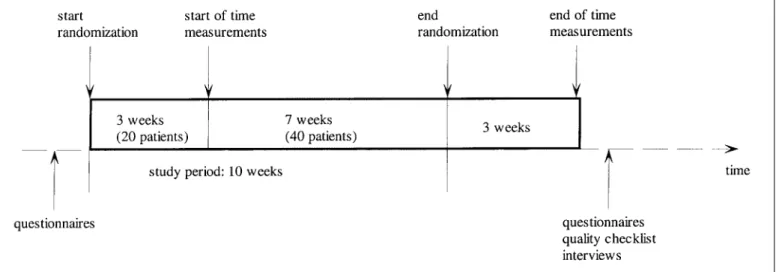
We conducted a randomized controlled trial to compare both documentation systems. The trial followed a detailed, pre-specified study protocol [49]. The time period to be covered by the study was from November 11, 1998, to January 17, 1999 (10 weeks). All 60 patients admitted to the selected ward of the Department of Psychiatry during this time period were included in the study. Using randomization, the new admissions were assigned either to the PIK group (documentation using the computer-based system only) or to the control group (documentation using the paper-based system only). PIK was installed seven weeks in advance of the study to enable sufficient training. All nurses received an intensive 2-hour instruction on the system and also an in-troduction into the study aims.
We used a mix of quantitative and qualitative methods to answer the study questions, which included self-administered questionnaires, interviews, self-observations and quality checklists.
To answer Q1.1, all nurses of the ward documented the time invested for care planning and documentation for each patient during the entire study. The times were then computed per day and per patient in both groups and were compared using the Wilcoxon-Mann-1 PIK 4.0 is developed by the
“Länderprojekt-gruppe PIK”, contact address: Länderpro-jektgruppe PIK, Deutsches Herzzentrum München (German Heart Center), Lazarett-str. 36, 80636 Munich, Germany.
3. Results
Q1.1: What difference exists between the two documentation systems concerning the time invested in nursing documenta-tion?
For the patients included in the time analysis (n = 40), the daily mean time was computed (only days with available data were included). Table 1 shows the mean time per day for the patients of both groups for which data were available. Thus, if a task, such as care planning, was never carried out for a patient, this patient was not included (see also Table 1).
For many patients in the control group, care planning was not conducted. The enormous efforts required to create a paper-based care plan was the reason for this mentioned by the nurses. In addition, care planning is often not done when patients are dismissed after only a few days.
Using the Wilcoxon-Mann-Whitney test, we saw that ‘planning and docu-mentation of tasks’ (p = 0.004) and ‘report writing’ (p = 0.019) needed significantly more time with the compu-ter-based system than with the paper-based system. For care planning, no significant difference between both groups was seen due to the limited number of items (p = 0.131).
In the questionnaire at the end of the study period (which was answered by 11 of the 12 nurses working on the ward at this time) the nurses were asked to give their opinion on how PIK affected their time investment. Seven nurses Q2.2. Figure 1 gives an overview of the
study period.
2.4 Course of the Study
The ward was equipped with two computers in addition to the ward computer already in use. Additionally, PIK was installed on the computers located in the physicians’ offices. All nurses received an intensive two-hour introduction to the software.
Overall, 60 patients were admitted and included in the study during the study period (30 in the PIK group, 30 in the control group). Analysis of the demographic data in both groups showed no significant differences concerning gender, age and duration of stay; the mean age of the patients was 48 years in the PIK group (range: 22-80 years) and 40 years for the control group (range: 19-94 years). The mean duration of stay of the patients was 20.9 days for the PIK group (range: 1-85 days, standard deviation 21.4 days) and 21.8 days for the control group (1-62 days, standard deviation 20.2 days).
Ten nurses worked continuously on the ward during the whole study. From 8 of these 10 nurses, all questionnaires were available. The average age of these nurses was 32 years (range: 24-46 years), 3 were male and 5 were female. On average, the respondents had 2.5 years of computer experience (range: 1-5 years) and an approximate weekly working time with computers of 3.5 hours (range: 1-7 hours) at the beginning of the study.
Whitney test at the 5% level. The first 20 patients were not included in the data analysis to allow for possible learning effects in the use of PIK during the first weeks of the study. Thus 40 patients (60 minus 20) were analyzed for Q1.1.
To answer Q1.2, two external nursing experts assessed different quality aspects of nursing documentation for all patients of both groups (n = 60) at the end of the study. We were not able to find validated quality checklists that combine objective quality measurements (i.e., number of stated nursing aims, completeness) with subjective quality measurements (i.e., legibility, plausibility, overall quality judgment). Therefore, we constructed a quality checklist which combined both kinds of items. This checklist was tested and revised before the beginning of the study.
To answer Q1.3, we interviewed all participating nurses before and after the study using the validated questionnaires of Lowry, Nickell and Bowmann [29, 50, 51]. The resulting overall acceptance scores were computed before and after the study. These were compared using the Wilcoxon Signed Rank test at the 5% level.
To answer Q2.1, we interviewed all nurses at the end of the study using a questionnaire that was based on parts of the questionnaires of Ohmann [52] and Chin [53]. This questionnaire also contained some questions on time investment reduction and changes in quality. We also interviewed the participating physicians using a short self-constructed questionnaire to answer Table 1 Mean time
consumption per day in three categories for the nursing process documentation for the PIK group and the control group. The p-value indica-tes the results of the Wil-coxon-Mann-Whitney test for the differences in time efforts between both groups. The differences in “Planning & documentati-on of tasks” and in “Report writing” are significant at the 5% level.
agreed that PIK saved time for care planning, but only three agreed that PIK saved time for documentation of tasks or for report writing. This matches the objective results of the time measu-rements.
Q1.2: What difference exists between the two documentation systems concerning the quality of nursing documentation?
A review of the nursing documentation of all patients (n = 60) by two external nursing experts showed wide differences
between the documentation in the PIK group and in the control group (Table 2).
The nursing experts identified the following quality aspect problems: In the PIK group, care plans were often unspecific and too long. The potential danger herein was said to be less individualized patient care and too many planned, but not executed tasks. In the control group, they mainly criticized the often incomplete nursing documentation, its illegibility and the missing signatures.
In the questionnaire on conclusion of the study, which was answered by 11 of the 12 nurses, the majority agreed that with PIK nursing documentation is more complete (10 nurses), that the legibility is better (9 nurses), and that the quality of documentation is better (8 nurses).
Q1.3: What influence does PIK have on the nurses’ acceptance of computers? Based on the questionnaires used, acceptance scores were computed for each nurse. From 8 of the 10 nurses who worked on the ward during the whole study, questionnaires from the
Table 2 Quality aspects of the nursing documen-tation in the PIK group and in the control group (both n = 30).
merely summarizing [58, 59]. Its results should provide guidance for further system development. During our study period, we also collected all hints on errors and possible improvements of the software used.
Overall, we found that a randomized study design is possible in a clinical environment and that both quantitative and qualitative aspects can be assessed. We did not try to measure effects on the quality of the outcome of nursing, because this is not only difficult to measure, but is also difficult to relate the improved results with the new software system [17]. We concentrated on questions of structure and process quality which could be answered in a limited amount of time.
Time investments for nursing process documentation were measured by the nurses themselves. It could be argued that this kind of documentation might be biased, for example, due to incomplete data. Nevertheless, observations by third persons over several weeks (and over 24 hours a day) were too expensive. Statistical approaches such as work sam-pling [60] seemed inadequate because the time used for nursing process documentation is very limited (the estimates are approx. 5% of the overall time on the study ward). There may be (and probably will be) missing values in the self-assessments and thus the absolute numbers of the minutes may be too low; however this should not influence direct comparison between the PIK and control groups. The same applies to a possible Hawthorne effect with regard to the nurses. In addition, all subjective results confirm the results of the self-assessments.
Another point to be discussed is the large amount of control group patients without time measurements for care planning, as compared to the PIK group. Nurses told us that care planning with paper-based tools is very time-consuming. It was much easier with PIK and therefore it was done more often. Therefore, the comparison of time was not significant despite the large differences found.
When using questionnaires, answers may tend to be socially desirable. We tried to minimize this effect by explaining in detail the study aims to the nurses at the beginning of the study: to objectively information. Three stated that they now
read the nursing documentation more often than before. All physicians stressed the better legibility.
4. Discussion and Conclusion
4.1 MethodThe effects of computer-based infor-mation systems in nursing are attracting increasing attention. Controlled clinical trials are often seen as the “gold standard” for evaluation studies in health care [15, 54]. Therefore, we designed our study this way. The controlled study design allowed us to directly compare the effects and the user’s perceptions of paper-based and computer-based nursing process documentation.
There are important issues to be considered when designing controlled evaluation studies: The evaluation should be carried out in practice, not in a laboratory setting. Although, as [55] states: “Real-world settings are not easily controlled”. In addition, rando-mization is often difficult as only small sample sizes are available (e.g., number of wards) [17]. We were able to conduct a randomized controlled trial on one ward by randomizing the patients (and not nurses or wards), therefore minimizing influences due to patient data (e. g., kind of disease).
A second important issue is that the users’ acceptance strongly determines whether the system will be incorporated into clinical practice [56]. It is therefore essential to combine qualitative and quantitative aspects in an evaluation study. We applied a variety of methods such as interviews, questionnaires, observation and documentation analysis. This enabled us to focus on the different evaluation aspects [57].
Next, there may be more than one valid perspective of the success or failure of a given system [55]. We therefore examined the opinions not only of the nurses working with the documentation system, but also of the physicians and of two external nursing experts. Hereby we received some similar, but also different opinions on certain questions.
Finally, the evaluation should be formative (“constructive”) and not beginning and the end of the study were
available.
The acceptance for computers after the study was lower in two cases, equal in one case, and higher in five cases, compared to before the study. This difference is not significant (p = 0.203). For example, before the study two nurses mentioned they were frightened by the complexity of computers and that they found working with them difficult. After the study, only one still felt frightened and none found working with them difficult.
However, the acceptance of computers for nursing process documentation rose significantly (p = 0.034); the acceptance score was lower in one case and higher in seven cases. Before the study, for example, only three nurses felt that computerized care planning would improve the quality of care plans, after the study seven felt this way.
Q2.1: How is the user acceptance of PIK among the nurses of the study ward?
After the study, 11 of the 12 nurses expressed their opinion about PIK on a questionnaire. Table 3 shows the results.
Overall, they judged PIK primarily useful for care planning, and only partly for planning and documentation of tasks; 8 of 11 participating nurses wanted to continue working with a computer-based documentation system upon completion of the study, and 8 of 10 wanted to continue working with PIK.
Q2.2: How is the user acceptance of PIK among the physicians of the study ward?
Four of the five physicians working on the ward completed the questionnaire at the end of the study. Three of them felt experienced using computers and PIK, one did not. All physicians agreed that nursing documentation is important for medical decision making and for the patient observation. All physicians now read the nursing reports before a shift is handed over, but none of them reads the care plan. Three physicians mentioned they now discuss items of the nursing documentation with the nurses more often, and that handing over the shifts has become more efficient.
Overall, three physicians judged PIK as useful for themselves as they now have better access to nursing-related
professional team, as in our case. These effects on cooperation are now being further examined in another research project in Heidelberg [67].
We are sure that each new application system may have both positive and negative consequences. Finally, user acceptance is decisive for its success. In our case, the high user acceptance and the increasing need for accountability and liability of nursing documentation finally led to the joint decision of the users and the nursing management to continue working with computer-based nursing documentation systems at the Department of Psychiatry in Heidelberg. PIK is now being used regularly on four wards in three departments.
Acknowledgments
We are most grateful to the nursing and medical staff of the Department of Psychiatry for their active participation in this study. Thanks also to Marianna Rogers and Regina Kunstein for their quality assessment of the nur-sing documentation, to Lars Kochenburger for helping in organizing the study and to Christian Schendera for performing the analysis. This work was partly influenced by the research project ‘Support of the nursing process by the use of information and communication technology’, funded by the BMBF (German Ministry of Research) 1995-1999.
REFERENCES
1. Fiechter V, Meier M. Pflegeplanung – Eine Anleitung für die Praxis (Nursing care planning – a practical introduction). Basel: Recom 1993.
2. Davis B, Billings J, Ryland R. Evaluation of nursing process documentation. J Adv Nurs 1994; 19: 960-8.
3. Sahlstedt S, Adolfsson H, Ehnfors M, Källström, B. Nursing Process Documentati-on – Effects Documentati-on Workload and Quality when using a Computer Program and a Key Word Model for Nursing Documentation. In: Gerdin U, Tallberg M, Wainwright P, eds. Nursing Informatics – The Impact of Nur-sing Knowledge on Heatlh Care Informatics. Amsterdam: IOS Press 1997; 330-6. 4. Varcoe C. Disparagement of the nursing
process: the new dogma? J Adv Nurs 1996; 23: 120-5.
5. Peterson M. Time and the nursing process. Holist Nurs Pract 1987; 1: 72-80.
6. Opitz E, Bürkle T, Schrader U. Nursing Information System in Germany and Europe. In: Prokosch HU, Dudeck J, eds. Hospital Information Systems: Design and Develop-ment Characteristics. Amsterdam: Elsevier 1995; 153-72.
7. Nauert L. Savings and other benefits experienced from use of a computerized bedside documentation system. In: Turley J, Hovenga E, Marr P, eds. Nursing Informatics ‘91: Proceedings of the 4th International level of acceptance exists that should be
reached before introducing computers for nursing documentation.
We did not plan to assess changes in the cooperation between the different health-care professionals on the study ward. However, in the interviews both nurses and physicians expressed an improvement in the communication between both groups due to improved availability and legibility of nursing documentation. Under these circum-stances, we want to stress that nursing documentation can certainly not be isolated from the medical documentation; both should be integrated in a common patient record [62, 63].
It is often argued that mobile compu-ters are necessary to support nursing process documentation [64-66]. This was not necessary in our ward as most of the documentation was conducted in ward rooms and not elsewhere; three computers in the ward rooms were seen as sufficient. Nevertheless, mobile computers might be useful if nursing workflow requires nursing documentation outside the ward rooms. This must be carefully analyzed before introducing computer-supported nursing process documentation.
We conducted the study on one ward only; nevertheless we found clear effects. It should be examined further whether our results are transferable to other departments and to other documentation systems. The study design and the study instruments can be reused in other surroundings, and the results can then be compared between different settings. This would lead to a more global view of the effects of computer-based nursing process documentation and of conditions necessary for a successful introduction.
5. Conclusion
In our opinion, new application systems should be thoroughly assessed to evaluate their effects on structure, process and outcome of the quality of care. These evaluations should follow a pre-specified study protocol. Each evaluation should also include open interviews to get an impression of effects that were not foreseen when establishing the study protocol, e. g. the effects on the cooperation inside the multi-investigate the advantages and
disad-vantages of computerized nursing docu-mentation. In addition, the questionnaires were self-administered and anonymous. Two of the nurses who worked on the ward did not participate in the que-stionnaires (one refused, the other was on vacation at the beginning of the study).
We mainly used published, validated questionnaires. For some questions, we did not find suitable questionnaires and constructed them ourselves, reusing parts of other questionnaires. All questionnaires were tested in advance.
As we could not find validated quality checklists in the available literature, we had to construct one. We were not able to derive an overall objective assessment of the quality of documentation based on the different items. We therefore asked external nursing experts to judge the overall quality. This allowed us a subjective assessment of the overall quality of both groups. Both expert assessments were nearly equal; there-fore, we assume that these results are valid. Nevertheless, it would be useful to have a validated checklist which can be used to obtain an overall objective index over the quality of documentation. More work seems necessary in this area. 4.2 Results
We could not show significant overall time saving or improvement of the quality of documentation in the PIK group, but we observed advantages such as time saving during care planning and a clear improvement in legibility and comple-teness of the documentation. During the study, a slight reduction of mean time in the PIK group was observed, probably due to a learning effect. Based on this observation and on the interviews with the nurses, it seems that time differences between the systems may diminish.
It was interesting to see the significant increase in the acceptance of computers in nursing. While on the one hand accepting the nursing process is often seen as a prerequisite for introducing computer-based tools to support it [61], we assume that another relationship exists: acceptance scores can be raised by an easy-to-use tool for nursing process documentation. It should be examined further whether an ‘optimal’
Medical Informatics. Amsterdam: IOS Press 1998; 990-4.
39. Simborg D, McDonald L, Liebman J, Musco P. Ward information management system – an evaluation. Comput Biomed Res 1972; 5: 484-97.
40. Simpson G, Kenrick M. Nurses’ attitudes towards computerization in clinical practice in a British general hospital. Comput Nurs 1997; 15: 37-42.
41. Tolbert S, Pertuz A. Study Shows How Computerization Affects Nursing Activities in ICU. Nursing 1977; 51: 79-84.
42. van Gennip E, Klaassen-Leil C, Stokman R, van Valkenburg R. Technology assessment of an integrated nursing information system in three Dutch hospitals. In: Grobe S, Pluyter-Wenting E, eds. Nursing Informatics: An International Overview of Nursing in a Technological Era. Amsterdam: Elsevier 1994; 715-20.
43. White C, Hemby C. Automating the Bedside. Healthcare Informatics 1997; 14: 68-74. 44. Hanisch P, Honan S, Torkelson R. Quality
improvement approach to nursing care plan-ning: implementing practical computerized standards. J Health Qual 1993; 15: 6-12. 45. Newton C. A Decision Support Database for
Nurse Care Planning as Part of a Hospital Information System. In: Greenes R, Peter-son H, Protti D, eds. Medinfo 95 – Proceedings of the 8th World Congress on Medical Informatics. Amsterdam: North Holland 1995.
46. Keller L, McDermott S, Alt-White A. Effects of Computerized Nurse Careplanning on Selected Health Care Effectiveness Measures. In: 15th Annual Symposium on Computer Applications in Healthcare. New York: McGraw-Hill 1992; 38-41.
47. University Medical Center Heidelberg. Framework concept for the Hospital Infor-mation System of the University Medical Center Heidelberg 1997-2002 (in German). Department of Medical Informatics, Heidel-berg 1997.
http: //www.med.uni-heidelberg.de/mi/ department/service/rahmenko.zip
48. Büssing A, Herbig B. The Challenges of a Care Information System Reflecting Holistic Nursing Care. Comput Nurs 1998; 16: 311-7. 49. Ammenwerth E, Eichstädter R, Haux R et al. Systematic evaluation of a nursing documentation system (in German), Report No. 2/99, Department of Medical Informatics, University Medical Center, Heidelberg 1999.
50. Nickell G, Pinto J. The Computer Attitude Scale. Comp Human Behav 1986; 2: 301-6. 51. Bowman G, Thompson D, Sutton T. Nurses’
attitudes towards the nursing process. J Adv Nurs 1983; 8: 125-9.
52. Ohmann C, Boy O, Yang Q, Eich HP. Evaluierung der Benutzerzufriedenheit mit einem Krankenhaus-Informationssystem: Theoretische Aspekte und klinische Anwen-dung. In: Muche R, Büchele G, Harder D, Gaus W, eds. Medizinische Informatik, Bio-metrie und Epidemiologie – GMDS ‘97. München: MMV Medizin 1997; 31-4. 53. Chin J. Development of a tool measuring
user satisfaction of the human-computer interface. In: Chi’88 Conf. Proceedings: Information Science. Amsterdam:
North-Holland 1985; 293-302.
24. Hammond J, Johnson H, Varas R, Ward C. A Qualitative Comparison of Paper Flow-sheets vs a Computer-Based Clinical Infor-mation System. Chest 1991; 99: 155-7. 25. Hendrickson G, Kovner CT. Effects of
computers on nursing resource use: Do computers save time? Comput Nurs 1990; 8: 16-22.
26. Hinson D, Huether S, Blaufuss J, et al. Measuring the impact of a clinical nursing information system on one nursing unit. In: Proceedings 17th Annual Symposium on Computer Applications in Healthcare SCAMC. New York: Mc Graw-Hill 1994; 203-10.
27. Johnson D, Burkes M, Sittig D, Hinson D, Pryor T. Evaluation of the effects of computerized nurse charting. In: Stead W, ed. Proceedings of the 11th Annual Symposium on Computer Applications in Medical Care. Los Angeles 1987; 363-7.
28. Kahl K, Ivancin L, Fuhrmann M. Automated Nursing Documentation System Provides a Favorable Return on Investment. JONA 1991; 21: 44-51.
29. Lowry C. Nurses’ attitudes toward compute-rised care plans in intensive care. Part 2. Nurs Crit Care 1994; 10: 2-11.
30. Lyness A, Hravnak, M, Martich, D. Nurses’ Perceptions of the impact of a Computerized Information System on a Critical Care Unit. In: Gerding U, Tallberg M, Wainwright P, eds. Nursing Informatics – The Impact of Nursing Knowledge on Health Care Infor-matics. Amsterdam: IOS Press 1997; 463-8. 31. Marasovic C, Kenney C, Elliott D, Sindhusake
D. A comparison of nursing activities asso-ciated with manual and automated docu-mentation in an Australian intensive care unit. Comput Nurs 1997; 15: 205-11.
32. Marr P, Duthie E, Glassman K. Bedside terminals and quality of nursing documenta-tion. Comput Nurs 1993; 11: 176-82.
33. Milholland D. Information Systems in Critical Care: A Measure of Their Effec-tiveness. In: Greenes R, Peterson H, Protti D, eds. Medinfo 95 – Proceedings of the 8th World Congress on Medical Informatics. Amsterdam: North Holland 1995; 395-9. 34. Minda S, Brundage D. Time Differences in
Handwritten and Computer Documentation of Nursing Assessment. Comput Nurs 1994; 12: 277-9.
35. Pabst MK, Scherubel JC, Minnick AF. The Impact of Computerized Documentation on Nurses’ Use of Time. Comput Nurs 1996; 14: 25-30.
36. Petrucci K. Evaluation of UNIS: Urological Nursing Information System. In: 15th Annual Symposium on Computer Applicati-ons in Healthcare. New York: McGraw-Hill 1992; 43-7.
37. Prophet C, Krall M, Budreau G, et al. Evaluation of online documentation. In: Chute C, ed. Proc AMIA Annu Fall Symp. Philadelphia: Hanley & Belfus 1998; 255-9. 38. Sasaki H, Sukeda H, Matsua H, et al. Mobile
PCIS: Point-of-Care Information Systems with Portable Terminals. In: Cesnik B, McCray A, Scherrer J-R, eds. Medinfo ‘98 – Proceedings fo the Ninth World Congree on Conference on Nursing Use of Computers
and Information Science. Berlin: Springer 1991; 408-11.
8. Büssing A, Herbig B. Recent Developments of Care Information Systems in Germany. Comput Nurs 1998; 16: 307-10.
9. Goossen W, Epping P, Dassen T. Criteria for Nursing Information Systems as a Component of the Electronic Patient Record: An Inter-national Delphi Study. Comput Nurs 1997; 15: 307-15.
10. Bowles K. The barriers and benefits of nursing information systems. Comput Nurs 1997; 15: 191-6.
11. Goossen W, Epping P, Abrahamn I, Dassen, T, Hasman, A. Problems with Nursing Information Systems: are there Solutions? In: Brender J, Christensen JP, Scherer JR, McNair P, eds. Medical Informatics Europe ‘96. Amsterdam: IOS Press 1996; 872-6. 12. Saba VK. A look at nursing informatics. Int
J Med Inf 1997; 44: 57-60.
13. NCNR. Report of Priority Expert Panel E: Nursing Informatics. Bethesda, NCNR (National Center for Nursing Research). http://www.nih.gov/ninr/vol4/Contents.html (Last access: July 2000).
14. Manning J, McConnell EA. Technology Assessment – A Framework for Generating Questions Useful in Evaluation Nursing Infor-mation Systems. Comput Nurs 1997; 15: 141-6. 15. Rotman B, Sullivan A, McDonald T, et al. A Randomized Controlled Trial of a Computer-based Physician Workstation in an Outpatient Setting: Implementation Barriers to Outcome Evaluation. J Am Med Inform Assoc 1996; 3: 340-8.
16. Brown SJ, Cioffi MA, Schinella P, Shaw A. Evaluation of the Impact of a Bedside Terminal System in a Rapidly Changing Community Hospital. Comput Nurs 1995; 13(6): 280-4.
17. Bürkle T, Kuch R, Prokosch H, Dudeck J. Stepwise Evaluation of Information Systems in a University Hospital. Method Inform Med 1999; 38: 9-15.
18. Burkes M. Identifying and relating nurses’ attitudes toward computer use. Comput Nurs 1991; 9: 190-201.
19. Dennis K, Sweeney P, Macdonald L, Morse N. Point of care technology: impact on people and paperwork. Nurs Econ 1993; 11: 229-37, 248.
20. Dillon T, McDowell D, Salimian F, Conklin D. Perceived Ease of Use and Usefulness of Bedside-Computer Systems. Comput Nurs 1998; 16: 151-6.
21. Eurlings F, van Asten A, Cozijn H, et al. Effects of a Nursing Information System in 5 Dutch Hospitals. In: Gerdin U, Tallberg M, Wainwright P, eds. Nursing Informatics – The Impact of Nursing Knowledge on Health Care Informatics. Amsterdam: IOS Press 1997; 50-5.
22. Garrett L, Hammond W, Stead W. The Effects of Computerized Medical Records on Provider Efficiency and Quality of Care. Method Inform Med 1986; 25: 151-7. 23. Grier M, Ziomek R. Evaluation of a
computerized nursing information system. In: Hannah K, Guillemin E, Conklin D, eds. Proc. of the IFIP-IMIA International Sym-posium on Nursing Uses of Computers and
Human factors in Computing. New York: Association for Computing Machinery 1988; 213-8.
54. Tierney W, Overhage J, McDonald C. A Plea for Controlled Trials in Medical Informatics. J Am Med Inform Assoc 1994; 1: 353-5. 55. Forsythe DE, Buchanan BG. Broadening
our approach to evaluating medical informa-tion systems. In: Clayton P, ed. 15th Annual Symposium on Computer Applications in Medical Care. New York: McGraw-Hill 1992; 8-12.
56. Montserrat M-B, Planas I, Palau J, et al. Assessing Physician’s Expectations and Attitudes Toward Hospital Information Systems – The IMASIS Experience. M. D. Computing 1999; 73-6.
57. Friedman CP, Wyatt JC. Evaluation Me-thods in Medical Informatics. New York: Springer 1997.
58. Brender J. Trends in assessment of IT-based solutions in healthcare and recommendations for the future. Int J Med Inf 1998; 52: 217-27. 59. Kaplan B. Addressing Organizational Issues into the Evaluation of Medical Systems. J Am Med Inform Assoc 1997; 4: 94-101.
60. Sittig DF. Work Sampling: A Statistical Approach to Evaluation of the Effect of Computers on Work Patterns in the Health-care Industry. Method Inform Med 1993; 32: 167-74.
61. Opitz E. Stand der DV-Unterstützung des Pflegeprozesses in Deutschland. In: Pöppl SJ, Lipinski HG, Mansky T, eds. Medizini-sche Informatik. Ein integrierender Teil arztunterstützender Technologien. Tagungs-band der 38. Jahrestagung der GMDS. Mün-chen: MMV Medizin Verlag 1993; 91-5. 62. Ball M, Collen M, eds. Aspects of the
Compu-ter-based Patient Record. Computers in Health Care. New York: Springer 1992. 63. Atkinson C, Peel V. Transforming a Hospital
through Growing, not Building, an Electronic Patient Record System. Method Inform Med 1998; 37: 285-303.
64. Trill R. Kosten-Nutzen-Überlegungen beim Einsatz von EDV-Systemen für Pflegeplanung und -dokumentation. PR-Internet 1999; 4: 92-6.
65. Hannah K, Edwards M. Design Issues for Nursing Information System. In: Prokosch HU, Dudeck J, eds. Hospital Information
Systems: Design and Development Characte-ristics. Amsterdam: Elsevier 1995.
66. Ammenwerth E, Buchauer A, Bludau B, Haux R. Mobile information and communi-cation tools in the hospital. Int J Med Inf 2000; 57: 21-40.
67. Ammenwerth E, Ehlers F, Eichstädter R et al. Analysis and Modeling of the Treatment Process Characterizing the Cooperation within Multiprofessional Teams. In: Hasman A, Blobel B, Dudeck J et al., eds. Medical In-fobahn for Europe – Proceeding of MIE 2000 and GMDS 2000. Amsterdam: IOS Press 2000: 57-9.
Address of the authors: Elske Ammenwerth,
Department of Medical Informatics,
Institute for Medical Biometry and Informatics, University of Heidelberg, Im Neuenheimer Feld 400, D-69120 Heidelberg, Germany E-mail: [email protected]