A
University
of
Sussex
D
P
hil
thesis
Available
online
via
Sussex
Research
Online:
http://eprints.sussex.ac.uk/
This
thesis
is
protected
by
copyright
which
belongs
to
the
author.
This
thesis
cannot
be
reproduced
or
quoted
extensively
from
without
first
obtaining
permission
in
writing
from
the
Author
The
content
must
not
be
changed
in
any
way
or
sold
commercially
in
any
format
or
medium
without
the
formal
permission
of
the
Author
When
referring
to
this
work,
full
bibliographic
details
including
the
author,
title,
awarding
institution
and
date
of
the
thesis
must
be
given
CHANGING INNOVATION SYSTEMS
IN THE DEVELOPING COUNTRY CONTEXT:
TECHNOLOGY TRANSFER AND
THE NEW TECHNOLOGICAL CAPABILITIES
IN THE MATERIALS INDUSTRY IN TURKEY
Elif Esin YORUK
Thesis submitted in partial fulfilment of the requirements for the degree of
Doctor of Philosophy in Science and Technology Policy Studies
Science and Technology Policy Research (SPRU)
University of Sussex
Brighton
April 2009
I hereby declare that this has not been and will not be, submitted in whole or in part to another university for the award of any other degree.
ACKNOWLEDGEMENTS
I am sincerely grateful to my supervisors Martin Bell and Nick von Tunzelmann. They efficiently guided me through this painstaking experience of writing a thesis. They showed me how to get the most satisfaction from this work. I admit that I learned a lot from them. They were also the most patient ones to appreciate my other circumstances, which appeared during the course of this research. They never stopped believing in me and, above all, this encouraged me to complete this thesis.
I want to thank Janet French, because she has made every hurdle so easily fade away by providing all the administrative support. I would also like to thank Ed Steinmueller, Simona Iammarino and Ben Martin for their valuable comments through several stages of this research. My friends at SPRU, I thank you all for the time you spent with me, and for your constructive criticisms of my research and many helpful discussions.
I would not be able to collect the invaluable data I used in this research without the contribution and willingness to help from the interviewees in the firms I visited. I thank them all being so helpful and trustful. I also thank Sirin Elci, Tarik Baykara and Omer Oz for their guidance in finding the right industrial firms in Turkey and for all the knowledge they shared with me. I would also like to thank Ergun Turkcan and Siir Yilmaz for encouraging me to apply to SPRU for a PhD. I must acknowledge the EU for granting me the Jean Monnet Award to cover the expenses of the first year of this research. Also, I will always remember the vital support of my supervisor Prof. Nick von Tunzelmann to enable my stay financially in the UK for the second and third years of my research by involving me in several research projects.
I am indebted to my husband Victor, who has been supportive all these years and waited patiently for me to finish this thesis. I am also indebted to my sister Eylem, who was always there whenever I needed her. I am very happy that I can share the joy of the moment for submitting this thesis with them. However, there are two people that I would like very much to see this moment, too, but it is not possible. My father Yasar and my mother Sevim, who always believed in me and supported me to become an academic, would be so much delighted now. I dedicate my work to them.
UNIVERSITY OF SUSSEX
Elif Esin Yoruk Doctor of Philosophy
Changing Innovation Systems in the Developing Country Context: Technology Transfer and the New Technological Capabilities in the Materials Industry
in Turkey
ABSTRACT
This thesis is concerned with analysing the extent that technology transfer contributes to the improvement and development of technological capabilities through learning at the firm level in a developing country context, and the impact of this process on the emergence and changes of key characteristics of innovation systems. Therefore, it investigates how innovation systems change over time and how they were influenced by technology transfer activities in the materials industry in Turkey between 1967 and 2001. As a contribution to the theory, the concept of technological capability is used as a bridge from the notion of technology transfer to that of the innovation system.
Innovation system studies tend to rely on R&D statistics via innovation surveys for empirical analyses, whereas these could well be defined by qualitative data collected on technological capabilities through interviews. This thesis follows the latter route within an analytical framework that is designed for a firm-centred analysis. The qualitative data obtained from the interviews were transformed into categorical quantitative data to be used in multinomial logistic regression and linear regression analyses.
This thesis shows firstly that firm-level capabilities were increasing over time during the period from 1967 to 2001 in the materials industry in Turkey. They were also increasing over time with the rising level of technological capabilities in the firms and the firms’ involvement in both collaborative relationships and in-house activities. Secondly, firm-level capabilities shape the way the interactions in the innovation system change. As their level of technological capabilities deepen, firm interactions increase and shift to a moderate degree in plausible directions towards domestic agents, which are
predominantly universities and research institutes. These findings support the firm-driven nature of the innovation systems.
TABLE OF CONTENTS
ACKNOWLEDGEMENTS……….…..…….. iii
ABSTRACT………..……….… iv
LIST OF TABLES, FIGURES AND GRAPHS………..….xi
LIST OF ABBREVIATIONS………. xiv
CHAPTER 1. INTRODUCTION……….…… 1
CHAPTER 2. TECHNOLOGY TRANSFER, TECHNOLOGICAL CAPABILITIES IN THE FIRM AND THE INNOVATION SYSTEM………..……. 6
2.1 INTRODUCTION………. 6
2.2 THEORIES OF THE FIRM AND TECHNOLOGICAL CAPABILITIES ………. 6
2.3 TECHNOLOGY TRANSFER ……… 10
2.3.1 Definitions for Technology Transfer……… 10
2.3.2 Dimensions of Technology Transfer Mechanisms………... 11
2.3.3 A Taxonomy of Technology Transfer Mechanisms………. 12
2.3.3.1 Arm’s Length Types of Technology Transfer………. 14
Import of Machinery and Other Capital Goods……… 14
License Agreements, Patents and Know-How……….. 14
Turnkey Agreements………...………….. 15
Journals, Patent Disclosures, Databases, Internet……… … 15
Firm Visits, Fairs, Exhibitions and Conferences……….. 15
Exporting……….. 15
Subcontracting: Outward Processing (OP)……….. 16
2.3.3.2 Firm-endogenous Activities ………...…. 16
Reverse Engineering………..……….16
In-house R&D Project……… … 17
In-house Problem Solving Activity………..………. 17
2.3.3.3 Collaborative Agreements……….. 17
Subcontracting: Original Equipment Manufacturing (OEM) and Direct Offset Agreements (DOA)……….17
Technical Assistance and Co-operation………...…………. 20
Strategic Technology Alliances: Interfirm Alliances and Firm-University or Research Institute Partnering ……….. 20
2.3.3.4 Foreign Direct Investment……….. 22
Foreign Direct Investment: Subsidiaries and Majority Joint Ventures………...……….. 22
Brain Gain (and Brain Re-gain)………...………. 24
2.4 RELATING TECHNOLOGY TRANSFER TO TECHNOLOGICAL CAPABILITY ACCUMULATION IN THE FIRM……… 25
2.4.1 Does the Technology Transfer Mode Matter?………..… .26
2.4.1.1 The Transfer Mode Does Matter……….………..……..….. 26
2.4.1.2 The Transfer Modes Are of Secondary Importance…….…………..….…….. 27
2.4.1.3 The Transfer Modes Are Industry Specific……….… 27
2.4.2 Absorptive Capacity: Existing Knowledge Base and Intensity of Effort in the Firm… 28 2.4.3 Levels of Technological Capability Accumulation………..….…… 29
2.5.1 The ‘System’, its Elements and Definitions………. 33
2.5.2 National Systems of Innovation (NSI) ……… 34
2.5.3 Technological Systems Approach……… 38
2.5.4 Sectoral Innovation Systems (SIS)………... 40
2.5.5 Network Alignment Approach……….……… 42
2.6 RELATING TECHNOLOGICAL CAPABILITIES AND INNOVATION SYSTEMS... 43
2.6.1. Strong Interactive Links in the Innovation Systems Approach……….. 44
2.6.2 An Analytical Approach: Knowledge Networks in the Innovation Systems ………. 48
2.7 CONCLUSION………...… 50
2.8 ANALYTICAL FRAMEWORK FOR THIS RESEARCH……… 51
CHAPTER 3. RESEARCH METHODOLOGY ………..………. 54
3.1 INTRODUCTION………...…….. 54
3.2 INTERRELATING THE RESEARCH QUESTIONS AND THE KEY CONCEPTS…… 54
3.2.1 Relating Technology Transfer to Technological Capabilities in the Firm……… 55
3.3.2 Relating Technological Capabilities to Systems of Innovation……… 56
3.3 RESTRICTIONS ON THE CONCEPTS OF THE RESEARCH……….... 57
3.4 RESEARCH DESIGN ………. 58
3.4.1 Rationale for Choosing the Materials Industry……….… 58
3.4.2 The Sample……… 59
3.4.3 Sample Reliability………. 62
3.4.4 Mean of Comparison and Commonalities ……… 63
3.4.5 Method of Data Acquisition: Face-to-Face Interviews with the Firms……….… 65
3.4.6 The ‘Technology Project’: An Intermediate Tool………. 67
3.4.7 ‘Knowledge Link’: The Unit of Analysis……….………. 70
3.5 DYNAMIC ANALYSIS: INTRODUCTION OF A TIME PATTERN INVOLVING THREE PERIODS……….. 71
3.6 KEY CONCEPTS: EXPLAINING THE VARIABLES AND THEIR CATEGORIES ... 73
3.6.1 Variables of Technology Transfer and Technological Capability Analysis…………. 73
3.6.1.1 Explanatory Variables ……….. 73
Existing Knowledge Base in the Firm………..… 74
Intensity of Effort by the Firm……….. 75
Mode of Technology Transfer……….. 77
3.6.1.2 Dependent Variable: Increment in Capability (INCCAP)………. 79
3.6.2 Variables of Technological Capability and Systems of Innovation Analysis ……….. 82
3.6.2.1 Explanatory Variable: Increment in Capability (INCCAP)………... 82
3.6.2.2 Dependent Variables ………. 82
Origin of Link………... 82
Type of Source……….… 83
3.6.3 Summary of Variables in This Research………. 84
3.7 DATA ANALYSIS ……… 86
3.7.1 Data Configuration………. 87
3.7.2 Data Consideration for Cross-Tabulation Analyses………... 88
3.7.3 Econometric Analyses……… 88
3.7.3.1 The Estimation Method for Technology Transfer and Technological Capability Analysis: Multinomial Logistic Regression………. 89
Model 3.1 Assessing the Effect of Technology Transfer Mode on Capability Increments.….. 91
Model 3.2 Assessing the Effect of Existing Knowledge Base on Capability Increments.……. 91
Model 3.3 Assessing the Effect of Intensity of Effort on Capability Increments…….………. 91
3.7.3.2 The Estimation Method for Technological Capability and Systems of Innovation Analysis: Linear Regression ……….. 92
Model 3.4 Assessing the Effect of Capability Increments on the Origin of Links………...93
Model 3.5 Assessing the Effect of Capability Increments on Type of Source …………..……. 93
Model 3.6 Assessing the Effect of Capability Increments on Type of Source Differentiating Between Origin of Link………... 93
Model 3.7 Assessing the Effect of Capability Increments on the Density of Links………….... 93
3.8 CONCLUSION………. 94
CHAPTER 4. THE TURKISH ECONOMY AND INNOVATION SYSTEM……...……. 95
4.1 INTRODUCTION………. 95
4.2 GENERAL OVERVIEW OF THE TURKISH ECONOMY: STRUCTURE, GROWTH AND TRADE……….. 95
4.2.1 The pre-1980 Period………..………. 96
4.2.1.1 Industry and Growth……….. 96
4.2.1.2 Imports and Exports………... 97
4.2.1.3 Financing Deficits……….. 98
4.2.2 The post-1980 Period Until 1997………... 99
4.2.2.1 Industry and Growth……….. 99
4.2.2.2 Imports and Exports………...101
4.2.2.3 Financing Deficits………..102
4.2.3 The Period from 1997 to 2006………..102
4.2.3.1 Industry and Growth………. 103
4.2.3.2 Imports and Exports……….. 103
4.2.3.3 Financing Deficits……… 105
4.2.4 Summary………. 106
4.3 HIGH TECHNOLOGY INDUSTRIES IN TURKEY: THE CASE OF THE MATERIALS INDUSTRY………...……… 107
4.3.1 Structural Materials Produced in Mature Segment of the Industry……….. 110
4.3.2 Functional Materials Produced in Science-based Segment of the Industry…………. 111
4.3.3 Importation and Exportation of Structural and Functional Materials in Turkey…….. 112
4.3.4 Summary………..……… 113
4.4. THE INNOVATION SYSTEM IN TURKEY……….. 115
4.4.1 The Institutional Framework……… 115
4.4.1.1 The pre-1980 Period……….……… 116
4.4.1.3 The Period from 1997 to 2006.………..…….………..……… 118
4.4.2 Knowledge Networks………. 121
4.4.2.1 Actors of Knowledge Networks………. 121
4.4.2.2 System Interactions ……….………. 124
4.4.3 Summary………. 126
4.5 CONCLUSION………. 127
CHAPTER 5. TECHNOLOGY TRANSFER AND TECHNOLOGICAL CAPABILITY ACCUMULATION………..….…….. 128
5.1 INTRODUCTION……….. 128
5.2 CHARACTERISTICS OF TECHNOLOGY TRANSFER IN FIRMS IN THE MATERIALS INDUSTRY IN TURKEY ………... 129
5.2.1 Modes of Technology Transfer ……….. 130
5.2.2 The Existing Knowledge Base in the Firm……….. 131
5.2.3 The Intensity of Effort by the Firm……….. 133
5.2.4 Changing Patterns of the Technology Transfer Process………. 135
5.2.4.1 Mode of Technology Transfer………...……… 136
5.2.4.2 The Existing Knowledge Base in the Firm………..……….. 138
5.2.4.3 The Intensity of Effort by the Firm ………...……… 141
5.2.5 Summary……….. 143
5.3 TECHNOLOGY TRANSFER AND TECHNOLOGICAL CAPABILITIES……… 144
5.3.1 Technological Capability Accumulation……….. 145
5.3.2 Increment in Capabilities and Modes of Technology Transfer……….... 148
5.3.3 Increment in Capabilities and Existing Knowledge Base in the Firm: The Skilled Workforce……….. 152
5.3.4 Increment in Capabilities and Existing Knowledge Base in the Firm: Manager’s Educational and Academic Experiences………... 153
5.3.5 Increment in Capabilities and Existing Knowledge Base in the Firm: Manager’s Industrial Endowments……….… .157
5.3.6 Increment in Capabilities and Intensity of Effort in the Firm: R&D Activities…….. 160
5.3.7 Increment in Capabilities and Intensity of Effort in the Firm: Design Activities…… 162
5.3.8 Summary……….. 165
5.4 ECONOMETRIC ANALYSES ……… 166
5.4.1 Multinomial Logistic Regression Models ………..………… 167
Model 5.1 Increment in Capability and Modes of Technology Transfer ……… 168
Model 5.2 Increment in Capability and Existing Knowledge Base in the Firm ……..… 168
Model 5.3 Increment in Capability and Intensity of Effort in the Firm……… 169
5.4.2 The Estimates……….. 170
5.4.2.1 Mode of Technology Transfer and Increment in Capabilities………. 171
5.4.2.2 Existing Knowledge Base in the Firm and Increment in Capabilities…………. 172
5.4.2.3 Intensity of Effort in the Firm and Increment in Capabilities………. 175
5.4.3 Summary………. 177
CHAPTER 6. TECHNOLOGICAL CAPABILITIES AND THE EMERGENCE OF
INNOVATION SYSTEMS……….… 180
6.1 INTRODUCTION………... 180
6.2 STRUCTURE OF THE INNOVATION SYSTEM IN THE MATERIALS INDUSTRY IN TURKEY……….…. 181
6.2.1 Origin of Knowledge Link……….….. 181
6.2.2 Type of Knowledge Source……….……. 183
6.2.3 Density of Links……….…….. 184
6.2.4 Changing Structure of the Innovation System ……… 186
6.2.5 Summary……….. 191
6.3 TECHNOLOGICAL CAPABILITIES AND SYSTEM CHARACTERISTICS ……….. .191
6.3.1 The Increment in Capability Variable (INCCAP) Revisited………..……. .191
6.3.2 The Structural Balance Between Domestic and Foreign Origins of Knowledge…... 195
6.3.3 The Structural Balance Between Firm, Institute and Intra-firm Sources of System… 199 6.3.4 The Structural Balance Between Foreign and Domestic Origins of Knowledge by Firm, Institute and Intra-firm Sources of System………...……. 201
6.3.5 Summary……….. 205
6.4 ECONOMETRIC ANALYSES……….. 205
6.4.1 Linear Regression Models………..…………. 208
Model 6.1 Increments in Capability and Origin of Link……….. 208
Model 6.2 Increments in Capability and Source of Knowledge……… 209
Model 6.3 Increments in Capability and Source of Knowledge by Origin…...………… 210
Model 6.4 Increments in Capability and Density of Links……….….. 211
6.4.2 The Estimates………..………… 211
6.4.2.1 Origin of Knowledge Links and Increment in Capabilities………. 211
6.4.2.2 Types of Source and Increment in Capabilities……….. 215
6.4.2.3 Density of Links and Increment in Capabilities……….. 219
6.4.3 Summary……… 221
6.5 CONCLUSION……….… 221
CHAPTER 7. CONCLUSIONS…………..……….. 223
7.1 INTRODUCTION: RESEARCH QUESTIONS……… 223
7.2 SUMMARY OF RESEARCH DESIGN ……….. 224
7.3 MAIN FINDINGS………. 227
7.3.1 Technology Transfer and Technological Capability Increments……… 227
7.3.2 Technological Capability Increments and the Emergence of Innovation Systems.… 230 7.4 RESEARCH CONTRIBUTIONS………. 233
7.4.1 Theoretical Contributions……….. 233
7.4.2 Methodological Contributions………... 234
7.5 POLICY IMPLICATIONS……….. 235
APPENDIX A: THE ADVANCED MATERIALS………..……….………….. 250
A.1 INTRODUCTION……….………. 250
A.2 WHERE TO PLACE ADVANCED MATERIALS WITHIN THE SCIENTIFIC DISCIPLINES? MATERIALS SCIENCE AND ENGINEERING……….…. 250
A.3 DEFINITION AND GENERAL CLASSIFICATION FOR ADVANCED MATERIALS……… 250
A.4 TAXONOMY OF CONVENTIONAL AND ADVANCED MATERIALS ……… 252
A.5 ADVANCED CERAMICS AND COMPOSITES………. 255
A.5.1 What are advanced ceramics?………. 255
A.5.2 Classification, Properties and Application Fields of Advanced Ceramics………….. 255
A.5.2.1 Structural Ceramics……….. 257
A.5.2.2 Functional Ceramics………. 258
A.5.2.3 Synergy ceramics………. 258
A.5.3 What is composite?………. 258
A.6 PRODUCTION TECHNIQUES OF ADVANCED MATERIALS………... 259
A.6.1 Production Techniques of Advanced Material Parts: The P/M Process………….…. 260
A.6.1.1 Raw Material Specifications……….... 260
A.6.1.2 Core Process………. 260
A.6.1.3 Secondary Operations ……….……. 262
A.6.1.4 Quality Control……….… 262
A.6.2 Production Techniques of Ceramic Coatings ……….… 262
A.6.2.1 Thermal Spray Coating……… 263
A.6.2.2 Chemical Vapour Deposition (CVD)………... 263
A.6.2.3 Physical Vapour Deposition (PVD)………. 265
A.6.2.4 Ion Implantation………... 265
A.6.2.5 Sol gel Technology……….….. 266
A.6.3 Production Techniques of Composites……… 267
A.6.3.1 Ceramic Matrix Composite Production Techniques……… 267
A.6.3.2 Polymer Matrix Composite Production Techniques……… 267
A.6.3.3 Metal Matrix Composites Production Techniques………... 269
GLOSSARY OF ADVANCED MATERIALS TERMINOLOGY ……… 269
APPENDIX B: INTERVIEW QUESTIONS……… 271
APPENDIX C……….. 283
LIST OF TABLES, FIGURES and GRAPHS
TABLES
Table 2.1 Dimensions and types of technology transfer………..……. 13 Table 2.2 Elements of Kim’s Absorptive Capacity Framework based on observations
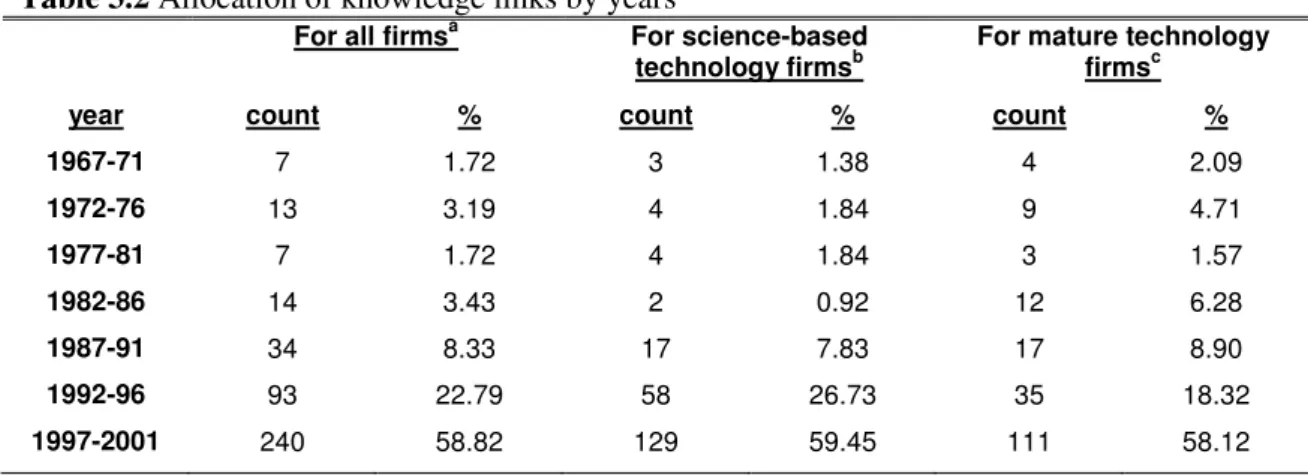
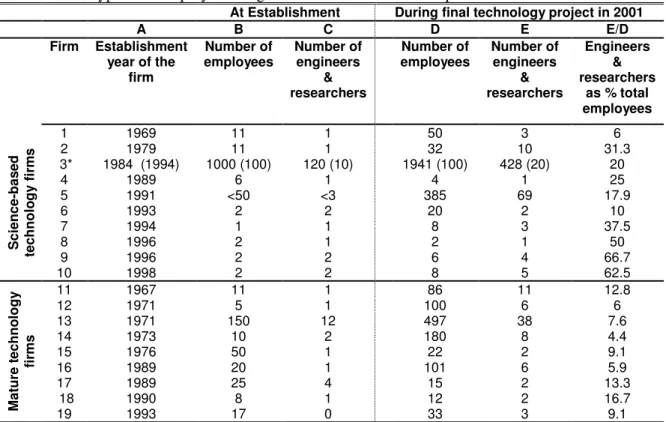
from Korean industries………... 30 Table 2.3 Specifying characteristics of the Innovation Systems………..… 35 Table3.1 Number of firms in the population and the sample in 2001………...……....…61 Table 3.2 Allocation of knowledge links by years………..…. 62 Table3.3 Types and employment figures of the firms in the sample………..… 65 Table 3.4 Length and characteristics of periods used in this research. ………... 73 Table 3.5 Variables and their categories for existing capabilities of the firm………..… 75 Table 3.6 Variables and their categories for intensity of effort by the firm…………..… 77 Table 3.7 The variable ‘Mode of Technology Transfer’and its categories…………..… 78 Table 3.8 The variable Increment in Capability and elaborations to its categories…..… 81 Table 3.9 Summary explanations to variables of this research……...………..… 85 Table 4.1 GNP growth and sectoral structure of theTurkish economy for selected
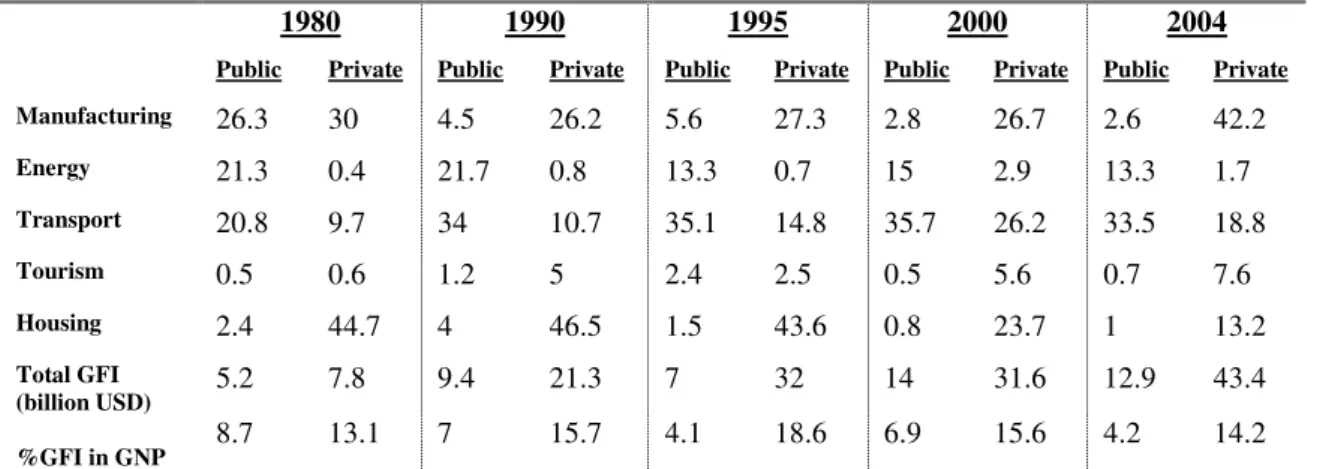
years……… 97 Table 4.2 Foreign trade of Turkey for selected years………..…. 98 Table 4.3 Outstanding internal and external debts of Turkey for selected years…..…… 98 Table 4.4 Gross Fixed Investments by selected sectors (% in total public and total
private GFI in current prices)………...…………. 100 Table 4.5 Imports by classification of broad economic categories BEC (% in total
imports)………...………..… 101 Table 4.6 Technological structure of Turkish manufactured exports, 1998 and
2006(%)………. 104 Table 4.7 OECD classification of manufacturing industries………...………. 108 Table 4.8 List and categorization of products produced by sample firms in this study…. 109 Table 4.9 Import and export values of structural and functional materials in Turkey for
selected years, value in million USD……… 113 Table 4.10 Researchers by sector of employment (full time equivalent and percent in
total)……….. 122 Table 4.11 Science and engineering indicators of Turkey in 2003…...……….. 123 Table 4.12 School graduates by level of education and by years (%)……….. 124 Table 5.1 Distribution of links by mode of technology transfer and industry categories131 Table 5.2 Distribution of links by percentage of researcher, managerial experiences and
industry categories………...………. 132 Table 5.3 Distribution of links by search into knowledge contributor and technology,
R&D and design activities and industry categories……….. 134 Table 5.4 Distribution of links by mode of technology transfer, period and industry
categories (per cent of linkages)………...……… 137 Table 5.5 Distribution of links by existing knowledge base in the firm, period and
industry categories (per cent of linkages)………..…….. 139 Table 5.6 Distribution of links by intensity of effort by the firm, period and industry
categories (per cent of linkages)……….. 142 Table 5.7 Distribution of links by increment in capability and industry categories……… 145
Table 5.8 Distribution of links by increment in capability, period and industry
categories (in percentage of links). ………. 147 Table 5.9 Firms’ acquired capabilities and the mode of technology transfer (per cent of
links)……… 151 Table 5.10 Firms’ acquired capabilities and the percentage of researchers/engineers in
total employees in firms (per cent of links)………. 153
Table 5.11 Firms’ acquired capabilities and the managerial specifications about academic experiences (per cent of links)……….……… 156
Table 5.12 Firms’ acquired capabilities and the managerial specifications about industrial experiences (per cent of links)……….……… 159
Table 5.13 Firms’ acquired capabilities and R&D activities (per cent of links)……..… 162
Table 5.14 Firms’ acquired capabilities and the level of design activities in firms (per cent of links)……….………… 163
Table 5.15 Results of multinomial logistic regression for Model 5.1 ……….. 172
Table 5.16 Results of multinomial logistic regression for Model 5.2 ………….…….... 174
Table 5.17 Results of multinomial logistic regression for Model 5.3 ………….…….... 176
Table 6.1 Distribution of links by origin and industry categories……….. 182
Table 6.2 Distribution of links by source of knowledge and industry categories…….. 183
Table 6.3 Density of technology projects and links by industry………. 185
Table 6.4 Density of links by type of capability increment and type of firm (1967- 2001)………. 186
Table 6.5 Distribution of links by origin, source, period and industry categories (in percentage of links). ………. 189
Table 6.6 Density of links by type of capability increment, type of firm and by periods190 Table 6.7 Distribution of links by increment in capability (at time t) and industry categories………..……… 192
Table 6.8 Distribution of links by increment in capability (at time t), period and industry categories (per cent of links)……….. 194
Table 6.9 Firms’ acquired capabilities (at time t-2) and the sources of knowledge (at time t) in innovation system (per cent of links)……..………. 196
Table 6.10 Capability levels and sources of knowledge by cohorts of firm and time period……… 198
Table 6.11 Firms’ acquired capabilities (at time t-2) and the types of source (at time t) in innovation system (per cent of links)……… 199
Table 6.12 Firms’ acquired capabilities (at time t-2) and the types of knowledge source by origin of link (at time t) in innovation system (per cent of links)…...………. 203
Table 6.13 Descriptive statistics for variables of system analysis used in regression models………...………… 207
Table 6.14 Pearson correlation coefficients of explanatory variables in the regressions.. 208
Table 6.15 Results of OLS regressions for Model 6.1………...213
Table 6.16 Results of OLS regressions for model 6.2. ………. 216
Table 6.17 Results of OLS regressions for Models 6.3………. 218
Table 6.18 Results of OLS regressions for Model 6.4……….. 220
FIGURES Figure 2.1 Technology transfer mechanisms by type of knowledge and direction of interaction………. 13
Figure 2.2 The relations between technology transfer, accumulation of technological capabilities and innovation systems……….. 52
Figure 3.1 Three key concepts used in this two-stage research. ……… 54
Figure 3.2 The analysis of technology transfer and technological capabilities: Key concepts and variables. ………. 55
Figure 3.3 The analysis of technological capabilities and innovation system: Key concepts and variables. ………. 56
Figure 5.1 Correspondence analysis plot for increment in capability and mode of technology transfer for all firms (N=408)……… 149
Figure 5.2 Correspondence analysis plot for increment in capability and manager specifications related to education and academic experience for full sample….. 154
Figure 5.3 Correspondence analysis plot for increment in capability and manager
specifications related to industrial and work experience for full sample………. 158 Figure 5.4 Correspondence analysis plot for increment in capability and R&D
activities for full sample……… 160 Figure 2.1 Technology transfer mechanisms by type of knowledge and direction of
interaction………...…….…. 224 Figure 2.2 The relations between technology transfer, accumulation of technological
capabilities and innovation systems……….. 225 Figure 3.1 Three key concepts used in this two-stage research. ………...………..…… 225 Figure A.1 Simple grouping of advanced materials………...………. 251 Figure A.2 Taxonomy of materials according to their functions...………. 254 Figure A.3 Taxonomy of advanced ceramics according to their functions: Properties, raw
materials and applications………. 256 Figure A.4 Processing of metal and ceramic powders (Powder Metallurgy P/M technique).. 261 Figure A.5 Surface treatment processes/ Coating processes………... 264 Figure A.6 Composite production techniques………. 268
GRAPHS
Graph 3.1 Distributionof technology projects by type of firm…..………. 68 Graph 3.2 Distribution of knowledge links by type of firm………..……….. 70
LIST OF ABBREVIATIONS
ACR Arm’s Length Contractual Relationships
AIST Agency of Industrial Science and Technology, Japan
BEC Broad Economic Categories
BSc Bachelor of Science
BTYK Supreme Council of Science and Technology (in Turkey)
CMC Ceramic Matrix Composites
CPI Consumer Price Index
CVD Chemical Vapour Deposition
DOA Direct Offset Agreements
DoC U.S. Department of Commerce
EU European Union
FDI Foreign Direct Investment
GDP Gross Domestic Product
GFI Gross Fixed Investments
GNP Gross National Product
GRI Government Research Institute
GTIP Customs Tariff and Statistics Position
ICT Information and Communication Technologies
IMF International Monetary Fund
ITC Indigenous Technological Capabilities
JFCA Japan Fine Ceramics Association
KOSGEB Small and Medium Sized Industry Development Organisation (in
Turkey)
MAM (TUBITAK-MAM) Marmara Research Centre (in Turkey)
MITI Ministry of International Trade and Industry (in Japan)
MMC Metal Matrix Composites
MNE Multinational Enterprise
MPIF U.S. Metal Powder Industries Federation
MSE Materials Science and Engineering
MSEL Materials Science and Engineering Laboratory
NDT Non-destructive Testing
NGO Non-Governmental Organisation
NSI National Systems of Innovation
OCR Obligational Contractual Relationships
ODM Own Design Manufacturing
OECD Organisation for Economic Cooperation and Development
OEM Original Equipment Manufacturing
OLS Ordinary Least Square
OP Outward Processing
OTA United States Congress, Office of Technology Assessment
P/M Powder Metallurgy
PMC Polymer Matrix Composites
PSBR Public Sector Borrowing Requirements
PSZ Partially Stabilized Zirconia
PVD Physical Vapour Deposition
RTM Resin Transfer Moulding
SCI Scientific Citation Index
SIS Sectoral Innovation Systems
SMC Sheet-Molding Compound Process
SME Small and Medium Sized Enterprise
SPO State Planning Organisation (in Turkey)
S&T Science and Technology
STP Science and Technology Policy
TARAL Turkish Research Area
TEKMER Technology Development Centre (in Turkey)
TIDEB (TUBITAK-TIDEB) Support and Assessment Unit for Technological Innovation (in Turkey)
TUBITAK The Scientific and Research Council of Turkey
TL Turkish Lira (Turkish currency)
TR Technological Regime
TS Technological Systems
TTGV Turkish Technology Development Foundation
TURKSTAT Turkish Statistical Institute (TUIK in Turkish)
Transfer of technology has widely been accepted as the main channel for acquiring technological capabilities, particularly in the firms of developing countries. During the 1960s and 70s, transfer of technology was referred to as approximately equal to just the import of production technologies, and scholars talked about ‘appropriate technologies’ to be transferred by developing countries so that they could benefit from the transfer (Cooper and Sercovitch, 1970; Stewart, 1985; Hoffman and Girvan, 1990). This view concentrated on ‘the successful use of imported technology’. Even to be able to use the imported technology successfully, firms need to interact further. Set-up and training activities attached to the importation process provide the basis for further interactions among the firms where the knowledge flows take place, maybe in their simplest form. Later, during the 1980s and 1990s, the research tackled not only the simple import of technology as embodied in the machines, but the technology transferred from human to human which had a significant tacit character also started to attract attention in the literature. Transfer of technology with tacit and codified elements of knowledge is thought to provide the basis for the accumulation of technological capabilities in the firm (Bell and Pavitt, 1993, 1995). Later still, the literature moved on, with noteworthy studies emphasizing that the success of technology transfer in a developing-country firm depended on the firm’s technological efforts or mastery, the prior knowledge base and the absorptive capacity (Dahlman and Westphal, 1982; Lall, 1987, 1992; Cohen and Levinthal, 1990; Kim, 1997, 1998,1999).
“Firms almost never innovate in isolation” (Edquist, 1997:1). They need to interact (at least with their suppliers of raw materials, of technology, etc.) to produce, to acquire technological capabilities and to innovate. Interactions with other institutions allow firms to transfer the technology they need for production and innovation. By the end of the 1980s and beginning of the 1990s, a new approach called ‘systems of innovation’ emerged in the literature. This looks into the networks of interactions of firms with other firms and institutions inside a country or a region or an industry, and states that an organised environment (in a country) where firms and institutions could interact with each other would allow firms to be more productive and innovative. These views were
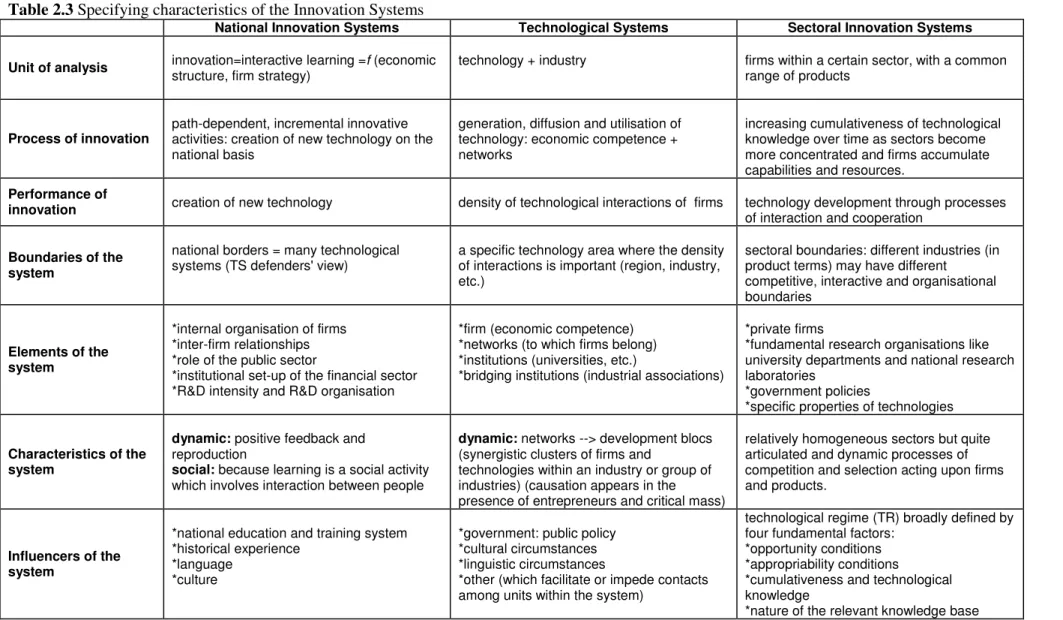
also supported by extensive case studies, particularly from the developed and also some developing countries. Yet, existing studies of the systems of innovation concept tries to clarify it by constructing definitions and aiming to form a general framework from a theoretical perspective. As Edquist (1997) emphasises, still many points remain to be worked on and illuminated. For instance, the innovation systems concept remained isolated on its own, focussing on the interactions among the agents of the system at a broad level where empirical analysis is hard to conduct because of the many parameters the concept has to deal with. That is why extensive case studies on developed countries where there are reliable data on R&D, etc., have been mostly investigated. On the other hand, as long as the skills and knowledge embodied in workers, facilities and
organisational systems might be transformed into both production and technical change activities through interactions between elements of the system, technological
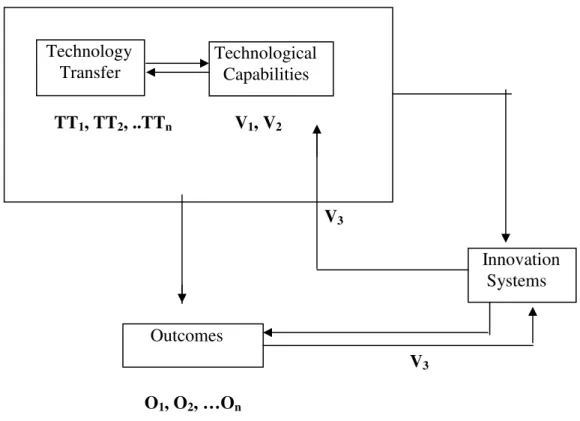
capabilities act as a bridge from technology transfer towards innovation systems. Innovative capacity itself has a strong relation to the accumulation of technological capabilities through learning. If learning is considered to be firm-centred, then
technological capabilities might be analysed at the firm level and, moreover, innovative activity is said to be a function of the firm structure at the micro level. Therefore, innovative activity lies at the heart of the ‘system’, having a cumulative character arising from the accumulation of technological capabilities and supported strongly with networks of firms.
Thus, this study mainly aims to provide a framework for the emergence of innovation systems in a developing-country context, by using the contribution of technology transfer activity to the dynamic assimilation of firm-level technological capabilities and knowledge integration processes of the firm as tools of analysis. Therefore, this study aims to answer the principal research question below by staying within the boundaries of the ‘firm’ and two specific and contrasting segments of the materials industry in Turkey:
How do innovation systems emerge and change in a developing-country context, and how are they influenced by the technology transfer activities?
A two-stage research is designed to work on the major objectives of the study and to answer the sub-questions below, which elaborate the main research question:
• How does the transfer of technology influence technological capabilities at the firm level in the materials industry in Turkey?
• How do the increments in technological capabilities from the technology transfer processes influence the emergence and the elements of the system of innovation in the materials industry in Turkey?
On the whole, this research is concerned with analysing the extent to which technology transfer contributes to the development and improvement of technological capabilities through knowledge integration and learning at the firm level in a developing country, and the impacts of this process on the emergence and alteration of innovation systems. Therefore, the study will be built on the literatures about the theory of the firm,
technology transfer, technological capabilities and innovation systems. The research questions intend to examine the importance of a set of variables on the emergence and change of innovation systems in a developing country context for two contrasting segments of the materials industry, by taking the starting point of firm-level activities. The main emphasis of the research will be on trying to shed light on the emergence of innovation systems in the developing-country context, using the “firm” as a primary tool of analysis, aiming to use the knowledge about its linkages with other firms and research institutions both within the national borders and internationally. The firm’s own indigenous capabilities will be used as devices to explain the extent of these linkages.
This thesis is structured into seven chapters. The first chapter is this introduction. The second chapter presents the theoretical framework in which this study is entrenched. The theories of the firm, technological capabilities at the firm level, technology transfer in a developing-country context and systems of innovation literatures are widely
discussed in this chapter, as well as highlighting the connections between these approaches. It argues that firm-level technological capabilities serve as a bridge and a useful tool of analysis from the technology transfer concept in developing countries towards the systems of innovation concept if knowledge flows are focussed upon, rather than the broader context of innovation systems approaches. It concludes with the
analytical framework employed in this research to tackle the proposed research questions.
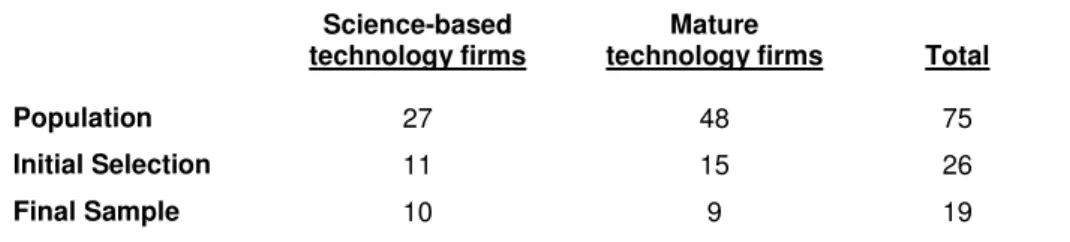
Chapter 3 elaborates the analytical framework and provides a research design with an explanation of restrictions about that research design. Initially, the chapter presents the rationale for selecting the materials industry in Turkey, with the means of comparison – i.e. science-based and mature segments of the materials industry, the sample firms examined, the reliability of the sample, the method of data acquisition, and the unit of analysis. Then, the key concepts and their operationalisation to form the variables with their categories are described. Following those accounts, the reasons for selecting the statistical analysis methods and data configuration are explained. Finally, the models for statistical analyses are introduced.
In Chapter 4, the first part provides a general overview of the Turkish economy and the second part gives information on the Turkish innovation system policy. The Turkish economy’s structure from the 1960s to 2005 is explained with statistics from industry, growth, trade and finance compared in three periods, which reflect three different eras (pre-1980, 1981-1996 and 1997 onwards) in the economy. This part also includes a brief section on the materials industry in general – i.e. about the types of products produced in this industry, which clarifies the justification for the basis of comparison of the science-based and mature segments of the industry throughout the thesis. This is followed by the exportation and importation figures of functional and structural materials in the Turkish materials industry. In the second part, the policies introduced for the Turkish innovation system are mostly discussed, because the efforts up to recent times have largely been on creating policy tools. The elements of an innovation system – i.e. system interactions and actors in Turkish industries – are also touched upon regarding their deficiencies in the policy documents.
Chapters 5 and 6 introduce the empirical evidence on the emergence of an innovation system in the Turkish materials industry, based on the technology transfer by firms improving their firm-level technological capabilities. Chapter 5 investigates the relation between the technology transfer and technological capabilities and Chapter 6
investigates the relation between the technological capabilities and the system of innovation, using firm-level technological capabilities as a bridge between two other concepts. In Chapter 5, the analysis of the firms in the materials industry in Turkey shows how firm-level capabilities were increasing over time during the period 1967 to 2001 in the materials industry in Turkey; also, how they were increasing over time with
the increasing level of absorptive capacity in the firm and firm-level involvement in collaborative relationships. In Chapter 6, the analysis of the firms in the materials industry in Turkey shows how firm-level capabilities shape the way the innovation system’s interactions change. It also shows how firm interactions increase and seem to shift around in plausible directions towards domestic agents, as the firm-level
technological capabilities deepen.
Chapter 7 builds the main conclusions of the thesis and also its theoretical, methodological and empirical contributions to the literature.
There are four appendices attached to the main text. For readers who are interested in further technical details, Appendix A provides in-depth information on the materials industry, all types of production processes used and the products produced in the science-based and mature segments of the industry. Appendix B presents the whole questionnaire used during face-to-face interviews with the key informants in the firms. Appendices C and D present the original tables obtained from the cross-tabulation analyses, which are collapsed down to more focussed tables in Chapters 5 and 6.
CHAPTER 2 TECHNOLOGY TRANSFER, TECHNOLOGICAL CAPABILITIES IN THE FIRM AND THE INNOVATION SYSTEMS
2.1 Introduction
This chapter aims to identify and locate the research questions that emerged in the previous chapter in the conceptual context. To do so it discusses the literature on theories of the firm, technology transfer to developing countries, technological
capability accumulation at the firm level, and the innovation systems. It also focuses on the relations between technology transfer and technological capability accumulation in the firm, as well as between technological capability accumulation and the innovation systems concepts.
The chapter is structured in eight parts. Section 2.2 has a brief presentation on theories of the firm and the technological capability concept with its definitions and types in the literature. Section 2.3 discusses the technology transfer concept. Section 2.4 focuses on research in the literature that attempts to highlight the relation between technology transfer and technological capability. Section 2.5 tackles different innovation systems approaches. Section 2.6 relates technological capability accumulation to the innovation systems approach. Section 2.7 discusses the literature on relating technological
capabilities to innovation systems concept. Section 2.8 forms the conclusions and 2.9 presents the analytical framework to be detailed in the methodology of Chapter 3.
This study starts with the research question: “How does transfer of technology influence technological capabilities at the firm level in the materials industry in Turkey?” The following four sections will try to locate the concepts involved in this question in the related literature.
2.2 Theories of the Firm and Technological Capabilities
Several theories on the firm have been proposed to understand the underlying facts on how firms deal with knowledge. Firms need some penetration of knowledge into their boundaries by any means in order to survive.
Neoclassical economics tends to treat knowledge as available to every firm, in the same context and in the same amount. Moreover, every firm can handle this bunch of
knowledge acquired in the most optimal way. Thus, contrary to what is happening in the real life, knowledge acquisition and how it is tackled by the firm is not actually a
concern for this simple form of neoclassical economics. The assumption of ‘perfect information’ is required for ‘perfect markets’ to represent the best form of economic organisation. More realistic sets of assumptions made by many neoclassical economists today include such phenomena as ‘asymmetries of information’, in which some agents have access to more or better information than others.
Fransman (1994: 714) classifies several well-known approaches to the firm as “responses to information-related problems”. They all start with the definition of information, which says that it is not explicit and assume that it is unevenly distributed among the agents. Fransman (1994) lists Alchian and Demsetz’s (1972) theory of the firm as joint team production, Jensen and Meckling’s (1976) theory of the firm as a nexus of contracts between principals and agents, Coase’s (1937) approach to the firm and Williamson’s (1975) transaction-cost theory with bounded rationality among such a group of theories of the firm.
As a more radical response to the neoclassical economics literature, the studies of Nelson and Winter (1982), Chandler (1990), Penrose (1995) and Teece et al. (1997) focus on the ‘firm’ as a repository of specific knowledge. This is known as the resource-based view of the firm. Chandler (1990) defines the firm as an organisational structure which depends on knowledge, skill, experience and teamwork – on the organised human capabilities essential to exploit the potential of technological processes. Fransman (1994: 715) describes Nelson and Winter’s approach as that firms develop routines as a response to information-related problems and it is in the routines that a firm’s
organizational knowledge is stored. So, routines are the repositories of the firms where specific knowledge, skill, experience is located. Basically, Nelson and Winter’s (1982) study of the ‘firm’ paved the way for further studies on the ‘technological capability’ concept at the firm level. This happened when it is shown that no firm is alike and each firm has its own routines with its specific knowledge along with its unique levels of absorption and perception. In another study, Nonaka et al. (2000: 6-17) formulate the firm as a knowledge-creating entity in a continuously dynamic environment. They first
criticise transaction-cost theory because it fails to grasp knowledge dynamics by concentrating only on transactions of knowledge base through market mechanisms. Then they criticise the resource-based view of the firm because though it deals with dynamic capabilities, the firm is just an information-processing entity and it fails to address the dynamism in which the firm continuously builds such resources within the dynamic process of knowledge creation. Nonaka et al. (2000: 16) state that knowledge creation is the most important activity of the firm. They provide the framework for a continuous and dynamic process, in which tacit knowledge held by individuals is
converged and amplified by the spiral of knowledge through socialization, combination, externalisation and internalisation of knowledge.
All these approaches lead to the fact that firms need to accumulate technological capabilities and improve them in order to survive in a competitive environment. In the literature, technological capabilities are discussed at the firm level, industry level (Bell and Pavitt, 1995; Kim, 1997a, 1997, 1998, 1999) and national level (Lall, 1992). The smallest unit in which technical change is absorbed and technological capabilities are built on is the firm, the results of which are then reflected onto the industries at the meso level and to the country at the macro level.
Lall (1987) uses the term ‘indigenous technological effort’ in mastering new
technologies, adapting them to local conditions, improving on them and even exporting them. Dahlman and Westphal (1982) call this ‘technological mastery’, which is
operationalised through ‘technological effort’ to assimilate, adapt and create technology.1 According to Bell and Pavitt (1993:163-4), technological capabilities
consist of the resources needed to generate and manage technical change, including skills and experience, and institutional structures and linkages. They refer to
technological learning (technological accumulation) as any process by which resources for generating and managing technical change (technological capabilities) are increased or strengthened. A clearer definition of technological capabilities is asserted as the resources needed to generate and manage improvements in processes and production
1
organisation, products, equipment and engineering projects. They are accumulated and embodied in individuals (skills, knowledge and experience) and organisational systems (Bell and Pavitt, 1995).
Bell and Pavitt (1995) distinguish between basic production capabilities and
technological capabilities of the firm. They strongly propose that basic production capabilities are different from technological capabilities, which are indeed identified as capabilities to generate and manage technical change. The former does not possess such capabilities. Previously, Bell and Pavitt (1993: 159) distinguished between two stocks of resources at the country level: (i) technological capabilities, the skills, knowledge and institutions that make up a country’s capacity to generate and manage change in the industrial technology it uses, and (ii) production capabilities, the capital goods,
knowledge and labour skills required to produce industrial goods with ‘given’ technology. They explicitly state that by ‘technological accumulation’ they mean the accumulation of the first of these stocks.
In a later study, Bell and Albu (1999: 1724) concentrate on the depth or innovativeness of technological capabilities rather than its functionality, emphasizing the knowledge-using and knowledge-changing elements of technological capabilities. According to their classification, the knowledge-using elements are involved in maintaining or expanding capacity using given modes of production, training workers in established operating procedures, the imitation of production techniques used by the neighbouring firms; whereas knowledge-changing elements are involved in the management of innovation processes, in product design and development, or in the search for selection, adaptation and assimilation of new product or process technology.
According to Kim (1997a: 86)technological capability is “the ability to make effective use of technological knowledge in efforts to assimilate, use, adapt and change existing technologies.” Kim (1999: 111) classifies technological capability in three categories, quoting from Westphal et al.(1985): production capability, referring to the numerous capabilities required to operate and maintain production facilities; investment capability, referring to the abilities required for establishing new production facilities and
expanding capacity; and innovation capability, referring to abilities to create and carry new technological possibilities through into economic practice. Then, he uses
technological capability to indicate the level of organisational capability at a point in time, whereas technological learning is used to depict the dynamic process of acquiring technological capability.
2.3 Technology Transfer
Many firms in the developing countries need to transfer technology in various forms in order to accumulate change-generating technological capabilities.
2.3.1 Definitions of Technology Transfer
In the literature, there have been definitions of ‘technology transfer’ from different perspectives. As early as 1970, Cooper and Sercovich (p.8) gave a definition for ‘mechanisms of transferring technology’ as any means for making available to a production enterprise (in a developing country) those elements of technical knowledge which may be unavailable in the domestic economy, required to set up or operate new production facilities. Fransman (1986) defines ‘international transfer of technology’ as a process whereby knowledge relating to the transformation of inputs into outputs is acquired by entities within a country (i.e. firms, research institutes, etc.) from sources outside that country. Technology transfer is also defined in Rothwell et al.(1988) as the transfer of objective knowledge on its own or with other enabling factors that allow others to add value to their resources. It is not affected by the transfer of information, but by the transfer of know-how.
Bell (1997) quotes from Vaitsos (1974) an analytical definition of the term which emphasises a two-way business transaction: flows of technology running in one
direction are matched by the counter-flows of commercial returns sought by the owners of the technology. This two-way direction is very important to mention, because during the policy analysis of the 1960s and 1970s, prescription and practice were less
concerned with the technology being transferred to developing countries compared to the ‘returns’ flowing from them. Attention had focused on the nature and magnitude of these ‘costs’ being incurred by developing countries in exchange for the technology acquired. Issues related to the first flow mainly concentrated on ‘appropriateness’ of imported technology for use in the particular economic and social conditions of
developing countries (Bell, 1997). Changes took place in international technology policy during the 1980s and 1990s in the direction of liberalisation and deregulation (Radosevic, 1999), thus attention shifted to questions relating to the assimilation of imported technology after it had been acquired, and in particular to questions of dynamic assimilation – its incorporation into a process of technical change and innovation within the importing firms and economies (Bell, 1997). As a result of this tendency, research concentrated on forming frameworks of technology transfer and classifying the channels, considering both the role of the foreign supplier and recipient (Fransman, 1994; Kim, 1999).
As Lall (2001: ix) notes “in its current usage, technology transfer largely refers to movement of commercial technologies across, and to a lesser degree within, countries”. This research does not restrict the technology transfer concept to international
movement of technologies only, but deals with movement of technologies within the national borders as well.
2.3.2 Dimensions of Technology Transfer Mechanisms
Dimensions of technology transfer such as direct and indirect (Cooper and Sercovitch, 1970; Stewart, 1985), vertical and horizontal (Mansfield, 1975), formal and non-formal (Kim, 1999), externalised and internalised (Lall, 2001), active or passive role of partner (Kim, 1999), embodied and disembodied nature of knowledge (Teece, 1977; Pavitt, 1985; Kim, 1997) have been highlighted and discussed in the literature. These can be useful tools for a classification of technology transfer mechanisms. I will particularly emphasize the distinctions between tacit and codified transfer of knowledge and vertical and horizontal technology transfer, since they are among the most helpful tools for the purpose of this study – i.e. the effect of technology transfer on capability accumulation and emerging firm interactions.
The type of knowledge (tacit / uncodified vs. codified / explicit) acquired within the process of technology transfer attracted much attention in the literature. The importance of uncodified knowledge in the transfer process has been highlighted (Teece, 1977; Nelson and Winter, 1982; Pavitt, 1985; Kim, 1997; Radosevic, 1999). According to Pavitt (1985: 6) “acquisition of technology is always involved when a firm moves from one vintage of production technique to another, or from one product group to another.
Such acquisition involves not only written information (patents, blueprints, operating instructions), but also person-embodied skills and know-how.” Kim (1997a: 87) points out that whereas “explicit knowledge may be acquired in the form of books, technical specifications, and designs or as embodied in machines, tacit knowledge can be
acquired only through experience such as observation, imitation and practice; thus tacit knowledge can be transferred only through training or human transfer.”
In an earlier paper, Mansfield (1975: 372) emphasizes the direction of links in making the classification. He therefore finds it important to distinguish between vertical
technology transfer, which occurs when information is transmitted from basic research to applied research, from applied research to development, or from development to production, and horizontal technology transfer, which occurs when technology used in one place, organization or context is transferred and used in another place, organization or context. Horizontal technology transfer is mostly used in the international context in the literature, where inter-firm partnerships are explored (Hagedoorn and Schakenraad, 1990). Vertical technology transfer is important for assessing the knowledge flows from a research institute or university, where basic or applied research is conducted, to the industry, where development took place. The importance of university-industry linkages (Nelson and Rosenberg, 1993), the influence of public research on industrial R&D (Senker and Faulkner, 1992; Faulkner and Senker, 1995; Cohen et al., 2002) and
universities as sources of innovation for industrial firms (Laursen and Salter, 2004) have been highlighted as important issues and discussed. Vertical technology transfer can also take place between different units in a single firm, e.g. from the R&D unit, where applied research is conducted, to the production unit.
2.3.3 A Taxonomy of Technology Transfer Mechanisms
Based on the dimensions of technology transfer discussed in Section 2.3.2, the sections to follow discuss the classification of the mechanisms of technology transfer, so that the concept might efficiently be used in the later analyses in this thesis.
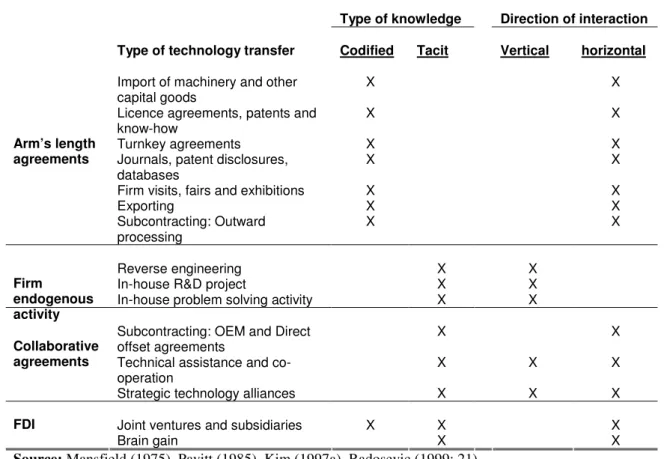
Table 2.1 Dimensions and types of technology transfer
Type of knowledge Direction of interaction Type of technology transfer Codified Tacit Vertical horizontal
Import of machinery and other capital goods
X X
Licence agreements, patents and know-how
X X
Turnkey agreements X X
Journals, patent disclosures, databases
X X
Firm visits, fairs and exhibitions X X
Exporting X X Arm’s length agreements Subcontracting: Outward processing X X Reverse engineering X X
In-house R&D project X X
Firm
endogenous activity
In-house problem solving activity X X
Subcontracting: OEM and Direct offset agreements
X X
Technical assistance and co-operation
X X X
Collaborative agreements
Strategic technology alliances X X X
Joint ventures and subsidiaries X X X
FDI
Brain gain X X
Source: Mansfield (1975), Pavitt (1985), Kim (1997a), Radosevic (1999: 21).
Figure 2.1 Technology transfer mechanisms by type of knowledge and direction of interaction Direction of interaction
Horizontal Vertical
Codified
Tacit
2.3.3.1 Arm’s Length Technology Transfer Mechanisms
Arm’s length technology transfer mechanisms are associated with a horizontal flow of codified knowledge (see Table 2.1 and Figure 2.1).
Arm’s length mechanisms Foreign direct investment
-
Collaborative agreements Foreign direct investment
Firm endogenous activities Collaborative agreements T y p e o f k n o w le d g e
Import of Machinery and Other Capital Goods
Import of machinery and other capital goods comes simply by buying machines from foreign sources for the main process lines, for any kind of equipment related to the recipient’s core or peripheral activities and related inputs required for the process. It has been considered as one of the most important mechanisms for obtaining technology, since it actually has the largest share by value among all the mechanisms. Simple import of machinery and import of other capital goods such as raw materials is the main
channel of technology transfer as embodied in tangibles, especially for the SMEs of developing countries. The significance of import of capital goods lies in the fact that the recipient gets into contact with recent technologies created elsewhere, however the amount of knowledge to be exploited from this activity totally depends on the existence and depth of the recipient’s further interactions with the suppliers that it will form as a part of its informal networks. Moreover, the existence, depth and any possible
satisfactory exploitation of knowledge spillovers from interactions is highly related to the skills and background of the people in the recipient. Otherwise, the recipient cannot go further than the simple use of the acquired technology, or even sometimes worse, is faced by incapability in its use of the technology.
Licence Agreements, Patents and Know-How
Licence agreements include disembodied technology, generally in the form of product know-how, a patent or intellectual right specified for use of the recipient for a certain period of time, often together with the machinery, equipment, etc. A royalty or a licence fee is paid for use of the intangible acquired. As Stewart (1985) indicates, licence agreements often contain restrictive clauses in relation to the rights of the licensee to export, to conduct and/or use independent research, and tie-in clauses, whereby the licensee has to purchase inputs from the licensor and so on. These restrictions and ties are expected to have negative influences on the improvement of technological
capabilities of the recipient firm.
Turnkey Agreements
A turnkey agreement is specified as technology transfer that may include market and feasibility investigation, selection of site and technology, installation and establishment of secondary facilities. It tends to come in the form of establishment of a whole plant for production or extension to the existing production lines.
Journals, Patent Disclosures, Databases, Internet
Scanning of worldwide open scientific and technical literature, information services and data banks are among the important methods of technology acquisition (Freeman and Hagedoorn, 1994). The existence and effectiveness of such an activity in the firm necessitates an established background of skilled people and suitable environment to be able to benefit from the obtained knowledge. Otherwise, in firms without skills, this is a defective method for technology acquisition.
Firm Visits, Fairs, Exhibitions and Conferences
Firm visits, fairs and exhibitions are media for developing country firms to get to know about new technologies and establish informal contacts.
Exporting
Radosevic (1999) mentions the almost overlooked exportingactivity as a form of technology acquisition, through a close relationship to foreign buyers. As Porter (1990) noted, fierce competition from rival firms in their own country would motivate firms towards the will and strong desire to improve their technological capabilities by any means (by generally improving their links with the other actors of the system, because the knowledge comes from elsewhere) and would also contribute to the emergence of the innovation system of the country. However, developing countries generally show a lack of fierce competition in their internal markets with the existence of strong rival firms, which would force follower firms to climb through the technology frontier. Given that fact, export activities of the firms in developing countries may be regarded as a substitute for sufficient and strong competition in their own country. However, because of the geographical distance involved, as Lundvall (1992b) points out, knowledge transfer through exporting needs reliable and long-term relationships to be an effective mode of knowledge acquisition.
Subcontracting: Outward Processing (OP)
Subcontracting involves entering into a contract of a main firm (supplier) and a
subcontractor firm (recipient) for the manufacture of (not the whole product but) parts, components, assemblies to be incorporated into a product which the main firm will sell to other markets. Therefore, a subcontractor firm is indeed a company that undertakes to complete part of another firm’s contract and subcontracting does not involve any change
in the ownership structure of the subcontractor firm. Outward processing (OP) refers to a type of subcontracting where temporary exports of goods take place in the
subcontractor’s country of materials for processing and their subsequent re-importing into the main firm’s country being exempt from import or export duties (Radosevic, 1999: 25).
2.3.3.2 Firm-endogenous Activities
Firm-endogenous technology acquisition is identified with a vertical flow of tacit knowledge (see Table 2.1 and Figure 2.1) between differing units within the firm – i.e. from the R&D unit where basic or applied research takes place to the production unit. They are initiated within the firm using largely the firm’s own resources.
Reverse Engineering
Reverse engineering is essentially imitation and adaptation of acquired technology without any formal agreement with the original innovator. It involves stripping down innovative products or processes and finding out how they work (Pavitt, 1985). It may involve either a considerable accumulation of technological capability in the recipient as a background or intense interactions with knowledgeable organizations to be able to further the activity. Especially reverse engineering on high process technology needs support beforehand or during the process. In the developing country context, brain gain of people educated and/or with work experience abroad can be a crucial factor in accumulation of technological capability as embodied in people, which is transformed into high technology and science-based reverse engineering activities. Kim (1998) highlights the success and efficiency of reverse-engineering processes in the case of Hyundai Motor in Korea when supported with mobility of skilled labour and heavy investment in R&D.
In-house R&D Project
It has been a common exercise that innovative firms start R&D projects of their own in the firm to produce new products or processes. Although earlier this concept was mostly associated with developed country firms, high and medium technology firms in the developing countries have also increasingly started on such activities. Launching an in-house R&D project certainly depends on the level of technological capabilities achieved
in the firm, the key complementary asset being a skilled workforce that is able to carry on the task. It may involve intense interactions with other organizations to be able to further the activity, depending on the capability level of the firm and the disclosure of project details.
In-house Problem Solving Activity
Problem solving activity in a firm is a good measure of firm-level technological capabilities. It may be based on customer feedback or a problem that occurs independently in the firm. In the first case, the producer aims to eliminate the
customer’s specific problem by bringing original solutions other than recommending its ordinary products/ processes that it delivers. Launching of an R&D activity by the producer is necessary for such an effort to capture and evaluate the changing user needs while it is mostly guided with the feedback from the user. The activity may end up with an incremental innovation on the producer side or it may be the result of previous imitative or innovative activity of the producer.
2.3.3.3 Collaborative Agreements
Collaborative agreement kinds of technology transfer are associated with horizontal or vertical flows of tacit knowledge (see Table 2.1 and Figure 2.1).
Subcontracting: Original Equipment Manufacturing (OEM) and Direct Offset Agreements (DOA)
The outward processing type of subcontracting is defined in Section 2.3.3.1. However, as Radosevic (1999: 25) notes, “subcontracting is a broad term encompassing several types of relationships” at differing depths of interaction and “there is an important distinction between ‘normal’ subcontracting and Original Equipment Manufacturing (OEM) arrangements.” OEMis a specific form of subcontracting for production of whole finished products to the precise specification of the foreign contractor, and the contractor then sells the product under its own brand name (Hobday, 1995).
Subcontracting networks may take the