A Framework for High Speed Lexical
Classification of Malicious URLs
Submitted in fulfilment
of the requirements of the degree of
Master of Science
of Rhodes University
Shaun Peter Egan
Grahamstown, South Africa
Phishing attacks employ social engineering to target end-users, with the goal of stealing identifying or sensitive information. This information is used in activities such as identity theft or financial fraud. During a phishing campaign, attackers distribute URLs which; along with false information, point to fraudulent resources in an attempt to deceive users into requesting the resource. These URLs are made obscure through the use of several techniques which make automated detection difficult. Current methods used to detect malicious URLs face multiple problems which attackers use to their advantage. These problems include: the time required to react to new attacks; shifts in trends in URL obfuscation and usability problems caused by the latency incurred by the lookups required by these approaches. A new method of identifying malicious URLs using Artificial Neural Networks (ANNs) has been shown to be effective by several authors. The simple method of classification performed by ANNs result in very high classification speeds with little impact on usability. Samples used for the training, validation and testing of these ANNs are gathered from Phishtank and Open Directory. Words selected from the different sections of the samples are used to create a ‘Bag-of-Words (BOW)’ which is used as a binary input vector indicating the presence of a word for a given sample. Twenty additional features which measure lexical attributes of the sample are used to increase classification accuracy. A framework that is capable of generating these classifiers in an automated fashion is implemented. These classifiers are automatically stored on a remote update distribution service which has been built to supply updates to classifier implementations. An example browser plugin is created and uses ANNs provided by this service. It is both capable of classifying URLs requested by a user in real time and is able to block these requests. The framework is tested in terms of training time and classification accuracy. Classification speed and the effectiveness of compression algorithms on the data required to distribute updates is tested. It is concluded that it is possible to generate these ANNs in a frequent fashion, and in a method that is small enough to distribute easily. It is also shown that classifications are made at high-speed with high-accuracy, resulting in little impact on usability.
Acknowledgements
This thesis has taken two years to produce with the support of many people. I would like to thank all those people who have contributed and assisted me in any way to make this research a success.
I would like to thank a few people specifically; my family, friends and loved ones for all of the support, guidance and funding that they have provided during this time. This opportunity would not have been possible without them and for that I am especially grateful.
I would like to thank my supervisor, Prof. Barry Irwin for all of his hard work in obtaining data and his highly valued input, guidance and support throughout this research.
This work has been completed within the Centre of Excellence in Distributed Multimedia at Rhodes University. I acknowledge the financial and technical support of this project by Telkom SA, Comverse, Verso Technologies, Tellabs, StorTech, EastTel and THRIP. I would like to thank the Defence, Peace, Safety and Security pillar of the Council for Scientific and Industrial Research for the financial assistance that was provided, without which this thesis would not have been possible.
Thesis classification under the ACM Computing Classification System (1998 version, valid
through 2013) D.3.3[Language Constructs and Features] Frameworks
C.2.0[General] Security and Protection
C.2.3[Network Operations] Network Monitoring
I.2.6[Learning] Connectionism and Neural Networks
I.2.7[Natural Language Processing] Text Analysis
1 Introduction 1 1.1 Motivation . . . 2 1.2 Research Objectives . . . 3 1.3 Approach . . . 4 1.4 Document structure . . . 4 2 Background 6 2.1 Uniform Resource Locator (URL) . . . 6
2.2 Phishing . . . 8
2.2.1 Types . . . 9
2.2.2 Detection-avoidance and obfuscation . . . 10
2.2.3 Prevalence . . . 11
2.3 Phishing counter measures . . . 13
2.3.1 Blacklists . . . 13
2.3.2 Spam filters . . . 15
2.3.3 Reputation services . . . 16
CONTENTS ii
2.3.4 Content scanners . . . 16
2.4 Artificial Neural Networks . . . 17
2.4.1 Structure . . . 17 2.4.2 Learning . . . 19 2.4.3 Data balancing . . . 21 2.4.4 Classifier Validation . . . 22 2.5 Framework technologies . . . 23 2.5.1 Programming languages . . . 24
2.5.2 Representation State Transfer (REST) . . . 24
2.5.3 Google Chrome Extensions . . . 25
2.6 Summary . . . 26
3 Artificial Neural Network Design 27 3.1 Data Sources . . . 27
3.1.1 Extraction . . . 28
3.2 Data labels . . . 28
3.3 Data set generation . . . 29
3.4 Vector extraction . . . 29
3.4.1 Normalisation . . . 31
3.5 Structure and initialisation . . . 32
3.6 Training . . . 33
3.7 Validation . . . 33
3.8 Testing . . . 35
4 System Implementation 36
4.1 Introduction . . . 36
4.1.1 Chapter structure . . . 37
4.2 High-level design . . . 38
4.3 Targeted classifier platforms . . . 39
4.4 Code standards . . . 39
4.5 Classifier Generation Service (CGS) . . . 41
4.5.1 Python implementation . . . 42
4.5.2 Neural network generation library . . . 45
4.5.3 Classifier Generation Service code structure . . . 46
4.5.4 Network generation algorithm . . . 47
4.5.5 Perceptron generation using the NerualNetwork DLL . . . 48
4.6 Classifier Distribution Service (CDS) . . . 50
4.6.1 Design . . . 52
4.6.2 RESTful API logical implementation . . . 53
4.6.3 API URL structure . . . 53
4.6.4 API code structure . . . 55
4.6.5 Data storage . . . 56
4.6.6 Consumer access . . . 56
4.7 A classifier client implementation: Net Defence . . . 60
4.7.1 Design . . . 61
4.7.2 Code structure . . . 62
CONTENTS iv
4.7.4 Algorithm . . . 65
4.7.5 Functionality . . . 68
4.8 Summary . . . 74
5 Testing and Results 76 5.1 Data sets . . . 76
5.2 Classifier performance analysis . . . 77
5.3 Test bed . . . 79
5.4 Optimal data set size . . . 79
5.4.1 Test data . . . 80 5.4.2 Timings . . . 81 5.4.3 Accuracy . . . 85 5.4.4 Prediction values . . . 88 5.4.5 Discussion . . . 90 5.5 Classification speed . . . 91 5.5.1 Test data . . . 92 5.5.2 Tests . . . 92 5.5.3 Discussion . . . 93 5.6 Update size . . . 95 5.6.1 Data . . . 95 5.6.2 Uncompressed classifiers . . . 96 5.6.3 Compression effectiveness . . . 96 5.6.4 Discussion . . . 97 5.7 Summary . . . 98
6 Conclusion 100 6.1 Future work . . . 102 6.1.1 Framework functionality . . . 103 6.1.2 Classifiers . . . 103 6.1.3 Testing . . . 104 6.1.4 Data . . . 105 References 106 A Framework Components and Interfaces 117 A.1 Extractor . . . 117 A.2 NetworkBackup . . . 118 A.3 NetworkDataBalancer . . . 118 A.4 DataFetcher . . . 118 A.5 NetworkInducer . . . 118 A.6 NetworkPersistor . . . 119 A.7 NetworkValidator . . . 119 A.8 Logger . . . 119 A.9 ConsoleLogger . . . 119 A.10 DataRemovalNetworkBalancer . . . 120 A.11 FileDataFetcher . . . 120 A.12 FileNetworkBackup . . . 120 A.13 SinglePassNetworkValidator . . . 121 A.14 NetworkTrainingData . . . 121 A.15 NetworkTrainingConfiguration . . . 121
CONTENTS vi
B Classifier Generation Service configuration 122
C Net Defence 124
D List of publications 127
2.1 A phishing website targeting PayPal. . . 9
2.2 Unique locations of phishing hosts. . . 12
2.3 Blackhole list transaction. . . 14
2.4 Basic layout of a perceptron. . . 18
3.1 Structure and initialisation of the classifier. . . 32
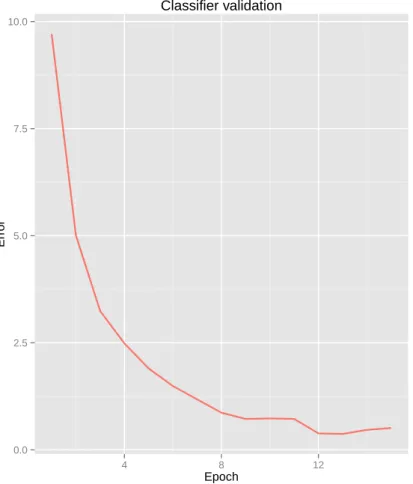
3.2 Validation graph of a classifier training run. . . 34
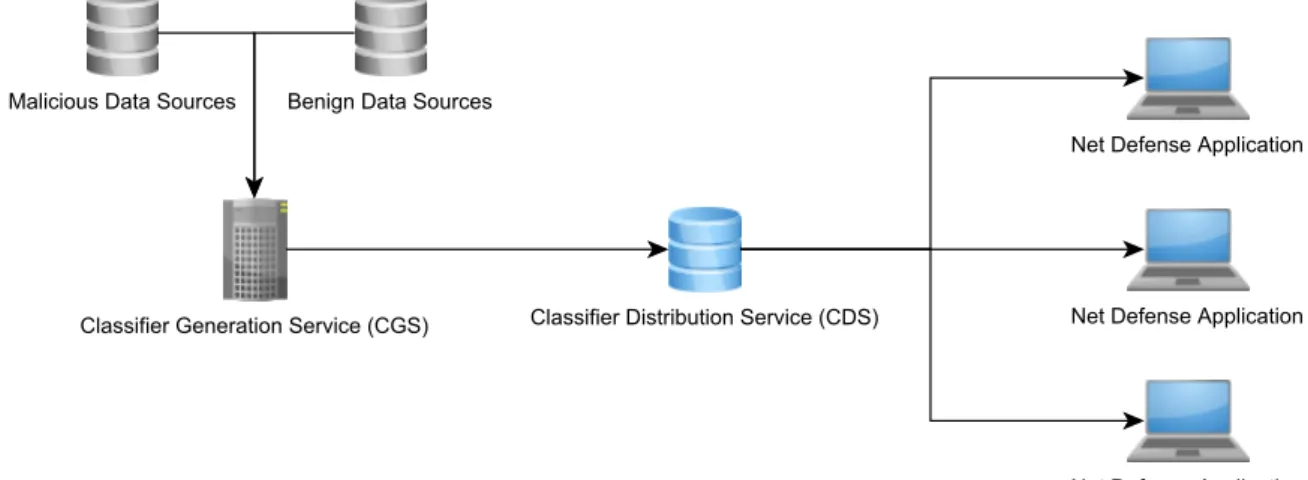
4.1 High-level infrastructure layout. . . 38
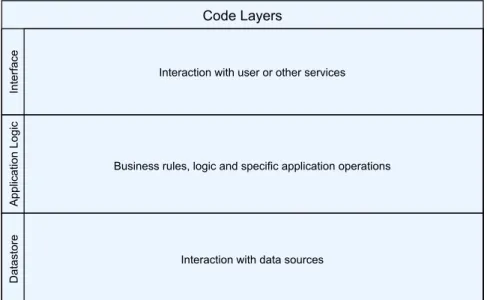
4.2 Application code layers. . . 40
4.3 Overview of Python framework implementation. . . 43
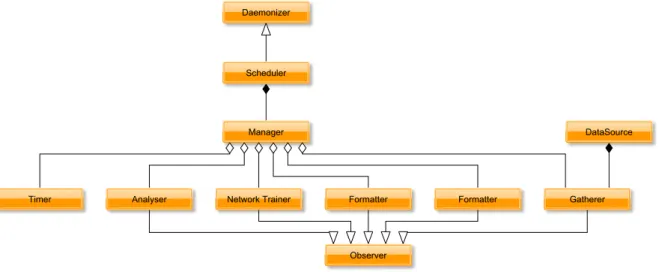
4.4 Overview of the Classifier Generation Service (CGS). . . 47
4.5 Layout of code structure withing the Classifier Generation Service (CGS). . 48
4.6 Flow of updates via Classifier Distribution Service (CDS). . . 52
4.7 Logical resources available in Classifier Distribution Service (CDS). . . 54
4.8 Layout of code structure within the Classifier Distribution Service (CDS). . 55
4.9 Classifier Distribution Service (CDS) logging a request from a client for updates. . . 57
LIST OF FIGURES viii
4.10 Layout of code structure within Net Defence. . . 62
4.11 Flow diagram of the Net Defence classification algorithm. . . 66
4.12 Validation details as shown by Net Defence. . . 69
4.13 Net Defence settings tab. . . 70
4.14 Net Defence alternatives for indicating a blocked Uniform Resource Locator (URL). . . 71
4.15 Net Defence console logs. . . 72
4.16 Net Defence False Classifications tab. . . 73
4.17 Net Defence option to add a false negative. . . 74
4.18 Net Defence exceptions tab. . . 75
5.1 Timing based on the number of training samples. . . 82
5.2 Accuracy metrics based on the number of training samples. . . 86
5.3 Prediction values. . . 89
5.4 Time to extract, normalise and classify 2 000 samples. . . 94
5.5 Uncompressed size of classifiers based on the number of training samples used. . . 96
2.1 The generic parts of a URL. . . 7
2.2 Population density of phishing hosts by country. . . 13
3.1 Example of vector data pre and post normalisation. . . 31
4.1 Naming and formatting conventions. . . 41
4.2 Resources available via classifier update service. . . 51
4.3 Resources required to rebuild a classifier and its input vectors. . . 60
4.4 Classifier metrics sent to the Chrome extension. . . 70
4.5 Net Defence action justifications. . . 71
5.1 Summary of data sets. . . 77
5.2 Extraction time in milliseconds. . . 81
5.3 Normalisation time in milliseconds. . . 84
5.4 Training time in milliseconds. . . 84
5.5 Accuracy metrics for data set #18. . . 88
5.6 Accuracy metrics for data set #1. . . 88
5.7 Classification time (MS) of 2 000 samples using the C# implementation. . 92 ix
LIST OF TABLES x
5.8 Average compression algorithm effectiveness. . . 97
AJAX Asynchronous JavaScript and XML
APWG Anti Phishing Working Group
AROW Adaptive Regularization of Weights
ANN Artificial Neural Network
API Application Program Interface
BOW Bag-of-Words
CDS Classifier Distribution Service
CGS Classifier Generation Service
CPU Central Processing Unit
CSV Comma Separated Values
CW Confidence Weighted
DLL Dynamic Link Library
DNS Domain Name System
DNSBL Domain Name System Blackhole List
FDR False Discovery Rate
FN False Negative
FP False Positive
LIST OF TABLES xii
FPR False Positive Rate
FTP File Transfer Protocol
GB Gigabytes
GC Garbage Collection
GPU Graphics Processing Unit
GUI Graphic User Interface
HTML HyperText Markup Language
HTTP Hyper Text Transfer Protocol
HTTPS Hyper Text Transfer Protocol Secure
IETF Internet Engineering Task Force
IO Input and Output
KB Kilobytes
LM Linear Model
LOOCV Leave One Out Cross-Validation
IP Internet Protocol
JSON JavaScript Object Notation
MB Megabytes
MCC Matthews Correlation Coefficient
MHz Mega Hertz
MRS Microsoft Reputation Services
MVC Model-View-Controller
NPV Negative Prediction Value
OP Online Perceptron
PPV Positive Prediction Value
RAM Random Access Memory
RBL Real-time Blackhole List
REGEX Regular Expression
REST Representational State Transfer
RSS Really Simple Syndication
TCP Transmission Control Protocol
TN True Negative
TNR True Negative Rate
TP True Positive
TPR True Positive Rate
URI Uniform Resource Identifier
URL Uniform Resource Locator
VM Virtual Machine
CHAPTER
ONE
INTRODUCTION
Phishing attacks and email spam have become a common part of the internet and email usage. They are a form of social engineering; whereby, attackers try to mask malicious resources as legitimate ones; deceiving users into entering sensitive and identifying infor-mation (Hong, 2012). This inforinfor-mation is often used in illegal activities; ranging from identity theft to financial fraud through stolen banking and credit card related details (Dhamija and Tygar, 2005). These attacks occur in several forms, the most notable being a wide attack which targets any users that are reachable through means such as email, to very specific targeted attacks, known as spear phishing, where individuals are singled out. Detection of phishing attacks is a non-trivial task as the attacks try to mimic le-gitimate resources. While it is possible to detect these attacks using Bayesian networks (Androutsopoulos, Koutsias, V. Chandrinos, Paliouras, and D. Spyropoulos, 2000) and host identification, these methods can be unreliable and often induce latency when a blacklist or another non-local resource is required. Another difficulty is that attackers will often try to actively obfuscate the URL in an effort to avoid detection and to mask the intent of a resource (Garera, Provos, Chew, and Rubin, 2007).
However, expert users are known to be able to ‘see’ phishing URLs through their lexical elements alone, as a direct result of obfuscation techniques used to avoid detection (Ma, Saul, Savage, and Voelker, 2009a). It has been shown by several authors that it is possible
to detect phishing URLs through their lexical elements using ANNs (Ma et al., 2009a;
Le, Markopoulou, and Faloutsos, 2011). Additionally, these classifiers are able to predict 1
the nature of a resource to an accuracy that is as high as that of traditional classification techniques. Within this document it is shown that it is possible to generate these classifiers in a production environment to an accuracy that is reported by these authors, as well as how feasible they are to use as end-user solutions. A framework is built that allows for the generation of these ANNs as well as a distribution mechanism. Finally, an example client implementation is shown.
1.1
Motivation
As shown in Aaron and Rasmussen (2012) and Aaron and Rasmussen (2013), the number of unique phishing attacks to occur have increased during the period starting from the second half of 2010, to the first half of 2013. This number has increased from 67 677 reported incidents to 72 758. These reports indicate the large volume of phishing attacks that occur every month; with a total of 488 251 recorded attacks from the first half of 2011 to the same time in 2013. According to a survey conducted in Litan (2004); at least 1.78 million people had been victims of phishing attacks by 2004 in America alone. Phishing, in general; consists of several different categories, all of which entail an attacker sending a message containing a URL, often by email, to a website that is intended to mislead the user into thinking that it originates from a legitimate source (Dhamija, Tygar, and Hearst, 2006; Garera, Provos, Chew, and Rubin, 2007). The goal of this is to deceive the user into entering private data such as credit card details; which are then stolen (Hong, 2012). The complexity of these attacks can range from simple messages to high-fidelity websites; mimicking several functions of the targeted resource (Wu, Miller, and Garfinkel, 2006).
There are several methods of identifying phishing URLs currently in widespread use, in-cluding; black lists, spam filters, reputation services and content scanners. These methods have two main problems: firstly; since blacklists often require humans to check the inten-tion of a resource; they cannot adapt quickly, often only being updated and useful after a phishing campaign has ended. Secondly; the end-user has to execute lookups from these services, which incur latency. This additional latency slows the end-user’s experience,
which impacts usability negatively (Le et al., 2011). Spam filters which use heuristics
and other detection methods, such as Bayesian networks; are often deceived through the use of various obfuscation methods employed by attackers executing phishing techniques. Reputation services, like blacklists, require lookups which cause the user to experience further latency when requesting resources. In-depth content scanners can be considered
1.2. RESEARCH OBJECTIVES 3
as flawed in that they require a resource to be downloaded before they can be classified. This allows for the possibility of an exploit being executed against the browser before
such a classification is made (Ma et al., 2009a) as the browser has already been exposed
to the content.
The drawbacks in the current methods of identifying malicious URLs can be summarized as follows: they cannot adapt fast enough when new phishing attacks occur; they incur overheads in the form of latency which is compounded when multiple resources are re-quested in typical scenarios and in the case of content scanners; are vulnerable to attack themselves. Additionally, obfuscation techniques employed by attacks today make phish-ing attacks difficult to identify by any method currently widely in use. The requirement for human input in the case of blacklists not only makes reaction time within these systems slow, but it also introduces the possibility of human error; especially when noting that phishing sites have been known to show different contents to users from known security
organizations (Ma et al., 2009a).
1.2
Research Objectives
The primary focus of this research is to develop a framework for producing ANNs as classifiers for use in the identification of phishing URLs through their lexical features. These should ideally be viable for use in real-world applications. While authors have shown that this approach is applicable to all categories of malicious resources available on
the internet (Leet al., 2011), the specific focus of this document and research is to identify
phishing attacks. However, detecting other malicious URLs, such as malware downloads; is achievable by using an appropriate data source without changing the framework or training methods described in this document. Formally, the research objectives are as follows:
• Develop a framework which can generate ANNs in a fashion that is usable in client
applications. These ANNs must be fast enough to incur little overhead in terms of latency and be as accurate as has been shown in previous research. The process of data gathering, ANN training and distribution must be automated to rule out human error.
• Determine the impact that increasing numbers of training samples has on training
time. Additionally, examine the accuracy improvements made when using increasing numbers of training samples.
• Determine what data is required for clients to be able to download and install an ANN. Calculate the size of the resulting data set and determine what is the best compression algorithm to use for this type of data.
• Develop a method of storing and distributing these classifiers that is automated,
reliable and feasible in terms of bandwidth and storage. Additionally, this service must be implementation-agnostic, so that other implementations of this research may use it for classifier updates without having to have ANNs generated on a per implementation basis.
• Create a sample client implementation to illustrate the capabilities of these
classi-fiers, as well as demonstrate the end-to-end process of generating an ANN to the classification of a URL in a client’s browser. Additionally, this must show what actions are available once a positive classification is made.
1.3
Approach
Research was done to determine state-of-the-art approaches when identifying malicious
URLs using their lexical features alone. Data was collected from Phishtank1 and Open
Directory2 to use in the training of sample classifiers. A prototype ANN inducer was
developed to use this data to generate classifiers capable of performing this analysis. These classifiers were used to prove that the concept works and that the accuracy stated by other authors is possible.
Once this was known, a framework was built to facilitate the generation of ANNs for this purpose. Using the training data already mentioned, classifiers were trained using various parameters and then tested in terms of training time, accuracy and compressed sizes. When these values were known, the update distribution service was built and tested. Finally, the sample client implementation that uses this framework was developed and analyzed.
1.4
Document structure
The remaining five chapters of this document are as follows:
1http://www.phishtank.com/ 2http://www.dmoz.org/
1.4. DOCUMENT STRUCTURE 5
• Chapter 2 discusses background information regarding the structure of URLs and
phishing attacks. Consideration is given as to why phishing attacks are difficult to detect and how prevalent they are. Also discussed within this chapter is what measures are currently used to detect and mitigate the threat from these phishing attacks, Artificial Neural Networks (ANNs) and the various technologies used within the execution of this research.
• Chapter 3 describes how the ANNs are built for this research in terms of the number
of input nodes layers. The method used to format input data and the approach to training are also described. Finally, validation and testing techniques used to perform the tests described in Chapter 5 are addressed.
• Chapter 4 presents information on the constituent components within the
frame-work. This includes information regarding how the framework was designed for the simple generation of ANNs and implemented. Also discussed are the update dis-tribution service, as well as a sample client implementation capable of using one of these ANNs on the fly within the Google Chrome Browser.
• Chapter 5 discusses the tests performed on ANNs developed in Chapter 3 that
were generated using the framework described in Chapter 4. It is determined what number of samples should be used when training these classifiers; at what speed they can be trained and the size of the resulting updates which clients need to download.
• Chapter 6 gives a conclusion based on the work presented in this research. Also
discussed are topics regarding related future work.
Provided in the appendices is information regarding the research discussed in this docu-ment that is relevant, but not strictly necessary, within the main body. These are referred to in the text where relevant. Appendix A provides short descriptions of the components created as part of the network generation library. An example configuration for the Clas-sifier Generation Service (CGS) is given in Appendix B. The Net Defence manifest file as well as the high-level detection algorithm are shown in Appendix C.
Appendix D lists publications by the authors that are related to this document. Finally, all of the code that was generated as part of this research is available online and is listed in Appendix E.
TWO
BACKGROUND
This chapter addresses terms and concepts relevant to the research contained in the rest of this document. Firstly, the concept of Uniform Resource Locators (URLs) and Uniform Resource Identifiers (URIs), are covered in Section 2.1. Discussed in Section 2.2 are various topics regarding phishing and how the URL format is abused to aid in information stealing. Also covered are the different types of phishing, the prevalence of phishing as well as the methods used by attackers to avoid detection. Section 2.3 discusses what methods are currently used to protect users against phishing attacks, the effectiveness of each of these methods and what methods attackers employ to mitigate the effectiveness of these techniques. The basic structure of Artificial Neural Networks (ANNs) as well as the algorithms used to train them are covered in Section 2.4. Finally, the various technologies used in the implementation of the software output of this research are introduced and motivated in Section 2.5.
2.1
Uniform Resource Locator (URL)
A Uniform Resource Locator (URL) is a character string that acts as a method of finding and accessing specific resources on the internet (Berners-Lee, 1994) and was developed by Tim Berners-Lee and the Internet Engineering Task Force (IETF) in 1994. The term Uniform Resource Locator (URL) is often used interchangeably with the term Uniform
2.1. UNIFORM RESOURCE LOCATOR (URL) 7
Resource Identifier (URI). Berners-Lee (2005) defines an Identifier as an object that
“embodies the information required to distinguish what is being identified from all other things within its scope of identification.”.
The RFC 3986 describes the generic format of a URI (Berners-Lee, 2005). This
specifi-cation provides a method of identifispecifi-cation of resources that is uniform through a set of
rules that are extensible without placing restrictions on what the resource that is being identified may be. The generic structure of a URI with all optional sections present is shown below; with each part being defined in Table 2.1.
scheme://domain:port/path/file?query#fragment
In Berners-Lee (2005), a definition of what aResource is, is said to be non-specific. It may
be any electronic data such as a file, image or service and is not necessarily accessible via the internet. In the scope of this document however, a resource is defined as a resource that is intended to be accessible via the internet and is primarily concerned with Hyper Text Transfer Protocol (HTTP).
Table 2.1: The generic parts of a URL.
scheme The protocol being used (HTTP, HTTPS, FTP)
domain The address of the server (IP address or used by a DNS server)
port The port that the resource is available on
path The specific path that the resource is available on
file The file that exposes the resource via whatever means
query The specific query used by the file to access the resource
fragment Which part of the resulting data to access
HyperText Markup Language (HTML) has a mechanism for displaying URLs on webpages known as anchor tags. These tags are clickable links which direct the browser to navigate to the URL defined in the href component of the tag. This mechanism enables users to access multiple resources quickly with the use of a mouse only, by clicking on anchor tags within rendered HTML documents. As a result, users do not need to type the URL directly, but simply follow links displayed to them. The HTML mechanism for displaying anchor tags allows for the masking of these URLs with text that is not required to have any specific bearing on what resource the URL accesses. This mechanism is often used as a way for words in a sentence to be clickable, allowing authors to say things like: ‘click here for access to a particular resource’, which a user may click on; without knowing the URL used to identify that resource.
When a user browses the internet, the URL for the current resource is often shown in the web browser’s address bar, located at the top of the browser by convention. Many companies advertise the URLs that are used to access their websites and related resources. The fact that anchor tags do not have to display the URL they point to, or can use a different URL in the anchor text to the one used in the href component; leads to the opportunity for this system to be abused, as discussed in Section 2.2.
Once a user follows a URL, the browser will perform a Domain Name System (DNS) lookup which converts the domain into a address which can be used by the Internet Protocol (IP) and Transmission Control Protocol (TCP) to find the host which supplies the resource. The resource is then requested from the host by the user’s browser, supplying the URL as a method of identifying the resource required as well as the desired protocol for accessing it.
In summary; while a URL or URI does not specifically apply to internet resources, they are used extensively as such. The method by which HTML makes URLs easier to use, also allows the URL location to be masked in an effort to hide technical details from non-expert users. URLs may also be emailed to users in HTML format, allowing the location of the resource to be masked in the same manner.
2.2
Phishing
Phishing is a form of social engineering where end-users are deceived into entering identi-fying or sensitive information into fraudulent resources (Berghel, 2006; Fette, Sadeh, and Tomasic, 2007; Dhamija and Tygar, 2005). This is usually achieved by providing a link to the fraudulent resource through email, links on a compromised website or other channels. These fake sites are often identical in facade and may have entire sets of functionality built in to deceive a user into thinking that it is a legitimate resource. The user is then prompted to enter information that is sensitive in nature; such as, log-in credentials,
bank-ing details, online gambank-ing credentials or similar information (Dhamijaet al., 2006; Hong,
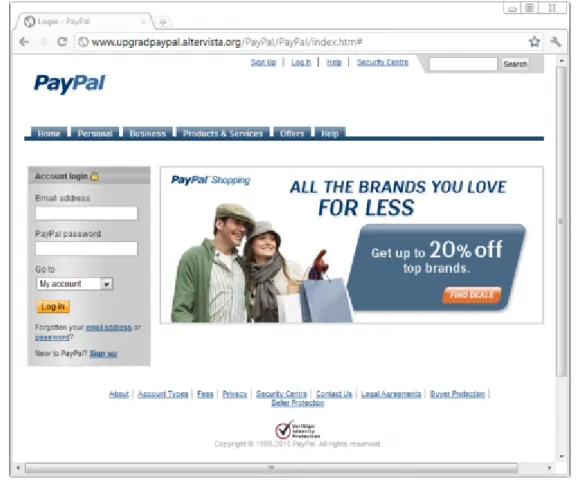
2012; Elser and Pekrul, 2009). An example of a real-world phishing attack (or phish) is shown in Figure 2.1. This phish targeted the PayPal online payment service and shows how high-fidelity phishing attacks may be.
The rest of this section will cover various topics regarding phishing. Section 2.2.1 discusses the four general types of phishing and their intended targets. Covered in Section 2.2.2
2.2. PHISHING 9
Figure 2.1: A phishing website targeting PayPal.
are the methods used by attackers to obfuscate phishing URLs. In Section 2.2.3, the prevalence and other statistics regarding phishing are discussed.
2.2.1
Types
There are four general categories of phishing which cover the act of stealing sensitive
information by using fraudulent websites and other resources (Garera et al., 2007). The
first of which, simply called phishing, is a general term which covers an attempt by attackers to gather information from non-specific targets (Jagatic, Johnson, Jakobsson, and Menczer, 2007). These targets are often lured onto web sites masquerading as the legitimate service using emails, in an attempt to deceive them.
Spear phishing is a more targeted approach. In this scenario, attackers will target specific individuals, or organizations, by researching the target. In this manner, attackers seem to have ‘inside’ information, that makes them appear more legitimate than if they were to try the traditional phishing method (Brody, Mulig, and Kimball, 2007). Whaling is a form a spear phishing that targets high profile users, such as CEOs (Hong, 2012).
Within Clone Phishing, a previously sent email is copied and resent. This re-sent version will contain an URL or malware sample that replaces original content. This is done and is made to appear as an updated version of the email, with ‘corrected’ contents (Mohamed, 2013).
2.2.2
Detection-avoidance and obfuscation
As stated in Ma, Saul, Savage, and Voelker (2009b), every form of phishing hosted on the internet requires a URL to link to it. This URL has to reach the target, either by providing a link where the target audience will find it or, more often, in the form of an email. Often, attackers will exploit the fact that anchor tags do not have to display URL destinations, showing a different location in the anchor tag text to that in the href field of the tag (Chandrasekaran, Narayanan, and Upadhyaya, 2006b). Compounding this problem is that end-users do not necessarily understand the syntax of URLs and, as a
result, the destination of the resource they point to (Dhamijaet al., 2006).
Another method used by attackers intended to mask the intent of a URL is to use obfus-cation. In URL obfuscation, an attacker will create a URL that is either subtly different from the legitimate resource’s URL, or will try to make the URL not understandable by non-expert users such as re-encoding the URL in hexadecimal format (Milletary, 2005). An example of this is shown in Listing 2.1 where the text shown to the user will be
http://www.safe-site.com but clicking the link will direct the user to http://www.phishing-site.com.
Listing 2.1: Example of an anchor tag with mismatched href and text component 1 < a href =" http:// www . phishing - site . com " > http:// www . safe - site .
com </ a >
Examples of the first kind of obfuscation include duplication of letters in place, or addition of extra tokens to the domain section. An example of this kind of obfuscation where tokens are added to the domain is shown in Listing 2.2. There may be subtle misspelled words that are hard to notice without careful inspection of the link. Other techniques would include using an IP address instead of a domain in the URL, as is discussed in Kirda and Kruegel (2005); or appending the URL with a port number, which is also effective as some legitimate web services run on non-standard ports. For more information on these
2.2. PHISHING 11
Listing 2.2: Example of an obfuscated URL 1 http:// u p d a t e . p a y p a l . com . user . id .39
e 3 f 0 f 9 0 1 a 9 f e 6 d e e 4 5 c 5 7 a a 6 8 e f 1 0 0 2 6 7 a f w 1 6 1 a 2 h 1 w c x 1 a c . the -d e a n s . net /
The primary result of these slight adjustments to URLs of legitimate resources means that many non-expert users may not notice the incorrect tokens within the URL. This also makes it very difficult for automated detection methods to identify these URLs without latency-inducing measures which have a large impact on legitimate traffic. Compounding the problem is users who may ignore security warnings built into browsers or security
toolbars (Wu et al., 2006). Hiding URL destinations by using an IP address is more
straightforward, and should be avoided by non-expert users as a general rule. It is these very subtle changes that users such as network security professionals may be able to spot at a glance. This may be because they are more aware of these attacks and are cautious when reading emails that contain links requesting information that should never be requested.
2.2.3
Prevalence
According to the Anti Phishing Working Group (APWG)1; the number of phishing attacks
for the first half of 2013 was reported to be 72 758 instances, an increase of 5 081 instances during the same time in 2010 (7.5% increase). Within this same period there were 53 685 domain names registered for phishing purposes (26% increase from 2010) as well as 1 626 IP-based phishing attacks targetting 720 organisations. This represents a 22.7% increase in the number of organisations targeted for phishing attacks from 2010. For more information regarding these statistics, see Aaron and Rasmussen (2013).
According to Dhamijaet al.(2006); up to 5% of users who encounter fraudulent resources
will divulge sensitive information. Litan (2004) said that by May 2004, nearly 57 million American adults had had encounters from attackers pretending to be legitimate services via email. The authors go on to estimate that 19 percent of the victims will actually engage in the phishing scheme, and that 1.78 million of them handed over sensitive information. This resulted in a loss of $1.2 billion dollars in 2003 according to Litan (2004). By 2007, this loss was up to $3.2 billion dollars from 3.6 million American adults (McGrath and Gupta, 2008).
Work discussed in Dhamija et al. (2006) shows that high-fidelity phishing resources may fool up to 90% of the users who encounter them. They go on to say that, within their study, 23% of the participants ignored mechanisms built into the browser to help avoid these phishing attacks. These mechanisms include the address bar, status bar and other indicators. Interestingly, users who are educated about phishing attacks have been shown to be no better at identifying phishing attacks than people who have not been educated. This was shown in Anandpara, Dingman, Jakobsson, Liu, and Roinestad (2007), which went on to say that educated individuals reported more attempts as phishing, but with no greater accuracy, indicating an increased fear rather than ability to identify phishing attacks.
Figure 2.2: Unique locations of phishing hosts.
Using the MaxMind GeoLocation Library2, 12 084 samples of phishing URLs were
geolo-cated. This data set was collected in April 2012 from Phishtank. Phishtank is a website where users may report suspected phishing URLs. Moderators then manually confirm or deny these URLs by visiting them, and adding them to the Phishtank blacklist. This
blacklist is available for download from their website3. Shown in Figure 2.2 are the unique
locations of hosts used for phishing attacks. It is clear from this data that phishing hosts are found all over the planet, with the highest concentrations being in first-world countries.
2http://www.maxmind.com/app/api 3http://www.phishtank.com
2.3. PHISHING COUNTER MEASURES 13
Shown in Table 2.2 are the countries with the highest population densities from the April 2012 Phishtank data set in terms of hosting. Also shown within this table are the hosting densities from April 2013 according to EMC (2013). The data show that the United States hosted 44% of reported phishing sites during 2012, with that number rising to 47% by April 2013. Brazil, while hosting 10% of all reported phishing resources contained within the Phishtank 2012 data set, was not mentioned in the 2013 data set in EMC (2013). The same is true for Australia which hosted 4% of phishing sites in 2012. The Netherlands hosted 4% during 2012 and dropped to 3% by April 2013. Germany and the United Kingdom rose from 4% and 3% respectively in 2012, to 6% and 4% respectively in 2013.
Table 2.2: Population density of phishing hosts by country.
Country 2012 2013
United States 44% 47%
Brazil 10% Not listed
Australia 4% Not listed
Netherlands 4% 3%
Germany 4% 6%
United Kingdom 3% 4%
Also discussed within EMC (2013) are the number of phishing attacks and targets by country. In April 2013, there were 26 902 attacks identified, with the United States targeted 46% of the time. This was followed by the United Kingdom with 11% of attacks and South Africa by 9% of the attacks.
2.3
Phishing counter measures
Discussed within this section are the modern approaches used in security systems to mitigate the threat from phishing attacks. Each approach is described in terms of its basic operation, logical configuration and construction as well as the advantages and disadvantages of its approach.
2.3.1
Blacklists
A blacklist is a method of filtering access to resources by using adefault allow approach.
should be denied access to (Ramachandran, Dagon, and Feamster, 2006). This method is generally used when there is a large number of resources that should be accessible which
make it prohibitive to use a default deny (Whitelist) method which would require a list
of all accessible resources to be maintained.
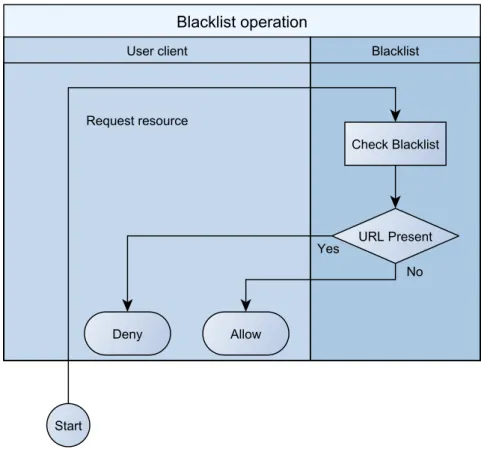
Figure 2.3: Blackhole list transaction.
In a typical transaction, a request is made which is compared against a blacklist and, if the resource does not appear within the blacklist; the request is permitted, if not; it is denied. This is depicted in Figure 2.3. This transaction is not necessarily enforced as it may be implemented as a service which a client may query, and may also be implemented as a gateway requirement on any request. Blacklists can also be implemented as a Domain Name System Blackhole List (DNSBL), also known as a Real-time Blackhole List (RBL), which may be used to mark hosts or networks that shouldn’t be accessed (Ramachandran
et al., 2006).
This method of content filtering has been used extensively in web technologies due to the
sheer number of resources available on the internet (Ramachandranet al., 2006; West and
Lee, 2011). Examples of commonly used blacklists include Google Safe Browsing (Google, 2013c) and Microsoft Smart Screen (Microsoft, 2013b). Blacklists have a high accuracy
2.3. PHISHING COUNTER MEASURES 15
as many of them are manually vetted. This means that humans confirm or deny that a particular resource is malicious in nature, thus keeping the accuracy of the blacklist very high. This, however, incurs its own problems. Blacklists may be slow to respond to new malicious resources for a number of reasons as shown in Sheng, Wardman, Warner, Cranor, Hong, and Zhang (2009). Firstly, the resource may not be discovered for some time after it becomes available and, as a result, the first requests made for the resource are not aware of its malicious nature. Another scenario is that the resource has not been flagged as it is waiting for a human technician to confirm the nature of its intent and add
it to the blacklist (Sheng et al., 2009; Zhang, Hong, and Cranor, 2007).
Another problem relating to blacklists is that of user-experience. Blacklists may exist as a local resource like in the case of Google (2013c) and anti-virus packages, or they may exist outside of the local network. In both cases, the blacklist needs to be polled before access can be granted or denied. In the case of a non-local blacklist, this incurs additional latency that may not be tolerable in certain applications or compound an existing problem, such as in South Africa; where network latency and low bandwidth is a common problem for end-users. This impact on user performance may cause users to not use blacklist services at all, causing a major security problem. A method of mitigating this issue is to use a local blacklist resource with periodic updates to avoid latency issues.
Privacy is another issue that blacklists are concerned with. In the standard method of maintaining a blacklist, a list of hosts or resources are kept. As a result, when a client makes a request for a lookup of a particular resource, the URL has to be transmitted in clear text to make the comparison. This makes it possible to determine what the user is requesting. A method of enforcing privacy when using blacklists is for the blacklist to keep a list of hashed URLs rather than the URLs themselves. The client makes requests for lookups by transmitting a hash of the URL rather than the URL itself, thus maintaining privacy.
2.3.2
Spam filters
Spam filters are used within email servers to separate email intoham and spam messages
(wanted and unwanted) using several approaches (Cormack and Lynam, 2007). While these are relatively effective, without constant updating they quickly become irrelevant as obfuscation trends change. Another downfall of spam filters is that they generally apply heuristic rules to the content of emails, rather than identifying URLs specifically. Zhang, Zhu, and Yao (2004) show that statistical models trained to inspect both the message
body and the header improve the performance of these spam filters. Many spam filters will integrate with a RBL to improve performance.. As a result they tend to inherit the shortfalls of blacklists. However, they do not inherit the usability problems of blacklist implementations as they are able to apply filtering techniques when an email is received
rather than when a user requests it. A method, discussed in Androutsopouloset al.(2000)
and Sahami, Dumais, Heckerman, and Horvitz (1998), is to use Naive Bayesian Networks as a spam filtering mechanism. Discussed in Li and Zhong (2006) is a method of making this approach more effective in large environments using approximate classification.
2.3.3
Reputation services
A third approach used today is collectively called Reputation Services, such as the
Mi-crosoft Reputation Services (MRS)4. These are offered by many security companies such
as Avast with theavast! Online Security Browser plugin which is available for all major
browsers. Another popular tool of this type isWeb of Trust5. This works by having users
rate websites and other resources as they use them, with the rating being reported back to a central reputation service that other users may query (Windley, Daley, Cutler, and Tew, 2007). When browsing, the plugin will create a visual cue near links to indicate the level of trust assigned to that resource by other users. While this approach is useful in theory, it will only work for large sites which have large numbers of users. Smaller, but still legitimate, sites will have no rating and users will be unable to tell whether they are benign or malicious. Any new phish site coming into operation has no rating, making the reputation service approach unusable for phishing avoidance. Like blacklists and spam filters; this service also incurs latency when clients have to make lookups requesting URLs they wish to visit.
2.3.4
Content scanners
In an approach known as Content Scanners, an application downloads the resource before attempting to identify it as illegitimate (Chandrasekaran, Chinchani, and Upadhyaya,
2006a). This is done by checking for obfuscation techniques such as those discussed
in Section 2.2.2, among other detection methods. This approach differs slightly from the spam filters discussed in Section 2.3.2 in that they are used to identify malicious
4http://www.microsoft.com/mscorp/twc/endtoendtrust/vision/reputation.aspx 5http://www.mywot.com/
2.4. ARTIFICIAL NEURAL NETWORKS 17
web pages rather than emails specifically. SpoofGuard for Microsoft Internet Explorer is a plugin which performs content scanning functions to validate authenticity of a page (Chou, Ledesma, Teraguchi, Boneh, and Mitchell, 2004, see). Another example of a content scanner is CANTINA which uses a heuristic based on the TF-IDF algorithm
(Zhanget al., 2007).
2.4
Artificial Neural Networks
A new approach to detecting malicious URLs is to use the statistical modelling approach implemented through Artificial Neural Networks (ANNs). These ANNs are a modelling
mechanism which can be trained to classify samples. It is for this reason that they
are often called classifiers, which is a term that is used interchangeably throughout this
research. In Section 2.4.1 the structure of ANNs are discussed, followed by 3 methods of training them, shown in Section 2.4.2. Section 2.4.3 discusses techniques needed to create useful data sets used for training and validation of classifiers. Finally, in Section 2.4.4, reliable methods for determining how effective a trained classifier is at generalising to unseen data are shown.
2.4.1
Structure
Artificial Neural Networks (ANNs) are loosely modeled around how a subsection of a biological neural network works and, as a processor of information, is very different from the classical von Neuman model (Jain, Mao, and Mohiuddin, 1996). Many authors have cited them as being successful in applications of pattern recognition, image and speech recognition (Lippmann, 1988; Nadel and Stein, 1995; Rowley, Baluja, and Kanade, 1998). They consist of neurons which are interconnected by a layer of unidirectional edges, pass-ing information between them (Gardner and Dorlpass-ing, 1998). Neurons within an ANN are arranged in layers, every ANN consisting of at least two layers. These two layers are the
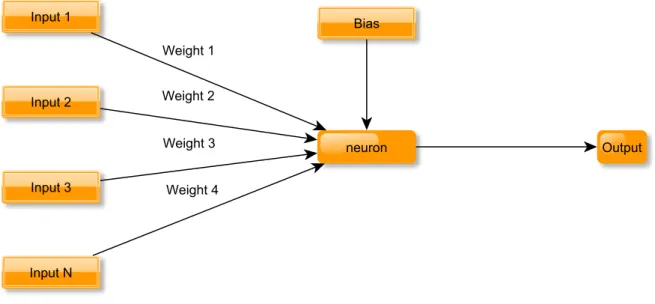
Input and Output layers (Svozil, Kvasnicka, and Pospichal, 1997). Figure 2.4 shows the logical layout of a basic perceptron.
The neurons at the input layer represent a vector that contains values as parameters of a sample for the ANN to process. Each layer after the input layer is connected by a series of weighted synapses which act as multipliers on the input side of the synapse (Lippmann,
Figure 2.4: Basic layout of a perceptron.
1988). At the output side, the neuron uses a linear combination of all of the values of the synapses connected to it and is shown in Equation 2.1.
X =
n
X
i=1
xiwi (2.1)
Within Equation 2.1, whereX represents the resulting combined value of the equation; x
represents the value of the input neuron andw is the weight of the associated synapse of
that neuron. Once this result has been obtained, it is put through a hard limit which sets the final output of the ANN (Lippmann, 1988). Shown in Equation 2.2 is the method used
in this research and is known as thesign activation function orsign transfer function. It
works by adding a bias (or threshold) value to the linear combination value. The result,
being either a 1 or a 0, is known as a binary classification (Lippmann, 1988).
f(x) = 1 if X+b >0 0 if X+b≤0 (2.2)
In this structure, the ANN is known as a Perceptron (Lippmann, 1988). The terms
ANN, Perceptron and classifier are used interchangeably throughout this research. A more complex structure is to have one or more layers of neurons, each of which has
varying sizes, connected between the input and output layer and is known as a Multi
2.4. ARTIFICIAL NEURAL NETWORKS 19
These layers are known as hidden layers (Svozilet al., 1997). This structure is used when
the problem space is not linearly separable and is outside of the scope of this research. In summary, a ANN takes a vector of inputs, passes it through a series of weighted synapses, combines them and adds them to a threshold value. This value is then passed through an activation function which determines the final classification of the input vector.
2.4.2
Learning
The most simple form of Artificial Neural Network (ANN) is the Perceptron. It comprises of just two node layers: the input layer; which performs no calculations, and the output layer. The node in this layer is connected to all of the nodes in the input layer via a weight vector and makes classifications as discussed in Section 2.4.1. This structure and classification method were introduced in Rosenblatt (1958) and have been used widely.
Algorithm 1: Online Perceptron learning algorithm.
γ =Yd−Y (2.3)
∆w=α×xi×γ (2.4)
wt+1 =wt+ ∆w (2.5)
Where:
• γ is the error of a classification.
• Yd is the desired label of a sample.
• Y is the labeling result of a classifier for a sample.
• ∆w is the amount of change required for a given input.
• α the learning rate scalar.
• xi is the input for a particular node.
• wt is the weight associated with the given node.
Rosenblatt’s Online Perceptron (OP) method of training perceptrons is a common method of supervised learning (Freund and Schapire, 1999). The approach to learning taken by this algorithm is one which iterates repeatedly over a data set of labelled samples until a chosen accuracy metric is achieved (Riedmiller, 1994). For each sample, if the resulting
classification is correct, it moves onto the next sample. When an incorrect classification is made, the error is calculated.
This is calculated by subtracting the resulting classification from the desired prediction for the labelled sample and is shown in Equation 2.3. Once this error value has been calculated, a delta value is calculated by scaling the error with the value for the input
node as well as alearning rate scalar as shown in Equation 2.4. Finally, a new weight value
is calculate by adding this delta value to the existing weight value, shown in Equation 2.5. This process is executed for the entire weight vector for each incorrect classification made.
The primary shortfall for the OP method is that the learning rate scalar is static (Le
et al., 2011) and a hard limit is used. In this case, a correction (adjustment to the weight for a given node) is always of the same size. This has the effect of causing an oscillation around the optimal result when the training process approaches a converged solution, as the required correction may be smaller than the static learning rate scalar can provide.
This problem is compounded by a training data set that is noisy. Within Leet al.(2011),
two methods of training an ANN which try to mitigate these problems with the OP method are discussed.
Introduced in Crammer, Dredze, and Pereira (2008), is the Confidence Weighted (CW) training algorithm. The approach to classification within this algorithm is exactly the same as with the perceptron. It differs only in the training process, meaning that the induction of the ANN is modified. The CW algorithm does not have a static scaling vector, such as the learning rate within OP. Instead, it maintains a covariance matrix (Σ) which acts as a confidence for each input weight. This has the significant advantage of not changing weights that have a high confidence by very much, but also making large changes in weights of the inputs which have a low confidence weight associated with them. The general method used to determine the confidence is such that a weight that is not changed often is represented with high confidence within Σ while a weight that is updated frequently is represented by a low confidence. The exact methods for updating the covariance matrix and the input vector weight associations are shown in algorithm 2.
The final algorithm discussed in Le et al. (2011) is called Adaptive Regularization of
Weights (AROW). AROW improves on CW by making it more tolerant of noisy training data through the use of an updated input weight adjustment method that is shown in Equation 2.8. However, like CW, it is able to train on correct classifications by increasing confidence in the weights of the features. This algorithm is a modified version of CW and
2.4. ARTIFICIAL NEURAL NETWORKS 21
Algorithm 2: The Confidence Weighted (CW) training algorithm.
µt+1= arg min
µΣ DKL(N(µ,Σ)kN(µt,Σt)) (2.6)
Σt+1 =s.t.Prw∼N(µ,Σ)[yt(w·xt)]≥η (2.7)
Where:
• µ is the average input weight vector.
• Σ is the covariance matrix indicating confidence of input weights.
• DKL is the KL Divergence.
was introduced by Crammer in Crammer, Kulesza, and Dredze (2009) which is shown in Algorithm 3.
Algorithm 3: Adaptive Regularization of Weights (AROW) training algorithm.
µt+1 = arg min
µΣ DKL(N(µ,Σ)kN(µt,Σt)) +λ1lh
2(yt, µ·xt) +λxTtΣxt (2.8)
Σt+1 =s.t.Prw∼N(µ,Σ)[yt(w·xt)]≥η (2.9)
Where:
• µ is the average input weight vector.
• Σ is the covariance matrix indicating confidence of input weights.
• DKL is the KL Divergence.
Leet al. (2011) show how both of these training algorithms show improvement in terms of cumulative error rate over the OP method.
2.4.3
Data balancing
A class of data points represents a group that has a unique quality when compared to data points of other classes. A balanced data set is a concept within modern statistics that identifies a sample of data that equally represents all classes within that overall sample. When, within a binary data set, one class has many more samples than the other, it is called an imbalanced data set (Estabrooks, Jo, and Japkowicz, 2004; Guo and Viktor, 2004). ANNs may have problems optimising class labeling when such conditions
are present and special consideration is not made to compensate for the class imbalance
(Japkowicz and Stephen, 2002; Estabrookset al., 2004).
There are two general approaches to this problem. The first is to adjust the learning algorithm to deal with a data set that is not balanced while resampling the data set is the second. There are two approaches to the resampling option: Over and Under sampling. The first duplicates samples within a class until the data set is considered balanced, while under sampling removes samples from a class until it is balanced with the class that has a lower number of examples. There are several versions of each approach listed in Batista, Prati, and Monard (2004) where heuristic rules are used to select samples for duplication or removal. Non-heuristic approaches are also used where random samples are removed
or duplicated in each approach. These are known asRandom over-sampling and Random
under-sampling (Batista et al., 2004). A combination of these two approaches where the majority class is undersampled while the minority class is oversampled is used in Chawla, Bowyer, Hall, and Kegelmeyer (2002). Random under-sampling is used to balance the
data set mentioned in Section 4.5.5 and it is an implementation of the
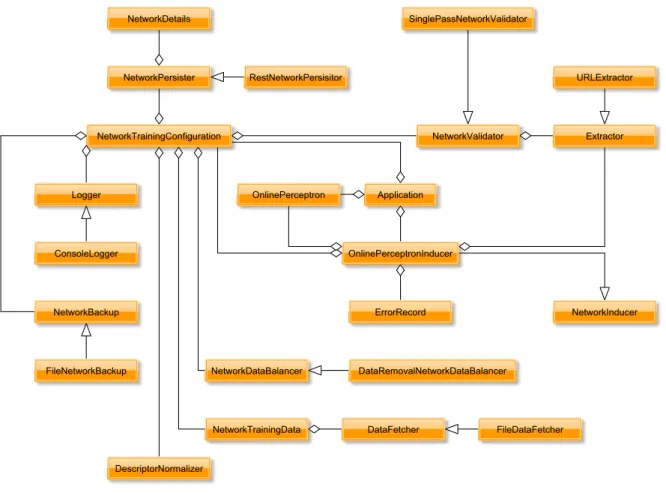
NetworkData-Balancer interface (discussed in Appendix A.3 called the DataRemovalNetworkBalancer
(discussed in Section A.10).
2.4.4
Classifier Validation
If a classifier is trained to match a sample population of training data, it is possible to train it beyond the point where it uses relevant features to make classifications and it starts to use features to identify the data set it is being trained on (Tetko, Livingstone,
and Luik, 1995; Kohavi, 1995). This is known as over-fitting a data set and happens
when a classifier is trained with few samples or when a network is trained for too long
(Tetkoet al., 1995). Over-fitting is also known as a Type I error in this context (Peduzzi,
Concato, Kemper, Holford, and Feinstein, 1996).
Classifier validation is a method by which a classifier’s performance can be determined and used as a way of choosing a classifier during training (Rao and Wu, 2005). This is done by using an independent data set (a data set that has not been used in the training process). Known as Hold-out validation, the intention of this process is to estimate how accurately the classifier may perform in the real-world and is usually executed over several rounds to avoid variances in the data used (Arlot and Celisse, 2010).
The general method of performing validation is to extract a sample from a population of data and to use that sample only for validation purposes (Arlot and Celisse, 2010). The
2.5. FRAMEWORK TECHNOLOGIES 23
rest of the data is then used for training. Typically, this process is reversed in that the data sets are then swapped in roles and training and validation are then executed again, with the validation score then calculated as an average of both validation runs. This has the advantage of all the data being used for both training and validation. When accuracy is calculated by this method of using an independent data set for validation, it is known
as anout-of-sample estimate, while using the training data itself is known as anin-sample
estimate as the accuracy is calculated using the training sample.
K fold cross-validation (Rotation Estimation (Kohavi, 1995)) is a cross-validation
tech-nique where the population data set is divided into K portions. One of these portions
is then used for training, while the others are used for validation, with their results av-eraged. This process is then repeated, using a different portion of the data for training.
This continues until all K portions are used as both a training and validation set. This
has been shown to be computationally expensive in Bengio and Grandvalet (2004). A popular implementation used is ten fold validation; where a data set is divided into ten parts.
Another method of performing cross-validation is known as Leave One Out Cross-Validation (LOOCV). In this approach, a single sample is left out of the training sample and used as a validation sample (Kearns and Ron, 1999; Cawley and Talbot, 2003). The process is repeated, using a different sample as a validation sample each time, until each sample in the population has been used as a validation sample. This approach to cross-validation is considered to provide an unbiased estimate of how well a classifier will generalize (ac-curacy regarding unseen data) (Vapnik and Chapelle, 2000; Chapelle, Vapnik, Bousquet, and Mukherjee, 2002).
Hold-out validation is implemented as part of the ANN training process discussed in
Section 4.5.5. This is done by implementing the NetworkValidator interface discussed in
Appendix A.7. The implementation is known as the SinglePassNetworkValidator and is
discussed in Appendix A.13.
2.5
Framework technologies
Part of this research is to deliver a framework by which ANNs can be trained, distributed and deployed. Discussed within this section are the relevant technologies involved in the implementation of this framework. Section 2.5.1 discusses the programming languages
used during this research, while Section 2.5.2 briefly covers Representational State Trans-fer (REST) as a suitable method of making updates available to clients. Finally, the Google Chrome Extension Application Program Interface (API) is discussed in Section 2.5.3 as it is used to develop a client for this service in Section 4.7.
2.5.1
Programming languages
Python is a scripting language that was introduced in 1989 (Chun, 2006). It is considered to be highly expressive and easy to learn (Chun, 2006). It was initially chosen for use within this framework for these reasons, as well as its support for object-oriented pro-gramming, its scalability and for the rapid development times associated with this high level scripting language. It was later dropped in favor of C# for reasons discussed in Section 4.5.
Unlike Python, C# is a language designed for use within Microsoft Windows that is compiled into a Microsoft Intermediate Language assembly (Liberty, 2001). Certain C#
applications may be deployed on Linux using the Mono project6. The framework that is
built as part of this research (Section 4.5) is built as a .NET library. Programs wishing to use some or all of the capability that this library provides, may import it as part of the capability of the .NET Common Language Runtime (Schult and Polze, 2002).
JavaScript is also used and is the basis for the Google Chrome Extension API (Section 2.5.3, see). It is a scripting language that is predominantly used within web technologies such as HTML (Flanagan, 1998). JavaScript is fully object-oriented and uses syntax similar to C++ (Flanagan, 1998).
2.5.2
Representation State Transfer (REST)
The decision was made to use a web service to distribute updates to global clients. A REST implementation is used for this purpose as it is the most common method of implementing web services used today (Battle and Benson, 2008) and is suitable for simple integration between client applications and the service provider (Pautasso, Zimmermann, and Leymann, 2008).
The concept of REST was first introduced in Fielding (2000) with the author being the principal developer of the idea. Within his PhD thesis; Fielding identifies several formal
2.5. FRAMEWORK TECHNOLOGIES 25
constraints on a REST implementation. He first identifies that a REST implementation is built in terms of the Client-Server model and that it should separate the user interface from the method by which data is stored. In this fashion, it improves the ability of client applications to consume the service as it has fewer requirements of them. The second constraint he imposes is that it is a stateless system as it reduces complexity in both client and server implementations. The final constraint covered here is that of a uniform interface. This standard method of communicating with the service decouples its functionality from the interface. For further information on Fielding’s constraints and definitions of the REST architectural style, see Fielding (2000).
Within HTTP, REST is implemented using the HTTP verbs as methods of creating, reading, updating and destroying objects. HTTP naturally works with REST as it is stateless and has the use of URLs to direct clients towards resources. Using this stateless interaction between client and server, interaction with a REST API can be made with a single call, containing all of the data required. As a result, REST lends itself well to framework development.
2.5.3
Google Chrome Extensions
The Google Chrome browser is a popular browser used today which allows for function-ality to be extended by allowing third-party developers to create extensions and plugins. Chrome allows these extensions to interact with user requests, web pages as well as other functionality of the browser through its API Google (2013a). Extensions may be built in
three main forms: Browser Actions, Page Actions and Packaged Applications
Browser Actions are typically implemented as functionality which extends the capability of the browser. They take the form of a button to the right of the address bar which, when clicked, opens a popup which exposes some useful functionality. Capabilities that
are required for some pages, but not all pages, are implemented as Page Actions and
take the form of an icon inside the address bar. An example of this would be a Really Simple Syndication (RSS) feed reader which detects that there are RSS feeds available for
subscription on the page. Packed Applications represent web applications that are able
to leverage the functionality and portability of Chrome.
The manifest.json file is a file included in all Google Chrome extensions. Listing C.1 is the manifest file that is associated with the Net Defence extension which is developed in Section 4.7. It is of particular importance as it defines what security permissions the
extension will require to function as a least-privileged implementation. This security feature means that if an extension is compromised by an attacker, the attacker has to operate with those permissions already requested (Barth, Felt, Saxena, and Boodman, 2010). It is also responsible for listing resources that the extension should have access
to. Permissions included in a manifest file are typically a list of possible websites that
the extension needs to access, what API features are required as well as what events the extension should be able to intercept. The user is asked to accept these security
requirements when installing the extension. The manifest is also used to identify icons
used for the extension, image sets and other options such as which files to use as entry
points for the options page for each extension. Like the main extension; options pages
are built as HTML pages with JavaScript implementations of functionality. These pages
typically store settings through Local Storage; cookies for storing data in the browser
itself, or through online APIs.
2.6
Summary
Several topics have been covered within this chapter. URLs are used in all categories of web usage as a method of identifying resources. As such, they are used in all facets of internet usage. Phishing is highly prevalent in internet usage today, causing large financial losses every year to many users the world over. Attacks of this kind can use URLs as a method of deceiving users into navigating to fraudulent resources or may use URL obfuscation as a method of avoiding detection by current technologies employed to mitigate this threat. These conventional methods have been shown to have flaws in terms of latency-induced user-experience issues and the inability to adapt quickly to new phishing attacks or trends in URL obfuscation.
Artificial Neural Networks (ANNs) are shown not to suffer from these problems. They do not suffer from latency-induction due to their parallel processing nature and are able to predict well on unseen data if they have been trained correctly and validated using cross-validation techniques. If they are to be used in a production environment, various technologies will need to be employed to make them a feasible option to end-users. The technologies chosen and discussed in regards to this were C#, Representational State Transfer (REST) and browser extensions, with Google Chrome being the browser of focus within this research. Discussed in the Chapter 3 is how the ANNs are created for this purpose, with the framework implementation being discussed in chapter 4.
CHAPTER
THREE
ARTIFICIAL NEURAL NETWORK DESIGN
It has been shown in several papers, including both Ma et al. (2009a) and Le et al.
(2011), that is is possible to identify malicious URLs using ANNs. Within this document, research is performed to attempt to prove that it is possible to generate the accuracy that these authors report, as well as determine if it is feasible to create these classifiers in a way that can be done quickly enough to be useful, distributable and usable by clients. As a result; their classifiers are implemented in this research using methods which they recommend. The method by which data is gathered and formatted for use is discussed in Section 3.1. Covered in Section 3.2 is the method by which the samples are labelled. Section 3.3 describes how the samples are divided into the various data sets required for the training and validation process. The method by which a sample is used to create an input vector is discussed in Section 3.4. Section 3.5 covers what the structure of the ANN implementation is and the various algorithmic options used. The training process is covered in Section 3.6 while the validation and testing methods used are discussed in Section 3.7 and Section 3.8 respectively.
3.1
Data Sources
Required for the training of ANNs are three sets of unique data. These sets are known as thetraining,validation andtesting data sets. Within each set, there needs to be relatively
balanced numbers of both positive and negative samples, although this can be achieved through various balancing techniques, discussed in Section 2.4.3.
The primary sources of data used during this research were Phishtank1 for phishing URLs
while Open Directory2was used for benign samples. These sources were chosen as they are
manually vetted. This means that individuals visit each URL by hand to verify the intent and content of each end point. As a result, the data has a high accuracy on the intention of the sample, with low noise. The Phishtank data source yielded 14 707 samples, while the Open Directory database contained 9 198 532 samples that were drawn upon to create training, validation and testing data sets. Both data sets were downloaded in September 2013.
3.1.1
Extraction
These data sets described are available for download from github (details in Appedix E). The first operation performed on the data is to extract it from its relevant container format, as implemented within the framework designed in Section 4.5. First in this process is to decompress the data and then extract it from the source’s standard method of storage. In the case of Phishtank, this was a Comma Separated Values (CSV) format file, while Open Directory storage is in Extensible Markup Language (XML) format. Once all of the data are extracted, it is checked for duplicates which are then removed, and then it is stored. This ensures that each data set only contains samples which appear once within that data set, and in no other data set. The data is then transformed for standard input into the ANN.
3.2
Data labels
Data labels are required for testing, validation and training processes within the frame-work and testing environments. Classifier inducers require training data to be labelled so that missclassifications can be detected. This allows the inducer to propagate a
cor-rection through the ANN and continue with training. This is how the ‘learning’ process
is achieved. Labeled data is also required for validation and testing purposes which are discussed more in Section 3.3.
1A manually vetted blacklist of phishing URLs, http://www.phishtank.com