GAMBLING AND CLIENTS OF ACT
CORRECTIONS
FINAL REPORT
Ms Julie Lahn
Professor Peter Grabosky
Centre for Gambling Research
Regulatory Institutions Network
Australian National University
JUNE 2003
TABLE OF CONTENTS
EXECUTIVE SUMMARY 4
INTRODUCTION 7
GAMBLING IN THE ACT 7
PROJECT TERMS OF REFERENCE 8
LITERATURE REVIEW 9
DEFINING AND MEASURING PROBLEM GAMBLING 9
PROBLEM GAMBLING PREVALENCE AMONG CORRECTIONAL POPULATIONS 13
PREVALENCE OF OFFENDING AMONG PROBLEM GAMBLERS 19
SCREENING FOR AND TREATING OFFENDERS WITH GAMBLING PROBLEMS 28
THE SURVEY 37
QUESTIONNAIRE 37
AUSTRALIAN NATIONAL UNIVERSITY ETHICS APPROVAL 37
PARTICIPANT RECRUITMENT AND SAMPLING 37
INTERVIEWING 38
CONSENT BY PARTICIPANTS 38
SURVEY RESULTS 39
REPRESENTATIVENESS 39
DRUG USE BY SURVEY PARTICIPANTS 43
OFFENCES 44
GAMBLING PARTICIPATION 46
GAMBLING WHILE INCARCERATED 48
PROBLEM GAMBLING 49
DEMOGRAPHICS OF PROBLEM GAMBLERS 51
GAMBLING PARTICIPATION BY PROBLEM GAMBLERS 53
COMORBIDITY 55
GAMBLING AND OFFENDING 56
COMPARING CRIMES COMMITTED BY DRUG USERS AND PROBLEM 58 GAMBLERS
SELF-ASSESSMENT F GAMBLING PROBLEMS AND HELP SEEKING 60 COMPARING HELP SEEKING FOR GAMBLING, ALCOHOL AND DRUG 62
PROBLEMS
SUMMARY OF SURVEY RESULTS 63
REFERENCES 64
APPENDICES 71
APPENDIX 1: QUESTIONNAIRE 71
APPENDIX 2: CONSENT FORM 76
APPENDIX 3: INFORMATION SHEET 77
APENDIX 4: LIFETIME GAMBLING ACTIVITIES BY CORRECTIONAL 78 FACILITY
APPENDIX 5: SOCIO-DEMOGRAPHIC COMPARISON OF SURVEY SAMPLE 79 AND CORRECTIONS ADMISSIONS
LIST OF TABLES
TABLE 1: PROBLEM GAMBLING PREVALENCE RATES RECORDED IN 18 CORRECTIONAL POPULATIONS
POPULATION
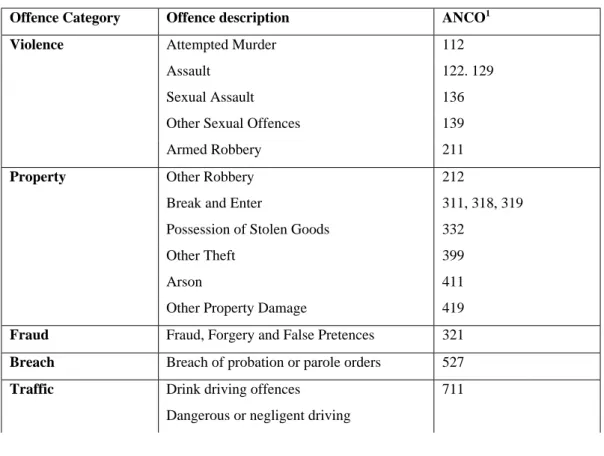
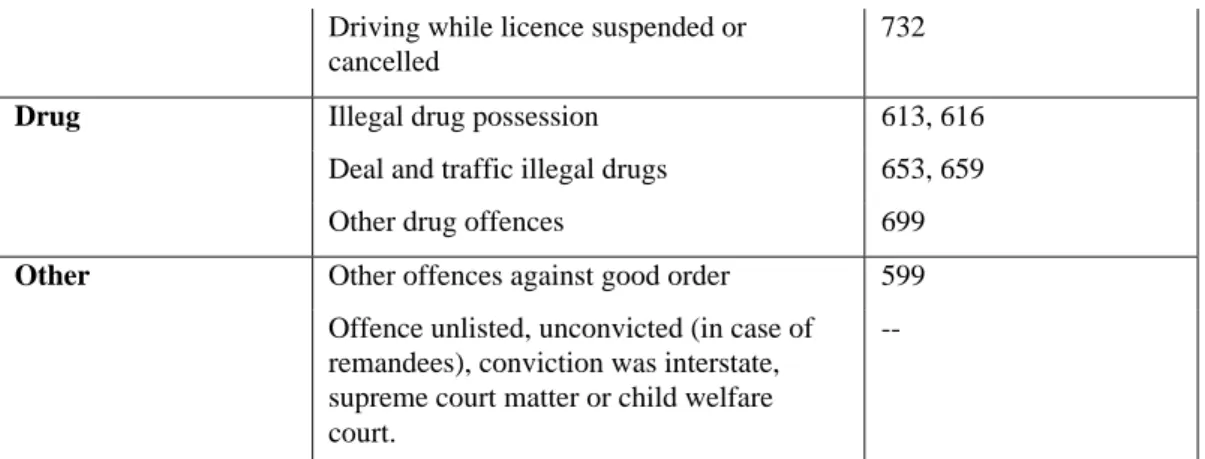
CLASSIFICATION OF OFFENCES (ANCO) CODES
SOGS 5+ PROBLEM GAMBLERS
CATEGORIES
ILLEGAL DRUGS SOGS GROUP
DEMOGRAPHIC DATA
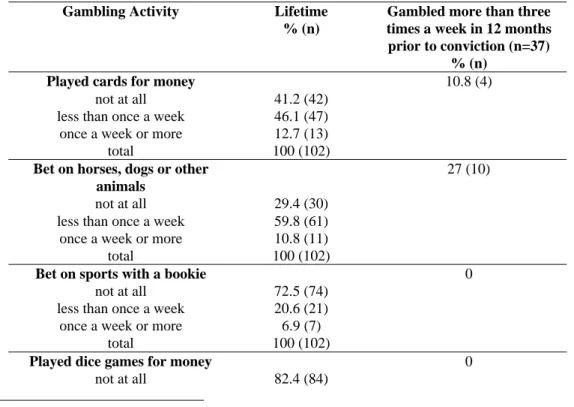
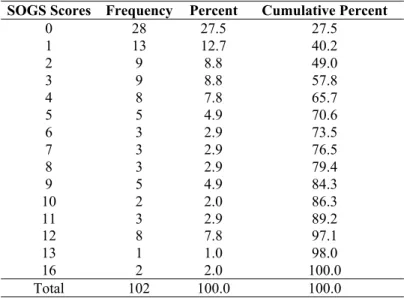
TABLE 2: REPORTED RATES OF GAMBLING RELATED OFFENCES 27 TABLE 3: SUBSTANCE USE (CIGARETTES, ALCOHOL, ILLEGAL DRUGS) 43 TABLE 4: DRUG USE BY SURVEY PARTICIPANTS AND GENERAL ACT 43 TABLE 5: OFFENCE CATEGORIES WITH AUSTRALIAN NATIONAL 44 TABLE 6: OFFENCES COMMITTED BY SURVEY PARTICIPANTS 45 TABLE 7: LIFETIME AND 12 MONTH GAMBLING PARTICIPATION 46 TABLE 8: RAW SCORES FROM THE ADMINISTERED SOGS 49
TABLE 9: GROUPED SOGS SCORES 49
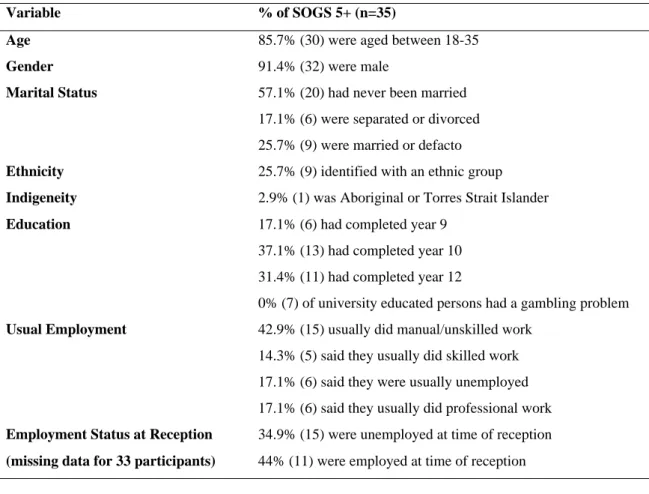
TABLE 10: MAIN SOCIO-DEMOGRAPHICS OF PROBLEM GAMBLERS 51 TABLE 11: LIFETIME AND 12 MONTH GAMBLING PARTICIPATION BY 54
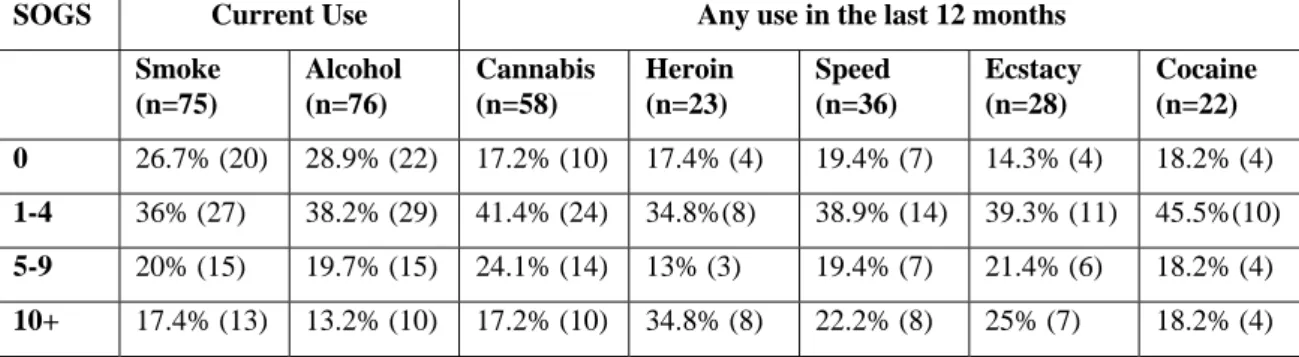
TABLE 12: DRUG USE BY SOGS GROUPS 55
TABLE 13: CURRENT OFFENCES COMMITTED ACCORDING TO SOGS 56
TABLE 14: GAMBLING RELATED OFFENCES 57
TABLE 15: OFFENCES COMMITTED BY USERS OF ALCOHOL AND 58 TABLE 16: SELF ASSESSED GAMBLING PROBLEMS ACCORDING TO 60 TABLE 17: 'TRIED TO GET HELP FOR GAMBLING' 61 TABLE 18: CORRECTIONAL ADMISSIONS AND SURVEY SOCIO- 79
LIST OF FIGURES
FIGURE 1: SURVEY SAMPLE BY AGE 39
FIGURE 2: CORRECTIONS ADMISSIONS BY AGE 39
FIGURE 3: SURVEY SAMPLE BY GENDER 40
FIGURE 4: CORRECTIONS ADMISSIONS BY GENDER 40 FIGURE 5: SURVEY SAMPLE BY EMPLOYMENT STATUS 41 FIGURE 6: CORRECTIONS ADMISSIONS BY EMPLOYMENT STATUS 41 FIGURE 7: SURVEY SAMPLE BY INDIGENEITY 41 FIGURE 8: CORRECTIONS ADMISSIONS BY INDIGENEITY 41
FIGURE 9: SURVEY SAMPLE BY OFFENCE 42
EXECUTIVE SUMMARY
• In the ACT, as in the Australian population, the majority of people regularly participate in gambling activities. The purchase of lottery and instant scratch tickets, and use of club gaming machines comprise the highest participation in gambling in the ACT.
• While many people gamble without experiencing any adverse consequences, for some people, gambling creates difficulty in their lives. Problem gambling can be defined by the negative effects that gambling activities have on the gambler, their personal relationships, working life and the wider community.
• In 2001, the rate of problem gambling within the general ACT population was conservatively estimated as being 1.91%.
• Prior to this study being conducted the prevalence of problem gambling among clients of ACT Corrections was unknown.
• This project seeks to address this knowledge gap. The project is guided by four terms of reference. The specified terms are to provide:
1. a literature review on gambling in correctional populations
2 . a discussion of the relationship between gambling and criminal activity
3. results of a survey of clients of ACT Corrections, and
4 . an overview of counselling services for problem gamblers in correctional populations.
• The current study comprised a survey based on the lifetime and 12 month versions of the gambling screen, the South Oaks Gambling Screen (SOGS). In addition, the survey also contained questions relating to gambling and offending, gambling while a client of ACT Corrections, questions relating to drug and alcohol use, and help-seeking behaviour. For the present study, the SOGS offers the greatest comparability with other Australian and international correctional studies.
• Persons surveyed were predominantly male, aged between 18 and 35. More than half had not completed secondary school and had never been married. More than half the survey respondents usually did unskilled or trades work, but many of these people were unemployed at the time of their most recent entry into the
correctional system. The majority of participants did not identify with an ethnic group and the vast majority were non-indigenous.
• Survey participants were broadly representative in terms of the general ACT correctional population demographics. One significant point of difference was that the remand population was dominated by Indigenous persons. This survey conducted few interviews with Indigenous people across all correctional facilities.
• Offences committed by survey participants and the general correctional
population were also broadly similar, with both having committed high levels of violent crimes, property related crimes and traffic offences.
• Legal and illegal drug use was high among both survey participants and the general correctional population.
• Those surveyed gambled mainly on poker machines both during their lifetime and in the 12 months prior to their conviction. Gambling participation rates were lowest in relation to dice games, betting on sports with a bookie, bingo, stock market trading, and playing sporting games for money.
• The survey found that 34.3% of survey participants have some form of gambling problem. This figure is within the range of other studies focusing on offenders and gambling. Gambling is a severe problem for 15.7% of all persons surveyed. These figures are substantially higher than general ACT population estimates. • The majority of identified problem gamblers played poker machines most often
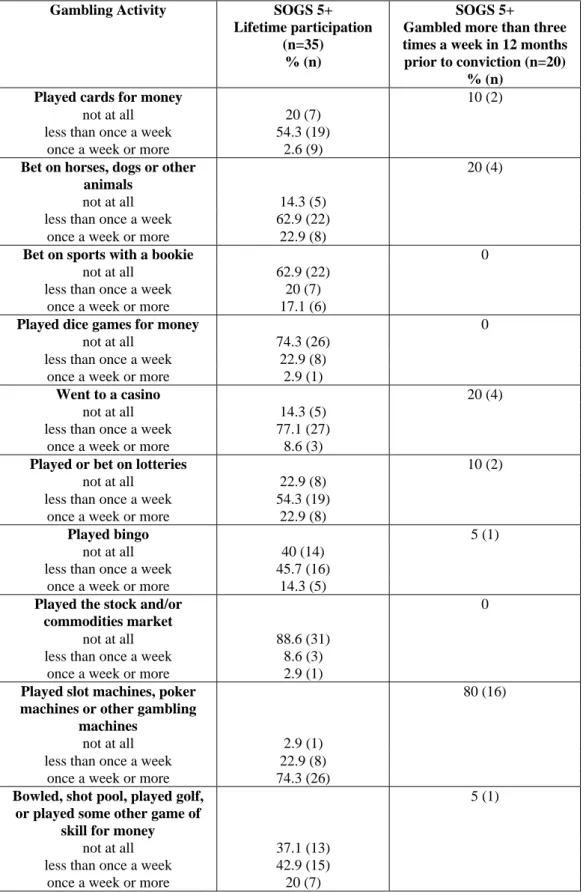
in both lifetime and 12 month time frames. After pokie playing, gambling participation also featured betting on horses or dogs, playing sporting games for money, betting on sports with a bookie and bingo.
• Legal and illegal drug use was substantially higher among survey participants than found among the general ACT population. While all forms of drug use decreased as the rate of gambling participation and gambling problems increased, drug use by problem gamblers identified in this offender survey remained substantially higher than the general population.
• The most serious current offences recorded for problem gamblers were property crime (37.1%), violent crimes (28.6%) and traffic offences such as drink driving
(17.1%). Other studies of gambling among offenders, have generally highlighted property crime and fraud as the main offences committed by problem gamblers. In this study, the rate of fraud crimes among problem gamblers was lower than expected at 8.6%.
• For some surveyed problem gamblers, their offending can be described as being co-symptomatic or coincidental to their gambling. For other surveyed offenders, gambling directly related to their offending. 25.7% of problem gamblers said that their gambling had contributed to their offending. 45.7% of problem gamblers said that they had stolen or obtained money illegally to finance their gambling or to pay off accrued gambling debts.
• Only 25.7% of problem gamblers identified in this survey had sought help for a gambling problem. Moreover, not all of these persons sought help of their own volition. Some persons who sought help were obliged to do so in order to fulfil court orders.
• A significant conclusion of this study is that gambling problems among offenders need to be identified in the correctional system, as most will not identify themselves as having a problem and most will not seek help on their own. ACT Corrections may wish to consider routine screening of offenders at the pre-sentencing stage.
INTRODUCTION
Gambling in the ACT
• In the ACT, as in the Australian population, the majority of people regularly gamble. The purchase of lottery and instant scratch tickets, and use of club gaming machines comprise the highest participation in gambling in the ACT.
The ACT gambling survey (AIGR 2001a:124) reported that around 75% of people in the ACT had gambled in the year prior to being surveyed and 36% had gambled once a week or more during the same period. During the previous 12 months, the highest participation in gambling activities was via lotteries, instant scratch tickets, and club gaming machines.
• The rate of problem gambling within the ACT general population was conservatively reported as being 1.91% in 2001.
The ACT gambling survey (AIGR 2001a:70) estimated that problem gambling in the ACT was at 1.91% (n=5297), which is slightly lower than the estimated 2.01% national rate (Productivity Commission 1999 cited in AIGR 2001a:70). The 0.5% prevalence of more ‘severe problem gamblers’ in the ACT (1250 persons registering 10+ on the SOGS scale) was however, slightly higher than the national figures (AIGR 2001a).
• One of the roles of the ACT Gambling and Racing Commission is to conduct or sponsor research into the nature and extent of gambling and problem gambling in the community.
The ACT Gambling and Racing Commission has noted an increase in community concerns regarding the prevalence of gambling since the release of the Productivity Commission 1999 report (ACTGRC 2002:8). At the same time, those organizations/businesses who provide gambling activities have indicated a concern to limit the incidences and effects of problem gambling. One of the ACT Gambling and Racing Commission’s roles in this regard is to respond to these concerns to ensure that ethical practice ensues and harm minimisation strategies are in place in the gambling
industry. The Commission is concerned that it “minimises the possibility of criminal or unethical activity; and reduces the risks and costs, to the community and individuals concerned, of problem gambling” (s7).
The ACT Gambling and Racing Commission has sought to improve knowledge of participation in gambling by a commitment to monitoring and researching gambling activities, including the effects that gambling has on the ACT community (s6.2 of the GRC Act 1999). Within these broad functions, the Commission has a number of roles stipulating that it conduct internal research into the social and economic effects of gambling, or provide funding for outside agencies to fulfil this requirement (s17 (2)). In this regard, the Commission has jointly funded the establishment of the Centre for Gambling Research at the Australian National University to generally enhance research into gambling. It has also funded research projects (e.g. AIGR 2001a; AIGR 2001b), including the current study, that investigate the prevalence and impact of gambling and problem gambling in the ACT.
Project Terms of Reference
This report was prepared as part of the project 'Gambling and Clients of ACT Corrections' undertaken by Professor Peter Grabosky and Julie Lahn of the Centre for Gambling Research, Australian National University.
The project is guided by four terms of reference. The specified terms were to provide: 1. a literature review on gambling in correctional populations
2. a discussion of the relationship between gambling and criminal activity 3. results of a survey of clients of ACT Corrections, and
4. an overview of counselling services for problem gamblers in correctional populations.
An Interim Report was finalised on the 15 May. It addressed three of the four terms of reference listed above: items 1, 2 and 4. This Final Report details the outcomes of the survey in relation to the literature on gambling and offenders.
LITERATURE REVIEW
Defining and Measuring Problem Gambling
• There is some debate surrounding the best method for defining and measuring gambling participation. Prevalence studies in the majority of Australian and international cases have used the SOGS questionnaire. In Australian and international prevalence studies, the South Oaks Gambling Screen (SOGS) has been the predominant assessment instrument used (Abbott and Volberg 1999, AIGR 1997:20-1, Battersby et.al. 2002). Invented by Lesieur and Blume (1987). The SOGS was developed specifically to test for evidence of a 'pathological gambling' disorder in respondents. The SOGS questionnaire consists of 35 questions, of which 20 are counted. The answers to each of the 20 questions counted are assigned a value of either 0 or 1. The questions focus on identifying the type and frequency of a respondent's gambling activities, the largest amount ever gambled, any parental gambling problems, each respondent's self-perception relating to their gambling, any effect gambling has had on personal relationships, work attendance, and the funding sources for gambling– own money, another’s money, credit, loans, or crime. Respondents with a score of less than 3 are categorised as being ‘non-pathological gamblers’, while a score of 3 or 4 indicates a ‘potential problem gambler’ and a score of 5 or more indicates a ‘probable pathological gambler’.
The evolving term 'pathological gambling' has been developed to classify the existence high calculated rates of gambling participation that brings harm or disruption to gamblers' lives and that of others (family, friends, work relationships). The term pathological gambling was created by the American Psychiatric Association (DSM III) and is classified as an 'impulse-disorder'. More recently, pathological gambling has been revised as an 'addiction', and thus, akin to substance abuse (DSM III-R). These understandings of Pathological Gambling have been criticised for taking an overtly medicalised approach to the issue, which obscures or ignores the “broader environmental, socio-cultural, political and economic factors” (AIGR 2001a:65; see also AIGR 1997, Battersby et.al. 2002, Dickerson 1997, Productivity Commission 1999, Walker 1996).
A second critique has emerged regarding the term Pathological Gambling and the SOGS test created to identify the disorder. It has been suggested that both are inappropriate in Australian contexts (e.g. Battersby et.al. 2002, Walker 1996).
In light of these critiques, suggestions have been made to limit the use of SOGS to an initial research tool that must be complemented with additional research and assessment of each interviewee. This suggestion is not out of step with the authors of the original SOGS, Lesieur and Blume, who argued that the questionnaire may be unreliable if the questionnaire is modified and/or used outside clinical contexts.
• Problem Gambling can be defined by the negative effects that gambling activities have on the gambler, their personal relationships, working life and the wider community.
Problem Gambling is an encompassing term that includes but equally needs to be distinguished from the more narrowly defined term pathological gambling. The latter receives widespread usage in the US, and used to indicate a severe gambling problem. Problem Gambling can be defined by the negative effects it has on both the individual, their family and other relationships they might have, and by a person’s inability to effectively carry out their work duties or study obligations. In addition, problem gamblers tend to have minimal or no control over the amount of money they use to fund their gambling activities and experience difficulties in abstaining from gambling activities (AIGR 2001a, Productivity Commission 1999).
Problem gambling and pathological gambling do share similar features such as “…extensive indebtedness, and default on financial responsibilities, disrupted family relationships, inattention to work, financially motivated illegal activities, and impaired physical health” (Rosenthal and Lorenz 1992:648). However, pathological gambling has a narrower and overtly medicalised focus than problem gambling.
Currently, the term 'Problem Gambling' receives wide usage, especially in Australia and New Zealand, as a way of escaping the medical model and allowing for other socio cultural understandings to emerge. Definitions of Problem Gambling are currently very similar and broad in scope (see Productivity Commission 1999:6.2-6.5) For example, the AIGR (1997) provides the following definition:
'Problem gambling' refers to the situation when a person's gambling activity gives rise to harm to the individual player, and/or to his or her family, and may extend into the community (Australian Institute of Gambling Research 1997:2)
• Use of the SOGS in Australia has been modified to reflect a
broader definition of Problem Gambling and greater tolerance of gambling in Australian contexts.
Some authors have recommended altering the original SOGS scoring system for the Australian situation, as it is a society more tolerant of gambling activities with higher levels of general participation than other countries. Using the same scale as that designed for use in the USA would inflate estimates of problem gambling. Thus, some Australian researchers employ higher cut off scores when assessing the prevalence of ‘problem gambling’. For instance, the AIGR 2001 review of problem gambling in the ACT interpreted scores of 5+ as indicating a ‘moderate’ gambling problem and 10+ to denote a ‘severe’ gambling problem (see AIGR 2001a, AIGR 1997, Battersby 2002, Dickerson et.al. 1996, Productivity Commission 1999:6.24).
The Productivity Commission (1999:6.24) also notes that Australian studies have modified testing by limiting the time frame of the questions, from ‘lifetime’ to questions focusing on the previous 6 or 12 month period. This latter approach is based on the idea that a prior gambling problem may not indicate the presence or absence of recent or current problems (see Ferris et.al. 1995, Delfabbro 1998).
The Productivity Commission has also suggested that no test is able to concretely measure the nature and prevalence of gambling. The Productivity Commission (1999:6.18) endorse the view that “precise tests of problem gambling are impossible, because … the phenomenon itself lies on a continuum of differing degrees of severity … from no problems (level 1 gambling) to severe problems (level 3 gambling).” The report recommends that where SOGS is utilised, cut-offs should be established according to the particular needs of each project. In particular, the threshold of problem gambling “depends on judgements about what levels of severity are policy relevant” (Productivity Commission 6.18). For example, a study interested in identifying those persons who need assistance require a high threshold and an examination of “how the harms associated with problem gambling vary as the test score rises … The important
point is that determining the threshold for direct intervention should be based on evidence, rather than arbitrarily selected” (PC 1999:6.20). However, a study that was designed to identify higher than average public health risks may require a lower threshold that incorporates both moderate and severe problems (PC 1999:6.21).
Overall, the Productivity Commission (1999:6.37) cautiously endorses the use of the SOGS questionnaire in the kinds of studies that are concerned to examine “the prevalence of people whose problems do not require individual intervention, but which are of concern for public health reasons.” The report finds that the SOGS is an appropriate tool provided the terms of the study are presented in detail (including the rationale behind the study) so that they may be aware of the potential for false positives and false negatives associated with different SOGS cut off scores.
Other questionnaires have been developed such as the CPGI (Canadian Problem Gambling Index), which is said to better ascertain socio-cultural and environmental influences and has been recommended by the Productivity Commission report into gambling (Productivity Commission 1999). A comparison of screens such as the SOGS and the CPGI is currently being conducted by Professor Jan McMillen of the ANU's Centre for Gambling Research. At the present time, the SOGS continues to be employed by most studies in Australia, including the current one, as it allows researchers to compare their own research results with a large body of comparable data (see AIGR 1997).
Problem Gambling Prevalence among Correctional Populations
• Studies have highlighted the need for future research to focus on 'at-risk' groups who may experience greater problems with gambling than the general population.
Authors have highlighted the need for greater attention to the prevalence of gambling in 'at-risk' populations like the homeless, the elderly, those who have a history of substance abuse, military personnel and prisoners (e.g. Walters and Contri 1998, McCorkle 2002, Lepage, Ladouceur and Jacques 2000, Shaffer et.al. 2002).
The Productivity Commission (1999:6.55-6.59) investigated if any particular socio demographic factors were noticeable in problem gambling statistics. The Commission highlighted that within the general population the only significant socio-demographic factor was age. It was suggested that younger people (under 25) are more heavily represented in problem gambling statistics than all other age categories, a finding that was also apparent from the 2001 ACT Survey (AIGR 2001a:87) and supported by other studies (e.g. Rossen 2001:25).
• Persons with gambling problems are also more likely to experience problems with substance abuse (comorbidity)
There are an increasing number of comorbidity studies that provide evidence for the incidence of substance abuse (including alcohol) among those persons with gambling problems (e.g. Baron n.d., McCallum and Blaszczynski 2002, Petry and Tawfik 2001, Welte et.al. 2001). Confirmation of this tendency is evident in a Canadian study where rates of alcohol use among gamblers were between two and three times that of the general population in Ontario (Toneatto and Skinner 2000), and in populations seeking treatment for chemical dependency, between 20 and 30% have been recorded as possessing gambling problems (Feigelman et.al. 1998).
• Australian studies suggest that the rate of Problem Gambling among offenders is greater than among the general population.
Studies of correctional populations reveal much higher levels of gambling problems than those recorded for the general population. In Australia, four prevalence studies
have focused on correctional populations: two in Queensland, one in South Australia and one in Western Australia (AIGR and LIRU 1996, Jones, 1989, Marshall et.al. 1997, Powis 2002). Taken together, these Australian studies have estimated rates of problem gambling among offenders to lie between 17% and 30%.
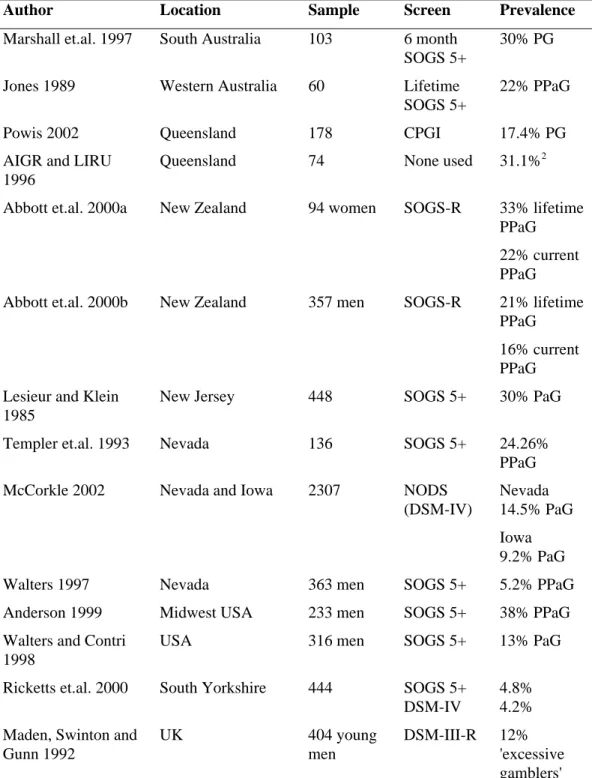
A table presented at the end of this section provides summary details of Australian and international correctional studies cited.
The rates reported in each of these studies need to be scrutinised according to the screens used to determine problem gambling prevalence. As noted in the above section, 'Defining and Measuring Problem Gambling', different screens such as the SOGS and the CPGI, produce varying results, reducing the direct comparability of research results. In the South Australian study, Marshall et.al (1997) completed a study of male prisoners at Yatala Labour Prison. The study reported that 30% of the 103 inmates interviewed were problem gamblers. This figure was generated by use of the 6 month version of the SOGS screen. Marshall et.al (1997) distinguishes between problem gamblers (SOGS score of 1 to 4) and probable pathological gamblers (SOGS score of 5 and above). However, if severe problem gambling is defined as recommended by some authors (e.g. Dickerson 1996, Productivity Commission 1999, see above), by a SOGS score of 10 and above, the results of this study can be reinterpreted as indicating that 17.4% of interviewees had severe gambling problems.
The Western Australia study of 60 inmates at Canning Vale Remand Centre estimated that ‘probable problem gamblers’ constituted 22% of the sample (Jones 1989). The rate of 'problem pathological gambling' was measured by calculating the number of respondents who had a score of 5 and above on the lifetime version of the SOGS screen. Unlike the SA and WA studies, a study conducted in Queensland used the Canadian Problem Gambling Index (CPGI). Of 178 prisoners surveyed, 17.4% were deemed to have a gambling problem (Powis 2002). The highest incidence found was among non-indigenous males (21.4%) while the lowest was non-indigenous males (14.3%). The Queensland study has produced slightly lower rates than other studies. This is probably due to their use of the CPGI, which is known to produce slightly lower prevalence rates.
An earlier Queensland study (AIGR and LIRU 1996) used no gambling screen to when interviewing 74 inmates of the Arthur Gorrie Centre (72 men, 1 female and 1 undisclosed) and 121 Break Even clients (93 men and 28 women). The study focused in the main on the use of poker machines, which were recently introduced into Queensland at the time. The survey asked each respondent to indicate if they had experienced any personal or financial difficulties as a result of their gambling, to which 31.1% answered 'yes'.
While Australian studies focusing on correctional populations are few, all have reported greater incidences of problem (or pathological) gambling than found among the general population.
• International studies also report high incidences of problem gamblers among prison populations.
International studies support the findings of Australian research that higher incidences of problem gambling exist among correctional populations. As in the Australian correctional studies, the following international studies use differing screens to ascertain the prevalence of problem gambling. Again, some researchers have used a SOGS 5+ cut-off to determine the level of problem gambling, while others employ different cut offs and entirely different screens such as the CPGI. Each study should be assessed according to the methods employed. However, regardless of the screen used for each study, common to all correctional studies focused on gambling, are higher reported levels of problem gambling than found among the general population.
Three recent New Zealand studies have reported high incidences of gambling problem among prison populations. The extensive survey included the 6-month SOGS-R screening instrument. Abbott et.al. (2000a, 2000b) found that 21% of male prisoners and 33% of female prisoners were lifetime probable pathological gamblers while Brown's (1998) study estimated that 25% were problem gamblers. In the Abbott study of male offenders (2000b:9-10) both Maori and non-Maori showed similar rates of problem gambling.
Large incidences of pathological gambling (SOGS 5+) were also evident in a study by Walters and Contri (1998) of 316 male prisoners where 57 respondents were deemed to be probable pathological gamblers (18%). An earlier study by Walters (1997) produced
comparatively lower rates of pathological gambling where only 5.2% of 363 incarcerated offenders in a Nevada prison had a SOGS score of 5 and above. Though the prevalence was lower than other studies, it remains higher than existing estimates for the general US population.
A more recent US study identified 38% of 233 incarcerated males as being probable pathological gamblers by using a SOGS 5+ cut off (Anderson 1999). Similarly, Lesieur and Klein (1985, cited in Blaszczynski 1994:132) found high rates of pathological gambling (30%) among 448 US New Jersey prisoners, which they estimated to be about 10 to 15 times the rate of ‘pathological gambling’ in the general population. This estimate is based on the total number of SOGS 5+ scores. The sample breakdown comprised 118 females, 30.5% being pathological gamblers, and 230 males of whom 29.6% scored 5 or more on the SOGS screen.
In another US study, Templer et.al. (1993), tested 136 consecutively admitted male inmates in a Nevada prison. The SOGS was self-administered by the inmates along with a Minnesota multiphasic Personality Inventory (MMPI), a psychasthenia scale and a MacAndrew alcoholism scale. From the SOGS results, it emerged that 47.06% had some gambling problem. This figure was calculated by adding together all scores of 1 or more. Of these scores, 24.26% of inmates (n=33) were classified as 'probable pathological gamblers' (SOGS 5+ scores).
McCorkle's (2002) study of 2307 arrestees in Las Vegas (Nevada) and Des Moines (Iowa) used a 144 item survey included the NODS survey created by National Opinion Research Centre (NORC) based on DSM-IV criteria. From the survey carried out it was deemed that 14.5% of Las Vegas arrestees and 9.2% surveyed at Des Moines were classified as pathological gamblers from the DSM-IV criteria.
In the UK, correctional studies are few. Of the three located, one presents unreliable anecdotal evidence of the prevalence of gambling problems in HMP Ford prison in West Sussex (Bellringer 1986). In comparison, Ricketts et.al. (2000) study provides some evidence that gambling is a risk factor for probationers. A self-administered 3 question survey was distributed to all persons on probation and combination orders in the Yorkshire area. From the 444 surveys completed, all persons who answered 'yes' to
two particular questions1
relating to gambling (n=46) were selected for further interview (including a SOGS questionnaire). Only 11 persons (out of 46) agreed to participate. Of these 11, 9 had a SOGS score of 5+ and 8 had a DSM-IV 3+ score. In terms of the total probation population (n=444), 4.5% were deemed to be problem gamblers (4.8% SOGS 5+ and 4.2% DSM-IV 3+). These figures were 6 to 7 times that of general population problem gambling estimates. This study is important because it focuses on probationers rather than the usual prison studies that typify correctional-focused studies of gambling behaviour.
A third UK study focuses on identifying gambling problems in young male incarcerated offenders (Madden et.al. 1992). The mean age of the 406 participants was 19 years 4 months. Each participant was interviewed using a semi-structured format that incorporated questions about gambling and video games. Those who were preliminarily identified as heavy gamblers (gambling most days or every day), were then administered the DSM-III-R. 11.9% were identified as 'heavy gamblers' but the DSM III-R found that only 2.2% could be classified as 'pathological gamblers'.
From these studies, it can be concluded that despite the range of survey methods used and differing prevalence estimates in Australia, New Zealand, the United States and the UK, problem gambling is an issue for correctional populations. Interest in the relationship between gambling and crime has in part fuelled these correctional studies. The nature of this relationship is the subject of much ongoing discussion and debate.
1 The two questions were:
"2) Other than the National Lottery, have you gambled more than twice in any one week? 3) Have you spent more time or money on gambling than you intended?"
Activities defined as gambling include the National Lottery, as well as "scratchcards, any other lottery, football pools, bingo, fruit machines, private betting, betting on horse or dog races or other events at a bookmakers or tables in a casino" (Ricketts et.al. 2000:13).
Table 1: Problem Gambling Prevalence Rates Recorded in Correctional Populations1
Author Location Sample Screen Prevalence
Marshall et.al. 1997 South Australia 103 6 month SOGS 5+
30% PG Jones 1989 Western Australia 60 Lifetime
SOGS 5+
22% PPaG Powis 2002 Queensland 178 CPGI 17.4% PG AIGR and LIRU
1996
Queensland 74 None used 31.1%2 Abbott et.al. 2000a New Zealand 94 women SOGS-R 33% lifetime
PPaG 22% current PPaG Abbott et.al. 2000b New Zealand 357 men SOGS-R 21% lifetime
PPaG 16% current PPaG Lesieur and Klein
1985
New Jersey 448 SOGS 5+ 30% PaG Templer et.al. 1993 Nevada 136 SOGS 5+ 24.26%
PPaG McCorkle 2002 Nevada and Iowa 2307 NODS
(DSM-IV)
Nevada 14.5% PaG Iowa 9.2% PaG Walters 1997 Nevada 363 men SOGS 5+ 5.2% PPaG Anderson 1999 Midwest USA 233 men SOGS 5+ 38% PPaG Walters and Contri
1998
USA 316 men SOGS 5+ 13% PaG Ricketts et.al. 2000 South Yorkshire 444 SOGS 5+
DSM-IV
4.8% 4.2% Maden, Swinton and
Gunn 1992 UK 404 young men DSM-III-R 12% 'excessive gamblers'
1 The following abbreviations are used in the table
PG = problem gambling, PaG = pathological gambling, PPaG = probable pathological gambling. 2
This figure was calculated by adding together all the 'yes' responses to the question: "have you ever experienced personal or financial problems because of poker machine playing?"
Prevalence of Offending among Problem Gamblers
• Not all problem gamblers become criminals, nor do all offenders with gambling problems commit gambling related offences.
The terms crime and gambling are often linked in the literature, but it is important to remember that there isn't always a simple causal relationship between problem gambling and offending. Not all problem gamblers become criminals and not all criminals with gambling problems commit offences related to their gambling (AIGR and LIRU 1996, Doley 2000, Marshall et.al. 1997, Productivity Commission 1999, Rossen 2001).
Researchers focusing on crimes committed by problem or pathological gamblers comprise a small but growing area of interest. Recent reviews by Doley (2000:13), Andrew et.al. (1997), the Centre for Criminology and Criminal Justice (2000), and the Productivity Commission (1999:H1) suggest that there is evidence that problem gambling is a risk factor for offending in Australia. The majority of studies examining the relationship between gambling and crime have been carried out in clinical contexts. When clinical studies are viewed in combination with the current correctional studies, it is apparent that some offenders do commit crimes to support their gambling, and for other offenders, crimes committed are unrelated to gambling.
Researchers have characterised links between problem gambling and crime in three ways. The first is that for some problem gamblers, their offending is coincidental and bears no relationship to their gambling problem. Secondly, some researchers have proposed that a co-symptomatic relationship exists between problem gambling and offending. That is, gambling and offending each arise from the same antecedent factor (i.e. poor impulse control). Thirdly, offending may be directly related (i.e. instrumental) to gambling problems.
• For some problem gamblers, their offending is coincidental to their gambling.
The bulk of literature examining offending by problem gamblers tends to focus on the links between the two. As a result, rates of non-gambling related offending are not
always reported or even discernible from survey data. It is important to read statistics that link problem gambling with criminal offences with the understanding that the commission of non-gambling related offences by problem gamblers are not always reported.
There are exceptions to this trend. For instance Blaszczynski and McConaghy's (1994b) study of a group of 306 Gamblers Anonymous and hospital patients, focused on both the commission of gambling related offences and non-gambling related offences, as well as non-offending. By respondents' own admissions, 6% had never committed a gambling related offence, 48% had committed only gambling related offences, and 35% said they had never committed an offence. In Marshall et.al's (1997) South Australian correctional study, 24% of offenders with a SOGS 5+ score had never committed a gambling related offence.
As we will see below, it is seductive to purport a causal link between the development of a gambling problem and the commission of crimes. But again it should be remembered that not all problem gamblers offend, and some offend for reasons unrelated to their gambling.
• Some authors suggest that there is a co-symptomatic relationship between problem gambling and crime.
Some researchers have understood criminal acts committed by problem gamblers as being co-symptomatic with poor impulse control. Pathlogical gambling is defined by DSM criteria as an impulse control disorder. Blaszczynski and Silove (1996:359) state that impulse control disorders are typified by
• the repeated failure to resist impulses or the drive to carry out certain behaviours which are harmful to the individual or to others;
• an increasing sense of tension immediately before committing the act;
• and the experience of pleasure, gratification, or relief on completion of the act.
• Immediately following the act there may or may not be genuine regret, self-reproach, or guilt.
In this model, poor impulse control is envisaged as an underlying factor that results in risky behaviour in many aspects of a person's life including, gambling, sexual practices, and crime. For example, one US study noted that problem gamblers were participating in risky sexual behaviours. Though not the only explanation on offer, it was suggested that an impulsive personality trait could be used to explain co-occurrence (Petry 2000). Excessive gambling and criminal acts are sometimes construed as symptoms of an underlying impulse disorder, but there are other explanations on offer, including the role of depression and childhood experiences in the development of excessive gambling and the commission of criminal acts. These and other theories (including psychoanalytic approaches) seek to explain cases where the co-existence of unrelated behaviours like pathological gambling and criminal acts are found. Many of these theories are subject to ongoing debate in the literature, especially in the USA.
• For other problem gamblers, their offending is instrumental to their gambling.
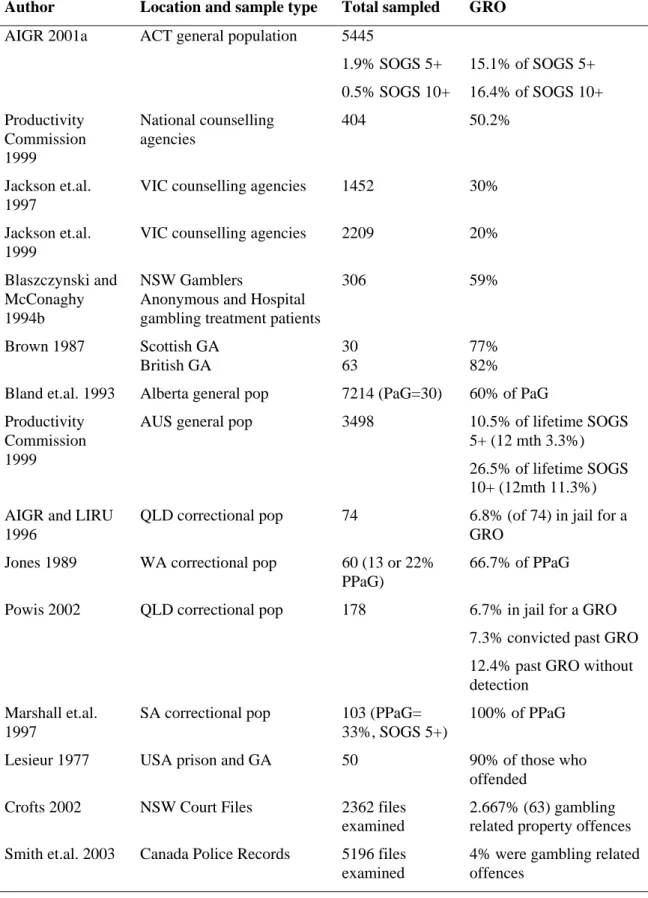
There is evidence that problem gamblers are at risk of committing gambling related offences (CCCJ 2000, PC 1999). In a broad range of studies, including correctional and general population studies, some problem gamblers have been found to offend to acquire money to fund their gambling activities, or to replace gambling losses or pay gambling debts. These are generally referred to as 'gambling related offences'. For example, the Productivity Commission (1999:H15) concluded that "while not all crimes committed by problem gamblers are gambling related, the overwhelming majority are." This assertion is not reflected in the available literature. Much of the evidence for gambling related offences comes from data collected from gamblers undergoing counselling or other treatment. This data requires sensitive interpretation given that the instances of gambling related crimes are higher among treatment groups than found in the general population (Productivity Commission 1999:H12). From the literature surveyed below, rates of gambling related offences committed by gamblers are varied. The Productivity Commission (1999) estimate that from their own surveys of counselling agencies, 50.2% of gamblers had committed criminal offences, while
among the general population, 10.5% of lifetime SOGS 5+ and 26.5% of lifetime SOGS 10+ problem gamblers had committed a gambling related offence. The PC emphasised that there is no direct causality involved in the 'development' of a gambling problem and the commission of crimes.
Blaszczynski’s (1994:8) study found that between 21% and 85% of ‘pathological gamblers’ commit offences to support their gambling activities and “on the basis of this statistical association, [pathological gamblers in treatment] have postulated or inferred a direct causal relationship between crime and gambling.” In an earlier joint study,
Blaszczynski and McConaghy (1992, 1994b) interviewed 306 gamblers who were undergoing treatment, 59% of whom said they had specifically committed an offence to fund their gambling activities. In Victoria, 30% of 1452 clients of Break Even
counselling agencies said they had committed a gambling related offence (Jackson et.al. 1997).
UK and US studies support the high Australian rates of gambling related offences. A UK study of 107 Scottish and British Gamblers Anonymous participants found that 77% and 82% respectively had committed a gambling related offence (Brown 1987). In the US, Bland et.al. (1993) found that 60% of pathological gamblers interviewed offended to support their gambling activities. In clinical studies carried out in the US, high rates of offending among ‘pathological gamblers’ were also found. Both Lesieur (1989) and Rosenthal and Lorenz (1992) report that two thirds of compulsive gamblers offend to fund their gambling activities. Rosenthal and Lorenz (1992; 1991:657) suggest that 70 to 80% of ‘pathological gamblers’ commit gambling related offences in the latter stages of their gambling careers. Like Blaszczynski (1994), Rosenthal and Lorenz (1992) advocate understanding pathological gambling as a “progressive disorder” that comprises four stages: the winning phase, and the losing, desperation, and giving up or realisation/help seeking phase. Lesieur (1977) found from 50 subjects studied, over 90% of those who offended, did so for reasons related to gambling.
• In the correctional studies presented above, each made some comment on the relationship between gambling and crime.
Jones' (1989) data from Western Australia indicates that two-thirds (8 of 12) of those prisoners deemed to be Probable Problem Gamblers (i.e. with a SOGS 5+ score) had
committed a Gambling Related Offence. Jones suggested a range of relationships between gambling and crime. For some people criminal activity can lead to gambling as 75% of those interviewed were convicted at young ages before they became gamblers. At the same time, Jones found evidence to suggest that for some people, gambling does lead to crime. 25% were convicted when they were older, and had committed no crimes prior to their gambling activities. This group felt that if they could stop gambling, they wouldn’t commit any more crimes. He also found that prisoners gamble more than general population and that gambling occurs with the proceeds of the crime as a way of enjoying it. Like Brown (1987, see above), Jones concedes that low socio-economic status may be a common underlying factor of the coincidence of gambling problems and criminal activities.
In the Queensland Arthur Gorrie survey (AIGR and LIRU 1996:45), 7% of respondents said that their current offence was committed in order to obtain money to play poker machines. 10.8% felt that their poker machine playing had caused them to be in 'in trouble with the police'.
Powis' (2002) Queensland study found that 6.7% of respondents said that their current offence was committed to fund their gambling and 7.3% said that they had committed an offence in the past that was gambling related.
In the South Australian correctional study (Marshall et.al. 1997) 26 of the 103 inmates interviewed indicated that their gambling had 'gotten them into trouble with the law'. This group had a mean SOGS score of 12.38 compared with 1.56 SOGS score for those who answered 'no' to the same question. All interviewees with a SOGS 5+ score had committed a Gambling Related Offence while 10% of those with SOGS 5 or less, had committed a GRO. While the South Australian (Marshall et.al.1997) findings seems to suggest strong links between GRO and those inmates with a SOGS5+ score, the authors remained cautious about making any direct causal link between gambling problems and criminal activities.
The Australian correctional studies in general have been careful not to make a direct link between gambling and crime. AIGR and LIRU (1996:49) caution that "the direction of causality is complex but it would appear that for some people who gamble
excessively a criminal offence becomes the 'only' means of meeting debts and/or continue to gamble."
• A recent general population survey found that 15.1% of problem gamblers in the ACT had committed a Gambling Related Offence. Estimates of GRO in the Australian population are at 10.5%.
The ACT Gambling Survey (AIGR 2001a:123) asked participants if they had “obtained money illegally because of their gambling; experienced problems with the police because of their gambling; or appeared in court on charges related to their gambling”. From these questions, it was estimated that of those respondents with a SOGS score of 5+, 15.1% had committed a gambling related offence. The Australian figures were 10.5% (AIGR 2001a:124). In addition, 14.2% of problem gamblers had performed illegal acts in order to obtain money to gamble or to pay off gambling debts. The Australian figure is 7%. Among those ACT respondents with a SOGS score of 10+, 16.4% had participated in a ‘gambling related illegal activity’ and had also ‘obtained money illegally’. Australian figures were 26.5% and 13.2% respectively.
• Gambling Related Offences tend to be non-violent property offences
Gamblers who commit offences usually carry out non-violent property offences. In particular, white-collar crime and property theft rate highly in studies of pathological gamblers committing gambling related offences (Doley 2000:11, Grinois et.al 1999:11 cited in CCCJ 2000:46, Lesieur 1987, Rosenthal and Lorenz 1991). Crofts’ (2002:52) review of NSW local and district court files found that 2.7% of property offences on file were gambling related (63 of 2362). Another recent study found that 14.7% of 183 Australian and New Zealand prosecuted fraud crimes were gambling related (Sakurai and Smith 2003). An examination of Canadian files found that 4% of 5196 Edmonton Police files examined from January 2001 to August 2002, recorded gambling related crimes, mostly counterfeiting and fraud related, but some involved family disputes where one or both parties' gambling fuelled the dispute (Smith et.al. 2003).
White-collar crime also rates highly in studies of gamblers who offend (Lesieur 1987, Rosenthal and Lorenz 1991). In addition to these offences, Rosenthal and Lorenz (1991) also found that bad checks were common (34%), as were loan fraud (31%), embezzlement and employee theft (30%), hustling (29%), bookmaking (21%), tax
evasion (19%), tax fraud (12%), and to a lesser extent, robbery, pimping and prostitution.
In a UK study, Brown (1987) found that 40% of Scottish and 51% of British gamblers in treatment had been prosecuted for non-violent property crimes.
In Canada, one study found that Problem Gamblers who offend commit “theft, forgery, embezzlement, fraud, credit card scams, domestic violence, [and] break and enters” (Smith and Wynne 1999:14). Statistics on these offences were difficult to obtain as police had maintained no systematic record of offences committed by problem gamblers. The authors recommended that gambling related offences be rigorously recorded by law enforcement agencies.
Blaszczynski and McConaghy (1992, 1994b) report that a proportion of ‘pathological gamblers’ they interviewed admitted to having committed roughly ten offences over ten years. The authors advocate a direct causal link between ‘pathological gambling’ and GRO as increased availability and advertisement of gambling facilities has led to increased prevalence of Pathological Gamblers.
Some problem gamblers have been imprisoned for gambling related offences. New Zealand studies suggest that 15% had committed a gambling related offence, either burglary, theft, fraud robbery (in order of incidence) and 9% had been sentenced for a gambling related crime (Abbott et.al. 2000b).
• Many Gambling Related Offences committed by problem and pathological gamblers are undiscovered.
The Productivity Commission's (1999) investigation into problem gambling and crime suggested that many offences committed by problem gamblers are undiscovered and unprosecuted because "some of the offences are not serious enough to be detected; not all crimes that are committed are reported to the police; not everyone who commits an offence gets caught; and only some of the offences end up in the courts" (PC 1999:H18).
Blaszczynski and McConaghy’s (1992, 1994b) study of 306 treatment-seeking gamblers, shows that while 59% had committed a gambling related offence, only 23%
had been prosecuted for an offence related to their gambling. From Powis' (2002) correctional study, 12.4% of respondents claimed that they had offended in the past to fund their gambling without being detected, and thus prosecuted for the offences.
• Gambling Related Offences are under-identified by Police, Courts and Corrections.
A report examining the relationship between crime and problem gambling in Victoria highlighted a need for police, courts and corrections to record offences that are gambling related in order to provide more accurate information on the occurrence of gambling related offences (Centre for Criminology and Criminal Justice 2000). At the present time, Police in Victoria reported that gambling was a factor in the commission of offences but that statistics do not reflect this (CCCJ 2000; see also AIGR and LIRU 1996, Crofts 2002, 2003, Fiegelman et.al. 1998, Jones 1989).
Table 2: Reported Rates of Gambling Related Offences
Author Location and sample type Total sampled GRO
AIGR 2001a ACT general population 5445
1.9% SOGS 5+ 15.1% of SOGS 5+ 0.5% SOGS 10+ 16.4% of SOGS 10+ Productivity Commission 1999 National counselling agencies 404 50.2% Jackson et.al. 1997
VIC counselling agencies 1452 30% Jackson et.al.
1999
VIC counselling agencies 2209 20% Blaszczynski and
McConaghy 1994b
NSW Gamblers
Anonymous and Hospital gambling treatment patients
306 59% Brown 1987 Scottish GA British GA 30 63 77% 82% Bland et.al. 1993 Alberta general pop 7214 (PaG=30) 60% of PaG Productivity
Commission 1999
AUS general pop 3498 10.5% of lifetime SOGS 5+ (12 mth 3.3%) 26.5% of lifetime SOGS 10+ (12mth 11.3%) AIGR and LIRU
1996
QLD correctional pop 74 6.8% (of 74) in jail for a GRO
Jones 1989 WA correctional pop 60 (13 or 22% PPaG)
66.7% of PPaG Powis 2002 QLD correctional pop 178 6.7% in jail for a GRO
7.3% convicted past GRO 12.4% past GRO without detection
Marshall et.al. 1997
SA correctional pop 103 (PPaG= 33%, SOGS 5+)
100% of PPaG Lesieur 1977 USA prison and GA 50 90% of those who
offended Crofts 2002 NSW Court Files 2362 files
examined
2.667% (63) gambling related property offences Smith et.al. 2003 Canada Police Records 5196 files
examined
4% were gambling related offences
Screening for and Treating Offenders with Gambling Problems
• It has been claimed that treating offenders who have gambling problems may reduce recidivism.
Gambling-focused correctional studies recommend that gambling screening and treatment options become part of the correctional system (e.g. Jones 1989, Marshall et.al. 1997, Powis 2002). For example, in the Western Australian prison study, Jones (1989) favours rehabilitative approaches, rather than incarceration, for offenders who have committed gambling related offences. He suggests that sentencing for an offender with gambling problems, should include them being directed to some form of rehabilitation/restitution rather than prison as they constitute no threat to the community. Rehabilitation is less likely during imprisonment as offenders will continue to gamble while in prison, a finding also presented by Powis' (2002) Queensland correctional study. Blaszczynski (1994) has also recommended rehabilitative approaches be utilised in the cases of those offenders who are ‘pathological gamblers’. “While not advocating insanity as a valid plea for diminished responsibility, it is important to be aware that appropriate psychological interventions for rehabilitation are available and represent a more cost effective strategy to reduce the risk of recidivism in this population” (Blaszczynski 1994:14, see also Jones 1989). However, in a recent review of prosecuted fraud crimes, 76% of offenders who had committed gambling related fraud crimes received full-time custodial sentences. The Australian Capital Territory (ACT) was the only state in Australia to order offenders to undergo treatment (including counselling) for gambling related fraud crimes (Sakurai and Smith 2003). The issue of intervention/rehabilitation is not straightforward. For offenders whose gambling is directly related to their gambling, intervention may prove difficult unless they actually feel like they have a problem, and are willing to participate in some form of therapeutic assistance to control their gambling. Many problem gamblers don't feel that gambling is a problem for them, and do not seek help (e.g. AIGR 2001b).
In addition, there are varying approaches to rehabilitation and their relative effectiveness have been subject to ongoing debate. A recent review of studies of intervention for problem gamblers concluded that there is a paucity of reliable research
available assessing treatment intervention (Oakley-Browne et.al. 2003, see also Robson et.al. 2002). It suggested that the bulk of existing research suffers from a lack of standardisation and methodological rigour. However, from the research reviewed, it appears that behavioural and cognitive-behavioural interventions are somewhat beneficial over the short and long term. Current therapeutic approaches include residential therapy, counselling and financial counselling, Gamblers Anonymous groups which operate in several countries, including Australia, strongly modelled on the Alcoholics Anonymous model, pharmacological interventions, and psychological interventions. For the remainder of this section, I outline the various methods of offender screening and treatment, specifically in relation to problem gambling.
Australia
All states in Australia assess offenders for risk and need. No assessment tool used in Australia explicitly focuses on gambling. Most use standardised tools while others use open ended interviews to determine whether offenders are eligible for assistance through specific offender programmes. All states offer offender programmes, such as those focusing on readdressing violent and sex offender behaviour and excessive drug and alcohol use. Only one state in Australia, New South Wales, has a specific
programme targeting those offenders with gambling problems. Most states offer information about relevant counselling agencies. Details of offender assessment for each state are provided below.
Australian Capital Territory
Offenders in the ACT Correctional System are not presently screened for gambling problems. Currently, criminogenic risks and needs are screened using the Canadian designed 'Level of Service Inventory-Revised' (LSI-R). This assessment tool records details of a subject's criminal history as well as their current and past situation in relation to education/employment, financial, family/marital, leisure/recreation, companions, alcohol/drug problem, emotional/personal and general
attitudes/orientation. There is an intention to begin training staff to use 'Crime-Pics II' as part of each assessment. This short questionnaire is designed to assess the effectiveness of probation procedures with each subject. The Crime-Pics II problem inventory asks
the subject to self-assess their degree of problem in regard to a number of issues, including gambling, by using a scale ranging from no problem to big problem. South Australia
South Australian Corrections currently uses the 'Wisconsin needs/risk assessment tool' to screen for criminogenic need. The Wisconsin Need Instrument is the most widely used in the USA (National Institute of Corrections 1999:8). Designed in the 1970s, it has been suggested that the use of non-Australian tools in the Australian context has weakened its validity (Maller and Lane 2002:3). It has also been suggested that all assessment tools can become less effective over time if their design is fixed and not dynamic. The SA department is looking to change their methods of assessment for criminogenic need and are currently investigating the possible use of the New Zealand designed Criminogenic Needs Index (CNI, see below) for their purposes.
Western Australia
Western Australia Department of Justice have developed their own screening tools for assessing levels of substance use, violence, and sex offending to determine what treatment programmes are best suited for each offender who is incarcerated or in community corrections. No screening tool used focuses on gambling. Counselling access is available in WA prisons.
Queensland
The Department of Corrective Services currently screens offenders using an Offender Risks Needs Inventory (ORNI). The inventory was developed internally and is based on the LSI assessment tool. While gambling does not comprise a substantial focus of the ORNI, offenders are asked if they gamble, and if they feel that they have a problem with gambling (rated as no problem, low, medium or high problem). If an offender does feel like they have a problem, they may be referred to a relapse prevention programme, which receives mainly offenders with drug problems. Gamblers Anonymous assistance is available in some facilities, and identified offenders with gambling problems are offered information about various post-release services available to them, such as counselling by Relationships Australia. A gambling programme focused on identifying and addressing underlying factors critical to the development of gambling problems was
being designed for offenders in the Queensland system, but is currently a low priority and its development is on hold.
Tasmania
In Tasmania, criminogenic need is identified for clients of community corrections by assessing each offender in an unstructured interview format. Apart from offender disclosure, needs and risks are identified by taking into account the nature of the current offence, any mitigating circumstances that may have arose in court proceedings, and by identifying any relevant factors from previous case histories available for each offender. Relationships Australia offers counselling to those offenders (and their families) who voice an interest in receiving counselling related to their gambling. Offenders at all Tasmanian correctional facilities are all potentially able to receive counselling on request, though some may only be able to receive telephone counselling.
Victoria
The Office of the Correctional Services Commissioner (OCSC) has been developing a Victorian risk and need assessment tool. This new tool does not have a gambling component in its determination of risk levels, details on offender motivation, needs according to the specific offences, assessment of self-harm risks, other needs particular to each individual and a plan for offenders who are deemed to have needs upon release. While this tool is being developed, the LSI-R continues to be employed by corrections staff to assess risk and need (Birgden and McLachlan 2002).
Victoria - Addendum
Since completion of this project, the Victorian Government Community Services announced the Inside Out program for Loddon Prison inmates. The program seeks to train prison workers in the identification of problem gamblers. In addition, the Bendigo Community Health Services is to run a 6-week awareness program for prisoners, as well as providing individual counselling services for prisoners (Victorian Government 31 07-03).
Like the ACT and Victoria, the New South Wales Department of Corrective Services currently uses the LSI-R assessment tool. Originally piloted in the Probation and Parole service, the department intended its use to expand to use with all offenders, including those who are incarcerated. As mentioned earlier, the LSI-R has no gambling
component.
The department operates what appears to be Australia's only gambling focused programmes for offenders. All four programmes listed below, do not address any underlying behavioural issues for offenders with gambling problems. Instead, the programmes are designed to raise general awareness of the risks involved in gambling. The Casino Community Benefit Fund and the Department of Gaming and Racing have been in communication with Corrections Health and the Department of Corrective Services on the issue of prison services for gamblers. Discussions are ongoing. The four existing programmes are
• Vietnamese Problem Gambling Program at the MSPC Long Bay (Alcohol and Other Drug (AOD) Strategy),
• Vietnamese Gambling Relapse Prevention Program (Alcohol and Other Drug (AOD) Strategy),
• A gambling awareness programme for women,
• Problem Gambling Awareness. (Alcohol and Other Drug Health Promotion Unit).
Northern Territory
The Northern Territory is currently developing methods of assessing offenders for risk and need. The state currently uses the LSI-R to screen offenders. The majority of prosecuted offenders in the NT are indigenous. It has been found that the LSI-R is unable to effectively isolate needs and risks facing indigenous offenders. Thus, a large component in the development of the new assessment tool, called the Integrated Offender Management System, will be a strong focus on cultural needs.
New Zealand
The New Zealand Department of Corrections uses the Criminogenic Needs Inventory (CNI) to assess offenders prior to and after sentencing (Coebergh et.al. n.d.). The CNI interview format is semi-structured and contains a gambling component. The CNI is designed to assess whether gambling is temporally and behaviourally associated with offending. The CNI also has components which are sensitive to the 'culture-related needs' of Maori (Maynard et.al. n.d.). Programmes targeting offenders have been designed according to determined recidivist needs and offender types. New Zealand currently has no programmes targeting offenders with gambling problems, as violence, drug and alcohol use have been highlighted as constituting the predominant
criminogenic need in offender populations. All programmes for criminogenic need are similarly structured: group based, cognitive behavioural, relapse prevention, offence focused. They are about 100 hours in length and cater for groups of 8-12 and facilitated by two people. Identified offenders whose gambling has contributed to their offending are directed to one of the existing programmes. The department is currently reassessing various criminogenic need with reconviction rates in order to assess the current
programmes it offers. Gamblers who offend are included in this review.
UK
In the UK, gambling has not been a focus of correctional services. Recent research has found that the Assessment Case management and Evaluation (ACE) screening tool, which has a gambling component, identifies crimonogenic factors such as drug and alcohol use as the critical issues for tackling reoffending. Gambling is a risk for only 2% of the offender population (Raynor et.al. 2000, see also Merrington 2001). In terms of probationers, the National Probation Service has no specific policy or intention to developing services targeting offenders with gambling problems. At the moment, Gamblers Anonymous runs groups for those people with gambling problems in some prisons.
Canada
A gambling awareness programme is being designed and trialled at the Lethbridge correctional facility. It is primarily a preventative programme that runs over six weeks,
that includes educating offenders about the odds of gambling. The programme is currently being run and assessed and is due to be completed next year (Nixon n.d.).
USA
While some authors have argued that the development of gambling treatment programmes for offenders is limited in the US (e.g. Gowen 1996), there are a number of initiatives that focus on the identification and rehabilitation of incarcerated offenders with gambling problems. These services are based on DSM criteria for pathological gambling comprising a medicalised addictive model approach to rehabilitation. Initiatives include correctional staff training (e.g. Arizona), prisoner access to telephone counselling and counselling services (Gamblers Anonymous) (e.g. Minnesota), and specific programmes for prisoners with gambling problems (e.g. Minnesota, Nevada). Jurisdictions in the United States have implemented judicial alternatives for offenders committing gambling related crimes and treatment initiatives for correctional populations. Rosenthal and Lorenz (1992) report that where US courts have taken ‘compulsive gambling’ into account, sentencing has included a number of treatments, including restitution, community service and probation. Brief details of some these initiatives are presented below.
The New York legislature notes that gambling can become a problem for some people, and as such funds treatment agencies. One of these agencies, Human Technologies Corporation, operates a Gambling Information and Counselling service that runs courses in two medium security prisons (Powell 2001). About 12-15 inmates are accepted into a 10-week course. In the Mohawk Correctional Facility, the Gambling with Recovery 2002-2003 programme dealt with “diagnosis of problem and pathological gambling…, recovery and relapse prevention …[and]… issues of compulsion and impulsivity” (Klein n.d.). Though most participants highly rated the programme, no formal assessment of course effectiveness has been conducted.
The State of Nevada Gamblers Assistance Program has investigated the use of the Gambling Severity Index (GAI), modelled on the Addiction Severity Index, which attempts to identify among other criminogenic factors, gambling and substance abuse. Gamblers in one Nevada county jail participate in 6 week ‘psycho-educational’ courses to enhance their motivation to seek treatment post-release.
The Minnesota statutes require that probation officers must investigate if gambling is a factor in the commission of crimes such as theft, embezzlement of public funds, or forgery. If gambling has played a role in the commission of an offence, the offender must be screened for compulsive gambling (SOGS 5+) and treatment options
recommended (State of Minnesota 2002: 609.115. subdivision 9). The Department of Human Services funds programmes that specifically target incarcerated offenders. For example, a ‘Problem Gambling Prevention Program’ designed for all offenders was designed to assist in preparation for post-release adjustment. Workshops in four correctional facilities, consisting of 12-30 participants through to over 100 in larger federal prisons, covered topics such as the history of gambling in Minnesota, controlling personal gambling to avoid the risks of developing a gambling problem, detecting the signs of problem gambling, how to approach someone whose gambling is a concern, and information about existing community counselling and treatment services
(Reynolds 1999). This programme has ceased operating in June 2002 due to a lack of government funding.
In Arizona, probation and parole officers undergo training in understanding the DSM IV definition and characteristics of pathological gamblers and their characteristics in order to identify pathological gamblers during pre-sentencing, and to understand the implications for the family of pathological gamblers, and the reasons behind probation violation by pathological gamblers. As an outcome of offender screening, probation officers can recommend the offender attend Gamblers Anonymous and ask the offender to report monthly on their financial situation, or refer them to inpatient or outpatient treatment (Arizona Council on Compulsive Gambling 2002).
Gambling courts (modelled on the drug court framework) have been established to specifically receive cases where offender's crimes are in some way related to their gambling. Offenders must plead guilty in a regular court before they can be referred to a gambling court. Gambling courts than refer offenders to some form of therapy. These courts take the view that gambling is an addiction, and that offenders cannot control the compulsion to gamble and to commit crimes until the addiction has been eradicated. The Louisiana Gambling Court refers non-violent offenders to intervention treatments that last from 12 to 18 months where offenders progress through different forms of treatment (State of Louisiana 2003). The Amherst Gambling Court in New York state
offers career counselling, psychiatric services, substance abuse treatment, access to physicians, financial counselling and financial therapy. So far, the New York court has claimed a 90% success rate for gambling cessation, a decrease in recidivism and reductions in substance use (National Criminal Justice Reference Service 2003, Rose 2003). No documentation detailing the measurement of these successes has yet been made available. Without any information regarding assessment procedures for gambling courts, or for screening tools and offender gambling programmes, all claims regarding their success must be treated cautiously.
THE SURVEY
Questionnaire
The questionnaire comprises a South Oaks Gambling Screen (SOGS) with questions pertaining to both lifetime and 12 month gambling activities. The Questionnaire also contains additional questions regarding drug and alcohol use, help seeking behaviour for substance abuse (alcohol and illegal drugs), questions relating to gambling at ACT correctional facilities, and questions asking about gambling related offences. A copy of the Questionnaire appears in Appendix 1.
Australian National University Ethics Approval
The Questionnaire was submitted as part of a larger research proposal to the Australian National University's Human Research Ethics Committee. The Committee gave informal approval on the 14 April 2003 and formally ratified approval on the 2 May 2003.
Participant Recruitment and Sampling
Participation was sought from clients of the five ACT Corrective Services facilities. These facilities are the Belconnen Remand Centre (BRC) and the Symonston Temporary Remand Centre (STRC), both of which house persons awaiting sentencing, and those people to whom bail has been refused; the Periodic Detention Centre (PDC), housing offenders from Friday evening to Sunday evening, who perform community work; the Probation and Parole Unit (PPU), supervising those persons on bail and offenders on periodic detention, parole and community-based orders; and clients of the Community Service Orders Unit (CSO) at Symonston.
Information Sheets outlining the project were distributed to all clients of BRC, STRC, PDC, and CSO. In addition, an informal Information Session was conducted at the PDC only, on Saturday the 26th of April. A copy of the Information Sheet can be found in Appendix 3. As the majority of offenders in the ACT are required to report to the PPU,