Public Health Model of Injury Prevention: Practical Application in the Environmental Drilling Industry
By
Ngozi lbe
A Master's Paper submitted to the faculty of the University of North Carolina at Chapel Hill
In partial fulfillment of the requirements for the degree of Master of Public Health in
the Public Health Leadership Program.
Chapel Hill
Abstract
According to the Bureau of Labor Statistics (BLS) the environmental water
well drilling industry averaged 10 fatalities per year between 1990 and 1997.
Recent BLS data suggests that similar statistics are true today. Current industry
health and safety practices include Risk Assessment and Risk Management.
These practices lack much of the research and data required to design and
implement successful injury prevention strategies. The Public Health Model of
Injury Prevention (PHMIP) is a tool which, when used appropriately, creates
effective injury prevention strategies which can be implemented on an
industry-wide basis. The PHMIP can be used alongside existing health and safety
practices in the environmental drilling industry to greatly reduce the number of
fatal and nonfatal injuries that occur. Components of the model include
Surveillance, Risk Factor Identification, Intervention Development and
Evaluation, and Implementation. It is critical that all four components be
implemented as they must work together to create successful injury prevention
strategies. Limitations to the model exist and should be taken into consideration
during its application. One limitation is that the model relies on data from injuries
that have already occurred. Would it not be better to prevent these injuries from
ever occurring? Another problem is the cost of collecting and analyzing data as
well as designing and implementing certain injury prevention strategies. Careful
budgetary review should be conducted prior to implementing the model.
Additionally, organizational management may present some barriers to using the
efforts will fail at the workers level. A review of literature indicates that the PHMIP
is being used sporadically across the industry however wider and more
consistent application is necessary to achieve measurable results in injury
prevention. Wider dissemination of information on the PHMIP will serve to
increase awareness amongst industry leaders and foster dialogue that will
Introduction
According to the Bureau of Labor Statistics (BLS) the environmental water
well drilling industry averaged 10 fatalities per year between 1990 and 1997.
Recent BLS data suggests that similar statistics are true today. This is a fairly
significant number when you consider that the construction industry, under which
they are categorized, accounts for only 5% of the total labor force in America
(Matetic RJ, 1999). Based on statistics gathered by the BLS from 1992 to 2002,
electrocution was the leading cause of on-the-job death for water well drillers
(Matetic & Ingram, 2001). Other nonfatal recordable injuries included hearing
loss, hand injuries, back injuries and slip-trip-fall injuries.
The Environmental Remediation Drilling Safety Guidelines (EROS guide),
2005
(AntiEntropics, 2005), were developed to summarize some of the best available drilling safety knowledge in the remediation industry. One of the fourgoals of the guide is to assist in preventing losses due to injury to workers.
According to the National Institute for Occupational Safety and Health (NIOSH),
multiple factors and risks contribute to injuries to workers, such as hazardous
exposures, workplace and process design, work organization and environment,
economics, and other social factors (NORA Traumatic Injury Team, 1998).The
EROS guide seeks to address and mitigate the most common safety concerns
that arise from the risks outlined above.
The Public Health Model of Injury Prevention (PHMIP) recognizes that in
order to prevent injuries, we must first understand their causes. The Public
answered, provide a complete picture of injury causing events that can be better
understood, predicted and often prevented altogether. There are some variances
to the PHMIP such as the State and Territorial Injury Prevention Directors
Association (STIPDA) model for a State Injury Prevention Program (Appendix A)
(STIPDA, 2003), however, it generally consists of four core components which
work together to create effective injury prevention programs.
This paper looks at current injury prevention practices in the
environmental drilling industry as well as how and where the PHMIP might
supplement those practices to further prevent injury amongst drillers. It examines
to what, if any, extent the PHMIP is currently being applied and suggests
methods through which organizations can seamlessly integrate the model into
their existing health and safety programs. Also discussed are some of the
limitations to implementing the PHMIP in the environmental drilling industry.
Risk Assessment and Management
Current injury prevention practices in the environmental drilling industry
have been established to ensure worker safety on the job. The establishment of
these safety practices stems from organizational safety plans and lessons
learned as well as Risk assessment and Risk Management techniques. Risk
Assessment is the process of quantifying the probability of a harmful effect to
individuals or populations from certain hazards or hazardous activities. Risk
Management is activity directed towards the assessing, mitigating (to an
Management form an integral part of any good health and safety management
plan.
Risk Assessment
Risk assessments in environmental remediation drilling seek to characterize
the nature and magnitude of risks (risk characterization) related to the drilling and
direct push methods of intrusive subsurface activities involved in environmental
remediation (AntiEntropics, 2005). Studies have previously been conducted on
the risks associated with environmental drilling (Matetic RJ, 1999). Two methods
of assessing the risks of injury on the job include identifying hazards and
analyzing hazards.
• Hazard Identification (HI)
During the HI process, an attempt is made to identify actual and potential
hazards associated with completing the scope of work. As part of the hazard
identification process, the likelihood of occurrence and potential severity of each
hazard will be assessed, for the purpose of prioritization of control measures.
HI should be performed at the beginning of work, anytime the scope of work or
tasks change, after an incident or near miss, anytime site or weather conditions
change, and when performing non-routine tasks or unusual circumstances.
Identifying all actual and potential hazards requires planning and training to
ensure accuracy and completeness. Hazards indentified during environmental
~ Drilling set up and operation
~ Below ground/above ground services, such as gas pipes and electric
cables (below ground and overhead)
~ Falling, swinging tools
~ Explosion/combustion
~ Contaminated soil or water
~ Excavations
~ Trips, slips and falls
~ Heavy weights both on and off the drilling rig.
~ Noise
~ Traffic
~ Poor access
~ Struck by plant
~ Chemicals
~ Re-fuelling rig engine
~ Materials handling (cement, diesel or petrol, bentonite etc.)
(Blackledge & Blackledge, 2007)
An example of a completed HI form is attached as Appendix B
• Job Hazard Analysis (JHA)
The Job Hazard Analysis (JHA) is a safety analysis tool which provides a
step-by-step breakdown of each of the task that comprises the job. It is completed in
protect workers. It is usually attached as part of the Health and Safety Plan
(HASP) prepared for the job. The HASP details site specific hazards associated
with known conditions at the site and is a valuable onsite resource. Appendix C
contains an example of typical topics addressed in a HASP.
A JHA form is usually prepared by outlining the job description and the
individual steps required to execute them effectively. OSHA outlines five
questions that need to be asked during a JHA (OSHA, 2002):
~ What can go wrong?
~ What are the consequences?
~ How could it arise?
~ What are other contributing factors?
~ How likely is it that the hazard will occur?
These five questions, when answered, create a hazard scenario which will
ensure that efforts to eliminate the hazard and implement hazard controls help
target the most important contributors to the hazard. An example of a good
hazard scenario is presented below:
To perform a job hazard analysis on the above scenario, you would ask:
What can go wrong? The worker's hand could come into contact with the
augers while extracting them from the borehole.
What are the consequences? The worker could receive severe injuries to
the skin and bones of his hand.
How could
it
happen? The accident could happen as a result of the workertrying to pull augers from the borehole as part of completion activities
during well installation.
What are other contributing factors? This hazard occured very quickly. It
did not give the worker much opportunity to recover or prevent it once his
hand came into contact with the augers. This is an important factor,
because it helps you determine the severity and likelihood of an accident
when selecting appropriate hazard controls. Unfortunately, experience has
shown that training is not very effective in hazard control when triggering
events happen quickly because humans can react only so quickly.
How likely is it that the hazard will occur? This determination requires
some judgment. If there have been "near-misses" or actual cases, then
the likelihood of a recurrence would be considered high. If the auger
consistently presents a pinch point hazard this also increases the
the hazard will occur is high because there is no guard preventing contact.
and the operation is performed while the machine is running.
An example of a completed JHA form is presented in Appendix D.
Risk Management
The conclusions found in a risk assessment provide essential information
about the severity and extent of specific hazards. This information is used in
determining risk management decisions. Risk management refers to those
actions taken to control or mitigate exposure to hazards identified in the risk
assessment of a job. Risk management involves eliminating or reducing the risk
with control measures; and reviewing controls regularly to ensure they remain the
optimal solution to the injury risk (WorkCover. 1999).
Eliminate the risk. It may be possible to eliminate a risk by not performing a
specific activity or using a certain type of equipment. For example, limiting
sampling requirements during drilling would eliminate the hazards posed by the
use of open face switch blades used to open sampling sleeves. However it is not
always possible or feasible to eliminate a risk.
Reduce the risk. When a risk cannot be eliminated altogether. it should be
reduced by the following:
• Replacing the system of work or equipment with something safer e.g.
• Modifying the system of work or equipment to make it safer .e.g.
moving the location of a soil boring due to it's proximity to overhead
power lines.
Isolate the Risk. Keeping away from the risk may be an option if it is not a
relevant part of the job e.g. staying clear of a hornets nest identified on the
worksite during the hazard identification process.
Engineering Controls. Using engineering measures to make work safer e.g.
establishing traffic control in high volume traffic areas.
Where none of the above measures is feasible on a job, secondary
measures may be instituted to try to minimize the hazards. Secondary measures
include the use of Personal Protective Equipment (PPE) and the application of
safe work procedures such as posting warning signs and providing safety
training. These secondary measures are less effective and must be constantly
checked to ensure they are functioning properly. Often, secondary measures will
be used in conjunction with the previously listed controls to increase their
effectiveness.
The selection of risk management decisions requires careful consideration
of technical feasibility, economic sustainability and behavioral factors. Risk
management decisions must be based on scientific data which supports the
ability of the control to effectively address the hazard. Decisions based on poor
technical feasibility will likely fail to prevent the occurrence of a hazard. For
example, drillers who are exposed to air pollutants during drilling operations may
is necessary to ensure that the correct filter cartridge for the contaminant of
concern be used with the respirator. Using an incorrect filter cartridge will fail to
provide the desired protection from the hazard rendering the control technically
infeasible. Cost is also a major consideration when making risk management
decisions. It is necessary to understand the available budget prior to making
these decisions. While cost should never deter the implementation of necessary
injury prevention practices, understanding financial limitations will provide
guidance in making risk management decisions that are cost effective and
economically sustainable.
Risk management decisions will be unsuccessful in eliminating or
addressing hazards if the drillers are unwilling to implement them. Studies have
shown that there is a direct correlation between an individuals' perception of risk
and risk behavior (Rundmo, 1996). Ensuring that drillers are aware of the
seriousness of the risks presented on the job and willing to implement the
measures outlined in the risk management decision are key to successful
decision making. Often, involving drillers in the decision making process will
ensure greater buy in to the final decisions.
Once the decisions are made and the injury prevention measures have
been implemented, they are evaluated to determine whether and how well they
are working. Elements of the measures that need to be changed to eliminate
An example of a Risk Assessment-Risk Management paradigm outlining
the entire process is presented below. The figure is slightly more complex than
that described above:
Risk assessment
Figure 1. The United States National Academy of Sciences Risk Assessment
Paradigm (US EPA, 2008)
Public Health Model of Injury Prevention (PHMIP)
The public health approach to injury prevention is a systematic process
that seeks to understand the underlying causes of injury by collecting and
analyzing data, deciding what to do about it, and putting in place the programs,
infrastructure, trained staff, and policies that will prevent injuries, deaths, and
disabilities in the future STIPDA, 2003). It is .the framework upon which
intervention strategies are built with the goal of reducing the occurrence of
The PHMIP has been widely adopted across government agencies such
as the Centers for Disease Control and Prevention (CDC) and the US Army as
well as in public and private organizations. These organizations have
documented considerable success, such as in the case of the state of Alaska
which had the highest rate of acute traumatic occupational injury fatalities of any
state in the US from 1980 to 1989. NIOSH developed an Alaska Occupational
Injury Surveillance System (AOISS) which incorporated the PHMIP and
determined that fishing and logging had the highest occupational fatality rates.
Implementing new safety measures after applying the principles of the PHMIP
resulted in a 48% fatality rate decrease over a seven year period (Smith, 2001).
At the industry level, the PHMIP can be used in conjunction with any
health and safety program to broaden existing injury prevention practices and
bridge gaps between what is known and what is done top prevent injury. By
applying the public health approach to injury prevention in the environmental
drilling industry, we will gain a greater understanding of the causes of drilling
injuries, why they occur and what actions can be taken to prevent them.
Individual drilling companies will develop and implement their own health and
safety programs tailored to the specific needs of the company. Application of the
PHMIP industry-wide, however, will help to standardize injury prevention
practices and serve as a reference point for setting priorities and developing
collaborative efforts for injury prevention within the drilling industry.
The PHMIP consists of four components which work together to create
• Surveillance - Problem Identification and Prioritization
• Risk Factor Identification- Analytic Injury Research
• Intervention Development and Evaluation - Identification/Development of
Prevention/Control Strategies
• Implementation - Methods to put into practice and evaluate prevention
and control programs.
The Public Health Approach to Injury Prevention
Define the Problem Identify Risk and Protective Factors Develop and Test Prevention
Strategies
Implement and Ensure Widespread Adoption
Figure 2. The Public Health Model of Injury Prevention (Centers for Disease
Control and Prevention, 2006)
Applying the PHMIP to the Environmental Drilling Industry
In applying the components of the PHMIP to the drilling industry, it is
necessary to take into consideration the existing industry practices for injury
prevention, health and safety. Guidelines currently exist to ensure safety of
workers in the drilling industry, examples of which include the Environmental
Remediation Drilling Safety Guidelines, 2005 and the National Drilling
• Surveillance - This is the first and most important step in the PHMIP.
Surveillance involves analyzing databases of information related to injuries
in the drilling industry such as can be found at the BLS. According to the
BLS database, approximately 50 percent of all fatalities involving water
well drilling are attributed to electrocution while the majority of nonfatal
injuries are attributed to material-handling accidents (Matetic & Ingram, 2001). This data is vital in helping to determine injury trends and how they
may change over time. Near miss and incident reporting are standard
procedure in most health and safety programs within the industry.
Surveillance can be as simple as monitoring the occurrence of near
misses or incidents at a company or as complex as the use of
occupational injury surveillance technology at the national level for data
analysis. By collecting and analyzing this data, decision-makers can
prioritize issues and evaluate the effectiveness of prevention strategies.
Also, near miss and incident reporting should be made more detailed to
increase the accuracy and completeness of surveillance data and provide
further insight into the broad range of risk factors that result in injuries. It
should be noted that no single data source can provide all of the
information needed in regards to injuries and there are many possible
sources of information in addition to near miss and incident reporting.
Appendix E presents a table listing some other sources of injury data
• Risk Factor Identification - It is not enough to know that injuries occur in
the environmental drilling industry, we also need to understand why. A
myriad of factors contribute to any one injury occurrence; behavioral,
environmental, social and other workplace organizational factors included.
Identifying and studying risk factors will help to quantify and prioritize
modifiable risk factors that can be used to develop injury prevention
strategies. Current industry practices utilize the Job Safety Analysis and
Hazard Identification tools to identify actual and potential hazards
associated with completing the scope of work at a jobsite. By
supplementing these existing tools with new and innovative approaches
such as technology updates or behavioral changes we can better address
the various factors that contribute to injury and reduce the burden of these
injuries on the environmental industry.
• Intervention Development and Evaluation - In this step, the knowledge
and technology which have been developed are communicated to
workers, management, and industry leaders who can apply this
information to prevent drilling injuries from occurring. Using information
gathered during surveillance and risk factor identification, strategies are
developed to address specific injury occurrences. Injury prevention usually
involves a multidimensional approach and intervention strategies may
include education, engineering, environmental, enforcement efforts or any
combination of such. Where a single strategy may fail, a combination of
that intervention strategies must be based upon sound scientific research
or prevention efforts may fail or even cause harm (Smith, 2001).
An example of the use of intervention strategies in the drilling
industry can be seen in the case of loss of hearing (injury) as a result of
noise levels on a drill rig (hazard). Surveillance data indicated that water
well drillers are exposed to noise levels above 85 dB(A) during the normal
course of drill rig operations (Reinke & Ingram, 2005). NIOSH partnered with the water well drilling industry to develop engineering control
technologies and training products to address noise exposure at the
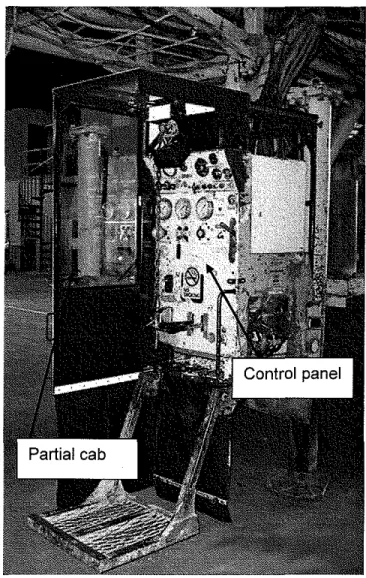
jobsite (Reinke & Ingram, 2007). A partial cab enclosure was designed to
protect the operator at the rig's control panel (Figure 3). Used in
conjunction with personal protective equipment, it was found to
significantly reduce exposure to noise associated with the drill rig. NIOSH
ensured development of the partial cab was communicated to
stakeholders in the industry through the development of a CD which
contained information about noise exposure and the partial cab's design
and implementation. The CD also contained information on noise related
hearing loss and hearing protective devices to increase worker knowledge
Figure 3. Partial cab retrofitted to the air rotary drill rig with a steel frame
• Implementation- Ultimately, the intervention strategies that are developed
must be implemented in order to be effective in preventing injuries.
Effective communication is essential in implementing these strategies
since lack of knowledge of the value of implementing these strategies will
inhibit their application and reduction of injuries. Interventions should be
assessed prior to their implementation to ensure they are applicable to the
by injuries. They should be tested in a real work setting to demonstrate the
value of the strategy on an industry wide level to ensure greater buy-in. In
the example above, partial cabs were field tested and found to be effective
in reducing noise exposure by 8 dB(A). This rendered the strategy more
readily adoptable by industry leaders. Injury prevention efforts that will be
most successful will be those that are developed specifically for the
industry and that have been clearly communicated to industry
decision-makers in a timely and reliable manner.
Evaluation of intervention strategies in the environmental drilling
industry must be conducted to determine whether and how well they are
working. Evaluation is essential in determining the effectiveness of the
intervention; many intervention strategies and programs are implemented
without undergoing rigorous evaluation to measure their effectiveness. We
can use the information gathered during evaluation to identify elements of
the strategy which need to be changed to eliminate problems or increase
effectiveness. Even if evaluation indicates that a specific intervention
strategy is ineffective, this is still valuable information that can be used to
adjust an intervention to ensure greater success in the future.
Application of the PHMIP process is an iterative one which requires
continuous monitoring to ensure that intervention strategies implemented
actually prevent injuries as the intervention progresses and do not create
Limitations
The PHMIP has been highly successful in its application in injury
prevention strategies; however, there are some limitations which may affect its
ability to be widely adopted across the environmental drilling industry. One
problem is that it relies on statistical data from injuries that have already
occurred: Would it not be better to prevent these injuries from ever occurring?
Adapting the model to rely on more pre-injury data such as near miss reporting,
could result in technologies that can be applied much earlier in the injury
occurrence process further increasing the number of injuries that are prevented.
Another problem is the cost effectiveness of implementing the model. A
lack of resources, especially amongst the smaller drilling businesses, may
hamper the ability to collect and analyze data, develop technologies and evaluate
their effectiveness. This is especially of concern when BLS data indicates that
33% of workplace fatalities occur in businesses with fewer than 11 employees
(Willet, 2001). Industry leaders such as the NDA and the National Ground Water
Association (NGWA) should collaborate on strategy development, training and
the provision of educational materials to create a safer industry for all
businesses.
Another limitation to the model can come from management and
organizational issues. Management's perception and approach to injury
prevention are important determinants of injury risk. Ensuring that managers and
other decision-makers are knowledgeable about the effectiveness of selected
strategies. Leading by example is one of the best ways to set the tone for safety
expectations in the workplace. For example, in many small drilling businesses,
the company owner may also operate drilling rigs alongside his workers.
Exhibiting company safety practices such as wearing the appropriate PPE will
make workers more likely to adopt those same attitudes in management's
absence.
Findings
While more needs to be done to develop and evaluate new intervention
strategies for injury prevention in the environmental drilling industry, there is
much that is already known and can be applied. Despite this knowledge, a gap
often exists between what is known and what is actually being applied. Effective
communication and transfer of technology are pertinent in bridging this gap and
ensuring effective application of intervention strategies. Current injury prevention
practices across the industry indicate that the PHMIP is sporadically being
applied to some extent however there does not appear to be cohesive and
complete buy-in from all relevant stakeholders. Industry stakeholders should be
held accountable for applying the PHMIP to current injury prevention practices
and should push for industry-wide adoption of the model to enhance these
existing practices.
The PHMIP should be presented at major industry conferences and
discussions should be initiated regarding increasing its application in the
PHMIP should be stressed and collaborations on research and strategy design
should be established in order to ensure the cost effectiveness of implementing
the model.
Wider dissemination of information on the PHMIP will serve to increase
awareness amongst industry leaders and foster dialogue that will stimulate
further interest in proactively preventing injuries in the drilling industry.
Conclusion
Well drilling injuries remain high and the environmental drilling industry is no
exception. Most of these injuries are preventable provided proper health and
safety practices and injury prevention strategies are being followed.
The accepted method of planning to prevent injury is to identify, assess and then
control the risk.
Current industry health and safety practices include conducting risk
assessment and risk management. Two methods of assessing the risks of injury
on the job include identifying hazards and analyzing hazards. During Hazard
Identification, an attempt is made to identify actual and potential hazards
associated with completing the scope of work. A Job Hazard Analysis can then
be completed in order to outline measures to eliminate or control the identified
hazards. Risk management refers to those actions taken to control or mitigate
exposure to hazards identified in the risk assessment of a job. A Health and
environmental drilling industry and is a valuable resource on the jobsite.
Significant efforts have been made to promote injury prevention in the
industry, providing guidance such as that found in the Environmental
Remediation Drilling Safety Guidelines, 2005 and the National Drilling
Associations' Drilling Safety Guide. However, there is still a considerable gap
between what is known as what is actually being applied. Incorporation of the
PHMIP alongside existing safety practices can bridge much of that gap provided
it is effectively and comprehensively applied. Success in the use of the model will
be dependent on the application of all four phases namely; Surveillance, Risk
Factor Identification, Intervention Development and Evaluation, and
Implementation.
Industry stakeholders must begin the dialogue to ensure industry-wide
adoption of this model. The benefits of the model should be presented at major
industry conferences and collaborations sought on research and strategy design
in order to ensure the cost effectiveness of implementing the model.
It should be noted that the PHMIP is not without its limitations, one
weakness is that it relies on statistical data from injuries that have already
occurred: Would it not be better to prevent even these injuries in the first place?
Another limitation can be the cost of implementing the intervention strategies that
result from application of the PHMIP. This may be offset if industry leading
associations assume some of the burden of implementation. Finally,
especially if management does not appear to "buy-in" to the benefits of the
model.
Current industry practices indicate that the PHMIP is sporadically being
applied in the environmental drilling industry however wider and more consistent
application is necessary to achieve measurable results in injury prevention.
Wider dissemination of information on the PHMIP will serve to increase
awareness amongst industry leaders and foster dialogue that will stimulate
Bibliography
AntiEntropics, I. (2005). Environmental remediation drilling safety guideline
(http:l/7 4.125. 93.1 04/search?q=cache:fOOOBxzSIJUJ :www. ngwa.orq/ASSETS/29
69D5D1805A4EABBD22A734ED4AC261/erdsg.pdf+Remediation+Drilling+Safety
+Guidelines&cd=1&hl=en&ct=clnk&gl=us ed.)
Blackledge, N., & Blackledge, P. (2007). Shell & Auger Rig: Generic risk assessment
(http://7 4.125.93.1 04/search?q=cache:rlzlsSMbKikJ:www.pbdrilling.co.uk/pdf file
s/risk assessment shell auger.pdf+Shell+and+Auger+Rig+:+Generic+Risk+Asse
ssment+by+Nicola+Biackledge+and+Paui+Biackledge&cd=1&hl=en&ct=clnk&gl=u
§. ed.)
Centers for Disease Control and Prevention. (2006). Introduction. CDC injury fact book
(pp. 1-9) Retrieved from http://www.cdc.gov/ncipc/fact book/factbook.htm
Matetic RJ, I. D. (1999). NOIRS 2000. Identifying fatal and non-fatal injuries attributed to
water well drilling operations. Unpublished manuscript. Retrieved 4/3/2009, from
http://www.cdc.gov/niosh/noirs/abstractsh3.html
Matetic, R. J., & Ingram, D. K. (2001). Preventing high insurance premiums and on the
job injuries: What are poor health and safety habits costing you? Water Well
Journal, 55(13), 10-13.
NORA Traumatic Injury Team. (1998). Traumatic occupational injury research needs
and priorities (DHHS (NIOSH) PUBLICATION No. 98-134). Cincinnati, OH:
OSHA. (2002). Job hazard analysis. Retrieved 41312009, 2009, from
http://www.osha.gov.libproxy.lib.unc.edu/Publications/osha3071.html
Reinke, D. C., & Ingram, D. K. (2005). Hearing loss prevention, electrical safety, training
young workers. NIOSH: Water Well Safety Bits, v. 1
Reinke, D. C., & Ingram, D. K. (2007). Working smart: NIOSH develops technology and
products that address exposure to noise at the workplace. Retrieved from
http://www.cdc.gov/niosh/mining/topics/topicpage7.htm
Rundmo, T. (1996).
Associations between risk perception and safety. Safely Science, 24(3), 197-209.
Smith, G. S. (2001 ). Public health approaches to occupational injury: Do they work?.
Injury Prevention, 7, i3-i1 0.
State and Territorial Injury Prevention Directors Association. (2003). Safe states (2003
ed.). Atlanta, GA:
US EPA. (2008). The NRC risk assessment paradigm. Retrieved April 3, 2009, from
http://www.epa.gov/ttn/atw/toxsource/paradigm.html
Willet, J. (2001). Small businesses: Do your safety programs measure up? Safely and
Health, 153(5), 48.
WorkCover. (1999). Industry standard for concrete cutting and drilling. Foundations in