DEVELOPING A MULTIDIMENSIONAL
FRAMEWORK FOR THE EVALUATION OF
WOMEN’S SELF HELP GROUPS
A Thesis
Presented to the Faculty of the Graduate School of Cornell University
in Partial Fulfillment of the Requirements for the Degree of M.S
by
Suryakumari Samyuktha Kannan January 2017
© 2017 Suryakumari Samyuktha Kannan ALL RIGHTS RESERVED
ABSTRACT
Many studies on women’s group-based development interventions raise impor-tant questions on the heterogeneity of impacts caused by differences in group functioning, the sustainability and evolution of groups and the characteristics that differentiate those that are self-reliant and capable of being agents of social change. This study aims to lay the framework for a multidimensional metric that is informed by theory and the current role played by women’s groups, determined by established methodology and validated by data. Three potential indices and the best weighted index score are identified based on traditional reliability and validity tests conducted on using cross-sectional group level data from a survey of 170 SHGs in Odisha, India. The main contribution on the identified index is in enabling comparisons of SHGs promoted by different SHPIs in different contexts and thus opens up the possibility of effective consolidation of existing programs and groups, as is being attempted in countries like India. Given its multidimen-sional nature, the index developed in this study allows scope for further valida-tion, refinement and expansion to suit multiple needs.
BIOGRAPHICAL SKETCH
Samyuktha Kannan holds an Integrated Master’s in Economics from IIT Madras, Chennai, India, and has over 7 years field experience researching financial access, food security and agricultural production in various capacities.
Dedicated to the district PLA officials of Shakti Varta and all last mile functionaries in development who are incredible reservoirs of knowledge and
ACKNOWLEDGEMENTS
I would like to express my deepest gratitude to Prof. Prabhu Pingali, Prof. Mark Constas for invaluable guidance and encouragement throughout the challenging research process, and to Prof. Miguel Gomez for the incredible learning experi-ence gained from assistantships. My sincere appreciation and thanks also extends to all the district level staff of‘Shakti Varta’, Mr. Devjit Mittra and Mrs. Meenakshi Devi for making this study possible, and to my parents and friends for much-needed support.
TABLE OF CONTENTS
Biographical Sketch . . . iii
Dedication . . . iv
Acknowledgements . . . v
Table of Contents . . . vi
List of Tables . . . viii
List of Figures . . . x
1 Introduction 1 2 Literature Review 6 2.1 Women’s Self-Help Groups in participatory development . . . 9
2.2 SHGs in India . . . 12
2.3 Characterizing SHG Performance . . . 15
2.3.1 ‘Membership based organizations of the poor (MBOPs) ’ . . 16
2.3.2 Dimensions of performance . . . 18
2.4 History of Impact and Process Evaluations of SHGs . . . 22
2.4.1 Impact evaluation . . . 24 2.4.2 Process Evaluation . . . 25 3 Methodology 28 3.1 Study Context . . . 28 3.2 Data Collection . . . 29 3.2.1 Sampling . . . 29 3.2.2 Survey Process . . . 31 3.3 Empirical Methodology . . . 32 3.3.1 Multidimensionality of SHG performance . . . 32
3.3.2 Composite indices in Social Development . . . 34
3.3.3 Empirical strategy and Nomological Network . . . 36
4 Data 52 4.1 Descriptive profile of sample Self Help Groups . . . 52
4.1.1 Institutional Structure . . . 52
4.1.2 Composition . . . 54
4.1.3 Agency . . . 59
4.1.4 Goals and constraints . . . 59
4.2 Internal: Cooperation Dimension . . . 60
4.4 External: General engagement . . . 66
5 Results 67 5.1 Preliminary Reliability and Validity Results . . . 68
5.1.1 Convergent Validity . . . 68
5.1.2 Construct Validity . . . 70
5.2 Shortlisted Index Scores . . . 72
5.3 Further Validity and Reliability Tests . . . 74
5.3.1 Internal Consistency . . . 74
5.3.2 Discriminant Validity . . . 75
5.3.3 Criterion/Concurrent Validity . . . 76
5.3.4 Score Distribution . . . 76
5.4 Analysis of the Chosen Index . . . 77
5.4.1 Dimensional Non-Performance . . . 79
5.5 Logistic Regression Analysis . . . 81
6 Discussion 87 6.1 Index Implementation . . . 88
6.2 Scope for further study . . . 89
Appendices 92 A 93 B 102 C 107 D 118 E 123
LIST OF TABLES
2.1 Common Agenda of SHGs . . . 19
3.1 SHG Sample by location . . . 30
3.2 Summary of Validity and Reliability Tests Used . . . 48
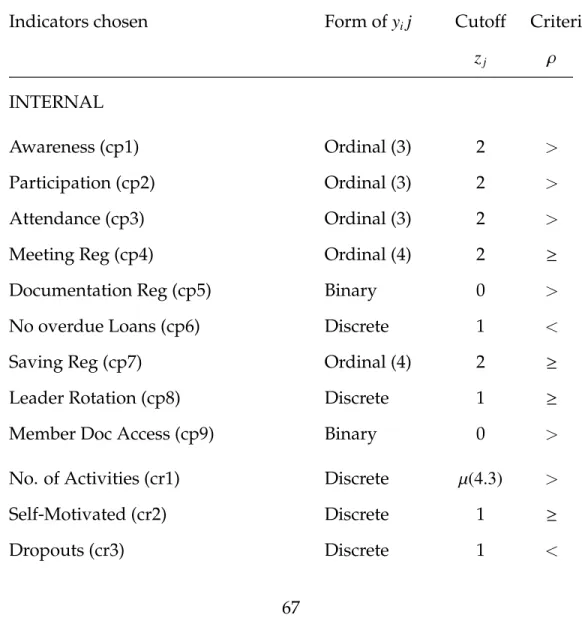
5.1 Shortlisted Variables and Dichotomous Forms . . . 67
5.2 Indices and Indicators . . . 73
5.3 Comparison of the distribution of computed Indices . . . 77
5.4 Frequency Table ofI3Score . . . 78
5.5 Frequency Table of Dimensions of Non-performance . . . 80
5.6 Ordered Logistic Regression ofI3Total Score and Dimensions . . . 83
5.7 Relationships with concurrent variables . . . 86
A.1 Descriptive Profile of Sample SHG . . . 93
A.2 Descriptive Statistics of Key Indicators . . . 101
B.1 Dimenions, Indicators and References . . . 102
B.1 Dimenions, Indicators and References . . . 103
B.1 Dimenions, Indicators and References . . . 104
B.1 Dimenions, Indicators and References . . . 105
B.1 Dimenions, Indicators and References . . . 106
C.1 Polychoric and tetrachoric correlations (dichotomous form) of shortlisted indicators . . . 107
C.2 Factor Loadings for Exploratory Factor Analysis with all short-listed indicators . . . 109
C.3 Factor Loadings for Exploratory Factor Analysis with alternate ac-tivity indicator . . . 110
C.4 Polychoric (bottom triangle) and Kendall’s Tau-b (top triangle) cor-relations between dimension scores . . . 111
C.5 Comparison of Kuder-Richardson Formula 20 for computed indices 112 C.6 Relationships with concurrent variables . . . 114
C.7 Relationships with concurrent variables . . . 116
D.1 Ordered Logistic Regression of I3 Total Score - Robustness checks for Edu and Age . . . 119
D.2 Logistic and Ordered Logistic Regression of Multiple Forms of De-pendent Variable I3 . . . 120
D.3 Ordered Logistic Regression ofI3 Total Score - Sensitivity to Inde-pendent Variable definitions . . . 121 D.4 Logistic Regression of Non-Performance on Total Score . . . 122
LIST OF FIGURES
3.1 Conceptual Framework for Multidimensional Metric of SHG
Per-formance . . . 40
4.1 Self Help Promoting Institution . . . 53
4.2 Self Help Promoting Institution . . . 54
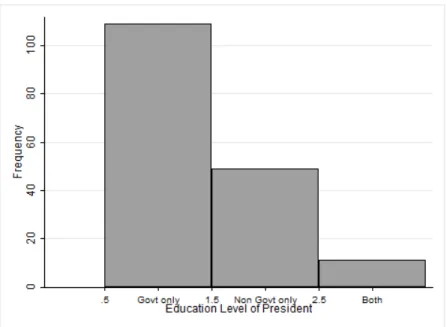
4.3 Education Level of President . . . 55
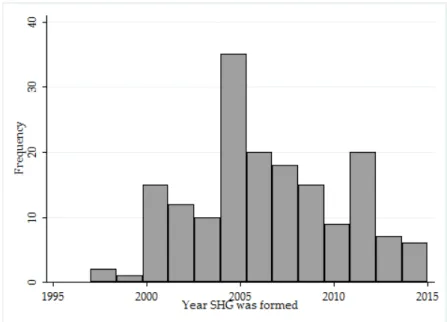
4.4 Self-Help Group Formation Years . . . 57
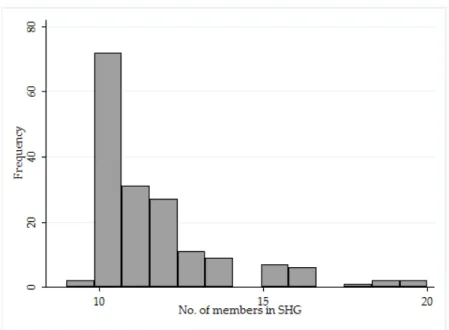
4.5 Self-Help Group Size . . . 58
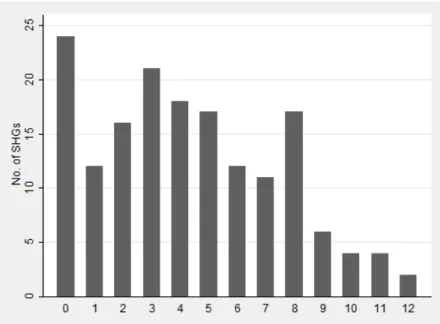
4.6 Total No. of Activities undertaken (out of 12) . . . 65
CHAPTER 1
INTRODUCTION
Over the past two decades, financial inclusion through microfinance has been at the fore of development policy discussion. Pioneered by the Grameen experi-ment in Bangladesh in the 1970s, microfinance through group-based joint liability lending is considered to be one of the most effective ways to address issues of compliance and collateral in lending to the poor. Grameen model replications and other modified versions such as bank-linked Self-Help Groups (SHGs) exploded in a number of countries, especially between 2000 and 2011, when the global lend-ing portfolio grew at an average compound annual growth rate of 39% from $2.2 billion to $80 billion (Roodman, 2013). By 2013, approximately 211 million bor-rowers were reached by more than 3700 institutions around the world with both government and donor as well as commercial funding (Reed et al., 2015). Mi-crofinance lending has focused primarily on women, who are seen as more equi-table spenders and responsible borrowers and bear a disproportionate burden of poverty (Bank, 1990; Khandker, 2005; Kevane and Wydick, 2001). Women of the urban and rural poor who are empowered by financial access and organized as joint-liability or mutual solidarity groups, are increasingly being viewed as agents of social change around the world.
The initial spread of the microfinance movement coincided with academic and policy debates in the 80s and 90s on the effectiveness of international aid and top down structural adjustment (Mansuri and Rao, 2004). Social scientists such as
Chambers, Putnam and Ostrom emphasised the potential of community-led par-ticipatory development to resolve inefficiencies of markets and Government in the creation and governance of local goods and public institutions (Chambers, 2014; Putnam, 1995; Ostrom, 1998). In addition, there was recognition of the need for de-velopment programs that could eventually function without public or donor sup-port and funding (Bennett et al., 1996). In an effort to ensure the long term impact and self-sustainability of financial inclusion, financial intermediation was supple-mented with social intermediation. To date, microfinance providers in conjunc-tion with governmental and non-governmental organizaconjunc-tions commonly involve borrowers in skills-training, capacity building and community development pro-grams. Organizations such as the Self Employment Women’s Association (SEWA) in India have enabled women borrowers to channel credit into productive invest-ments and develop financial independence. NGOs like BRAC, CARE, World Vi-sion, MYRADA and others also provide development assistance in the areas of health, nutrition, education and gender to affliated women’s groups.
Since its first forays, the impacts of microfinance have been evaluated and re-evaluated repeatedly, receiving contradictory verdicts and mixed reviews from academics and practitioners alike. While some studies estimate large positive im-pacts on physical and human capital (Pitt and Khandker, 1998; Karlan and Zin-man, 2009; Deininger and Liu, 2009b), others demonstrate little to no impact on borrowers (Morduch et al., 1998; Roodman and Morduch, 2014; Banerjee, 2013). Despite improvements in establishing empirical causal relationships through the use of randomized evaluations, few studies allow for or investigate heterogenous
program impacts and implementation hurdeles Deininger and Liu (2009b); Ar-mend´ariz and Morduch (2010). Microfinance institutions and development part-ners often rely on anecdotal evidence and internal audits for their own monitoring and evaluation rather than systematic and standardised enquiry into successes and failures. As a result, there is a lack of clarity on the mechanisms of engage-ment between microfinance institutions and womens groups, group functioning and sustainability, and the differential impacts they generate.
Although questions have been raised about the effectiveness of microfinance in alleviating poverty, implementing better management and accountability in mi-crofinance institutions and developing best practices for creating and managing women’s groups can strengthen their role in community development (Roodman, 2013). With millions of borrowing groups already present in remote areas across the world, a network of efficient groups can be leveraged towards the attainment of developmental goals and service delivery of basic amenities (Casini and Van-dewalle, 2011; Saha et al., 2015; Leatherman and Dunford, 2010). Increasingly in countries like India, women are being involved in programs to tackle malnutri-tion, promote healthcare and sanitation practices, undertake public works and resolve local domestic and community conflicts. Efforts are also underway to fed-erate groups in order to encourage self-governance and catalyse paticipatory de-velopment and collective action.
Building systematic evidence not just around the impacts of group member-ship and financial access, but also the process of group formation and
function-ing thus has high policy relevance. However, the multitude of metrics used and the highy customized nature of evaluations have rendered comparison between groups from different promoting institutions difficult. Internal evaluations by microfinance institutions and other group promoting institutions such as NGOs, donors and Government bodies rank groups on criteria such as credit rating, ad-ministrative and savings discipline, and participation of members focusing more on operational efficiency rather than the creation of groups with a potential for collective action (Isern, 2007; Raja Reddy and Reddy, 2012; Fernandez, 2005; AP-MAS, 2014). Other studies attempt to identify characterics of successful groups defining success on a relatively narrow basis of longevity, inclusiveness or repay-ment of loans (Baland et al., 2015; Bennett et al., 1996; Parida and Sinha, 2010).
The creation and validation of standardised metrics to monitor overall group functioning would enable organizations to evaluate pre-existing groups across different promoting institutions and across specific program contexts. Addition-ally, in light of recent expectations placed on these goups, a definition of SHG suc-cess that encompasses a multidimensional characterization of group performance would be more informative than narrow or single indicators that have been used thus far.
This study attempts to lay the groundwork for the creation of standardised metrics for womens groups, particularly womens Self-Help Groups (SHGs). The study draws from insights of theories on organizational behaviour and institution building, as well as a comparion of different evaluation tools to develop a
multi-dimensional framework for the evaluation of SHGs. The study then seeks to for-malize a multidimensional metric by employing techniques used in poverty mea-surement and psychometry to create and evaluate an index using cross-sectional group level data from a survey of 170 SHGs in Odisha, India. It identifies areas for improvement of the metric and suggests future steps towards its validation. The following chapter provides an overview of the context and history of mi-crofinance based group evaluations and also provides the theoretical background for the multidimensional depiction of SHG performance. Chapter 3 details the methodology used to create and evaluate the hypothesised relationships within the multidimensional framework. Chapter 4 provides a brief descriptive profile of the data and chapter 5 presents the results. Chapter 6 details the further steps necessary to validate the metric and presents some insights for future research.
CHAPTER 2
LITERATURE REVIEW
Self-Help Groups (henceforth SHGs) and other membership based civil society organizations such as cooperatives, unions, risk-sharing groups, producer groups, resource-management groups, clubs and local governing bodies place communi-ties in charge of determining their own development trajectory and are thus cen-tral to the participatory approach to development. The literature review provides a brief review of the history of SHG based interventions and situates their growth in popularity within the context of participatory development. By doing so, it attempts to provide a background for developing a better understanding of the expectations placed on SHGs and the components of SHG performance. The re-view concludes with an overre-view of empirical evaluations of SHGs and similar organizations and a note on the contribution of the paper to addressing gaps in evaluation.
The term participatory development has been used to describe the incorpora-tion of ‘local knowledge and preferences in the decision-making processes of gov-ernments, private providers and donor agencies ’in development policy (Mansuri and Rao, 2004). The approach rose to prominence in the late 1980s and 90s as large-scale top down structural adjustment policies and aid disbursement ori-ented towards increasing agricultural and industrial productivity proved inef-fective in tackling poverty and other socio-economic issues in developing coun-tries. Academic critique has targeted the environmental and social costs of
central-ized donor-driven policies and emphascentral-ized on the strengths of local knowledge and the benefits of civic engagement in resolving government and market failure (Chambers, 2014; Cernea, 1985; Escobar, 2011).
The importance of the participatory approach was established in seminal theo-ries supporting a “people-centric ”or “human ”idea of development such as those of Schultz, Putnam, Ostrom and Sen. Schultz (1961) and Becker (1962) led early work in recognizing the effect of accumulation of ‘human capital ’in the form of skills and knowledge in increasing human productivity. Along with human capital, ‘social capital ’in the form of social relationships between friends, family and acquaintances too was recognized as an asset capable of generating returns (Putnam, 1995; Coleman, 1988; Hanifan, 1916). In the context of development, these theoretical contributions popularized the idea that non-monetary assets and social networks can be crucial in mobilizing collective action and enabling pop-ulations to rise out of poverty (Woolcock and Narayan, 2000). With Sen et al. (1999) and Nussbaum (2001), poverty came to be viewed as a deprivation of ba-sic ‘capabilities ’that is not adequately captured by its measurement in terms of income. The mechanisms of how ‘collective action ’can resolve social dilemmas and market failure were formalized primarily in the work of Ostrom (1998). Os-troms theoretical framework and the experimental work of many social scientists have suggested numerous factors affecting the evolution of group norms and the role of trust, reciprocity and reputation in the way communities manage com-mon resources. Following these insights, development programs were reoriented towards decentralization of planning and accountability by non-governmental
agencies initially and then by multilateral agencies and donors towards the end of the 20th century (Brett, 2003).
In the last two decades, The World Bank, UNDP and OECD etc have directed significant funding to community based initiatives and encouraged governments and donors around the world to partner with civil society groups (Bank, 2001, 2004). Under the new discourse there has been a widespread adoption of the Hu-man Development Index, Millennium Development Goals, PLA/PRA method-ology for development planning, community mobilization efforts especially in health and nutrition, and other inclusive interventions. Many of these initia-tives have since borne results. Evaluations have showed the coming together of communities is associated with improvements in property rights, labor market outcomes, public investments and financial access (Desai and Joshi, 2014; Bard-han, 2005; Ostrom and Hess, 2007). Evidence also shows the positive effects of strengthening in trust and social networks on health, mortality, education and child welfare (Harper, 2001; Kawachi et al., 1997; Wilkinson et al., 2002; Putnam, 1995; Coleman, 1988; Healy and C ˆot´e, 2001). Physical capital in the form of irri-gation and other infrastructure too has benefited from community participation (Narayan, 1994; Uphoff and Bruton, 1992). One of the biggest successes of com-munity involvement has been in the area of financial inclusion.
2.1
Women’s Self-Help Groups in participatory development
Self Help Groups (SHGs) are typically groups of women who are organized as borrowing entities in participatory interventions focused on financial inclusion. They have their origin in the microfinance revolution of the 1980s, a system of banking pioneered by small and largely non-governmental initiatives, the most famous of whom is the Grameen Bank in Bangaldesh. Microfinance, understood broadly as the provision of “small scale financial services ” primarily credit and savings by formal and sustainable institutions, created a revolution in develop-ment finance by simultaneously providing a solution to the information asymme-try problem in banking and strengthening social capital (Robinson, 2001). Microfi-nance institutions, banks, governments and civil society organizations offer small loans to groups of women borrowers who are mutually responsible for their re-payment, thereby creating a system of inter-dependence between individuals and making use of peer monitoring to minimize the risk of default. This system has proved to be extremely effective in resolving the problems formal lending insti-tutions face in 1) ascertaining riskiness of borrowers (adverse selection), 2) ascer-taining the riskiness of projects to which credit is directed by borrowers (moral hazard), 3) monitoring returns from these projects (auditing costs) and 4) collect-ing debt (enforcement) (Ghatak and Guinnane, 1999). For borrowers, the gains from improved access to liquidity outweigh the costs of the increased risk due to independence, thus increasing their welfare (Stiglitz, 1990).
in South and South-East Asia (Brody et al., 2015). Groups are made up of 10-20 women from the same location who are encouraged to engage in regular volun-tary savings and make interest-bearing loans from the pooled saving to each other in times of need. SHGs are typically formed or promoted by a governmental or non-governmental organization but are linked directly to existing financial insti-tutions for savings and external loans. This framework differs from the Grameen model in that it does not necessitate the creation of an MFI as a financial interme-diary, allows considerable autonomy to the group to determine the scope of their activities and involves relatively less rigid contracts between the different stake-holders (Baland et al., 2011). The SHG model and the autonomy it offers to women has become especially relevant after traditional forms of microfinance underwent a rapid rise and fall in the early 2000s.
Traditional microfinance, which predominantly involved microlending by MFIs without thrift, initially burgeoned on the heels of the success of the Grameen bank in maintaining a 98.6 percent repayment rate and in generating substantial profits (Yunus, 2007). Some similar MFIs like SKS in India and Compartamos in Brazil were even able to raise capital of their own from initial public offerings (IPOs) and opened the doors for the inflow of capital and formal banking sector funds towards under-served populations. The pressure to maintain commercial viability at scale prompted these institutions to resort to higher and higher in-terest rates, unethical methods to keep up the repayment levels and compromise the quality of management (Armend´ariz and Morduch, 2010). Cross-lending by different lenders buried individual borrowers in debt traps, sparking widespread
public criticism and government intervention in many parts of the world. Pro-found skepticism and caution regarding the benefits of microfinance grew among academics, policymakers and investors leading to the near collapse of the indus-try in some parts of the world. Despite the rapid rise and fall of microfinance, the lessons learned prompted a second wave of microfinance that seeks to build on the strengths of the decentralized group-approach with a focus on capacity build-ing through finance rather than mere financial access (Robinson, 2001). At the center of this second wave was the promotion of SHGs and an expansion of their role to encompass participatory development and enhancement of capabilities of the poor.
SHGs in their unique position as savings and credit groups with considerable autonomy in functioning and scope were able to avoid the unsustainability of rigid institutional governance and narrow lending practices. Especially after the “microfinance crisis” (Armend´ariz and Morduch, 2010), SHG promoting institu-tions embraced the poverty reduction approach (terminology used by Robinson (2001)) i.e the potential for financial access to reduce poverty when combined with services such as skills training and the delivery of basic amenities, health and ed-ucation interventions. The SHG model was also envisioned to inculcate aspects of financial discipline among present-biased individuals (Bauer et al., 2012; Ashraf et al., 2006; Tanaka et al., 2016; Binswanger, 1980),in documentation, prioritization of needs and enforcement of terms as groups engage in independent saving and lending operations with their own earnings (Harper, 2002). Additionally, the peer monitoring aspect of these groups inherently utilizing and building new social
capital (Ghatak and Guinnane, 1999; Feigenberg et al., 2010). Groups are eventu-ally expected to build enough capacity and credibility to be eligible to apply for loans from formal banks, although they are not mandated to go through all of these stages if members decide not to do so.
SHGs are in spirit free to determine the scope of their activities outside the specified common responsibilities, however there are expectations of them from various stakeholders the State, the Self Help Group Promoting Institution (SHPI), banks, local government, the community they live in and the members them-selves. SHGs differ significantly from one another depending on the promoting institution that governs their formation and development, and can have addi-tional responsibilities of service delivery, awareness generation and civic activism in areas such as health, education and gender as encouraged by their promoting institution. While some institutions (BRAC, BRI) were engaged in these activities even prior to the 1990s, the past decade has seen a more widespread adoption of the full breadth of financial services available to mitigate risks and a recognition of the potential to leverage the social capital within these borrowing groups towards participatory development.
2.2
SHGs in India
SHGs have a particularly long history and widespread influence in India as com-pared to the rest of the developing world. The term Self Help Group was first
made use of by the Reserve Bank of India in 1991 as part of a strategy to encourage priority sector and rural lending and revive failing public poverty alleviation pro-grams such the Integrated Rural Development Program (IRDP) (Armend´ariz and Morduch, 2010; Baland et al., 2008). The strategy, which was governed by the Na-tional Bank for Rural and Agricultural Development (NABARD) in partnership with a few NGOs, began with a pilot , linking 500 SHGs to a dozen formal banks in 1992 (Harper, 2002). Groups were soon promoted by a variety of institutions such as NGOs (such as MYRADA, ENABLE, CARE, PRADAN, BASIX, SEWA), micro-finance institutions and Non-Banking Financial Companies (NBFCs), and Gov-ernment Ministries (especially the Ministry of Rural Development and the De-partment of Women and Child Development ). Government promoted groups in particular saw a boost in growth after SHGs received policy impetus in the Ninth (1997-2002) and Tenth Plans (2002-2007) (in Community and Environment, 2008) upon skepticism regarding the private microfinance industry. A smaller propor-tion of groups were set up by commercial banks, local civil society organizapropor-tions and individuals. With the introduction of country-wide welfare schemes such as the Swarnajayanti Gram Swarozgar Yojana (SGSY) in 1999 (and the National Rural Livelihoods Mission in 2014), SHGs also came to be identified as intermedi-aries and beneficiintermedi-aries of self-employment and public provision programs. Now called the SHG Bank Linkage Program (SHG-BLP), the program currently covers 6.6 million women SHGs around the country and around 84 million households (APMAS, 2014).
fo-cus on women, who are considered to bear a disproportionate burden of poverty and deprivation (Dreze and Sen, 2002), be more equitable spenders of income (see Hoddinott and Haddad, 1995) and be more trustworthy borrowers (see Ar-mend´ariz and Morduch, 2010, p 179-195). Among government promoted SHGs, impetus was also given to the formation of caste-homogenous groups focused on the inclusion of Scheduled Castes, Scheduled Tribes and other deprived castes (Desai and Joshi, 2014). As membership based organizations of the poor with the potential for collective action, SHGs are increasingly being considered as in-termediaries in policies aimed at rural poverty reduction, health, education and womens empowerment (Saha et al., 2015; Leatherman and Dunford, 2010). The Government of India already involves SHGs towards decentralized delivery and regulation of crucial public provision programs. Groups interviewed in this study were involved in preparation of the Take Home Ration for local Anganwadi Cen-ters (Integrated Child Development Scheme), inspection for quality of Mid-day Meals served in schools, retailing of LPG cylinders, collection of electricity bill payments, Forest department public works, cleaning of village common resources such as wells, tanks and roads, toilet construction and hygiene delivery as part of the Total Sanitation Campaign, polio immunization drives and Severe Acute Mal-nutrition (SAM) referrals, anti-alcohol and anti-domestic violence campaigns. In recent years efforts have been made to federate SHGs in order to encourage self governance and to give them a stronger poltical voice (APMAS, 2014). In large scale government programs such as‘Shakti Varta’in the context of this study too bring together SHGs promoted by different organizations to work on common
issues.
In reality however, as the Planning Commission of India reports, many SHGs are not stable and do not last till they can attain maturity or self sustainability, and income generating activity undertaken by the group often gets fragmented or exists only on paper (in Community and Environment, 2008). Lahiri-Dutt and Samanta (2006) caution against excessive reliance on group based approaches by drawing attention to the evidence of intra-group discordance, lack of communi-cation and information flow and capture by male family members. Conducting rigorous evaluations of group behavior and developing improved indicators for measuring performance can thus inform future program design and governance of self help groups in development policy.
2.3
Characterizing SHG Performance
The multitude of stakeholders and contexts that determine the groups capacity for and commitment to community development, make it especially challenging for researchers to assess the impact and the functionality of Self Help Groups com-pared to traditional microfinance groups. There is a lack of apparent consensus on a definition for group success or an indicator of group performance. Most studies on the effectiveness of SHGs view them solely in the context of microfi-nance and measure success through financial indicators such as repayment rates and return on investments (Bennett et al., 1996). However, this does not do justice
to the gamut of expectations and roles that SHGs have assumed in recent years. Others that incorporate a wider range of duties in evaluation are often contextu-alized and not comparable. In order to provide a more complete and comparable evaluation, it is important to derive standards from collective action that can be generalized across groups promoted by different institutions and indicate the po-tential for a group to become an agent of social change in its locality. An attempt to define a general definition of success across all SHGs comes from literature on membership based organizations of the poor, a formulation of (Chen et al., 2006).
2.3.1
‘Membership based organizations of the poor (MBOPs) ’
The term ‘membership based organizations of the poor’, first mentioned in a conference organized by Cornell University, Women in Informal Employment: Globalizing and Organizing (WEIGO) and the Self-Employed Women’s Associ-ation (SEWA) in 2005, tries to distinguish civil society organizAssoci-ations such as SHGs from the general focus on NGOs. MBOPs as defined by the conference organizers encompass all civil society organizations “whose governance structures respond to the needs and aspirations of the poor” (Chen et al., 2006), such as coopera-tives, trade unions, self help groups and campaigning organizations. Member-ship based organizations differ from NGOs primarily in their democratic gover-nance structure, the benefits of which are “internal accountability” to members and “external legitimacy” in their locality Chen et al. (2006). Further, the defini-tion of MBOPs requires that the constituent members joined on a voluntary basis
and have collectively defined their own objectives and decision making structures (Crowley et al., 2007). An important feature of the groups is their exclusive in-volvement of the poor, which enabes traditionally weakly organized communities to represent themselves in interactions with the market and government. MBOPs thus become crucial stakeholders in participatory development policy.
SHGs due to the autonomy in self-governance and adoption of wider man-dates accorded to them, adequately lend themselves to definition as ‘membership based organizations of the poor (MBOPs)’ capable of being recognized indepen-dently of institutions that form or lend to them (Tiwari and Thakkur, 2007). Such a definition provides clarity on the nature of organization of SHGs and enables better evaluation of these groups in terms of both functioning and impact. The enumeration of indicators of success in MBOP literature (compiled in Chen et al. (2006)) provides a starting point in developing a theoretical background for the evaluation of SHGs.
In defining success for all MBOPs in general, Crowley et al. (2007) emphasize on the achievement of goals and impact as well as functioning. An important classification is made in Roever et al. (2005) distinguishing expectations placed on SHGs as pertaining to internal aspects ie in enabling members to attain mutually agreed upon goals according to mutually agreed norms, and the external aspects ie in taking an initiative to engage in policy and successfully voicing the views of the traditionally underrepresented. This classification is useful as it recognizes both the groups role as an organization composed of individuals as well as the
wider mandate adopted by these groups and agents of social change.
2.3.2
Dimensions of performance
The various dimensions or components that make up performance are derived from literature on MBOPs, institutional formation, organizational behavior and collective action, interpreted in a manner that utilizes and provides insights specifically on group-level information as per the scope of the study.
Internal
Organizational success in voluntary associations has generally been viewed in terms of organizational efficiency and accountability, based on factors that are “internal” to the organization. Roever et al. (2005) identifies the constituents of internal success to include capacity building and fostering of debate among mem-bers, and the achievement of stated goals. Achievement of group goals typically necessitates the adherence to group regulations and norms such as in governance and financial discipline, internal and external accountability. Other indicators of success used in studies of microfinance and SHGs, such as the retention or expan-sion of membership and financial/managerial self reliance (Crowley et al., 2007), group lifespan (Walker and McCarthy, 2007), representation of minorities (Baland et al., 2008) also signify “internal” success.
Table 2.1: Common Agenda of SHGs
1 SHGs had a name and a recorded membership 2 They changed their leaders regularly
3 Books (minutes of meetings and accounts) were maintained and audited
4 They fostered the habit of saving (by giving up some non-essential consumption expenditure) and adding the amount weekly to the groups common fund
5 They lent from their savings for at least six months prior to receiving a bank loan; 6 They received adequate institutional capacity-building training and mentoring
7 The common fund of each SHG comprised regular savings, and loans were given regularly (the amount of interest was used as an indicator); fines were levied for dysfunctional behaviour (this related to discipline in participating in meetings and in finance management); and evidence of fines was taken as a positive sign that discipline was given importance
8 They had taken action to foster change to promote better gender relations; they had put a priority on education, especially of girl children; they had taken action to reduce wasteful expenditure, es-pecially by their husbands; they had mobilized to promote equity and had lobbied governmental and Panchayat Raj institutions for better services and more transparent management
Source:(Fernandez, 2005)
challenging as group regulations and norms differ from one Self Help Promot-ing Institution (SHPI) to another. However, there are some basic responsibilities undertaken by these groups in most contexts. These are delineated in 2.1 as iden-tified by MYRADA, an NGO and one of the oldest promoters of SHGs in India.
To further understand the relationship between group regulations and norms and organizational success, insights from the rational choice and extended behav-ioral and bounded rationality theories of social institutions built by Ostrom (1998)
and Calvert (1995) are particularly useful. Despite the distinction Crowley et al. (2007) make between MBOPs as organizations and institutions, the fundamental game theoretic solutions that need to arise in any group for it to sustain and en-gage in the process of collective action remain the same. These include the two basic requirements of institution building named by Calvert (1995) as cooperation and coordination. We make use of this distinction to help us identify the set of potential indicators of “internal” success.
1. Cooperation
Cooperation is said to exist when individuals follow the rules of the game and abide by mutually agreed norms. For example, SHGs succeed as borrowing groups only when members are willing to cooperate to adhere to their repayment schedules and contribute regular savings. In the governance of SHGs, individuals must relinquish leadership positions in order for there to be rotation and ade-quate representation in executive roles. Voluntary activities of the SHG, including those that do provide monetary incentives such as income generating activities and those that don’t such as public service activities, especially require cooper-ative behaviour according to Calvert, as members adhere to norms that are not binding, and a socially defined notion of honor. While Ostrom identifies indica-tors of cooperation in trust, reciprocity and reputation among individual mem-bers, group level indicators of success would include member adherence to com-mon norms such as attendance, participation in activities and decision-making and awareness among members of group norms and duties.
2. Coordination
Coordination is said to exist when cooperation between individuals is lever-aged towards a common goal or action. As Calvert (1995) mentions, even if the problem of cooperation has been solved, the achievement of group goals requires coordination between members in order to choose between several desired out-comes and identify appropriate roles and allocate roles among themselves. This is unlikely to occur in a group without deliberation, discussion, guidance and prac-tice. Therefore the role of the SHPI and supporting organizations is also impor-tant in translating cooperation into deliverable outcomes. The accomplishment of activities, agreement on outcomes and amicable resolution of conflicts without attrition would therefore indicate coordination success.
External
Just as internal standards of success can benefit from an understanding of the dilemmas of social choice, external standards for success are informed by a better understanding of the outcomes of collective action. An SHG might be considered successful if it fulfills its role as an MBOP by representing the voice of the under-privileged in policy (Roever et al., 2005). Nevertheless, the stakeholder credibility of an SHG is built slowly through engagement with members of the community and involvement in particular policy initiatives.
1. Engagement Experience
the potential for collective action is evidenced by group engagament with other stakeholders in society such as other SHGs, the SHG Federation and the commu-nity at large. By doing so the group gains external recognition and a stronger leverage in policy dicussions.
2. Program Specific Experience
Both coordination and external accountability are built through practice and reputation. Therefore, prior experience in a given policy area makes an SHG more likey to achieve outcomes in that area.
The theories underlying collective action and social institutions are also ef-fective in formally understanding some of the underlying determinants of per-formance in these groups. Group characteristics such as size and heterogeneity, individual characteristics such as discount rates affect the trust, reciprocity, rep-utation, and communication potential needed for individuals to work together . Ostrom (1998) mentions the effect of organizational structure, monitoring and information availability are other influences.
2.4
History of Impact and Process Evaluations of SHGs
Given the origins of the SHGs in traditional microfinance interventions, empiri-cal evaluations of microfinance programs and borrowing groups are often used to make inferences about SHGs and vice versa (for instance in Brody et al. (2015)).
There are few quantitative and qualitative studies focusing specifically on the SHG model according to its generally specified definition (refer section 2.1 ). Just as internal and external dimensions together constitute SHG performance (Roever et al., 2005), process and impact evaluations of SHGs or microfinance groups are complementary in facilitating a better understanding of group-based interven-tions.
While process evaluations concentrate on the implementation and functioning of an SHG or microfinance program based on the programs theory and planning (for eg. the reach and composition of groups, the capacity of groups to fulfil its responsibilities, management of finances within the group, repayment discipline, investments, participation etc), impact evaluations are concerned with the out-comes and progress towards goals such (for eg. reduction of poverty, womens empowerment etc). Program monitoring and process evaluations are extremely useful in interpreting the results of impact evaluations and are informing future policy and implementation decisions (Gertler et al., 2011). In the context of self help group assessments, although impact evaluation studies have overcome sig-nificant empirical challenges and have informed the policy, contradictory findings and heterogeneous impacts of programs are not adequately explained by supple-mentary process studies as yet.
2.4.1
Impact evaluation
Impact studies of microfinance and womens self help group programs that have been conducted thus far have differed in empirical strategies used as well as the results. Earlier studies such as Pitt and Khandker (1998), which showed large positive impacts on annual consumption expenditure, were criticized for not ad-equately dealing with selection bias, attrition bias and reverse causality among other issues (Roodman and Morduch, 2014; Morduch et al., 1998). Armend´ariz and Morduch (2010) express the reservation that no matter the outcome of in-terest, it is difficult to separate causal impacts of microfinance exposure as bor-rowers are systematically different from non-borbor-rowers as demonstrated by Cole-man (2006); Hashemi (1997). Later studies have attempted to use longitudinal, experimental or quasi-experimental methods to more rigourously establish rela-tionships between microfinance and its direct impacts on investment and con-sumption behaviour. Studies measuring impacts on access to formal credit, de-pendence on moneylenders, employment, investment and productivity, response to risk, durable and non-durable consumption expenditure, intrahousehold real-location and total incomes, are less optimistic about the size of gains from micro-finance but acknowledge the influence of good policies and implementation (Ka-boski and Townsend, 2011; Karlan and Zinman, 2009, 2010, 2011; Banerjee et al., 2015; De Mel et al., 2009; Dupas and Robinson, 2013; Angelucci et al., 2013; Augs-burg et al., 2012; Anderson and Baland, 2002). The estimates of indirect impacts, however, on womens bargaining power and mobility (Pitt et al., 2006; Swain and
Wallentin, 2009; Kandpal et al., 2013), health and nutrition (Rosenberg et al., 2011; Deininger and Liu, 2009b), social capital and political empowerment (Deininger and Liu, 2009b; Desai and Joshi, 2014; Pitt et al., 2006) and subjective well being in-dicators (Kim et al., 2009; Pronyk et al., 2006) are mostly positive. There is a degree of comparability among both outcome indicators as well as estimation methodol-ogy that makes it easier to synthesise and conduct meta-analyses (such as Brody et al., 2015).
2.4.2
Process Evaluation
Process evaluations on the other hand are much more customised to the prac-titioners needs making comparability across programs difficult. Moreover, only few studies attempt to estimate the sources of variation in the efficacy of SHG programs and constituent groups. While interpreting impact evaluation results, the functionality of groups is assumed to generally abide by economic contract theory and principal-agent theory (Armend´ariz and Morduch, 2010).
Conventions in monitoring and process evaluation have better developed in those aspects essential to the goal of financial sustainability. For example, oper-ational and financial self-sufficiency ratios at the institution-level and credit rat-ing scores/eligibility criteria at the group level are commonly used in multiple microfinance programs (Armend´ariz and Morduch, 2010).The aspects that are es-sential to the goal of poverty reduction and the wider agenda of microfinance are
more difficult to define and measure. Nevertheless, APMAS CRI+ tool and large number of NGOs in India have developed their own performance measures that incorporate financial sustainability as well as other organizational features that are necessary to fulfil the wider agenda. These summary measures are used pri-marily to score and/or rank groups to facilitate internal monitoring rather than explain performance. The indicators used vary from program to program and the inclusion of indicators is not explicitly justified and perhaps based on experience. Some development institutes such as the World Bank have provided guidelines for practitioners on measurement of performance (Krishna and Shrader, 1999). The indicators most commonly used include member demographics, group com-position, age and size, administrative performance (such as meeting attendance, division of responsibilities, participation in decision making and documentation) and financial performance (such as savings, loans, repayment history and prof-itability, see Appendix 2).
Further, some studies have attempted to identify the sources of variation in performance indicators of interest, commonly group lifespan and repayment rates. In measuring lifespans,Baland et al. (2008) estimate that lower castes and landless farmers in caste heterogeneous groups are more likely to leave groups, in-dicating the positive negative effect of group hetergeniety on performance. Like-lihood of attrition is also higher among members with lower education levels and when members of the group are not related to other members. Deininger and Liu (2009a) find that stringent monitoring of groups and high repayment frequen-cies raise repayment rates. Qualitative and statistical studies also find differences
between groups promoted by different self help promoting institutions in the con-text of leadership and collective action (Bharamappanavara et al., 2014), outreach, financial performance and administrative performance (Bennett et al., 1996).
As the discourse of participatory development strengthens in countries like India and the self help groups formed over the last two decades mature, there is a need for standardised performance measures that can fulfil the requirements of new policies involving self help groups. Standardised and easy to measure performance metrics will enable Governments and development practitioners to evaluate groups promoted by different institutions in a comparable manner, iden-tify groups best suited to function as intermediaries or policy stakeholders and better utilize their strengths.By supplementing information from impact evalua-tion studies, these metrics can also provide insight into the success and failure of SHG programs and address some of the questions raised regarding the suitabil-ity and sustainabilsuitabil-ity of these groups under different contexts. In this paper, I attempt to develop a performance metric for womens self help groups based on theoretical background from literature on collective action and group behaviour, best practices from practitioner evaluation tools and empirical relationships from a survey of 170 SHGs from Odisha, India.
CHAPTER 3
METHODOLOGY
3.1
Study Context
The survey sample of groups in this pilot study was chosen from the beneficiary SHGs of a flagship development initiative of the State Government of Odisha, funded by DFID (UK), under the Odisha Health and Nutrition Sector Program. Odisha, a hilly and forested state on Indias east coast, is one of 3 worst perform-ing states in India in terms of child mortality includperform-ing under-5 mortality, infant mortality and neo-natal mortality rates, despite experiencing a remarkable decline in these rates from 1990 (UNICEF, 2011). Maternal mortality rates are among the highest in India and lack of nutritious food, adequate physical rest and social stig-mas have been attributed as the biggest impediments to development (Planning Commission, 2012).
The State Governments initiative named Shakti Varta (translated both as ‘women’s voice’ and ‘powerful voice’) is an intervention targeted at facilitating community processes through a tested Participatory Learning and Action frame-work Tripathy et al. (2010) towards improving maternal and child health among the rural and predominantly tribal population. Launched in April 2013, the pro-gram covers 15 high burden districts in the state (Thomas et al., 2015). A database of SHGs from Mission Shakti (the state governments program for SHG
gover-nance) was utilized to generate critical interest in the program. Additionally, funds flow for implementation was directed through the decentralized SHG fed-eration network. A real-time Management Information System (MIS) recorded SHGs who attended program sessions. These databases of SHGs provided the starting point for the sample used in the study.
3.2
Data Collection
3.2.1
Sampling
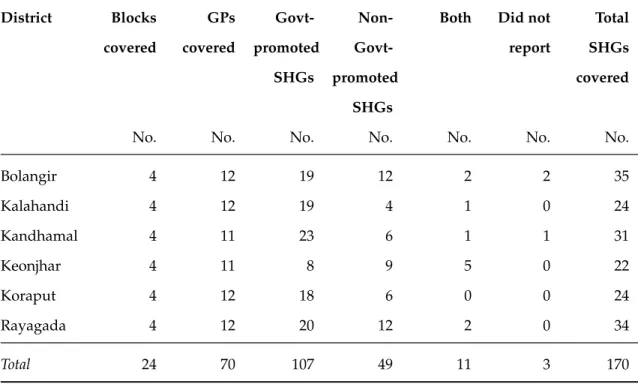
The sample was chosen in purposive random fashion from six districts - 3 pilot districts of Shakti Varta and 3 randomly chosen districts out of the remaining 12 high burden districts in Odisha. According to program officials, the process for choosing 3 districts as pilot districts too was random. In each district, 4 blocks and 3 GPs from each block were chosen randomly for the study. In the first round of surveys 1 Government-promoted group and 1 NGO-promoted group who had participated in Shakti Varta meetings were targeted from each GP. In addition, an-other SHG who had not participated in Shakti Varta meetings was targeted in each GP of the 3 pilot districts to facilitate a comparison between participants and non-participants for a separate program functioning study provided to Shakti Varta program officials. For this study however, we pool the entire sample of 170 SHGs (eliminating refusals) over 6 districts as described in Table 1. There were many
in-consistencies in the database maintained by the Government preventing us from getting an even split of Government-promoted and NGO-promoted groups. The final sample consisted of 64% Government-promoted groups, 29% NGO/MFI-promoted groups, 6% groups with both Government and NGO promoters and 1 group did not report their Self-Help Promoting Institution (SHPI). All groups were formed primarily as savings groups.
Table 3.1: SHG Sample by location
District Blocks covered GPs covered Govt-promoted SHGs Non- Govt-promoted SHGs
Both Did not
report
Total SHGs covered
No. No. No. No. No. No. No.
Bolangir 4 12 19 12 2 2 35 Kalahandi 4 12 19 4 1 0 24 Kandhamal 4 11 23 6 1 1 31 Keonjhar 4 11 8 9 5 0 22 Koraput 4 12 18 6 0 0 24 Rayagada 4 12 20 12 2 0 34 Total 24 70 107 49 11 3 170
3.2.2
Survey Process
A focus group survey for SHGs was designed based on prior evaluations con-ducted by Shakti Varta staff to capitalize on familiarity and these were supple-mented with questions from other SHG evaluation tools and questionnaires avail-able in the public domain. The survey was developed with the purpose of con-ducting multiple analyses on SHGs and the effective of SHG performance on program outcomes. Sections in the survey included Group Constitution, Organi-zational Systems and Discipline, Financial Management and Performance, Goals and Objectives, Training and Objectives, Social Activities and Services, aside from questions on participation inShakti Vartaand self-reported changes since becom-ing a member (see Appendix 6). The survey tool was translated to the local lan-guage Odiya in which surveys were conducted. Enumerators and program staff of Shakti Vartawere familiarized with the tool in a joint training session held in Bhub-haneswar, Odisha. The survey was administered by enumerators over 3 weeks in July 2015, to the sample. A minimum of three members of an SHG, including an executive member such as the President, Secretary or Treasurer who had ac-cess to the books and sufficient knowledge of group practices were required to be present. The information gained from group surveys were supplemented with focus group discussions with SHG Federation members at the Block Level and District level government officials, as well as surveys ofAnganwadi/ICDSworkers involved in the promotion of women and child nutrition in rural areas. Summary statistics of measured variables profiling groups in the sample are compiled in
Appendix 2 and detailed in the following chapter. Wherever possible, surveyors made attempts to inspect documentation maintained by the group, however most of the information was self-reported.
3.3
Empirical Methodology
3.3.1
Multidimensionality of SHG performance
A representation of group performance given the characterization in Roever Roever et al. (2005) must include internal aspects of group functioning, adher-ence to norms as well as external aspects of engagement with development pol-icy in order to completely represent the role played by SHGs in participatory de-velopment. Internal aspects of performance can be further understood as being comprised of cooperation between members according rules and regulations and coordination towards goals and activities. All of these aspects can vary greatly from one context to another Chen et al. (2006), depending on the norms and con-ventions laid out by the Self Help Promoting Institution, the goals of the members themselves and the enabling environment or incentive structure under which the SHG operates. Given the multiplicity of aspects of performance and the diver-sity of expected outcomes, the measurement of SHG success cannot therefore be captured by a single indicator.
analysis and indicates the scope of objectives, individual indicators and variables ”Munda and Nardo (2009). A multidimensional representation allows researchers to better portray abstract concepts by assimilating the insights provided by mul-tiple components of the concept and its underlying indicators. Theoretical con-structs in social development that exhibit similar complexity of definition - such as social capital and poverty - have been recognized for the challenge they pose for measurement due the number of indicators that embody them Narayan and Cassidy (2001); Paldam (2000); Foa and Tanner (2012); Alkire and Foster (2011). In empirical research, researchers have developed interpretable metrics by un-packing the definitions of these concepts and identifying the most representative manifestations of each dimension that constitutes them. For example, the mea-surement of poverty has embraced evolving definitions of the expectations from human life, drawing on the background of ‘human development’, ‘capabilities approach’, the millennium development goals and extensive evidence Alkire and Foster (2011). Newer and more “direct” poverty measures (such as Morris PQLI, Sens HDI, Alkire Fosters MDPI) are designed to capture “deprivations of different kinds” Sen (1993), such as health, education and standard of living which are not adequately represented by “indirect” indicators such as income . Social capital too has found consistent representation as a multidimensional concept in the World Values Survey, Barometer of Social Capital and Global Social Capital Survey and Social Capital Integrated Questionnaire Narayan and Cassidy (2001), incorporat-ing questions and games on trust, reciprocity, memberships and engagement with networks and civil society.
In SHG group performance, credit ratings, repayment rates and expanded ver-sions of credit ratings have been used as an “indirect” measure of group perfor-mance by researchers studying determinants of perforperfor-mance. The accuracy of performance measurement can be improved by incorporating additional and the-oretically and empirically informed indicators that provide a more complete rep-resentation of group performance. In this study, we attempt to measure SHG per-formance using a multidimensional framework based on a groups ‘internal’ and ‘external’ aspects of performance, and further the evidence of ‘cooperation’ and ‘coordination’ within the group. A greater emphasis has been placed on develop-ing insights regarddevelop-ing ‘internal’ aspects of group performance, enrichdevelop-ing existdevelop-ing group level predominantly credit rating metrics and taking the first steps in for-malizing process evaluations for group based interventions such as the formation of SHGs.
3.3.2
Composite indices in Social Development
Indexing is a particularly useful way of measuring and representing complex phe-nomenon Hawken and Munck (2013) as they serve to summarize the information provided by multiple indicators. Through data reduction, indices offer substantial ease of interpretation Foa and Tanner (2012) and comparability. Due to their prac-tical application, they have become increasingly important in the social sciences among academics, policy and research organizations and development practition-ers alike. Composite indices now abound in the areas of poverty and human
de-velopment, equality, gender and governance. For example, recent years have seen the adoption and popular use of the Human Development Index, the Gender De-velopment Index, Gender Empowerment Measure, Social Institutions and Gen-der Index, the Worldwide Governance Indicators and the Ease of Doing Business Index and a host of other measures. An index however, only provides a useful representation when its construction has a sound theoretical basis and complies with methodological criteria. Failing this, an index has the potential to mislead or misinform users and does not solve the problem of multiplicity of indicators Saltelli (2007).
This study follows steps advised by Foa and Tanner (2012); Munck and Verkuilen (2002) towards the creation of a representative additive index of the SHG group performance. The multidimensional treatment of the index borrows from the Count Method of Alkire Foster Alkire and Foster (2011) which has been used in the creation of a multidimensional poverty index (MDPI) but is applicable to a wide range of concepts and indicators that are predominantly of an ordinal or categorical nature. In the formulation of Alkire and Foster Alkire and Foster (2011), the index value I is not a summation of the weighted values of the indi-cators themselves, rather a ”count” of the indiindi-cators in a manner than renders within-dimension and between-dimension possible. The suggested SHG perfor-mance index borrows from the Alkire-Foster approach for index creation but dif-fers from the Multidimensional Poverty Index or the Women’s Empowerment in Agriculture Index (also created with the same methodology) in some ways.
• The SHG index employs a “positive” scoring and is designed to measure achievements, rather than deprivations
• The index is a “dual-cutoff” method since it defines cutoffs for indicators as well as for each dimensions. However, since there is less of a need to generate a headcount ratio for a given SHG population, an overall cutoff to measure the aggregate incidence of performance has not been attempted in this study.
In this sense, the SHG performance index generates an additive scale measure of performance but employs the multidimensional approach to defining indicators and analysis scores as employed in Alkire-Foster.
3.3.3
Empirical strategy and Nomological Network
The “system of interlocking laws” that describes the multidimensional nature of SHG performance is referred to as its nomological network Cronbach and Meehl (1955). In order to establish that a set of observable indicators or an index ade-quately measure the abstract theoretical construct it seeks to measure, the nomo-logical network surrounding the construct must exist. The empirical strategy fol-lowed seeks to identify and detail the nomological network by relating theoretical constructs to observable indicators, theoretical constructs to one another and ob-servable indicators to one another.
With the objective of identifying the net, we first identify relevant indicators by comparing existing tools, theory and empirical relationships between variables. We then shortlist a set of indicators available in the data that are most suitable for index construction. A total score is computed for all SHGs in the analysis and then proceed to analyse the differences and determinants of the total score. In keeping with the logic of construct validity, the nomological net and indicators is modified to develop the simplest net that captures the relationships between dimensions and indicators.
The various steps in the analysis are detailed below.
Level of Analysis
Throughout the analysis, the focus and unit of analysis remains at the group level This was done so because of the ease of data collection for implementers working with groups and who are already used to collecting and monitoring group level indicators. Additionally, a group level picture serves well when supplemented with individual and household surveys designed to measure impact and member characteristics.
Selection of Indicators
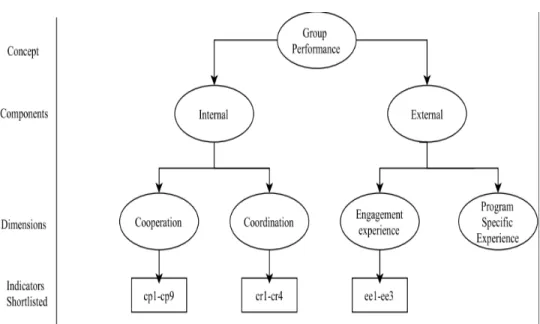
is shown as being composed of internal and external components. The internal components are in turn comprised of the dimensions of cooperation and coor-dination, with the cooperation dimension functioning as catch-all terms for cat-egories of evaluation found in tools reviewed. To provide a complete picture of the dimensions of cooperation, coordination and external engagement, care was taken to adequately represent the interpretations of different tools of the attributes within each dimension. For example, the ‘cooperation’ dimension incorporation indicators pertaining to organizational discipline (Sa-Dhan), organizational cul-ture (World Bank) and systems and self-discipline (CRI).
The selection of the indicators for the tool is thus based on:
1. Theoretical relevance: The components and relationships that comprise group performance are derived from theories of collective action, institu-tions and organizational behavior as detailed in section (). Insights from evaluation guidelines of implementers and independent reports have also been used to identify the logic of evaluation.
2. Use in prior evaluations: The indicators and characteristics measured in the survey are based upon a comparison of internal evaluation tools used by mi-crofinance institutions (eg. BASIX), NGOs (eg. MYRADA), regulatory bod-ies (eg. NABARD and APMAS) and international organizations (eg. World Bank). The corresponding tools from which indicators were derived from are also detailed in Appendix 1
sur-vey of 170 SHGs in Odisha, India, in 2015. Although the sursur-vey was de-signed in order to develop an evaluation of SHGs within a specific program context, the tool was not specifically designed to serve as the basis for a standardized tool for the evaluation of group performance as defined in this study. Hence the tool is constrained by the availability of indicators mea-sured in the 2015 survey.
4. Ease of measurement and minimization of errors: The unit of analysis, methodology and survey tool was designed keeping in mind the ease of ap-plication under diverse contexts. Group level information not only provides crucial insight into the functioning of the programs organizational structure and regulations, but is also easier to gather data on as compared to house-hold surveys. From the experience of Shakti Varta programme in Odisha, India, which was the setting for the survey conducted, group level studies are also easily integrable into MIS and routine monitoring and evaluation systems, thus ensuring availability of data are more frequent intervals. From fieldwork experience, care has also been taken to include variables for which there is a lower probability of self-report bias and for which information is verifiable or of an objective nature.
5. Data distribution: Indicators that did not show a sizeable variance and were highly skewed Babbie (2015) were not considered for the tool.
Figure 3.1: Conceptual Framework for Multidimensional Metric of SHG Perfor-mance
Indicator shortlist and dichotomization
The entire list of indicators measured in the survey to provide a complete profile of SHGs in the sample is detailed in Appendix 2. Of these, select indicators of performance based on these criteria are presented in Appendix 1. The indicators shortlisted and their dichotomous forms include:
Internal
1. Cooperation
• Members are aware of group norms (Awareness, cp1): Higher awareness of group norms among members increases the likelihood of more
equi-table and participatory governance of group activities. The indicator is the response to a question posed on the proportion of members aware of group norms, coded as a 3 level ordinal scale of 50 percent and below, 50-80% and above 80%. The dichotomous form distinguishes groups with more than 80% awareness.
• Members participate actively in SHG decision-making and activities(Participation, cp2): Higher participation in decision-making and activities indicates the absence of elite capture or dominance. The indicator is the response to a question on the proportion of members who participate actively, coded as a 3 level ordinal scale of 50 percent and below, 50-80% and above 80%. The dichotomous form distinguishes groups with more than 80% participation.
• Attendance in the last two meetings (Attendane, cp3): Attendance rates in the last two meetings caputres the current level of involvement of mem-bers and their adherence to one of their most basic responsibilities as members. The indicator is the response to a question posed on the pro-portion of members who attended the last two meetings, coded as a 3 level ordinal scale of 50 percent and below, 50-80% and above 80% for each meeting.The dichotomous form distinguishes groups with more than 80% participation.
• Members meet on a regular basis (Meeting reg, cp4): Meeting regularity is mandated by most SHPIs. The indicator is the 4 level ordinal scale response to a question on how regularly the group conducts meetings,
ranging from highly irregular to highly regular. The dichotomous form distinguishes both regular and highly regular groups from the rest. • Documentation maintained up to date (Documentation reg, cp5): Although
most SHGs are required to maintain multiple documents of various ac-tivities, for the sake of comparability across different SHPIs and gov-erning rules, only maintenance of the savings ledger is assessed for this indicator. It is dichotomous and records success under 3 conditions -savings ledger is recorded, it is up to date and it does not have errors or missing information.
• Has not defaulted on loans (No overdue loan, cp6): This indicator is dichoto-mous and records success if the group does not report a single overdue loan. It is one of the most widely used indicators of group performance although liable to under-reporting.
• Members save on a regular basis (Savings reg, cp7): Similar to meeting reg-ularity, this indicator is the 4 level ordinal scale response to a question on how regularly the group collects savings, ranging from highly ir-regular to highly ir-regular. The dichotomous form distinguishes both regular and highly regular groups from the rest.
• Leadership change since formation (Leader rotation,cp8): Not all SHGs are mandated to periodically select members to the executive body, but most are encouraged to, as a way to keep other members engaged. This indicator is a dicrete measure of the number of changes in leadership and its dichotomous form indicates groups with atleast one change.
• Members access SHG documents for use or verification (Member doc sccess, cp9): This indicator is the dichotomous response to the question on if members access group documents. The response implicitly captures both existence of access to documents or transparency, as well as in-volvement of members.
2. Coordination
• Activities undertaken (No. of activities, cr1): An effective group is one that is able to mobilise its members to undertake activities outside of its financial responsibility. Groups were asked whether or not they had participated in a list of 12 kinds of activities compiled from a synthesis of prior surveys and tools. The indicator is measured as a discrete sum of binary responses to the 12 kinds of activities and hence ranges from 0-12. No attempt was made to differentiate or classify activities. The dichotomous form differentiates groups who have undertaken higher than average number of activities , i.e higher than 4 activities.
• Motivated to undertake activity on own accord (Self-motivated, cr2): Groups were also asked who the primary motivator was for each of the under-taken activities. The indicator is measured as the discrete sum of binary responses to the 12 kinds of activities if the group undertook the activity out of their own accord. The dichotomous form differentiates groups that have undertaken at least a single activity of their own accord. • Dropouts from the group (No dropouts, cr3): Dropouts refer to members
who were part of the group and have subsequently quit the group due to various reasons. The indicator captures the discrete number of dropouts from the group since formation, and captures groups that have 1 or more dropouts in its dichotomous form.
• Total value of group savings (Total savings, cr4): Accumulated savings is an indicator of the financial discipline maintained by the group and is a widely used indicator of group performance. The indicator is a continuous variable capturing the total savings of the group at the time of the survey. In its dichotomous form it differentiates groups having a higher than average savings amount of Rs 35052.
External
1. General engagement
• Revived another SHG (SHG engagement, ge1): The group’s experience in reviving other SHGs simultatneously indicates that the group has met certain standards set by the SHPI and that the group has experience in interacting and identifying with other women and group dynamics. The indicator is a dichotomous response to whether or not the SHG possesses experience in reviving groups.
• Organized community around common issue (Community engagement, ge2): Thi