Spiralling out of control? Online
vulnerability in ego-centric networks.
Sarah Louise Buglass
A thesis submitted in partial fulfilment of the requirements of
Nottingham Trent University for the degree of Doctor of Philosophy
1
Copyright Statement
This work is the intellectual property of the author. You may copy up to 5% of this work for private study, or personal, non-commercial research. Any re-use of the information contained within this document should be fully referenced, quoting the author, title, university, degree level and pagination. Queries or requests for any other use, or if a more substantial copy is required, should be directed to the author.
2
Abstract
Online social network sites (SNS) are a ubiquitous method of socialising in the digital era. A potential source of social support, their continued and frequent use has been linked to a fear of missing out (FOMO) and the implicit desire to regulate offline psychological needs deficits through online connective behaviours. This thesis provides an examination of the online vulnerability implications associated with social networking. A multi-methods approach was used combining self-report surveys with digitally derived data from participants’ online networks. Participants were sampled by age-group (adolescents, university students, and adults), rendering an overall sample of 506 (53% male; 13 to 77 years) UK based Facebook users, from which subsequent study-specific datasets were derived. Data were analysed using confirmatory factor analysis, structural equation modelling, mediation analysis, multilevel modelling, and social network analysis. The results indicate that: (1) FOMO and online connective behaviours mediate the relationship between offline psychological vulnerability and exposure to negative online experiences; (2) offline vulnerabilities have the capacity to initiate a cycle of potentially problematic online behaviour; (3) maintaining a large, diverse network of social connections is associated with higher levels of reported exposure to negative online experiences; (4) the presence of certain types of individuals / online entities might be associated with an individual experiencing negative online experiences, and (5) adult users might be less likely to perceive themselves as vulnerable to negative online experiences when compared to adolescent users. The research contributes to knowledge and understanding of online life by providing a digitally enhanced perspective of the implications that offline psycho-social motivations, online behaviours, and user characteristics can have on an individual’s vulnerability to negative online experiences.
3
Acknowledgements
I wish to thank my supervisory team, Dr Jens Binder, Dr Lucy Betts and Professor Jean Underwood, for their invaluable support, guidance and expertise. I also wish to thank the other members of staff in the Psychology Department at Nottingham Trent University who have provided encouragement along the way.
I am very grateful to my good friends Malaika and Clare, your support in this process will never be forgotten.
I would like to give a special thanks to my family. My husband Alan and our two wonderful sons, Oliver and Jacob, for their patience and unwavering support and encouragement. I would also like to express thanks to my parents, Dennis and Gwenda, and my brother Dan, for without their support, this would not have been possible.
Finally, I would like to thank all the schools, young people and adult social media users who participated in the research.
4
Associated Publications and Presentations
Journal Publications
Buglass, S. L., Binder, J. F., Betts, L. R., & Underwood, J. D. (2016). When ‘friends’ collide: Social heterogeneity and user vulnerability on social network sites. Computers in Human Behavior, 54, 62-72. doi:
10.1016/j.chb.2016.09.055
Buglass, S. L., Binder, J. F., Betts, L. R., & Underwood, J. D. (2017a). Motivators of online vulnerability: The impact of social network site use and FOMO.
Computers in Human Behavior, 66, 248-255. doi: 10.1016/j.chb.2016.09.055
Buglass, S. L., Binder, J. F., Betts, L. R., & Underwood, J. D. (2017b). Looking for trouble: A multilevel analysis of disagreeable contacts in online social networks. Computers in Human Behavior, 70, 234-243. doi:
10.1016/j.chb.2016.12.078
Presentations
Buglass, S., Binder, J., Betts, L. & Underwood, J. (2014, September). Ever present risk? Online vulnerability in ego-centric networks. Paper presented at the
BPS Social Section Annual Conference 2014, Canterbury, UK.
Buglass, S., Binder, J., Betts, L. & Underwood, J. (2014, September). Online vulnerability in ego-centric networks. Paper presented at the EMU Research
Conference 2014, Leicester, UK.
Buglass, S., Binder, J., Betts, L. & Underwood, J. (2015, January). Do our online social network characteristics make us vulnerable? Paper presented at the
5
Buglass, S., Binder, J., Betts, L. & Underwood, J. (2015, June). The impact of social heterogeneity on online vulnerability. Paper presented at the NTU PhD
Research Conference 2015, Nottingham, UK.
Buglass, S., Binder, J., Betts, L. & Underwood, J. (2015, September). When ‘friends’ collide: The impact of social heterogeneity on online vulnerability. Paper presented at the BPS Developmental and Social Section Annual
Conference 2015, Manchester, UK.
Buglass, S., Binder, J., Betts, L. & Underwood, J. (2016, April). Looking for trouble: Characteristics and consequences of provocateurs on online social networks. Paper presented at the BPS Annual Conference 2016, Nottingham, UK.
Buglass, S., Binder, J., Betts, L. & Underwood, J. (2016, May). Are we all a bit FOMO? Implications of social network site use on psychological wellbeing and online vulnerability. Poster presented at the ESRC Digital Mental Health
Symposium 2016, Nottingham, UK.
Buglass, S., Binder, J., Betts, L. & Underwood, J. (2016, May). Looking for trouble: Characteristics and consequences of troublesome online networks. Paper presented at the NTU PhD Research Conference 2016, Nottingham, UK.
Buglass, S., Binder, J., Betts, L. & Underwood, J. (2017, June). “It won’t happen to me”: Implications of social network site use and FOMO on online
vulnerability and psychological wellbeing. Paper presented at the 22nd
Annual CyberPsychology, CyberTherapy & Social Networking Conference,
6
Contents
List of Figures ... 12
List of Tables ... 14
Chapter 1: Introduction to thesis ... 17
1.1. Chapter introduction ... 17
1.2. Theoretical overview ... 18
1.2.1 Ego-centric online SNS ... 20
1.2.2 Who uses Facebook? ... 22
1.2.3 Why do people use Facebook?... 23
1.2.3.1 Motivations for Facebook use ... 25
1.2.3.1.1 Extrinsic motivations and Facebook ... 28
1.2.3.1.2 The fear of missing out ... 29
1.2.3.2 The perceived ‘usefulness’ of Facebook ... 31
1.2.3.2.1 Expected ‘consequences’ of Facebook Use ... 33
1.2.3.2.1.1 Boosting psycho-social needs via Facebook ‘friending’ ... 37
1.2.3.2.1.2 Boosting psycho-social needs via self-presentation ... 40
1.2.3.2.2 ‘Unexpected’ consequences of Facebook use ... 45
1.3 Research aim ... 48
1.4 Methodology and design overview ... 48
1.5 Original contribution ... 50
1.6 Structure of the thesis ... 54
Chapter 2: Negative Online Experiences ... 57
2.1 Chapter introduction ... 57
2.2 Negative online experiences ... 57
2.3 From opportunity to harm ... 60
2.3.1 Online risks ... 61
2.3.1.1 Categorising online risks ... 61
2.3.1.1.1 Exploitation of personal information (Contact Risk) ... 62
2.3.1.1.2 Exposure to inappropriate content (Content Risk) ... 66
2.3.1.1.3 Creation of socially embarrassing or inappropriate content (Conduct Risk) ... 68
2.3.1.1.4 Connecting to others (Contact Risk) ... 71
2.3.1.1.4.1 Unknown or loosely connected others... 71
7
2.3.1.1.5 Harassing behaviours (Contact Risk) ... 76
2.3.2 Do online risks necessitate harm? ... 78
2.4 Reasons for continued ‘risky’ online behaviour ... 79
2.4.1 The ‘privacy paradox’ ... 79
2.4.1.1 Costs versus rewards ... 81
2.5 Who might be vulnerable to negative online experiences? ... 84
2.6 Researching negative online experiences: online methods ... 89
2.7 The present research: a conceptual framework ... 92
2.8 Chapter summary ... 94
Chapter 3: Methods ... 96
3.1 Introduction ... 96
3.2 Outlining the research hypotheses ... 97
3.3 Research methodology and design ... 104
3.3.1 Operationalising the outcome variables: negative online experiences ... 107
3.4 Research sampling procedure ... 108
3.4.1 Adolescent panel ... 109
3.4.2 University student panel ... 111
3.4.3 Online adult panel ... 111
3.4.4 Sample Limitations ... 112
3.5 Procedural overview ... 113
3.5.1 Research Ethics ... 116
3.5.1.1 Participation incentives ... 116
3.6 Data collection methods and analysis ... 117
3.6.1 Online survey ... 117
3.6.1.1 Confirmatory factor analysis (CFA) of self-reported scales ... 118
3.6.1.2 Online survey measures ... 120
3.6.1.2.1 Outcome variable ... 120
3.6.1.2.2 Demographics and predictor variables ... 122
3.6.1.3 Overview of the online survey samples ... 135
3.6.1.3. Sample Overview ... 135
3.6.1.3.1 Cross-sectional online survey sample (Time point 1) ... 135
3.6.1.3.1.1 Handling missing data for the cross-sectional dataset ... 137
3.6.1.3.2 Longitudinal online survey sample (Time point 2) ... 139
3.6.1.3.2.1 Attrition at T2 ... 139
3.6.1.3.2.2 Missing data at T2 ... 141
8
3.6.1.3.3.1 Attrition at T3 ... 142
3.6.1.3.3.2 Missing data at T3 ... 143
3.6.1.4 Survey data analysis methods ... 143
3.6.1.4.1 Standard statistical methods ... 143
3.6.1.4.2 Structural equation modelling (SEM) ... 144
3.6.1.4.3 Mediation analysis ... 145
3.6.2 Digitally derived data task ... 147
3.6.2.1 Digitally derived network measures ... 151
3.6.2.2 Digitally derived sample ... 155
3.6.2.2.1 Sample attrition during the digital phase ... 157
3.6.3 Social network appraisals... 157
3.6.3.1 Network appraisal sample ... 158
3.6.3.1.1 Comparing the network appraisal sample to the T1 survey sample 159 3.6.3.2 Social network appraisal procedure ... 160
3.6.3.3 Network appraisal measures (task specific) ... 161
3.6.3.3.1 Outcome variable ... 161
3.6.3.3.2 Predictor variables specific to the online connections ... 162
3.6.3.3.3 Participant specific predictor variables ... 165
3.6.3.3.4 Open-ended questions: Sample perceptions of Facebook ... 166
3.6.3.3.4.1 Content analysis of sample perceptions ... 166
3.6.3.4 Network appraisal data analysis ... 169
3.7 Methods summary ... 169
Chapter 4: Exploring the relationship between offline psycho-social vulnerability and negative online experiences. ... 172
4.1 Chapter introduction ... 172
4.2 Hypothesised model ... 172
4.3 Theoretical context ... 175
4.4 Method ... 179
4.5 Results ... 179
4.5.1 Descriptive statistics and bivariate analysis of the main study variables... 179
4.5.1.2 Testing for gender differences in the sample means ... 183
4.5.2 SEM modelling ... 184
4.5.2.1 Model preparation ... 184
4.5.2.2 Testing the structural path model ... 185
4.6 Discussion ... 191
Chapter 5: Exploring the longitudinal relationships between psycho-social vulnerability, SNS use, online connective behaviours and negative online experiences. ... 196
9
5.1 Chapter introduction ... 196
5.2 Hypothesised model ... 196
5.3 Method ... 201
5.4 Results ... 202
5.4.1 Descriptive statistics and bivariate analysis of the main study variables... 202
5.4.1.1 Testing for gender differences in the sample means ... 205
5.4.1.2 Testing for differences in the sample means over time ... 205
5.4.2 SEM analysis ... 205
5.4.2.1 SEM path modelling ... 207
5.5 Discussion ... 212
Chapter 6: Perceptions of vulnerability to negative online experiences ... 218
6.1 Chapter introduction ... 218 6.2 Hypothesised model ... 218 6.3 Theoretical context ... 219 6.3.1 Third-person effect ... 221 6.4 Method ... 224 6.5 Results ... 225
6.5.1 Factors associated with vulnerability perception ... 225
6.5.2 Testing the TPE ... 227
6.5.2.1 Testing the role of age-group on the TPE ... 229
6.5.2.2 Longitudinal stability of the TPE ... 231
6.6 Discussion ... 234
Chapter 7: Online friending: The impact of network size and diversity on vulnerability to negative online experiences. ... 240
7.1 Chapter introduction ... 240 7.2 Hypothesised model ... 241 7.3 Theoretical background ... 243 7.4 Method ... 247 7.4.1 Sample overview ... 248 7.5 Results ... 249 7.5.1 Preliminary analysis ... 249
7.5.1.2 Testing for gender differences in the sample means ... 252
7.5.2 Predictors of negative online experiences ... 253
7.5.3. Mediating the effects of network size on online vulnerability ... 255
7.6 Discussion ... 258
Chapter 8: Online friending: The impact of non-standard online profiles on SNS users’ vulnerability to negative online experiences. ... 262
10 8.1 Chapter introduction ... 262 8.2 Hypothesised model ... 263 8.3. Theoretical background ... 265 8.4 Method ... 268 8.5 Results ... 268 8.5.1 Preliminary analysis ... 268
8.5.1.2 Testing for gender differences in non-standard profiles ... 271
8.5.2 Regression analysis ... 272
8.5.3 Mediation analysis of network contacts with non-standard characteristics .. 274
8.6 Discussion ... 279
Chapter 9: Online friending: Characteristics and consequences of online troublemakers. ... 284 9.1 Chapter introduction ... 284 9.2 Hypothesised model ... 285 9.3 Theoretical background ... 289 9.4 Method ... 294 9.5 Results ... 295
9.5.1 Descriptive overview of network troublemakers ... 300
9.5.2 Testing for differences in popularity, communication and closeness ... 305
9.5.3 Multilevel analyses ... 307
9.5.3.1 Modelling multilevel online connection characteristics ... 314
9.5.3.2 Modelling SNS user characteristics ... 315
9.5.3.3 Final model outcomes ... 315
9.6 Discussion ... 319
Chapter 10: General Discussion ... 328
10.1 Chapter introduction ... 328
10.2 Research findings ... 328
10.3 Methodological reflections ... 342
10.3.1 Methodological implications ... 347
10.4 Limitations and future research ... 348
10.5 Empirical implications of the research ... 351
10.6 Overall conclusions ... 356
References ... 358
Appendix 1a: list of study advertisement locations ... 426
Appendix 1b: example request for participation ... 426
11
A2.1 Head of school information letter and consent ... 427
A2.2 Parent information letter and consent (opt-in) ... 430
A2.3 Parent information letter and consent (opt-out) ... 433
A2.4 Online Survey participant information and consent ... 435
A2.5 Online survey debrief (school-based adolescents) ... 437
A2.6 Online survey debrief (university and online adults) ... 438
A2.7 Social network appraisal information and consent (face to face) ... 439
A2.8 Social network appraisal information and consent (online adult participants) . 440 A2.9 Appraisal debrief (school-based adolescents) ... 441
A2.10 Appraisal debrief (university / online adults) ... 442
Appendix 3: online survey (all items and instructions) ... 443
Appendix 4: digital data task ... 450
Appendix 5: social network appraisal ... 453
Appendix 6: Evaluative overview of digital data extraction applications ... 455
Appendix 7: Confirmatory factor analysis (CFA) of self-reported scales ... 458
A7.1FOMO scale ... 458
A7.2 Self-disclosure scale... 459
A7.3 Negative online experiences scale ... 462
A7.4 Self-esteem scale ... 463
A7.5 PPV scale ... 465
A7.6 TPV scale ... 466
Appendix 8: chapter 4 SEM preparation ... 468
12
List of Figures
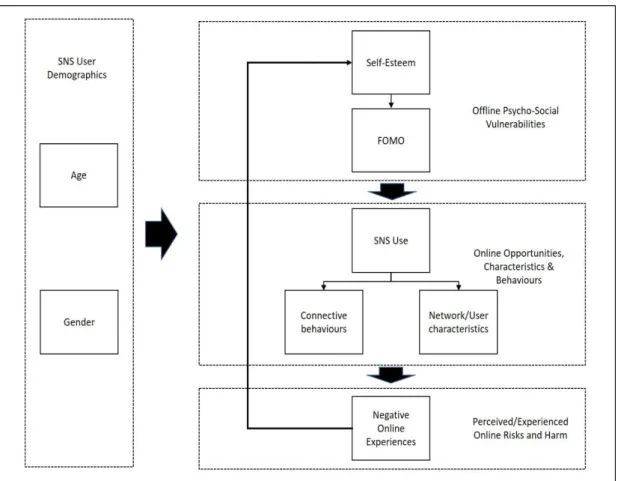
Figure 2.1: Conceptual framework for the present research 92
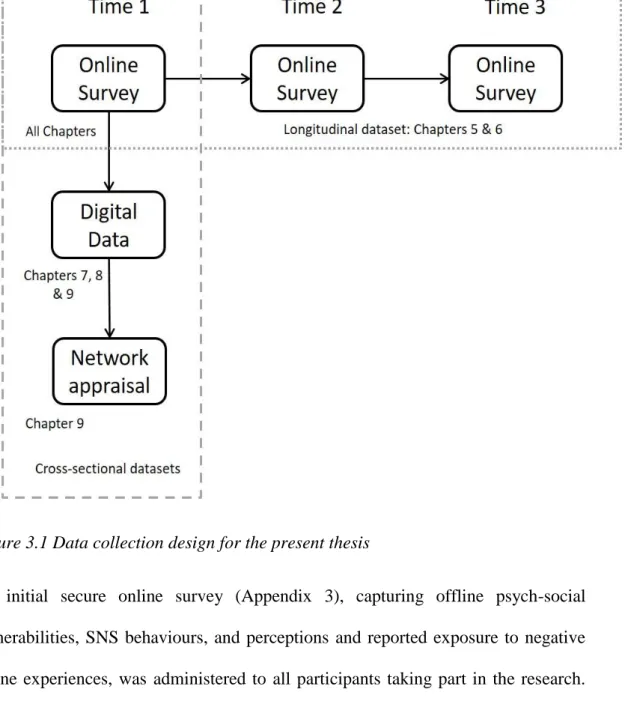
Figure 3.1: Data collection design for the present thesis 114
Figure 3.2: Example of simple mediation analysis 146
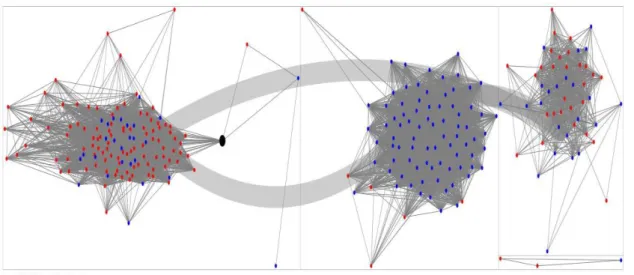
Figure 3.3: An example of a close-knit Facebook network with 269 ‘friends’ and a
global clustering of .747
153
Figure 3.4: An example of a highly diverse Facebook network with 235 ‘friends’ and
a global clustering of .391
153
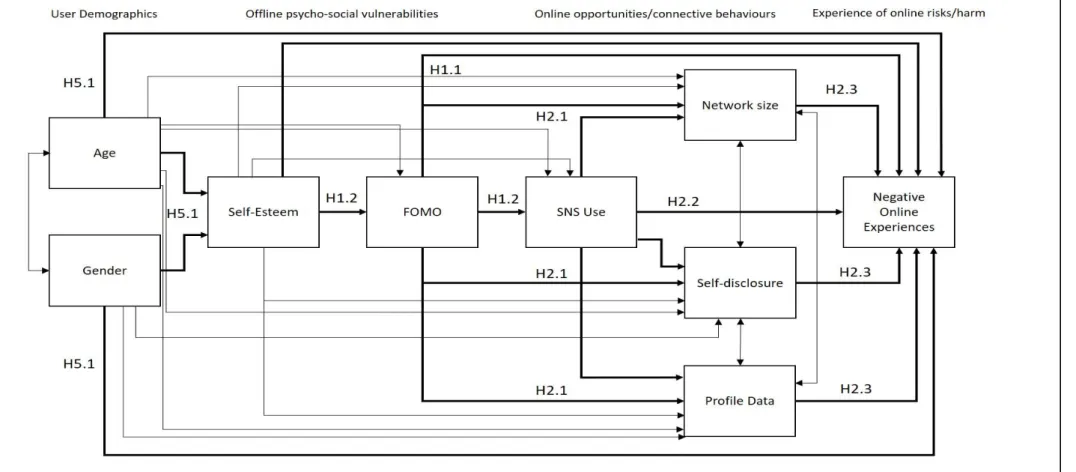
Figure 4.1: Hypothesised model testing relationship between demographics, offline
psycho-social vulnerabilities, connective behaviours and negative online experiences
(showing all paths to be tested)
174
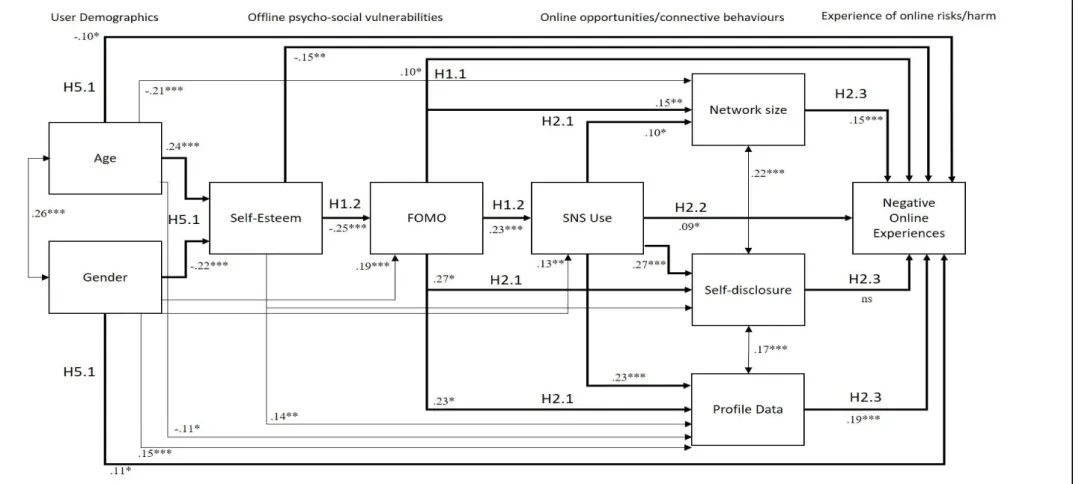
Figure 4.2: Illustration of direct paths and standardised coefficients (N = 489, Male
(coded as 0) = 247, Female (coded as 1) = 242) for the structural SEM model. All
hypothesised and significant additional paths are shown.
187
Figure 5.1: Hypothesised model for the temporal associations between variables
(showing all tested paths)
200
Figure 5.2: Temporal associations of main study variables (showing only significant
paths).
210
Figure 6.1: Hypothesised model of the relationship between SNS user demographics
and perceived vulnerability to negative online experiences (self and other).
219
Figure 6.2: Mean TPE differential scores for each age group (N = 489, Adolescents =
297, Emerging Adults = 97, Adults = 125)
230
Figure 6.3: Mean TPE differentials for the three age-groups over time (N = 90). 233
Figure 7.1: Hypothesised mediation model of network size to negative online
experiences.
13
Figure 7.2: Path representation of the mediation model (H4.4; N = 177) 256
Figure 8.1: Hypothesised mediation model of network size to negative online
experiences, via non-standard profiles.
265
Figure 8.2: Path representation of mediation and effects for misclassified profiles. 277
Figure 9.1: Hypothesised multi-level model of the associations between SNS user
characteristics, online connection characteristics (actual and perceived) and
perceived negative online experiences involving the online connection.
288
Figure 9.2: Illustration of the interaction between rate of Facebook communication
and rate of offline communication between SNS user and online connection when
predicting likelihood of perceived online disagreement.
318
Figure A8.1: Latent measurement model 468
14
List of Tables
Table 1.1: Overview of original contributions 51
Table 3.1: Mapping research questions to methods and data 105
Table 3.2: Overview of participant panels 109
Table 3.3: Overview of final CFA fit statistics for latent constructs (N = 489) 119
Table 3.4: CFA derived item loadings for the self-reported negative online
experience scale
121
Table 3.5 CFA derived item loadings for the Self-Disclosure scale 125
Table 3.6: CFA derived item loadings for the FOMO scale 127
Table 3.7:EFA and CFA derived item loadings for the two-dimensional
Self-Esteem scale
129
Table 3.8: CFA derived item loadings for the PPV scale 131
Table 3.9: CFA derived item loadings for the TPV scale 133
Table 3.10: Descriptive statistics for participants at each survey time point 135
Table 3.11: Sample characteristics for the cross-sectional survey (N = 489) 136
Table 3.12 Network Anomaly Indicators for Non-standard profiles 155
Table 3.13: Digitally derived sample characteristics (N = 177) 156
Table 3.14: Frequency data for participant-connection relationship types 163
Table 3.15: Coded categories derived from open ended questions (N = 52; 13
Male, 39 Female)
167
Table 4.1: Descriptive statistics and bivariate correlations for the full sample
(N = 489; Male = 247, Female = 242)
181
Table 4.2: Sample means and standard deviations for male and female
participants (Male = 247, Female = 242)
15
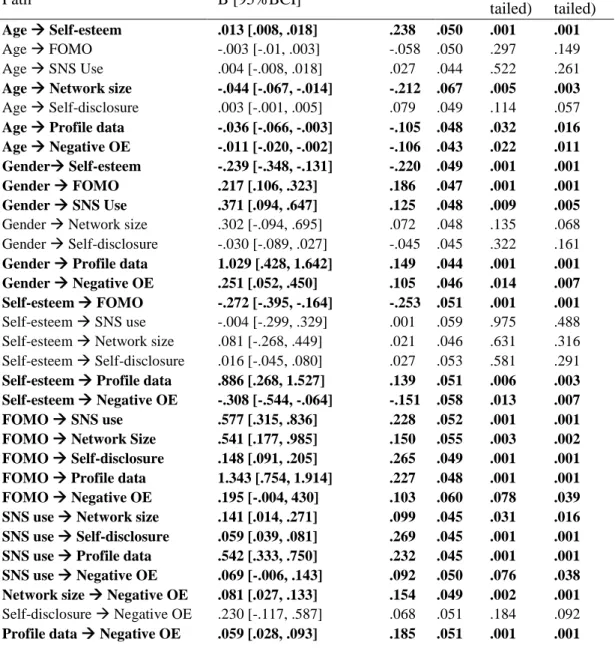
Table 4.3: Path coefficients for tested structural model (N = 489, Male = 247,
Female = 242)
186
Table 5.1: Descriptive statistics and bivariate correlations (N = 175, Male =
84, Female = 91)
204
Table 5.2: Model fit over time for main latent constructs (N = 175, Male = 84,
Female = 91)
206
Table 5.3: Temporal path coefficients (N = 175, Male = 84, Female = 91) 208
Table 6.1: Descriptive statistics for the main study variables (N = 489; female
= 242, male = 247)
226
Table 6.2: Descriptive statistics for the longitudinal sample (N = 90; Male =
43; Female = 54)
231
Table 6.3: Correlations for the longitudinal sample (N = 90; Male = 43;
Female = 54)
232
Table 7.1: Descriptive statistics of self-report and digitally derived measures
(N = 177; Male = 65, Female = 112)
249
Table 7.2: Frequency of social diversity (by groups) reported by the sample
(N=177, Male = 65, Female = 112)
250
Table 7.3: Bivariate correlations (N = 177) 251
Table 7.4: Sample means and standard deviations for male and female
participants (Male (coded as 0) = 65; Female (coded as 1) = 112)
252
Table 7.5: Hierarchical regression analysis (N = 177, Male (coded as 0) = 65,
Female (coded as 1) = 112)
253
Table 7.6: Analysis of indirect effects for the mediation model (N = 177) 257
Table 8.1: Descriptive statistics of self-report and digitally derived measures
(N = 177, Male = 65, Female = 112)
269
16
Table 8.3: Sample means and standard deviations for male and female
participants (Male (coded as 0) = 65; Female (coded as 1) = 112)
272
Table 8.4: Hierarchical regression analysis (N = 177, Male (coded as 0) = 65,
Female (coded as 1) = 112)
273
Table 8.5: Analysis of indirect effects (Paths a x b( x d)), N = 177 275
Table 9.1: Descriptive statistics and bivariate correlations for the main study
variables (SNS User N = 52, Male = 13, Female = 39; Online Connection N =
5113; Male = 2346, Female = 2734; No gender specified: 33)
296
Table 9.2: Descriptive characteristics of perceived network ‘troublemakers’ (N = 617; Male = 309; Female = 308)
301
Table 9.3: Frequency, communication rate and closeness of disagreeable
online connections (N = 617; Male = 309, Female = 308)
303
Table 9.4: Multilevel models of network disagreement (SNS User N = 52;
Online Connection N = 5113)
310
Table 10.1: Overview of findings and original contributions 330
Table A6: Evaluative overview of digital data extraction applications 455
Table A7.1: CFA derived item loadings for the unidimensional FOMO scale 458
Table A7.2: EFA and CFA derived item loadings for the two-dimensional
self-disclosure scale
460
Table A7.3: CFA derived item loadings for the unidimensional online negative
experiences table
463
Table A7.4: EFA and CFA derived item loadings for the two-dimensional
self-esteem scale
464
Table A7.5: CFA derived item loadings for the unidimensional PPV scale 466
Table A7.6: CFA derived item loadings for the unidimensional TPV scale 467
17
Chapter 1: Introduction to thesis
1.1. Chapter introduction
In an increasingly connected world, online SNS provide interactive platforms for the digitally enabled to develop and manage their social spheres. Surpassing the predominantly text-based methods of early computer-mediated communication, these sites afford users the ability to share a vast array of information in multimedia-rich environments. For the millions of global users who regularly engage with these sites (Ofcom, 2014), it has been suggested that they provide an online equivalent to face-to-face communication contexts (Underwood, Kerlin, & Farrington-Flint, 2011), and in doing so carry the potential of delivering a range of social and psychological benefits (Burke & Kraut, 2014; Ellison, Steinfield & Lampe, 2007; Valkenburg, Peter, & Schouten, 2006). At the same time, an area of mounting academic interest is in addressing an individual’s susceptibility to potentially detrimental experiences when using SNS to interact and communicate with social connections online (Debatin, Lovejoy, Horn, & Hughes, 2009; Fogel & Nehmad, 2009; Wilcox & Stephen, 2013). The research presented in this thesis addresses factors that might contribute to an individual’s perception of and/or their actual susceptibility to negative online experiences in the context of UK SNS users. Chapter 1 introduces the thesis with a review of the literature considering the motivations, opportunities, and experiences that have been associated with reasons for SNS use. The chapter considers the ‘expected’ uses and gratifications that an individual might hope to gain from engaging in certain SNS behaviours, before introducing the notion that some outcomes and behaviours experienced on the site might be more ‘unexpected’ and potentially detrimental to the individual user. The chapter then presents the overarching aim of the research and provides a brief overview of the
18
methodology and design employed in this thesis. Finally, the chapter ends with an outline of the remaining nine chapters of the thesis.
1.2. Theoretical overview
Early research into online social interactions centred on the use of computer mediated communication (CMC) technologies (Kraut et al., 1998; Kraut et al., 2002; Mesch, 2001; Whitty, 2002). Such technologies provided a largely text-based means of communicating with individuals via internet-based platforms such as chat rooms (e.g., AOL), instant messengers (e.g., ICQ and AIM), and email. As internet enabled technologies have developed, so too have the opportunities for digitally enabled individuals to communicate, develop, and manage their social spheres online and share a vast array of information in multimedia rich SNS environments.
boyd and Ellison (2008) define SNS as web-based services that enable individual online users to:
1) Create a public or semi-public profile within a specified platform,
2) Articulate a list of site users with whom they share a connection, and
3) View or navigate their list of connections and the connections of others within the system.
The emergence of modern SNS have encapsulated not only the traditional text-based formats of earlier computer mediated communication, but also the use of speech, video, and photographic capabilities and in so doing offer their users a whole host of opportunities to enhance their online social interactions.
19
SNS, in their present form, came to prominence in Western society at the turn of the millennium with the emergence of the short-lived platform sixdegrees.com in 1997, which offered users the opportunity to list their connections and post messages on bulletin boards. The emergence of SNS, encouraged users to move away from the predominantly anonymous forms of communication often associated with CMC, and instead provided a means of connecting and interacting with known individuals from both offline and online social domains. Sixdegrees.com paved the way for a multitude of different incarnations of SNS including (but certainly not limited to) FriendsReunited.com in 2000, Friendster.com in 2002, Myspace and LinkedIn in 2003, Facebook in 2004, Twitter in 2006, Instagram in 2010, and most recently Google+ and Snapchat in 2011. In the past decade, SNS usage has become a global phenomenon with approximately 2.04 billion worldwide users (Statista, 2016). In the UK and USA, it is estimated that over 75% of internet using adults and teenagers regularly maintain at least one SNS profile (Ofcom, 2015ab; Pew Research, 2015ab), with upward usage trends evident in digitised nations globally (We Are Social, 2015). For the global users who regularly engage with these sites, it has been suggested that they provide an online equivalent to face to face communication contexts (Underwood et al., 2011), and in doing so present a plethora of potentially beneficial social and psychological opportunities (Ellison et al., 2007; Valkenburg et al., 2006). An area of mounting academic interest, however, is in addressing the ways in which users encounter and/or engage in potentially detrimental experiences when using SNS to interact and communicate with social connections online (Debatin et al., 2009; Wilcox & Stephen, 2013). The present thesis looks to address the possible associations between an individual’s offline psycho-social characteristics, use of SNS, and
20
potentially detrimental experiences by considering a specific form of SNS: Ego-centric SNS.
1.2.1 Ego-centric online SNS
An ego-centric SNS, as exemplified by Facebook and LinkedIn, assumes that the profile owner (the ego) is at the centre of a personal network and that all other connections within that network are connected to the ego (Arnaboldi, Guazzini, & Passerella, 2013). Ego-centric SNS are based on reciprocal online connections. For this reason they have been said to promote the augmentation and reinforcement of offline friendship formation and maintenance habits (Underwood et al., 2011) with individuals utilising online profile information to assess prospective online connections against traditional notions of mutual trust and common interests (Thelwall, 2008).
To connect to another user from the wider public network, the ego-user must enter into a mutually agreed online connection facilitated through the sending and receiving of connection requests (e.g., ‘friend requests’ on Facebook). Once connected individuals can view the full content (user defined privacy settings permitting) of their mutual connections’ profile and communicate with them freely. While individuals using ego-centric SNS have the capability to share vast amounts of personal information through their profiles, the relatively closed nature of the network facilitates a greater capacity to control and to some extent inhibits the flow of information to their mutual connections.
Facebook, founded in 2004 by Mark Zuckerberg and colleagues, is a prime example of an ego-centric online network in action. Facebook is essentially a collection of
21
interconnected ego-centric networks (Hogan, 2008), with each individual user at the centre of their own personal mini-network within the global Facebook community. Originally intended as a means of communicating between college students (Markoff, 2007), Facebook has rapidly permeated society having been adopted by users across the lifespan (Hutto et al., 2015; Ofcom, 2015b; Pew Research, 2014; Pew Research, 2015b). Facebook encourages users to engage with offline connections online, providing researchers with a useful platform to study the interplay between the offline and online domains. Furthermore, Facebook is currently the most popular ego-centric SNS in the western world (Ofcom, 2015ab; Pew Research, 2015ab), with in excess of 1.65 billion active profiles and 989 million daily users (Facebook, 2016). In the UK alone, it is estimated that 87% of adolescents and 97% of adults with social media profiles use Facebook, with 8 out of 10 adult users stating that the site maintains their primary SNS profile (Ofcom, 2015ab). Over and above the popularity of the site, the Facebook platform also provides a unique opportunity for both SNS users and researchers to access digital communication data via the Facebook API (Application Programmer Interface). The Facebook API facilitates the retrieval of digitally derived information, such as mutual friendship lists, that can be used in social network analysis (SNA). At present, such a feature is not yet readily available on other mainstream SNS. Based on Facebook’s ability to facilitate the collection of digitally derived data and its current popularity with users, being the SNS of choice for many users young and old, the platform is used as the main point of reference for the research conducted in this thesis. It should be noted however, that the theories and concepts outlined will be broadly attributable to any similarly structured ego-centric online SNS.
22
1.2.2 Who uses Facebook?
In the UK, there are over 30 million active Facebook users of which 52% are female and most are aged between 16 and 24 years old (Statista, 2016). Similar demographic patterns are also evident in the USA (Pew Research, 2015b). It is therefore, no surprise that a great deal of research has focussed on older adolescent or college aged users (e.g., Christofides, Muise, & Desmarais, 2009; Davidson & Martellozzo, 2013; Livingstone, Ólafsson, & Staksrud, 2013; Staksrud, Ólaffson, & Livingstone, 2013). Recently however, there has been a surge in users aged over 30 (Wilson, Gosling, & Graham, 2012) and evidence of increasing popularity amongst older generations (Hutto et al., 2015; Ofcom, 2015b; Pew Research, 2014). As such, researchers have been encouraged to encompass a wider age range of users in their efforts to identify key facets of Facebook use (Wilson et al., 2012). The current thesis will heed this advice by sampling SNS users from adolescents to older adults.
Research into general cross-generational Facebook use and habits has been conducted. A study by McAndrew and Jeong (2012) of 1026 worldwide Facebook users (18 – 79 years) found that young female users spent more time online, had larger networks of contacts, and were more likely to post photographs than male users or their older counterparts. Furthermore, a study by Ozimek and Bierhoff (2016) of 335 European Facebook users aged between 16 and 56 years demonstrated that increased activity (e.g., social interactions, posting pictures, and engaging in social comparison) on SNS, such as Facebook, are more apparent amongst younger users. However, research addressing Facebook use and potential detrimental online experiences spanning the lifespan is at present somewhat lacking. The present thesis will seek to bridge this gap in the literature by considering a mixed-gender sample of UK based Facebook users from across different generations in an attempt to gain a more considered perspective
23
of different individuals’ motivations, online behaviours, and potential consequences of engaging with Facebook.
In addition to the general demographics of Facebook users, some researchers have used personality factors (e.g., extraversion) to predict who and why some individuals might engage with SNS platforms (Amichai-Hamburger & Vinitzky, 2010; Bibby, 2008; Ross et al., 2009). However, such studies have been known to produce mixed or contradicting results, leading to suggestions that a user’s offline psycho-social motivations (e.g., self-esteem) for SNS engagement may be of greater importance in explaining user behaviours and activities online (Mehdizadeh, 2010; Seidman, 2013). In the following section, use of Facebook is considered from a psycho-social motivations perspective.
1.2.3 Why do people use Facebook?
In the offline world, social networks provide a range of psycho-social benefits, including access to social and emotional support, sources of information, and the ability to foster relationship ties with others (Berkman & Glass, 2000). As relationships and networks are increasingly maintained online, use of SNS platforms such as Facebook, afford individuals the potential to access such perceived offline benefits online (Joinson, 2008). Facebook provides individuals with a range of opportunities to forge and maintain their social networks (Masur, Reinecke, Ziegele, & Quiring, 2014), share information about their daily lives, feelings and interests (in the form of text, photographs and video), seek information (from individuals, groups, and pages), and communicate with others (via wall posts or direct messages). In doing so, use of Facebook has been said to enable individuals to seek and fulfil a range of social and psychological needs (Joinson, 2008; Papacharissi & Mendelson, 2010).
24
There has been a tendency in technology-focussed psychological research to adopt a deterministic stance, with studies attempting to infer direct causality between the use of a specific technology or application and some behavioural or psychological effect (Dwyer, Hiltz, & Passerini, 2007; Kraut et al., 1998). Technology use, however, does not lend itself to such a simplistic approach, with researchers such as McKenna and Bargh (2000) suggesting that there may in fact be no straightforward direct effect of technology use. An alternative to this drive towards direct ‘effects’ is to consider technology use from a more holistic research perspective. Drawing on Kling’s (2007) work on social informatics, Ahn (2011) suggests, researchers should not seek to hold a technology, such as SNS, fully accountable for a user’s experiences and wellbeing, but instead consider how the technology facilitates a user’s expectations, behaviours, and outcomes in relation to potential sources of social and psychological motivation.
Indeed, research has indicated that user strategies on Facebook vary across individuals with suggestions that different users engage with and use the site for different reasons (Burke, Kraut, & Marlow, 2011; Lampe, Ellison, & Steinfield, 2008). Individual motivations for Facebook use are therefore an important consideration for research into the platform and indeed this thesis. This section will provide an overview of some of the key social and psychological motivations associated with Facebook use. Starting with an outline of general motivation theories (e.g., Maslow, 1943; Ryan & Deci, 2000), Facebook motivations will then be considered from the perspective of the Uses and Gratifications framework (U&G; Katz, Blumler, & Gurevitch, 1974) in an attempt to provide an overview of some of the potential reasons for use and perceived benefits that the platform can provide.
25
1.2.3.1 Motivations for Facebook use
Motivation is a construct used to describe an individual’s desires in relation to their intention to behave. More specifically, it has been defined as “the degree to which an
individual wants and chooses to engage in certain specified behaviours” (Mitchell,
1982, p.82). The field of motivation research is abundant with theories. An early, but still widely used, theory is the Theory of Human Motivation developed by Abraham Maslow (1943). In his theory, Maslow identified five basic needs of human motivation: physiological (the need to sustain physical wellbeing); safety (the need to gain health, family and job security); belonging (the need for friendship, family and love); esteem (the need to be respected); and self-actualisation (the need to achieve one’s potential). Better known as the ‘hierarchy of needs,’ Maslow theorised that humans possessed an innate desire to ‘self-actualise’ and would be motivated to engage in behaviours that would allow them to seek out opportunities to fulfil each level of need in order, from lower (physiological) to higher (self-actualisation), to achieve their life goals. Maslow’s theory, whilst a classic, is however not without criticism (Kellerman, 2014). Critics have highlighted how the rigidity of the hierarchy does not allow for individual differences in human behaviour, nor does it adequately reflect the potential influence of social and environmental factors (Hendriks, 1999; Mitchell, 1982; Neher, 1991). Such criticism however, has not deterred some researchers from using it to investigate motivations of continued use of Facebook (Cao et al., 2013).
A motivational theory that has resonated with researchers in the realms of cyber-social psychology is that of self-determination theory (SDT; Ryan & Deci, 2000). Based on the intrinsic (engaging in an activity/behaviour for satisfaction and enjoyment) and extrinsic (engaging in an activity/behaviour as a result of some outward pressure)
26
motivations model described by Deci and Ryan (1985), the SDT (Ryan & Deci, 2000) suggests that an individual’s motivations, behaviours, and subsequent wellbeing are intrinsically linked to three innate psychological needs: autonomy (the need to control one’s life course), competence (the need to show effective and meaningful actions when dealing with the environment), and relatedness (the need to feel connected to others and belong). Research has demonstrated that individuals who perceive themselves to be achieving high levels of intrinsic need satisfaction demonstrate a tendency to report positive effects in terms of psycho-social health and wellbeing (Ryan, 1995; Veronneau, Koestner, & Abela, 2005). However, when attempts by an individual to satisfy their needs are thwarted, it has been shown to produce maladaptive psycho-social consequences (Soenens, Vansteenkiste, Luyten, Duriez, & Goossens, 2005).
For individuals who are unable to realise their psycho-social needs in their daily offline lives, interaction with online technologies such as Facebook, has been shown to provide opportunities to regulate and overcome such psycho-social deficits (Masur et al., 2014). Potential associations between such offline deficits and Facebook, have considered the role of self-esteem as a motivational factor for platform use. The term self-esteem refers to the extent to which individuals’ view themselves to be worthwhile and competent (Coopersmith, 1967), and is said to encompass both beliefs (e.g., “I am a competent and successful person”) and emotions, with an individual’s
self-esteem manifesting itself in feelings of pride and shame (amongst others) in response to daily events and contexts or borne from evaluations of oneself that have developed over time (Heatherton & Polivy, 1991).
Research has indicated that individuals who are low in self-esteem in the offline world, possibly because of intrinsic needs deficits in one or more domains, have been shown
27
to use SNS as a means of boosting their overall sense of self-worth (Gonzales & Hancock, 2011; Steinfield, Ellison, & Lampe, 2008; Valkenburg et al., 2006). A study by Forest and Wood (2012) looking at the motivations and consequences of SNS use amongst people with low self-esteem showed that for many, sites such as Facebook, presented a ‘safe’ and appealing place to connect with others and boost their perception of self-worth. As a result, SNS users with low self-esteem in the offline world were found to spend more time online. Furthermore, links between low self-esteem offline and SNS behaviours such as intensity of use and photo sharing have also been demonstrated by the likes of Mehdizadeh (2010) and Stefanone, Lackaff, and Rosen (2011). It would appear then that an individual’s self-esteem offline, from the perspective of an individual’s thwarted attempt to satisfy an innate need, plays an important motivating role in Facebook use and the behaviours that people exhibit online, a role that will be explored further during the course of this thesis.
The motivating role of offline self-esteem complements SDT, with its emphasis on psycho-social needs regulation, and therefore, offers a potential insight into the motivations regarding use and perceived benefits of Facebook. However, to consider Facebook motivations from a largely intrinsic perspective neglects to acknowledge the potential extrinsic pressures that might be placed upon a user (e.g., social pressure to belong), which in turn might further motivate their behaviours and actions online. Extrinsic motivations have traditionally been used to highlight negative effects in terms of psychological wellbeing and development (Deci & Ryan, 2000). However, more recently it has been suggested that the role of extrinsic motivations in terms of Facebook might be a more mixed one. An online survey study, of 230 Facebook users by Reinecke, Vorderer, and Knop (2014), looking at the role of both intrinsic needs satisfaction and extrinsic motivations, demonstrated that social pressures (in this case
28
perceived offline peer pressure), were negatively associated with the intrinsic need for autonomy, with Facebook use being regarded as a ‘controlled’ necessity rather than a source of enjoyment. However, intrinsic competence and relatedness were deemed to benefit from social pressures, in that users gained higher levels of social interaction, belonging and positive social feedback when engaging with others on the network.
1.2.3.1.1 Extrinsic motivations and Facebook
The role of extrinsic social motivations in psycho-social needs fulfilment draws parallels with theories of social ostracism (Gilbert et al., 2007; Williams, 2009). These are motivational theories that consider the psycho-social and behavioural effects associated with the perceived threat of feeling ‘left out’ of the social spheres in which an individual resides or aspires to belong. In both the offline and online world, individuals can perceive extrinsic threats to their ‘belonging’ by engaging in social comparisons with others.
Social comparison theory, outlined by Festinger (1954), postulates that an individual will evaluate their attitudes, behaviours, and abilities by comparing themselves to others. In so doing, individuals can use these comparisons to serve a variety of psycho-social purposes, including evaluating the self (Festinger, 1954), evaluating group affiliations (Schachter, 1959), and regulating emotions and well-being (Taylor & Brown, 1988; Tesser & Campbell, 1982). Social comparisons with others can be directed in both an upward and downward fashion (Wills, 1981). When an individual makes an upward comparison, they are seen to compare themselves against others who are perceived to be superior to themselves and display more positive characteristics. In contrast, a downward comparison occurs when an individual compares themselves to others who are deemed inferior. A downward social comparison is akin to a
29
defensive strategy in that the individual uses the downward evaluations as a means of boosting their own sense of wellbeing and self-worth (Wills, 1981). Upward social comparisons can also provide individuals with benefits, for instance, they can motivate and inspire people to make positive changes in their lives (Lockwood & Kunda, 1997). At the same time, evaluating oneself against the perceptually ‘superior’ lives of others can be rather detrimental with individuals gaining a sense of inadequacy, low self-esteem, and social pressure to conform (Marsh & Parker, 1984; Pyszczynski, Greenberg, & LaPrelle, 1985).
1.2.3.1.2 The fear of missing out
Frequent upward social comparisons can elicit a fear of missing out (FOMO), a form of social anxiety in which individuals perceive others to be more socially competent and interesting than themselves, and lead to negative detriments in perceptions of psycho-social needs. Recent research has suggested FOMO can be a psychological motivator, driving people to seek out opportunities to regulate their psycho-social needs and wellbeing (Przybylski, Murayama, DeHaan, & Gladwell, 2013). On Facebook, such regulation can be achieved by engaging in online behaviours such as online friending and self-disclosure (Tobin, Vanman, Verreynne, & Saeri, 2015) and seeking out others as targets for downward comparisons. As such, FOMO has been found to be positively associated with an individual’s frequent engagement with the site (Baker, Krieger, & LeRoy, 2016; Beyens, Frison, & Eggermont, 2016; Przybylski et al., 2013). However, as Przybylski et al. (2013) warn, FOMO in the context of SNS use has the capacity to produce a “self-regulatory limbo” (p.1842), with individuals
seeking to reaffirm their identity and sense of belonging by spending more and more time online. However, more time online provides users with increased opportunity to
30
make social comparisons, which in an upward direction could lead in turn to further fears of missing out and subsequently to more social networking engagement and behaviours.
A theory that can help to explain this potential “self-regulatory limbo” is the Temporal
Needs-Threat Model of Social Ostracism by Williams (2009) which suggests that
individuals fearing social ostracism (feeling excluded / left out) are likely to compensate for a lack of perceived wellbeing by looking for opportunities to increase their sense of autonomy, competence, and relatedness. The model suggests that individuals go through a three-stage process of managing the perceived threat. When an individual identifies a potential threat of ostracism they enter the first ‘reflexive’ stage, in which an innate need to boost their self-esteem triggers a desire to balance their psycho-social needs. In the second ‘reflective’ stage, individuals then attend to these needs by attempting to make themselves more socially attractive and gain recognition. Finally, in the third ‘resignation’ stage, should an individual perceive that their needs have been unsuccessfully addressed, or indeed they detect further threats of social ostracism, individuals might once again experience deficits in their overall psychological wellbeing, potentially triggering a cycle of behaviour in which individuals are motivated to increase their attempts to readdress the balancing of their needs.
The impact of FOMO, and it’s potential to trigger a spiral of increasing SNS use and related behaviours, is said to be most profound in individuals who already exhibit deficits in their needs satisfaction and self-esteem (Przybylski et al., 2013). For this reason, it has been suggested that FOMO might mediate the association between psycho-social deficits and Facebook use. However, at present a clear understanding of how this psycho-socially motivated SNS use affects specific online behaviours and
31
outcomes is lacking. The mediating role of FOMO, in the relationship between offline self-esteem and an individual’s online behaviours, will be further explored in this thesis.
The literature on motivations has so far has indicated that in terms of psycho-social need fulfilment, Facebook would seem to offer a range of intrinsic and extrinsic opportunities in terms of both use of the site and the gratifications it can provide. Such motivations indicate that users of Facebook perceive the site to be a useful resource in their quest to regulate their needs. In the following section, some of these perceived uses and gratifications will be explored in more depth to provide a clearer picture of not only why individuals choose to engage with Facebook but also what they expect to gain from this engagement.
1.2.3.2 The perceived ‘usefulness’ of Facebook
Introduced by Katz et al. in 1974, U&G theory offers a means of explaining the motives, needs, and gratifications that are associated with media use, allowing researchers to consider the “social and psychological origins of needs, which generate expectations of the mass media or other sources, which lead to differential patterns of media exposure (or engagement in other activities) resulting in need gratifications
and other consequences, perhaps mostly unintended ones” (Katz et al., 1974, p. 510).
At the core of U&G theory is the belief that individuals are active users and consumers of media, and intentionally select media that afford them with the opportunity to gratify their psychological needs and motivations (Katz et al., 1974). Forms of media have expanded and seen major technological developments since the inception of the original theory, nevertheless it has been adopted, but indeed adapted, by many SNS
32
researchers in the field (Hunt, Atkin, & Krishnan, 2012; Joinson, 2008; Papcharassi & Mendelson, 2001; Sheldon, 2008).
Numerous studies addressing the uses and gratifications of Facebook users have sought to explain site engagement using the U&G framework. A study by Smock, Ellison, Lampe, and Wohn (2011) examined a range of different uses and gratifications related to Facebook feature use with a sample of 267 university students, including entertainment, social interaction, expressive information sharing, companionship, peer influence, professional advancement, and the passing of time. While all perceived uses and gratifications were to some extent implicated in a user’s Facebook engagement, the most marked predictor was found to be social interaction. Similar findings have also been evidenced in other U&G studies such as Park, Kee, and Valenzuela (2009) who identified four primary domains of uses and gratifications (socialising, entertainment, self-status seeking, and information seeking) associated with interacting with Facebook groups, and Leung (2013) who identified a need in social media users to gain sociability and recognition.
In line with the motivation theories previously discussed (see Section 1.2.3.1, p.25) and evidence from U&G studies, it would therefore appear that a prime perceived use of Facebook is to satisfy users’ psycho-social needs via online social interaction (Barker, 2009; Joinson, 2008; Quan-Haase & Young, 2010). Social interaction is indicative of an individual’s need to belong and feel connected, and gain approval from others (Cho & Jun, 2016). As Baumeister and Leary (1995) state, the need to belong and gain acceptance from others is a "fundamental human motivation that is something all human beings possess ... to form and maintain at least a minimum
33
On Facebook, users can fulfil this need through their ability to connect with and interact with others on the network and share information. In this way, Facebook presents a valuable platform for users to accumulate and maintain social capital (Burke, Marlow, & Lento, 2010; Burke et al., 2011; Ellison et al., 2007; Valenzuela, Park, & Kee, 2009) and gain social acceptance and belonging (Yu, Tian, Vogel, & Kwok, 2010). In doing so, Facebook users aim to fulfil their need for autonomy, competence, and relatedness and thus increase their overall sense of psychological wellbeing (Gonzales & Hancock, 2011; Steinfield et al., 2008).
1.2.3.2.1 Expected ‘consequences’ of Facebook Use
Humans are highly dependent on the social, emotional, and informational support they receive from others (Baumeister & Leary, 1995). Gaining such support has the capacity to increase an individual’s sense of belonging, self-efficacy, and self-worth, and in doing so foster potential benefits in terms of their innate psychological needs. A way in which individuals can acquire this support is through the accumulation and maintenance of social capital. The term social capital is widely used in the realms of social, political, and psychological research. At the heart of social capital is the idea that individuals will accrue a range of benefits and resources as a result of the social interactions they have with others (Portes, 1998; Lin, 1999). Resources that are shared in such interactions can take many forms including access to helpful information, and social and emotional support. The accumulation of social capital has been associated with largely positive outcomes in the offline world, including reported increases in health and wellbeing (Bjørnskov, 2003; Helliwell, 2006) and prosocial behaviour (Wright, Cullen, & Miller, 2001).
34
A wide range of interpretations of social capital have been offered by researchers and theorists over time. The French sociologist Pierre Bourdieu (1986) theorised that capital should be considered in terms of economic capital, cultural capital, and social capital, which Bourdieu (1986) defined as ‘‘the aggregate of the actual or potential resources which are linked to possession of a durable network of more or less
institutionalized relationships of mutual acquaintance and recognition’’ (p. 248).
Bourdieu highlighted how the type and purpose of resources gained from such social relationships might differ. He also suggested how an individual’s ability to gain social capital might be linked to the notion of symbolic capital, a form of capital that can be accumulated by an individual based on the reputation they have amongst their social connections. Bourdieu described it more formally as “the acquisition of a reputation
for competence and an image of respectability and honourability…” (1984, p. 291).
While the idea of symbolic capital still resonates in the realms of research today (particularly online), as a general theory of social capital, Bourdieu has been accused of presenting a rather negative outlook on an individual’s ability to acquire capital by implying that it is bound by social hierarchies favouring the elite (Gauntlett, 2011).
Alternative theories of social capital suggest that it is not necessarily group (or class) membership that will determine the quantity and quality of the resources available, with greater emphasis placed on the nature and characteristics of the actual relationships people engage in, and the ability of an individual to form and maintain those relationships. One such theory is presented by Coleman (2000) who describes social capital as resources accumulated through relationships among people that can be facilitated by individual or collective action, and thus generated by networks of relationships, reciprocity, trust, and social norms. In a similar vein, Lin (1999) suggests that social capital can be optimised through the development of social
35
networks from which individuals can gain increased levels of “access to and use of
resources” (p. 30).
The myriad of definitions and somewhat overuse of the term social capital have led some researchers, most notably in the domain of social networks, to question the usefulness of a concept deemed to be overly general and somewhat artificial (Kadushin, 2004; Fine, 2018). Some would argue that in today’s digitally driven society, consideration of the structural features of a network and the characteristics of those involved can provide a better insight into the social capital that might be on offer online and hence provide a more up to date perspective on the differences in perceived and actual outcomes derived from the social resources people access online (Brooks, Hogan, Ellison, Lampe, & Vitak, 2014). Building on a largely self-reported evidence base, the present thesis will consider these structures and characteristics from a digital perspective.
Interest in the nature and characteristics of the social relations involved in providing social capital has led to the identification of two related groups of social capital: bonding capital and bridging capital (Putnam, 2000). Bonding capital refers to the social capital accrued from close-knit social relationships such as those with close friends and family and is said to provide individuals with access to emotional and social support (Stefanone, Kwon, & Lackaff, 2012; Williams, 2006). It should be noted that bridging capital has been presented in previous research (Putnam, 2000; Williams, 2006) as a community level concept (i.e., based on an individual’s participation in a broader group). However, in line with research by Steinfield and colleagues (2008) this thesis considers the distinction from an individual and relationship level (i.e., an individual’s ability to maximise capital gain from their connections). In this context, bridging capital refers to social capital gained as a result
36
of interactions with looser ties such as casual acquaintances and friends of friends (Adler & Kwon, 2002). Bridging capital is often described as ‘linkage capital’ in that it allows for diverse groups of individuals, who otherwise would not be connected, to connect and gain access to novel information and social resources (Ellison et al., 2007). The notion that individuals with relatively loose connections can provide beneficial social capital complements Granovetter’s (1977) work on ‘the strength of weak ties’, which suggested that weak ties in a social network were likely to provide access to a range of information not readily available to the individual from their closer ‘bonded’ ties.
Tie strength has formed an important role in technology related social capital research. Indeed, Wellman, Haase, Witte, and Hampton (2001) suggested that internet technologies are well suited to the accumulation of both bonding and bridging capital due to the increased opportunities available to users to connect to others from diverse social spheres. Furthermore, the work of Williams (2006), drawing heavily on the work of Putnam (2001), has addressed the increasing use of internet enabled communication technologies with the development of scales to capture bonding and bridging social capital from the perspective of an individual’s access to resources. Williams’ scales did not address the ‘actual’ social capital an individual might accrue, but rather ‘perceived’ social capital, i.e., how much capital an individual thought they had access to, with the aim of comparing these perceptions of social capital in both an online and offline context.
Research on SNS, often utilising the work of Williams (2006), has indicated that sites such as Facebook provide users with the opportunity to foster higher rates of perceived social capital in both online and offline relationships (Burke et al., 2011; Donath & boyd 2004; Ellison, et al., 2007; Papacharissi & Mendelson, 2010; Valenzuela et al.,
37
2009). For individuals seeking to fulfil innate psychological needs, this potential increase in availability of social resources provides a strong motivator to engage with the platform. Indeed, enhanced social capital derived from SNS use (whether it be perceived or actual) has been shown to provide a host of positive social and psychological outcomes for Facebook users, including increases in perceived social connectedness and belonging, and positive implications for a user’s psychological wellbeing (Valenzuela et al., 2009; Valkenburg et al., 2006). For this reason, it is plausible that SNS users suffering from deficits in self-esteem and/or exhibiting signs of social inadequacy (Burke et al., 2010; Ellison et al., 2007; Toma & Hancock, 2013) would feel motivated to use SNS in order to reap the perceived benefits of being connected, allowing them to enhance or even supplement the social and emotional support resources available to them in the offline world. The following section will consider how an individual’s motivation to increase the perceived availability of social capital, and the associated positive needs gratifications, can be realised on Facebook via the processes of specific online connective behaviours, online friending, and self-presentation.
1.2.3.2.1.1 Boosting psycho-social needs via Facebook ‘friending’
In the offline world, it has been estimated that the average young person has approximately 5 close others with this figure reducing with age as relationships become more intimate (Dunbar, 2016). Extended networks in the offline world are not uncommon, with previous research by Gest, Welsh, and Domitrovich (2005) showing a tendency for younger people to form extended triads in offline contexts and in particular for younger males to exhibit larger and more transient social networks due to social activity-based bonds. However, when compared to the social spheres that
38
people connect to online, these triads often pale into insignificance, given that the friends lists of some adolescent and emerging adult users can number in their hundreds and in some cases even thousands (Ofcom, 2012). Furthermore, recent estimates indicate that the average adult Facebook network contains approximately 338 ‘friends’ (Pew Research, 2014).
This apparent desire by some to accumulate large online social spheres has led to the redefining of the term friend. Raynes-Goldie and Fono (2005) suggest that for some the term friend has gained many more connotations than previously held. Whereas in the offline world friendships have traditionally been associated with trust, common interests, and an investment of time (Thelwall, 2008), the term ‘friend’ is now commonly used online to refer to a diverse array of people ranging from closely bonded family members and offline friends to more loosely connected acquaintances, online only connections, and even those whom users do not know (Raynes-Goldie & Fono, 2005).
At its simplest level, the number and diversity of online connections an individual has on a site such as Facebook can provide them with a perceived indication of the level and type of social capital they might have access to. In this way individuals can gain a sense of social connectedness (and in so doing somewhat satisfy their need for relatedness) from perusing both bonding and bridging connections available on their ‘friends’ list (Burke et al., 2010; Ellison et al., 2007; Vitak, 2012). Research has suggested that such perceived online capital has positive associations with an individual’s sense of happiness and wellbeing (Schiffrin, Edelman, Falkenstern, & Stewart, 2010; Valenzuela et al., 2009).
39
Aside from mere connectivity, Facebook ‘friending’ also serves an important self-enhancing role in terms of providing an individual with opportunities to gain increased reputation and prestige through their perceived popularity and the desirability of the individuals to whom they connect. Linking back to Bourdieu’s (1986) notion of symbolic capital (see p. 34), individuals actively seek out opportunities to gain enhanced social status. On Facebook, such reputation management can be achieved via the accumulation and maintenance of a large visible ‘friends’ list (as an indicator of perceived popularity) or by being seen to connect to others whom are deemed socially popular and/or important to their peers. Theories of friendship formation can be drawn on to explain this apparent desire for social enhancement. For instance, the status-based initiation response model (Hallinan, 1976) states that individuals select their friends using both visual and verbal cues to evaluate a potential friend’s physical attractiveness, attitudes, beliefs, and abilities. Selection of friends is then determined by the individual’s desire to move up in status, befriend those with expected similarities, or gain a sense of superiority. Furthermore, research by Foucault, Zhu, Huang, Atrash, and Contractor (2009) suggests that individuals select potential friendships based on an evaluation of costs and rewards, with individuals forming friendships or avoiding individuals based upon the likelihood of their actions gaining peer approval. As a result, theories such as the ‘Rich Get Richer’ model suggest that individuals will show a preference for forming friendships with popular individuals and avoid association with less popular peers (Valkenburg & Peter, 2007).
The idea that individuals seek to find belonging with some and avoid others complements theories of social identity. Social identity is the part of an individual’s self-concept which derives from their perceived group memberships (Tajfel, 1982). According to social identity theory (Tajfel & Turner, 1979) people are motivated to
40
achieve a balance between belonging to the people within a group and being distinct from others in different groups. Selectively friending on Facebook provides individuals with the opportunity to realise the need for belonging, whilst at the same time allowing them to carefully manage their distinctiveness by differentiating between users who will enhance their perception of self-identity and those who will not. In so doing, it has been suggested that selectively choosing who to ‘friend’ can provide individuals with opportunities to enhance their self-esteem (Cho & Jun, 2016; Tong, Van Der Heide, Langwell, & Walther, 2008).
Facebook ‘friending’, however, relies on individuals being able to attract and indeed maintain connections online (and offline too). To do this, individuals must engage in some degree of self-presentation on the site, for without a visible profile that is attractive to other users it is unlikely that others will connect (or indeed stay connected) to the individual.
1.2.3.2.1.2 Boosting psycho-social needs via self-presentation
Theories of self-presentation have suggested that individuals show a tendency to present multiple versions of the self (Bargh, McKenna, & Fitzsimons, 2002). Indeed, Jones and Pittman (1982) suggest that in offline face-to-face settings individuals manipulate these versions of the self by adopting a number of self-presentation tactics including self-promotion, ingratiation, supplication, exemplification, and intimidation. In online social interactions, self-promotion, ingratiation, and supplication have been found to dominate (Dominick, 1999), with all three forms of self-presentation linked to individuals engaging in online impression management to gain perceived social and psychological benefits. Self-promotion (also termed