HOW TO ACCELERATE LEARNING: ENTREPRENEURIAL VENTURES PARTICIPATING IN ACCELERATOR PROGRAMS
Susan L. Cohen
A dissertation submitted to the faculty of the University of North Carolina at Chapel Hill in partial fulfillment of the requirements for the degree of Doctor of Philosophy in the
Kenan-Flagler School of Business.
Chapel Hill 2013
Approved by: Howard Aldrich Richard Bettis
Christopher Bingham Atul Nerkar
ABSTRACT
SUSAN L. COHEN: How to Accelerate Learning: Entrepreneurial Ventures Participating in Accelerator Programs
(Under the direction of Christopher B. Bingham)
This study uses theory building and theory elaboration methods to suggest how firms accelerate learning. Although prior research establishes that firms learn at different rates, less is known about how some firms, especially those in knowledge-based industries, accelerate learning. The research setting is nine accelerators—entrepreneurship education programs that accelerate learning during venture gestation. Since 2005, these modern incubators have offered cohorts of nascent firms seed financing, education, and mentorship during intensive three-month programs that culminate in high-stakes pitch presentations. Today, there are approximately 300 accelerators across five continents that have collectively helped 2500 firms raise $1.8 billion in funding. Thus, accelerators are an important phenomena and an ideal setting to observe accelerated learning. There are several findings. First, learning is accelerated by mentor overload—time-compressed interactions with external advisors that
delay implementation. Mentors expand strategic options. Second, learning is accelerated by
director experts who rapidly accumulate and transfer expertise to nascent ventures. Directors narrow strategic options. Third, learning is accelerated by divided teams—founding team members who split up rather than band together during experience accumulation. Finally, learning is accelerated by cohort peers—peer ventures who are concurrently rivals and
to strategy by challenging the widely held assumption of time-compression diseconomies and to entrepreneurship by shifting the emphasis from changing strategic direction, often referred to as “pivoting,” to making strategic commitments. Finally this study contributes to
entrepreneurship by pioneering academic research on the purpose and effectiveness of
accelerators, explaining what they do and comparing them to incubators and angel investors.
DEDICATION
ACKNOWLEDGEMENTS
Words can only begin to express how grateful I am for the amazing support I received from so many people. My husband, Neil, treated my academic training as a job. His respect and belief in me and my education not only kept me going when times were tough but also made me feel important. I love him and am thankful for his support! I am also grateful for my children, Zachary, Ali and Sophie, who always made me smile. They listened to me talk about my research and provided surprisingly insightful comments. They are the center of my world. My mother and stepfather, Nancy and Jerry, provided encouragement and reality checks throughout. I could always count on them for support. I’m also grateful for the help my in-laws, Sheila and Joel, provided. I especially thank my step-brother and sister-in-law Dan and Lotta who inspired me to pursue my doctorate.
I am so very grateful for Virginia Kay’s friendship and camaraderie. We even had fun studying for comps, so long as we moved ever 20 minutes the lights even stayed on. I am also fortunate to be a part of a fabulous group of doctoral students. I extend a special thank you to Songcui Hu who always smiled when sharing her experiences with me. I’m grateful for my very good friend Jennie Schott who listened to my trials and tribulations, and for the never ending hospitality of Amanda and Jeff Peppercorn and Amy and Nick Shaheen.
so. He believed that my research could make a difference, which continues to inspire me. Atul Nerkar taught me the importance of scholarly “taste” and was always ready to strategize with me. Atul sharpened my thinking during every stage of my doctoral studies. I am also grateful for the many long conversations with Rich Bettis, mostly over “real” coffee.
Above all, I am grateful for all that my advisor, Chris Bingham, has sacrificed to advance my research—reading through pages of transcripts, listening to my crazy ideas, and even reading drafts while on vacation. I appreciate so much about Chris, particularly his patience, intellect and genuine intellectual curiosity. I consider myself extremely fortunate to have studied under Chris, and I am certain that there will be an impressive entourage of students behind me.
I also acknowledge many scholars who provided feedback on my work, especially Mike Christensen, J.P. Eggers, Marianne Feldman, Nathan Furr, Ben Hallen, David Kirsch, Ethan Mollick, Fiona Murray, Jeff Pollack, Alicia Robb, Scott Rockart, Kristin Wilson and Ted, Zoller. I’d also like to thank Mary Tripsas and Lisa Jones Christensen for taking me under their wings.
I’m grateful for the anonymous informants who took time from their own start-ups, investments and accelerators to speak to me. I literally could not have completed this research without their help. Although I cannot thank them by name, I am extremely appreciative. I’d like to extend a special thank you to my pilot site and the affiliated accelerator directors and venture founders who spoke to me, sometimes for several hours.
TABLE OF CONTENTS
LIST OF TABLES………... xi
LIST OF FIGURES………..xii
CHAPTER 1: INTRODUCTION……….…. 1
CHAPTER 2: THEORETICAL AND EMPIRICAL BACKGROUND………... 5
2.1. Organizational learning……….….… 5
Accelerated Learning Definition……..……….……… 5
2.2. Learning Modes……….…………. 6
2.2.1. Experiential……….. 6
2.2.2. Learning from Others………. 10
2.2.3. Experimental……….. 13
2.2.4. Trial and Error………14
2.2.5. Improvisation………. 15
2.2.6. Learning Mode Discussion……….17
2.3. Time Compression……… 17
2.3.1. Time Compression Diseconomies……… 17
2.3.2. Time Compression Economies……….. 19
2.4. Organizational Speed……… 20
2.4.1. Pacing………. 21
2.4.2. Planning………. 23
2.4.3. Prior Experience……… 25
2.4.4. Team Composition and Traits………... 26
CHAPTER 3: METHODS……….. 32
3.1. Research Setting………... 32
3.2 Definition of Accelerators………. 32
3.3 History of Accelerators……….. 34
3.4. Comparison: Accelerators, Incubators and Angels……….. 36
3.5 Research Setting……… 38
3.6. Research Design………39
3.7. Exploratory Work………. 42
3.8. Data Sources………. 43
3.9. Data Analysis……… 44
3.10. Accelerated Learning………. 46
CHAPTER 4: HOW TO ACCELERATE ORGANIZATIONAL LEARNING……. 50
4.1. Mentor overload………... 50
4.2. Director experts……… 63
4.3. Divided Teams……….. 75
4.4. Cohort Peers………. 84
CHAPTER 5: DISCUSSION………95
5.1. Framework: Accelerated Learning……….. 95
5.2. Organization Theory………. 99
5.3. Strategy………102
5.4. Entrepreneurship………. 104
CHAPTER 6: CONCLUSION……….. 107
LIST OF TABLES Table
1. Calls for Research ...7
2. Selected Studies on Learning Processes ...8
3. Selected Studies Finding Time-Compression Economies ...22
4. Selected Organizational Speed Studies ...29
5. Relative Speed of Learning Mechanisms ...31
6. Summary of the Differences between Incubators, Investors, and Accelerators ...38
7. Sample Design ...41
8. Sample Description ...42
9. Accelerated Learning ...48
10. Mentor Overload ...61
11. Director Experts ...73
12. Divided Teams ...82
13. Cohort Peers ...93
LIST OF FIGURES
CHAPTER 1 INTRODUCTION
“Increasing the rate of organizational learning is the heart of a fast cycle-time strategy. To become a fast cycle-time competitor, it is essential that senior management embrace
organizational learning as a strategic objective.”
(Meyer & Purser, 1993) Organizational learning is central to strategy and organization theory (Winter & Szulanski, 2001; Zander & Kogut, 1995; Zollo & Winter, 2002). Thus it is no surprise that researchers have described many ways organizations learn, including from others
(Haunschild & Miner, 1997; Haunschild, 1993); experimentation (Pisano, 1994; Sitkin, 1992); improvisation (Baker, Miner, & Eesley, 2003; Miner, Bassoff, & Moorman, 2001; Moorman & Miner, 1998); and doing (Argote, 1999; Arrow, 1962; Rapping, 1965). Despite the abundance of research on organizational learning, including several studies that find firms learn at different rates (Argote & Epple, 1990; Argote, 1999; Darr, Argote, & Epple, 1995; Dutton & Thomas, 1984; Lieberman, 1984; Pisano, Bohmer, & Edmondson, 2001; Reagans, Argote, & Brooks, 2005) and many that suggest how learning improves the production function (Adler & Clark, 1991; Argote & Epple, 1990; Benkard, 2000; Ittner et al., 2001; Levin, 2000), surprisingly few studies examine how firms accelerate learning.
First-movers erect barriers to entry by locking up strategic resources, such as limited supply and distribution channels, or establishing industry standards that favor their unique capabilities (Lynn, Skov, & Abel, 1999). Other firms use speed advantage to quickly imitate and then pass competitors(Hawk, Pacheco-De-Almeida, & Yeung, 2012; Lieberman & Montgomery, 1998). By delaying implementation until after competitors identify winning strategies, these fast-following firms reduce risk and costly experimentation. Finally, faster product
development is associated with lower costs and higher profitability (Clark & Fujimoto, 1991).
Considering the emphasis on acceleration in organizational research, in general, relatively few studies suggest how to accelerate learning. Extant work on accelerated learning largely suggests how firms improve production efficiency (e.g., Darr et al., 1995; Ittner et al., 2001; Lapré & Van Wassenhove, 2001; Terwiesch & Bohn, 2001). This stream of research examines how firms reduce production costs (Adler & Clark, 1991; Lapré & Van Wassenhove, 2001) or production time (Darr et al., 1995; Pisano et al., 2001). However, Argote (1999) notes that there are two types of learning: learning what to produce and learning how to produce it efficiently; much learning happens before the first unit is
produced (Argote, 1999), including learning what to produce, when to begin production, and even whether to produce the first unit at all. Prior work on accelerated learning has focused more on learning how to improve production efficiency and less on how learning what to produce.
& Haleblian, 2012; Vermeulen & Barkema, 2002). For example, Bingham and Haleblain (2012) found that firms learn heuristics from international entry experiences and Hayward (2002) found that firms learn more from prior acquisitions that are neither too similar nor to distant to focal acquisitions and result in small performance shortfalls. Although some studies (Hayward, 2002; Vermeulen & Barkema, 2002) suggest that time has an effect on learning, little work has been done to suggest how organizations might accelerate learning.
In particular, there is little research on how firms accelerate learning during
organizational gestation (Yang & Aldrich, 2012), yet learning during gestation might have a lasting effect on organizations (Stinchcombe, 1965). In a rare study of learning in
entrepreneurial firms, Bingham and Davis (2012) examined nine late-stage entrepreneurial firms entering new international markets. They found firms that began by learning
vicariously performed better over time. More generally, research suggests that organizations learn from others prior to developing their own experience (Argote, 1996). Though this work suggests that firms learn vicariously prior to market entry, it does not suggest how firms might accelerate such learning.
This study makes several contributions. Principally, it contributes to organizational theory by highlighting the central but often overlooked role of learning-coordination costs. Firms expend learning coordination costs to set-up learning engagements. Because prior work typically begins with the learning interaction, it omits the time and effort expended prior to learning. This study also portrays a more nuanced view of vicarious learning. In particular, this study finds that firms learn “what” from heterogeneous groups with
distributed expertise but learn “how” from homogenous groups with centralized expertise. This study also contributes to strategy by suggesting that accelerating learning reduces biases and improves learning. This conflicts with prior theory which suggests that learning diminishes when it is temporally compressed (Dierickx & Cool, 1989; Levinthal & March, 1981). The ventures in this study accelerated learning by delaying implementation until they committed to a strategy, rather than beginning with learning by doing, as suggested by prior work (Eisenhardt & Tabrizi, 1995; Pisano, 1994). This study also extends work on social learning by showing that ventures form aspirational groups with their cohort, even when cohort peers are in different industries.
Finally, this study contributes to entrepreneurship research by initiating scholarship on accelerators, explaining what they do and evaluating their relative effectiveness.
CHAPTER 2
THEORETICAL AND EMPIRICAL BACKGROUND
This chapter reviews prior work on organizational learning, time compression and organizational speed in order to set the theoretical setting for this study. I review prior work published in the organization studies, strategy, and entrepreneurship fields, and synthesize research related to organizational learning and speed. Throughout, I draw attention to
concepts related to learning speed. I conclude with a discussion which includes opportunities for further research.
2.1. Organizational learning
This section discusses prior work on organizational learning. After defining key terms, I review some of the mechanisms firms use to acquire knowledge, including experiential learning (Argote, 1999), learning from others (Haunschild, 1993) by experimentation (Pisano, 1994), trial-and-error (Van de Ven & Polley, 1992), and
improvisation (Miner et al., 2001). I conclude by synthesizing the research on organizational learning, highlighting opportunities for future research.
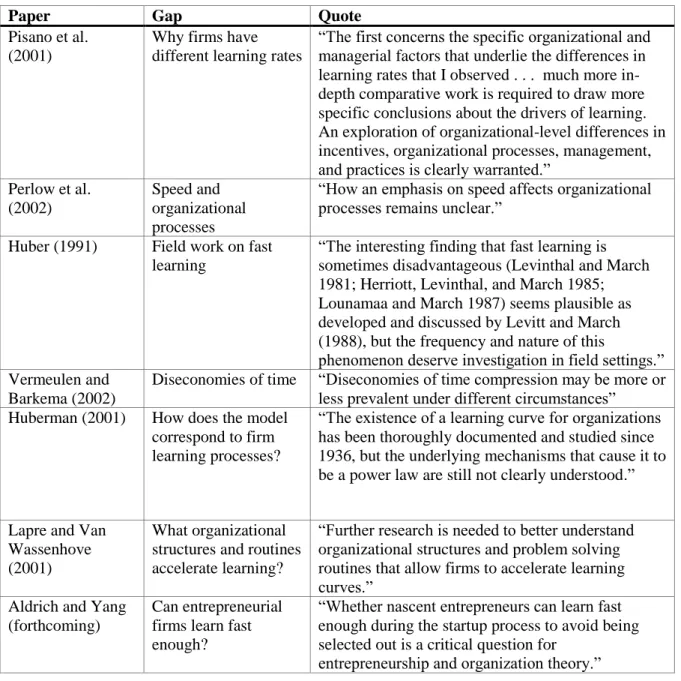
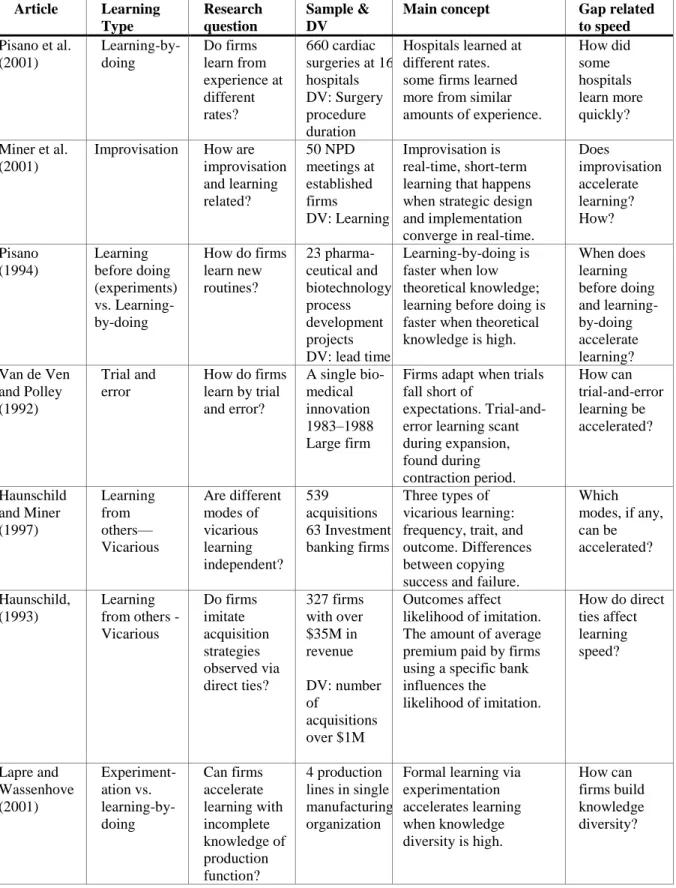
(See Table 1 for calls for research and Table 2 for selected studies on organizational learning processes.)
Accelerated Learning Definition
(e.g., Argote & Epple, 1990; Dutton & Thomas, 1984; Lieberman, 1984) due to processing of information or experience (Argote, 1999; Cyert & March, 1963; Fiol & Lyles, 1985, 1985; Huber, 1991). I also follow the behavioral view of the firm (Cyert & March, 1963), which portrays learning as a process that “requires loops of stimulus and feedback, which trigger changes in performance and cognition” (Fiol & Lyles, 1985).
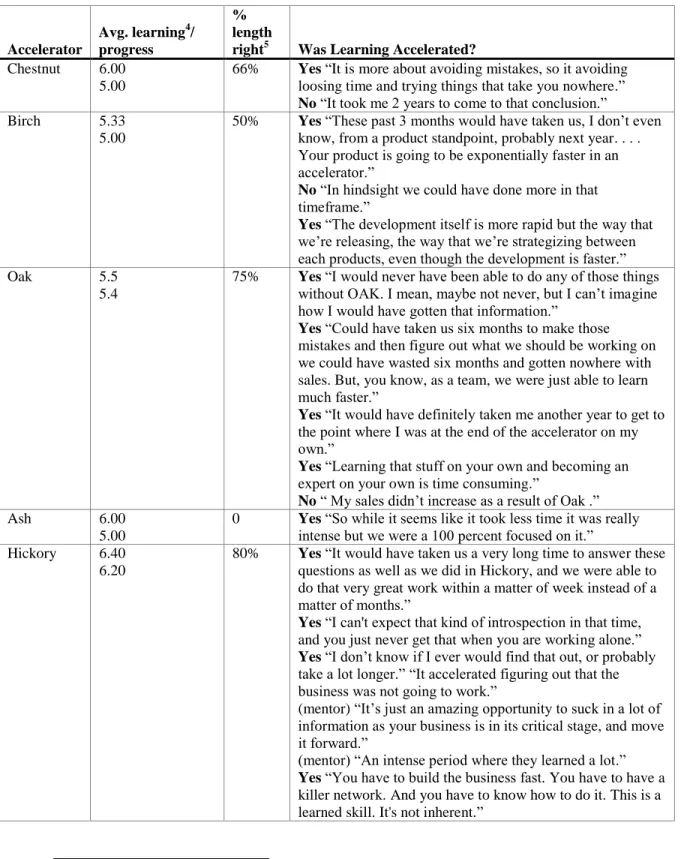
Accelerated learning is organizational learning that happens faster than it would under typical conditions. (See “Accelerated Learning” in the methods section of this study for a description of how I measure accelerated learning.)
2.2. Learning Modes
Research on how organizations learn are germane to accelerated learning and include studies on learning by doing (Argote, 1999), from others (Haunschild, 1993), by
experimentation (Pisano, 1994), by trial-and-error (Miller & Shamsie, 2001), and through improvisation (Miner et al., 2001).
2.2.1. Experiential
curve tradition generally assumes that learning happens when the production function improves (e.g., Adler & Clark, 1991; Ittner et al., 2001; Lapré & Van Wassenhove, 2001), though changes to the production function could be driven by factors unrelated to learning, such as decreasing raw material costs (Devinney, 1987).
Table 1: Calls for Research
Paper Gap Quote
Pisano et al. (2001)
Why firms have different learning rates
“The first concerns the specific organizational and managerial factors that underlie the differences in learning rates that I observed . . . much more in-depth comparative work is required to draw more specific conclusions about the drivers of learning. An exploration of organizational-level differences in incentives, organizational processes, management, and practices is clearly warranted.”
Perlow et al. (2002)
Speed and organizational processes
“How an emphasis on speed affects organizational processes remains unclear.”
Huber (1991) Field work on fast learning
“The interesting finding that fast learning is sometimes disadvantageous (Levinthal and March 1981; Herriott, Levinthal, and March 1985; Lounamaa and March 1987) seems plausible as developed and discussed by Levitt and March (1988), but the frequency and nature of this
phenomenon deserve investigation in field settings.” Vermeulen and
Barkema (2002)
Diseconomies of time “Diseconomies of time compression may be more or less prevalent under different circumstances” Huberman (2001) How does the model
correspond to firm learning processes?
“The existence of a learning curve for organizations has been thoroughly documented and studied since 1936, but the underlying mechanisms that cause it to be a power law are still not clearly understood.”
Lapre and Van Wassenhove (2001)
What organizational structures and routines accelerate learning?
“Further research is needed to better understand organizational structures and problem solving routines that allow firms to accelerate learning curves.”
Aldrich and Yang (forthcoming)
Can entrepreneurial firms learn fast enough?
“Whether nascent entrepreneurs can learn fast enough during the startup process to avoid being selected out is a critical question for
Table 2: Selected Studies on Learning Processes Article Learning
Type
Research question
Sample & DV
Main concept Gap related to speed Pisano et al.
(2001) Learning-by-doing Do firms learn from experience at different rates? 660 cardiac surgeries at 16 hospitals DV: Surgery procedure duration
Hospitals learned at different rates. some firms learned more from similar amounts of experience.
How did some hospitals learn more quickly?
Miner et al. (2001)
Improvisation How are improvisation and learning related? 50 NPD meetings at established firms DV: Learning Improvisation is real-time, short-term learning that happens when strategic design and implementation converge in real-time.
Does improvisation accelerate learning? How? Pisano (1994) Learning before doing (experiments) vs. Learning-by-doing
How do firms learn new routines? 23 pharma-ceutical and biotechnology process development projects DV: lead time
Learning-by-doing is faster when low theoretical knowledge; learning before doing is faster when theoretical knowledge is high.
When does learning before doing and learning-by-doing accelerate learning? Van de Ven
and Polley (1992)
Trial and error
How do firms learn by trial and error?
A single bio-medical innovation 1983–1988 Large firm
Firms adapt when trials fall short of
expectations. Trial-and-error learning scant during expansion, found during contraction period. How can trial-and-error learning be accelerated? Haunschild and Miner (1997) Learning from others— Vicarious Are different modes of vicarious learning independent? 539 acquisitions 63 Investment banking firms
Three types of vicarious learning: frequency, trait, and outcome. Differences between copying success and failure.
Which modes, if any, can be accelerated?
Haunschild, (1993)
Learning from others - Vicarious Do firms imitate acquisition strategies observed via direct ties? 327 firms with over $35M in revenue DV: number of acquisitions over $1M Outcomes affect likelihood of imitation. The amount of average premium paid by firms using a specific bank influences the
likelihood of imitation.
How do direct ties affect learning speed? Lapre and Wassenhove (2001) Experiment-ation vs. learning-by-doing Can firms accelerate learning with incomplete knowledge of production function? 4 production lines in single manufacturing organization
Formal learning via experimentation accelerates learning when knowledge diversity is high.
Much research has investigated how to improve the production function either by reducing production costs (Adler & Clark, 1991; Lapré & Van Wassenhove, 2001) or production time (Darr et al., 1995; Pisano et al., 2001). Organizations improve production function in manufacturing settings by conducting training (Adler & Clark, 1991), making engineering changes (Adler & Clark, 1991), experimenting (Terwiesch & Bohn, 2001), increasing knowledge diversity (Lapré & Van Wassenhove, 2001), or improving quality (Ittner et al., 2001). Although important, this body of work has limitations. First, it omits early learning. For example, in their study of four steel wire production lines at a Belgian multinational corporation, Lapré and Van Wassenhove (2001) found that management buy-in and knowledge diversity improved formal learning resulting in productivity improvements. However, they did not examine learning that happened prior to production. Adler and Clark (1991) also investigated how to improve the production function. They found that
engineering changes and employee training improve the production function either by reducing costs or by improving quality. However, they also do not address learning that happened prior to production. Thus, these studies are left truncated. Moreover, in some knowledge-intensive industries learning what to produce might be more important than learning how to produce efficiently.
Other work has begun to investigate how some firms learn faster than others in non-manufacturing settings. For example, Pisano, Bohmer and Edmondson (2001) and
the slow-learning hospital, the fast-learning hospital had a stable team that attended training together, had strong intra- and interdepartmental communication, planned, analyzed process and outcome data, and had a surgeon who encouraged input from team members. This study examined how operating teams learned an existing procedure. However, because the
procedure itself was invented elsewhere, it is a study of accelerated learning of a known process, not an innovation.
Prior work on accelerating learning-by-doing is limited to learning during production ramp-up, which results in process improvements. Less is known about how to accelerate earlier learning (including learning what to produce) or learning in knowledge intensive, non-manufacturing industries.
2.2.2. Learning from Others
Another way firms learn is by observing others, sometimes called vicarious learning (Haunschild & Miner, 1997; Haunschild, 1993; Huber, 1991). Scholarship on learning from others is rooted in individual social learning theory (Bandura, 1977) and studies of
organizational imitation (DiMaggio & Powell, 1983). Research shows that firms learn by observing alliance partners (Brown & Eisenhardt, 1997; Khanna et al., 1998), franchisees (Darr et al., 1995), industry peers (Zuckerman & Sgourev, 2006), or firms sharing board members (Davis, 1991; Haunschild, 1993; Westphal, Seidel, & Stewart, 2001).
There are several advantages to learning from others. Perhaps the most salient to acceleration is that firms can learn without the burden of “accumulating experience” (Ingram, 2002), making learning from others widely available (Baum, Li, & Usher, 2000) and
simultaneously (Bingham & Davis, 2012). Heterogeneous information improves performance (Beckman & Haunschild, 2002) and expands learning by changing a firm’s range of potential behaviors (Huber, 1991). Cognitive limits to learning from heterogeneous experiences are higher when firms learn from other firms’ experiences than when firms learn from their own (Barkema & Schijven, 2008).
Learning from others accelerates learning prior to market entry (Bingham & Davis, 2012; Darr et al., 1995; Haunschild & Miner, 1997; Haunschild, 1993; Huber, 1991). For example, Argote’s (1996) study of shipyards established that organizations learn vicariously prior to the start of production, which advances learning because firms can learn vicariously even before they create their own experience. Learning from others is faster when firms are related by a superordinate structure (Kane, Argote, & Levine, 2005). For example, Darr and coauthors’ (1995) study of 36 franchised pizza stores found that stores with the same
franchisee ownership learned a novel pepperoni spreading technique faster than stores owned by other franchisors. Firms can also enhance vicarious learning by learning from
geographically proximate competitors (Kim & Miner, 2007) and via social ties (Bell & Zaheer, 2007). Thus proximity, in general, seems to accelerate learning from others.
Another way to improve learning from others is to plan to learn (Hamel, 1991; Khanna et al., 1998). For example, in his detailed qualitative study of nine international alliances, Hamel (1991) not only found firms that planned to learn from partners learned more, he also found firms that formed alliances with the intention to substitute external knowledge for a deficiency in internal knowledge learned less than firms that had an
2002). Khanna and coauthors (1998) expanded on Hamel’s notion of intent and found that partnering firms race to learn from each other. Racing increases the speed of learning when the partnering firm that completes learning first subsequently terminates the relationship. Although Khanna and coauthors (1998) found evidence that firms race to learn in alliances, they did not explain how some firms learn faster than their partners. Thus, like the research on learning curves, this research provides more evidence that firms learn at different rates but falls short of suggesting how firms might accelerate learning.
Some research suggests that in turbulent or fast-paced markets vicarious learning can be slower than learning from experience, because observers need to wait for others to
accumulate experience (Bourgeois & Eisenhardt, 1988) prior to constructing their own experience. Thus, although research suggests that firms might accelerate learning by learning vicariously, it also raises questions about whether learning vicariously is expeditious in uncertain markets.
In sum, prior research has established that learning from others is most effective when it travels via direct ties to firms with adequate levels of absorptive capacity. Planning or intent further improves learning from others. Learning firms benefit from observing
2.2.3. Experimental
Like organizations that learn from others, organizations that learn from experiments can begin learning before creating their own direct experience. Firms learn from experiments by planning and conducting experiments and analyzing results (Miner et al., 2001). They test hypotheses about causal relationships by creating “contrasting situations in order to generate systematic experience” (Miner et al., 2001) sometimes using prototypes (Pisano, 1994). Inputs are deliberately varied, and the level of heterogeneity is controlled by the experimental design. Thus, planning, execution and analysis are central to experimental learning.
Prior work suggests that experimental learning may help firms accelerate learning within a particular domain (Levitt & March, 1988) when two important conditions are met: First, learners must have a cogent theoretical understanding of their problem to hone in on key variables, otherwise experimental learning might progress more slowly (Pisano, 1994) or lead to proficiency in a sub-optimal specialty (Levinthal, 1997). Second, the laboratory setting must closely resemble the real environment or information garnered from a laboratory setting may not apply in the real environment (Pisano, 1994). Repeated shifting between laboratory and production settings improves organizational learning in general (Tyre & Von Hippel, 1997). Finally, experimentation is preferable when environmental conditions are relatively stable (Pisano, 1994, 1996). When the environment is turbulent, learning by doing is preferred (Pisano, 1994, 1996).
during each phase based on the amount of time a firm spends in each project phase—research and pilot. Thus, Pisano (1994) assumed that learning speed is fixed and that all modes of learning produce learning at the same speed. Using transportation as a metaphor, this is like calculating distance traveled based on travel time—regardless of whether you are traveling by plane or horse. If some modes of learning are more efficient, then elapsed time
underestimates the amount of learning that occurs during a specified amount of time. Thus, further investigation is necessary to determine how experiments might accelerate learning. 2.2.4. Trial and Error
Firms also learn from on-line trial-and-error (Miller & Shamsie, 2001; Miner et al., 2001). To learn by trial and error, firms repeatedly try strategies and retain those strategies that generate performance that meets or exceeds their aspiration levels but shift to a new strategy when performance falls short of aspirations (Greve, 2003; Van de Ven & Polley, 1992). Trial-and-error learning happens after a firm evaluates outcomes from attempted strategies. Moreover, firms use trial-and-error learning when they have their own
experience—this distinguishes it from off-line experimental learning, which is available to firms prior to developing their own experience.
Like other forms of learning, trial-and-error learning has limitations. For one, firms need to wait for feedback after each trial and then decide whether or not to retain the trial strategy. This sequential process can be laborious; when strategies fall short of aspirations firms only know which strategies to eliminate, not what strategy to pursue. Yet another limitation is that firms might not know the potential of a strategy when they first try it (Levinthal & March, 1993). As firms acquire experience with retained strategies,
firms compare the performance of a trial strategy with a retained strategy that has the benefit performance improvements garnered through experience, the performance of the trial
strategy is likely to seem insufficient, because the trial strategy has not benefitted from experience (Levinthal & March, 1993; Levitt & March, 1988). Thus, learning from trial and error tends to favor retained strategies that have benefited from learning from experience.
As firms learn from trial and error, they eliminate poorly performing strategies. Thus, firms must have a tolerance for failure. Even so, firms learn more from small shortfalls than from larger gaps, which can cause rigid responses, or large successes, which can reduce learning motivation (Hayward, 2002; Sitkin, 1992). However, learning iteratively from small losses might limit the speed of learning, because firms take only small steps toward desired outcomes. Even more, shifting to a new strategy resets the “learning clock back to zero,” further disadvantaging new strategies and delaying learning (Van de Ven & Polley, 1992: 95).
2.2.5. Improvisation
Learning new strategies is not always intentional. Sometimes, firms spontaneously create and try new strategies, aptly named improvisational learning (Miner et al., 2001). Firms learn by improvisation when they try new strategies “on the fly,” often because they encounter constraints or uncover newly unfolding opportunities (Miner et al., 2001). To be considered improvisational, an activity’s design and implementation must happen nearly simultaneously. The primary difference between improvisational and other forms of learning is that an alternate strategy is implemented without advance planning.
development teams were more likely to use improvisational methods when they were under time pressure, further suggesting that firms may rely on improvisational learning when they do not have time to plan. Improvisation might accelerate learning because it reduces time spent in planning while still introducing new knowledge to the firm (Miner et al., 2001).
Though improvisation requires unplanned changes to strategy, firms can nevertheless encourage improvisation. Miner and coauthors (2001) suggested that improvisational
learning can be intentionally stimulated without specifying the content. That is, firms can develop routines that lead to improvisation even though the outcome of improvisation is unknown a priori. Firms foster opportunities for improvisational learning by improving communication (Edmondson, Winslow, Bohmer, & Pisano, 2003) and developing tolerance for cognitive reframing (Edmondson et al., 2003; Miner et al., 2001). Through rich
communication, organizational members exchange tacit information that may unfold new opportunities for the firm. Moreover, when firms improvise, strong communication keeps other members in the team informed of new strategies, which reduces confusion (Eisenhardt & Martin, 2000).
2.2.6. Learning Mode Discussion
Empirical investigations clearly establish that organizations learn at different rates but rarely explore how some firms learn more quickly than others. Those studies that have
examined how to accelerate learning tend to answer the question in terms of how to
accelerate improvements in the production function, therefore concentrating on learning after the first unit is produced and omitting learning prior to production. Less is known about how to accelerate learning related to inventing new products and in knowledge-intensive
industries.
Much of the literature on learning speed simply compares the speed of learning-by-doing to another type of learning—e.g., vicariously or experimentation—to identify the faster mode (Bourgeois & Eisenhardt, 1988; Pisano, 1994). Generally, this research finds that when uncertainty is high, learning-by-doing is faster, but when firms have a high theoretical
understanding of the market, then experimentation might be faster (Pisano, 1994). This stream of research assumes that the speeds of different learning modes are fixed; rather than suggesting how to accelerate learning, work that compares learning modes generally assumes that learning speeds are constant. Thus, my research question is: How might firms accelerate learning?
2.3. Time Compression 2.3.1. Time Compression Diseconomies
Dierickx and Cool (1989) explained that squeezing a two-year MBA program into a single year would leave students with less learning, even if all other aspects of the program
remained constant. In an organizational context, firms that learn too quickly risk specializing a sub-optimal strategy (Levinthal, 1997; Levitt & March, 1988), failing to absorb knowledge (Cohen & Levinthal, 1990), or even declining overall firm performance (Vermeulen & Barkema, 2002).
Generally, organizational learning theory posits that organizations that learn too quickly choose inferior solutions. For example, based on an extensive literature review, Levitt and March (1988), caution that “there is a tendency for organizations to specialize and for faster learners to specialize in inferior technologies” (Levitt & March, 1988). Simulation models concur that fast learning may inadvertently lead firms quickly down inferior paths (Levinthal, 1997). Not only is fast organizational learning of concern, but fast learners within an organization are also a concern, because organizations with a greater proportion of fast individual learners drive out individual-level heterogeneity before the organization’s optimal strategy is found (March, 1991).
solutions but rather that heterogeneity during the organizational learning process improves outcomes (Huber, 1991; Schilling, Vidal, Ployhart, & Marangoni, 2003). However, firms may vary in the speed at which they gather and evaluate heterogeneous ideas, questioning the relationship between the number of ideas considered and elapsed calendar time. Moreover, “more time” in a simulation model is typically a larger number of runs of the simulation model. Overall, the effects of time compression on learning remain relatively unexplored empirically. It is unknown how firms might time compress the benefits of increased heterogeneity.
2.3.2. Time Compression Economies
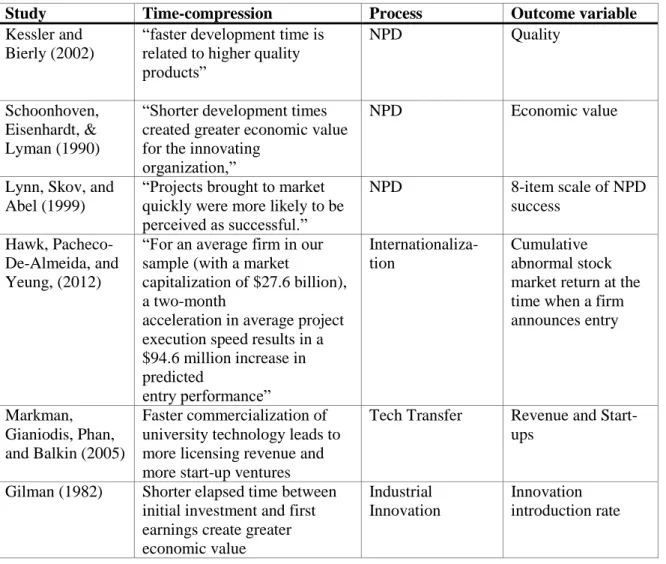
Although theoretical work on time-compressed learning suggests that accelerated learning is ill-advised, empirical work in new product development (Chen, Reilly, & Lynn, 2005; Kessler & Bierly, 2002; Lynn et al., 1999; Schoonhoven, Eisenhardt, & Lyman, 1990; Wheelwright & Clark, 1994), technology commercialization (Markman, Gianiodis, Phan, & Balkin, 2005), and decision making (Bourgeois & Eisenhardt, 1988; Eisenhardt, 1989b) finds the opposite: Acceleration leads to improved performance. Time compression economies have been found for multiple conceptualizations of performance, including economic value (Schoonhoven et al., 1990), quality (Kessler & Bierly, 2002), perception (Lynn et al., 1999), and revenue (Markman et al., 2005). For example, Kessler and Bierly (2002) found that innovation speed more closely correlates with new product development (NPD) success than either increased quality or reduced cost. (For a summary of literature suggesting
time-compression economies, including what is economized, see Table 3.)
from pioneering new markets (Lynn et al., 1999), because speed is intrinsically related to first-mover advantages (Klepper & Simons, 2000; Lieberman & Montgomery, 1988) as well as fast-follower strategies (Hawk et al., 2012; Lieberman & Montgomery, 1998). Speed might also enhance performance because firms that are intrinsically faster than their competitors can delay entry decisions until uncertainty is lower, avoiding the risks of early entry (Hawk et al., 2012). Other reasons for improved outcomes under time compression reflect improvements in internal processes and might be more relevant to time-compressed learning. For example research shows that time pressure improves communication and stabilizes goals (Lynn et al., 1999). Although this research finds benefits to time compression, it has not yet investigated the effects of time compressed learning.
In sum, the organizational learning and speed literatures come to opposing
conclusions: Organizational learning theorists posit that acceleration reduces the amount that is learned. To the contrary, scholars of organizational processes, such as new product
development speed find time-compression economies. However, neither stream has empirically studied time-compression economies of learning. Thus, the literatures on organizational learning and speed have not been adequately bridged.
2.4. Organizational Speed
2.4.1. Pacing
One way firms accelerate organizational activities is by pacing events in regular intervals (Gersick, 1991, 1994, 1988). Firms that pace activities, such as internationalization (Vermeulen & Barkema, 2002) and product launches (Turner, Mitchell, & Bettis, 2011), in a regular, rhythmic pattern perform better than firms that follow more random patterns
(Vermeulen & Barkema, 2002). By pacing, firms maintain forward momentum through repetitive deadlines and coordinating internal and external actors (Bingham & Eisenhardt, 2011; Eisenhardt & Brown, 1998).
Ostensibly, Vermeulen and Barkema (2002) explore the relationship between pacing and learning. They posited that regularly paced international entries enabled firms to learn between country entries. Although they found that firms that entered countries at a regular pace outperformed those that followed a more irregular time-pattern, it is not clear that they actually observed learning speed because they measure the rate of internationalization rather than the rate of learning. Moreover, rather than directly observe learning, they inferred it based on changes in profitability. The authors then assumed that diminishing returns to profitability were due to time-compression diseconomies of learning; however they neither measured learning outcomes nor learning speed.
studies and holds regardless whether the duration of the project is a few hours or several months (Gersick, 1989, 1988; Waller, Zellmer-Bruhn, & Giambatista, 2002). Seven out of eight of the teams in Gersick’s (1988) foundational study were fairly inertial until halfway through their allotted time and did not initially explore broadly. At the halfway point, seven of the teams experienced major transitions in the form of a “burst” of changes. After this burst, teams experienced a period of momentum, which concluded with a secondary burst prior to the end of the task time.
Table 3: Selected Studies Finding Time-Compression Economies
Study Time-compression Process Outcome variable Kessler and
Bierly (2002)
“faster development time is related to higher quality products”
NPD Quality
Schoonhoven, Eisenhardt, & Lyman (1990)
“Shorter development times created greater economic value for the innovating
organization,”
NPD Economic value
Lynn, Skov, and Abel (1999)
“Projects brought to market quickly were more likely to be perceived as successful.”
NPD 8-item scale of NPD
success Hawk,
Pacheco-De-Almeida, and Yeung, (2012)
“For an average firm in our sample (with a market
capitalization of $27.6 billion), a two-month
acceleration in average project execution speed results in a $94.6 million increase in predicted entry performance” Internationaliza-tion Cumulative abnormal stock market return at the time when a firm announces entry
Markman, Gianiodis, Phan, and Balkin (2005)
Faster commercialization of university technology leads to more licensing revenue and more start-up ventures
Tech Transfer Revenue and Start-ups
Gilman (1982) Shorter elapsed time between initial investment and first earnings create greater economic value
Industrial Innovation
In sum, although much work has been done to examine how pacing might help firms accelerate activities such as new product development and internationalization, this literature has omitted learning. Thus, questions remain about how pacing might accelerate learning. 2.4.2. Planning
Another way for organizations to accelerate is by planning and then compressing steps. Planning may expedite organizational activities, because firms use plans to allocate resources, coordinate activities, and avoid mistakes (Delmar & Shane, 2003; Song, Im, van der Bij, & Song, 2011). Planning is particularly effective when environments are stable; in turbulent environments, plans can become outdated before being implemented (Eisenhardt & Tabrizi, 1995). Planning activities (e.g., planning meetings, market and scenario analysis, portfolio analysis) accelerate firms, though codifying plans delays them (Brinckmann, Grichnik, & Kapsa, 2010). Established small firms benefit more from planning than newer small firms because they have more knowledge and established routines (Brinckmann et al., 2010).
Theoretically, there are several reasons why planning may delay rather than accelerate organizations. Organization theory suggests that time spent in planning may detract managers from implementation, which might more directly impact speed (Ocasio, 1997). Also, planning causes rigidities, especially when plans are formalized or when resources are acquired according to the plan (Leonard-Barton, 1992). Rigidities can delay product development when modifications are required, which is especially likely in rapidly changing markets. Finally, firms may never encounter the anticipated problems that surfaced during planning or may develop unforeseeable solutions to problems; firms that implement without a plan may develop unplanned strategic advantages (Sarasvathy, 2001).
In sum, prior research suggests that more time spent planning might shorten product development time by optimizing processes, avoiding mistakes, and coordinating efforts. However, when markets are rapidly changing, planning might delay time to market.
Although planning might be considered a learning activity, because planners must envision the future to develop plans (Gavetti & Levinthal, 2000), the literature linking planning to speed generally fails to address learning. There are two notable exceptions: Recall that the exploratory work done by Pisano and his coauthors (2001) found that the fast-learning hospital planned while the slower learning hospital did not, suggesting that planning might accelerate learning; and Eisenhardt and Tabrizi (1995) integrated learning and planning in their study of new product development teams in the computer industry. However,
Eisenhardt and Tabrizi portrayed planning and learning as discrete approaches to new product development, thus did not explore how planning might accelerate learning.
new product development speed, more work is needed to explore how planning might affect learning speed.
2.4.3. Prior Experience
The experience of team members and characteristics of teams’ compositions also influence organizational speed. The prior experience of entrepreneurial founding teams, in particular, might endure well past the tenure of the team members (Baron, Hannan, &
Burton, 1999; Stinchcombe, 1965), though the specific relationship between prior experience and speed is muddled. Some research suggests that start-ups with a CEO and top
management team members (TMT) with prior industry and start-up experience bring products to market more quickly (Heirman & Clarysse, 2007; Kessler & Chakrabarti, 1996) and are less likely to fail (Yang & Aldrich, 2012). Other research failed to find support for a relationship between prior industry experience or prior start-up experience and speed to market (Schoonhoven et al., 1990).
Teams with more experience working together might be more expeditious than newly formed teams, because teams with joint experience might retain previously developed work processes and communication patterns (Brown & Eisenhardt, 1995), including knowing who knows what (Wegner, 1987) . There is mixed support for this proposition. Schoonhoven and coauthors (1990) tested for but did not find that the tenure of a team improved speed.
2.4.4. Team Composition and Traits
Team composition also affects organizational speed. Cross-functional teams
accelerate new product introductions, both in entrepreneurial teams (Cooper & Kleinschmidt, 1994; Schoonhoven et al., 1990) and in established firms (Eisenhardt & Tabrizi, 1995). Homogenous management teams respond more quickly to competitor moves but launch innovative products more slowly (Hambrick, Cho, & Chen, 1996).
The nature of the CEO or team leader also impacts organizational speed. Strong leaders bring products to market more quickly (Cooper & Kleinschmidt, 1994; Eisenhardt & Tabrizi, 1995; Kessler & Chakrabarti, 1996; Wheelwright & Clark, 1994) and facilitate accelerate decision making (Bourgeois & Eisenhardt, 1988). This differs with organizational learning studies that suggest that inclusive leaders accelerate learning (Pisano et al., 2001). Given the inconsistency between the speed literature, which suggests that stronger CEOs launch products more quickly, and the learning literature, which suggests that more inclusive CEOs encourage team-learning, questions remain about the relationship between the
perceived strength of a CEO or team leader and learning speed.
generally examines the relationship between teams and the speed of an organizational activity other than learning, and little is known about how team experience and composition might affect learning speed.
Overall, prior work excludes learning from the discussion of the effects of team experience and composition on speed outcomes. The dependent variable in these studies is generally the speed of an organizational process, such as new product development. Some studies discuss how learning might accelerate organizational processes, but extant research falls short of suggesting how firms might accelerate learning. Thus, the relationship between prior industry, start-up, and joint experience and learning speed remains elusive. Finally, the speed and learning literature provide conflicting guidance on the effect of strong leaders. The speed literature suggests that strong leaders bring products to market more quickly, while the learning literature suggests that strong leaders may not elicit divergent opinions and might constrain learning. This study explicitly examines team characteristics on learning speed, addressing the many related gaps discussed in this section.
2.5. Literature Discussion
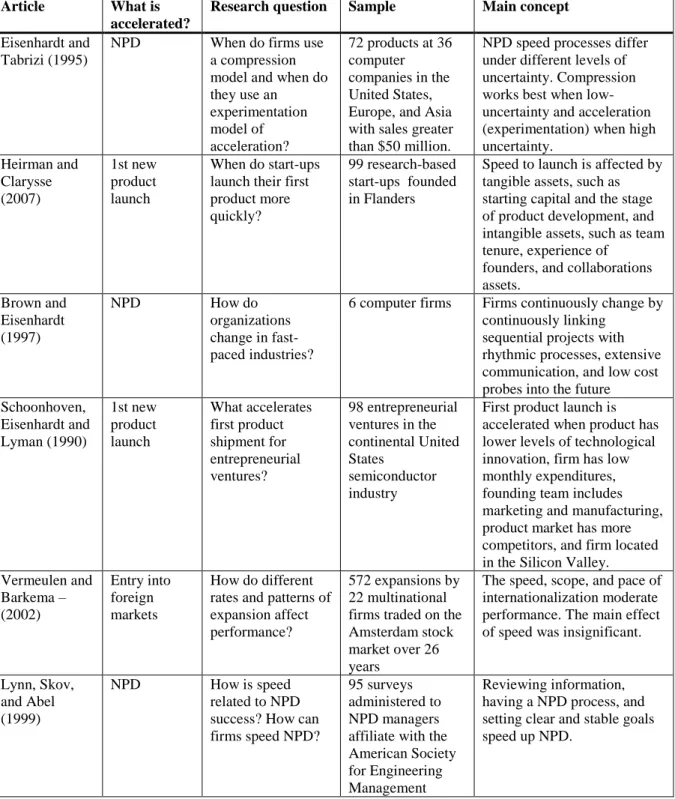
Table 4: Selected Organizational Speed Studies Article What is
accelerated?
Research question Sample Main concept Eisenhardt and
Tabrizi (1995)
NPD When do firms use a compression model and when do they use an experimentation model of acceleration?
72 products at 36 computer companies in the United States, Europe, and Asia with sales greater than $50 million.
NPD speed processes differ under different levels of uncertainty. Compression works best when low-uncertainty and acceleration (experimentation) when high uncertainty. Heirman and Clarysse (2007) 1st new product launch
When do start-ups launch their first product more quickly?
99 research-based start-ups founded in Flanders
Speed to launch is affected by tangible assets, such as starting capital and the stage of product development, and intangible assets, such as team tenure, experience of
founders, and collaborations assets.
Brown and Eisenhardt (1997)
NPD How do
organizations change in fast-paced industries?
6 computer firms Firms continuously change by continuously linking
sequential projects with rhythmic processes, extensive communication, and low cost probes into the future Schoonhoven, Eisenhardt and Lyman (1990) 1st new product launch What accelerates first product shipment for entrepreneurial ventures? 98 entrepreneurial ventures in the continental United States
semiconductor industry
First product launch is accelerated when product has lower levels of technological innovation, firm has low monthly expenditures, founding team includes marketing and manufacturing, product market has more competitors, and firm located in the Silicon Valley. Vermeulen and Barkema – (2002) Entry into foreign markets
How do different rates and patterns of expansion affect performance?
572 expansions by 22 multinational firms traded on the Amsterdam stock market over 26 years
The speed, scope, and pace of internationalization moderate performance. The main effect of speed was insignificant.
Lynn, Skov, and Abel (1999)
NPD How is speed related to NPD success? How can firms speed NPD?
95 surveys administered to NPD managers affiliate with the American Society for Engineering Management
The effects of time compression on learning are also elusive. Organizational learning theory posits that firms that try to accelerate learning reduce the amount of learning absorbed or optimize on inferior strategies, but organizational speed research finds that acceleration improves outcomes in new product development, technology commercialization, and decision making. Neither of these research streams addresses how to accelerate learning.
The literature on organizational speed suggests that pacing and planning accelerate organizational activities such as new product development, commercialization, and decision making. Team experience and composition also affect organizational speed. However, the speed and learning literatures provide conflicting guidance on the effect of strong leaders. The speed literature suggests that strong leaders bring products to market more quickly, while the learning literature suggests that strong leaders may not elicit divergent opinions and thus might constrain learning. Moreover, prior work on the effect of joint tenure on speed is inconclusive. Overall, this literature examines the speed of an activity other than. Thus we do not know if the same mechanisms accelerate learning.
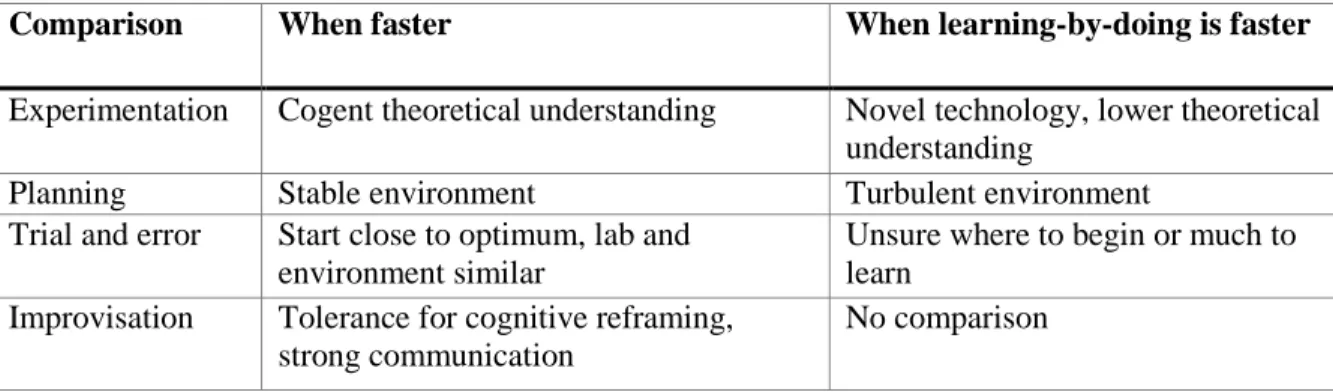
Table 5: Relative Speed of Learning Mechanisms
Comparison When faster When learning-by-doing is faster
Experimentation Cogent theoretical understanding Novel technology, lower theoretical understanding
Planning Stable environment Turbulent environment
Trial and error Start close to optimum, lab and environment similar
Unsure where to begin or much to learn
Improvisation Tolerance for cognitive reframing, strong communication
CHAPTER 3 METHODS 3.1. Research Setting
The research setting is accelerator programs: fast-paced, limited-duration
entrepreneurship education programs (Miller & Bound, 2011). Cohorts of nascent ventures enter, participate, and exit programs together. Programs culminate in “Demo Day” events, where venture founders pitch their business concepts to large audiences of potential
investors. Accelerators are an ideal setting to study accelerated learning because the limited duration of the programs and grand final presentations create substantial time pressure for participating ventures. A founder described the intensity of the time pressure, “We had a clock that counted down minutes and seconds to Demo Day. It’s ridiculous and not
sustainable and offensive in terms of humanity.” Although the programs’ intensity might be
challenging for participants, it is ideal for studying business acceleration. 3.2 Definition of Accelerators
I begin with the definition provided by NESTA, an independent research organization in the United Kingdom. According to NESTA, accelerators have five main features that distinguish them from other types of investors or business incubators. They are:
“An application process that is open to all, yet highly competitive.
Provision of pre-seed investment, usually in exchange for equity.
A focus on small teams not individual founders.
Time-limited support comprising programmed events and intensive mentoring.
I discussed the definition of accelerators with industry experts and accelerator founders during exploratory interviews. Based on the information provided by my informants, I relax some of Miller and Bound’s (2011) criteria and use the following definition in my research: Accelerators are organizations that provide entrepreneurship education for a limited period of time to cohorts of selected nascent ventures who begin and graduate together. Key to my definition is the concept of cohorts entering and exiting
programs together. This distinguishes accelerators from other organizational forms, including incubators and angel investors, who establish and modify relationships with ventures on an ongoing basis.
A typical accelerator invests $15,000 to $20,000 in two-to-three person venture teams in exchange for 6 to 8% equity. In general, programs are three months long and cohorts include 10 to 12 ventures. However, there is considerable variation. For example, some accelerators offer office space (e.g., TechStars), but not all (e.g., YCombinator). Cohorts range in size from 5 to over 100 ventures. Some programs offer grants (e.g., RockHealth) or prize money (e.g., MassChallenge) while most provide ventures with investments in
exchange for equity. A couple have deals with outside investors who grant all graduating ventures with $50,000 to $150,000 of convertible debt, priced at the next investment round (e.g., YCombinator, post-2009; Excelerate Labs, post-2011). Most programs are about three months long. Most focus on technology, such as mobile, cloud computing, or software development. However, accelerators help entrepreneurs in a wide range of industries including healthcare (e.g., RockHealth), advertising (e.g., The Brandery), social
entrepreneurs. Some programs have an industry or technology focus (e.g., TechStars Cloud), while others are more general (e.g., MassChallenge). Some programs are affiliated with universities (e.g., StartX), or funded by governments (e.g., MassChallenge), but most are funded by individual investors or successful entrepreneurs.
Some accelerators follow highly structured processes while others are more ad-hoc. Nearly all programs culminate in Demo Days, where venture founders deliver short
presentations to large audiences of potential investors. Some programs are closely affiliated with larger organizations, such as ad agencies, government institutions, or universities. Finally, most accelerator founders were formerly entrepreneurs or angel investors, though some were corporate executives or affiliated with public institutions (e.g., incubators or universities). Given the amount of heterogeneity between programs, the accelerator setting provides an interesting opportunity for academic researchers to develop a nuanced
understanding of how these programs might impact participating ventures. 3.3 History of Accelerators
The first accelerator, YCombinator, was founded in 2005 by Paul Graham, who was an angel investor and former entrepreneur. Since its inception, YCombinator has funded over 450 startups1, including Loopt, Reddit, Scribd, Dropbox, Heroku, Posterous, Airbnb, and Hipmunk. According to Forbes Magazine, as of April 2012, the cumulative valuation of YCombinator companies was $7.8 billion (Geron, 2012).
Graham founded YCombinator after delivering a speech about how to start a
company to a group of undergraduate students at the Harvard Computer Society. During his speech, Graham suggested that budding entrepreneurs raise angel funding from wealthy
individuals, preferably successful entrepreneurs with technology backgrounds. When the students turned to him as a potential investor, he immediately added, “Not me,” but later decided to invest in a batch of eight ventures (Lee, 2006). An accidental byproduct of
simultaneously investing in several ventures founded by young, inexperienced entrepreneurs was batching investments into cohorts and providing education and advice to the group (Levy, 2011). This group of young entrepreneurs included Reddit, which was acquired by Condé Nast for between $10M and $13M (Chafkin, 2009), and Loopt, which was acquired for about $43M by Green Dot. According to Graham’s blog, batching investments provided unexpected economies. He continued to batch seed-stage investments, eventually forming YCombinator with three cofounders. YCombinator was founded in Cambridge, MA, near Harvard, with a second annual session in the Silicon Valley. Eventually, YCombinator closed the Cambridge office and offered two sessions in the Silicon Valley. Not only is
YCombinator the oldest accelerator, but with 84 firms in its last cohort, it is also one of the largest.
YCombinator received much attention in the technology trade press. Given the amount of press it received, it is not surprising that other investors began batching seed investments and offering similar educational programs. One of the first imitators was
TechStars. Unlike YCombinator’s accidental founding, when TechStars launched in 2007, it had a specific goal in mind: enhance the entrepreneurial community of Boulder, CO.
of accelerators and entrepreneurship2. For example, they aired a reality show on Bloomberg TV that highlighted key events of the 2011 New York cohort, and one of the founders, Brad Feld, has penned several popular entrepreneurship books (e.g., Feld & Cohen, 2010; Feld & Mendelson, 2011). Further promoting entrepreneurship, the TechStars Web site includes standard documents such as term sheets.
Today, there are more than 300 acceleration programs on five continents that have collectively helped 2500 firms3. These numbers are growing rapidly, making seed
accelerators an important, but under-studied, topic for research.
3.4. Comparison: Accelerators, Incubators and Angels
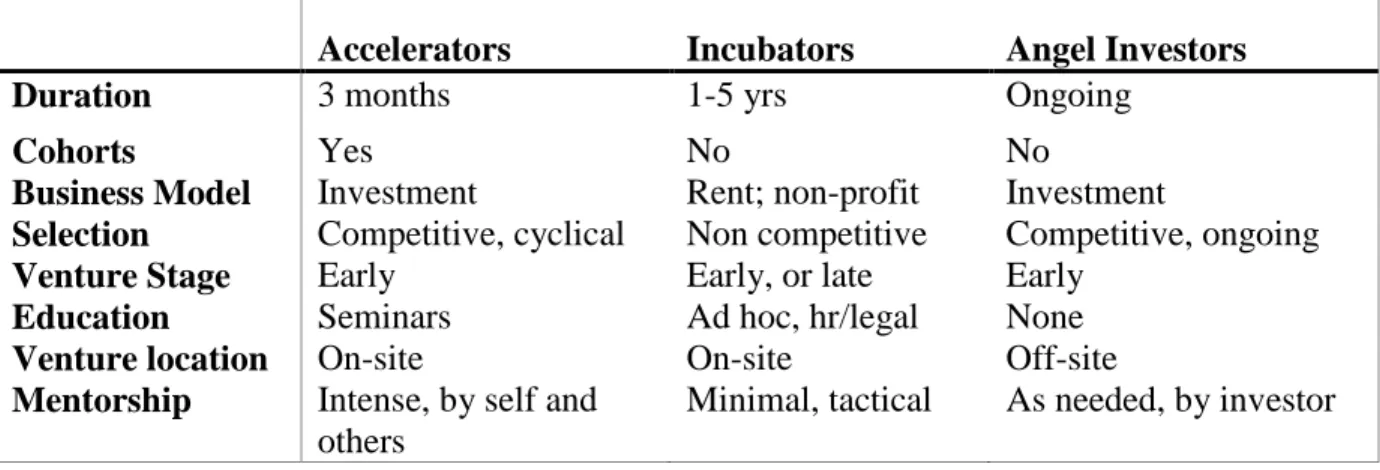
Accelerators are similar to but different from incubators and angel investors. (See Table 6 for a summary of the differences between incubators, investors, and accelerators.) Although all three organizational forms assist fledging ventures, a few key variations differentiate accelerators. The most important difference is the duration of the programs. Ventures in incubators stay indefinitely and enter and exit individually (Rothaermel & Thursby, 2005a). Ventures in accelerators stay for a predetermined amount of time and enter and exit in cohorts. Set timelines and strict graduation dates reduces codependency between ventures and accelerators and forces ventures to face market selection mechanisms. One of the industry’s pioneers explained,
The fundamental difference between an incubator and an accelerator is by having a finite duration, it really forces these companies to get a lot done get in a very short period of time.. . . If you have something that has a 6-12 months duration you end up in a co-dependent relationship that is not particularly healthy. We are trying to help very aggressively at the front and then help continually through the life of the
2 See, for example, Brad Feld, David Cohen, and David Tisch.
companies in the next one to ten years. But if you stretch out that intense fun and period you start to build more dependencies between each other and that's not good.
The business models of incubators and accelerators are also different. Incubators charge rent (Allen & McCluskey, 1990) for physical space (Smilor, 1987) and do not have their own investment funds (Hackett & Dilts, 2004). In fact, firms in incubators are called “tenants.” In contrast, accelerators usually make equity investments in participating firms or, less frequently, are non-profit organizations. The incentives of accelerators that invest in participating ventures are thus more closely aligned with the ventures. Incubators might delay growth or disbanding that would result in reduced profits from rent. Accelerators want growth that leads to positive exit. Firms in accelerators are referred to as “portfolio
companies.”
Finally, incubators offer limited mentorship, which is typically offered for a fee by professional service providers such as accountants and lawyers. Incubator tenants rarely take full advantage of available advice. On the other hand, intense mentorship is a cornerstone of accelerator programs and often the primary reason ventures participate.
opportunities, and looking at the same types of features. However, in the investment business,
the goal is to allocate capital as efficiently, and as profitably as possible.”
Essentially, accelerators recombine financial resources and knowledge resources previously offered by angels and incubators, providing less money and more advice than either angels or incubators.
Table 6: Summary of the Differences between Incubators, Investors, and Accelerators
Accelerators Incubators Angel Investors
Duration 3 months 1-5 yrs Ongoing
Cohorts Yes No No
Business Model Investment Rent; non-profit Investment
Selection Competitive, cyclical Non competitive Competitive, ongoing
Venture Stage Early Early, or late Early
Education Seminars Ad hoc, hr/legal None
Venture location On-site On-site Off-site
Mentorship Intense, by self and others
Minimal, tactical As needed, by investor
3.5 Research Setting
Accelerator programs were chosen as the research setting because the principle function of accelerators is to accelerate organizational learning during gestation. My data suggest that some accelerators are more effective at accelerating learning than others, providing an opportunity to compare program attributes and effectiveness.
Studying accelerators and participating ventures has many advantages. First,
relatively small. This facilitates observation of learning in groups, which are the building blocks of larger organizations (Argote, 1999; Schilling et al., 2003). Fledging ventures in accelerators are learning prior to scaled production thus providing an opportunity to extend prior work typically set in established manufacturing or service firms (e.g., Argote, 1999). Finally, acceleration programs are generally three months long, forcing temporal
compression and placing ventures under duress.
Also, participating ventures learn from multiple actors affiliated with accelerators. Participating nascent ventures learn from directors, who cumulate and then transfer expertise. They also learn from mentors, who might be investors, entrepreneurs, corporate executives, lawyers, or accountants. Finally, participating ventures often learn from each other. Ventures participating in the same program at the same time are collectively called a “cohort.”
Ventures who have graduated from the same program are collectively called “alumni.” 3.6. Research Design
The research design is an embedded multiple case inductive study (Eisenhardt & Graebner, 2007; Eisenhardt, 1989a). An inductive methodology is appropriate for several reasons: (1) There is insufficient extant theory to establish testable hypotheses (Eisenhardt, 1989a; Suddaby, 2006; Yin, 2009); (2) the phenomena—accelerators are a contemporary organizational form with insufficient archival data (Yin, 2009); and (3) this study describes knowledge transfer in detail (Easterby-Smith, Lyles, & Tsang, 2008). The research design nests ventures and mentors within accelerators, providing information from multiple
organizations at multiple levels of analysis (Glaser & Strauss, 1967; Yin, 2009). The multiple case design grounds theory by using replication logic; findings were replicated across
accelerator collaborated or disconfirmed theory elaborated from other cases (Yin, 2009). This study’s embedded design further grounds emerging theory, improves reliability, and
enhances internal validity and depth of understanding.
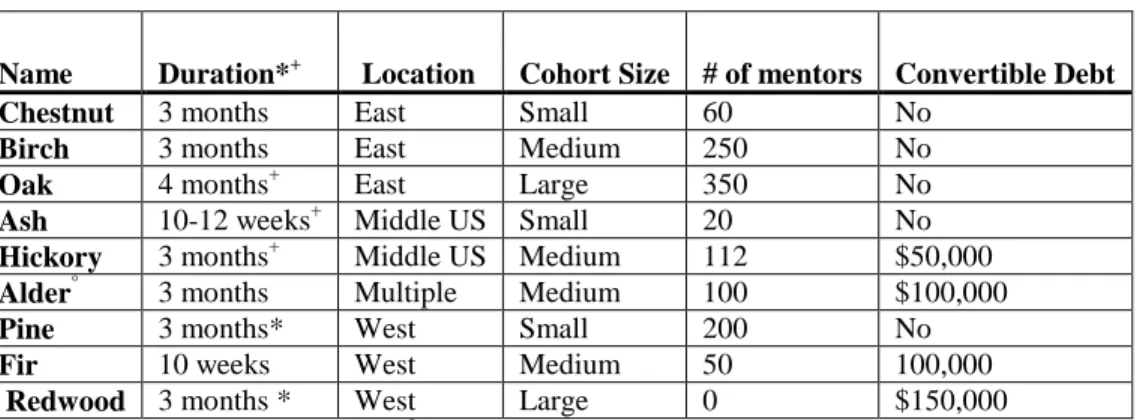
I collected data from accelerator directors, venture founders, and mentors nested within nine domestic accelerators (See Table 7 for details on sampling strategy and Table 8 for a description of the sample). Accelerator names are disguised with pseudonyms taken from tree names. I followed a theoretically guided sampling strategy (Glaser & Strauss, 1967) and sampled accelerators in different geographic regions (Eastern, Middle, and
Western United States) to improve generalizability to different regions (Ozcan & Eisenhardt, 2009) and different cohort sizes (small, medium, and large) to probe the possible effects of cohort size.
In general, the accelerators in my sample are general technology accelerators. However, the types and stages of ventures varied significantly. Although most of the ventures in this study are mobile or Web-based firms, there were four consumer products firms (cereal, footwear, women’s apparel, and toy) and an airline. A few ventures in my sample are social ventures—for example, one raises money for families incurring extraordinary medical expenses. Several ventures developed technological solutions to traditional industries, such as energy, banking, education, and real estate. Founding teams ranged in size from one to four, with an average of 2.2 founders per team. The average age of venture founders in my sample was 31, slightly higher than that of their cofounders (30.25). Seventy five percent of the founding teams are composed solely of men.
spaces of the accelerators also differed. Redwood did not offer ventures office space; ventures worked from their homes or offices and gathered onsite for weekly dinners and other special events. Most accelerators in this study had open work space where ventures work alongside each other and accelerator directors. Oak, a large accelerator, had one enormous open floor of a building. Birch and Chestnut offered space, but each venture worked in an individual office.
Table 7: Sample Design, U.S.
East Middle West
Small Chestnut Ash Pine
Med Birch Hickory Fir
Large Oak Alder* Redwood