REVISIONS OF NATURE: SPECTACLE, GENDER, AND PUBLIC SCIENCE RHETORIC IN EIGHTEENTH-CENTURY GREAT BRITAIN
Chelsea Redeker Milbourne
A dissertation submitted to the faculty at the University of North Carolina at Chapel Hill in partial fulfillment of the requirements for the degree of Doctor of Philosophy in the Department
of English and Comparative Literature.
Chapel Hill 2014
Approved by:
Jordynn Jack
Jane Danielewicz
Megan Matchinske
Daniel Anderson
© 2014
ABSTRACT
Chelsea Redeker Milbourne: Revisions of Nature: Spectacle, Gender, and Public Science Rhetoric in Eighteenth-Century Great Britain
(Under the direction of Jordynn Jack and Jane Danielewicz)
In eighteenth-century Great Britain, public audiences witnessed an astounding array of
new scientific spectacles, such as hot air balloons, static electricity generators, microscopic
creatures, and natural exotica brought back from foreign travels. My dissertation investigates
how these spectacular science displays, as well as audiences’ varied responses, helped constitute
public interest and understanding about science. My research argues that science spectacles
offered opportunities for public audiences to negotiate the place of emerging scientific theories
and technologies within eighteenth-century cultural spheres. By engaging with the marvelous,
the monstrous, and the possibly fraudulent, public audiences debated what natural objects and
perceptions counted as “real,” which should be valued, which should be censured, and which
should transition from novelty to familiarity as they became more fully integrated within
eighteenth-century life. In particular, I examine women’s enthusiastic, and often overlooked,
participation in public science spectacles, including the ways that their interest and embodied
participation augmented the spectacle of science displays as well as the ways that women
negotiated the potential for their displays of scientific knowledge to become spectacles in a
pejorative sense. In this manner, my dissertation demonstrates how public science spectacles
generated uncertainties not only about changing scientific theories and technologies but also
contends that science spectacles engendered widespread public interest in science during the
eighteenth century yet also, conversely, fueled anxieties that public interest could become too
ACKNOWLEDGEMENTS
To all those who helped with this dissertation, I offer my warmest thanks. I especially
wish to thank my dissertation directors Jordynn Jack and Jane Danielewicz. Dr. Jack provided
invaluable support by suggesting additional avenues and angles for my research. Dr. Danielewicz
was incredibly generous with her time, reading multiple drafts and offering a wealth of critical
and practical advice. I also wish to thank Megan Matchinske for her incisive questions and her
enthusiastic support of my project. Other members of the faculty at UNC, including Daniel
Anderson, Ruth Salvaggio, and Todd Taylor, encouraged me throughout the process of writing
my dissertation and extended advice that will influence the future directions of my research.
I also wish to thank my graduate student colleagues who have offered their support,
advice, and friendship during my time at UNC. I was fortunate enough to join a remarkable
cohort of rhetoric and composition graduate students, including Risa Applegarth, Sarah
Hallenbeck, Heather Branstetter, Erin Branch, Erich Werner, Ashley Hall, Jennifer Ware, Jason
Loan, Emi Bunner, Helen Lee, Phil Sandick, Alex Funt, and Sarah Singer. To the first four, in
particular, I cannot sing your praises enough. It has been a pleasure to watch your careers and
research flourish. Thank you for sharing your experiences and your insights with me. Krista
Turner further acted as my resident expert on the history of science prior to the seventeen
hundreds during the final phases of my dissertation writing. Thank you for your
gardens and therefore should not be referred to as emerging technology in eighteenth century
Great Britain.
Lastly, I am grateful for the continued support of my family. Thank you to my father,
who taught me that bookstores could be playgrounds, and to my mother, who has been editing
my writing since those dreaded vocabulary stories in the first grade. Finally, my husband Jeff has
witnessed, more than anyone, the highs and the lows of my writing process. Thank you for being
TABLE OF CONTENTS
LIST OF FIGURES ... ix
CHAPTER 1: INTRODUCTION: SPECTACLE, GENDER, PUBLIC SCIENCE ...1
Watching and Gawking: Public Science in the Eighteenth Century ...8
Theorizing Public Science ...17
The Activity of Public Engagement ...20
Reflexive Circulation ...22
Identity Formation ...24
Significance ...26
Chapter Outlines ...27
CHAPTER 2: WOMEN AND THE EMERGENCE OF SPECTACULAR PUBLIC SCIENCE ...30
Defining Spectacle ...37
Excess, Contradiction, and Amplification: Spectacular Means of Disruption ...40
Anticipating Women’s Responses ...54
CHAPTER 3: POLITE SCIENCE AND THE SPECTACLE OF WOMEN’S LEARNING ...58
Women and Polite Spaces ...63
“Air Balloons [and] ye Marriages Talk’d of Particularly”: How Women Used Scientific Spectacles to Facilitate Politeness and Mediate Polite Social Spaces ...71
Directing Presence ...72
Conclusion ...94
CHAPTER 4: FASHIONABLE SCIENCE AND WOMEN SPECTATORS AT THE ROYAL INSTITUTION ...96
Creating a Public Institution: The Leadership of the Royal Institution ...103
Cultivating an Expansive Scientific Public: Humphry Davy’s Lectures ...110
Contested Public Science: Audience Responses and Representations ...121
Conclusion ...127
CHAPTER 5: CONCLUSION: SPECTULATIONS ABOUT SPECTACLES ...129
The Use of Disruption in Public Science ...133
The Range of Public Science Spectacles ...135
The Impact of Audience and Extended Context on the Experience of Public Science Spectacles ...137
The Circulation of Public Science Spectacles ...140
The Value of Having Diverse, Networked Uses for Public Science ...142
LIST OF FIGURES
Figure 1: Illustration from The Young Gentleman and Lady’s Philosophy (1755-1765) ...1
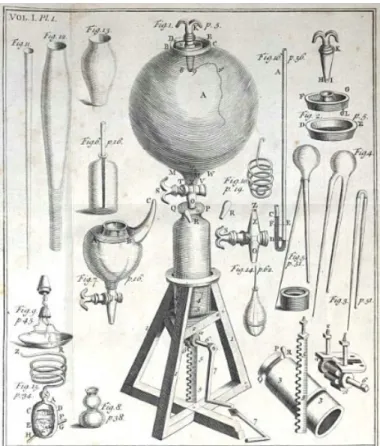
Figure 2: Illustration of an Air-Pump from New Experiments Physico-Mechanical, Touching the Spring of the Air and Its Effects (1660) ...10
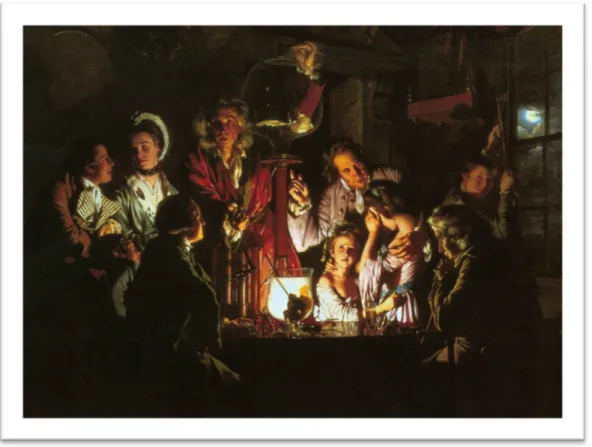
Figure 3: An Experiment on a Bird in the Air Pump (1768) by Joseph Wright of Derby ...14
Figure 4: Illustration from Entretiens sur la Pluralité des Mondes (1686) ...30
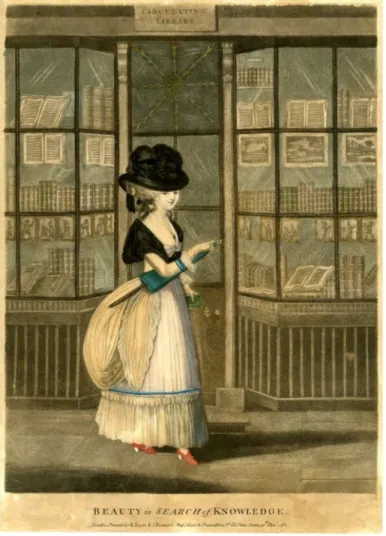
Figure 5: Beauty in Search of Knowledge (1782) ...58
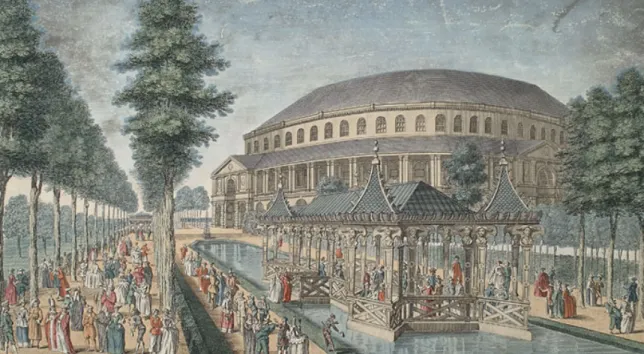
Figure 6: Rotunda at Ranelagh Gardens by Thomas Bowles (1754) ...79
Figure 7: The Royal Institution of Great Britain painted by Thomas Hosmer Shepard (circa 1838) ...96
Figure 8: Illustration of Humphry Davy from Famous Men of Science (1889) ...111
INTRODUCTION: SPECTACLE, GENDER, PUBLIC SCIENCE
Figure 1: Illustration from The Young Gentleman and Lady’s Philosophy (1755-1765), a popular science
dialogue in which fictional characters learn about natural philosophy
Eighteenth-century Great Britain was acknowledged as a wonder-working age.1 Although
the Enlightenment was a time recognized for its devotion to rationality, new methods of
scientific inquiry, and a rise in public debate, it was also an era dedicated to fashion,
consumption, and the increasing importance of leisure. During this period, the growing middle
and upper classes had access to a new range of luxury goods and recreational novelties. As Art
Historian Barbara Maria Stafford notes, “more and more people had the means to travel at home
and abroad, go to the theater, browse fairs, attend lectures, build laboratories, gape at cabinets of
curiosities, buy fashionable gadgets for themselves and the latest toys for their children” (Artful Science xxi). In addition to these entertainments, male and female audiences alike indulged their taste in spectacular science demonstrations such as those including mechanical automata,
microscopes, hot air balloons, static electricity generators, and air-pumps—displays that science
popularizers and demonstrators argued were important precisely because they were both
educational and entertaining.
Accounts from this era suggest that audiences were enthralled by and deeply suspicious
of the profusion of novelty, which included a dazzling array of scientific marvels as well as new
technological innovations. As seen in the pages of the Morning Post, an eighteenth-century periodical, writers proudly announced, “This is the age of inventions!” (November 7, 1786) even
as others voiced concerns that the “rage for novelty is now constituted to be the prevailing one,
and every man who gives public exhibitions must consult it” (October 6, 1785). Such comments
exemplify the strong reactions that displays of novelty provoked, attracting audience attention
and admiration as well as sparking audience anxieties about the proliferation of unfamiliar sights
and experiences.
Recent scholars have argued that the rage for spectacles—or displays of novel objects
and practices—in the eighteenth century can be understood as an attempt to make sense of the
expanding market for goods and information. Eighteenth-century scholar Paul Keen maintains
commercial landscape. Instead, reflections about spectacles, including judgments ranging from
delight to dismay, served as active attempts to intervene within British culture. Historians John
Brewer and Roy Porter have even gone so far as to claim that “one of the historical tasks of what
we may loosely call the Enlightenment was to forge new sets of moral values, new models of
man, to match and make sense of the opportunities and obligations, the delights and the dangers,
created by the brave new world of goods” (5). As spectacles were involved in the display and
circulation of novelty goods in this period, they became instrumental to public negotiations about
the meaning and value of unfamiliar objects and practices.
My research investigates a specific kind of eighteenth-century spectacle—the public
science spectacle. In this study, I explore how public experiences with spectacular science
demonstrations mediated the ways that British audiences made sense of developing scientific
theories and technological objects. I examine how public science spectacles engaged diverse
audiences in the task of determining whether and to what extent strange new scientific theories
and objects should be incorporated into familiar experiences. By partaking in the marvelous, the
monstrous, and the possibly fraudulent, public audiences debated what natural objects and
perceptions counted as “real,” which should be valued, which should be censured, and which
should transition from novelty to familiarity as they became more fully integrated within
eighteenth-century life.
Specifically, I investigate eighteenth-century public science spectacles as instances of
public science. Although spectacular demonstrations of natural and mechanical wonders undoubtedly challenged audiences’ perceptions of their natural environments,2 public science
spectacles also raised troubling questions about how revolutionary scientific theories and objects
might impact public culture. Audiences wondered, and often worried, if learning about science
might influence their conceptions of religion, morality, education, personal identity, or public
engagement. Notably, public science was not intended to “produce or reproduce factual truths,
but to come to shared determinations” about how individuals should live together (Condit 12).
My research thus examines how science spectacles helped mediate public debates about the role
of science in British public culture.
Like recent scholars who have investigated historical science popularization and public
responses to science, I view eighteenth-century public science as more than a one-way
distribution of scientific information from elite scientific practitioners to lay audiences.3 Further,
public science was not simply the domain of lay audiences, as is sometimes implied by the term
“popular science.” Instead, I argue that public science in the eighteenth-century functioned as an
activity system4 distinct from legitimate scientific experimentation that nevertheless worked to
determine how scientific matters might inform and impact public culture. In other words, public
science brought together myriad individuals, including those within burgeoning scientific
communities as well as those with limited access to scientific education, to negotiate how
science might be utilized outside of scientific communities for activities such as manufacture,
view microscopic insects in ways that complemented the mechanistic view of nature espoused by the Royal Society of London.
3Historians such as Roger Cooter and Stephen Pumfrey, Larry Stewart, Jan Golinski, and Iwan Rhys Morus have argued for the importance and complexity of science popularization in the seventeenth through nineteenth centuries. Collectively, they dismantle assumptions that science popularization was the straightforward distribution of
scientific knowledge from elite practitioners to passive, lay audiences. In contrast, they argue that popularization efforts were critical in gaining widespread public support for the new epistemology, that popularizers tailored scientific lessons for particular audiences, and that popular audiences contributed to the scientific enterprise through their financial and cultural patronage.
religion, and courtship. My research investigates how public science spectacles functioned
rhetorically as discursive and performative sites that enabled science popularizers and their audiences to imagine how science might re-envision cultural as well as natural perceptions.
In particular, my project examines women’s engagement with public science and the
gendering of public science spectacles. Gender was an unmistakable aspect of public science
during this period, both in women’s considerable support for public science activities and in the
tendency for eighteenth-century audiences to conceive of spectacles, scientific or otherwise, as
distinctly feminine. I contend that paying attention to women’s participation and the gendering of
public science spectacles helps to better theorize the production and reception of science displays
as spectacular. For example, examining women’s involvement in public science spectacles
highlights how the interpretation of science spectacles was frequently dependent upon the
audiences’ perceptions of each other. During the eighteenth century in Great Britain, women’s
visible presence in the audience of public science displays often became spectacles in their own
right by disrupting common expectations for gendered behavior. Women’s remarkable behavior
not only intensified the spectacle of scientific demonstrations but also prompted questions about
the appropriate boundaries of women’s science education and public behavior. Ultimately, I
argue that investigating public science spectacles through the lens of gender is vital to
understanding the ways that science spectacles cultivated widespread and enthusiastic interest in
science yet also, conversely, served to devalue public science through associations with women,
entertainment, and fashion.
The eighteenth-century in Great Britain represents a particularly clarifying moment to
examine public engagement with science. Of course, public interest in science did not begin in
revolutionary theories within select circles since the early modern period (Findlen; Daston and
Park). Likewise, emerging scientific societies and academies across Britain and the European
continent sponsored public demonstrations of scientific experiments during the seventeenth
century (Stewart). Despite this early interest, the eighteenth century stands out as a period of
enormous expansion in the public’s interest in science. Over the course of the century, the
burgeoning fields of natural philosophy and natural history sparked collective imaginations and
became as intriguing for audiences in “fairs, shops, and boulevards” as they were for audiences
in “academies and learned societies” (Bensaude-Vincent and Blondel 1). Amateur enthusiasts
like Alexander Pope collected natural exotica and referred to themselves as members of the
“Virtuoso-class,” while authors like Eliza Haywood encouraged young women to explore the
flora and fauna of their gardens with portable magnifying lenses, and middle class audiences
flocked to public science shows to see the latest displays of chemical combustion and nitrous
oxide inhalation.5 Science thus became a popular subject for those within—or aspiring to join—
polite society, and “not to endorse natural philosophy in some shape or form…was to be a misfit
out of tune with the whole spirit of the age” (Rousseau 267).
As members of the fashionable world, women from the middle and upper classes were
critical in making science a popular endeavor. Although a limited number of eighteenth-century
women acted as scientists, such as Caroline Herschel who worked alongside her famous brother
and was credited with discovering a comet, much larger populations of women participated in
public science activities. During the eighteenth-century, women educated themselves through
popular science literature and textbooks, attended public science lectures and shows, performed
experiments within their homes and gardens, conversed about the latest scientific topics, and
taught the next generation about novel scientific perspectives. Leading scientific figures such as
Benjamin Franklin also encouraged women to pursue their popular science interests, suggesting
that knowledge of scientific topics would increase a woman’ religious devotion as well as her
ability to converse with men of sense and learning.6 Science popularizers further recognized
women as influential in circulating and shaping public opinions about science. In their efforts to
make science public, appealing and accessible to diverse audiences, popularizers sought out
female audiences to act as patrons, promoters, and paying customers for popular science works.
For this reason, as science historian Alice Walters has argued, popular science texts, especially
those seeking to connect science with polite endeavors, were “distinguished by their conspicuous
emphasis on developing and sustaining a female audience” (130). Women were thus welcomed
as audiences for spectacular demonstrations of science, and, as I will argue throughout this
dissertation, their participation often intensified public perceptions of scientific displays as
spectacular.
In this study, I research the rhetorical practices surrounding public science spectacles and
the role of this rhetoric in the constitution of public science in the eighteenth century. To this
end, I trace the rhetorical practices that produced public science spectacles, the means by which
such spectacles were interpreted and circulated by their heterogeneous audiences, and the effects
of these spectacles on public perceptions and uses of science. Within this project, I ask: How did
the framing of science as spectacular persuade audiences to explore radically new visions of both
nature and culture? How did science advocates attempt to mediate science spectacles,
intensifying and diminishing novelty to produce a range of spectacular effects? How did
audiences circulate and transform public science spectacles, making some public science
perspectives more durable while letting others fall out of favor? How did the gendered behavior
of women watching public science spectacles influence public interpretations of science and
impact public uses of science outside of specialist communities? Finally, how did public science
spectacles mediate how audiences interacted with each other through public science?
In pursuing these questions, I argue that public science spectacles helped to facilitate a
scientific public, a diverse and networked association of people who witnessed and performed
their interest in science for each other and, through these rhetorical practices, collectively
negotiated how public audiences would understand, engage with, and value science. My research
also suggests potential contemporary applications for this historical research. I suggest that, like
the eighteenth century in Great Britain, the present moment contends with the quick pace of
scientific and technological change and often struggles with integrating science into public
culture. I argue that the rhetorical practices that enabled robust public science participation in the
eighteenth century might also benefit contemporary attempts to promote public interest in
science, advance public science literacy, and cultivate responsive public debates about the role of
science in public life.
Watching and Gawking: Public Science in the Eighteenth Century
My investigation of public science in the eighteenth century begins by analyzing the
dichotomy between witnessing and watching science, as theorized by science and feminist
studies scholar Donna Haraway. In her work on the history of science in seventeenth-century
Great Britain, Haraway maintains that a problematic division emerged between legitimate
scientific experimentation—witnessing science—and popular science consumption—watching or
gawking at science. She claims that since the time of Robert Boyle and the Royal Society of London, “only those who could disappear ‘modestly’ could really witness with authority rather
same time it was constructed to be one of the [scientific community’s] …most highly regulated
spaces” (Haraway 25). Under this taxonomy, eighteenth-century activities such as viewing a hot
air balloon ascension, displaying natural curios in a decorative cabinet, or teaching children
about astronomy with celestial globes would not be considered part of the legitimate work of
scientific experimentation. There is a sense that such activities enabled audiences to watch or
learn about science but were not part of the active endeavor to discover new scientific facts.
They were instances of watching rather than witnessing science. The division between witnessing and watching, Haraway argues, inevitably created power inequities, privileging
original, and serious, experimentation over seemingly passive, and recreational, gawking. This
divide further constructed arbitrary boundaries between the affairs of scientists and those of
popular culture. Though Haraway attends to the division between witnessing and watching to
critique and reappraise what counts as legitimate scientific experimentation, my research focuses
critical attention on the public work performed by watching, and even gawking, at public science
spectacles. In this section, I investigate the rhetorical work accomplished by witnessing and then
watching science spectacles by analyzing two accounts of the same demonstration—first
witnessing and then watching a bird in the glass receiver of an air-pump. With this comparison, I
argue that audiences watching and gawking at public science spectacles participated in public
science, a distinct means of engaging with scientific matters. Through public science,
eighteenth-century public audiences advanced the scientific program not by collecting new scientific facts
but by cultivating diverse audience interest in science and channeling that interest into debates
about how science should converge with matters of public concern.
A famous instance of scientific witnessing can be found in Robert Boyle’s experiments
of the Air and Its Effects (1660). In his text, Boyle recounts his multiple trials with the air-pump, a recently designed device that evacuated air from a large glass receiver. By removing the air
from the receiver, the air-pump could create a partial vacuum and thus offer a means to test
theories about air and fluid pressure (figure 2).
Figure 2: Illustration of an Air-Pump from New Experiments Physico-Mechanical, Touching the Spring of
the Air and Its Effects (1660)
In one set of experiments, Boyle documented the extent to which the removal of air would
impact a living creature—in this case a bird—placed inside the glass receiver. Initially, Boyle
considered the experiments to be “so strange” and “scarce probable” that the removal of air for
so short a period of time could kill a “perfectly sound and living Animal” (360). Because of the
strangeness of the initial phenomena, Boyle felt obliged to make the experiment several times
and even saw the benefit of having multiple audiences observe it: “Which sort of Experiments
having Persons of differing Qualities, Professions and Sexes, (as not only Ladies and Lords, but
Doctors and Mathematicians) to witness it” (360).7 However, as Boyle’s report demonstrates, he
would later consider some members of the audience to be better suited to the task of
experimental witnessing than others.
Over the course of multiple experiments, Boyle decided on the benefit of having fewer
audience members witness the strange phenomena of the bird in the air-pump. Though Boyle
initially allowed diverse audiences to observe the air-pump experiments, his accounts show that
their presence tended to disrupt the scientific trials, so much so that he eventually decided to
perform the experiment without extraneous spectators. For example, in one experiment, in which
Boyle was testing whether the narrowness of the receiver contributed the bird’s distress, a bird
was placed in an unevacuated air-pump receiver. Boyle reported that the bird was cheerfully
eating seeds and “liv’d ten minutes, but had probably liv’d much longer, had not a great Person,
that was a Spectator of some of these Experiments, rescu’d him from the prosecution of the
Tryal’ (360-361). In another instance of interruption, Boyle was observing a bird struggling after
the removal of air when ‘by the pitty of some Fair Lady’s…who made me hastily let in some Air
at Stop-Cock, the gasping Animal was presently recover’d, and in a condition to enjoy the
benefit of the Lady’s Compassion” (361). In order to prevent spectators from interfering in the
experiments before they were concluded, Boyle and his unnamed companions, “being resolv’d
not to be interrupted in our Experiment” chose to perform the experiment again “at night” (361)
without additional spectators. In these scenes, we begin to see a division between the witnessing
performed by experimental philosophers and the watching enacted by those whose presence and bodies were apt to disrupt the experiment.
Scientific witnessing would become a critical feature in the emerging discipline of
experimental philosophy that was engendered through the work of Robert Boyle and the Royal
Society of London. Seeking to establish matters of fact—knowledge that was less certain than
mathematical theorems yet more robust than personal opinion (Shapiro)—the Royal Society
instituted a program of empirical observation and experimentation that would establish and attest
to matters of fact through witnessing.8 Yet as seen in Boyle’s report on the bird in the air-pump
experiments, not everyone could adequately function as a witness, either because they disrupted
the experimental performance or because their testimony was not deemed credible. Thus, while
publicity was critical to the experimental project—gaining collective assent for an empirical
experience through witnessing—experiments were often conducted away from the sight of those
who could not witness appropriately, as seen with the air-pump experiment held at night.
The restrictions about who could and could not legitimately witness scientific
experiments, and thus participate in the “public” space of the laboratory, were not limited to
individuals’ technical know-how or philosophical knowledge. Instead, experimental philosophers
also needed to possess a certain orientation towards experimentation: a gentlemanly modesty that
ensured the trustworthiness of the man as an experimenter and as a witness (Shapin and Schaffer
65). The performance of gentlemanly modesty—seen as self-effacing and civil behavior—acted
as a testament to an experimental philosopher’s ability to bracket personal opinions and serve as
the “transparent spokesmen” for natural objects and experimental technologies (Haraway 25).
Unlike the “great Person” or the “Fair Lady’s” who kept interrupting Boyle’s air-pump trials,
modest experimenters and witnesses should be able to report on experimental outcomes without
interference from their bodies or personal opinions.
The emphasis on modesty and self-effacing behavior bolstered the credibility of
experimental claims, but it also initiated problematic boundaries between those who witnessed
scientific experiments and those who watched. Highlighting the way that the scientific
community sought to efface their bodies and personal perspectives, science critic Sharon
Traweek has characterized the scientific community as “the culture of no culture” (162).
Although the scientific community certainly went to great lengths to establish a culture, one that
privileged gentlemanly modesty, Traweek’s comment highlights the importance that members of
the scientific community placed on ignoring their personal biases and the cultural conditions of
their bodies during scientific experimentation. Men of science were thus marked by their
persistent attempts to bracket culture from the sites of experimentation. Through this separation,
the early experimental community encouraged a “boundary between watching and witnessing,
between who is a scientist and who is not, and between popular culture and scientific fact”
(Haraway 33). Though the gentlemanly modesty required for legitimate witnessing has been
critiqued as a gendered and classed concept that made it difficult for women and men from the
laboring classes to participate in legitimate witnessing (Potter)9, this perspective has also been
problematic for delegitimizing the important work of watching science. For, if witnessing
science required a sharp division between science and culture, then watching science became an
important site for diverse classed and gendered audiences to debate how science should intersect
with public affairs.
A second representation of the air-pump demonstration, one that depicts audiences
watching the spectacular display, offers an example of the distinct rhetorical work performed through scientific consumption. The second air-pump representation comes from the iconic
Joseph Wright of Derby painting An Experiment on a Bird in the Air Pump (1768) (figure 3). Like the air-pump experiment described in Boyle’s New Experiments Physico-Mechanical, Touching the Spring of the Air and Its Effects, this painting depicts a live animal placed within the glass receiver of an air-pump. Unlike Boyle’s representation, however, this scene should not
be considered an experiment, or a moment of scientific witnessing, despite the title of the
painting. The audience shown in the painting is not attempting to collect empirical data, and,
ostensibly, they have some idea of what will happen to the bird when the air is evacuated from
the air-pump. Instead, they are watching and reacting to the spectacle of the scientific display.
Figure 3: An Experiment on a Bird in the Air Pump (1768)by Joseph Wright of Derby,
Importantly, this painting shows that watching scientific demonstrations offered an opportunity
for larger proportions of the eighteenth-century population to observe and engage with new
technologies like the air-pump and scientific concepts like the “spring in the air.” The distinct
behaviors of the audience members encircling the air-pump further demonstrate the variable
ways that non-specialists chose to engage with scientific demonstrations. Close to the center of
the work, for instance, we see a father figure with two little girls, who seem to be experiencing
the same distress as the ladies in Boyle’s company over the fate of the bird in the air-pump.
Despite the girls’ obvious discomfort, the father figure continues to point at the display,
suggesting that the air-pump was considered an important educational, perhaps even cultural,
lesson for young middle-class girls. In the lower right, we can see an older gentlemanly figure
seemingly contemplating the life and death implications of the air-pump display. Throughout the
eighteenth century, natural philosophy was considered to be a religious aid, enabling audiences
to reflect on the majesty of God’s creation (Stewart), and the older gentlemen seems to be
engaging with the demonstration in that manner. On the left we see a young boy gawking at the
show, oblivious to the moral overtones and seemingly interested only in his own entertainment.
At the far left, we see a young man and woman who are more interested in watching each other
than the events on display. Not to be written off merely as inattention, the young couple’s
behavior demonstrates that the air-pump display was deemed an appropriate moment for
courtship and interaction between young men and women. An Experiment on a Bird in the Air Pump thus offers a visual argument for the interest of diverse audiences and the openness for what public audiences thought they could do with natural philosophy outside of the spaces of
Critically, this painting suggests the visible impact that audience members of scientific
demonstrations had on each other: how they could become part of the public science display and
how their awareness of each other could color their interpretations of the scientific principle on
display and the place of science within eighteenth-century culture. The emphasis on the audience
hints that watching and gawking is not simply about watching the display but about watching
each other.10
My research thus seeks to analyze the rhetorical work performed by watching and
gawking at spectacular science demonstrations, such as the one depicted in the Wright of Derby
painting. Although it is vital to continue work on who can legitimately participate in scientific
witnessing, perhaps refashioning not only the who but the how of scientific experimentation, I argue that it is also necessary to reexamine representations of scientific watching, which have often been overlooked as passive, unthinking, classed, or gendered gawking. I contend that
watching science—understood broadly as engaging with science outside of legitimate scientific
experimentation—presented an opportunity for non-modest audiences to debate how the new
experimental philosophy would impact their lives and identities as well as popular culture. As
watchers, whose embodied performances and discursive responses were visible to other audience
members, eighteenth-century audiences shaped arguments about how emerging technologies
should be used within public spaces, evaluated the ethics of certain scientific practices, and
negotiated how the new experimental way of life might be extended to those outside of specialist
communities like the Royal Society. Critically, moments of watching offered eighteenth-century
10Historian Iwan Rhys Morus similarly argues that the audiences for Victorian scientific performances were
attentive to each other: “To be successful, Victorian scientific spectacles and performances had to engage with and recruit their spectators. To understand scientific performances, we need to understand the very local specificity of audiences rather than reducing them all to a common type. If they were really all the same, then they are neither interesting nor particularly helpful as explanatory tools. Audiences constituted themselves as the public through their active participation in performances. They went there avidly to see and be seen as part of the same publicly
audiences a means of engaging with science that did not efface bodies, biases, or emotions but
blatantly took such factors into consideration. For if public rhetoric consists of the
“communicative interactions through which members of a community share with each other their
good reasons for choosing courses of action together,” then these reasons will necessarily include
“evidence and logic” as well as “social values and affective relationships and identities” (Condit
12-13). In this study, I argue that watching scientific spectacles functioned as a form of public
science rhetoric, which enabled diverse coalitions of specialist and non-specialist audiences to
negotiate public understandings and collective courses of action with regard to changing
scientific and technological developments. This view of responsive, heterogeneous public
science participation should not to be mistaken for a specialist community (or in their image) but
a public open to those with interest, which managed to blend instruction with entertainment,
prompted continued education and debate, and seriously attempted to blend matters of science
with those of political and cultural concern.
Theorizing Public Science Rhetoric
In analyzing the watching of scientific spectacles as a form of public science rhetoric, I
am building upon a body of scholarship that questions the passivity of seemingly non-productive,
consumptive, and everyday practices like watching. As media scholar and legal theorist
Lawrence Lessig acknowledges, it is “easy for us to miss the active in the mere watching” (7).11
Yet scholars who analyze the practices of users, consumers, and watchers such as Michel de
Certeau contend that these activities hold the potential for creative production and
11I acknowledge that this sense of watching (e.g. watching a television program) is more specific than the non-modest watching discussed in the previous section (scientific interest that is not part of legitimate scientific
interpretation.12 de Certeau uses the act of reading as an example of how consumption, in this
instance of written media, is not a simple and unambiguous transfer of content. Arguing for the
reader’s capacity to forge his or her own pathway through a text, de Certeau claims “the activity
of reading has on the contrary all the characteristics of a silent production: the drift across the
page, the metamorphosis of the text effected by the wandering eyes of the reader, the
improvisation and expectation of meanings inferred from a few words, leaps over written spaces
in an ephemeral dance” (xxi). Functioning within the confines of the written media, the reader
nevertheless possesses the ability to skip between passages, bring previous experiences to bear,
make unintended connections, and allow “a different world (the reader’s)” to slip into “the
author’s place” (xxi). The production in a practice like reading is not in the creation of a product
but in the “art of using” (de Certeau 31). de Certeau claims that the art of using, also
characterized as “styles” or “ways of operating,” can be used to reimagine everyday practices
like walking, cooking, or watching as active endeavors that can creatively reinterpret given
products (30). If we apply this perspective to Wright of Derby’s painting An Experiment on a Bird in the Air Pump, we can see how the pictured audience engages in different “styles” of watching the scientific display, ranging from the gawking child to the contemplative gentleman
to the flirtatious couple. The air-pump demonstration presents a particular view of a scientific
scenario—the evacuation of air from the air-pump receiver—but the audiences’ styles of
watching offer creative interpretations of how one might use the display—for instruction, for
12de Certeau explains: “As unrecognized producers, poets of their own acts, silent discovers of their own paths in the jungle of functionalist rationality, consumers produce through their signifying practices something that might be considered similar to the ‘wandering lines’ (‘lignes d’erre’)…‘indirect’ or ‘errant’ trajectories obeying their own logic. In the technocratically constructed, written, and functionalized space in which the consumers move about, their trajectories for unforeseeable sentences, partly unreadable paths across space. Although they are composed with the vocabularies of established languages (those of television, newspapers, supermarkets, or museum
entertainment, for moral reflection, or for courtship. In this manner, the audience’s arts of using
contribute to the meanings associated with the science display. The popularizer or operator of the
air-pump is not the only person offering a display or being watched.
When viewed as an active performance or use, rather than simply consumption, watching
science spectacles can be theorized as a form of public science rhetoric. In addition to close
readings of particular instances of public science rhetoric, my study examines how multiple
instances of public science rhetoric, or scientific watching, functioned collectively to constitute
public opinions and applications for science. In other words, I explore how individual instances
of public science rhetoric coalesced and fragmented into commonplaces that authorized
audiences to speak and act with regards to science in particular ways. In order to investigate both
the development and transformation of public science engagement over the course of the
eighteenth century, I rely on recent public theory scholarship, which accounts for the ways that
publics and avenues for public participation are variously created, maintained, and allowed to
fade.
In using public theory scholarship to analyze public science activity in the eighteenth
century, I am reminded that the immense appetite and enthusiasm for public science displays
during this era emerged alongside the formation of the bourgeois public sphere, often through
similar places and publishing networks. Famously theorized by Jürgen Habermas, the rise of the
bourgeois public sphere in the eighteenth century displayed new forms of public rational-critical
debate amongst diffuse and often unknown participants, which presented a previously unseen
counterbalance to state and monarchical power. Although Habermas’s initial analysis of the
bourgeois public sphere as an ideal public has been frequently contested and retheorized, his
the eighteenth century and afterwards. I argue that this body of public theory scholarship
provides a productive framework to examine science popularization in the eighteenth century as
an ongoing rhetorical negotiation about the meaning and utility of new scientific theories and
objects as matters of public interest. I am particularly interested in public theory scholarship that
emphasizes the active nature of public engagement, focuses on the reflexive circulation of
communication within publics, and attends to the links between public participation and identity
formation. Utilizing such scholarship helps to account for public science rhetoric that has been
previously overlooked, such as the public science activities that were performed by women,
which often occurred in domestic spaces and were circulated through embodied performances
and polite conversation.
The Activity of Public Engagement
To start, my project draws upon public theory scholarship that foregrounds the “action or
activity” (Brouwer and Asen 8) of public formation. Instead of focusing on the locations of
public participation or the gathering of certain participants, which can often lead to problematic
boundaries between public and private participation, recent public theory scholarship has begun
tracing the activity of public participation. This perspective enables scholars to attend to the
public activities that occur in seemingly private spaces or through informal conversations.
One such theorist examining the activity of public engagement is rhetorician Gerald
Hauser, who argues that communication is constitutive of public formation. Hauser contends that
publics emerge through discursive exchanges, which he terms “vernacular rhetoric.” As implied
by the term “vernacular,” Hauser pays attention to the ways that multiple, heterogeneous
exchanges contribute to a “network of associations from which and in which a communally
Hauser, rhetorician Jenny Rice similarly argues that “talk is the very substance through which
publics come to be formed” (Rice 19): “Rather than thinking of publics (or counterpublics) as
bodies that join together in deliberation in a discursive arena, I prefer to think about publics as
active manifestations of talk” (19). Importantly, for Hauser and Rice, the communication that
constitutes publics is not necessarily political, institutional, critical, or rational.13 Instead, Hauser
argues that “[t]he means by which active citizens address one another are often less formal than
institutional discourse, and their sites are not limited to institutional forums. More typically, in
fact, a public’s members converse through the everyday dialogue of symbolic interactions by
which they share and contest attitudes, beliefs, values, and opinions” (36). These “vernacular
exchanges” include “our daily conversations with coworkers, neighbors, superiors, subordinates,
community and church contacts, group members, friends, and family” and open a “discursive
space that exceeds the boundaries of entirely personal and private matters” (64-65). It is through
such vernacular exchanges, multiplied over time, that we are included “in the social conversation
by which we learn and also contribute to themes that inculcate shared motives” (Hauser 64-65).
This emphasis on conversation as constitutive of publics is useful because it helps to theorize the
activities of public formation beyond institutional spaces and with individuals other than citizens
or voters—perspectives that can often overlook the public activity that occurs in ostensibly
private spaces or with individuals who cannot cast a ballot.
Drawing from Hauser and Rice’s theories in my own work on eighteenth-century public
science rhetoric, I particularly focus on the vernacular exchanges that emerged around scientific
topics and which, I argue, informed public opinions about science. Public perceptions of science
did not arise solely from the lectures of science popularizers but were also influenced by
audience responses and by the daily conversations that were not always associated with moments
of explicit science instruction.14 I thus concentrate not only on the public science demonstrations
but on the audience conversations that developed around public science spectacles and which
served to extend, revise, and contest the messages advanced by science popularizers and leading
scientific figures.
Reflexive Circulation
My theorization of public science rhetoric further builds upon public theory scholarship
that foregrounds the continued reflexive circulation of texts in the constitution and maintenance
of publics. Public theory scholar Michael Warner, for example, has argued for the necessity of
multiple circulating and reflexive texts in constituting public activity. He insists that
[n]o single text can create a public. Nor can a single voice, a single genre, even a single medium. All are insufficient to create the kind of reflexivity that we call a public, since a public is understood to be an ongoing space of encounter for discourse. No texts
themselves create publics, but the concatenation of texts through time. Only when a previously existing discourse can be supposed, and when a responding discourse can be postulated, can a text address a public. (90)
Warner maintains that it is “the way texts circulate, and become the basis for further
representations, that convinces us that publics have activity and duration” (97). This perspective
benefits my research by arguing for the importance of continued and circulating discourse about
science spectacles. In addition to examining audiences’ immediate reactions to public science
spectacles, I also examine the circulation of audiences’ responses and how these serve as the
basis for further representations.
Complementing Warner’s view of publics as engendered through “the concatenation of
texts through time” (90), rhetoric theorists have advocated that a broad range of compositional
practices be included in an analysis of public participation. Rhetoric and composition theorists
David M. Sheridan, Jim Ridolfo, and Anthony J. Michel, for example, have emphasized the
importance of analyzing multimodal texts—compositions that contain multiple modes such as
images, sounds, textures, etc.—as well as alphabetic texts in the formation of publics. Similarly
rhetoricians Daniel C. Brouwer and Robert Asen have pointed to the possibility of multiple
“manners” of public address: “[p]ublic engagement may utilize verbal and visual symbols,
statistical evidence, narrative testimony, formal argumentation, tactical consumerism, humor,
sentimentality, corporeality, and more” (16). This perspective allows for a study of public
science rhetoric that can attend to multiple forms of communication such as embodied
performance or affective appeals, which can often be overlooked in a public analysis focused
solely on rational-critical debate.
An example of the extended circulation of science spectacles, which includes multimodal
forms of communication, can be seen in the eighteenth-century account of a static electricity
generator demonstration. In a letter to a friend on March 20, 1747, Elizabeth Carter asks,
This passage provides an example of the continued circulation of talk about scientific displays as
well as the audiences' attention to each other, including their embodied performances of
scientific interest, even after the display has concluded.
Identity Formation
Finally, my theorization of public science rhetoric is informed by the link between public
participation and identity formation. Public sphere theorist Nancy Fraser has argued that publics
are “not only arenas for the formation of discursive opinion; in addition, they are arenas for the
formation of and enactment of social identities” (125). Rice extends this by suggesting that
public discourse “helps to create particular kinds of public subjectivities,” in which people “imagine themselves in relation to…publics” (13-14). The connection between public
participation and identity formation becomes important for eighteenth-century public science
because audiences frequently questioned how popular engagements with science, such as
conversing about scientific topics, might impact existing identities and social relationships.
Much of the discourse, displays, and embodied performances that constituted public science
engaged the topic of whether studying science would alter individuals and how this could
transform their relationships with each other. For example, eighteenth-century mothers were
concerned about what too much scientific education might do to their daughters. It was argued
that scientific education would make young women less frivolous—more devoted to religion and
common sense than gossip or cards. Such education might even improve a young women’s
conversation and help her catch a scientifically minded husband. However, mothers also worried
that too much education would spoil their daughters, making other women jealous and earning
the contempt of men for overstepping acceptable bounds of propriety. At the crux, such public
mediate social interactions. How, for instance, might social relationships change when diverse
and unfamiliar audiences began speaking to and observing each other participating in public
science?
My analysis thus investigates how public science spectacles contributed to widespread
public science participation in the eighteenth century. In this work, I analyze individual instances
of public science rhetoric, particularly performing and watching public science spectacles. I
additionally account for the ways that public science spectacles were circulated, repeated,
modified, and contested by female audiences. This approach, which attends to the ongoing
production, circulation, and transformation of science spectacles, helps to view science
popularization as part of a “cultural circuit” (Scott 5) rather than the terminus of a simple
uni-directional transfer of knowledge from elite scientific practitioners to lay audiences. Moreover,
my attention to women’s participation and the gendering of public science spectacles
foregrounds the ways that public science spectacles informed contemporaneous debates about
changing public culture. As will be discussed in the remainder of this dissertation,
eighteenth-century science spectacles not only challenged notions of physical reality (e.g. Earth’s position at
the center of the solar system) but also challenged notions of social reality (e.g. women’s right to
education and the appropriateness of women speaking knowledgeably in front of mixed
audiences). I argue that the popularity and efficacy of public science spectacles helped to
constitute a responsive scientific public in the eighteenth century—one that encouraged
widespread and diverse public science participation while also grappling with concerns about
Significance
Public science participation in the eighteenth century presents a wide area for study.
There has already been important scholarship on the rhetoricity of science popularization in the
eighteenth-century. Science historian Larry Stewart has examined how successful science
popularizers persuaded English audiences to accept highly complex Newtonian theories by
linking such theories with national pride, religious devotion, and manufacturing advancement.
Jan Golinski has similarly analyzed the popularization of chemistry within English and Scottish
gentlemanly circles, arguing that science was an essential component of eighteenth-century
audiences’ perceptions of Enlightenment culture (Science as Public Culture). Barbara Gates and Ann Shteir have further investigated women’s role in popularizing science through teaching,
writing, and public speaking starting in eighteenth-century England. My research complements
such scholarship by focusing on the rhetorical impact of watching science spectacles in the
eighteenth century, which was often labeled as consumption or entertainment. I argue that
watching science spectacles played a valuable role in constituting and contributing to public
science. I further explore how audience responses to spectacular displays of science, analyzed as
public science rhetoric, prompted the continued circulation and mediation of public perceptions
about science and provided opportunities for on-going negotiations about how science should
intersect with matters of public concern.
My research also contributes to current rhetorical scholarship. First, my analysis of
watching science as a form of public science rhetoric links scholarly conversations in the rhetoric
of science with those in public rhetorics. Exploring public science rhetoric allows for greater
attention to the important middle ground between professional and technical scientific
rhetoric of science scholars who are also interested in science popularization such as Charles
Bazerman, Susan Wells, Jeanne Fahnestock, J. Blake Scott, and Celeste Condit. I argue that
critical attention to science spectacles, as well as audience uptake and redeployment of science
spectacles, enriches scholarship on how public audiences learn about science as well as how
audiences become invested in public debates about science.
My project further contributes to feminist rhetorical scholarship by exploring the
rhetorical agency of women in the audience of public demonstrations. Women need not occupy
the podium or pulpit to have significant rhetorical impact; their embodied and discursive actions
as audience members, and their subsequent circulation and adaptation of meanings, can also
impact public debates. My research thus takes up recent calls in feminist rhetorical scholarship
by Jacqueline Jones Royster and Gesa Kirsch to attend to the circulation of feminist rhetorical
action. I argue that women’s watching, participation in, and reiteration of science spectacles
served to augment the wonder of science displays and prompt additional circulation.
Chapter Outlines
This dissertation includes three chapters, each analyzing a different application of public
science spectacle.
The first chapter, “Women and the Emergence of Spectacular Public Science,” examines
how popular science textbooks used spectacles to solicit public audiences for science. Works
such as Benjamin Martin’s The Young Gentleman and Lady’s Philosophy, By Way of Dialogue
(published serially 1755-1765) included textual representations of science spectacles that
introduced new scientific theories and disrupted previous expectations about the physical world.
In this chapter, I analyze the rhetorical strategies that science popularizers used to present
women to augment the wonder of science displays—such as showing a young woman’s beautiful
skin to be scaly and rough when viewed under a microscope. This chapter thus demonstrates how
disruptions to gender expectations and decorum were used to heighten public awareness and
fascination with science in the early-to-mid eighteenth century.
Chapter two, “Polite Science and the Spectacle of Women’s Learning,” examines how
women negotiated the spectacle of their public interest in science. Scientific figures like
Benjamin Franklin claimed that studying science would improve a woman’s conversation and
make her more appealing to the opposite sex. However, letters, essays, and poetry show that
eighteenth-century women were both intrigued by and skeptical of such claims. They recognized
that women’s displays of scientific knowledge could become unflattering spectacles. Focusing
mainly on the Bluestockings, a conversational circle of men and women who discussed
intellectual topics, I examine how women negotiated the spectacle of their scientific knowledge
displays and how they used such displays to advocate for their preferred forms of polite social
behavior.
Chapter three, “Fashionable Science and Women Spectators at the Royal Institution,”
examines the spectacle that women caused as audiences for public science lectures and shows.
Although women were seemingly silent as audience members in public lectures, their presence
was, at times, deemed more spectacular than the events on stage. A series of incidents at the
Royal Institution, when women taking notes during public chemistry lectures agitated male
audience members, suggests both the rhetorical impact that audiences can have on each other and
the difficulties in maintaining an expansive scientific public.
My dissertation concludes with a brief account of how research on eighteenth-century
literacy or public involvement in science policy. My research ultimately points to the importance
of having extended contexts of embodied scientific encounter, in which diverse publics can
visibly engage in scientific activities for multiple ends. In the eighteenth century, watching
scientific spectacles served to integrate science within multiple forms of life, from politics to
WOMEN AND THE EMERGENCE OF SPECTACULAR PUBLIC SCIENCE
Figure 4: Illustration from Entretiens sur la Pluralité des Mondes (1686)
In 1686 Bernard Fontenelle published Entretiens sur la Pluralité des Mondes—translated as Conversations on the Plurality of Worlds. Written as a dialogue, Entretiens presents a series of fictional conversations between a male narrator and a Marquise, an intelligent and aristocratic
dialogue begins, Fontenelle addresses the audience in a preface and announces his desire to
showcase the latest theories of astronomy and physics in a manner that is “neither too dry for
men and women of the world nor too playful for scholars” (3). In fact, he suggests that his
subject matter is ideal for such an attempt because it appeals to both the mind and the
imagination: “the ideas of physics are pleasing in themselves and, at the same time that they’re
satisfying the mind, they provide a spectacle for the imagination which pleases it as much as if they had been made expressly for that purpose” (5, emphasis mine). Throughout the remainder of
the dialogue, Fontenelle seeks to satisfy both the intellect and the imagination of his readers,
arguing that both strategies are needed to excite broad public interest in natural philosophy.
Particularly appealing to the audiences’ imagination, Fontenelle consistently, and with
great skill, presents astronomical phenomena and new philosophical theories as spectacles. Using
the dialogue structure, Fontenelle shows his characters captivated by new theories about the
Copernican model of the solar system and the possibility of life on other planets. Setting the
stage for these intriguing conversations, Fontenelle’s narrator begins his account by describing
his wonder at the night sky:
One evening after supper we went to walk in the garden. There was a delicious breeze, which made up for the extremely hot day we had had to bear. The Moon had risen about an hour before, and shining through the trees it made a pleasant mixture of bright white against the dark greenery that appeared black. There was no cloud to hide even the smallest star; they were all pure and shining gold and stood out clearly against their blue background. The spectacle set me to musing, and I might have gone on like that for some time if it had not been for the Marquise. (9, emphasis mine)
Throughout the text, Fontenelle’s narrator characterizes the heavens as spectacular, even
comparable to elaborate theatrical productions found in French operas. He contends that “nature
is very much like an opera house” in that both natural and theatrical spectacles are “arranged to
abundant sensory detail. Fontenelle maintains that natural spectacles, like theatrical productions,
are also appealing because they have hidden mechanisms, like the “wheels and counter-weights
that make everything move” behind the opera stage (11). Fontenelle contends that “[w]hoever
sees nature as it truly is simply sees the backstage area of the theater” (12). This description of
nature, presuming that parts of it are hidden from sight, suggests that spectacle, for Fontenelle, is
not just about excessive sensory experience but also about curiosity. Part of the pleasure comes
from not knowing how aspects of natural phenomena work and letting the imagination grapple
with these unknowns.
Augmenting the natural spectacle of the night sky is the spectacle of the Marquise’s
contributions to the philosophical conversation. The male narrator expresses his awe and
admiration for the Marquise’s comments, her conversation showing that she is as adapt at
understanding astronomy as she is engaging in the witty and flirtatious repartee that was
common in polite seventeenth-century social encounters. The Marquise’s presence suggests that
Fontenelle sought to heighten the perception of astronomical spectacle by causing additional
sensations in the surrounding social and physical setting of the dialogue.
Fontenelle’s dual appeal to the intellect and the imagination was hugely popular in both
France and later in Great Britain. By 1803, over a century after the first publication of Entretiens, there were seven different English translations, including Aphra Behn’s Discovery of New