Research Process Analysis of a Survey on Access to HIV/AIDS Care among Health Care Workers in Swaziland
By
Mamie-Eleanor Sackey Harris
A Master‟s Paper submitted to the faculty of the University of North Carolina at Chapel Hill
In partial fulfillment of the requirements for the degree of Master of Public Health in
the Public Health Leadership Program.
Chapel Hill 2008
Signature_________________________________
Advisor:
Signature_________________________________ Second Reader:
ABSTRACT
In October 2007 the Swaziland Nursing Association (SNA), in collaboration with the South African Human Capacity Development Project (SA-HCD) and the Capacity Project -
IntraHealth International, came together to conduct a survey on the „Access to HIV/AIDS care among health care workers in Swaziland.‟ The research stemmed from the observation of high rates of HIV/ AIDS fear and stigma among health workers, poor utilization of HIV care and support facilities by these health care workers, and health workers‟ concerns regarding breach of confidentiality. The objectives of the survey were largely two-fold:
a. To assess health care workers‟ knowledge and access to work place HIV/AIDS infection prevention and control and to determine the barriers to receiving HIV/AIDS care and support by health care workers and their families.
b. To use the knowledge obtained from the survey in a targeted intervention to reduce potential barriers to HIV/AIDS care among health care workers.
The aim of this paper, written before the data analysis, is to present a descriptive analysis of the research process, critically analyze the research methods, and discuss possible strengths and limitations of the methods and the implications for further research.
context was highlighted in the quality imparted to the data collection processes. Based on this research process analysis, the need for the involvement of the survey implementers (nurses) in the data analysis and results interpretation is greatly emphasized in their ability to enhance the validity and reliability of the studies findings.
INTRODUCTION
Twenty eight years after the discovery of HIV, the HIV/AIDS pandemic remains a growing concern globally. The impact of the pandemic has been unequal with a disproportionate incidence across countries. Worldwide, Sub-Saharan Africa remains the most affected with current statistics showing approximately 68% (22.5 million) of the HIV infections occurring in this region (UNAIDS, 2007). AIDS remains the leading cause of death with more than three in four (76%) of the global AIDS deaths in 2007 occurring in Sub Saharan Africa (UNAIDS, 2007). Amongst the growing concern of HIV/AIDS in Africa is the concern of its impact within the health work force. In a continent ravaged by HIV /AIDS the attrition of health care workers as a result of out-migration and HIV/AIDS morbidity and mortality severely impacts the health resource capacity of the nation and leaves critical HIV/AIDS mitigating efforts such as rollout of ART largely insurmountable ( Uebel,Nash, & Avalos, 2007;Whitesand & Whalley, 2007).
The impact of HIV/AIDS in Swaziland as in many other African countries has not spared its health workforce. Emigration and attrition due to HIV/AIDS have been determined as the major factors depleting the health workforce (Kober & Van Damme, 2006; Whitesand & Whalley, 2007). Prevalence rates of HIV among health staff and their families are the same as the general population and death rates have risen to 4% annually (Whitesand & Whalley, 2007). Accurate numbers of affected health care workers however, remains an issue of conjecture as workplace fear of discrimination, stigmatization and denial prevent health care workers (HCWs) from revealing their status. A study in 2005 indicated a substantial proportion of attrition among health care workers being attributable to death (Tawfik & Kinoti, 2006). Among health staff within the 20 – 45 yr age group a mortality of 4.9% was indicated in 2004 (Tawfik & Kinoti, 2006).
To help address the issue of care among its health workers, the Swaziland Nursing Association1 (SNA), in collaboration with the International Council of Nurses (ICN), Danish Nurses Organization, Stephen Lewis Foundation and Becton, Dickson and Company opened the first Comprehensive Wellness Centre for health care workers and their families in Manzini – the largest urban area in Swaziland in 2006. The objective of the Comprehensive Wellness Center - from now on referred to as the Wellness Center - was to help address the severe health worker crisis in Swaziland by focusing on the health, well being and capacity of the health workforce ( ICN, 2007). Managed by the SNA, the Wellness Center would offer health and other
professional services to all Swazi health workers and their immediate families (ICN, 2007). Housed in brand new accredited clinic, the Wellness Center aims to provide holistic services such as stress management, a knowledge resource and training centre for continuous
1 The Swaziland Nursing Association (SNA) is a local non government sponsored association and labor union. The
professional development, antenatal expertise, testing, counseling and treatment for HIV and TB, and occupational health and safety services such as post exposure prophylaxis and needle stick injury surveillance (ICN, 2007).
Despite the good motives and goals of the Wellness Centre the initial utilization of this center by the HCWs has been lower than expected. Currently, it remains unclear what is the best mechanism to target HCWs. According to a study by Uebel et al., (2007) ,„few well established HIV infection treatment programs‟ targeting HCW exist and it is uncertain what are the „optimal administrative‟ methods (p.501). In their study, HIV care, integrated with other comprehensive
services in staff clinics located in-house or in stand alone services close by the hospital, showed positive utilization results (Uebel et al., 2007). Indeed, more research needs to be conducted on HIV/ AIDS treatment and care for health care workers. While the integration of HIV/AIDS care and support in comprehensive services could „normalize the disease and possibly reduce stigma‟
(Uebel et al., 2007), very little has been done in this promising area of research.
The survey on the „Access to HIV/AIDS care among health care workers in Swaziland‟ is one of the few studies focusing on the barriers experienced by HIV positive health care workers and their families to HIV/AIDS care and support. The survey is also one of the few research studies in this context to use comprehensive and participatory methods in the research intervention. The survey was implemented by a core group of nurses from the SNA in collaboration with the South African Human Capacity Development Project (SA-HCD), the Swaziland Ministry of Health and Social Welfare (MOHSw) and IntraHealth International2
2 IntraHealth International Inc is an international non profit organization headquartered in Chapel Hill, North
Capacity Project3. Training on survey methods were conducted by the Capacity Project with the goal of building local research capacity in qualitative and quantitative data collection. Survey questions, format and target areas were designed in collaboration with the SNA and MOHSw.
The objective of the HCW survey was to: conduct a baseline assessment on health care workers (HCWs) knowledge of their facilities HIV/AIDS training and service provision, infection prevention and control measures, as well as the barriers to receiving HIV/AIDS care and support among HIV infected health care workers and their families. The survey also assessed attitudes toward the Wellness Center in Manzini and the HCWs involvement with national HIV/AIDS policy. The survey was planned to be evaluated and finalized in collaboration with officials at the MOHSw, and the SNA with the aim of using the obtained knowledge in a targeted intervention for reducing potential barriers to HIV/AIDS care among health care workers.
The summary of the HCW survey objectives were:
- To determine what facility level training, access, and preventive measures exist for health care workers
- To determine if barriers exist to HIV infected health care workers and family members receiving care and support
- To determine if post-exposure prophylaxis is available to exposed health care workers - To estimate need for specific services that target HIV infected and affected health care
workers
- To assess HCW involvement with the drafting of the national HIV/AIDS policy - To implement lessons learned by strengthening interventions at the Comprehensive
Wellness Center for health care workers
3 The Capacity Project is a five year global initiative funded by the United States Agency for International
- To identify key lessons learned of interest to the Swaziland Ministry of Health.
METHODOLOGY Qualitative Methods
A semi structured primarily open-ended questionnaire was used for the data collection (Appendix 1). Quantitative data was however collected within the questionnaire alongside a few close-ended questions mainly targeting hierarchal data such as availability of specific services. The questionnaire was designed to be implemented in approximately one hour and was sectioned into four parts namely:
a. Determination of the participant‟s demographics, facility level infection prevention and use of universal precautions.
b. Personal opinions on barriers to post exposure prophylaxis and HIV treatment – barriers to HIV treatment were depicted via the use of scenarios on hypothetical barriers to care for HIV infected HCWs and their families.
c. Perceptions of the Comprehensive Wellness Center for health care workers and the participant‟s involvement with drafting of the national HIV/AIDS policy.
d. Determination of the respondents‟ opinion on the interview and suggestions for improvement. During the questionnaire formation, an area of unanimous concern for the external and internal researchers was the use of direct targeting of HIV related questions. Scenarios were considered an appropriate way to circumvent direct HIV/AIDS questions, although this raised the added concern of reduced accuracy of the information received - such as might be obtained from a response to the question , „how did HIV affect you?‟ versus „how do you believe HIV affects others?‟ Acceptability of the study (use of scenarios) was chosen over accuracy of the
used depicted possible barriers in personal and family related HIV infection (See scenarios in p.7 and 8 of the questionnaire - Appendix 1).
Sampling
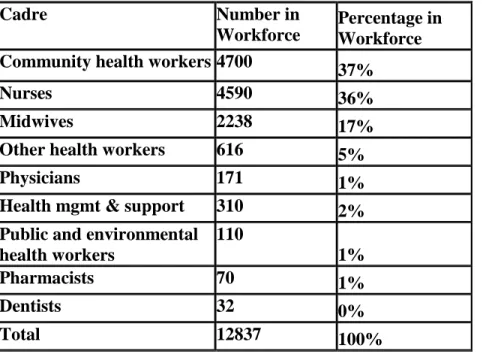
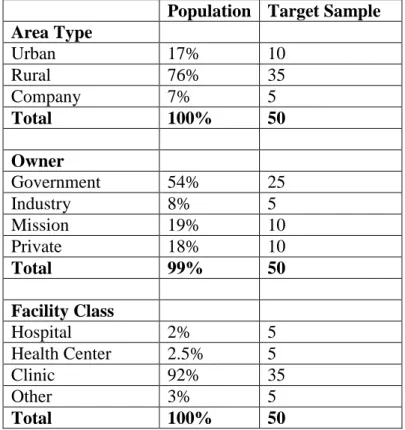
A sample of approximately n = 75 physicians , nurses, laboratory assistants and other health care providers working in 5 representative district hospital and health centers were originally targeted as displayed in the tables 1 and 2 below. Health facilities were not all chosen a priori. Based most likely on a rationale for opportunistic sampling, the facility sample size was expanded from five to seven to include, a TB clinic and the health faculty of the University of Swaziland. The actual sample size of health cadre interviewed was also reduced to n = 38 based primarily on time constraints and to a lesser extent human resource capacity.
Health facilities selected for the survey were from these 3 main levels of the Swaziland health care system, namely, the hospitals, health centers and clinics. Swaziland has a highly decentralized health care system with the government being the major producer of health care. The types and number of health facilities that exist include hospitals (7), health centers
(12), clinics (162), public health units (8) and 187 outreach sites (Health facilities MOHSw- accessed at http://www.gov.sz/home.asp?pid=142). There are 3 main delivery levels within the primary health care approach namely the nurse run community based care from clinics and outreach sites; referral level health centre and public health units and finally the regional referral hospitals and 1 national referral hospital (Whitesand & Whalley, 2007).
emergency interventions especially to the rural population (Clinics MOHSw - accessed at http://www.gov.sz/home.asp?pid=145).
b. Health centers are mini hospitals (24-42 beds) with services offered ranging from promotive and preventive, to intermediate level curative services including operative surgery. The centers serve both the immediate catchment area and those patients who have been referred from adjacent and outlying clinics (Health Centers MOHSw– accessed at http://www.gov.sz/home.asp?pid=144).
c. Hospitals act as referral centers for clinics and health centers, and provide technical and clinical support for all outlying health units. They provide a comprehensive range of outpatient and inpatient services including wider rehabilitative services (Hospitals MOHSw – accessed at http://www.gov.sz/home.asp?pid=143).
Table 1: Sample distribution of health care workers by cadres obtained by the survey team from the MOHSw. 2007.
Cadre Number in
Workforce
Percentage in Workforce Community health workers 4700 37%
Nurses 4590 36%
Midwives 2238 17%
Other health workers 616 5%
Physicians 171 1%
Health mgmt & support 310 2% Public and environmental
health workers
110
1%
Pharmacists 70 1%
Dentists 32 0%
Total 12837 100%
location or area type (urban, rural, or company), ownership (government, mission, private, industry) and class of facility (hospital, health center, clinic, other).
Table 2: Target sample by location, ownership and class of health facilities assuming a sample size of ~50 respondents.
Population Target Sample
Area Type
Urban 17% 10
Rural 76% 35
Company 7% 5
Total 100% 50
Owner
Government 54% 25
Industry 8% 5
Mission 19% 10
Private 18% 10
Total 99% 50
Facility Class
Hospital 2% 5
Health Center 2.5% 5
Clinic 92% 35
Other 3% 5
Total 100% 50
For the HCW survey the inclusion criteria for participant were the need to be: - Officially registered and licensed to work in the health care sector - Full-time or at least part-time employees at a health care facility - Over 18 years of age
Survey Procedure
Eng , Schulz & Parker (2005), all community based approaches include “…a commitment to conducting research that shares power with and engages community partners in the research process and that benefits the communities involved either through direct intervention or by translating research findings into interventions and policy change” ( p. 5). Additionally, Minkler & Wallersteinm ( 2003) defined a community as a group of people with a shared identity be it based on geography, race, ethnicity, political affiliation, institutional connection or other shared identification with a group (In Israel, Eng, Schulz, & Parker, 2005 p. 33).
Joint collaboration of the SNA and the Capacity Project was planned for all stages of the research process in that the SNA was directly involved in the problem identification and creation of research questions, selection of research methods and tools, survey implementation and the plan for shared analysis and interpretation of results and also for a joint effort in result sharing and effecting social change.
- Identify the barriers to the Wellness center - Gain capacity in the conduction of research
- Used attained skills to enhance their observed capacity as a local NGO with the ability to conduct research.
Partnership: Partnership with the Capacity Project and SNA stemmed from a long relationship of trust with the Capacity Projects operations in the region alongside that of the SA-HCD. Part of the goal of the Swaziland SA-HCD is to strengthen the capacity of the SNA and the Wellness centre. The SA-HCD (South African - Human Capacity Development) is a coalition of all Capacity Projects in the 3 Southern African countries of South Africa, Swaziland and Lesotho. The SA-HCD formed as a bilateral organization in response to the rapid expansion of the South African Capacity Project programs. The SA-HCD reports directly to USAID and IntraHealth International Inc.
Funding: Funding for the survey was provided by the Capacity Project as part of the project‟s objectives to improve the planning, development and support of the health care workforce.
questions etc. Role plays were used to ensure information was well understood with
recommended readings given for personal information enhancement. The intensive training was immediately followed by the intervention planning for 3.5 – 5 days. The nurses involved in the study were the senior staff of the SNA – President, Ex- president and secretary – and had been directly involved in all parts of the survey design and sample selection.
Planning: Information gathering, planning and design field trips were undertaken over a period of approximately 10 months prior to the survey implementation by the external researchers (Capacity Project) to enhance familiarity with the context. This involved, conduction of learning tours of health facilities, brainstorming sessions for research questions with SNA, joint design of survey tools, questionnaires and informed consent. The importance of the addition of all cadre of HCW was an important point stressed by the SNA nurses in addition to facilities supplies4. Interviews would be conducted in SiSwati and or English as they would be targeting multiple levels of the HCW cadre.
In accordance with the SNA, the three SNA nurses would implement the survey and conduct all the interviews whilst the Capacity Project conducted the coding, analysis and reporting.
The SNA nurses, all of whom were employed by the MOHSw were not given a defined block of time of work but were given permission to take some days of during their regular work week for the survey implementation - approximately 2-3 days a week. The nurses were paid a
4
The importance of this addition of was definitely relevant as a survey conductedon 100 health workers in South Africa showed that although cleaners formed less than 16% of the health work force they accounted for 38% of the injuries with more than a half of the injuries recorded being needle stick injuries (de Villiers A. [2000].
per diem by the Capacity Project to reimburse them for food, transportation and other costs. It was unclear if the payments were received in addition to their regular salary.
Recruitment: Potential research sites were visited in advance of the interview day in order to discuss the study with the facility directors and gain their approval and permission for the survey. A letter from the MOHSw certifying their approval of the study was provided to facilities to help formalize the approach. Care was taken to ensure facility administrator or directors understood the studies selection criteria to prevent coercion of staff, handpicking of staff or the selection of favored staff. The surveys were conducted at the staff worksite during working hours. A private space was given to the surveyors to conduct the interviews. Staff would walk in at their
convenience to conduct the interviews. When interviewers felt they were getting too much of a particular health cadre they adjusted for this by going to a facility with more of a particular cadre such as e.g. more physicians.
Analysis: Interviews were transcribed verbatim and locally by an independent consultant in collaboration with the SNA and Swaziland SA-HCD. Coding, analysis, and reporting would be conducted at IntraHealth‟s Chapel Hill (USA) office. Analysis of the qualitative data would
focus on common trends and patterns within the interview responses. Qualitative coding
software such as Nvivo would be used to analyze the data with the frequency of responses to the close ended questions analyzed using basic descriptive statistics such as means absolute numbers and percentages.
Ethical Considerations
The Swaziland Research Ethics Committee in the Ministry of Health and Social Welfare gave permission for the surveys implementation. This is the overarching ethics committee in Swaziland. All survey material was approved by the ethics board including use of oral and written informed consent and audio taping of the interviews. The study was also approved by the IntraHealth International Inc formal review board.
could be terminated at any point of the discussion by the participants. The decision to participate or decline would also not be documented or provided to any employee‟s supervisor.
DISCUSSION
Qualitative research
Qualitative research typically involves the use of open ended questions and allows an „unlimited number and unspecified direction for responses‟ (Sandelowski, Barroso, & Voils,
2007). In contrast to this, quantitative research involves a highly structured and close ended format that specifies more the nature and direction of responses and greatly narrows the range of responses (Sandelowski, Barroso, & Voils, 2007).
In this research the use of a semi-structured qualitative tool enabled the attainment of a wide range of responses to the researched information whilst ensuring some levels of
homogeneity in the range of topics discussed. This enabled richness to the responses in its ability to capture aspects such as the context, history and individuality of the respondent (Kearney, 2001). The advantage of this approach is in the similarity of questions which enhances the comparability of responses. This format also helps reduce interviewer bias and ensures key questions get asked. Limitations of the semi-structured method are in the wording or phrasing of questions which may not be understood to the same degree by all respondents and may impact on the relevance of the questions and responses (Israel et al., 2005).
Of importance in qualitative research is the issue of generalizability. Unlike quantitative research which seeks to get statistically significant probability sampling which is generalizable to a population, in qualitative research , theoretic sampling is used in the selection of
sample but rather on the representativeness of the concepts researched (Horsbaugh, 2003; Liamputtong & Ezzy, 2005; Patton 2002)
Sampling
Sampling in qualitative research is not planned to be statistically significant. The
sampling however, does not occur randomly but follows some defined guidance (Liamputtong & Ezzy, 2005). Purposive sampling according Liamputtong & Ezzy (2005) involves the selection of “information- rich cases for in-depth study to examine meanings, interpretations, processes and theory” (p. 46). In this survey stratified purposive sampling was used for the respondent
selection in that cases were identified from previously identified subgroups such as area and type of facility and cadre of staff. The original sample size for the survey was 75 HCWs of all cadres. Based primarily on time constraints and to some degree the limited number of nurses (three) engaged in the survey, the sample size was reduced to 38 .It is unclear if discussions on information saturation where held at this stage. This decrease in size though reducing the levels of theoretical generalizations could still render a sufficient sample size upon which deductions can be drawn to the general health workforce.
Sampling Size
be terminated (Liamputtong & Ezzy, 2005). In reality there are the finite constraints of time and financial resources. The researcher thus has to decide how much depth and details is required in the research, and balance this with the available time and resources in determining when added sampling would become redundant (Liamputtong & Ezzy, 2005). The current sample size of 38 could thus be adequate if saturation of information was indeed attained in the data collected.
Opportunistic sampling
Opportunistic sampling is in the process by which new opportunities to recruit
participants or gain access to a new site develops after a survey has begun (Liamputtong & Ezzy, 2005). Many qualitative research methods assume an aspect of this in their design with the assumption that the “full dimension of the research will not be known until the study is
complete” (Liamputtong & Ezzy, 2005, p. 48). In this survey an aspect of opportunistic sampling was also incorporated in the research design in that as the research progressed, additional sites were identified which yielded opportunities to recruit new participants. As noted by many researchers (Liamputtong & Ezzy, 2005 ; Patton, 2002; Rodgers & Cowles, 1993) qualitative research design is typically emergent and as such may change or be adapted over the course of the research. Accurate recordings of change in method and the rationale behind it are however of prime importance in the ability to help ensure the dependability and robustness of the
In the current process little methodological documentation was employed. The number of participants for this research was reduced to 38 primarily as a matter of time constraints and to a lesser extent human resource capacity. Nurses from both the SNA and Wellness Center had originally been committed to assist in the survey implementation but that did not occur. Only nurses from the SNA implemented the survey. It was unclear as to why the Wellness center nurses did not participate.
The three nurses from the SNA involved in the data collection were the current president, past president and secretary of the SNA. Bearing in mind the Wellness Center operates under the auspices of the SNA, in addition to the relatively small population of Swaziland, the use of these high profile nurses could have intimidated respondents - especially in the interviews conducted in the Wellness Center. No documentation on the impact of this was however, done. Of some help in the clarification of this were the observatory studies conducted by the external researcher for some of the interviews. In those studies no observation of respondent discomfort was noted. The possibility of discomfort however, cannot immediately be discounted. In a previous study on „nurses working in voluntary counseling and testing in Swaziland‟ conducted by a nurse and
professor (Mkhabela, 2007) the author noted “ …since the researcher was a lecturer , nurses assumed she had come to check in on their efficiency. The emphasis on the purpose of the research brought acceptance of her presence” (p. 61). The importance of documentation, no matter how brief, is clearly observed here in its ability to help bring transparency and
understanding to the research process.
to include the only TB clinic in Swaziland and the University of Swaziland. It was, however, unclear why the expansion was done.
Pilot testing
A pilot survey can be used to prioritize topics, give clarification on questions posed, impart reliability to the research methods and, most importantly, ensure the survey tool is adequately capturing what it was designed to capture (validity). In the current survey, as a result of time constraints, no pilot testing of the questionnaire was conducted. Although the nurses translated the questionnaires into SiSwati, without pilot testing the forms, one could run the risk of certain questions not adequately capturing the information required.
Additionally, in the use of dual languages, one needs to ensure questions posed in both languages convey the same meaning. Ideally, before conducting a pilot test of dual language questionnaires, the reliability of the questionnaires are assessed by back-translations. The translated questionnaires are back-translated by an independent translator and then compared with the original version to ensure consistency in language use.
For the HCW research survey, back translations were done for the informed consent forms but not the entire research questionnaire. Also, though pilot testing was not done, it is possible that the validity that could be compromised with the possible differences in meaning of questions, could be compensated for in the high inter-researcher reliability of the small number (3) of trained survey implementers with their in-depth familiarity with the questions and their ability to articulate the questions in both English and SiSwati. The inter-researcher reliability was assessed mainly on their level of understanding in the training and by observations on the
that the 3 nurses were all of the similar academic standing and occupational ranking. The nurses comprised of 2 females and one male.
Research Process: External Researcher influence
In most qualitative research the investigator is considered to be a part of the data
collection instrument (Patton, 2002). According to Rodgers and Cowles (1993), “the credibility of the reported data therefore lies not only in the procedures by which the data is generated and analyzed but also in the self awareness of the researcher” (p.223). The importance of
understanding the researched context is imperative in the field of qualitative research. In contrast to the common notion of keeping a distance from the researched cases in order to maintain objectivity and reduce bias, some qualitative researchers believe true understanding comes from a thorough understanding of the research context (Patton, 2002). In accordance with this, Beth Rodgers and Kathleen Cowles (1993) state that “the researchers‟ conceptualization of the study problem or area, their knowledge base of the study area, their philosophical approach to
understanding the phenomenon of interest and their psychological and emotional responses to the participants all play into the final outcome of the study” (p.223). Field visits were thus an
important part of the investigative procedure for the external researcher ( The Capacity Project). Visiting potential locations with the local team and engaging in information seeking dialogue with the community stakeholders ensured an enhanced understanding of the study context which can be of great importance in the data analysis process.
cannot be underscored. Personal note taking during the research process presents an avenue where objectivity can be sought as it assures critical documentation of thought trend. This can alert the researcher of the formation of personal biases whilst creating an avenue for reflective thinking (Rodgers & Cowles, 1993). Noting the rational for selecting a particular research focus can also help bring understanding in the analysis process by providing the thought trend behind some particular data collection - or scenario building, as was used in the questionnaire.
Reflexivity – the active acknowledgement by researchers in the final report of the ability or otherwise to be unbiased and the possible impact of this on the research - in the final written report is becoming increasingly common in qualitative research to enhance the reliability and trustworthiness of the data (Horsburgh, 2003; Roberts & Priest, 2006).
For both the auditor and researcher the researcher‟s notes thus provides an important means to monitor the rational of decision taking in addition to the strategies taken to ensure neutrality (Rodgers & Cowles, 1993; Roberts & Priest, 2006). The extent to which such information was maintained in this study were key aspects for instigating this process analysis and it is imperative that future research maintain adequate note taking.
Research Process: Internal Community Influence -Involvement of the Nurses
be shared but also for eventually effecting social change. The SNA nurses were directly involved in the creation of the questionnaires and had sole responsibility for the survey implementation and data recording.
Though marginally qualified in qualitative research, one may argue that coupled with the intensive training given, the nurse‟s familiarity with the context, ability to use local language and understanding of non-verbal cues, the use of the nurses as interviewers in this participatory research process brought more strengths than limitations. Additionally, without the insider knowledge of the health facilities and their administrative lines it may have been very difficult if not near impossible to get the survey underway. The utilization of the formal introductory letter from the MOHSw is just one example of how involvement of community stakeholders helped to facilitate the survey implementation.
Qualitative interviews – Nurses Involvement
In qualitative research, accurately recording the words of the interviewee and
understanding the meaning of the words is critical to capturing the information to be analyzed. Inaccurate recording of words renders the data largely inadequate and compromises on the interpretation of results (Patton, 2002). In their conduction of the interviews with back-up audio taping, the nurses brought to the data a wealth of richness in the quality of the data captured. The nurses‟ natural understanding of the meaning of words or phrases used provides a key to
when using a common language, but words can take on a very different meaning in other
cultures” (p.337). Although more surveys were conducted in English than in SiSwati, the English
surveys incorporated a large number of SiSwati words and phrases. The use of the SNA nurses for the interviews thus helped overcome large aspects of the language barrier in the interview process. Looking further down the line, ensuring the nurse‟s involvement in the data
transcription and analysis processes – such as going over transcribed data and interpreting findings- will be of great importance in ensuring the true meaning and understanding of the data is attained and important information is not lost.
Despite these strengths, the use of the nurses is not without its limitations especially in qualitative interviewing were the interviewer must not only be aware of their context but also the respondents‟ emotional and non-verbal cues. Non-verbal cues can be critical to the quality of
research data (Roberts & Priest, 2006). Observing a non-verbal cue and overlooking it or not being sensitized enough to know what to look for can severely impact the quality of data analyzed and transform an interview rich in meaning to one bereft of contextual relevance and „dry‟ in meaning. An example of this importance was depicted by qualitative researchers
Rodgers and Cowles, (1993) in their study of persons with AIDS “ …as people with AIDS described their experiences they often cried or displayed apparent anger or frustration” (221). The researchers remarked that “it was only after careful scrutiny of the field notes that identified exactly when particular participant‟s eyes first filled with tears that it was revealed that the
stimulus for crying was a thought or description that had occurred sometime before the crying was audible on tape” (221). The field notes thus provided the important clues that related to what
or misinterpreted if the analysis had been dependent on the tape recordings alone (Rodgers & Cowles, 1993).
In the HCW survey, a less than ideal amount of contextual documentation was utilized during the interview process. Contextual notes are ideally recorded as the observations occur or written soon after the observation if the timing is inopportune. In the interview process, although the need and importance of contextual note taking was stressed in the training, minimal note taking was conducted. Note taking when done was more on informative subjective measures such as noise level and the general room ambience than on the emotional state of the respondents and other respondent non verbal cues. Though information on the ambience is useful and helps to give an understanding of possible levels of discomfort for the interviewee and interviewer, the importance of capturing the respondent‟s non verbal and emotional cues cannot be underscored. Such notes add a wealth of contextual data during the rigorous case by case analysis of the qualitative research and can help impart critical understanding of the data analyzed (Rodgers & Cowles, 1993). There is widespread agreement on the importance of note taking by qualitative researchers although the ability to effectively accomplish this task has remained largely elusive (Roberts & Priest, 2006; Rodgers & Cowles, 1993; Patton 1990). For future surveys, ensuring the adequate incorporation of the wide breadth of interviewing skills cannot be overemphasized.
Other contextual issues
As noted by many qualitative researchers the understanding and acknowledgement of contextual barriers are a part of the reality qualitative research and help give important context to the data (Liamputtong & Ezzy, 2005; Patton 2002). The survey implementation took
resources were fairly constrained with the use of just 3 of the SNA nurses for the survey and the reality of distance to be traversed. Although all transportation and time worked on the survey was financed by the Capacity Project , the SNA nurses could only work limited times per week ( ~ 2-3 days) being that they were still expected to work set hours in their regular MOHSw
positions. The dearth of human resource is a highly prevalent problem in Swaziland with HCWs commonly seconded to research programs/ projects - in a bid to stretch human resources - and with a large number of public health sector posts remaining unfilled (Kober & Van Damme, 2006). Although the nurses were willing to continue the survey to attain the original sample of 75 HCWs, the reality of time constraints and to a lesser extent funding were factors that had to be considered for the completion of the study.
Ethical considerations and their impact on the survey implementation are also important factors of the research process. Like many developing countries, the research ethics board was structurally constrained. It took approximately 3 months for the committee to convene and 5 months to the gain approval. The importance of strengthening local research ethics review boards in international research collaboration cannot be over emphasized. Local review boards with their increased concern for their populace are pivotal in ethical discussions and play an important role in the enhancement of in-country operational research in addition to ensuring justice,
beneficence and respect for all participants are maintained (Benatar, 2002; Singer & Benatar 2001).
CONCLUSION
Like all research processes, the HCW survey is not without its strengths and biases. The knowledge and awareness of the research context cannot however be underscored enough in the quality it adds to the data collection process. Methodological challenges such as contextual documentation and sampling and time and human resource constraints were all factors that played into the research process and are important factors to be considered in all research processes. Community participatory approaches and training were found to have been great additions to this research process in the commitment, depth and ownership it imparted to the study. Based on the current processes analysis, the need for the involvement of the survey implementers (nurses) in the data analysis and interpretation stage cannot be over emphasized in their ability to enhance the validity and reliability of the studies findings.
APPENDIX 1
A SURVEY OF ACCESS TO HIV/AIDS CARE AMONG HEALTH CARE WORKERS IN SWAZILAND Questionnaire
This interview will take about one hour and consists of four parts. First there will be general questions about your age and workplace facility. Second, I will ask you your personal opinion concerning barriers for HCW in accessing post-exposure prophylaxis (PEP) and HIV treatment. I will also sketch two scenarios about which I would like to ask your response and opinion. Third, I would like to ask you a few question about the Comprehensive Wellness Center for Health Care workers in Manzini, and your involvement with drafting the HIV/AIDS Workplace policy. Finally, I would like your opinion on this study and how we can improve it.
I would like you to think about ways in which we can best go about obtaining information from this study from HCW across Swaziland.
I. First, I would like to document some general information about you and your facility. General Background
1. What is your age? Age:
2. What is your gender? Male
Female
3. Where do you work? Facility Name:
4. Level Hospital
Health Center Health Clinic
Health Post/Outreach Clinic
Other: ___________
5. Organization Government
NGO Religious Private
Other: __________
6. What is your job? Nurse
Midwife
Family Nurse Practitioner Nurses assistant
Other____________ 7. How many years have you worked in this job position? Years:
8. Are ARVs provided at your facility? Yes No
9. Please indicate which of the following services are offered at your facility and indicate the level of accessibility of these services to health workers where 1=poor, 2=average, and 3=good.
Service Available?
(check if so)
Accessibility (1=poor, 2=average, 3=good) VCT ARVs Condom distribution
TB diagnosis and management PMTCT
STI treatment
Peadiatric AIDS Treatment. Other……… ……...
10.What, in your opinion, determines the accessibility of these services?
11.Has your institution established peer support groups at workplace who provide care and support mechanisms?
Yes No
Don‟t know
12.Name any Home Based Care Services that you know health workers in your facility seek care from
Name of Home Based Care Services Service Provided
15.Have you attended any training on Post Exposure Prophylaxis ( PEP) ?
Yes No 16.If yes, what topics were covered?
17.Does the facility that you work at use universal infection prevention when handling patients?
Always Sometimes Never Don‟t know 18.Please explain.
19.To what extent are sharps containers available? Always Sometimes Never Don‟t know 20.To what extent are incinerators available? Always
22.Please fill in the table below the number of times protective wears is provided, and whether they are re-used. (check what applies)
Name of Protective Wear All the time Sometimes Never Reused?
a) Gloves Yes / No
b) Gowns Yes / No
c) Aprons Yes / No
d) Masks Yes / No
e) Goggles Yes / No
f) Shoes/Boots Yes / No
g) Other: Yes / No
II. Now I would first like to ask you your opinion with regard to barriers that might exist surrounding post-exposure prophylaxis and HIV-treatment of HCW.
23.Suppose you would need Post Exposure Prophylaxis (PEP). How easy is it for you to get access and obtain PEP?
Very Easy Somewhat easy Somewhat difficult Very difficult 24.Please explain why you say this.
26.Do you think other Health Care Workers might encounter more, equal, or less problems accessing PEP then you might?
More Equal Less 27.If more or less, what explains this difference?
28.What barriers do you think generally exist, if any, for Health Care Workers to access and obtain PEP?
30.Does HIV affect any Health Care Workers you know personally? Yes No 31.If yes, in what way?
32.Have you seen your colleagues miss work due to their or their family members HIV infection?
Yes No 33.What would be your best guess of how many days a month your
colleagues might miss coming to work as a result of this?
Days: 34.Do you think HIV infected Health Care Workers are open about their
status?
Yes No 35.Why or why not?
36.Do you think special services are needed for HCW? Yes No 37.If yes, what are they?
40. If you were a positive expectant mother, what preparations would you make to prevent transmission to your new born child?
41. How best would you prevent your new born baby from infection?
42. In your opinion, is it necessary for People living with HIV/AIDS to continue with ARVs for their life time
Yes No
Now, I would now like to describe a few scenarios with you and will be asking for your response on a few questions about what you might do in these imaginary scenarios.
Scenario 1:
Imagine a female nurse comes to a colleague and friend and reveals that she has recently discovered that she is HIV positive. She says she does not wish to register at the public ART clinic as she knows the providers there.
44.What advice do you think her friend might likely give her on what to do next?
45. What options would she have for receiving care?
46. To what extent do you think it would be feasible for the nurse to go to the ART clinic anyway and openly asks for treatment despite the fact that providers know her?
47. What might be the repercussions of her openness?
48. Would the advice given, the options available, or repercussions when openly admitted as described above be any different if the nurse had been a male?
Scenario 2:
Imagine a male nurse working in the ART clinic; a colleague and friend brings his wife and asks if he can provide medications for her without having her wait on the queue.
49. What would the nurse likely do?
50. Do you think being a HCW might make it easier or more difficult for family members to access care for HIV?
III. Now I would first like to ask you a few question about the Comprehensive Wellness Center for Health Care workers in Manzini, and your involvement with the drafting of the HIV/AIDS Workplace policy.
52. Have you heard of the Comprehensive Wellness Center for Health Care Workers?
1. Yes 2. No
3. I am being interviewe d at the Wellness Center 53. Have you visited the Comprehensive Wellness Center for Health
Care Workers?
1. Yes 2. No (skip
to #56) 3. I am being
interviewe d at the Wellness Center 54. If you have visited the Wellness Center, what services did you use?
55. What services would you have like to have that were not offered there?
Now I would like to find out whether you are aware or have been involved in drafting the HIV/AIDS Workplace policy.
57. Are you aware of the draft HIV/AIDS policy? Yes No 58. If yes, to what extent have you been involved in the policy? (read answers) Read it
Consulted for my input Participated in drafting Other 59. What, if any, issues would you like to be highlighted in the HIV/AIDS Work place policy under the following categories:
a. Prevention
b. Treatment
c. Care
IV Finally, I would like your opinion on this study and how we can improve it. 60. Many of the questions we have been asking have been about HIV. What other health care services do you think would be helpful to offer to health care workers?
61. What questions in this interview did you find difficult to answer? Why?
62. Do you have any other remarks, feedback, or issues you would like to bring up?
APPENDIX 2
A SURVEY OF ACCESS TO HIV/AIDS CARE AMONG HEALTH CARE WORKERS IN SWAZILAND Informed Consent
You are invited to participate in a research study on issues concerning access to care for HIV/AIDS infected health care workers. This study is conducted by the Comprehensive Wellness Center for Health Care Workers in collaboration with the Swaziland Nurses Association, the Southern Africa Human Capacity Development Project, and the Capacity Project, a project funded by the United States Agency for International Development. This study is lead by Shannon Galvin MD from the Capacity Project.
We hope to learn whether HIV infected health care workers and/or their infected family members are receiving appropriate HIV services. The objectives of this study are as follows:
To determine what facility level training, access, and preventive measures exist for Health Care Workers
To determine if barriers exist to HIV infected health care workers and family members receiving care and support
To determine if post-exposure prophylaxis is available to exposed health care workers To estimate need for specific services that target HIV infected and affected health care
workers
To assess health care worker involvement with the drafting of the national HIV/AIDS policy
You were selected as a possible participant in this study because you are working in a health care facility. WE WILL NOT ASK YOU ABOUT YOUR OR YOUR FAMILIES OR COWORKERS HIV STATUS. You are selected because of your general knowledge about how health care is delivered. Being selected for participation in no way reflects whether any person believes you have HIV or not.
If you decide to participate, you will be asked to answer general questions about difficulties you might know about related to HIV and health care workers. The answers may be recorded on an audio tape or in writing. There are minimal risks associated with participating in the survey, as you will never describe your own situation, merely what you have observed in general. The benefits of this research may be improved services for health care workers and their families. However, we cannot guarantee that you personally will receive any benefits from this research. Subject identities will be kept confidential. We will not obtain your or any other names in this study. As a result, information that is obtained in connection with this study is anonymous and can not be linked to you.
Your participation is voluntary. Your decision whether or not to participate will not affect your relationship with the Comprehensive Wellness Center for Health Care Workers, the Swaziland Nursing Council, the Southern Africa Human Capacity Development Project, the Capacity Project, or your employer. If you decide to participate, you are free to withdraw your consent and discontinue participation at any time without penalty. Your identity will remain anonymous. This questionnaire will take about one hour.
If you have any questions, please feel free to contact IntraHealth Swaziland at 404 5579. If you have questions regarding your rights as a research subject, contact the National Research Council. You will be offered a copy of this form to keep.
Your signature indicates that you have read and understand the information provided above, that you willingly agree to participate, that you may withdraw your consent at any time and discontinue participation without penalty,
REFERENCES
Benatar S.R. (2002). Reflections and recommendations on research ethics in developing countries. Social Science and Medicine, 54, 1131–1141.
Clinic Services. (2008). Retrieved March 28, 2008, from Swaziland Ministry of Health and Social Welfare Website: http://www.gov.sz/home.asp?pid=145
Health Centers. (2008). Retrieved March 28, 2008, from Swaziland Ministry of Health and Social Welfare Website: http://www.gov.sz/home.asp?pid=144
Health Facilities. (2008). Retrieved March 28, 2008, from Swaziland Ministry of Health and Social Welfare Website: http://www.gov.sz/home.asp?pid=142
Horsburgh, D. (2003). Evaluation of qualitative research. Journal of clinical Nursing, 12(2), 307-312.
Hospital Services. (2008). Retrieved March 28, 2008, from Swaziland Ministry of Health and Social Welfare Website: http://www.gov.sz/home.asp?pid=143
International perspective. (2007). International council of nurses, 54, 5- 6.
Israel, B.A., Eng. E., Schulz, A.J. & Parker, E.A. (2005). Methods in community-based participatory research for health (1st ed.). Jossey-Bass, San Francisco, CA.
Kearney, M.H. (2001). Levels and Applications of qualitative research evidence. Research in Nursing and Health, 24, 145-153.
Kober, K & Van Damme, W. (2006). Public sector nurses in Swaziland: can the downturn be reversed? Human resources for health, 4:13.
Mkhabela, M. P. (2007). An empowerment programme for nurses working in voluntary
counseling and testing services in Swaziland (Doctoral Dissertation, University of South Africa, 2007).
Patton, M.Q. (1990). Qualitative research and evaluation methods (2nd ed.). Sage publications, Thousand Oaks, CA.
Patton, M.Q. (2002). Qualitative research and evaluation methods (3rd ed.). Sage publications, Thousand Oaks, CA.
Roberts, P. & Priest, H. (2006). Reliability and validity in research. Nursing Standard, 20(44), 41-45.
Rodgers, B. L. & Cowles, K.V. (1993). The qualitative research audit trail: a complex collection of documentation. Research in Nursing and Health, 16, 219-226.
Sandelowski, M., Barroso, J. & Voils, C.I. (2007). Using qualitative metasummary to synthesize qualitative and quantitative descriptive findings. Research in Nursing and Health, 30, 99-111.
Singer, P.A. & Benatar S.R. (2001). Beyond Helsinki: a vision for global health ethics. British Medical Journal, 322, 747-748.
Swaziland Demographic Health Survey (SDHS). Retrieved March 9, 2008, from Measures DHS Website:
http://www.measuredhs.com/pr1/post.cfm?id=70BBD282-188B-A375-A809C38E56918C22
Tawfik, L. & Kinoti, S. N. (2006). The impact of HIV/AIDS on the health workforce in developing countries. Background paper prepared for the World Health Report 2006 - working together for health.
Uebel, K.E., Nash, J. & Avalos A. (2007). Caring for the caregivers: models of HIV/AIDS care and treatment provision for health care workers in South Africa. The Journal of Infectious Diseases, 196, S500-4.
UNAIDS (2007). AIDS epidemic update.
FOOTNOTES
1 The Swaziland Nursing Association (SNA) is a local non government sponsored association and labor union. The SNA has its own charter of operation and is a core advocate for increases in salaries and human rights. Members of the union work in the MOHSw and in other health
facilities.
2 IntraHealth International Inc is an international non profit organization headquartered in Chapel Hill, North Carolina with a primary focus in health care capacity building in developing countries. IntraHealth is the lead organization for the five year „Capacity Project‟ cooperative
agreement with USAID, in collaboration with the extensive expertise and experience of 6 other global partners (IMA, JPIEGO, LATH, MSH, PATH, TRG) and numerous regional and local organizations.
3The Capacity Project is a five year global initiative funded by the United States Agency for International Development, to assist developing countries build and sustain their health workforce.
4The importance of this addition of was definitely relevant as a survey conducted on 100 health workers in South Africa showed that although cleaners formed less than 16% of the health work force they accounted for 38% of the injuries with more than a half of the injuries recorded being needle stick injuries (de Villiers A. [2000]. Retrospective Analysis of Injury on Duty Cases with Specific Emphasis on HIV Transmission as Reported in a Secondary Hospital in