1
Complementary and Responsive Feeding Techniques as Methods to Address
Malnutrition in Children 6-24 months of Age in Peru
By
Katherine McDougal
A Master’s Paper submitted to the faculty of the University of North Carolina at Chapel Hill
In partial fulfillment of the requirements for the degree of Master of Public Health in
the Public Health Leadership Program.
Chapel Hill
2009
Advisor signature/printed name
Second Reader Signature/printed name
________________________________
2
Table of Contents:
Abstract………..3
Malnutrition Overview……….4
Peruvian Malnutrition Overview………..6
International Standards for Infants and Young Children 6-24 Months of Age……….8
Responsive Feeding for Infants and Young Children 6-24 Months of Age………12
Defining ‘Responsive Feeding’ in Order to Develop Indicators……….14
Responsive Feeding Debate………..17
Developing Indicators Through Research in Peru………..18
Program Improvement and Implementation in Peru: Looking Forward……….24
Conclusion……….34
Appendices………36
References……….61
Figures Figure 1: Normal Distribution Curve showing Malnutrition………5
Figure 2:Socio-Ecological Model: Contributing factors of Malnutrition in Peruvians 6-24 months of age………25
Tables Table 1:Number of complementary feeding episodes and caloric intake for children 6-24 months of age………..9
3
Abstract
4
Malnutrition Overview
Malnutrition is a prevalent and persistent public health and medical concern in
developing countries around the world. Research has estimated that a striking one-half to
two-thirds of global child mortality is associated with malnutrition.1 Under-nutrition, especially in
the first two years of life, can increase susceptibility to infectious diseases such as diarrheal
diseases and pneumonia, increase mortality under 5 years of age, decrease overall earned
income for families and individuals, decrease parity, and increase the incidence of stunting.2,3,4
These first two years are known as the “critical window” by the WHO because the nutritional
intake within these years is essential in establishing the overall health of a child that allows him
or her to fully combat and possibly reverse adverse affects of malnutrition. 5,6
The World Health Organization created the Child Growth Standards that measure
growth in children based on the child’s length/height-for-age, weight-for-age, and body mass
index (BMI)-for-age.7
In the case of measuring length versus height-for-age, length-for-age is
used to measure children between birth and 24 months of age while height-for-age is used to
measure children two to five years of age. Each specific child is compared to the normal
distribution curve of children his/her age around the world and z-scores are calculated by
taking the difference between the anthropometric score of the individual child and the
population mean divided all by the standard deviation.7
5
Malnutrition in children can be subdivided into three main categories that all cause
them to fall below the “ideal” weight and height for children under the age of five as defined by
the WHO growth standards: Underweight (mild stunting), moderate stunting, and wasting
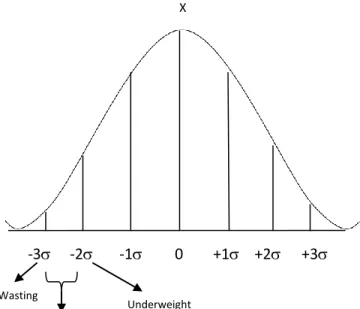
(severe stunting).7 A child who is ‘underweight’ is below the mean up to or as much as two standard deviations; a child who is ‘moderately stunted’ is between two and three standard deviations below; and a child who has ‘wasting’ is three or more standard deviations below the
mean of the z-score. Severe stunting, also known as wasting, is the most severe form and
represents a chronic exposure to malnutrition leading not only to growth retardation but also
to impaired cognitive function and impaired immune response leading to increased morbidity
and mortality (See Figure 1).8
-3 -2 -1 0 +1 +2 +3
X
Wasting
Moderate stunting
Underweight
6
Progress has been made to combat malnutrition around the world but much has still to
be done. Goals set by the World Health Summit in 1996 to decrease the number of
malnourished people by 2015 by 50% still seem somewhat lofty and unattainable as 17% of the
population in developing countries was still undernourished as of 2006.9 These numbers are
not all dismal, however, as the United Nations has set out to address malnutrition through
three of the eight Millennium Development Goals:
Eradicate Extreme Poverty and Hunger
o Halve, between 1990 and 2015, the proportion of people who suffer from hunger
Reduce Child Mortality
o Reduce by two thirds, between 1990 and 2015, the under-five mortality rate
Improve Maternal Health
o Achieve universal access to reproductive health
The official development assistance allocated globally for nutrition also increased from $113
million to $223 million from 2003 to 2006 alongside strong campaigns from UNICEF and the
World Health Organization.11
Peruvian Malnutrition Overview
In recent years, there have been some specific improvements in regards to basic
established nutritional indicators to combat malnutrition in Peru. The mortality rate of children
under the age of five has dropped from 78 to 27 since 1990 which now places Peru within the
Millennium Development Goals set for 2015 for reduction in child mortality.10 This is also the
fastest decline in all of Latin America for that specific period.11 Peru has also reduced the
7
enormous accomplishment for any developing or developed country.11 Despite some
significant progress in reducing the overall under-five mortality rate, there are still huge
disparities between the richest (18 deaths per 1,000 births) and poorest quintile (93 deaths per
1,000 births) with a ratio of 5.3. Thirty one percent of children under the age of five were
considered malnourished and over three-fourths of those children are suffering from moderate
to severe stunting due to poor caloric quality of nutritional intake.12 The average life
expectancy across Peru is 71 years, which decreases in regards to healthy life expectancy to 63
years.10
Rural populations experience a higher rate of malnutrition than that seen in the urban
areas. These rural areas include but are not limited to the Amazonian region in the north and
the Andean Mountain Range which extends from the northwestern corner all the way to the
south of Peru. Nearly 7.3 million Peruvians are considered to be rural populations and out of
those, nearly 5.4 million are considered to be poor.13 The indigenous populations living in
extremely remote areas in the southern highlands are considered to be the poorest where
about 73% live below the poverty line. In fact, citizens born in the urban capital of Lima are
expected to live almost 20 years longer than people born in the rural southern highlands. Rural
areas of Peru experience the highest rate of under-five mortality with 85.3 deaths per 1,000 live
births as compared to the urban areas of 39 deaths per 1,000 live births.10
The prevalence of
stunting in rural Peru is nearly 40.4% in some parts of the southwest and reaching over 50% in
8
Peri-urban areas of Peru also bear a huge burden of malnutrition that is not seen in
strictly urban data sets as traditional rural agriculture practices are abandoned for urban jobs
amidst a weak infrastructure to accommodate such mass exodus.9 As of 2005, Peru had grown
to have an urban population of roughly 75% as compared with the 70% urban trend throughout
Latin America.15 Research has estimated that close to 16.5% of children are moderately or
severely stunted in peri-urban areas on the coast of Peru, and are concentrated in shantytowns
or slums on the periphery of Lima and Trujillo.16 Many rural Peruvians are leaving to find a
better life for their families and migrate to the urban centers. From 1961 until 2000, Lima’s
population grew from 1.8 million to 7 million with squatter settlements, asentamientos humanos, appearing all over the steppe on the periphery of Lima. These squatters are mostly ignored by the federal government but as of 1998, these settlements were believed to make up
roughly 35% of Lima’s population.17 Peru is also a young and growing country with a median
age of 25 years and fertility rate of 2.7 foreshadowing the need for large-scale nutritional
interventions to affect the current and future generations of Peruvians given that, without
intervention, malnourished children become malnourished adults and parents.10
International Feeding Standards for Infants and Young Children 6-24 Months of Age
The nutrition that children receive before they reach 24 months of age is crucial to their
cognitive and physical development. In order to address malnutrition in the first two years of
life, the World Health Organization (WHO) recommends breastfeeding the infant exclusively
9
nutritional requirements of the child and alternative foods should be introduced into the diet in
multiple feeding episodes to complement the continuation of breast milk from 6 to 24 months
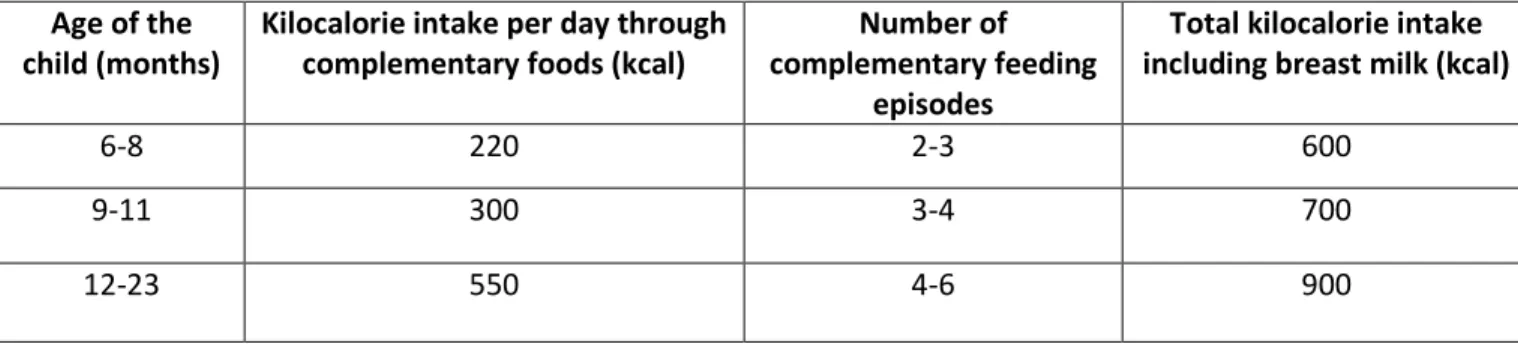
of age (Table 1).18
Table 1. Number of complementary feeding episodes and caloric intake for children 6-24 months of age
Age of the child (months)
Kilocalorie intake per day through complementary foods (kcal)
Number of complementary feeding
episodes
Total kilocalorie intake including breast milk (kcal)
6-8 220 2-3 600
9-11 300 3-4 700
12-23 550 4-6 900
The column labeled ‘Kilocalorie intake per day through complementary foods (kcal)’ is based
solely on the caloric value that is needed outside of the calories from breast milk. This helps
caregivers better understand caloric needs based on the age of the child.
The “complementary feeding” practice has been recognized as a crucial part of proper
cognitive and physical development for infants and young children.18 After this two year
period, the child’s development is such that he/she can safely receive solid foods (including
pureed, mashed and semi-solid foods) exclusively without the addition of maternal breast milk.
Complementary food is defined as food that is given in addition to breastfeeding due to the
increased caloric needs of the infant and/or young child that cannot be received solely through
breast milk, in order to sustain a healthy life.19 Foods should be added based on nutrient
10
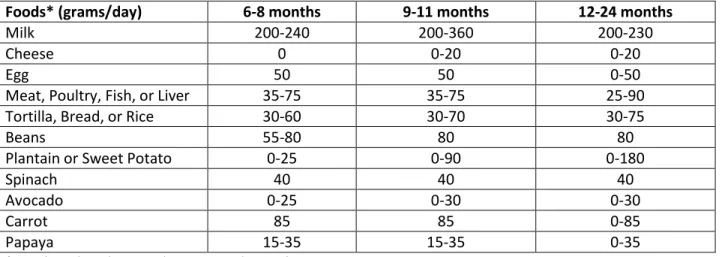
such as vegetables, fruits, cereals, whole grains, and lean meat provide extra nutritional
support during the first two years of life (Table 2).
Table 2. Quantities of foods (pureed, mashed, and semi-solid) that meet needed energy requirements
for children 6-24 months of age based on a typical Latin American diet.
Foods* (grams/day) 6-8 months 9-11 months 12-24 months
Milk 200-240 200-360 200-230
Cheese 0 0-20 0-20
Egg 50 50 0-50
Meat, Poultry, Fish, or Liver 35-75 35-75 25-90
Tortilla, Bread, or Rice 30-60 30-70 30-75
Beans 55-80 80 80
Plantain or Sweet Potato 0-25 0-90 0-180
Spinach 40 40 40
Avocado 0-25 0-30 0-30
Carrot 85 85 0-85
Papaya 15-35 15-35 0-35
* Diet based on dairy product, egg, and animal consumption
World Health Organization. Guiding Principles for Feeding Non-Breastfed Children Age 6-24 months. 2005. (Adapted table)
This is a vulnerable but very important period for the child’s development as their
nutritional needs are changing, requiring a more diverse diet with higher caloric intake and
increasing feeding episodes.
The concept of complementary feeding was originally addressed in the World Health
Organization document ‘Indicators for Assessing Breastfeeding Practices’ in 1991. This
document contained only an indicator based on timely feeding rate of the child throughout the
day,20 but did not address any of the main themes that we now hold as standards for
complementary feeding such as energy density, nutrient content, and preparation style of the
11
child feeding practices based on research advances and the latest nutritional knowledge. In
2002 the WHO published a framework for identifying potential complementary feeding
indicators and the Pan-American Health Organization also began developing the ‘Guiding
Principles for Complementary Feeding of the Breastfed Child’ in 2003.21 This booklet added
information such as
1. Feeding infants and assisting older children as they learn to feed themselves and always being aware and responsive to their cues of hunger and satiety
2. Encouraging children to eat, slowly and patiently without force
3. Experimenting with different food combinations, tastes, textures, and methods of encouragement when children refuse the food given
4. Minimization of outside distractions during meals
5. Talking to children during feeding, making eye to eye contact.21
It was followed by the ‘Guiding Principles for Feeding Non-Breastfed Children 6-24 Months of
Age’ in order to address the multi-dimensional needs of all children, breastfed and
non-breastfed, under 2 years of age and their nutritional intake requirements.6 Following all of
these reports, the WHO listed eight core indicators and seven optional indicators to measure
infant and young child feeding practices in population-based, country-specific surveys.
These required indicators include:
1. Early initiation of breastfeeding
2. Exclusive breastfeeding under 6 months of age 3. Continuation of breastfeeding at one year 4. Introduction of solid, semi-solid, or soft foods 5. Minimum dietary diversity
6. Minimum meal frequency 7. Minimum acceptable diet
12
These indicators can be further broken down into two main practices: (1) The
introduction of complementary foods in a timely manner and (2) Reasonable frequency of
feeding episodes.22 The complementary feeding practice is now widely accepted among
researchers and experts in the nutrition field but as shown, the indicators took many years to
develop with changes made as research progressed and expanded the understanding of these
specific nutritional requirements for children less than two years of age. Despite the
acceptance among scientists and nutritionists in the research arena, it is currently not uniformly
instituted in much of the developing world, especially in poor, rural or peri-urban areas.
Responsive Feeding for Infants and Young Children 6-24 Months of Age
Research has begun addressing not only the quantity and quality of foods offered to a
breastfed child age 6-24 months of age as addressed in complementary feeding protocol, but
the impact that the caregiver-to-child relationship has during those feeding episodes. It is
believed that the interactions that the two share in the child’s feeding environment, the
activities and distractions within that feeding environment, and the way in which the caregiver
presents the food to the child impacts the child’s caloric intake and overall growth. This
concept is referred to as “responsive feeding”. Despite the fact that this idea seems straight
forward, little research has been done to address and measure the style in which a child is fed
in addition to offering complementary foods in a timely and adequate manner. This notion of
“responsive feeding” or “psychosocial care” during feeding episodes directly affects nutritional
13
This is the latest development in the international research arena as it builds upon
breast-feeding and complementary breast-feeding practices in order to provide full “care” of the child during
its developing years. This period of transition from only breast milk to solid food affects a
child’s nutritional status to the point that feeding practices must be investigated in order to
understand how to nutritionally supplement most effectively during those years. In order to
move forward with responsive feeding research and incorporate the topic into national surveys,
indicators must be identified in order to provide researchers with data for further assessment
of infant and young child nutrition on a population scale.
The idea of responsive feeding stems from the complementary feeding practices, one of
the six main practices addressed in the “Care Initiative Manual” by Engle.Error! Bookmark not
defined. Care is defined as “the behavior and practices of caregivers (mothers, siblings, fathers,
and childcare providers) that provide the food, healthcare, stimulation, and emotional support
necessary for children’s healthy growth and development”.Error! Bookmark not defined. It is
from this definition that researchers have begun investigating the manner in which the child is
fed and how it affects nutritional intake. The first five points in the “Care Initiative Manual”
address:
1. the accessibility for maternal education and health education
2. The accessibility of adequate stoves for cooking to decrease inhalation of pollutants
3. The supervision of children’s hygienic practices for a healthy life 4. The health practices within the home that prevent illnesses
14
The sixth point in the manual, ‘proper feeding including breast-feeding and complementary
feeding, addresses the care that a child receives from the caregiver during feeding practices
beginning at six months of age and continuing until two years. It can be delineated into seven
principles:
1. Adapting feeding for the child based on physical development and motor skills 2. Feeding the child to address hunger
3. Feeding with encouragement
4. Balancing control of the feeding between caregiver and child 5. Reducing the distractions in the outside environment
6. Providing adequate supervision
7. Developing a consistent feeding schedule.Error! Bookmark not defined.
These points within the complementary feeding overview of “care” provide a great
framework to begin further research into feeding styles of caregivers around the world based
on both proximal and distal factors affecting the nutrition of children. Several research studies
conducted on complementary feeding have in fact specified the need to understand the
caregiver-child interaction in order to fully understand the nutritional intake of children age
6-24 months.20,
Error! Bookmark not defined.,23,29 The call for further research was also presented in
a systematic review of journal articles published in a WHO bulletin in 2006 regarding
responsiveness during feeding episodes.24
Defining ‘Responsive Feeding’ in Order to Develop Indicators
The way in which nutrition is presented in the 6-24 month period of a child’s life can
15
Currently, most nutrition researchers agree that there are three styles to define infant and
young child feeding practices around the world: laissez-faire, controlling, and responsive.
These styles emerged from the research conducted by Birch and Fisher in 1995 with roots in
specific cultural beliefs where traditions passed down through the generations defined the style
that a caregiver utilized during feeding. These styles were later adapted to define the
‘interactive’ or ‘responsive’ feeding style in greater detail four years later through research
conducted by Bentley.25 Other researchers such as Black delineate these styles a bit differently
but the overall similarities are evident. In Black’s research, low structure coupled with low
nurturance gives an “uninvolved feeding style”; low structure with high nurturance gives an
“indulgent feeding style”; high structure with low nurturance gives an “authoritarian or
controlled feeding style”; and high structure with high nurturance gives a “responsive feeding
style.”26 The “indulgent” and “uninvolved” feeding styles can be combined to equate to the
“laissez-faire style” in the three style model presented by Engle and Bentley.25
A controlled feeding style would be dictated by when the caregiver decided to feed the
child, would consist of the caregiver feeding the child solely on her own and would not let the
child participate in feeding even after the child has developed motor skills to hold and move the
spoon toward the mouth, would have the child in a position where he/she could be controlled,
such as the lap, and would often use controlling strategies such as forcing the food into the
mouth of the child or ordering or threatening the child to eat. This style can also contain a
component of dietary restriction by the caregiver. 23 The research has shown a marked
16
received food through a controlled method during childhood.23,27 This style of feeding has been
found through research to be common in Vietnam, Bangladesh, and Malawi. 19,28,29
A laissez-faire style of feeding relies heavily on the child’s ability to feed himself or
herself even before fine motor skills are developed that would allow such a practice. Caregivers
participate minimally in the feeding, if at all and provide no encouragement for the child to eat
an adequate or proper amount.Error! Bookmark not defined. This style of feeding has been
linked to higher incidence of stunting and is common in Latin American countries like Peru
where a strong cultural belief exists that children know when to feed themselves as an
important part of their autonomy.22,28 Given the high rates of stunting and malnutrition in
Peru, a laissez-faire style of feeding has not been and is not adequate for the nutritional needs
of Peruvian infants and children.
These two styles exist on completely opposite sides of the “care” continuum; while one
allows for no input from the child, the other requires total accountability on the part of the
child for their own feeding. While these two styles of feeding are quite common around the
world, they produce minimal caretaker-child interaction while feeding. Responsive feeding falls
in between these two extremes as caregivers are attentive to hunger and satiety clues, practice
verbal and physical encouragement to get a child to eat, balance power between caregiver and
child when feeding, minimize outside distraction in the environment as much as possible so the
child does not lose interest in the feeding process, and build upon previous interactions to
17
Responsive Feeding Debate
Nutrition researchers have not reached consensus as to the appropriate way to define
feeding infants and young children “responsively”. Two differing views exist within the same
general definition although one definition delineates the term to a greater degree. It is
important to debate even the slightest difference in definition as modification of wording can
have drastic effects on data collected and research outcomes. Certain researchers believe that
a mother-driven response to the child’s gestures signaling hunger defines “responsive feeding”
which does not take into account any interference outside of this specific interaction that may
occur.29,30,31,32 Other researchers, including Bentley, Creed-Kanashiro, Caulfield, and Pelto,
characterize the entire surrounding environment in the “responsive” definition (referred to as
“active” feeding in the previous definition) including any outside distractions such as other
individuals or children eating in proximity to the child, children playing near the infant or young
child who is eating, a caregiver cooking while the child is eating, etc.22,23 “Responsive feeding” in this paper is defined not only as the interaction between the caregiver and the child solely
but also the interaction that exists within the entire surrounding environment that envelops the
feeding process to provide a nurturing environment conducive to proper nutritional intake
during the first two years of life. It also includes ten points presented at an Infant and Young
Child Feeding course at the World Health Organization in Geneva, Switzerland in 2007 directed
18
1. Assisting the child to eat, being sensitive to their cues or signals 2. Feeding slowly and patiently with encouragement and without force 3. Talking to children during feeding with eye to eye contact
4. Responding positively to the child with smiles, eye contact, and encouraging words 5. Feeding the child slowly and patiently with a good attitude
6. Trying different food combinations, tastes, and textures to encourage eating 7. Waiting when the child stops eating and then offer again
8. Giving finger foods that the child can feed himself/herself
9. Minimizing distractions, especially if the child loses interest or gets distracted easily 10.Staying with the child through the meal and be attentive.20
This definition fully encompasses all aspects of the environment that affect feeding episodes
and allows researchers to consider all variables within the feeding environment to directly
assess the nutritional intake of an infant or young child. In order to establish consensus among
data and fully understand the entire picture surrounding feeding episodes, this definition is
crucial to developing indicators through further research.
Developing Indicators through Research in Peru
In Peru, research to address responsive feeding is looking to single out a few specific
indicators to incorporate into current and future population-based census survey. These
indicators need not only to address total energy intake and dietary quality but they need to
address the interactions during feeding for infants and young children.22
These indicators can
be used in population based studies in Peru to get an overall sense of the practices and into
19
However they are used, they need to be incorporated into several questions for further data
collection through Peruvian surveys. This will allow researchers to test their hypothesis that
responsive feeding from 6-24 months of age is an integral part of an infant or young child’s
nutrition and is necessary for proper cognitive and physical development.22
The Peruvian
Demographic and Health Survey (DHS) currently contains questions addressing frequency of
food given in a previous 24 hour period and the dietary diversity achieved through consumption
of several food groups.22
These two questions address complementary feeding but do not
address the needed behavioral interactions that exist during the feeding process. Behavioral
interactions are quite diverse as children are fed by different caregivers throughout the day
with varying distractions in their surrounding environment, differing lengths between meals
and breastfeeding episodes, and different manners of feeding: controlling, responsive, and
laissez-faire. Whereas complementary food given can be easily quantified with little recall bias,
responsive feeding encompasses a much more complex and multivariate environment.
Research in 2008 at the Instituto de Investigación Nutricional in Lima, Peru delineated
several variables to prepare for indicator identification and specific questions to appear on the
Demographic and Health Survey to test current data being collected on complementary feeding
and to carry out research on responsive feeding. Before the research could advance,
investigators had to fully establish all behaviors that could occur between the caregiver and
child, all variables that could exist within the given environment including distractions, food
20
This process began with five focus groups of 20-25 mothers in Canto Grande, a shanty
town outside of Lima, who were asked about their:
1. Infant and young child feeding practices
2. Recipe and food choices for their younger children including ingredient breakdown
3. Frequency of breastfeeding
4. Use of formulas versus breast milk or vice versa 5. Frequency of snacks and meals
6. Access to certain food groups and types of food
7. Distractions during feeding including the presence of children and/or adults 8. Preferred position when feeding their children.
Following their participation in these groups, these mothers were provided with nutritional and
culturally appropriate recipes for infants and young children based on the availability of local
fruits, vegetables, and meats and were given counseling on breastfeeding, complementary
feeding, and responsive feeding techniques. These focus groups, or charlas, allowed
researchers to develop and structure ten total instruments (see Appendices) to measure all
aspects of the infant or young child feeding process through observation and caregiver 24-hour
recall. Instruments one through six were developed to be conducted as field worker
observation forms:
1. Demographic characteristics
2. Lunch observations every 5 minutes 3. Snack observations every 5 minutes
4. Frequency, consistency, and diversity of the child’s diet
5. Frequency and consistency of feeding (corresponds to current Peruvian DHS survey question 581)
6. Frequency of foods and snacks
Instruments seven through ten were developed to survey caregivers about their feeding
21
7. A questionnaire regarding lunch given the previous day, proximity of the child to the mother during the feeding, and any activities that ensued
8. A questionnaire regarding snacks given the previous day, proximity of the child to the mother during the feeding, and any activities that ensued
9. Diversity of food presented to the infant or young child (corresponds to current DHS questions 578 and 579)
10.Frequency, consistency, and diversity of the food presented to the child in the previous 24 hours.
These instruments were used for a pilot study conducted in over 50 homes and later in
the full investigation on feeding practices and styles currently used among Peruvian women.
Survey training with field workers based on videos previously recorded of Peruvian mothers
feeding their children clarified differences in order to code answers uniformly for the
observations and 24-hour survey recall. Twelve hour observations by field workers in the home
were structured to provide a gold-standard with which to compare the 24 hour recall surveys
conducted the following day with caregivers. These observational studies conducted on the
first day included assessment of the surroundings, the way the food was given to the child, and
interaction between the caregiver and child every five minutes during the entire feeding
episode for breakfast, lunch, dinner, and snacks. Example questions of these observational
assessments (See appendices for Responsive Feeding instruments) include:
Where was the child being fed (the kitchen, the bedroom, the living room, etc)?
Were other children present and eating in view of the infant?
Were other adults present and eating in view of the infant?
Did anything happen to distract the child during feeding?
Was the caregiver cooking during feeding?
Was the television or radio on during feeding?
Research has shown that when a child sees a caregiver or other child performing an action,
22
not defined. These questions directly address outside distractions that may cause the infant to
reject food, or in the case of other children or adults eating, may influence the child toward
certain behaviors. Two categories reflect the areas associated with food intake: feeding
situation and style and the interaction patterns.22
Certain questions address the manner of
presentation of food to the child and whether they are eating out of the same bowl as other
members of the family or eating out of their own bowl. These are crucial questions when
addressing nutritional intake of infants and young children as quantity is not easily measured
when shared. Other questions deal specifically with the verbal and non-verbal interaction that
occurs between caregiver and child:
Is the mother facing the child, sitting behind the child, or carrying the child during feeding?
Is the mother near or far away from the child during feeding?
Is the mother giving the food the entire time or is the child also feeding himself/herself?
Is the mother talking or making gestures during feeding in order to encourage the child to eat?
When the child rejects the food, how does the mother respond? Does she offer a different food, make faces and/or noises, talk about the food, yell at the child, or wait and try again to feed?
Field workers also observe and record food preparation methods with ingredient
breakdown, food consistency, the time it was prepared, and whether the child consumed the
food or not for all meals given throughout the 12 hour observation period.
Caregiver surveys are then conducted 24 hours after the initial observation period. This
gives researchers comparison data between what the trained fieldworkers observed and what
23
how the caregiver recalls the surrounding environment, the child’s mood, the caregiver’s mood,
and interaction between the two during the majority of the feeding episode.
Of course, more questions exist on the observational spreadsheet and the caregiver
questionnaire than would be possible to add to the Peruvian and world-wide DHS, but by
over-addressing the situation, researchers hope to pinpoint the fewest possible questions that will
accurately represent several responsive feeding indicators. Optimally, observations and
surveys would be done in every household from Iquitos in the Amazon to Tacna in the South to
fully understand feeding styles among different regions, different populations, and different
countries across the globe. This, of course, is not feasible given that research should take 5-6
months in order to conduct observations and surveys in 121 homes for the Peruvian research,
so the next steps include: developing, pre-testing, and establishing validity of research by
comparing the surveys against the reference standards (observations) and use the data found
through analysis to identify specific questions in the research that seem to fully pin-point the
responsive feeding objective. Caulfield and others have already developed potential indicators
for “psycho-social care during feeding” and “feeding behaviors or style”23
so what needs to
follow now are the preliminary data and final report from Creed-Kanashiro on the research
from Peru. The responsive feeding research at the Instituto de Investigación Nutritional in
Lima, Peru is concluding in March 2009 and data should be ready as soon as June 2009. (See
appendices for observation and 24-hour recall forms used in this research.)
Once the research is analyzed and responsive feeding indicators are developed and
24
and how do we implement sustainable interventions to address malnutrition in Peru? Can that
data that is collected by observing and surveying 121 peri-urban caregivers be generalized to
the entire Peruvian population or are area-specific research and interventions always needed?
Similar to any country, interventions are needed to address malnutrition throughout all levels
of society regardless of socio-economic status, race, language, or location. No matter what the
responsive feeding research shows, there is still 33% stunting in children under the age of five
in Peru, showing the need for immediate educational action for caregivers of infant and young
children now. Many caregivers do not have knowledge of WHO standards regarding exclusive
breast-feeding and complementary feeding or do not fully understand what “exclusive” entails.
This was evident in research showing mothers who breast-fed their children but still utilized
herbal teas and sweeteners to supplement breast milk.33 Previous research on care during
feeding in Peru also showed a strong preference for a laissez-faire style of feeding which can be
addressed through nutritional initiatives throughout Peru. The responsive feeding research may
not be fully converted into specific questions for indicators and incorporated into DHS for
several more years yet the immediate need for initiatives already exists.
Program Improvement and Implementation in Peru: Looking Forward
As evident by the alarming statistics of malnutrition in Peru and the disparities that exist
between different populations, much effort is needed on a multi-level approach to improve
nutritional quality of infants and young children. The strategies for program implementation
25
contributing factors that affect malnutrition in Peruvian infants and young children between 6
and 24 months of age (See Figure 2). These levels include: individual, interpersonal, community
and environment, institutional/organizational, and policy.
Figure 2. Socio-Ecological Model: Contributing factors of Malnutrition in Peruvians between 6-24 months of age
In order to address this issue of malnutrition and to address the need for responsive feeding
in sustainable initiatives, I propose the following six strategies in order of priority that can be
instituted at the local, state-wide, federal, and international levels to address all levels of the
socio-ecological model:
Policy
Institutional/Organizational
Community and Environment
Interpersonal
Individual
Family interactions, family traditions passed down, socio-economic status of the family, parenting techniques and habits passed down, education level of the mother
Nutritional status, low birth weight, age, sex, presence of infection or parasites, socio-economic status
Local, regional, national, and international nutrition policies related to breast feeding, complementary feeding, responsive feeding, micronutrient supplementation, vaccine use, etc.
Availability of Departments of Health, Community Centers, NGOs, Hospitals/Clinics, and schools
26
1. Develop a staff protocol within health centers, clinics, and hospitals to provide a standard method of responsive feeding techniques specific to locality and cultural beliefs.
This methodology has been used in hospitals and clinics across developing countries
through quality assurance standards for emergency rooms, surgical procedures,
admitting protocol, etc., even amidst employee turnover and technological
modernization. The idea was originally proposed by Florence Nightingale in the late
1800s to flesh out the “first do no harm” scenario through protocol34 and still holds true
for quality improvement and assurance in hospitals and clinics throughout Europe and
the United States. In the case of responsive feeding, the protocol that needs to be
created and then taught to clients would include:
1. Proper breast-feeding techniques
2. Length of breast-feeding based on World Health Organization standards 3. Appropriate use of complementary foods including timely administration and
diversity of diet
4. Responsive feeding techniques including, but not limited to: a. Assisting the child based on their hunger and satiety cues b. Feeding slowly and patiently
c. Talking to the child during feeding with eye contact
d. Trying different combinations of foods, minimizing distractions, etc.
Implementation of these types of child nutrition programs in Peru have already
been shown to be effective in Trujillo, Peru as stunting was 11.1% reduced in the
treatment group as opposed to the control group (4.7% and 15.8% respectively). This
research shows that implementation at the health center level was an effective
intervention to influence behavior and could be equated to a cost of roughly $15 per
27
prevented.16
Overall, this shows the extremely effective nature of a program such as
this to combat decreased lifetime earnings because of stunted cognitive development.
Materials are already available for complementary feeding and breast-feeding
techniques to be offered as courses for professionals and for mothers.36
By developing protocol within all nationally, state-wide, and locally run clinics, departments of health,
and hospitals, all mothers and caregivers will be given the same information with only
minor changes made to address cultural and language differences. This intervention
would involve all levels of the socio-ecological model as individual, interpersonal,
community and organizational behaviors are changed and standardized through policy
and written protocol. The outcome would be that healthcare professionals in Peru
would be more informed about proper infant and young child feeding techniques
because they would have to educate their clients based on this protocol. Clients would
then share this information among friends and family members and over time, the
laissez-faire style of feeding would be replaced with a more responsive and involved
caregiver-to-child feeding style. The Ministry of Health (MINSA) would ultimately have
to require hospitals, clinics, and health departments to come together to create a
national protocol that could be then changed slightly depending on the specific area of
implementation. Continuing education credit for Peruvian physicians, nurses, and other
healthcare workers could also be offered as incentives to educate all healthcare
providers of the need and challenge them to formulate nation-wide interventions.
Challenges in developing this protocol would be convincing MINSA that this should be
28
others. MINSA would have to delegate specific individuals to write this protocol along
with researchers at the Instituto de Investigación Nutricional (IIN) so that government
protocol meets research from the experts. This protocol would then have to be taught
to healthcare workers in different hospitals, clinics and health departments all over the
country by the material created through MINSA. These workers would be hired to
educate healthcare professionals in a manner that they could edit their own protocol
and educate their clients on proper responsive feeding techniques.
2. Train public health professionals, social workers, and nurses at clinics, hospitals, and community health centers to teach breast-feeding, complementary feeding, and responsive feeding techniques to all mothers during pre-natal visits, delivery, and post-natal visits until the child is at least 2 years of age - based on the protocol.
This proposal supplements the first recommendation as these health workers will be
trained based on the protocol mentioned above and will implement the main points
uniformly among mothers in urban, peri-urban, and rural areas. Given the
infrastructure of Peru and the presence of many hospitals, clinics, and health
departments, this would merely require protocol implementation through current staff.
This protocol makes the first step toward not only instituting complementary and
responsive feeding practices but also addresses all types of malnutrition factors to
improve nutritional quality for children up to the age of five. The training aspect is listed
in the first proposal where several health workers from MINSA and the IIN develop a
protocol and materials to begin educating healthcare workers around the country on
29
out incrementally in various sections of the country, beginning with peri-urban health
departments and clinics outside of Lima and Trujillo in the first year as pilot education
centers. The protocol would be revised based on need and would be rolled out
state-wide within a 5 year period in order to train healthcare workers across the country.
Each health department and clinic would be responsible for educating their patients
who are pregnant and mothers with infants and young children up to age five. The
major challenge will be to educate health workers in rural areas to be able to reach rural
populations who have limited access to healthcare services and do not use the clinics on
a routine basis.
3. Hire and train ‘Promotores de Salud’ to teach responsive feeding to those mothers and caregivers who do not use the health system for pre and post-natal or delivery services through home visits including peri-urban rural caregivers.
This would require hiring at least one more worker per clinic to address the needs of
isolated mothers with infants and young children who cannot access reasonable means
of transport due to illness, injury, or cost, live in areas that clinics are not within a day’s
walk, experience extreme poverty, or lack knowledge of healthcare for any preventive
service. This would require subsidized costs through the federal government, a
non-governmental organization, or a private organization so this service would reach patrons
without increasing cost for services. Peru’s health infrastructure is moderately strong in
peri-urban areas but is still quite lacking in rural areas of the Amazonian Basin and the
Andes Mountains. A program such as this has already been instituted in the Dominican
30
communities (defined by the Population Reference Bureau as 100 or fewer dwellings)
where healthcare workers not only visit every family in their district once a month but
provide referrals to specialized care when needed for rural families.35 Visión Mundial
operates out of offices in Peru as well, making this an easily implemented change within
the organization. By using local offices in Peru, these promotores de salud would be
responsible for specific communities – addressing their healthcare needs, referring
them to other healthcare services, and educating them about proper nutritional
practices. This would again implement the protocol above that would be developed to
provide consistent and up-to-date information on proper feeding techniques of infants
and young children. This intervention would address the individual’s health, the
interpersonal nutritional traditions that have been passed down through family, the
community, and organizational levels of the socio-ecological model to improve
malnutrition rates, especially in rural areas of Peru. The challenges that exist in this
proposal are that the health infrastructure is still weak in rural areas causing disparities
in care and workers from an organization such as Visíon Mundial must also be taught
based on the above-mentioned protocol. Visíon Mundial must also be part of the
government-based intervention and the same basic standards that are taught in the
health clinic setting must also be taught through the Promotores de Salud in rural areas.
It is often hard to get non-governmental, non-profit organizations to collaborate with
governmental agencies for specific projects due to differences in views and methods of
implementation. In order to execute a responsive feeding education program that will
31
planning will be needed to bring all agencies to the table with a common vision and
understanding.
4. Provide training and materials through health centers and clinics to patients who do not speak Spanish or other indigenous languages such as Quechua through material containing alternative methods to text such as picture-based scenarios and recipes.
The Instituto de Investigación Nutricional (IIN) based in Lima, Peru produced brochures
containing recipes for Peruvian mothers to use based on available and culturally
appropriate food groups and recipes. These materials could be distributed among
health centers, clinics, hospitals, and promotores de salud to be given as part of a
packet to mothers as outlined in the above protocol assuming maternal literacy in
Spanish. The IIN also has instituted educational activities in peri-urban areas outside of
Lima to emphasize the value of breastfeeding to the mother as it relates specifically to
her needs and understanding. Videos, pamphlets, and messages broadcast from health
center trucks were all utilized as methods to help increase the “exclusivity” of
breast-feeding drastically in 2-4 months time.33
These types of messages could easily be
translated from just breast-feeding to encompass complementary and responsive
feeding practices. Materials are also available through the World Health Organization in
regards to Infant and Young Child Feeding practices and counseling and include: a
director’s guide, trainer’s guide, participant’s guide, and guides for follow up after
training.36 These materials would be incorporated into the above protocol and would
be used within each healthcare setting for training of professionals and clientele. The
32
farmworkers who are illiterate in Spanish or their native language or dialect in regards
to hygiene, healthcare services, protection against Green Tobacco Sickness, and
protection from pesticides and sun damage. These materials are based solely on
picture-based stories to portray needed information about safety in the fields.37
Programs are also run through Student Action with Farmworkers where theater,
movies, and music are used to transfer information regarding preventative measures for
health.38 These types of services could be easily implemented in different areas to
provide culturally-appropriate stories and materials with materials that have already
been created by the IIN. A challenge for this point in the proposal is the necessity for
outside funding in order to print these flyers. These flyers will be given out at health
centers, hospitals, clinics, and by the Promotores de Salud so reaching the print quota is
essential. This funding would ultimately be government-based in order to be
sustainable long-term but could be initiated by grant funding. Within 3-5 years, this
expense should be built into the governmental health budget to ensure continuation.
5. Develop a nation-wide campaign through the Peruvian Ministry of Health (MINSA) in regards to proper complementary and responsive feeding techniques in order to incorporate this behavior into the cultural standards of all Peruvian women.
Currently Peru is in the “Año de las Papas” where potatoes are celebrated throughout
the country on billboards, on the television, through festivals and fairs, and in the
newspaper. Given the infrastructure of Peru and the availability to reach many citizens
of the country through media outlets, responsive feeding could easily be advertised
33
infant and young child nutritional care. The Ministry of Health (MINSA) would take the
lead in this initiative as “nutritional advertising” but must be persuaded as to the
necessity of media campaigns to address population-level changes. As seen in the
socio-ecological model, governmental policy affects all levels of the model from the
organization level down to the individual level. Large-scale initiatives such as this might
benefit from outside contracting with a focus on communication and public relations.
Funding would come from grant-based sources for a 3-5 year campaign. The Gates
Foundation is currently petitioning for non-profit organizations to apply for “Advancing
Health through Technological Means” with other grants for “Maternal and Child Health”
and “Nutrition”.39 This would mean getting a large profit or several smaller
non-profits on board instead of MINSA to head the initiative if these grants were chosen
given the exclusive nature of the grants.
6. Provide a systematically improved approach to making sure that mothers are educated no matter their location, race, or socio-economic status.
Research has shown that for every additional year of maternal education, the rate of
mortality for children under the age of 5 drops 5-10%.40 By channeling more money into
education, especially in rural and peri-urban areas, Peru will see a marked decrease in
the occurrence of malnutrition and under-5 mortality rates in children. This point is part
of the Millennium Development Goals set forth by the United Nations as they set out to
“Eliminate gender disparity in primary and secondary education” and to eliminate
gender disparity in higher levels of education by 2015. There are major challenges
34
schools, cultural differences keep women in the home, or all family members must work
the farms to keep their livelihood. Improving maternal education will be a major
undertaking for the Peruvian government as better infrastructure is needed in rural
areas, more and better schools are needed in rural and peri-urban areas, and cultural
beliefs of a woman’s “place” need to be altered so that woman can obtain education
without gender inequity. However, in order to help advance Peru into the 21st century
in regards to health for all people, leadership must be utilized from many sectors of the
Peruvian government in order to address all aspects of the socio-ecological model in
regards to educating women. This would include but is not limited to:
1. Providing adequate schools in all sectors with a focus on increasing the number of primary and secondary schools in rural and peri-urban areas 2. Providing incentives for trained educators to teach in rural and
peri-urban schools in a program similar to Teach for America in the United States where educational inequities are addressed through volunteer efforts of young adults41
3. Improving the infrastructure, especially within the rural areas, so that clean water, roads, and other utilities are available for the schools and for access to the schools
Conclusion
While the malnutrition problem in Peru is vast and has caused over 33% of children
under the age of five to be stunted, Peru is well on its way to reducing child mortality as the
number of child deaths under five has dropped from 1 in 6 children to 1 in 50 in the past 30
years, the largest child mortality reduction in all of Latin America. Research has already
identified indicators to measure complementary feeding practices among caregivers with
35
recommendation to combat malnutrition in children under the age of five. Research is ongoing
to quantify indicators to measure responsive feeding techniques and promote future initiatives
to improve the nutritional stability of infants and young children. Responsive feeding builds
onto complementary feeding to involve the interaction between caregiver and infant or young
child in their surrounding environment during feeding episodes. The Instituto de Investigación
Nutricional in Lima, Peru should have results out on their latest responsive feeding study as
early as June 2009 in order to develop specific indicators to be used in the Peruvian DHS. In the
mean time, certain initiatives need to be set in motion by the Peruvian government in
partnership with the World Health Organization in order to directly affect those currently
suffering from malnutrition throughout the country. These initiatives range from establishing
educational protocol to be used in hospitals and clinics to improving the educational status of
women in Peru. Leadership efforts are needed to address each of these initiatives through
system-wide governmental interventions tailored to urban, peri-urban, and rural settings
through research-based application. Peru has made great strides in overcoming malnutrition in
the past 20-30 years and through responsive feeding research at the Instituto de Investigación
Nutricional and several immediate initiatives, Peru will be well on its way to drastically reducing
36
Appendices
Responsive Feeding Instruments for Observation and 24-Hour Recall Questionnaires Instituto de Investigación Nutricional, Lima, Peru – June 2008
Instrumento 1: Características Demografías……….37
Instrumento 2: Instrumento de observación sobre el tiempo del almuerzo……….38-41
Instrumento 3: Instrumento de observación sobre el tiempo de entrecomida………42-43
Instrumento 4: Frecuencia, consistencia, y diversidad de la alimentación
del infante y niño menor………44-46
Instrumento 5: Frecuencia y consistencia (Cuestionario)………..……...47
Instrumento 6: Frecuencia de comidas y entrecomidas (Cuestionario)………..……...48
Instrumento 7: Cuestionario sobre el tiempo del almuerzo………...49-53
Instrumento 8: Cuestionario sobre el tiempo de comida de la media mañana………..….54-56
Instrumento 9: Diversidad de la alimentación del infante y niño menor………....57-58
Instrumento 10: Frecuencia, consistencia, y diversidad de la alimentación
37
Instrumento 1: características demográficas – versión 16 de junio 2008
Instrumento 1: Características demográficas
Encuestadora_________ Código del niño_________ Día de la entrevista_________
Nombre de la madre_________________________________________________ Nombre del niño____________________________________________________ Nombre del cuidador________________________________________________
1. Fecha de nacimiento del niño __/__/__
2. Edad del niño (meses) _______
3. Edad de la madre (años cumplidos) _______
4. Sexo del niño _______
1. Femenino 2. Masculino
5. Quién es el cuidador principal del niño? _______ 1. Madre del niño
2. Padre del niño 3. Abuela
4. Hermano(a) del niño 5. Otro pariente
6. Otro ___________
6. Sexo del cuidador(a) _______
1. Femenino 2. Masculino
7. Edad del cuidador(a) _______
8. Nivel de educación del cuidador(a) _______ 1. Analfabeto(a)
38
Instrumento 2: de observación del almuerzo – versión 16 de junio 2008
Instrumento de observación sobre el tiempo del almuerzo
Fecha de observación __/__/__ Cuidadora___________________________
Observadora_______________ Nombre del niño_____________________ Codigo niño____
No Pregunta 5’ 5’ 5’ 5’ 5’
1 ¿Quién le da el almuerzo al niño? 1.Madre 2.Otro
2 ¿A qué hora almuerza el niño? 3 ¿Qué come en el almuerzo?
4 ¿En qué se le sirvió el almuerzo al niño? 1.Plato/taza compartido con otros 2.Plato/taza individual para niño 3.Sin plato/taza, con dedos 4.Taza (para sólidos) 5.Otro____________ 5 En la mayor parte del almuerzo, ¿dónde está
el plato del niño?
1.En las manos de la madre 2.En una mesa
3.En una cama 4.En el piso
5.En las manos del niño 6.En la silla de comer del niño
6 ¿El niño tenía el plato al alcance de su mano? 1.Sí
2.No (pasar a pregunta 8) 7 ¿El plato estaba en la posición ideal: entre el
pecho y la cintura del niño?
1.Sí 2.No 8 En la mayor parte del almuerzo el niño
¿estaba cargado, sentado, o parado?
1.Cargado 2.Sentado
3.Parado o caminando (pasar a pregunta 10) 4.Andador
5.Otro 9 Si estaba cargado o sentado: ¿En qué estaba
cargado o sentado?
1.En un brazo (pasar a pregunta 11) 2.En la piernas (pasar a pregunta 11) 3.En el piso o cama
4.En silla regular 5.En silla alta de bebé 6.En coche de bebé 7.En un andador 8.Otro_____ 88. No se aplica 10 En la mayor parte del almuerzo, ¿la madre
estaba cerca o lejos del niño?
1.Cerca (menos de un brazo)
2.Más de un brazo (pasar a pregunta 12) 11 Si estaba cerca, en la mayor parte del
almuerzo, ¿estaba frente a frente, al costado, o atrás del niño?
39 12 ¿En qué parte o ambiente de la casa come el
niño su almuerzo?
1.Cocina – comedor 2.Dormitorio 3.Sala – comedor 4.Patio – afuera 5.Puerta de la casa 6.Otro____________ 13 ¿El niño come solo: la mayor parte o todo el
tiempo, la mitad del tiempo, algunas veces, o ninguna vez?
1.La mayor parte o todo el tiempo 2.La mitad del tiempo
3.Algunas veces 4.Ninguna vez 88. No se aplica 14 ¿La madre le da de comer: la mayor parte o
todo el tiempo, la mitad del tiempo, algunas veces, o ninguna vez?
1.La mayor parte o todo el tiempo 2.La mitad del tiempo
3.Algunas veces 4.Ninguna vez 88. No se aplica
15 ¿Con qué comió el niño? 1.Dedos del niño
2.Dedos de la madre 3.Cuchara de sopa 4.Cucharita 5.Tenedor 6.Taza o vaso 7.Otros___________ 16 ¿Mientras el niño está almorzando, la madre
está comiendo en la vista del niño?
1.Sí 2.No 17 ¿Mientras el niño está almorzando, la madre
está cocinando?
1.Sí 2.No
18 ¿Está la televisión prendida? 1.Sí
2.No
19 ¿Está la radio prendida? 1.Sí
2.No 20 ¿Están presentes otros niños menores de 5
años?
1.Sí
2.No (pasar a pregunta 22) 21 ¿Y están comiendo en la vista del niño? 1.Sí
2.No
88. No se aplica 22 ¿Están presentes otros niños mayores de 5
años?
1.Sí
2.No (pasar a pregunta 24)
23 ¿Y están comiendo en la vista del niño? 1.Sí 2.No
88. No se aplica
24 ¿Está presente el padre? 1.Sí
2.No (pasar a pregunta 26)
25 ¿Y está comiendo? 1.Sí
2.No
88. No se aplica 26 ¿Están presentes otros adultos? 1.Sí
2.No (pasar a pregunta 28) 27 ¿Y están comiendo en la vista del niño? 1.Sí
2.No
40 28 ¿Cómo se da cuenta la madre que era el
momento de servirle el almuerzo al niño?
1.La madre dice <Fue la hora de comer.> 2.A esa hora el niño tiene hambre 3.Niño lloró o fastidio
4.Niño pidió con gestos o palabras 5.Madre sólo ofrece
6.Otro______________ 29 ¿La madre hace algo para animar a su niño
para que coma su almuerzo?
1.Sí
2.No (pasar a pregunta 31) 30 Si responde sí en pregunta 29 - ¿Qué hace? Colocar códigos Lista A
__ __ __ __
88. No se aplica 31 ¿Durante el almuerzo la madre le habla al
niño?
1.Sí
2.No (pasar a pregunta 33) 32 Se responde sí en pregunta 31 - ¿Qué le dice? 1.Le dijo al niño que comiera
2.Elogió al niño
3.Hizo preguntas al niño 4.Habló acerca de la comida 5.Habló de otras cosas al niño 6.Amenazó al niño
7.Le dijo al niño que a ella le gustaba la comida
88. No se aplica 33 ¿Durante el almuerzo la madre tiene que
sujetar al niño para conseguir que coma?
1.Frecuentemente 2.Una o dos veces 3.Ninguna vez 34 ¿Durante el almuerzo el niño en algún
momento rechaza la comida?
1.Sí 2.No 35 Si responde sí en pregunta 35 - ¿Qué hace?
Por ejemplo, ¿Hace algo con la comida o con la boca?
Colocar códigos Lista B __
__ __ __
88. No se aplica 36 ¿Por qué rechaza el almuerzo? 1.Se llenó
2.Se distrajo y ya no quiso comer más 3.No le gustó la comida
4.Otro________ 37 Cuando el niño rechaza la comida, ¿Qué hace
la madre? ¿Hace algo con la comida? ¿Le habla al niño? ¿Hace algo con el niño?
Colocar códigos Lista A __
__ __ __
88. No se aplica 38 ¿Ocurre algo que interrumpe o distrae al niño
de comer? (eventos externos) ¿Qué ocurre?
1.Sí
2.No (pasar a pregunta 40)
41 40 ¿Cómo está de ánimo la madre durante la
mayor parte del tiempo del almuerzo?
1.Malhumorada, frustrada, renegando 2.Impaciente, con prisa
3.Un poco estresada, preocupada
4.Normal, cómoda, tranquila, relajada, bien 5.Feliz, contenta
41 ¿Cómo está de ánimo el niño durante la mayor parte del tiempo del almuerzo?
1.Enojado, llora
2.Un poco aburrido o irritado, tímido 3.Cómodo, tranquilo, relajado 4.Feliz, contento
42 Al finalizar el evento, ¿el niño dejó algo de comida?
1.Sí
2.No, Comió todo (pasar a pregunta 44) 43 ¿Cuánto dejó de comida en el almuerzo? 1.Poco
2.Mucho 3.Todo, casi todo 44 ¿La madre aparenta estar satisfecha con la
cantidad que su niño comió en el almuerzo?
1.Sí 2.No 45 ¿El apetito del niño en el almuerzo estuvo
bien, regular, o bajo?
1.Bueno, aceptó la mayor parte
2.Regular, a veces rechaza la comida pero es más lo que acepta
3.Bajo, frecuentemente rechaza la comida ofrecida o es difícil para comer
46 ¿Antes que se le sirva el almuerzo al niño, él mostró que tenía hambre?
1.Sí
2.No (pasar a pregunta 48) 47 Si responde sí en pregunta 46 - ¿Cómo lo
mostró?
1.Niño lloró o fastidio
2.Niño pidió con gestos o palabras 3.Otros_____________
88. No se aplica 48 Enumerar las preparaciones según el orden en
42
No Pregunta 5’ 5’ 5’ 5’ 5’
1 ¿Quién le da la entrecomida al niño? 1.Madre 2.Otro
2 ¿A qué hora le da la entrecomida al niño? 3 ¿Qué le da de entrecomida al niño?
4 ¿En qué le sirve la entrecomida al niño? 1.Plato/taza compartido con otros 2.Plato/taza individual para niño 3.Sin plato/taza, con dedos 4.Taza (para sólidos) 5.Otro____________ 5 En la mayor parte del consumo de la
entrecomida, ¿el niño está cargado, sentado, o parado?
1.Cargado 2.Sentado
3.Parado o caminando (pasar a pregunta 7) 4.Andador
5.Otro____________ 6 Si estaba cargado o sentado: ¿En qué estaba
cargado o sentado?
1.En un brazo (pasar a pregunta 8) 2.En la piernas (pasar a pregunta 8) 3.En el piso o cama
4.En silla regular 5.En silla alta de bebé 6.En coche de bebé 7.En un andador 8.Otro_____ 88. No se aplica 7 En la mayor parte del consumo de la
entrecomida, ¿la madre está cerca o lejos del niño?
1.Cerca (menos de un brazo)
2.Más de un brazo (pasar a pregunta 9)
8 Si la respuesta es cerca:¿estaba frente a frente, al costado, o atrás del niño?
1.Frente a frente 2.Al costado 3.Atrás 88. No se aplica 9 ¿En qué parte o ambiente de la casa come el
niño su entrecomida?
1.Cocina – comedor 2.Dormitorio 3.Sala – comedor 4.Patio – afuera 5.Puerta de la casa 6.Otro____________ 10 ¿El niño come solo: la mayor parte o todo el
tiempo, la mitad del tiempo, algunas veces, o ninguna vez?
1.La mayor parte o todo el tiempo 2.La mitad del tiempo
3.Algunas veces 4.Ninguna vez 88. No se aplica 11 ¿La madre le da de comer: la mayor parte o
todo el tiempo, la mitad del tiempo, algunas veces, o ninguna vez?
1.La mayor parte o todo el tiempo 2.La mitad del tiempo
3.Algunas veces 4.Ninguna vez 88. No se aplica
Instrumento 3: de observación de una entrecomida – versión 16 de junio 2008
Instrumento de observación sobre el tiempo de entrecomida
Fecha de observación __/__/__ Cuidadora________ No. de entrecomida
43 12 ¿En la mayor parte del la entrecomida, ¿el
niño come usando las manos o usando algún utensilio?
1.Dedos del niño 2.Dedos de la madre 3.Cuchara grande 4.Cucharita 5.Tenedor 6.Taza o vaso 7.Otros___________ 13 ¿Cómo se da cuenta la madre que era el
momento de servirle la entrecomida al niño?
1.La madre dice <Fue la hora de comer.> 2.A esa hora el niño tiene hambre 3.Niño lloró o fastidio
4.Niño pidió con gestos o palabras 5.Madre sólo ofrece
6.Otro______________ 14 ¿La madre hace algo para animar a su niño
para que coma su entrecomida?
1.Sí
2.No (pasar a pregunta 16) 15 Si responde sí en pregunta 14 - ¿Qué hace? Colocar códigos Lista A
__ __ __ __
88. No se aplica 16 ¿Mientras le da la entrecomida, ¿la madre le
habla al niño?
1.Sí
2.No (pasar a pregunta 18) 17 Se responde sí en pregunta 16 - ¿Qué le dice? 1.Le dijo al niño que comiera
2.Elogió al niño
3.Hizo preguntas al niño 4.Habló acerca de la comida 5.Habló de otras cosas al niño 6.Amenazó al niño
7.Le dijo al niño que a ella le gustaba la comida
88. No se aplica 18 Antes de que le sirvan la entrecomida, ¿el
niño da muestras que tiene hambre?
1.Sí
2.No (pasar a pregunta 20) 19 Si responde sí en pregunta 18 - ¿Cómo lo
muestra?
1.Niño llora o fastidia
2.Niño pide con gestos o palabras 3.Otros___________
88. No se aplica 20 ¿Ocurre algo que interrumpío al niño de
comer durante su entrecomida? Si sí, ¿Qué fue?
1.Sí
2.No (pasar a pregunta 22)
21 Si responde sí en pregunta 20 - ¿Hace algo la madre?
22 Al finalizar el evento, ¿el niño dejó algo de su entrecomida?
1.Sí
2.No, Comió todo (terminar la encuesta) 23 Si responde sí en pregunta 22 - ¿Cuánto dejó
de comida en el almuerzo?