Evaluation of a Multi-Faceted Family Planning Intervention
in an Indigenous Village in Rural Ecuador
By:
Patrick Carlsen Smith
A Master‟s Paper submitted to the faculty of the University of North Carolina at Chapel Hill
in partial fulfillment of the requirements for the degree of Master of Public Health in the Public Health Leadership Program
Chapel Hill, North Carolina Spring 2008
_____________________________________
_____________________________________
Acknowledgments / Agradecimientos
I would first and foremost like to thank my amazing wife who has been absolutely incredible and supportive and whose love has kept me from going completely insane the last three years. I also want to thank my three beautiful chistosos children for reminding me constantly of everything
that is good in this world.
Many people have been instrumental in the development of this master‟s paper. First and foremost, Dr. Margaret Gourlay and her incredible enthusiasm and excellent advice got me off to
the right start. The librarians at the Carolina Population Center and Family Health International helped me find my way in the jungle of literature. Mellanye Lackey from the University of North Carolina‟s Health Science Library had infinite patience in explaining literature searches. My favorite sister, Susan, proofread the manuscript and corrected a mountain of mistakes. Also,
thanks to Dr. Thelma Mielenz‟s statistical analysis advice, Janet Kerley at the Peace Corps, Shawn Malachar at the World Health Organization, Dr. Jeannette Lager for her critiques and Sonya Lei Gilb for figures and tables. Of course, don‟t forget the many thanks to Mom & Dad!!
I am deeply indebted to both Dr. Anthony Viera and Dr. Trude Bennett for their guidance and patience with my innumerable silly questions.
Finally, I would like to extend my warmest appreciation to the nuspa runa, the people of the village of Puca Chicta, who opened their hearts and homes to a crazy rancia, let me be a part of
Table of Contents
Page 2—Acknowledgements Page 3—Table of Contents
Page 5—Master‟s Paper Description Page 6—The Need for Family Planning
6—Population Growth 8—At the National Level 10—At the Personal Level
Page 11—The History of Family Planning 11—National Family Planning Programs 14—Personal Family Planning Practices
Page 15—The Determinants of Family Planning Utilization 15—The Great Debates
17—Determinants of Fertility Regulation 20—Barriers to Family Planning
21—Barriers within the Indigenous Populations Page 23—Description of Puca Chicta
Page 25—Description of the Interventions in Puca Chicta
Page 27—Practical Framework of Family Planning Interventions in Puca Chicta Page 29—Systematic Review of the Literature
Page 38—Manuscript of the Proposed Research Study Page 49—Appendices
Tables
Page 7—Table One—World Fertility Rates
Page 26—Table Two—Activities, Projects and Interventions Performed by Peace Corps Volunteer from 2001 through 2004
Page 28—Table Three—Components of Family Planning Interventions For a Rural Indigenous Population Based on Literature Review
Page 31—Table Four—Inclusion and Exclusion Criteria for Literature Search
Page 35—Table Five—Studies of Family Planning Interventions in Developing Nations Page 36—Table Six—Quality Ratings for Studies Used in Systematic Review of the Literature Page 42—Table Seven—Longitudinal Comparison of Demographics and Family Planning Utilization in Puca Chicta in 2004 and 2008
Page 43—Table Eight—Contemporary Comparison of Demographics and Family Planning Utilization Between Puca Chicta and Two Control Villages—2008
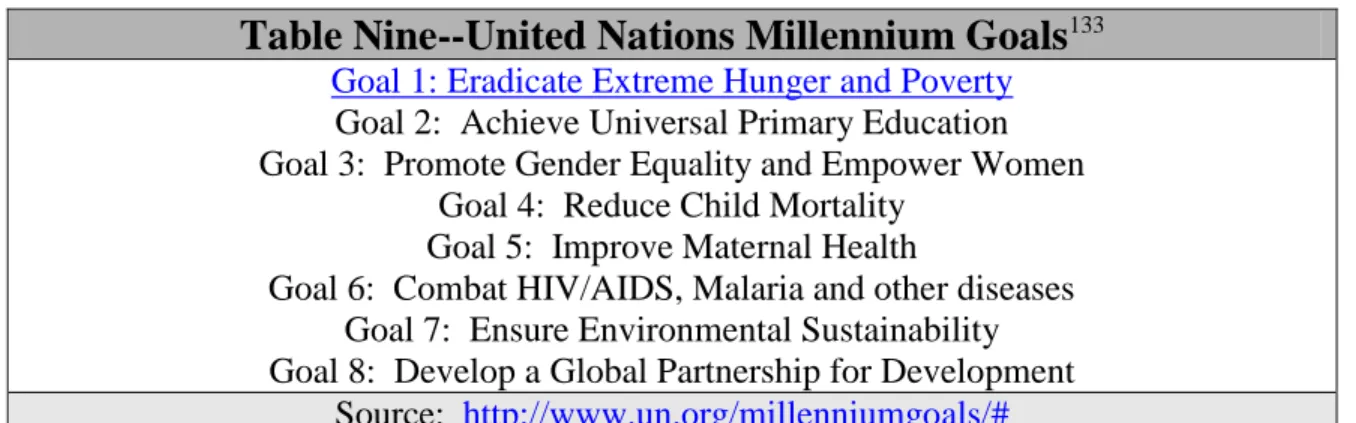
Page 78—Table Nine—United Nations Millennium Goals
Page 79—Table Ten—List of Contraceptive Methods Currently Available Page 80—Table Eleven—Review of Literature Searches
Page 81—Table Twelve—South American Population Statistics Page 82—Table Thirteen—Original Puca Chicta Survey in English Page 84—Table Fourteen—Results from Original Puca Chicta Survey Page 86—Table Fifteen—Definitions
Figures
Page 18—Figure One—Determinants of Family Planning Use Page 21—Figure Two—Personal Barriers to Using Contraception
Master’s Paper Description
This master‟s paper describes a research project designed to evaluate a program that sought to educate rural Ecuadorians of indigenous origin and increase their use of family planning methods. Using survey methodology, the research compares utilization of family planning methods in a rural indigenous Ecuadorian village exposed to a multi-faceted family planning intervention versus villages not exposed to the intervention.
This master‟s paper satisfies the requirements of the Master‟s of Public Health in the Health Leadership Program at the University of North Carolina at Chapel Hill by describing a research design complete to the data collection phase including construction of a new follow-up survey to be used as a data collection instrument, plans to improve the measurement instrument, and methods of analysis. The author describes the need for family planning, reviews the current literature, discusses the design of the research study, and outlines the proposed manuscript to be submitted for publication. The first reader of this master‟s paper is Dr. Anthony Viera of the Department of Family Medicine and the Health Leadership Program in the School of Public Health. The second reader is Dr. Trude Bennett of the Department of Maternal and Child Health in the School of Public Health.
The Need for Family Planning
Population growth
Following millennia of slow and erratic growth, the population of the planet finally reached one billion people around the turn of the 20th century.1 The number of people had previously remained low almost exclusively due to high infant mortality rates and short life spans. After the Second World War, however, the world experienced an explosion of population growth as scientific advances reduced the previous moderators of population with improvements in vaccines, antibiotics, and public health measures such as sanitation and clean water.2 Fewer children were dying and adults were living longer.3, 1, 2 While these developments were
welcomed as blessings on the individual level, the resulting population boom became a source of concern for many governments and prominent citizens throughout the world.3
dropped by more than half.5 Even with this substantial decrease in the number of children born to each woman, worldwide population growth was still 1.3% per year in 2005.5, 9 This growth rate equates to adding 80 million people, or a country the size of Viet Nam,10 each year. Almost all of this growth will be added to the world‟s poorest countries,11 straining already pressed institutions and resources.7, 9, 12
While many countries throughout the world have made impressive strides in reducing population growth rate,4 the declines have been erratic and high fertility remains present in numerous places.7, 12 The World Bank reported that almost fifty countries still had fertility rates over 5.0 live births per woman.13 Moreover, even in countries that have succeeded in lowering their overall fertility rates, many subpopulations continue to experience high levels in their fertility.8, 12 Table One describes selected fertility rates throughout the world.
Table One—World Fertility Rates
Area Fertility Rate in Live Births per Woman
Source
Entire World 2.59 14
Developed World 1.6 15
United States 2.1 14, 16
Developing Nations 3.2 15
Latin America 2.95 16
Ecuador 3.27 17, 18
Amazon region of Ecuador 4.2 18
Indigenous Populations of Ecuadorian Amazon
8.0 19
Puca Chicta, Napo Province, Eastern Ecuador
>10.0 20
The Need for Family Planning on the National Level
Today, almost every nation on the planet has some sort of national family planning effort,1 though the efforts and expenditures of each government vary widely.21 Some programs were initiated and run by the government in a top-down manner, while others began as grassroots movements by individuals and private organizations that later either became government
controlled or enjoyed the tacit support of national institutions.3 The role of international aid and non-governmental organizations were pivotal in the development of family planning programs in the developing world. Similarly, the reasons for the development of family planning programs also varied, with some nations like those in East and South Asia concerned about rising
population growth while others, such as seen in parts of Latin America, were more preoccupied with maternal and child health.1, 22 Whatever the starting point, most family planning programs recognized that the consequences of high fertility could be felt on many levels of society, and that the unprecedented changes in population levels adversely effected national development.1
Many population theorists argue that high growth rates in population can deny
Family planning and limited population growth have a strong role in the reduction of poverty.11 Lower fertility rates allows for a greater ability for investment in national policies that can lead to increased economic growth.22 Fewer individuals consuming resources can lead to economic growth by enhancing the health, education, and productivity of the population.7, 11, 22 Some analysts have pointed out that huge economic gains made in East Asian countries such as South Korea, Singapore and Taiwan were fueled by high savings rates which resulted from drops in fertility rates and a subsequent lower burden created by fewer dependent children.7, 22
However, drops in fertility must be accompanied by appropriate macro-economic policies for widespread decrease of poverty to be felt throughout the population.7
The large population densities which are an eventual consequence of high fertility rates also can have severe consequences on the natural environment.11 More people lead to
expanding mega-cities as people move from rural to urban areas in search of economic opportunities. Rising populations can also lead to dense settlement and the development of human infrastructure in previously rural areas. Further, rapid growth is difficult to control, and leads to poorly organized systems which are inefficient in meeting the needs of the people.25 Uncontrolled growth increases stress on the ecosystem and can result in shortages in critical supplies such as agricultural output and fresh water.26 More people strain natural resources and speed environmental degradation, causing a wide array of damages ranging from adverse health effects to global warming.7, 27
effects of rapid population growth can be destabilizing to governments, especially when coupled with poor economic management, stagnation, and corruption. Indeed, many of the initial efforts to promote family planning were influenced by governments‟ and donors‟ fear of political unrest caused by overpopulation.3
The Need for Family Planning at the Personal Level
On an individual level, one central argument in favor of family planning efforts is the benefit that lower fertility brings to the health of both the mother and her children.12, 28 Women in developing countries have a risk of dying in childbirth that is anywhere from ten to one hundred times higher than women in developed nations.29 It has also been shown that improved reproductive health services and family planning programs lead to fewer induced abortions,11, 30-32
and a concurrent drop in maternal mortality from complications of these abortions.33 Babies
in the developing world die at a rate eight times than that seen in developed countries.34 All told, increased child mortality cuts twelve years off the lifespan of populations in the developing world. Lower fertility also produces healthier children by increasing birth spacing, reducing the numbers of young mothers, and decreasing family size.35 With fewer children, families would have more capability to better care for and have more resources to educate their offspring. Education is one of the leading predictors of health outcomes for children.12
In recent decades, many women‟s rights movements have advocated for family planning as a way to advance women‟s causes.22
In fact, their argument has reached the highest levels as gender equality and women‟s empowerment12
were incorporated into the United Nations Millennium Goals.* Women‟s rights advocates argue that women with higher use of
contraception also have greater influence in their family and more financial independence and security.30 Without improved family planning services, many women and young girls,
especially in poor and marginalized communities, will remain trapped in a lower social status and not be able to better their lives or escape the cycle of poverty.12, 36
While national concerns of rapid population growth, adverse environmental impacts, and public health are compelling benefits of lower fertility rates on a societal level, these needs are overshadowed by the personal desires of each woman or couple. The fact is that millions of people in developing nations want to have smaller families and space their children further apart.3, 12, 21, 31 Although reasons vary, couples are motivated by many forces such as family finances, health concerns for the mother and offspring, desire for education and a better future for their children, and a woman‟s desire for control over her reproduction.37, 38
What is more, the desire for family planning exists throughout the developing world, even in many populations that had been considered unlikely due to religious or cultural beliefs.31, 39, 40 Further, many studies have shown in many populations throughout the developing world that a gap exists in the number of children that women prefer and the number of children actually born.31, 37, 38, 41-43 In fertility surveys that inquired about family preferences, “significant proportions of women report having had unwanted births and substantial numbers of women who wish to limit or space their childbearing” but were not practicing contraception.44
The desire of women from many different societies to have fewer children represents an unmet need for family planning services.
The History of Family Planning
National Family Planning Programs
rates and short life spans.1 One example was found in several nations of Western Europe, which for centuries delayed or forewent the marriage of their women to maintain low birth rates.46-48 Another example was seen in eastern Asia in times of crisis with large scale infanticide to protect families from starvation.49 However, these examples were not the norm in the world, as most societies did not have widespread programs to regulate fertility, and natural mortality constrained population growth.
Fertility rates began falling in the industrialized nations beginning in the late eighteenth century, with France leading the way,45, 50 and the rest of Western Europe and the United States following some decades later.2, 45, 51 It is interesting to note that no national or even private family planning programs were in existence, and much decline in fertility was caused by a complex mix of increased education for children, industrialization, and social and behavioral changes.2, 22 By the early decades of the 1900‟s, many developed nations had reduced their fertility rate to the point of having an extremely low or no net population growth.45 However, the nations that came to be called the “developing world” still experienced high fertility.1, 3 Moreover, following the Second World War, advances in medical care such as the introduction of antibiotics and improvements in public health drastically reduced mortality and expanded life spans throughout the world.45 The combination of high fertility and lowered mortality led to a huge population explosion.2
Many governments in developing nations as well as concerned members of elite
supporting family planning for a variety of reasons, namely reduced population growth, as well as health reasons like reduced maternal and child mortality.53 Family planning programs expanded for several decades, even in populations previously considered unlikely due to religious or culturally conservative institutions.54 Such was the interest on the governmental level that three international conferences on family planning were held to define world
population policies, strategies, and goals.55 By the 1990‟s, almost every nation on the planet had some sort of national family planning policy and program in place.3
Family planning programs have been as diverse as the countries in which they operated.56
Some programs were established through a top-down approach by governments worried about the destabilizing effects of overpopulation. Others were private efforts meant to improve
maternal and child health.3 Some nations‟ efforts were hindered by entrenched institutions such as the church or medical establishment, while in other nations these same institutions took the lead in developing family planning.57 Further, funding was always an issue, as initially most programs were supported by international assistance, predominantly from the United States.45 Also, quality varied as programs struggled to gain experience and improve their services.
Given the projected growth of Earth‟s population into the rest of this century, the rationale for family planning programs is still evident.
Personal Family Planning Practices
Up until the mid-twentieth century, the deliberate use of contraception and birth control was limited and practiced only in a small percentage of couples in the developing world.1 Up until that point, there had been only scattered reports of sporadic use of traditional methods to prevent pregnancies. The development of newer and more effective methods of contraception, along with large-scale production and mass marketing, made their use more available to a large number of couples.
It was not until the 1960s that widespread birth control was available, and up until that time few couples in the developing world used modern contraceptives.3 The first hormonal contraceptive pill was developed and approved by the FDA in 1960.60 Intrauterine devices entered the scene in the 1970s. Hormone injections followed in the 1990s. Along with these methods came spermicidal creams, vaginal barrier methods, implants, and significant
technological improvements in existing methods. Improvements in surgical techniques made sterilization for both men and women a viable option for many people.
Thus, by the beginning of the 21st century, couples had a large menu of choices for their family planning needs. The World Health Organization listed nineteen classes of contraceptive options, within which was a wide variety of alternatives designed to fit the needs of individual women and men within diverse societies.* Many analysts of fertility and family planning trends state that having many options in contraception is one of the crucial component to acceptance of family planning by individuals and to overall success of any large family planning program.1, 3, 4, 30, 61
The Determinants of Family Planning Utilization
The Great Debates
The subjects of family planning and population growth have caused a great deal of discussion in the field of population policy as well as among social scientists. Indeed, the debate about population growth began over two centuries ago when the Reverend Thomas Malthus predicted increasing populations would outstrip natural resources and would result in devastating famines and natural disasters.62, 63 His arguments were popular in the industrialized nations.3 Countering Malthus was the Marxist point of view that population growth in and of itself was
neither good nor bad, but the perceived ills blamed on population growth were in fact caused by misdistribution of wealth and power.2 These nineteenth century debates persisted into the next century and greatly influenced the development of international family planning and population policies.3, 55
The family planning movement had its origins from two schools of thought. The first was the birth control movement which was primarily focused on the rights and empowerment of woman and her well-being. This movement began early in the twentieth century and was
pioneered by Margaret Sanger, among others, who opened the first birth control clinic in 1916 in Brooklyn, New York.64 The second movement took its social philosophy from Malthus. Led by such notables as John D. Rockefeller III, this population control group was less concerned with the rights of individuals than with the well-being of society as a whole which they viewed as threatened by the surge in human numbers, especially in the developing world. For many years, there was much distrust and even acrimony between the two camps. Following the Second World War, both sides converged, agreeing that voluntary and independent reproductive control could lead to a reduction in population growth rates and support individual freedoms and
reproductive rights. This convergence led to the development of the modern family planning movement.3
the 1990‟s, family planning programs were so commonplace that the issue of “Whether” to limit population growth or have family planning was essentially irrelevant.22, 65
The next great debate on family planning was centered on “How” to control the
unprecedented growth in population.55 In the 1960‟s and 1970‟s, some in the family planning camp argued there was huge unwanted fertility throughout the world and that couples wanted to have smaller families. They advocated that increased information and services for contraception were needed to satisfy the unmet demand for family planning and would result in overall reduced fertility rates.66 The other side composed mainly of social scientists countered that high fertility was a natural response to poverty and that money would be better spent in economic
development rather than directing resources to family planning programs.1 In their view, these programs only provided easier access to contraceptives for people who would already have found a way to limit their fertility even without the programs.67 Arguments supporting either side have raged for nearly four decades and continue in policy circles to this day, with past research producing widely varying estimates of the impact on fertility by organized family planning programs. Eventually the debates moved toward a consensus that both socioeconomic development and family planning are important to reduce population growth.1, 22, 55, 68
Determinants of Fertility Regulation and Family Planning Use
influence fertility and rates of contraceptive use.71, 72 These factors can be broadly categorized into four groups: economic situation, demographic variables, socio-cultural influences, and access issues.7, 39, 42, 61, 73-75
Figure One--Determinants of Family Planning Use
The relationship of these factors both with family planning and with each other is complex and they also overlap.76 Moreover, the direction of causality is often confused and
Education, particularly of the women
Location of urban or rural setting
Age of first marriage
Number of children both live and dead the woman has had
Woman‟s experience with abortion
Economic Situation
Income levels of family
Economic development of community
Presence of old age social security system
Work status of the husband
Employment opportunities for the women outside the home
Perceived economic benefits of children
Religious beliefs
Social fertility desires
Familial acceptance
Husband‟s reproductive preferences
Geographic proximity
Knowledge of family planning services
Availability of a wide variety of contraceptive products
Service quality
Cost
Rate of
Family
Planning
Utilization
Demographic Variables
Socio-cultural Influence
Economic Situation
intricate, and there is often the argument on which came first. Although the influence of these variables has been the subject of intense debate and research, only a brief summary is presented here. The economic factors proposed to influence rates of family planning use can be divided into societal, familial, and individual woman levels.1 These include average income and
economic development in the community, the presence of an old age social security system, the types of available jobs, the work status of the husband, levels of household poverty, and
especially employment opportunities for the woman outside of the home.77 Many demographic characteristics have been suggested to be associated with family planning use, including
education, particularly of the woman, location in a rural and urban setting, and specific
characteristics of the woman such as her age at marriage/union, number of children both living and dead, and her experience with abortion. Social and cultural factors can have an especially strong influence on changes in family planning use.68 Religious, social and familial acceptances, as well as the husband‟s reproductive preferences are critical.61, 68
Barriers to use of family planning
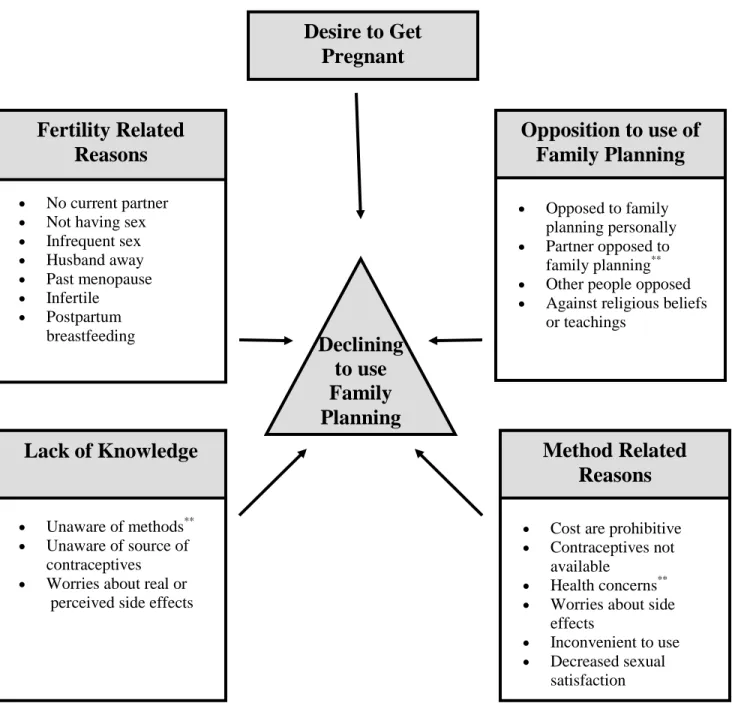
Barriers to family planning are defined as the constraining factors reducing a couple or woman‟s access to the contraceptives or the availability of services needed to make appropriate reproductive choices and decide whether and when to become pregnant.36 Survey results over the last three decades have consistently reported a gap between the number of children that women want to have and their actually fertility levels.71 Overcoming these barriers would allow many of the millions of women in the developing world who wish to regulate their fertility to achieve their desired number of children.
The barriers to family planning are many.31, 36, 61 A recent review of the literature identified limited contraceptive method options, medical and legal restrictions, provider bias, misinformation, women‟s status and financial costs to be obstacles for women to obtain appropriate family planning.36 Another study cited the four key reasons as being: insufficient knowledge of contraceptive methods and their use, social disapproval, fear of side effects, and women‟s perception of husbands‟ opposition.22
Figure Two--Personal Barriers to Using Contraception
**=Primary Concerns as stated by women
Additional Barriers within the Indigenous Population
Indigenous populations in many nations face additional barriers not experienced by other segments of society.82 These obstacles inhibit their ability to utilize the full range of family planning services available in their country.83 Some of the barriers are caused by outside forces
Declining
to use
Family
Planning
No current partner Not having sex
Infrequent sex
Husband away
Past menopause
Infertile
Postpartum breastfeeding
Fertility Related
Reasons
Cost are prohibitive
Contraceptives not available
Health concerns**
Worries about side effects
Inconvenient to use
Decreased sexual satisfaction
Method Related
Reasons
Economic
Situation
Opposed to family planning personally
Partner opposed to family planning**
Other people opposed
Against religious beliefs or teachings
Opposition to use of
Family Planning
Unaware of methods**
Unaware of source of contraceptives
Worries about real or perceived side effects
Lack of Knowledge
while some arise because of inherent characteristics of the indigenous people themselves.84 The difference in family planning use seen in indigenous groups contributes to the health disparities experienced by these populations.85
As noted above, socioeconomic status, education and where one lives are associated with family planning use. Indigenous people are more likely to live in poverty.86 Women from the more affluent segments of society are more likely to use contraceptives than the poorest women.31, 87 The poverty is amplified because the indigenous people, especially indigenous women, have less access to formal education and have higher rates of illiteracy. Lastly, the indigenous tend to live in more rural areas and have less access to family planning services.88, 89
Personal beliefs of indigenous people also raise barriers to contraceptive use.85 Throughout their history, indigenous peoples, especially in Latin America, have experienced social and political oppression from the dominant populations,90 which has translated in contemporary times to a deep-seated suspicion and outright distrust of many western ideas and institutions, the family planning movement included.89, 91 In addition, a number of indigenous populations are extremely conservative and display strong religious and other personal beliefs which run contrary to the family planning ideals.92,85 Many indigenous men view large families as a source of pride and respect in their communities and are also adamantly opposed to family planning because of fears of infidelity on the part of „their women.”41, 93 Finally, indigenous women tend to be less educated, are less likely to be bilingual, and more likely to rely on their partner for family planning decisions.41, 93, 94
Amazon region were not even measured in public health surveys in Ecuador as few as 20 years ago.95 The health care system is unresponsive to indigenous needs as few health care workers are bilingual, making effective communication extremely problematic.96 This problem is exacerbated by the fact the indigenous are a heterogeneous group and speak numerous languages—23 distinct languages are spoken in Guatemala97 and sixteen in Ecuador. Few indigenous staff members are employed in either the health care system or family planning programs. Subsequently, indigenous clients suffer discrimination, misinformation, and hostility from family planning providers. Further, much material is not presented in a culturally sensitive or appropriate manner.73, 98 Uptake of family planning practices by the indigenous communities has lagged far behind the rest of society, even though studies suggest desires on the part of indigenous women to have similar numbers of children.17, 18
Description of Intervention Village
93In 2001, the village of Puca Chicta solicited the United States Peace Corps * to place a volunteer in their community for a period of two years. The village leadership indicated several reasons for their request, and specifically solicited assistance in the following areas:99
Educational assistance in the elementary school
Addressing health concerns such as malnutrition, poor dentition, and high prevalence of diarrhea in young children
English
Economic development
Family planning education
In reference to the request for family planning education, village elders noted the village had historically had a high fertility rate of over ten children per woman and had also experienced an unacceptable infant mortality rate.20, 93
The family planning intervention took place in the indigenous Quichua village of Puca Chicta de Andres Andi. The village was founded in 1961 in a previously remote area on the north shore of the Napo River in the Amazon Rain Forest Basin of eastern Ecuador. It is located in the province of Napo, county of Tena, district of Puerto Misahualli. It is about one hour from the county seat, three hours to the provincial capital of Tena, and ten hours to the national capital of Quito.
The town of Puca Chicta was comprised of an indigenous Quichua population. Although the history of these people was unclear, local scholars believe that the Quichua peoples of the Amazon Basin were possibly the descendents of people of the Incan Empire who had fled to the area before the Spanish conquest five centuries before.100 The people of this area maintain their own language and many traditional customs, though most have adopted western dress and many except the elderly speak at least some Spanish.
The name Puca Chicta means the “red branch of the river” in the local language. The founder, Andres Andi, selected this location for its prosperous hunting and the abundant fishing. Early settlers dedicated themselves to growing corn, plantains and cassava for sustenance, and panning for gold, selling timber, and growing cacao for income. Originally, the entire sector was called Puca Chicta, but as more people arrived, separate villages broke off and were
incorporated, including one of the control villages in the research study, Katchi Wañushka (“Dead Salt”).
Although geographically isolated and difficult to reach, Puca Chicta was the largest and most accessible village in the sector and in the subsequent decades experienced outside
early 2001, the access to the village was still only by canoe on the Napo River or an arduous one hour hike through the lush tropical forest. However, in early 2002, a rough gravel road was completed to the county seat of Puerto Misahualli which was accessible to four-by-four trucks, a trip which lasted almost one hour. Puca Chicta had an elementary school building, a multi-purpose educational building, a day care center, a soccer field, a cement basketball court, and an evangelical church with an associated children‟s school program. Most people were primarily subsistence farmers, selling their produce for money in the county seat, with a smattering of other endeavors to earn income.93
Description of the Interventions
Following approval of the application made by the community, the Peace Corpsplaced a volunteer in the village of Puca Chicta to work in the fields of rural health and community development. In collaboration with the people of the village, the volunteer participated in numerous projects pertaining to family planning, health, education, economics and community development. It should be noted that a critical element to the volunteer‟s efforts was the deep integration into the community. The volunteer was an integral member in all aspects of society, and was even elected onto the town governing council. Not only did the volunteer work on the projects shown in Table Two on the following page, but also harvested family crops, helped build their houses, went to the town church, helped bury the deceased, played with children and participated actively in all community social activities. Moreover, the volunteer extended an extra year past the normal 24-month service performed by Peace Corps volunteers to continue the projects that had been initiated to insure their long term sustainability. The deep
Table Two—Activities, Projects and Interventions Performed by Peace
Corps Volunteer from 2001 through 2004
Family Planning Activities In Study Village of Puca Chicta93, 101
Health and family planning community workshops School based sexual education classes
Individual family planning sessions
Family planning education sessions for village women Development of Community Dispensary
Lay health promoter training
Village level health and family planning survey
Other Activities Conducted In Study Village of Puca Chicta
Development of a Community Bank with micro-loan system Initiated and assisted income generating projects
Improvements on community water system Health and hygiene classes in schools and community
Academic classes including English
Non-formal education activities with children and youth Class and activities increasing proper garbage disposal
Youth leadership building activities including workshops and field trips Painted ten artistic murals in village with youth groups
Created library in high school with 200 books
Obtained scholarships to fund high school education for four girls Developed numerous family gardens
Nutrition classes in day care center Cooking classes for mothers and children
Obtained didactic materials and educated day care workers Assisted in village infrastructure development projects
Led repair and re-painting of education buildings Planning committee for community events Helped plant and harvest village members‟ crops Helped in housing construction for numerous village members
Participated in community events such as soccer team, church activities, projects Played every single day with village children
Activities Conducted in Control Village of Katchi Wañushka
Health and family planning community workshops (in conjunction with Puca Chicta) School based academic classes
Lay health promoter training
Participated in village infrastructure development projects
Activities Conducted Outside of Study Villages
Four Teacher Training Workshops in Provincial Capital (100 teachers attended, including from Puca Chicta) Painted six artistic murals of various health themes with youth
(two teenagers from Puca Chicta assisted in painting)
Four leadership workshops for youth—included four youth form Puca Chicta Gave family garden growing workshops
Practical Framework of Puca Chicta Interventions
The initial family planning interventions were not based on a theoretical framework, but rather were developed from a community needs assessment and Peace Corps training modules.* Different activities were developed as collaborations between the Peace Corps volunteer, the village lay health promoters, community leaders, non-governmental organizations, and Ecuadorian health care workers, as well as women and youth from the village. Although a formal theoretical approach was not planned in advance, the multi-factorial interventions utilized in Puca Chicta incorporated many of the elements that have been identified by the literature as important components to a successful family planning program.85 Using the variables described in the five articles from the systematic search of the literature as well as other sources, we formulated the Practical Considerations Framework for a Successful Family Planning Intervention which was used to illustrate the multi-factorial interventions performed in Puca Chicta. The important influencing factors are described in Table Three, along with a note on how each factor was addressed through the interventions in Puca Chicta.
Table Three--Components of Family Planning Interventions
For a Rural Indigenous Population Based on Literature Review
Factor Source How addressed
Develop trust and commitment 6,7,10 Volunteer lived in village for three years, fully integrated member of community
Utilize local leadership 1,2,6,7 Planned interventions with village leaders, teachers, community members
Accommodate religious and political concerns
6,8 Discussed interventions with both groups, solicited their advice
Tailor intervention to community needs
2,3,4,5,6,7,8,9,10 Villagers and leaders instrumental in all aspects of interventions, adjusted designs, presented materials in various ways
Insure cultural appropriateness 6,8,9,10 Spoke Quichua, worked with local people
Educational segment 1,8,10 Education was the key element of all interventions, we utilized wide variety of educational techniques and modules
Utilize modern forms of
communication such as TV, radio
1,7,8 Did not address
Address all community concerns, i.e. health worries and myths
8,10 Solicited feedback, addressed all concerns
Involve women 6,8,10 Many interventions given just to women Involve men 3,6,8 Men incorporated into most lessons, used male
volunteers
Involve youth 4,5102 Age-appropriate activities for children and teenagers
Bilingual local promoters 1,6,10 Used village health promoters for education and interpretation
Educate health care staff in cultural sensitivity
2,3,7,10 Recruited Ecuadorian physician to participate in several activities
Provide a wide range of
contraceptive, service and location options
7,1,3,8 Only provided condoms and natural methods— Provided in home personal counseling, group counseling
Link family planning to other health services to reduce stigma
7,8 Most workshops had an overriding health theme
Incorporate traditional health practices
6,8 Local elders discussed natural medicines and methods
Use a multi-factorial approach 7,8 Check, did that Experiment and adjust to needs as
they come up
3,6,7,8 We went through much trial and error
1= Promoting Birthspacing Among Maya Quiche92 2= Evaluation of Community Education Interventions in Sexual and Reproductive Health Services in Urban-Marginal Areas of La Paz, Bolivia103
3=Bringing Family Planning to Isolated Ecuadorians89 4= Effects of a community-based sex education and reproductive health service program on contraceptive use of unmarried youths in Shanghai104
5= Impact of accessible sexual and reproductive health care on poor and underserved adolescents in Managua,
Nicaragua: a quasi-experimental intervention study102
6=Family Planning Among Indigenous Populations84 7= The Demographic Impact of the Family Planning— Health Services Project1
Systematic Review of the Literature
A systematic review of the literature was performed to examine past and current programs addressing family planning issues in the developing world. We were especially interested in identifying quality evaluations of effectiveness of these programs, especially those studies which examined marginalized or indigenous populations. The review process is
described below.
Databases and Search Terms*
The MEDLINE/PubMed database was searched using the following MeSH terms and keywords: (1) “("Family Planning Services" OR "Natural Family Planning Methods" OR
"Sex Education") AND ("Health Care Surveys" OR "Health Surveys") (2) ("family planning services"[All Fields] OR Family Planning Services[Text
Word] OR "Natural Family Planning Methods"[All Fields] OR "Family Planning Policy"[All Fields]) AND "Program Evaluation"[All Fields] AND "Developing countries"[All Fields])
The POPLINE database was searched with the following terms:
(1) "interventions" & (="family planning" / ="contraceptive usage")
A search of LILACS (Spanish acronym for Latin American and Caribbean Health Sciences Literature) with the following:
(1) “family and planning and programs and evaluation”. A search of the Cochrane Library with the following terms:
(1) “family planning”
Two searches of the United Stated Agency for International Development (USAID) with the following terms:
(1) “Family planning programs”
(2) “Community Based Family Planning”
In addition, we enlisted the professional assistance of the librarians at both the Carolina
Population Center (CPC) of Chapel Hill, NC and Family Health International (FHI) of Research Triangle Park. Further, to identify other relevant literature, the reference lists of identified articles and books were hand searched. Additional sources from supplementary searches and hand searches of reference lists were evaluated. Finally, expert opinion was solicited from officials at the Carolina Population Center, Family Health International, the United States Peace Corps, the Population Council, the World Bank and the World Health Organization (WHO).
Table Four—Inclusion and Exclusion Criteria for Literature Search
Inclusion Criteria Exclusion Criteria
Studies of Family Planning Interventions Studies of Sexually Transmitted Infections Study setting in developing world Study setting in developed nations
English or Spanish Other foreign languages
Study includes marginalized, indigenous or low-resource populations
Interventions directed at wealthy populations, sex workers, post-partum women only, and
emergency contraception Observational studies with or without a
comparison group, survey studies, ecological studies
Editorials, letters, non-human studies, review articles
Primary outcomes which are related to family planning, fertility rates, contraception use
Primary outcomes unrelated to family planning
The review of the literature involved several steps. First, the titles of all citations were hand-reviewed and those that did not apply in any manner to family planning as well as
duplicates and citations whose full text was unavailable were eliminated. Second, the abstracts of the remaining citations were analyzed and included or excluded according to the defined criteria. To avoid elimination of potentially useful articles, the review erred on the side of inclusion of reviewed abstracts. If an abstract met the inclusion criteria, the full text article was read and reviewed for inclusion or exclusion from the study. Articles passing the
inclusion/exclusion criteria were then subjected to a quality rating and included in the review tables below.
Evaluation of Study Quality
inclusion/exclusion criteria), the use of an adequate control population, the description of the family planning intervention, the quality of the data collection and analysis of appropriate outcome measures, and the relevancy of the results (complete with p-values or 95% confidence intervals). The quality ratings for each category were converted to a 0-3 point numerical scale, where 0=poor, 1=fair, 2=good, and 3=excellent. An overall quality score (0-18) was produced for each study.
Results of the Systematic Review of the Literature
In total from all sources, 1,601 citations were gathered. A total of 194 duplicates were eliminated. Also, the full text or abstract could not be retrieved for 28 citations, which were eliminated. Another 987 were deemed ineligible upon review of their titles. The abstracts of the remaining 392 citations were analyzed and included or excluded according to the specific criteria listed above. Of the abstracts read, 313 did not meet the inclusion criteria, mostly because they dealt exclusively with sexually transmitted infections. Of the remaining 79 citations, upon review of the full text, only five were judged eligible for selection and inclusion in this literature review. Many of the articles which did not meet the inclusion criteria were subsequently used as
Figure Three—Flowchart of Systematic Review of the
Literature
Discussion of the Systematic Review of the Literature
Since the inception of organized family planning programs, billions of dollars have been spent on such efforts.22 Searching the literature for family planning yielded an incredibly large volume of literature on the subject. However, despite the importance of family planning, there have been extremely few published articles pertaining to evaluations of family planning
1,601 Citations found from all sources
392 Abstracts reviewed 1,209 Citations excluded during title
review
194 Duplicate Citations
28 Citations without abstracts or text
987 of Titles did not meet inclusion/exclusion criteria
79 Full texts reviewed 313 Did not pass inclusion/exclusion
criteria
5 Citations used for comparison and critique
programs. James Phillips, population scholar and former director of the Population Council, noted the surprising dearth of information on community level family planning programs, especially those geared towards rural, indigenous, low-income or otherwise marginalized
populations.107 Even though experimental designs provide the strongest evidence on the efficacy of an intervention, few family planning programs utilize research designs for the evaluation.108
Our search yielded five studies, which are described in Table Five. Only one of the five articles dealt specifically with indigenous populations, while the rest pertained to other
marginalized and hard-to-reach populations who had not previously been the recipients of established family planning interventions. The quality of the studies varied from poor to excellent. A quality score evaluation is given on page 36 in Table Six.
All five studies had similar one characteristic and several variations. The common theme seen in all was the importance of training local people to perform all types of family planning services. However, in all other regards, the studies varied greatly. Benalcazar integrated family planning with other health initiatives for indigenous people, though they found this strategy not be as effective as volunteers who promoted a single theme. Betrand showed that it was possible to work with indigenous groups and that there was an interest in family planning in this
Table Five—Studies of Family Planning Interventions in Developing Nations
Study Authors, Year
Title of Study Study
Location Target Population Control Population Description of Intervention Outcomes measured
Results Comments Quality
(0-18) Benalcazar R,
et al. 1989105
Delivery of Family Planning and Health Services in Campesino and Indigenous Communities in Ecuador 85 rural communities in the mountains of Ecuador Rural indigenous populations Two intervention groups were compared Volunteer health promoters distributed and educate either family planning or oral rehydration therapy during the 1st 6 months. Integrated the 2 interventions in the 2nd 6 months.
1.Contraceptives distributed 2. Oral rehydration salt packets distributed 3. New users of contraceptives 4. Continuation rates
Described number of home visits and educational talks which took place, enlisted 1,475 new acceptors (or 16.2% of women 15-49 of age, promoters who made home visits had better success
Lack of a control group limits this study. Did show that volunteers
performing home visits was more effective. Also stated combining the interventions reduced results for each one
8
Betrand J, et al.
199992
Promoting
Birthspacing Among Maya Quiche of Guatemela The department of El Quiché, Guatemala Predominantly Maya population in eight municipalties in southern E. Quiché
None— comparisons were done on a pre-test/post-test basis
1. Increase #‟s of local health promoters 2. Information, education and communication activities
1. Modern Contraception Knowledge and use 2. Birth-spacing approval 3. Change in # of volunteer health promoters
1. Increase in contraceptive use from 5.2 to 18%
2. More women accepting of birth spacing benefits
Used pre and post-test survey design for data collection 11 Castro Mantilla MD and Loayza Antezana M 2004103 Evaluation of Community Education Interventions in Sexual and Reproductive Health Services in Urban-Marginal Areas of La Paz, Bolivia
Poor urban and
marginalized rural areas around La Paz, Bolivia
2 Health Clinics in two poor areas near La Paz
2 Health Clinics in two poor areas near La Paz
1. Community education sessions 2. Health center training 3. Development of appropriate education materials for distribution
1. Health clinic visits
2. Pap smears 3. Use of Contraception
Improvement for all outcomes in both groups, with much greater increases in the intervention group
1. Multi-faceted approach targeted at both health system and at marginalized population, aimed at men, women, and adolescents 2. This area is more urban and has more established resources
14
Phillips JF, et al.
1982109
The Demographic Impact of the Family Planning—Health Services Project Matlab, Bangladesh Geographically and culturally isolated rural inhabitants of river delta area—70 villages
79 villages in area
1. Intensive training of local female village workers 2. Extensive supervision by government agent
1. Contraception use
2. Fertility Rates
Increase contraception from 10 to 34%. Decrease in fertility rates.
More contraception choices led to higher coverage rates
15
Shrestha S 2002 106
Increasing contraceptive acceptance through empowerment of female community health volunteers in rural Nepal Kakani Village, Central Rural Nepal 17 Female Community Health Volunteers (Health promoters)
None An empowerment
training for health promoters using participatory action research and reinforcement mechanisms Contraception knowledge and use pre-and post-intervention in 241 Currently Married Women of Reproductive Age
Knowledge increased from 70 to 99%
Use increased from 0 to 54%
Only selected women who were previous non-users of contraception
Table Six—Quality Ratings for Studies Used in this Systematic Review
Study Authors, Year
Source population Adequately Described?
Study Population representative of source population?
Adequate Use of Appropriate
Control Population?
Adequate description of Family Planning
Intervention?
Pre and post intervention data
collection identified?
Appropriate analysis and presentation of
results?
Overall Quality Score (0-18)
Benalcazar R, et al. 1989105
2 2 1 1 1 1 8
Betrand J, et al. 199992
2 1 0 2 2 2 11
Castro and Loayza 2004103
3 2 3 3 2 1 14
Phillips JF, et al. 1982109
3 2 2 2 3 3 15
Shrestha S 2002106
1 1 0 3 2 2 9
Implications of the Systematic Review of the Literature
The lack of quality literature highlights the need for well-designed, research based evaluations. Even though the review of the literature identified only one relevant study which provided an evaluation of excellent quality, all five articles cited did provide insight into possible characteristics which lead to a successful family planning program. Moreover, the review of the literature proved to be fruitful in that it provided a base of understanding the history, policy, and efforts in the field of family planning. The fact that there are almost no quality evaluations of relevant family planning programs in the published literature is an indication of the utility of our proposed research project in evaluating the interventions which took place in Puca Chicta.
The Manuscript for a Study of the Long Term Effects of a Multi-Faceted
Family Planning Intervention in an Indigenous Village in Rural Ecuador
The following sections include the proposed manuscript for the research study designed to evaluate the real, long-term effects of the family planning intervention instituted from 2001 through 2004 in the village of Puca Chicta, Ecuador. Upon completion of data collection, this manuscript will be submitted for publication in a peer-reviewed journal.
Introduction Section of the Manuscript
According to the World Health Organization, family planning refers to the ability of couples and individuals to anticipate and attain their desired number of children with the desired spacing of their births.110 Despite important advancements in both the development of safe and more effective contraceptive methods111 and the implementation of widespread national family planning initiatives in the last half-century, much work remains to be done, especially in the developing world.112 While most developed nations have fertility rates at or below the replacement level of 2.1 births per woman, developing countries experience average rates of almost four children per woman.7 Whereas in the 1970‟s, fertility was uniformly high across most countries,2 today the fertility rates in developing nations vary widely.34, 94, 113, 114 Even within a single nation huge differences in fertility rates exist.31, 115 Indigenous populations tend to have higher fertility rates than other segments of society.84, 104 Interventions targeting hard-to-reach, high-fertility populations116 have the potential to address huge unmet needs for family planning.12, 89
proved difficult to reach for family planning services.117 84 However, recent studies seem to indicate that there is a significant desire on the part of women in the developing world,38 including indigenous populations, to reduce the number of children per family.22, 36
Ecuador is a key target for family planning interventions because it has one of the highest fertility rates in Latin America, a large indigenous population,90 and the highest population density* in South America.14 According to a national reproductive health survey of 2004, ENDOMAIN, the average fertility rate in Ecuador was 3.27 live births per woman during her reproductive life; however, in the geographically isolated eastern Amazon forest,11 the average rises to over 4.2, with reports of fertility rates exceeding 8.0 children per woman of indigenous origin.19 The ENDOMAIN study also reported that women in the Amazonian region, including indigenous women, desire to have only three to four children, indicating an urgent unmet need for family planning services.
In 2001, the indigenous village of Puca Chicta, located in the Amazon region of eastern Ecuador, solicited the Peace Corps to provide sexual education and implement programs in family planning, citing a desire to reduce fertility rates and the infant mortality rate.99 Working with local health promoters and villagers, a Peace Corp volunteer established a multifaceted family planning program for couples and adolescents from 2001 to 2004. A key element was a post-intervention survey** which measured family planning use and other health and economic indicators for every family in the village.56, 101 With the goal of evaluating Peace Corps‟
integrated method for family planning education, we performed a follow-up survey to assess the beliefs and attitudes about family planning, as well as use of family planning, in the Ecuadorian village exposed to the pilot intervention for three years compared to two nearby villages.118
* Please see Table Twelve on page 81 for a description of South American population statistics
Methods Section of the Manuscript
Selection of Participating Villagers and Households
The study village of Puca Chicta was selected because it hosted a Peace Corps volunteer from 2001-2004 and received the complete integrated family planning intervention. A second village called Katchi Wañushka was selected because of its relative proximity to the study village and because it received a partial intervention including family planning by the Peace Corps volunteer. A third village called Tamia Urku was selected to serve as a control that received no interventions from the Peace Corps volunteer. The two comparison villages were chosen because they were thought to have similar characteristics to the intervention village such as population, economics, language and culture, geographic area, and proximity to an established health clinic and the provincial capital.
Informed consent for participation will be sought on both the village and household levels. Following consultation with village leadership, the proposed research study will be described to a community assembly by trained lay health promoters who are local residents. If permission is given on a community level, we will offer each and every household in all three villages the opportunity to participate in the study, with the clear understanding that participation is completely voluntary. This research protocol and study will be approved by the Institutional Review Board at the University of North Carolina at Chapel Hill as well as the United States Peace Corps.
Data Collection
promoters. Both health workers will complete a research ethics training module as prescribed and approved by the Institutional Review Board of the University of North Carolina before initiating field work. The survey, described below and included in the Appendix, will be
administered in a face-to-face interview technique, with the field worker reading the questions to the participants and recording their answers.** Field workers will have the prerogative to
interpret for participants who only speak Quichua. Also, the field workers will have access to definitions and standard answers to clarify participant questions as they arise. The principal investigator will not assist in administering the survey, but will be available on a daily basis to trouble-shoot problems in the field. The data collected by two trained field workers will later be abstracted into Microsoft Excel.
Analysis
The primary outcome of interest is the utilization rate of family planning methods in each village. In addition, other potential determinants of family planning use will also be measured. Other analyses will include a comparison of other health and economic indications, attitudes towards family planning, and villager desires for future family planning interventors. A
descriptive analysis of responses to the questions will be performed. Comparisons will be made between the three villages. A multi-variable analysis will be used to identify factors
independently associated with family planning utilization.
Results Section of the Manuscript
Based on the prior work done in this sector in 2004, we anticipate the three villages included in this study will have very similar demographic characteristics. The results based on
responses to individual questions from the survey will be reported as a percentage and/or mean for all descriptive characteristics, along with p-values where appropriate.
Although purely speculative, we anticipate the intervention village of Puca Chicta will have a higher rate of utilization of family planning methods than either of the two control
villages. We further anticipate that Katchi Wañushka, which received a partial intervention, will have a higher rate of utilization of family planning than the village which did not receive any intervention.
Table Seven—Longitudinal Comparison of Demographics and Family
Planning Utilization in Puca Chicta in 2004 and 2008
Demographic Information 2004 2008
Total Village Population Female
Male
308 To be determined
Number of households 49 To be determined
Mean age of population To be determined To be determined Number of minors (0-17 years of age)
Average per household
205 4.2
To be determined
Widows in village 8 To be determined
Number of live births who later died 32 To be determined Number of families using Family
Planning methods Rhythm
Natural Medicines Pill
9 (18.4%) 7 1 1
To be determined
Water Purified Before Consumption Always
Sometimes Never
0 28 21
To be determined
Source 2004 Census, US Peace
Corps
Table Eight—Contemporary Comparison of Demographics and Family Planning
Utilization Between Puca Chicta and Two Control Villages—2008
Variable Puca Chicta Katchi Wañushka Tamia Urku
Total Village Population Female
Male
Number of households Mean age of population Number of minors (0-17
years of age) Average per household
Widows in village Number of live births who
later died
Number of families using Family Planning methods Rhythm
Natural Medicines Pill
Water Purified Before Consumption Always Sometimes Never
Single Mothers Education Level Completed Men
Women
Age at first marriage/union Men
Women
Intervention Received Full Mean Deal Education Only Nothing Distance to Nearest Health
Clinic
50 Minutes by road and walking
55 Minutes by Road and walking
75 minutes by Road and walking Village Access Road, footpath and
river
Road, footpath and River
Road and foot path Access to Family Planning
Services
Schools within village Elementary and Distance high school
Elementary Elementary
Church in Village Yes Yes Yes
Community Center Yes Yes Yes
Day Care Center Yes Yes ??
Peace Corps Volunteer 2001-2004 Never Never
Discussion Section of the Manuscript:
The intervention evaluated in this paper included many of the individual characteristics of a successful family planning program described in the literature plus several activities outside the traditional role of family planning programs, including educational initiatives, youth leadership projects, women‟s empowerment, and economic development. We incorporated training of and collaboration with indigenous lay health workers,119 village leaders and health providers in our intervention. The interventions had full community participation,120 responded to village needs, and involved all aspects of the populace, including men, women, and youth.121 We provided a wide range of educational services, access to contraceptives, and personal attention. Also, the intervention openly addressed many of the barriers which hinder work with the indigenous, namely language, health service discrimination and poor quality,122 traditional beliefs, and male opposition. This intervention provided sustained information, education, trained personnel, and varied methods of communication,123 which have been described as necessary for a program to have a positive impact.124 In a setting which had no previous experience with organized family planning interventions, we hope to show that a multi-factorial approach to family planning could produce a change in use of contraceptives and family planning.
intervention in a population who had never before experienced an organized family planning program. It was designed to be as inclusive as possible in its approach and relied heavily on community participation during all stages of its planning and implementation.
There is little published literature evaluating family planning programs which target indigenous populations, which was especially surprising considering the tremendous efforts, numerous programs, and large sums of money and resources dedicated to family planning throughout the world.76 We did find numerous reports and literature suggesting various
strategies, programs, and factors which influenced the utilization of family planning. However, true experimental research designs evaluating programs guided by scientific theory are scarce. There are few evaluations of multi-factorial approaches to family planning, and nothing
comparable to the intervention studied in this article.
Phillips et al (1999) reviewed family planning programs throughout Africa and found that the implementation of community-based distribution of contraceptives, in addition to traditional methods and clinic-based services, led to an increase in contraceptive use in many areas.125 Several studies, including Shrethsa in Nepal,106 showed that properly trained
volunteers providing quality service78 can increase knowledge and use of contraception.115, 119, 126
project in poor neighborhoods of La Paz, Bolivia using a restricted multi-factorial approach with a combination of health education classes, health center trainings, and distribution of educational materials measured an increase in health clinic visits and contraception use.103 In their work with indigenous peoples in Guatemala, Betrand showed that the use of indigenous volunteers improved acceptance of birth-spacing messages.92 Further, Benalcazar in Ecuador stated that using men as promoters was effective at reducing male opposition to family planning use in the indigenous population.105
Though the interventions noted above showed promising results in improving various indicators of family planning use, most of them lacked rigorous, scientific evaluations.108, 118 Even more, there were few reports on programs that were unsuccessful, possibly representing a bias in the literature not to report negative findings. Only one study done in Bangladesh reported a negative result—that the number of contacts with a health worker had no statistical effect on the number of children desired by rural women.39 Even if our study in Puca Chicta shows a negative result, it is important to report the outcomes as a teaching point for future family planning interventions.
Considerations
Due to the multi-factorial nature of the intervention and its complexity, it is difficult to identify which specific elements of the intervention possibly caused changes in the rate of family planning utilization. It is entirely conceivable that other factors such as increased education of women or the socioeconomic development resulting from the initiation of the Community Bank and micro-loan system were responsible for changes in reproductive desires, while the