Prehospital Spinal Immobilization and the Backboard Quality Assessment Study
By
C. Andrew Peery
A Master's Paper submitted to the faculty of The University of North Carolina at Chapel Hill
In partial fulfillment of the requirements for The degree of Master of Public Health in
The Public Health Leadership Program.
Abstract
Prehospital spinal immobilization for patients with suspected spinal
injury has been the universal standard of practice in the United States since
the early 1970's. Recent debate has focused on the lack of strong evidence
indicating improved patient outcomes as a result of this practice. This article
reviews the literature regarding prehospital spinal immobilization to examine
the origins of this practice, the evidence that supports it, the evidence against
it, and the difficulties faced by researchers who work in the field.
This article also presents the results to date of the Backboard Quality
Assessment Study (BQAS), a prospective observational study to evaluate
strap tightness and tape adhesion in immobilized patients arriving by
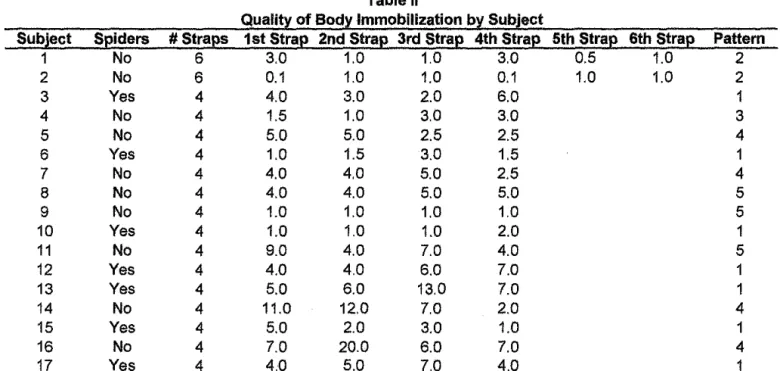
ambulance at an academic medical center. To date, an evaluation of 17
subjects
has
found that 7 subjects ( 41%) had at least one unattached strap orpiece of tape that should have attached their head to the board, while 14
subjects (82%) were found to have greater than 2 em of slack between their
body and at least one strap. Among those with any straps looser than 2 em, the
average number ofloose straps was 3.2 out of 4. This study suggests that
many patients may not be as well immobilized as they could be given existing
Prehospital Spinal Immobilization and the
Backboard Quality Assessment Study
L Introduction
Traumatic spinal cord injury has long captured the attention of the modern
American public. From movie heroes to football players, the victims of spinal
cord injury embody a collective view of medical tragedy. Since 1990, the mean
age of those injured has been 35.3 years (1). The relative youth of this population
leads to both decades of treatment costs and decades of lost earning potential.
The incidence of acute spinal cord injury in developed countries is
estimated to be between 11.5 and 53.4 patients per million population (2). Today,
between 183,000 and 230,000 people are living with permanent spinal cord injury
(1). Motor vehicle collisions caused 38.5% of these injuries, followed by acts of
violence (24.5%), falls (21.8%), and sports (7.2%) (1). The cost of patient care for
these injuries AFTER the first year ranges from $12,000 to $102,000 per year (1).
The total direct cost (not counting lost wages or productivity) of spinal cord injury
in the United States is estimated at $7.736 billion (3). The suddenness of these
;;-L f
injuries and the youth of those who experience them has rendered them a priority
for most Americans ( 4).
In prehospital care, Emergency Medical Technicians (EMTs) are trained
to immobilize all patients with possible spinal instability to prevent further
neurologic injury ( 5). Many of these patients will later be found to have no injury
at all ( 6). Some will have an intact spinal cord but an unstable vertebral column;
the goal here is to prevent motion of the vertebral column from damaging the
spinal cord. Other patients will already have some degree of neurologic disability
on initial exam. In these patients, the goal is to prevent further cord trauma from
motion of an unstable vertebral column.
A similar approach to spinal cord inunobilization is used by EMTs
throughout the United States ( 6). Specifically, an immobilizing hard-plastic collar
is placed around the patient's neck. Foam blocks or rolled towels are then placed
on either side of the patient's head, and the patient is strapped and/or taped to a
hard plastic or wood board ( 6). The goal of all this work is to prevent "pathologic
motion" of an unstable vertebral column from crushing, severing, stretching,
compressing, or otherwise damaging the spinal cord ( 6, 7). In a 2001 statement
encompassing current theories of spinal cord injury, the National Institute of
Neurological Disorders and Stroke (NINDS) summed up the matter most
succinctly:
The care and treatment of persons with a suspected spinal cord injury
begins with emergency medical services personnel, who must
evaluate and immobilize the patient. Any movement of the person,
or even resuscitation efforts, could cause further injury. (8)
As the rest of this paper will demonstrate, support of prehospital spinal
immobilization borders on universal among physicians who specialize in
prehospital care. Such unflagging support is in some ways surprising, as there is
currently no Class I or Class II evidence 1 that supports prehospital spinal
immobilization of all patients with suspected spinal instability (7, 9, 10). The
theory of spinal immobilization predates both the modern Emergency Medical
Services (EMS) system (5-7, 11-14) and the widespread application of"Evidence
Based Medicine" techniques (15). In the words of one author, "spinal
immobilization is a concept that became the standard of care based on common
sense rather than research." (10)
In some ways, this is not an unusual problem for modern medicine. The
literature is filled with treatments that seemed like a good idea until the research
was done to prove otherwise. In the past year, new information from the
Women's Health Initiative has clearly made the point that physicians can be
wrong even with the benefit of relevant research articles (16). At the same time,
however, there are also common folk treatments that were later vindicated by our
1 The American Academy ofNeurology provides the following definitions of Class I and Class IT
evidence for a therapeutic intervention on their website (135). "Class I: Prospective, randomized, controlled clinical trial with masked outcome assessment, in a representative population. The following are required: a) Primary outcome(s) is/are clearly defined. b) Exclusion/inclusion criteria are clearly defined. c) Adequate accounting for drop-outs and cross-overs with numbers sufficiently low to have minimal potential for bias. d) Relevant baseline characteristics are presented and substantially equivalent among treatment groups or there is appropriate statistical adjustment for differences.
Class IT: Prospective matched group cohort study in a representative population with masked
modem focus on evidence. Saw palmetto, used for centuries as a medicinal herb,
has been proven to be effective in the treatment of benign prostatic hyperplasia.
(17, 18)
As this paper will show, however, there are both methodological and
ethical dilemmas in research efforts to evaluate the efficacy of pre hospital spinal
immobilization. These difficulties in no way alter the fact that hundreds of
patients are inunobilized every day in the United States. This raises a series of
profoundly interesting questious. First, is it possible to know whether prehospital
spinal immobilization actually alters patient outcomes? Second, in the current
absence of Class I or Class II information, is there room for reasonable minds to
disagree in the treatment of actual patients? Third, for the patients who are
inunobilized, how do we know that our prehospital providers are doing the job
correctly (and what would it mean if they are not)?
In addition to cousidering the complex issues raised by prehospital spinal immobilization, this paper will present the ongoing results of the Backboard
Quality Assessment Study. This research, which is now being conducted in the
University of North Carolina Hospitals Department ofEmergency Medicine,
develops a model for the evaluation of prehospital spinal inunobilization quality.
This paper will consider the reasons such a model is necessary and the actual
results obtained to date.
ll. The Literature of Spinal Immobilization
This thesis does not seek to be a compreheusive review of the literature of
the scope of this work. Those readers who are interested in such a review are
referred to the journal Neurosurgery (March 2002) for the anonymous article
Cervical Spine Immobilization before Admission to the Hospital (7, 19). This
article is the first chapter of Guidelines for the Management of Acute Cervical
Spine and Spinal Cord Injurv which have been approved and adopted by the
American Association of Neurological Surgeons and the Congress of
Neurological Surgeons ( 19). For this article, the authors conducted multiple
Medline searches, searched the reference lists of relevant articles, and contacted
colleagues working in the field. At this time, this article represents the state of the
art for comprehensive reviews of the literature and is acknowledged as such by
Dr. Mark Hauswald, the primary critic of our current theory of spinal
immobilization. (10)
The literature of spinal immobilization has also been extensively reviewed
by K waneta!. in The Cochrane Database of Systematic Reviews (9), updated
most recently in February of2003. The authors provide extensive documentation
oftheir search strategies within this article.
In an effort to locate additional evidence and commentary on prehospital
spinal immobilization, multiple Medline, CINAHL, ACP Journal Club, Cochrane
Central Register of Controlled Trials, Cochrane Database of Systematic Reviews,
and Database of Abstracts of Reviews of Effects searches were conducted. Terms
searched included:
--"spinal immobilization"
--"exp Spinal Injuries OR exp Spinal Cord Injuries" AND "prehospital OR EMS
OR Emergency Medical Services"
--"spinal immobilization OR backboard" AND "pain"
--"EBM OR evidence based medicine" AND "prehospital OR emergency medical
services''
--"EMS OR emergency medical services or prehospital" AND "history"
--"quality assessment" AND "EMS OR emergency medical services OR
prehospital"
These searches were combined with careful and extensive readings of the
references of all relevant papers.
IlL Development of the Theory of Spinal Immobilization
In 1965, Geisler et al published Early Management of the Patient with
Trauma to the Spinal Cord, a retrospective analysis of the records of958 patients
with spinal cord injury in the Toronto area (14). Geisler's work is a wide-ranging
effort to determine what various lessons might be learned from the records of these patients, but it also provides a useful insight into the origins of pre hospital
spinal immobilization. The paper begins by considering concerning reports of
"delayed onset of paraplegia"~instances where a trauma victim initially has full
or partial neurologic function that subsequently degenerates (14). The authors
located 29 patients (roughly 3% of the study population) "who at first had little or
no spinal cord involvement" but whose condition subsequently deteriorated (14).
The authors specifically describe two cases where patients lost lower limb
function after walking a short distance from the site of his accident. While it is
worth noting that this patient's limb function was recovered after two operations,
the authors are quite clear in their interpretation of the initial paralysis. In the
words of the authors, "The paralysis occurred in each case as a consequence of
failure to recognize the injury to the spinal column and to protect the patient from
the consequences of his unstable spine." (14) This belief was based on
observation, case report, and standards of orthopedic treatment of spinal fractures.
It was this belief that drove the physicians who invented and popularized
prehospital spinal immobilization. ( 11-13, 20)
The initial development of prehospital spinal immobilization is widely
credited to Louis Kossuth (6, 7, 11, 12, 20). As early as 1966, Kossuth began
working with a short spine board that stopped at the waist (20). Kossuth also
developed a long, waxed board with a winch line attached that was used to slowly
winch motor vehicle collision victims from a vehicle (12, 20). Upon removal from
the vehicle, the patient could be strapped to the board for immobilization, making
the Medical Services School Winch Board the predecessor to the modem spine
board.
Even in 1966, Kossuth states the ethic that underlies prehospital
immobilization to this day: "Our objectives are clear. We desire to immobilize the
spine of a victim within the vehicle with a minimum amount of movement of the
patient." (20) Kossuth's ideas and inventions were further popularized by
victims ... The nine foot long straps allow firm immobilization so the board and
the victim are one unit." (13)
IV. Emergency Medical Services and a National Standard of Care
Just as Kossuth and Farrington were popularizing their theories,
prehospital care itself was undergoing a significant reorganization. The first
emergency transport service is thought to have originated in the 18th century with
the armies ofNapoleon. Napoleon's surgeon-in-chief, Baron Jean-Dominique
Larrey, ordered that the wounded be taken from the battlefield to field hospitals
using wheeled carts (21 ). By the 19th century, emergency transportation of the
sick and injured had gained more broad acceptance. Cincinnati General Hospital
established the first hospital-based service in 1865 (21 ). The first city ambulance
service was started in New York City in 1866 under the guidance of Bellevue
Hospital (21 ).
While the idea of transporting the injured has been around for centuries,
the idea of trained professionals providing substantial treatment prior to and
during transport is a relatively new invention. Until the 1970's, most ambulance
services were run by local funeral homes, primarily because they had a hearse
capable of transporting an injured person who needed to lie flat (21 ). The men
who mauned these vehicles were provided with little substantive training and
were mainly known for the reckless speed with which they transported the injured
to the hospital (5, 21).
and injured (22). In 1966, the National Academy of Sciences published
Accidental Death and Disability: The Neglected Disease of Modem Society (23),
which further stressed the importance of prehospital care in patient outcome. The
Highway Safety Act of 1966 directed states to address the development of EMS
programs or lose up to 10% of federal highway funds (21 ). The National Highway
Traffic Safety Administration (NHTSA) published guidelines for these programs
in 1969 (21).
That same year, NHTSA contracted for the development of a standardized
course of instruction for Emergency Medical Technicians (21). This program was
built around the American Academy of Orthopedic Surgeons (AAOS) pioneer
text for EMTs, Emergency Care and Transportation of the Sick and Injured (22,
24). This text specifically teaches Kossuth and Farrington's theory and technique
of spinal immobilization (24). The 81 hours NHTSA course rapidly became the
nationwide standard for training ofEMTs (21 ). NHTSA continued to develop
further curriculums for accident victim management and paramedic training
throughout the 1970's (21).
Funding for the new, professional EMS was soon made available at the
federal level. In 1972, the Department ofHealth Education and Welfare (HEW)
announced $8.5 million in contracts for the development of model EMS systems
(21). In 1973 Congress passed the Emergency Medical Systems Act (P.L. 93-154)
which established an EMS program at HEW to take over control from NHTSA
The main point to be gained from all of this history is that spinal
immobilization was a standardized component of a DOT-NHTSA program, in
much the same way that ambulance design standards were specified by
DOT-NHTSA (22). It was not left to the individual judgement oflocal medical directors
as to whether prehospital spinal immobilization should be practiced. The current
concept of advanced care performed under physician direction came after the
development of the professional EMS system, and was only explored through
pilot programs in the early 1970's (22). As one author put it, "the physician was
on the sidelines, being occasionally asked for an opinion and having some input
into the planning process, but seldom having any real authority over the system."
(26)
While the recommendations of such physician groups as the Committee on
Injuries of the American Academy of Orthopedic Surgeons were instrumental in
federal decision making in the 60's and 70's, it was federal training and federal
dollars that ensured that prehospital spinal immobilization became the universal
standard of care in the United States by the mid 1970's. Federal EMS funds were
specifically targeted to federal goals until 1981, when they began to be distributed
directly to the states as part of Preventive Health and Health Services block grants
(27).
The establishment of the National Association ofEMS Physicians in 1984
refocused EMS systems on the importance of active medical direction of EMS
providers by a physician within the community (25). Even with this new focus on
uniformly embrace the use of spinal immobilization for patients with suspected
spinal injury (6, 7, 10). A systematic review of the literature did not reveal a
single article that called for an end to the use of prehospital spinal immobilization
for patients with suspected spinal injury.
V. The Modern Standard of Practice
Spinal immobilization is uniformly taught to EMT students throughout the
United States ( 5). The demonstration of effective spinal immobilization is
commonly required in the practical section of the final exam for EMT
certification (28). Brady's Basic Trauma Life Support defines adequate spinal
immobilization by stating: "The patient must be secured well enough to have no
motion of the spine ifthe board is turned on its side." (29) The National
Association of Emergency Medical Technicians Pre-Hospital Trauma Life
Support Text offers a more extensive list of questions as "Criteria for Evaluating
Immobilization Skills."
• Was manual in-line immobilization initiated immediately, and was it
maintained until it was replaced mechanically?
• Was an effective, properly fitting cervical collar applied appropriately?
• Can the device move up or down the torso?
• Can it move left or right at the upper torso?
• Can it move left or right at the lower torso?
• Can any part of the torso move anteriorly off the rigid device?
• Does any tie which circumferentiates the chest inhibit chest excursion.,
• Is the head effectively immobilized so that it can not move in any
direction, including rotation?
• Is the head in a neutral, in-line position?
• Does anything inhibit or prevent the mouth from being opened?
• Are the legs immobilized so that they cannot move anteriorly, rotate, or
move from side to side, even if the board and patient are rotated to the
side?
• Are the pelvis and legs in a neutral in-line position?
• Are the arms appropriately secured to the board?
• Have any ties or straps compromised distal circulation in any limb?
I
• Was the patient bumped, jostled, or in any way moved in a manner that
could compromise an unstable spine while the device was being applied?
• Was the procedure completed within an appropriate time frame? (30)
Taken as whole, this evaluation is a detailed restatement of Farrington's original
position~"The nine foot long straps allow firm immobilization so the board and
the victim are one unit." ( 13)
The nature of prehospital care demands that some immobilized patients
may have to be turned on their sides. Such situations can arise in extricating a
patient from a tight space, carrying a patient through a small doorway or down a
confined stairwell, or in situations where the immobilized patient is vomiting and
such an approach is considered inappropriate for patients in the absence of clinical
necessity.
As a surrogate measure, some EMT instructors teach that the EMT should
be able to insert a maximum of two fingers beneath each immobilizing strap (31 ).
This approach is also sited in the literature of immobilization technique efficacy
(32). Others rely on "common sense" judgement of whether or not the patient
would move if tilted. The goal of total prevention of motion, however, is
consistent across the educational literature.
In actual fact, total prevention of motion is most likely impossible. The halo orthoses that are used by orthopedic surgeons for definitive immobilization
of patients have been shown to allow up to 7 degrees oflateral motion (32). The
one study that focused on effectiveness of different strapping techniques in
controlling torso motion found that the most effective approach allowed between
3.2 and 9.8 em oflateral motion (33). For this study, the authors attached 19
healthy male volunteers to a backboard that was then rotated 90 degrees to the left
in a controlled manner. Lateral motion of the torso from the force of gravity was
then measured. Each subject was rotated three times for each of four strapping
techniques, and the straps were always retightened between rotations.
The strapping techniques compared used between 6 and 8 straps, which
might be expected to provide greater immobilization than the 4 to 5 strap
techniques more commonly encountered in this area of the United States. While
only male subjects were used with a mean height of 178.31 em and a mean weight
have statistical similarities in body habitus. This suggests that a more
representative sample of the population would not have demonstrated superior
immobilization. The authors report tightening the straps only until the point where
the patients could "breathe comfortably." The relationship between comfortable
breathing, adequate immobilization, and clinically-significant respiratory
compromise is tmclear; it may be that better immobilization could have been
achieved by sacrificing some level of comfort. However, this research does
suggest that complete immobilization is not possible using the current long spine
board and straps.
What remains is the goal of motion prevention to the greatest extent
I
possible without respiratory or circulatory compromise. This focus on motionprevention is also encountered in a substantial section of the research literature of
pre hospital spinal immobilization. The Cochrane review of spinal immobilization
includes 9 randomized controlled trials conducted on healthy volunteers that
compared patient mobility across various immobilization interventions (9, 32-39).
The literature review for this paper, although not focused on motion-control
studies in healthy volunteers, located an additional 6 studies in this area ( 40-45).
The extent of work in this area indicates that the research community accepts
Farrington's view of"board and ... victim as one unit" (13) and is striving to find
the best way to put it into practice.
VI. Morbidity associated with prehospital spinal immobilization
Numerous authors have documented various issues of morbidity that
EMS Physicians (NAEMSP) released a 1999 position paper that lists several areas
of concern in patient care resulting from the use of the long spine board (47).
These areas of concern include:
--decreased patient comfort, in particular the problem of head and back pain
resulting from immobilization
--altered physical exam as a result of pain from immobilization
--issues of ischemic tissue injury from prolonged pressure
--issues of respiratory compromise
--issues of prehospital provider time on scene
--issues of immobilization cost
One of the more common areas of study is patient pain. Numerous studies
have used healthy volunteers to establish that the long spine board can cause
varying degrees of pain in most patients over a time period consistent with
clinical use (36, 38, 48-56). Unnecessary pain should always be avoided in patient
care, bnt in this case spine pain caused by the long spine board alters an important
component of the physical exam for spinal injury ( 49, 57), leading to potentially
unnecessary radiology studies ( 47).
The weight of the body against the spine board has been shown to create
sacral and thoracic pressures capable of causing vascular ischemia in healthy
volunteers (38, 58) with resultant increased risk of pressure ulcer formation (59).
Prolonged immobilization prior to admission to a spinal injury ward has been
specifically shown to increase risk of pressure ulcers in patients with spinal cord
to rotate injured patients (60, 61). One prospective study of39 spinal iiijury
patients consecutively admitted to one hospital has specifically correlated time on
a spine board with risk of decubitus ulcers developing within 8 days ( 61 ). Case
control comparisons (23 cases, 59% of subjects) were significant for duration of
immobilization prior to ward admission, distance of injury site from hospital, time
on the spine board, and reduced systolic blood pressure at the time of admission
(P<O.l ). Spinal cord injured patients may be at greater risk for vascular ischemia
because of reduced mobility, reduced sensation, and reduced tone in the vascular
r:
bed that supplies the skin (59). Several authors have commented that prolonged
f
immobilization after patient arrival at the ED should be avoided for the reasons
above ( 46, 62-64).
Several studies have also documented varying degrees of reduced
respiratory function in healthy subjects who are immobilized (65-67). These
studies were small, with the largest of them recruiting only 51 volunteers. By
concentrating on young healthy subjects, it is likely that they underreported the
significance of respiratory difficulty encountered by in overall population. While
neither the studies nor decades of clinical experience suggest that we are at risk of
suffocating our patients by immobilizing them, this represents an important issue
of patient comfort and, in cases of severe trauma, potential exacerbation of
hypoxia.
Pepe and Orledge estimate the per person cost of spinal immobilization at
roughly $15 (68). They further estimate that 5 million patients a year receive
all of these patients may have needed to visit the Emergency Department,
resulting in increased health care costs for these visits ( 68) and unnecessary
radiology studies ( 47).
The sum total of these concerns has led to much recent work in the area of
prehospital clearance for spinal injury. This should not be viewed as a change
from the policy of providing prehospital spinal immobilization for all patients
with suspected spinal injury. Rather, it is a refinement of the concept of
"suspected spinal injury."
For most of the history of prehospital spinal innnobilization, EMTs have
been taught numerous signs and symptoms of spinal injury. The 9th edition of
Brady Emergency Care lists (5):
--paralysis of the extremities
--pain without movement
--pain with movement
--tenderness anywhere along the spine
--impaired breathing (diaphragmatic breathing)
--deformity of the spine
--pnaptsm
--posturing
--loss of bowel or bladder control
--nerve impairment to the extremities
--severe spinal shock
--soft tissue injuries associated with trauma
L f i
!
[ ~
The EMf is trained to use all these signs and symptoms to search out the
possibility of spinal injury. These signs and symptoms are used to identify
patients in need of spinal immobilization. Historically, the absence of these signs
and symptoms was never enough to rule out spinal injury. Mechanism of injury
(MOl) has traditionally been more important than all signs and symptoms (5).
EMrs have been taught for decades that:
If the mechanism of injury exerts great force on the upper body or if there is
any soft-tissue damage to the head, face, or neck due to trauma (such as from
being thrown against a dashboard), assume possible cervical-spine injury. Any
blunt trauma above the clavicles may damage the cervical spine. ( 5)
Furthermore:
In the field, it is not possible to rule out spinal injury even when the patient
has no pain and is able to move his limbs. The mechanism of injury alone may
be the deciding factor. (5)
Through the 1990's, much research focused on the development of
Emergency Department decision rules that could reliably identify patients without
spinal injury prior to any radiology studies (57). The NAEMSP position paper on
prehospital spinal immobilization cites 20 publications in the field of Emergency
Department spinal clearance criteria. The largest of these, the National
Emergency X-Radiography Utilization Study (NEXUS), prospectively evaluated
a study population of 34,069 patients with blunt trauma who underwent
cervical-spine radiology studies for the evaluation ofthat trauma (69). The study was
waiver of informed consent, so that every patient with blunt trawna who
underwent cervical spine imaging for that trawna was included in the study. The
NEXUS study found that 2.4% of the population evaluated had cervical-spine
injury as documented by radiology ( 69); the same standard three views
(cross-table lateral view, anteroposterior view, and open-mouth odontoid view) served as
a baseline for all patients, although the attending physician could order additional
films at their discretion.
With radiology acting as a gold standard, NEXUS was further used to
provide validation of a 5 criterion instrwnent for cervical spine clearance without
r
radiology. The 5 criteria used were:--no midline cervical tenderness
--no focal neurologic deficit
--normal alertness
--no intoxication
--no painful, distracting injury
All evaluations were conducted and recorded prior to cervical spine imaging.
Presence of one of these 5 criteria was found to have a 99.6% sensitivity (95% CI
98.6-100) and a negative predictive value of99.9% (95% CI 99.8-100) (69).
Specificity was 12.9% (95% CI 12.8-13.0%) and positive predictive value was
1.9%(95% CI 2.6-2.8%) (69).
The study criteria could be criticized as somewhat vague. A clinician may wonder whether or not an injury is "distracting," or whether or not alertness is
at the various centers, but no definitive interpretations were given. Thus, the
individual physician may be forced to wonder what the sensitivity and specificity
of his or her interpretation of the NEXUS criteria are. This said, this study sets a
high standard for quality of subject population and variety of treatment
enviromnent and has been widely embraced by the physician community.
The success ofthe NEXUS study fostered a growing interest in
prehospital clearance of spinal injury. Recent research has sought to train EMTs
in NEXUS-type criteria to determine if they can screen patients pre hospital with
the same sensitivity as Emergency Medicine physicians ( 47, 70-7&). This research
has also taken the further step of ensuring the NEXUS criteria can detect thoracic
.
t
and lmnbar injuries with appropriately high seusitivity (71 ). Given the morbidityI
of spinal immobilization, the goal of such research is to identifY tramna patients
who are not at risk of spinal injury and who therefore do not require the use of the
long spineboard. In the words of the lead author of NEXUS:
Any out-of-hospital protocol should emphasize safety (seusitivity) over
efficiency (specificity), particularly now that some patients can be quickly and
safely cleared on arrival at the ED. The cmnulative small benefits associated
with avoiding spinal immobilization in many patients without injury must be
balanced agaiust the rare but extremely important harm associated with failing
to immobilize injured patients. (70)
While some may disagree about precisely how much risk is acceptable,
Hoffman's comment summarizes the ongoing commitment to prehospital
New protocols allowing field spinal clearance are now in effect in multiple
EMS systems throughout the United States (72). NAEMSP has endorsed the use
of NEXUS criteria for prehospital clearance ( 47). It is worth noting, however, that
the British Trauma Society's 2002 guidelines for management and assessment of
spinal injury continue to stress the importance ofMOI above all other criteria
(64). To date, neither approach has been evaluated in terms of patient outcomes,
suggesting a potentially promising avenue for future research.
vn.
Issues in the evidence for prehospital spinal immobilizationr-Prehospital spinal immobilization for patients with suspected spinal i~ury
is universally endorsed by the prehospitalliterature, although some critics who
question the efficacy of prehospital immobilization have called for further
research (1 0). Techniques of spinal immobilization are part of the mandatory
education of every EMT trained in the United States. Spinal immobilization is
routinely applied in the first world (79-81) and with growing frequency in the
second and third world (82, 83). Unfortunately, the history of medicine has shown
us that such universal agreement does not protect us from being wrong. In the
absence of well-designed and administered randomized controlled trials
comparing spinal immobilization to no immobilization in patients with suspected
spinal injury, it would be inappropriate to say that we "know" that spinal
immobilization improves patient outcomes.
Multiple systematic reviews of the literature including this paper have
failed to locate a randomized controlled trial of pre hospital spinal immobilization
immobilization were first introduced, the current near-universal belief in the
efficacy of spinal immobilization makes such trials ethically impossible for the
moment (7, 9). Since we believe that spinal immobilization likely benefits our
patients with suspected spinal instability, we cannot fail to immobilize any patient
that we suspect has spinal instability, even in the context of research.
This theory is discussed by Friedman et al. in the text Fundamentals of
Clinical Trials: "the presence of uncertainty as to the benefits or harm from an
intervention among the expert medical community rather than in the investigator,
[pic] is justification for a clinical trial." (84) This concept is called clinical
equipoise; without it, research occurs at the expense of patients who are denied an
intervention that most clinical experts working in the field believe would be
beneficial to those patients (84). In the case of immobilization research, the expert medical community as a whole does not question the necessity or efficacy of
prehospital immobilization for patients with suspected spinal injury (7, 68, 70).
Until such time as they do, any clinical trials to investigate the matter are ethically
precluded.
The universal use of spinal immobilization throughout the United States
prevents us from either prospectively or retrospectively comparing an American
cohort of subjects who are immobilized to an American cohort of subjects who
are not immobilized. Even if we were to identify a first-world EMS system where
patients might be "poorly" immobilized, the current standard of practice would
demand that we immediately rectify any failures rather than take the time to study
retrospective chart analysis to identifY a cohort of patients with missed spinal
injury prehospital who were therefore not immobilized. Given the bias toward
sensitivity in our prehospital immobilization procedures and the use of similar
screening criteria in the Emergency Department, the identification of such
patients would be rare. It would therefore be difficult to obtain a large enough
sample size for comparison to an immobilized cohort. Patients from other first
world countries would have to be excluded due to differences in EMS system
design and staffing and hospital standards of care (85). Furthermore, it is likely
that any cohort of patients who I) prove to have spinal injury 2) fail to be
immobilized by EMS providers despite their low threshold for suspicion of spinal
injury and 3) nonetheless travel to the hospital by ambulance, would be
substantially different from a cohort of patients who are immobilized pre hospital.
While spinal immobilization is used throughout America, Canada, Europe,
and the rest ofthe first world, we are able to find non-immobilized cohorts by
traveling to the third world. This approach was attempted by Hauswald et al in
1998 in the one of two known retrospective cohort studies of spinal
immobilization (7, 82). A comprehensive search of the literature for research
directly evaluating the efficacy of prehospital spinal immobilization in a clinical
population located only this study by Hauswald and a similar study by Leung et
a!. (86).
Hauswald's group carried out a 5 year retrospective chart review
comparing 120 non-immobilized patients with spinal cord injury seen at the
the University ofNew Mexico. Two independent physicians blinded to the
hospital of origin evaluated each case for the presence of disabling or
non-disabling neurologic injury. The distribution of injuries by column level and the
age of the injured were found to be equivalent. Patients in Malaysia were most
likely to have been injured by a fall (53%), while patients in New Mexico were
most likely to have been injured in a motor vehicle collision (74% ). The OR for
significant disability was found to be higher for patients from the New Mexico
cohort (2.03; 95% CI 1.03-3.99; p = 0.04) after adjustment for these variables.
Hauswald's group admits several limitations of their study. Patients who
died prior to arrival at the hospital admission were not included, raising the
possibility of an important difference in pre-hospital mortality due to the use of
spinal immobilization techniques. Studies comparing Vietnam and Kenya to the
United States have shown significantly elevated motor vehicle crash (MVC)
mortality levels per crash in third world countries (87). It is unknown whether the
inclusion of on-scene fatalities might have raised more significant issues
regarding method of injury~i.e. more Malaysian patients may have died in
MVC's but avoided inclusion in the hospital-based cohort.
Similarly, Malaysian patients were not transported by ambulance and did
not have access to the rapid deployment of first responders trained in extrication
that would have been used in New Mexico (88). This difference could have
resulted in patients of greater acuity reaching the hospital in New Mexico with a
severe prognosis while similar patients in Malaysia would have died during
patients for significance of non-spinal injuries. Issues of blood loss and shock
raise the possibility of cord damage due to hypoxic injury (89, 90). While such
patients would be unlikely to survive an extended extrication and transportation in
Malaysia, American techniques of prehospital care may have resulted in a
surviving American cohort at substantially greater risk for long-term neurologic
disability.
Pepe and Orledge have pointed out that Hauswald' s group did not
compare the types of fractures found, though it is known that different types of
fractures have different outcomes ( 68). As types of fractures can vary according
to mechanism of injury and as mechanism of injury varied substantially between
the two groups, this difference may represent a significant confounding variable
(68). Mechanism of injury may also have varied within the category ofMVC
patients. Third world countries are more likely to utilize large multi-passenger
vehicles which would not be considered safe in the United States (87). Smaller
passenger vehicles used in other countries may not be equivalent to American
vehicles in safety design. Similar variations in traffic laws, enforcement of those
laws, and patterns of seat belt use may also suggest that Americans are more
likely to initially survive an MVC that would be fatal in another country (87).
These concerns, the small sample size (particularly in the Malaysian
cohort) and the lower confidence limit of I. 03 do not provide substantial support
to Hauswald' s subsequent criticisms of spinal immobilization ( 10, 82). In the words ofPepe and Orledge, "one would not want to change the current
Hauswald' s overall design was recently repeated by Leung et aL with a
nonimmobilized cohort of 63 spinally-injured patients from the People's Republic
of China compared to 334 immobilized spinally-injured Americans (86). Among
the Chinese cohort, 28% were found to be disabled (95% CI of 18-41%). Among
the Americans, 21% were found to be disabled (95% CI ofl7-28%). The authors
conclude that there was no statistical difference between the two cohorts, which is
not surprising given the low power of the study. This study, reported only in
abstract, appears to face the same methodological difficulties discussed above.
Furthermore, 61 of 63 Chinese patients suffered cervical spine injury, while in the
American cohort 113 patients had cervical injury, 107 had thoracic injury, and
113 had lumbar injury. From a retrospective analysis of 358 patients with acute
spinal injury from 1948-73, we know that thoracic injuries have a significantly
higher rate of complete injury (77.5%) than cervical (60.4%) or lumbar (64.7%)
injuries (91 ). This difference is traditionally attributed to the narrower canal of
thoracic verterbrae (92). The one year mortality rate for complete spinal cord
injury is 28% while that for incomplete injury is 14% (93).
Given these methodologic weaknesses, it may prove difficult to design a
cohort comparison that provides convincing evidence for or against spinal
immobilization. Using a cohort of immobilized American patients as an
intervention group, we are forced to find a comparable non-immobilized cohort
with:
• similar mechanism of injury to American patients
• similar non-spinal injuries to American patients
• similar quality of emergency dispatch services
• similar quality and timeliness of prehospital extrication
• similar method and staffing of prehospital care excluding spinal
immobilization
• similar quality of transport vehicle
• similar quality of road surface and road distance between injury site and
hospital
• simill!T quality of emergency department care
• similar quality of radiology care
• similar quality of surgery and anesthesiology care
• similar quality of post-operative care
• similar patient population by age and sex
• similar patient population by nutrition and overall health
• large sample size
• similar medical record quality both pre and post hospital, including
records of on-scene deaths
Any study attempting to prove the benefit of prehospital spinal immobilization
would require a cohort matching all of these characteristics or significant
'
statistical manipulation to compensate for variations between subjects. Otherwise,
the potential benefit detected could be attributed to deficiencies in the cohort. A
study attempting to establish a lack of benefit of prehospital spinal care is held to
bias the statistics in favor the American cohort. Otherwise, however, the same
standards would apply.
Finally, it is important to note that Hauswald's paper does not evaluate the
quality of pre hospital immobilization in the New Mexico population. EMI skill
levels are known to deteriorate after training (94), and the ongoing data from the
Backboard Quality Assessment Study (see section XII) shows concerning failures
in EMI immobilization quality. It could be argued that Hauswald' s work
compares the Malaysian cohort to an American cohort where patients may or may
not be truly immobilized. If so, his results may indicate the dangers of spinal
immobilization done badly, not the benefits of spinal immobilization done well.
It is unlikely that any cohort could be located that could satisfy all of the
above criteria. Hauswald' s original cohort no longer exists-Malaysia is now
developing an EMS system that, like all EMS systems, uses techniques of spiual
immobilization (82). To find a comparable cohort, one would have to find a third
world country that had recently added a modem EMS system with modem
communications and extrication but had omitted the use of spinal immobilization.
Such an occurrence remains unlikely-ethics demand that those who create a
modern EMS system take advantage of what are believed to be the best affordable
techniques available to their population. Hauswald' s study could have been made
more effective by prospective recruitment of the cohorts in both locations
including on-scene and transit fatalities. Such an approach would require
more informative statistics on outcomes than are currently available in the
literature.
Hauswald' s work does suggest another important line of research, albeit a
difficult one. Third world countries that do institute modem EMS systems require
time to put such systems into place. Awareness of such an impending change
would create an opportunity to simultaneously evaluate the effect of spinal
immobilization AND EMS systems as compared to historical controls. Ideally, a
research team could establish baseline statistics on morbidity and mortality of
spinal injury (including patients who die on scene.) With assessment methods in .
place, changes could be monitored as the new EMS system came on line. While
such an approach would still not distinguish between the benefits of spinal
immobilization and the benefits of extrication, advanced life support, and rapid
transport, it would still make a substantial contribution to the literature of the
field.
Vlll. The Source of Belief in Prehospital Immobilization
With so many normal sources of evidence not only absent but ethically
precluded from development, the reasonable mind may wonder if there is any
justification for prehospital immobilization. The arguments in favor may seem
disturbingly circular. There is no evidence in favor of spinal immobilization
because the creation of such evidence necessitates the creation of an unethical
situation. Immobilization is good, and to attempt to prove that it is good would be
bad. At the same time, we have multiple studies that demonstrate some degree of
While there are no convincing studies that establish a patient benefit,
studies in 5 separate areas have been summed to form a convincing argument in
favor of prehospital spinal immobilization for patients with suspected spinal
instability. These areas are
1) models of traumatic spinal injury
2) case studies of spinal injury in the absence of immobilization
3) research indicating that normal transport mechanics create "clinically
significant" movement of the patient
4) research indicating spinal immobilization techniques reduce "clinically
significant" movement of the patient
5) statistical analysis showing improved patient outcome over the period that
spinal immobilization was put into effect
A. Models of Traumatic Spinal Injury
The current neurology and neurosurgery literature proposes a two-part
theory of spinal injury in trauma (92, 95-97). Primary injury is the result of force
that causes transection, compression, or traction of the spinal cord (92, 95-97).
Such forces may include traumatic force of impact, compression from vertebral
column elements, and hematoma within the spinal canal (92, 95). This initial
mechanical damage is followed by a series of physiologic events that lead to
further progression of tissue damage by means of ischemia and pathologic
calcium influx into neurons (92, 95, 97). In recent years, extensive research has focused on pharmacologic interventions to prevent this secondary damage (92,
95).
l
i
:
'
As early as the 1940's, techniques of surgical spinal stabilization were
developed for patients with unstable vertebral columns (98). Surgical treatment of
vertebral injqry is focused on reduction, approximation, and stabilization of the
spine (99). Modem treatment for spinal fracture involves immobilization for a
period of weeks to months using techniques ranging from a simple cervical collar
to external fixation with Halo devices and body casts to surgical decompression
and stabilization (100). Surgical treatment of spinal cord iiijqry focuses on
alleviating compression of the spinal cord (99). ln recent years, considerable
debate has surrounded the utility of surgical decompression (10 1 ). Some have
argued that the majority of damage occurs with primary injqry and that continued
compression of the cord produces little incremental deficit (101, 102).
The utility of this argument in the area of immobilization is unclear. An unstable spine can be thought of as allowing additional primary traumas rather
than prolonged compression. Guttmaun's original argument on this matter
compared traumatic injqry to the process of a slow-growing tumor or a
tuberculous process of the spine (102). It seems unlikely that Guttmann intended
for this argument to be applied to spinal immobilization as his own writings
emphasize the importance of careful pre hospital handling of the patient (1 03 ). In
support of this position, Guttmaun refers to a case series of29 spinal cord injured
patients who developed worsened neurologic disability "through faulty handling
during first aid." (14, 1 03) It is perhaps most telling thatthe literature of this field
focuses on issues of early versus late surgical decompression rather than the
Extensive clinical research has also been conducted on the issue of early
vs late surgical spinal stabilization (101, 104). The results of these studies have
been mixed (101, 104). While surgical stabilization provides a more definitive
immobilization than external orthoses, it also creates numerous additional risks
from both the surgery itself and anesthesia It is therefore unclear whether current
surgical research can provide any insight into the utility of pre hospital
immobilization.
Very few animal studies have specifically attempted to address issues of
L spinal cord damage as a result of an unstable spine (89, 105). Ducker created
f
spinal cord injury in 32 rhesus monkeys by means of weighted impact over the
[
i'i
i
surgically-exposed cord ( 1 06). The monkeys were subsequently randomized to acontrol group (19 animals) and a group that
was
surgically immobilized by meansof a figure eight ligature (13 animals). In the control group, 3 of 4 animals that
were impacted with a 500 gm-cm weight recovered complete function and the
fourth was mildly paraparetic. In the control group at this weight, 5 of 6 animals
were paraplegic.
Dolan conducted a series of studies where distraction injuries were
produced in cats (1 07). The spinal column was surgically exposed and distraction
was created by means of a device that separated vertebrae in precise increments.
Subsequent measurements of spinal cord blood flow established that stretching of
the spinal column can result in spinal cord ischemia comparable to that seen with
Some readers might object that skeletal traction of up to 40 lbs may be
used in the reduction offractures distal to C3 (108). However, it should first be
noted that clinical traction is gently introduced in line with the spinal cord, while
distraction in the field runs the risk of sudden angulation across vertebral
structures. Most patients who undergo traction will have some intact ligamentous
structures (I 08). In the absence of such intact structures or in high cervical
dislocations, skeletal traction can result in distraction injuries (I08).
Overdistraction can occur even in cases of partial ligamentous injury when the
force of traction exceeds the ligamentous tolerance (109). The orthopedic
literature contains a number of cases of patients with neurological deterioration
during the process of spinal reduction (II 0 ).
Finally, it is important to note that the torso of most adult patients weighs
substantially more than 40 pounds and is subject to multiple forces during
transport to the hospital, particularly in situations where the patient's head is
well-attached to the spine board and his or her torso is not (32). In such situations of
improper spinal immobilization, the torso can pendulum beneath the attachment
point of the head and distraction injury becomes a greater concern (32).
There are numerous difficulties in applying animal trauma models to
clinical practice in humans. In addition to obvious issues of species variation, surgically-induced trauma may be a poor substitute for clinical trauma in the real
world. As detailed by Geisler (89), patients may have multiple severe injuries,
which can lead to systemic hypoxia or hypotension. One study found grade
m
orThese patients were found to have more severe cord injuries with a mortality rate almost 5 times that of patients without significant multi trauma (90). Human trauma patients may also be physiologically altered by alcohol or drugs.
B. Case Studies of Spinal Injury in the Absence of Immobilization The literature contains various references to patients with unstable vertebral columns who had sudden and striking deterioration of their condition after movement. This issue has been addressed in case series and chart reviews, and thus is more easily described in anecdotal rather than statistical terms. Geisler's work in this area, discussed at the begiuning of section Ill, was one of the motivations for the original development of systematic prehospital
t
immobilization of patient's with suspected spinal injury(l4). Neurologic
I
degeneration some time after an injury suggests additional primary trauma as a result of an unstable vertebral column. However, the passage of days to weeks is also consistent with the theory of secondary injury described above. It is more difficult to argue that a sudden onset is consistent with secondary injury
physiologic mechanisms, particularly when the onset occurs simultaneously with patient movement.
second patient, unconscious for 18 days, recovered consciousness and began
walking, only to suddenly develop tetraparesis. A third patient, in bed with mild
paresthesias in the lower limbs for 6 days, became paraplegic when he was
allowed to stand and walk to the bathroom. A fourth patient, maintained in bed for
30 days, became paraparetic when he began walking. Other cases (whose
specifics were not detailed) were attributed to instability after laminectomy,
instability and prolapsed disk, surgical trauma from the removal of a knife,
instability, a hook dislocation at T8, and an epidural abscess.
Bohlman conducted a retrospective analysis of 300 patients with cervical
spine fractures (112). Of these, he reports seven patients who developed signs of a
partial or complete cord lesion after "neck immobilization was not provided."
Three patients developed similar signs "while they were in the emergency room,"
and eleven patients "after they had reached the hospital." One patient is
particularly described as developing an anterior cord syndrome after an attack of
delirium tremens while in skeletal tractiotL In a different publication referring to the same series of patients, Bohlman describes one patient who had no paralysis
when he left the emergency room for an xray but who returned as a complete
quadriplegic (108). Two other patients are described as developing paralysis in
the Emergency Department "after unintentional manipulation." (1 08)
Unfortunately, the article does not detail the case histories of the other patients in
question.
Marshall et al in a prospective study of deterioration in 14 hospitalized
hospital treatments (113). The rate of deterioration in the overall population (283 patients) was roughly 5% (113). Three patients became worse on application of skeletal traction, suggesting possible distraction. Two patients worsened after rotation of a Stryker frame, and in one of these cases the nurses reported that the frame had slipped during rotation. Four patients worsened after spinal surgery. Two patients worsened after halo vest application, which the authors attribute to the unavoidable loss of some immobilization during halo vest placement. The final patient worsened after rotation on a rotobed. While this study raises the possibility that immobilization interventions may sometimes cause the harm they seek to prevent, it also appears to provide examples where a small movement of an unstable vertebral colunm resulted in substantial worsening of patient
neurologic deficit.
A similar situation is encountered in Harrop eta!, who conducted a
retrospective chart review of 182 patients with complete spine injury (114). Of 12 patients with neurologic deterioration within the first 30 days after injury, 2 patients with ankylosing spondylitis experienced worsening of neurologic
disability with external immobilization. A third patient was agitated in the ED and refused to remain still while immobilized in a rigid cervical collar, resulting in ascension of injury to a complete C4. A fuurth patient could not be adequately immobilized with the halo vest because of excessive body habitus.
unit. Toscano collected all information within 7 days of admission to the unit and personally traveled to interview witnesses, EMTs, and other physicians involved
in each patients' care. Unfortunately, Toscano does not offer the details of individual cases, only his interpretation of the cause of groups of cases. Three
patients were witnessed to deteriorate at the accident site. Nine patients who were not immobilized deteriorated during EMT assessment and transport. Twelve
patients who were admitted to the hospital had unrecognized spinal injury and were not immobilized. In the case of patients whose spinal instability was known, Toscano attributes 3 deteriorations to inappropriate lifting of patients, 2 to absent immobilization, and 1 to inadequate immobilization.
Poonnoose et al examined the medical records of 569 patients with neurologic deficits secondary to spinal cord trauma (116). The authors report the injury was initially unrecognized in 52 patients (9.1% of the population) and that 26 of these patients experienced neurologic deterioration as a result of
mismanagement Unfortunately, the cases are again not discussed in detail, making it difficult to evaluate the likelihood of repeated primary injury vs secondary injury.
George documents numerous cases that resulted in court actions against
the EMS systems involved ( 118). One patient, who was initially placed by EMS
in a chair and who was never immobilized, developed back pain and
diaphragmatic breathing en route to the hospital. On arrival at the hospital he was
diagnosed with a C5-C6 partial quadriplegia. A second patient who was initially
unconscious had her chest and thigh straps released en route to the hospital. She
subsequently regained consciousness and struggled with the EMTs. The next day
she was found to be paraplegic. A third patient, after involvement in a significant
auto accident, was initially able to move most of his body. He was combative and
was neither diagnosed with spinal instability nor properly immobilized until 17
hours after his accident, by which time he had lost sensation and movement from
his midchest down. A fourth patient was being undressed by a nurse after an auto
accident. The nurse pulled the patient's blouse over her head, at which point the
patient lost consciousness. She woke to find that she was totally paralyzed.
It should be restated that none of these cases constitute definitive proof of
additional primary trauma due to an unstable vertebral column. Hauswald has
argned that "It seems intuitively unlikely that subsequent movement of the spine
within its normal range of motion and essentially without resistance would add
significantly to the damage already done [by the primary trauma]. Cases of
deterioration from movement of unstable spinal injuries during extrication,
transport, and initial evaluation do undoubtedly occur, but is clear from clinical
experience and the literature that this is an uncommon problem." (10)
;
Hauswald suggests that the literature should contain more such cases if
injury from spinal instability were truly a threat to our patients, but it must be
remembered that injury from spinal instability has been widely believed to be a
threat to trauma patients for many decades (98). It could be argued that the
literature does not contain numerous cases which support this theory because it
was not believed that the theory needed support It should also be noted that
immobilization
has
been the standard of care for patients with suspected spinalcord injury for many decades. If immobilization is effective, we would expect
paralysis from movement to be rare because we have done our best to prevent it
C. Research Indicating that Normal Transport Mechanics Create "Clinically Significant" Motion of the Spine
Normal transport mechanics encompass three distinct areas-removal of
the patient from the scene of the accident, transport of the patient from the
accident scene to the emergency department, and time spent in the emergency
department prior to spinal clearance or definitive immobilization. A
comprehensive review of the literature revealed no research on the forces created
by a typical accident scene or by typical ED mechanics. In the previous section,
there were case studies of patients who became injured at both sites (111, 112,
114, 115). These case studies suggest that the neurologic deficits were the result
of the patient's own motion or of manipulation by care providers.
Removal of a patient from the scene of an injury provides numerous
opportunities for motion. Injured patients are often found in awkward
wall or the bathtub and the toilet. Patients sometimes have to be carried some
distance over uneven ground or through tight corridors or stairwells.
Two studies have addressed the significance of motion created by air and
ground transport. Silvergleit et al. attached a device to measure acceleration to
healthy backboarded volunteers ( 119). Volunteers were then driven over various
roadway surfaces at 35 mph or flown at low and high speeds in a helicopter
ambulance. The authors documented peak accelerations of2.5 rnfs, with greater
but more uniform accelerations experienced in helicopter transport and smaller
but less uniform forces generated in ambulance transport. The authors did not
correlate degree of force with probability of injury.
Perry eta! conducted a study of head immobilization comparing the
efficacy of towels, styrofoam wedges, and the "Headbed II" in 6 healthy
volunteers (32). While many other immobilization efficacy studies have used the
deliberate motion of the subjects, the Perry group devised a computer -controlled
moving platform to simulate vehicle motion. The use of the platform enabled the
use of high-speed shuttered cameras and a video motion analysis system. The
volunteers reported that the motion of the platform "effectively simulated" the
motion of a moving vehicle, but it is possible that this perception was not
accurate.
The Perry study focused on motion of the head relative to the board and
rotation or lateral angulation of the head relative to the motion of the trunk.
Regardless of the method of immobilization used, the movements were
three neurologists and neurosurgeons. The authors also concluded that motion of
the trunk was a significant factor in motion of the cervical spine. During an initial
pilot investigation prior to the study, one unrestrained volunteer slid 0.5 m across
the platform surface during pilot studies. During the course of the published
research, the average degree of angulation of an immobilized patient was 8
degrees. The authors compare this to the 7 degree amplitude oflateral motion that
may be possible in a halo-vest.
The panel's judgment of "clinical significance" clearly assumes the theory
of recurrent primary injury that is put forward by the case studies. In all
likelihood, it is based less on research evidence than on the panel's collective [
"
clinical judgment and experience. Understanding the source of the panel's
evaluation, we can also say that 8 degrees of angulation is substantially less
i
"clinically significant" than sliding 0.5 meters. Thus, the Perry study suggests
that, during transport, patients move in ways that are concerning if we accept the
theory that movement is concerning. Furthermore, the Perry study proves that
such movement is substantially reduced by techniques of spinal immobilization
(and that immobilization of the trunk is particularly important in this area).
D. Research Indicating Spinal Immobilization Techniques Reduce "Clinically Significant" Movement
As was discussed earlier, much research in the field of prehospital spinal
immobilization has focused on the ability of spinal immobilization techniques to
reduce the forms of motion that Perry's panel of neurologists and neurosurgeons
immobilization have established substantial reductions in mobility compared to
absent immobilization (32, 34, 40, 42-45). Methods used have included both
healthy volunteers and cadavers (9, 32-45). Movement has been generated by the
subject, by weights, and by devices that move the subject (9, 32-45). Evaluation
of movement has been .conducted by direct observation, camera, and radiology
studies (9, 32-45).
In these comparisons of different methods, no study finds a method that
results in "complete" immobilization-every immobilized patient could still move
to some degree. The one study that focused on comparison of strapping methods
found lateral motion of3.2 to 9.8 em for the most efficacious method of
innnobilization tested (33, 120). This method of cross-strapping, which uses six
horizontal straps, is not the current standard of practice nationwide. For all
methods tested the straps were tightened "snugly, but not so as to cause
discomfort." Thus, while Perry et al. established that cervical collars and spinal
innnobilization are roughly equivalent to halo orthoses in prevention of
angulation (32), there is a possible concern that current spinal immobilization
techniques do not provide enough protection from spinal cord injuries.
E. Statistical Analysis Showing Improved Patient Outcome Over the
Period that Prehospital Spinal Immobilization was put into Place
If prehospital spinal innnobilization was effective at improving patient
outcomes, we would expect a reduction in death and disability from spinal injury
over the last three decades. Unfortunately, there is no published research that