A Systematic Review of Suicide Prevention in Colleges
and Universities from a Public Health Perspective
By
Patrick E. Link
A Master's Paper submitted to the faculty of
the University of North Carolina at Chapel Hill
in partial fulfillment of the requirements for
the degree of Master of Public Health in
the Public Health Leadership Program.
Chapel Hill
A Systematic Review of Suicide Prevention
in
Colleges
and Universities from a Public Health Perspective
By
Patrick E. Link
A Master's Paper submitted to the faculty of
the University of North Carolina at Chapel Hill
in partial fulfillment of the requirements for
the degree of Master of Public Health in
the Public Health Leadership Program.
Chapel Hill
2006
Suicide is a vexiug public health problem. It is a leadiug cause of death iu the United States, with
over 31,000 people couuuittiug suicide iu 2003.1 It is also a particularly tragic and troubling cause
of death because it is a volitional act couuuitted by psychologically and, generally, psychiatrically
impaired members of our society. Many key stakeholders in this problem, including the media,
health care providers, politicians, and public health officials, have focused much attention on
suicide and suicide prevention for many decades. Little progress has been achieved in lowering the suicide rate in this country, however, as it has remained relatively stable ~wer the last 50
'
years.-There are many reasons for this lack of progress iu preventing suicide. Although suicide is the
eleventh leading cause of death iu general iu the United States, it is nonetheless a relatively rare
event: roughly II suicides per 100,000 people iu 2003. Moreover, although suicide is more
common in certain demographic groups, it is a relatively rare event even in these populations.1
This makes it exceediugly difficult to study. The definition of what constitutes a suicide has also
been iuconsistent and the methods used for declariug suicide as the cause of death have varied
widely in research and prevention efforts. Many factors interact to cause suicide, making targeted prevention interventions difficult to design. When prevention efforts are implemented, they are
difficult to study usiug well-controlled designs. Stigma surroundiug suicide and mental illness has
contributed significantly to the poor amount and quality of suicide prevention research as wen.Z-9
Iu response to these difficulties and the continued lack of progress iu decreasiug the Nation's
suicide rate, key stakeholders in suicide prevention have recently issued reconunendations for a new national strategy for suicide research and prevention, based on a public health approach.2-4
This strategy seeks to overcome prior difficulties iu suicide prevention research by undertakiug
large, multicenter studies in diverse populations aimed at:
I. determining the true rate of suicide iu each demographic population;
2. discerniug the many risk and protective factors for suicide;
4. combining promising interventions into broad suicide prevention programs; and
5. evaluating the effectiveness of these programs through on-going epidemiological surveillance of suicide in the many distinct populations of this country.
The elucidation of this new strategy for suicide prevention accompanied the development of a
more comprehensive framework for developing, describing, and comparing suicide prevention
activities. This framework categorizes each suicide prevention activity according to which
population is being targeted by the activity and by where in the developmental pathway for suicide
the activity is hoping to intervene. It is
hoped that the combination of the
public health national strategy for
suicide prevention with the more
comprehensive framework for suicide
prevention activities- if accompanied
by sufficient political will at the
federal, state, and local levels -will
lead to comprehensive and effective
suicide prevention in all of the diverse
populations of the United States
(Figure 1 ). 2, 3, 10, II
Figure 1. Combining the national strategy, the improved conceptual framework, and sufficient political will to achieve enhanced suicide prevention.
America's youth, including the large population of college' students in this country, will be one of
the demographic groups first targeted by this new strategy. In October 2004, President Bush
signed into law the Garrett Lee Smith Memorial Act, an amendment to the Public Health Service
Act with two aims: reducing the rate of suicide in youths and young adults in the United States,
and enhancing mental and behavioral health services on American college campuses. The law
authorizes Congress to fund three new activities:
1. grants to States and Native American tribal organizations for statewide and tribal youth
suicide prevention programs (the Youth Suicide Early Intervention and Prevention
Strategies Program);
2. grants to ''institutions of higher education to enhance services for students with mental
and behavioral health problems that can lead to school failure, such as depression, substance abuse, and suicide attempts, so that students will successfully complete their studies" (the Mental and Behavioral Health Services on Campus Program); and
3. a teclmical assistance center that will provide research, training, and technical assistance
for the two aims of the law.
While the law authorizes funding for general enhancements to mental health services on college
campuses, reducing the suicide rate in college students will clearly be one of the important
objectives of the Mental and Behavioral Health Services on Campus Program component of the
law.12
Suicide in college students has been a specific focus of suicide research since the 1930s13.15 Early
efforts focused on determining whether or not the suicide rate in college students differed from
that of the general population of the same age. Researchers were concerned that the stresses of the
college experience increased the risk of suicide, and sought to evaluate this concern through
epidemiological studies. While it now appears that the suicide rate in college students is likely
less than that seen in the general population of the same age, there are still many reasons for public
health research and prevention efforts to be focused on suicide in this population.
Suicide is the third leading cause of death for persons 15-24, the second leading cause of death for
persons 25-34, and the second leading cause of death on college campuses.1• 13 In 2003, more
persons 15-34 died from suicide than from heart disease, HIV, congenital anomalies, stroke, and
diabetes combined. The suicide rate for men in these age groups has also undergone some
significant fluctuations in the last 40 years. From 1968-1988, the suicide rate increased
significantly in males 15-24, with the rate for white males increasing the most (nearly doubling)
during this time, although a significant increase was seen in non-white males as well.16 From
1980- I 995, the suicide rate for black males 15-19 increased dramatically (146%), compared with a
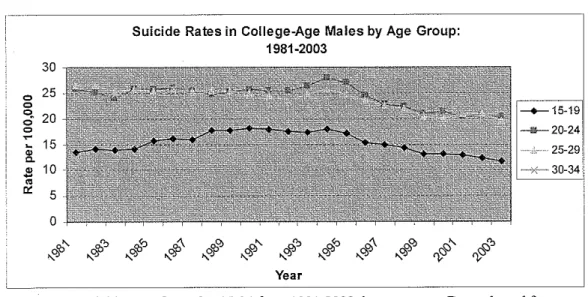
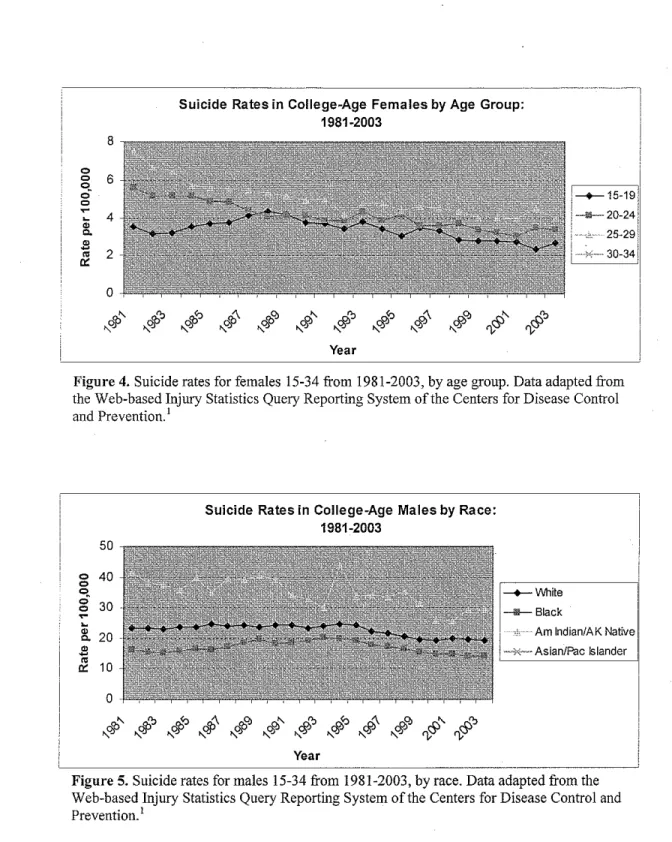
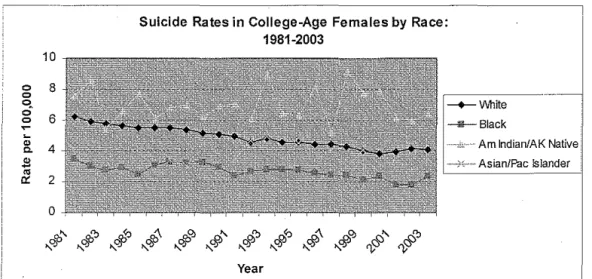
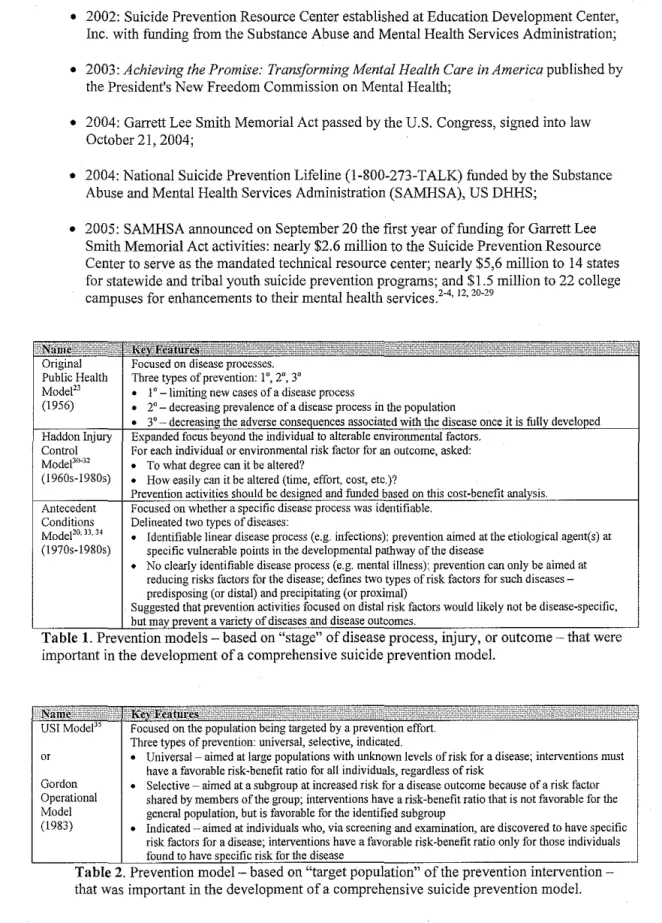
Figures 2-6 show recent trends in suicide rates for persons 15-34, by gender, age-group, and race.1
They show that the suicide rate continued to increase for young males until the mid-1990s, after
which the rate began trending back downward. The suicide rate for young females trended slowly,
but steadily downward during this time period for unclear reasons.
- - - ,
30
0 25
0
ci-
200 :: 15
~
2 10
~
0::
5
0
Suicide Rates in College-Age Persons by Gender: 1981-2003 (Age-Adjusted)
R>'" R>" -"'"' R>"\ R>"'
~'-
_,"> ""'"'~"\
"""'"' -"'" """" "q) "~"'-!)
1\.,.q; "<?.! "q) "~~""'!)-
"q)""'!)-
'"VIS' 1'),\J"'Year
Figure 2. Suicide rates for persons 15-34 from 1981-2003, by gender (age-adjusted). Data adapted from the Web-based Injury Statistics Query Reporting System of the Centers for Disease Control and Prevention.1
! · · · - - - ,
30
0 25 0 q
20
0 0
~
-
15"
c..& 10
~
0::
5
0
R>'-
cg;"
.._q; ~
L__,,,
Suicide Rates in College-Age Males by Age Group: 1981-2003
R>"'
$
cg;"'
~'- <§>" p,"> <§>" <§>"'c'-.._q; ~
"
.._q; ~ .._q;" "
fl
Year
&"
'V
Figure 3. Suicide rates for males 15-34 from 1981-2003, by age group. Data adapted from the Web-based Injury Statistics Query Reporting System of the Centers for Disease Control
0 0 q 0 0
~
~
c.
.fl
..
0:8
6
4
2
0
Suicide Rates in College-Age Females by Age Group: 1981-2003
$
# # $ #
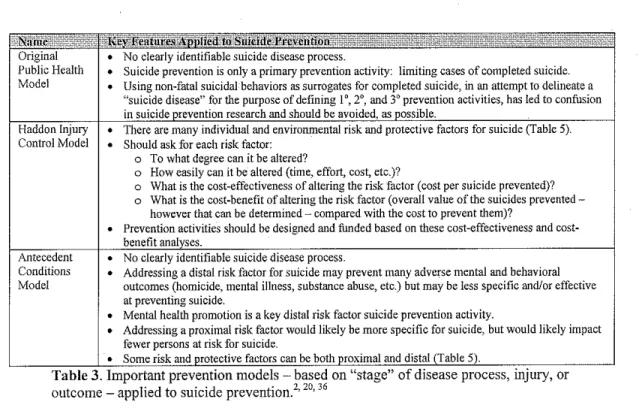
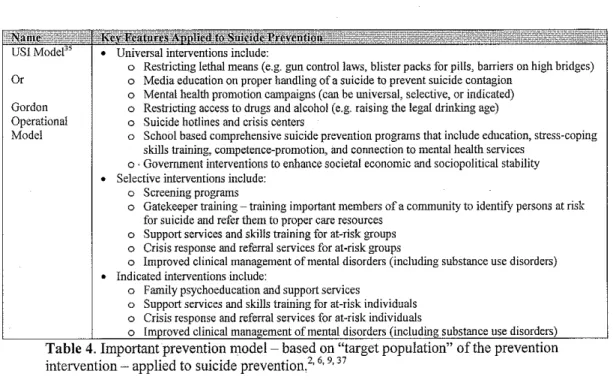
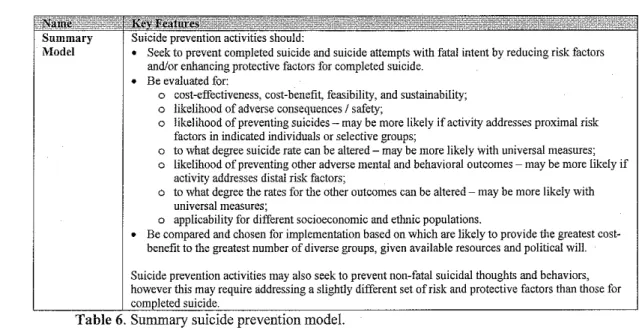
~
#
#
#
#
~ ~
I\ 1\; 1\; " I\ " " " "' " I'); I");
Year
Figure 4. Suicide rates for females 15-34 from 1981-2003, by age group. Data adapted from the Web-based Injury Statistics Query Reporting System of the Centers for Disease Control and Prevention.1
50
0 40
0 q 0
Suicide Rates in College-Age Males by Race: 1981-2003
----+--Vllhite
0
~ ~ w
c.
w ~
..
0:
30
20
10
-D-Biack 1
I
Am lndian/AKNative~~
1--0<~
.. Asian/Pac Islander I' I
0
6P"
dJ>""6]>">
$
dJ>""rfl>"
rJJ>""rfl>">
#
rJJ>""<S>" <S>""
" " " " " " " " " "
~
I');Year
Figure 5. Suicide rates for males 15-34 from 1981-2003, by race. Data adapted from the Web-based Injury Statistics Query Reporting System of the Centers for Disease Control and
Prevention.1
.---~·~---Suicide Rates in College-Age Females by Race: 1981-2003
0 0 q 0 0
~
"
c. $"'
'"
10
8
6
4
2
0
"'" cg," cg,"'
qp
cg,"'
<f>" <f'" <f'"'
#
<f'"'
&" &"
"q; " " " " " " " " " '"{; "VYear
Am lndian/AK Native
---1-0~ Asian/Pac !slander
Figure 6. Suicide rates for females 15-34 from 1981-2003, by race. Data adapted from the Web-based Injury Statistics Query Reporting System of the Centers for Disease Control and
Prevention.1
These statistics highlight that suicide continues to be an important cause of death in young adults
and that suicide prevention in late adolescents and young adults remains an important public
health concern.
Over the past few decades, college students have constituted an increasingly higher proportion of
all late adolescents and young adults, with record levels of enrollment each of the last few years.
Enrollment is projected to increase an additionall4% between 2004 and 2014.18 In 2002, there
were an estimated 80.4 million people 15-34, according to census projections: 20.4 million 15-19;
20.3 million 20-24; 18.9 million 25-29; and 20.8 million 30-34.19 In that same year, there were
just over 16.6 million students enrolled as undergraduate, graduate, or professional students in
United States degree-granting colleges and universities: 3.8 million 14-19 (roughly 19% of the
population 15-19); 63.0 million 20-24 (31 %); 21.0 million 25-29 (II%); and 13.0 million 30-34
(6%).18 Addressing suicide prevention in late adolescents and young adults will only be adequate
Silverman, in his review of college student suicide rates, notes six other key reasons for addressing
college student suicide.13 Suicide is seen as antithetical to ideals held by many for collegiate life:
achievement, fulfillment, personal and intellectual growth, and hope, among others. The popular
claim that college is the "best time of your life" is inconsistent with suicide. In addition, many
believe psychological growth and development to be one of the important goals of any college
education, and hold colleges responsible for the mental health of their students. This ties into an
in loco parentes role many expect colleges to play on behalf of their young students, many of
whom are away from their parents for the first time. Aside from the inherent personal tragedy of
suicide, a student suicide also hurts the campus community. Suicide is an extremely disrupting
event on a college campus, interfering with the many other missions and pursuits of the school and
sewing doubt about the health of the campus community among students, professors, and other
concerned parties. College student suicide is also a concern because of the role colleges play as
models for society. Many societal trends are first seen in college settings, and colleges are
expected to set the tone for much of the intellectual, social, and cultural activity in society. Also,
colleges represent controlled settings where large groups of young adults interact. Programs
aimed at young adults can be attempted there with greater ease than in other settings, and colleges
campuses have served for decades as the testing grounds for many types of societal initiatives.
In addition to Silverman's concerns, college student suicides should be a public health priority due
to their high societal cost Society invests a great deal of resources in the education of co !lege students, who later become an extremely productive segment of the population. The loss of this
investment and the lost productivity of the deceased student are large costs to society. While the
actual value ofthis lost productivity is difficult to calculate, the Institute of Medicine estimated
that the lost productivity for all suicides committed in 1998 alone cost society $11.8 billion2
These many concerns regarding suicide in college students have been appreciated for many years.
Little is known, however, about the actual suicide rate in colleges. Likewise, although many
colleges have systems in place to address student mental health, little is known about prevention
of suicide in college students. The recent political momentum to reorganize our society's
approach to suicide prevention, fund youth suicide prevention activities, and fund enhancements to
mental health services on college campuses, may provide an opportunity to obtain accurate,
nationally-representative data on college student suicide for the first time, develop effective
prevention initiatives in college students, and enact programs that will significantly reduce the
incidence of suicide in our society's most promising young people.
The purpose of this paper is to begin the process of developing and evaluating that premise. The
flrst part of the paper is a narrative review of suicide prevention concepts and the recent
recommendations regarding suicide prevention. It also includes a revieW of what is known about suicide in college students and a discussion of how the recent recommendations on general suicide
prevention could be applied more specifically to college student suicide. The second part of the
paper is a systematic review of the literature on suicide prevention in college students. It includes
only articles with data pertinent to the public health approach to suicide prevention. It will
hopefully provide a foundation of what we do know about suicide prevention in colleges and point
to what research, policies, and actions must be employed next if we are to successfully prevent
suicide in college students.
SUICIDE PREVENTION CONCEPTS AND THE POLITICS OF SUICIDE PREVENTION
Suicide prevention is conceptually somewhat difficult and cumbersome. At its most basic level,
suicide prevention should include any activity that lowers the incidence of completed suicide
within a population. This defmition, however, places within the purview of suicide prevention an
enormously broad range of activities and concerns. It forces prevention to overlap with other
health-related activities, such as disease treatment, health maintenance, and health promotion.
creates confusion among prevention researchers and planners who may have very different
conceptual models of prevention.
This broad scope for the suicide prevention research field limited its progress for many decades.
Researchers produced studies pertinent to various small pieces of the suicide prevention puzzle,
however these studies were not built ftom a common perspective. This limited the ability of
researchers to compile the data into comprehensive, conclusive pictures of the risk and protective
factors for suicide and suicide behavior, successful prevention interventions for suicide, and
effective suicide prevention programs for different populations. Researchers needed a clear
framework and common perspective for suicide prevention research.Z0
The field of suicide prevention research is at a potentially significant juncture in its development
because within the last decade, researchers have created a more comprehensive conceptual
framework for suicide prevention activities that has the potential to organize research in this area,
allow studies to be compared, and focus research towards developing comprehensive, effective
suicide prevention programs for many diverse populations. This has been accompanied by a
significant increase in political will to address suicide prevention nationally in the United States,
improving the possibility that effective suicide prevention programs will be funded. These
scientific and political advances have culminated in the development of a national strategy for
suicide prevention for the United States, and the funding of statewide and tribal youth suicide
prevention activities through the Garrett Lee Smith Memorial Act?' 12' 21
Key steps' in the development of the improved conceptual framework for suicide prevention
activities, the national strategy for suicide prevention, and the recent youth suicide prevention
initiatives were:
• 1956: original Public Health Model for Prevention developed;
• 1958: Los Angeles Suicide Prevention Center opened, funded by the U.S. Public Health Service, directed by Edwin Shneidman, Ph.D.;
• 1966: Center for the Stndy of Suicide Prevention (later renamed the Suicide Prevention Research Unit) established at the National Institute of Mental Health;
• 1968: American Association of Suicidology founded by Edwin Shneidman, Ph.D.;
• 1950s-1980s: several alternative models for the prevention of"physical" illnesses and injuries developed (Tables I and 2);
• 1983: CDC Violence Prevention Unit (later subsumed into the National Center for Injury Prevention and Control) established; key focus area was a recent increase in the rate of youth suicide;
• 1987: American Foundation for Suicide Prevention founded;
• 1989: Report of the Secretary's Task Force on Youth Suicide published by the U.S. Department of Health and Human Services;
• 1994: Reducing risks for mental disorders :frontiers for preventive intervention research
published by the Institute of Medicine; presented a comprehensive overview of and model for the prevention of mental disorders;
• 1995: Suicide prevention toward the year 2000, a collection of key articles on suicide prevention published; included adaptations of various prevention models to suicide, creating a more comprehensive framework for suicide prevention activities;
• 1996: Suicide Prevention Action Network (SPAN USA) founded with the goal of preventing suicide through public education, community action, and advocacy;
• 1996: Prevention of Suicide: Guidelines for the Formulation and Implementation of
National Strategies published by the World Health Organization (WHO) and the United
Nations; urged member nations to develop national suicide prevention strategies;
• 1998: National Suicide Prevention Conference held in Reno, NV during which key stakeholders developed the foundational goals and objectives of a national strategy for suicide prevention for the United States; organized in part by SPAN USA;
• 1999: The Surgeon General's Call to Action to Prevent Suicide, a blueprint for developing the United States' national suicide prevention strategy, published by U.S. Surgeon General Dr. David Satcher, with the support of many stakeholders including SCAN USA and members of Congress;
• 200 I: National Strategy for· Suicide Prevention published by the U.S. Department of Health and Human Services (US DHHS), Public Health Service; officially established the United States' national suicide prevention strategy, with II goals and 68 objectives, based on the public health approach to prevention;
• 2002: Reducing Suicide: A National Imperative published by the Institute of Medicine;
• 2002: Suicide Prevention Resource Center established at Education Development Center, Inc. with funding from the Substance Abuse and Mental Health Services Administration;
• 2003: Achieving the Promise: Transforming Mental Health Care in America published by the President's New Freedom Commission on Mental Health;
• 2004: Garrett Lee Smith Memorial Act passed by the U.S. Congress, signed into law October 21, 2004;
• 2004: National Suicide Prevention Lifeline (1-800-273-TALK) funded by tbe Substance Abuse and Mental Health Services Administration (SAMHSA), US DHHS;
• 2005: SAMHSA announced on September 20 the first year of funding for Garrett Lee Smith Memorial Act activities: nearly $2.6 million to the Suicide Prevention Resource Center to serve as the mandated technical resource center; nearly $5,6 million to 14 states for statewide and tribal youth suicide prevention programs; and $1.5 million to 22 college campuses for enhancements to their mental health services.2-4• 12• 20-29
Original Focused on disease processes.
Public Health Three types of prevention: 1°, 2°, 3°
Modd3
•
1 o -limiting new cases of a disease process(1956)
•
2°- decreasing prevalence of a disease process in the population•
3°- decreasincr the adverse consequences associated with the disease once it is fully developedHaddon Injury Expanded focus beyond the individual to alterable environmental factors.
Control For each individual or environmental risk factor for an outcome, asked:
Moctee0
-32
•
To what degree can it be altered?( 1960s-1980s)
•
How easily can it be altered (time, effort, cost, etc.)?Prevention activities should be designed and funded based on this cost-benefit analysis.
Antecedent Focused on whether a specific disease process was identifiable.
Conditions Delineated two types of diseases:
Modefo. n. 34
•
Identifiable linear disease process (e.g. infections): prevention aimed at the etiological agent(s) at(197Ds-1980s) specific vulnerable points in the developmental pathway of the disease
•
No clearly identifiable disease process (e.g. mental illness): prevention can only be aimed at reducing risks factors for the disease; defines two types of risk factors for such diseases -predisposing (or distal) and precipitating (or proximal)Suggested that prevention activities focused on distal risk factors would likely not be disease-specific, but may prevent a variety of diseases and disease outcomes.
Table 1. PreventiOn models- based on "stage" of d1sease process, mJury, or outcome- that were important in the development of a comprehensive suicide prevention model.
US! Model'
or
Gordon Operational Model (1983)
Focused on the population being targeted by a prevention effort. Three types of prevention: universal, selective, indicated.
• Universal- aimed at large populations with unknown levels of risk for a disease; interventions must have a favorable risk-benefit ratio for all individuals, regardless of risk
• Selective- aimed at a subgroup at increased risk for a disease outcome because of a risk factor shared by members of the group; interventions have a risk-benefit ratio that is not favorable for the general population, but is favorable for the identified subgroup
• Indicated- aimed at individuals who, via screening and examination, are discovered to have specific risk factors for a disease; interventions have a favorable risk-benefit ratio only for those individuals found to have specific risk for the disease
The Framework for Suicide Prevention Activities
The current framework for suicide prevention activities was developed by applying prevention
models from tbe fields of public health and injury control to suicide (Tables 3-5). One group of
models focused on the "stage" of a disease process, injury, or outcome. A second type of model
focused on the "target population" of the prevention intervention. By applying concepts from both
the "stage" and the "target population" models, prevention interventions can be categorized and
compared to each other when deciding which interventions to implement, given available
resources (Table 6)11
Original
•
No clearly identifiable suicide disease process .Public Health
•
Suicide prevention is only a primary prevention activity: limiting cases of completed suicide . Model•
Using non~ fatal suicidal behaviors as surrogates for completed suicide, in an attempt to delineate a"suicide disease" for the purpose of defining I 0
, 2°, and 3° prevention activities, has led to confusion
in suicide prevention research and should be avoided, as possible.
Haddon Injury
•
There are many individual and environmental risk and protective factors for suicide (Table 5) .Control Model
•
Should ask for each risk factor:0 To what degree can it be altered?
0 How easily can it be altered (time, effort, cost, etc.)?
0 What is the cost~effectiveness of altering the risk factor (cost per suicide prevented)? 0 What is the costbenefit of altering the risk factor (overall value of the suicides prevented
-however that can be detennined- compared with the cost to prevent them)?
•
Prevention activities should be designed and funded based on these cost~effectiveness and cost-benefit analyses.Antecedent
•
No clearly identifiable suicide disease process .Conditions
•
Addressing a distal risk factor for suicide may prevent many adverse mental and behavioralModel outcomes (homicide, mental illness, substance abuse, etc.) but may be less specit1c and/or effective
at preventing suicide.
•
Mental health promotion is a key distal risk factor suicide prevention activity .•
Addressing a proximal risk factor would likely be more specific for suicide, but would likely impact fewer persons at risk for suicide.•
Some risk and protective factors can be both proximal and distal (Table 5) .US! Model"
•
Universal interventions include:o Restricting lethal means (e.g. gun control laws, blister packs for pills, barriers on high bridges)
Or o Media education on proper handling of a suicide to prevent suicide contagion
o Mental health promotion campaigns (can be universal, selective, or indicated)
Gordon o Restricting access to drugs and alcohol (e.g. raising the legal drinking age)
Operational o Suicide hotlines and crisis centers
Model
•
o School based comprehensive suicide prevention programs that include education, stress-coping skills training, competence-promotion, and connection to mental health services
o. Government interventions to enhance societal economic and sociopolitical stability Selective interventions include:
o Screening programs
o Gatekeeper training- training impGrtant members of a community to identify persons at risk for suicide and refer them to proper care resources
o Support services and skills training for at-risk groups o Crisis response and referral services for at-risk groups
o Improved clinical management of mental disorders (including substance use disorders) • Indicated interventions include:
o Family psychoeducation and support services
o Support services and skills training for at -risk individuals o Crisis response and referral services for at-risk individuals
o Improved clinical manaaement of mental disorders (including substance use disorders) Table 4. Important prevention model- based on "target population" of the prevention intervention- applied to suicide prevention,2' 6' 9' 37
• Access to effective clinical services for mental, Mental disorders, including substance use disorders (B)
physical, and substance abuse disorders (B) • Restricted access to lethal means for suicide (P) • Strong family and community support (B) • Family cohesion (B)
• Skills in problem solving and non-violent conflict resolution (B)
• Resiliency to stress (B)
• Attending school and/or working (B) • Cultural or religious taboos against suicide (B) • Societal economic and sociopolitical stability (B)
• Hopelessness (P)
• Impulsive and/or aggressive character traits (B) • Poor problem solving skills, poor conflict resolution
skills, and cognitive inflexibility (B) • History of trauma or abuse (D) • Some physical illnesses (P) • Previous suicide attempt (D) • Family history of suicide (D)
• Family history of mood or substance use disorders (D) • Severely stressful life events, particularly occupational
loss, financial loss, legal problems, academic difficulties (if in school), incarceration (P)
• Loss of important relationship or social connection (P) • Easy access to lethal means for suicide, particularly
firearms (P)
• Exposure to suicide, particularly if exposed in a manner likely to encourage suicide contagion (P)
• Lack of social support I Social isolation (B) • Exposure to stigma against help-seeking behavior (B)
Poor access to health care, particularly for mental illness and substance use disorders (B)
Cultural or religious beliefs that encourage suicide (B) Abnormal functioning of the hypothalamic-pituitary-adrenal axis (D)
• Alterations in serotinergic and noradrenergic functions in the central nervous system (P)
Summary Model
Suicide prevention activities should:
• Seek to prevent completed suicide and suicide attempts with fatal intent by reducing risk factors and/or enhancing protective factors for completed suicide.
• Be evaluated for:
o cost-effectiveness, cost-benefit, feasibility, and sustainability; o likelihood of adverse consequences I safety;
o likelihood of preventing suicides- may be more likely if activity addresses proximal risk factors in indicated individuals or selective groups;
o to what degree suicide rate can be altered- may be more likely with universal measures; o likelihood of preventing other adverse mental and behavioral outcomes - may be more likely if
activity addresses distal risk factors;
o to what degree the rates for the other outcomes can be altered- may be more likely with universal measures;
o applicability for different socioeconomic and etlmic populations.
• Be compared and chosen for implementation based on which are likely to provide the greatest cost-benefit to the greatest number of diverse groups, given available resources and political will.
Suicide prevention activities may also seek to prevent non-fatal suicidal thoughts and behaviors, however this may require addressing a slightly different set of risk and protective factors than those for completed suicide.
Table 6. Summary suicide prevention model.
Applying these models to suicide prevention required and resulted in the elucidation of important
semantic and relational concerns in suicide prevention:
Suicide is an adverse behavioral event, not a disease process. No common pathway has been
elucidated for all suicides. Suicide is associated with certain risk and protective factors at the
population level, however the exact causal pathways from these factors to suicide are unclear and
difficult to delineate. Also, no risk factor has been shown to apply to all individuals who complete
suicide. As such, there is thus far no identifiable "suicide disease," and suicide must be viewed as
a behavioral outcome that results from many different disease processes?· 7' 20
Suicide has an intimate relationship with mental illness, but not all suicides can be associated
with a clearly diagnosable mental illness. Mental illness is a significant risk factor for suicide and
may be a necessary risk factor for suicide. Roughly 90% or more of all suicides are associated
with a diagnosable mental illness (including substance abuse disorders) in epidemiological studies.
For some persons who commit suicide, however, no diagnosable mental illness can be clearly
identified using current disease classification schema, and suicide may have a unique pathway.
Mental illness is also not sufficient alone to cause suicide, as the vast majority of all persons with
Non-fatal suicidal behaviors should not be used as surrogates for completed suicide in research
studies, to the extent possible. A strong correlation exists between non-fatal suicidal behaviors
and completed suicide, however these behaviors have not been conclusively shown to precede all
completed suicides. Moreover, some of these behaviors are likely unrelated or only slightly
related to completed suicide in some populations. Non-fatal suicidal behaviors include thoughts,
threats, fatal self-injurious behavior, and unsuccessful attempts with fatal intent. These
non-fatal suicidal behaviors are often used as surrogates for completed suicide in prevention research
because completed suicide is relatively rare, and only very large studies are able to discern
differences in completed suicide rates between study groups. This likely leads to inaccurate
conclusions, however, because of the likely subtle differences in risk and protective factors
between non-fatal suicidal behaviors and completed suicide in some populations. To gain as
accurate a pichire as possible of suicide prevention, researchers should not use non-fatal suicidal
behaviors as surrogates for completed suicide to the extent possible financially and logistically.
The exceptions may be nonfatal suicide attempts with fatal intent and nonfatal suicide attempts
that would have been fatal without intervention (these two types of suicide attempts will
subsequently be referred to as serious suicide attempts)?' 7 -9,20
The National Strategy for Suicide Prevention
While these models for suicide prevention provide a framework for designing, comparing, an.d
choosing for implementation different suicide prevention activities, they do nothing to ensure that
suicide prevention efforts will be undertaken broadly or implemented in a coordinated, logical
manner in diverse populations across the United States. This function will hopefully be served by
the recently developed national strategy for suicide prevention, fueled by on-going political will in
key stakeholder groups. The foundation this strategy is the public health approach to prevention,
an iterative process with the following steps:
I. defme the problem and perform surveillance of the problem;
3. develop and test interventions aimed at altering the risk and protective factors;
4. implement interventions in various populations; and
5. evaluate the effectiveness of the interventions in order to modifY and combine them into comprehensive prevention programs. 3' w, 40
In the first phase of developing the national strategy, the US DHHS Public Health Service and key
stakeholders created a blueprint for how the public health approach to prevention will be modified
for suicide prevention, supported, and ca)Tied out in the United States. This blueprint- National
strategy for suicide prevention: goals and objectives for action, published in 2001 -contains 11
broad goals and 68 objectives for meeting these goals (Table 7).
1 Promote awareness that suicide is a oublic health oroblem that is oreventable.
2 Develop broad-based support for suicide prevention.
3 Develop and implement strategies to reduce the stigma associated with being a consumer of mental health, substance
abuse, and suicide prevention services.
4 Develop and implement community-based suicide prevention programs.
5 Promote efforts to reduce access to lethal means and methods of self-harm.
6 Implement trainino for recognition of at-risk behavior and deliverv of effective treatment.
7 Develoo and oromote effective clinical and professional oractices.
8 Increase access to and community linkages with mental health and substance abuse services.
9 Improve reporting and portrayals of suicidal behavior, mental illness, and substance abuse in the entertainment and news media.
10 Promote and support research on suicide and suicide prevention.
11 Improve and expand surveillance systems.
Table 7. The eleven goals of the Natwnal Strategy for Suzczde Pr""entwn.
'
The next phase of developing the national strategy will be to create an agenda of specific actions
for meeting the 68 objectives. This process is being undertaken by a public-private partnership,
spearheaded by SAMHSA, the Centers for Disease Control and Prevention (CDC), the National
Institutes of Health, the Health Resources and Services Administration, and the Indian Health
Service. If the national strategy is to be successful, however, its goals and objectives must be
disseminated beyond the federal level. They must be incorporated into the pursuits of the many
key public and private stakeholders in suicide prevention throughout diverse communities across
the U.S., who must carry out the actions developed for the national strategy. 3• 41
SUICIDE PREVENTION IN COLLEGES AND UNIVERSITIES
The colleges and universities ofthe U.S. will be one of the first communities targeted by the
development of the national strategy. In the late 1990s and early 2000s, data emerged suggesting
that an increasing number of college students were suffering from mental illness, and that the
severity of illness suffered by college students was increasing. Particularly influential were
articles in The Chronicle of Higher Education, Professional Psychology: Research and Practice ,
and Newsweek, and a report from the National Institute on Alcohol Abuse and Alcoholism that,
respectively:
• described a survey of3,680 first-year students at 50 four-year institutions who were surveyed at the beginning of their freshman year in Fall2000, and again in Spring 2001, with results showing an increase in the percentage reporting feeling depressed during the previous year from 8.2% to 16.3%;
• discussed the results of a 13-year prospective study that showed that the severity of symptoms treated at the counseling center of a large Midwestern university had significantly increased for most types of symptoms;
• alerted the public to the recent data showing a decline in the mental health of college students; and
• called for efforts to alter the culture of drinking on college campuses and its adverse consequences, including that roughly 1,400 college students deaths each year are associated with alcohol consumption and that about 25% of college students report academic problems due to alcohol consumption.4245
In late 2002, the U.S. House of Representatives Committee on Education and the Workforce
called for recommendations for improvements to the Higher Education Act, which was scheduled
for reauthorization in the lOS"' Congress (2003-2005). The American Psychological Association,
citing the above reports, recommended the Higher Education Act be amended to create a new
program authorizing funds to centers of campus mental health services to "reduce 'self-defeating'
habits that predict failure in post-secondary study."46' 47 In November 2003, Representatives from
the committee introduced legislation- the Campus Care and Counseling Act
(H.R.3593)-incorporating this recommendation. A companion bill (S.2215) was later introduced in the Senate.
During this same period of time, the movement to reduce the rate of youth suicide in the U.S. was
gaining increasing political momentum.· This movement began in the early 1980s, as surveillance
data demonstrated alarming increases in the suicide rate for adolescents and young adults in the
U.S. over the prior two decades. In March 2004, after a U.S. Senate Health, Education, Labor, and
-the Youth Suicide Early Intervention and Expansion Act of2004 (S.2175)- to fund statewide
youth suicide prevention programs and youth suicide prevention research. A companion bill was
later introduced in the House (H.R.4557).48
Key aspects of these bills were combined to create the Garrett Lee Smith Memorial Act, which
was introduced simultaneously in the Senate (S.2634) and the House (H.R.4799) in July 2004.
The bill was named after Senator Gordon Smith's son, who committed suicide in September 2003
while in college.49 An amended version of the bill was signed into law by President Bush in
October 2004 (Public Law No: 108-355).
In September 2005, SAMHSA announced the first year of funding for activities approved under
the new law, which included $1.5 million for dollar-for-dollar matching grants to 22 college
campuses for the Mental and Behavioral Health Services on Campus Program component of the
law. According to the law, the grants may only fund: educational seminars; hot lines;
informational materials; gatekeeper training programs for students and other campus personnel to
respond appropriately to students with mental health problems; and programs to link colleges that
do not have campus mental health services with community mental health care providers who can
serve the needs of students. Despite these limitations, the program provides a significant
opportunity to help mentally troubled college students on the 22 campuses and to study how best
to provide campus mental health services. Combined with the Youth Suicide Early Intervention
and Prevention Strategies Program component of the law, it also provides an opportunity to study
how best to prevent suicide on college campuses. Specific codified missions of the technical
assistance center funded by the law are to provide assistance with the evaluation of outcomes of
the Mental and Behavioral Health Services on Campus Program and the dissemination of
evidence-based best practices for mental health services at colleges and universities, including
suicide prevention. 12
To take advantage of the recent political will and funding to prevent suicide on college campuses,
the public health approach to prevention (strategy) and the sunnnary model for comparing suicide
prevention activities (framework) must be applied accurately to college student suicide prevention
(Figure I). Some progress has already been made in defining the problem of suicide of college
campuses (Step I), identifYing risk and protective factors for suicide in college students (Step 2),
and developing and testing interventions aimed at altering the risk and protective factors for
college student suicide (Step 3), over the last few decades. The efforts stemming from the Garrett
Lee Smjth Memorial Act activities will be the first large-scale attempts to implement
comprehensive prevention interventions on college campuses (Step 4) and evaluate the
effectiveness of such interventions (Step 5). In the remainder of this paper, the prior progress on
Steps 1-3 will be systematically reviewed.
Methods
The aim of the systematic review was to locate English-language articles relevant to:
I. defming the rate of;
2. identifYing risk and protective factors for, and;
3. developing and testing interventions aimed at altering the risk and protective factors for
completed suicides and serious suicide attempts on U.S. college campuses. The following
PubMed (which includes MEDLINE 1966-March 2006 and OLDMEDLINE 1950-1965) MeSH
terms were identified as relevant: Library Schools; Schools, Health Occupations; Universities;
Students; Student Health Services; and Self-Injurious Behavior. The following text terms were
also included in the search: college, colleges, university, universities, suicide, suicides,
parasuicide, parasuicides, and suicidal. The terms relevant to college campuses were combined,
yielding 223,479 articles; while the terms relevant to suicide were combined, yielding 47,046
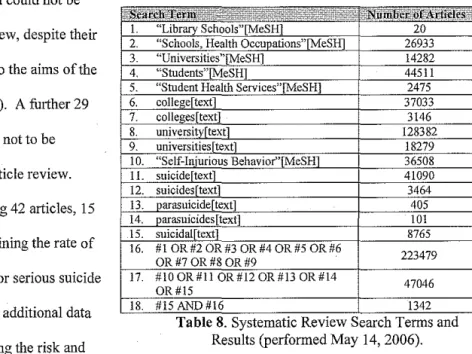
articles. The junction of these two groups of articles yielded 1342 articles (Table 8). The article
titles were examined for possible relevance to the three target areas, resulting in 284 articles. The
remaining 99 articles with no available online abstract. From this, 185 articles were deemed not to
be relevant. Of the remaining 99 articles, 28 could not be obtained through available library and
online resources and could not be
1. 2. included in this review, despite their
3. possible relevance to the aims of the 4. 5. review (Appendix 1). A further 29 6. 7. 8. 9. article were deemed not to be
10. relevant after full article review. 11. 12. 13. 14. Within the remaining 42 articles, 15
15.
16. were relevant to defming the rate of
completed suicides or serious suicide 17. attempts, two added additional data 18.
relevant to identifying the risk and
"Library Schools"[M:eSH] 20
"Schools, Health Occupations"[MeSH] 26933
"Universities"[MeSH] 14282
"Students"[MeSHJ 44511
"Student Health Services"[MeSH] 2475
college[text] 37033
colleges[text] 3146
university[textl 128382
universities_[!:ext] 18279
"Self-Injurious Behavior''fMeSH 36508
suicideftext] 41090
suicides[textl 3464
oarasuicide[text] 405
parasuicides[text] 101
suicidal[text] 8765
#! OR#2 OR#3 OR #4 OR#5 OR#6
223479 OR#70R#80R#9
#10 OR #11 OR#l2 OR #13 OR #14
47046 OR#15
#15 AND#!6 1342
Table 8. Systematic Rev1ew Search Terms and Results (performed May 14, 2006).
protective factors for completed suicides or serious suicide attempts, and nine were loosely
relevant to developing and testing interventions aimed at altering the risk and protective factors for
completed suicides or serious suicide attempts. An additional16 articles are included and briefly
discussed in this review, as they are peripherally relevant to the three target areas. These articles
report data from efforts to develop and test suicide assessment scales in college populations.
During each step of this process, reasons an article was deemed not to be relevant to the three
target areas primarily included that the study provided no new primary data or that it focused on a
non-U.S. population, a non-college population, an alternate use of the term suicide (e.g. suicide
genes in apoptotic cells), and/or suicidal behaviors that were not completed suicides or serious
suicide attempts.
Results: The Epidemiology of College Student Suicide
Fifteen articles were identified that provide relevant primary data on the rate of completed suicides
campus-wide populations of college students, four report data specific to medical student suicide,
and two report data on serious suicide attempts. Each study of completed suicides was judged
based on how it answered several key questions pertinent to determining the incidence of college
student suicide:
• was the data collected prospectively or retrospectively;
• how were suicides identified and verified: campus student health services records, medical
examiners reports, local news reports, surveys of student affairs administrators, local
hospital and clinic records, etc.;
o how were deaths with an accidental or equivocal cause of death handled;
• what definition of "student" suicide was used;
o were international, part-time, distance-learning, or other types of non-traditional
students included;
o were students from satellite campuses included, or only students from main
campuses;
o how long after graduation, medical or academic leave, or other reason for
leaving the campus community was a person still considered a student;
• what definition of "student-years" at risk for suicide was used; o was a 9-month or 12-month academic calendar used;
o how was the number of students at risk for suicide determined.
Many studies of completed suicides were also concerned with the question of whether college
students commit suicide at a different rate than age-matched non-student controls. For these
studies, key questions included which population's suicide rate was used for comparison and were
the populations standardized with regard to key variables.
The following are brief descriptions of each of the nine studies reporting data on the rate of
completed suicide in campus-wide populations, as well as the three studies reporting data on the
rate of completed suicide in medical students. Tables 9a-9d summarize whether each
campus-wide study was retrospective or prospective, how college student suicides were identified, what
defmitions of"student" suicide and "student-years" at risk for suicide were used by each study,
and the results of each study. Tables I Oa-1 Ob surumarize the same information for the medical
student studies.
• Big Ten Student Suicide Study: Ambispective study of the eleven universities comprising the Big Ten Athletic Conference, as well as the University of Chicago. Data collected retrospectively from September I, 1980-August 31, 1985, and prospectively from
MultiMSite Study, 1982M198463
in the Big Ten Athletic Conference plus the University of Chicago.
four-county area adjacent to Fordham University.
retrospective, part prospective surveys of Student Counseling Services, confirmed via medical examiner's records or at least two other sources. Additional caseM finding done via examination of medical examiner's records. Part-time and full-Part-time students included. Suicides within 6M months of last enrollment counted as "student suicides."
surveys
representatives of the colleges and universities. Unclear how each institution defined "student" for case-finding or determined the number of suicides. No efforts to confirm suicides. No additional case-finding performed.
enrollment.
9-month, or other-length academic calendar used; unclear what "students at risk" based upon, except that 17% were
over I 0 years • Roughly 3.5 million student-years at risk • Overall rate for females: 4.5 (95% CI: 3.6-5.5) • Overall rate for males: 10.0 (8.9-11.3) • Overall rate: 7.5 (6.8M8.4)
• Rates that show statistically significant differences: o students 17-19 <students in 5-year age groups 20-44 o students 20-24 <students 25-29, 35-39,30-39 o freshman students< junior, senior, graduate students o sophomore students < graduate students
o women 17-19 <all other female age groups o men 17-19 <men 20-24, 25-29, 35-39, 30-39, 40-49 o men 20-24 <men 25-29,35-39
o freshman females< female juniors, graduate students, and women as a whole o sophomore females< female juniors, graduate students
o freshman males < male seniors, graduate students, and men as a whole o females< males for 17-19, freshmen, sophomores, seniors
• Statistically significant differences in comparisons with national rates (per 100,000): o Overall (both genders, ages 17-49): student rate 7.5, national rate 15.0, p<0.0001 o Both genders, 17-19: student rate 3.4, national rate 11.7, p<0.001
o Both genders, 20-24: student rate 7.1, national rate 15.2, p<0.001 o Women overall (ages 17-49): student rate 4.5, national rate 6.4, p=0.0042 o Women 17-19: student rate 1.2, national rate 4.0, p=0.004
o Men overall (ages 17-49): student rate 10.0, national rate 23.7, p<O.OOOI o Men 17-19: student rate 5.7, national rate 19.1, p<0.001
o Men 20-24: student rate 9.0, national rate 25.5, p<0.001 o Men 25-29: student rate 16.3, national rate 25.7, p<0.001
• 1::. completed smc1des over j years
• Student population totaled 97,678 over an unclear time period • No suicide rate calculated in the article from the data
Study, 1970~ 197914,
w institutions in the
American College Health Association.
Massachusetts, Amherst Campus.
surveys member institutions of the ACHA known to have a formally dedicated student mental health care service. Unclear how each institution defined "student" for
case~ finding or determined the number of suicides. No efforts to confirm suicides. No additional
case~ finding performed.
from the University Health Services and the University Department of Public Safety. Unclear if parHime or other non-traditional students were included in case~ finding. Article suggests a suicide was considered a "student suicide" if the person had been enrolled at any point during the
12~month academic calendar. No other efforts to confirm suicides performed. No additional case-finding performed.
calendar used. "Students at risk" based on full~time
Fall term enrollment.
calendar used. "Students at risk" based on "headcount" enrollment for the Fall term.
• 116 completed suicides over 5 years • 1,662,709 student-years at risk • Overall rate: 7.0 (5.8-8.5)
• No statistically significant differences between any two years in the study • No statistically significant differences when comparing suicide rates between
institutions of different size (0~4999 students, 5000~14999, 15000~19999, >20000) • Statistically significant differences in comparisons with national rates (per 100,000)
for a white, 20-24 year-old, 60% male comparison population:
o In each year, the student suicide rate was lower than the comparison population o Overall rate for the comparison population, 1971-1976: 17.3 (16.7-17.9) Results from second publication:
• Added some data from the initial 5 years of the study • 210 completed suicides over 8 years
• 2,870,575 student-years at risk
• Overall rate: 7.3 (no confidence interval listed)
• Overall Standard Mortality Ratio: 41 (calculated from national rates for a white,
20-24 vear-old. 60% male ' ~ · '··
19 completed suicides over 20 years • 336,282 student-years at risk
• Overall rate: 5.6 (no confidence interval listed)
• Overall rate for females: 3.7 (no confidence interval listed) • Overall rate for males: 7.0 (no confidence interval listed)
• Rate frOm 1959-60 to 1963-64, both genders: 13.8 (no confidence interval listed) • Rate from 1964-65 to 1968-69, both genders: 7.4 (no confidence interval listed) • Rate from 1969-70 to 1973-74, both genders: 0.9 (no confidence interval listed) • Rate from 1974-75 to 1978-79, both genders: 6.5 (no confidence interval listed) • No statistical comparisons were done between suicide rates from various years or
combinations of years, and the rates were not compared to a standardized population • Gives descriptive statistics for suicides including gender, class level, marital status,
race/ethnicity, history of contact with mental health and medical services, and of this data with other
of College-Age Persons,
1962-19775~
·Study primarily reported in an article that was unable to be obtained in available library and online resources.6~
Table 9c. Defining
certificate records for all of South Dakota for all persons 18-24 with suicide listed as cause of death. "Student" identification based solely on listed occupation on death certificate. No other efforts to confinn suicides or student status performed. No additional
certificate records for Los Angeles County to identify college student suicides. An unclear procedure was used to examine all equivocal deaths as possible suicides. Unclear what procedures used to identify college students in death certificates or if any additional case-finding efforts were performed.
year used. Unclear how the numbers for persons-at-risk for suicide, both students and non-students, were determined.
year used. "Students at risk" based on the college student population of Los Angeles County during the study; it is unclear how this was determined.
• 31 completed suicides over 16 years • 363,106 student-years at risk
• Overall rate for "students:" 8.54 (no confidence interval listed) • Overall rate for "non-students:" 12.13 (no confidence interval listed) • Difference between rates statistically significant (p=0.05)
• No data comparing various years or time periods within the study to each other, except to note that the suicide rate for the entire cohort had doubled from the first quarter of the cohort to the last quarter of the cohort
• 78
• Study continued until1968
• Students-at-risk per year ranged from 176,000-300,000
• Overall rate for students ranged from 5.0-5.1 from 1960-1967 (no confidence intervals listed)
• Overall rate for students in 1968: 7.2 (no confidence interval listed)
• Overall rate for persons 15-29 in Los Angeles County reported to be 2-3 times the rate for students throughout the study; no confidence intervals or p-values listed; it appears no adjustments were made to account for potential confounding effects other than age in the comparison
Retrospective review of records from multiple sources associated with UCB, confirmed via medical examiner's records. Criterion for "student" suicide required the student to be enrolled in courses during the Fall or Spring semester at the time of the suicide; summer sessions were not included in tl1e study. Unclear ifpart~time or other non~traditional students included in the study.
from multiple sources associated with Yale, confirmed via medical examiner's records. Unclear if parHime students were included in case-finding, though one international student was included in the number of student suicides. Any suicide occurring within 12 months of a student withdrawing from college or being given a psychiatric leave of absence was still considered "student suicide."
year used. "Students at risk" calculated by multiplying the semester enrollment (as. determined by the campus registrar) for each semester in the study by the length of a semester (0.375 years) and adding the resulting values.
calendar used. Unclear how the number of "students at risk" calculated.
• 131,844.75 student~years at risk
• Overall rate: 17.44 (no confidence interval listed)
• Overall rates given for 5~year age ranges between 15 and 49; no confidence intervals or p~values listed; age ranges extrapolated from data collected only in 1956 • Overall rates per 5~year age range compared to statewide California data from the
study period, matched by age via Standard Mortality Ratios; no other adjustments were made to account for other confounding effects, including race and gender; no confidence intervals or p-values listed except for overall SMR
• Overall Standard Mortality Ratio: 176.92 (p=0.004)
• :l.) completed smctdes over 35 years • 173,918 student-years at risk • Overall rate not calculated
• Rates per class level listed (range: 6.2 for freshmen to 26.4 for nursing students); comparisons between rates per class level not statistically significant
• Crude rate from 1945-50 calculated: 9.0
• Compared with national rate for white males 15-24 in 1950: 6.6
• Compared total number of suicides from 1945-50 (7 suicides) with the expected number (5.1 suicides) from the rate for white males 15-24 in 1950 applied to Yale's student population
• Comparisons not statistically significant
• Gives descriptive statistics for suicides including gender, race, nationality, class level, location of suicide, method, month, day of the week, time of day, contact with mental health care, psychiatric diagnosis, college activities, academic performance, religion, and social stressors; no comparisons of this data with other populations
Student Suicides, 1974~198159 Table schools medical schools. every
Participants asked to report number of medical student suicides. No other efforts at case finding or at confirming cause of death were undertaken. Unknown how each institution determined the number of suicides, if satellite campuses included, or how each institution defined "student" in determining student suicides.
survey
U.S. medical school. Participants asked to report number of known suicides among medical students from the classes that graduated or were expected to graduate from
1974-1981. Respondents were to include suicides occurring in these cohorts even after graduation from medical school. No other efforts at case finding or at confirming cause of death were undertaken. No data was collected on how each institution
determined the number of suicides, if satellite campuses were included, or how each institution defined "student" in determining student suicides.
from the Association of American Medical Colleges used to determine the number of students at risk for suicide in each responding medical school.
calendar used. Number of students at risk determined from survey question asking the number of students of each gender in each class cohort.
over; years 256,616 student-years at risk
• Student suicide rates given per academic year, per gender • No confidence intervals listed
• Overall rate (all students) per year ranged from 0~11.71
• Rate for men per year ranged from 0~16.00
• Rate for women per year ranged from 0~5.01
• Only one female suicide reported
• Compared with national suicide data from 1991 from the U.S. Bureau of the Census for all persons 20-24 (14.9), men 20-24 (white 26.5, black 20.7), women 20~24
(white 4.3, black 1.8), all persons 25~34 (15.2), men 25~34 (white 26.1, black 21.1), and women 25~34 (white 5.8, black 3.3); no p-values given for these comparisons • Descriptive data also collected on the race/ethnicity, marital status, class year,
month of suicide, method of suicide, presence of a suicide note, and psychiatric morbidity of suicides; no comparisons of this data with other populations reported
•
• Yl completed smctdes over
• 283,287 student~years at risk
• Student suicide rates given per cohort year, per gender • No confidence intervals listed
• Overall rate (all students): 18.4 (no confidence interval listed) • Rate for men: 15.6 (no confidence interval listed)
• Rate for women: 18.9 (no confidence interval listed)
• Compared with national suicide data from 1975 for persons 15~39 in 5-year age ranges, by gender (men: 12.2, 28.4, 25.4, 23.2, 22.2; women: 2.9, 6.8, 7.9, 9.4, 10.6; total: 7.6, 16.5, 16.5, 16.2, 16.2; no confidence intervals listed); no p-values given for comparisons
• Descriptive data given on the gender, marital status, class level, and month of suicide, although there was a significant amount of missing data for each description (9, 20, 27, and 28 missing values respectively); p-values listed only for data on class level and month of suicide
• Distribution of suicides between class levels different than expected by chance (p=0.025-0.05), with an apparent excess of suicides in the 2nd the 3rd years • Distribution of suicides between months of the year different than expected by
chance (p=O.Ol ). with an apparent excess of suicides from November-January;
the period 1947-1967.
reports sent from all U.S. medical schools to the AAMC. Reports systematically searched for all medical student deaths from June 1967-June 1971. No other efforts at case finding or at confirming cause of death were undertaken. No data was collected on how each institution determined cause of death, how accidental and equivocal deaths were handled, or if satellite campuses were included.
sent to schools. Participants asked to report number of students known to have died while enrolled in medical school and cause of death. No other efforts at case finding or at confirming cause of death were undertaken. No data was collected on how each institution
determined cause of death, how accidental and equivocal deaths were handled, or if satellite campuses were included.
based on medical school enrollment statistics published in JAM A.
calendar used. "Students at risk" based on medical school enrollment statistics published in JAMA, but only included students entering medical school each year. This overestimated the rate of suicide, and suicide and other death rates reported m m1s arttcle should be considered erroneously high. over YU% of medical students during study were males; over 90% were white.
years
Overall death rate: 37 (no confidence interval listed) • Among 55 reported deaths, only 26 listed cause of death • Among these were 5 suicides and 2 probable suicides • No other suicide data or statistical analyses reported
•
• Overall death rate: 190 (no confidence interval listed)
• Among 163 reported deaths, 31 reported suicide as cause of death • Suicides listed by calendar year and class level
• Number of suicides per calendar year ranged from 0-5
• Suicide rate per calendar year ranged from 0-100; no confidence intervals listed • Average student suicide rate from 1950-55: 39 (confidence interval shown
graphically only; roughly 20-70)
• Average student suicide rate from 1960-65: 59 (confidence interval shown graphically only; roughly 40-90
• No statistical analysis performed on distribution of suicides per class year • Statistical comparisons made between suicide rates for students from 1950-1955,
students from 1960-1965, white males 20-24 nationally from 1950-55, and white males 20-24 nationally from1960-65
• Difference in suicide rates between students from1950-55 and students from 1960-65 not statistically significant
• Statistically significant differences in comparisons with national rates (per 100,000): o 1950-55: student rate (39) >national rate (roughly 9), p::;O.OOOI
o 1960-65: student rate (59)> national rate (roughly 12), p::;:O.OOOl o national rate: 1950-55 (roughly 9) < 1960-65 (roughly 12), p<O.Ol
• Suicide rates for students in these comparisons were erroneously overestimated; national rates correctly calculated