Parental Factors and Transition to First Sex among Urban Poor Adolescents
in
Kenya
Chinelo Christine Okigbo
714836863
A master's paper submitted to the Gillings School of Global Public Health,
University of North Carolina at Chapel Hill in partial fulfillment ofthe
requirements for the degree of Masters in Public Health
in the Department of Mate mal and Child Health.
Chapel Hill
2010
©2010
ABSTRACT
Objectives: To study the influence of parental factors on adolescents' sexual behaviors by
examining the effects of parental monitoring, parent-child communication, and/or parental discipline on likelihood of adolescents' transition to first sexual intercourse.
Methodology: Longitudinal quantitative data (waves 1 and 2) from two slums in Nairobi,
collected by African Population and Health Research Center, were analyzed. The sample (N= 1 ,992) was restricted to unmarried adolescents aged 12 - 19 years at baseline.
Results: In multivariate analyses, female adolescents reporting high parental monitoring were less likely to transition to first sex within the study period compared to those who reported low parental monitoring [OR: 0.45; p<0.05]. Also, adolescents who reported parental discipline (spanking) were approximately 70% less likely to transition to first sex compared to those who did not; these results did not remain significant when demographic controls were included. Parental communication did not influence adolescents' transition to first sex. School enrollment was found to be a protective factor for sexual behaviors among male respondents.
Conclusion: This study provides evidence that parental monitoring, parental discipline, and
Table of Contents
List of Tables ... 4
CHAPTER ONE: Introduction ... 5
Background ... 5
Literature Review ... 6
Study rationale and objective ... 7
Research Question and Hypothesis ... 8
CHAPTER TWO: Methodology ... 9
Study design and procedures ... 9
Analytical sample ... 1 0 Measures ... 1 0 Outcome variables ... 10
Predictor variables ... 11
Control variables ... 12
Analysis ... 12
CHAPTER THREE: Results ... 13
Sample Description ... 13
Regression Results ... 14
CHAPTER FOUR: Discussion ... 16
Discussion ... 16
Limitations ... 18
Conclusion ... 18
Acknowledgements ... 19
REFERENCES ... 20
Appendices ... 24
Table 1 t Respondents' socio-demographic characteristics based on gender ... 24
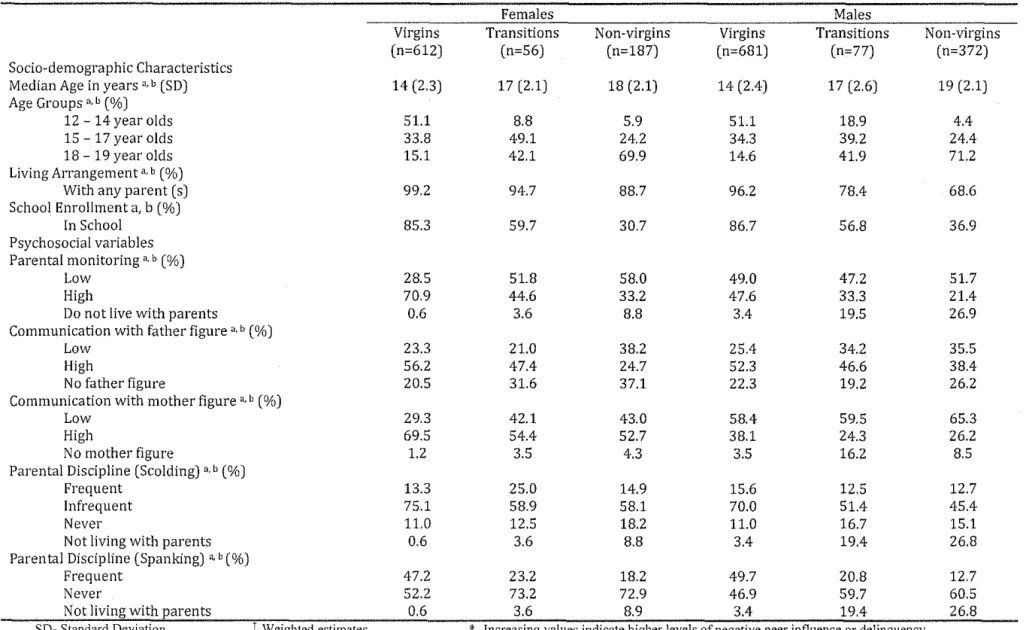
Table 2 t Bivariate analysis ... 25
List of Tables
Table
I. Respondents' socio-demographic characteristics based on gender. 2. Bivariate analysis based on gender and sex status.
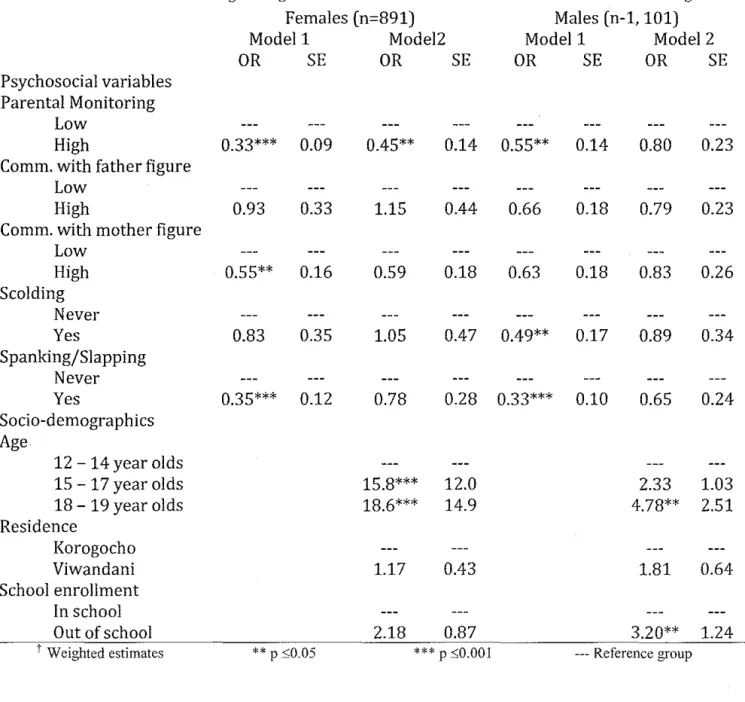
3. Coefficients from logistic regression models for likelihood to transition to first sex based on gender.
CHAPTER ONE: Introduction
Background
Adolescence is marked by physical, psycho-sociological, and intellectual development that prepares young people for adult roles and responsibilities.! This period is also characterized by experimentation as young people define their values and seek independence. Unfortunately, such experimentation also drives adolescents to engage in risky behaviors. Indeed, many
behaviors that lead to illness or premature death later in life (e.g., substance use, multiple sexual partnerships, and poor eating and exercise habits) are often initiated during adolescence.! Risky sexual behaviors in adolescence have been a cause of concern because they are known to be predictors of risky sexual behaviors later in life and also predispose adolescents to adverse health outcomes including unwanted pregnancies and sexually transmitted infections? Such risky sexual behaviors include early sexual debut (sexual intercourse on or before 15 years of age), non-use of condoms during sexual intercourse, and multiple sexual partnerships.2,3
Each year, approximately 11 percent of all births occur among girls aged 15-19 globally.! Twenty-five percent of the incidence of unsafe abortions in Africa occur among adolescents aged 15-19 years4 Adolescents have a higher risk of dying from pregnancy-related causes compared to older women.! Worldwide, the youth has a huge burden of sexually transmitted diseases such as human immunodeficiency virus (HIV) as 40 percent of new HIV infections occurred in young people aged 15-24 in 2008.! According to the findings from a 2005 South African survey, youth living in urban poor settings have higher HIV prevalence rates compared to other areas.s
Parental involvement is often underscored in risk-reduction efforts targeted towards adolescents because parents/guardians are often in regular contact with their children and, therefore, presumably in good position to shape and influence young people's behaviors2. 6
Literature Review
Parental monitoring can be defined as a deliberate effort by parents to control whom their children are with and where they spend their free time. However from the children's perspective, it is often defined as adolescents' perception of their parents' knowledge about whom they are with and where they are spending their free time.6.12 High levels of parental monitoring tend to be associated with a delay in sexual debut and low involvement in sexual risk behaviors.2,6.9 Age and gender of the adolescent have also been found to modifY parental monitoring so defined. In general, parents tend to adjust their monitoring practices, as the adolescents get older to allow for more independent decision-making. Consequently, older adolescents report lower levels of parental monitoring compared to younger adolescentsY-15 Females perceive more parental monitoring and discipline compared to males. B-15, 19 This can be attributed to the existence of a "double standard" at the sexual expectations of the adolescents based on their gender - sexual activity is tolerated for males but frowned at for females. School enrollment may also affect the levels of monitoring; studies have shown that parents tend to monitor students who are enrolled in school more than those who are not,20,2l This can be attributed to the fact that the opportunity cost of having their child drop out of school or perform poorly in their academics as a result of poor behavior is high. Also, the time spent in school-related activities may keep the children busy and will not provide free time for engaging in risky behaviors.
Positive parent -child communication is known to be protective against risk behaviors in adolescence7,8,12,B However, results of studies investigating the link between parent-child communication about sex-related issues and young people's sexual behaviors have been mixed. For example, a study done in the United States by Miller et aL (1999) found that positive general communication between Black and Hispanic mothers and their adolescents was associated with less frequent sexual intercourse and fewer sexual partners.8 Similarly, a 2009 study in four African countries found that parental communication about sexual activity was associated with delayed sexual debut in females6 However, several studies have found the opposite association to be tme -- parent-child communication about sex-related issues is associated with earlier sexual initiation among adolescents especially for males.22,23 According to Izugbara (2008), there is
and possibly experimentation?4 Consequently, communication between parents and their children about sexual matters may commence only after a young person is perceived to have engaged in sexual intercourse.
Adolescents who perceive that their parents disapprove of sexual activity and anticipate parental discipline are less likely to engage in sexual activity thereby delaying age at sexual debut.8,9 A literature review conducted by Goodson et aI. (1997) found that parental separation and father's absence were positively associated with early sexual debut in adolescents.lo On the other hand, Borawski et al. (2003) found that adolescents from two-parent homes reported higher levels of parental monitoring than those from single-parent homes. 14 Consequently, studies done by Jacobson and Crockett (2000) and by Flewelling and Bauman (1990) in the United States found that adolescents who live with their parents were significantly less likely to engage in
aI .. 1625
sexu actIVIty. '
Study rationale and objective
Most studies on the association between parenting and adolescent behavior have been conducted in western countries. In many traditional African communities, direct parent-child communication about sexuality was often considered a "taboo" and in many communities, young people received such information during traditional rites of passage and, often, through someone other than their parents?4 However, decline of traditional cultural practices, rapid urbanization, and the breakdown of extended family ties means that parents must assume the responsibility of imparting sexuality education. Therefore, the objective of this paper is to examine the role of parenting on transition to first sexual experience among adolescents living in two urban informal settlements in Nairobi, Kenya's capital city. The rationale for the study objective is that previous studies have shown that young people living in high poverty settings, such as urban slums, engage in sexual intercourse much earlier and have more sexual partners than their wealthier peers.26-28 However, with the exception of a few studies,27,29 the role of parental factors in such
Research Question and Hypothesis
This investigation is infonned partially by findings from the literature on the influence of parental factors on adolescent sexual behaviors and the socio-ecological model which posits that, individuals--in our case, adolescents--are situated in a social context, comprising the family, peers, and broader community, which influences the behavior of the individual throughout his or her life course. The research questions are as follows:
• Does parental monitoring affect adolescents' transition to first sex within the study period?
• Do other parental factors, parent-child communication and parental discipline, affect adolescents' transition to first sex within the study period?
CHAPTER TWO: Methodology
Study design and procedures
This paper draws on data collected under the Transitions to Adulthood (TTA) project, which seeks to identify protective and risk factors in the lives of adolescents growing up in two informal settlements in Nairobi (Korogocho and Viwandani) and to examine how those factors influence their transition to adulthood. Viwandani is located in the industrial area of Nairobi and thus, attracts a youthful, highly mobile population that is seeking employment in nearby
industries. Korogocho is a more stable settlement with a median duration of stay of 16 years for the current population compared to 7 years in Viwandani30 Both slums however, are
characterized by high levels of unemployment, crime, substance abuse, limited and often, inadequate schooling facilities, and lack of recreational facilities?l The Nairobi Urban Health Demographic Surveillance System (NUHDSS) covers a Demographic Surveillance Area (DSA) that spans the Korogocho and Viwandani slums in Nairobi City, Kenya. It provides a platform for studying the associations between urbanization, poverty and health, and serves as a tool for monitoring and evaluation of the impact of health interventions programs on health outcomes of the study population. Currently, the NUHDSS contains approximately 60,000 people living in 22,000 households in Korogocho and Viwandani. The surveillance involves visits to all the households every four months to update information on health behaviors, outcomes and access to health care.32 The TT A project uses a random sample of adolescents within the households in the study areas using records of residents in the 2007 NUHDSS.
The study instnunent included questions on living arrangements and nature of
interactions with parents, guardians, and peers; involvement in youth groups (e.g., religious and social groups); involvement in risky behaviors (e.g., early sexual debut and delinquency), among others. The complete questionnaire was translated from English to Swahili and administered in Swahili. Potential respondents were briefed on the study objectives and then invited to
Analytical sample
Between October 2007 and June 2008, a random sample of about 4,058 young people aged 12 - 22 years was interviewed using a comprehensive questionnaire. Approximately one year later (March 2009 to August 2009), an updated questionnaire was administered to the same cohort. 2,674 adolescents were re-interviewed in Wave 2; 14 respondents died and 683 out migrated. The non-response (17%) was mainly due to refusals or unavailability. This study includes adolescents aged 12 - 19 years (at baseline) who were interviewed in both the baseline (Wave I) and follow-up (Wave 2) surveys. The age restriction was to ensure that only
adolescents were studied. Since the primary aim of the research presented in this paper was to examine the effect of parental factors on adolescent sexual transition, the sample was further restricted to adolescents who had never been married by Wave 2 [N=1,992J. To address 'selection bias', the characteristics of adolescents who were interviewed in both waves were compared to those reached only in Wave 1. It was found that adolescents who were interviewed in both waves did not differ from those interviewed only in Wave 1 by gender but they differed by age, residence, living arrangement, school enrollment, and sexual intercourse status (sex status). Specifically, compared to adolescents interviewed in Wave I only, a greater proportion of the adolescents interviewed in both waves were younger, lived in Viwandani versus
Korogocho, lived with at least one parent, were currently enrolled in school, and had never had sex [Data not shown J. I therefore fitted a logistic regression model using response status at that wave as the outcome and key socioeconomic and demographic characteristics as explanatory variables. The probability of responding was calculated for every individual in the data using the fitted model. The inverse of the predicted probability became the analytical weight for the observations. The computed weights were re-adjusted to approximately add up to the expected sample size.
Measures
Outcome variables
outcome variable for the multi variable analyses was whether an adolescent transitioned to first sex between Waves 1 and 2 (this variable is coded 0 for no or 1 for yes).
Predictor variables
The three parental factors, parental monitoring, parent-child communication, and parental discipline, were the independent variables.
Parental monitoring was assessed by six questions that asked study participants whether they perceived that their parents knew where they were in the evenings of week days; whom they were with in the evenings of week days; where they were during the weekends; who they were with during the weekends; who their friends were; and what they do with their free time. Responses were graded on a 3-point scale that is 1 (never), 2 (sometimes), and 3 (always). A continuous parental monitoring index was constructed using standardized values of individual items all scored in the positive direction using the "standardize" function in Stata (Stata 2007). Scores were then grouped into high or low parental monitoring using the "cut" function in Stata. The cut was along the median. A third category was created for those not living with their parents/guardian. This group was excluded from the bivariate and multi-variate analyses.
Communication with parents (or parental figures) was assessed using a set of three questions that measured the extent to which the respondent 1) felt that their mother and father figures taught. him/her things she does not know; 2) shared secrets with hislher mother and father figures; and 3) that hislher mother and father figures tried to help him/her. The responses were graded on a 5-point scale, which are 1 (never), 2 (sometimes) 3 (half the time) 4 (most of the time), and 5 (all the time). Continuous parent-child communication indices were created using standardized values of individual items all scored in the positive direction. Scores were then grouped into high or low communication. A third category was created for those who did not have
parents/guardian. This group was excluded from the bivariate and multi-variate analyses.
(always). Item scores were recoded into 4 categories for scolding and 3 categories for spanking ranging from "not living with parents" to "frequently".
Control variables
Several factors have been found to be associated with adolescent sexual behavior in various settings.13•15 These factors include adolescents' age, gender, residence, and school
enrollment. These variables (as measured at Wave 1) were controlled for in the analyses of the data. School enrollment was determined by asking the adolescents whether they were currently enrolled in school.
Analysis
CHAPTER THREE: Results
Sample Description
Table I provides the sociodemographic description of the respondents stratified by gender. Of the 1,992 adolescents included in this study, 55.3% were males, 50.1% lived in Korogocho, 91.0% lived with at least one parent, and 70.5% were enrolled in school. Males were, on average, older than females-I 6 years versus IS years (p <0.05). We found that 66.8% of the study respondents were virgins, 26.6% were non-virgins and 6.6% transitioned to first sex in the one year follow-up period.
Regression Results
CHAPTER FOUR: Discussion
Discussion
Findings in this study underscore the importance of parental factors with regards to adolescents' sexual debut. The median age at first sex for our study population was 16 years for both genders. Males were more likely to transition to first sex within the study period compared to females. Some of the parental factors studied were significantly associated with adolescents' transition to first sex. Parental monitoring, mother-child communication and parental discipline (spanking/slapping) were significantly associated with sexual debut for females while parental monitoring and discipline (scolding and spanking/slapping) were significantly associated with sexual debut for the male respondents. Father-child communication was not significantly associated with sexual debut for all adolescents. Age is also a significant predictor of sexual debut for all adolescents as older adolescents were more likely to transition.
One of the UNAIDS indicators for estimating HIV risk among young people in a particular population is the median age at first sex with a younger age at first sex being an indicator of higher HIV risk. 33 The median age at first sex for the study population was 16 years
indicating that the study respondents are predisposed to higher sexually transmitted infections and unwanted pregnancies. 6.6% of our study respondents transitioned to first sex within the one-year study period with males being more likely to transition compared to females. The proportion that transitioned in our study is lower than what was found in studies from the United States and several parts of Africa, which ranged from 9% to 36%Y,19,26,31 The majority of the
respondents who transitioned were in midadolescence (15 17 years) compared to early (12 -14 years) and late- (18 -19 years) adolescence. These trends were also seen in studies from Zambia and the United States.18,20 Adolescents aged 15 years or older were more likely to
transition compared to those in the youngest age group. However, males in mid- and late-adolescence had lesser hazard of transitioning to first sex compared to those in early adolescence, Therefore, it can be deduced that females sexually debut during mid- or
late-adolescence while males sexually debut in early late-adolescence. This could be explained by the fact that adolescent males experience increased pressure to be sexually active in order to be
This is in consonant with the findings of Meschke et al. (2000) and Tenkorang & Maticka-Tyndale (2008) who found that males transition earlier than females34.35
The majority of the sexually active adolescents reported low parental monitoring and parental monitoring was found to be significantly associated with sexual debut within the study waves for both gender though the association became insignificant for males when age and education were controlled for. It can be deduced that even though the study respondents lived in resource-poor, high crime areas, parental monitoring was still an important protective factor for engagement in risky sexual behaviors. This finding aligns with the findings of other studies that parental monitoring is a significant predictor of sexual initiation in adolescence.13-16, 35-39
Positive parent-child communication fosters identification with parental values and may reduce the probability of engaging in sexual activity.8 In this regard, the majority of the study respondents who remained abstinent in both waves reported high levels of parent-child
communication. Females who reported high communication with their mothers were more likely to remain virgins compared to those who reported low parental monitoring. This has been found by several other studies and can be attributed to the fact that daughters tend to have closer bonds with their mothers compared to their fathers.4o,41
Adolescents who reported that they were spanked whenever they behaved badly were less likely to report transition to first sex within the study period. Therefore, it can be inferred from our study results that adolescents were more likely to deter from sexual activity if they
anticipated discipline from their parents. This is similar to the findings in the literature that adolescents who anticipate parental discipline are less likely to engage in risky sexual
behaviors8,9,42 Age and school enrollment status were significant confounders of this association
between parental discipline and sexual debut in this study.
Similar to previous studies, we found that school enrollment is a protective factor for adolescent sexual risk behaviors.9,25,35,43 In our study, this protective effect of school enrollment
Limitations
The most significant limitation of this study is the use of self-reported sexual information. As was found by a study done by Beguy et al. (2009), adolescents, especially males; those who dwell in slums; and those who are enrolled in school, tend to give inconsistent sexual
information.44 Another study found that males are more likely to inconsistently report on their sexual behaviors.45 Another limitation ofthis study is that only the adolescents' perception of parental influence was analyzed leaving out the parents' perspective. However, a study by Stanton et al. (2000) found a high correlation between youth's perception and parents'
perspective of parental monitoring. Also, we could not determine the number of parents that the adolescents live with- either single-parenthood or both parenthoods. As was found in the
literature, this factor affects both the level of parental monitoring and also adolescents' sexual behaviors. Future research examining the effects of single-parenthood on adolescents' sexual attitudes and behaviors should consider examining the influence of the gender of the parent that the adolescent lives with on the adolescent's sexual attitudes and behavior.
Conclusion
Studies on adolescent risk behaviors have been on the rise in the last two decades as incidence of morbidities in this age group due to engagement in risky behaviors increases. Recognizing and examining the factors associated with adolescents' risk behaviors is important for the development and implementation of effective prevention strategies and/or interventions. Active involvement of parents in these prevention interventions will buttress their effectiveness by creating an enabling environment for the adolescents to implement skills and tools they will gain from the interventions. The findings of our study should inform interventions geared towards delaying sexual debut among adolescents especially those in urban poor settings. For example, parents can be incorporated in intervention programs by training them on evidence-based risk-reducing strategies such as effective communication skills especially on
Acknowledgements
The Transitions to Adulthood study is part of a larger project, Urbanization, Poverty, and Health Dynamics, funded by the Wellcome Trust (Grant Number GR 07830M). I am extremely grateful to the African Population and Health Research Center for giving me the opportunity to carry out this research in their prestigious organization. I thank my preceptor, Dr. Caroline Kabiru, for guiding me through the writing of this paper. I am immensely grateful to the youth in Korogocho and Viwandani. I am also very thankful to the Compton Foundation for funding my trip to Kenya to carry out this research.
I thank my academic adviser Dr. Ilene Speizer for all the counsel and opportunities she granted me throughout my study period here at University of North Carolina at Chapel HilL I am very grateful to Dr. JC Fotso for his thoughtful and well-detailed comments on the manuscript of this research paper. I will like to thank Dr. Farel, Dr. Margolis, and Yvette Thompson for their encouragement throughout the duration of my study here at UNC Gillings School of Global Health.
I would not have successfully completed my study without my ever-supportive family: Ogee, you are awesome; Chix, you are more than a sister to me; Nene, thank you; Mum and Dad, you are the best parents anyone could ever ask for. My special acknowledgement goes to all my friends in Nigeria whose motivations pushed me through the tough periods.
REFERENCES
1. World Health Organization. Young people: health risks and solutions. 2010. [Viewed June 10, 2010] Available online at URL:http://www.who.intimediacentre/factsheets/fs345/en/index.html 2. Babalola S, Tambashe BO, Vondrasek C. Parental factors and sexual risk-taking among
young people in Cote d'Ivoire. Afr J Reprod Health. 2005;9(1):49-65
3. Bankole A, Biddlecom A, Guiella G, Singh S, Zulu E. Sexual behavior, knowledge and information sources of very young adolescents in four Sub-Saharan African countries. Afr J Reprod Health. 2007;11 :28-43
4. Shah I, Ahman E. Age patterns of unsafe abortion in developing country regions. Reproductive Health Matters 2004;12:9-17
5. Human Sciences Research Council: South African national HIV prevalence, HIV incidence, behavior and communication survey, 2005. HSRC Press; 2005
6. Biddlecom A, Awusabo-Asare K, Bankole A. Role of parents in adolescent sexual activity and contraceptive use in four African countries. Int Perspect Sexual Reprod Health. 2009;35(2):72-81
7. Huebner AI, Howell LW. Examining the relationship between adolescent sexual risk-taking and perceptions of monitoring, communication, and parenting styles. J Adolesc Health. 2003;33(2):71-78
8. Miller KS, Forehand R, Kotchick BA. Adolescent sexual behavior in two ethnic minority samples: The role offamily variables. J Marriage Fam. 1999;61(1):85-98
9. Babalola S, Quedraogo D, Vondrasek C. Motivation for late sexual debut in Cote d'Ivoire and Burkina Faso. J HIV / AIDS Prev in Children Youth. 2007;7(2):65-87
10. Goodson P, Evans A, Edmundson E. Female adolescents and onset of sexual intercourse: a theory-based review of research from 1984-1994. J Adolesc Health. 1997;21 :147-156 11. lessor R, Turbin MS, Costa FM. Risk and protection in successful outcomes among
disadvantaged adolescents. Applied Dev Sci. 1998;2(4): 194-208
13. Yang H, Staton B, Li X, Cottrel L, Galbraith J, Kaljee L. Dynamic association between parental monitoring and communication and adolescent risk involvement among African-American adolescents. J Nat Med Assoc. 2007 ;99( 5):517 -524
14. Borawski EA, levers-Landis C, Lovegreen LD, Trapl ES. Parental monitoring, negotiated unsupervised time, and parental trust: The role of perceived parenting practices in
adolescent health risk behaviors. J. Adolesc Health. 2003;33(2):60-70
15. Romer D, Stanton B, Galbraith J, Feielman S, Black MM, Li X. Parental influence on adolescent sexual behavior in high-poverty settings. Arch Pediatr Adolesc Med. 1999;153(10): 1 055-1 062
16. Jacobson KC, Crockett LJ. Parental monitoring and adolescent adjustment: An ecological perspective. J Res Adolesc. 2000;10(1):65-97.
17. Mathews C, Aaro LE, Flisher AJ, Mukoma W, Wubs AG, Schaalma H. Predictors of early first sexual intercourse among adolescents in Cape Town, South Africa. Oxford J. 2009;24(1): I-I 0
18. Mott FL, Fondell MM, Hu PN, Kowaleski-Jones L, Menaghan EG. The determinants of first sex by age 14 in a high-risk adolescent population. Fam Plan Perspect 1996;28: 13-18 19. McNeely C, Shew ML, Beuhring T et al. Mothers' influence on the timing of first sex
among 14 and 15 year olds. 2002;31 :256-268
20. Magnani RJ, Karim AM, Weiss LA et al. Reproductive health risk and protective factors among youth in Lusaka, Zambia. J Adolesc Health 2002;30:76-86
21. Whitbeck LB, Yoder KA, Hoyt DR, Conger RD. Early adolescent sexual activity: a developmental study. Nat Council Fam Relations. 1999;61 :934-946
22. Sieving RE, McNeely CS, Blum RW. Maternal expectations, mother-child
connectedness, and adolescent sexual debut. Arch Ped Adolesc Med. 2000; 154: 809-816 23. Bersamin M, Todd M, Fisher DL et al. Parenting practices and adolescent sexual
behavior: a longitudinal study. J Marriage Fam. 2008;70:97-112
24. lzugbara, CO. Home-Based Sexuality Education. Youth & Society 2008;39(4),575-600
26. Dodoo, F. N., Zulu, E. M., & Ezeh, A. C. (2007). Urban-rural differences in the socioeconomic deprivation-sexual behavior link in Kenya. Social Science & Medicine,
64,1019-1031.
27. Kabiru, C., Beguy, D., Undie, C., Zulu, E., & Ezeh, A. C. (2010). Transition into First Sex among Adolescents in Slum and Non-Slum Communities in Nairobi, Kenya. Journal o/Youth Studies, 13(4),453-471.
28. Zulu, E. M., Dodoo, F. N., & Ezeh, A. C. (2002). Sexual risk-taking in the slums of Nairobi, Kenya, 1993-98. Population studies, 56(3), 311-323
29. Ngom P, Magadi M, Owuor T. Parental presence and adolescent reproductive health among the Nairobi urban poor. J Adolesc Health. 2003;33:369-377
30. Muindi K, Zulu E, Beguy D, Mudege N, & Batten L. Characteristics of recent
in-migrants in the Nairobi Urban Health Demographic Surveillance System. Paper presented at the XXVI !USSP Conference, Marrakech, Morocco 2009.
31. Pettifor AE, Straten AS, Dunbar MS et al. Early age of first sex: a risk factor for HIV infection among women in Zimbabwe. AIDS 2004;18: 1435-1442
32. Nairobi Urban Health and Demographic Surveillance System. [Viewed December 3, 2010] Available online at
URL:http://www.indepth-network.orgldss site profilesINAIROBI%20PROFILE%202006.pdf 33. UNAIDS Indicator Registry. Available online at URL:
http://www.indicatorregistrv.org.orglpublic.aspx?view=detail&indId=413 [Viewed online October 26,2010].
34. Meschke LL, Zweig JM, Barber BL, Eccles JS. Demographic, biological, psychological and social predictors of the timing of first intercourse. J Res Adolesc. 2000;10:315-338 35. Tenkorang EY, Maticka-Tyndale E. Factors influencing the timing of first sexual
intercourse among young people in Nyanza, Kenya. Int Fam Plann Perspec 2008;34: 177-188
36. Miller BC, Norton MC, Curtis T et al. The timing of sexual intercourse among adolescents: Family, peer, and other antecedents. Youth & Society. 1997;29:54-83. 37. Regnerus MD, Luchies LB. The parent-child relationship and opportunities for
38. Longmore MA, Eng AL, Giordano PC, Manning WD. Parenting and adolescents' sexual initiation. J Marriage Fam. 2009;71 :969-982.
39. Pearson J, Muller C, Frisco ML. Parental involvement, family structure, and adolescent sexual decision-making. Socio Perspect. 2006;49:67-90
40. Sieving RE, McNeely CS, Blum RW. Maternal expectations, mother-child
connectedness, and adolescent sexual debut. Arch Ped Adolesc Med. 2000;154:809-816 41. Usher-Serili KK, Bynum MS, Callands TA. Mother-daughter communication about sex
and sexual intercourse among middle- to upper-class African American girls. J ofFam Issues 2008;29:901-917
42. Wang B, Li X, Stanton B, Kamali V, Naar-King S, Shah let al. Sexual attitudes, patterns of communication, and sexual behaviors amobg unmarried out-of-school youth in China. BMC Public Health 2007;7:189-199
43. Kumi-Kyereme A, Awusabo-Asare K, Bidcllecom A, Tanle A. Influence of social connectedness, communication and monitoring on adolescent sexual activity in Ghana. Aft J Reprod Health. 2007;11:133-136.
44. Beguy D, Kabiru CW, Nderu EN, Ngware MW. Inconsistencies in Self-Reporting of Sexual Activity Among Young People in Nairobi, Kenya. J Adolesc Health.
2009;45(6):595-60l.
Appendices
Table 1 t Respondents' socio-demographic characteristics based on gender
Females Males Total (n=891) (n=1,101) (N=I,992) Median Age in years (SD) a, b 15 (2.7) 16 (2.9) 16 (2.8) Age Groups (0/0) a,b
12 - 14 year olds 15 - 17 year olds 18 - 19 year olds Median age at first sex (SD) a, b Residence (0/0)
Korogocho Viwandani
Living Arrangement at Wave 1 (0/0) a, b With any parent(s)
Without parents School Enrollment (0/0)
In School Out of School Sex Status (0/0) a, b
Virgins Transitions Non-virgins
SD- Standard deviation
t Weighted estimates
38.9 32.8 28.3 16 (2.4) 52.5 47.5 96.8 3.2 72.3 27.7 72.7 6.4 20.9
a- Significant difference at p<O.05 across groups for females b- Significant difference at p<O.05 across groups for males
34.3 36.4
31.5 33.1
34.2 31.5
16 (2.7) 16 (2.6)
48.1 50.1
51.9 49.9
86.4 91.0
13.6 9.0
69.1 70.5
30.9 29.5
62.1 66.8
6.7 6.6
Table 2 t Bivariate analysis
Females Males
Virgins Transitions Non-virgins Virgins Transitions Non-virgins
(n=612) (n=56) (n=187) (n=681) (n=77) (n=372)
Socio-demographic Characteristics
Median Age in years ',b (SD) 14 (2,3) 17 (2,1) 18 (2,1) 14 (2,4) 17 (2,6) 19 (2,1)
Age Groups" b (%)
12 - 14 year olds 51.1 8,8 5,9 51.1 18.9 4,4
15 - 17 year olds 33,8 49,1 24,2 34,3 39,2 24.4
18 - 19 year olds 15,1 42,1 69,9 14,6 41.9 71,2
Living Arrangement" b (%)
With any parent (s) 99,2 94,7 88.7 96.2 78,4 68.6
School Enrollment a, b (%)
In School 85.3 59,7 30,7 86,7 56,8 36,9
Psychosocial variables Parental monitoring" b (%)
Low 28,5 51.8 58.0 49,0 47,2 51.7
High 70,9 44,6 33,2 47,6 33,3 21.4
Do not live with parents 0,6 3,6 8,8 3.4 19.5 26,9
Communication with father figure" b (%)
Low 23.3 21,0 38.2 25.4 34.2 35.5
High 56,2 47.4 24,7 52.3 46,6 38.4
No father figure 20.5 31.6 37,1 22.3 19,2 26,2
Communication with mother figure" b (%)
Low 29,3 42,1 43,0 58.4 59,5 65,3
High 69.5 54,4 52,7 38,1 24,3 26,2
No mother figure 1,2 3.5 4,3 3.5 16,2 8.5
Parental Discipline (Scolding) ',b (%)
Frequent 13.3 25,0 14,9 15,6 12.5 12,7
Infrequent 75,1 58,9 58.1 70,0 51.4 45,4
Never
no
12.5 18,2no
16,7 15,1Not living with parents 0,6 3,6 8.8 3,4 19,4 26,8
Parental Discipline (Spanking) • b (%)
Frequent 47.2 23,2 18.2 49,7 20,8 12,7
Never 52.2 73,2 72,9 46,9 59,7 60.5
Not living with parents 0,6 3,6 8.9 3,4 19.4 26,8
SD- Standard Deviation f Weighted estimates *-Increasing values indicate higher levels of negative peer influence or delinquency
Table 3 t Coefficients from Logistic regression models for likelihood to transition to first sex based on gender Females (n=891) Males (n-l, 101)
Modell Model2 Modell Model 2
OR SE OR SE OR SE OR SE
Psychosocial variables Parental Monitoring
Low
High 0.33*** 0.09 0.45** 0.14 0.55** 0.14 0.80 0.23 Comm. with father figure
Low
High 0.93 0.33 1.15 0.44 0.66 0.18 0.79 0.23 Comm. with mother figure
Low
High 0.55** 0.16 0.59 0.18 0.63 0.18 0.83 0.26 Scolding
Never
Yes 0.83 0.35 1.05 0.47 0.49** 0.17 0.89 0.34 Spanking/Slapping
Never
Yes 0.35*** 0.12 0.78 0.28 0.33*** 0.10 0.65 0.24 Socio-demographics
Age
12 - 14 year olds
15 - 17 year olds 15.8*** 12.0 2.33 1.03
18 - 19 year olds 18.6*** 14.9 4.78** 2.51
Residence
Korogocho
Viwandani 1.17 0.43 1.81 0.64
School enrollment In school
Out of school 2.18 0.87 3.20** 1.24
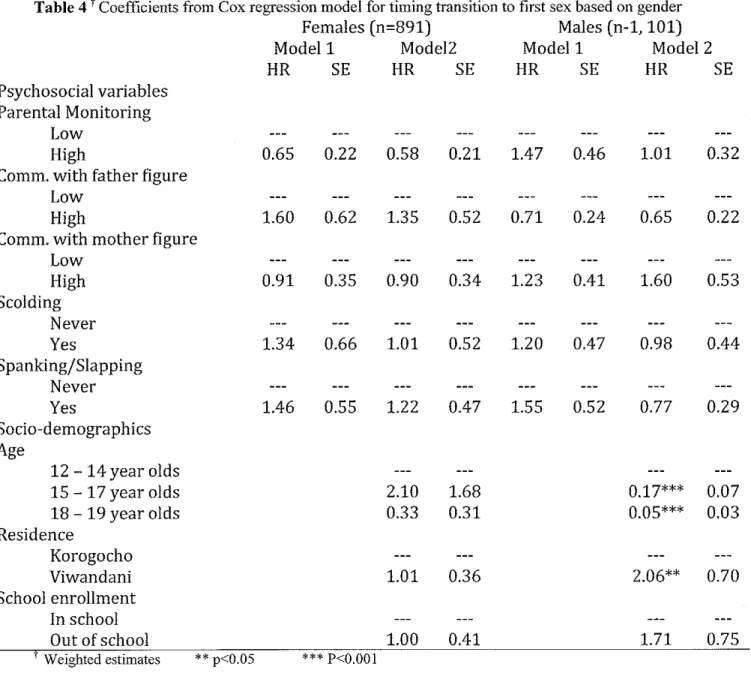
Table 4 t Coefficients from Cox regression model for timing transition to first sex based on gender
Females (n=891) Males (n-1, 101)
Modell Model2 Modell Model 2
HR SE HR SE HR SE HR SE
Psychosocial variables Parental Monitoring
Low
High 0.65 0.22 0.58 0.21 1.47 0.46 1.01 0.32
Comm. with father figure Low
High 1.60 0.62 l.35 0.52 0.71 0.24 0.65 0.22
Comm. with mother figure Low
High 0.91 0.35 0.90 0.34 1.23 0.41 1.60 0.53
Scolding Never
Yes 1.34 0.66 1.01 0.52 1.20 0.47 0.98 0.44
Spanking/Slapping Never
Yes 1.46 0.55 1.22 0.47 1.55 0.52 0.77 0.29
Socio-demographics Age
12 - 14 year olds
15 - 17 year olds 2.10 1.68 0.17*** 0.07
18 - 19 year olds 0.33 0.31 0.05*** 0.03
Residence
Korogocho
Viwandani 1.01 0.36 2.06** 0.70
School enrollment In school
Out of school 1.00 0.41 1.71 0.75