www.jyoungpharm.org | www.phcog.net
INTRODUCTION
When a drug is freely soluble in water, the judicious selection of release-retarding excipients is necessary to achieve a constant in vivo input rate. One of the most commonly used methods of modulating drug release is to include it in a matrix system. Hydrophilic gel-forming polymer matrix systems are widely used in oral controlled drug delivery to obtain a desirable drug release profile, for cost effectiveness, and broad regulatory acceptance.1-3 Polymer-based monolithic matrix tablets are the most
commonly used oral extended-release dosage forms because of pharma-ceutical advantages such as economic benefits, relative simplicity of process development and scale-up procedures.4,5 Polymeric materials which are
used in extended-release matrix systems can be classified into as (a) hydrophilic system; (b) erodible system; and (c) insoluble system.6,7 Even
also to achieve desirable release profiles, polymers should be optimized based on their physicochemical properties associated with release mech-anisms. Most frequently utilized polymer mixtures can be divided into three type’s i.e. first type is combination of non-ionic polymers second type is combination of non-ionic and anionic polymers and third type is the combination of cationic and anionic polymers (e.g., chitosan (CS)– sodium alginate (SA), and CS–xantham gum (XG).8,9 But use of CS and
anionic polymer form a Poly Electrolyte Complex (PEC) between the polycationic chitosan and polyanionic polymers, such as alginate and pectin, and is responsible for better sustained-release of drug matrices than the original hydrophilic polymers.10,11 Extended release (ER) dosage
forms are designed in such a manner so as to allow the enclosed drug available over an extended period of time after its administration. These are controlled drug delivery systems, which release the drug in continuous manner. They release drug by both dissolution controlled as well as diffusion controlled mechanisms. The term matrix indicates a three dimensional network composed of drug(s), polymer(s) and other excipients. Because of simplicity, ease in manufacturing and low costs, matrix preparation has become a popular approach. Drugs are usually embedded in hydro-philic or hydrophobic matrices to exert control on their release.12,13
To control the release of the drugs, the drug is dispersed in swellable
hydrophilic substances and then in an insoluble matrix of rigid non swellable hydrophobic materials or plastic materials. The use of polymers in controlling the release of drugs has become important in the formulation of pharmaceuticals.
Chitosan, a cationic biopolymer, derived from chitin by partial deacety-lation. CS has good biocompatibility, biodegradability, low toxicity and relatively low production cost from abundant natural sources,14-16 and it
has been wildly applied as a polymeric drug carrier in the field of pharma-ceutics. It is available in 3 different molecular weight forms. In present topic we have chosen low molecular weight i.e. 50 kDa form. However, although chitosan is a very promising biopolymer as a release-controlling agent in drug delivery, it has limited capacity for controlling drug release when used alone due to its easy disintegration characteristics at neutral pH.17 Thus, combination of CS with anionic polymers as the carrier of
oral controlled-release preparations has been suggested.
Eudragit® L 100-5518 contains an anionic copolymer based on meth acrylic
acid and ethyl acryl ate. It is a solid substance in the form of a white powder with a faint characteristic odour. It is effective for enteric coatings with a faster dissolution in the upper GI bowel.
Tramadol is a non-steroidal anti-inflammatory drug, which is used in the treatment of rheumatoid and osteoarthritis. After oral administra-tion, tramadol is rapidly and almost completely absorbed. The mean elimination half-life is ~6 hrs and requires dosing every 6 hrs in order to maintain optimal relief of chronic pain. Consequently, once-daily extended-release tablets have been formulated. Long term treatment with sustained-release tramadol once daily is safe in patients with osteo-arthritis or refractory low back pain and is well tolerated. It has the poten-tial to provide patients increased control over the management of their pain, fewer interruptions in sleep, and improved compliance. Tramadol, a synthetic opoid of the amino cyclo hexanol group, is a centrally acting analgesic with weak opoid agonist properties. Tramadol has been proved to be effective in both experimental and clinical pair without causing serious side effects. The usual oral dosage regimen is 50 to 100 mg every 4 to 6 hrs with a maximum dosage of 400 mg/day. To reduce the frequency
Development and Evaluation of Matrix Tablet by Taking New
Chemicals Combination of Chitosan and Eudragit-l 100
Amaresh Prusty*1, Amiya Kanta Mishra1, Bijon Kumar Gupta2
1Department of Pharmaceutics, College of Pharmaceutical Sciences, Puri, Odisha. INDIA. 2Department of Pharmaceutical Technology, Jadavpur University, Kolkata, West Bengal, INDIA.
ABSTRACT
Objective: The objective of this study is to develop extended release matrix tablet by taking mixture of chitosan and anionic polymers and then to study the drug release pattern for a low solubility drug Tramadol Hydrochloride (TH). TH has mean elimination half-life is ~6 hrs and requires dosing every 6 hrs in order to maintain optimal relief of chronic pain. So once-daily extended-release tablets are formulated by taking Chitosan (CS) and anionic polymers Eudragit-L100-55. Methods: The tablets were prepared by direct compression method. In vitro drug release was carried out under simulated gastric and intestinal condition to achieve drug release more than 20 hrs. Fourier transform infrared spectroscopy (FTIR) study was conducted to study any interaction between dug and ingredients. Results: CS and Eudragit-L combination form a Poly Electrolyte Complex which is responsible for extending drug release for low solubility drug. This complex formation is also confirmed by FTIR study. Conclusion: Stability studies (40ºC and 75 ±
5%RH) for 3 months indicated that Tramadol hydrochloride was stable in the matrix tablets.
Key words: Chitosan, Eudragit-L100, Tramadol Hydrochloride, Matrix Tablet, FTIR.
Correspondence : Mr. Amaresh Prusty,
Department of Pharmaceutics, BPUT, Rourkela Odisha, College of Pharmaceutical Sciences, Puri, Odisha. INDIA.
Phone no: +919861184343 E-mail: [email protected]
of administration and to improve patient compliance, a sustained release formulation of tramadol is developed.19 The main objective of the present
work was to develop sustained release matrix tablets of water soluble Tramadol hydrochloride using different polymers.
MATERIALS AND METHODS
Materials
TH was procured from Matrix Laboratories, Bangalore. Chitosan (50 kDa) and Eudragit L100-55 procured from Merck Chemicals Ltd. Germany. Other ingredients like CMC Na, MCC, Colloidal SiO2 from Degussa India Pvt. Ltd and magnesium stearate were procured from S.D. Fine chemicals, Mumbai.
Methods
Preparation of matrix tablets
Tablets are prepared by direct compression method, which involves mainly three steps.
1. Sifting: Accurately weighed quantity of drug and excipients were passed through sieve no. 20 and 40 respectively.
2. Blending: Drug and excipients (excluding lubricant) were blended thoroughly for 15 min. After the sufficient mixing of drug as well as other components, magnesium stearate were added and further mixed for additional 2-3 min.
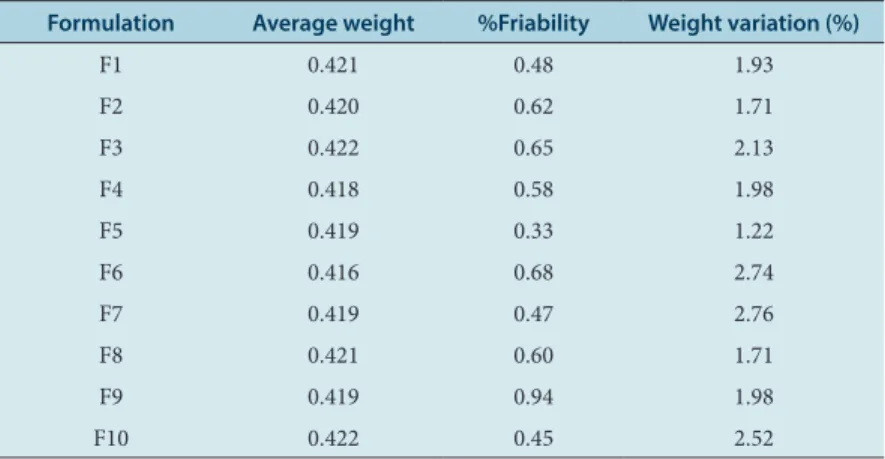
3. Compression: The blend was mixed and was compressed using 12 mm concave punch on a single stroke punching machine. The weight of tablets was kept constant for tablets of all batches, which was 420 mg. We have prepared as many batches and after proper analysis of all batches the following 10 batches were selected for further study. The composition was given in Table 1.
Spectrophotometric Characterization
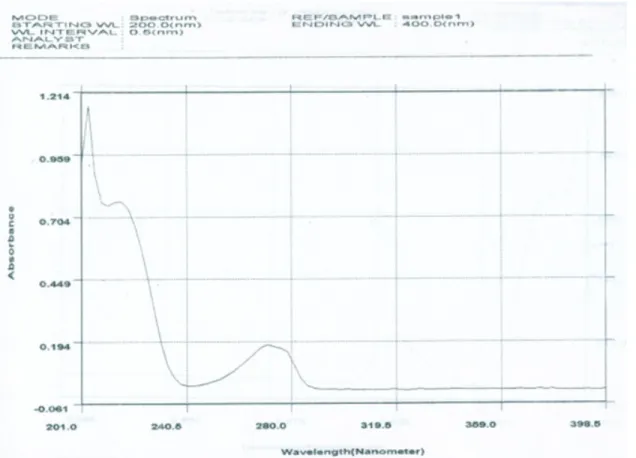
Results are shown in Figure 1 and 2. λmax was found to be 272 nm in phosphate buffer of pH 6.8 and also the same wavelength was observed in 0.1N Hcl.
Characterization of tablets Pre compression
parameters
All the prepared granules were evaluated for Preformulation parameters like angle of repose, Compressibility index and Hausners ratio and results are shown in Table 2.
The fixed funnel method was employed to measure the angle of repose (θ) and it was calculated using the following formula:
Tan θ = h/r
In which, θ is the angle of repose, h is the height of the cone and r is radius of the cone base.
Postcompressional Parameters
Hardness
Hardness is measured by Pfizer hardness tester. The measured hardness of tablets of each batch was in range of 4 to 5 kg/cm2.
Friability
Twenty tablets were weighed and placed in Roche friabilator and apparatus was rotated at 25 rpm for 4 min. After complete revolution the tablets were dedusted and weighed again. The percentage friability was measured using the formula,
%F=(1-(W/Wo)) 100
%F=friability in percentage Wo=Initial weight of tablet W=weight of tablets after revolution
The %friability we found in the range between 0.5 to 1%
Weight variation
Twenty tablets were randomly selected from each batch and individually weighed. The average weight and standard deviation of 20 tablets was calculated. The batch passes the test if not more than two of the indi-vidual tablet weight deviate from the average weight. Results shown in Table 3.
In-Vitro
Dissolution Studies
In vitro dissolution studies were carried out by using USP type II apparatus dissolution apparatus by taking phosphate buffer of pH6.8 as dissolution medium. The tablets were submerged into 900 ml of simulated gastric fluid (SGF: hydrochloric acid solution, pH 1.2) for 2 hr, then the tablets were transferred to 900 ml of simulated intestinal fluid of phosphate buffer, pH 6.8. This method was used to simulate the situation of a tablet’s transit through the gastrointestinal tract.20 The 10 ml of sample was
with-drawn at predetermined time interval and same volume of fresh medium was replaced. The samples were analyzed for drug content at wavelength of 272 nm using double beam UV visible spectrophotometer. The content of drug was calculated using the equation generated from standard curve. The %cumulative drug release was calculated.
Comparison of Dissolution profiles
The differences in release profiles of the designed formulations were compared using similarity factor (F). The similarity in the drug release pattern of the marketed product and the formulation developed was determined by calculating the similarity factor. The two products are said to be similar if the value of f2 lies between 50 and 100 and the release profiles were significantly different if F<50. The similarity factor was calculated using the Equation.21
2 1
100
50.log
[
]
1
i n tF
Rt Tt
n
Where ‘Rt’ and ‘Tt’ are the cumulative percentage drug dissolved at each of the selected time point of the reference & test product respec-tively. Where n is the number of time points, Rt is the dissolution value of the reference at time t, and Tt is the dissolution value of the test at time t.
Erosion and Swelling Behaviour of the Combined Matrix
The erosion and swelling behaviours of the developed matrix system were evaluated simultaneously by measuring the amount of water uptake and weight loss in dissolution tester. Tablets were placed in the dissolution vessels and were taken out of the vessels at predetermined time intervals and dried at 50oC and then weighed after removing the excess liquid. Theerosion and swelling ratios were calculated by using equation.22,23
Where ER is erosion ratio, SR is swelling ratio, W0 is the initial weight of the dry tablet, Wd is the weight of drug released at time t, Wr is the weight of remaining dry tablet after swelling at time t, Wt is the weight of the swollen matrix tablet at time t. For traditional hydrophilic matrices, the erosion and swelling of the polymeric carrier play an important role in controlling drug release. So it confirmed that PECs can be formed on the surface of matrix tablets. It is not clear how this PEC can influence drug release mechanism. It is well known that the potential of polymeric carriers to be used as controlled release materials can be predicted by determination of their swelling characteristics.24 A group of researchers
evaluated the swelling behaviour of polycomplex matrices made from CS and EL 100 in simulated gastro-intestinal tract (GIT) and all systems used were stable in pH 1.2 (1 h) and pH 6.8 (2 h).25 On immersing the
polycomplex matrix into the pH 6.8, free amino groups got protonated and their hydration increased the degree of swelling within the first part of the experiment. Later, full ionization of all amino groups turned it into a polyelectrolyte with a relatively high charge density. As a result, the structure of the IPEC is changed because the ionic bonds are not fixed and they could move from one electrostatic site to another.26,27 The
pro-tonated carboxylic acid groups of EL (weak polyacid) became charged by ionized amino groups of CS to form new interpolymer contacts.
Kinetic Study
Drug release Kinetics and Transport Mechanism
To know the drug release kinetics, the dissolution data were subjected to different kinetic model such as Zero order, First order and Higuchi’s28
equations.
The Ritgere Peppas29 equation was applied to characterize drug release
mechanism from the polymeric system and the equation is Mt/M∞= ktn
where the Mt/M1≤ 0.6 data are used for calculation, k is a constant incorporating structural and geometric characteristics of the dosage form, n is the release exponent, which depends on the release mechanism and shape of the matrix tested and t is the release time. Exponent n for polymeric controlled delivery systems of cylindrical geometry has values of n<0.45 for Fickian diffusion, 0.45<n<0.89 for anomalous (non-Fickian) transport i.e. drug release was controlled by a coupled Fickian diffusion– polymer relaxation mechanisms or Fickian diffusion–erosion mechanisms resulting from swelling behaviour of CS and anionic polymers. Results are shown in Table 4.
FTIR Study
FTIR studies of formulation along with pure drug (TH) were carried out at room temperature by FTIR spectrophotometer (FTIR, Paragon‐500) using KBr pellet. All the spectra were recorded in the range of 400‐4000 cm‐1.
Stability Study
Stability study was carried out at accelerated condition of 400C and 75%
RH condition for period of 3 month. During the process ten tablets were individually wrapped using aluminum foil and packed in ambered color screw cap bottle and put at above specified condition in incubator for 3 month. After each month tablet sample was analyzed for the in vitro drug release study and shown in Table 5.
RESULTS
Powder characterization
The angle of repose of the all the formulations were determined and the values ranges from 25.30 to 33.400 which indicate excellent flow
proper-ties and it lies within the Pharmacopoeia limits. The Carr’s index value
ranges from 8.05 to 15.03% which indicates excellent flow properties. Hausners ratio values ranged 1.07 to 1.17 indicating good flow. It means that the flow properties of granules were found to be within the Pharma-copoeia limits.
Drug-polymer interaction studies
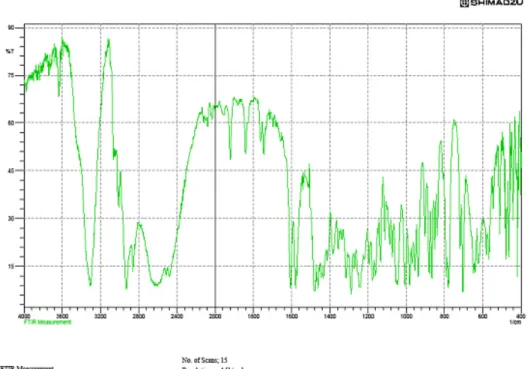
From the FTIR study, major peaks of drug (TH) were found to be at 3003, 1749, 1601, 1575, 1284, 1238 cm‐1. Similarly in CS the peaks are
1654, 1422, 1380, 1320 cm‐1. In Eudragit L100 the major peaks are 1672,
1598, 1289 cm‐1 and in tablet of batch F6 the peaks are 3006, 1600, 1565,
1280 cm‐1. The IR spectrum did not show any additional peaks, which
indicates there is no chemical interaction between drug, polymers and excipients used in formulations as shown in Figure 3 and Figure 4. But as Cs and Eudragit-L 100 complex form Poly Electrolyte Complex, so when we study the FTIR of swollen tablet, we found a new peak 2912 cm-1 and
this may be due to formation of complex.
In vitro
release kinetics
The in-vitro drug release pattern in formulation F1 is 98.87% in 18 hrs. In formulation F2 drug release pattern is very rapid with 99% release in 12 hrs. Formulation F3 releases drug 98% which extend up to 20 hrs but when we studied the tablet of this batch we found it has higher disinte-gration which may be due to higher concentration of CS, so this batch was not selected for optimization and stability study. In formulation F4 we found drug release is up to 18 hrs. F5 batch the drug release is 98% but release time extended to 20 hrs which may be due to higher concentration of Eudragit which swells the tablet and extended the time. Formulation F6 which shows more than 99% of drug release and drug release extend up to 20 hrs and this batch considered for optimization. Formulation F7 shows 98% of drug release in 18 hrs. In Formulation F8 we have taken a new diluents Lactose monohydrate and drug release is not up to the limit and releases up to 20 hrs. In formulation F9 dug release is slow and time extends to 18 hrs for 99% drug release but the tablets are prepared by taking only Eudragit without adding CS. In F10 in order to check the effect of diluents on drug release from extended tablets, we have taken Lactose Monohydrate diluents, but we found this batch releases drug up to 20 hrs. These findings suggest that not CS alone or Eudragit alone can extended drug release of low solubility drug TH as we found in some batch. So the combination of both CS with anionic polymer Eudragit can extended drug release more than 20 hrs which causes erosion due to swelling nature of polymer during dissolution by forming a Poly Electrolyte Complex. So in formulation F8 and in F10 in order to check the effect of diluents30 on drug release in extended release
tablets for low solubility drug we have taken Lactose Monohydrate, but when we studied the drug release pattern for the two formulations we found F10 releases drug up to 20 hrs and this drug release pattern is similar to F6 which can be conformed from dissolution graph. So we may conclude, diluents may also influence the drug release. Dissolution profiles of all the batches are shown in Figure 5 and Figure 6. In the current study we found formulation F6 has similarity factor F value of 73 and F10 has F value 67.9.
From the drug release mechanism the tablet showed the Higuchi square root model and R2 values for batch F6 (r2=0.998) indicates that the drug released
by diffusion and slope of Ritger-Pappas plot is 0.720 indicates that diffusion– erosion mechanisms resulting from swelling behaviour of CS and anionic polymers, Which may be due to formation of Poly Electrolyte Complex.
DISCUSSION
Table 1: Formulation of Tramadol Hydrochloride Matrix tablet
INGREDIENTS (mg) F1 F2 F3 F4 F5 F6 F7 F8 F9 F10
Drug(TH) 220 220 220 220 220 220 220 220 220 220
Chitosan 60 50 120 30 30 80 100 40 80
Eudragit L100-55 40 50 20 70 60 40 80 80 40
CMC Na 20 20 10 30 40 20 40 20 60 20
MCC 70 70 40 60 60 50 50
lactose monohydrate 50 50
Colloidal SiO2 5 5 5 5 5 5 5 5 5 5
Magnesium stearate
lubricant 5 5 5 5 5 5 5 5 5 5
Table 2: Pre-compression parameters of formulation Tramadol Hydrochloride matrix tablets
Formulation
(F) Angle of repose (q) Compressibility index ( % )
Hausners ratio
F1 25.32 ± 0.71 17.47 ± 0.33 1.11 ± 0.02
F2 30.82 ± 0.21 16.98 ± 0.33) 1.12 ± 0.04
F3 29.12 ± 0.17 16.69 ± 0.3 1.19 ± 0.02
F4 31.25 ± 0.23 15.49 ± 0.33 1.13 ± 0.02
F5 26.9 ± 0.54 10.5 ± 0.34 1.11 ± 0.02
F6 25.3 ± 0.76 16.02 ± 0.36 1.12 ± 0.02
F7 27.7 ± 0.63 11.00 ± 0.56 1.12 ± 0.04
F8 33.4 ± 0.33 16.88 ± 0.12 1.17 ± 0.05
F9 30.23 ± 0.16 15.03 ± 0.93 1.17 ± 0.05
F10 33.4 ± 0.33 15.88 ± 0.13 1.11 ± 0.00
Table 3: The Average weight, % Friability of tablets of each batch
Formulation Average weight %Friability Weight variation (%)
F1 0.421 0.48 1.93
F2 0.420 0.62 1.71
F3 0.422 0.65 2.13
F4 0.418 0.58 1.98
F5 0.419 0.33 1.22
F6 0.416 0.68 2.74
F7 0.419 0.47 2.76
F8 0.421 0.60 1.71
F9 0.419 0.94 1.98
F10 0.422 0.45 2.52
Table 4: Different Dissolution Kinetic Parameters of optimized formula F-6
Kinetic model R2 n(slope)
Zero order 0.957 7.873
First order 0.985 -0.0687
Higuchi 0.998 37.563
Ritger–Peppas 0.942 0.720
Table 5: Results of stability studies of optimized formulation F-6
BATCH Days (0) Days (30) Days (60) Days (90)
Figure 1 : Scanning Of Tramadol Hydrochloride In 0.1N HCl.
Figure 3: FTIR Study Of Free Drug Sample.
Figure 5: Dissolution profiles of formulations F-1 to F-5.
diffusion–erosion mechanisms resulting from swelling behaviour of CS and anionic polymers.
CONCLUSION
In this study we found matrix tablet prepared by taking the mixture of CS and Eudragit-L 100 is responsible for extending drug release of a low solubility drug. The drug release kinetics of the optimized formulation (F6) indicates the drug releases by diffusion controlled. Stability study is carried out for period of 3 months as per ICH guidelines and we found they are in acceptable limits. So we conclude the combination of Chito-san and Eudragit-L100 for single dose of TH extended drug release up to 22 hrs for relieving pain in patients.
ACKNOWLEDGEMENT
The authors thankful to College of pharmaceutical sciences, puri, Odisha and Pharmaceutical Department of Jadavpur University for helping to carry out this research work.
CONFLICT OF INTEREST
Authors declare that there is no conflict of interest, so nothing to disclose. The physical properties like weight variation, thickness, hardness and
friability was in compliance with pharmacopoeia standards, which shows F6 batch has acceptable physical characteristics.
The in-vitro dissolution study shows F6 batch has good drug release pattern and releases drug for extended period of time.
The FTIR spectrum did not show any additional peaks, which indicates there is no chemical interaction between drug, polymers and excipients used in formulations.
From the drug release mechanism the tablet showed the Higuchi square root model and R2 values for batch F6 (r2=0.998) indicates that the drug
released by diffusion and slope of Ritger–Pappas plot is 0.720 indicates that diffusion–erosion mechanisms resulting from swelling behaviour of CS and anionic polymers, Which may be due to formation of Poly Elec-trolyte Complex.
After storing the tablet of formulation F6 for 3 months, the in-vitro disso-lution studies shows that the tablets remain stable at 400C and 75% RH.
Exponent n for polymeric controlled delivery systems of cylindrical geometry has values of n<0.45 for Fickian diffusion, 0.45 < n < 0.89 for anomalous (non-Fickian) transport i.e. drug release was controlled by a coupled Fickian diffusion–polymer relaxation mechanisms or Fickian
ABBREVIATIONS USED
TH: Tramadol Hydrochloride; PEC: Poly Electrolyte Complex; CS: Chitosan; FTIR: Fourier Transform infrared spectroscopy.
ABOUT AUTHORS
Amaresh Prusty: Working as Asst.Professor at College of Pharmaceutical Sciences, Puri. Odisha. Author also pursuing Ph.D in Biju Patnaik University of Technology, Odisha. His research project mainly focused on extended release tablets, designing of experiment etc.
REFERENCES
1. Gothi GD, Parinh BN, Patel TD, Prajapati ST, Patel DM, Patel CN. Study on Design and Development of Sustained Release Tablets of Metoprolol Succinate. Journal of Global Pharma Technology. 2010;2(2):69-74.
2. Liew CV, Chan LW, Ching L, Heng PW. Evaluation of sodium alginate as drug release modifier in matrix tablets. Int J Pharm. 2006;309(1-2):25-37.
3. Miyazaki Y, Tanaka Y, Yakou S, Takayama K. In-vitro drug release from Hydrophillic dextrantablets capable of forming polyion complex. J Controlled Release. 2006;114(1):47-52.
4. Mehta DM, Parejiya PB, Barot BS, Shelat PK. Investigation of the drug release modulating effect of acidifiers in modified release oral formulation of cinnari-zine. Asian J Pharm Sci. 2012;7(3):193-201.
5. Tiwari SB, DiNunzio J, Rajabi-Siahboomi A. Advances in delivery science and technology: controlled release in oral drug delivery. In: Wilson, C.G., Crowley, P.J. (Eds.), Drug–Polymer Matrices for Extended Release. Springer, New York, 2012;131-160.
6. Maderuelo C, Zarzuelo A, Lanao JM. Critical factors in the release of drugs from sustained release hydrophilic matrices. J Control Release. 2011;154(1):2-19. 7. Tu J, Shen Y, Mahalingam R, Jasti B, Li X. Oral controlled release formulation
design and drug delivery. In: Wen, H., Park, K. (Eds.), Polymers in Oral Modi-fied Release Systems. John Wiley and Sons Canada. 2010;71-87.
8. Gohel MC, Parikh RK, Nagori SA, Jena DG. Fabrication of modified release tablet formulation of metoprolol succinate using hydroxypropyl methylcellulose and xanthan gum. AAPS Pharm Sci Tech. 2009;10(1):62-8.
9. Samani SM, Montaseri H, Kazemi A. The effect of polymer blends on re-lease profiles of diclofenac sodium from matrices. Eur. J Pharm Biopharm. 2003;55(3):351-5.
10. Moustafine RI, Kabanova TV, Kemenova VA, Van den Mooter G. Characteristics of interpolyelectrolyte complexes of Eudragit E100 with Eudragit L100. Journal of Controlled Release. 2005;103(1):191-8.
11. Tapia C, Escobar Z, Costa E. Comparative studies on polyelectrolyte complexes and mixtures of chitosan-alginate and chitosan-carrageenan as prolonged diltiazem clorhydrate release systems. European Journal of Pharmaceutics and Biopharmaceutics. 2004;57(1):65-75.
12. Kydonieus A, Dekker M. Treatise on controlled drug delivery—fundamentals, optimisation—applications. Polymer International. 1995;36(4):374.
13. Wise LD. Handbook of pharmaceutical controlled release technology, Marcel Dekker, Inc. New York, Basel. 2000.
14. Ding J, Na L, Mao S. Chitosan and its derivatives as the carrier for intranasal drug delivery. Asian J Pharm Sci. 2012;7(6):349-61.
15. Hamman JH. Chitosan based polyelectrolyte complexes as potential carrier materials in drug delivery systems. Mar Drugs. 2010;8(4):1305-22.
16. Huanbutta K, Cheewatanakornkool K, Terada K. Impact of salt form and molecular weight of chitosan on swelling and drug release from chitosan matrix tablets. Carbohydr Polym. 2013;97(1):26-33.
17. Rasool BKA, Fahmy SA, Galeel OWA. Impact of chitosan as a disintegrant on the bio-availability of furosemide tablets: in vitro evaluation and in vivo simulation of novel formulations. Pak J Pharm Sci. 2012;25(4):815-22.
18. Nikam VK, Kotade K, Gaware V, Dolas R, Dhamak K, Somwanshi S, et al. Eudragit A Versatile Polymer: A Review Pharmacologyonline. 2011;1(1):152-64.
19. Tiwari SB, KrishnaMurthy T, Raveendra-Pai M, Mehta PR, Chowdary PB. Controlled release formulation of tramadol hydrochloride using hydrophilic and hydrophobic matrix system. AAPS Pharm Sci Tech. 2003;4(3):18-23.
20. Wang YJ, Assaad E, Ispas-Szabo P, Mateescu MA, Zhu XX. NMR imaging of chitosan and carboxymethyl starch tablets: swelling and hydration of the poly-electrolyte complex. Int J Pharm. 2011;419(1-2): 215-21.
Pharmaceutical Chemistry Journal. 2005;39(12):663-6.
26. Kabanov VA. The cooperative interactions of complementary synthetic macro-molecules in solutions. Macromolecular Chemistry. 1972;8:121-45.
27. Zezin AB, Rogacheva VB, Komorav VS. Study of structure and polymer-polymer Amides. Polymer Science U.S.S.R. 1978;20(7):3-30.
28. Higuchi T. Mechanism of sustained-action medication. Theoretical analysis of rate of release of solid drugs dispersed in solid matrices. Journal of Pharmaceutical Sciences. 2006;52(12):1145-9.
29. Peppas N. Analysis of Fickian and non-Fickian drug release from polymers. Pharmaceutica Acta Helvetiae. 1985;60(4):110.
30. Maderuelo C, Zarzuelo A, Lanao JM. Critical factors in the release of drugs from sustained release hydrophilic matrices. J Control Release. 2011;154(1):2-19. 22. Efentakis M, Stamoylis K. A study of dimensional, swelling, mixtures of chitosan
and their possible use as carriers for sustained release drug delivery. Adv Polym Tech. 2011;30(2):110-121.
23. Sokar M, Hanafy AS, El-Kamel AH, Ei-Gamal SS. Pulsatile core-in-cup valsartan tablet formulations: in vitro evaluation. Asian J Pharm Sci. 2013;8(4):234-43. 24. Moustafine RI, Margulis EB, Sibgatullina LF, Kemenova VA, Mooter GVD.
Comparative evaluation of interpolyelectrolyte complexes of chitosan with Eudragit L100 and Eudragit L100-55 as potential carriers for oral controlled drug delivery. European Journal of Pharmaceutics and Biopharmaceutics. 2008;70(1):215-25.