University of South Carolina
Scholar Commons
Theses and Dissertations
12-14-2015
Redneckaissance: Honey Boo Boo, Tumblr, and
the Stereotype of Poor White Trash
Ashley F. Miller
University of South Carolina - Columbia
Follow this and additional works at:https://scholarcommons.sc.edu/etd
Part of theMass Communication Commons
This Open Access Dissertation is brought to you by Scholar Commons. It has been accepted for inclusion in Theses and Dissertations by an authorized administrator of Scholar Commons. For more information, please [email protected].
Recommended Citation
REDNECKAISSANCE: HONEY BOO BOO, TUMBLR, AND THE STEREOTYPE OF POOR WHITE TRASH
by
Ashley F. Miller
Bachelor of Arts Emory University, 2006
Master of Fine Arts Florida State University, 2008
Submitted in Partial Fulfillment of the Requirements
For the Degree of Doctor of Philosophy in
Mass Communications
College of Information and Communications
University of South Carolina
2015
Accepted by:
August Grant, Major Professor
Carol Pardun, Committee Member
Leigh Moscowitz, Committee Member
Lynn Weber, Committee Member
Acknowledgements
Although her name is not among the committee members, this study owes a great
deal to the extensive help of Kathy Forde. It could not have been done without her.
Thanks go to my mother and fiancé for helping me survive the process, and special
thanks go to L. Nicol Cabe for ensuring my inescapable relationship with the Internet and
Abstract
Tumblr is an understudied social media site with a young, progressive, and queer
user base of content creators. This study examines Tumblr posts about Here Comes
Honey Boo Boo to understand the nature of Tumblr and the way a convergent culture that
includes non-viewers negotiates a television show dependent on stereotypes. Discourses
around authenticity, LGBTQ issues, and body acceptance resist the negative white trash
connotations of the show, but this resistance is embedded in stereotypes around race,
class, gender, sexuality, and geography. The result is a continuum in which users
negotiate what the show means in how they use that show to communicate about other
issues based on which axes of power they resist and uphold. This analysis gives insight
into how online culture serves to reflect hegemonies without necessarily undermining
them, how Tumblr memes serve to define the values of the site, and how an individual
Table of Contents
Acknowledgements ... iii
Abstract ... iv
List of Figures ... vii
Chapter 1: Introduction ... 1
1.1 What is Tumblr? ... 4
1.2 What is Honey Boo Boo? ... 7
1.3 Social Media, Image Macros, and Reality Television: Talking about Stereotypes 14 1.4 Theoretical Perspective: Intersectionality ... 24
1.5 Personal Background ... 27
1.6 A Note about Language ... 29
1.7 Conclusion ... 30
Chapter 2: Literature Review ... 31
2.1 White Trash ... 31
2.2 White Trash Television ... 39
2.3 Reality Television ... 42
2.4 The Online Audience ... 51
2.5 Reality Television and Social Media ... 53
2.6 Critical Television Studies ... 55
Chapter 3: Methods ... 61
3.1 Rationale ... 62
3.2 Sample ... 68
3.3 Analysis... 72
Chapter 4: Discourses of the Body ... 78
4.1 Fat ... 81
4.2 Body Functions ... 105
4.3 Food ... 110
4.4 Sex... 121
Chapter 5: LGBTQ and Redneck Discourses ... 132
5.1 LGBTQ ... 133
5.2 Redneck Discourse ... 152
Chapter 6: Discussion and Conclusions ... 176
6.1 Tumblr ... 177
6.2 Discourses ... 184
6.3 Future Studies ... 189
6.4 Limitations ... 192
6.5 Conclusion ... 194
Bibliography ... 196
Appendix A – Tumblr Definitions ... 217
List of Figures
Figure 1.1 Condescending Wonka ... 17
Figure 1.2 “A dolla makes me holla” ... 18
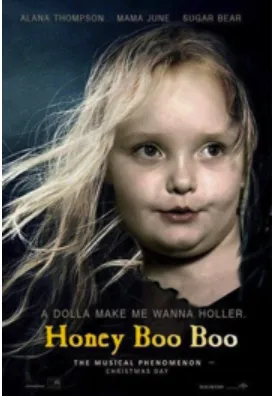
Figure 1.3 Les Miserables ... 19
Figure 3.1 Jennifer Lawrence and Honey Boo Boo ... 66
Figure 3.2 Tyler Oakley as Mama June ... 74
Figure 4.1 Shame to Authenticity Continuum ... 79
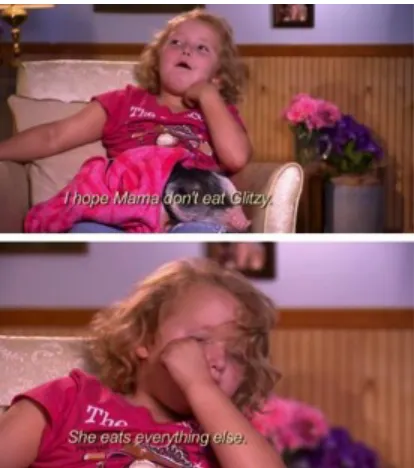
Figure 4.2 Mama eats Glitzy, show style ... 82
Figure 4.3 Mama eats Glitzy, meme style ... 83
Figure 4.4 Mama is the opposite of a skeleton ... 84
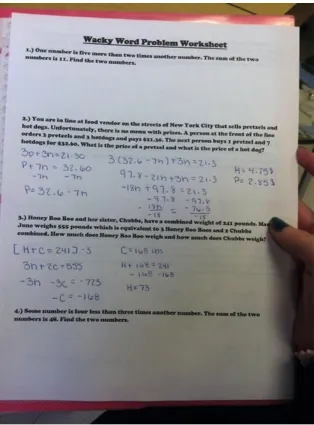
Figure 4.5 Honey Boo Boo math problem ... 86
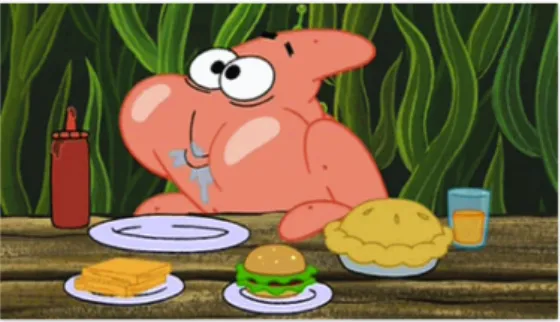
Figure 4.6 Honey Boo Boo as Patrick Star ... 88
Figure 4.7 June as Louis the Alligator ... 90
Figure 4.8 June on a water slide ... 92
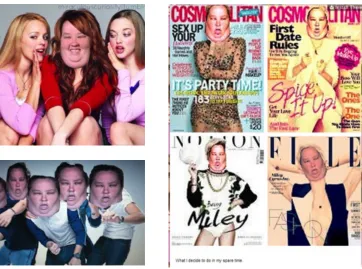
Figure 4.9 June’s face on famous thin bodies ... 94
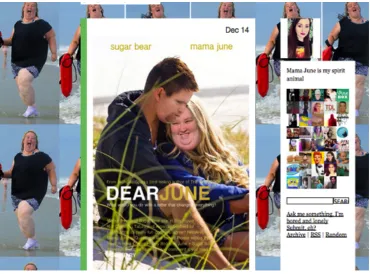
Figure 4.10 “Dear June” ... 95
Figure 4.11 “Mama Del Rey” ... 97
Figure 4.12 “If they just lose a bit of weight” ... 99
Figure 4.13 Alana grabbing her belly ... 100
Figure 4.14 From princess to Boo Boo ... 101
Figure 4.16 Alana is a beautiful chunky lemon ... 104
Figure 4.17 NemO’s Cagacemento ... 106
Figure 4.18 “About to piss all over myself” ... 107
Figure 4.19 Sugar Bear is proud ... 108
Figure 4.20 June’s neck crust ... 109
Figure 4.21 Alana and Pumpkin are always hungry ... 111
Figure 4.22 Alana relaxing and eating ... 112
Figure 4.23 Upset because of no food from McDonald’s ... 113
Figure 4.24 Food for Valentine’s Day ... 114
Figure 4.25 Snacks in “The Love Room” ... 115
Figure 4.26 Cranberry sauce on Alana’s face ... 116
Figure 4.27 Chicken as moisturizer ... 117
Figure 4.28 But really, why can’t sides be meat? ... 118
Figure 4.29 Alana has never eaten a salad ... 119
Figure 4.30 Alana’s roadkill wish list ... 120
Figure 4.31 June is excited about mustard ... 121
Figure 4.32 June calls vaginas “biscuits” ... 122
Figure 4.33 June seducing the camera ... 123
Figure 4.34 June as the board game Operation ... 124
Figure 4.35 June has a boyfriend ... 125
Figure 4.36 Sugar Bear on trouser snakes ... 126
Figure 4.37 From the movie Bad Grandpa ... 127
Figure 4.39 “Get outta my ass” ... 129
Figure 4.40 Alana is jealous of Kaitlyn’s extra thumb ... 130
Figure 5.1 Redneck to LGBTQ Continuum ... 133
Figure 5.2 Alana threatening to “go ghetto” ... 134
Figure 5.3 June thinks she is “beautimous” ... 135
Figure 5.4 Alana being sassy ... 136
Figure 5.5 Tyler Oakley, the Honey Boo Boo fan ... 137
Figure 5.6 Adore Delano quotes Alana ... 138
Figure 5.7 Alana is a gay rights activist ... 139
Figure 5.8 Alana does not want a boyfriend ... 140
Figure 5.9 Pumpkin is too busy for men ... 142
Figure 5.10 June is in charge of her family ... 146
Figure 5.11 Misandrist Alana ... 146
Figure 5.12 Maria does not care ... 147
Figure 5.13 Alana’s catchphrase ... 153
Figure 5.14 Alana’s first money ... 154
Figure 5.15 Alana getting a manicure ... 155
Figure 5.16 June likes free stuff ... 156
Figure 5.17 June is saving the money from the show ... 157
Figure 5.18 Pumpkin and Chubbs mispronounce words ... 158
Figure 5.19 Anna thinks her brain has no lightning ... 159
Figure 5.20 Alana staring contest ... 161
Figure 5.22 June dancing ... 164
Figure 5.23 #HanniBooBoo ... 165
Figure 5.24 Anne Rice, Tom Cruise, and Honey Boo Boo ... 166
Figure 5.25 Honey Boo Boo is not elegant ... 167
Figure 5.26 Les Miserables ... 168
Figure 5.27 Alana as Nietzsche ... 169
Figure 5.28Portrait of a Young Lady and a portrait of June ... 170
Figure 5.29 Alana as Jesus, June as the Virgin Mary ... 171
Figure 5.30 Alana as the child Christ ... 172
Figure 5.31 June being real ... 174
Figure A.1 Jon Stewart’s head explodes ... 217
Chapter 1: Introduction
My first realization that Honey Boo Boo1 had become a complex discursive
phenomenon came with the appearance of an image from the show Here Comes Honey
Boo Boo in my social media feeds. In this animated image, June Shannon, the overweight
matriarch of the show, careens down a waterslide in her bathing suit with joy on her face.
Most of the previous discourse I had encountered around the show was negative and
focused on how “trashy” the show was, but, in my social media feeds, people were now
praising the show for “fat acceptance” of “real bodies,” and people were embracing
June’s joy. There were still negative comments, but they were complicated by people
who identified with June because of her weight, one of the things that had been used to
mock her and call her “white trash.” This image became popular on Tumblr, with
hundreds of reblogs, and it spread elsewhere online, including into my Facebook feed.2
Tumblr is a location of complex discourse creation, with users generating intricate
languages of memes that go on to appear in places like my Facebook feed.3 The
1 For purposes of differentiation, this study uses “Honey Boo Boo” for the overall
phenomenon, “Here Comes Honey Boo Boo” for the television show, and “Alana” for the girl also known as “Honey Boo Boo.” Tumblr users generally use “Honey Boo Boo” for all three.
2 “Community Post: 25 Crazy Mama June GIFs,” BuzzFeed Community, October 2, 2012,
http://www.buzzfeed.com/hyvesredactie/25-crazy-mama-june-gifs-7j5s.
3A meme is a “contagious pattern of information” that is spread throughout a culture –
fashions, catchphrases, and popular music are examples of cultural memes. Michele Knobel, “Memes, Literacy and Affinity Spaces: Implications for Policy and Digital Divides in Education,” Learning 3, no. 3 (2006),
appearance of this particular post spoke to me of the role that sites like Tumblr, Reddit,
and 4chan play in developing online language.4 While Reddit and 4chan are dominated
by white heterosexual men, Tumblr is a more feminine, queer, and diverse space.5 A post
celebrating Mama June’s body acceptance is representative of the kind of progressive
space that Tumblr is understood to be.6 The relationship between Tumblr, as a
progressive site of meme generation, and hegemonic television stereotypes, as seen in
Here Comes Honey Boo Boo, offers the opportunity to understand more about television,
stereotyping, and social media.
This study explores how online content creators engage with television
stereotypes online. Specifically, this study seeks to understand the ways in which online
content that is created using a reality television show as source material supports,
undermines, and interacts with the tropes of the white trash stereotype. It also seeks to
4 Ryan M. Milner, “Media Lingua Franca: Fixity, Novelty, and Vernacular Creativity in
Internet Memes,” Selected Papers of Internet Research 3 (2013), http://spir.aoir.org/index.php/spir/article/view/806.
5 Alice Marwick, “Gender, Sexuality, and Social Media,” in The Social Media Handbook,
ed. Jeremy Hunsinger and Theresa Senft (New York: Routledge, 2014), 59–75; Parisa Zamanian, “Queer Lives: The Construction of Queer Self and Community on Tumblr” (M.A., Sarah Lawrence College, 2014),
http://search.proquest.com.pallas2.tcl.sc.edu/pqdtft/docview/1535729447/; Alexis C. Madrigal, “Reddit Demographics in One Chart,” The Atlantic, July 3, 2013,
http://www.theatlantic.com/technology/archive/2013/07/reddit-demographics-in-one-chart/277513/; Kevin Morris, “Who’s on Reddit?,” The Daily Dot, September 12, 2011, http://www.dailydot.com/society/reddit-survey-demographics/; “Advertise - 4chan,”
4chan, accessed October 7, 2015, http://www.4chan.org/advertise; Maeve Duggan, “Mobile Messaging and Social Media 2015,” Pew Research Center: Internet, Science & Tech, August 19, 2015, http://www.pewinternet.org/2015/08/19/mobile-messaging-and-social-media-2015/.
6 Progressive meaning left and focused on issues of equality, but not necessarily radical,
or focused on “comprehensive systematic change.” Catherine Eschle and Bice
Maiguashca, “Reclaiming Feminist Futures: Co-Opted and Progressive Politics in a Neo-Liberal Age,” Political Studies 62, no. 3 (October 2014): 648,
discover how online content creators take part in the construction of meaning using the
show. This study will examine a selection of Tumblr posts about Honey Boo Boo for the
ways in which Tumblr users uphold, undermine, and “play with” white trash stereotypes.
The goal is to gain insight into online content creators’ participation in television culture
and its use of the white trash stereotype as well as into how they use Tumblr to
communicate. This research uses discourse analysis to examine the Tumblr content
created with, around, and about the phenomenon of Honey Boo Boo.7
This study addresses the following research questions: How does Tumblr content
use Honey Boo Booin discourse explicitly and implicitly about race, class, gender,
sexuality, and geography? What are these discourses? How do these discourses adopt,
negotiate, or resist common U.S. stereotypes of “white trash” and “rednecks?” How does
the online audience’s role as a secondary content creator change meaning and discourse
around and about the show? As a progressive space, does Tumblr resist the hegemonic
narratives of Honey Boo Boo?
The family on Here Comes Honey Boo Boo represents a unique intersection of
poor, white, fat, southern, LGBTQ-allied, and female-dominated social actors,
positioning the show along the power axes of class, race, weight, geography, sexuality,
and gender. This study attempts to understand Tumblr discourse about Honey Boo Boo
through the framework of intersectional theory. Intersectional theory assumes that social
categories of race, class, and gender are intertwined and together constitute identity and
7 All discourse gathered for this study pre-dates the cancellation of the show. The
analysis does not focus on the molestation scandal, which will be discussed briefly in the conclusion. Lisa de Moraes, “‘Here Comes Honey Boo Boo’ Canceled as TLC Wrings Its Hands and Details Get Worse,” Deadline, October 24, 2014,
describe power relationships. How do these axes of power interact in online discourse?
This study attempts to understand the online content creator’s role in creating meaning
around a show that relies heavily on negative stereotypes.
1.1 What is Tumblr?
Launched in 2007, Tumblr is an active, expanding Internet site with more than
166 million users from around the world.8 In May of 2013, Yahoo, Inc. purchased
Tumblr from the founder, David Karp, for $1.1 billion.9 This worried investors, who saw
Tumblr as difficult to monetize, and it worried Tumblr users, who dislike corporations
and feared the site would change to become easier to monetize.10 Currently, the site
makes money through sponsored posts, initiated before the buy out, but the relatively
small size of the Tumblr audience makes it a difficult space to advertise in.11 These
difficulties in monetizing the site are due to the things that are fundamental to the site as
it exists now: lack of demographics data on users, difficulty counting users, and very little
control over content; much of Tumblr’s success comes from allowing users to post
8 Yi Chang et al., “What Is Tumblr: A Statistical Overview and Comparison,”
arXiv:1403.5206 [physics], March 20, 2014, http://arxiv.org/abs/1403.5206.
9 Jenna Wortham, “Yahoo Completes Tumblr Acquisition,” Bits Blog, accessed October
29, 2015, http://bits.blogs.nytimes.com/2013/06/20/yahoo-completes-tumblr-acquisition/.
10 Jenna Wortham, “No Regrets for the Founder of Tumblr After Yahoo Sale,” The New
York Times, May 4, 2014, http://www.nytimes.com/2014/05/05/technology/no-regrets-for-the-founder-of-tumblr-after-yahoo-sale.html; Molly Young, “‘“It Was the Biggest Game of Chicken I”ve Ever Seen.’’,” NYMag.com, September 29, 2013,
http://nymag.com/news/business/boom-brands/tumblr-2013-10/; Richard Waters and Tim Bradshaw, “Yahoo Buys Start-up Tumblr for $1.1bn,” Financial Times, May 20, 2013,
http://www.ft.com/cms/s/0/f65828a6-c0c9-11e2-aa8e-00144feab7de.html#axzz3qRyZnP23.
11 Bryce J. Renninger, “‘Where I Can Be Myself … Where I Can Speak My Mind’ :
animated images of pornography and copyrighted works.12 Tumblr offers access to a
progressive teen and young adult market that comes to Tumblr to avoid being a market.13
Tumblr is a microblogging site, somewhat like Twitter, that offers the full
functionality of a blog with the interconnectivity of a social media site. Unlike Twitter,
Tumblr has no character limits, deemphasizes the importance of individuals and
conversations, and does not limit the kind or length of content posted.14 Like Twitter,
users act as both content creators and content consumers. Tumblr offers full integration of
animated gifs, which makes the content more dynamic than Facebook, Twitter, Reddit,
Pinterest, or Instagram.15 This is part of an increased functionality and customizability of
Tumblr in general; like a blog hosted anywhere else, Tumblr users can use HTML and
plug-ins to change backgrounds, add and remove features, and create unique spaces that
meet their needs. The focus on gifs and image macros increases the importance of the
hashtag system because they often serve as the only searchable information on a post.
The hashtag functionality makes content easy to discover, and on Tumblr gives nearly
equal footing to new users with few followers and large established blogs.16
Unlike other sites, there is not a comment feature on Tumblr posts; the only
functionality is either liking or reblogging a post.17 Users can functionally comment by
adding their thoughts to a reblog, but these comments appear in the middle of a list of
likes and reblogs, with no priority given to reblogs that add content. There is no clear trail
12 Adam Rifkin, “Tumblr Is Not What You Think,” TechCrunch, February 18, 2013,
http://social.techcrunch.com/2013/02/18/tumblr-is-not-what-you-think/.
13 Waters and Bradshaw, “Yahoo Buys Start-up Tumblr for $1.1bn.”
14 Matt Hart, “Youth Intimacy on Tumblr A Pilot Study,” Young 23, no. 3 (August 1,
2015): 193–208, doi:10.1177/1103308815577878.
15 Rifkin, “Tumblr Is Not What You Think.”
of conversation on the original post. The result is a site where trolling and relationships
between users are both deemphasized.18
This de-emphasis on relationships is also partly a function of the pseudonymity of
users. Users are not required to fill out a profile, are allowed to have as many blogs as
they want, and generally use a pseudonym as their username.19 Blogs can belong to
groups of people, can require approval to be seen (private), and can be interacted with
anonymously.20 Tumblr creates a private and personal space distinguished from the
public spaces of Facebook, leading to interesting demographics and content.21 If
Facebook is where your mother is, Tumblr is where your teenager is.22
Almost half of Tumblr users are young, between the ages of 16 and 24, and 66%
are under 35. 23 They are balanced between genders, with 65% having some college
education.24 Tumblr users tend to spend more time on Tumblr than they do on other
social media sites like Twitter and Pinterest.25 Of particular importance to this study is a
key trait of these Tumblr users: they engage in social media as a means of
18 Ibid., 11.
19 Hart, “Youth Intimacy on Tumblr A Pilot Study.”
20 Rifkin, “Tumblr Is Not What You Think”; Renninger, “‘Where I Can Be Myself …
Where I Can Speak My Mind.’”
21 Rifkin, “Tumblr Is Not What You Think.”
22 Barry Graubart, “Tumblr Is Not a Blogging Platform,” Content Matters, May 19, 2013,
http://www.contentmatters.info/content_matters/2013/05/tumblr-is-not-a-blogging-platform.html.
23 Cooper Smith, “Tumblr Offers Advertisers A Major Advantage: Young Users, Who
Spend Tons Of Time On The Site,” Business Insider, December 12, 2013,
http://www.businessinsider.in/Tumblr-Offers-Advertisers-A-Major-Advantage-Young-Users-Who-Spend-Tons-Of-Time-On-The-Site/articleshow/27250102.cms; Albert Costill, “50 Things You Should Know About Tumblr,” Search Engine Journal, January 9, 2014, http://www.searchenginejournal.com/50-things-know-tumblr/84595/.
expression.26 The plurality of Tumblr posts and visits are from the U.S., with the U.S.
generating four times the amount of traffic as the next country, making it an appropriate
place to examine U.S. culture.27 Tumblr is unique among the meme heavy sites in that it
is not a heavily masculinized space. It is a site of feminist and trans-activism.28 Milner
describes 4chan as “antisocial,” Reddit as “leftist,” and Tumblr as “hipster,” but Tumblr
is also extremely young, gender-balanced, queer, and radical.29 Tumblr is not driven by
the same kind of hegemonic masculinity as the other sites.30 Renninger describes Tumblr
as “a platform used by feminists, queers, trans* people, and alienated youth.”31 This is
especially relevant to this study because Honey Boo Boo features young women who
support gay rights.
1.2 What is Honey Boo Boo?
Here Comes Honey Boo Boo is a reality television show spin-off of the popular
and much-maligned Toddlers & Tiaras that aired on the television channel TLC. The
26 Young, “‘“It Was the Biggest Game of Chicken I”ve Ever Seen.’’”; Renninger,
“‘Where I Can Be Myself … Where I Can Speak My Mind’”; Hart, “Youth Intimacy on Tumblr A Pilot Study,” 201.
27 Costill, “50 Things You Should Know About Tumblr.”
28 Zamanian, “Queer Lives”; Sarah Connelly, “‘Welcome to the FEMINIST CULT’:
Building a Feminist Community of Practice on Tumblr,” Student Publications, April 1, 2015, http://cupola.gettysburg.edu/student_scholarship/328.
29 Ryan M. Milner, “The World Made Meme: Discourse and Identity in Participatory
Media” (Dissertation, University of Kansas, 2012), 67,
http://kuscholarworks.ku.edu/handle/1808/10256; Duggan, “Mobile Messaging and Social Media 2015”; Zamanian, “Queer Lives”; Connelly, “‘Welcome to the FEMINIST CULT.’”
30 Robert W. Connell and James W. Messerschmidt, “Hegemonic Masculinity Rethinking
the Concept,” Gender & Society 19, no. 6 (2005): 829–59; Lori Henson and Radhika E. Parameswaran, “Getting Real with ‘Tell It like It Is’ Talk Therapy: Hegemonic
Masculinity and the Dr. Phil Show,” Communication, Culture & Critique 1, no. 3 (2008): 287–310.
show focuses on the then-7-year-old Alana Thompson and her outspoken, overweight
mother, June Shannon. They are poor and have been preceded in life by generations of
poverty. June was 15 when she had her first child and was 32 when she became a
grandmother. On the show, the family lives in rural Georgia with Alana’s father, “Sugar
Bear,” to whom June is not married, and Alana’s overweight older sisters, who all have
different fathers. “Pumpkin” (Lauryn) is 12, “Chubbs” (Jessica) is 14, and “Chickadee”
(Anna) is 17, single, and pregnant. Other family members appear throughout the run of
the show, including a “gay” pig named “Glitzy,” Alana’s gay uncle nicknamed “Poodle,”
and Anna’s newborn, Kaitlyn, who was born with a third thumb.
The show follows the family couponing, participating in pageants, and going on
adventures to events like the Redneck Olympics. They have their own lexicon of words
like “redneckognize” (recognize) and “biscuit” (female genitalia), and the show often
subtitles their speech, even though they speak English, because their accents are heavy,
underlining their difference and marginalizing them further. The show also includes
moments of daily life that other shows usually edit out, like sneezing, passing gas, and
burping, which would normally be cut from the footage for propriety’s sake.
Alana first appeared on TLC’s infamous child pageant show, Toddlers & Tiaras,
and caused a sensation because she was chubby, hyperactive, and outspoken. Unlike
other toddlers on the show, she did not throw tantrums and was not being controlled by a
stereotypical "stage mother.” Instead, June was funny and massively overweight. She
gave Alana Mountain Dew mixed with Red Bull, a concoction the family called “Go-go
juice,” to get her energized for the pageants. Like many of the families that appear on
pageants are a deeply ingrained part of their family life and culture. They view pageants
as a way for girls to learn how to be successful women.32
Child pageants are controversial in the United States, not least of all because they
are expensive for the participants.33 Alana’s family is poor and has at times lived entirely
off welfare, making their participation in the relatively expensive world of pageants
potentially more offensive to viewers than it already is because of the sexualization and
monetization of children. This use of money on pageants rather than on necessities plays
into the idea that poverty is self-inflicted. According to Jillian Sandell, “Issues of
economic marginality can be tolerated and articulated within the logic of liberal
pluralism, so long as they can then be circulated as cultural, rather than economic,
issues.” 34 The show offers cultural resistance, however, to the frequent erasure of poor
families and the existence of class from mainstream television and film. The
representation of a poor white family in a mainstream television space is, even if a
problematic representation, still resistance to erasure. By being a “real” poor family with
their own television show, the Thompsons are offering resistance to the invisibility that
the rural poor often face. Their presentation as “white trash,” however, acts as
justification for the very invisibility that people like them face: they are poor because that
is what their behavior should lead to and that behavior should not be on television.
32 Elisabeth Thompson, “Trailer Park Royalty: Southern Child Beauty Pageants, Girlhood
and Power,” Georgia Southern University, December 1, 2007, 201, http://digitalcommons.georgiasouthern.edu/etd/471.
33 Ibid., 20.
The show focuses on the Thompson family’s weight, poverty, and apparent lack
of shame for being white trash. Although this stereotype has been a prominent feature of
daytime television talk shows since the 1980s, it has been rare during primetime, even on
the more daring cable channels, until the recent past.35 Like daytime talk shows, Here
Comes Honey Boo Boo offers resistance to the erasure of class on television.36 Because of
the use of stereotypes and the behavior of the characters on the show, however, the news
and entertainment review media has often represented the show as “the downfall of
mankind,” but others have defended it as an honest representation of open-minded, poor,
female, overweight people who have confidence and self-love in a way that is generally
not expected for people who are neither rich nor beautiful.37 The Thompson family’s
positive self-image is in direct contrast with the way the show aims to portray them as
poor white trash. They are a tight-knit, cohesive family; they may eat “depression
spaghetti” and roadkill, but they are cooking and eating these things together.38 They
35 C. Squire, “White Trash Pride and the Exemplary Black Citizen: Counter-Narratives of
Gender, Race and the Trailer Park in Contemporary Daytime Television Talk Shows,”
Narrative Inquiry 12, no. 1 (2002): 155–72, doi:10.1075/ni.12.1.22squ; Laura Grindstaff,
The Money Shot: Trash, Class, and the Making of TV Talk Shows (University of Chicago Press, 2002). Daytime talk shows occupy a place in the industry similar to the current position of reality television – it is cheap to produce, dependent on stereotypes, and a genre that is treated with disdain.
36 Becca Cragin, “Beyond the Feminine: Intersectionality and Hybridity in Talk Shows,”
Women’s Studies in Communication 33, no. 2 (2010): 154–72, doi:10.1080/07491409.2010.507585.
37 Tim Goodman, “‘Honey Boo Boo’: That Joke Isn’t Funny Anymore,” The Hollywood Reporter, August 22, 2012, http://www.hollywoodreporter.com/bastard-machine/here-comes-honey-boo-boo-alana-mama-364933; Daniel D’Addario, “We’re Sweet On Honey! New Yorkers Could Learn a Lot From TLC Pageant Queen ‘Honey Boo Boo,’”
Observer, November 7, 2012, http://observer.com/2012/11/were-sweet-on-honey-new-yorkers-could-learn-a-lot-from-tlc-pageant-queen-honey-boo-boo/2/.
38Making Sketti | Here Comes Honey Boo Boo, 2012,
work together to give to charity and to support each other in their hobbies and struggles.
While being heavily dependent on tropes of white trash, the show also portrays the
characters behaving in ways that work against many of the stereotypes associated with
white trash. The white trash stereotype generally presents poor whites as racist,
homophobic, and bible thumping, but this is not true of the Thompsons, who are not
terribly religious and are supportive of their gay uncle and of their “gay” pig.39 The show
both supports and resists common stereotypes of white trash while also resisting the
historic erasure of poor white people on television.
Honey Boo Boo has already been the subject of scholarly interest. As a popular
reality television show relying on stereotypes of rural Southerners, it has offered scholars
rich ground to explore those stereotypes. Bevie Tyo examined the redneck stereotype
within the show, doing a cultural value analysis of the problematic representation of the
main characters and noting that the show was constructed to use those stereotypes for
entertainment.40 Similarly, Ariel Miller did a quantitative content analysis of the show,
alongside Duck Dynasty and Buckwild,to explore the construction of Southern identity
39 “Reality TV Accepts Anyone and Everyone - Room for Debate,” The New York Times,
accessed May 27, 2013, http://www.nytimes.com/roomfordebate/2012/10/21/are-reality-shows-worse-than-other-tv/reality-tv-accepts-anyone-and-everyone; Matt Wray, Not Quite White: White Trash and the Boundaries of Whiteness (Duke University Press, 2006); A. Newitz and M. Wray, “What Is ‘White Trash’?: Stereotypes and Economic Conditions of Poor Whites in the U.S.,” Minnesota Review 47, no. 1 (1996): 57–72. At one point in the show, the family adopts a teacup pig, who is a male pig named “Glitzy.” Although Alana knows he is a boy, she wants him to participate in the pageant and dress up with her, so she decides that the pig is gay. Her older sister argues that it is not gay, but Alana fires back, “It can if it wants to, you can’t tell that pig what to do!”
40 Bevie Tyo, “Coming to Appreciate the Redneck Stereotype: A Value Analysis of Here
on reality television and the frequency with which the shows used stereotypes.41
Unsurprisingly, these studies showed heavy reliance on negative stereotypes about
“rednecks” and “white trash.”
However, scholarship on the show has not exclusively focused on the negatives.
Scholars like Geoffrey Parkes and May Friedman have pushed back against a simplistic
understanding of the show as merely exploitative of Southern stereotypes, suggesting
instead that it also serves as a site of resistance.42 The show includes radical acceptance
of fat bodies, female empowerment, and queer people in addition to the stereotypes about
rednecks. The show also offers resistance to issues of class expectations and, in that way,
serves, at least partly, as a site of resistance against the Southern stereotypes it uses.43
Closer to this study’s interest, Andre Cavalcante has done a discourse analysis of
the Facebook fan page of the show.44 Reality television and social media have been
intertwined over the past decade. For example, reality television is dependent on social
media for generating interest and in voting on competition shows, and social media often
41 Ariel Miller, “The Construction of Southern Identity Through Reality TV: A Content
Analysis of Here Comes Honey Boo Boo, Duck Dynasty and Buckwild,” Elon Journal of Undergraduate Research in Communications 4, no. 2 (2013),
http://www.studentpulse.com/articles/824/4/the-construction-of-southern-identity- through-reality-tv-a-content-analysis-of-here-comes-honey-boo-boo-duck-dynasty-and-buckwild.
42 May Friedman, “Here Comes a Lot of Judgment: Honey Boo Boo as a Site of
Reclamation and Resistance,” The Journal of Popular Television 2, no. 1 (April 1, 2014): 77–95, doi:10.1386/jptv.2.1.77_1; Geoff Parkes, “He’s Gonna Be a Little Gay:
Redneckognising the Queer American Family in Here Comes Honey Boo Boo,” in
Proceedings of the 4th Annual International Popular Culture Association of Australia and New Zealand Conference (PopCAANZ 2013) (University of Southern Queensland, 2013), 138–46, http://eprints.usq.edu.au/23932/.
43 Friedman, “Here Comes a Lot of Judgment.”
44 Andre Cavalcante, “You Better ‘Redneckognize’!: Deploying the Discourses of
focuses on television as a source of conversation topic. Social media has allowed
audiences to interact much more closely with television while reality television has
encouraged a sense of intimacy for audiences. These two phenomena have led to the
creation of fascinating sites of discourse around reality shows.45 The tension between the
resistance that Parkes and Freidman note and the dependency on exploitative stereotypes
that Tyo and Miller see is revealed in the attitudes and language used by the commenters
on the Facebook page.46 Audiences use “the Thompson family and their show as reasons
to debate the ‘proper’ and moral parameters of self, family, society and nation.”47
This intersection between stereotypes, power structures, identity formation, mass
media, social media, reality television, and queer intersectional feminism is exactly where
this research project is situated. These studies explore the idea of representation issues in
television, especially the relationship between what is presented onscreen as the reality of
the people’s lives and “actual reality,” and add to the body of feminist and critical
television studies. Cavalcante even extends this research into online social media spaces,
where there has been less analysis of stereotypes, by locating his discourse analysis in the
medium of Facebook. This study wishes to add to that scholarship by focusing on an area
of social media that has been under-studied (Tumblr and the image macro) and that offers
new insights into the stereotypes and resistance to cultural expectations while also
offering insight into the cutting edge of online communications.
45 Beverley Skeggs and Helen Wood, “The Labour of Transformation and Circuits of
Value ‘around’reality Television,” Continuum: Journal of Media & Cultural Studies 22, no. 4 (2008): 565.
46 Cavalcante, “You Better ‘Redneckognize’!: Deploying the Discourses of Realness,
Social Defiance, and Happiness to Defend Here Comes Honey Boo Boo on Facebook.”
1.3 Social Media, Image Macros, and Reality Television: Talking about Stereotypes
The Internet has been studied extensively as a site of communication and location
of discourse, but, in many ways, it also acts as a site of community creation. While social
networks may offer a new kind of interaction between people, they also offer a new way
to build communities. For example, many of Twitter’s most popular hashtags are from
people live-tweeting television shows and televised sporting events, including the most
retweeted post of all time from the 2014 Oscars.48 Those who lack a strong in-person
community of people with similar interests can find those people online. Before the
Internet, audiences had to wait to talk about Seinfeld around the water cooler at work the
next day, but audiences are now able to talk to a much broader community of people
interested in a show as it is happening, creating a sense of watching television together.49
Likewise, television, especially reality television, encourages and depends on
audience participation. Television shows have official hashtags that their networks
promote on air and online, and reality television shows often ask for audience feedback
and voting. The Internet, instead of replacing television, has expanded television’s
community creating potential.50 Social media makes “a transition from an individual
culture of reading to shared reading and writing practices” possible.51 Some shows
48 Ruth Deller, “Twittering on: Audience Research and Participation Using Twitter,”
Participations 8, no. 1 (2011): 216–45; Sam Lansky, “Oscars 2014: This Is the Most Retweeted Tweet Ever,” Time, accessed March 3, 2014,
http://entertainment.time.com/2014/03/02/oscars-ellen-meryl-streep-selfie/.
49 Stephen Harrington, Tim Highfield, and Axel Bruns, “More than a Backchannel:
Twitter and Television,” Audience Interactivity and Participation. Brussels: COST Action Transforming Audiences, Transforming Societies, 2012, 406.
50 Harrington, Highfield, and Bruns, “More than a Backchannel.”
51 Eliisa Vainikka and Juha Herkman, “Generation of Content-Producers? The Reading
contribute more to this participatory culture than others do. Competition shows are
especially reliant on participation from viewers in their voting processes, but shows with
large fandoms or that are popular in cultural discourse often feature heavily in Internet
communications. Here Comes Honey Boo Boo is an example of a show that became part
of the cultural mainstream, primarily through mainstream news coverage, and found itself
as both the subject of online communications and part of the online language used to talk
about other things.
The Internet not only changes communication by creating virtual communities,
but it also offers new ways of communicating. Thanks to the speed of modern Internet
connections and the ready availability of simple and easy to use multimedia editing tools,
people are no longer limited to text or speech as a way of interacting with others.52
People use the Internet to communicate with one another through complicated
combinations of found images, video, and text mixed with newly created images, video,
and text.53 These objects of communication become more complicated and intertextual as
communities and individuals adapt and change these further; the objects form a kind of
shared “meaning universe,” with constantly evolving references and texts used to discuss
a wide range of issues.54 Individuals do not simply talk about the television show; they
take part in a distinctive online discourse about a range of other topics and issues,
including the deeply personal and the broadly social, using the show as a signifier. Their
52 Ibid.
53 Milner, “Media Lingua Franca.”
social media responses to and interpretations of television shows are also a way of
performing identity.55
A type of content of particular interest to this inquiry is the “image macro,”
which mixes found and newly created images, videos, and text. Image macros are a kind
of image-based meme comprised of still or moving images with text over them. It is
important to understand that, although we tend to think of viral content as something that
spreads and is replicated as is, the “ideas get transformed, repurposed, or distorted as they
pass from hand to hand.”56 The image and the text are being spread but they are also
evolving new meanings and growing more complicated over time because of the image
macro’s previous history. Thus, the original image macro can become the basis for jokes
that play on the original. The image macro is particularly important in my study of Honey
Boo Boodiscourse on Tumblr because the majority of posts on Tumblr use both images
and text to create meaning, and this content on Tumblr offers rich cultural content to
analyze, richer than in other online spaces.57
An example of this kind of evolution of an image macro is the “Condescending
Wonka” meme.58 A picture of Willy Wonka (played by Gene Wilder) that people have
decided looks “condescending” is used as the image base and online content creators add
their own condescending text in response to a social media conversation that they are
participating in or as a comment on a broader cultural conversation.
55 Deller, “Twittering on.”
56 Henry Jenkins, “If It Doesn’t Spread, It’s Dead (Part One): Media Viruses and
Memes,” Confessions of an Aca-Fan, February 11, 2009,
http://henryjenkins.org/2009/02/if_it_doesnt_spread_its_dead_p.html.
57 Chang et al., “What Is Tumblr.”
58 “Condescending Wonka / Creepy Wonka,” Know Your Meme, accessed March 3, 2014,
Figure 1.1 Condescending Wonka59
This pattern of use and repurposing is seen around television content as well. An
image pulled from a television show can be used to illustrate an individual’s day, paired
with a funny quote, or edited into a new image entirely. All of these uses are memetic;
they appropriate the image or catchphrase that has spread, but the resulting image macro
yields new meaning. Many of the image macros and memes on Tumblr make use of
humor, of course, but beneath the humor is serious engagement with issues.60 Humor is
often used as a form of social critique because it is “analytical, critical, and rational.”61
Humor is often conceived of as being about power, but it can act both to uphold and to
undermine systems of power.62 The Internet is unique in that the kind of humor that
might be censored elsewhere is easily accessible.63
59 Ibid.
60 Geniesa Tay, “Embracing LOLitics: Popular Culture, Online Political Humor, and
Play,” 2012, http://ir.canterbury.ac.nz/handle/10092/7091.
61 Jonathan Gray, Jeffrey P. Jones, and Ethan Thompson, “The State of Satire, the Satire
of State,” Satire TV: Politics and Comedy in the Post-Network Era, 2009, 8.
62 Joanne R. Gilbert, “Performing Marginality: Comedy, Identity, and Cultural Critique,”
Text and Performance Quarterly 17, no. 4 (1997): 317–30,
Figure 1.2 “A dolla makes me holla”64
Honey Boo Boo has been the focus of many image macros and memes, often
featuring the popular phrase of Alana’s, “A dolla makes me holla.” The original image is
sometimes shared as is, as seen above, but it is often shared with an additional caption.
Some captions make fun of the catchphrase or the show and some use the image to
describe other circumstances. For example, one content creator uses the image to express
his feelings about “Doing fee-for-service work on top of your full time job.” The process
is iterative. A meme can be referenced in other media, like a different television show,
and then that new reference can be used in a similar way that the first one was, but with
different connotations. A great example of this is seen in the second image above, taken
from RuPaul’s Drag Race, which features the Honey Boo Boo catchphrase as spoken by
a drag queen, giving it new drag queen and gay connotations.
Disability: ‘stand‐up’ Comedians in the United States 1,” Disability & Society 21, no. 6 (2006): 629–43, doi:10.1080/09687590600918354.
63 Weaver, “Jokes, Rhetoric and Embodied Racism,” 417.
64 Unless otherwise noted, images are from the posts collected for analysis and are not
Figure 1.3 Les Miserables
Content creators may also take the image and phrase and create an entirely new
image, often in relationship to other popular culture, like this reimaging of Alana
Thompson as Cosette in Les Miserables. Alana’s face is photoshopped into the movie
poster for Les Miserables, creating a new kind of image, rather than a found one. All of
these different images play on the content of the original, offering moments of embracing
or identifying with Alana and her catchphrase or mocking the character and the
catchphrase. Often, both in positive and negative interpretations, stereotypes are relied on
to convey messages. Many Tumblr posts about Honey Boo Boo are hashtagged
“redneck,” for example.
Tumblr exists at the center of a new intertextual and multimedia way of
communicating.65 In addition to being an Internet platform meant for sharing video,
images, and text mixed together, Tumblr is also built specifically to allow people to
re-share and comment on the meaning of a post either directly or through the addition of
tags. Unlike better-known social networks like Twitter and Facebook, which originated
as platforms for sharing written word posts, Tumblr depends on multimedia and
animation. What Tumblr provides is a wealth of material to analyze that lives fully inside
the Internet as an Internet-specific way of communicating. It is not possible to share in a
print-based document most of the content as it actually appears on Tumblr.
Online content creators have collectively constructed a distinct online discourse
about the reality television show and a range of other topics salient to U.S. culture and
society. This study examines this online discourse as it appears on Tumblr in an attempt
to understand how viewers interact with and communicate about television in the digital
age. This study also attempts to understand how Tumblr users “talk about” the white
trash stereotypes featured so prominently in Here Comes Honey Boo Boo. Which
stereotypes find their way into the Tumblr discourse? Are these stereotypes parroted and
accepted? Are they challenged? Are they used to communicate different meanings than
those seemingly offered in the show?
Reality television, especially shows like Here Comes Honey Boo Boo, depend
heavily on stereotypes for their success. For a show like Here Comes Honey Boo Boo,
which peddles stereotypes, Tumblr offers the researcher a way of analyzing how online
content creators use and respond to those stereotypes. Honey Boo Boo offers rich
material for a case study of how images, video, and text interact to create meaning on
Tumblr. The viewing demographic of Here Comes Honey Boo Boo, like the user base of
Tumblr, is quite young.66 Honey Boo Boooffers the opportunity to study a unique
66 Adam Kepler, “‘Honey Boo Boo’ Has the Ratings, If Not the Critics,” ArtsBeat,
September 28, 2012, http://artsbeat.blogs.nytimes.com/2012/09/28/honey-boo-boo-has-the-ratings-if-not-the-critics/; Joanna Brenner, “Social Networking Site Users,” Pew Research Center’s Internet & American Life Project, February 14, 2013,
intersection of race, class, gender, and sexuality. Dependent as the show is on stereotypes
of rednecks and poor white trash, especially white trash women, it is also remarkably
progressive around issues of sexuality and body acceptance. Tensions between cultural
expectations of bigotry and the actual behavior of the people on the show lead to a great
deal of conflict in interpretations by Tumblr users. The same image can be used to
denigrate rednecks and to support body acceptance, depending on the interpretation of the
Tumblr user. Online content creators use tagging as well as images and text to comment
on events and issues not directly related to the show itself; in this way, their posts rely on
and invoke cultural values and beliefs about race, class, gender, and sexuality.
One might be tempted to call this study an audience reception study, but its focus
is not on how the viewing audience of Here Comes Honey Boo Boo makes meaning of
the show. Instead, this study examines how an Internet culture receives and reinterprets a
show, using the stereotypes that the show presents as part of its discourse. Many people
who use the memes and image macros based on Here Comes Honey Boo Boo have never
actually seen the show; they may be only familiar with the meaning of the show and
characters in a broader cultural context.
This study also has affinities with fan studies, in that there is a shared cultural
language developed around a show, but this cultural language being developed by a mix
of people; some are fans, some are “viewer-judges” who watch to mock, and some have
never even seen the show.67 Much of the language around Honey Boo Boo is using it to
talk about other things. Honey Boo Boo is the subject of the Tumblr posts but often not
the object. The content creators on Tumblr are using Honey Boo Boo as a basis for
67 Michael J. Lee and Leigh Moscowitz, “The ‘Rich Bitch’ Class and Gender on the Real
creating expressions of self and identity and as a way of communicating complicated
meaning through mixing image, video, and text. It is remix culture that uses this
particular signifier as part of its language. These posts often reveal opinions and feelings,
sometimes about Honey Boo Boo, but expressing feelings about Honey Boo Boo is not
always, or even usually, the point. It is a location of convergence culture that is not
focused on one thing, as one sees in convergence culture around fandoms, but instead it is
about everything, using Honey Boo Boo as a way to communicate ideas.68
Tumblr matters not only because it is new, but also because this way of
communicating offers insights, unavailable in other forums, into how people create
meaning. Understanding the way cultural memes draw from television shows and how
stereotypes develop and are used to communicate is important because these memes and
stereotypes are part of the broader culture. What is created on Tumblr does not always
stay on Tumblr. Additionally, the meme is “an online community’s cultural artifact” that
helps illuminate the ways the online content creators express “values and share interests,”
and the meme has the ability to “significantly influence a community’s social values.”69
People use image macros and memes not only to discuss their own lives and identities,
but also to offer social and cultural critique.
As a space for doing work about race, class, gender, and sexuality, the Internet is
ideal for getting at otherwise hidden cultural values and beliefs. Because online
communication is done semi-anonymously, without personal contact and social cues,
users are less guarded about their behavior, including behavior that might be
68 Henry Jenkins, Convergence Culture: Where Old and New Media Collide (NYU press,
2006).
69 Carl Chen, “The Creation and Meaning of Internet Memes in 4chan: Popular Internet
embarrassing or socially unacceptable in other circumstances.70 Individuals are more
likely to disclose information to a computer than to another person.71 This disinhibition is
especially useful for getting information about opinions that would violate the social
contract, including opinions about those issues in which intersectionality (the sociological
theory used in this study) is most interested, including race, class, gender, and sexuality.
The cultural importance of Honey Boo Boo might not be immediately apparent.
Yes, it has become a cultural touchstone, but that alone does not mean that the show Here
Comes Honey Boo Boo is important. It is part of a relatively large resurgence of redneck
television, along with Hillbilly Handfishin’, Duck Dynasty, Moonshiners, and similar
shows. It is rare, though, for a television show to present a very strong stereotype and
also undermine it consistently. More than most television shows, especially shows that
are dependent on exploiting stereotypes, Here Comes Honey Boo Boo presents a
complicated portrait of its characters, and this portrait seems to elicit a range of
interpretations. These different interpretations unveil different assumptions about race,
class, gender, and sexuality that help distill meaning around what it is to be “redneck” in
the mind of Americans. That Honey Boo Boo is very popular as an image macro and
meme generator means that there is an unusual wealth of material to analyze for cultural
attitudes towards this stereotype.
The intersection between new intertextual communication forms based around
television, disinhibition from using the internet as the location of communication, and the
70 Noam Lapidot-Lefler and Azy Barak, “Effects of Anonymity, Invisibility, and Lack of
Eye-Contact on Toxic Online Disinhibition,” Computers in Human Behavior 28, no. 2 (March 2012): 434–43, doi:10.1016/j.chb.2011.10.014; Adam N. Joinson, “Disinhibition and the Internet,” in Psychology and the Internet: Intrapersonal, Interpersonal, and Transpersonal Implications (Academic Press, 2011).
popularity of the cultural phenomenon of a show heavily dependent on stereotyping
makes the use of Honey Boo Boo image macros on Tumblr a rich vein for exploration of
issues of race, class, gender, and sexuality. Analysis of the image macros should reveal
cultural attitudes towards the show itself and to identity issues, stereotypes, and the ways
memes evolve culturally.
1.4 Theoretical Perspective: Intersectionality
Intersectionality is a feminist approach to research and understanding the world
that emphasizes the importance of revealing the different power dynamics and structures
that create systemic inequalities. The goal of the intersectional approach is to understand
“the relationships among multiple dimensions and modalities of social relationships and
subject formations.”72 Intersectionality takes as its premise that there are different power
systems around which inequality is built, such as race, class, and gender, and that the
interactions of these systems affect the axes or “vectors of oppression and privilege.”73 In
addition to race, class, and gender, these power axes include any cultural markers that
distinguish the normal (privileged) from the abnormal (oppressed), including geography,
(dis)ability, religion, sexuality, beauty, weight, age, education, and language.74 People are
uniquely situated on these vectors such that the experience of power for individuals
changes depending on which privileges they receive and which oppressions they face. To
be male is to have cultural privilege over those who are not male; white over those who
72 Leslie McCall, “The Complexity of Intersectionality,” Signs 30, no. 3 (March 1, 2005):
1771–1800.
73 George Ritzer and Jeff Stepnisky, Contemporary Sociological Theory and Its Classical
Roots: The Basics, 4th ed. (McGraw-Hill Humanities/Social Sciences/Languages, 2012), 204.
74 Lynn Weber, Understanding Race, Class, Gender, and Sexuality: A Conceptual
are not white; rich over those who are not rich; straight over those who are not straight,
etc.
Those who are privileged or oppressed on one axis may not be similarly situated
on all axes, and so people within a group on one axis can have very different experiences
from one another because of their positions on other axes. White Americans do not all
have the same experience; to be white and poor is different from being white and wealthy
in America today. That said, being white and poor is also different from being black and
poor. The intersection of these different axes reveals oppressions and offers insights into
how different positions in society affect the people who occupy those positions. These
insights help us to conceptualize problems and offer us the opportunity to effect change
informed by that insight.
Intersectionality got its name from Kimberlé Crenshaw in her 1989 work
"Demarginalizing the Intersection of Race and Sex: A Black Feminist Critique of
Antidiscrimination Doctrine, Feminist Theory and Antiracist Politics.” The concept grew
from criticism of the white-dominated feminist movement of the 1960s and 1970s.75
Women like bell hooks spoke to the exclusivity of the feminist movement, which
continued to marginalize the black experience and black women.76 Intersectionality led
feminism to be more inclusive not only of the dynamics of race but of the dynamics of
75 Kimberle Crenshaw, “Demarginalizing the Intersection of Race and Sex: A Black
Feminist Critique of Antidiscrimination Doctrine, Feminist Theory and Antiracist Politics,” U. Chi. Legal F., 1989, 139.
76 bell hooks, Ain’t I a Woman: Black Women and Feminism (Boston, MA.: South End
many axes of power.77 Intersectionality has become important to feminist scholarship
because it takes into account all systems of power, not just systems of gender inequity.
Using intersectionality helps scholars to “make visible the interlocking structures
of inequality to be found within the academic and everyday concerns that shape both our
livelihoods and our experiences of the world.”78 The intersectional approach is useful in
many fields, but it is most frequently applied in the social sciences and humanities. The
field of cultural studies, in particular, has embraced using feminist theory and methods in
examining culture through the media. Intersectionality is useful in examining the media
for stereotypes that reinforce hegemonic beliefs about those disempowered on axes of
oppression.
This study applies an intersectional, multimodal discourse analysis to the Tumblr
interpretation of show Here Comes Honey Boo Boo, the phenomenon of Honey Boo Boo,
and the “white trash” stereotype used within and around that show. The intersectional
approach creates an imperative to explore the different axes of privilege and oppression
that appear within and around the show as well as to understand the meaning of the
representation of such people in a television show. Tumblr offers a venue to explore these
discourses of stereotypes and beliefs about race, class, gender, sexuality, and geography
not only in language, but also in visual, intertextual formats, with respect for the
authenticity of the voices of those who talk about the show. What does it mean to be
77 Patricia Hill Collins, “Gender, Black Feminism, and Black Political Economy,” The
ANNALS of the American Academy of Political and Social Science 568, no. 1 (March 1, 2000): 41–53, doi:10.1177/000271620056800105.
78 B. D. Dill and M. Kohlman, “Intersectionality: A Transformative Paradigm in Feminist
poor, white, female, Southern, overweight, and the lead on a television show? What does
it mean to be an audience that sees these people as leads on a television show?
1.5 Personal Background
In intersectional and feminist research, it is important for scholars to acknowledge
who they are, why they are interested in the subject matter, and what their own biases and
relationships to the subject are. 79 This is especially important for scholars working with
human subjects who are less powerful and privileged than are the scholars themselves.
Although I am studying a television show, the characters on that show are real people
who occupy an oppressed place in U.S. society that I do not entirely share.80
I used to work for the production company, Authentic Entertainment, that makes
Here Comes Honey Boo Boo. While I worked there, I was involved in post-production on
a number of shows, including the show Toddlers & Tiaras, which is where Alana
Thompson (aka Honey Boo Boo) made her debut before spinning off into her own show.
I was heavily relied upon for the transcription of Toddlers & Tiaras because, as a
Southerner, I was sometimes the only person who could easily understand the thick
Southern accents. I also did not mind working on it; many coworkers disliked working on
79 Mary Hawkesworth, “Truth and Truths in Feminist Knowledge Production,” in
Handbook of Feminist Research: Theory and Praxis, ed. Sharlene Nagy Hesse-Biber (SAGE, 2011), 92–118; Liesbet van Zoonen, Feminist Media Studies (SAGE, 1994).
80 Sandra G. Harding, Whose Science? Whose Knowledge?: Thinking from Women’s
Lives (Cornell University Press, 1991); Sandra Harding, “Subjectivity, Experience and Knowledge: An Epistemology From/for Rainbow Coalition Politics,” Development and Change 23, no. 3 (1992): 175–93; Sandra Harding, “Rethinking Standpoint
a show that had developed an unsavory reputation for exploitation of children.81
Although I had a cultural comfort level with the Southern accents and the portrayal of
pageants, something that I had been aware of as a child, the show disturbed me because
of the way it mocked poor Southerners.82 It used poverty and stereotypes of the South to
entertain outsiders. Reality television can be exploitative; much of it aims to mock,
belittle, and shame participants so that the audience might feel some superiority or
schadenfreude, but, through my work, I came to recognize and appreciate that reality
television offers an interesting window into social and cultural norms, values, attitudes,
and structures.83
Like the Thompson family of Here Comes Honey Boo Boo, I am a white,
overweight, LGBTQ-allied woman from a rural area in the South. I feel a strong sense of
kinship with these women. However, there are also significant differences between my
background and theirs. My immediate family is upper middle class, but a family like the
Thompsons helped raise me and played a foundational role in my childhood. From my
teen years on, I no longer lived in rural areas. I have had access to higher education.
These differences give me cultural privilege where they suffer from cultural oppression
and, while I have experience with the rural South and have spent much of my childhood
with people like those portrayed on the show, I have never shared the condition of being
poor and not having access to education. The privilege that I do not share with the
81 Melissa Atkins Wardy, “An Open Letter to TLC: Cancel Toddlers & Tiaras,” Pigtail Pals and Ballcap Buddies, January 18, 2011, http://pigtailpalsblog.com/2011/01/an-open-letter-to-tlc-cancel-toddlers-tiaras/.
82 “Toddlers & Tiaras: Kentucky Southern Celebrity,” TV.com, accessed March 20, 2014,
http://www.tv.com/shows/toddlers-and-tiaras/kentucky-southern-celebrity-1291293/.
83 Steven Reiss and James Wiltz, “Why People Watch Reality TV,” Media Psychology 6
Thompsons has given me the opportunity to research and write about them and the white
trash stereotype so often used to define them.84
1.6 A Note about Language
Throughout this study, I use the language that is used in the Tumblr posts. The
reader will encounter words that are not frequently used in scholarship, including
obscenities and words related to body functions that may be considered impolite. As a
study of discourse, the kinds of words being used are important to understanding what is
meant and so they will not be changed or censored.
The language is also shared as it appears, with capitalization, punctuation, and
spelling all preserved without commentary or correction. An edit of the language would
serve to muddy the actual text being interpreted. If an edit added clarity, it would remove
authenticity, and the original lack of clarity is relevant to its interpretation. The vast
majority of the text in this study is easily deciphered, but a few are difficult to
understand.
Finally, I sometimes use the singular “they” when referring to individual users of
Tumblr. This study focuses on Tumblr posts from real, if unnamed, individuals who have
gender identities but do not always specify what those identities are. Tumblr users often
take gendered language seriously and put emphasis on respecting others’ preferred
pronouns.85 I choose to respect the conventions of the site itself and to use non-gendered
pronouns when referring to people who request that pronoun in their profile or who do
84 bell hooks, Representing Whiteness in the Black Imagination (Routledge, 1992), 109. 85 Ben Zimmer, “‘They,’ the Singular Pronoun, Gets Popular,” Wall Street Journal, April
not specify their gender.86 This is an imperfect solution, as many individuals have
preferred pronouns that are not obvious, but it should avoid misgendering most of the
users.87
1.7 Conclusion
This study generates new knowledge relevant to intersectional research, critical
television studies, reality television research, discourse analysis, social media research,
and the stereotype of white trash. It offers new scholarship about the social media website
Tumblr and about image macros generally, both subjects about which this author has
been able to find few prior studies.88 Image macros are a fertile ground for discourse
analysis and offer an opportunity to expand the scholarship not only around Tumblr and
stereotyping but also around how online communication works.
86 Steven Petrow, “Gender-Neutral Pronouns: When ‘They’ Doesn’t Identify as Either
Male or Female,” The Washington Post, October 27, 2014,
https://www.washingtonpost.com/lifestyle/style/gender-neutral-pronouns-when-they- doesnt-identify-as-either-male-or-female/2014/10/27/41965f5e-5ac0-11e4-b812-38518ae74c67_story.html.
87 LGBT Resource Center, “Gender Pronouns,” University of Wisconsin Milwaukee,
accessed September 23, 2015, https://uwm.edu/lgbtrc/support/gender-pronouns/.