ORIGINAL RESEARCH ARTICLE
Evaluation of the ELIMIKA Pilot Project: Improving ART
Adherence among HIV Positive Youth Using an eHealth
Intervention in Mombasa, Kenya
DOI: 10.29063/ajrh2019/v23i1.10
Olena Ivanova
1*, Sammy Wambua
2, Jefferson Mwaisaka
3, Thomas Bossier
4, Mary Thiongo
5,
Kristien Michielsen
6and Peter Gichangi
7Division of Infectious Diseases and Tropical Medicine, Medical Centre of the University of Munich (LMU), Munich, Germany and International Centre for Reproductive Health, Faculty of Medicine and Health Sciences, Ghent University, Ghent, Belgium1; Pwani University Bioscience Research Centre (PUBReC), Pwani Univeristy, Kilifi, Kenya2; International Centre for Reproductive Health (ICRH), Mombasa, Kenya3; International Centre for Reproductive Health, Faculty of Medicine and Health Sciences, Ghent University, Ghent, Belgium4; International Centre for Reproductive Health (ICRH), Mombasa, Kenya5; International Centre for Reproductive Health, Faculty of Medicine and Health Sciences, Ghent University, Ghent, Belgium6; International Centre for Reproductive Health (ICRH), Mombasa, Kenya, University of Nairobi, Nairobi, Kenya and Ghent University, Ghent, Belgium7
*For Correspondence: E-mail: [email protected]; Phone: + 49 89 440059804
Abstract
Adolescents and young people are arguably the most dynamic and challenging group among populations living with HIV. The adherence to anti-retroviral treatment (ART) is often low among HIV-positive youth, thus creative and context specific interventions are necessary. We aimed at evaluating the usability and effectiveness of the pilot digital peer support platform – ELIMIKA, implemented in Mombasa, Kenya. We applied a pre-post-test design. Data collection consisted of two parts: pre- and post-online knowledge and behavior questionnaires, and a mid-term usability survey. From 90 recruited participants, 81 completed the pre- and post-questionnaires. Overall, the participants were satisfied with the main features of the web platform and stated that they would use it again (95%). However, there was not a significant change in knowledge and behavior, but adherence intentions after 3 months intervention period have improved. This study provides valuable information on feasibility, evaluation and challenges of eHealth intervention in Kenya that supports further research in this area. (Afr J Reprod Health 2019; 23[1]: 100-110).
Keywords: HIV; adolescents; youth; eHealth; evaluation; sexual and reproductive health; adherence; Africa, ART
Résumé
Les adolescents et les jeunes constituent sans doute le groupe le plus dynamique et le plus difficile parmi les populations vivant avec le VIH. L'adhérence au traitement antirétroviral (TAR) étant souvent faible chez les jeunes séropositifs, des interventions créatives et spécifiques au contexte sont nécessaires. Nous avons cherché à évaluer la convivialité et l'efficacité de la plate-forme pilote numérique d'assistance par les pairs, ELIMIKA, mise en œuvre à Mombasa, au Kenya. Nous avons appliqué une conception du test pré-post. La collecte des données comprenait deux parties: des questionnaires sur les connaissances et le comportement avant et après l‘utilisation en ligne et une enquête sur la convivialité à moyen terme. Sur les 90 participants recrutés, 81 avaient rempli les questionnaires préalables et postérieurs. Dans l'ensemble, les participants étaient satisfaits des principales fonctionnalités de la plate-forme Web et ont déclaré qu'ils l'utilisaient à nouveau (95%). Cependant, il n'y a pas eu de changement significatif dans les connaissances et le comportement, mais les intentions d'adhérence après une période d'intervention de trois mois se sont améliorées. Cette étude fournit des informations précieuses sur la faisabilité, l‘évaluation et les défis de l‘intervention électronique en matière de santé au Kenya, qui soutiennent des recherches supplémentaires dans ce domaine. (Afr J Reprod Health 2019; 23[1]: 100-110).
Introduction
Adolescents and young people are arguably the most dynamic and challenging group among populations living with HIV. Globally, 2.1 million adolescents aged 10–19 years were living with HIV in 20161. In Kenya alone, 268,586 young people aged 15-24 live with HIV and they contributed 51% of adult new HIV infections in 20162. By the end of 2015, a total of 54,310 people were living with HIV in the Mombasa County, with 19% being young people aged 15-24 years and 7% being children under the age of 15 years3. Some HIV infections among young people are behaviorally-acquired from experimenting with drugs and sex which is prevalent in this age group, especially in resource-limited settings4. However, a greater proportion of the infections were perinatally-acquired of which survival into adolescence serves as a testimony of the success of prevention and treatment of pediatric HIV5.
Challenges and ART adherence among
adolescents and youth
Non-adherence is the most significant challenge to successful management of HIV-infected individuals. Especially for youth (15-24 years) there are increasing reports that adherence to anti-retroviral treatment (ART) is low6. Adherence data on Kenyan young people is limited but there is good indication that non-adherence is high. A large study, of 312,335 young people, utilizing routinely collected patient-level data from 160 HIV clinics in Kenya as well as Mozambique, Tanzania, and Rwanda recorded a substantially high attrition after ART initiation among youth (15-24 years) compared to other age groups7. Poor adherence has also been reported in smaller studies. For instance, up to 30% non-adherence has been estimated among HIV infected youth patients attending Kangemi and Coptic health HIV/AIDS clinics in Nairobi8.
HIV positive young people who have survived the disease since birth are facing a plethora of challenges. They are frequently of small stature, have delayed puberty and intellectual impairment. As children, they often suffer from frequent illness and hospitalization
leading to poor school attendance9,10. HIV adds a significant burden to adolescent psychological development and mental health, including issues of disclosure, stigma and sexual behavior11. These specific challenges are closely related to traditional issues accompanying the period of adolescence, such as body image, peer pressure and first sexual experience10. Poor adherence in this group is attributed to such unique physical and psychosocial evolution5,12. Furthermore transition from pediatric to adult HIV care, distance to services, availability of treatment, lack of social support and food insecurity are also among barriers to linking adolescents to care, retaining them in care, and maintaining them on successful therapy regimen13.
As a result, poor adherence is associated with less effective viral suppression, drug resistance, increased risk of morbidity and mortality 13. Furthermore, a transition period from childhood to adulthood is associated with experimentation which might increase the risk of HIV transmission14,15.
Existing
interventions
addressing
ART
adherence
in resource-limited settings because of the costs involved. A recent review by Ridgeway et al.
added to the existing evidence and stressed a pressing need to develop and test strategies to improve adherence among adolescents taking into account lack of high quality interventions, youth-friendly services and complicated transition from pediatric to adult HIV care19.
Thus, effective and creative strategies for addressing adherence problems in youth infected with HIV are needed. Mobile phones, digital technologies and internet applications hold great potential in offering health solutions owing to their popularity among young people 20,21. Nevertheless, web-based interventions addressing HIV treatment adherence among youth and tailored to local context have not been tested in Kenya.
The ELIMIKA pilot project
The main goal of the ELIMIKA project was to develop and test a secured digital peer support platform aiming at improving adherence to ART treatment among HIV positive youth in Mombasa, Kenya. The intervention consisted of interactive web-based peer support platform which included a blog with posts written by project coordinators, health care providers and young people on different topics related to sexual and reproductive health, HIV, medication, nutrition, relationships etc.; discussion section; Q&A section with health care providers; stories contest and private messaging. The platform resembled social media platforms with secured users‘ profiles for posting and communication.
The platform was co-created in 2014 with participation of young people via focus group discussions and interviews targeting different age groups where they expressed their ideas and wishes about health and life-style related topics as well as features of the future platform, e.g. logo, color theme, pictures etc. Health care providers were also involved in the development as well as they were directly responding to questions of young people on the platform. Participants could access web-platform via computers installed in the clinics and via personal laptops or smartphones using a unique identifier – login and password. The project also recruited peer volunteers aged 15-24 who were on ART treatment to sensitize youth
to visit the platform and access information and adherence counselling services from health professionals. The volunteers actively participated in the implementation of the intervention activities as well as helped to manage the digital platform, e.g. writing posts and starting the discussions. The team of volunteers met monthly to review the progress in development and implementation of the web activities. The project was funded by the Bill and Melinda Gates Foundation.
The main aim of this article is to report the evaluation results of the usability and the effectiveness of a pilot digital peer support system in improving HIV/ART knowledge, perceived importance of adherence, perceived self-efficacy in adhering and future intentions towards adherence.
Methods
July 2015. We applied pre-test-post-test design for project evaluation. Data collection consisted of two parts: pre- and post-online knowledge and behavior questionnaires, and mid-term usability survey. The questionnaires and the survey were administered directly via ELIMIKA web-based platform on computers or smartphones. They were in English which was a preferred language for the participants in this study setting.
Usability assessment of the digital platform
We assessed usability using a questionnaire which included usability parameters, e.g. ease of use, credibility, understandability, acceptability of the platform, and motivation to use it. The assessment was performed at mid-term (1.5 months) using Likert scales which we adapted from pre-existing usability assessment instruments used for the similar web-based intervention for HIV-positive adolescents21. Open-ended responses and written feedback on usability were also collected.
Assessment of knowledge, perceived
self-efficacy and adherence intentions
This assessment was performed at baseline and at 3 months after intervention. It included knowledge questions using 17 true/false items adapted from previously validated instruments with HIV-positive youth. Perceived importance was assessed by eight items rating the importance of critical adherence behaviors using a differential scale adapted from Velasquez et al. ranging from ‗‗Not important at all‘‘ to ‗‗Extremely important‘‘22. Perceived self-efficacy was assessed using 17 items rating the confidence to perform critical adherence behaviors using a differential scale ranging from ‗‗Not confident at all‘‘ to
‗‗Extremely confident‘‘22
. Finally, we assessed the intentions to perform adherence behaviors in the next three months applying questions about taking medicines as prescribed by the doctor, close to the right time every day, and not missing any doses. Responses had a five-point Likert scale from ‗‗Not
at all likely‘‘ to ‗‗Definitely likely‘‘.
Data management and analysis
All collected data were handled with confidentiality and entered in the database with a
password secured access. We analyzed data using STATA software version 14. First, data was checked for inconsistencies and errors, which were corrected. Before conducting any other statistical tests for data analysis, we checked the distribution of the variables for normality, using a Shapiro-Wilk test. All variables showed a significant (p<0.001) difference, thus non-parametrical tests were chosen for further statistical analysis. To assess the internal consistency of a set of scale a Cronbach‘s alpha was also calculated for each scale: it was spread from acceptable (0.6) to good (0.9). For the convenience of the analysis and considering a small sample size, the answers on the differential scales were merged in two groups: group ―Not important/Not likely/Not confident‖ included participant who answered Not at all likely, Not likely, Undecided or Not important at all, Not important, Somewhat important or Not confident at all, Not confident, Somewhat
confident, and group
―Important/Likely/Confident‖ - Likely, Definitely likely or Important, Extremely important or
Confident, Extremely confident. This was not done for the usability questionnaire considering its cross-sectional nature. Descriptive statistics, McNemar and Wilcoxon Signed-Rank tests were applied. The change was considered statistically significant with p<0.05.
Results
Baseline characteristics of participants
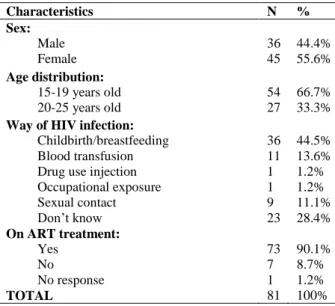
From 90 enrolled participants, 81 completed pre- and post-questionnaires. Table 1 shows some characteristics of 81 young persons at baseline. Of the 81 participants, 36 were male and 45 females. The mean age of all participants was 18.4 years (SD=2.8) and ranged from 15 to 25 years old. Mother-to-child-transmission was mentioned most frequently as mode of infection (44.5%), nevertheless 23 participants (28.4%) did not know how they acquired HIV. Most of the participants were on ART at time of the first questionnaire. The mean age when adolescents learned about their HIV status was 11.3 (SD=6.0).
Usability assessment of ELIMIKA platform
Table 1: Baseline characteristics of HIV positive young people in Mombasa Kenya
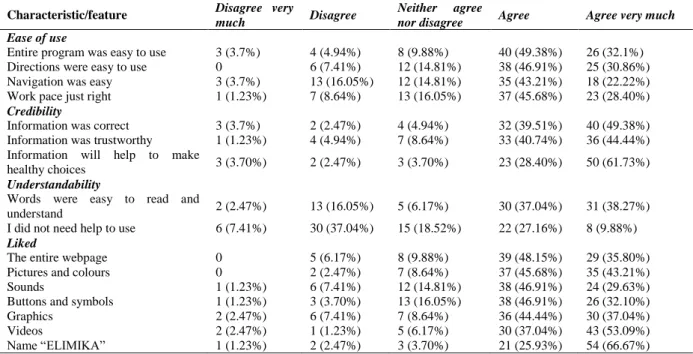
stated their intentions (―Agree very much‖ and ―Agree‖) to use the ELIMIKA website again and 87% would recommend it to others. Other features including ease of use, credibility, understandability and the degree to which participants liked different web page elements are described in Table 2. Young people appreciated the most credibility of the information provided on the web platform. They also agreed that it was easy to use, e.g. directions, however many young people needed help with using ELIMIKA platform (63%).
Pre-
and
post-intervention
results
on
knowledge and adherence behaviour
The questionnaire consisted of questions addressing HIV/ART knowledge, perceived importance of adherence, perceived self-efficacy in adhering and future intentions towards adherence. Changes in missed doses were also documented.
HIV and ART adherence related knowledge
In general, total knowledge scores improved by 0.3 points, however this effect was not found to be statistically significant (Wilcoxon signed ranks test – 0.26). While we see an increase in knowledge score in several items, this difference was statistically significant only for two items. In one
question (number 5), participants demonstrated opposite effect - less knowledge at end-line comparing to baseline. More details are provided in the Table 3.
Perceived
importance
in
maintaining
adherence
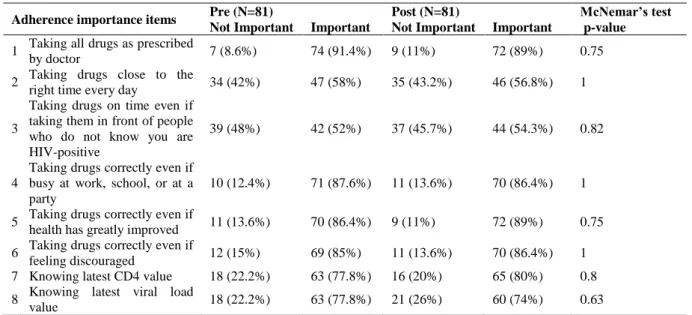
In general, the effect of the intervention on adherence behavior outcomes (importance, confidence and intentions) was found not to be significant. To describe the importance of maintaining adherence eight items were used. When comparing each item separately, no statistically significant differences were found for any of the items presented in Table 4. We compared total importance scores between pre-and post-intervention, but no significant effect could be determined (p = 0.84).
Perceived
self-efficacy
(confidence)
in
maintaining adherence
Confidence in maintaining adherence was assessed using 17 items. In the case of 10 items, the proportion of participants, who showed more confidence in maintaining adherence after the intervention, increased. When comparing each item separately from pre- and post-test, no statistically significant differences were found for any of the items. An overview of the results is provided in Table 5. A Wilcoxon signed ranks test showed no significant effect on the total self-efficacy scores pre- and post-intervention (p=0.31).
Intentions in maintaining adherence over the
next three months
The intentions in maintaining adherence in the next three months was assessed using three items presented in Table 6. When comparing these three items, we found no statistically significant differences between pre- and post-assessments. An overview of the results is provided in Table 6. Nevertheless, looking at composite scores we found a statistically significant difference between pre- and post-adherence intentions (Wilcoxon signed ranks test – 0.03).
Characteristics N %
Sex: Male Female
36 45
44.4% 55.6% Age distribution:
15-19 years old 20-25 years old
54 27
66.7% 33.3% Way of HIV infection:
Childbirth/breastfeeding Blood transfusion Drug use injection Occupational exposure Sexual contact Don‘t know
36 11 1 1 9 23
44.5% 13.6% 1.2% 1.2% 11.1% 28.4% On ART treatment:
Yes No
No response
73 7 1
90.1% 8.7% 1.2%
Table 2: Usability assessment of ELIMIKA platform
Characteristic/feature Disagree very
much Disagree
Neither agree
nor disagree Agree Agree very much
Ease of use
Entire program was easy to use 3 (3.7%) 4 (4.94%) 8 (9.88%) 40 (49.38%) 26 (32.1%) Directions were easy to use 0 6 (7.41%) 12 (14.81%) 38 (46.91%) 25 (30.86%) Navigation was easy 3 (3.7%) 13 (16.05%) 12 (14.81%) 35 (43.21%) 18 (22.22%) Work pace just right 1 (1.23%) 7 (8.64%) 13 (16.05%) 37 (45.68%) 23 (28.40%)
Credibility
Information was correct 3 (3.7%) 2 (2.47%) 4 (4.94%) 32 (39.51%) 40 (49.38%) Information was trustworthy 1 (1.23%) 4 (4.94%) 7 (8.64%) 33 (40.74%) 36 (44.44%) Information will help to make
healthy choices 3 (3.70%) 2 (2.47%) 3 (3.70%) 23 (28.40%) 50 (61.73%)
Understandability
Words were easy to read and
understand 2 (2.47%) 13 (16.05%) 5 (6.17%) 30 (37.04%) 31 (38.27%) I did not need help to use 6 (7.41%) 30 (37.04%) 15 (18.52%) 22 (27.16%) 8 (9.88%)
Liked
The entire webpage 0 5 (6.17%) 8 (9.88%) 39 (48.15%) 29 (35.80%) Pictures and colours 0 2 (2.47%) 7 (8.64%) 37 (45.68%) 35 (43.21%)
Sounds 1 (1.23%) 6 (7.41%) 12 (14.81%) 38 (46.91%) 24 (29.63%)
Buttons and symbols 1 (1.23%) 3 (3.70%) 13 (16.05%) 38 (46.91%) 26 (32.10%)
Graphics 2 (2.47%) 6 (7.41%) 7 (8.64%) 36 (44.44%) 30 (37.04%)
Videos 2 (2.47%) 1 (1.23%) 5 (6.17%) 30 (37.04%) 43 (53.09%)
Name ―ELIMIKA‖ 1 (1.23%) 2 (2.47%) 3 (3.70%) 21 (25.93%) 54 (66.67%)
Table 3: Frequencies of correctly answered knowledge items pre- and post- intervention
Knowledge items
Pre (N=81) Post (N=81) McNemar’s
test Correct answers
N (%)
Correct answers
N (%) p-value
1 Once the HIV viral load results are ‗undetectable‘, HIV
medications should be stopped 67 (82.7%) 72 (88.9%) 0.33
2 If HIV medications are not taken at the right time of the day, HIV
drug resistance can occur 64 (79.0%) 70 (86.4%) 0.24
3 HIV is cured when the HIV viral load blood test result is ‗undetectable‘ 51 (63.0%) 53 (65.4%) 0.83
4 Condoms during sex are not needed when the HIV viral load blood
test results are at ‗undetectable‘ levels 70 (86.4%) 74 (91.4%) 0.39
5 It is better to take a half dose of HIV medications than stopping the
HIV combination medications completely 52 (64.2%) 41 (50.6%) 0.03*
6 HIV medications can cause unpleasant side effects (e.g., nausea,
diarrhea, vomiting) 57 (70.4%) 53 (65.4%) 0.42
7 If sexual partners are both HIV-positive condoms are no longer
needed 65 (80.2%) 70 (86.4%) 0.27
8 Treatments are available to reduce HIV medication side effects 68 (84.0%) 62 (76.5%) 0.24
9 Recreational drugs and alcohol can affect the effectiveness of HIV
medications 68 (84.0%) 76 (93.8%) 0.04*
10 Providing HIV medications to a pregnant woman reduces the
baby's risk of being infected with HIV 69 (85.2%) 68 (84.0%) 1
11 HIV medications can be taken at a different time of day on
weekends or holidays 66 (81.5%) 65 (80.2%) 1
12 It is best to stop HIV medications as soon as you feel better 77 (95.1%) 78 (96.3%) 1
13 Missing a few doses of HIV pills can increase the amount of HIV
virus in the body. 76 (93.8%) 75 (92.6%) 1
14 After a few months, it becomes less important to take HIV
medications at the right time of day 61 (75.3%) 70 (86.4%) 0.05*
15 HIV medications help the body's immune system get stronger
(CD4 increase) 74 (91.4%) 75 (92.6%) 1
16 When HIV medications work well, the HIV viral load increases 55 (67.9%) 58 (71.6%) 0.65 17 Physical exercise can help reduce stress levels in HIV patients 72 (88.9%) 75 (92.6%) 0.45
Total score (mean, SD) 13.7 (2.3) 14 (2.1) 0.26i
Table 4: Perceived importance in maintaining adherence
Adherence importance items Pre (N=81) Post (N=81) McNemar’s test
Not Important Important Not Important Important p-value
1 Taking all drugs as prescribed
by doctor 7 (8.6%) 74 (91.4%) 9 (11%) 72 (89%) 0.75
2 Taking drugs close to the
right time every day 34 (42%) 47 (58%) 35 (43.2%) 46 (56.8%) 1
3
Taking drugs on time even if taking them in front of people who do not know you are HIV-positive
39 (48%) 42 (52%) 37 (45.7%) 44 (54.3%) 0.82
4
Taking drugs correctly even if busy at work, school, or at a party
10 (12.4%) 71 (87.6%) 11 (13.6%) 70 (86.4%) 1
5 Taking drugs correctly even if
health has greatly improved 11 (13.6%) 70 (86.4%) 9 (11%) 72 (89%) 0.75 6 Taking drugs correctly even if
feeling discouraged 12 (15%) 69 (85%) 11 (13.6%) 70 (86.4%) 1
7 Knowing latest CD4 value 18 (22.2%) 63 (77.8%) 16 (20%) 65 (80%) 0.8 8 Knowing latest viral load
value 18 (22.2%) 63 (77.8%) 21 (26%) 60 (74%) 0.63
Missed doses
At baseline, most participants reported excellent levels of adherence, more specifically 71.6% (n=57) reported not to have missed any doses in the last week. Post-intervention 77.8% (n=63) of the participants reported not to have missed any doses in the last week. After conducting a Wilcoxon signed ranks test, no significant difference could be determined (p=0.95).
Discussion
This study reported on the main effects of the pilot digital platform – ELIMIKA, aimed at improving adherence and knowledge of youth living with HIV in Mombasa, Kenya. To evaluate the effectiveness of ELIMIKA, a pre-post-test design was set up. Two cross-sectional surveys were conducted among young people before and after the intervention.
In general, the pilot digital platform was well accepted by participants - 95% stated their intentions to use the ELIMIKA again and 87% would recommend it to others - and it possessed features, e.g. possibility to post videos or stories, Q&A section with health practitioners, developed with participation of young people and health care professionals. However, the intervention did not lead to significant improvements in knowledge and adherence practices of young people involved
in the intervention. Item comparison for perceived importance of adherence, perceived self-efficacy and intentions to adhere to anti-HIV treatment showed no significant difference after three months of intervention. Still, looking at the composite score of adherence intentions in the next three months, we could identify a significant improvement comparing to baseline. Little improvement was noticed in knowledge of young people regarding HIV and adherence. The number and proportion of the participants that reported good adherence (no missed doses) in the last week did show a positive trend after the intervention, although changes might have been too small to be statistically significant. We have presented in this article a grouped analysis (when answers from the Likert scale, for example Not likely at all to
Definitely likely, where grouped into two groups, as explained in the methodology section). Nevertheless, we also performed analysis by each separate item from the Likert and differential scales. Both analyses provided same results with no significant difference between pre- and post-intervention.
A number of recent systematic reviews demonstrated effectiveness, feasibility and acceptability of mHealth and eHealth programs aimed to improve ART adherence, e.g. short
message services (SMS)-based
Table 5: Perceived confidence in maintaining adherence
Adherence confidence items
Pre (N=81) Post (N=81) McNemar’s
test Not
Confident Confident Not Confident Confident p-value
1 Taking all drugs as prescribed by
doctor 14 (17.3%) 67 (82.7%) 11 (13.6%) 70 (86.4%) 0.58
2 Taking drugs close to the right time
every day 32 (39.5%) 49 (60.5%) 31 (38.3%) 50 (61.7%) 0.84
3 Making drugs a part of daily routine 20 (24.7%) 61 (75.3%) 22 (27.2%) 59 (72.8%) 0.80 4 Keep taking drugs even when
experiencing side effects 36 (44.4%) 45 (55.6%) 30 (37%) 51 (63%) 0.29 5
Taking drugs on time even if taking them in front of people who do not know you are HIV-positive
40 (49.4%) 41 (50.6%) 39 (48.2%) 42 (51.8%) 1
6 Taking drugs on time even if daily
routine is interrupted 18 (22.2%) 63 (77.8%) 18 (22.2%) 63 (77.8%) 1 7 Taking drugs correctly even when
not feeling well 13 (16%) 68 (84%) 14 (17.3%) 67 (82.7%) 1
8 Taking drugs correctly even if it
means disrupting eating habits 26 (32%) 55 (68%) 21 (26%) 60 (74%) 0.42 9 Taking drugs correctly even if
travelling away from home 12 (15%) 69 (85%) 13 (16%) 68 (84%) 1
10 Taking drugs correctly even if busy
at work, school, or at a party 15 (18.5%) 66 (81.5%) 11 (13.6%) 70 (86.4%) 0.45 11 Taking drugs correctly even if
health has greatly improved 12 (15%) 69 (85%) 13 (16%) 68 (84%) 1 12 Taking drugs correctly even if
feeling discouraged 17 (21%) 64 (79%) 16 (20%) 65 (80%) 1
13 Discussing openly with doctor any
problems related to drugs 14 (17.3%) 67 (82.7%) 14 (17.3%) 67 (82.7%) 1 14 Getting family and friends to help
with remembering to take drugs 34 (42%) 47 (58%) 38 (47%) 43 (53%) 0.58 15 Explaining latest CD4 value 32 (39.5%) 49 (60.5%) 23 (28.4%) 58 (71.6%) 0.16 16 Explaining latest viral load value 37 (46%) 44 (54%) 28 (34.6%) 53 (65.4%) 0.16 17 Getting information about your
illness or medication 9 (11%) 72 (89%) 8 (10%) 73 (90%) 1
Table 6: Intentions in maintaining adherence over the next three months
Intentions in maintaining adherence Pre (N=81) Post (N=81) McNemar’s test Not Likely Likely Not Likely Likely p-value
1 Take all drugs as prescribed by doctor
in next 3 months 12 (14.8%) 69 (85.2%) 9 (11%) 72 (89%) 0.5
2 Take drugs as close to the right time
every day in the next 3 months 24 (29.6%) 57 (70.4%) 18 (22.2%) 63 (77.8%) 0.21 3 Not miss doses of drugs in the next 3
months 16(19.8 %) 65 (80.2%) 11 (13.6%) 70 (86.4%) 0.36
applications20,23–24. However, about 50% of the reviewed studies were from high-income countries, mostly US, which might not be representative and applicable to the context of low- and middle-income setting. Also, SMS texting, primarily via mobile phone or self-management Apps accounted for the technology type most commonly reported with an
was conducted in the USA and involved 10 participants, eight of which were female. The difference in the study sample and context might provide an explanation for the varying results between both studies 21. In addition, the above program incorporated tailoring algorithm to the needs of everyone based on his/her profile, e.g. reported missed doses, psychosocial factors, while in ELIMIKA all participants had access to the same information.
One of the main limitations of this evaluation was a short implementation time. The exposure of young people to the intervention was only 3 months (planned – 6 months) due to logistical and financial limitations, longer development time of the web-based platform and slow recruitment. Thus, longer interventions might be necessary in order to provide compelling evidence of effectiveness and follow up of the
participants to determine long-term
effectiveness25.
Calculated sample size of 90 participants was enough to demonstrate the effect of the intervention, however the lost to follow-up was 10% which might influence the outcome. According to the narratives of participants, the time dedicated to reading posts, watching videos, participation in discussions on the ELIMIKA platform by each participant was limited. One of the reasons for this was barriers to access the website – lack of money for internet, no permission to use smartphones in schools and low internet literacy. Although ELIMIKA was like the modern social networks, more than 50% of study participants during 1.5-month usability assessment reported a need for help for using the ELIMIKA platform. To address this issue, ELIMIKA peer volunteers aided with platform use to the participants. Nevertheless, additional training on internet literacy should be considered for similar future interventions.
Additionally, self-reported adherence as the only outcome measurement of adherence is susceptible to bias and tends to be an overestimate of the reality. Other measures of adherence, such as CD4 count, viral load and medication counting should be considered.
As ELIMIKA was a pilot intervention and feasibility study with short development and
implementation time, not all potentially useful web features were programed. Further improvement of the web platform characteristics such as adding a registration of hours spent on the digital platform, videos watched, and posts, read interactions with peers and healthcare providers could help in assessing the impact of the intervention based on the registration of the actual participation. Attractiveness of the platform to young people is also an important factor that could indirectly contribute to the impact it creates. More rigorous usability assessment tools of the web platform and its features, such as Technology Acceptance Model adapted to health care interventions should be implemented.
To explain and understand the possible reasons for the lack of effect, rigorous monitoring and evaluation design could shed some light. A systematic review by Shepherd et al. indicated that process evaluation might play a crucial role in explaining the results of outcome and impact behavioral interventions26. It informs the researchers and project management staff about factors which appear to influence the effectiveness of behavioral interventions with young people. The evaluation design of the current intervention was too narrow, leaving aside contextual factors, e.g. disclosure, privacy, access to internet. The qualitative data collection in this intervention was performed only for situational analysis and development of the digital platform. Qualitative approach was also planned for mid- and end-term evaluation which could not be carried out due to the short implementation time and logistical constrains.
Conclusion
further research. Nevertheless, there is a need for
more robust evaluation designs and
implementation fidelity. Together with ―classical‖ study designs such as randomized trials and quasi-experimental designs, process evaluation approach or qualitative studies should be used to assess the full spectrum of potential intervention effects, barriers and facilitators to intervention implementation.
Ethical Considerations
Anonymity, confidentiality and privacy were maintained during the recruitment, intervention and data collection process. National guidelines and the declaration of Helsinki were followed. Informed consent, parental/guardian consent and ascent where appropriate were obtained from all participants before enrolling them in the pilot. The consent form was in English and Swahili. Participants were fully informed about time, methods, and their right to withdraw at any time and skip any question for any reason. Research Ethics Committee of the Kenyatta National Hospital and University of Nairobi Ethical and Research Committee (KNH/UON-ERC) and NACOSTI and the Ghent University Hospital Ethics Committee approved this study.
Contribution of Authors
PG, KM and SW conceived and designed the study and the research tools. SW, JM, MT and PG supervised the study and participated in the data collection. TB, OI and KM undertook the analysis. OI drafted the manuscript. All authors revised and edited the manuscript. All authors read and approved the final manuscript.
Funding
This project was funded by the Bill and Melinda Gates Foundation (Investment ID OPP1107980).
Acknowledgements
Authors would like to thank all young participants, volunteers and health care personnel.
Conflict of Interests
The authors declare no conflict of interest.
References
1. UNICEF. Children and AIDS: Statistical Update.; 2017. 2. Ministry of Health and National AIDS Control Council. Kenya AIDS Response Progress Report 2016.; 2016.
3. Ministry of health and National AIDS Control Council. Kenya HIV County Profiles 2016.; 2016.
4. Idele P, Gillespie A, Porth T, Suzuki C, Mahy M, Kasedde S and Luo C. Epidemiology of HIV and AIDS Among Adolescents: Current Status, Inequities, and Data Gaps. J Acquir Immune Defic Syndr. 2014;66:144-153.
5. Agwu AL and Fairlie L. Antiretroviral treatment, management challenges and outcomes in perinatally HIV-infected adolescents. J Int AIDS Soc. 2013;16(1):18579. doi:10.7448/IAS.16.1.18579. 6. Nachega JB, Hislop M, Nguyen H, Dowdy D, Chaisson
R, Regensberg L, Cotton M and Maartens G. Antiretroviral therapy adherence, virologic and immunologic outcomes in adolescents compared with adults in southern Africa. J Acquir Immune Defic Syndr. 2009;51(1):65-71. doi:10.1097/QAI.0b013e318199072e.
7. Lamb MR, Fayorsey R, Nuwagaba-Biribonwoha H, Viola V, Mutabazi V, Alwar T, Casalini C and Elul B. High attrition before and after ART initiation among youth (15-24 years of age) enrolled in HIV
care. AIDS. 2014;28(4):559-568.
doi:10.1097/QAD.0000000000000054. 8. Gitu MP. Factors influencing non-adherence to
antiretroviral therapy among HIV infected youth patients attending Kangemi and coptic health HIV/AIDS clinics in Nairobi, Province, Kenya. November 2012.
9. Ferrand RA, Luethy R, Bwakura F, Mujuru H, Miller RF and Corbett EL. HIV Infection Presenting in Older Children and Adolescents: A Case Series from Harare, Zimbabwe. Clin Infect Dis. 2007;44(6):874-878. doi:10.1086/511873.
10. Mavhu W, Berwick J, Chirawu P, Makamba M, Copas A, Dirawo J, Willis N, Araya R, Abas M, Corbett E, Mungofa S, Laver S and Cowan F. Enhancing psychosocial support for HIV positive adolescents in Harare, Zimbabwe. PLoS One. 2013;8(7):e70254. doi:10.1371/journal.pone.0070254.
11. Woollett N. Adolescents Living with HIV: Emerging Issues in Public Health in South Africa. In: Springer, Cham; 2016:65-88. doi:10.1007/978-3-319-29936-5_4.
adolescents in Gaborone, Botswana: a pilot cross-sectional study. Patient Prefer Adherence. 2013;7:891. doi:10.2147/PPA.S47628.
13. Adejumo OA, Malee KM, Ryscavage P, Hunter SJ and Taiwo BO. Contemporary issues on the epidemiology and antiretroviral adherence of HIV-infected adolescents in sub-Saharan Africa: a narrative review. J Int AIDS Soc. 2015;18(1):20049. doi:10.7448/IAS.18.1.20049.
14. Bakeera-Kitaka S, Nabukeera-Barungi N, Nöstlinger C, Addy K and Colebunders R. Sexual risk reduction needs of adolescents living with HIV in a clinical care setting. AIDS Care. 2008;20(4):426-433. doi:10.1080/09540120701867099.
15. Lowenthal ED, Bakeera-Kitaka S, Marukutira T, Chapman J, Goldrath K and Ferrand RA. Perinatally acquired HIV infection in adolescents from sub-Saharan Africa: a review of emerging challenges. Lancet Infect Dis. 2014;14(7):627-639. doi:10.1016/S1473-3099(13)70363-3.
16. Scanlon ML and Vreeman RC. Current strategies for improving access and adherence to antiretroviral therapies in resource-limited settings. HIV AIDS (Auckl). 2013;5:1-17. doi:10.2147/HIV.S28912. 17. Fatti G, Shaikh N, Eley B and Grimwood A. Improved
virological suppression in children on antiretroviral treatment receiving community-based adherence support: A multicentre cohort study from South Africa. AIDS Care. 2014;26(4):448-453. doi:10.1080/09540121.2013.855699.
18. Foster C, McDonald S, Frize G, Ayers S and Fidler S. ―Payment by Results‖—Financial Incentives and Motivational Interviewing, Adherence Interventions in Young Adults with Perinatally Acquired HIV-1 Infection: A Pilot Program. AIDS Patient Care
STDS. 2014;28(1):28-32.
doi:10.1089/apc.2013.0262.
19. Ridgeway K, Dulli L, Murray K, Silverstein H, Santo L, Olsen P, De Mora D and McCarraher D. Interventions to improve antiretroviral therapy adherence among adolescents in low- and middle-income countries: A systematic review of the literature. Paraskevis D, ed. PLoS One.
2018;13(1):e0189770.
doi:10.1371/journal.pone.0189770.
20. LEngle KL, Mangone ER, Parcesepe AM, Agarwal S and Ippoliti NB. Mobile Phone Interventions for Adolescent Sexual and Reproductive Health: A
Systematic Review. Pediatrics.
2016;138(3):e20160884-e20160884. doi:10.1542/peds.2016-0884.
21. Shegog R, Markham CM, Leonard AD, Bui TC and Paul ME. ―+CLICK‖: pilot of a web-based training program to enhance ART adherence among HIV-positive youth. AIDS Care. 2012;24(3):310-318. doi:10.1080/09540121.2011.608788.
22. Velasquez MM. Group Treatment for Substance Abuse : A Stages-of-Change Therapy Manual. Guilford Press; 2001.
23. Cooper V, Clatworthy J, Whetham J and Consortium E. mHealth Interventions To Support Self-Management In HIV: A Systematic Review. Open AIDS J. 2017;11:119-132. doi:10.2174/1874613601711010119.
24. Henny KD, Wilkes AL, McDonald CM, Denson DJ and Neumann MS. A Rapid Review of eHealth Interventions Addressing the Continuum of HIV Care (2007-2017). AIDS Behav. 2018;22(1):43-63. doi:10.1007/s10461-017-1923-2.
25. Naar-King S, Outlaw A, Sarr M, Parsons J, Belzer M, MacDonell K, Tanney M and Ondersma S. Motivational Enhancement System for Adherence (MESA): Pilot Randomized Trial of a Brief Computer-Delivered Prevention Intervention for Youth Initiating Antiretroviral Treatment. J Pediatr Psychol. 2013;38(6):638-648. doi:10.1093/jpepsy/jss132.