ENVIRONMENTAL PRESENCE OF AND POTENTIAL OCCUPATIONAL EXPOSURE TO ANTIBIOTIC-RESISTANT STAPHYLOCOCCUS AUREUS IN REGIONS OF HIGH
INDUSTRIAL HOG OPERATION DENSITY
Sarah M. Hatcher
A dissertation submitted to the faculty at the University of North Carolina at Chapel Hill in partial fulfillment of the requirements for the degree of Doctor of Philosophy in the Department of
Environmental Sciences and Engineering in the Gillings School of Global Public Health.
Chapel Hill 2015
ABSTRACT
Sarah M. Hatcher: Environmental presence of and potential occupational exposure to antibiotic-resistant Staphylococcus aureus in regions of high industrial hog operation density
(Under the direction of Jill Stewart)
Since the 1980s, hog production in the United States has been characterized by a shift from small, independently owned operations to large, vertically integrated operations often referred to as industrial hog operations (IHOs). This change has been especially pronounced in North Carolina, with most IHOs concentrated in the eastern part of the state. Prophylactic use of antibiotics for growth promotion and disease prevention in these operations may contribute to the selection of antibiotic-resistant (ABR) bacteria in and around IHOs. A growing body of literature has documented the emergence of ABR Staphylococcus aureus that is unique to livestock sources; and carriage of these ABR S. aureus strains have been documented in hogs and IHO workers. Yet, research regarding dissemination of these bacteria to the off-farm environment is lacking. Important questions also remain regarding potential community exposures and the effects of IHO worker exposure on household members, especially among children who may have enhanced susceptibility to S. aureus infection.
Interestingly, carriage of S. aureus strains characteristic of the IHO environment was observed in community referent participants, albeit at lower rates than in occupationally exposed
ACKNOWLEDGEMENTS
First, I would like to thank my advisor, Dr. Jill Stewart, and my committee members, Dr. Mark Sobsey, Dr. Rebecca Fry, Dr. Melissa Miler, and Dr. Chris Heaney for their guidance and support throughout the PhD program.
I am indebted to the Rural Empowerment Association for Community Help (REACH) for their tireless work on these research projects and the North Carolina Environmental Justice Network (NCEJN) for the training they have provided me in community-based research
methods. In particular, I would like to thank Naeema Muhammad, Steve Wing, Devon Hall, and Dothula Baron for their contributions to this research and for their years of patient mentorship. In addition, I would like to thank the REACH community organizers that were responsible for sample collection, recruitment, and enrollment.
I am grateful to all past and present members of the Stewart lab for their support and encouragement. Kevin Myers was responsible for processing the water samples from which all of the presumptive MRSA isolates in Chapter 2 were collected. In addition, I would like to thank Sarah Rhodes for her significant contributions to laboratory sample processing for Chapters 3 and 4. I would also like to thank Maya Nadimpalli for her assistance. A big thanks to the undergraduates who provided laboratory assistance, including Katie Overbey, Sharon Jiang, Thao Le, Preetha Naidu, Daira Melendez, Amy Guo, Sarah Menz, and Grace Marshall.
for questionnaire data entry. Thanks to Statens Serum Institut, especially Jesper Larsen, for conducting spa type analysis.
I would like to thank Dr. Melissa Miller and her lab for their assistance with MALDI-TOF MS, especially Melissa Jones.
I am also grateful to Dr. Jessica Rinsky, Alan Kinlaw, and Dr. Steve Wing from the UNC Department of Epidemiology for their assistance with epidemiologic data analysis and
interpretation.
TABLE OF CONTENTS
LIST OF TABLES ... xii
LIST OF FIGURES ... xiii
LIST OF ABBREVIATIONS ... xiv
CHAPTER ONE: INTRODUCTION ... 1
1. Staphylococcus aureus ... 1
2. Antibiotic-resistant S. aureus in healthcare and community settings ... 4
3. Industrial hog production ... 7
4. Zoonotic S. aureus in the industrial hog operation setting... 9
5. Potential environmental routes of exposure to S. aureus characteristic of IHOs ... 18
6. Public health significance of S. aureus with markers of livestock- association ... 21
SPECIFIC AIMS ... 23
CHAPTER TWO: MULTIDRUG- AND METHICILLIN-RESISTANT STAPHYLOCOCCUS AUREUS IN SURFACE WATERS NEAR INDUSTRIAL HOG OPERATION SPRAY FIELDS IN NORTH CAROLINA ... 25
1. Introduction ... 25
2. Methods ... 28
2.2 Presumptive MRSA isolation ... 29
2.3 S. aureus and MRSA confirmation ... 29
2.4 Molecular confirmation of presumptive S. aureus ... 30
2.5 Matrix assisted laser desorption ionization – time-of-flight mass spectrometry (MALDI-TOF MS) ... 30
2.6 Molecular characterization ... 30
2.8 Statistical analysis ... 32
3. Results ... 32
3.1 Presumptive methicillin-resistant S. aureus (MRSA) in surface waters ... 32
3.2 Presumptive S. aureus screening... 33
3.3 Molecular confirmation of MSSA and MRSA by PCR ... 33
3.4 Matrix-assisted laser desorption ionization – time-of-flight mass spectrometry (MALDI-TOF MS) analysis ... 33
3.5 Molecular characterization ... 34
3.6 Antibiotic susceptibility profiles ... 35
3.7. Waterborne S. aureus presence and site characteristics ... 35
4. Discussion ... 35
5. Conclusions ... 40
CHAPTER THREE: EXPOSURE TO ANTIBIOTIC-RESISTANT STAPHYLOCOCCUS AUREUS IN ADULT INDUSTRIAL HOG OPERATION WORKERS AND THEIR HOUSEHOLD MEMBERS UNDER SEVEN YEARS OLD ... 45
1. Introduction ... 45
2. Methods ... 48
2.1 Ethics Statement ... 48
2.2 Study population ... 48
2.3 Questionnaire and nasal swab collection ... 49
2.4 Detection of S. aureus and MRSA... 49
2.5 Molecular typing ... 50
2.6 Antibiotic susceptibility testing ... 51
2.7 Markers of livestock association ... 51
2.8 Carriage outcomes ... 51
2.9 Statistical Analysis ... 52
3. Results ... 53
3.2 Prevalence of S. aureus, MRSA, and MDRSA carriage among adults
and children ... 54
3.3 Prevalence of markers of livestock association among adults and children ... 55
3.4 Prevalence of markers of livestock association in non-occupationally exposed households ... 56
3.5 Within-household S. aureus concordance ... 56
4. Discussion ... 57
5. Conclusions ... 67
CHAPTER FOUR: INFLUENCE OF SPECIFIC WORK-RELATED EXPOSURES ON ANTIBIOTIC-RESISTANT STAPHYLOCOCCUS AUREUS CARRIAGE IN ADULT INDUSTRIAL HOG OPERATION WORKERS AND THEIR CHILD HOUSEHOLD MEMBERS ... 82
1. Introduction ... 82
2. Methods ... 84
2.1 Ethics Statement ... 84
2.2 Study population ... 85
2.3 Questionnaire and nasal swab collection ... 85
2.4 Detection of S. aureus and MRSA... 86
2.5 spa-typing ... 87
2.6 Antibiotic susceptibility testing ... 87
2.7 Markers of livestock association ... 88
2.8 Carriage outcomes ... 88
2.8 Statistical Analysis ... 88
3. Results ... 89
3.1 Participant Characteristics ... 89
3.2 Prevalence of S. aureus-related carriage outcomes among adults by work activity ... 90
3.3 Prevalence of scn-negative S. aureus, MRSA, and MDRSA among children by work activity of adult household members ... 91
5. Conclusions ... 95
CONCLUSIONS ... 118
APPENDIX 1: ANTIBIOTIC CONCENTRATIONS ... 125
APPENDIX 2: GENDER-STRATIFIED CHAPTER 3 RESULTS ... 126
APPENDIX 3: RACE-STRATIFIED CHAPTER 3 RESULTS ... 128
APPENDIX 4: CHAPTER 4 RESULTS FOR ALL ACTIVITES, ADULTS ... 131
APPENDIX 5: CHAPTER 5 RESULTS FOR ALL ACTIVITIES, CHILDREN ... 141
LIST OF TABLES
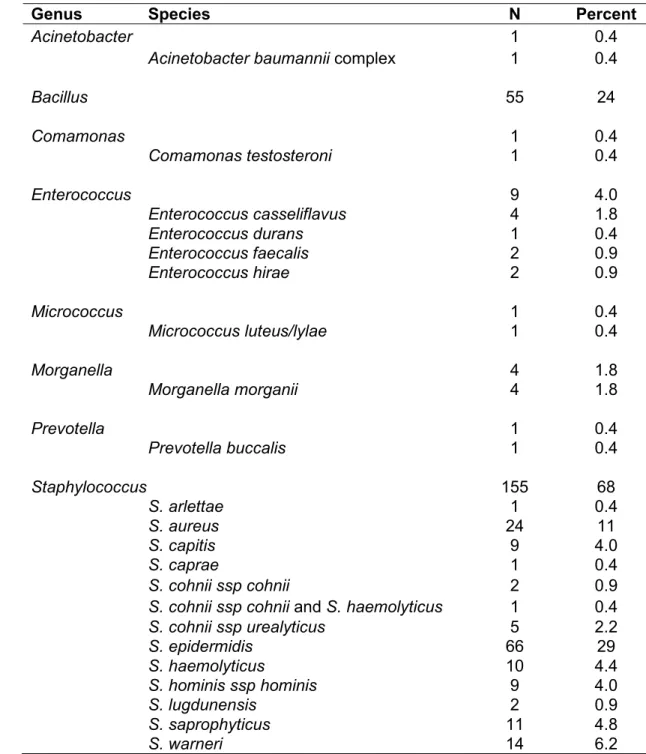
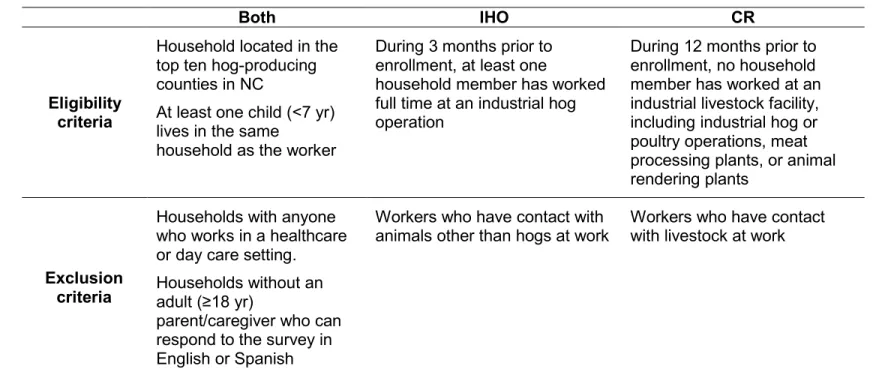
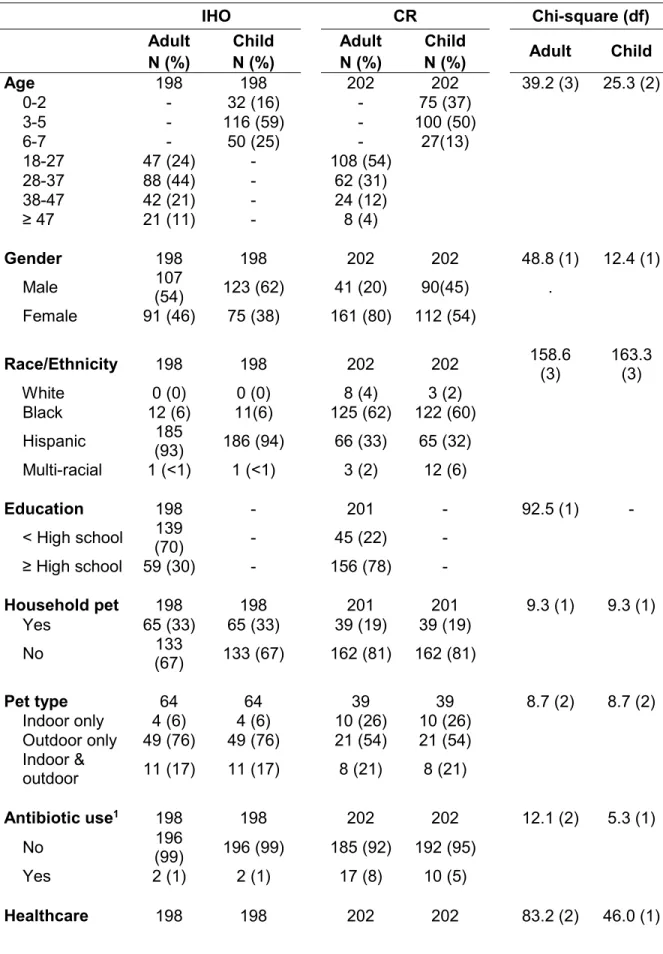
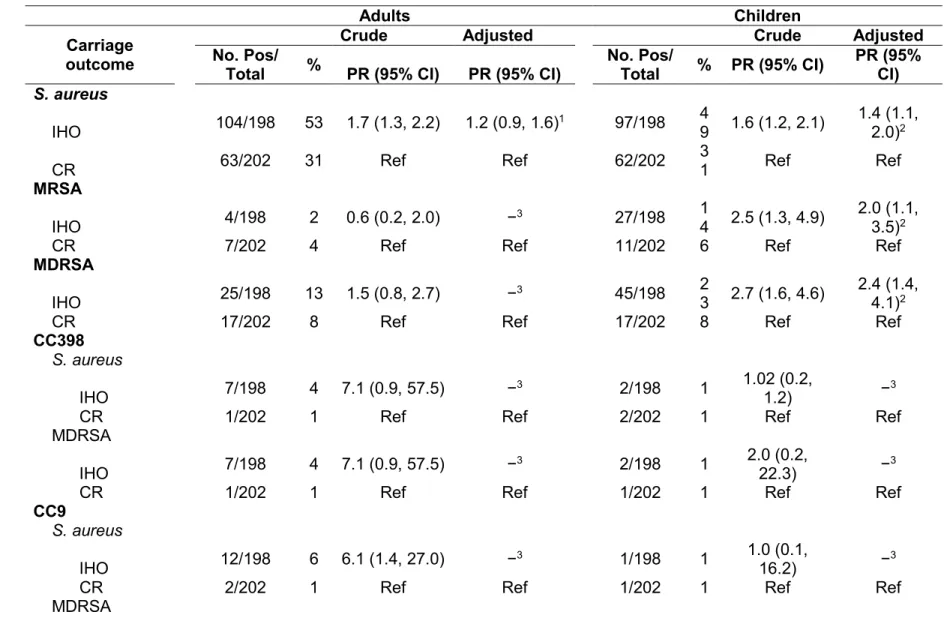
Table 1.1 PCR assays, primers, and primer sequences...41 Table 1.2 Bacterial genus and species identified by MALDI-TOF MS...42 Table 2.1 Eligibility and exclusion criteria for participation by exposure group...68 Table 2.2 Description of study population characteristics stratified by exposure
group...69 Table 2.3 Crude prevalence (%), prevalence ratios (PR) and 95% confidence
interval (95% CI) stratified by exposure group (IHO vs. CR) for adult and
child participants...71 Table 2.4 Crude prevalence and crude and adjusted prevalence ratios (PR) and
95% confidence intervals (95% CI) stratified by exposure group (IHO vs. CR)
for adult and child participants...74 Table 2.5 Isolate and household exposure characteristics of households with
S. aureus nasal carriage concordance...78 Table 2.6 Prevalence of child S. aureus, MRSA, and MDRSA carriage among
households with adults positive for S. aureus, MRSA, and MDRSA carriage...79 Table 3.1 Characteristics of industrial hog operation (IHO) study participants,
stratified by participant type (adult vs. child)...97 Table 3.2 Distribution of work activities among adult industrial hog operation (IHO)
worker participants...99 Table 3.3 Distribution of work activities by gender among adult industrial hog
operation worker participants...101 Table 3.4a Prevalence (%), prevalence ratios (PR) and 95% confidence intervals
(95% CI) for S. aureus-related carriage outcomes in adult IHO workers,
stratified by work activity (Part 1)...103 Table 3.4b Prevalence (%), prevalence ratios (PR) and 95% confidence intervals
(95% CI) for S. aureus-related carriage outcomes in adult IHO workers,
stratified by work activity (continued)...105 Table 3.4c Prevalence (%), prevalence ratios (PR) and 95% confidence intervals
(95% CI) for S. aureus-related carriage outcomes in adult IHO workers,
stratified by work activity (continued)...107 Table 3.5 Prevalence (%), prevalence ratios (PR) and 95% confidence intervals
(95% CI) for scn-negative S. aureus, MRSA, and MDRSA carriage in child household members of adult industrial hog operation (IHO) workers,
LIST OF FIGURES
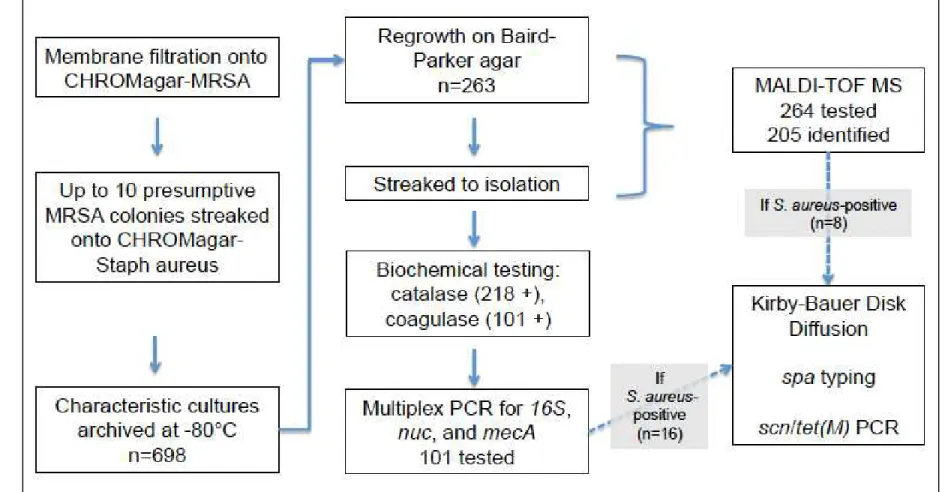
Figure 1.1 Laboratory methods used to identify S. aureus from presumptive
MRSA cultures...43 Figure 1.2 Genotype and antibiotic resistance profiles of confirmed S. aureus
isolates...44 Figure 2.1 Prevalence ratios (PR) and 95% Confidence Intervals (95% CI) for
S. aureus-related carriage outcomes comparing industrial hog operation
(IHO) adult participants to community referent (CR) adult participants...80 Figure 2.2 Prevalence ratios (PR) and 95% Confidence Intervals (95% CI) for
S. aureus, MRSA, and MDRSA comparing children living with an industrial hog operation (IHO) worker compared to children in community referent
(CR) households...81 Figure 3.1 Plot of prevalence ratios (PR) and 95% confidence intervals (95% CI)
for S. aureus-related outcomes among adult industrial hog operation (IHO) workers, stratified by mask use (comparing those who reported never using
a mask compared to those who reported ever using a mask)...112 Figure 3.2 Prevalence (%) of mask use at work for S. aureus related outcomes
among adult industrial hog operation (IHO) workers...113 Figure 3.3 Plot of prevalence ratios (PR) and 95% confidence intervals (95% CI)
for S. aureus related outcomes among adult industrial hog operation (IHO) workers, stratified by reported number of pigs contacted on a typical day
at work...114 Figure 3.4 Prevalence (%) of S. aureus-related outcomes among adult industrial
hog operation (IHO) workers, stratified by reported number of pigs contacted
on a typical day at work...115 Figure 3.5 Prevalence (%) of MRSA carriage among children living in the same
household as an adult industrial hog operation (IHO) worker, stratified by
work activity of the adult IHO worker...116 Figure 3.6 Plot of prevalence ratios (PR) and 95% confidence intervals (95% CI) of
MRSA carriage among children, stratified by work activity of their adult IHO
LIST OF ABBREVIATIONS ABR Antibiotic resistant
AFO Animal feeding operation CA Community-associated
CAFO Concentrated animal feeding operation
CC Clonal complex
CR Community referent HA Healthcare-associated IHO Industrial hog operation
MDRSA Multidrug-resistant Staphylococcus aureus MLST Multi-locus sequence typing
MRSA Methicillin-resistant Staphylococcus aureus MSSA Methicillin-susceptible Staphylococcus aureus PFGE Pulsed-field gel electrophoresis
PCR Polymerase chain reaction
CHAPTER ONE: INTRODUCTION
1. Staphylococcus aureus
Staphylococcus aureus is a gram-positive, opportunistic bacterial pathogen belonging to the family Micrococcaceae. S. aureus asymptomatically colonizes about one-third of the United States population [1, 2] and although individuals may be colonized without ever becoming infected by the organism, nasal carriage of S. aureus is a well-described risk factor for
subsequent infection, especially in the hospital setting [3]. S. aureus can cause a diverse array of infections, ranging in severity from skin and soft tissue (SSTI) infections to bacteremia, toxic shock syndrome, and sepsis [4].
Development of antibiotic resistance
Because one of the primary concerns regarding S. aureus is its resistance to antibiotics, it is often categorized according to the type and number of antibiotics to which it has exhibited resistance. Methicillin-susceptible S. aureus (MSSA) is S. aureus that is susceptible to
methicillin, but can be resistant to other antibiotics. Methicillin-resistant S. aureus (MRSA) is S. aureus with broad beta-lactam antibiotic class resistance, including penicillins, cephalosporins, and carbapenems. This resistance is conferred by either mecA or mecC (mecALGA251) [10, 11] and can also be identified by phenotypic resistance to oxacillin and ceftriaxone/cefoxitin. Multidrug-resistant S. aureus (MDRSA) is S. aureus exhibiting resistance to three or more antibiotic classes.
S. aureus typing methods
In addition to classifying S. aureus by its antibiotic resistance pattern, S. aureus is commonly categorized using genetic typing. One of the most useful tools supporting sound epidemiologic investigation of S. aureus colonization, infection, and transmission is genetic sequence typing. The most common methods for typing S. aureus include pulsed-field gel electrophoresis (PFGE), Staphylococcal Protein A (spa) typing, multi-locus sequence typing (MLST), whole genome sequence typing (WGST) and, among MRSA, SCCmec typing. In contrast to spa typing, MLST, and WGST, pulsed-field gel electrophoresis (PFGE) and SCCmec typing (MRSA only) are able to identify large-scale genetic changes in S. aureus. PFGE and SCCmec typing are unable to detect, for example, the single-nucleotide polymorphisms that allow the organism to adapt to new or multiple host species (i.e., identify livestock- versus human-associated S. aureus).
assigned to clonal complexes (CCs), which are groups of closely related spa or sequence types that have a common ancestral genotype.
Staphylococcal protein A (spa) typing (spa typing) is performed by sequencing the polymorphic region X of the conserved spa gene—which is characterized by 24-bp repeats— using a technique developed by Frenay et al. [12]. [13]. Shopsin et al. [14] demonstrated that spa typing compares favorably to and is able to group isolates in congruence with PFGE and RLFP (restriction fragment length polymorphism) analysis. The advantages of this method include its unambiguous sequence data, which facilitates inter-laboratory sharing and the development of large-scale databases for national and international epidemiology investigations [13, 14]. It is more discriminatory and simpler than MLST because it only involves the
sequencing of a single locus and can be used to study the molecular evolution of S. aureus and hospital outbreaks [13-15]. Using based upon repeat pattern (BURP) software, spa types can be assigned to spa clonal complexes (CCs), which are reasonably congruent with CCs assigned by MLST [16]. Alternatively, CCs can be assigned based on the existing scientific literature.
In 1998, Maiden et al. described multi-locus sequence typing (MLST), which is based on the sequence analysis of the S. aureus housekeeping genes arc, aroE, glpF, gmk, pta, tpi and yqiL, yielding an allelic profile or sequence type (ST) of distinct alleles of each
housekeeping gene. BURST (based upon related sequence types) software can then be used to assign sequence types to CCs. This typing method and software are suitable for studying evolutionary relationships and events, but is not as useful in studying outbreaks as other typing techniques because of its lower discriminatory power [13, 14, 18].
identified by PFGE, MLST and spa typing. This SNP data can be used to inform epidemiological analysis of transmission events that occur in clinical settings, with the discriminatory power to distinguish between isolates recovered only days apart. [19]
Pulsed-field gel electrophoresis (PFGE) typing for S. aureus is performed by the digestion of bacterial DNA by the SmaI restriction enzyme, followed by agarose gel
electrophoresis during which alternating electric fields are applied at different angles [18]. Banding patterns are interpreted according to the scheme proposed by Tenover et al. [20], which is based on the number of ‘genetic events’ considered to be associated with differences in bands between bacterial isolates.
SCCmec typing is based on the characterization of different structural properties of the
staphylococcal cassette chromosome mec, which harbors the mecA gene conferring methicillin resistance. SCCmec types are determined using their ccr gene complex type and the mec gene complex class, as described by the International Working Group on the Classification of
Staphylococcal Cassette Chromosome [21]. To date, 46 SCCmec variants have been
identified, but the epidemiological relevance of all types is unknown [22]. SCCmec types I-V are most well characterized and studied, with SCCmec type II predominating in hospitals and thus limiting the discriminatory power of the technique for measuring differences among isolates [23]. The combination of the SCCmec classification and the sequence type from MLST and
epidemiological information are commonly used to better understand the source of MRSA outbreaks.
2. Antibiotic-resistant S. aureus in healthcare and community settings
1980s [25] but the first cases among those with no risk factors for MRSA emerged in otherwise healthy children in the late 1990s [26, 27]. Molecular epidemiology investigations revealed that these isolates were genetically distinct—and often more virulent—than their hospital-origin counterparts [28].
Epidemiological and microbiological definitions
Two categories of MRSA, often termed “healthcare associated” (HA-MRSA) and “community associated” (CA-MRSA) have been distinguished by both epidemiologic and microbiologic characteristics. A community-associated MRSA (CA-MRSA) infection, in contrast to a healthcare-associated (HA-MRSA) one, is an infection that emerges from “a strain isolated in an outpatient setting, or from patients within 48 h of hospital admission” in a patient with “no history in the previous year of either hospitalization, admission to a nursing home, dialysis or surgery” and with no permanent indwelling or temporary medical devices that pass through the skin [13]. Microbiologically, CA-MRSA is more likely to harbor SCCmec type IV [29] and HA-MRSA is more likely to harbor SCCmec types I, II, or III. CA-HA-MRSA is often positive for the virulence gene Panton-Valentine Leukocidin (pvl) while HA-MRSA is pvl-negative, respectively [30], but CA-MRSA is less likely to be multidrug-resistant.
Risk factors for infection
Using the traditional definition of CA- and HA-MRSA described above, several risk factors for both colonization and infection have been documented. Risk factors of HA-MRSA colonization include: prior hospitalization [31, 32]; severity of disease classification and prolonged hospital stay [31]; and high numbers of MRSA carriers at the time of hospital admission [33]. Risk factors of HA-MRSA infection include: colonization prior to hospital admission [34]; recent antibiotic therapy [35]; undergoing invasive procedures while colonized [31, 36]; and stay in an intensive care unit [35].
sports teams [40]; military recruits [41]; prisoners [42]; and children [43], specifically those attending child care centers [44] and under two years of age [45]. Among incarcerated persons, prior antibiotic use was shown to be a risk factor for CA-MRSA infection [46]. Risk factors for infection also include contact with a person in the same household colonized and/or infected with MRSA, history of colonization or recent infection with community-associated MRSA, and concurrent skin and soft tissue infection [45]. Risk factors for CA-MRSA colonization are not well documented in the literature but likely result from close contact with those colonized or infected with MRSA, especially among the above risk groups.
Antibiotic-resistant S. aureus among children
Children have been identified as a group at increased risk for many infections, including CA-MRSA [47]. Their increased susceptibility relative to adults can be attributed to their
underdeveloped immune systems and generally less-sanitary interactions with their
environment. In addition, risk factors for CA-MRSA infection among children include recent use of antibiotics, a history of MRSA infection or symptoms in the family, and parental occupation in a school or daycare [48]; and child care attendance [49].
In the United States, the CA-MRSA first emerged among otherwise healthy children [27] and prevalence of CA-MRSA in children without previously recognized risk factors has since become more common [50, 51]. For example, between 1988-1990 and 1993-1995, Herold et al. [26] documented a nearly 26-fold increase in CA-MRSA infection among children admitted to the hospital. Furthermore, CA-MRSA colonization – which is considered a risk factor for
have not been extensively explored.
Increasing burden of CA-MRSA in the healthcare environment
Although it has been well established that HA- and CA-MRSA are distinct both epidemiologically and microbiologically, these characteristics are becoming increasingly less distinct in hospitals [55] and communities [30]. Additionally, CA-MRSA infections have occurred in patients with healthcare-associated risk factors [56]. Recently, David et al. [57] demonstrated that, by 2008, under one quarter of their epidemiologically-defined HA-MRSA belonged to traditional microbiologically-defined HA-MRSA clones (defined as ST5 or USA100 in their study), and their MRSA infections in their hospital were replaced by characteristic CA-MRSA clones (defined as ST8 or USA300 in their study). The studies demonstrate the need to complement epidemiologic definitions with phenotypic and genotypic analyses of isolates as well as the importance of periodic reevaluation of the relevance of categories of MRSA infection origin. Furthermore, the replacement of hospital infections by an organism that was previously thought to have its epidemiologic onset in the community highlights the importance of
monitoring emerging strains of S. aureus both within and outside of the hospital setting, especially among individuals that have a higher risk of exposure to antibiotic-resistant S. aureus.
3. Industrial hog production
These industrial animal production facilities are often referred to as animal feeding operations (AFOs) or concentrated animal feeding operations (CAFOs). The Environmental Protection Agency (EPA) defines an AFO as “a lot or where animals have been, are, or will be stabled or confined and fed or maintained for a total of 45 days or more in any 12-month period, and crops, vegetation, forage growth, or post-harvest residues are not sustained in the normal growing season over any portion of the lot or facility” [61]. An AFO may be designated as a CAFO on a case-by-case basis. In addition to the number of animals, CAFO designation by the EPA is partially based on whether or not a facility declares waste discharge into surface waters. [61] This proposal focuses on the potential impacts of hog AFOs and CAFOs and for the
purposes of simplicity, facilities where hogs are raised in confinement will be referred to as industrial hog operations (IHOs).
Industrial hog production in North Carolina
Changes in hog production practices have been especially pronounced in North Carolina, which is second only to Iowa in pork production in the US, with the majority of swine CAFOs concentrated in the eastern part of the state [62, 63]. According to agricultural census data, in 2012 approximately 9 million hogs were grown on 2,217 farms in North Carolina. Roughly 8 million of these hogs were grown on 936 integrator or contract grower farms, while 1 million of were grown on 1,281 independent farms [64]. According to the 2013 North Carolina Agricultural Statistics [63], the top ten hog producing counties in the state, in order from most to least dense are: Duplin, Sampson, Bladen, Wayne, Jones, Greene, Robeson, Pender, Lenoir, and Pitt, all of which are located in eastern NC.
Antibiotic use in industrial hog production
kg consists of antibiotics deemed important for use in human medicine. Of this 8.2 million kg of medically important antibiotics, 97% are available without veterinary prescription. Furthermore, the FDA reports that nearly 7.7 million kg of the medically important antibiotics sold for use in food producing animals were administered via feed or water. [65] Administration of antibiotics in feed and water means that there is little control over the dose each animal receives. Such antibiotic use may contribute to the selection of antibiotic-resistant bacteria in and around CAFOs [66].
Waste management in industrial hog production
Most large IHOs in the United States treat their waste using an anaerobic lagoon [67]. Regardless of the confinement building type, waste that falls through the slatted floors is usually transported to an anaerobic lagoon. These lagoons are deep, built in low-permeability soils or over clay or plastic liners, and designed to provide enough storage to withstand a 25-year, 24-hour rainfall event. They have a hydraulic residence time of 3 months or more and fill to capacity within 2-3 years of construction. As their name suggests, the lagoons are constructed to be anaerobic throughout most of the water volume to allow for the treatment of their high organic loads by anaerobic bacterial digestion. The sludge layer must cleared out by periodically applying it to land with liquid waste or using a manure slurry spreader to land-apply the sludge [68]. Land application of the waste is the final step in this waste treatment and management system. Waste from anaerobic lagoons is applied to fields and croplands based on agronomic loading rates as described in the NRCS Code 633 [69].
4. Zoonotic S. aureus in the industrial hog operation setting
both humans and animals in Europe, research in the United States has been limited.
Furthermore, it appears that the molecular epidemiology of S. aureus associated with livestock production in the United States differs from that of Europe, where MRSA CC398 appears to be the dominant S. aureus strain circulating in the industrial hog production environment [70]. Markers of livestock association
Although antibiotic-resistant S. aureus was first identified in livestock in 1972 [71] researchers have since discovered that industrial livestock operations can serve as a reservoir of antibiotic-resistant S. aureus and that S. aureus originating from this reservoir are genetically distinct. In keeping with the terminology used to distinguish S. aureus from the healthcare vs. community setting, the term “livestock-associated” is often used to refer to S. aureus belonging to a clonal complex that has been detected in industrial livestock. However, within these
livestock-associated CCs, there are human- and animal-adapted strains (human-adapted or livestock-adapted S. aureus). While S. aureus genotype and phenotype provide insight into the human or animal origin of a S. aureus isolate, there is currently no established universal
definition of “livestock-associated” S. aureus. This is further complicated by the diversity of genotypes that appear to be circulating in the industrial hog operation and the lack of surveillance for these strains in industrial hogs, IHO workers, and in rural communities [70]. However, several proposed markers of livestock adaptation have been suggested, including tetracycline resistance, absence of scn, and clonal complex (genotype).
When the first non-typeable (NT) by PFGE S. aureus strains emerged in pigs, pig
“associated”, recent research has revealed that there are human- and livestock-adapted clades within CC389 [76]; these genetic distinctions have also been observed among additional CCs, including those associated with cattle [77, 78] and poultry [79]. Therefore, it is not sufficient to rely solely upon clonal complex as an indicator of human vs. livestock origin of a S. aureus isolate.
In an effort to distinguish between livestock- and human-adapted S. aureus among livestock-associated CCs, other markers of livestock association have been suggested in the literature. These include the absence of genes that modulate the ability of S. aureus to colonize and infect humans as well as the presence of phenotypic and genotypic antibiotic resistance to antibiotics commonly used in industrial animal production. By weight, tetracycline is one of the most heavily produced antibiotics for use in industrial animal production [65, 80] and is a feed supplement due to its growth-promoting effect [81]. Tetracycline resistance, which can be conferred by tet(M), is frequently documented among livestock-adapted S. aureus [76]. In addition to the presence of tet(M) among CC398 of animal origin, Price et al. [76] demonstrated that absence of scn, which encodes a staphylococcal complement inhibitor that is a part of the immune evasion cluster (IEC) in S. aureus, is strongly associated with S. aureus CC398 isolates of animal origin. Similarly, McCarthy et al. [82] and Verkaik et al. [83] investigated differences in carriage of the S. aureus IEC in S. aureus isolates from human and animal sources by detection of scn and found a greater prevalence of scn in human compared to animal S. aureus strains. Furthermore, Sung et al. (2008) determined that scn is often absent in S. aureus of livestock origin.
supplemental framework to strain typing for understanding the potential origins of S. aureus isolates from livestock and humans.
It is worth noting that, in contrast to research conducted in Europe, no comprehensive surveillance of strains circulating in the United States industrial hog operation setting have been conducted [70]. Therefore, in the United States, interpretations regarding whether or not a S. aureus isolate is of livestock origin is often based on European studies and a limited number of studies conducted in the United States. Some United States-based research has investigated carriage within the pig host [85, 86], but much of the remaining evidence base in the United States relies on human carriage in individuals with regular and intense industrial livestock contact [84, 87, 88] due to restricted researcher access to industry-owned hogs [70]. Antibiotic-resistant and livestock-associated S. aureus in hogs and humans
Antibiotic resistant S. aureus with markers of livestock association have received
among livestock and farmers in Europe stimulated a field of research investigating the
prevalence of the antibiotic resistant S. aureus circulating in hogs and humans occupationally exposed to hogs, as well as potential transmission to familial and other household contacts of hog workers and nearby communities.
Antibiotic-resistant S. aureus in hogs
Since the first reports of antibiotic-resistant S. aureus colonizing hogs, farmers, and their families in the Netherlands [89], antibiotic-resistant S. aureus has been documented in hogs globally [89, 92-99], including Canada [100] and the United States [85, 86]. While CC398 is the most common strain of S. aureus among hogs [75] other CCs that have been collected from hogs include CC1, CC5, CC8, CC9, CC30, CC45, CC97, CC49, and CC133 [73, 94, 101, 102]. A limited number of studies have investigated the persistence and transmission of antibiotic-resistant S. aureus within and between swine herds [103-106], but several studies have addressed the potential impacts of this reservoir on occupational and community health. Human exposure to ABR S. aureus of potential livestock origin
Humans with the highest risk of exposure to and infection with S. aureus associated with the livestock reservoir are those whose occupation involves direct contact with hogs, such as livestock veterinarians [102, 107-109] or IHO employees [89, 102, 110]. It is unclear the extent to which carriage of these strains of S. aureus in occupationally-exposed individuals can lead to exposure among individuals with whom they are in close contact, such as household members. Although workers may be persistently colonized by S. aureus [88] the transmissibility of
livestock-adapted S. aureus appears to be lower than that hospital- and community-associated strains [111]. Additionally, individuals living in communities with a high density of intensive hog production may be disproportionately exposed to S. aureus characteristic of livestock sources [112], but the mechanisms for this exposure are not well understood.
most likely to be exposed to ABR S. aureus with markers of livestock association. Over the last decade, research both internationally [89, 91, 99, 102, 111, 113-117], and in the United States [84-86, 88] has documented carriage of S. aureus with markers of livestock association in hog workers, establishing that individuals in direct contact with hogs are more likely to carry these strains. Furthermore, workplace exposures such as intensity of animal contact and farm hygiene tend to be associated with risk of carriage of MRSA with markers of livestock association [118, 119]. Other occupations that carry a risk for carriage of these strains of S. aureus are livestock veterinarians [109, 111, 120] and slaughterhouse workers [87, 121, 122]. Among all of these occupationally exposed groups, it is unclear how long carriage persists [88, 109, 113, 123].
Although a large amount of research has characterized this occupational exposure in Europe, different conditions are being found in North Carolina and elsewhere in the United States [70]. In contrast to observations in European countries, research in NC suggests NC IHO workers infrequently carry MRSA and that LA-MDRSA is the more prevalent strain in the
region’s IHO workers [84]. These differences may be due in part to the focus of European surveillance on MRSA carriage and infection, rather than all strains of antibiotic resistant S. aureus characteristic of livestock sources. In the absence of access to source samples and information regarding feed additives in the United States, further research characterizing S. aureus carried by IHO workers will contribute to our understanding of the impact of antibiotic use in IHOs on exposure to antibiotic-resistant S. aureus among those in closest contact with industrial hogs and among non-occupationally exposed community members living near these operations.
In addition to exchange of S. aureus between humans and animals, human-to-human transmission of S. aureus characteristic of the IHO environment may occur between individuals living in the same household [124]. Such transmission pathways have been investigated but it is often unclear whether homology between hog farmers and their household members is due to household member livestock contact, environmental contamination, or human-to-human
transmission. Garcia-Graells et al. [125] documented a high level of homology between farmers and their household members, but household member MRSA carriage was significantly
associated with exposure to pigs and administering pig antibiotics; their direct contact with pigs makes it difficult to draw strong conclusions about human-to-human transmission events. In another study, spa type homology was observed 4.3% of the time between hog workers and their household members that did not have direct contact with livestock; however, households were often located on the same property as the farm and this homology may therefore be due to environmental contamination [111]. In North Carolina, IHO workers often do not live on the same property as the hog operation where they work. Research to date has documented few cases of S. aureus genotype being carried in workers and their household members at the same time [84], implying that transmission of S. aureus from livestock sources is low, as has been suggested by several European studies [111, 126, 127]. However, pilot studies suggest that NC IHO workers are persistently colonized, even after up to 96 h away from work [88], which provides more opportunities for transmission. In addition, previous studies of IHO workers and their household members in NC may not have been of adequate sample size to capture S. aureus isolate homology between workers and their household members [84].
commonly associated with livestock [129], another quantified only low levels of MRSA contamination and no livestock-associated strains [130]. Additionally, MDRSA belonging to sequence types that have been detected in industrial livestock has been detected in retail meat and poultry in the United States [131]. The risk of S. aureus infection from retail meat is
considered to be low [132], but there is a lack of evidence to evaluate this route of exposure. There have been no documented cases of carriage of or infection with S. aureus due to contact with industrially-produced meat products and contact with retail meat has not been
epidemiologically linked with carriage of or infection with S.aureus with markers of livestock association.
In addition to occupational and household exposures, individuals living in regions where industrial livestock production is most concentrated appear more likely to be exposed to
antibiotic-resistant S. aureus and S. aureus with markers of livestock association. In the
Netherlands, doubling pig density increases the odds that an individual carries MRSA belonging to CCs or sequence types associated with pigs – rather than other strains of MRSA – by nearly 25% [112]. Additionally, hospitals in the Netherlands in areas with a high density of pig farming observed a significant increase in their detection of MRSA carriers between 2002-2006 and 2006-2008; 82% of the newly identified carriers were colonized with CC398 MRSA. While this was partially due the inclusion of patients in direct contact with livestock, the majority of patients with CC398 MRSA infections did not have direct contact with livestock [133]. Such research is possible in the Netherlands due to their nationwide surveillance systems for MRSA that are not just focused on hospital and community-associated strains, but also strains that are
may also be associated with CA-MRSA as well as skin and soft-tissue infection, although by strains that are uncommon in livestock [135, 136].
A limited number of cases of carriage of S. aureus with markers of livestock association have been documented in non-occupationally exposed individuals who live or work near IHOs. Moritz and Smith [137] reported carriage of MSSA spa type t571 in a childcare worker in Iowa and Neyra et al. [87] reported an elevated level of MDRSA and MRSA among
non-occupationally exposed individuals from communities with a high density of IHOs in eastern North Carolina. These studies suggest that there is a need to better characterize potential non-occupational exposures in regions of the United States where IHOs are heavily sited.
Although these United States-based studies did not document strains characteristic of livestock sources, much of our interpretation of what classifies a S. aureus isolate as “livestock-associated” is based on European surveillance of strains circulating in their livestock production systems [70] and on the limited number of studies that have been conducted in the United States. Even though the aforementioned hospital-based studies investigating proximity to IHOs as a risk factor for infection and carriage did not detect strains that are commonly recognized as characteristic of pig sources, we lack a sufficient evidence base in the United States to state with certainty that none of the ABR S. aureus carriage or infection documented in these studies are of livestock origin. These studies additionally suggest that there may also be potential for the transport of antibiotic residues or antibiotic resistance genes from IHOs to the off-farm environment that could alter the natural flora of individuals living in close proximity to IHOs [70]. While evidence is limited, these studies highlight the potential emerging public health impacts in communities where IHOs are numerous, as well as the need to better understand the
5. Potential environmental routes of exposure to S. aureus characteristic of IHOs A limited number of studies have examined the environmental mechanisms for dissemination of ABR S. aureus characteristic of pig sources from IHOs to the community. Although few have documented potential mechanisms for their dispersal into the environment, antibiotic-resistant – including methicillin- and multidrug-resistant – S. aureus have been recovered from the environment surrounding industrial livestock operations.
Air
While some studies have documented the presence of bioaerosols and endotoxin in and around IHOs [138, 139], airborne S. aureus with markers of livestock association within and outside of operations has not been studied extensively. Schulz et al. [140] demonstrated that MRSA could be detected in soil at distances of up to 300 m from pig barns inside which MRSA was collected from air, swine, or plastic work boots. Furthermore, air samples within and downwind of MRSA-positive confinement buildings were the same spa types and belonged livestock-associated CCs. Additionally, pooled dust samples from barn surfaces in another IHO in Germany also tested positive for MRSA, while samples from organic hog farms did not [116]. More recently, airborne MSSA and MRSA has been detected within hog confinement buildings at a mean concentration of 1564 CFU/m3 and 300 CFU/m3, respectively [141] on farms where hogs and hog workers previously tested positive for MRSA and MDRSA carriage [102]. Though understudied, airborne deposition of antibiotic resistant and livestock-associated S. aureus remains a plausible mechanism of transport to nearby environments.
Insect, rodent, and wildlife vectors
documented. Antibiotic-resistant S. aureus has been detected in wildlife [145] but the
significance of wildlife as a reservoir, its impact on human health, and the likelihood of wildlife vectors to interact with the various components of the IHO reservoir (i.e., waste, spray fields, confinement buildings) is unclear.
Antibiotic-resistant S. aureus in waste
Waste from IHOs can serve as a reservoir for antibiotic resistant bacteria and genes conferring antibiotic resistance (including multidrug resistance) via three conceivable
mechanisms that may be influenced by antibiotic use in agriculture: (1) shedding of antibiotic-resistant organisms by hogs; (2) shedding of unabsorbed antibiotics by hogs; and (3) antibiotic residues from feed and water that may enter the waste stream prior to administration to hogs. Sobsey et al (2005) demonstrated that antibiotic-resistant E. coli and Salmonella could be detected from fresh and treated waste on conventional farms and that there was no significant difference in antibiotic resistance in the isolates collected from treated versus untreated waste. Additionally, Binh et al. [146] demonstrated that pig manure can serve as a reservoir for genes conferring multidrug resistance. Tetracycline resistance genes have also been detected in hog waste [147]. Antibiotic residues of tetracyclines, sulfamethazine, lincomycin, penicillin, and erythromycin have all been detected in manure from hog waste management systems [148]. Horizontal gene transfer may then increase the number of antibiotic-resistant bacteria in waste. Antibiotic-resistant bacteria have also been detected in soil where industrial animal wastes are land applied [149].
Antibiotic-resistant S. aureus have not yet been detected in hog waste in the United States; however, S. aureus and MRSA have been isolated from human wastewater treatment plants (WWTP) [150, 151]. Additionally, Friese et al. [152] detected MRSA in approximately half of fecal waste samples collected on MRSA-positive German pig farms. Better characterization of antibiotic-resistant MSSA, MRSA, and MDRSA in IHO waste would advance our
Water
Conventional IHOs in North Carolina commonly practice a waste disposal method whereby waste from several hundred to thousands of hogs is collected in anaerobic lagoons and sprayed onto nearby cropland as fertilizer. During extreme flooding events, lagoons can overflow into nearby waterways [153]. If heavy rain storms cause land-applied waste to run off of fields and into nearby creeks and streams, microbial water quality could be affected [154]. Documentation of groundwater contamination by antibiotic resistant enteric bacteria has been documented on NC swine farms [155]. The detection of swine-specific microbial markers has recently been reported in surface waters near AFOs and CAFOs in southeastern NC [156], demonstrating the presence of swine waste in surface waters adjacent to spray fields. Flooding of lagoons and runoff from spray fields both represent potential mechanisms by which S. aureus from IHOs can enter surface waters.
For their studies conducted in the Northwestern US fresh water and South Florida marine water, both Levin-Edens et al. [158] and Plano et al. [163], reported source-related genetic and antibiotic susceptibility characteristics for S. aureus. Although Levin-Edens et al. [158] detected sequence types associated with animal sources, including ST133 and ST1946, markers that help distinguish between livestock- and human-derived strains of S. aureus such as the lack of scn and presence of tetracycline resistance were not evaluated. Presence and characterization of antibiotic-resistant S. aureus in surface waters near IHOs and their associated spray fields has not been evaluated.
6. Public health significance of S. aureus with markers of livestock-association
Staphylococcus aureus is one of the most well-known and persistent pathogens in the healthcare and community setting globally [167]. Although an estimated 18,650 deaths were attributed to MRSA in the United States in 2005 [37], infections due to strains of S. aureus commonly associated with livestock or humans in direct contact with livestock (i.e., CC398 and CC9) remain low [136]. Livestock-adapted S. aureus is currently considered less virulent [76] and less transmissible [111, 126, 127] than its hospital- and community-associated
counterparts.
human- and livestock-adapted CC389 clades when commenting on the burden of disease caused by “livestock-associated” S. aureus [70].
No surveillance efforts for livestock-associated S. aureus have been implemented in the United States, but occasional CC398 S. aureus infections have been reported [171-173] in individuals without livestock contact. However, in these and other cases of CC398 infection, it is important to note that the infection was caused by strains that are more characteristic of the human-adapted than livestock-adapted lineage within CC398 [76, 171]. Yet, studies linking MRSA infection to high-density livestock production in the United States suggest that it is also possible that MRSA strains other than ST398 (CC398) that may be found on IHOs are more important for infection [136].
While it remains unclear the extent to which human-to-human transmission of livestock-adapted S. aureus occurs, a metapopulation model concluded that the current trends of low transmissibility could be maintained only in the scenario of <10% persistent carriage [174]. This calculation highlights the importance of vigilant monitoring of carriage of a diversity of both MRSA and MSSA strains among individuals with and without direct livestock contact, especially in communities where intensive livestock production is prevalent. Better surveillance of the S. aureus strains colonizing hogs and colonizing or infecting occupationally-exposed humans and individuals living in rural communities where IHOs are numerous is a crucial but thus far
SPECIFIC AIMS
The goal of this research was to advance the understanding of potential routes of occupational and environmental exposure to antibiotic-resistant S. aureus originating from industrial hog operations. To achieve this goal, we investigated the presence of ABR S. aureus strains characteristic of IHO sources in surface water, IHO workers and their child household members, and in non-occupationally exposed community members in eastern North Carolina – one of the densest regions of hog production in the United States. This was completed by addressing the following specific aims, which correspond to Research Chapters One, Two, and Three:
Aim 1: Investigate the presence of methicillin-resistant S. aureus (MRSA) and multidrug-resistant (MDRSA) strains in surface waters near IHO spray fields in eastern North Carolina by addressing the following sub-aims:
Sub-aim 1.1: Test surface waters near IHOs for the presence of MRSA using culture-based and molecular methods.
Sub-aim 1.2:Investigate the phenotypic antibiotic-resistance profiles of S. aureus isolated from these surface waters, classifying strains as MRSA and MDRSA.
Sub-aim 1.3: Characterize waterborne S. aureus isolates using genotypic methods to understand their potential origins (human versus animal adaptation).
Sub-aim 1.4: Identify non-S. aureus isolates using matrix-assisted laser desorption time-of-flight mass spectrometry (MALDI-TOF MS).
Aim 2. Investigate the association between occupation in an IHO and carriage of S. aureus, MRSA, MDRSA, and S. aureus with markers of livestock association in adults and their child (<7 yr. old) household members by addressing the following sub-aims:
Sub-aim 2.2: Investigate the presence of markers of livestock association among S. aureus-positive isolates collected from nasal swabs.
Sub-aim 2.3: Among adults, examine the association of occupation with binary S. aureus-related outcomes.
Sub-aim 2.4: Among children, examine the association of adult household member occupation with binary S. aureus-related outcomes.
Sub-aim 2.5: Evaluate the phenotypic and genotypic homology of S. aureus strains within IHO worker households and community referent worker households.
Aim 3: Among IHO households, evaluate associations between specific work-related activities and carriage of of S. aureus, MRSA, MDRSA, and S. aureus with markers of livestock
association by addressing the following sub-aims:
Sub-aim 3.1: Among adult IHO workers, examine the association of specific occupational activities with binary S. aureus-related outcomes.
CHAPTER TWO: MULTIDRUG- AND METHICILLIN-RESISTANT STAPHYLOCOCCUS
AUREUS IN SURFACE WATERS NEAR INDUSTRIAL HOG OPERATION SPRAY FIELDS IN
NORTH CAROLINA 1. Introduction
Since the 1980s, food animal production in the United States has been characterized by a shift from small, independently owned operations to large, vertically integrated operations [58] often referred to as industrial hog operations (IHOs). This change in production practices has been especially pronounced in North Carolina, which is second only to Iowa in pork production, with the majority of IHOs concentrated in the eastern part of the state [62]. One of the
characteristic animal husbandry practices of IHOs is the prophylactic use of antibiotics for growth promotion and disease prevention [58]. This antibiotic use may contribute to the selection of antibiotic-resistant bacteria in and around IHOs [66].
A growing body of literature has documented the emergence of antibiotic-resistant S. aureus originating from livestock production, including cases of methicillin-resistant S. aureus (MRSA) colonization in humans with direct or indirect exposure to livestock. Since the first reports of novel MRSA strains colonizing pigs, pig farmers, and their families in the Netherlands [89-91], strains of S. aureus with genetic and phenotypic markers of livestock origin have been identified in hogs and IHO workers globally, including the Netherlands [89, 175], Belgium [117], Canada [100], and the United States [84-86]. This lineage of S. aureus not only has an
important reservoir in pigs and other livestock [176, 177], but has also emerged in the community in areas with a high density of pig farming [178].
hog farms. However, researchers have since documented that this lineage is not the only S. aureus strain circulating in the IHO environment. Furthermore, among these and other lineages, there is evidence that a number of genetic markers may distinguish livestock-adapted clades from human-adapted clades among genotypes that are commonly associated with livestock.
In addition, genes conferring resistance to antibiotics commonly used in industrial livestock production as well as genes thought to aid S. aureus in the colonization of human hosts have been suggested as supplemental evidence for the origin of S. aureus isolates. Price et al. [76] demonstrated that among a group of S. aureus CC398 isolates, presence of the tet(M) gene and absence of the scn gene, which encodes a staphylococcal complement inhibitor that is a part of the immune evasion cluster (IEC) in S. aureus, were strongly associated with S. aureus CC398 isolates of animal origin. Similarly, the findings of McCarthy et al. [82], Verkaik et al. [83], and Sung et al. [179] suggest that scn can serve as a marker of non-human origin. These studies provide a supplemental framework to strain typing for understanding the potential origins of S. aureus.
While the emergence and characterization of S. aureus with markers of livestock origin among hogs and IHO workers has become better documented and described, evidence for the dissemination of these strains to the off-farm environment is limited. Antibiotic-resistant,
including methicillin- and multidrug-resistant, S. aureus have been recovered from the environment surrounding industrial livestock operations and some studies have documented potential mechanisms for their dispersal into the environment. Schulz et al. [140] demonstrated that methicillin-resistant S. aureus (MRSA) could be detected in soil at distances of up to 300 m from pig barns inside which MRSA was collected from air, swine, or plastic work boots.
in the Netherlands [144]. These vectors, as well as airborne deposition, may transmit antibiotic-resistant S. aureus from confinement buildings to nearby environments.
Conventional industrial hog operations in North Carolina commonly practice a waste disposal method whereby waste from several hundred to thousands of livestock is collected in waste lagoons and sprayed onto nearby cropland as fertilizer. If heavy rain storms cause land-applied waste to run off of fields and into nearby creeks and streams, microbial water quality could be affected. The detection of swine-specific microbial markers has recently been reported in surface waters near IHOs in southeastern NC [180], demonstrating the likely presence of swine waste in surface waters adjacent to spray fields. In addition to airborne deposition [140] or potential spread to nearby environments by insects [143] and rodents [144], runoff from spray fields into nearby surface waters represents another potential mechanism by which S. aureus from IHOs can enter surface waters.
Although antibiotic-resistant S. aureus has been detected from industrial swine and workers, dust and surface samples within IHOs, and air and soil in the surrounding environment, surface waters near IHOs have yet to be evaluated for the presence of antibiotic resistant S. aureus. In this study, we characterized 698 presumptive S. aureus isolates collected from 179 samples from surface waters near IHO spray fields in southeastern NC—one of the densest areas of industrial hog production in the United States. The goals of this study were to: 1) test surface waters near swine CAFOs in eastern NC for the presence of MRSA; 2) investigate phenotypic antibiotic resistance profiles of S. aureus isolated from these surface waters; and 3) characterize waterborne S. aureus isolates using genotypic methods to understand their
potential origins (i.e., human or livestock). This is the first study to report the presence of S. aureus in surface waters in North Carolina, with targeted sampling in surface waters adjacent to swine CAFO spray fields.
2. Methods
2.1 Study area and sample collection
The study area was located in southeastern North Carolina, a region where there is a high density of swine and poultry CAFOs. Liquid waste management systems are used in the majority of swine CAFOs in the area, whereby waste is collected in open-pit lagoons and sprayed onto nearby cropland periodically. Poultry CAFOs in the area primarily use a dry litter waste management system, which is also applied to fields periodically. Beef cattle are also raised on pasture in the area, and septic systems are a common method for household sewage disposal. Sampling locations were selected as described in Heaney et al. [156]; a total of nine sampling locations were included in this study.
2.2 Presumptive MRSA isolation
Surface water samples were analyzed for antibiotic-resistant Staphylococcus following the experimental procedure reporteded by Goodwin and Pobuda [181]. Water samples were filtered using a 0.45µm membrane, placed onto CHROMagar™ MRSA (BD BBL™) plates, and incubated at 37°C overnight. Due to a high amount of growth on CHROMagar™ MRSA media, samples were filtered in duplicate and in multiple dilutions. Colonies with morphological
characteristics of MRSA (e.g. mauve with a matte halo) were counted after 18-24 hours of incubation. Up to ten of these colonies were selected from each sample site and streaked onto CHROMagar™ Staph aureus (BD BBL™) plates for isolation and morphology verification. After incubation at 37°C for 18-24 hours, all mauve with a matte halo streaks were inoculated in 0.75mL of Brain Heart Infusion Broth (BHIB) with 15% glycerol, and stored at -80°C until further characterization.
These original archived cultures are referred to as presumptive MRSA because they were originally isolated on MRSA-specific culture medium. Subsequent laboratory workflow is described below and presented in Figure 1.
2.3 S. aureus and MRSA confirmation
In order to identify the true positives from the archived presumptive MRSA cultures, we first performed culture-based and biochemical testing to screen cultures for S. aureus.
Archived isolates were regrown in 1 ml BHIB enrichment at 37°C overnight. A loopful of inoculum was streaked for isolation on Baird-Parker (BP) agar and incubated for 48 h at 37°C. Colonies with characteristic S. aureus morphology (i.e., shiny, black colonies) at 48 h were then streaked for isolation on trypticase soy (TS) agar and incubated overnight at 37°C. Colonies were streaked again on TS agar until a pure culture was obtained.
with EDTA) according to the manufacturer’s protocol. Catalase- and coagulase-positive isolates were considered presumptive S. aureus and subjected to molecular confirmation by PCR. 2.4 Molecular confirmation of presumptive S. aureus
A crude DNA extraction was performed on fresh, pure cultures of presumptive S. aureus according to the protocol described in Reischl et al. [182]. All PCR reactions were then
performed immediately following extraction to identify and characterize isolates.
A multiplex PCR described in Poulsen et al. [183] was used to confirm the presence of the 16S rDNA, nuc, and mecA genes in each of the presumptive S. aureus isolates using the primers listed in Table 1 and according to the following thermal cycling parameters: initial 15 minutes at 95°C; 30 cycles of 30 s at 94°C, 30 s at 55°C, and 60 s at 72°C; and a final extension at 72°C for 10 min.
2.5 Matrix assisted laser desorption ionization – time-of-flight mass spectrometry (MALDI-TOF MS)
MALDI-TOF MS was performed on non-S. aureus isolates (by PCR) that regrew on BP agar with characteristic S. aureus morphology (Figure 1). From archived cultures, isolates were streaked onto TS agar and incubated overnight at 37°C. MALDI-TOF MS was performed using the FDA-cleared VITEK MS per manufacturer’s recommendations for direct colony spotting (bioMerieux, Durham, NC) [184].
2.6 Molecular characterization
2.6.1 Molecular markers of livestock association
according to the following cycle conditions: initial 11 minutes at 95°C; 35 cycles of 30 s at 95°C, 30 s at 61°C, and 60 s at 72°C; and a final extension at 72°C for 10 min.
2.6.2 spa typing
Staphylococcal protein A (spa) typing was performed by amplifying the spa gene using the primers listed in Table 1 and using methods described previously [186]. The spa PCR was performed according to the following thermal cycling parameters: initial 5 minutes at 94°C; 35 cycles of 45 s at 94°C, 45 s at 62°C, and 90 s at 72°C; and a final extension at 72°C for 10 min. Staphylococcal protein A (spa) typing was performed using the Ridom Staph Type standard protocol (http://www.ridom.com) and the Ridom SpaServer (http://spa.ridom.de/index.shtml). Clonal complexes were assigned based on the existing scientific literature.
2.7 Antibiotic susceptibility profiles
Confirmed S. aureus isolates were tested for phenotypic susceptibility to 16 antibiotics from 11 distinct antibiotic classes, including aminoglycosides (gentamicin), β-lactams (ampicillin, oxacillin, penicillin), cephalosporins (ceftriaxone), fluorquinolones (ciprofloxacin, gatifloxacin, levofloxacin), lincosamides (clindamycin), macrolides (erythromycin), oxazolidones (linezolid), rifamycin (rifampin), streptogramins (quinupristin/dalfopristin), sulfonamides
(sulfamethoxazole/trimethoprim), tetracyclines (tetracycline), and glycopeptides (vancomycin) (Appendix 1). Antibiotic susceptibility testing to all antibiotics except vancomycin was performed using the Kirby-Bauer disk diffusion method according to the protocol published by the Clinical Laboratory Standards Institute [187].
Multidrug resistance was defined as complete resistance to ≥3 antibiotic classes and phenotypic methicillin resistance was verified by resistance to oxacillin and non-susceptibility to ceftriaxone.
2.8 Statistical analysis
We also investigated associations between S. aureus, MDRSA, or MRSA positive samples and 24- and 48- hour rainfall, fecal indicator bacteria (FIB) levels, and spray field acreage within 500 and 1000 meters by using an analysis of covariance (ANCOVA) model, controlling for season (FIB analysis). All statistical analyses were performed in SAS 9.4 (SAS Institute Inc., Cary, NC).
3. Results
3.1 Presumptive methicillin-resistant S. aureus (MRSA) in surface waters
A total of 183 surface water samples were collected from nine sites adjacent to swine CAFO spray fields in southeastern North Carolina. Of the 183 surface water samples tested, 179 (98%) had at least one colony that grew on CHROMagar™ MRSA (BD BBL™) and
CHROMagar™ Staph aureus (BD BBL™) media with characteristic MRSA morphology, yielding 698 archived isolates of presumptive MRSA that were archived until further characterization. We refer to these original archived isolates as presumptive MRSA because they were first isolated on a MRSA-specific culture medium but this medium yielded a high rate of false positives in our study.
From the original 698 archived presumptive MRSA isolates, 24 were confirmed S.
aureus (Figure 1.2). Of these 24 S. aureus isolates, 12 were confirmed MRSA. These represent 20 and 9 of the original 179 presumptive MRSA-positive surface water samples, respectively. S. aureus was detected in surface water most frequently during the spring and summer months and was detected every month except January and February (data not shown).
3.2 Presumptive S. aureus screening
Of the original 698 archived presumptive MRSA isolates, 263 regrew on BP agar after 48 h at 37°C with characteristic S. aureus morphology. These were considered presumptive Staphylococcus. When streaking onto BP agar from an archived culture and when streaking for isolation on TS agar, sometimes more than one putative S. aureus morphology was observed per original archived isolate. Therefore, a total of 305 isolates were tested, of which 101 isolates from 91 original archived isolates were catalase- and coagulase-positive. These 101 catalase- and coagulase-positive isolates were then considered presumptive S. aureus and subjected to molecular confirmation by PCR. (Figure 1.1)
3.3 Molecular confirmation of MSSA and MRSA by PCR
From the original 698 presumptive MRSA isolates, a total of 16 isolates collected from 16 distinct surface water samples were confirmed S. aureus by the presence of the nuc gene in a multiplex PCR assay targeting the 16S rDNA, nuc, and mecA genes [183]. These 16 S. aureus isolates were recovered from 9 distinct sampling events and 7 distinct sites. Five of these S. aureus harbored mecA and were classified as MRSA (Figure 1.2).
3.4 Matrix-assisted laser desorption ionization – time-of-flight mass spectrometry (MALDI-TOF MS) analysis
Due to the low number of S. aureus-positive isolates detected by culture-based
From these 227 isolates, an additional eight S. aureus isolates were identified by MALDI-TOF MS analysis. This brought the count of confirmed waterborne S. aureus in this study to 24 isolates from 20 distinct surface water samples. Therefore, four of the eight MALDI-TOF MS confirmed S. aureus were from additional surface water samples. Seven of these eight additional S. aureus isolates were mecA positive by PCR, bringing the total number of MRSA-positive water samples to 9.
In this collection of 227 isolates, non-aureus Staphylococcus and other bacterial genera were detected. The most common non-aureus Staphylococcus were S. epidermidis (66/227), S. warneri (14/227), and S. saprophyticus (11/227). Other identified species included S. arlettae, S. capitis, S. caprae, S. cohnii, S. haemolyticus, S. hominis, and S. lugdunensis. Staphylococcus was the most frequently detected genus (155/227), followed by Bacillus (55/227), Enterococcus (9/227), Morganella (4/227), Acinetobacter (1/227), Comamonas (1/227), Micrococcus (1/227), and Prevotella (1/227). Three species of Bacillus—B. cereus, B. mycoides, and B.
thuringiensis—were consistently indistinguishable by MALDI-TOF MS; therefore, all Bacillus results are reported only to the genus level. Genus- and species-level results are summarized in Table 1.2.
3.5 Molecular characterization 3.5.1 Markers of livestock association
3.5.2 spa typing
Staphylococcal protein A (spa) typing was performed to better understand potential sources of waterborne S. aureus isolates. Figure 2 lists the spa type of each confirmed S. aureus isolate and their corresponding clonal complexes. The most common spa types represented in this study were t008 (12/24) and t021 (7/24), which belong to clonal complex (CC) 8 and 30, respectively (http://spa.ridom.de/mlst.shtml). Other spa types represented include t190, t216, t267, and t338 (Figure 1.2).
3.6 Antibiotic susceptibility profiles
Fifteen of the 24 confirmed S. aureus isolates were resistant to at least one of the 16 tested antibiotics. All antibiotics to which these isolates exhibited resistance have been approved for use in animals [65]. Eleven of the 24 S. aureus isolates exhibited phenotypic multidrug resistance, which we defined as resistance to ≥ 3 antimicrobial classes. All of the multidrug-resistant isolates were also resistant to methicillin. Nine isolates from eight distinct samples exhibited phenotypic tetracycline resistance and all tetracycline-resistant isolates were also methicillin-resistant. Non-susceptibility was also observed to the antibiotics ampicillin (15/24), penicillin (14/24), oxacillin (13/24), ceftriaxone (12/24), erythromycin (11/24),
ciprofloxacin (10/24). No resistance to gatifloxacin, gentamycin, levofloxacin, linezolid, rifampin, quinupristin/dalfopristin, trimethroprim/sulfamethoxazole, or vancomycin was observed. (Figure 1.2).
3.7. Waterborne S. aureus presence and site characteristics
S. aureus, MRSA, and MDRSA presence was not associated with spray field acreage within 1000 meters, 24- or 48-hour rainfall, fecal indicator bacteria concentration, or swine-specific microbial source tracking markers (data not shown).
4. Discussion