EMPOWERED YOUTH, HEALTHY SEX AND RELATIONSHIPS: THE IMPLICATIONS OF POSITIVE YOUTH DEVELOPMENT FOR HOLISTIC SEXUAL HEALTH IN
EMERGING ADULTHOOD
Bianka Monique Reese
A dissertation submitted to the faculty at the University of North Carolina at Chapel Hill in partial fulfillment of the requirements for the degree of Doctor of Philosophy in the Department
of Maternal and Child Health in the Gillings School of Global Public Health.
Chapel Hill 2019
© 2019
ABSTRACT
Bianka Monique Reese: Empowered Youth, Healthy Sex and Relationships: The Implications of Positive Youth Development for Holistic Sexual Health in Emerging Adulthood
(Under the direction of Carolyn T. Halpern)
Most research on emerging adult sexuality has focused on narrow aspects of sexual health, primarily investigating the determinants of adverse sexual health consequences such as unintended pregnancy and sexually transmitted infections (STIs). However, individuals and their partners experience positive sexual health outcomes such as physical pleasure and intimacy that also define their sexual health. This dissertation applies a positive youth development (PYD) perspective to elucidate the adolescent contexts, attitudes, and behaviors that contribute to holistic sexual health in emerging adulthood (a period of increased independence and greater social acceptability of sexual exploration). I used data from the National Longitudinal Study of Adolescent to Adult Health to: 1) identify constructs of developmental assets during adolescence (grades 7-12) that align with PYD and examine sociodemographic differences, and 2) explore the implications of PYD for seven outcomes representing holistic physical, emotional, and social aspects of sexual health among emerging adults (ages 18-26).
among females in emerging adulthood. Among emerging adults in current relationships lasting 3 months or longer, community bonds in adolescence were also related to increased enjoyment of oral sex for females, and increased love for partner and relationship quality for both males and females.
To my sister and role model Erika Reese, who epitomizes perseverance, bravery, and spirit, “I did it all. I owned every second that this world could give. I saw so many places, the things
ACKNOWLEDGEMENTS
I would like to thank a multitude of loving and supportive individuals who have made this dissertation possible. First, my academic adviser, dissertation chair, research mom, and confidant, Dr. Carolyn Halpern, has been the most brilliant teacher and mentor I could ever ask for. We first began working together the summer before my sophomore year in college, and I had no idea at that time that I would learn so much about research, teaching, writing, time
management, and work-life balance from this wonderful research relationship. Dr. Halpern brings a creativity and fierceness to research that I attempt to imitate in my own scholarship. Thank you for your unwavering support, believing in me, sending dozens of opportunities my way, spending long hours editing, and for being my therapist and providing friendly words of encouragement throughout every significant life event. I would not be the scholar I am today without Dr. Halpern.
I am also grateful to members of my Dissertation Committee who are top scholars in their fields and have taught me a great deal, even before the start of my dissertation research. I have had the wonderful opportunity of taking courses with, collaborating on research projects, and being mentored by Dr. Jon Hussey and Dr. Sandra Martin, both of whom have provided
as it greatly inspired my education trajectory—making connections between different health behaviors and health outcomes, and how to address them at multiple societal levels. I am thankful to Dr. Ennett for always challenging me with insightful questions to clarify the importance of my research for public health research and practice.
In addition to these fabulous mentors, I have had the privilege of being immersed in teams of brilliant scholars and public health professionals who have greatly contributed to my training. I thank Dr. Halpern’s research family, especially Dr. Nicole Kahn, Dr. Andra
Wilkinson, Dr. Shoshana Goldberg, and Dr. Abigail Haydon, for not only being friendly passengers alongside this journey, but also for providing thoughtful feedback in all our trainee meetings, sharing resources, and collaborating on research together. I have learned so much from each of you!
The Department of Maternal and Child Health provided a massively supportive environment for my training and research. It gave me the flexibility to explore my passion for adolescent sexual and reproductive health. I am especially grateful to Dr. Christine Tucker for providing several teaching opportunities and for offering sound professional advice, to Dr. Anita Farel and Susan Charamut for offering words of encouragement each time we interreacted, and to Carrie Aldrich for always answering my (usually frantic) questions! Additionally, the School of Social Work, my minor concentration, provided so many wonderful courses in statistics and research methods, taught by top-notch professors. These opportunities greatly enhanced my training and made me confident in applying this knowledge in my own research.
The Department of Health Policy and Management, where I received my Bachelor’s degree, is where my love of public health first began. This department taught me so much— ranging all the way from the basic principles of public health to how deliver effective
I took these skills with me into graduate school. I would especially like to thank Dr. Kristin Reiter (for providing critical feedback on my research and several references), Dr. Karl Umble (for being my greatest teaching inspiration and providing an encouraging environment for me to share my own ideas), and (soon to be Dr.) Melanie Studer (for leading the program and creating a dynamic classroom environment for learning and practicing real-world skills).
Being a trainee at the Carolina Population Center, as an undergraduate intern and then as a predoctoral trainee, likely provided the most significant contribution to my training. CPC provided the immense resources that some students could only dream of (access to national data, travel to conferences, resources from top scholars in population science, among many other benefits). These experiences propelled me into the world of research and gave me all the tools I need to succeed. For that, I am truly grateful. I would especially like to thank the following people, past and present at CPC, for taking extra time to help or teach me: Jan Hendrickson-Smith, Dr. Kathleen Mullan Harris, Dr. Mariah Cheng, Joyce Tabor, Lori Delaney, and Tom Swasey.
I began working at SHIFT NC (Sexual Health Initiatives For Teens) during graduate school as a way to apply my training in community settings, and to understand public health programming and policy within real-world constraints. I have learned so much from a bright group of professionals who all have a deep passion for improving the sexual health of young people throughout North Carolina, through evidence-based strategies. I would particularly like to thank Joy Sotolongo for believing in me as an intern all those years ago and opening my mind to the discipline of program evaluation, which changed my career trajectory in the most positive way.
several people in these realms within my own life who greatly contributed to my development and supported me throughout my graduate school journey. First, I have to thank my parents, Erroll and Bridget Reese who initially fostered the spark of curiosity that led me on a road of scholarship. When dropping me off at school, my father would always yell after me, “Ask
questions!” My mother always appeased me when I wanted to “play school” for hours and hours, even buying me school supplies and making copies of handouts—all for my imaginary students. Thank you for showering me with love and positive opportunities. And to Erika, my sister, my rock, my biggest cheerleader: thank you for always asking, “What can I do to help?” and then following through on it. Since youth, your journey has inspired me to continue steadfastly on mine. I mostly share this academic milestone with you, my hero!
My second family at Pleasant Grove Church includes dozens of individuals who have supported me in generous ways throughout my youth and especially in my graduate school journey. Special thank you to Reverend Dr. Classy Preston, Dr. LaChelle Wilborn, and Reverend Dr. Paula Smith-Sawyer for being my spiritual council over the toughest years, as well as serving as examples of fearlessness and endurance.
There are countless—countless—friends and family members who have supported me during graduate school! Thank you for your patience, comforting messages, and most
importantly, for believing in me. I could not have succeeded without each of you; you have truly been my much-needed network of love and support.
Lastly, this is for Durham—a city that gave me limitless memories, immense exposure to knowledge and culture, lifelong friendships, and provided a safe place for me figure out who I am. I strive to make this city proud.
Population Center at The University of North Carolina at Chapel Hill by the Eunice Kennedy Shriver National Institute of Child Health and Human Development. This research uses data from Add Health, a program project directed by Kathleen Mullan Harris and designed by J. Richard Udry, Peter S. Bearman, and Kathleen Mullan Harris at the University of North Carolina at Chapel Hill, and funded by grant P01-HD31921 from the Eunice Kennedy Shriver National Institute of Child Health and Human Development, with cooperative funding from 23 other federal agencies and foundations. Special acknowledgment is due Ronald R. Rindfuss and
TABLE OF CONTENTS
LIST OF TABLES ... xv
LIST OF FIGURES ... xviii
LIST OF ABBREVIATIONS AND SYMBOLS ... xix
CHAPTER 1: INTRODUCTION ... 1
Background and Significance ... 1
Defining Holistic Sexual Health ... 2
Biological Sex Differences in Holistic Sexual Health ... 4
Holistic Sexual Health and Overall Well-Being ... 5
Holistic Sexual Health Among Emerging Adults ... 7
Preparation for Adulthood and Sexual Health Education ... 8
Positive Youth Development ... 10
PYD and Sexual Health ... 13
Limitations of Research on PYD and Sexual Health ... 15
Study Overview ... 16
Research Questions ... 17
Data Source ... 17
CHAPTER 2: THEORETICAL FRAMEWORK ... 19
Multilevel: Developmental Systems and Life Course Theory ... 19
Interpersonal: Social Cognitive Theory and Attachment Theory ... 21
Intrapersonal: Identity Formation Theory ... 23
Introduction ... 25
Considerations in PYD Measurement ... 26
Sociodemographic Differences in PYD Experiences ... 27
PYD and Contributions to Health ... 30
Operationalizing PYD: The Five Cs Model of PYD ... 32
Current Study ... 35
Methods ... 36
Study Sample ... 36
Measures ... 37
Analysis ... 38
Results ... 41
Exploratory Factor Analysis ... 41
Sample Characteristics ... 42
Sociodemographic Differences in PYD Assets ... 43
Discussion ... 46
Positive Youth Development Measurement ... 46
Sociodemographic Differences in PYD ... 48
Limitations ... 52
Conclusions ... 53
CHAPTER 4: IMPLICATIONS OF POSITIVE YOUTH DEVELOPMENT FOR HOLISTIC SEXUAL HEALTH IN EMERGING ADULTHOOD ... 64
Introduction ... 64
Previous Research on Holistic Sexual Health in Emerging Adulthood ... 65
Adolecsent Contributors to Holistic Sexual Health ... 68
Current Study ... 70
Methods ... 71
Data ... 71
Study Samples ... 72
Measures ... 74
Analysis ... 79
Results ... 80
Sample 1 Characteristics ... 80
Sample 2 Characteristics ... 81
Differences in Characteristics by Sample ... 82
PYD and Holistic Sexual Health: Sample 1 ... 83
PYD and Holistic Sexual Health: Sample 2 ... 84
Discussion ... 85
Holistic Sexual Health among Emerging Adults ... 85
PYD and Holistic Sexual Health ... 86
Biological Sex, PYD and Sexual Health ... 89
Comparisons between Study Samples ... 90
Study Implications ... 91
Limitations ... 92
Conclusions ... 93
CHAPTER 5: CONCLUSIONS AND IMPLICATIONS FOR PUBLIC HEALTH ... 128
Overview of Study ... 128
Paper 1: Key Results and Implications ... 129
Paper 2: Key Results and Implications ... 133
National Data on Holistic Sexual Health Outcomes ... 135
PYD and Sexual Education ... 137
Conclusion ... 140
APPENDIX A: INDICATORS OF POSITIVE YOUTH DEVELOPMENT ... 141
APPENDIX B: POSITIVE YOUTH DEVELOPMENT MEASUREMENT MODEL PATTERN MATRIX ... 147
APPENDIX C: ADD HEALTH WAVE III RELATIONSHIPS IN DETAIL SAMPLES ... 149
LIST OF TABLES
Table 1: Fit indices for nine exploratory factor analysis solutions representing positive youth development using data from Wave I of the National Longitudinal Study
of Adolescent to Adult Health (1994-1995)…………..…...………...……….56 Table 2: Positive youth development factors scores: Survey items from The National
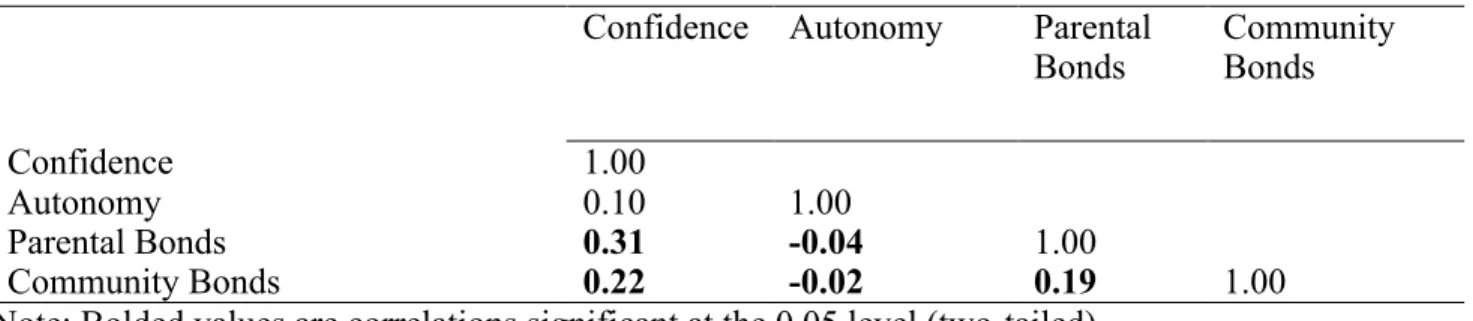
Longitudinal Study of Adolescent to Adult Health (Wave I, 1994-1995)………...…...57 Table 3: Bivariate (Pearson) correlation matrix of positive youth development factor
scores………...………...59 Table 4: Distribution of sample characteristics, Wave I of the National Longitudinal
Study of Adolescent to Adult Health (n=17,533)………..…………..…..…………...60 Table 5: Demographic, relationship, and behavioral characteristics, by biological sex,
Sample 1: The National Longitudinal Study of Adolescent to Adult Health,
Wave III (n=10,916)………..………..……….…………..…..94 Table 6: Bivariate associations between positive youth development and sexual health
outcomes, males in Sample 1: The National Longitudinal Study of Adolescent
to Adult Health, Wave III(n=4,523)………..……….…....97 Table 7: Bivariate associations between positive youth development and sexual health
outcomes, females in Sample 1: The National Longitudinal Study of
Adolescent to Adult Health, Wave III (n=5,942)………….………..……..…...98 Table 8: Summary of statistically significant results from multinomial and logistic
regressions modeling multivariate associations between positive youth
development and sexual health, males in Sample 1 (n=4,523)……….…99 Table 9: Summary of statistically significant results from multinomial and logistic
regressions modeling multivariate associations between positive youth
development and sexual health outcomes, females in Sample 1 (n=5,942)……...100 Table 10: Multivariate associations between positive youth development and sexual
health outcomes, Sample 1 emerging adult males (ages 18-26) in Wave III of
the National Longitudinal Study of Adolescent to Adult Health (n=4,974)……...101 Table 11: Multivariate associations between positive youth development and sexual
health outcomes continued, Sample 1 emerging adult males (ages 18-26) in Wave III of the National Longitudinal Study of Adolescent to Adult Health
(n=4,974)………..………...……….…...103 Table 12: Multivariate associations between positive youth development and sexual
health outcomes, Sample 1 emerging adult females (ages 18-26) in Wave III
Table 13: Multivariate associations between positive youth development and sexual health outcomes, Sample 1 emerging adult females (ages 18-26) in Wave III
of the National Longitudinal Study of Adolescent to Adult Health (n=5,942)….…..107 Table 14: Demographic, relationship, and behavioral characteristics, by biological sex,
Sample 2: The National Longitudinal Study of Adolescent to Adult Health,
Wave III (n=3,253)……….………...…..109 Table 15: Bivariate associations between positive youth development and sexual health
outcomes, males in Sample 2: The National Longitudinal Study of Adolescent
to Adult Health, Wave III(n=1,347)………..………….………...……….112 Table 16: Bivariate associations between positive youth development and sexual health
outcomes, females in Sample 2: The National Longitudinal Study of Adolescent
to Adult Health, Wave III(n=1,906)………...……….………..……..113 Table 17: Summary of statistically significant results from multinomial and logistic
regressions modeling multivariate associations between positive youth
development and sexual health outcomes, males in Sample 2 (n=1,347)…...…..…...114 Table 18: Summary of statistically significant results from multinomial and logistic
regressions modeling multivariate associations between positive youth
development and sexual health outcomes, females in Sample 2 (n=1,906)……....…115 Table 19: Multivariate associations between positive youth development and sexual
health outcomes, Sample 2 emerging adult males (ages 18-26) in Wave III of
the National Longitudinal Study of Adolescent to Adult Health (n=1,347)…………116 Table 20: Multivariate associations between positive youth development and sexual
health outcomes continued, Sample 2 emerging adult males (ages 18-26) in Wave III of the National Longitudinal Study of Adolescent to Adult Health
(n=1,347)……….…………..…...118
Table 21: Multivariate associations between positive youth development and sexual health outcomes continued, Sample 2 emerging adult males (ages 18-26) in Wave III of the National Longitudinal Study of Adolescent to Adult Health
(n=1,347)………..120 Table 22: Multivariate associations between positive youth development and sexual
health outcomes, Sample 2 emerging adult females (ages 18-26) in Wave III
of the National Longitudinal Study of Adolescent to Adult Health (n=1,906)………122 Table 23: Multivariate associations between positive youth development and sexual
health outcomes continued, Sample 2 emerging adult females (ages 18-26) in Wave III of the National Longitudinal Study of Adolescent to Adult Health
Table 24: Multivariate associations between positive youth development and sexual health outcomes continued, Sample 2 emerging adult females (ages 18-26) in Wave III of the National Longitudinal Study of Adolescent to Adult Health
(n=1,906)……….………..………..………...126 Table 25: Definitions of the Five Cs of Positive Youth Development (PYD)
Framework………..……….…....141 Table 26: Potential Indicators of the Five Cs of PYD available at Wave I of the National
Longitudinal Study of Adolescent to Adult Health (Add Health)…………..……...141 Table 27: Positive youth development factor loadings, best solution complete pattern matrix:
Wave I of The National Longitudinal Study of Adolescent to Adult Health (n=17,553)….…147
Table 28: Wave III “Relationships in Detail” Sample Description: The National
Longitudinal Study of Adolescent to Adult Health (2001-2002)………....…149 Table 29: Sample sizes of the seven versions of the Wave III Section 19, “Relationships
in Detail” Questionnaire in the National Longitudinal Study of Adolescent to
Adult Health……….…….149 Table 30: Table 30. Indicators of Sexual Health from Wave III of the National
LIST OF FIGURES
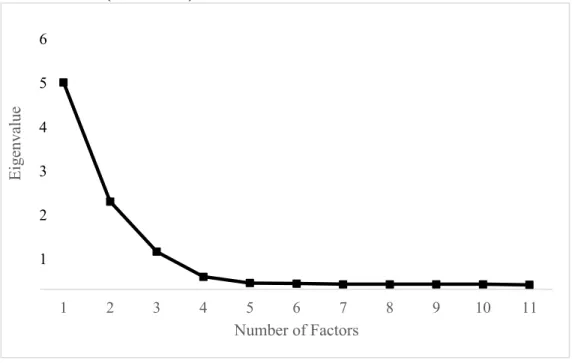
Figure 1: Scree plot of exploratory factor analysis solutions representing positive youth development using data from Wave I of the National Longitudinal Study of
Adolescent to Adult Health (1994-1995)……….…………...55 Figure 2: Mean values and standard errors of positive youth development factor scores
by biological sex in Wave I of the National Longitudinal Study of Adolescent
to Adult Health (n=17,533)……….…61 Figure 3: Mean values and standard errors of positive youth development factor scores
by race/ethnicity in Wave I of the National Longitudinal Study of Adolescent to
Adult Health (n=17,533)……….……62 Figure 4: Mean values and standard errors of positive youth development factor scores
by highest parental education attainment in Wave I of the National Longitudinal
LIST OF ABBREVIATIONS AND SYMBOLS
Add Health The National Longitudinal Study of Adolescent to Adult Health
β Beta coefficient
CASI Computer-assisted self-interviewing
CDC The Centers for Disease Control and Prevention
CFA Confirmatory Factor Analysis
CFI Comparative Fit Index
CI Confidence interval
df Degrees of freedom
EFA Exploratory Factor Analysis
GED General Education Development
HIV/AIDS Human Immunodeficiency Virus/Acquired Immune Deficiency Syndrome
HPV Human papillomavirus
HRSA Health Resources and Services Administration
ICPSR Inter-University Consortium for Political and Social Research
NH Non-Hispanic
NHSLS National Health and Social Life Survey
NSSHB National Survey of Sexual Health and Behavior
OLS Ordinary Least Square
OR Odds ratio
PYD Positive Youth Development
RMSEA Root mean square error of approximation
SE Standard error
SES Socioeconomic status
SIECUS Sexuality Information and Education Council of the United States STI Sexually transmitted infection
TLI Tucker-Lewis Index
US United States
WLSMV Weighted least squares mean and variance adjusted
WHO World Health Organization
CHAPTER 1: INTRODUCTION
Background and Significance
Until recently, adolescent 1 and young adult 2 sexuality has primarily been studied
through a lens of risk and peril. The vast literature to-date provides evidence for the many factors
that contribute to negative sexual health outcomes such as unintended pregnancy, sexually
transmitted infections (STIs), and sexual violence.1 Current prevalence rates of these outcomes
paint a bleak picture of the status of sexual health among adolescents and young adults in the
United States (U.S.). Though there has been considerable decline in rates over the past 20 years,
teen pregnancy and birth rates are still the highest among most other developed countries.2 Stark
racial/ethnic and geographic disparities in negative sexual and reproductive health outcomes
persist,3 and high rates of unintended pregnancy and STIs remain public health concerns as
nearly half of all pregnancies in the U.S. are unintended 4 and young people aged 15-24 represent
half of the 20 million new STIs reported each year.5
While continuing to understand the key influences on and health consequences of risky
sexual behaviors is crucial, engaging in sexual activity during adolescence does not necessarily
produce worse health outcomes than postponing sex until young adulthood.6 Moreover,
individuals and their partners experience a range of important and understudied positive
physical, psychological, and relational sexual health outcomes that together make-up their
complete sexual health profiles. Recent definitions of “sexual health” have expanded to
1Adolescent defined as a young person aged 10-18 years. “Adolescent” and “youth” are used interchangeably throughout this dissertation.
incorporate more holistic dimensions of sexuality and take a wide-range of behaviors and
experiences into account. Along with this expansion of the definition of sexual health, newer
research has explored factors contributing to essential positive aspects of sexual health
development, and how those factors can be enhanced. This recent transition highlights the
increasingly adopted perspective that adolescent and young adult sexuality is a normative aspect
of human development,1 and is fundamental to holistic well-being throughout life.7 Given that by
age 20 over 70% of the U.S. population has had vaginal intercourse,3 there is an urgent need to
continue to explore the developmental factors, experiences, and conditions that enhance positive
sexual health, as well as the factors that reduce risk of adverse sexual and reproductive health
outcomes for individuals throughout the lifespan.
Defining Holistic Sexual Health
Being sexually healthy means that individuals and their partners are not only free of
adverse outcomes, but experience positive sexual health outcomes such as physical pleasure,
intimacy, commitment, and high romantic relationship quality. Indeed, several definitions of
“sexual health” incorporate multidimensional elements of sexuality and well-being.8 One of the
most widely-cited definitions of sexual health originated from the World Health Organization
(WHO) in 1994, and more recently reframed in 2006:
…a state of physical, emotional, mental and social well-being in relation to sexuality; it is not merely the absence of disease, dysfunction or infirmity. Sexual health requires a positive and respectful approach to sexuality and sexual relationships, as well as the possibility of having pleasurable and safe sexual experiences, free of coercion, discrimination and violence.9
Other definitions of sexual health acknowledge its multilevel components. Fortenberry
(2013) developed a holistic “sexual health paradigm” consisting of vital health components such
as sexual pleasure, sexual choice, sexual knowledge, and sexual rights that each affect sexual
(CDC)/Health Resources and Services Administration (HRSA) Advisory Committee described
sexual health as encompassing “physical, emotional, mental, social, and spiritual” realms.”10, p.41
The last definition also acknowledges the "socioeconomic and cultural contexts" that influence
sexual health and access to resources that "support healthy outcomes for individuals, families,
and communities.”10, p.41 This inclusion is important as cultural contexts, particularly societal
gender expectations and social and religious stigma associated with sexuality, greatly impact
sexual expression, identity, and especially relationships.
On the interpersonal level, having the skills to navigate sexual and romantic relationships
successfully is a primary human developmental achievement by adulthood. The National
Commission on Adolescent Health defines one major component of sexual health as the “ability
to develop and maintain meaningful interpersonal relationships” and “express affection, love,
and intimacy.”11 Because sex is generally a partnered behavior, relationship/social experiences,
such as communication or trust between partners, can also boost or undermine sexual health.
Finally, as each of the above definitions acknowledges, sexual health also encompasses sexual
satisfaction or pleasure. That is, the individual positive physiological, psychological, and
emotional aspects of sexual experiences.12 Sexual satisfaction may involve the physical
satisfaction from a sexual or intimate experience, including experiencing orgasms, as well as the
emotional satisfaction stemming from intimacy and pleasing one’s partner 13 and/or increased
sexual self-esteem (positive personal feelings of control, attractiveness, and skills in relation to
sexuality).14 The diversity of these outcomes highlights the range of physical, emotional, and
social factors that are at play in the experience of holistic sexual health.
For most people, sexuality encompasses engaging in a variety of behaviors beyond
vaginal intercourse, including but not limited to masturbation, kissing, mutual touching,
sexual practices of these behaviors and little is known about the levels of pleasure associated
with different sexual activities, particularly oral sex, which is a well-documented element of
intimate experiences among young adult couples.15,18,19 Utilizing more comprehensive
definitions of sexual health supports a transformation of the ways in which adolescent and young
adult sexual health is studied, in particular the outcomes, behaviors, and capabilities that
constitute “optimal” 20 sexual health. In sum, holistic sexual health encompasses a wide range of
beneficial, health-promoting behaviors in the physical, mental, emotional, and social realms for
individuals and partners. However, because of cultural and sociocontextual factors, males and
females might face different obstacles in achieving complete sexual health and attendant positive
outcomes.
Biological Sex Differences in Holistic Sexual Health
Due to gendered sexual scripts, males and females may place different importance on
certain aspects of positive sexual health, for example physical pleasure for men and emotional
intimacy for women, particularly within a heterosexual context.21,22 Though not universal, men
tend to show more sexual desire than women, initiate sex more often in relationships,23,24 and
report more orgasms on average compared to women.25,26 Women are more varied in their sexual
expression, but often do desire commitment or connection as a context for sexual activity.23,24
According to sexual script theory, sexual interactions are often constructed and experienced to
align with dominant cultural expectations (the "scripts") that are learned, internalized, and acted
out.27 Most gendered sexual scripts prescribe courses of action that encourage men to pursue and
enjoy sexual encounters,28 while dissuading young women who pursue similar sexual desires.29,30
Due to these persistent sociocultural sexual scripts and social desirability concerns, young men
young women might be hesitant to expect or request positive sexual outcomes despite their
actual experiences and attitudes.
Further, according to relational-cultural theory,31 women especially value interpersonal
connections with others in various facets of life and therefore might be more likely than men to
emphasize emotional closeness and intimacy as key to positive sexual experiences and
relationship quality.32 However, contemporary qualitative studies have also described other
sexual scripts that heterosexual men adhere to, including gaining intimacy from mutual sexual
pleasure, that do not fit into the traditional (stereotypical) male sexual profile.33 Given these
theoretical propositions, positive sexual health experiences could vary according to biological
sex and for specific outcomes among opposite-sex couples. Additionally, given the context of
sexual scripts, any effort to examine positive sexual well-being must consider whether and how
males and females differ in the fulfillment of sexual health.
Holistic Sexual Health and Overall Well-Being
As individuals age from adolescence to adulthood, the prominence and influence of
sexuality and romantic relationships increases;34–36 therefore, “healthy sexual development (or
the lack thereof) can have spillover effects in other aspects of life.”37, p.505 Associations between
sexual health and other vital mental, emotional, and physical health outcomes are bidirectional 38
as sexual schemas, identities, and relationships are intricately entwined and significantly impact,
and can be impacted by, life experiences across domains.39–43 Additionally, the perceptions or
evaluations of different sexual behaviors, including the levels of pleasure of a variety of
activities, could also have perceived or actualized consequences for individual health and
relationships.44
Studies have found evidence of the impact of holistic sexual health on certain aspects of
and sexual self-esteem have been positively associated with happiness,45 general
self-esteem,25,46,47 emotional regulation,23,47 life satisfaction,48 and relationship commitment,23,26 and
inversely related to depression,25,46,47 substance use,47 stress,23 and anxiety.23 There is also some
evidence that sexual health is correlated with increased self-esteem 25 and relationship
satisfaction,26,49,50 and reduced depression 51 among emerging adults, specifically. Studies have
also found positive associations between sexual health and risk reduction behaviors. For
instance, after incorporating various social, emotional, physical, and mental aspects of positive
sexual health, Hensel & Fortenberry (2013) found that in a cohort of 387 adolescent women aged
14-17, sexual health was associated with increased sexual choice, including vaginal and anal sex
abstinence, as well as increased birth control use at last sex, and absence of any STIs and sexual
coercion.20 The same skills and experiences that enhance sexual health—such as efficacy,
communication, and emotional regulation—are likely beneficial for overall health and protective
against risk behaviors as well.47,52
Positive sexual health-related expectations and behaviors, such as desire for sexual
pleasure and intimacy, are related to the use of contraception, which has direct implications for
other sexual and reproductive health outcomes including risk of unintended pregnancy and STIs.
Several studies find that positive aspects of sexuality significantly influence experiences with
contraception in young adulthood, though the direction of this association is unclear.12,13,53–56 Use
of hormonal contraceptive methods or condoms during sex has been found to enhance sexual
enjoyment for some young adults,53,54 but has also inhibited pleasure for others,53 and some
partners might refrain from using contraception so as to not reduce pleasure during sexual
activity. Grady et al. (1999) explored the factors that influence contraceptive use among 1,189
individuals aged 20-27 and found that both men and women considered physical pleasure to be
consensus on the direction of the link, the desire for positive sexual health experiences, like
sexual pleasure, is associated with decision-making around contraception and in turn has
implications for unintended pregnancy and STI prevention efforts. In fact, promoting how the
use of male and female condoms can be more pleasurable has been found to increase uptake and
consistent use of condoms,12,56 highlighting the importance of considering positive sexual health
desires and outcomes in comprehensive sexual health education so that all adolescents could
experience lasting, healthy relationships into emerging adulthood and beyond.
Holistic Sexual Health Among Emerging Adults
“Emerging adulthood” 3 is a life stage often consisting of many changes in residence,
education, employment, and relationship formation.34 In emerging adulthood, exploration of
sexual and romantic identity is more socially acceptable than in adolescence During this period,
most emerging adults are sexually active, have had several sexual partners, and have had great
diversity in their sexual and relationship experiences.35,57–59 This new exploration during a later
developmental period might have implications for sexual health that are different from
adolescents (who likely face more constraints in exploring sexual interests and forming their
sexual identities) or older adults (who most likely have already formed their sexual identities
and/or are in stable, long-term relationships).34,60 Additionally, changing patterns of relationship
formation in the U.S. demonstrate that emerging adults spend more time dating and cohabiting
before they marry than in any other historical period.60 Thus, romantic relationships become
prevalent in emerging adulthood and there is great diversity in relationship experiences, which
could have important implications for sexual identity development, interpersonal skill-building,
and ultimately sexual health in emerging adulthood and beyond.
Though a variety of behaviors, experiences, and outcomes comprise one’s sexual health
repertoire, little attention has been given to understanding holistic sexual health outcomes among
emerging adults as a distinct age-group. There are a limited number of potential national data
sources or surveys available that assess outcomes such as orgasm frequency or enjoyment of oral
sex among emerging adults, which reduces our ability to gain a cohesive understanding of how
emerging adults experience multidimensional aspects of sexual health, as well as the potential
adolescent contributors to these patterns. Because most individuals have had some sexual
experiences by emerging adulthood,3 early opportunities for adolescents to build quality
intrapersonal and interpersonal capabilities could go a long way in promoting healthy sexual
development into emerging adulthood when individuals likely experience greater opportunity for
sex. Thus, there is a continued need to elucidate how and under what circumstances adolescents’
contexts, attitudes, and behaviors contribute to long-term positive sexual health outcomes, as
well as the capabilities and qualities that are needed to navigate relationships during a period
when sexual and romantic relationships become more salient and individuals have greater
freedom in exploring their sexual identities.34
Preparation for Adulthood and Sexual Health Education
Given the salience of sexuality in adolescence, and because sexual health is an integral
component of long-term overall health and is related to general well-being and risk reduction,
adolescence is a key period to strengthen protective factors that empower youth to advocate for
themselves, exercise their sexual choice to abstain from sex, or engage in healthy behaviors and
have enjoyable experiences if they do choose to have sex. Though relatively new, the “positive
sexuality” or “sex positivity” perspectives represent a growing body of research that
acknowledges that holistic positive sexual outcomes, such as sexual satisfaction, sexual
with the skills to achieve optimal, complete sexual health. As sexuality and sexual identity
exploration manifest in adolescence for most people,1 lasting sexual health can be promoted
when adolescents have access to accurate sexual health information and positive skill-building
experiences.61,62 However, although they are bombarded with sexual images and expressions
daily, adolescent sexuality continues to be stigmatized in the U.S. Relatedly, the ideology that
sexual activity outside the context of marriage is harmful or immoral manifests in government
policies, research funding, and especially sexual education curricula.
Ideological impact on sex education can be seen in the limited scope of many sexual
education programs; programs often do not educate youth on qualities of healthy relationships,
do not provide empowering opportunities for youth to practice communication or negotiation
skills, nor consider sexual enjoyment and sexual choice as essential components of sexual
health.63,64 Additionally, many programs have an abstinence-only focus or an exclusive focus on
preventing STIs and unplanned pregnancy,65,66 and some lack fidelity in implementation or only
have minimal short-term effects on sexual health.66–69Such sexual health education programs do
not fully prepare youth for the responsibilities they will encounter as they become sexual beings
in emerging adulthood and beyond as they do not incorporate inclusive education or provide
information about how to maintain equally respectful and potentially pleasurable relationships,
among other competencies.61 Though various evidence-based sexual health standards (e.g.,
National Sexuality Education Standards)70 and curricula (e.g., Be Proud! Be Responsible!)71
were recently created to better prepare adolescents for sexual relationships (by incorporating age-
and developmentally-appropriate, comprehensive aspects of sexual health), many adolescents
lack access to these resources. Enhancing knowledge and interpersonal skills through utilization
of these resources could not only help youth avoid adverse consequences, but also prepare them
Some scholars propose that existing sexual education programs can be enriched by
incorporating elements of positive youth development programming that help youth build
general competencies to navigate complex sexual and romantic relationships throughout the life
course.72 This dissertation uses a framework of positive youth development to explore the ways
in which a wide range of adolescent skills, characteristics, and contexts are related to sexual
health in emerging adulthood. The following sections outline the positive youth development
framework and how the dimensions are relevant to holistic sexual health.
Positive Youth Development
The positive youth development (PYD) perspective represents the comprehensive
interdisciplinary research, programmatic efforts, and policies that proposethat healthy
development across the life course is best promoted by creating opportunities for youth to
develop and strengthen key assets (e.g., communication skills, autonomy, empathy) that enable
individuals to flourish in various contexts of life.73 Adolescents possessing these developmental
assets are more able to develop and preserve their own holistic well-being, sustain healthy
relationships, and thrive into emerging adulthood and beyond.73,74 In empirical studies, PYD
serves as an assets-based (as opposed to risk-focus) conceptual framework by which to identify
the positive youth attributes that reflect ideal psychosocial health throughout life.
The PYD perspective first came to prominence among developmental scientists and
youth practitioners in the early 1990s in response to the growing prevalence of risk behaviors
among adolescents in the U.S.75 Prior to the PYD movement, “adolescence” was often defined in
the scientific literature and characterized in the media as a life period full of massive changes,
stress and conflict among youth and their families. Young people were viewed as experimenters
with risky behaviors, and much of the research on adolescent development positioned “healthy”
research on adolescent development in the past three decades has exposed the overgeneralization
of these perceptions. Not all youth and families experience such conflict, and in fact, most
adolescents adjust in healthy ways, enjoying positive outcomes.73 Likewise, some adolescents
are resilient and flourish despite significant obstacles and limited resources.76 Just as Karen
Pittman proposed in the early 1990s, “Problem-free is not fully prepared;” youth and their
families require positive skills and qualities to successfully navigate the changing relationships
and responsibilities during the transition to adulthood.77, p.1 Focusing on reducing deficits and
problem behaviors is only part of the battle; enhancing the positive attributes and assets of youth
is equally important.
Numerous PYD conceptualizations and theoretical models aimed at measuring healthy
adolescent development exist.78 Consistent across each model is the emphasis on sustained and
supportive, prosocial environments in families, schools, and communities, and diverse individual
thriving functions including academic achievement, compassion, and a positive view of self.76
As an illustration of the PYD approach to research and the operationalization of the dimensions,
one of the most widely-used frameworks of PYD is the Five Cs model of PYD outcomes.79 The
Five Cs model suggests that “healthy” development can be exhibited by a set of key internal
developmental outcomes:
Competence: the self-assurance of and success in the social, cognitive, academic,
physical, and vocational areas of life. Competence includes tangible personal and interpersonal
skills and abilities (e.g., literacy, employment skills), as well as positive adolescent perceptions
of these abilities.74,80,81
Confidence: the positive views of one’s self and worth, including optimistic aspirations
Connections: enduring, strong prosocial bonds with people and institutions (i.e., parents,
family, peers, school, church and neighborhoods) fostered through high-quality relationships,
mentoring, counseling, team work, and participation in other prosocial, engaging activities.74,80,81
Character: valued, prosocial behaviors like self-control, morality, respect for rules, and
spirituality.74,80,81
Caring: a sense of compassion and empathy for others.74,80,81
If the Five Cs are exhibited over time, a sixth “C” of contribution will result, representing
the importance of youth becoming engaged and active citizens, making positive contributions to
society.82,83 Similar to all PYD frameworks, the model proposes that adolescents who possess the
Five Cs have the attributes and skills to develop and preserve their own well-being (potentially
including multidimensional aspects of sexual health), thrive, and become productive members of
society.73,74 The Five Cs model is just one conceptual framework of PYD, but others, such as the
Search Institute of Minnesota’s Assets Model of 40 developmental external and internal assets,84
exhibit similar properties with a focus on thriving and positive assets, as well as supportive
family and community environments. One goal of this dissertation is to identify the personal and
contextual attributes that align with the general PYD framework based on available indicators in
a survey of a large, heterogeneous sample of U.S. adolescents.
PYD is of increasing interest among researchers,76 but because PYD is interdisciplinary,
various terms and constructs comprise a number of different models. Differences exist in how
studies have operationalized the PYD constructs, making it challenging to accurately summarize
the implications of PYD for adolescent and future well-being, including holistic sexual health.
Nonetheless, the PYD perspective represents a shift in the conceptualization of how to address
youth problems, and there is a massive body of literature that provides evidence for the benefits
in preventing problem behaviors and promoting healthy behaviors. (For a widely-cited
comprehensive review of programs see Catalano et al.85) Several studies have found various
immediate positive implications of PYD experiences in general: reduced substance use 86,87 and
violent behavior,86 increased school engagement,76,87–89 and improved parent-child relationships
87 in adolescence. Fewer studies have explored positive long-term implications of PYD
experiences. However, those that have find that PYD opportunities in adolescence are related to
improved emotional regulation and 90,91 civic engagement 92 in young adulthood.
This evidence suggests that PYD-related experiences may strengthen valued behaviors
and qualities in adolescence and contribute to positive social functioning and well-being in
young adulthood, however contemporary literature on the health implications of PYD has
limitations. Research findings are often not generalizable to all youth in the U.S. because studies
utilize non-representative samples, including at-risk youth,88,93 youth currently participating in
rigorous mentorship or PYD intervention programs,86,87 or youth residing in a specific
geographic location.90 Further, studies often do not examine long-term PYD health implications
and rather focus on improved outcomes solely in adolescence.76,89 In addition, some studies rely
on adult retrospective reports of adolescent experiences 91 that might be biased because of recall
error or social desirability pressures. Though PYD could have a positive impact on immediate
and long-term health, more research using nationally representative samples of youth and
prospective reports of PYD is needed to fully understand the circumstances and potential
implications of PYD that exist for diverse groups of adolescents and for diverse outcomes.
PYD and Sexual Health
Despite the passage of time since the development of the WHO’s multidimensional
definition of sexual health and the inclusion of outcomes like sexual pleasure and relationship
between adolescent developmental assets and connections, and positive aspects of sexual health.
Explanatory constructs from various PYD frameworks reflect different aspects of an adolescent’s
psychosocial status and life, and are applicable to sexual behavior and sexual health, as PYD
experiences and attributes can influence self-schemas, identities, and the formation and
maintenance of relationships.90,94,95 Further, possibly because brain development continues into
early adulthood,96 some adolescents may build peer and intimate relationships without sufficient
cognitive and interpersonal skills needed to sustain a healthy relationship. PYD opportunities can
mitigate this by helping youth build crucial social skills, including listening, negotiation, conflict
management, and communication, that can be used in their sexual and romantic relationships
throughout life.
Certain comprehensive school- or community-based sexual education programs do
educate youth on safe sexual practices and provide safe spaces for youth to practice healthy
social skills, however PYD programs or constructs often complement existing sexual education
programs by helping youth build empowerment and efficacy to use those skills in their
increasingly important peer and romantic relationships.97 This comprises assisting youth in
developing the capacity to articulate their own desires (including abstaining from sex), listening
to their partners, and assuming joint responsibility for contraception and pleasurable sex.72 PYD
can also encourage youth to take control of their overall well-being, establish goals and
aspirations, and promote sexual health development as an integral component of human
development and health. However, these programs and experiences do not need an explicit
sexuality component to have an impact on sexual health outcomes;72 the skills and prosocial
bonds fostered in youth development opportunities represent the skills and relationships that are
Several studies have found evidence of a beneficial impact of adolescent PYD
dimensions (e.g., competence, parent-child communication, spirituality, and achievement
aspirations) on immediate and long-term risk-reducing behaviors including delayed sexual
initiation,86,88,97–101 fewer sexual partners,98–102 greater condom and/or contraception use,88,98–
100,102–109 reduced risk of unintended pregnancy and/or birth,88,97–101,110 and reduced risk of
STIs.109 Relatively fewer studies have examined the association between PYD dimensions and
positive sexual health outcomes; however, protective PYD factors such as family connectedness
or confidencehave been linked to increased sexual self-efficacy during adolescence,107
communication with parents about sexuality,37 and even enhanced sexual satisfaction among a
sample of Dutch adolescents.94
In one recent study, young adults who had close bonds to adult mentors in adolescence
reported higher self-efficacy, optimism, and romantic relationship satisfaction in adulthood (aged
25-35 years).91 Similarly, in another study, 7th graders who had family support and high parental
involvement were more “competent” in their romantic relationships in their early twenties.111
Though there is some evidence that certain PYD dimensions are correlated with aspects of
positive sexuality (for example, sexual pleasure, sexual self-esteem, contraception negotiation,
and relationship quality),26 more research is needed to unravel these and other long-term
implications of PYD for positive sexual health, particularly using population-based adolescent
samples and validated PYD frameworks.
Limitations of Research on PYD and Sexual Health
There are five key limitations of past research on potential links between PYD and
holistic sexual health. First, few studies have explored the long-term connection between PYD
and holistic sexual health outcomes among emerging adults as a distinct age-group. Emerging
prevalent than in adolescence and there is great diversity in experiences, but our knowledge of
certain pleasure-related, emotional, and social aspects of their sexual health is limited. Second,
few studies use nationally representative samples; previous research that has focused on holistic
sexual health outcomes in emerging adulthood has largely relied on convenience samples that
lack generalizability 37,112 or samples of college students 112,113 who might experience different
social environments related to the acceptability of and opportunity for sex compared to the
general population. A third limitation is that most of the current literature only examines
cross-sectional associations between PYD and holistic sexual health,25,26 which does not allow the
longitudinal examination of emerging adulthood experiences relative to the adolescent
experiences that precede them. Fourth, cross-sectional data of sexual health in emerging
adulthood also often rely on retrospective reports of adolescent experiences, which might be
inaccurate due to recall bias. Lastly, some studies only incorporate single indicators of positive
sexual health 25,37,114 or PYD,115 which is limiting because sexual health encompasses and is
impacted by multidimensional experiences. It is unknown if and in what ways multifaceted
components of healthy development show similar positive associations with holistic components
of sexual health, in addition to reducing engagement in risk behaviors.
Study Overview
To fill the aforementioned gaps in the literature, this dissertation research utilized a
diverse, population-based sample of U.S. adolescents followed into adulthood to identify
constructs of adolescent assets that align with PYD, test differences by sociodemographic
characteristics, and explore the implications of PYD for healthy sex and romantic relationships in
emerging adulthood. Chapter 2 outlines the theoretical framework of the dissertation. Then, each
conclusion chapter that summarizes the findings and the implications of this research for public
health practice and future research on youth development and sexual health.
Research Questions
Paper 1 (Chapter 3): Identify Latent Constructs of Positive Youth Development.
Using exploratory factor analysis (EFA), which latent constructs of PYD emerge from indicators
of personal and contextual assets in a large, diverse sample of adolescents in the U.S.? Using
confirmatory factor analysis (CFA), what is the degree to which the Five Cs of PYD model (i.e.,
connectedness, competence, confidence, character, and caring)73 fit the data? How prevalent are
the assets that comprise PYD in a diverse sample of adolescents? Are there differences in PYD
by biological sex, race/ethnicity, and socioeconomic status?
Paper 2 (Chapter 4):Examine Implications of PYD for Holistic Sexual Health. What
are the implications of PYD for broad physical, emotional, and social indicators of sexual health
including enjoyment of oral sex, orgasm frequency, reciprocated love, relationship quality,
unintended pregnancy risk, and past-year STI risk among heterosexual emerging adults in a
current or recent relationship?
Data Source
Analyses are based on in-home data from Waves I (Chapter 3) and III (Chapter 4) of the
National Longitudinal Study of Adolescent to Adult Health (Add Health). Add Health is a
probability-based, nationally representative survey of 20,745 U.S. adolescents enrolled in grades
7 through 12 in the 1994-1995 school year (Wave I). Add Health to-date has completed one
in-school and fourin-home waves of interviews. Wave III interviews (n=15,197) were completed in
2001-02, when sample members were aged 18-26, the period of emerging adulthood.
This research contributes to the growing evidence of the implications of PYD for positive
experiences in adolescence influence emerging adult sexual and romantic experiences.
Identifying the critical precursors to holistic sexual health throughout the lifespan can lead to the
formation of more effective youth development and sexual health intervention programs that
CHAPTER 2: THEORETICAL FRAMEWORK
This chapter outlines the theoretical basis that guides the conceptualization of this study,
the PYD approach to research, and how attributes and resources in adolescence combine to foster
positive development and healthy outcomes, including healthy sex and relationships, throughout
the life course. The theoretical framework includes multilevel (developmental systems and life
course theory), interpersonal (social cognitive theory and attachment theory), and intrapersonal
(identity formation theory) related theories.
Multilevel: Developmental Systems and Life Course Theory
A healthy transition to adulthood does not merely entail the avoidance of drugs, violence,
and unsafe sexual activity, nor is individual behavior the sole contributor to healthy
development. Indeed, current literature provides evidence for health-promoting and
skill-building opportunities at multiple societal levels as equally (or more) vital to cognitive,
emotional, behavioral, and social functioning throughout the life course.85 Stemming from
developmental systems theory, PYD approaches to research and programming incorporate a
bidirectional, “person-in-context” perspective,73,76,95,116 recognizing that the social influences of
parents, peers, partners, and neighbors are as important to child development as individual
behaviors. The reciprocal nature of these influences indicates that an adolescent can be shaped
by his or her environment, but he or she can also act in ways that alter their environment.76
According to developmental systems theory, no single factor solely affects health and
development, but rather human development is impacted by diverse factors at multiple
interacting levels.116 The PYD perspective identifies interrelated adolescent assets—not
supportive contextual resources that can be strengthened to promote healthy behaviors and
positive outcomes.
Life-course theory also provides a general organizing framework for this dissertation.
According to life-course theory, human development (and related health outcomes) is
conceptualized as a trajectory influenced by interactions between genetics and individual
behavior, and also by social and historical contexts and cumulative conditions during the
transitions throughout life.117 Adolescence represents one important transition in the life course,
the transition from childhood to emerging adulthood, and is largely impacted by circumstances
and conditions in early life, while at the same time being a significant contributor to well-being
in later life. Adolescence is a life stage marked by the onset of puberty and consisting of many
transformations, not only in education and community connections, but in relationships with
family, peers, and romantic partners. In this transition, adolescents must navigate complex social,
emotional, and psychological changes.73 According to life course theory, how a person develops
throughout life is largely influenced by the timingand sequencing of these important transitions
in adolescence.118 Within a particular historical and cultural context, if the transitions occur
off-time or out of normative sequence, then social or other health consequences might ensue that are
different from those who experience an event in what is considered “normal” timing and order.
For example, young girls who begin puberty early, often begin romantic and sexual experiences
earlier than their on-time maturing peers,119,120 which may put them at greater risk for immediate
and long-term adverse sexual health outcomes.120,121 Often times , however, the environment—
both the availability and quality of resources/opportunities and the strengths of social
relationships, especially, impact how adolescents might cope with these many transitions in
The importance of social relationships is a central component of linked lives, which is
another proposition of life course theory. Linked lives emphasizes that the prominent social
bonds in a person’s life (with parents, siblings, peers, or romantic partners) have a collective
influence on their behavior and health trajectories, while also the interdependent nature of social
networks enables individuals to influence the trajectories of those in their social circles.118 This
concept helps explain why new roles and experiences during the many transitions in adolescence
not only impact the individual, but also those within their networks. People live within social
settings; thus, it is important to consider diverse social, cultural, and historical contexts and how
those experiences and resources combine to contribute to health and development over time.
Lastly, individuals make decisions and act within societal and historical constraints,
however these decisions enable them to form and impact their own life course trajectories.118 In
other words, individuals exercise agency, another life course perspective principle, which also
has an influence on their health and well-being throughout life. Because of agency and the
understanding that human development is a life-long process, youth “select into personal
experiences, interpersonal relationships, and social settings in ways that reflect their past and
contribute to their futures”; therefore youth play a key role in their own development.122, p.274
PYD experiences enhance capabilities for youth to capitalize on existing sociocontextual
resources in households, schools, and communities 76 that help them manage physical and social
changes and strengthen positive qualities, like agency or decision-making, that foster healthy
development throughout the life course.
Interpersonal: Social Cognitive Theory and Attachment Theory
Developmental systems and life course theories provide a paradigmatic framework for
how earlier positive experiences and contexts can affect later behavior and health outcomes.
elucidate key factors and directional hypotheses for these mechanisms. One fundamental
property of the PYD perspective is that adolescents need strong connections to prosocial peers
and adults to foster healthy development. Social cognitive theory asserts that important social
units—family, friends, teachers, and community institutions—influence positive adolescent
behaviors and competencies by modeling socially desired behaviors, expectations, and beliefs,
and by providing rewards or consequences for (or expressing favorable/unfavorable attitudes
toward) desired behaviors.123 Individuals learn new skills from observing others’ modeled
behaviors, even without them having to explicitly practice those observed skills, in a process of
“observational learning.”123, p.6 The more social interactions youth have with prosocial adults and
peers, the more opportunities they have to develop positive social skills and connections (e.g.,
listening, communication, empathy). Desired behaviors are reinforced as adolescents receive
positive and/or negative feedback from parents, peers, or the outer community; adolescents
internalize these social cues and subsequently make adjustments to their behaviors.124 A PYD
approach to research and programming recognizes that adolescent prosocial bonding can lead to
prosocial behaviors (e.g., caring, volunteering, or spirituality), therefore families and
communities have the potential to be vital sources of support for healthy development.76
Parents and guardians, specifically, often play prominent roles in healthy adolescent
development, especially in regard to fostering positive social skills and healthy relationships.
According to attachment theory,125 adolescents construct working models of relationships, and
their self within a relationship, based on their relationship with their parents.126 Adolescents draw
on these working models in their future interactions with romantic partners,126 often emulating
parents’ behaviors and their affective patterns of expression.111 High-quality parent-child
relationships characterized by warmth, love, and open communication then allow youth to
their future relationships. In other words, high-quality parent-child relationships help strengthen
interpersonal skills, but also an individual’s self-identity and functioning within a relationship,
which allows one to interact effectively with others, express personal desires, and cope with
differences.
Intrapersonal: Identity Formation Theory
Individuals might be better-skilled at these social competences, and potentially
experience healthier relationships throughout life, if they have a positive self-identity, where they
believe in their self-worth and exercise a sense of purpose and control. Strong attachment in
families, in fact, can enhance the identity formation process as young people often adopt the
beliefs and values that align with close individuals in social contexts, especially
parents/caregivers. According to Erikson’s identity formation theory (1968), adolescence is a
life stage when individuals often for the first time try to make sense of who they are and their
hopes for the future, including goals for their sexual and romantic relationships.127 Therefore,
when young people take on new roles and interactions, having strong guiding principles and a
solid foundation allows space to build a positive “sense of inner identity” and “ability” that
reflects their beliefs, aspirations, and context.127, p.87 A positive identity helps facilitate a strong
sense of self-worth, confidence, and autonomy through “intentional self-regulation:” a cognitive
process whereby one purposefully reflects on their hopes, behaviors, and desires, which allows
them to select life goals and leverage their skills and resources to achieve these goals.128,129
Assets such as positive identity and self-regulation are fundamental to sexual health development
because individuals who are equipped with these psychosocial competencies might be
better-positioned to take advantage of existing opportunities to achieve their personal goals for