SCHOOL AS A CONTEXT FOR DEVELOPMENT: EXAMINING FIRST-GRADERS’ STRATEGY USE ACROSS DOMAINS
Kesha N. Hudson
A dissertation submitted to the faculty at the University of North Carolina at Chapel Hill in partial fulfillment of the requirements for the degree of Doctor of Philosophy in the Department
of Psychology in Neuroscience.
Chapel Hill 2019
iii ABSTRACT
Kesha N. Hudson: School as a Context for Development: Examining First-Graders’ Strategy Use across Domains
(Under the Direction of Peter A. Ornstein)
Data from four cohorts of first-grade teachers and students were used to (1) describe students’ strategy use on memory and mathematics tasks across the first-grade, (2) consider differences in teachers’ use of Cognitive Processing Language (CPL), or instruction that
encourages deep levels of processing and metacognition over time and across subject matter, and (3) examine the effects of teachers’ CPL on students’ strategy use on memory and mathematics tasks. Minimal change was observed in students’ recall, accuracy, and strategy use on memory
iv
ACKNOWLEDGEMNTS
Throughout the writing of this dissertation I have a received a great deal of support and guidance. I would first like to express my deepest appreciation to my advisors Drs. Peter
Ornstein and Jennifer Coffman who provided invaluable mentorship throughout graduate school. Their unparalleled support was instrumental in the completion of this dissertation. I am also appreciative of my committee members, Patrick Curran, Jeff Greene, and Beth Kurtz-Costes for being engaged throughout this process and providing thoughtful and critical feedback on my work.
I must also recognize Dr. Steve Reznick, for inspiring my interest in developmental psychology. The freshman seminar I took with him as an undergraduate student introduced me to the field of psychology and his continued guidance helped me find my place at Carolina.
A special thanks to my lab mate Taylor Thomas. In Taylor, I found a friend whose shared love of concerts and iced coffee kept me sane. This journey would not have been possible with the unwavering support she continues to show me and I am grateful to call her a friend.
I would also like to acknowledge the funding agencies that made this work possible. The research reported here was supported in part by funding from National Science Foundation through Grant BCS-0217206 and Grant DRL-0843961. This work was also supported in part by the Institute of Education Sciences, U.S. Department of Education, through Grant
v
Center for Development Science provided additional interdisciplinary training opportunities that enriched my graduate education.
I am grateful to the school administrators, teachers, families, and students who
vi
TABLE OF CONTENTS
LIST OF TABLES……...………...xi
LIST OF FIGURES……….……….xiv
LIST OF ABBREVIATIONS………...xvi
INTRODUCTION………..…1
Age-related Changes in Strategy Use………..……….…3
Strategy Use from a Developmental Perspective………...………...7
The Role of Behavioral Self-Regulation………..…11
School as a Context for Strategy Development………...………13
Evidence from Mathematics Education Literature………...14
Evidence from the Memory Development Literature………...…17
The Present Study……….…23
Aim 1………....24
Aim 2………25
Aim 3…………...……….26
Aim 4.……...………26
Aim 5………26
Aim 6………...……….…27
METHOD……….………...…..28
Sample and Demographics………...………28
vii
Taxonomy of Teacher Behaviors………...………...…31
Instructional Activities……….…32
Cognitive Structuring Activities………...……32
Memory Requests………...………..…33
Metacognitive Information………...…34
Cognitive Processing Language………...…34
Child Assessments……… ….……….…36
Object Memory Task………..……….………36
Free Recall with Organizational Training Task………..…..…………...37
Math Problem Solving Task……….…39
Head Toes Knees Shoulders………...………..40
Digit Span……….……39
RESULTS…….……….41
Aim 1: Describing Children’s Memory and Math Performance………..41
Aim 2: Examining Associations in Performance within and across Tasks……...…43
Correlations between Strategy Use and Performance………..43
Correlations between Recall in Memory and Accuracy in Mathematics within Domain…….……….43
Correlations between Recall in Memory and Accuracy in Mathematics across Domain……….….44
Correlations between Strategy Use within Domain……….45
Correlations between Strategy Use across Domains………...……….46
Aim 3: Characterizing the Classroom Context……….46
viii
Aim 4: Examining CPL by Cohort………...…49
CPL during Mathematics Instruction across Cohorts………...…..……..50
CPL during Language Arts Instruction across Cohorts……...……….50
Aim 5: Comparing CPL in Mathematics and Language Arts………..……51
Aim 6: Linking CPL to Children’s Memory and Mathematics Performance…….….52
Recall during the Object Memory Task………...………53
Strategy Use during Object Memory Task………...…55
Recall during the Free Recall with Organizational Training Task………...…56
Strategy Use during the Free Recall with Organizational Training Task…….58
Accuracy during the Mathematics Task………...…59
Strategy Use during the Mathematics Task………..……60
Additional Analyses……….……62
DISCUSSION……..………..64
Children’s Performance in Memory and Mathematics………65
The Classroom Context and Teachers’ Provision of Cognitive Processing Language……...68
CPL across Cohorts and Subject Matter………...………69
Linking CPL to Children’s Performance………..………71
Limitations………...……….73
Child-level Considerations………..……….73
Classroom-level Considerations……….…………...………..…….75
Future Directions………..………77
The “New” First Grade……….……78
ix
The Role of Self-Regulated Learning………..….82 Appendix A: Exploratory Analyses……….………..85 Appendix B: Recall in Object Memory Task Unconditional Model………...………..94
Appendix C: Recall in Object Memory Task Random Intercept Regression
Model with Level 1 Predictors………....………..95 Appendix D: Recall in Object Memory Task Random Intercept Regression
Model with Level 1 and Level 2 Predictors...………..…………..…………..……96 Appendix E: Recall in Object Memory Task Slopes-as-Outcome Model
with Cross-level Interaction……...………...………97 Appendix F: Strategy Use in Object Memory Task Unconditional Model………..…….98
Appendix G: Strategy Use in Object Memory Task Random Intercept
Regression Model with Level 1 Predictors.……….……….99 Appendix H: Strategy Use in Object Memory Task Random Intercept
Regression Model with Level 1 and Level 2 Predictors.………...….100 Appendix I: Strategy Use in Object Memory Task Slopes-as-Outcomes
Model with Cross-level Interaction………….………….………...…….101 Appendix J: Recall in Free Recall with Organizational Training Task
Unconditional Model……,………..102
Appendix K: Recall in Free Recall with Organizational Training Task
Random Intercept Regression Model with Level 1 Predictors………..………….103 Appendix L: Recall in Free Recall with Organizational Training Task
Random Intercept Regression Model with Level 1 and Level 2 Predictors...…104 Appendix M: Recall in Free Recall with Organizational Training Task
Slopes-as-Outcomes Model with Cross-level Interaction...………...105 Appendix N: Strategy Use in Free Recall with Organizational Training
Task Unconditional Mode…………..………...……….106
Appendix O: Strategy Use in Free Recall with Organizational Training
Task Random Intercept Regression Model with Level 1Predictors……….……..107 Appendix P: Strategy Use in Free Recall with Organizational Training
x
Level 2 Predictors………...108 Appendix Q: Strategy Use in Free Recall with Organizational Training
Task Slopes-as-Outcomes Model with Cross-level Interaction.……..…………..109 Appendix R: Accuracy Unconditional Model……….………110
Appendix S: Accuracy Random Intercept Regression Model with Level 1
Predictors……….………....111
Appendix T: Accuracy Random Intercept Regression Model with Level 1
and Level 2 Predictors………112
Appendix U: Accuracy Slopes-as-Outcomes Model with Cross-level
Interaction………..……….113 Appendix V: Strategy Use in Mathematics Unconditional Model……….……….114
Appendix W: Strategy Use in Mathematics Random Intercept Regression
Model with Level 1 Predictors..…………..………..115 Appendix X: Strategy Use in Mathematics Random Intercept Regression
Model with Level 1 and Level Predictor……….……….…..116
Appendix Y: Strategy Use in Mathematics Slopes-as-Outcomes
Model with Cross-level Interaction…………...……….…117
xi
LIST OF TABLES
Table 1 – Task-Oriented Strategic Behaviors Coded in the Object Memory Task……...……..118
Table 2 – Code Definitions for the Taxonomy of Teacher Behaviors……….119
Table 3 – Component Codes from the Taxonomy Used to Index Cognitive Processing Language……….…………...………….121
Table 4 – Sample Instruction from High CPL Classrooms in Mathematics and Language Arts…….…...………..122
Table 5 – Children’s Strategies (adapted from Siegler & Jenkins, 1989)………..….124
Table 6 – Child-level Tasks and Measures……….….125
Table 7 – Summary of Overall Child-level Performance in the Fall and Spring………126
Table 8 – Summary of Correlations between Recall and Strategy Use during the Object Memory Task in the Fall and Spring………....……...………133
Table 9 – Summary of Correlations between Recall and Strategy Use in the Free Recall with Organizational Training Task in the Fall and Spring.……....134
Table 10 – Summary of Correlations between Accuracy and Strategy Use in Mathematics in the Fall and Spring…...………...………..135
Table 11 – Summary of Correlations between Recall in the Object Memory Task, the Free Recall with Organizational Training Task, and Accuracy in Math……..…136
Table 12 – Summary of Correlations between Strategy Use in the Object Memory Task, the Free Recall with Organizational Training Task, and the Math Task………137
Table 13 – Mean and Range of Percent Occurrence of Teacher Behaviors for Whole Sample Across Subjects………..………..………138
Table 14 – Mean and Range of Cognitive Processing Codes for Whole Sample across Subjects…………...………...………...141
Table 15 – Means and ANOVA Summary Statistics for CPL during Mathematics and Language Arts across Cohorts…………...………144
Table 16 – Means and ANOVA Summary Statistics for CPL during Mathematics across Cohorts ………....………...………...…146
Table 17 – Means and ANOVA Summary Statistics for CPL during Language Arts across Cohorts……...……...……….148
xii
the Object Memory Task with Level-1 Predictors…..……….…..156 Table 20 – Summary of Conditional HLM Analysis for Recall in
the Object Memory Task with Level-1 and Level-2 Predictors……….157 Table 21 – Summary of Conditional HLM Analysis for Recall in
the Object Memory Task with Cross-level Interaction………..……158 Table 22 – Summary of Unconditional HLM Analysis for Strategy Use in
the Object Memory Task ………...……..159 Table 23 – Summary of Conditional HLM Analysis for Strategy Use in
the Object Memory Task with Level-1 Predictors………..………...160 Table 24 – Summary of Conditional HLM Analysis for Strategy Use in
the Object Memory Task with Level-1 and Level-2 Predictors……...………..161 Table 25 – Summary of Conditional HLM Analysis for Strategy Use in
the Object Memory Task with Cross-level Interaction………..………162 Table 26 – Summary of Unconditional HLM Analysis for Recall in the
Free Recall with Organizational Training Task………..……….……..163 Table 27 – Summary of Condition HLM Analysis for Recall in the
Free Recall with Organizational Training Task with Level-1 Predictors...……...…164 Table 28 – Summary of Conditional HLM Analysis for Recall in
the Free Recall with Organizational Training Task with Level-1
and Level-2 Predictors….……….… .165 Table 29 – Summary of Conditional HLM Analysis for Recall in
the Free Recall with Organizational Training Task with
Cross-level Interaction...………....…166 Table 30 – Summary of Unconditional HLM Analysis for Strategy Use
in the Free Recall with Organizational Training Task ………..…………167 Table 31 – Summary of Condition HLM Analysis for Strategy Use in
the Free Recall with Organizational Training Task with Level-1 Predictors...….168 Table 32 – Summary of Conditional HLM Analysis for Strategy Use in
the Free Recall with Organizational Training Task with Level-1
and Level-2 Predictors………....…169 Table 33 – Summary of Conditional HLM Analysis for Strategy Use in
the Free Recall with Organizational Training Task with
xiii
Table 35 – Summary of Condition HLM Analysis for Accuracy
in Mathematics with Level-1 Predictors………...………..………172
Table 36 – Summary of Conditional HLM Analysis for Accuracy
in Mathematics with Level-1 and Level-2 Predictors………173
Table 37 – Summary of Conditional HLM Analysis for Accuracy
in Mathematics with Cross-level Interaction………...………...………174
Table 38 – Summary of Unconditional HLM Analysis for Strategy Use
in Mathematics………..………...……..175 Table 39 – Summary of Condition HLM Analysis for Strategy Use
in Mathematics with Level-1 Predictors…...………...………..…………176
Table 40 – Summary of Conditional HLM Analysis for Strategy Use
in Mathematics with Level-1 and Level-2 Predictors…………..………..177 Table 41 – Summary of Conditional HLM Analysis for Strategy Use
xiv
LIST OF FIGURES
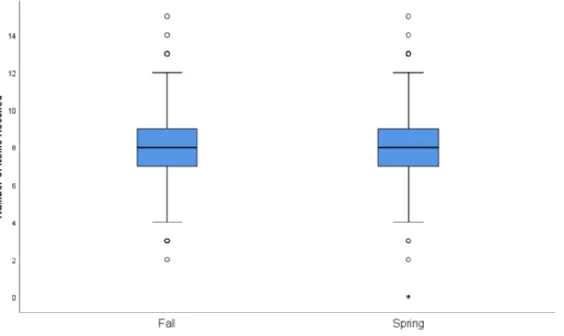
Figure 1 – Number of Items Recalled during the Object Memory Task
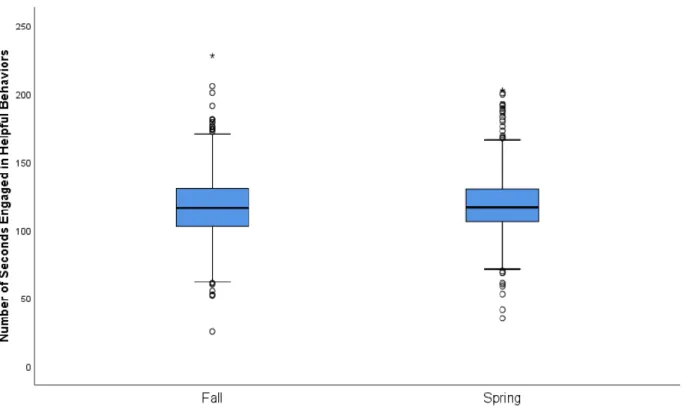
in the Fall and Spring………...………...127 Figure 2 – Amount of Time Spent Engaged in Helpful Behavior
during the Object Memory Task in the Fall and Spring…...………..…128 Figure 3 – Number of Items Recalled during the Free Recall with
Organizational Training Task in the Fall and Spring….………...………..……129 Figure 4 – Sorting ARC Scores during the Free Recall with
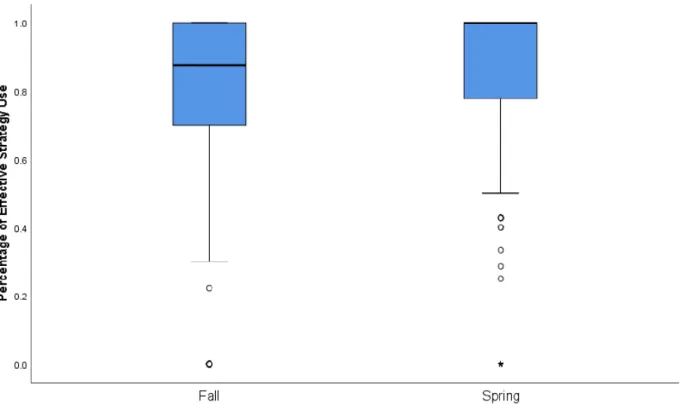
Organizational Training Task in the Fall and Spring………...……….……..……….130 Figure 5 – Number of Correct Answers Provided during the Mathematics Task………...131 Figure 6 – Percentage of Effective Strategy Use during the Mathematics Task………..…...…132 Figure 7 – Provision of CPL during Mathematics and Language Arts
Lessons Combined across Cohorts…………...……….……….142 Figure 8 – Provision of Instructional Activities and Memory Requests
during Mathematics and Language Arts Lessons by Cohort...………...………143 Figure 9 – Provision of CPL during Mathematics Instruction by Cohort…………..…………..145 Figure 10 – Provision of Instructional Activities and Memory Requests
during Mathematics Instruction by Cohort………….……….….147 Figure 11 – Provision of Cognitive Structuring Activities and
Memory Requests during Mathematics Instruction by Cohort….………149 Figure 12 – Provision of CPL during Language Arts Instruction by Cohort…….………..150 Figure 13 – Provision of Instructional Activities and Memory Requests
during Language Arts Instruction by Cohort………...…………..……….151 Figure 14 – Provision of Metacognitive Questions
during Language Arts Instruction by Cohort……….………...………152 Figure 15 – Provision of Metacognitive Information and Memory Requests
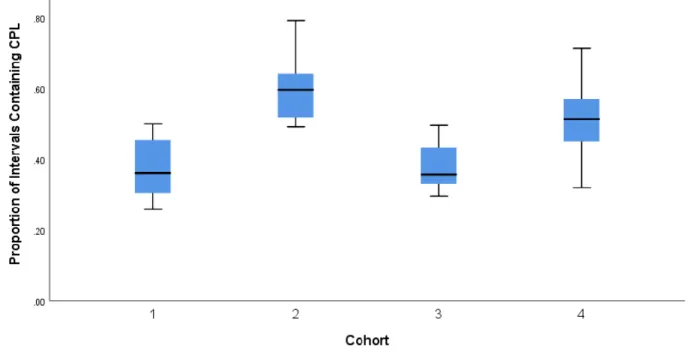
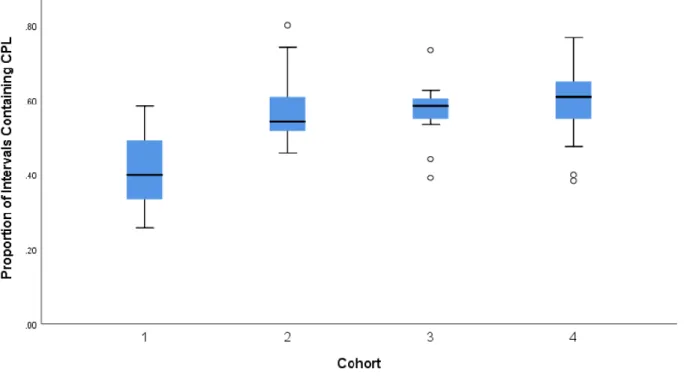
during Language Arts Instruction by Cohort…………...………....….153 Figure 16 – Provision of CPL during Mathematics and Language Arts Instruction…………...154 Figure 17 – Percentage of Intervals Containing CPL among “Low” and “High”
xv
LIST OF ABBREVIATIONS CPL Cognitive Processing Language
1
INTRODUCTION
Throughout the preschool and elementary school years children’s performance improves
across a range of cognitive domains. In the areas of memory and mathematics, in particular, these gains in performance are paralleled by corresponding changes in children’s strategy use. To
illustrate, consider the systematic transition from using passive or relatively simple techniques to employing more sophisticated and efficient strategies to meet task demands (Ornstein, Haden, & Elischberger, 2006; Schneider & Pressley, 1997). On deliberate memory tasks, for example, this transition is marked by a shift away from the use of simple single-item rehearsal techniques toward the adoption of more sophisticated multi-item rehearsal procedures to aid in performance (Lehmann & Haselhorn, 2010; Lehmann & Hasselhorn, 2012; Ornstein & Naus, 1978). To illustrate, when presented with a list of to-be-remembered words, younger children tend to rehearse each item alone as it is introduced, (e.g., table, table, table) whereas older children engage in cumulative rehearsal by repeating several previously presented stimuli together (e.g.,
table, car, flower) (Ornstein, Naus, & Liberty, 1975).
A similar pattern of development has been documented in the mathematics literature, whereby preschool-aged children evidence a shift away from concrete counting strategies, such as sum, in which both addends are first represented and then counted together, toward the more frequent use of abstract counting strategies, such as min, in which the sum is determined by counting-on from the cardinal value of the larger addend (Fuson, 1982; Siegler & Jenkins, 1989). Furthermore, across both domains, children’s strategy use becomes more effective over time,
2
tasks and greater accuracy in the context of mathematics tasks (Baker-Ward, Ornstein, & Holden, 1984; Bjorklund, 1987; Hudson, Coffman, Ornstein, 2018; Folds, Footo, Guttentag, & Ornstein, 1990; Lehmann & Hasselhorn, 2007; Siegler, 1987; Siegler & Robinson, 1982).
Given that improvements in performance and strategy use occur with age in both domains, it is important to consider which factors contribute to strategy acquisition and
refinement. A number of researchers have demonstrated that individual differences in behavioral self-regulation (Duckworth & Seligman, 2005; McClelland, Acock, & Morrison, 2006; Blair & Razza, 2007; Duncan et al., 2007) as well as environmental factors, such as early educational experiences (Coffman, Ornstein, McCall, & Curran, 2008; Grammer, Coffman, Sydney, & Ornstein, 2016; Hudson et al., 2018), are associated with the development of children’s cognitive
and academic skills. In order to understand more fully the origins and subsequent refinement of children’s strategy use it is imperative for future research to (1) examine strategy use across
multiple domains over time and (2) consider interactions between child-level characteristics and the classroom context. As illustrated above, distinct bodies of work document comparable patterns of improvement in children’s strategy use on memory and mathematics task over time. However, children’s performance on memory and mathematics task has yet to be examined
3
In this dissertation, I take advantage of a unique opportunity to integrate data from four cohorts of first-grade teachers and their students to examine questions about the association among teachers’ instructional language, children’s self-regulation, and children’s strategy use
that remain unaddressed in the existing body of research. This study represents the first attempt to examine the development of children’s strategy use within and across the domains of memory
and mathematics during the first-grade school year. In addition, the relatively large sample size that is achieved by combining multiple cohorts will provide a unique opportunity to describe the classroom context with greater specificity than has previously been possible.
In the sections that follow, I begin by presenting an overview of the foundational research on age-related changes in children’s strategy use in the domains of memory and mathematics. I then introduce findings from longitudinal and microgenetic studies that provide key insights into the developmental pattern of individual children’s strategy use over time. Following a review of the literature on strategy development, I establish the importance of children’s self-regulation in
the context of the classroom. I then review two distinct lines of research that have examined the influence of formal schooling experiences and more specifically, teachers’ instructional practices during the early elementary school years, on children’s developing cognitive skills. Finally, I
introduce the specific aims and hypotheses of the current project.
Age-related Changes in Strategy Use
During the elementary school years, children become increasingly facile at using
strategies across a range of problem-solving contexts. A strategy can be defined as any procedure that is (1) nonobligatory such that it does not represent the only way to solve a problem, and (2) goal directed, in that it is intended to accomplish a specified purpose (Flavell, 1979;
4
skills, a rich literature documents differences in children’s use of rehearsal (Ornstein & Naus, 1978), organization (Lange, 1978), and elaboration (Rohwer, 1973) strategies. In a separate literature, researchers have also identified a number of strategies that children acquire to solve simple arithmetic problems, such as fact-based retrieval, counting on from one, and
decomposition (Siegler & Jenkins, 1989).
Early depictions of strategy development are based on cross-sectional research designs that enable a characterization of the contrasting skills of children of different ages. Indeed, a considerable body of research demonstrates that as early as preschool children are quite strategic in the context of deliberate memory (Baker-Ward et al., 1984) and mathematics tasks (Siegler & Shrager, 1984). Moreover, early research on strategy use indicated that with age, children use increasingly sophisticated strategies more effectively. To illustrate, in the context of deliberate memory tasks, children systematically transition from employing relatively simple single-item techniques to more complex multi-item rehearsal procedures (Ornstein & Naus, 1978). When presented with a list of to-be-remembered words, younger children tend to rehearse each item alone as it is introduced, (e.g., table, table, table) whereas older children engage in cumulative rehearsal by repeating several previously presented stimuli together (e.g., table, car, flower) (Ornstein, Naus, & Liberty, 1975).
In one training study, Ornstein and colleagues (Ornstein, Naus, & Stone, 1977)
5
A control group, which served as a comparison of children’s spontaneous use of the rehearsal strategy was told to practice the items aloud. Age-related differences in recall were observed, as evidenced by greater recall by sixth-graders compared to second-graders in all three training conditions. Importantly, the recall of non-instructed second-graders was similar to the performance of children who were instructed to rehearse only one or two items together. In contrast, the recall performance of second-grade students who were instructed to rehearse many items together was enhanced, especially in terms of the initial list items, and more comparable in form to that of the non-instructed sixth graders.
Younger children are also less likely than older children to (1) organize related items into groups on the basis of meaning and to (2) make use of this organized grouping during recall in an attempt to maximize memory performance. Just as researchers were able to train students to use a verbal rehearsal strategy, a consistent body of literature demonstrates that children can also be trained to use organizational techniques to facilitate recall of low-associated items. In a series of three experiments, Bjorklund and colleagues demonstrated that in spite of age related differences in third- fifth- and seventh-grade students’ spontaneous use of organizational techniques, specific instructions to group items on the basis of meaning was sufficient to produce gains in recall (Bjorklund, Ornstein, & Haig, 1977).
Similar age-related changes in strategy sophistication have been observed for children’s arithmetic strategies. Initial research on children’s use of addition strategies suggested that
6
the larger addend, and by third or fourth grade, they are able to recall or retrieve the answer from memory – without using a specific strategy – for problems for which they know the answer. Empirical support for this trend was observed by Siegler (1987) who presented kindergarten, first grade, and second grade students with 45 addition problems. Clear age-related trends towards increasing use of retrieval and decreasing use of counting-all (e.g., counting each addend individually and then counting them together) were observed. Kindergartners used retrieval on 16% of problems whereas second-graders used retrieval on 45% of problems. In contrast, kindergartners used the counting all strategy on 22% of trials, whereas second-graders never used that strategy.
Across both domains older children are more likely to benefit from strategy use as
evidenced by improved recall and accuracy. Consider the findings reported by Baker-Ward et al. (1984) in which 4-, 5-, and 6-year-old children were given instructions to remember a set of items and then during a two minute study period were observed to be naming and visually examining the to-be-remembered objects. Despite using the same strategy for remembering, only the 6-year-olds demonstrated superior recall. Comparable findings have been reported in studies of children’s use of organizational strategies (see, e.g., Bjorklund, 1987; Folds, Footo, Guttentag,
& Ornstein, 1990). To illustrate, consider a study by Harnishfeger, Bjorklund, and Halleck (1986) in which third- and seventh-grade students received training in the use of an
7
Similar findings have been documented in studies of children’s strategy use and accuracy on addition tasks. Although accuracy improved on problems in which a strategy was used in general, Siegler and Robinson (1982) also reported that age-related differences in accuracy were present such that 3-year-olds solved 20% of problems correctly, in comparison with 66% of 4-year-olds and 79% of 5-4-year-olds. In a similar study of elementary school students’ use of arithmetic strategies, Siegler (1987) reported that the percentage of errors decreased from 51% for kindergartners to 5% for second graders.
Taken together, this body of cross-sectional work led researchers to conclude that strategy development proceeds in a gradual fashion, whereby older children use more advanced strategies and demonstrate more effective strategy use as evidenced by improvements in recall and accuracy. However, cross-sectional designs fail to consider variability in strategy use among different children of the same age and do not account for changes in individual’s strategy use over time. This led researchers to question whether the developmental course of strategy use had been mischaracterized (Schneider & Weinert, 1995; Schneider, Kron, Hunnerkopf, & Krajewski, 2004). As will be seen in the following section, the emergence of longitudinal and microgenetic evidence highlighted the inadequacy of traditional “staircase models” of development that
depicted development as a unidirectional progression toward increasingly sophisticated and consistently effective strategy use.
Strategy Use from a Developmental Perspective
In one of the first longitudinal studies of children’s cognitive competencies, the Munich Longitudinal Study on Individual Development (LOGIC), researchers assessed children’s use of
8
of development that is consistent with the findings reported in the cross-sectional literature, in terms of the extent to which children made use of organizational strategies and correlations between strategy use and recall that appeared to gradually increase over time.
However, additional analyses of the performance of individual children revealed that nearly 80% of children went from chance-level performance to near perfect organization between successive time points. In addition, strategy loss, or the failure to maintain the use of a strategy over time was also prevalent. Indeed, 70% of children who used an organizational strategy at the age 4 or 6 did not continue to use it at one or more later time points. In addition, considerable variation in the onset of children’s strategy use was also observed. Forty-percent of
children engaged in conceptual organization by age 6, 24% by age 8, 21% by age 10, and 5% as late as age 12 (Schneider & Sodian, 1997; Schneider & Weinert, 1995; Schneider et al., 2004; Sodian & Schneider, 1999; Weinert & Schneider, 1999).
Evidence from microgenetic research carried out by Siegler and his colleagues provides additional insight into the variability and flexibility of children’s strategy use in mathematics. As exemplified by Siegler’s (1996) overlapping waves theory, at any given age children have
available to them, and make use of, a variety of strategies. Indeed, as early as first grade the same child, given the same problem, will sometimes count from one, sometimes count from the larger addend, and sometimes retrieve the answer. Similarly, children will select different strategies to solve different problems on a trial-by-trial basis. Even when they have acquired more
sophisticated strategies, such as decomposition, children nonetheless continue to use older strategies that are slower and less accurate, such as shortcut sum, as well (Carpenter & Moser, 1982; Fuson, 1982; Ginsburg, 1982; Siegler, 2003). To illustrate, in a number of studies
9
presented with a series of addition problems, including retrieval, decomposition, and counting from one (Siegler, 1987; Siegler & Robinson, 1982). Although children increasingly use more advanced strategies over time, it is not the case that simple and inefficient strategies are replaced completely with complex and efficient ones. Rather, at any given time children’s strategic
repertoire can be characterized by a wavelike pattern that consists of more- and less-advanced strategies that coexist and seem to compete for use (Siegler, 1989, 1996).
In order to accurately capture this variability, Siegler (1987) warned against the dangers of averaging data across strategies as well as averaging data across individuals. To illustrate, in previous work Groen and Parkman (1972) observed that the size of the smaller addend was the best predictor of first-graders’ solution times on simple addition problems, which led them to propose that children of this age consistently use the min strategy (e.g., counting up from the larger addend) to solve such problems. To determine whether 5- to 7-year-olds consistently use the min strategy Siegler (1987) examined solution time as well as children’s verbal reports of
their strategy use on each trial. Importantly, when all problem-solving trials were analyzed together, the results were consistent with those reported by Groen and Parkman (1972) and indicated that the min strategy accounted for 76% of the variance in solution time. However, according to children’s verbal reports, a total of five different strategies were applied across
10
variance. However, on the remaining 64% of trials in which children reported using a strategy other than min, the size of the smaller addend was no long a predictor of solution times.
Siegler and Jenkins (1989) also demonstrate that generalizations about children’s use of
addition strategies that are based on averages of group data may not actually reflect how any single child solved a problem. Whereas all children evidence multiple strategy use, individuals vary considerably in the relative frequency with which different strategies are used. For example, some children used a single strategy on a majority of trials but the specific strategy that was predominantly used varied, whereas others did not use any single strategy on a majority of problems.
As evidenced by the findings reviewed above, individual trajectories of development may be obscured by cross-sectional data. Therefore, generalizations about the developmental course of strategy acquisition that are based on comparison across different age groups can be
unreliable. Longitudinal data, which reveal individual patterns of change, indicate that
developmental changes in strategy use may be more accurately characterized by nonlinear and dramatic leaps in performance, rather than gradual and unidirectional increases (Schneider & Sodian, 1997; Schneider & Weinert, 1995; Schneider et al., 2004; Sodian & Schneider, 1999; Weinert & Schneider, 1999). Evidence from microgenetic studies provide additional support for this nonlinear progression of skill and also demonstrate that children continue to use multiple strategies over an extended period of time (Siegler & Jenkins, 1989).
11
regulate their behavior to meet the learning- and task-oriented demands of the classroom is one factor that may influence strategy acquisition.
The Role of Behavioral Self-Regulation
Behavioral self-regulation involves the deliberate and flexible management of attentional resources, working memory, and inhibitory control (McClelland et al., 2007; Morrison, Ponitz & McClelland, 2010; McClelland & Cameron, 2011). These three elements are important for meeting school- and task-related demands, such as learning to following directions and persisting on difficult tasks. To illustrate, attentional flexibility involves the ability to ignore environmental distractions in order to focus on a particular task, such as listening to the teacher in a busy
classroom (Barkley, 1997; Rothbart & Posner, 2005). Working memory involves cognitively maintaining and manipulating information, such as remembering and then implementing a teacher’s instructions (Gathercole & Pickering, 2000; Kail 2003). Finally, inhibitory control aids
children in preventing or modifying an incorrect behavior in favor of a more adaptive response, such as remembering to raise his or her hand in class instead of shouting out (Diamond,
Kirkham, & Amso, 2002). Together, these components contribute to children’s ability to
successfully navigate learning environments by focusing their attention, remembering instructions, and controlling their behavior.
A large body of research indicates that children’s ability to effectively regulate their own behavior by controlling these three aspects of executive function is associated with their
academic success across multiple domains. To illustrate, in one longitudinal study researchers observed that higher teacher ratings of children’s self-regulatory skills in kindergarten predicted
12
al., 2006). In addition to teacher ratings, children’s performance on observational measures of
self-regulation has also been linked to academic achievement. In one study, researchers
administered the Head-to-Toes task in which preschool-aged children were instructed to do the opposite of what the experimenter said. For example, when the experimenter said “touch your head” instead of following the command, the child was instructed to touch his or her toes, and
vice versa. To be successful, children must apply the three cognitive skills associated with behavioral regulation to their overt motor movements by (1) focusing on instructions and commands, (2) using working memory to remember and execute new rules while processing commands, and (3) inhibiting the prepotent response in order to respond correctly (Ponitz, McClelland, Matthews, & Morrison, 2009).
Higher scores on the Head-to-Toes task, were correlated with greater achievement in literacy, vocabulary, and mathematics in the fall and spring of the prekindergarten year. Moreover, children who demonstrated greater gains on the Head-to-Toes task between the fall and spring also evidenced significantly greater gains on all three measures of academic
achievement compared to their peers who demonstrated less growth in self-regulation over the prekindergarten year (McClelland et al., 2007). Comparable findings have been reported in a kindergarten sample using the Head-Toes-Knees-Shoulders (HTKS) task, a more complex version that includes instructions corresponding to four body parts instead of two. Children’s
behavioral regulation skills, as evidenced by performance on the HTKS task in the fall predicted end-of-year achievement on measures of literacy, vocabulary, and mathematics. Additionally, after controlling for prior achievement, children who scored higher in self-regulation at
13
This literature consistently demonstrates that behavioral self-regulation skills are required for successfully navigating the demands of the classroom and are consequently predictive of academic success. If variations in children’s self-regulatory skill contribute to their ability to
learn in formal classroom settings then it is important to consider which aspects of the classroom environment may provide supportive opportunities for less-regulated students to remain actively engaged and benefit and from instruction. For example, it is possible that children who are less well-regulated may benefit from being in a classroom setting in which the teacher provides external supports through modeling or direct instruction to promote children’s attentional skills
and facilitate their awareness of their own thinking and problem-solving skills. School as a Context for Strategy Development
A growing body of researchdocuments the influence of the classroom context on the development of children’s cognitive skills. Among mathematics education researchers, there has been an increasing interest in teachers’ instructional practices, in response to standards-based
reform efforts that emphasize the importance teacher quality and effectiveness. A distinct but complementary body of research has emerged from a series of cross-cultural investigations of children’s memory development and emphasizes the role of formal schooling, and teachers’ instructional language more specifically, on the development of children’s strategy use in the
context of deliberate memory tasks.
14
1976; Vygotsky, 1978; Brown & Reeve, 1987) and the importance of scaffolded, social interactions for student learning.
Evidence from mathematics education literature. Over the last two decades,
researchers interested in the development of children’s mathematical skills have emphasized the role that teachers’ instructional language plays in the development of children’s mathematical competencies. One feature of instruction that has been considered is teachers’ use of
mathematically relevant language or “math talk” (Klibanoff, Levine, Huttenlocher, Vasilyeva, &
Hedges, 2006). Klibanoff and colleagues observed preschool teachers and coded the number of times that math-relevant language, such as references to counting, equivalence, or calculation, was included in classroom activities. Dramatic differences in the amount and diversity of math-related talk were observed across classrooms. During the hour-long observation interval, the amount of math input teachers provided ranged from 1 to 104 instances, and the type of input varied between 1 and 9 different types. Importantly, teachers’ math-talk was related to the growth of children’s mathematical knowledge over the school year, such that preschoolers who
experienced higher amounts of math talk evidenced greater growth in mathematical knowledge than their peers who experienced lower levels of math talk.
Beyond the amount of math talk to which children are exposed, findings from an observational study of preschool classrooms suggest that there is also variability in the type of mathematical content that teachers provide. Rudd et al. (2008) reported that lower-level
mathematical concepts such as a counting and labeling amount, describing location with spatial words (e.g., in, on, between), and using comparative words for size, length, or weight, are
15
items in groups. In a similar study, Engel, Classens, and Finch (2013) reported that kindergarten teachers teach basic counting and shapes nearly 13 days per month, whereas only 4 days per month are spent teaching addition and subtraction. Importantly, an analysis of the relation between mathematics content and student achievement revealed a negative association between teachers’ emphasis on lower-level concepts, such as counting and shapes, and end-of-grade mathematics test scores. Devoting additional days per month to teaching more advanced
concepts, such as place value, currency, addition, and subtraction, was positively associated with students’ end-of-grade mathematics test scores.
There is also evidence to suggest that in addition to the content of mathematical instruction, the nature of instruction is also important for student learning. In this regard, researchers have examined (1) the extent to which teachers and students co-construct a
mathematical dialogue that serves to promote students’ understanding of and ability to explain their own thinking, as well as (2) the influence of teachers’ understanding of children’s
mathematical thinking on their own instructional practices (Carpenter, Fennema, Franke, Levi, & Empson, 1999; Cobb, Boufi, McClain, & Whitenack, 1998). Productive mathematical discourse is fostered when teachers elaborate on student ideas, encourage students to generate, explain, and compare multiple problem-solving strategies, question student reasoning, and create
opportunities for justification and argumentation. Engaging in rich mathematics discourse has been linked to students’ ability to correctly answer and explain their problem-solving strategies
on a range of mathematical reasoning tasks (Webb et al., 2008; Webb, et al. 2013).
16
understanding of students’ mathematical thinking in order to improve instructional practices. In
the first CGI study, Carpenter and her colleagues (1989) examined the effect of CGI professional development on teachers’ knowledge, beliefs, and instruction. Not only did teachers who
participated in the professional development program demonstrate greater knowledge about their students’ thinking than did control teachers, but they also (1) placed greater emphasis on
problem solving skills and less on computational skills, (2) expected students to provide multiple strategies for problem-solving, and (3) listened to their students more. As a result, students in CGI classrooms evidenced significantly higher levels of achievement on measures of problem-solving skills than their peers in control classrooms.
Additional longitudinal research (Fennema, Carpenter, Franke, Levi, Jacobs, & Empson, 1996) provided confirmatory evidence of the effects of CGI on student outcomes. First, second, and third grade teachers who participated in a CGI workshop were followed for four years. Changes in the instructional practices of individual teachers were related to changes in their students’ achievement on measures of mathematical concepts, such as place value and solving
addition, subtraction, multiplication, and division problems. Moreover, the influence of CGI appeared to be cumulative, such that repeated exposure to CGI across multiple years of school led to greater gains in student achievement in the second and third years of the study (Carpenter, Fennema, Franke, Levi, & Empson, 2000; Fennema, et al., 1996).
The quality of classroom instruction has also been examined from a more global
17
metacognitive knowledge, (2) promote higher-order thinking skills, (3) use feedback to extend understanding, and (4) stimulate language development. In a series of studies, higher scores on the instructional support domain were shown to be positively associated with preschool
children’s performance on standardized math measures, such as the Applied Problems subscale
of the Woodcock Johnson Tests of Achievement (Keys et al. 2013; Burchinal et al., 2008; Crosnoe et al., 2010).
Additional findings reported by Mashburn and colleagues (2008) indicate that preschool children in classrooms that were rated as higher in the domain of instructional support also evidenced greater gains in mathematics achievement over the course of the year than their peers in classrooms that were rated lower on this domain. Similar findings were reported by Burchinal and colleagues (2010) who observed that the instructional support domain of the CLASS was positively associated with children’s math performance, such that children from classrooms that
scored higher on this domain tended to score higher on standardized measures of math achievement. In addition to documenting an overall effect of instructional quality on mathematics performance, Burchinal et al. (2010) also observed that the magnitude of the association varied in relation to the quality of teacher-child interactions. A series of spline regression models indicated that instructional quality, as measured by the CLASS, predicted children’s mathematics performance more strongly in higher quality classrooms than classrooms
in the low-to-average range.
Evidence from the memory development literature. Memory researchers began exploring the influence of formal schooling on children’s strategic development in a series of
18
children and concluded that school seemed necessary for the acquisition of these skills. To illustrate, in Morocco, researchers contrasted the performance of children matched in
chronological age but who differed in terms of whether or not they experienced Western-style schooling. Wagner (1978) observed that although memory capacity did not vary as a function of schooling experience, as evidenced by comparable rates of recall across both groups, only those students who attended school demonstrated the primacy effect in free recall, which suggests the use of a deliberate rehearsal strategy. Consistent findings were observed by Cole and his
colleagues in Liberia, such that only those children who attended government-sponsored secondary school made use of meaning-based organizational strategies during a free recall task (Sharp, Cole, & Lave, 1979). These findings suggest that there is something specific about the formal school context that facilitates children’s strategic behavior in the context of deliberate
memory tasks.
These initial findings of the impact of formal schooling were extended by researchers in the 1980s who began examining cross-national differences in educational practices between Germany and the United States (Carr, Kurtz, Schneider, Turner, & Borkowski, 1989; Kurtz, Schneider, Carr, Borkowski, & Rellinger, 1990; Schneider, Borkowski, Kurtz, & Kerwin, 1986). German teachers reported more direct instruction in the use of task-specific strategies, such as relating new information to old material, organizing, and elaboration, than did American teachers (Carr et al., 1989, Kurtz et al., 1990). Moreover, these differences in teachers’ strategy
instruction were paralleled by systematic differences in American’ and German children’s
19
than their American peers. Taken together, the results from cross-cultural and cross-national research suggest that formal schooling, in general, and teachers’ instructional language more specifically, are associated with the development of students’ strategic behaviors.
During the 1990’s additional efforts were made to examine the classroom context in
greater detail as researchers began conducting observations in elementary school classrooms that captured the linguistic nature of the social interactions that take place during the course of instruction. Mercer (1996) surveyed first grade teachers and found that although teachers consider memory to be important in their classrooms, they do not explicitly teach mnemonic skills. Consistent with these reports, observational evidence also suggested that direct strategy instruction is rare. Moely and her colleagues (1992) observed mathematics and language arts lessons in kindergarten through sixth grade classrooms and reported that teachers frequently seek correct answers (seen in an average of 32.3% of coded intervals), acknowledge student responses (27.8%), describe procedures (27.1%), and provide specific task-related information (26.1%). In contrast, teachers spent much less time teaching children about cognitive processes and strategies they could use to approach learning tasks. Teachers’ referenced potential strategies in 2.28% of
observed intervals and provided rationales or explanations of strategies in less than 1% (.47%) of intervals. Ten percent of the teachers in the study did not provide any strategy instruction during the observationf period. These findings demonstrate that although strategy instruction is rare, there is nonetheless considerable variability across teachers.
20
arts instruction that promotes the deep processing of information by encouraging students to actively monitor and assess their own thinking and understanding. Differences across teachers in the use of these language forms were captured in Coffman et al.’s measure of Cognitive
Processing Language (CPL)1. To illustrate, using a median split, Coffman and her colleagues observed that in classrooms taught by high CPL teachers an average of 7.32% of coded intervals contained a strategy suggestion, such as “You can use a tens frame to help you solve the
problem,” and that 6.90% of intervals contained metacognitive language, such as “Who can think of another way we could solve this problem?” Low CPL teachers, in constrast, provided strategy
suggestions (2.50% of intervals) and engaged in metacognitive questioning (2.86% of intervals) comparatively less often than their high CPL colleagues.
In addition to examining the frequency with which teachers employ various types of instructional language, Coffman et al. (2008) also explored associations between teachers’ use of CPL and their students’ strategy use in the context of deliberate memory tasks over the course of
the first-grade year. Consider students’ performance on a Free Recall with Organizational Training task (Moely et al., 1992) in which the children were presented with 16 pictures drawn from four semantically related categories (e.g., spoon, fork, cup, bowl) and instructed “to work to remember them.” Following a baseline trial, each child was trained to organize the cards into
meaning-based groups during the study period and during recall. After a 15-minute delay, children completed a generalization trial using a new set of pictures. At the first assessment point in the fall of first grade, children’s performance on the baseline and generalization trials did not vary as a function of teachers’ use of CPL. However, differences in children’s response to
training were evident on generalization trials at the second and third time points, such that
1Coffman et al. (2008) referred to the measure as Mnemonic Style but it has since been relabeled as Cognitive
21
children whose teachers used more CPL during instruction were more likely to sustain the use of an organizational strategy following a training trial than their peers taught by teachers who used less CPL.
A comparable pattern of results was reported for children’s performance on an Object
Memory task (Baker-Ward et al., 1984) that was designed to assess the types of strategies that children employ as they attempt to remember a set of low-associated stimulus objects. The amount of time that children spent engaged in strategic behaviors such as visual examination, naming, or making verbal associations was recorded (See Table 1 for a complete list of strategic behaviors). As expected, there were no differences between children’s performance as a function of teachers’ language at the beginning of first-grade, but by the end of the year, teachers’ use of CPL was associated with children’s recall and strategy use. Children exposed to greater amounts
of CPL remained engaged in strategic behaviors for a longer period of time during the 2-minute study period and had higher recall scores, than their peers who experienced lower levels of CPL.
In the most recent set of studies, Coffman, Ornstein, and their colleagues have extended their examination of the association between teachers’ instructional language and children’s developing memory skills to include measures of children’s academic achievement and
indicators of strategy use on mathematics and study skills tasks. Grammer, Coffman, Sydney, and Ornstein (2016) demonstrated that the extent to which teachers incorporate CPL into mathematics lessons is related to growth in students’ math achievement over the course of
22
students’ strategy use on mathematics and study skills tasks. Kindergarten students who were
exposed to greater amounts of CPL were more effective at using addition strategies to correctly solve single-digit addition problems than their peers who experienced lower levels of CPL
(Hudson et al., 2018). Moreover, data from a longitudinal investigation revealed that exposure to CPL during the first grade has a sustained impact of on children’s strategic skill later in
elementary school. Indeed, first grade teachers’ use of CPL predicted children’s use of study
strategies, such as highlighting or underlining, notetaking, and self-testing during fourth grade (Coffman et al., 2018).
In addition to the observational work carried out in elementary school classrooms, Grammer et al. (2013) carried out an experimental study in after-school programs in order to determine if there was a causal linkage between teachers’ instructional language and children’s
performance. In this study, first and second graders participated in a two-week LEGO-based science and engineering unit involving Things that Move. Although the activities and material covered in the lessons were the same for all participants, the language used by the teachers to present the content was manipulated in a manner that captured the higher versus lower levels of CPL used by teachers in the Coffman et al., 2008 study. The results of this experiment
demonstrate that all students acquired new factual knowledge as a result of instruction, but also that those students assigned to receive higher CPL exhibited greater levels of strategic
23
as evidenced by the extent to which the cards were sorted into meaning-based groups (e.g., all gears placed together, regardless or color or shape).
The Present Study
As illustrated above, similar patterns of strategy development have been consistently documented in memory and mathematics research. Moreover, during the last two decades,
observational and experimental findings from the Classroom Memory Study consistently indicate that the instructional context of the early elementary school classroom is associated with the emergence and refinement of children’s strategic skill in both domains. However, due to the time
intensive nature of collecting and coding observational data at both the student- and teacher-level, investigations of the classroom context have been limited to relatively small sample sizes. To illustrate, in the original examination of the first-grade classroom Coffman et al. (2008) recruited 107 students from 14 classrooms. Similar samples were recruited in later replication studies, ranging from 87 students recruited from 14 classrooms to 130 students recruited from 17 classrooms. As a result of the relatively small sample of classrooms in which observations have been carried out in each of these studies, researchers have relied on the use of a median split to form groups of teachers based on contrasting levels of CPL. In the current project, data collected from four cohorts of first-grade teachers and students between the 2002-2003 and 2015-2016 academic year are combined. By making use of multiple samples, it should be possible to capitalize on a larger sample size and to examine teachers’ provision of CPL in a continuous fashion.
In addition to characterizing the context of the first-grade classroom, several indicators of children’s performance are also being examined. More specifically, children’s performance is
24
use in both domains. In the existing literature, little is known about how children’s strategic
competence develops across domains over time. This question is being addressed in a
preliminary fashion in this study by examining associations in performance within and across domains at the beginning and end of the year. Finally, observational measures of children’s
self-regulation are included to determine whether child-levels factors moderate the effect of teachers’ CPL on student outcomes. As outlined in the following section Aims 1-4 are descriptive in nature and are included to provide relevant background information about (1) the patterns of association between children’s performance and strategy use across the first-grade year and (2)to
characterize the general instructional context of first-grade classrooms over time and across subject matter domain. Aims 5 and 6 address more substantive analytic questions regarding the effect of child-level and teacher-level effects on student performance. Specific aims are outlined below.
Aim 1: To describe children’s developing competencies in memory and mathematics across first grade.
Hypothesis 1: Children will demonstrate greater recall on the Object Memory Task and the Free Recall Task with Organization Training at the end of the first grade in comparison to their initial performance at the beginning of the year. Hypothesis 2: Children’s strategy use on OBJ will improve over the course of first grade as evidenced by increases in the amount of time that children spend
engaged in strategic behaviors during the two-minute study period.
25
higher sorting ARC scores at the end of first-grade in comparison to the beginning of the year.
Hypothesis 4: Children will answer more problems correctly on the mathematics task at the end of the first grade in comparison to their initial performance at the beginning of the year.
Hypothesis 5: Children will use addition strategies to solve problems correctly more frequently at the end of first-grade than they do at the beginning of the year. Aim 2: To examine the association among recall, accuracy, and strategy use within and across domains at the beginning and end of first grade.
Hypothesis 1: A significant positive association between strategy use and recall during both memory tasks and strategy use and accuracy during the mathematics task is expected to be observed in both the fall and spring. The strength of this association is expected to increase over the course of the year as strategy use becomes less cognitively demanding over time.
Hypothesis 2: At both time points, correlations between strategy use within domain are expected to be higher than correlations between strategy use across domains. The amount of time that children spend engaged in “helpful” strategic
behaviors FRT task are expected to be more highly correlated with each other than with children’s effective strategy use on the addition task. Similarly, children’s performance is expected to be more strongly correlated within task,
26
Hypothesis 3: Correlations between strategy use, both within and across domains, are expected to increase across the year.
Aim 3: To describe the types of language that teachers use during instruction, including their use of CPL.
Hypothesis 1: Teachers’ instructional language will predominantly consist of providing general information as well as task specific information. Teachers will also spend a considerable amount of time making connections with previously learned material and asking students to remember information. Teachers will provide comparatively less metacognitive language during the course of instruction.
Aim 4: To identify potential cohort effects between the four cohorts of teachers in terms of whether the provision of CPL changed between 2002-2003 and 2015-2016 school years?
Hypothesis 1: Overall CPL scores are expected to increase over time as a result of the introduction of the Common Core (NGACBP, 2010) which emphasizes higher-order thinking. More specifically, rates of cognitive structuring activities, strategy suggestions, metacognitive questions, and memory requests paired with metacognitive information are expected to increase over time.
Aim 5: To compare the provision of CPL during mathematic and language arts instruction.
27
more explicit emphasis on strategy use during mathematics identified by the Common Core (NGACBP, 2010)
Aim 6: To examine linkages between students’ self-regulation, teachers’ use of CPL and students’ strategic behaviors and performance in memory and mathematics at the
beginning and end of first grade.
Hypothesis 1: Children’s strategy use and performance on each task is expected to vary as a function of self-regulation at the end of first grade, such that more highly regulated students will demonstrate better performance compared to their less well-regulated peers.
Hypothesis 2: Children taught by teachers who use greater amounts of CPL will evidence greater strategy use and performance on memory and mathematics tasks than their peers taught by teachers who use less CPL at the end of the year. Hypothesis 3: A significant interaction is expected between students’ self-regulation skills and teachers’ use CPL, such that CPL will be more strongly
28 METHOD Sample and Demographics
Data were collected across four cohorts of first-grade teachers in the Durham Public Schools and the Chapel Hill-Carrboro City Schools. With the assistance of the administrations of these two public school systems, first-grade teachers were recruited to participate in the study. The teachers were told that the purpose of the study was to examine the classroom as a context for children’s cognitive development and agreed to be observed as they taught
regularly-scheduled lessons in mathematics and language arts. Letters were sent to families of all children in the participating classrooms, and any student who returned a consent form was enrolled, with no criteria for exclusion.
29
as Caucasian, 26% as African-American, 15% as Asian, 10% as Mixed ethnicity, and 4% as Hispanic. Of the total sample, 26 children (24%) received free or reduced lunch at school2.
The second cohort of teachers was recruited during the 2010-2011 school year from four elementary schools, two schools in each district. A sample of 17 first-grade teachers agreed to participate. All of the teachers were female – 14 Caucasian and 3 African-American – and their average age was 38 years (range 22-62). They had a mean of 11 years of teaching experience (range 1-26), with an average of 6.2 years of teaching first grade (1-18). Twelve of the teachers’ received Bachelor’s degrees and five had Masters degrees. A second cohort of 130 first-graders,
69 boys and 61 girls, was recruited during the 2010-2011 school year. At the initial time point the children’s mean age was 81 months (range 72-95) or 6 years, 9 months. The diversity of the
sample was representative of two school systems from which the participants were drawn, with 43% of families describing their ethnicity as Caucasian, 21% as African-American, 16% as Hispanic, 12% as Mixed ethnicity, and 8% as Asian. Of the total sample, 29 children (22%) received free or reduced lunch at school.
During the following academic year, 2011-2012, a third cohort of first-grade teachers was recruited from four elementary schools, all in the Chapel Hill-Carrboro school district. A sample of 15 teachers was recruited. All of the teachers were female – 11 Caucasian, 2
African-American, 1 Hispanic, and 1 Native American – and their average age was 36 years (range 24-60). They had a mean of 12.6 years of teaching experience (range 1-30) with an average of 6.9 years of teaching first grade. Five of the teachers held Bachelor’s degrees, eight of the teachers
had Masters degrees, and two teachers declined to report their level of education. A sample of 100 children, 50 boys and 50 girls, participated. At the initial time point the children’s mean age
2 Data from Cohort 1 were collected during the 2002-2003 school year and findings have been previously reported
30
was 78 months (range 60-84) or 6 years, 6 months. The diversity of the sample was
representative of the Chapel-Hill Carrboro City Schools from which the participants were drawn, with 62% of families describing their ethnicity as Caucasian, 15% as Hispanic, 10% as Asian, 7% as Mixed Ethnicity, and 6% as African-American. Information about which students received free or reduced lunch at school was not collected.
The fourth cohort of teachers was recruited during the 2015-2016 school year. A sample of 14 teachers from four elementary schools in the Chapel Hill-Carrboro City Schools
participated. All of the teachers were female – 12 Caucasian and 2 African-American. Eleven of the 14 teachers completed demographic information. Their average age was 35 years (range 24-53) and they had a mean of 11.8 years of teaching experience (range 2-49) with an average of 5.5 years of teaching first grade. Seven of the teachers held Bachelor’s degrees, and four of the them
had Masters degrees. A final cohort of 87 first-graders, 45 boys and 42 girls, was recruited during the 2015-2016 school year. At the initial time point the children’s mean age was 82 months (range 71-90) or 6 years, 9 months. The diversity of the sample was representative of the Chapel-Hill Carrboro City Schools from which the participants were drawn, with 66% of
families describing their ethnicity as Caucasian, 11% as Mixed ethnicity, 7% as Asian, and 6% as African-American. Information about which students received free or reduced lunch at school was not collected.
31
the initial time point the children’s mean age was 80 months (range 60-95) or 6 years, 7 months.
Fifty-two percent of families described their ethnicity as Caucasian, 18% as African-American, 10% as Hispanic, 10% as Asian, and 10% as Mixed ethnicity. As indicated above, information about whether students qualified for free or reduced lunch was only collected in Cohorts 1 and 2, in which a total of 55 children (23%) received such assistance.
Procedures and Measures
Extensive classroom observations were carried out in each of the participating first-grade classrooms, focusing on the extent to which teachers used language that encouraged deep levels of processing and metacognitive awareness during instruction. Consistent with previous work, a total of 60 minutes of mathematics instruction and 60 minutes of language arts instruction was observed in each classroom (Coffman et al., 2008). Across the four cohorts, individual
mathematics and language arts lessons ranged from 2 .5 to 30 minutes, and it took from two to nine visits per subject, per classroom to complete the observations. Lesson topics in mathematics ranged from counting and addition to patterns and shapes. In language arts lesson topics range from verb tenses and digraphs to main ideas and using graphic organizers. This variety allowed for a broad characterization of teachers’ instructional language across different topics and
content areas. In Cohort 1, classroom observations were live coded, whereas in Cohorts 2, 3, and 4 classroom observations were videotaped for subsequent analysis using the Taxonomy of
Teachers Behaviors.
32
information), cognitive structuring activities (fostering engagement with the materials in order to promote encoding and retrieval of information), memory requests (asking students to retrieve previously acquired information or plan for future assessment), and metacognitive information (providing or requesting information that might facilitate future performance on cognitive tasks in the classroom).
Instructional activities. Instruction codes were used in intervals when the teacher provided the class with specific task information or instructions for performing a particular activity, such as how to form the letter W; general information through the presentation of new factual material, such as defining what a homonym is; a prospective summary of upcoming events or lessons, such as describing the order of the morning’s activities; or if she engaged in
book reading or read from any other written source, such as a poem or class worksheet, for more than a single phrase.
Cognitive structuring activities. Cognitive structuring activities codes were employed when teacher instruction directed student attention to the ongoing lesson and encouraged student engagement with materials in ways that are known to facilitate deeper processing, which is associated with improved recall (Craik & Lockhart, 1972). Attention regulation was coded when teachers focused the attention of children for the purpose of behavioral control or in the service of imminent instructional goals. For example, “eyes on me” would be coded as an instructional goal where as “everyone should be sitting criss-cross applesauce” would be coded as a
behavioral goal. Massed repetition was used any time a teacher instructed students to perform an activity in unison, such as singing a song or reading a phrase together. The identifying features