PROTECTING AMERICAN HEALTH FROM CLIMATE CHANGE: WHAT IS NEEDED TO EXPAND ADAPTATION PLANNING BY U.S. STATE AND LOCAL HEALTH
DEPARTMENTS?
Alexandra Zuber
A dissertation submitted to the faculty at the University of North Carolina at Chapel Hill in partial fulfillment of the requirements for the degree of Doctor of Public Health in the Department of Health Policy and Management in the Gillings School of Global Public Health.
Chapel Hill 2018
ABSTRACT
Alexandra Zuber: Protecting American Health from Climate Change: What is Needed to Expand Adaptation Planning by U.S. State and Local Health Departments?
(Under the direction of Rebecca Slifkin)
Over the last decade, there have been growing calls for national and local governments to adapt to a changing climate to protect human health. Due to the shift in U.S. federal climate policy under the Trump Administration, leadership for this climate and health adaptation rests increasingly among state, local and tribal health authorities. These authorities need effective strategies for planning climate and health adaptation in funding-constrained environments. This study proposes an adapted model for planning climate and health adaptation among state and local health departments, based on a review of existing efforts in the U.S., with a particular focus on the U.S. CDC’s Building Resilience Against Climate Effects (BRACE) model employed in the CDC-funded Climate Ready States and Cities Initiative (CRSCI).
Study methods comprised: a literature review of existing adaptation efforts in the U.S.; analysis of 11 CDC interviews with CRSCI grantees; and 11 online, videoconference focus group discussions with 46 city and county health officials. The study characterizes the key inputs and processes involved in BRACE implementation by 9 states and 2 cities, revealing key
challenges and enabling factors that influenced successful climate and health adaptation
ACKNOWLEDGEMENTS
This study would not have been possible without the “power” committee I was fortunate to have. I want to first and foremost acknowledge my Chair, Rebecca Slifkin, who provided the perfect balance of support, guard-rails, critical insight, and flexibility for me to accomplish this project. I have tremendous gratitude for George Luber, whose vision and commitment of time and energy, and the resources of his team, made this study possible. I am forever honored and grateful to Kris Ebi, whose unparalleled subject matter expertise was a critical input to the quality of the study. And I am so very thankful for Leah Devlin and Ed Baker, who each offered critical recommendations to the project that changed the trajectory of the study in positive ways, and who were an endless source of positive support and motivation.
TABLE OF CONTENTS
LIST OF TABLES ... xi
LIST OF FIGURES ... xii
LIST OF ABBREVIATIONS ... xiii
CHAPTER 1: INTRODUCTION ... 1
CHAPTER 2: LITERATURE REVIEW ... 7
Methods... 7
Results ... 10
Surveys of state and local health departments ... 11
Examples of state and local climate and health adaptation planning ... 17
Discussion ... 23
Quality and study limitations ... 27
CHAPTER 3: METHODS ... 30
Dissertation aims and research questions ... 30
Aim 1: Assess the experiences of state and local health departments in the U.S. to date in climate and health adaptation planning ... 30
Aim 2: Consulting stakeholders on an adapted CDC BRACE model ... 31
Aim 3: Providing a plan for change ... 31
Conceptual framework ... 32
Definition of terms ... 34
Methods... 36
Study design... 36
Analysis ... 42
CHAPTER 4: RESULTS OF CRSCI INTERVIEWS ... 46
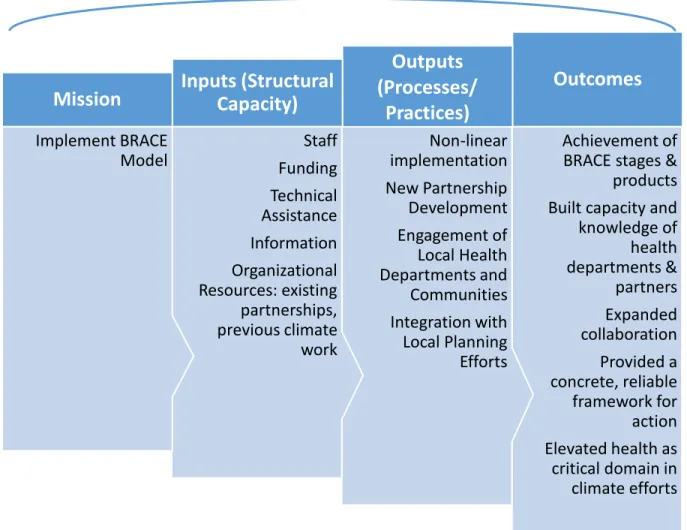
Characterizing BRACE implementation with the adapted handler, et al framework ... 46
Macro-environment ... 47
Mission ... 49
Inputs (structural capacity) ... 49
Outputs (processes/practices) ... 56
Outcomes ... 62
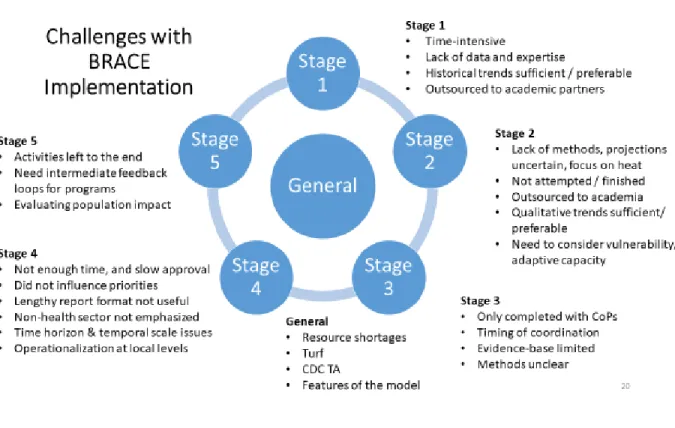
Documenting CRSCI grantee challenges and enablers to implementing the BRACE model ... 67
Challenges ... 67
Enablers ... 84
CHAPTER 5: RESULTS OF FOCUS GROUP DISCUSSIONS... 88
CRSCI grantees focus groups ... 89
Improvement idea #1: Downscale activities for LHDs in stages 1 and 2 ... 91
Improvement idea #2: Outsource stage 3 to CDC ... 95
Improvement idea #3: Integrate climate and health into existing local planning processes vs. a stand-alone plan ... 96
Improvement idea #4: Add new dimensions to the BRACE model ... 97
Improvement idea #5: Simplify evaluation activities ... 100
Improvement idea #6: Provide guidance for how the BRACE model can be institutionalized ... 101
Improvement idea #7: Collaborate at the federal level with other CDC programs ... 101
Improvement idea #8: Role of state in supporting LHDs ... 102
Key finding #1: Diverse and fragmented climate and health activities are already underway at local levels, with priorities on health equity,
flooding, and mosquito control ... 105 Key finding #2: Local health officials want flexibility to focus on a
singular, pre-existing climate hazard or health impact priority in the
BRACE planning process ... 108 Key finding #3: CDC was most commonly referenced as the most
helpful federal agency or national entity to local health department
climate and health adaptation efforts ... 108 Key finding #4: Local health officials in the study have strong
interest in BRACE climate and health adaptation process, especially
county health departments ... 109 Key finding #5: Use of alternative language to “climate change” is
needed by many local health officials to advance climate and health
activities ... 109 Key finding #6: Competing local government priorities and limited
staff and funding are greatest operational challenges local health
officials anticipate to implement BRACE ... 110 Key finding #7: The recommended leadership for climate and health
adaptation planning at local levels differs by jurisdiction, and is not
always in the health department or government ... 112 Key finding #8: Participants identified four key capacity areas
needed to implement BRACE ... 113 Key finding #9: Optimal format for capacity-building is direct peer
exchange with other similar jurisdictions, and through a CDC central
repository ... 114 Key finding #10: Guidance is needed on how to effectively form
partnerships with new, non-traditional partners outside of the health
sector, map stakeholder interests, and engage communities ... 115 Key finding #11: Local funding opportunities are limited, but local
health officials see opportunities to strengthen federal funding
through increased collaboration ... 117 Key finding #12: Availability and use of weather data and
Key finding #14: Most local health officials welcome their state governments to provide funding, convening, and technical assistance,
but some see their state governments as a barrier to progress ... 121
CHAPTER 6: DISCUSSION ... 124
CHAPTER 7: PLAN FOR CHANGE ... 145
Recommendations ... 145
Recommendation #1: Downscale and consolidate stages 1-3 in to one domain ... 146
Recommendation #2: Implement stage 3 at CDC, using CDC staff ... 147
Recommendation #3: Advance more standardized evaluation practices at national and local levels ... 148
Recommendation #4: Outsource stage 2 to academic partners through a funded agreement ... 150
Recommendation #5: Improvements to CDC technical assistance ... 152
Recommendation #6: Focus adaptation planning (stage 4) on integration with local planning processes ... 153
Recommendation #7: Coordinate with other CDC units to mainstream climate in to other vertical health initiatives, in particular emergency preparedness ... 154
Recommendation #8: Add a stage / domain on stakeholder mobilization and community engagement ... 155
Proposed BRACE model ... 156
Implementation strategy... 159
Role of the P.I. in the plan for change and dissemination of study results ... 165
Alternative leadership scenario: National Climate and Health Adaptation Campaign ... 165
Limitations of the study and plan for change ... 168
CHAPTER 8: CONCLUSION ... 170
APPENDIX 2: SUMMARY OF INCLUDED ARTICLES: STATE AND
LOCAL HEALTH DEPARTMENT SURVEYS ... 173
APPENDIX 3: SUMMARY OF INCLUDED ARTICLES: EXAMPLES OF STATE AND LOCAL HEALTH DEPARTMENT CLIMATE AND HEALTH ADAPTATION PLANNING FOR HEALTH... 175
APPENDIX 4: CDC CHP INTERVIEW PROTOCOL FOR CRSCRI GRANTEES ... 176
APPENDIX 5: FOCUS GROUP DISCUSSION GUIDE ... 181
APPENDIX 6: FOCUS GROUP CONSENT FORM ... 184
APPENDIX 7: CODEBOOK CRSCI INTERVIEWS ... 187
APPENDIX 8: CODEBOOK B (CRSCI GRANTEES) ... 203
APPENDIX 9: CODEBOOK C (NON-CRSCI GRANTEE LOCAL HEALTH DEPARTMENT FOCUS GROUPS) ... 213
APPENDIX 10: RECOMMENDATIONS FROM CRSCI GRANTEE INTERVIEWS ... 230
APPENDIX 11: EXAMPLE OF DATASETS THAT COULD BE PROVIDED IN ADAPTATION GUIDANCE ... 237
APPENDIX 12: EXAMPLE OF GUIDANCE ON STAKEHOLDERS FOR ADAPTATION PLANNING ... 238
APPENDIX 13: EXAMPLE GUIDANCE ON LOCAL PLANNING INSTRUMENTS FOR ADAPTATION PLANNING... 239
LIST OF TABLES
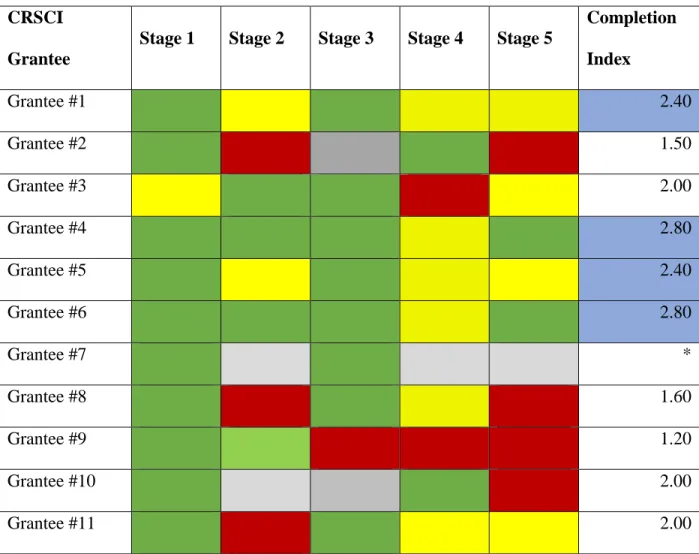
Table 1. BRACE Stage Achieved by 11 of 18 CRSCI Grantees as of August,
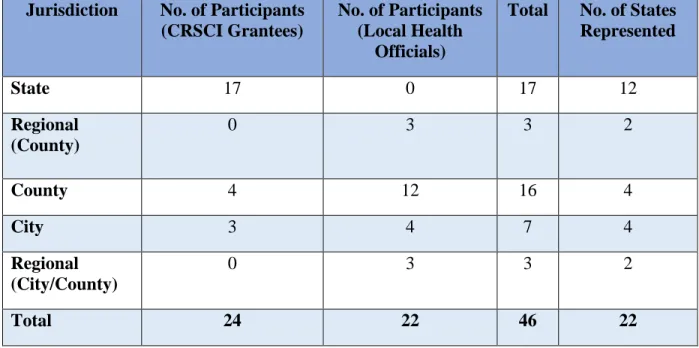
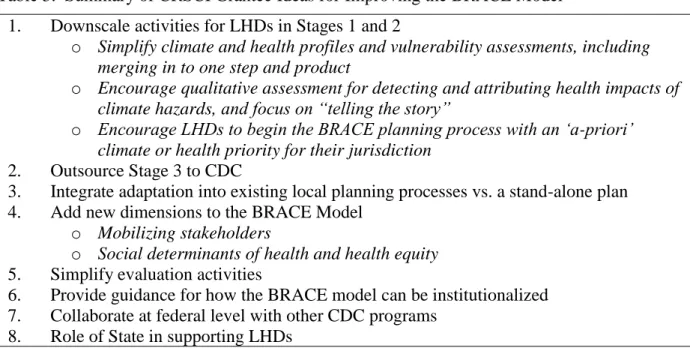
2016... 63 Table 2. Description of Study Participants in Focus Group Discussions ... 89 Table 3. Summary of CRSCI Grantee Ideas for Improving the BRACE Model ... 91 Table 4. Summary of Key Findings from the Non-Grantee Local Health Officials
Focus Groups ... 106 Table 5. Summary of Recommendations to CDC in Order of Priority ... 145 Table 6. Implementation Strategy for this Study’s Plan for Change (adapted from
R. Chiang, 2017) ... 161 Table 7. Summary of Alternative Leadership Scenario for Advancing Study
Findings: National Climate and Health Adaptation Campaign ... 167 Appendix Table 1. Recommendations for the BRACE Model of CRSCI Grantees
by Frequency of Citation ... 230 Appendix Table 2. CRSCI Grantee Recommendations for Future CHP Assistance
LIST OF FIGURES
Figure 1. Modified PRISM Diagram for Article Inclusion... 9 Figure 2. Building Resilience Against Climate-related Health Effects (BRACE)
Framework ... 32 Figure 3. Community Health Engagement in the Context of Public Health
Emergency Preparedness (PHEP) System Performance (adapted from Hander et
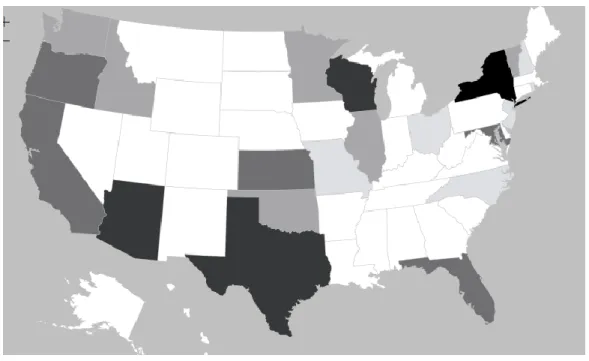
al, 2001) ... 33 Figure 4. Summary of Study Design Phases ... 36 Figure 5. Map of Total Study Participants, by State ... 42 Figure 6. CRSCI Grantee Health Systems Performance in BRACE
Implementation, adapted from Schoch-Spana et al, 2013 ... 47 Figure 7. Challenges with BRACE Implementation... 68 Figure 8. Climate and Health Adaptation Priorities Among City and County
Health Departments Represented in the Study ... 107 Figure 9. Areas of Opportunity for Integrating BRACE in to Local Planning
Processes ... 120 Figure 10. Hierarchical Table of Roles State Government Can Play to Support
Climate and Health Adaptation Planning Among Local Health Officials ... 122 Figure 11. Proposed BRACE Model for Climate and Health Adaptation among
LIST OF ABBREVIATIONS ASPPH
ASTHO BRACE
American Schools and Programs of Public Health Association of State and Territorial Health Officials
Building Resilience Against Climate-Related Health Effects CDC CHP CoP CRSCI CSTE COP21 EPA
U.S. Centers for Disease Control and Prevention CDC Climate and Health Program
Community of Practice
Climate Ready States and Cities Initiative Council of State and Territorial Epidemiologists United Nations Conference of the Parties, 21st Session Environmental Protection Agency
EU IAHAs
European Union
Insular Health Agencies LHDs NACCHO NASA NOAA NIH NWS WHO
Local Health Departments
National Association of County and City Health Officials National Aeronautics and Space Administration
National Oceanic and Atmospheric Administration National Institutes of Health
CHAPTER 1: INTRODUCTION
On December 21, 2015, global policymakers convened in Paris, France for the global United Nations Climate Change Conference of the Parties (COP21), to develop an agreement to curb the increase in global warming to a target of no more than 2 degrees Celsius from pre-industrial levels. This agreement calls on countries, when taking action on climate change, to “respect, promote, and consider….the right to health”.1 This reference, according to Dr. Maria Neira, Director of the World Health Organization’s (WHO) Department of Public Health, Environmental and Social Determinants of Health Division, was a “critical step forward” for human health, reflecting a “growing recognition of the inextricable linkage between health and climate.”2 Following this summit, in July, 2016, WHO hosted the second “Global Conference on Health and Climate”, where heads of state, scientific officials, and practitioners gathered to discuss the implication of COP21 on global health action.3
These recent global fora punctuate the widespread scientific consensus that has been established over the last two decades of the harmful effects of climate change on human health.4– 7 The increase and variability of temperature, precipitation (i.e. floods and droughts), air
pollution, extreme weather events (i.e. hurricanes, storm surges) and sea-level rise due to greenhouse emissions increase human exposure to injuries, heat and cold-related illness, vector-borne disease, water and food-vector-borne contaminants, food shortages and malnutrition,
malnutrition, malaria, diarrhea, and heat stress, and cost $2-4 billion in health-related costs by 2030.9
Global stakeholders have strongly called upon countries to take action to protect human health from these climate-related risks.8,10–16 Policy options include mitigation- interventions taken to reduce or offset greenhouse gas emissions that cause anthropogenic climate change- and adaptation- interventions taken to reduce the impact, or exploit the benefits, of climate change on human health and well-being.17 In 2015 guidance, WHO indicates that mitigation is
necessary for long-term protection of human health, however short to medium term health impacts can be prevented through adaptation efforts.18 In 2008 the World Health Assembly committed member states to develop health adaptation plans that build the capacity of public health leaders and systems to prepare for and respond to climate-related health effects.10 To date, many countries have developed these national plans, with the goal to protect health from climate variability and change, by reducing exposures and vulnerability to health effects (especially by vulnerable sub-populations), and by building resilience and adaptive capacity among community and health systems to mediate the resultant health effects.19–21
In the U.S., President Obama launched a Climate Action Plan in 2013, calling on federal agencies to build resilience among the health sector through partnerships with state and local governments and the private sector.22 The U.S. Department of Health and Human Services developed a national climate and health adaptation plan in 2014, which guided a series of new partnerships and adaptation efforts within the public health and healthcare sectors nationally.23,24 The U.S. Centers for Disease Control and Prevention (CDC) in particular has launched a
adaptation planning for health. The model is entitled “Building Resilience Against Climate Effects (BRACE)”, and the five sequential stages recommended for health departments to follow are: 1) Forecasting Climate Impacts and Assessing Vulnerabilities; 2) Projecting the Disease Burden; 3) Assessing Public Health Interventions; 4) Developing and Implementing a Climate and Health Adaptation Plan; and 5) Evaluating Impact and Improving Quality of Interventions.25
The CDC introduced the first four stages of the model in 8 states in 2012 through a cooperative agreement entitled Climate Resilience States and Cities Initiative (CSRCI). The objective of this cooperative agreement was to build capacity in states to develop Climate and Health Profiles (which summarize stages 1 and 2), to assess public health interventions to address the issues raised in the profiles, and to develop and implement a state (or city) climate and health adaptation plan. CDC expanded this initiative to 8 additional states and 2 cities in 2013, bringing the total number of grantees to 16 states and 2 cities. A map of CRSCI grantees is provided in Appendix 1. In 2016, the CDC established a new multi-year cooperative
agreement with these same jurisdictions (Building Resilience Against Climate Effects: Enhancing Community Resilience by Implementing Health Adaptations), to implement and evaluate the interventions defined in their adaptation plans. In this same year, CDC also introduced new one-time funding to introduce BRACE to four tribal nations, entitled Building Capacity for Climate Change and Public Health Programs at Insular Area Health Agencies (IAHAs), for the period of November 1, 2016- June 30, 2017. This cooperative agreement invited tribal nations to propose interventions in any BRACE stage.
“non-grantees”), and may face greater constraints in terms of capacity and/or resources to implement the BRACE model than the original CRSCI grantees. CDC anticipates that the BRACE model and the CDC technical assistance approach will need to be adapted to meet the unique
operational needs of these resource-limited settings, in particular for local health departments.1 The change to the Trump Administration in 2016 heralded a new direction for U.S. policy and planning for climate change and health. President Trump and his EPA Administrator, Scott Pruitt, have publically challenged the science and existence of climate change, 26 and notably, in June, 2017, called for the withdrawal of the U.S. from the 2015 Paris Agreement, a move that will be effective in January, 2020.27,28 This decision makes the U.S. the only country in the world not party to the agreement.29 In the 2017 Presidential Budget, the Trump Administration further proposed deep cuts to climate-related programming at EPA, NASA, NOAA, and the Department of Energy.30 Over 2016-2018, the EPA budget alone was reduced by $667 million, and all climate change-related material was withdrawn from its website.31,32 Expanding climate and health adaptation planning in this unfavorable political and funding context is a challenge.
Notably, as federal leadership has been constrained, states, cities, companies, and other subnational entities have stepped up to help deliver on the U.S. commitments to the Paris Agreement. Immediately after President Trump’s announcement to withdraw the U.S. from the agreement, three U.S. states formed the U.S. Climate Alliance, a group of now 17 U.S. states committed to advancing U.S. Paris Agreement goals.33 New York City Mayor Michael Bloomberg and California Governor Jerry Brown next established “America’s Pledge”, a network of state and local governments and businesses committed to working towards, and reporting on, U.S. commitments to the Paris Agreement.34 This group presented a report on the
actions of states, cities, and local businesses to the United Nations during COP23. A similar network of over 2,700 state, city, and county governments, tribal nations, and companies also emerged during the same time to sign a pledge “We Are Still In”, representing their commitment to the climate action agenda set forth in the Paris Agreement.35 This movement of subnational actors is also happening on a global scale, to the extent that one journalist from the U.N. Foundation anointed the term “subnational” the “climate change word of 2018”.36 This overall shift in the locus of leadership and activity in climate adaptation, from the federal level to the subnational level, makes CDC’s plan to expand climate and health adaptation among state and local health departments and tribal nations both important and timely.37
The literature on climate change adaptation for public health in the U.S. is growing. Public health leaders have established frameworks for adaptation to climate change, based on the ten essential public health services and evidence-based practice.38,39 Climate change adaptation for health theory is also emerging, and focuses on mechanisms of adaptation governance, decision-making, multi-sectoral collaboration, and addressing socioecological factors that increase vulnerabilities to climate-related health effects.40,41 Public health interventions have been systematically reviewed to identify evidence-based options for protecting against climate-related health risks.42 Common challenges to effective adaptation planning have been
However, evaluations or implementation studies of climate and health adaptation planning at state and local levels that could guide the CDC effort are nascent. Research is needed to understand what has been learned from state and local adaptation planning to date (in particular with the BRACE model) that could inform efforts to expand adaptation among non-grantee jurisdictions, in particular local health departments. In addition, consultation with these jurisdictions is needed to more fully understand how adaptation planning guided by the BRACE model could be implemented effectively in their settings, and what modifications and other external inputs would be required. Models for advancing climate and health adaptation planning in funding-constrained environments should be identified.
This research would contribute to the literature and help inform CDC’s programing to expand climate and health adaptation in resource-constrained jurisdictions, at a critical time when leadership at the subnational level is paramount. Additionally, this research would inform other interested non-governmental actors in climate and health in the U.S., such as the
CHAPTER 2: LITERATURE REVIEW Methods
A plan was conducted to identify peer-reviewed and grey literature that characterize the experiences to date of climate and health adaptation planning at the state and local government level in the U.S. The literature review answers the question: What are the lessons learned from state and local government and tribal nation climate change adaptation or resilience planning
for health in the U.S. which could be applied to the CDC Climate and Health Program with U.S.
state and local health departments? Due to the increasing popularity of the concept of “resilience” in national, state, and local level planning to anticipate stresses and shocks,
including climate change, this term was included as an alternative to adaptation. Definitions of these terms are provided in a separate section of this proposal.
Given the focus on climate change adaptation or resilience planning for health, the key search terms were identified as “climate”, “adaptation or resilience” and “plan or planning”. These terms were searched systematically in the following three electronic databases, which were selected due to their relevance to climate change and health:
• Scopus
• Social Science Citation Index (via Web of Science) • PubMed
Relevant articles were also hand-searched from two additional electronic databases: • Google Scholar
The Boolean operator employed was “climate” AND “adaptation OR resilienc*” AND “plan*”. The initial application of these terms yielded over 22,000 articles in each database. The search was then narrowed in the following manner: Scopus and PubMed were limited to those that had the search terms in the title, abstract, or keywords, while articles in Web of Science were limited to those that had the search terms “adaptation or resilience” in the title, as there were no abstract or keyword filter options. Three additional electronic exclusion filters were used to capture only articles published in English, between 2000 and 2016, and covering the U.S. territory. Given state and local governments in the U.S. operate officially in English, it is not expected that this led to the omission of any articles. The date range was selected to capture more contemporary models of climate change adaptation planning that would have greater relevance to current efforts and climate realities.
With respect to Google Scholar, the P.I. conducted a hand-search of relevant articles, due to the high volume of articles returned in that database (over 1 million). Additionally, the P.I. reviewed all resources contained in the “public health sector” section of Georgetown Adaptation Clearinghouse to identify grey literature for inclusion. This included reviewing “popular
resources”, “public health basics”, “science and tools”, “plans”, “planning and guides”, and “education and communication” sections.
Articles were included if they: 1) documented a particular U.S. state or local government-led or tribal nation-government-led climate change and health adaptation planning experience, or 2)
characterized the issues facing state and local government or tribal nations in climate and health adaptation planning. Articles that presented new tools for climate and health adaptation
state climate and health profile, were included only where they provided some overview of the planning process that developed these products. Given the expected paucity of literature in this area, no exclusion criteria were set regarding article type.
Once the electronic search was conducted, articles were screened for inclusion following the modified PRISM diagram, in Figure 1. Articles were screened for inclusion first by title and Figure 1. Modified PRISM Diagram for Article Inclusion
abstract within the electronic database, and articles that met the inclusion criteria were retrieved and stored in Mendeley reference software. Given the high volume of included articles (n=90), only those articles that had “health” in the title, abstract, or keywords were included for full-text
1,588 articles identified through electronic databases: • Scopus (551); • PubMed (567)
• Web of Science (470)
9 articles
identified through snowball
sampling
90 records screened for health focus in Mendeley
1,608 articles screened by title and abstract 1,492 records excluded
23 duplicate articles excluded
14 full text articles
excluded, with reasons
15 articles included for review
11 articles identified by hand-search of:
• Google Scholar (2) • Georgetown Climate
Adaptation Clearinghouse (9)
29 full text articles reviewed for eligibility
113 records screened for duplicates in Mendeley
excluded, and the rationale was documented. Additional articles were included by hand-sampling, through review of the references of included articles.
Upon full-text review, data were abstracted and analyzed in Excel. The data abstraction tool included the full article name and authors, year, study type, geographic focus area, key findings, and research quality ranking (low, medium, or high) with a summary of key
methodological issues. Criteria for quality rankings included issues related to bias in selection, sampling, and analysis, response rate, sample size, and documentation and clarity of research methods and findings. Examples of methodological issues identified were the lack of
randomization, small study samples, and lack of documentation of research methods. The author used an analysis tool (an Excel spreadsheet) to first document key themes that were common across the articles, and then to populate qualitative findings from each article according to key theme. Articles were excluded that were: editorial only (n=4), reviews of literature or tools with insufficient evidence of application (n=4), or guidance documents with insufficient information on state or local level examples of adaptation planning (n=6). Those that were excluded after full-text review were labeled as such in the Excel document, and folders within Mendeley were updated to reflect total combined articles and articles included and excluded from full-text review.
Results
the number of articles analyzed as local health department surveys 8). While all focused on the U.S., the geographic unit of analysis for the studies included local health departments only (n=4), state health departments only (n=4), city health authorities only (n=2), communities only (n=1) and multiple jurisdictions (e.g. state and local health departments, n=5). Two of the studies included tribal authorities.
Surveys of state and local health departments
The eight surveys of state and/or local health department (LHD) staff included both nationwide (n=6) and state-based (New York, n=2) samples. A mix of online and mailed questionnaires and in-person and phone interviews was used, representing both structured and semi-structured interview design with study samples ranging from 30-190 individuals (See Appendix 2). Three studies focused on efforts to reduce heat-related morbidity and mortality and sampled LHD and emergency response departments,49–51 one was focused on community engagement in disaster preparedness and sampled LHD staff,52 and four were focused on LHD perceptions and actions on general climate change adaptation planning for health and sampled local health department directors and staff.53–56 Of these last four surveys, three are inter-related; one survey (Roser-Renouf, C. et al, 2016) is a follow-up of a 2008 study (Maibach, E. et al, 2008) to understand changes in perceptions and actions on climate and health adaptation planning nationally, while the third (Carr, J. et al, 2012) is a New York State-based study that compares state and local health department perceptions against the Maibach, E. et al, 2008 national sample. Thus these three studies use adaptations of the same survey instrument. Inadequate and inconsistent planning
or mortality, while the White-Newsome, Ekwurzel, et al, 2014 study documented only 40% of counties had heat-related plans. The Eidson, et al, 2016 survey documented 60% of respondents were “unsure” if climate change adaptation planning was underway. The Roser-Renouf, et al, 2016 and Maibach, et al, 2008 studies further documented a lack of public health adaptation planning across their study samples, and the Roser-Renouf et al study showed programming in this area significantly declined between 2008 and 2012.
LHDs in every study were found to have some programs that addressed climate-related health effects, even if not explicitly defined to address climate change. For example, vector, food, and water-borne disease monitoring approaches were common,55,56 as well as heat
forecasting and warning systems and heat-related public health communications.49–51 In all four cities researched in the White-Newhouse and McCormick, 2014 study, a formal response plan to heat existed. Emergency preparedness was the most common intervention among the Eidson et al, 2016 national survey, and was the most important future adaptation priority area for the national sample of LHD directors in the Maibach et al, 2008 survey. However adaptation planning was not consistent across or within climate-related health areas,49,50 and commonly neglected areas included mental health, droughts, vulnerable populations, and displacement of populations.55 Also, few interventions were developed explicitly to adapt to climate change. The Carr et al, 2012 study revealed that where counties did have plans, the number of public health interventions to prevent heat-related morbidity and mortality were twice as great; illustrating the importance of the planning process to public health action.50
Low prioritization and perception of impact
A critical driver of the lack of adaptation planning is the mixed degree of prioritization of climate change adaptation planning for health among the LHDs surveyed. Four surveys
officials. The Carr et al, 2012 study of 22 New York LHD staff showed a minority of LHDs (39%) felt climate change was a priority for action, the Roser-Renouf et al, 2016 study of 174 LHDs nationwide showed present prioritization below the mid-point on their study index, the Maibach et al, 2008 study of 133 LHDs nationwide showed only 19% of LHDs presently have climate and health adaptation as a top 10 priority, and the Eidson et al, 2016 study of NY state and local health departments showed only 23% of LHDs have incorporated or would consider incorporating climate adaptation in their public health plans. The Roser-Renouf et al, 2016 study documents a decline in the overall perception among LHDs that climate change is a priority between 2008 and 2012, as well as a greater polarization of thinking; authors found that the proportion of LHDs that “strongly agreed” or “strongly disagreed” that climate change was a threat to health increased, while those with less strong beliefs decreased. The authors attribute this polarization to the divisive political debate over the existence of climate change during this time (which has existed despite the scientific consensus that anthropogenic climate change is already underway).
that LHD prioritization or perception of climate change as a threat to health cannot be seen to be associated with study year.
Additionally, surveys documented that state and local officials widely perceive that climate change is already having an impact on health in their jurisdiction, and will have greater impacts in the future. In the Roser-Renouf, et al, 2016 study, 66% of LHD respondents felt climate change was presently affecting health outcomes, and 76% felt it would impact health in the next two decades (61% deemed this impact to be “serious”). In the Maibach et al, 2008 study, a majority of the nationwide sample perceived climate change as a threat to health in their jurisdiction, and 60% felt their jurisdiction would experience one or more “serious” public health problems in the next two decades as a result.
Some surveys document a high proportion of respondents who did not know if climate change was having an effect on health. In the Carr et al, 2012 study, 43% of LHDs “did not know” if climate change was affecting health locally, and similarly in the O’Neill et al, 2010 study, the authors note that many responses to their questions regarding if heat-related illness was a concern were “I don’t know”, reflecting a lack of knowledge among the very staff the authors believe “should know”. The Roser-Renouf et al, 2016 study found that perception of public health impact of climate change is one of two predictors of whether respondents prioritized climate change adaptation.
Obstacles to climate and health adaptation planning
related program areas or the private sector.49,50,52–54,56 The lack of funding also aggravates the existing shortage of LHD staff, which was reported as a key constraint to managing adaptation planning and community engagement.50,52,53 LHDs report that these barriers have worsened due the major funding and staff cuts caused by the economic recession in 2007.49,52,54
Where staff exist, the capacity and expertise in climate change adaptation planning is reported as a major roadblock.51,55,56 In the Carr et al, 2012 and Maibach et al, 2008 studies, over 70% of LHDs reported that lack of staff expertise hampered their efforts in planning and
preparedness. Another key deficiency reported is information and technology needed to project climate change in their jurisdiction or model disease burden or other health effects.53,55,56 This was evidenced by the low reported use of long-range weather forecasting data by local health officials, which was under 30% in two studies.55,56 One study reported that only 13% of data managers at LHDs in New York were using climate data of any kind, and that LHDs “lacked sufficient information” for action.53
Lastly, the challenge LHDs face of competing priorities was routinely documented across the studies. LHDs reported in one study that it is difficult to “argue the hypothetical” that future climate change represents, when other more immediate health problems are present.49
Compounding this issue is a commonly reported lack of effective metrics and evaluation of LHD level climate change adaptation planning for health, which could demonstrate the return on investment or positive impact of planning efforts.49,52,54
Mediating factors and LHD operational needs
implementation of adaptation activities. Strong, capable leaders that endorsed and were visibly engaged in climate change preparedness were also seen as a success factor in effective disaster preparedness nationally.52 Effective leaders were documented in studies as forging important collaborations across local government and civil society organizations to maintain activities through funding constraints, and as integrating their work with existing disaster preparedness and health programs and plans.49,52,54 Indeed, the study of heat response across 190 counties
nationwide found that where political will was high, resources for adaptation planning were higher and more activities were conducted.49 The same study also found that where political will was lower, counties with strong community engagement and community-driven solutions
managed most effectively to maintain their activities. Community engagement was also
reported as an important component of adaptation planning, for designing appropriate responses, addressing vulnerable populations, and for ‘carrying along’ adaptation interventions when governmental resources or political will are low.49,50,52
Operational needs
Not surprisingly, the key needs articulated by LHDs in these surveys include funding, dedicated staff, and capacity-building. Notably, LHDs from several studies repeatedly expressed the need to learn from the experiences of other local governments and communities, in particular their “best practices” and climate and health data techniques.49,52,54,56 Templates and technical guidance for the various stages of adaptation planning were also reported as being needed.52 Unfortunately, survey respondents seemed to lack confidence that CDC could adequately
financial constraints,49,56 collaboration with stakeholders across local government, civil society, and the private sector,52,54 and more effective identification and targeting of vulnerable
populations.50
Examples of state and local climate and health adaptation planning Case studies
Five case studies were included in this review. One case study contrasted the plan for emergency preparedness in New York City to the actual response to Hurricane Sandy within two public housing communities,57 two case studies highlighted innovative models for community-based adaptation planning among indigenous residents in Alaska,58,59 and two case studies reflected state-based stakeholder assessment (n=1) and disease modelling (n=1) as part of the CDC CRSCI.53,60 The Schmeltz et al, 2003 study of the Hurricane Sandy response relied on key informant interviews, while the other case studies were written by the staff responsible for the planning interventions discussed.
Two case studies in Alaska documented experiences of local health authorities using innovative tools for community-based surveillance, forecasting of climate change, vulnerability assessment, and priority-setting for adaptation plans. Brubaker et al, 2011 documents the use of a Climate Change Health Assessment tool by the Alaska Native Tribal Health Consortium
(ANTHC) among indigenous villages in Northwest Alaska. The tool includes a four step process of (1) scoping of climate changes in the area; (2) conducting site visits to survey local residents’ perceptions of climate impacts and to assess infrastructure changes, using an Excel based tool; (3) analysis; and (4) planning adaptation priorities with local governmental and tribal authorities. After implementing the tool among 29 residents and multiple sites, findings were presented in public bulletins and in local government and tribal meetings, to integrate community priorities in local planning efforts. The authors argue the process was effective at soliciting community input for climate adaptation, and the process has been replicated in three other areas of the state.
The Driscoll et al, 2013 case study similarly documents the use of a community-based surveillance system for identifying priority health-related climate effects for planning efforts. Funded by the CDC and APHA, the project team conducted sentinel surveillance among 91 residents over 12 months in 3 ecologically distinct areas of Alaska. They used a web-based tool (with phone interviews) adapted from the CDC National Health and Nutrition Survey
in travel plans. They found significant associations between both exposures and health
outcomes. The team then conducted follow-up visits with the communities to identify adaptation priorities that could strengthen moderating factors to climate change through facilitated
workshops. The authors found the surveillance system was effective at engaging the community in identifying key health outcomes and mediating factors associated with climate change in Alaska, and represents a highly flexible and rapid approach to determine adaptation measures.
Lastly, two case studies documented adaptation planning activities as part of the CDC CSRCI, representing stages 1 and 2 of the BRACE framework. The Eidson et al, 2016 study documented the process of stakeholder assessment and adaptation planning by the New York State Department of Health (NYSDOH). A project coordination team of NYSDOH staff conducted seven electronic surveys: two were of NYSDOH program directors’ perceptions of climate change and existing needs and expertise for adaptation; one assessed the capacity of the surveillance databases across the state for providing climate and health data; and four assessed adaptation priorities among NYSDOH, LHDs, and external stakeholder organizations. In the surveys on adaptation priorities, the NYSDOH asked respondents to prioritize across 9 health services (selected from the 10 essential public health services) and 77 adaptation activities. NYSDOH then convened 21 climate-related staff in a day-long workshop, where they reviewed the data and developed a ‘strategic (road) map’ with objectives and activities for adaptation. This map was presented through webinars and presentations with NYSDOH staff and
The Conlon et al, 2016 case study also documents a state-based experience (Florida) with adaptation planning under the CDC CRSCI. Florida state health authorities and CDC Climate and Health Program staff conducted a two-year process to build capacity of health department staff to conduct the second stage of the BRACE model, “Projecting disease burden.” The steps included (1) developing a causal pathway; (2) assembling data elements; (3) projecting disease burden; and (4) performing uncertainty analysis. The team developed an adapted BRACE conceptual framework, as well as disease projection case studies related to temperature, drought, and tropical cyclones, and their related effects on average daily emergency department visits for asthma, heat-related illness, and all-cause mortality, among other health indicators. The authors emphasized the importance of interdisciplinary teams of technical experts for proper climate-related disease modelling, (such as in epidemiology, health education, environmental science, urban planning, demography, and sustainability) as well basic knowledge in climate modelling, general and downscaled models, and uncertainty analysis.
State adaptation plans and climate health profiles
Three reports documented climate and health adaptation practices at the state level, in Michigan, Minnesota, and Oregon. Two of these three reports represented state climate and health adaptation plans, and one report was the Oregon climate and health profile (a precursor to the state climate and health plan). All three documents were produced with funding from an external source; Michigan and Oregon received funding from the CDC CRSCI, and Minnesota received funding through ASTHO.
Climate Change Workgroup of state agencies representing environmental health, emergency preparedness, public health laboratories, community and family health, health promotion and chronic disease, and others, as well as elected officials. Another key difference is that Michigan based its needs assessment and planning materials on the Essential Public Health Functions and the National Environmental Public Health Performance Standards, while Minnesota did not report a guiding framework for their work.
Both states undertook a substantial consultation process with stakeholders. Michigan engaged communities, academia, and state and local health agencies, while Minnesota engaged only state agencies and elected officials. Michigan conducted a robust needs assessment process in two steps: first, state officials conducted structured interviews with 34 leaders from LHDs, to determine the status and gaps in public health adaptation strategies for climate change, and second, they conducted key informant interviews with representatives from the state health department and other state agencies, non-governmental organizations, and academia. Both states held a series of workshops of key stakeholders to assess core principles and values, to prioritize the climate change –related public health issues, and to identify key areas of intervention. Michigan additionally included in their final workshop a statement of commitment by
participants to support the process moving forward. Minnesota documented substantial input of technical materials throughout the workshops (including a presentation of climate effects in Minnesota, a chart of climate-related effects, and a list of selection criteria for priority areas of intervention).
examples from neighboring state adaptation plans. Technical teams also conducted a SWOT (strengths, weaknesses, opportunities, and threats) analysis of their programmatic area. The Climate Change Working Group then assembled, consolidated, and merged submissions from the technical teams to produce their plan.
Both processes were completed within one year, and resulted in the formulation of a plan with key values or principles, goals, objectives, focus areas, and areas of intervention. Both states indicated that the plans would need to be refined over time, given the uncertainty of climate change effects. The Minnesota plan indicates that an important next step is to integrate this plan with other state plans, and to develop a local health department climate change
adaptation plan that aligns with the state plan. Both plans stressed the importance of coordination between all levels of government, social services, and other organizations for effective implementation. Both plans indicated that the present lack of resources faced by state and local health agencies were impediments to implementation of public health interventions, however Michigan’s plan called for the integration of the climate and health plan into all public health programming as a strategy. The Minnesota plan noted that the planning process helped information-sharing between state agencies and departments, learning about climate change, and generated enthusiasm for action.
The Oregon Climate and Health Profile was developed by the Oregon Health Authority as an input to its larger Oregon Climate and Health Adaptation Plan. Its goal was to describe the likely impacts of climate change on health outcomes in the state, and to present a broad,
including training of select LHDs to identify climate and health needs (based on climate projections provided) and to develop local climate and health adaptation plans.
As a next step, the OHA will conduct in-depth vulnerability assessments, develop best practices, and use the five LHD adaptation plans as a basis to develop a state climate and health adaptation plan. Oregon is the only state of the three reviewed that reported the plan to include a monitoring and evaluation framework as part of their state climate and health adaptation plan.
Discussion
The eight surveys of state and local health departments in this review reveal low levels of state and local climate and health adaptation planning in the U.S. Adaptive measures including vector-, food-, and water-borne disease monitoring and interventions are common among state, local and tribal authorities, but strategic plans that forecast climate change, project disease burden, and plan for effective community and government collaboration are not well
documented. This lack of climate and health adaptation planning at the local levels is consistent with what has been documented for health and non-health sectors in the literature.44,61
It is notable that of the 8 examples identified, five were funded by CDC. This reveals the positive influence both funding and technical assistance by the CDC and other federal agencies can play to stimulate adaptation planning efforts locally, and underscores the importance of this dissertation research to inform expansion efforts. Since not all state and local health officials see climate change as a priority, CDC and other efforts to expand planning may benefit from starting work with LHDs where perceived impact and priority-setting for climate and health is highest, to maximize resources.
local health departments lost approximately 48,000 staff from 2008-2013, and twenty-eight percent of LHDs faced budget cuts in 2013. Looking forward, the Trump Administration’s clear policy priority to reduce funding and support for climate change adaptation or mitigation, and the major health care reforms that continue to be discussed by Congress that could limit state health funding generally, only stand to further hamper future adaptation efforts. Thus climate and health adaptation planning at the local level will have to operate within austere or zero budgets and with limited staff for the foreseeable future. This research offers concrete suggestions as to how climate and health adaptation planning may be expanded in a context of little to no new funding.
Notably, the studies documented several mediating factors identified by local health departments that helped advance adaptation planning activities despite resources shortages. Political leadership and expertise in adaptation planning are two examples of factors that helped carry along adaptation activities despite resource constraints. These are qualitative factors that can be cultivated through capacity-building and awareness-raising activities by CDC and other key actors.
preparedness, and a NACCHO toolkit on best practices and guidance for self-assessment and evaluation.61
CDC has already created select guidance and training for state health departments, and is well positioned to further document best practices and case studies of climate and health
adaptation for LHDs and tribal nations. CDC could also help fill the gap identified in this review of effective metrics and evaluations, by providing standard indicators and evaluation protocols that LHD and tribal nations could use. This dissertation study provides recommendations on specific capacity-building priorities and formats, and evaluation methods, that CDC and others could support to this end. ,
Other mediating factors reported in the surveys included collaboration with other stakeholders and integrating of climate and health adaptation planning with other planning efforts. Cross-sectoral collaboration for climate and health adaptation planning is called for by several experts, as including partnerships with power, water, agriculture, built environment, disaster preparedness and other sectors.38,40,44,62 In a review of national climate change adaptation planning generally in the U.S., Bierbaum et al, 2012 notes that “mainstreaming” of adaptation planning for health, or the integration of climate and health planning into existing environmental, climate, or sustainability frameworks or sector-based plans,63 is a popular
discussed in a later section of this proposal. This is doubly important for cost-sharing and leveraging existing funds in a constrained financial environment.
A last mediating factor, community engagement, is a key theme emerging in the literature, as a fundamental approach by state and local health authorities to design more responsive adaptation solutions, and as a key approach to tackling social determinants of health that create additional vulnerabilities to climate change for certain populations.40,64 Others note that engaging communities is essential in the effort to identify weaknesses in adaptive capacity and to build community resilience to climate-related health threats.65,66 In this review, four case studies demonstrated methods for community engagement in the early phases of planning, across diverse settings, from rural indigenous communities in Alaska to more highly capacitated
stakeholder organizations of New York State. No studies articulated an explicit strategy for maintaining community engagement during the iterative process of implementing, evaluating, and updating the plans, which is an area for further research. The proposed dissertation research can help to examine the role of community engagement in adaptation efforts undertaken to date, and make recommendations on how to enhance this mediating factor in its plan for change.
conducted by state health authorities.47 Further evaluations of effective models of community engagement, best practices, and technical tools for local health department and tribal authorities could be produced by CDC to further stress the importance of this step to adaptation planning. This study informs this effort by characterizing the efforts in community engagement to date by state and local health departments that implemented the BRACE model under CRSCI.
The three states that documented planning processes as part of a comprehensive state climate and health adaptation plan demonstrate commonalities and differences in their mission, inputs, processes and practices, and outputs. The formulation of the leadership team, the frameworks used, the rigor of the needs assessment, and the degree of technical materials and sub-team formulation all differed across these states, however the steps of consultation of
stakeholders and the use of workshops to established a shared vision, to prioritize climate-related health effects, and to determine priority areas of intervention were shared. When reviewing the experiences of CRSCI grantees in implementing the BRACE model, this dissertation research similarly assesses the commonalities and differences in mission, processes and practices, and outputs, to illustrate essential inputs and enabling factors to climate change adaptation to health, which can inform future efforts by other jurisdictions.
Quality and study limitations
engaged LHDs were more likely to respond to the survey, then the findings related to the share of local health authorities that had adaptation plans or measures in place could be an
overestimate of actual practice.
All but one of the case studies were written by the officials engaged in the planning process, which presents an investigator bias that may have over-estimated the effectiveness of the planning method presented. The remaining case study included informant interviews of just two key informants from a non-profit organization serving the Red Hook community, which presents a strong selection bias in terms of the study findings. Finally, one limitation of the Roser-Renouf et al, 2016 study was that although it was designed as a follow-up to the Maibach et al, 2008 study, the collection methods changed- from 45 minute phone interviews (Maibach et al study) to a 10 minute web-based survey instrument- rending a strict comparison of results impossible.
The limitations of this literature review include the strict parameters set for number of databases (5), date of publication (2000 to the present), and the existence of the search terms in the title, abstract, or keywords of searched articles. It is possible that these parameters excluded some articles that would have met the inclusion criteria. Another important challenge faced by this literature review is that it is common for climate change adaptation planning activities to be integrated into other sectoral work (e.g. agriculture, water, land use), and not labelled explicitly as ‘adaptation planning for health’, making it difficult to identify for the literature review.67
challenges and needs that state, local, and tribal health authorities face and key mediating factors that could be leveraged in the absence of new funding. This review underscored the importance of CDC’s role to expand the cadre of local health leaders that have expertise and capability in climate change adaptation planning for health. It also identified the need for more research on state and local adaptation efforts, more documented examples of what has worked and why, methods to project risk, and how key mediating factors such as community engagement, mainstreaming, and addressing vulnerable populations can be conducted.
This dissertation attempts to address these needs, by reviewing the experience of states with BRACE planning to date, probing the needs and opportunities to expand adaptation
CHAPTER 3: METHODS
Dissertation aims and research questions
The goal of this study is to help expand and improve climate and health adaptation planning at the state and local level in the United States, to protect the health and well-being of Americans from the harmful effects of a changing climate. The aims of the study are to: 1) assess the experiences of state and local health authorities in the U.S. to date in climate and health adaptation planning; 2) consult stakeholders on how the BRACE model could be adapted for effective use by state and local health departments; and 3) provide a plan for change for CDC to expand adaptation planning among new jurisdictions, in particular local health departments.
The key research question for this study is: What is needed to expand climate and health adaptation planning among U.S. state and local health departments, and what are the implications for CDC’s BRACE model and strategy? Sub-questions are listed below by research aim.
Aim 1: Assess the experiences of state and local health departments in the U.S. to date in climate and health adaptation planning
• What has been learned from examples documented in the literature of state, local and tribal health authorities in climate and health adaptation planning for health in the U.S. that could inform the CDC approach?
Aim 2: Consulting stakeholders on an adapted CDC BRACE model
• What changes do key health officials representing non-grantee state and local health
departments perceive as necessary for the CDC BRACE model to be effectively implemented in their jurisdictions?
• What resources (human, material, and financial) are presently available in these jurisdictions for climate and health adaptation planning and what external inputs would be required to implement an adapted BRACE model?
Aim 3: Providing a plan for change
• What adaptations should CDC make to the BRACE model to make it effective for new jurisdictions, in particular local health departments?
• What would an adapted BRACE model look like?
• What other external inputs can CDC provide to equip non-grantee state and local health departments to implement this adapted model?
Conceptual framework
The first key conceptual framework utilized in this study is the Building Resilience Against Climate-related Health Effects (BRACE) model. The BRACE conceptual model was designed by the CDC CHP, and serves as the foundation for CDC’s CHP initiatives. The model follows an “adaptive management” approach, which has been called for in the literature and has Figure 2. Building Resilience Against Climate-related Health Effects (BRACE) Framework
Source: Marinucci GD, Luber G, Uejio CK, Saha S. Building Resilience Against Climate Effects — A Novel Framework to Facilitate Climate Readiness in Public Health Agencies. Int. J. Environ. Res. Public Health. Vol 11. Pages 6433-6458.2014.
been shown effective in other sectors.25,68,69 Adaptive management in health can be defined as a structured decision-making approach for planning or managing health programs in a context of uncertainty, which considers a range of different scenarios and outcomes when designing plans, interventions, or approaches to protect human health.68
Implementing a Climate and Health Adaptation Plan; and 5) Evaluating Impact and Improving Quality of Interventions.25
The second key conceptual framework that will be used in this study comes from a model adapted by Schoch-Spana in a 2013 study of local health department capacity for community engagement in the context of disaster preparedness. It was adapted from a framework for evaluating health systems performance developed by Handler, et al, 2001. This framework is hereafter referred to as the “Adapted Handler, et al framework”.
Figure 3. Community Health Engagement in the Context of Public Health Emergency Preparedness (PHEP) System Performance (adapted from Hander et al, 2001)
Source: Schoch-Spana M, Sell TK, Morhard R. Local health department capacity for community engagement and its implications for disaster resilience. Biosecurity and Bioterrorism.
2013;11(2):118-129.
Schoch-Spana considered the key elements of local health department capacity for emergency response to comprise: the Macro-level environment, which includes the social, cultural, economic, and political forces that directly or indirectly influence the functioning of the public health system, the Mission, which includes the goals of the public health system and how they are operationalized; Structural Capacity (“Inputs”), which includes the human,
health practice; Processes and Practices (“Outputs”), which are activities that identify and prioritize population health issues as well as design, execute, and evaluate interventions to address them; and Outcomes, which are short- and long-term changes in population health.52 This study will utilize this conceptual model to explore and present the key operational
requirements (“inputs”) and processes and practices (“outputs”) of state, local and tribal health authority planning for climate change. Due to the early stage of grantee implementation of their adaptation plans (starting in 2016), outcomes will not be measured as part of this study.
Definition of terms
“Climate change” can be defined as the changes in climate that occur over decades to millions of years, while “climate variability” comprises shorter-term variations from the typical or average climate, that takes place over one season to several decades.60 Authors in Conlon et al, 2016 explain that inter-annual and inter-decadal variations in climate can occur, where relatively warm or dry periods are followed by especially cool or wet periods. Climate change and variability affect different geographic areas in different ways and intensity; for example, the northern interior of the U.S. experiences greater climate variability than the southern and coastal regions, while the western region of the U.S. experiences greater variability in precipitation (alternating drought with heavy rainfall or floods).60 Interventions to protect human health will therefore address climate variability in the short and medium terms, which is affected by the longer term climate change. For this reason, this study on health adaptation planning does not use the term “climate change” as a risk factor, but rather “climate” or “climate variability”.
human health caused by climate-related effects, in response to present or future changes in climate.25,43 Public health adaptation can take the form of: primary prevention – preventing human exposure to climate-related effects; secondary prevention – reducing vulnerabilities of people who are exposed to climate-related effects; and tertiary prevention – treating health conditions caused by climate-related effects to reduce morbidity or mortality.62 Categories of adaptation interventions include: legislative policies, decision-support tools, technology development, surveillance and monitoring of health data, infrastructure development and other activities.62
“Adaptation planning” has been described in the literature as a process of using information about present and future climate variability and change, as well as human vulnerabilities and exposures to this change, to assess and prioritize current and planned practices, policies, and infrastructure, to design new policies and programs as needed, and to make recommendations about who should be involved and what resources should be used.17 For the purpose of this study, adaptation planning should be considered the process by which state, local, and tribal health authorities engage stakeholders to forecast climate variability and its related health effects, design and select adaptation interventions to prevent or mediate these effects, adapt to residual risks, and prepare for the implementation and evaluation of those interventions.
Figure 4. Summary of Study Design Phases
effectively, efficiently, and in a timely manner. These resources can be material (finances, staff, people, infrastructure) or non-material resources (such as social capital or cohesion, institutional decision-making, or knowledge and information management).69 New initiatives, such as the 100 Resilient Cities Initiative by the Rockefeller Foundation aim to explicitly strengthen the resilience and adaptive capacity of communities to mediate climate-related health and non-health effects.71
Methods Study design
This study comprised a sequential, mixed-methods approach, including literature review, secondary analysis of interview transcripts, and focus group discussions. The study was
conducted in three phases, summarized below. The study received official IRB approval by the University of North Carolina – Chapel Hill (study number 16-2858) in August, 2018.
Phase 1: Literature review of state and local climate and health adaptation planning
The first phase took place in fall, 2017, and included a literature review that answered the question: What are the lessons learned from state, local, and/or tribal government climate and health adaptation or resilience planning for health in the U.S., which could be applied to the
CDC CHP with non-grantee state and local health departments? The literature review identified:
Summary of Study Design Phases
• Phase 1: Literature review of state and local climate and health adaptation planning • Phase 2: Secondary data analysis of 11 CDC CRSCI grantee interviews
• Challenges to climate and health adaptation planning, identified by local health department respondents
• Mediating factors to climate and health adaptation planning, identified by local health department respondents
• Operational needs for climate and health adaptation planning, identified by local health department respondents
• Case studies of climate and health adaptation planning, with novel tools and lessons learned identified by study authors
The literature review comprised a systematic search of electronic databases of peer-reviewed literature, as well as a hand-search of grey literature on the Georgetown Institute Climate Center Adaptation Clearinghouse, an important database of adaptation planning materials in the U.S. Findings from the literature review inform subsequent study design phases 2 and 3, as well as the Discussion and Plan for Change chapters of this dissertation.
Phase 2: Secondary data analysis of CRSCI grantee interviews
The interviews aimed to understand the grantee experience with implementing the BRACE framework during the cooperative agreement period. In particular, the interviews probed how BRACE helped the grantees prepare for climate change health effects, their progress under the funded agreement, any challenges faced, and the quality of CDC technical assistance during the funding period. The interview protocol is included in Appendix 4.
These interviews were recorded on audio files, and transcribed by CDC CHP staff. The content had not been previously analyzed by CDC. The P.I. produced qualitative content analysis (described in the data analysis section below) of the interview transcripts, looking for trends and commonalities in the experiences of grantees in the implementation of BRACE, any challenges they faced, and their recommendations to the CDC BRACE model or technical assistance.
Findings from this second phase informed the questions utilized in the focus group discussions in Phase 3. In particular, the availability of operational inputs or practices that were deemed critical for BRACE implementation by CRSCI grantees in Phase 2 was probed among local health department participants in focus group discussions in Phase 3. Additionally, feedback was requested from Phase 3 focus group discussion participants on select
recommendations for the improvement of BRACE made by CRSCI grantees in Phase 2. Phase 3: Focus group discussions with state and local health departments
Recruitment for focus groups took place between September, 2017 and March, 2018. Efforts comprised in-person networking at two annual conferences (The American Public Health Association (APHA), Atlanta, GA, November, 2017 and Association of State and Territorial Health Officials (ASTHO), Washington, DC, September, 2017) and email outreach and
presentations to key public health networks, including: the climate change subcommittee, and the Affiliate list-serve, of the APHA; the environmental health committee of ASTHO, the climate change and emergency preparedness sub-committees of the National Association of County and City Health Officials (NACCHO), the Global Compact of Mayors, and the U.S. Conference of Mayors. Additionally, the P.I. posted two advertisements on the U.S. Climate and Health Alliance list-serve, and reached out to individual health officials that were identified by snowball sampling.
Tribal nations were targeted for participation in this study, and were originally included in the study title and research aims. Special recruitment efforts were made to compose 1-2 focus groups with tribal health authorities. The P.I. sent emails and in some cases conducted phone calls and presentations to the National Indian Health Board, the Pacific Northwest Tribal Climate Change Network, the Institute of Tribal Environmental Professionals (including an